PODCAST · education
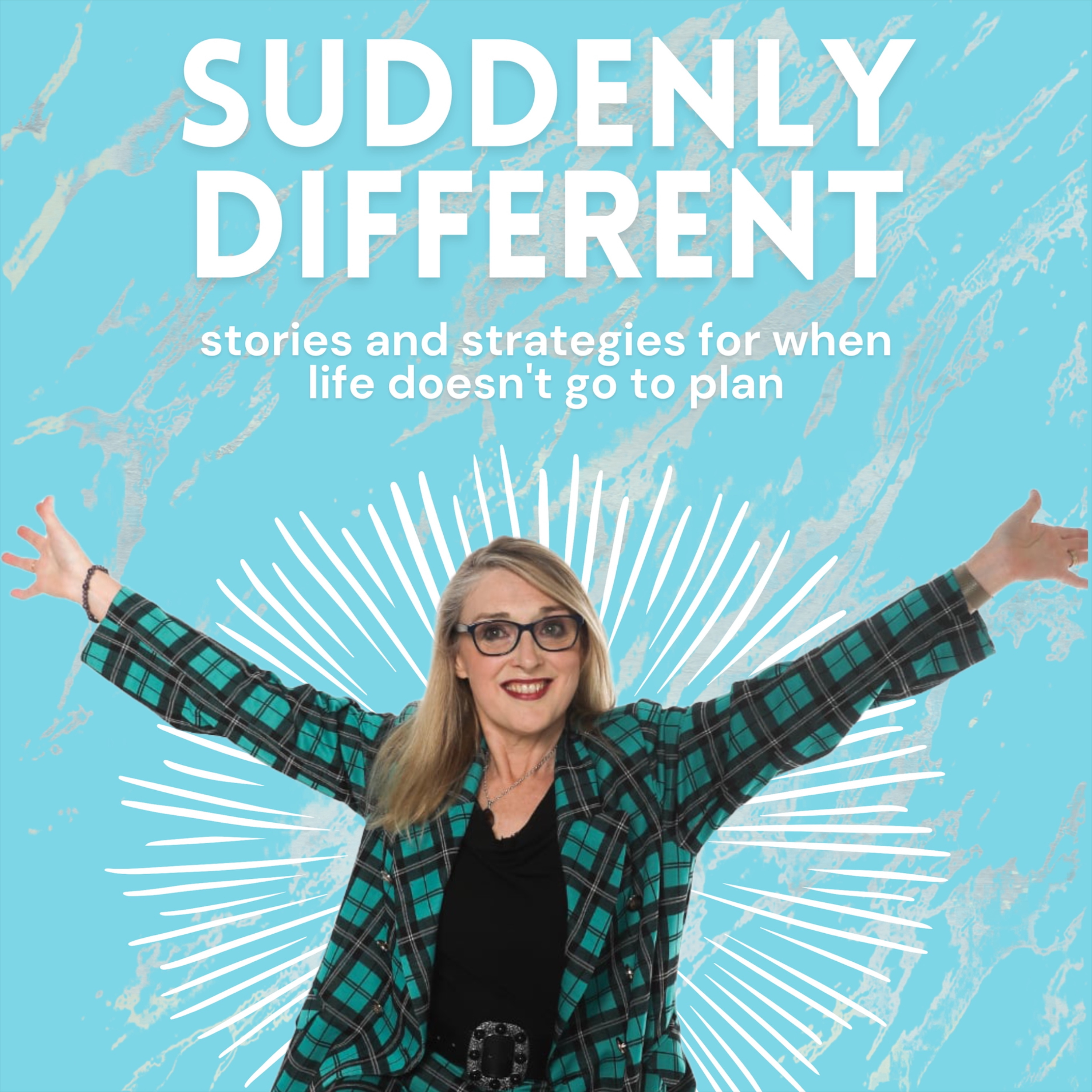
Suddenly Different
by Leigh-Anne Sharland
Stories and strategies for life when it doesn’t go to plan.What happens when the life you thought you’d live disappears in a moment? Hosted by resilience speaker and advocate Leigh-Anne Sharland, Suddenly Different shares raw, real conversations with remarkable guests — leaders, change-makers, and everyday heroes — who’ve faced their own “suddenly different” moment. From grief to grit, invisible illness to visible wisdom, these stories inspire and equip you with the clarity, compassion, and courage to face life’s curveballs — and rise.
-
45
I Just Woke Up and Never Walked Again: Disability Is a Human Story | Professor Parkes
What happens when you go to sleep as a healthy 24-year-old… and wake up never able to walk again?In this deeply honest and unexpectedly funny conversation, I sit down with Brandon Parkes, known online as Professor Parkes, to talk about the moment his life became suddenly different.After what began as a camping trip and what felt like “just being sick,” Brandon’s body went into full immune-system warfare. What followed was bacterial meningitis, Guillain-Barré syndrome, transverse myelitis, paralysis, months in hospital, years of rehabilitation, chronic pain, and a complete rewriting of identity.But this episode is not a tragedy story.It is a human story.It is about dark humour as survival.About pain that never fully leaves.About learning independence in a wheelchair.About inaccessible spaces and invisible assumptions.About dignity, dating, disability, basketball, body grief, and choosing life anyway.Brandon speaks with brutal honesty and the kind of humour that makes hard truths easier to hold. He shares what it means to live with paralysis, chronic nerve pain, spinal stimulators, rehab, public perception, and the strange reality of becoming disabled in a world that still treats accessibility like an optional extra.We also explore post-viral illness, nervous system dysregulation, and the shared experience of a body that suddenly stops behaving the way it used to.This is a conversation about what happens when your body changes… but your spirit refuses to disappear.And perhaps the most important reminder of all:Disability is not a tragedy narrative.It is a human one.In this episode we explore:Brandon’s “suddenly different” momentWaking up paralysed at 24Guillain-Barré syndrome, transverse myelitis & immune system overdriveMisdiagnosis and being told it was “just anxiety”Living with chronic pain and nerve damageSpinal cord stimulators and pain management realitiesThe hidden cost of disability and inaccessible systemsDark humour as medicineIdentity, masculinity, dating and disabilityWheelchair basketball and rebuilding independenceDisability advocacy through social mediaWhy accessibility is not a luxuryPost-viral illness, nervous system dysfunction and invisible conditionsWhy disability can happen to anyone, at any timeA Few Quotes From This Episode“I just woke up and never walked again.”“My body was trying to save my life… it just went nuclear.”“Disability is the most accessible minority anyone can join.”“If you don’t become disabled at some point in your life, you died too early.”“This is not the end. This is the building blocks for your new normal.”Connect with Professor Parkes🎮 Twitch: professorparkes12📸 Instagram: @professorparkes✖️ X/Twitter: @Professorparkes ▶️YouTube: @ProfessorparkesBecause we are all only one moment away from being suddenly different.If This Episode Spoke to You…Please follow, share, and leave a review.These conversations matter because too many people are living invisible battles in visible silence.And sometimes the most powerful thing we can do…is help someone feel less alone.#SuddenlyDifferent #ProfessorParkes #DisabilityAdvocate #GuillainBarreSyndrome #TransverseMyelitis #ChronicPain #InvisibleIllness #DisabilityAwareness #AccessibilityMatters #WheelchairLife #AdaptiveAthlete #PostViralIllness #NervousSystemHealth #ChronicCondition #PainManagement #Resilience #LifeAfterDiagnosis #DisabilityInclusion #PodcastAustralia #LeighAnneSharland
-
44
From 7-Figure Growth to Collapse: What Misalignment Really Costs | Shiran Faast
From the outside, it looked like success.Seven figures. Growth. A thriving team.A business that, by every measure, was working.But underneath it all… something wasn’t aligned.In this episode of Suddenly Different, I sit down with Shiran Faast, business consultant, speaker, and author of Unstoppable Business Growth, to explore what it really costs when success is built on misalignment.Shiran Faast shares the full story behind building a multi-million dollar business that was never truly hers…the moment a single question exposed what she had been avoiding for years…and the decision to close the business before it cost her marriage.This wasn’t just a business collapse.It was an identity collapse.What followed was silence, space, and a complete re-evaluation of who she was without the title of CEO.And from that space, something powerful emerged.A new way of seeing business.A new way of understanding people.And a deeper truth about what actually drives sustainable growth.In this conversation, we explore:Why growth can mask deeper misalignmentThe hidden cracks between owners, teams, and customersWhat leaders miss when they rely on strategy aloneWhy people, not numbers, determine business successHow to recognise misalignment before it becomes collapseShiran Faast now works with leaders and organisations to uncover where money, energy, and potential are quietly leaking… and how to realign before it’s too late.This episode is for anyone who:looks successful on paper but feels something is offis carrying the weight of a business that no longer fitsor is standing at a crossroads, unsure whether to push forward… or let goBecause misalignment doesn’t always break things immediately.Sometimes… it builds quietly.Until it can’t be ignored anymore.About Shiran FaastShiran Faast is a business consultant, speaker, and author dedicated to helping organisations grow in a way that is both profitable and aligned.Her work focuses on bridging the gap between people and numbers, enabling leaders to identify hidden challenges within their businesses and take action before they become costly.Following her own experience of building and closing a seven-figure company, Shiran developed a methodology that helps businesses move from reactive problem-solving to proactive, aligned growth.Her book, Unstoppable Business Growth, provides practical tools and insights for leaders who want to build sustainable, high-performing organisations without sacrificing alignment or wellbeing.LinkedIn: https://www.linkedin.com/in/shiranfaastWebsite: https://www.shiranfaast.com/#ShiranFaast #BusinessGrowth #Leadership #Alignment #Entrepreneurship #FounderJourney #BusinessStrategy #OrganisationalCulture #Burnout #SuddenlyDifferent #PersonalDevelopment #WomenInBusiness
-
43
When Grief Runs the Show: Reclaiming Your Life Through Neuroscience | Sylvia Wolfer
When Grief Runs the Show: Reclaiming Your Life Through Neuroscience | Sylvia WolferMost of us were never taught how to grieve. We were just expected to get through it.Sylvia Wolfer lost her father when she was seven. Her younger brother at seventeen. Her older brother in her forties. And then her mother. Each loss different. Each one reshaping her. And for a long time, grief quietly ran the show — until she decided it couldn't anymore.Sylvia is a neuroscience-informed grief educator, writer and speaker. What she shares in this conversation isn't theory. It's hard-won. She talks about what grief genuinely does to the brain and body — the fog, the exhaustion, the hypervigilance that never quite switches off — and why pushing through it isn't strength, it's just postponing.This isn't a fix-it episode. But it is full of real, practical tools that anyone can use.In this conversation:Why grief triggers inflammation, brain fog and exhaustion — and why that's not weaknessThe window of tolerance — and what it feels like when you've fallen below itSylvia's method for taking back control of grief triggers — scheduling time with your grief, on your own termsWhy unprocessed childhood grief can keep your nervous system on high alert for decadesHow to talk to children about death honestly and safelyThe "body budget" — why hydration, morning daylight and gentle movement are grief tools, not just wellness tipsWhy grief and joy don't have to cancel each other outJournaling as a quiet way to track your own healingWhat self-compassion actually means — and why it makes most of us cringeBooks and researchers mentioned:Before and After Loss — Lisa Schulman | The Grieving Brain — Dr. Mary-Frances O'Connor |Permission to Feel — Dr. Marc Brackett | Why We Sleep — Matthew Walker | Christine Neff — christineneff.com | Lisa Feldman Barrett🔗 Explore Sylvia's work at sylviawolfer.com or find her on LinkedIn.✍️ Euronewsweek: euronewsweek.co.uk/author/sylvia-wolfer/🎧 Free Guided Meditations: Sylvia's Voice on SpotifyGrief doesn't mean something is wrong with you. It means something mattered.
-
42
When the Voice Goes Quiet: How Losing Everything Created a New Way to Speak | Nico Lim (Flash Poetry)
What happens when the thing you most rely on… disappears?In this deeply human and unexpectedly uplifting conversation, poet and freestyle artist Nico Lim (Flash Poetry) shares the moment his life became suddenly different. Living in a remote jungle community in South America, Nico became critically ill with a rare infection that took away his voice — not metaphorically, but physically.For someone whose identity was built around music, singing, and expression, the loss was disorienting, frightening, and deeply personal.But what emerged from that silence wasn’t the end of his creativity… it was the beginning of something entirely new.Together, we explore what it means when the body interrupts the plan, how illness can reshape identity, and why creativity often finds us in the spaces we never intended to go. Nico shares how poetry became both refuge and reconstruction, and how improvisation, presence, and trust now sit at the heart of his work.This episode is not about performance.It’s about listening.To your body.To your life.To what is trying to emerge when everything familiar falls away.If your life has ever changed in ways you didn’t choose… this conversation will meet you there.🪶 SHOW NOTESIn this episode, Leigh-Anne and Nico explore:The moment Nico lost his voice while living in South AmericaThe emotional and identity impact of sudden illnessWhy silence can become a creative catalystLiving with a chronic condition as a “companion,” not an enemyThe difference between poetry (inward) and freestyle (alive in the moment)Improvisation, flow state, and learning to trust yourselfThe tension between surrender and control in performanceThe power of presence and audience connectionWhy creativity is accessible to everyone (even if you don’t think you’re “creative”)Freestyle rap as a practice of perpetual radical non-self judgmentRebuilding a life and career after unexpected change✨ Includes a live freestyle performance created in the moment during the conversation.🌿 ABOUT YOUR GUESTNico Lim (Flash Poetry) is a poet, freestyle artist, TEDx Melbourne performer, and self-described “philosorapper.” Blending poetry, rhythm, philosophy, and improvisation, Nico creates immersive experiences that transform audiences into active participants.Through his work, he explores presence, connection, and the intelligence of the moment — showing that creativity isn’t something we perform, but something we access.Linktree: https://linktr.ee/flashpoetryTEDx Talk: https://youtu.be/PK7c-sOIEBILinkedIn: http://linkedin.com/in/nico-lim-flash-poetry-3277171a7Suddenly Different is a podcast about the moments that change everything — the interruptions, the ruptures, and the unexpected redirections that reshape who we are.Through deeply human conversations, we explore how to navigate life when it doesn’t go to plan… and how to find meaning, identity, and possibility on the other side.#SuddenlyDifferent #PodcastLife #LifeChangingMoments #ChronicIllnessJourney #InvisibleIllness #CreativeHealing #Poetry #SpokenWord #FreestyleRap #FlowState #HumanConnection #Resilience #IdentityShift #PersonalGrowth #Storytelling #TEDxMelbourne #MindsetMatters #EmotionalWellbeing #SelfExpression #HealingThroughArt
-
41
When Toughness Stops Working: The Truth About Real Resilience | Tiffanee Cook
What happens when the version of strength that’s carried you your whole life… quietly stops working?In this deeply honest and unexpectedly light conversation, Leigh-Anne sits down with Tiffanee Cook — boxer, coach, speaker, and host of Roll With The Punches — to explore the truth about resilience beyond the performance of it.Because for many of us, toughness wasn’t a choice.It was a strategy.A way to belong, to cope, to survive.But what happens when that same strategy starts costing us more than it gives?Together, Leigh-Anne and Tiff unpack the layers beneath resilience — from the boxing ring to the nervous system, from identity and self-awareness to the quiet patterns that shape how we show up in the world.This is not a conversation about pushing harder.It’s about becoming more honest.More aware.More human.And discovering that real strength isn’t found in how much we can endure…but in how willing we are to feel, question, and choose differently.If you’ve ever been the strong one…the capable one…the one who keeps going no matter what…This conversation might feel like a mirror.Take a breath.Let it land.In this episode, we explore:The difference between performative resilience and embodied strengthHow early experiences shape our relationship with toughness and identityWhat the boxing ring reveals about human behaviour under pressureDissociation, emotional shutdown, and the body’s protective patternsWhy self-awareness can feel heavy before it becomes freeingThe hidden cost of always being “the strong one”Identity beyond roles, labels, and external validationThe role of curiosity in healing, growth, and changeEmotional literacy: learning to understand what we feel and whyWhy resilience isn’t about enduring more — but knowing when to adaptThe ongoing nature of self-doubt, even in high performersLetting go of the mask without losing your edge#SuddenlyDifferent #TiffaneeCook #Resilience #MentalHealthAwareness #EmotionalIntelligence #SelfAwareness #NervousSystem #TraumaInformed #PersonalGrowth #AuthenticLeadership #WomenInLeadership #MindsetShift #HealingJourney #HumanBehaviour #PodcastAustralia #InnerWork #PerformancePsychology #VulnerabilityIsStrength
-
40
You Were Never Too Much: Self-Knowledge, Alignment and the Permission to Be You | Karen Foote
Some people are told they are too much.Too outspoken. Too emotional. Too different.And over time, they learn to adjust.To soften.To shrink.Until one day… something clicks.In this episode of Suddenly Different, Leigh-Anne Sharland sits down with psychologist, author and communicator Karen Foote for a deeply human conversation about identity, adaptation, and the quiet relief of self-knowing.Together, they explore what happens when we stop trying to fix ourselves…and start recognising who we’ve always been.This is not a conversation about labels or personality boxes.It’s about using tools like Human Design, DISC, EDISC, and Clifton Strengths as mirrors, not definitions.Karen shares her journey from Singapore to Australia, navigating cultural expectations, being told she was “too much,” and ultimately choosing to live in alignment rather than adaptation.They unpack:Why high-functioning people often live in quiet exhaustionThe hidden cost of adapting to fit expectationsHow profiling tools can build clarity… or create confusionThe difference between your true self, real self and ideal selfThe role of emotional regulation in shaping your life trajectoryWhy self-knowledge brings not just insight… but peaceThis conversation gently challenges the idea that you need a dramatic life event to become “suddenly different.”Sometimes, the biggest shift is this:Realising there was never anything wrong with you.In this episode, we explore:What it means to be told you are “too much” and how that shapes identityKaren’s experience moving from Singapore to Australia and navigating cultural expectationsThe difference between adaptation vs alignmentWhy many capable people feel like a fraud (and what that might actually mean)How tools like Human Design, DISC, EDISC and Clifton Strengths can support self-awarenessThe concept of congruence: aligning your true self, real self and ideal selfOver-functioning strengths and the “underbelly” of who we areEmotional regulation as a foundational life skillThe power of small, quiet influence over grand, performative changeWhy contentment may be the most underrated form of success“Self-knowledge doesn’t tell you who to become… it gives you permission to stop performing who you’re not.”“You are allowed to evolve. That doesn’t mean you’re inconsistent. It means you’re alive.”“We don’t need to do great things. When you find peace within yourself, that changes lives.”“Maybe you’re not a fraud. Maybe you’re adapted.”As you listen, notice what doesn’t feel exciting…but feels familiar.That’s often where truth has been waiting patiently.#SuddenlyDifferent #SelfKnowledge #BeYourself #PersonalGrowth #Identity #HumanDesign #DISCProfile #CliftonStrengths #EmotionalRegulation #Alignment #Authenticity #Mindset #InnerWork #PersonalDevelopment #Psychology #Resilience #GrowthJourney #LifeTransitions #PodcastAustralia #WomenWhoLead #InvisibleStruggles #PermissionToBeYou
-
39
Your Brain Was Whispering: Stress, Brain Fog and the Warning Signs We Miss | Dr Alejandra Guerrero Barragán
What if the exhaustion, brain fog and subtle cognitive slips many of us experience are not weakness… but warnings?In this episode of Suddenly Different, Leigh-Anne Sharland sits down with neurologist Dr Alejandra Guerrero Barragán to explore the quiet signals our brains send long before illness becomes visible.Trained in traditional neurology, Alejandra spent years studying diseases that typically appear later in life — memory loss, cognitive decline and dementia. But something unexpected began showing up in her clinic.Young people.Professionals in their twenties and thirties arriving with brain fog, memory problems and neurological symptoms — yet their brain scans were completely normal.Instead of dismissing them, Alejandra started asking deeper questions.What she discovered was a pattern that many of us are living inside without realizing it.Chronic stress.Sleep deprivation.Ultra-processed food.Constant productivity pressure.A nervous system that never truly rests.In this powerful and deeply human conversation, Leigh-Anne and Alejandra explore how modern lifestyles are quietly shaping our brain health long before disease appears, and why awareness — not fear — may be the most powerful turning point we have.They also talk about identity, the danger of tying our worth entirely to our work, and the moment Alejandra made the courageous decision to step away from traditional medicine to focus on prevention and public education.Because brain health is not just about avoiding disease.It’s about creating a life where your brain works with you, not against you.If you’ve ever been told “everything is fine” while feeling anything but…this episode may change how you listen to your body.• Why young people are increasingly experiencing brain fog and cognitive symptoms• The hidden neurological cost of chronic stress and constant productivity• How ultra-processed food affects brain function and long-term health• The connection between lifestyle, inflammation and cognitive decline• Why many patients feel dismissed when their tests appear “normal”• The growing field of lifestyle medicine and preventive neurology• How stress becomes normalized in modern society• Why identity tied solely to work can become dangerous for wellbeing• The midlife window where many dementia risk factors begin• Why awareness — not perfection — is the starting point for better brain healthDr Alejandra Guerrero Barragán is a neurologist and brain health educator focused on preventive neurology, cognitive resilience and lifestyle medicine.Originally from Colombia and now working internationally, she combines clinical neuroscience with education on stress regulation, nutrition, habit design and nervous system health.After years working in traditional neurology, Alejandra shifted her focus toward prevention — helping people understand the early signals of brain strain before illness develops.Her mission is simple but urgent:to help people protect the most important organ they have — their brain.
-
38
The First Hour Matters: Psychological Injury, Safety and the Power of Being Seen | Jennifer Chate
There are moments when nothing appears visibly wrong, yet inside the body something shifts completely. The nervous system reacts before logic has time to speak. Words disappear. Time slows. Safety vanishes.In this deeply human episode of Suddenly Different, Leigh-Anne Sharland speaks with Jennifer Chate, a former educator and wellbeing leader who now works with insurers, case managers and organisations across Australia to improve the way psychological injury is understood and supported.Jennifer brings both professional expertise and lived experience. After surviving a severe psychological injury caused by prolonged workplace harm, she navigated the workers’ compensation system from the inside. That journey revealed a powerful truth: there is a profound difference between processing a claim and supporting a human being.Together Leigh-Anne and Jennifer explore what happens in the nervous system during trauma, why the first hour after a psychological injury matters, and how the responses of people around us can either deepen harm or begin healing.Jennifer shares the moment her life became suddenly different — a traumatic workplace incident that triggered a powerful physiological response and left her feeling completely alone and unsafe. From that experience, she developed a deep understanding of how psychological injury occurs, how long recovery can take, and what compassionate support truly looks like.This conversation goes beyond theory. It offers practical insight for leaders, colleagues, managers and anyone who may find themselves supporting someone through psychological distress.Jennifer explains why calm presence regulates the nervous system, how empathy is about holding space rather than fixing people, and why humour and small moments of joy can gently guide the body back toward safety.This episode is for anyone who has experienced workplace harm, anyone supporting someone through recovery, and anyone who wants to understand the human reality behind psychological injury.Because recovery does not begin with solutions.It begins with being seen.Show NotesIn this episode we explore• Jennifer’s personal experience of psychological injury following workplace harm• What happens in the brain and nervous system during a trauma response• Why the first hour after an incident can shape long-term recovery• The difference between processing a claim and supporting a human being• How calm presence and simple language can help regulate someone in distress• Why empathy in leadership means holding steady space rather than fixing problems• The role of humour and joy in helping the nervous system regulate• The impact of workplace culture on psychological safety• How systems designed to help can unintentionally cause further harm• Why dignity in recovery often has to be claimed rather than givenKey ideas from JenniferPsychological injury is not weaknessPsychological injury occurs when the nervous system reacts to a perceived threat. It is a protective response designed to keep us safe. When someone experiences trauma, their body reacts automatically and they may lose the ability to think clearly, speak, or process instructions.How people respond in the immediate aftermath of a distressing event can shape recovery. Being left alone, dismissed or ignored can deepen the trauma. Calm presence and support can begin the process of regulation.Human nervous systems regulate each other. When one person remains calm, grounded and steady, it helps signal safety to the person experiencing distress.Empathy is not about rescuing or fixing someone. It is about observing, listening and responding to what the person is feeling without judgment.Humour and moments of lightness are not denial of difficult experiences. They help the nervous system return to safety and can provide important emotional relief during recovery.The first hour mattersCalm is contagiousEmpathy is not softJoy can be regulation
-
37
From Ground Zero to Purpose: When Losing Your Job Changes Everything | Merry Korn
What happens when you wake up and the title is gone… the paycheck is gone… and the identity you built your life around disappears overnight?In this deeply human conversation, Merry Korn shares the moment she was fired just two months into a role and found herself at what she calls “ground zero.”Single mother. No income. No plan.But what felt like collapse became excavation.Instead of rushing into another job, Merry began the inner work. The deep questioning. The alignment process that many of us avoid. That inner excavation eventually led her to build Pearl Interactive Network, Inc., a for-profit social enterprise that grew to 1,300 employees across 30 states, prioritising hiring people with disabilities, disabled veterans, and those often excluded from opportunity.This is not a hustle story.It is a story about identity.About DNA-level resilience.About listening to the whisper before building the platform.About discovering that job loss is often not failure… but information.If you’ve ever tied your worth to your work, this episode will land deeply.📝 Show NotesIn This Episode, We Explore The emotional shock of being fired and waking up to “ground zero”The hidden danger of outsourcing your worth to your job titleWhy alignment matters more than income aloneThe role of informational interviews during career transitionHow inner excavation precedes sustainable successHiring people with severe disabilities and untapped talentThe power of giving disabled veterans meaningful workThe intersection of business strategy and heart-led leadershipSpiritual guidance, synchronicity, and trusting the unseenWhy resilience is often inherited… but must be consciously accessedHow purpose transforms survival into contributionKey ReflectionsJob loss is not always rejection.Sometimes it is redirection.Your worth was never meant to be housed inside a role.The bravest work isn’t rushing to the next solution.It’s staying present long enough for the true step to reveal itself.About the GuestMerry Korn is a serial entrepreneur, speaker, author, and founder of Pearl Interactive Network, Inc., one of the world’s most successful for-profit social enterprises.Over two decades, she built a company that created thousands of meaningful jobs for disabled veterans, people with disabilities, and individuals in economically challenged communities.Today, Merry shares her story to help others navigate career disruption, rediscover purpose, and build work aligned with heart and mission.#SuddenlyDifferent#FromGroundZero#CareerRedirection#PurposeDriven#LeadershipWithHeart#DisabilityInclusion#VeteranEmployment#SocialEnterprise#IdentityAndWork#Resilience#TrustTheProcess#InnerWork#WomenInLeadership#FaithAndBusiness
-
36
The Smile Effect: How One Small Gesture Can Save Lives | Sally Pymer
What if one of the most powerful mental health interventions on the planet was free, universally accessible, and biologically contagious?In this episode of Suddenly Different, Leigh-Anne sits down with rural Victorian speaker and counsellor Sally Pymer, whose deceptively simple message carries profound weight: a smile can rewire a brain, restore safety, reduce stigma, and strengthen entire communities.With over 20 years’ experience in psychology, AOD counselling, community development and coaching, Sally has seen firsthand how loneliness, addiction, shame and disconnection quietly erode wellbeing. But she has also witnessed something extraordinary — how one small gesture can interrupt that cycle.Together, they explore:• The neuroscience behind smiling and the chemical cascade it triggers• Why smiling rewires the brain for resilience• The ripple effect of anonymous smile cards left under windscreens• Rural loneliness and the power of incidental connection• Socially accepted addictions — work, exercise, achievement• Why compassion, not shame, is the only pathway out of addiction• Prevention vs treatment in mental health• How micro-moments of connection reduce long-term harmThis conversation is about returning to our humanity through the smallest doorway.Because small things save lives.Connect with Sally:🌐 www.empoweredwithsally.com.auIf this episode moved you, share it with someone who might need a reminder that they are seen.Show NotesGuest: Sally PymerSpeaker | Counsellor | Community AdvocateFounder of The Smile MovementRural Victoria, AustraliaIn This Episode We Explore:00:00 – Introduction: The Smile as Free Medicine02:30 – Discovering the Smile as a Life Message10:30 – The Neuroscience of Smiling (Dopamine, Serotonin & Endorphins)14:30 – Rewiring the Brain for Happiness17:00 – The “Soul of a Smile” and Feeling Seen19:30 – Anonymous Smile Cards & Ripple Effects23:30 – Loneliness in Rural Communities28:00 – Micro-Moments of Social Connection31:00 – Socially Accepted Addictions: Work & Exercise38:30 – Disconnection from Self & Identity41:00 – Why Compassion Beats Shame in Recovery44:00 – Prevention vs Treatment in Mental Health48:00 – Big Vision: A World Connected Through Smiles49:30 – One Action You Can Take TodayKey Takeaways✔ Smiling releases dopamine, serotonin and endorphins — even if it starts as intentional✔ Micro-moments of connection have measurable health impacts✔ Addiction often masks disconnection and identity wounds✔ Shame increases suffering; compassion creates safety✔ Prevention begins in everyday interactions✔ A smile is inclusive, universal and freeResources Mentioned• Research by Abel & Kruger (2010) on smiling and longevity• Martin Seligman on positive psychology and resilience• Kevin Hines’ story of survival and acknowledgment🌐 www.empoweredwithsally.com.au📧 Contact via website for speaking and community events#TheSmileEffect#SuddenlyDifferentPodcast#SallyPymer#MentalHealthAwareness#CommunityConnection#AddictionRecovery#LonelinessMatters#PreventionNotJustTreatment#PositivePsychology#Resilience#CompassionInAction#RuralAustralia#Wellbeing#ConnectionHeals#SmallThingsSaveLives
-
35
The Quiet Gift: Dyslexia, Self-Worth, and the Courage to Be Seen | Pamela Cass
Some differences arrive quietly.They don’t announce themselves.They simply change how you learn to move through the world.For Pamela Cass, that difference was dyslexia — identified at seven years old and misunderstood in a way that slowly taught her to stay out of the way. Being removed from class, separated from peers, and left without language for what was happening, Pamela learned early that invisibility felt safer than being noticed.What followed was a lifetime of compensating. Working harder. Proving worth. Staying busy. Staying agreeable. Staying unseen.Show NotesIn this episode of Suddenly Different, Pamela reflects on how childhood experiences shape adult behaviour — from overworking in leadership roles, to losing her voice inside a long-term marriage, to eventually reclaiming her sense of self through grounding practices, gratitude, and deep inner work.This is a conversation about dyslexia beyond diagnosis.About self-worth beyond achievement.And about visibility that doesn’t require performance.Pamela is the co-author of The Quiet Gift and a coach supporting people to step out of survival patterns and into sustainable influence — gently, honestly, and without abandoning themselves.If you’ve ever felt quietly different, this episode offers language, perspective, and permission.In this episode, Leigh-Anne Sharland speaks with Pamela Cass about the long arc from childhood difference to adult identity — and what happens when survival strategies are no longer needed, but still running the show.We explore:How dyslexia was first experienced, not explainedThe unintended impact of classroom separation and early isolationWhy invisibility can feel safer than belongingOverworking as a learned response, not a personality traitLeadership, imposter fear, and emotional intelligenceLiving with chronic stress — and what it costs the bodyGratitude as a practice that shifts physiology, not just mindsetLetting go of survival without losing driveWhat it really means to be seenThis may resonate with you:learned to stay small early in lifeequate effort with worthhide behind competence or productivityare neurodivergent or quietly differentare redefining success on your own termsA central thread:Invisibility isn’t who we are.It’s something we learn — and something we can unlearn.Pamela’s story offers a grounded reminder that influence doesn’t require volume, and healing doesn’t require reinvention — only permission to return to what was already there.#SuddenlyDifferentPodcast#TheQuietGift#DyslexiaAwareness#SelfWorthJourney#CourageToBeSeen#NeurodivergentVoices#InvisibleNoMore#EmbodiedHealing#RedefiningSuccess
-
34
Resilience Is a VERB: How to Rebuild When Life Breaks You | Belinda J. Shaw
What do you do when life takes everything you thought you could rely on, your marriage, your safety, your bank account, your sense of self, and it all collapses at once?In this deeply human conversation, Leigh-Anne sits with Belinda J. Shaw, author of Resilience Is a VERB, to explore resilience as something we practice, not a trait we either “have” or “don’t.” Belinda shares how she rebuilt after narcissistic harm, financial devastation, and returning home to live with her mum, later becoming her mum’s carer, and how small, conscious choices became the stepping stones back to self.You’ll hear why Belinda believes resilience is human evolution, not “bouncing back,” and how boundaries protect your energy, values guide your decisions, and tiny actions can shift a life that feels impossible.This episode also shines a light on an urgent reality: women over 50 are the fastest-growing cohort experiencing homelessness in Australia, and what that means for our communities, our compassion, and our responsibility to each other.Show notes In this episode, we exploreIf you’ve ever laid awake at night with fears about money, retirement, safety, or feeling trapped, this episode is for you.When life “dismantles” you: identity loss, financial collapse, and rebuilding from zeroResilience as evolution (not “bouncing back”)The power of small choices in hard seasonsWhy boundaries contain your energy and “no” is a full sentenceValues and expectations: how misalignment drains youGrounding practices that change your state (earthing, routine, memory-stacking)The late-night fears many women over 50 carry: retirement, money, homelessness, feeling trappedThe growing reality of homelessness among women, and how community can respond with dignity and careBelinda’s frameworks: Resilience Is a VERB + the Resilient ROAR (above/below the line)Why Belinda’s book is designed as a “companion” you return to, not a read-once-and-forgetPowerful moments & quotes“Resilience is part of human evolution.”“No is a full sentence.”“Your boundaries contain your energy.”“It’s a decision to decide. It’s a choice to choose.”Resources & linksBelinda Shaw: belindajshaw.comBook: Resilience Is a VERB (Belinda Shaw)Free resource: “Resilience Abilities” download (available via Belinda’s website)Share this episode with…A woman over 50 who is quietly carrying late-night fearSomeone rebuilding after heartbreak, control, or financial lossAnyone who needs practical steps to regain agency, one choice at a time#ResilienceIsAVerb #BelindaShaw #SuddenlyDifferentPodcast #Resilience #RebuildingYourLife #Boundaries #Values #Expectations #PersonalGrowth #HealingJourney #NarcissisticAbuseRecovery #TraumaRecovery #WomensWellbeing #WomenOver50 #MidlifeReinvention #FinancialWellbeing #HomelessnessAwareness #CommunityCare #NervousSystemSupport #ChooseAgain
-
33
“No Local Experience”: The Invisible Wall Facing Migrant Women | Fabiola Campbell
What happens when you arrive in a new country with skills, experience, and ambition — and are told it still isn’t enough?In this episode of Suddenly Different, Leigh-Anne Sharland is joined by Fabiola Campbell, founder of Professional Migrant Women and author of Own It, for a powerful conversation about the invisible barriers facing skilled migrant women in Australia.Together, they explore the emotional and systemic impact of being told you lack “local experience,” the loss of social capital that comes with migration, and the quiet grief of starting again in a place that doesn’t yet know how to see you.Fabiola speaks candidly about accent bias, cultural intelligence, and the moment she stopped trying to fit into systems that weren’t designed for her — choosing instead to reclaim her identity, her voice, and her power.This episode is a call to rethink how we define merit, inclusion, and leadership — and an invitation to build workplaces where difference is not managed, but valued.If you’ve ever felt unseen, underestimated, or asked to prove yourself again and again… this conversation is for you.“No Local Experience”: The Invisible Wall Facing Migrant Women | Fabiola CampbellIn this deeply human conversation, Leigh-Anne and Fabiola explore what it means to lose your professional identity overnight — and how reclaiming it can become an act of leadership and advocacy.• The hidden cost of being told you don’t have “local experience”• How accent bias and unconscious assumptions shape opportunity• The loss of social capital that comes with migration• Why qualifications may be recognised — but experience dismissed• The emotional impact of starting again as an accomplished adult• Humanistic leadership and healthier models of power• Why diversity of thought matters more than surface-level inclusion• Creating real pathways for skilled migrant women to thrive• “When you own every part of who you are, nobody can use it against you.”• Belonging is not granted — it is built, claimed, and embodied• Leadership is not power over, but power with and power withinFabiola Campbell is the founder and principal mentor of Professional Migrant Women, an organisation dedicated to closing the gap between migration and meaningful employment for women in Australia. Drawing from her own lived experience as a skilled migrant, Fabiola advocates for cultural intelligence, inclusive leadership, and systemic change.Leigh-Anne Sharland is the host of Suddenly Different and founder of Building Your Mindset Muscle. Through lived experience, data, and deep conversation, she explores what happens when life, identity, or health changes unexpectedly — and how we rebuild with honesty, compassion, and courage.• Professional Migrant WomenHome - Professional Migrant Women• Own It by Fabiola Campbell available on AmazonSupport LinksIf this episode brings up difficult emotions, please reach out for support:• Lifeline Australia — 13 11 14• Beyond Blue — 1300 22 4636
-
32
You Were Never the Problem | Jason Blyth on Childhood Trauma, Addiction & Rewriting the Story
What if the behaviours you were punished for…labelled for…or shamed about…were never the problem at all?In this deeply honest and confronting episode of Suddenly Different, Leigh-Anne Sharland is joined by Jason Blyth, a youth advocate and speaker whose life was shaped by extreme childhood trauma, violence, neglect, and systemic failure.Together, Leigh-Anne and Jason explore what happens when children grow up in environments where safety is unpredictable, adults are carrying unhealed wounds, and survival becomes the first language the nervous system learns.Jason shares his lived experience of growing up in a violent home, being misunderstood and misdiagnosed by the systems meant to protect him, turning to addiction as a survival strategy, and eventually reaching a “suddenly different” moment where choice became the way out.This is not a story about blame.It’s a conversation about truth.About how behaviour is often communication.About how addiction is often an attempt to cope.And about how rewriting the story begins when we stop asking, “What’s wrong with you?” and start asking, “What happened to you?”Together, Leigh-Anne and Jason also turn their attention to youth advocacy and systemic change — questioning how child protection, education, and mental health systems continue to fail vulnerable children, and what must change if we want a safer future for the next generation.This episode is for:anyone who grew up in chaos and learned to adapt to surviveparents and educators wanting to understand behaviour through a trauma-aware lensleaders and policymakers willing to confront uncomfortable truthsand young people who need to hear this clearly:You were never the problem.📝 Show NotesIn this episode, we explore:What it feels like to grow up without consistent safety or emotional protectionHow childhood trauma shapes identity, behaviour, and nervous system responsesWhy so many children are mislabelled instead of supportedAddiction as a survival strategy, not a moral failureJason’s “suddenly different” moment and the power of daily choiceThe role of one safe adult in changing a child’s trajectoryWhy systems focused on symptoms continue to fail vulnerable childrenThe urgent need for trauma-literate education, parenting, and policyHow rewriting the story begins with reclaiming agency and authorshipKey TakeawayBehaviour is not the problem.Pain is not the problem.Survival strategies are not the problem.The problem is systems that don’t listen, environments that aren’t safe, and a culture that mistakes adaptation for defiance.And the solution begins with one brave truth:You are not broken. You were adapting.Support NoteThis episode includes discussion of childhood trauma, violence, abuse, addiction, and mental health challenges. Please listen with care. If this conversation brings up difficult emotions, consider reaching out to someone you trust or a professional support service in your area.In Australia, Lifeline is available 24/7 on 13 11 14.About the PodcastSuddenly Different is a podcast about the moments that change everything — and what we choose to become next.Hosted by Leigh-Anne Sharland, the show explores lived experience, nervous system truth, identity shifts, and the second-order consequences of life upheavals.
-
31
Hidden Scars, Financial Courage: Amanda Thompson on Domestic Violence, Survival & Starting Again
What happens when survival becomes your default — until your body says “no more”?In this powerful episode of Suddenly Different, financial advisor and Ironman triathlete Amanda Thompson shares her harrowing and inspiring journey through domestic violence, financial trauma, and rebuilding from rock bottom.After collapsing during a morning run and waking up in a cardiac ward, Amanda discovered she had blood clots from a violent attack a year earlier — hidden scars her body could no longer carry in silence. What followed was a full-body reckoning: with trauma, with denial, and with a lifetime of endurance pushed to its limit.Amanda speaks with fierce clarity and compassion about:The different faces of domestic abuse — including coercive control and financial restrictionThe guilt, shame, and silence that keep women trappedWhy money is never just money — and how to reclaim your financial voiceHow to begin again — with courage, planning, and supportThis is a raw, wise, and deeply human conversation about turning survival into sovereignty.Trigger Warning: This episode includes discussion of domestic violence, trauma, and psychological abuse. Please listen with care.🎧 Guest: Amanda Thompson💼 Founder, Endurance Financial📘 Author: Financially Fit Women🌐 Website: www.endurancefinancial.com.au🔗 LinkedIn: Amanda Thompson📩 Speaking enquiries: [email protected]’s “suddenly different” moment and life-threatening collapseFinancial abuse and how it’s often disguised as “care”The impact of coercive control, gaslighting, and identity erosionWhat it means to become your own CFO: Confident, Focused, On top of your FinancesThe link between physical endurance and emotional resilienceWhy we need to teach our daughters — and sons — differentlyHow Amanda helps women step into financial autonomy without shameFrom silence to storytelling: the power of owning your truthIf you or someone you know needs support:1800RESPECT – 1800 737 732Lifeline – 13 11 14Financial Counselling Australia – 1800 007 007Women’s Legal Services – [Check your state directory]Share it with someone who might need itLeave a review or rating on your favourite podcast appConnect with us at leigh-annesharland.com or follow Suddenly Different on Instagram📌 Spotify Show Notes🔥 Topics We Cover:📞 Support Services (Australia)🗣️ If this episode speaks to you:
-
30
From Destruction to Redemption: Two Eulogies, One Sober Life (Ashley Jo Janssen)
What if you were asked to write your own eulogy — not once, but twice?In this deeply honest episode of Suddenly Different, Leigh-Anne Sharland sits with Ashley Jo Janssen, author of Tides of Great Waves of Grace, to explore the moment that radically changed the trajectory of her life.During addiction recovery, Ashley was asked to write a eulogy as if her life had ended due to substance abuse. Later, she was asked to write a second eulogy — one that reflected a long life shaped by sobriety, healing, forgiveness, and truth. Placing those two eulogies side by side revealed something undeniable: two possible endings, and one powerful choice.In this conversation, Leigh-Anne and Ashley explore:How trauma and unresolved grief shape coping mechanismsWhy self-forgiveness is one of the hardest and most essential parts of recoveryThe difference between surviving and truly livingThe role of family, faith, and community support in healingWhy sobriety is not just about abstaining, but relearning how to feelAnd how choosing a little “razzle dazzle” — joy, presence, and intention — can be an act of rebellion and hopeBefore you listen, a gentle note: this episode includes references to addiction, grief, and recovery. Please take care and pause if it becomes heavy.If you’ve ever felt caught between who you’ve been and who you could become, this episode is a reminder that the pen is still in your hand.Because even after destruction, redemption is possible.And even after the storm, life can be Suddenly Different.For more information about Ashley Jo here are the linkswebsite: https://www.thisisashleyjo.com/book: https://www.amazon.com.au/dp/B0FV134LCV/Also available on Kindle Unlimited
-
29
Silence Is the Abuser’s Shield: Fur Wale Breaks the Silence on Child Exploitation
⚠️ Trigger Warning:This episode includes discussion of child sexual abuse, exploitation, trafficking, and trauma. Listener discretion is advised.Silence is not neutral.Silence is where abuse hides.In this powerful and unflinching episode of Suddenly Different, I’m joined by Fur Wale, award-winning speaker, founder of SHE Talks, and ambassador for Project Karma.Together, we break the silence around child sexual exploitation and trafficking — crimes that continue to thrive in secrecy, stigma, and social taboo.Fur speaks with raw honesty about:The global and local reality of child exploitationWhy silence protects perpetrators and isolates victimsHow grooming, abuse, and trauma hide in plain sightThe long-term nervous system and identity impact of childhood sexual abuseWhy speaking openly is not just healing — it is protectiveWe also explore what ordinary people can do to help protect children, how survivors can reclaim voice without re-traumatisation, and why awareness must lead to action.This conversation aligns deeply with my advocacy around Taking the Boo out of Taboo — because when we name what is hidden, we reduce its power.When we speak truth, we create the possibility of safety, justice, and healing.If this episode brings up difficult emotions, please don’t carry them alone.In Australia, support is available via Lifeline (13 11 14) or 1800RESPECT (1800 737 732).International listeners can find local support at findahelpline.com.To learn more about Fur’s work, visit shetalks.com.au.To support or learn about Project Karma’s work in rescuing and rehabilitating children, visit projectkarma.org.au/what-we-do.Because silence is the abuser’s shield — and voice is how we begin to dismantle it.
-
28
Living After Suicide: PTSD Recovery, Neurodiversity, and Nervous System Safety with Katie Bingham
What happens after suicide — for the people left behind?At nineteen, Katie Bingham lost her ex-boyfriend to suicide. In this deeply honest conversation, Katie shares what it truly means to live on after sudden loss — navigating PTSD, numbness, grief, and the long journey back to safety in her body.Together, we explore how trauma lives in the nervous system, why shutdown and hypervigilance are natural protective responses, and how understanding neurodiversity can change the trajectory from shame to healing. Katie reflects on receiving her ADHD and autism diagnosis later in life, and how that understanding helped her make sense of patterns that began after trauma.This episode is not about the act of suicide. It is about recovery, choice, embodiment, and creating safe spaces — especially for neurodivergent children — so fewer people carry invisible wounds into adulthood.A gentle and grounding conversation for anyone living after loss, supporting someone with PTSD, or seeking trauma-informed understanding of the nervous system.Content note: This episode includes discussion of suicide and mental health. Please take care as you listen and reach out for support if needed.
-
27
Midlife Is Not a Decline — It’s a Strategic Third Act with Susan Braund
Midlife is often framed as a slow decline — a time to step back, tone it down, or quietly make room for others. But what if that story is simply wrong?In this episode of The Suddenly Different Podcast, I’m joined by Susan Braund, coach, mentor and creator of Your Third Act Roadmap, to explore why midlife is not an ending — it’s a strategic turning point.Susan shares her own suddenly different moment, pivoting from a high-performing career in advertising and media into coaching and behavioural strategy when success no longer felt meaningful. Together, we unpack the four “currencies” she believes matter most in this stage of life:• Curiosity — staying relevant by asking better questions• Energy — protecting what fuels you instead of running on empty• Presence — commanding influence without proving or performing• Resilience — not endurance, but recovery, rhythm and sustainabilityWe also explore ageism, identity beyond job titles, the pressure to “do it all,” the impact of social media narratives on midlife women, and how experience becomes a strategic advantage — not a liability.This is a grounded, honest conversation for women who don’t want to fade out, burn out, or reinvent themselves from scratch — but are ready to realign, choose differently, and design a third act on their own terms.If you’re navigating change, questioning what’s next, or sensing there’s more available to you than the story you’ve been sold — this episode is for you.#SuddenlyDifferent #MidlifeWomen #ThirdAct #CareerChange #Resilience #PurposeInMidlife#BurnoutRecovery
-
26
When Silence Becomes Heavy: Unlayering Shame and Choosing Self-Love — with Kabinga Mazaba
Shame is not something we’re born with — it’s something we inherit, absorb, and internalise as we grow.For many survivors of childhood abuse, shame behaves like an acquired injury: one that deepens as awareness grows, and one that silently shapes identity, boundaries, relationships, and self-worth.In this powerful and deeply human conversation, Kabinga Mazaba shares the moment her adult life became suddenly different. After decades of carrying secrets, pain, and silence, her body collapsed under the weight of everything she had been holding. In an emergency room, she realised she wasn’t dying — she was suffocating under shame.This episode explores:✨ How shame becomes layered through childhood, adolescence, and adulthood✨ Why repeated life events reinforce our deepest (and false) beliefs about ourselves✨ The courage it takes to unlearn inherited identities✨ Self-forgiveness as a foundational step toward self-love✨ Breaking generational patterns and raising children with truth, safety, and openness✨ Reclaiming life through choice, voice, and compassionKabinga reminds us that healing doesn’t erase what happened — it rewrites what we believe about ourselves. Her story is a testament to courage, truth-telling, and the radical power of choosing a new way forward.Trigger warning: This episode contains discussions of childhood abuse, shame, and trauma. Please listen with care.Read Kabinga's Book C.O.N.F.R.O.N.T. Reclaim Your LifeIf you need support:🇦🇺 Australia – Lifeline 13 11 14🇺🇸 USA – Suicide & Crisis Lifeline 988#SuddenlyDifferentPodcast #ChildhoodTrauma #ShameHealing #TraumaRecovery #SelfForgiveness #MentalHealthAwareness #ShameResilience #SurvivorStories #GenerationalHealing #InnerChildHealing #SelfLoveJourney #BreakingSilence #ChooseCourage #TraumaInformed #HealingConversation
-
25
He Thought He Was Breaking Down — Until His Body Started Breaking Open
What if the moment you fear you're breaking down is actually the moment your body begins to break open?In this profound conversation, physiotherapist and TRE pioneer Richmond Heath shares the unexpected turning point that reshaped his entire life — a Vipassana meditation where his body began to move on its own.What could have been dismissed as strange—or even pathologised—became the doorway to liberation.Richmond takes us inside that moment of spontaneous tremoring, the confusion and awe, and the slow unraveling of chronic pain, burnout, and held-tight survival patterns he didn’t know were running his life.We explore:The difference between breaking down and breaking openWhy the body remembers how to heal, even when the mind doesn’tThe ancient roots of tremoring as a natural stress-release mechanismPhysiological maturity and how it shifts resilience, presence, and emotional capacityWhy high performers, first responders, and men’s groups are changing through TREThe quiet, subtle experiences that become “suddenly different” turning pointsRichmond’s story reminds us that surrender isn’t weakness — it’s a biological invitation.A pathway back to groundedness, clarity, and the freedom to live life from a deeper, steadier place.If you’ve ever felt like you were holding too much, coping alone, or standing at the edge of burnout, this episode offers a radically compassionate reframe:Your body may not be breaking down. It may finally be showing you how to come home to yourself.Learn more about Richmond’s work at treaustralia.com and menergy.org.au.
-
24
When a Family Secret and Redundancy Rewrite Your Life
What happens when two unexpected truths collide and force you to rethink who you are?For Mitchell Parkins, life changed in a single season. First came the discovery of a long-hidden family secret — an Aboriginal ancestry that instantly reshaped his sense of identity, belonging and lineage. Then came a redundancy that stripped away the “safe” job, the title, and the version of success he’d spent years building.But instead of breaking him, these moments opened him.In this grounded and deeply human conversation, Mitch shares how identity, fatherhood, financial upheaval and a trip around Australia cracked him open to a life built on agency, contentment, and conscious choice.We explore:• What it feels like to uncover a family truth held in silence for 40 years• The shame, resistance and beauty of reconnecting with culture• How redundancy can shape — rather than shatter — your self-worth• Using money as a tool for freedom instead of a measure of identity• The difference between striving for “more” and creating contentment• How fatherhood forces us to revisit our childhood, heal, and decide who we want to become• Why collapse can create the space we’ve been too afraid to makeThis episode is an invitation to anyone navigating change, identity disruptions, life pivots, or the quiet ache of “there must be more than this.”A powerful reminder that one moment can make us suddenly different — but it’s what we choose next that defines us.#SuddenlyDifferent #LifePivots #IdentityJourney #RedundancyStory #CareerTransition #PersonalGrowth #FindYourTruth #SelfDiscovery #Agency #Contentment #Fatherhood #AboriginalAncestry #IndigenousConnection #CultureAndIdentity #ReconnectionJourney
-
23
When Faith Becomes Control: Rachel Pietsch on Reclaiming Identity, Voice & Freedom
For decades, Rachel Pietsch lived under the weight of religious rules, family expectations, and a belief that her feelings, instincts, and voice were somehow wrong. When her husband faced burnout, she was forced into strength — and in that pressure, her inner truth finally broke through.In this conversation, Rachel shares her journey from being a silenced “church mouse” to becoming a woman who reclaimed her boundaries, questioned everything she was taught, and learned to trust her own voice. She opens up about emotional neglect, breaking harmful family cycles, and the transformative role therapy played in giving her permission to think, choose, and live for herself.Today, Rachel helps others free their voices too — literally and emotionally.Her story is a powerful reminder that courage often begins in the smallest moment: a boundary placed, a question asked, a truth spoken out loud.#SuddenlyDifferent #PodcastConversation #FindingYourVoice #BreakingFree #SelfDiscoveryJourney#PersonalBoundaries #EmotionalHealing #TraumaRecovery#FaithAndFreedom #HealingJourney #ReclaimingYourVoice#ResilienceInAction #CourageToChange
-
22
When the Hidden Becomes Everything: Julie Hyde on Melanoma, Misdiagnosis & Leading Your Own Life
What happens when the thing you barely notice becomes the one thing that threatens to take everything?In this powerful episode of Suddenly Different, leadership mentor and speaker Julie Hyde shares her stage 3 melanoma story — beginning with a “wart” on her foot, dismissed, misdiagnosed, and quietly spreading.Julie takes us inside the shock of hearing “it’s cancer,” the freefall that follows, and the choice to move from victim to self-leader. She speaks candidly about advocating for your body, navigating a broken system, the power of the pause, and how near-death clarity reshaped her work, relationships, and priorities.This is a conversation about listening sooner, asking harder questions, and choosing life with fierce intention.Hashtags#SuddenlyDifferent #MelanomaAwareness #SkinCancer #EarlyDetection #SelfAdvocacy #Leadership #Resilience #TraumaRecovery #HealthFirst #PowerOfThePause #WomenInLeadership #InvisibleWarnings #ListenToYourBody
-
21
Forged in Love Karen Lyons on Rising Through Illness, Loss, and Reinvention
What happens when life keeps testing you — again and again — and yet something inside still whispers, rise anyway?In this deeply human and soul-soothing conversation, Leigh-Anne Sharland sits down with Karen Lyons — former teen mother, fitness entrepreneur, performer alongside Humphrey B. Bear, co-leader of a multi-million-dollar property venture, and now known as The Love Hypnotherapist.Karen’s journey is breathtaking in its breadth:✨ Four children by 21✨ Returning to school as a young mum✨ Fibromyalgia, Sjögren’s, Ehlers-Danlos, chronic pain & fatigue✨ A car crash that changed everything✨ Living in a tent after financial collapse✨ Hip-hop dancing with her granddaughters — and paying for it✨ Rebuilding again and again, always choosing loveThrough illness, heartbreak, loss, reinvention, and extraordinary physical challenge, Karen kept listening to the quiet wisdom of her spirit — and found her way home to herself.Today, she helps others rediscover self-worth, inner confidence, and self-love through compassionate hypnotherapy and deeply embodied understanding.This episode is a reminder that:🌿 The soul doesn’t break — it bends toward truth🌿 Self-love is not indulgence — it is oxygen🌿 Healing is not linear — it is layered, lived, and deeply personal🌿 Sometimes the most powerful transformation begins when our bodies slow us downIf you need tenderness, truth, courage, and a reminder that you are not done yet — press play. Karen’s story will wrap around your heart and whisper:You still get to rise. You still get to choose love. And you are never walking alone.#SuddenlyDifferent #KarenLyons #LoveHypnotherapist #SelfLove #SelfWorth #Resilience #Reinvention #HealingJourney #ChronicIllnessWarrior #InvisibleIllness #WomenWhoRise #TraumaInformedHealing #MindBodySoul #ChooseLove #HumanBehaviour
-
20
Across Oceans, Into Light – The Day Hope Spoke English with Eric Em
Some stories cross generations. Others cross oceans.For Suddenly Different guest Eric Em, his family’s story carried both. Born in Vietnam to Cambodian parents who fled a brutal regime, Eric’s life began in exile — cradled on a boat that survived eight pirate attacks, months in a refugee camp, and an unshakable belief in freedom.At a Christmas table decades later, he finally heard the story in full — the terror, the courage, and the single sheet of paper that changed everything: “Congratulations, the Australian Government has accepted you.”Now a storyteller and community leader, Eric honours his parents’ legacy through connection and compassion. Together, Leigh-Anne Sharland and Eric Em explore intergenerational trauma, resilience, and the power of story to turn silence into light.Across Oceans, Into Light – The Day Hope Spoke English is a reminder that the human spirit can survive anything — and that sometimes the most suddenly different moment of all is hearing the story that made your life possible.
-
19
Lisa Cox OAM: Redefining Success After Everything Changes
What happens when your life unravels in an instant—and the world no longer sees you the same?At just 24, Lisa Cox was a thriving advertising executive when a sudden brain haemorrhage left her in a coma, resulting in amputations, vision loss, and more than a year in hospital. She died twice—and returned with a whole new purpose.In this deeply honest and quietly revolutionary conversation, Leigh-Anne speaks with Lisa Cox OAM about what it means to go from “promising professional” to profoundly disabled—and how the journey back is rarely linear, often misunderstood, and full of moments that force you to rethink everything.Together, they explore:The internalised ableism that almost broke them bothThe myths and microaggressions still surrounding disabilityHow Lisa uses her advertising and media background to challenge exclusion in boardrooms and brandingWhy inclusion is not charity—it’s business intelligenceWhat changes are urgently needed in media representation and leadership visibilityLisa shares the grief of becoming suddenly different, the peace that comes with no longer needing to "fix" herself, and the radical joy in finding new ways to thrive—even when the world expects you to stay broken.Whether you're navigating your own health shift, designing more inclusive systems, or rethinking how you define worth, this episode is a must-listen.🎙️ “You don’t have to go back to who you were. You can become who you were always meant to be.”
-
18
When the Brain Stops: Jacqueline Brooker on C-PTSD, Self-Trust, and the Stories That Heal
What happens when a leader names the invisible with strength, grace, and zero “therapy-on-stage”?In this Suddenly Different conversation, Certified Speaking Professional Jacqueline Brooker shares how living with C-PTSD has shaped her life, leadership, and voice — and why vulnerability without scaffolding can harm more than heal. She revisits the suddenly different teenage moment when her brain simply stopped, explores the neuroscience behind that “snap,” and reveals how understanding self-trust as the variable in resilience changed everything.Together we unpack storytelling done well: share only the moments that matter, shape them for the audience (not the ego), and return with the elixir — wisdom and insight.Whether or not you ever stand on a stage, this episode is a masterclass in truth-telling with care: hold your words tightly, your people lightly, and let your story become a bridge — to connection, compassion, and healing.Take a breath with us: What was your suddenly different moment — and how might naming it begin to change the way you move forward?✅ Why it suits:“When the Brain Stops” captures Jacqueline’s pivotal story — her teenage brain freeze — and the neuroscience she explains later.“C-PTSD, Self-Trust, and the Stories That Heal” aligns with the core arcs of the conversation: trauma, recovery, leadership, storytelling.The description keeps the same rhythm and emotional resonance as your Suddenly Different brand — reflective, compassionate, and intelligent.
-
17
From Bedbound to Back Again: Jo Morton’s Dysautonomia Comeback
What happens when your body stops letting you participate in the world? When sound becomes pain, light is unbearable, and stress tips you into collapse?In this deeply human episode of Suddenly Different, Leigh-Anne speaks with first-time podcast guest Jo Morton from The Good Energy Room—an embodied advocate whose life was hijacked by dysautonomia (including POTS), mast cell activation syndrome (MCAS), chronic fatigue and widespread hypersensitivity.Jo takes us inside the six-year slide into shutdown, the loneliness of being disbelieved, and the microscopic work of finding safety again—word by word, breath by breath. We unpack practical shifts that mattered (changing “How are you?” to “Nice to see you”), the role of nervous-system retraining, IV support, and why she followed an energy-based protocol that coincided with her cognition switching back on. There’s no silver bullet here—just observable change, heart-rate variability insights, and a family re-knitting itself around possibility.Highlights:Dysautonomia, MCAS & POTS—how they can present and why they’re often missedHypersensitivity & language: the nervous system “hears” your wordsMicro-wins: wrapping a child’s birthday present; the first stand-up hug; returning the wheelchairChoosing “yes” signals: food, movement, media, conversationsData, dignity & hope: tracking change and building capacityIf you’ve felt invisible in your illness, may Jo’s story give you the slow, steady kind of hope that rebuilds from the inside out.Links: The Good Energy Room https://goodenergyroom.com.auDysautonomia resourceshttps://potsfoundation.org.auhttps://dysautonomiainternational.org
-
16
The Rewired Heart: Deliberate Purpose After Surgery with Eugene Moreau
Sometimes life doesn’t whisper — it stops your heart. For Eugene Moreau, a triple bypass became a defining moment. Recovery wasn’t just about healing a body stitched back together. It was about reimagining what it means to live, to love, and to lead with purpose.In this episode, Eugene shares how he moved from being “mentally arrested” in hospital to deliberately reauthoring his life. We talk about legacy, ageism, faith, and the role of neuroplasticity in rewiring both brain and heart. We also explore how resilience grows in the ordinary moments of holding a grandchild, choosing presence, and focusing only on the three things only you can do.If you’re navigating your own suddenly different moment, this conversation will remind you that scars can become stories and second chances can be compasses.
-
15
Undermined: How Workplace Bullying Almost Ended Me — and What Saved My Life
⚠️ Trigger Warning: This episode discusses workplace bullying, suicidal thoughts, and coercive behaviours that may be distressing for some listeners. Please take care as you listen.What happens when the place that pays your bills, shapes your career, and holds so much of your identity becomes the very place that breaks you?For Michael Plowright, workplace bullying wasn’t just uncomfortable — it was devastating. Constantly undermined, coerced, and stripped of confidence by a manager, he reached a point where suicide felt like the only option.But Michael made a different choice: he chose to live.In this raw and deeply human conversation, Michael shares the pain of that time, the decision that kept him here, and the path that led him to create Working Well Together — a business dedicated to building respectful, safe workplaces free from bullying.This episode is a reminder of the unseen toll workplace bullying can take, the courage it takes to speak up, and the power of transforming pain into purpose.💻 Learn more about Michael’s work: workingwelltogether.com.au📞 If this episode raises anything for you, please reach out for support. In Australia, call Lifeline on 13 11 14. If you’re elsewhere, please contact your local crisis helpline.
-
14
When Failure Breaks You Open: Leon Purton on Vulnerability, Fatherhood & True Leadership
What happens when the life you thought you had under control suddenly collapses?For Leon Purton, Air Force veteran and corporate leader, the breakdown of his marriage was the first time he had ever felt like he’d truly failed. It wasn’t just the end of a relationship — it was the crushing belief that he had failed the people he loved most.In this raw and deeply human conversation, Leon shares how shame, grief, and identity loss cracked him open — and how he found a way forward through personal development, vulnerability, and authenticity. He speaks about fatherhood, masks, the slow leaks of burnout, and why true leadership begins not with others, but with leading yourself.Leon’s story is a reminder that failure doesn’t define us — it refines us. The cracks don’t just show us where we’re broken, they show us where the light can come in.✨ If you’ve ever felt like everything has fallen apart, this conversation will give you hope that you’re not broken — you’re being reshaped.
-
13
The Sound After Silence: Reclaiming Identity and Joy After Sudden Silence
When hearing disappears mid-flight, life changes forever. Jeni’s story is one of resilience, reinvention, and finding joy abroad. In this episode of Suddenly Different, Jeni shares how she reclaimed her identity, navigated the challenges of hearing loss, and found unexpected joy through business, mentoring, and embracing an international life. Her story is one of resilience, humour, and the courage to live fully when silence changes everything.
-
12
Breaking the Cycle: Parenting, ADHD, and Liberation with Tracey Walker
What happens when ADHD collides with family patterns of rage, reaction, and survival?For Tracey Walker, the breaking point came in one terrifying moment with her son — a moment that forced her to confront her own unconscious patterns and rewrite the story. That crisis became the catalyst for The Calm Principle, her life’s work in helping parents, teachers, and individuals move beyond labels and step into conscious choice.In this powerful conversation, Tracey shares:The raw turning point that changed everything as a parent.Why ADHD is more than a label — and how it can become a doorway to awareness.Practical strategies to spot the “invisible line” before meltdown or shutdown.How calm isn’t the absence of chaos, but the skill of meeting life on your own terms.If you’ve ever felt trapped by a diagnosis, stuck in reactive cycles, or desperate for a new way forward — this episode will remind you that transformation doesn’t begin when life gets easier. It begins when you decide to meet life differently.www.turningpoint4u.com.auIn today’s episode we explore some deeply personal moments around parenting, ADHD, rage, and breaking cycles of dysfunction. This includes reference to a confronting incident between Tracey and her child. If these themes feel heavy for you, please listen with care and reach out for support if needed. If you are in Australia, you can contact Lifeline on 13 11 14. For listeners elsewhere, please reach out to a trusted local support service.✨ Keywords for search/discovery: ADHD parenting, calm principle, resilience, neurodiversity, emotional mastery, breaking the cycle, Tracey Walker, Suddenly Different Podcast.
-
11
Burning the Bullshit: Rising from Functional Suffering - Tammie Horton
Content note: This conversation references domestic abuse, workplace trauma and suicidal thoughts.What happens when the life you keep running—smiling, coping, soldiering—starts crushing you from the inside?In this raw, steady-held episode of Suddenly Different, Tammie Horton (founder of the PHYNIX Initiative and voice behind the PHYNIX Rebellion) names what so many live with: functional suffering—looking fine on the outside while quietly unraveling within.Tammie shares her 2013 “controlled burn” moment—leaving a 25-year marriage marked by coercive control and chaos—and the aftershocks that followed: grief, legal battles, lost safety, frayed relationships, and the painstaking rebuild of a self. Together we explore how to move from barely surviving to gently reigniting: code-words for support, emotional go-bags, nervous-system rituals, and the PHYNIX principles that help people rewrite a life they don’t have to escape from.✨ In this episode you’ll hear:What functional suffering really looks like (and why it’s so common).The “state of no return”: ending a life pattern instead of a life.How to build an emotional go-bag to regulate in the moment.Why “burning the BS” is sometimes the bravest act of resilience.The PHYNIX framework (Passionate, Hopeful, Young at heart, Noetic, Indomitable, Extraordinary).💡 If you’ve been holding it all together by a thread, this is a gentle ember of hope—and a blueprint for your next brave step.🔗 Connect with Tammie Horton:Website: www.phynixinitiative.com.auLinkedIn: www.linkedin.com/in/tammie-hortonFacebook: https://www.facebook.com/tammesinhorton/YouTube: https://youtube.com/@beaphynix🌿 Resources mentioned:PHYNIX RebellionEmotional Go-Bags
-
10
Failing with Flair: Finding Joy in Reinvention with Ailsa Page
Some people carry joy like a sparkler — lighting up even the darkest rooms. Ailsa Page is one of them. But behind her laughter is a story of reinvention, heartbreak, resilience, and the courage to drop the facade.In this episode of Suddenly Different, Ailsa shares how divorce, depression, and performance anxiety cracked her open to new ways of living. From saying “no” for the first time, to rediscovering music as a lifeline, to learning that standing ovations don’t always equal fulfillment, her journey reminds us that joy isn’t found in perfection — it’s found in presence.We talk about:✨ The moment her facade fell away and she discovered the relief of being real.✨ Why failure can be the doorway to unexpected magic.✨ Music, tap dancing, and the healing power of creative play.✨ Why it’s never too late to begin again — with flair.If you’ve ever felt broken, behind, or afraid it’s “too late,” this conversation is your invitation to find joy not in spite of life’s detours, but because of them.
-
9
The Quiet Power of Showing Up - Kate Gniel - Founder The Glitter Effect
What happens when the giver becomes the one in need?In this deeply moving episode, Leigh-Anne sits with Kate Gniel—PR professional, community champion, and founder of The Glitter Effect—to explore the moment everything changed: when her youngest son, Harvey, was diagnosed with leukaemia.With raw honesty and gentle strength, Kate shares what it was like to be cracked open by grief, held by a village she didn’t expect, and transformed by the quiet gestures that carried her through. From frozen dinners that thawed more than food, to a shoulder offered at just the right time, this is a story about the ripple of kindness, the unexpected tenderness of strangers, and the courage it takes to receive.Through this conversation, we’re reminded that showing up doesn’t have to be loud to be life-changing. And that sometimes, the sparkle in our story begins where we least expect it.✨ This episode is for anyone who’s ever felt overwhelmed, unseen, or unsure how to help—because the quietest gestures often hold the greatest power.
-
8
Falling, Flying, and Finding Herself: Vicky Tyler’s Journey Through Fear, Trauma, and Tenacity
In this raw and riveting episode of Suddenly Different, Vicki Tyler takes us through not one—but two—literal life-shattering falls. From a 50-foot drop in a remote Northern Territory gorge that left her airlifted by flying doctors, to a freak sleepwalking accident that crushed her spine just months after she bungee-jumped to conquer her fear of heights.But this isn’t just a story about broken bones—it’s about breaking patterns.Vicki speaks candidly about witnessing trauma in her teens, overcoming gender bias in leadership, and the moment she stopped living on autopilot and started asking: Why not me? With her trademark mix of curiosity and courage, she invites us to challenge the stories that keep us small—and to reclaim our voice, our impact, and our place at the table.If you’ve ever faced fear, fallen hard, or wondered how to rise again—this is your reminder that sometimes, what breaks you… also wakes you.
-
7
Petrea King - Life's Turning Points: Embracing Change and Healing
In this insightful episode, we delve into the profound impact of childhood trauma on adult life. Join us as we explore how early experiences shape our beliefs and behaviors, and the transformative journey towards healing and self-discovery. Through insightful conversations and personal stories, discover the resilience of the human spirit and the power of embracing change. Whether you're seeking understanding or inspiration, this episode offers a beacon of hope and a path to a brighter future.
-
6
Bron Williams - Defying Religious Dogma to Reinvent Self
In this powerful episode of "Defying Religious Dogma to Reinvent Self," we delve into the transformative journey of Bron Williams. After nearly three decades in a traditional marriage shaped by conservative religious beliefs, Bron made the courageous decision to walk away and redefine her identity. Join us as we explore her path to self-discovery, the challenges she faced, and the unexpected strength she found in embracing change. This episode is a testament to the power of resilience and the courage it takes to break free from societal expectations. Tune in for an inspiring conversation about reclaiming personal power and purpose.
-
5
Andrea Gullick — More Powerful Than You Realize
In this compelling episode of "Suddenly Different," join host Leigh-Anne Sharland as she delves into the transformative journey of Andrea Gullick. After the sudden loss of her husband, Andrea's life took an unexpected turn, leading her to explore the depths of grief and uncover a deeper purpose. Through tools like the Enneagram and her own lived experiences, Andrea now guides others in breaking free from unconscious patterns. Tune in to discover how personal loss can become a powerful catalyst for change and growth. #Transformation #GriefJourney #PersonalGrowth
-
4
Roslyn English OAM - Resilience Through Grief with Courage and Community
In this episode, Roslyn English OAM shares her profound journey through grief and loss, beginning with the tragic death of her husband in an accident. She discusses the cascading effects of grief, including the loss of her parents and her own health battles. Roslyn emphasizes the importance of community, creativity, and resilience in navigating life's challenges. She also highlights her advocacy work with the Cancer Council and the significance of support systems for those facing illness. Through her experiences, Roslyn inspires listeners to find courage and connection in their own lives.TakeawaysRoslyn's life was profoundly changed by the loss of her husband.Grief can cascade through life, affecting many aspects.Community support is vital in times of loss and grief.Navigating legal and financial challenges can be overwhelming after a loss.Grief is not just about death; it encompasses many forms of loss.Understanding the stages of grief can help in processing emotions.Creativity and community involvement can aid in healing.Advocacy work can lead to significant changes in support for those affected by cancer.It's important to ask for help and be present for others in need.Finding a community can provide a sense of belonging and purpose.Navigating Grief: Roslyn English's Inspiring JourneyThe Power of Community in Healing"People need to talk about grief."keywordsgrief, loss, community, resilience, creativity, advocacy, cancer support, personal journey, emotional healing, music summary
-
3
Vision to Victory: Para-Powerlifter Leigh Skinner's Secret for going beyond restrictions to achieving ultimate dream.
This conversation explores the inspiring journey of Leigh Skinner, who faced life-altering challenges after a diagnosis that left him unable to walk at 18. From battling personal demons and addiction to becoming a celebrated para powerlifter and coach, Leigh’s story is one of resilience,self-discovery, and the power of gratitude. He emphasizes the importance of support systems, personal development, and the impact of setting goals, including his remarkable experience of meeting the Queen. Leigh’s journeyserves as a powerful reminder of the strength of the human spirit and the potential for transformation. Takeaways Leigh Skinner's life changed forever after a diagnosis at 18.Resilience is key in overcoming life's challenges.Support from family and friends is crucial for success.Gratitude can transform one's perspective on life.Setting goals can lead to unexpected achievements.Personal development is a lifelong journey.Coaching others can be a fulfilling way to give back.Life experiences shape our identity and purpose.It's important to embrace change and adapt.Never stop pursuing your dreams, no matter the obstacles. Keywords resilience, identity, self-leadership, gratitude, parapowerlifting, personal development, coaching, overcoming adversity, legacy,motivation
-
2
Podcast Trailer
Stories and Strategies when life doesn't go to plan
No matches for "" in this podcast's transcripts.
No topics indexed yet for this podcast.
Loading reviews...
ABOUT THIS SHOW
Stories and strategies for life when it doesn’t go to plan.What happens when the life you thought you’d live disappears in a moment? Hosted by resilience speaker and advocate Leigh-Anne Sharland, Suddenly Different shares raw, real conversations with remarkable guests — leaders, change-makers, and everyday heroes — who’ve faced their own “suddenly different” moment. From grief to grit, invisible illness to visible wisdom, these stories inspire and equip you with the clarity, compassion, and courage to face life’s curveballs — and rise.
HOSTED BY
Leigh-Anne Sharland
CATEGORIES
Loading similar podcasts...