
PODCAST · education
Surveyors Insights
by Finley Boland 💪😎💪
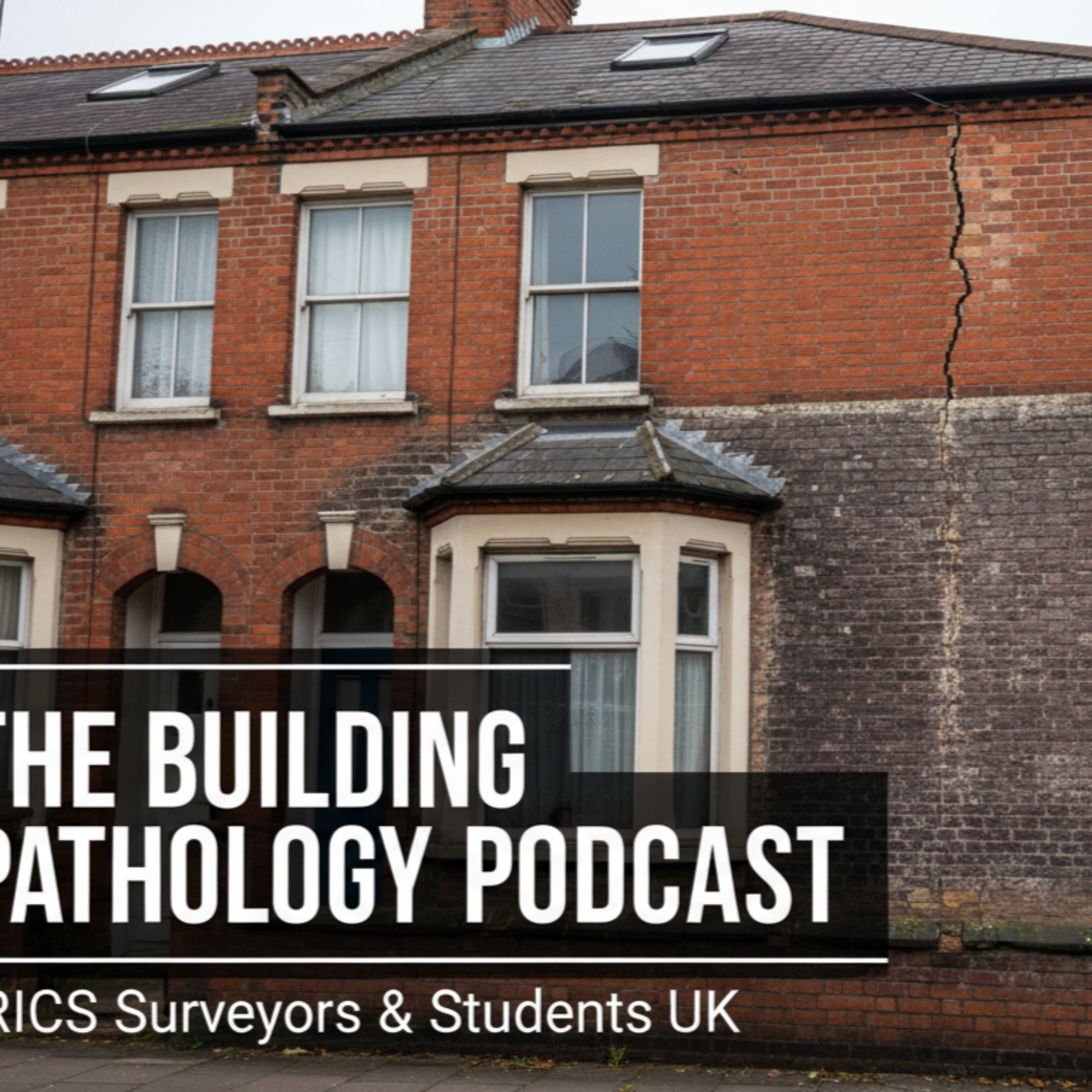
This show explores building pathology and residential surveying through the lens of real-world practice, aimed at RICS surveyors and student surveyors in the UK. Each episode break down how buildings behave, why defects occur, and how surveyors should identify, interpret, and report on common issues such as cracking, movement, damp, roof defects, and structural failure.The focus is on understanding causes and symptoms, developing professional judgement, and applying proportionate, defensible advice in line with RICS standards. Content is practical, clear, and technically grounded
-
20
AI CIM Q&A
AI CIM Q&A
-
19
SEO CIM Q&A
SEO CIM Q&A
-
18
RICS and the Responsible Use of AI in Residential Surveying and Valuation
This audio provides an independent, professional summary of the RICS global standard on the responsible use of artificial intelligence in surveying practice, with a specific focus on residential surveyors and valuers.It explains how AI may be used to support activities such as data analysis, comparable selection, and report preparation, while reinforcing that professional judgement, accountability, and ethical responsibility always remain with the surveyor.The recording highlights key principles including governance, transparency, data quality, professional scepticism, and client communication, and explains what the standard means in practice ahead of its mandatory implementation from March 2026.This content is intended for educational and professional development purposes and is not an official RICS publication.
-
17
Building Regulations Part B: Fire Safety in Buildings
Building Regulations Part B focuses on fire safety and the protection of life. This episode explains how the regulations aim to prevent fire spread, ensure safe escape routes, support firefighting operations, and reduce risks through building design and materials. We explore the key concepts of fire resistance, compartmentation, means of escape, and warning systems, helping listeners understand how Part B applies in real buildings.
-
16
Building Regulations Part A: Understanding Structural Safety
Building Regulations Part A sets out the requirements that ensure buildings are structurally safe and stable. In this episode, we break down the key principles behind structural integrity, load-bearing elements, foundations, and how buildings are designed to safely resist forces such as weight, wind, and movement. This podcast explains Part A in clear, practical terms, making it easier to understand how compliance protects both buildings and occupants.
-
15
part 3&4 Foundations of building movement
Building movement is rarely about the bricks; it’s about the earth they sit on. Settlement & Stress is a forensic podcast dedicated to the physics of foundations. We analyze the "Perfect Storms"—where 19th-century masonry meets 21st-century environmental shifts. We deconstruct Jurin’s Law, Clay Desiccation, and the "Wicking Effect" of lime mortar in moving structures. If you’re a professional in the ECO4 or Retrofit sector, this is your audio field guide to understanding how foundations breathe, bend, and—occasionally—break.
-
14
part 1&2 foundations of building movement
Building movement is rarely about the bricks; it’s about the earth they sit on. Settlement & Stress is a forensic podcast dedicated to the physics of foundations. We analyze the "Perfect Storms"—where 19th-century masonry meets 21st-century environmental shifts. We deconstruct Jurin’s Law, Clay Desiccation, and the "Wicking Effect" of lime mortar in moving structures. If you’re a professional in the ECO4 or Retrofit sector, this is your audio field guide to understanding how foundations breathe, bend, and—occasionally—break.
-
13
Question & Answer on various
Question & Answer on various
-
12
Movement in Buildings: Cracks, Causes, and Structural Behaviour
This episode examines movement in buildings from a building pathology perspective, helping UK RICS students and surveyors understand why structures move and how that movement presents on inspection. It explores ground-related movement, material and thermal movement, and structural behaviour, with detailed discussion on cracking patterns, secondary symptoms, and how to distinguish historic movement from active or progressive failure. The focus is on diagnosis rather than alarm, using observation, context, and proportional investigation to form defensible conclusions and report movement in line with RICS and BRE guidance.
-
11
Insect Attack in Buildings: Identifying Timber Pests and Structural Risk
This episode provides a comprehensive guide to insects that affect buildings in the UK, with a focus on those that damage timber and associated building elements. Aimed at RICS students and surveyors, it explains how to identify common timber-destroying insects, distinguish active infestations from historic attack, recognise visual and secondary symptoms, and assess the level of risk to structural integrity. The episode also covers life cycles, environmental conditions that encourage infestation, when treatment is necessary, when it is not, and how to report findings proportionately in line with RICS guidance and professional best practice.
-
10
Brickwork Pathology: How Masonry Fails and What It’s Telling You
This episode explores brickwork as a structural and environmental system, focusing on how and why masonry deteriorates over time. Aimed at UK RICS students and surveyors, it examines common brickwork defects including cracking, spalling, efflorescence, sulphate attack, mortar incompatibility, wall tie failure, and moisture-related decay. The episode teaches how to read brickwork on site, distinguish symptoms from causes, assess severity, and report defects proportionately in line with UK standards and best practice.
-
9
With a splash of Humour:- Building Pathology Fundamentals: From Symptom to Source
In this episode, we lay the foundations of building pathology for UK surveyors and students. We explore how buildings fail, why visible defects are rarely the real problem, and how to follow evidence from symptoms back to root causes. The discussion covers moisture as the primary enabler of decay, movement mechanisms, material behaviour, structural load paths, and the critical skill of distinguishing historic defects from active issues. Emphasis is placed on observation, pattern recognition, proportional investigation, and reporting in line with RICS and BRE guidance. This episode is designed to build diagnostic thinking and professional judgement essential for surveying practice.
-
8
Episode 4 Building Pathology Fundamentals: How to Read Buildings and Diagnose Defects
Episode 4 explores the core principles of building pathology from a UK surveying perspective. Aimed at RICS students and practising surveyors, this episode focuses on how buildings behave as dynamic systems, how defects develop over time, and how to interpret visible symptoms to identify underlying mechanisms. The discussion covers moisture, movement, material behaviour, structural load paths, and the importance of following evidence back to source, with emphasis on professional judgement, proportionate risk assessment, and RICS-compliant reporting.
-
7
Movement in Buildings: Understanding Cracks, Causes, and Structural Behaviour
In this episode, we explore movement in buildings from a UK building pathology and RICS surveying perspective. Designed for student and practising surveyors, the episode examines why buildings move, how different movement mechanisms present on inspection, and how to distinguish normal, historic movement from progressive structural concern. Topics include thermal movement, settlement, subsidence, heave, material behaviour, and crack analysis, with a strong focus on evidence-led diagnosis, recognised benchmarks, and proportionate reporting in line with RICS guidance.
-
6
Episode 3 Structural Loads & Load Paths: How Buildings Carry Weight and Why They Fail
n this episode, we take a deep dive into structural loads and load paths from a UK surveying perspective. Aimed at RICS students and practising surveyors, the episode explains how buildings transfer dead, live, wind, and roof loads through structural elements to the ground, and what happens when those load paths are altered by decay, movement, overloading, or alteration. The discussion focuses on recognising symptoms of load path failure on site, understanding serviceability versus structural risk, and applying proportionate, RICS-compliant advice in survey reports.
-
5
Insect Attack in Buildings: Diagnosis, Risk and Surveyor Judgement
In this episode, we take a detailed look at insect attack in residential buildings from a UK surveying perspective. Aimed at RICS students and practising surveyors, the discussion covers the most common timber-damaging insects found in UK properties, how to identify them on site, how to distinguish historic infestation from active attack, and when insect damage becomes a genuine structural concern. The episode focuses on evidence-based diagnosis, moisture as the underlying driver, and how to give proportionate, defensible advice in line with professional standards.
-
4
Episode 2: Stone Decay Mechanisms – Moisture, Salts, and Material Failure
This episode examines the principal mechanisms responsible for stone decay in traditional buildings, including salt crystallisation, delamination, granular disintegration, chemical weathering, and biological growth. Emphasis is placed on the role of moisture, stone orientation, and inappropriate repair methods, with practical guidance for surveyors on inspection, diagnosis, and reporting within the limits of a non-intrusive survey.
-
3
EPISODE 1 – BRICKWORK DEFECTS
Brickwork is one of the most widely used construction materials in the UK, yet it is also one of the most frequently misunderstood during surveys.
-
2
Thermal Movement in Buildings – Detailed Surveyor Guidance
Thermal movement is one of the most common but frequently misinterpreted causes of cracking inbuildings. Because it can visually resemble structural movement, subsidence, or material failure, thesurveyor must rely on pattern recognition, context, and process of elimination to diagnose itcorrectly.
-
1
Building Pathology
This episode explores building movement from a building pathology perspective, aimed at UK surveyors and student surveyors. It explains why movement occurs in buildings, how to distinguish between normal and problematic movement, and how to identify the underlying mechanisms during inspection.The talk covers ground-related movement such as subsidence, heave, settlement, and landslip, explaining their causes, typical crack patterns, and associated symptoms. It then examines material-related movement including thermal expansion, moisture movement, creep, and material decay, highlighting how everyday building materials respond over time.Structural and mechanical movement is also addressed, including roof spread, floor deflection, lateral wall movement, wall tie failure, and sway. Practical guidance is given on interpreting crack patterns, locations, and widths, and how secondary symptoms such as sticking doors and sloping floors support diagnosis.The episode focuses on pattern recognition, context, and professional judgement, helping surveyors assess risk accurately and provide proportionate, confident advice to clients.
We're indexing this podcast's transcripts for the first time — this can take a minute or two. We'll show results as soon as they're ready.
No matches for "" in this podcast's transcripts.
No topics indexed yet for this podcast.
Loading reviews...
ABOUT THIS SHOW
This show explores building pathology and residential surveying through the lens of real-world practice, aimed at RICS surveyors and student surveyors in the UK. Each episode break down how buildings behave, why defects occur, and how surveyors should identify, interpret, and report on common issues such as cracking, movement, damp, roof defects, and structural failure.The focus is on understanding causes and symptoms, developing professional judgement, and applying proportionate, defensible advice in line with RICS standards. Content is practical, clear, and technically grounded
HOSTED BY
Finley Boland 💪😎💪
CATEGORIES
Loading similar podcasts...
Frequently Asked Questions
How many episodes does Surveyors Insights have?
Surveyors Insights currently has 20 episodes available on PodParley. New episodes are automatically indexed when they're published to the podcast feed.
What is Surveyors Insights about?
This show explores building pathology and residential surveying through the lens of real-world practice, aimed at RICS surveyors and student surveyors in the UK. Each episode break down how buildings behave, why defects occur, and how surveyors should identify, interpret, and report on common...
How often does Surveyors Insights release new episodes?
Surveyors Insights has 20 episodes. Check the episode list to see recent publication dates and frequency.
Where can I listen to Surveyors Insights?
You can listen to Surveyors Insights on PodParley by clicking any episode. We provide an embedded audio player for direct listening, and you can also subscribe via your preferred podcast app using the RSS feed.
Who hosts Surveyors Insights?
Surveyors Insights is created and hosted by Finley Boland 💪😎💪.
URL copied to clipboard!