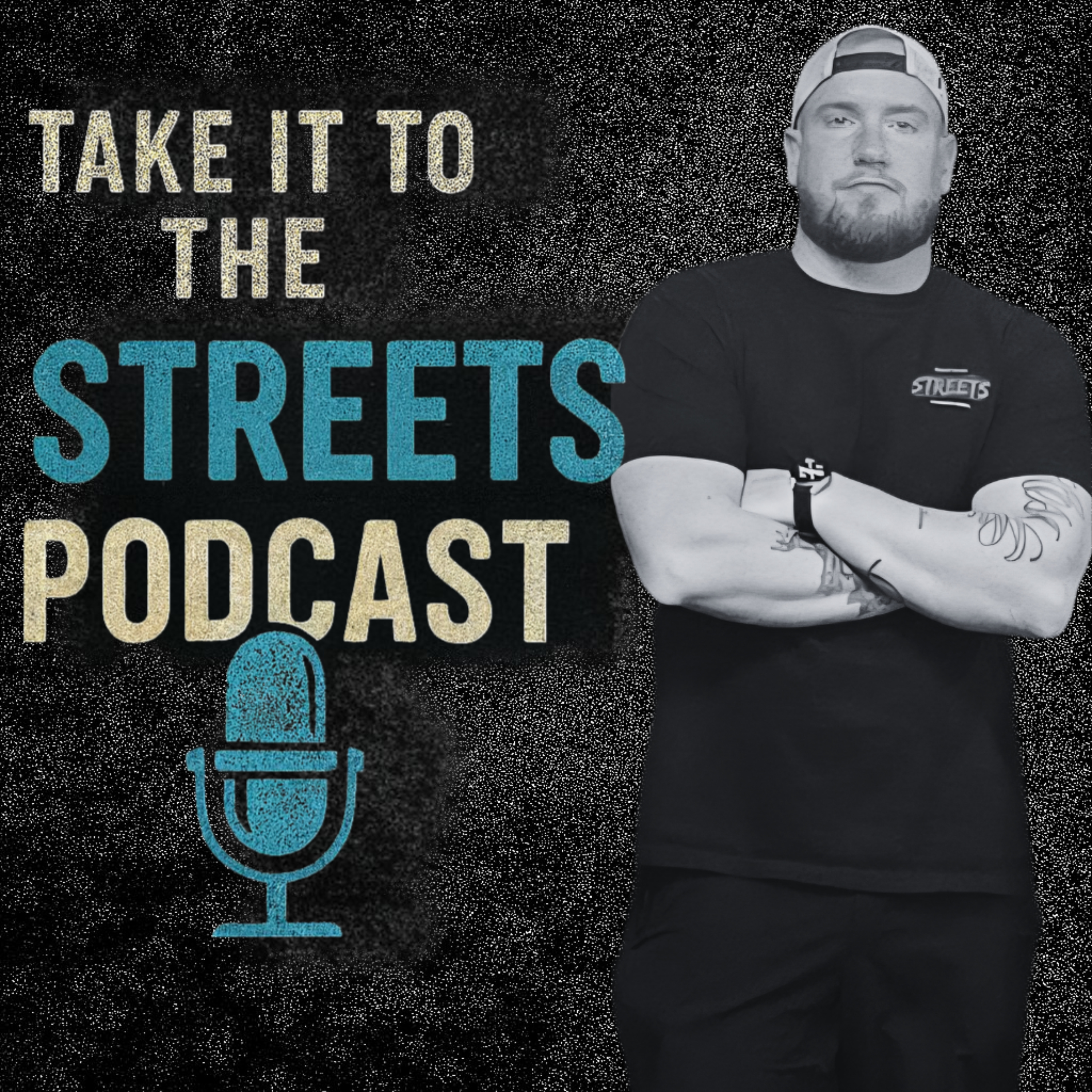
PODCAST · education
Take It To The Streets
by Blake Richardson
Real cops. Real stories. Real lessons.Hosted by Blake Richardson, this show dives into the world of proactive patrol, interdiction, and the realities of working the street. Each episode brings honest conversations with the men and women who’ve done the job. Active, retired, instructors, K-9 handlers, narcs, leaders, and officers who’ve been through the fire.If you’re a cop who wants to stay sharp, stay inspired, and stay in the fight then welcome to the show.
-
11
# 11 A Real Conversation on Interdiction with Kenny Williams
I sat down with Kenny Williams aka the red ninja, one of the most well-known instructors in interdiction, and we got into what actually works out on the road. The mindset, the small details, and the things officers either miss or never get taught in the first place.We talked about how interdiction has evolved, what separates guys who consistently find dope, guns, and money from the ones who don’t, and why behavior and reactions will always matter more than any checklist.Kenny also broke down the Justice X Conference he’s putting together in South Carolina. Bringing a group of top instructors together, not to make money, but to actually push training forward and give officers something real they can take back to their shift. We also hit on a big question a lot of guys struggle with… how do you show admin the value of proactive work? Is it stats, seizures, impact, or something else entirely?This wasn’t a structured interview. It was stories, experience, and real conversation about what works, what doesn’t, and where this job is going.If you care about getting better on the street, this is one you don’t skip.
-
10
# 10 Parcels and Consensual Encounters with Nic Bonney
This episode turned into exactly what this podcast is supposed to be.No script. No forced questions. Just real conversation with someone who actually lives this job.I sat down with Nic Boney from Nebraska State Patrol and ACEIT Interdiction and we got into it. This is not about traffic stops… But a completely different side of interdiction that most people don’t even think about. Buses, parcels, consensual encounters… and how to actually build cases from nothing but conversation and behavior.We talked about how he got there, the work it took, and the reality that nobody is just handed these spots. You either put in the work or you don’t.There’s stories in this one that show how fast things can go from a simple conversation… to running someone down… to search warrants… to multiple kilos and cash being pulled off the street—all in a matter of hours.And the biggest takeaway?You don’t need perfect conditions.You don’t need a K9.You don’t need to wait for the “right” assignment.You need to learn how to talk to people. You need to recognize behavior. And you need to be willing to go do it.If you’ve ever thought interdiction was just sitting on the interstate waiting for something to happen… this one will change how you look at the job.Hit play.
-
9
#9 The Reality of Criminal Interdiction with Nick Jackson
In this episode Blake Richardson sits down with nationally known interdiction Officer and Instructor Nick Jackson for a real conversation about what it takes to build a career in proactive policing and criminal interdiction.Nick breaks down how he got started, why finding the right agency matters, and what young officers need to know if they want to grow in interdiction without chasing shortcuts. Blake and Nick also get into roadside interviews, reading reactions, avoiding common mistakes, the role of LPRs, and why officers do not need a dedicated team or a K9 to be successful.The episode also takes a hard look at one of the most frustrating parts of the job: doing everything right and still watching a case get attacked, declined, or dismissed. From courtroom credibility to report writing and case preparation, this conversation is packed with practical lessons for officers who want to stay proactive, stay sharp, and stay in the fight.
-
8
#8 Interview & Interrogation with Erik Baum
Join retired Detective and Instructor Lieutenant Eric Baum for a straightforward conversation drawn from 27 years in law enforcement.In this episode, Eric shares practical insights from his time working narcotics, sex crimes, and long-term investigations. We talk about the importance of rapport in interviews, the realities of undercover work, and what it actually takes to build strong cases that hold up in court.This episode is about fundamentals, communication, patience, documentation, and professionalism.In this episode, we cover:• Why rapport matters more than most officers think• How patience and attention to detail impact investigations• The role of solid report writing and courtroom preparation• Challenges that come with undercover buys and surveillance• Staying proactive while staying within the lawWhether you’re on patrol, in investigations, or in a leadership role, this conversation reinforces the basics that make or break cases.Real experience. Real perspective. Real value.Take it to the streets.
-
7
#7 Beginner and Basic Interdiction tactics with Brady Bailey
In this podcast episode, Blake interviews Brady Bailey, a police training instructor specializing in a beginner and basic interdiction course. Brady shares his journey into law enforcement, the motivation behind his teaching, and the importance of proactive policing. He discusses the structure of his course, emphasizing the need for officers to be proactive rather than reactive. The conversation also touches on the significance of mentorship in law enforcement, the 'aha moments' that inspire officers, and advice for new recruits. Brady encourages officers to stay focused on their goals and avoid unnecessary drama in their careers.Takeaways:Brady Bailey teaches beginner and basic interdiction tactics.His interest in law enforcement grew from family influence.Teaching was not initially a goal for Brady.Proactive policing is essential for effective law enforcement.Mentorship plays a crucial role in developing new officers.A memorable stop can ignite passion for interdiction.New officers should seek out experienced mentors.Avoid drama and focus on what makes you happy in your career.Stay proactive and chase your goals in law enforcement.Take as much training as possible. Never stop learning.
-
6
#6 From Interdiction to Chief of Police
In this conversation, Chris Green shares his extensive experience in law enforcement, particularly in interdiction and K9 operations.He discusses the challenges and rewards of working in interdiction, the importance of proactivity, and the dynamics of building a successful team.Chris emphasizes the need for training, collaboration, and understanding the impact of their work on the community. He also shares compelling success stories, including a significant case involving murder suspects, highlighting the critical role of law enforcement in saving lives and making a difference.In this conversation, Chris and Blake discuss various aspects of law enforcement, focusing on drug interdiction, asset forfeiture, and the challenges of career progression within the police force. They delve into the legal nuances of asset forfeiture, and the importance of mentorship and training in developing future leaders in law enforcement. Chris shares his experiences transitioning to a leadership role as a chief of police, emphasizing the need for a balance between administrative duties and fieldwork.Takeaways Chris Green has over 30 years of experience in law enforcement, primarily in interdiction.Interdiction requires a unique mindset and the ability to handle failure.Building relationships and networking is crucial for success in interdiction.Proactive policing can significantly reduce crime in communities.Training and experience are essential for effective interdiction work.Understanding the dynamics of drug and money trafficking is vital for interdiction officers.Collaboration with other agencies enhances interdiction efforts.Success in interdiction often comes from recognizing criminal behavior and characteristics.Officers should be rewarded for both proactive and reactive policing efforts.The impact of interdiction work extends beyond local communities, affecting broader regions. Asset forfeiture requires a clear link to drug-related activities.The burden of proof for civil asset forfeiture is lower than for criminal cases.Using drug detection tools like ion scan machines can enhance evidence collection.Training and experience are crucial for effective interdiction work.Career advancement in law enforcement can be hindered by administrative politics.Mentorship plays a vital role in developing new officers.Successful leaders in law enforcement must balance administrative duties with fieldwork.Understanding the legal framework is essential for effective policing.Building a strong team is key to successful law enforcement operations.
-
5
#5 Beyond the Passenger Car: Bus Interdiction With Michael Hubbard
In this episode, I sit down with Sergeant Michael Hubbard, a 13-year law enforcement veteran who lives and breathes pro-active policing and interdiction.We break down interdiction beyond the typical passenger car stop, talking buses, car haulers, and non-traditional vehicles that often get overlooked, but move huge amounts of criminal activity when officers aren’t paying attention. Michael breaks down how he handles bus interdiction, from the stop to recovering the dope. As a Sergeant, ICE Task Force Officer, and seasoned interdiction officer, Michael brings real-world experience from the street. We also dive into leadership, staying proactive as you promote, and how to keep officers hungry, motivated, and effective instead of falling into reactive policing.This conversation is for officers who want to think bigger, work smarter, and stay dangerous on the road, regardless of rank, assignment, or years on the job.If you’re serious about proactive patrol and real interdiction, this is one you don’t want to miss.
-
4
#4 A Mind Caught Between Two Gunfights W/Jamie Wyatt-Part 2
Episodes 3 and 4 dive deep into the mindset, heart, and resilience of Jamie Wyatt, a man who has survived two officer-involved shootings and continues to stand strong. This episode sits right between his two critical incidents. Episode 3 covers the first shooting, and Episode 4 will take you into the second. But this episode is where the real internal battle is exposed.In this conversation, Jamie opens up about the mental recovery after his first shooting. How he had to rebuild himself from the inside out, confront the weight of what happened, and prepare for the possibility of facing it again. We talk honestly about the fear, anger, guilt, and pressure that most cops bury because they think they’re supposed to. Jamie lays it all out so that another officer listening might realize they’re not alone.We get into leadership, both good and bad, and the impact it has on an officer trying to find their footing again. Jamie talks about the people who showed up for him when he needed them most, the ones who didn’t, and how family, faith, and brotherhood kept him grounded when the job tried to shake him apart.This episode isn’t about tactics. It’s about survival, perspective, and what it takes to keep going when the trauma doesn’t clock out when you do. We talk life lessons, the mental battles no one warns you about, and the hard truth that the uniform doesn’t make you bulletproof, physically or emotionally.If you’re a police officer who has faced critical incidents, or if you ever do, I hope this episode sits with you. I hope it brings awareness, offers strength, and reminds you that your mental health matters as much as your physical safety.Jamie’s story is raw, emotional, powerful and an important conversation for every cop, supervisor, and academy recruit to hear.
-
3
#3 A Mind Caught Between Two Gunfights W/Jamie Wyatt-Part 1
Episodes 3 and 4 dive deep into the mindset, heart, and resilience of Jamie Wyatt, a man who has survived two officer-involved shootings and continues to stand strong. This episode sits right between his two critical incidents. Episode 3 covers the first shooting, and Episode 4 will take you into the second. This episode is where the real internal battle is exposed.In this conversation, Jamie opens up about the mental recovery after his first shooting. How he had to rebuild himself from the inside out, confront the weight of what happened, and prepare for the possibility of facing it again. We talk honestly about the fear, anger, guilt, and pressure that most cops bury because they think they’re supposed to. Jamie lays it all out so that another officer listening might realize they’re not alone.We get into leadership, both good and bad, and the impact it has on an officer trying to find their footing again. Jamie talks about the people who showed up for him when he needed them most, the ones who didn’t, and how family, faith, and brotherhood kept him grounded when the job tried to shake him apart.This episode isn’t about tactics. It’s about survival, perspective, and what it takes to keep going when the trauma doesn’t clock out when you do. We talk life lessons, the mental battles no one warns you about, and the hard truth that the uniform doesn’t make you bulletproof, physically or emotionally.If you’re a police officer who has faced critical incidents, or if you ever do, I hope this episode sits with you. I hope it brings awareness, offers strength, and reminds you that your mental health matters as much as your physical safety.Jamie’s story is raw, emotional, and powerful, an important conversation for every cop, supervisor, and academy recruit to hear.
-
2
#2 Brett Spivy Part 2
In this episode, we hear a firsthand account from a full-time interdiction officer working the I-40 corridor in Tennessee. After being notified by the Tennessee Bureau of Investigation, he discovers that a recent traffic stop was far more significant than expected. The suspect he pulled over was involved in a serious crime, suspected of human trafficking. He shares the emotional weight of realizing he stopped the right person, and reflects on some of his most memorable moments on the job. The conversation also explores what inspired him to pursue a career in law enforcement and the unique challenges and rewards of proactive policing on one of America’s busiest highways.
-
1
# 1 Brett Spivy Part 1
In this episode, we hear a firsthand account from a full-time interdiction officer working the I-40 corridor in Tennessee. After being notified by the Tennessee Bureau of Investigation, he discovers that a recent traffic stop was far more significant than expected. The suspect he pulled over was involved in a serious crime, suspected of human trafficking. He shares the emotional weight of realizing he stopped the right person, and reflects on some of his most memorable moments on the job. The conversation also explores what inspired him to pursue a career in law enforcement and the unique challenges and rewards of proactive policing on one of America’s busiest highways.
We're indexing this podcast's transcripts for the first time — this can take a minute or two. We'll show results as soon as they're ready.
No matches for "" in this podcast's transcripts.
No topics indexed yet for this podcast.
Loading reviews...
ABOUT THIS SHOW
Real cops. Real stories. Real lessons.Hosted by Blake Richardson, this show dives into the world of proactive patrol, interdiction, and the realities of working the street. Each episode brings honest conversations with the men and women who’ve done the job. Active, retired, instructors, K-9 handlers, narcs, leaders, and officers who’ve been through the fire.If you’re a cop who wants to stay sharp, stay inspired, and stay in the fight then welcome to the show.
HOSTED BY
Blake Richardson
CATEGORIES
Loading similar podcasts...