
PODCAST · health
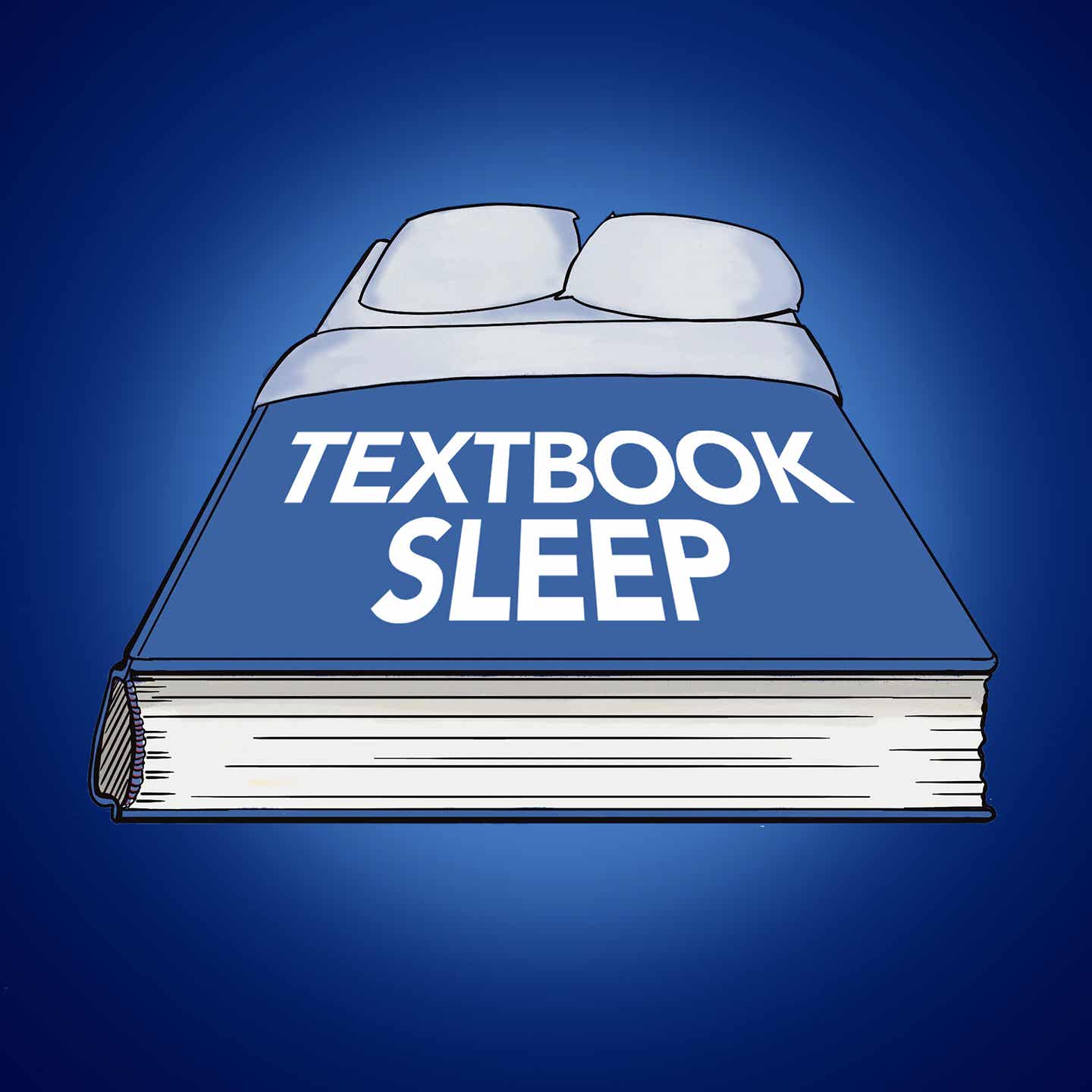
Textbook Sleep
by Jim Nolan
Fall asleep to the world's dullest textbooks, read aloud. jimnolan1.substack.com
Episodes
-
Textbook Sleep #55: Medieval Cities
The dark ages. Perfect nighttime reading. Welcome to Textbook Sleep, the Maximum-Strength Sleep Aid, where we read aloud boring public-domain textbooks to help you fall asleep. In this episode, we read Medieval Cities by French historian Henri Pirenne, first published by Princeton University…
more -
Textbook Sleep #54: Jane Austen, Teenage Historian
Jane Austen, teenage historian? Yup. Welcome to Textbook Sleep, the Maximum-Strength Sleep Aid, where we read aloud boring public-domain textbooks to help you fall asleep. This episode finds us listening to Austen’s History of England, From the Reign of Henry the 4th to the Death of Charles the...
-
Textbook Sleep #53: Psychology of the Stock Market
Welcome to Textbook Sleep, the Maximum-Strength Sleep Aid, where we read aloud boring public-domain textbooks to help you fall asleep. In this episode we’ll read aloud selections from Psychology of the Stock Market by G. C. Selden, published by Ticker Publishing Company in 1912. Subjects may...
-
Textbook Sleep #52: French Painting
Welcome to Textbook Sleep, the Maximum-Strength Sleep Aid, where we read aloud boring public-domain textbooks to help you fall asleep. In this episode we again explore A Text-Book of the History of Painting by John C. Van Dyke, first published in 1894. This time, we’ll be reading about painting…
more -
Textbook Sleep #51: The History of Painting
Welcome to Textbook Sleep, the Maximum-Strength Sleep Aid, where we read aloud boring public-domain textbooks to help you fall asleep. In this episode we’ll explore A Text-Book of the History of Painting by John C. Van Dyke, first published in 1894 by Longmans, Green, and Company. How can the...
-
Textbook Sleep #50: Whole Lotta Hegel
Welcome to Textbook Sleep, the Maximum-Strength Sleep Aid, where we read aloud boring public-domain textbooks to help you fall asleep. If there’s anything I’ve learned over the past 49 episodes, it’s that Hegel is the touchstone, the sine qua non, the alpha and the omega of aural sleep…
more -
Textbook Sleep #49: Night of the Hegel
Welcome to Textbook Sleep, the Maximum-Strength Sleep Aid, where we read aloud boring public-domain textbooks to help you fall asleep. Tonight, we return to the thorny thickets of Hegel—this time, The Phenomenology of Spirit, published in 1807. For all I can tell, the entire book is one big…
more -
Textbook Sleep #48: The Confessions of Jean Jacques Rousseau
Welcome to Textbook Sleep, the Maximum-Strength Sleep Aid, where we read aloud boring public-domain textbooks to help you fall asleep. Tonight it’s The Confessions by Jean Jacques Rousseau. Don’t get excited by the word “confessions.” If like me you were expecting a big tell-all about…
more -
Textbook Sleep #47: Sleepy Spinoza
Welcome to Textbook Sleep, the Maximum-Strength Sleep Aid, where we read aloud boring public-domain textbooks to help you fall asleep. Fortunately for sleep lovers, it’s Ethics by Baruch Spinoza, Part III, on the origin and nature of emotions. Oh, it’s dull. Wonderfully dull. Intensely dull. We...
-
Textbook Sleep #46: Summer Rerun—Low-Dose Kant
It’s summer. The time of the year for sunburns. Seals and Crofts. And reruns. So I looked back upon our collection of boring tomes and was quickly drawn to Immanuel Kant. Even among his Textbook Sleep peers, he is exceptionally boring. That’s why this recording is so short—you only need a low…
more -
Textbook Sleep #45: Oliver Wendell Holmes Jr. on Contract Law
Welcome to Textbook Sleep, the Maximum-Strength Sleep Aid, where we read aloud boring public-domain textbooks to help you fall asleep. I’m sorry to say that we’re once again featuring The Common Law by Oliver Wendell Holmes Jr., this time on the scintillating subject of contract law. Well, I...
-
Textbook Sleep #44: Trouble in 12th-Century Rome
Welcome to Textbook Sleep, the Maximum-Strength Sleep Aid. To help you sleep, we read aloud the boring texts that once put you to sleep in school. Edward Gibbon’s The History of the Decline and Fall of the Roman Empire is again our choice. In Volume 6, the decline is fully underway. One poignant...
-
Textbook Sleep #43: The Decline and Fall Asleep of the Roman Empire
Welcome to Textbook Sleep, the Maximum-Strength Sleep Aid. To help you sleep, we read aloud the boring texts that once put you to sleep in school. Like Edward Gibbon’s The History of the Decline and Fall of the Roman Empire. A.K.A. the decline and fall of your insomnia. This is my second reading...
-
Textbook Sleep #42: Gibbon's Decline and Fall of the Roman Empire
Edward Gibbon’s The History of the Decline and Fall of the Roman Empire. Talk about too much information. Welcome to Textbook Sleep, the Maximum-Strength Sleep Aid. To help you sleep, we read aloud the boring texts that once put you to sleep in school. This famous six-volume tome has been making...
-
Textbook Sleep #41: Deceit Made Dull
Hello and welcome to Textbook Sleep, the Maximum-Strength Sleep Aid. Our goal is simple—to bore you to sleep by reading aloud textbooks of little or, frankly, zero interest to anyone. Tonight I’ll continue reading The Common Law by Oliver Wendell Holmes Jr. It’s uncommonly dull. Sensationally…
more -
Textbook Sleep #40: Oliver Wendell Holmes Jr. on Torts
Welcome to Textbook Sleep, the Maximum-Strength Sleep Aid, where we read aloud boring public-domain textbooks to help you fall asleep. The Common Law by Oliver Wendell Holmes Jr. was published in 1881 and has been making law students nod off ever since. It turns out that tort law has nothing to…
more -
Textbook Sleep #39: Lies, Damned Lies, and Statistics
Welcome to Textbook Sleep, the Maximum-Strength Sleep Aid, where we read aloud boring public-domain textbooks to help you fall asleep. And what could be more boring than statistics? Willford I. King, Instructor in Statistics at the University of Wisconsin, might take issue with that. He is the...
-
Textbook Sleep #38: I'm Sorry, More Hegel
Welcome to Textbook Sleep, the Maximum-Strength Sleep Aid, where we read aloud boring public-domain textbooks to help you fall asleep. When we released our first two episodes of Hegel’s History of Philosophy, sleep scientists around the world noted a steep spike in the hours and quality of sleep...
-
Textbook Sleep #37: A Manual for Lighthouse Keepers
Welcome to Textbook Sleep, the Maximum-Strength Sleep Aid, where we read aloud boring public-domain textbooks to help you fall asleep. But you know who can’t fall asleep? Lighthouse keepers. Too many lives at stake. Still, they were forced to read Instructions to Light-Keepers, published by...
-
Textbook Sleep #36: The Hell of Hegel, Pt. II
Welcome to Textbook Sleep, the Maximum-Strength Sleep Aid, where we read aloud boring public-domain textbooks to help you fall asleep. Unfortunately, we return to Hegel’s History of Philosophy. Last week’s episode was described by some as deeply, even bottomlessly boring. I would be remiss by not...
-
Textbook Sleep #35: Hegel's History of Philosophy
Welcome to Textbook Sleep, the Maximum-Strength Sleep Aid, where we read aloud boring public-domain textbooks to help you fall asleep. We have a doozy for you tonight—it’s going to be an especial challenge to stay awake as I read it. Georg Wilhelm Friedrich Hegel’s History of Philosophy is...
-
Textbook Sleep #34: Fundamentals of Bacteriology
The H-ion concentration method of standardization! The selective action of anilin dyes! The mechanism of entrance of pathogenic organisms into the body! These and more, MUCH MORE, await you in this episode of Textbook Sleep, where we read aloud boring public-domain textbooks to help you fall...
-
Textbook Sleep #33: Railroad Construction
Welcome to Textbook Sleep, the Maximum-Strength Sleep Aid, where we read aloud boring public-domain textbooks to help you fall asleep. Or, should we say Handbook Sleep? For tonight, we will read: The Handbook of Railroad Construction; for the Use of American Engineers, Containing the Necessary...
-
Textbook Sleep #32: Ralph Waldo Emerson on Art
Welcome to Textbook Sleep, the Maximum-Strength Sleep Aid, where we read aloud boring public-domain textbooks to help you fall asleep. We continue with another sleep-inducing essay by Emerson. By listening to it, you will join the hundreds of thousands of students who have struggled heroically to...
-
Textbook Sleep #31: Where's Ralph Waldo?
Welcome to Textbook Sleep, the Maximum-Strength Sleep Aid podcast, where we read aloud boring, public-domain textbooks to help you fall asleep. A listener recently informed us that she “used to read Ralph Waldo Emerson as a sleep aid, while in college.” It happened that the Textbook Sleep library...
-
Textbook Sleep #30: The Story of Rope
Here’s a question posed by The Book of Wonders, published in 1915: “How many have ever given a thought to the question of where rope comes from and how it is made, or realize what a variety of uses it is put to, and how dependent we are upon it in many of the everyday affairs of life?” The answer...
-
Textbook Sleep #29: How Paint Is Made
Watching paint dry—a famously boring exercise. Tonight, we will surpass that level of tedium, by hearing how paint is made. Welcome to Textbook Sleep, the Maximum-Strength Sleep Aid podcast. We read extremely boring public-domain textbooks to help you fall asleep. Get full access to Pieces of Jim...
-
Textbook Sleep #28: The Book of Wonders
In the beginning was the word. But we couldn’t remember the word, because we couldn’t write it down. Welcome to Textbook Sleep, the Maximum-Strength Sleep Aid podcast that reads aloud boring, public-domain textbooks to put you to sleep. Tonight’s textbook examines the mysteries of how things…
more -
Textbook Sleep #27: The Voucher System of Accounting
Welcome to Textbook Sleep, the Maximum-Strength Sleep Aid podcast that reads aloud boring public-domain textbooks to help you fall asleep. What a treat we have for you tonight. While in Textbook Sleep #11 we delved into the theory of accounting, now we get even more specific, more dull, more…
more -
Textbook Sleep #26: Business Letters
Have you ever eaten the king of nuts, the budded or grafted paper shell pecan? That’s the grabber introductory sentence of a sales letter in Business English by Rose Buhlig of Tilden High School in Chicago, published in 1914. You will not hear me read it, as you will be already sawing logs. But I...
-
Textbook Sleep #25: Business English
Business English is just like English English, only more twisted and tortured and obfuscatory. If you’re good at it. Fortunately for our purposes, it is also—almost without exception—incredibly boring. Welcome to Textbook Sleep, the Maximum-Strength Sleep Aid podcast that reads aloud boring…
more -
Textbook Sleep #24: Orchard, Garden, and Field Insects
Have you ever had a hankering to learn about the Codling Moth? The Cankerworm? The Hessian Fly? Of course not. They are not only deadly to crops, they are deadly boring. In other words, perfect subjects for Textbook Sleep, the podcast that reads aloud boring public domain textbooks to help you…
more -
Textbook Sleep #23: Market Gardening Including Peas and Tomatoes
Welcome to another episode of Textbook Sleep, the podcast that reads aloud boring public domain textbooks to help you fall asleep. My voice is also boring. When I speak to people on the phone, it’s not unusual that I hear snoring and have to hang up. Tonight we read again from Agriculture for...
-
Textbook Sleep #22: Agriculture for Beginners
Welcome to another episode of Textbook Sleep, the Maximum-Strength Sleep Aid. We read aloud boring public domain textbooks to help you fall asleep. This time we’ll be exploring Agriculture for Beginners, by Burkett, Stevens and Hill, first published in 1903. Today, few of us work in agriculture,...
-
Textbook Sleep #21: More Experimental Psychology by Harvard's Edwin Boring
Textbook Sleep, the Maximum-Strength Sleep Aid podcast, combs the planet to find the most boring public domain textbooks to read aloud to help you fall asleep. Tonight we continue with one of our greatest discoveries: A History of Experimental Psychology by Professor Edwin Boring. In 1950, it…
more -
Textbook Sleep #20: Experimental Psychology
Well, we have hit the mother load of boring textbooks to read from: A History of Experimental Psychology by—wait for it—Edwin G. Boring, Professor of Psychology at Harvard University. You would have thought that this poor man would have tried to overcompensate for his family name with lively...
-
Textbook Sleep #19: The Machinery of the Universe
The Machinery of the Universe. Hang on, that actually sounds interesting! Not to worry—it’s not. It’s physics, but with an interesting title—academic bait and switch. But for the purposes of Textbook Sleep, the Maximum-Strength Sleep Aid podcast, this 1915 public-domain book by A. E. Dolbear…
more -
Textbook Sleep #18: Booze and Bread
Welcome back to Textbook Sleep, the Maximum Strength, aural sleep aid, in which I read from soporific public domain textbooks. Subjects that once put you to sleep in the classroom or library, now putting you to sleep in bed. On tonight’s syllabus we’ll listen to another chapter of General Science...
-
Textbook Sleep #17: Man's Conquest of Substances
Hello and welcome to another episode of Textbook Sleep, the non-prescription yet habit-forming Maximum-Strength Sleep Aid. Time-released every Wednesday night at 8:30 Eastern Time. Tonight we continue to read from General Science by Bertha M. Clark, Ph.D. Dr. Clark was the Head of the Science...
-
Textbook Sleep #16: Photography
Welcome to Textbook Sleep, the Maximum-Strength Sleep Aid, where I read extremely boring public-domain textbooks to help people fall asleep. We continue with General Science by Bertha M. Clark, Ph.D. Specifically, we’ll hear what Dr. Clark has to say about photography, or I will anyway—you’ll be...
-
Textbook Sleep #15: The Ways of Water
Water is important. Don’t take my word for it, take that of Bertha M. Clark, Ph.D., Head of the Science Department at the William Penn High School for Girls in Philadelphia. She made this claim in General Science in 1912, and I see no reason to question whether it is not just as true today. We…
more -
Textbook Sleep #14: The Mingling of Molecules
Most of us have probably not given much thought to the “mingling of molecules.” For good reason: It’s stunningly boring, no matter how important it may be to our daily lives. Fortunately for us, Carleton W. Washburne wrote an entire chapter on it in his Common Science textbook in 1921, and it’s...
-
Textbook Sleep #13: Rabbit Biology by H.G. Wells
Textbook Sleep, the Maximum-Strength Sleep Aid podcast, asks, “what could possibly be duller than a Text-Book of Biology by H.G. Wells? Specifically, the chapter on the biology of a rabbit? Yes, that H.G. Wells—the guy who wrote The War of the Worlds, The Time Machine, and The Island of Doctor...
-
Textbook Sleep #12: Organic Chemistry
Welcome to Textbook Sleep, the Maximum-Strength Sleep Aid. Tonight’s reading will rapidly render you unconscious. It’s Organic Chemistry, a textbook from 1894 by W.H. Perkin and F. Stanley Kipping. Some find “Orgo” to be a fascinating pathway to a rewarding career, but most of us consider it a...
-
Textbook Sleep #11: Accounting, Theory & Practice
It’s difficult to imagine a subject more stupefyingly dull than accounting. It makes economics seem like a Michael Bay movie. Thus, you will soon experience a long, restful sleep. Because we’re going to read from Accounting, Theory and Practice, “a text-book for colleges and schools of business...
-
Textbook Sleep #10: Moby-Dick's Most Boring Chapter
There are certain chapters in great works of literature that must be skimmed, or better yet, skipped altogether. In Moby-Dick, that would be Chapter 32, “Cetology.” Cetology—the branch of biology that studies whales, dolphins, and porpoises—is not of much interest to the general reader. In fact…
more -
Textbook Sleep #9: The Latest in Geology (in 1854)
We’re going back in time tonight, searching for the dullest of dull writing to put you into a deep sleep. Soon after I begin to read from Principles of Geology by Sir Charles Lyell, M.A., F.R.S.—that is, Fellow of the Royal Society—you will experience something akin to that sensation immediately...
-
Textbook Sleep #8: Aristotle Yourself to Sleep
Welcome to Textbook Sleep, the Maximum-Strength Sleep Aid. Tonight, your cares will dissolve as I read from The Ethics of Aristotle. You will never find out exactly what those ethics were, you will be sound asleep, probably within minutes. In Athens, Aristotle was known for putting entire…
more -
Textbook Sleep #7: The Dangers of Herodotus
Before I start to read this ancient Greek historian, who has dependably caused heads to nod for thousands of years, I’d like to remind you not to operate heavy machinery—or even light machinery—while listening to Textbook Sleep, the Maximum-Strength Sleep Aid podcast. It has come to my attention...
-
Textbook Sleep #6: Kant Redux
He’s back and more boring than ever: Sleep therapist Immanuel Kant. Tonight on Textbook Sleep we’ll be continuing our nightly sleep-a-thon with another chapter of his Critique of Pure Reason, philosophical Sominex for generations of unfortunate students. It is reasonable to expect you won’t hear...
We're indexing this podcast's transcripts for the first time — this can take a minute or two. We'll show results as soon as they're ready.
No matches for "" in this podcast's transcripts.
No topics indexed yet for this podcast.
Loading reviews...
Loading similar podcasts...
Frequently Asked Questions
How many episodes does Textbook Sleep have?
Textbook Sleep currently has 54 episodes available on PodParley. New episodes are automatically indexed when they're published to the podcast feed.
What is Textbook Sleep about?
Fall asleep to the world's dullest textbooks, read aloud. jimnolan1.substack.com
How often does Textbook Sleep release new episodes?
Textbook Sleep has 54 episodes. Check the episode list to see recent publication dates and frequency.
Where can I listen to Textbook Sleep?
You can listen to Textbook Sleep on PodParley by clicking any episode. We provide an embedded audio player for direct listening, and you can also subscribe via your preferred podcast app using the RSS feed.
Who hosts Textbook Sleep?
Textbook Sleep is created and hosted by Jim Nolan.
URL copied to clipboard!