
PODCAST · society
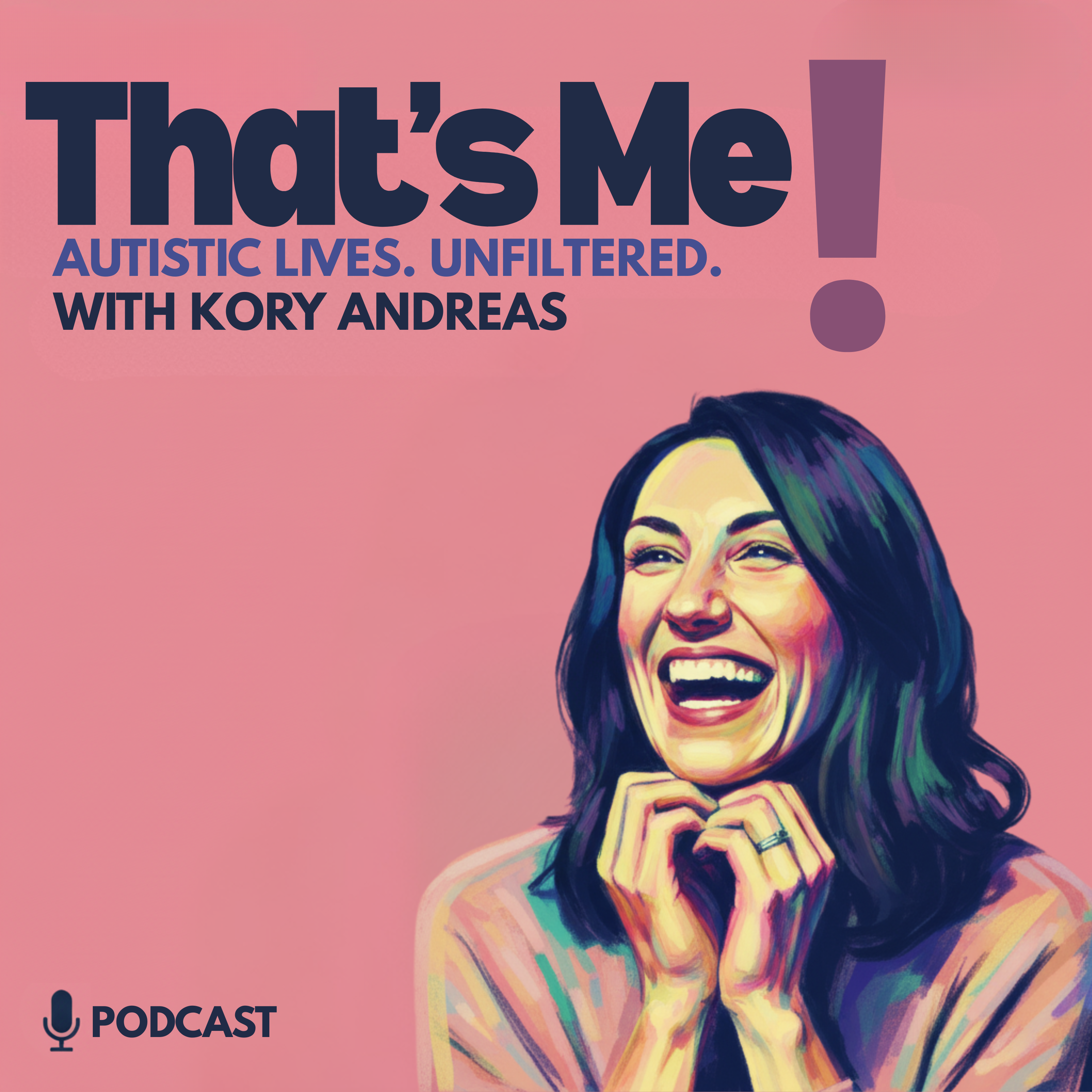
That's Me! Autistic Lives. Unfiltered.
by Kory Andreas
You know that moment when someone describes your exact experience and something in you goes - wait. That's ME?That's where this podcast begins.Hosted by Kory Andreas, a late-diagnosed AuDHD therapist and advocate, That's Meeee: Autistic Lives Unfiltered explores the lives of late-diagnosed, high-masking autistic adults. They say if you've met one autistic person, you've met one autistic person...and these are the ones who aren't in the textbooks, the movies, or the diagnostic criteria.We bring you real stories about burnout, masking, misdiagnosis, and what happens when you finally recognize yourself. Featuring autistic adults and the professionals who actually get it.This podcast is for autistic adults, people who love them, and anyone looking to come into our world with curiosity.New episodes weekly!
-
10
"If I Could Do It, I Would": Executive Dysfunction and Late-Diagnosed ADHD
Jessica Hazard is a therapist in New York City who spent years working in public health before working for her own private practice. She worked at school-based health centers, and community health clinics. She was also the clinical director at an agency serving young people who had been commercially sexually exploited.She got diagnosed with ADHD at 41, after spending years working with ADHD clients and thinking, "Wait, why do I relate to everything they're saying?"In this episode, Jessica talks about the grief that came with late diagnosis ("What would my life have looked like if I had known this?"), the "lazy" narrative and executive dysfunction, ADHD piles and moral failure, the overlap between ADHD and autism, why therapy boundaries were designed to protect therapists (not clients), and how her own neurodivergence makes her a better therapist for neurodivergent clients. We also talk about the harm of evidence-based models that weren't tested on neurodivergent people, why she tells all her teenage clients about her own ADHD, and why self-esteem is the real issue, not the way neurodivergence shows up.Find Jessica Hazard:Alma profile: Jessica HazardPrivate practice in New York City (licensed in NY)Works with adolescents and adults who have experienced traumaInsurance acceptedMentioned in this episode:ADHD pilesThe "lazy" narrativeRejection sensitivityThe overlap between ADHD and autismResources:Learn more about high-masking, late-diagnosed autism: Instagram @neurokoryousUnmasking Retreats: koryandreas.comYouTube: @ThatsMePod
-
9
Anorexia Autistica: Rewriting Everything We Know About Autism and Eating Disorders
Livia Sara is writing what she calls her "motherfucker book!" Over 100,000 words on anorexia and autism, complete with the entire history of both conditions and how their storylines are deeply intertwined. It's called Anorexia Autistica, and she wants it in the DSM one day. She writes on this topic from both lived and professional experiences and is changing the world of eating disorders for autistic people!In this episode, Livia breaks down everything we get wrong about eating disorders in autistic people, from the "eating disorder is a separate entity" model to forced compliance in treatment centers. She explains why it's not about body image, why weighing food actually helped her eat MORE, and why the word "recovery" can be so dangerous.We also talk about her book Rainbow Girl, the adaptive eating spectrum, why "the eating disorder talking" is gaslighting, and what it means to live label-free while honoring that labels can save your life. Kory and Livia gush about autistic joy and their shared love for writing, learning, and helping people through their lived experience. Hearts crack open as we share our transformative experiences within deliberately created autistic community. Livia's Books and Programs:Livia Sara's websiteLivia's books: "Rainbow Girl "(memoir), "How to Beat Extreme Hunger: A Neurodiversity-Affirming Guide to Food Freedom""How To Get Out of Quasi Recovery"Autistically ED Free Academy: 8-week group coaching program combining autism and eating adaptationsResources:Learn more about high-masking, late-diagnosed autism: Instagram.com/neurokoryousKory's Unmasking RetreatsOnline Neuro-affirming care course for therapists
-
8
"Not Smart Enough": Three Failed Autism Assessments and a Comedy Career That Finally Fits
Janet McNamara is a professional comedian whose 45-minute special "Not Smart Enough" went viral with over 130,000 views on YouTube. She quit corporate America after 15 years of panic attacks, got passed at the Comedy Cellar (with a little help from Amy Schumer), and is moving to New York to pursue comedy full-time.She's also been assessed for autism THREE times and rejected every time based on outdated criteria...because she's "coordinated," because "people with autism have high IQs," because she "doesn't have sensory issues" (she only wears one brand of socks and didn't notice until a friend pointed it out), and because she "makes appropriate facial expressions" (learned in social skills class as a kid).Her final diagnosis? Social anxiety disorder. Not autism.In this episode, Janet talks about sabotaging tests because she doesn't want to find "something else wrong with me," building a comedy career that works for her brain, the neurotypical scripts that feel fake, corporate sensory overload (seven people talking at once in meetings), and her best friend Emily saying, "That's because you're autistic."This conversation will make you laugh and cry. Janet's story is proof that sometimes you have to build your own life when the world won't accommodate you. A note from a neuro-affirming, AuDHD therapist/diagnostician: It doesn't have to be this way. If you've had negative healthcare experiences like Janet's, you're not alone. There are providers out there who listen and who "get it." Please connect with the resources below if you need support.Sharing this podcast helps get autistic voices into the world telling their stories. Please share with anyone who needs to hear they're not alone. Your story matters.Find Janet McNamara:YouTube: Janet McNamara (45-minute special "Not Smart Enough")Instagram: @janet.mcnamaraPerforming at the Comedy Cellar in NYC soon! Get more Janet at a town near you on Punchup Learn more about high-masking, late-diagnosed autism: Instagram @neurokoryousNeuro-affirming autism assessments Unmasking Retreats: koryandreas.comYouTube: @ThatsMePod Online Neuroaffirming care course for therapistsWant to tell your story on this podcast?
-
7
From Climate Justice to PDA (Pervasive Drive for Autonomy) Safe Circles: Why Community Is the Answer
Rabbi Shoshana Meira Friedman came through climate justice, congregational leadership, and a burnt-out autistic body raising a high-needs autistic child who wanted the calendar recited as a bedtime story.Her son's burnout at age five, despite doing everything "right," despite being neurodivergent-affirming, despite zero childhood trauma, led her to PDA (Pathological Demand Avoidance or Pervasive Drive for Autonomy) . And what she built from there changed everything we know about PDA. Rabbi Shoshana is the creator of the PDA Safe Circle, an approach that's actionable, visual, intuitive, and completely different from anything else in the PDA space.In this episode, Rabbi Shoshana explains why "low demand" isn't enough, how to actually map what's jabbing at your (or your child's) safe circle, and creating the conditions where thriving is possible. We also talk about grief work, community organizing, and trusting unconventional paths.We also talk about:The PDA Safe Circle approach: what it is, how it works, and why it's differentWhy arrows (not just demands) are what really matterThe antenna around our safe circles that detect threats to autonomy, control, social equality, and co-regulationHow climate grief work prepared her for disability advocacyBuilding an online community that's actually hopeful and safeThis conversation will change how you think about PDA, autonomy, trust, and what it means to build a life that actually fits.Find Rabbi Shoshana Meira Friedman:Website: https://pdasafecircle.comInstagram: @rabbishoshanaFree resources: Free coloring book (for all ages), blog with resources at pdasafecircle.comPDA Safe Circle Community:Everyone gets a free weekAccessibility rates available :no one is turned awayOne-on-one coaching, staff training, clinician certification programMentioned in this episode:PDA North America ConferenceAmanda Diekman podcast (life-changing for understanding PDA)Jenna Goldstein (ND3): https://nd3.orgResources:Learn more about high-masking, late-diagnosed autism: Instagram @neurokoryousUnmasking Retreats: https://koryandreas.comSubscribe to That's Me! podcast: Spotify | Apple Podcasts | YouTube
-
6
Philosophically Untenable: A School Psychologist's 15-Year Journey with Jenna Goldstein
Jenna Goldstein spent 15 years as a school psychologist watching the system pathologize, punish, and misidentify neurodivergent kids. Eventually, the gap between what she knew was right and what schools were willing to do became impossible to navigate. The schools and Jenna were "going in totally different directions" in their thinking, their worldviews about humans and children, their understanding of diversity. So she left, and built something better.In this episode, Jenna pulls back the curtain on what really happens in schools when a child might be autistic. She explains why schools aren't equipped to identify autism, how power dynamics silence professionals who see clearly, and what it means to create the conditions where neurodivergent kids can actually thrive.We also talk about:Why schools and professionals are "speaking a completely different language" about the same childThe three neurodivergent perspectives Jenna brings to her work (as an autistic person, parent of autistic kids, and former school psychologist)How she a one of the "best and brightest" students in schoolThe PDA Safe Circle and her work with Rabbi Shoshana Meira FriedmanWhat autistic joy looks like when you're doing hip hop dance as an adultThis conversation is a masterclass in seeing systems clearly, speaking truth even when it's unwelcome, and building the world neurodivergent people actually deserve!
-
5
From Helping a Student to Helping Herself: An OT's road to Late Diagnosis at 40
What happens when you're a occupational therapist in special education surrounded by neurodivergence every day...and then realize you're looking in a mirror? For Maggie Latona, it took a phone call with a parent about a student's autism diagnosis to finally see herself clearly. The stories the mom shared? Maggie did those things too.We talk about:Working in special education for years without recognizing yourselfThe phone call that changed everything: "She doesn't understand emotions" vs. "What if she's noticing everything?"When your therapist suggested autism a year earlier - and you weren't readyBeing "the responsible one, the smart one" and how that identity became a maskDiagnosed at 40: "No one would look back and think I was struggling"The imposter syndrome of high masking autism: family, job, friends..."Do I really get to claim this?"Confronting colleagues who say "No, you're not autistic" when you're high-masking at workAdvocating for students differently now: "Let me give you an inside track of what they're dealing with"Reframing goals: "We're not here to change someone's brain"Why eye contact doesn't matter and perseveration isn't OCDStimming all day long: finger piano, counting on toes, family "playing instruments"Eating lunch alone in your office with your sister with no small talkSpring break shutdown: when three days with a baby + friend sleepover = crash"Death by a thousand cuts" - learning what too much looks likeResin art as regulation: process, creation, and basing worth on accomplishmentCreating safe spaces at home: soft corner, bath, art studioPeople-pleasing vs. avoiding situations that don't feel goodThe goal: becoming the person who educates educators on what autism looks like in girlsGuest: Maggie Latona is a special education occupational therapist, late-diagnosed autistic adult at 40, resin artist, and advocate for neuroaffirming approaches in schools. She's the person who will pull you aside after an IEP meeting to say, "I don't think that diagnosis is right. Let me tell you why."Mentioned in this episode:Hypervigilance misunderstood as "not understanding emotions"OCD diagnosis vs. autistic perseverationThe "responsible one" identity as maskingStimming: finger piano, toe counting, audio tracksResin art and jewelry making as special interestSpring break shutdown and recoveryNeuro-affirming IEP goalsSuper recognizer traitsResources:Learn more about high-masking, late-diagnosed autism: Instagram @neurokoryousUnmasking Retreats: koryandreas.comYouTube: @ThatsMePod
-
4
My Neurodivergent Sash: Collecting Diagnoses Until Autism Finally Made Sense
What happens when you spend your whole life collecting diagnoses like Girl Scout badges: chronic stomach aches at nine, sensory issues with socks, toe walking, IBS, anxiety, depression...and nothing ever quite adds up? For Brittany Siegel, it took having neurodivergent children, hitting a wall in her early thirties, and the algorithm delivering the right videos at the right time.We talk about:•Growing up with unexplained medical issues that never quite made sense•The physical toll of undiagnosed autism: hypermobility, mast cell activation, POTS, binocular vision dysfunction•Why middle school was a crash course in becoming a "little fifth grade scientist"•Systematically learning how to fit in: basketball, shark watches, Gap jeans - check, check, check•The fear of trying new things when you're terrified of failing in public•How having children (especially the second one) destroyed all the coping mechanisms•Hormone changes as autism amplifiers: puberty, postpartum, perimenopause•The catastrophizing brain that predicts every possible disaster - and why it's actually protective•Calling hospitals to check if your husband is dead (again)•The mental file folder labeled "contagion" that won't close anymore•Why "negative thinking" is actually data collection from a lifetime of harsh lessons•Using pattern recognition as a superpower in your career•Rediscovering the Libby app and psychological thrillers as autistic joyGuest: Brittany Siegel is a late-diagnosed autistic adult, mother of neurodivergent children, and someone whose brain runs algorithms at all times to predict what could go wrong... and she has learned to use it to her advantage.Mentioned in this episode:Mast cell activation syndrome (MCAS)POTS (Postural Orthostatic Tachycardia Syndrome) and dysautonomiaHypermobility and Ehlers-Danlos Syndrome (EDS)Binocular vision dysfunction and prism glassesThe Libby app for library e-booksPredictive processing and the neurodivergent brainNedra Glover Tawwab's books on boundariesResources:Learn more about high-masking, late-diagnosed autism: Instagram @neurokoryousUnmasking Retreats: koryandreas.comYouTube: @ThatsMePod
-
3
People-Pleasing as Threat Management: The Burnout Cycles That Led to a Heart Attack
What happens when people-pleasing isn't just a personality trait, it's survival? When over-functioning isn't perfectionism, it's threat management? For Stephanie, it meant cycles of burnout that persisted until her body finally spoke up: a spontaneous coronary artery dissection. A heart attack at 40.We talk about:•Growing up with a volatile father and learning that people-pleasing keeps you safe•Middle school bullying as a curvy Latina girl in a stick-thin white community•How relational trauma and insecurity shaped every sexual relationship for decades•Writing three-hour emails because little-girl-you is terrified of being misinterpreted•The brilliant shenanigans: faking gallbladder attacks, forging school letters, stealing a whole week just to sit in closets and poke things with sticks•Knowing you needed to daydream and recharge, but having no language or analytics for why•Finding a work persona that finally worked: the last-name-only database engineer who could produce anything•Thirteen years of productivity until "parts started falling off the car"•The heart attack that happened while working through chest pain - and what SCAD (spontaneous coronary artery dissection) reveals about connective tissue and autistic bodies•Cycles of burnout that spiral tighter: when recovery takes longer than the fallSexual burnout and the body's full-stop refusal to participate•Music as both salvation and shame•Writing 200+ pages of memoir and turning pain into animated storytelling•Moon Unmasked: creating an autistic memoir through animation to protect identity while sharing truthGuest: Stephanie is a late-diagnosed autistic adult, database engineer, and creator of Moon Unmasked, an animated memoir series exploring the mass misinterpretations and survival strategies that shaped her life. She's a Latina woman from LA, a survivor of burnout and a literal heart attack, and someone who is looking to share her story in a creative new way.Find Stephanie:YouTube: @MoonUnmaskedInstagram: @xancthusMentioned in this episode:•SCAD (Spontaneous Coronary Artery Dissection)•Connective tissue disorders and autistic bodies•The conical pendulum metaphor for burnout cycles•Lola Blankets (the best weighted blankets)Resources:•Learn more about high-masking, late-diagnosed autism: Instagram @neurokoryous•Unmasking Retreats: koryandreas.comYouTube: @ThatsMePod
-
2
The Well: Misdiagnosis of Autism, Near-Death Experiences and Accessing Universal Knowledge
What does it mean to live "in the well"? Gazit Chaya Nkosi, a speech language pathologist and Safe and Sound Protocol practitioner, shares their journey from decades of misdiagnosis to finally understanding themselves as autistic, and what happened when they stopped trying to climb out of the cave.We talk about:•Growing up in an evangelical Christian community and the intersection of queerness and neurodivergence•Decades of psychiatric hospitalizations and every diagnosis except the right one•How hormonal transitions (puberty, postpartum, perimenopause) intensify autistic experiences•The suicide attempt that became a dividing line, and permission to stop performing•A near-death experience that changed everything•Polyvagal theory and the Safe and Sound Protocol: retraining the nervous system to recognize speech as safety•Vagus Nerve Stimulators•The concept of "the well"...accessing consciousness below surface level•Photographic memory and downloading information like ChatGPT•Direct knowing: understanding language beneath language•The grief that comes with being autistic in a culture that wasn't built for you•Queen Victoria, chickpea flour, and current autistic joys⚠️ CONTENT WARNING: This episode contains discussions of suicide, self-harm, psychiatric hospitalization, medical trauma, family trauma, and religious trauma.Skip to these timestamps to avoid specific topics:[05:16 - 06:03] - Psychiatric misdiagnosis[24:15-26:58] - Religious trauma and family rejection[28:07-29:25] - Suicide attempt and hospitalizationCrisis Resources:988 Suicide & Crisis Lifeline: Call or text 988, or chat at 988lifeline.orgTrans Lifeline: (877) 565-8860The Trevor Project (LGBTQ+ youth): (866) 488-7386Find Gazit Chaya:Site: therootedcoop.comYouTube: Gazit's channelCourses: Nervous system regulation Safe and Sound ProtocolMentioned in this episode:Polyvagal Theory by Dr. Stephen PorgesSafe and Sound Protocol (SSP)Pythiism by Rachel Lee HarrisProof of Heaven by Dr. Eben AlexanderThe Telepathy Tapes podcastLindsey Mackereth on SubstackResources:Learn more about high-masking, late-diagnosed autism: Instagram @neurokoryousUnmasking Retreats: koryandreas.comYouTube: @ThatsMePod
-
1
Finding Neurodivergent Joy After Autistic Burnout
Austen Marie spent years as a TK teacher trying to create trauma-informed, neuro-inclusive classrooms - until autistic burnout forced her body to stop. In this conversation, we talk about what it's like to grow up undiagnosed as a first-generation American, how masking as a woman in special education nearly destroyed her, and what it looks like to choose a slower, simpler life in order to heal.We cover: • The cost of being late-diagnosed and high-masking • How neurodivergent traits were used against her in a narcissistic relationship • What it means to parent neurodivergent kids while healing your own nervous system • Why creating regulation-first environments for children is revolutionary • The moment TikTok helped her finally recognize herself • Choosing a "nervous system life" over financial security • Finding joy in using your voice to change how the world sees autistic kidsGuest: Austen Marie is a former TK teacher, mother of neurodivergent children, and host of The NeuroSpicy Mom Pod, a podcast for late-diagnosed adults navigating parenthood and reparenting themselves.Find Austen Marie: • Podcast: The NeuroSpicy Mom Pod (Patreon & YouTube) • Instagram: @_neurospicymama • YouTube: @neurospicymompodMentioned in this episode: • NeuroSpicy Tea Time (Patreon community conversations) • Unmasking Retreats with Kory AndreasResources: • Learn more about high-masking, late-diagnosed autism: Instagram @neurokoryous • Unmasking Retreats: koryandreas.com • YouTube: @ThatsMePod
No matches for "" in this podcast's transcripts.
No topics indexed yet for this podcast.
Loading reviews...
ABOUT THIS SHOW
You know that moment when someone describes your exact experience and something in you goes - wait. That's ME?That's where this podcast begins.Hosted by Kory Andreas, a late-diagnosed AuDHD therapist and advocate, That's Meeee: Autistic Lives Unfiltered explores the lives of late-diagnosed, high-masking autistic adults. They say if you've met one autistic person, you've met one autistic person...and these are the ones who aren't in the textbooks, the movies, or the diagnostic criteria.We bring you real stories about burnout, masking, misdiagnosis, and what happens when you finally recognize yourself. Featuring autistic adults and the professionals who actually get it.This podcast is for autistic adults, people who love them, and anyone looking to come into our world with curiosity.New episodes weekly!
HOSTED BY
Kory Andreas
Loading similar podcasts...
URL copied to clipboard!