
PODCAST · arts
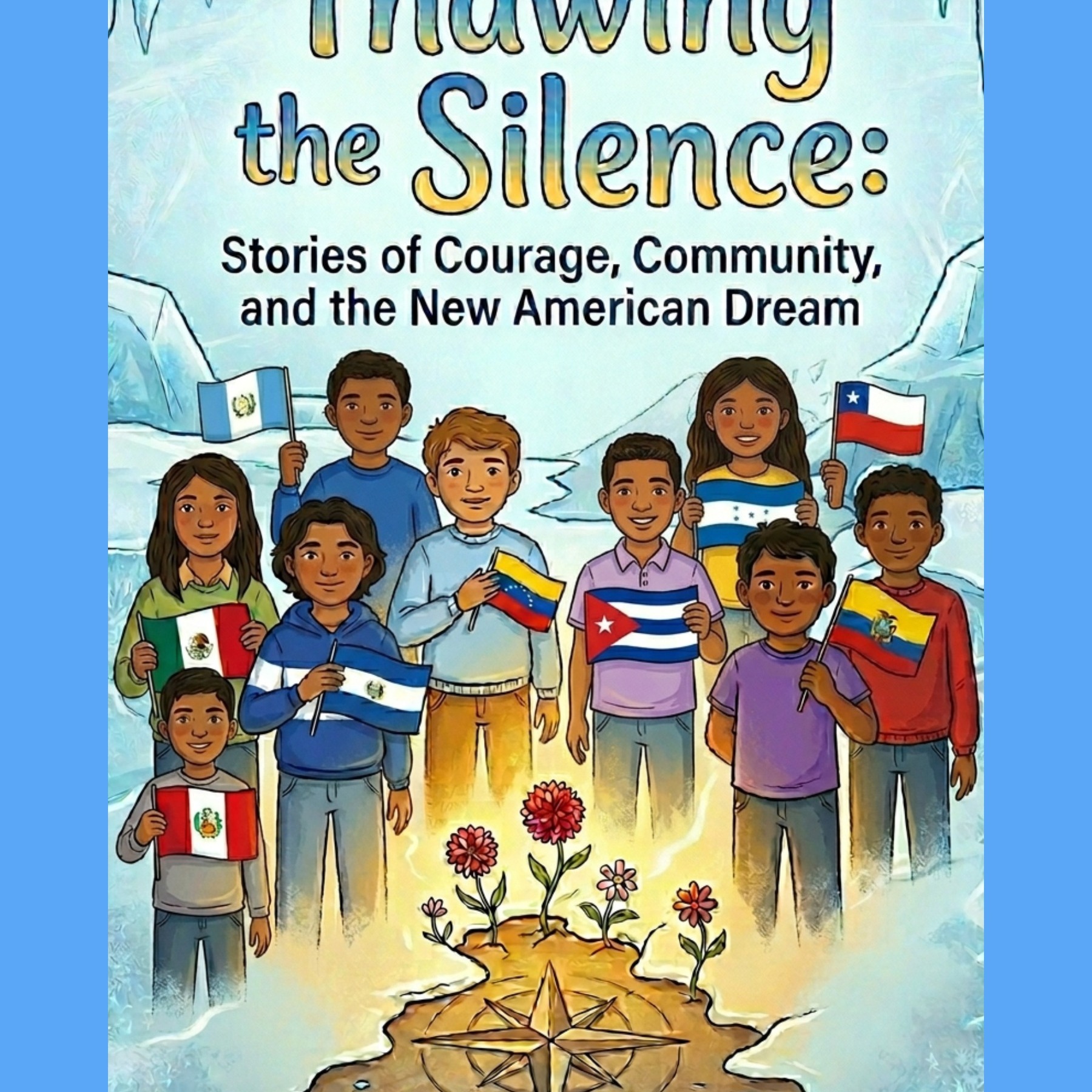
Thawing the Silence
by Karla Pochecho
various stories about children coming to America from various Latin countries
-
9
Yolimar Del Carmen
I remember the moment I left my country. I was 15 years old, living in Venezuela. I was with my father and my sister, and together we made the journey — walking long stretches and riding in a car during other parts of the trip. I will never forget that day, because it was the day I had to say goodbye to everything and everyone I loved. First, we left Venezuela and crossed into Colombia. From there, we faced one of the most grueling challenges of the entire journey — the Darién jungle. The hardest part was pushing through that jungle, step after step, with no guarantee that we would ever reach the other side. There were moments when I felt I couldn't take another step, when my body had nothing left to give and my spirit was wearing thin. After that, things did not get much easier. There was still a long road ahead before we would reach our destination. We kept going anyway. Finally, we arrived in Mexico, where we faced one last crossing — the Río Bravo — before setting foot in the United States. After this experience, I was able to reflect on everything people sacrifice in search of a better future, not only for themselves but for the families they leave behind. This story is important to me because it reflects everything I went through in pursuit of that better future. I hope my story shows you that despite all the adversity life throws at you, you should never give up — keep fighting for your dreams, and keep fighting for the people you love.
-
8
Heydi Coto
I remember the moment I left my country. I was 14 years old, living in Honduras. I was with my little sister, who was 12, and together we faced many challenges and experiences — some beautiful, but mostly difficult — as we made our way to the border to turn ourselves in to immigration. I will never forget that day, because it was an incredibly difficult decision for two kids as young as us. We had to leave our entire lives behind, but we did it for a better one. When we received the news that we were going to have to emigrate from Honduras to the United States — alone, just the two of us, from one moment to the next — it hit us hard. We had to prepare quickly, gathering only the most basic and essential things for what was going to be a very long and difficult trip. It was a secret from almost everyone. Even my father never found out we had left the country. The hardest part started right from the beginning, as if something didn't want us to leave. We were supposed to be taken to a meeting point where the person guiding us to the US border was waiting. That's when everything started to go wrong. The border authorities in Honduras detained my uncles, who were our guides, accusing my uncle of being a ringleader in child trafficking. Fortunately, he had connections with people in higher positions of authority, and we managed to get out of that trouble. By then it had gotten very late, and we thought we had lost our chance entirely — the meeting time had already passed. But somehow, everything was resolved and we were able to leave. I felt so sad watching everyone go through those problems, because the only thought in my mind was, "I'm not going to see my mom yet." That feeling was mixed with guilt — like I had betrayed my dad by leaving without saying a word or saying goodbye. I won't deny that I was scared. But I held onto one thing: after three years apart, I was going to hug my mom again.
-
7
Anthony Peley Gonzalez
I still remember the smell of arepas on the morning my life changed. I was 13 years old when my mother and I, along with a group of people we barely knew, began the journey of leaving our country. I did not fully understand what was happening, but I could feel it — in my mother's silence, in the way the adults moved fast, like something was pushing them forward. The journey was not easy. There were storms along the way, and a long, tiring walk that tested every step. The hardest moment came when we were left behind on a mountain trail, with night almost upon us. I was scared. The jungle felt heavy and dark, full of sounds I did not know. But somehow, we kept going. We found our way out — tired and shaken, but safe. That experience never left me. I learned that even when things fall apart, even when the path disappears and the light fades, you keep walking. You carry your fear with you and you move forward anyway. That is what my mother showed me. That is what I will always carry — along with the memory of home, and the simpl
-
6
Litzy
It all began one morning in Colombia—in my home country, in my hometown called Cicuco. Due to various troubles, my family and I were forced to leave the country. We set out on June 10, 2024, at 2:00 in the morning. We traveled from my hometown to a region of Colombia called Montería; from there, we stopped and spent 10 days held captive in Acandí. Afterward, we spent one day at the edge of the jungle; then, at 5:00 in the morning, we entered what is known as the Darién Gap. That is where the true odyssey of migration began; it took us two days to make it out. We emerged from the jungle and arrived at Bajo Chiquito. We spent a day there, arriving as if we felt no fatigue at all. We ate—we didn't even know what we were eating, but we ate it nonetheless. We went to bathe in the nearby river; our feet were covered in sores, and we were utterly exhausted, yet we felt a sense of accomplishment—we had been strong enough to make it through that ordeal. From there, the Panamanian army arrived to extract us and transport us to a facility known as "La Uno" in Panama, where we stayed for 15 days. From that point on, we continued moving forward, traveling from country to country until we reached Nicaragua. There, we were robbed and spent 10 days living on the streets. From there, we pressed on until we reached Hidalgo, the border crossing between Mexico and Guatemala Once there, everything we had left was taken from us. We remained there for a time until immigration authorities transported us to Tapachula, where we slept outside the bus terminal, right on the street. We then continued our journey until we reached Masatepe, from where we walked 50 kilometers to reach Pijijiapan.
-
5
Luis Monroy
My Journey to the United States I remember the moment I came to this country. I was 8 years old, living in Guatemala. I was with my mother, and together we made the journey to the United States. I will never forget that day — it was one of the most important days in my family’s life, and it was all for the sake of a better future. First, my family and I gathered all of our most important belongings and got ready to leave. Then we took a series of buses to make our way to the United States. The hardest part came when my family and I were taken by immigration officials to a place known as the Ice Room. It was cold, uncertain, and frightening. I felt sad knowing I had left behind my grandmother, my cousins, and my friends — people I loved and didn’t know when I would see again. After that, we pushed through, and we came to this country to build a better future
-
4
Carolayn Ponce
I arrived in Tapachula, Mexico; from there, we took a motorcycle to a hotel, and the next day we traveled by bus to Tuzla. In Tuzla, we slept at the bus terminal until the next bus departed for Arriaga. Then, we caught another bus that took us to Mexico City. When we arrived in Mexico City, we didn't know what to do or where to go, because right after we got off the bus, we were robbed of everything we had. After that, we were planning to sleep under a bridge, but my mother managed to get in touch with my stepfather and told him what had happened to us; he then sent someone to pick us up. Afterward, we arrived at a house where there were other immigrants; we stayed in that house for about two or three weeks. After those weeks, we took a bus to Sonoyta—a journey that took two days. When we arrived, some men picked us up and took us to a house filled with many immigrants; we stayed in that house for a week. After that week, they took us toward the wall (the border). We crossed the wall and walked through the desert for two hours until Border Patrol stopped us and took us into custody. We spent a week in immigration detention (I don't remember exactly why; there were no windows, and we couldn't tell the time). Finally, they released us and allowed us to proceed. After that, they transported us by bus to Tucson Arizona, and then took us to a hotel. The next day, we took a bus to Los Angeles, California, where my stepfather picked us up. And that is the story of how my entire journey to the U.S. began and ended By Carolayn Ponce
-
3
Shelly's Story
A Journey of Sacrifice and HopeThis story captures the powerful experience of a family migrating for a better life.Family Sacrifice: Parents left behind their own families and homeland, driven by hope for their child's future.Emotional Complexity: The journey was filled with both sadness (leaving loved ones) and happiness (seeking new opportunities).Generational Impact: The child recognizes the depth of their parents' sacrifices and feels gratitude and responsibility.Universal Message: Behind every child's success, there may be untold stories of parental sacrifice and resilience.Understanding these experiences can foster empathy and appreciation for the challenges faced by immigrant families.
-
2
Ailyn Arriaga
I remember the moment I came to America. I was 6 years old, living in Guatemala. I was with my mom, and together we traveled by car and on foot. I will never forget that day — it was really hard and really scary. First, we gathered what we could carry, which wasn't much because my mom was pregnant. We made our way to the meeting point, but that was where things got harder. We had to split up and go separate ways. My mom and I stayed together because she was pregnant and couldn't carry my baby sister at the same time. My sister had to go with my stepdad instead. My mom and I passed through several places along the way. One that I will never forget felt like being inside a box — it was freezing cold, and the only thing they gave us to eat was grape juice and burritos. I think that is why I still love that juice to this day. When I feel thirsty, my mind goes right back to that moment — it was the first thing anyone gave us, and it meant everything. It was hard for me as a little girl, and I cannot imagine what it was like for my baby sister. She was only 2 years old at the time, and whenever she was hungry for her bottle, we had to give her water with sugar because we had no milk. In the end, my mom and I were the first ones to arrive in America. By the second day, my sister and stepdad made it too. But when my sister saw me, she didn't recognize me — and that broke my heart. After everything we had just been through, that was the moment that hit me the hardest. Adapting to our new home was not easy, but we were finally together again, and that was what mattered most
-
1
Karla Polio Pacheco’s
Welcome to this episode. Today, we’re exploring the powerful connection between education, storytelling, and the immigrant experience.
We're indexing this podcast's transcripts for the first time — this can take a minute or two. We'll show results as soon as they're ready.
No matches for "" in this podcast's transcripts.
No topics indexed yet for this podcast.
Loading reviews...
Loading similar podcasts...
Frequently Asked Questions
How many episodes does Thawing the Silence have?
Thawing the Silence currently has 9 episodes available on PodParley. New episodes are automatically indexed when they're published to the podcast feed.
What is Thawing the Silence about?
various stories about children coming to America from various Latin countries
How often does Thawing the Silence release new episodes?
Thawing the Silence has 9 episodes. Check the episode list to see recent publication dates and frequency.
Where can I listen to Thawing the Silence?
You can listen to Thawing the Silence on PodParley by clicking any episode. We provide an embedded audio player for direct listening, and you can also subscribe via your preferred podcast app using the RSS feed.
Who hosts Thawing the Silence?
Thawing the Silence is created and hosted by Karla Pochecho.
URL copied to clipboard!