
PODCAST · fiction
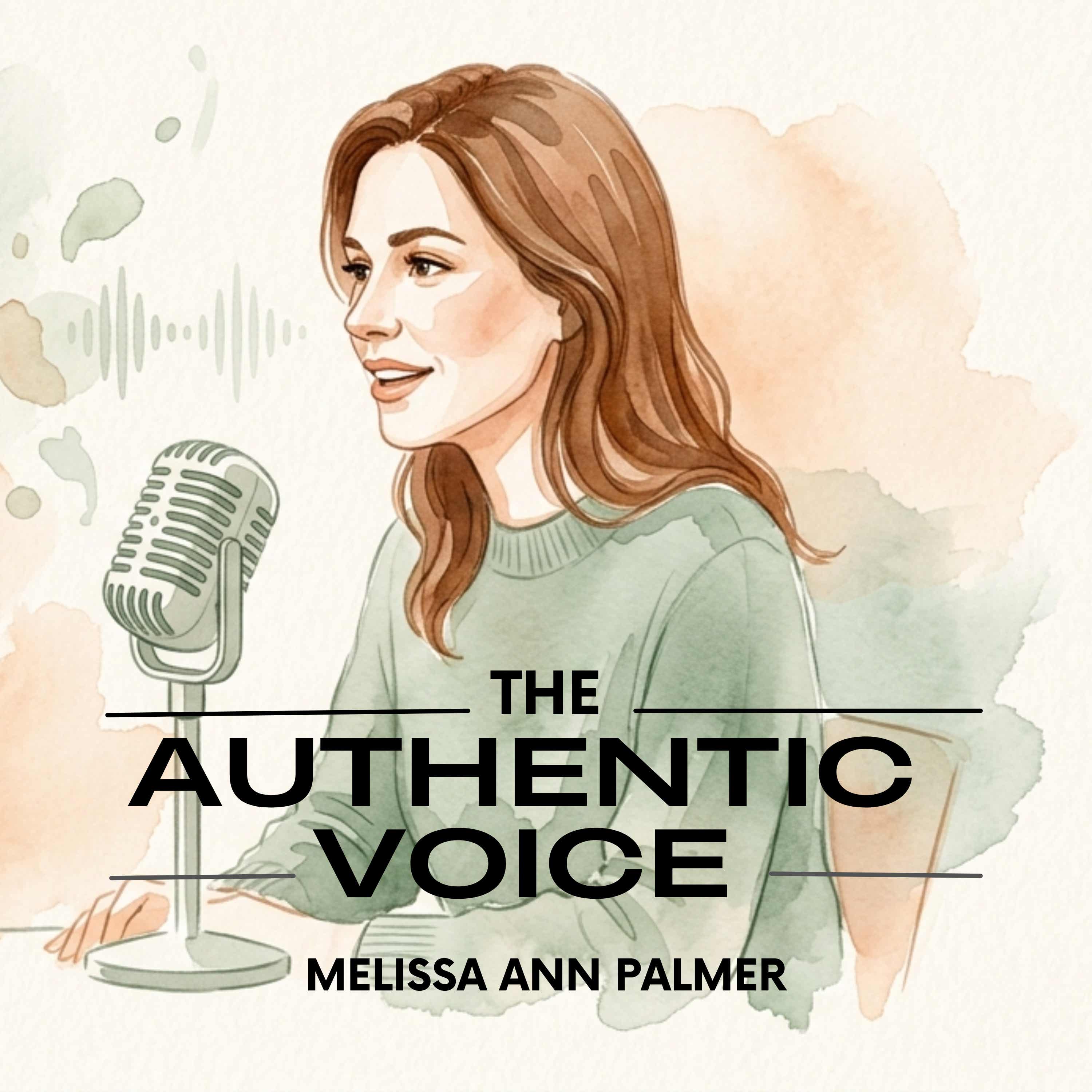
The Authentic Voice Podcast
by Melissa Ann Palmer
A space for women ready to find their voice, own their strength, and rewrite their stories. Join Women’s Fiction author and clinical social worker Melissa Ann Palmer for deep dives into mental health, psychological themes, and the stories that shape us. From 'Sisterhood of Stories' spotlights and book reviews to monthly journaling themes, The Authentic Voice is your invitation to explore what it means to live and write with heart. melissaannpalmer.substack.com
-
14
From Anxiety to Resilience: Why I Stopped Bingeing the News
Hi friend, I’m so glad you’re here. This is Melissa, and this is The Authentic Voice.Whether you’re listening in your car or reading this in your inbox, today’s post is a heartbeat from the main blog. This is where we peel back the layers and explore the honest, often messy, and always human themes that connect us all.Today, we’re talking about why I stopped bingeing the news.For a long time, my evenings had a very predictable rhythm. I would sit down, turn on the news, and stay there for hours. One segment would run into the next. It was a nonstop loop of “breaking” tragedies, political shouting matches, and global crises.I told myself I was being responsible by staying informed.But if I’m being honest, I wasn’t being responsible. I was being consumed. My goal was to be informed, but I found I was just more frustrated, angry, and deeply depressed. My nervous system was in a state of high alert for problems I had absolutely no power to solve.As a clinical social worker, I know that our brains aren’t designed to carry the weight of eight billion people’s grief in real-time. When we scroll through “all the bad stuff,” our amygdala stays in a “fight or flight” response. Since we can’t fight a global crisis from our living room, we just freeze.Eventually, I had to make a choice for my own mental health. I realized that my “Circle of Concern” had become massive, while my “Circle of Influence” felt microscopic.So, I decided to pull back. I slowly pulled away and stopped letting the world’s loudest voices dictate my evening mood. Instead, I started focusing on those things in my life that I could actually control. I began to spend more time writing, sewing, playing with my dogs, and reading.The shift was almost immediate. I noticed that my mood felt better, my anxiety began to lift and I was even feeling more productive during the day. I don’t think we realize the emotional toll that stress can have on our bodies.By tending to my own little corner of the world, I’ve found that I have more emotional bandwidth. Years ago, I was a Red Cross volunteer who taught CPR and first aid. One of the first things I taught people was to put on their own oxygen mask before they tended to the victims. This is no different.We often feel guilty for looking away, as if our collective misery is a tribute to those who are suffering. But it doesn’t really help anyone by adding our worry to the mix. Thoughts and prayers are only so helpful.If your heart is heavy from the headlines, I’m giving you a permission slip to look away tonight.You are being a steward of your own light. You’re making a conscious choice about what to give your focus to. Focus that energy where you can have the greatest impact.Subscribe here. Visit my Website here. Buy my Book, Dance of the Firefly here. This is a public episode. If you would like to discuss this with other subscribers or get access to bonus episodes, visit melissaannpalmer.substack.com
-
13
The Anchor in the Storm: Building Stability When the World Shifts
Hi friend, I’m so glad you’re here. This is Melissa, and this is The Authentic Voice.Whether you’re reading this in your inbox, or listening in your car, we are continuing our year-long journey together: The Author of My Own Life Project.Throughout this year, we’re exploring twelve distinct monthly themes to help you pause, reflect, and reclaim the pen to your own story. And remember, if you’d like to follow along with the journal prompts, the full companion workbook is available as a free ebook when you subscribe.This is our space to find our own authentic voices, one month at a time. Today’s reflection is about cultivating the quiet, internal strength that remains when everything else changes.We are often socialized to believe that “Yes” is the language of kindness, generosity, and love. We say “yes” to the extra committee, the weekend favor, or the emotional labor of others because we fear that a “No” will make us appear cold or selfish.But mechanically, your “Yes” is a limited resource. Every time you say “yes” to something that drains you or misaligns with your values, you are accidentally saying “no” to something vital: your rest, your creativity, or your presence with the people who matter most. A boundary isn’t a wall designed to keep people out; it’s a gate designed to keep your peace in. Learning to say “no” is the act of becoming the architect of your own life.The Case Study: "The Leaky Bucket"I once worked with a woman named Sarah, a teacher and mother who felt like she was “leaking” energy everywhere. She was the person everyone called because they knew she would never say no. She was the PTA lead, the neighborhood carpooler, and the emotional sounding board for three different friends going through crises.Sarah came to me because she was starting to feel a simmering resentment toward the people she loved. We looked at her “Yes” list and realized she had no room left for her own joy. I told her that if she said no to the bake sale, that meant a yes to an hour of quiet with a good book.I taught her to practice using a “pause” before she agreed to anything for the next couple of weeks. Instead of an automatic “Yes,” she started saying, “Let me check my capacity and get back to you.” This small gap gave her the space to realize that she didn’t actually have the capacity. Once she started saying “No” to the things that didn’t align with her internal compass, the resentment vanished. She found that the people who truly loved her didn’t get angry when she set a boundary. They actually respected her more for it.How This Relates to Your Life* In Friendships: If a friend constantly vents to you without asking if you have the emotional space, a kind “no” sounds like: “I really want to support you, but I don't have the mental bandwidth to dive into this right now. Can we talk on Thursday instead?”* In the Workspace: “No” can be a tool for excellence. By saying no to a low-priority task, you are saying yes to doing your primary job with more focus and less burnout. Okay, I know your next thought is going to be, “Okay, Melissa, that sounds great. But I can’t very well say no to my boss.” And, you’re partly right. You may not be able to use the word “no,” but you can let them know that adding this to your task list means that something else will have to wait. Here’s how I’ve worded it in the past: “It sounds like you need me to prioritize (the urgent task). I want to be able to accommodate that, so can you help me decide what else I can push out a bit so that I have time to get this done for you?” You’re letting them know that you can’t prioritize everything, and that if this is the priority, something else needs to get moved farther down the list.The TakeawayEvery time you say “yes” to something that drains you or misaligns with your values, you are forced to say “no” to something else. And, the key to creating an authentic life is making that decision consciously.Journal PromptIf your body could speak to you today without using words, what is the first sensation it would share?If you want to become the author of your own life, subscribe to join our community and get your own free eBook. All subscribers receive a link to my eBook, The Author of My Own Life, which contains 365 journal prompts to guide you through a year-long journey of self-discovery and intention. Start your journey today!Subscribe Here This is a public episode. If you would like to discuss this with other subscribers or get access to bonus episodes, visit melissaannpalmer.substack.com
-
12
She Was Drowning. So She Learned How to Swim.
I’m so excited to share today’s Sisterhood of Stories spotlight. This is our dedicated space for celebrating indie authors in Women’s Fiction and sharing words that truly uplift and empower women.Today, I am so honored to feature Minnie, author of I Wish I Knew This Before.There’s a particular kind of exhaustion that nobody really prepares you for. The sleepless nights and the endless feeding schedules- those you’ve heard about. But the other thing? That quiet feeling of losing yourself somewhere in the process of becoming a mother. Of looking around at what everyone keeps calling the happiest season of your life, and privately wondering why you feel so completely undone.If that sounds familiar, I want you to meet Minnie.An engineer by profession and a mother by heart, Minnie’s story didn’t begin with a book. It began in the dark, depleted hours after the birth of her second child, running on empty in every possible way. What happened next is the part I find so remarkable: she chose curiosity over defeat. She started reading, learning, digging into child development and neuroscience and emotion regulation. The engineer in her was looking for answers. The mother in her was desperately trying to find her way back to herself.And then something shifted.When I asked Minnie what inspired her to write this book, what she shared stayed with me. After her own experience with postpartum depression, she began noticing the same quiet suffering in the families around her. Anxiety. Burnout. That achingly familiar feeling of disconnection. She felt a deep pull to share what she had learned. She felt compelled to build a bridge for other mothers who were still lost in those same dark waters. To tell them: you are not alone, and you are not failing.That’s how I Wish I Knew This Before came to life.At just 122 pages, it’s deliberately short and accessible, because Minnie understands that the mothers who need it most are also the ones with the least time and energy to spare. It covers everything from emotion regulation and anger release to boundaries, patience, and the parent-child connection. No medication required. No complete life overhaul. Just practical tools from a woman who has walked the road herself.What strikes me most about Minnie’s journey (and I say this as a therapist who has had the privilege of sitting with many struggling women) is how she transformed her wound into her wisdom. There is something profound that happens when a person stops asking “why is this happening to me?” and starts asking “what can I learn from this?” That shift, from feeling like a victim of circumstance to becoming a student of your own experience, is one of the most powerful forms of healing I witness in my work. Minnie did that quietly, privately, without anyone handing her a roadmap. And then she turned around and drew one for the rest of us.But I also want to gently add my two cents here, as someone who has sat with many women in exactly this place. You don’t have to do it alone. Asking for help is not a confession of failure. It is one of the bravest, most self-aware things a mother can do. If Minnie’s story resonates with you, I hope it also gives you permission to reach out. To a friend, a therapist, a doctor, or even a stranger on the internet who just gets it.Because here’s what I want you to carry with you after reading this: you are so much stronger than you think you are. The fact that you’re still showing up is proof of that. Every single day.I Wish I Knew This Before by Minnie is available now. If this story resonated with you, or if you know a mother who could use a lifeline right now, this might be exactly the book to pass along. You can find it here: I Wish I Knew This Before and you can follow her journey: Follow Minnie On Instagram. P.S.: I’ve had a few questions about whether I’ll ever turn on paid subscriptions here. While I deeply respect the creators who use that model to support their work, my own journey, from growing up on welfare to working in social work, has given me a different mission.For me, the The Authentic Voice is about accessibility. I want these words to be a free library for every woman, regardless of her budget.That said, if you find value in these notes and want to offer a “thank you,” I’m not looking for a cup of coffee or a monthly fee. I’m looking for your voice. If you grab my debut novel while it’s on sale for $0.99 this month, an honest review on Amazon or Goodreads is the greatest support I could ever ask for. It helps me keep the lights on in this library for everyone else.Thanks for reading The Authentic Voice! Subscribe for free to receive new posts direct to your inbox. This is a public episode. If you would like to discuss this with other subscribers or get access to bonus episodes, visit melissaannpalmer.substack.com
-
11
A Beautiful Portrayal of Character Depth and Emotional Authenticity
Hi friend, I’m so glad you’re here. This is Melissa, and this is The Authentic Voice.Today we’re diving into The Authentic Bookstack. This is our space to pull up a chair, grab a warm drink, and talk about the stories that lift us up and help us live our best lives.Today’s review is about The Isa Project by Gina R. Briggs. In her debut novel, The Isa Project, Gina R. Briggs delivers a deeply moving exploration of friendship, trauma, and the painful process of outgrowing our own perceptions. She tells the story through a dual timeline, alternating between high school and the college years three years later. This format works well because it really showcases the character arcs. The story is anchored by Katie (K), a relatable protagonist whose evolution from an insecure, bookish introvert to an emotionally resilient young woman is nothing short of fantastic.At the heart of the story is the “trio of misfits”: K, the ethereal and rebellious Isa, and Isa’s brother, Lincoln. Briggs captures the “ride-or-die” energy of theater kids with spot-on chemistry. What I found most fascinating was the shift in K’s perspective; she begins the book with Isa on a pedestal, but as she matures, she begins to see Isa’s faults and complexities. It is a nuanced portrayal of how we view our heroes as we move from the naivety of our teens into adulthood.The emotional core of this debut is staggering. Briggs handles heavy themes like addiction and grief with incredible nuance, providing a portrayal of trauma that feels both accurate and deeply empathetic. While the story takes its time to unfold, the debut novel clocking in at nearly 470 pages, the payoff is found in the deep character development and the beautiful handling of complex family dynamics.As a clinical social worker, I was particularly impressed by how Briggs “nailed” the depictions of mental health and the reality of addiction. These heavy topics are balanced by a sweet, grounded romantic subplot between K and Lincoln. Their shared love of literature and the arts provides a special foundation for a relationship that feels authentic without being over the top.The Isa Project is a beautiful testament to how art can heal even the deepest wounds. It is a must-read for fans of psychological women’s fiction who appreciate character-driven sagas. I am already looking forward to diving into the rest of Briggs’ work.P.S.: Dance of the Firefly, my debut novel, is on sale all this month for just 99¢. Emma thought escaping her abusive ex meant freedom. She didn’t expect his suicide to become her prison. Dance of the Firefly is a powerful story of trauma, resilience, and the raw courage it takes to distinguish the weight of the past from the possibility of a future. This is a public episode. If you would like to discuss this with other subscribers or get access to bonus episodes, visit melissaannpalmer.substack.com
-
10
From Overwhelm to Alignment: What My Task List Taught Me About My Life
Hello friends,We made it! After being buried under 4 feet of snow in New England, the grass if finally showing through. As the landscape shifts outside, things have been shifting behind the scenes here, too. I recently hit a major milestone with Where Two Rivers Meet—I’ve officially finished adding the final chapters into my drafting software! I still have several months of editing left, but I’m starting to see the finish line. Of course, not every “final version” is a straight line. This week, my creative energy took a turn toward the domestic. I’ve been working through my sewing bin, starting with a very important mission: “Operation Owen’s Pillow.” I’d recently noticed that my dog, Owen’s pillow was extremely flat. So, I did what any good dog-parent would do, I added a whole pile of fluff to it. I was so pleased with the final, plump version. Owen, though, was not impressed. He refused to even go near it. So, I’ve spent some time this week, painstakingly extracting just the right amount of fluff to find a middle ground. I have to admit, I felt a bit like Goldilocks. It’s a funny reminder that whether I’m editing a manuscript or a pillow, sometimes the most important work is knowing what to take away.In today’s post, I’m diving deeper into that idea. A busy task list doesn’t always mean a meaningful one, and I’m sharing how I’m learning to edit my life for true alignment.From Overwhelm to Alignment: What My Task List Taught Me About My LifeLately, I’ve been feeling… overwhelmed. Even though I’ve been organized, I couldn’t figure out why my days felt so heavy. I’ve been extremely productive; yet, I wasn’t moving forward in a way that felt meaningful.It wasn’t laziness. It wasn’t a lack of planning. The truth hit me in the most ordinary of ways: I had been trying to work on twenty different projects at once. No wonder I felt overwhelmed.Seeing Everything at OnceI was in the middle of setting up a task and project management system in Notion. As I imported my half-completed projects and tasks, I created a timeline view. Suddenly, my issue became clear. I could see everything laid out. The marketing and promotion of my debut novel, editing of my second book. Launching my website. Growing a social media platform. Creating a newsletter. Working a full-time job. All the things I had been juggling, all at once.It was a little terrifying. But it was also enlightening. That timeline became a mirror, showing me that my overwhelm wasn’t a personal failing. It was a natural outcome of trying to spread my attention across too many different areas.This was my first big insight: overwhelm isn’t a problem to be fixed with more discipline. It’s a signal to focus.Shifting the Question: From “Do More” to “What Matters?”Once I could see everything, I realized that trying to work on all of it a little bit wasn’t helping. It just left me drained and frustrated. I needed a way to decide what truly deserves my attention.So I started asking myself a few simple but powerful questions about each project:• What keeps resurfacing no matter what?• What would move the needle on my life if it got done?• What would feel lighter, easier, or more open if this were accomplished?The projects that kept coming up over and over weren’t just tasks I liked doing; they were high-impact projects. They were the ones worth prioritizing.Connecting Projects to GoalsI realized another layer was missing. Most of my projects aren’t just isolated to-do items; they’re stepping stones toward my larger life goals.I started linking each project to a specific goal, whether it was related to my author life or my overall life management. This helped me see how daily tasks contribute to bigger aspirations. It became clear that if I spend the bulk of my days on work that actually moves me toward my goals, my life feels more intentional and aligned with my values.Tasks aren’t just busywork anymore; they’re progress markers. Each completed task nudges a project forward, and each project nudges a goal forward. That sense of momentum is energizing in a way that random productivity never was.Paying Attention to EnergyAnother insight came as I reflected on which projects felt energizing. Some projects, even when challenging, left me feeling alive and engaged. Others, while necessary, felt draining.Energy became a guide. Projects that are energizing are often the ones that align with our values and strengths. When I pay attention to what feels energizing, I can sequence my work to include more of what fuels me, without abandoning the necessary, less stimulating work.The Power of Weekly ReflectionI also keep a brief weekly check-in. I review what worked, what didn’t, and ask myself a key question: “Are any of my current projects or goals no longer serving my greater purpose or mission?”This reflection allows me to evolve my priorities with clarity and compassion. It’s not judgment; it’s a values audit. And adding a small question about what felt energizing each week helps me notice patterns and make adjustments that preserve momentum without burning out.Living with IntentionAll of this, linking tasks to projects, projects to goals, and noticing which work energizes me, is not about doing more. It’s about choosing where my attention goes. Attention is finite. When I focus on what matters most, I’m no longer moving blindly through the motions. I’m building momentum toward things that are meaningful. I’m living aligned with my values, taking charge of my life rather than letting it run on autopilot.For me, that’s far more satisfying than crossing off a hundred low-impact tasks. Overwhelm isn’t a call to do more. It’s a call to focus. Alignment, not busyness, is the real path forward.P.S. Many of you were part of the early journey for Dance of the Firefly, but if you have a friend who’s been looking for a story about emotional recovery, the ebook is just 99 cents all through April! Feel free to share the link with anyone who needs a little light this spring.Thanks for reading The Authentic Voice! Subscribe for free to receive new posts and support my work. This is a public episode. If you would like to discuss this with other subscribers or get access to bonus episodes, visit melissaannpalmer.substack.com
-
9
Weathering the Heart: Navigating Your Internal Emotional Landscapes
Hi friend, I’m so glad you’re here. This is Melissa, and you’re listening to The Authentic Voice.Whether you’re listening in your car or reading this in your inbox, we are continuing our year-long journey together: The Author of My Own Life Project.Throughout this year, we’re exploring twelve distinct monthly themes to help you pause, reflect, and reclaim the pen to your own story. And remember, if you’d like to follow along with the journal prompts, the full companion workbook is available as a free ebook when you subscribe.This is our space to find our own authentic voices, one month at a time. Today’s reflection is about learning to witness your feelings without letting them become your identity.Like April weather, our emotions can shift from sunshine to storm in a matter of minutes.We tend to treat our emotions like intruders. When we feel anxious, sad, or overwhelmed, our first instinct is often to “fix” it or evict the feeling as quickly as possible. We label certain emotions as “bad,” which only adds a layer of secondary suffering: we aren’t just sad; we’re guilty for being sad.The Emotional Landscape framework asks you to view your internal state like a meteorologist rather than a judge. You don’t blame the sky for a thunderstorm, and you don’t expect the sun to shine 24 hours a day. By identifying your mood as a “weather pattern,” you acknowledge two vital truths:* It is happening, but it isn’t you. (You are the sky, not the storm.)* It is temporary. No weather pattern lasts forever.The Case Study: "The Storm Watcher"I once worked with a young woman, Maya, who lived in a state of constant emotional preparedness. She was so afraid of feeling depressed that she spent all her energy monitoring her mood for the slightest sign of a problem. The moment she felt a dip in energy, she would panic. This, ironically, triggered the very spiral she was trying to avoid.I asked Maya to stop trying to change the weather and start simply naming it. At our next session, she came in and said, “It’s a thick, grey fog. I can’t see more than two feet in front of me.” Instead of fighting the fog, we talked about what a person does in a fog: they slow down. They stay close to home. They wait for visibility to return. Once she stopped treating the “fog” as a personal failure and started treating it as a temporary atmospheric condition, the panic subsided. She learned that she could survive a cloudy day without it becoming a permanent winter.How This Relates to Your Life* High-Stress Days: When the “thunderstorm” of a deadline hits, remind yourself that the lightning is temporary. You don’t have to enjoy the storm to know it will eventually pass.* The “Blah” Moments: Some days are just “overcast.” You don’t need a deep psychological reason to feel a bit flat. Sometimes, the landscape is just quiet.The TakeawayEmotions are like weather patterns. They are temporary and they don't define the sky. When we stop fighting the “rain” and start mapping the landscape, we find more peace in the transition.Journal PromptIf your current mood was a weather pattern, what would it look like?If you want to become the author of your own life, subscribe to join our community and get your own free eBook. All subscribers receive a link to my eBook, The Author of My Own Life, which contains 365 journal prompts to guide you through a year-long journey of self-discovery and intention. Start your journey today! This is a public episode. If you would like to discuss this with other subscribers or get access to bonus episodes, visit melissaannpalmer.substack.com
-
8
She Lost Her Voice. Her Mother Never Stopped Listening.
Hi friend, I’m so glad you’re here. This is Melissa, and this is The Authentic Voice.Whether you’re listening in your car or reading this in your inbox, I’m so excited to share today’s Sisterhood of Stories spotlight. This is our dedicated space for celebrating indie authors in Women’s Fiction and sharing words that truly uplift and empower women.Today, I am so honored to feature Yvonne Pearson.Dying To Talk, by Yvonne PearsonWe take so much for granted, don’t we? The sound of our daughter’s voice on the phone. A text that says I’m on my way. The ordinary, unremarkable miracle of just…talking.Yvonne Pearson’s memoir, Dying To Talk, begins in that ordinary place and then asks us to imagine it being slowly, irreversibly taken away. It follows the nine-month journey of Yvonne caring for her daughter Cath, who was just 25 years old when a routine ulcer became something unthinkable: tongue cancer. What follows is one of the most honest accounts of caregiving, love, and grief I’ve read in a long time.I had the privilege of speaking with Yvonne recently, and I want to share some of what she told me. And her words deserve to be heard in her own voice first, before I add mine.When I asked what inspired her to share something so personal, she said this:“Writing this book was both an act of remembrance and a loving tribute to my daughter Cath... as Cath became unable to eat, drink and speak. This is also a tribute to the powerful bond between a single mother and daughter, and the many ways we continue to communicate, love, and live—especially in the face of loss.”And when I asked about the emotional weight of actually writing it:“I cried more than I had cried in the ten years I had already grieved, and it was very cathartic and liberating. I realized I had not allowed myself to cry enough before; it had always been a fear to let go as I thought, if I did, I may never ever be able to stop crying. But I did. In truth, I had never really grieved properly until I seriously started writing.”I want to sit with that for a second, because as a therapist, that hit me.Yvonne published this book ten years after losing Cath. Ten years. And I know that for some readers, that number might raise an eyebrow. We live in a world that is deeply impatient with grief. There’s this quiet, relentless pressure to be “over it.” To have moved on. To have healed. To stop bringing it up at dinner. Grief gets treated like a problem to be solved, rather than a love that has nowhere left to go.Yvonne’s story is a gentle but firm refusal of that narrative. Her ten years weren’t a delay. They were the process. And when she finally felt safe enough to open those archives: the medical records, the memories, the moments she had carefully kept at arm’s length, that’s when the real grieving began.I also keep thinking about her fear that if she started crying, she might never stop. I heard this from many clients over the years. We hold the levee so tightly because we’re terrified the flood will swallow us whole. What Yvonne discovered, and what I watched people discover again and again in therapy, is that the only way out really is through. The tears didn’t drown her. They freed her. That’s not weakness. That’s the bravest thing a person can do.She also shared something that moved me about the unexpected gift her honesty gave to others:“My honesty and openness has given others the same strength I found in writing and grieving. Others who don’t know me have contacted me stating they felt alone... I comforted them with empathy after they had no one who could truly relate to their struggles.”This is what stories do when they’re told with courage. They find the people who need them most.When I asked Yvonne what she most hopes readers take away, she said:“I would like the reader to go away feeling they really got to know Cath as a real human. Someone’s daughter, sister, girlfriend who faced something unthinkable for any 25 year old girl in her absolute prime with her whole life ahead of her. This can happen to anyone. It doesn’t just happen to ‘them over there’ or ‘those on the TV’. This disease is real and, heartbreakingly, mothers do lose their daughters. ‘Take nothing and no-one for granted in life’ is my personal emotional truth; so this alone would be enough for any reader to take away for me.”Take nothing and no one for granted. I think that message speaks for itself.Find Yvonne & Her BookIf this story moved you, please share Yvonne’s message so that we can help her raise awareness of this rare disease. You can grab Dying To Talk on Amazon here, and follow her journey on Instagram: @griefandgracebyyvonnepearson. She really is as warm and open in person as she is on the page, and she would love to hear from you.Thanks for reading The Authentic Voice! Subscribe for free to receive new posts and follow my work. This is a public episode. If you would like to discuss this with other subscribers or get access to bonus episodes, visit melissaannpalmer.substack.com
-
7
Shattering the Mirror: How to Rewrite the Stories That Hold You Back
Hi friend, I’m so glad you’re here. This is Melissa, and this is The Authentic Voice.Whether you’re listening in your car or reading this in your inbox, we are continuing our year-long journey together: The Author of My Own Life Project.Throughout this year, we’re exploring twelve distinct monthly themes to help you pause, reflect, and reclaim the pen to your own story. And remember, if you’d like to follow along with the journal prompts, the full companion workbook is available as a free ebook when you subscribe.This is our space to find our own authentic voices, one month at a time. Today’s reflection is about identifying the “inherited” limiting beliefs that are no longer yours to carry.We all carry a collection of “Invisible Scripts.” These are sentences that live in the back of our minds, dictating what we can and cannot do. Usually, these scripts start with phrases like: “I’m not the kind of person who...” or “I shouldn’t want more than...” or “It’s selfish to...”The danger of a limiting belief is that we don’t experience it as a thought; we experience it as a fact. We treat these beliefs like the laws of physics: unchangeable and absolute. However, most limiting beliefs were actually formed as safety mechanisms. At some point in your life, staying small or staying quiet kept you safe. The problem is that the “safety” of the past has become the “prison” of the present.The Case Study: "The Accidental Martyr"I once worked with a woman named Diane, a talented artist who hadn’t picked up a paintbrush in fifteen years. When we explored why, she didn’t say she lacked talent or time. Instead, she whispered a script she had been carrying since childhood: “Good mothers don’t have hobbies that take them away from their families.”In Diane’s mind, her art wasn’t a creative outlet; it was evidence that she was a ‘bad’ mother and wife. This wasn’t a fact, but a limiting belief she had inherited from a grandmother who had sacrificed everything.We started by labeling that thought as a script rather than a truth. I asked her, “What if you didn’t have to agree to a rule you never signed your name to?” By identifying the belief as an outdated piece of software, Diane was able to “uninstall” the guilt. She eventually set up a small easel in the corner of her kitchen, realizing that being a “good mother” and being an “inspired woman” weren’t mutually exclusive. They were actually the same thing.How This Relates to Your Life* The Career Pivot: If you find yourself thinking, “I’m too old to start something new,” ask yourself whose voice that actually is. Is it yours, or is it a script you picked up from a previous generation?* The Creative Blocks: Often, “writer’s block” is just a limiting belief disguised as a lack of ideas. Usually, the script is: “If it isn’t perfect, it isn’t worth writing.”The TakeawayMany of our "limitations" are actually just old safety mechanisms we no longer need. Recognizing a belief as a thought rather than a fact is the first step toward rewriting the script.Journal PromptWhat is one “rule” you’re following that you never actually agreed to?If you want to become the author of your own life, subscribe to join our community and get your own free eBook. All subscribers receive a link to my eBook, The Author of My Own Life, which contains 365 journal prompts to guide you through a year-long journey of self-discovery and intention. Start your journey today! This is a public episode. If you would like to discuss this with other subscribers or get access to bonus episodes, visit melissaannpalmer.substack.com
-
6
The Social Worker’s Lens: How My Practice Informs My Fiction
Hi friend, I’m so glad you’re here. This is Melissa, and this is The Authentic Voice.Whether you’re listening in your car or reading this in your inbox, today’s post is a heartbeat from the main blog. This is where we peel back the layers and explore the honest, often messy, and always human themes that connect us all.Today, we’re talking about why the stories we tell are often the most powerful form of clinical evidence.For the last 25 years, my professional life has focused on listening, validating, and supporting people through life’s most intense challenges. As a clinical social worker, I’ve witnessed the quiet battles people fight every day: battles against trauma, grief, and the erosion of self-worth.When I transitioned into writing fiction, I didn’t leave my clinical experience behind; I brought it directly to the page. For me, social work isn’t just a separate career; it is the authentic foundation upon which all my stories about healing and hope are built.Here is how viewing the world through a social worker’s lens fundamentally shapes my approach to writing:The Depth of Authentic StruggleThe first lesson my clinical experience taught me is that struggles are not uniform. While everyone faces common challenges, the way trauma manifests and the path to recovery are deeply individual and nuanced.When I create a character, I avoid simplistic tropes. I draw on the complex psychological reality of human experience. My experience ensures my characters’ reactions to crisis, their defense mechanisms, and their slow, imperfect steps toward healing feel real because they are rooted in patterns I have observed in clinical practice. The emotional journey is never linear, and my writing reflects that truth.Understanding Hope as a Catalyst for ChangeIn social work, hope is not a sentimental concept; it is a vital, active ingredient in change. Clients cannot begin recovery unless they hold a belief, even a tiny, fragile one, that a better future is possible.This understanding is why hope is central to my fiction. I write stories, like Dance of the Firefly, that track the complex, courageous steps of recovery. I show the messy, imperfect process because I know that seeing hope enacted, even through a fictional character, can be the catalyst for a reader to find that same fragile belief in their own life.Beyond the Surface: The Nuance of RelationshipsA key part of social work is understanding how an individual interacts with their environment, including relationships and support systems. This lens leads me to write three-dimensional characters and messy, complicated relationships that reflect real life.I am interested in the subtle dynamics of abuse and emotional challenges, but also the immense healing power of healthy, supportive friendships and the complexities of familial bonds.My professional training gives me the insight to write these interactions with sensitivity and psychological accuracy, making the characters’ breakthroughs and setbacks feel deserved and profound.Ultimately, my goal as a writer is the same as my goal as a social worker: to offer validation, illuminate paths to self-discovery, and reinforce the message that no matter what we face, we possess an inherent capacity for strength and resilience. My stories are another venue for sharing that essential, hopeful truth. This is a public episode. If you would like to discuss this with other subscribers or get access to bonus episodes, visit melissaannpalmer.substack.com
-
5
The Internal Compass: Why Your Values are the Only Map You Need
Hi friend, I’m so glad you’re here. This is Melissa, and this is The Authentic Voice.Whether you’re reading this in your inbox, or listening in your car, we are continuing our year-long journey together: The Author of My Own Life Project.Throughout this year, we’re exploring twelve distinct monthly themes to help you pause, reflect, and reclaim the pen to your own story. And remember, if you’d like to follow along with the journal prompts, the full companion workbook is available as a free ebook when you subscribe.This is our space to find our own authentic voices, one month at a time. Today’s reflection is about how to stop looking for external permission and start trusting your own north star.We like to think we leave our childhoods behind when we move out, but we actually carry a "map" of our early home life inside our nervous systems. Childhood Echoes are the automatic ways we respond to stress based on what was modeled for us as children. If you grew up in a home where conflict was loud, you might "shut down" as an adult when a partner raises their voice. Your brain remembers, and your inner child is trying to keep you safe. This has nothing to do with being weak.The Case Study: "The Silent Protector"I used to meet with a young mother, Elena, who struggled with intense guilt every time she felt frustrated with her toddlers. She told me, ‘I feel like a monster for wanting ten minutes of silence.’ As we talked, we discovered that as a child, Elena was the ‘peacemaker.’ Her own mother was often overwhelmed, so Elena learned very early that her own needs were a burden.That echo was still playing in her head twenty years later. The belief that ‘My needs are an inconvenience’ went deep. Once she recognized that her guilt wasn’t a reflection of her parenting, but an echo of her past, she was finally able to give herself ‘permission’ to hire a sitter for two hours a week without feeling like she was failing her children.How This Relates to Your Life* At Work: Do you struggle to ask for a raise? It might be an echo of a “seen but not heard” childhood.* In Conflict: Do you immediately apologize even when you aren’t wrong? That might be the “Peacemaker” echo trying to lower the tension in the room.The TakeawayOur "inner child" often holds the blueprints for how we handle conflict or seek love. By acknowledging those echoes, we can respond to our present reality instead of our past triggers.Journal PromptWhat is one thing your 8-year-old self would be proud of you for today?If you want to become the author of your own life, subscribe to join our community and get your own free eBook. All subscribers receive a link to my eBook, The Author of My Own Life, which contains 365 journal prompts to guide you through a year-long journey of self-discovery and intention. Start your journey today! This is a public episode. If you would like to discuss this with other subscribers or get access to bonus episodes, visit melissaannpalmer.substack.com
-
4
5 Lessons I Learned Writing My Debut Novel
Hi friend, I’m so glad you’re here. This is Melissa, and this is The Authentic Voice.Whether you’re listening in your car or reading this in your inbox, today’s post is a heartbeat from the main blog. This is where we peel back the layers and explore the honest, often messy, and always human themes that connect us all.Today, we’re talking about why the messiest parts of the creative process are exactly where we find our strength.When I finally typed “The End” on my debut novel, Dance of the Firefly, the feeling was less one of triumphant celebration and more one of stunned, quiet disbelief. Writing a book had been a lifelong dream, one I often kept tucked away, believing it to be a goal beyond my reach. The truth is, the process was far more demanding, frustrating, and exhilarating than I ever anticipated. It wasn’t just about stringing words together; it was a profound act of perseverance that taught me invaluable lessons. It wasn’t just about writing, but about my own capacity for commitment.Here are five key lessons I learned on the winding road to becoming a published author:1. The Power of Persistence Over PerfectionThe initial drafts were messy. They were awkward. They were, frankly, not very good. There were countless moments when I wanted to quit, convinced that I wasn’t skilled enough to bring the story to life. The first and most crucial lesson I learned was that perseverance is the writer’s most valuable tool. You don’t have to be perfect; you just have to keep showing up at the page. I had to force myself to continue, knowing that a completed, messy first draft is infinitely more useful than a perfect, unwritten novel.2. Clarity of Purpose is Your North StarThe writing really started to flow, and the process became significantly easier the moment I clearly defined my purpose and genre. For a long time, I was writing into a void, trying to appeal to everyone. This made the story feel unfocused and watered down.My breakthrough came when I declared my purpose: to help women find their inner strength and voice. My genre became solidified as Women’s Fiction. This clarity acted as a North Star, guiding every plot choice, every dialogue exchange, and every emotional beat. Knowing why I was writing gave the what and how a powerful direction.3. Embrace the Hard Work of RevisionWhile persistence gets you to “The End,” revision is where the real book is born. I learned that the bulk of the work isn’t the initial outpouring, but the meticulous, often brutal, process of rewriting, cutting, and refining. It forced me to be objective about my own work, accepting that some beloved scenes needed to be sacrificed for the story’s greater good. Revision is a lesson in humility and focus.4. You Are Stronger Than Your Self-DoubtWriting a novel is a continuous cycle of creation and self-doubt. There is no getting around it. Each milestone, whether completing the first draft, sending it to critique partners, or submitting it to an editor, brought a fresh wave of paralyzing questions. The only way through was to consistently remind myself of Emma’s journey in Dance of the Firefly, that the struggle is part of the story, and that I am stronger than my fear of failure.5. Sharing the Story is Just the BeginningOnce the novel was finished, I realized that the journey was far from over. I learned the necessity of stepping out of the solitary writer’s cave and engaging with readers. The final lesson was that the story doesn’t truly live until it is shared, and that the greatest reward is seeing how a reader connects with the themes of healing and hope I wove into the pages.If you have a monumental goal you are working toward, whether it’s writing a book or pursuing a major life change, remember this: define your purpose, force yourself to persevere through the messy parts, and trust that you have the strength to achieve a goal greater than you currently believe. This is a public episode. If you would like to discuss this with other subscribers or get access to bonus episodes, visit melissaannpalmer.substack.com
-
3
The Origin Story: Who Are You When No One is Watching?
Hi friend, I’m so glad you’re here. This is Melissa, and you’re listening to The Authentic Voice.Whether you’re listening in your car or reading this in your inbox, I have something truly special for you today. This is the first installment of a year-long journey we’re taking together called The Author of My Own Life Project.Over the next twelve months, we’ll explore twelve distinct themes to help you pause, reflect, and reclaim the pen to your own story. And because I want you to have everything you need for this journey, I’ve made the companion workbook available as a free ebook when you subscribe, so you can follow along with all the journal prompts.This is our space to find our own authentic voices, one month at a time. Today’s episode is about moving beyond the roles you play to rediscover the woman beneath the titles.In January, we are bombarded with “New Year, New You” messaging that focuses almost exclusively on Binary Goals: I will go to the gym four days a week; I will lose fifteen pounds; I will stop eating sugar. The problem with binary goals is that they are brittle. The moment life gets messy, the goal breaks. It could be a sick child, a late night at the office or a moment of sheer exhaustion. And, when the goal breaks, we often feel like we have failed.Intentions function differently. An intention is your Internal Compass. While a goal is a rigid destination (the what), an intention is a guiding principle (the how). It focuses on the kind of person you want to be rather than just the tasks you want to complete. When you lead with intention, you create a sustainable path that allows for the reality of being human.The Case Study: "The Identity Shift"I once worked with a woman, a high-level executive named Sarah, who came to me completely depleted by her own expectations. Every January, she set a rigid ‘Power List’ of habits. Top of the list was: ‘Gym 4x per week.’ By the second week of the month, if she missed a single session, she felt like the entire year was a wash.As we delved deeper, I asked Sarah why the gym was so important to her. She told me she wanted to be the kind of person who took care of herself. She valued her body and wanted to maintain her health so she could feel her best for as long as possible.What we discovered was that her real goal wasn’t actually ‘four days at the gym.’ Her true intention was Integrating health into her identity. Once we clearly defined that internal compass, the pressure evaporated. If she had a day where the gym felt impossible, she didn’t ‘fail.’ Instead, she consulted her compass and chose a long walk or a nutrient-dense lunch. The compass allowed her to make small, empowered decisions each day that kept her on the path she actually cared about, without the crushing weight of perfectionism. How This Relates to Your Life* The “Busy” Trap: If your intention is Connection, and you’re too tired for a long dinner date, a five-minute focused conversation with your partner still points your needle north.* The Creative Journey: If your intention is Authenticity, a day where you delete every word you wrote because they didn’t feel “true” is actually a successful day, because you stayed aligned with your compass.The TakeawayIntentions are different from goals. A goal is a destination; an intention is the way you walk the path. When we set intentions, we focus on the how: how we want to feel, how we want to treat others, and how we want to show up for ourselves.Journal PromptIf today was Chapter One of a new book, what would the title be?If you want to become the author of your own life, subscribe to join our community and get your own free eBook. All subscribers receive a link to my eBook, The Author of My Own Life, which contains 365 journal prompts to guide you through a year-long journey of self-discovery and intention. Start your journey today! This is a public episode. If you would like to discuss this with other subscribers or get access to bonus episodes, visit melissaannpalmer.substack.com
-
2
Why I Write About Healing & Hope
As a clinical social worker, I’ve had the privilege of walking alongside countless individuals as they navigate life’s complexities. I’ve seen firsthand that personal struggles are not only common but also deeply real. From the quiet anxieties that whisper in the dark to the roaring storms of trauma and loss, we all face battles that test our resilience. And through it all, one truth has consistently emerged: we are stronger than we know. My experiences in the field have profoundly shaped my passion for writing. I believe that healing often comes from seeing our struggles and triumphs reflected in others’ experiences. When we read stories, we engage in a unique empathetic journey. We step into the shoes of characters, which helps us learn, process, and understand situations. We often gain insights that are harder to grasp when facing our own pain directly. This is why I choose to write about healing and hope. I want to create narratives that mirror the human experience, showing that even in the darkest moments, there is always a flicker of light, a path to recovery, and inner strength waiting to be discovered. In my novel, Dance of the Firefly, I delved into the story of Emma, a woman trapped in an abusive relationship. Her journey was one of immense courage, as she had to find the strength not only to break free from her abuser physically but also to embark on the arduous process of emotional liberation. Emma’s story, like many women’s, is a testament to the human spirit’s capacity for survival and transformation. It’s a reminder that even when we feel utterly alone, the healing potential resides within us, waiting to be nurtured. This is a public episode. If you would like to discuss this with other subscribers or get access to bonus episodes, visit melissaannpalmer.substack.com
No matches for "" in this podcast's transcripts.
No topics indexed yet for this podcast.
Loading reviews...
ABOUT THIS SHOW
A space for women ready to find their voice, own their strength, and rewrite their stories. Join Women’s Fiction author and clinical social worker Melissa Ann Palmer for deep dives into mental health, psychological themes, and the stories that shape us. From 'Sisterhood of Stories' spotlights and book reviews to monthly journaling themes, The Authentic Voice is your invitation to explore what it means to live and write with heart. melissaannpalmer.substack.com
HOSTED BY
Melissa Ann Palmer
Loading similar podcasts...
URL copied to clipboard!