
PODCAST · education
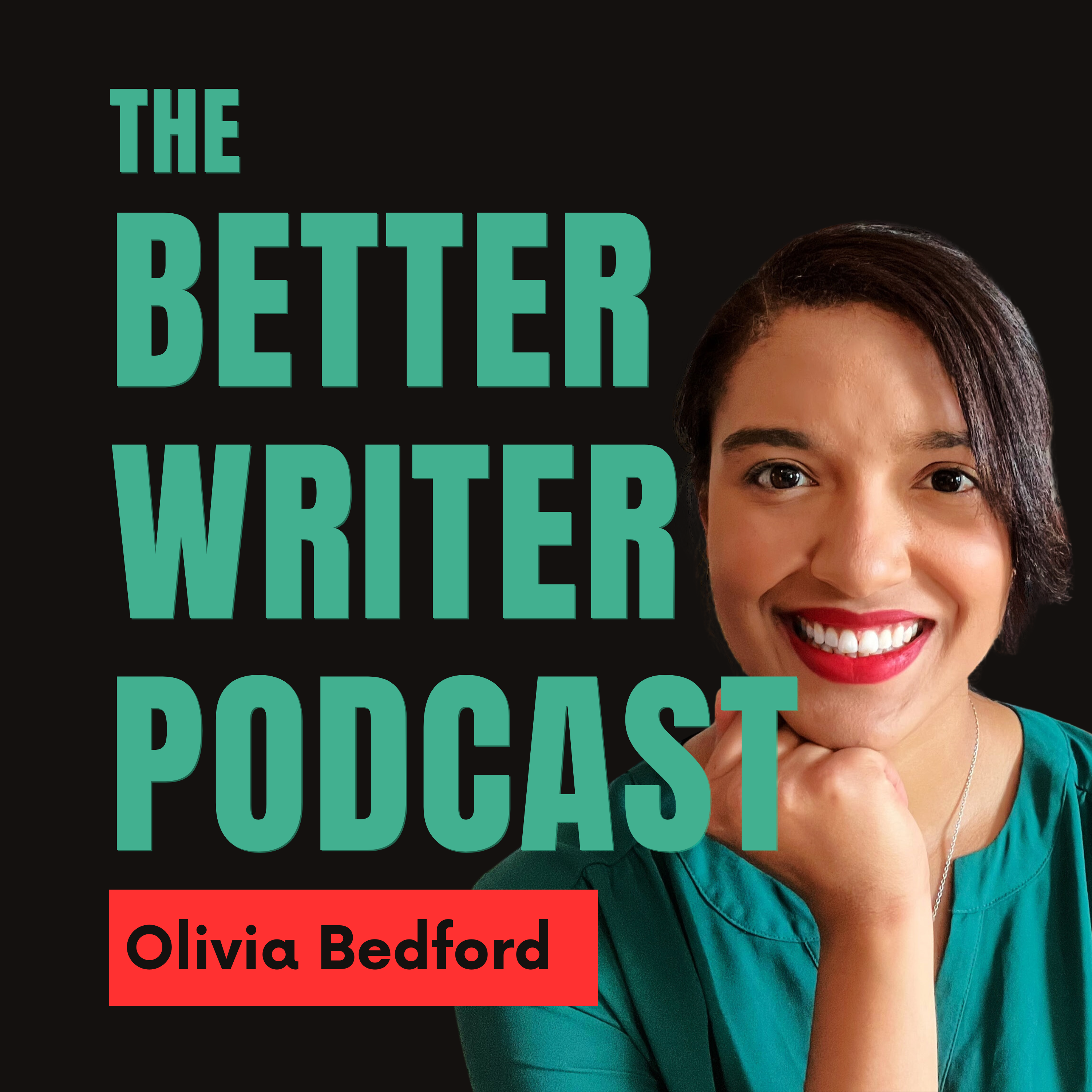
The Better Writer Podcast
by Olivia Bedford
You want to write great books, books just like the ones you’ve been reading and falling in love with all your life, but somehow your vision just isn’t showing up on the page. Don’t despair. It’s not about lacking talent or some magical creative spark. You just need to learn how fiction works and The Better Writer Podcast is here to help.On this show, we explore what it really takes to write a book that readers can’t put down: mastering story craft fundamentals, revising like a pro (and getting pro help), and building a writing process that fits your real life, not someone else’s Instagram-perfect writing routine.Hosted by Olivia Bedford, a former English teacher turned developmental editor and Author Accelerator Certified Book Coach, this show has one goal: help fiction writers unlearn all the misguided, one-size-fits-no-one advice out there and replace it with strategies that actually make your stories work for your future readers.If you’re an aspiring
-
19
5 Questions Fiction Writers Must Answer Before Revising
Fiction writers, can you answer these five questions about your book? If not, it’s time to stop, drop what you’re doing and listen to this podcast episode. I’m covering five crucial questions that you should answer before you start revising your book so that you can give your revisions direction and focus. They are:Why this book?What is your genre?Who are you writing for?What experience do you want readers to have?How do you plan to publish?Need help figuring out your answers to these questions? The next round of Reader Ready Revisions is officially open for enrollment! Not only will I teach you how to answer these questions, you’ll get my feedback to make sure you’re on the right track and help you shape your revision process based on your answers!You can learn more and apply to join at www.ReaderReadyRevisions.com!If we haven’t met, I’m Olivia, a developmental editor & book coach who helps genre fiction writers master a repeatable writing process so they can create books their future readers will love without overwhelm.Here are the resources mentioned in this episode:Listen to Joanna Penn's podcast, The Creative Penn Podcast here: https://www.thecreativepenn.com/the-creative-penn-podcast-for-authors/ (sorry, I couldn't find that episode)Apply for the next round of Reader Ready Revisions here: https://www.oliviahelpswriters.com/reader-ready-revisionsGrab my FREE Revision Kickstart Guide and join my newsletter here: https://olivia-helps-writers.ck.page/94b0145ae9Have a response to this episode? Hit me up on Instagram @oliviahelpswriters https://instagram.com/oliviahelpswritersThanks for listening, keep writing, and keep getting better one word at a time!For a full transcript of the episode, please visit https://oliviahelpswriters.com/bwp/23.
-
18
Why Fiction Writers Need to Put Readers First
I love writers but, I have to be honest, I don’t put you first. That honor belongs to your future readers. And you, my friend, should be putting your future readers first too. Why? Because readers will ultimately decide whether your book is a success - or not - once it’s published.Here are my top tips for fiction writers who want to revise with readers in mind:Know Your Ideal Reader: If you try to write for everyone, you’ll end up writing for no one. Instead, I want you to get super-specific about who your book is for and what matters most to them.Know Your Genre: Once you know who you’re writing for, you have to know what they want from you. That means getting super specific about what your genre demands at a structural and scene level.Put Readers' Priorities First: Readers care about the craft elements that most shape their experience. Conflict, character, immersive scenes that show instead of tell, and more. While you can also focus on your favorite craft elements, you need to deliver on the things readers want first.Find Balance: What you love matters too! There are times when you need to make sacrifices for readers and time to stick to your guns and make sure that your book is still your book when you’re done. Need help figuring out how to put your readers first in revision? The next round of Reader Ready Revisions starts soon! Not only will I teach you how to identify your ideal readers and genre expectations, you’ll get my feedback on your work to make sure you’re on the right track before your revision even starts!Join the waitlist here and get early access + special bonuses. If we haven’t met, I’m Olivia, a developmental editor & book coach who helps genre fiction writers master a repeatable writing process so they can create books their future readers will love without overwhelm.Here are the resources mentioned in this episode:Want to be the first to know when Reader Ready Revisions opens? Join the waitlist here: https://www.oliviahelpswriters.com/reader-ready-revisionsGrab my FREE Revision Kickstart Guide and join my newsletter hereHave a response to this episode? Hit me up on Instagram @oliviahelpswritersThanks for listening, keep writing, and keep getting better one word at a time!For a full transcript of the episode, please visit https://oliviahelpswriters.com/bwp/22.
-
17
What “Who Not How” Can Teach You About Writing Fiction
When I’m not reading fiction or books about writing, I’m reading business books.A recent favorite, Who Not How by Dan Sullivan and Dr. Benjamin Hardy. Now, I want to tell you all about it. Why? Because there are so many gems in this book that also apply to the writing fiction.And no, I don’t mean the business side of publishing (but you should totally check it out for that aspect as well, especially if you’re self-publishing). These insights also apply to the process of writing fiction.Here are four insights from Who Not How that will help you write a better book:You Will Need Feedback to Finish - Unless you’re solely writing for yourself, you need to make sure that your writing works for other people. How does that happen? Feedback!Know What "Done" Means To You - Give in to perfectionism and you’ll end up tweaking your novel for eternity. Call it done when key elements still aren’t working? You’ll fall short of your goals. Finding the happy medium means knowing what done means to you and holding yourself to that standard.Don't Struggle Alone - Writing a novel isn’t just hard on a craft level, it’s grueling on an emotional level. When you’re feeling stuck or just plain hopeless about your book, it’s time to call on writer friends for support.Stop Striving Solo - Other writers aren’t your competition. After all, you can’t possibly write enough books to fully satisfy your readers. Trying to do everything on your own is a recipe for toxic thinking that keeps you stuck. If we haven’t met, I’m Olivia, a developmental editor & book coach who helps genre fiction writers master a repeatable writing process so they can create books their future readers will love without overwhelm.Here are the resources mentioned in this episode:Learn more about Who Not How by Dan Sullivan and Dr. Benjamin Hardy here Want to be the first to know when Reader Ready Revisions opens? Join the waitlist here Grab my FREE Revision Kickstart Guide and join my newsletter here Have a response to this episode? Hit me up on Instagram @oliviahelpswritersThanks for listening, keep writing, and keep getting better one word at a time!For a full transcript of the episode, please visit https://oliviahelpswriters.com/bwp/21.Disclaimer: I am not at all affiliated with Dan Sullivan, Dr. Benjamin Hardy, or Strategic Coach.
-
16
Why I'm Shifting From Editing to Coaching
I did something big this week: I closed to sample edit requests for the first time since I started my business.That decision was partially logistical, but only partially. It also represents a philosophical shift in my business. I’m transitioning away from an editing-focused model to a book coaching focused model.Whether you’ve ever intended to work with me or not, I hope this episode helps you think through the options open to you as a writer so you can make an informed decision about what kind of help is right for you, no matter where you are in your writing journey.Here are the resources and tools mentioned in this episode:Want to be the first to know when I open to sample edits on June 9th AND get a head start on the first phase of the revision process? Grab my FREE Revision Kickstart Guide right here: https://olivia-helps-writers.ck.page/94b0145ae9Have a response to this episode? Hit me up on Instagram @oliviahelpswritersLearn more about working with a book coach here: https://www.authoraccelerator.com/Thanks for listening, keep writing, and keep getting better one word at a time!For a full transcript of the episode, please visit https://oliviahelpswriters.com/bwp/20.
-
15
4 Reasons Revising Your Novel Feels Overwhelming
This week, I’m talking about my favorite topic: revision!Revision a novel is a lot like climbing a mountain. It’s difficult, requires planning, and not everyone who starts out will reach the end. I don’t want your novel to end up in the back of a drawer or some dusty corner of your hard drive, so let’s talk about why revision is so overwhelming and how you can make the revision process work for you.Here are four reasons revision is overwhelming:You haven’t trained before starting your climb (you don’t yet have the skills to revise)You haven’t mapped out the right route (you don’t have a clear revision strategy)You’re trying to climb alone (you don’t have emotional support or critical support)You don’t know what the peak looks like (you don’t have a clear vision for your finished book) Here are the resources mentioned in this episode:Need help figuring out what your peak looks like? Grab my FREE Revision Kickstart Guide and set a vision that will guide your revisions!. You can download it here: https://olivia-helps-writers.ck.page/94b0145ae9Want to get my weekly newsletter for writers? You can subscribe here: https://olivia-helps-writers.kit.com/better-writer-newsletterHave a response to this episode? Hit me up on Instagram @oliviahelpswriters https://instagram.com/oliviahelpswritersThanks for listening, keep writing, and keep getting better one word at a time!For a full transcript of the episode, please visit https://oliviahelpswriters.com/bwp/19.
-
14
Scenes: Your show, don't tell secret weapon
This week, I’m continuing my discussion of “show, don’t tell,” by introducing your show, don’t tell secret weapon: writing in scenes. There are three ways that writing in scenes can help writers show instead of tell:Scenes lock us into a specific moment in time which primes us to narrate specific actions as they happen instead of summarizing them.When the scene is narrated through a specific character’s perspective, all information (worldbuilding, backstory, etc.) is filtered through their perspective, giving you a simple metric for deciding what gets added on the page and what gets left out because it’s not necessary for readers to know in that particular scene.Scenes happen in a specific time and place which means adding specific details and that immerse readers in the world of your story and keep us focused on what is happening in that specific time and place instead of just feeding us information detached from space & time.Here are the resources and tools mentioned in this episode:Download my scene writing checklist here - perfect for making sure your scenes have all the ingredients they need, whether you plan them in advance or shape them up in revision. Grab the checklist here!Have a response to this episode? Hit me up on Instagram @oliviahelpswritersThanks for listening, keep writing, and keep getting better one word at a time!For a full transcript of the episode, please visit https://oliviahelpswriters.com/bwp/18.
-
13
Why is it so hard to show instead of tell?
This week, I’m continuing my discussion of “show, don’t tell”.This time, I’m taking a step back and instead of talking about how show, don’t tell works, I’m talking about what makes it so difficult for writers to show in the first place.Here’s the headline: showing in fiction runs counter to our default storytelling mode, the way that we are taught to share stories from childhood on.In this episode, I’m sharing three specific ways that “showing” requires us to break free of our storytelling defualt mode and instead craft stories in a different way. They are:Showing runs counter to the natural way we tell stories verbally.Showing requires more words than telling. The opposite of writing for school and business where being concise is put above everything else.Showing is often linked with writing in scenes, but most people write their stories as one long series of things that happen.Here are the resources and tools mentioned in this episode:Want to get my weekly newsletter for writers? You can subscribe hereHave a response to this episode? Hit me up on Instagram @oliviahelpswritersThanks for listening, keep writing, and keep getting better one word at a time!For a full transcript of the episode, please visit https://oliviahelpswriters.com/bwp/17.
-
12
You’re thinking about “show, dont tell” the wrong way
This week, I’m talking about another of the most common mistakes I see in client manuscripts: a misunderstanding of show, don’t tell.It’s a writing rule that gets thrown out ALL THE TIME. But how often do you hear someone diving deep into what it really means? Not often enough.Writers often think of show, don’t tell as one thing and usually something that happens at the line level. But it’s not that simple. Show, don’t tell is really a collection of techniques that make your writing feel alive and immersive to readers and it operates at every level of your manuscript.In this episode, I’m sharing three ways that show, don’t tell shows up in manuscripts and what you need to do to create an immersive experience for your readers.Here are the resources and tools mentioned in this episode:Want to get my weekly newsletter for writers? You can subscribe here: https://olivia-helps-writers.kit.com/better-writer-newsletterHave a response to this episode? Hit me up on Instagram @oliviahelpswriters: https://instagram.com/oliviahelpswritersThanks for listening, keep writing, and keep getting better one word at a time!For a full transcript of the episode, please visit https://oliviahelpswriters.com/bwp/16.
-
11
How I Do and Do Not Use AI as an Editor (spoiler: it’s mostly do not)
This week, I’m addressing a hot-button issue in our industry: AI. I’m giving you a behind the look at all the ways I am and am not using AI in my business and my life. Here’s the headline: I do not use generative AI to create any content that I share online (blog posts, emails, etc.) and I do not, will not, ever use any AI tools in client work, but there are some non-generative AI tools that I use in the process of getting work done and I want to talk transparently about how I’m using these tools and the principles that I use when deciding which tools to use or not.Here are the three principles: 1) I will never use AI to create content I present as my own writing; 2) I don’t use AI to replace work I would hire a human to do; and 3) I try to be mindful of the environmental cost and only use tech tools that are worth it.Here are the resources and tools mentioned in this episode:You can check out my public AI policy here: https://www.oliviahelpswriters.com/faqs-policiesLearn more about dictation with Sarah Elizabeth Sawyer here: https://www.fictioncourses.com/dictationCheck out Author.AI’s analytical tools here: https://authors.ai/Have a response to this episode? Hit me up on Instagram @oliviahelpswriters: https://instagram.com/oliviahelpswritersWant to my weekly newsletter - including the ones I write while driving? You can subscribe here: https://olivia-helps-writers.kit.com/better-writer-newsletterThanks for listening, keep writing, and keep getting better one word at a time!For a full transcript of the episode, please visit https://oliviahelpswriters.com/bwp/15.
-
10
Why more conflict isn't always better
This week’s episode is all about conflict. Conflict is an essential element of every novel, but it’s also misunderstood and often leads writers astray. In fact, conflict issues have shown up in every editorial letter I’ve written for a client. In this episode, I’m discussing why more conflict isn’t always better and key ways that you can go wrong by just shoving random, unstrategic conflicts into your story.Want help revising the conflict in your story? Check out my services here https://www.oliviahelpswriters.com/servicesOr sign up for the Better Writer Weekly and be the first to know when Reader Ready Revisions opens for enrollment this spring. You can join here https://olivia-helps-writers.kit.com/better-writer-newsletterThanks for listening, keep writing, and keep getting better one word at a time!For a full transcript of the episode, please visit https://oliviahelpswriters.com/bwp/14.
-
9
You're making promises to readers, are you keeping them?
This week’s episode is all about promises. The promises you make to readers, specifically. I’m covering four promises that we make to our readers - whether we’re consciously aware of it or not. Your genre is a promise, the places you direct your readers’ attention is a promise, your marketing makes a promise, and your beginning is a promise. Listen in and make sure you’re making promises intentionally, not accidentally, and setting yourself up for success by giving readers exactly what they want from your book!Want to hear more from me? Sign up for the Better Writer Weekly newsletter here. For a full transcript of the episode, please visit https://oliviahelpswriters.com/bwp/13.
-
8
You're Thinking About Story Structure the Wrong Way
This week, I’m talking about mistakes writers make when it comes to story structure. Story structure is vital. It gives our stories shape and ensures we are keeping readers hooked and entertained throughout. Given that reality, you might be expecting me to talk about structural issues, and yes, those definitely happen, but there’s a deeper issue holding writers back: misusing or misunderstanding story structure from the start. Too often, writers try to turn story structure systems into something they aren’t. In this episode, I’m offering a new way to think about structure while avoiding the biggest structure/mindset mistakes.You’ll hear: The three mistakes writers make when thinking about structureWhy sticking to strict percentages could be holding you backThe myth that there is one universal structure that applies to all storiesA new framework for thinking of story structure holistically, not rigidly And more!Resources mentioned: Save the Cat Writes a Novel by Jessica BrodyThe Heroine’s Journey by Gail CarrigerAnatomy of Story by John TrubyThe Writer’s Journey (hero’s journey) by Christopher VoglerThe Virgin’s Promise by Kim HudsonSubscribe to the Better Writer Weekly newsletter hereFollow me on Instagram hereFor a full transcript of the episode, please visit oliviahelpswriters.com/bwp/12
-
7
What does it mean to give readers a great experience?
I talk about crafting a great experience for readers ALL THE TIME. But what does that even mean? In this episode, I’m breaking down three things fiction writers need to do to craft a great experience for their readers: meet their genre’s expectations, make readers care, and immerse us in the story. Links Mentioned: Have questions? Reach out on Instagram, I’d love to help!Subscribe to the Better Writer Weekly hereFor a full transcript of the episode, please visit oliviahelpswriters.com/bwp/11
-
6
Masterclass Replay - Revision Without Overwhelm: Learn the 4-step process to take your draft from messy to marvelous
In this episode, I’m sharing a partial replay of a masterclass I ran for writers called Revision Without Overwhelm: Learn the 4-step process to take your draft from messy to marvelous. In this class, I’m sharing 1) what really makes revision overwhelming, 2) the 4-steps to a successful revision, and 3) tips for managing your revision process so you can make your manuscript better without getting completely lost in the weeds.If you’re listening to this episode when it comes out, Reader Ready Revisions is officially open for enrollment until January 30th, 2026! You can learn more and enroll with the link below. Missed this session? No worries! Subscribe to my newsletter and be the first to know when the next session opens!Links ReferencedLearn more about Reader Ready Revisions and enroll hereSubscribe to the Better Writer Weekly hereFor a full transcript of the episode, please visit oliviahelpswriters.com/bwp/10
-
5
The #1 Revision Mistake I See as a Developmental Editor
The biggest revision mistake writers make: not revising at all. I don’t mean people who are skipping revisions intentionally, I mean people who think they’re revising but aren’t. Confused about how that works? Listen in for the four ways writers accidentally skip revision and my best tips for making sure your revisions are efficient & effective. Let’s dive in!Here’s what you’ll hear in this episode: Skipping revision is the biggest mistake I see writers making. They think they’re revising, but they aren’t making the big changes that will actually make their stories better and serve their future readers.There are four ways that writers accidentally skip revisions: 1) they stick too closely to their original ideas and resist big changes even when the story isn’t yet working, 2) they skip straight to editing, addressing sentence level issues instead of plot level ones, 3) they make small tweaks and leave the bulk of the manuscript intact, and 4) they revise unstrategically, choosing revisions that address surface level issues, not the deeper root causes that need to be revised firstI recommend revising strategically by following four steps: prioritize, analyze, strategize, revise. You can learn about them in the free masterclass I have coming up on January 20th & 21st.Revision is hard work, but it’s so worth it. Just make sure you’re using a revision method that allows you to make the big changes that will serve your future readers. Links Mentioned: Register for my FREE masterclass hereSign up for the Better Writer Weekly Newsletter hereRead about reverse outlining hereRead about the different types of editors hereRead about whether you even need to hire an editor hereFor a full transcript of the episode, please visit oliviahelpswriters.com/bwp/9
-
4
Revision isn't icing, it's the whole cake
In this super short episode of the Better Writer Podcast, I'm reading an email I sent to my email list a couple months ago. You may have heard other writers/writing teachers compare writing to the process of baking a cake. It's true. They're both complicated processes, hard to master if you're a beginner, and totally worth the hard work. Writers often think revision is the icing in this process. It's not. It's the whole cake.Links Mentioned:Subscribe to the Better Writer Weekly newsletter here My favorite Chocolate Orange cake recipe is available here For a full transcript of the episode, please visit oliviahelpswriters.com/bwp/8
-
3
The Do's and Don'ts of Revising Your Novel in 2026
Revision can be overwhelming, but it doesn’t have to be. As a developmental editor, revision is my superpower and I love helping people figure out what to do with their messy first (or second) drafts. In this episode, I’m sharing six do’s and don’ts for revising your novel successfully in 2026. If you can approach revisions strategically, the entire process becomes easier, more efficient, and more effective. Let’s dive in!Links Mentioned:Get my Revision Kickstart Guide for free here: https://olivia-helps-writers.kit.com/revision-kickstart-guideRead my blog post on reverse outlining here:https://www.oliviahelpswriters/com/blog/reverse-outlining-what-why-and-howLearn more about Matt Bell’s book Refuse to Be Done here: https://bookshop.org/a/93888/9781641293419 (head’s up, I’m a bookshop.org affiliate!)For a full transcript of the episode, please visit oliviahelpswriters.com/bwp/7
-
2
How to hit your writing goals in 2026 (even if you feel behind...)
2025 is almost over, and if you’re anything like me, you’re feeling behind as a writer. This was a big year for me, but it was also an insanely unproductive year for my writing. In this episode, I’m sharing what I used to do to fit writing into my busy life as a full-time high school teacher. These are the habits I’m recommitting to in 2026 laid out so you can steal them and move forward on your writing goals this year!Links Mentioned:Subscribe to the Better Writer Weekly newsletter here: https://olivia-helps-writers.kit.com/better-writer-newsletterCheck out Sarah Elizabeth Sawyer’s work on Fictation here: https://www.fictioncourses.com/dictationCheck out my blog post on setting flexible writing goals here: https://www.oliviahelpswriters.com/blog/using-flexible-goalsCheck out my blog post on setting non-word count writing goals here: https://www.oliviahelpswriters.com/blog/beyond-word-count-five-metrics-to-spice-up-your-writing-goalsKey TakeawaysFor me, 2025 was a pretty incredible year. It was also an incredibly busy year. I got a lot done, but my writing unfortunately took a backseat to everything else. In 2026, I’m recommitting to my writing.Here are my top tips for making writing a part of your life, even if you’re super busy.First, set goals that mix flexibility and accountability. For me, that meant setting a strict monthly goal (e.g., 10,000 words) and flexible weekly/ daily goals. I would aim to write an average number of words per week (e.g., 2,500) but adjusted the specific number depending on how busy each week was. The same was true for my daily goals. I had a number to aim for, but if I missed the goal, I moved on and used other days to catch up.I also tracked my goals, but I only focused on what I’d actually accomplished, not how far above or below my goal I was on any given day. That analysis was saved for the end of the week when I assessed my progress and adjusted the remaining weekly goals accordingly.Second, be realistic about your constraints. I prefer to set goals based on how much time I have, not try to fit an unrealistic goal into my life after setting it.Microgoals (e.g., 8 words per day) are also great for keeping yourself mentally focused on a goal, even if you don’t have enough time for a serious writing session.You can also embrace shorter writing sessions or writing sessions that look different from the norm. For example, dictating your fiction can be a great way to sneak in a writing session while doing something else, like driving.If you’re feeling behind going into the new year, stop it! As long as you’re making progress, you’re better off now than you were one year ago and you’ll be even better off next year compared to right now. Be realistic, set goals that make sense for your life, and enjoy the process.Thank you for listening to another episode of the Better Writer Podcast! For a full transcript of the episode, please visit https://oliviahelpswriters.com/bwp/6
-
1
What does a developmental editor do?
Ever wondered what a developmental editor does? Not even sure what developmental editing is? This episode breaks down my entire process as a fiction developmental editor - covering what developmental editing is, how I work through a project, and why developmental editing matters to you as a fiction writer. Let’s dive in!Links Mentioned:Subscribe to the Better Writer Weekly newsletter here: https://olivia-helps-writers.kit.com/better-writer-newsletterCheck out my services here: https://oliviahelpswriters.com/servicesLearn more about my new revision course here: https://readerreadyrevisions.comFind an editor via the Editorial Freelancer’s Association here: https://the-efa.orgFind an editor via Reedsy: https://reedsy.comKey TakeawaysThe vast majority of readers DNF (DNF = did not finish) books because of developmental issues - boring stories, characters they don’t like, nonexistent plotting, and more!Unlike other forms of editing that focus on line-level issues, developmental editing is all about fixing the big-picture elements of your story - the story elements that keep readers hooked.My developmental edits are built around the four step revision process: prioritize, analyze, strategize, and revise. I do steps 1-3, so you can focus on step 4.My edit starts before I ever see your manuscript. First, I need to understand your genre, target audience, publishing goals, and story vision, so I know what to prioritize.Then, I analyze your manuscript by commenting on your work and creating a book map (structural overview of your story).Step three is to strategize by crafting an editorial letter full of revision suggestions you can use on your own. My goal as an editor is to empower you with multiple revision choices, not hand out a set of mandates.I don’t work with every genre because I’m not an expert in every genre, but if you think I’m the right person to help you write a great book, get in touch!For a full transcript of the episode, please visit https://oliviahelpswriters.com/bwp/5
-
0
Why Fiction Writers Can't Just Edit Their Own Work
If your image of a writer is someone sitting alone in an attic writing a masterpiece all by themselves, I’ve got news, that image is a myth. Collaboration is essential to writing a great book. Today, I’m talking about why you can’t just edit your book and five specific areas where we tend to mess up when we try to do all the editing by ourselves.Links:Subscribe to the Better Writer Weekly newsletter hereLearn about my editing & coaching services hereKey Takeaways:The image of the solitary genius writer is a myth.Collaboration is essential for revising. That doesn’t mean you need to hire a professional editor, but it does mean you need to let other people read your work.Our brains process information based on patterns, which can lead to errors in writing.There are five common areas where writers can make faulty assumptions that affect the reading experience. They include:Assuming character motivations are self-evidentWorldbuilding infodumps - we know why that information matters, but readers don’t yetAssuming all readers would react the same way your character would to a given situation so you don’t need to put their reaction on the pageVague visual descriptionsTypos/misspelled wordsTo avoid missing typos/ misspelled words you can: use text-to-speech software to hear your work out loud, change the font/text color to trick your brain, use an AI powered spell check (e.g., Grammarly or ProWritingAid) or hire a professional copyeditor/proofreader.For a full transcript of the episode, please visit oliviahelpswriters.com/bwp/4
-
-1
Plotter? Pantser? Does it even matter?
In this episode, I’m tackling one of fiction writing’s greatest controversies - the divide between plotters and pantsers.I’ll talk about the real difference between plotters and pantsers, how to find a writing process that works for you, and how to avoid the shame that comes from putting too much pressure on what we “should” be doing instead of focusing on what we could accomplish if we just honored our strengths.Links:Subscribe to the Better Writer Weekly newsletter hereLearn about my outline critique service hereLearn more about my work hereListen to How Writers Write hereKey Takeaways:Plotters outline their stories, while pantsers write spontaneously.The distinction between plotters and pantsers exists on a spectrum.Outlining can take just as long as revising a draft and ultimately it doesn’t matter how you spend your time.Readers care about the final product, not the process. No one gives you a gold star for outlining or a free pass if you wrote without one.Experimenting with different writing methods is essential.Your writing process may change over time and that’s okay - you have to keep testing and adapting.Don't let other people’s expectations dictate your writing habits.Quality of writing time is more important than quantity - don’t beat yourself up about not having enough time, just focus on making the most of the time you do have.Every writer has a unique approach to creativity. Find yours and make the most of it.The goal is to create a book that readers love. That’s it. The route you take to get there doesn’t matter.For a full transcript of the episode, please visit oliviahelpswriters.com/bwp/3
-
-2
Your High School English Teacher Lied - Let's Talk About It
Newsflash: your high school English teacher lied to you about the writing process. How do I know? I was one of them! I spent six years teaching students to write the wrong way before I started writing fiction and realized that professional writers are doing things differently. Like, completely differently. Tune in for the six lies you likely learned in high school and how to keep them from hindering your progress in the future.Links:Subscribe to the Better Writer Weekly newsletter hereLearn more about me and my work hereKey Takeaways: Everything your high school English teacher taught you about writing is a lie.You do not have to outline; there are multiple ways to write.Your first draft does not need to be perfect, but too many assignments are designed as if the first draft should be readable and coherent.Editing involves more than just correcting typos; it requires structural changes and re-envisioning everything about your story if needed.Collaboration is essential in writing even if it’s often discouraged or downplayed in the classroom.Grammar rules can be bent in creative writing; focus on storytelling.There is no single standard for writing; it varies by genre and audience.The reader's experience is the most important goal; if your story doesn’t work for them, it doesn’t work at all.Understanding your own writing process is crucial for success.Unlearning harmful writing habits can lead to better writing outcomes.For a full transcript of the episode, please visit oliviahelpswriters.com/bwp/2
-
-3
Why Writing Fiction Still Matters in 2025
In the very first episode of the Better Writer Podcast, I’m asking one very important question: Does writing fiction matter?When AI has shown up to replace us and the world feels like it’s always in a state of crisis does it still make sense to sit down and write your stories?I believe it is. Here’s why.Links mentioned in this episode:Subscribe to the Better Writer Weekly newsletter hereLearn more about my work hereRead my blog post on harmful worldbuilding tropes hereCheck out the sources that I consulted in putting together this show:Article: Does reading fiction make us better people?Study: How Does Fiction Reading Influence Empathy? An Experimental Investigation on the Role of Emotional TransportationStudy: Bookworms versus nerds: Exposure to fiction versus non-fiction, divergent associations with social ability, and the simulation of fictional social worldsArticle: Why Sharing Stories Brings People TogetherArticle: Paul Slovic observes the ‘psychic numbing’ of COVID-19Article: Why Your Brain Can’t Empathize with Large TragediesBooks Mentioned (affiliate links):Wired for StoryThe Well of TearsThe Duke and I (Bridgerton #1)Key Takeaways: Writing is essential even in a world dominated by AI.Diverse perspectives in literature are crucial for changing our world for the better - even if we don't see results right away.Fiction is an amazing coping mechanism and your book could be the thing that gets someone through the toughest part of their life.Stories can help readers navigate difficult emotions and experiences in a safe way that doesn't trigger the defensiveness that can keep people from connecting in real life.Writing can also empower you whether it's just in telling a story that matters to you or in accomplishing a difficult goal.For a full transcript of the episode, please visit oliviahelpswriters.com/bwp/1
-
-4
The Better Writer Podcast Trailer
Welcome to the Better Writer Podcast! The first official episodes drop on December 8th. In the meantime, you can get my best writing insights by joining the Better Writer Newsletter! Each Tuesday, you'll get writing advice and my best tips for building a better life!LinksSubscribe to the Better Writer Weekly newsletterLearn more about my editing and coaching servicesTranscriptWelcome to the Better Writer Podcast. My name is Olivia Bedford. I'm a former high school English teacher turned developmental editor and author accelerator certified book coach. And I'm here to help you become a better writer. If you want to write great books, books just like the ones you've been reading and falling in love with all your life, the Better Writer Podcast is here to help. As an editor and coach, it's my job to help fiction writers ditch the confusion and overwhelm so they can write the best books possible. And now I'm bringing everything I've learned about writing fiction to you in podcast form. On this show, we'll explore what it really takes to write a book that readers can't put down, whether that's mastering craft fundamentals, revising like a pro, or building a writing process that fits your real life, not someone else's Instagram perfect writing routine.My mission in life is to help fiction writers unlearn all the misguided, one-size-fits-noone advice out there and replace it with strategies that actually make your stories work. If you're an aspiring novelist who's ready to finally write an amazing book and maybe even get paid for it someday, you are in the right place. Welcome and happy writing. The Better Writer podcast officially launches on December 8th. So don't forget to hit subscribe and be the first to know when our first episodes drop. Thank you and I hope you'll join me and become a better writer one episode at a time.
We're indexing this podcast's transcripts for the first time — this can take a minute or two. We'll show results as soon as they're ready.
No matches for "" in this podcast's transcripts.
No topics indexed yet for this podcast.
Loading reviews...
ABOUT THIS SHOW
You want to write great books, books just like the ones you’ve been reading and falling in love with all your life, but somehow your vision just isn’t showing up on the page. Don’t despair. It’s not about lacking talent or some magical creative spark. You just need to learn how fiction works and The Better Writer Podcast is here to help.On this show, we explore what it really takes to write a book that readers can’t put down: mastering story craft fundamentals, revising like a pro (and getting pro help), and building a writing process that fits your real life, not someone else’s Instagram-perfect writing routine.Hosted by Olivia Bedford, a former English teacher turned developmental editor and Author Accelerator Certified Book Coach, this show has one goal: help fiction writers unlearn all the misguided, one-size-fits-no-one advice out there and replace it with strategies that actually make your stories work for your future readers.If you’re an aspiring
HOSTED BY
Olivia Bedford
CATEGORIES
Loading similar podcasts...
URL copied to clipboard!