
PODCAST · arts
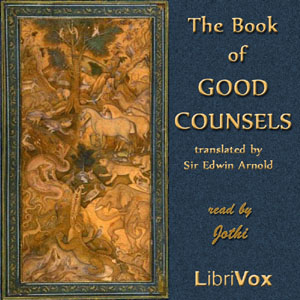
The Book of Good Counsels - From the Sanskrit of the "Hitopadesa
by Sir Edwin Arnold
The term ‘Hitopadesha’ is a combination of two Sanskrit terms, ‘Hita’ (welfare/ benefit) and ‘Upadesha’ (counsel). As the term suggests, The Hitopadesha is a collection of tales that gives good counsel. Hitopadesa was presumably written by Narayan Pandit and is an independent treatment of the Vishnu Sarman's Panchatantra (3rd century BC) which it resembles in form. In Hitopadesha, Vishnu Sarman is depicted as a Sage who undertakes to give good counsel to the sons of Sudarsana, the king of Pataliputra, through stories within stories involving talking animals. The dating of Hitopadesha is problematic as no other work by Narayan Pandit is known. The earliest manuscript of Hitopadesha dates from 1373; it could be of East Indian origin during the Pala Empire (8th-12th centuries).This book is a condensed but faithful transcript of Hitopadesha in sense and manner rendered in English by Sir Edwin Arnold. Sir Edwin says in the Preface that the Hitopadesa may be styled 'The fathe
-
7
-
6
-
5
-
4
-
3
-
2
-
1
No matches for "" in this podcast's transcripts.
No topics indexed yet for this podcast.
Loading reviews...
ABOUT THIS SHOW
The term ‘Hitopadesha’ is a combination of two Sanskrit terms, ‘Hita’ (welfare/ benefit) and ‘Upadesha’ (counsel). As the term suggests, The Hitopadesha is a collection of tales that gives good counsel. Hitopadesa was presumably written by Narayan Pandit and is an independent treatment of the Vishnu Sarman's Panchatantra (3rd century BC) which it resembles in form. In Hitopadesha, Vishnu Sarman is depicted as a Sage who undertakes to give good counsel to the sons of Sudarsana, the king of Pataliputra, through stories within stories involving talking animals. The dating of Hitopadesha is problematic as no other work by Narayan Pandit is known. The earliest manuscript of Hitopadesha dates from 1373; it could be of East Indian origin during the Pala Empire (8th-12th centuries).This book is a condensed but faithful transcript of Hitopadesha in sense and manner rendered in English by Sir Edwin Arnold. Sir Edwin says in the Preface that the Hitopadesa may be styled 'The fathe
HOSTED BY
Sir Edwin Arnold
CATEGORIES
Loading similar podcasts...
URL copied to clipboard!