
PODCAST · health
The Charted Defense
by The Charted Defense
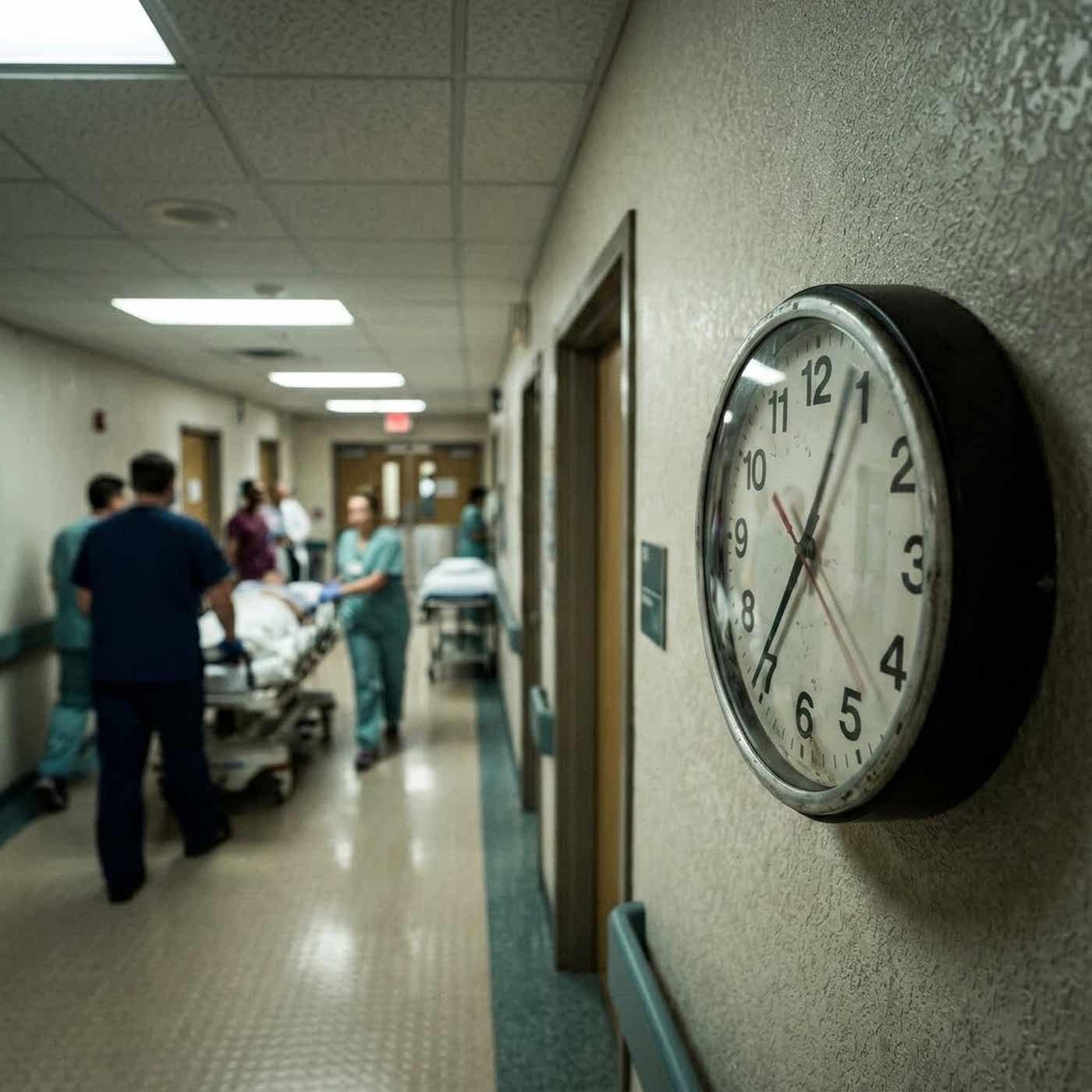
Every hospital in America has a system for reporting critical lab results. Rory Staunton's death proved that having a system and having one that works are two very different things. thecharteddefense.substack.com
-
46
Inside the Window
A previously healthy 48-year-old father was found unconscious on his lawn one evening. He arrived at a certified primary stroke center roughly one hour after he was last seen normal — with most of the treatment window still intact. Over the next three hours, the hospital's own stroke protocol was never activated, advanced imaging was delayed, and the on-call neurologist wasn't contacted for nearly two hours. A clot-dissolving medication was finally administered just minutes before the treatment window closed. He was never transferred to a facility capable of performing a clot-retrieval procedure. The litigation lasted four and a half years, featured a digital audit trail that contradicted a key witness's sworn testimony, and settled the night before jury selection. This is a public episode. If you'd like to discuss this with other subscribers or get access to bonus episodes, visit thecharteddefense.substack.com/subscribe
-
45
"Four Hours"
A 51-year-old man walked into a community emergency department on a Sunday evening with word-finding difficulty, dizziness, headache, and elevated blood pressure. His family used the word "stroke" at triage. Four hours later, he was discharged with a diagnosis of obstructive sleep apnea. Fifteen days later, he presented to a different hospital with aphasia, right-sided weakness, and multiple brain infarcts on imaging. The case settled weeks before trial. We break down the clinical decision points, the imaging workup that stopped too early, and the discharge instructions that became the centerpiece of the legal defense.This Substack is reader-supported. To receive new posts and support my work, consider becoming a free or paid subscriber.Thanks for reading! This post is public so feel free to share it. This is a public episode. If you'd like to discuss this with other subscribers or get access to bonus episodes, visit thecharteddefense.substack.com/subscribe
-
44
No Note, No Defense
A college student walks into a community emergency department after a reported fall. The CT shows bilateral frontal hemorrhages. A neurosurgeon directs her care by phone from home — orders are placed, but no narrative note explains the reasoning. Over the next thirty hours, the patient deteriorates through documented changes that no single provider connects. By the time decompressive surgery begins, it is near midnight on hospital day two. A diagnosis that was visible on imaging at 12:31 PM was not reported. A risk factor that fit the picture was not on the chart. Seven defendants are dismissed on summary judgment. One is left to settle. The seven-figure resolution of a case that turned, more than anything else, on what was — and was not — written down.This Substack is reader-supported. To receive new posts and support my work, consider becoming a free or paid subscriber.Thanks for reading! This post is public so feel free to share it. This is a public episode. If you'd like to discuss this with other subscribers or get access to bonus episodes, visit thecharteddefense.substack.com/subscribe
-
43
The Closing Window: The Trial and the Lessons
The trial, the verdict, and the lessons. A six-person jury, a two-week trial, a defense verdict on every count, and an appeal that is now pending. How the plaintiff turned vocabulary differences across providers into an argument. How the defense turned timestamps into a defense. And what every hospitalist and emergency physician should write into a chart the next time a patient says “I don’t know” to a treatment with a closing window.This Substack is reader-supported. To receive new posts and support my work, consider becoming a free or paid subscriber.Thanks for reading! This post is public so feel free to share it. This is a public episode. If you'd like to discuss this with other subscribers or get access to bonus episodes, visit thecharteddefense.substack.com/subscribe
-
42
The Closing Window: The Patient's Story
A taxi driver finishes his overnight shift and feels something change. He arrives at a major urban emergency department within minutes of the symptoms beginning. Stroke alert is called. CT is clear. The team offers the clot-dissolving medication — and then offers it again, and again, as the window narrows. The patient never says no. He never says yes. The clinical story of an undecided patient, a closing window, and a chart written by four providers who each saw the same conversation differently. This is a public episode. If you'd like to discuss this with other subscribers or get access to bonus episodes, visit thecharteddefense.substack.com/subscribe
-
41
Nine Decision Points
The teaching episode. Nine specific moments across this case where a different decision could have changed the outcome — from the PCP’s office to the ED triage to the radiologist’s read. Each one a small choice. Each one part of a chain. The episode every program director, residency, and quality committee will want to send to their teams. This is a public episode. If you'd like to discuss this with other subscribers or get access to bonus episodes, visit thecharteddefense.substack.com/subscribe
-
40
Page 334
The deposition story. A single page of the medical record — the page the plaintiff’s attorney returned to again and again — became the load-bearing document of the case. How a routine triage note became the moment the case turned. The trial, the directed verdict for one defendant, the settlement against another, and what page 334 still teaches every clinician who writes a note.This Substack is reader-supported. To receive new posts and support my work, consider becoming a free or paid subscriber.Thanks for reading! This post is public so feel free to share it. This is a public episode. If you'd like to discuss this with other subscribers or get access to bonus episodes, visit thecharteddefense.substack.com/subscribe
-
39
Two Hours
A 70-year-old man develops dizziness and difficulty walking. He sees his primary care physician. He’s sent to the emergency department. Two hours pass between when the symptoms began and when stroke is finally on the differential. By then, the tPA window is closing. The clinical story — and the way a posterior circulation stroke can hide in plain sight on a busy day in a busy office. This is a public episode. If you'd like to discuss this with other subscribers or get access to bonus episodes, visit thecharteddefense.substack.com/subscribe
-
38
Inherent Function
The legal doctrine that decided this case. When a hospital contracts out its emergency department, can it still be liable for the contractor’s care? This episode walks through the appellate ruling — and the documentation lessons every hospitalist and emergency physician should take from a case where the hospital’s structural relationship with its ED group became the central question. This is a public episode. If you'd like to discuss this with other subscribers or get access to bonus episodes, visit thecharteddefense.substack.com/subscribe
-
37
What the Chart Couldn't Defend
The trial story. How a chart built across three encounters by three different emergency physicians becomes plaintiff’s exhibit, deposition by deposition. The notes that were thorough. The notes that weren’t. The handoff that didn’t happen. And the moment the defense realized the documentation was telling a different story than the testimony.Thanks for reading! This post is public so feel free to share it. This is a public episode. If you'd like to discuss this with other subscribers or get access to bonus episodes, visit thecharteddefense.substack.com/subscribe
-
36
Three Visits: The Patient's Story
A previously healthy adult traveler presents to a community emergency department with cough, sore throat, headache, and a tight neck. She returns the next morning, and again that same night. Each visit, the clinical picture sharpens. Each visit, the differential narrows in the wrong direction. By the third visit, bacterial meningitis is no longer a possibility a workup could have caught — it’s a diagnosis announcing itself in the resuscitation bay.This Substack is reader-supported. To receive new posts and support my work, consider becoming a free or paid subscriber.Thanks for reading! This post is public so feel free to share it. This is a public episode. If you'd like to discuss this with other subscribers or get access to bonus episodes, visit thecharteddefense.substack.com/subscribe
-
35
The Back Pain You Cannot Afford to Miss
A patient with IV drug use history presents with back pain and fever. The treating physician diagnoses musculoskeletal pain without pursuing emergent spinal imaging. The epidural abscess compresses the spinal cord, and by the time surgical decompression is attempted, the patient has developed irreversible paralysis. Covers premature closure and attribution bias, the 56% diagnostic error rate for spinal epidural abscess, and multiple high-value verdicts ($5.6M–$18M). This is a public episode. If you'd like to discuss this with other subscribers or get access to bonus episodes, visit thecharteddefense.substack.com/subscribe
-
34
When "Complex Migraine" Means Stroke
A woman in her early forties develops sudden slurred speech, right-sided weakness, dizziness, and vomiting on a summer evening. Her mother calls 911 and tells the dispatcher she thinks her daughter is having a stroke. EMS brings her to a certified primary stroke center — a hospital with alteplase, CT imaging, and tele-neurology, all ready and operational. The emergency physician examines her, considers the picture, and lands on a diagnosis: complex migraine. No stroke alert. No NIHSS. No neurology consult. By the time a neurologist is finally called, the tPA window has closed. Four days later, she is dead.In the debut episode of The Cognitive Autopsy, Bryan walks through the clinical sequence step by step, Sarah unpacks how anchoring on a benign diagnosis becomes a legal and regulatory case, and Paul brings the frontline clinical perspective: why “complex migraine” is one of the most dangerous phrases in emergency medicine, how anchoring bias and premature closure quietly shut down a stroke workup, and the one thing any clinician can do on the next shift to keep the differential open long enough to catch the patient who is actually stroking out in front of them.Educational purposes only. Not legal advice. Not medical advice.This Substack is reader-supported. To receive new posts and support my work, consider becoming a free or paid subscriber.Thanks for reading! This post is public so feel free to share it. This is a public episode. If you'd like to discuss this with other subscribers or get access to bonus episodes, visit thecharteddefense.substack.com/subscribe
-
33
The Expert
Inside the expert witness testimony and trial strategy. Covers reptile theory, an EMTALA question resolved in chambers, and the jury's verdict.This Substack is reader-supported. To receive new posts and support my work, consider becoming a free or paid subscriber. This is a public episode. If you'd like to discuss this with other subscribers or get access to bonus episodes, visit thecharteddefense.substack.com/subscribe
-
32
Drug-Seeking
A middle-aged patient with a history of injection drug use and frequent ED visits arrives complaining of acute leg pain. The provider has seen this patient before. The chart already labels her. The exam is brief — and what is documented is behavior, not findings. The cognitive autopsy of a case where attribution bias, premature closure, and the gravitational pull of prior labels combined to keep one of the most time-sensitive vascular emergencies in medicine off the differential. The one thing you can do differently: examine the painful area as if you’d never read the prior notes. Then reconcile.This Substack is reader-supported. To receive new posts and support my work, consider becoming a free or paid subscriber. This is a public episode. If you'd like to discuss this with other subscribers or get access to bonus episodes, visit thecharteddefense.substack.com/subscribe
-
31
The Eleven-Second Attestation — When a Stroke Looks Like a Migraine and the Chart Tells the Whole Story
A retired chiropractor in his sixties pulls off a rural Southern highway with sudden neck pain, dizziness, nausea, vomiting, and numbness on one side. He’s brought to a community ED, triaged as a mid-acuity patient, and worked up by a nurse practitioner. The supervising emergency physician — the doctor whose name is on the chart — never sees him, never speaks with him, and is off shift within the hour. Hours later, the patient is discharged. What follows is a vertebral artery dissection, a brainstem stroke, and an audit trail showing the supervising physician’s attestation took eleven seconds.In this episode, Bryan walks through the clinical timeline of a posterior-circulation catastrophe that looked, on the surface, like a migraine. Sarah unpacks how supervisory attestations, audit trails, and NP-physician oversight rules become the spine of the plaintiff’s case. And Michael brings the frontline clinical perspective: the symptom cluster that should never close the differential, why “unremarkable exam” is a phrase that ages badly, and what an attending can do on the next shift to make sure an eleven-second click never becomes the most damaging line in the chart.Educational purposes only. Not legal advice. Not medical advice.This Substack is reader-supported. To receive new posts and support my work, consider becoming a free or paid subscriber.Thanks for reading! This post is public so feel free to share it. This is a public episode. If you'd like to discuss this with other subscribers or get access to bonus episodes, visit thecharteddefense.substack.com/subscribe
-
30
The Lawsuit
From bedside to courtroom. The complaint, discovery battles, expert testimony, and the hospital's defense that care met the standard — how a patient's death becomes a legal case. This is a public episode. If you'd like to discuss this with other subscribers or get access to bonus episodes, visit thecharteddefense.substack.com/subscribe
-
29
The Template Will Get You — When "Neurological Exam Intact" Is a Click, Not a Conclusion
You open the chart. The template loads. The neurological exam section already reads “intact.” You sign the note and move on. Eighteen months later, a plaintiff’s attorney has your note side by side with a physical therapist’s, a nurse’s, and a consultant’s — all documenting findings that contradict yours. The audit trail shows your total time in the chart was a fraction of what the note claims you did. Now a jury has to decide who to believe: your testimony, or the record you signed.In this episode, Bryan walks through how pre-populated EHR templates become legal evidence, Sarah unpacks the malpractice and False Claims Act exposure when templated exams don’t match reality, and Michael brings the frontline hospitalist perspective: where templates are legitimate, where they quietly become indefensible, and what to put in your own words on your next shift so the chart still protects you.Educational purposes only. Not legal advice. Not medical advice.This Substack is reader-supported. To receive new posts and support my work, consider becoming a free or paid subscriber.Thanks for reading! This post is public so feel free to share it. This is a public episode. If you'd like to discuss this with other subscribers or get access to bonus episodes, visit thecharteddefense.substack.com/subscribe
-
28
The Man
A middle aged man calls 911 with chest pain early one morning. This season traces the alleged cascading failures — STEMI transfer delay, helicopter vs. ground transport decision-making, airway cascade failure in the cath lab. This case led to a nuclear verdict over $50 million dollars. This is a public episode. If you'd like to discuss this with other subscribers or get access to bonus episodes, visit thecharteddefense.substack.com/subscribe
-
27
The Outpatient MRI Trap
A patient walks into a Georgia emergency department with back pain and red-flag neurologic symptoms. Cauda equina syndrome is on the differential — but instead of an emergent MRI, the workup gets punted to the outpatient setting. By the time imaging happens, the window for a good neurologic outcome has closed. A lawsuit, a comparative-negligence fight, and a hard lesson about ED disposition follow.In this episode, Bryan walks through the clinical timeline, Sarah unpacks how Georgia’s comparative-negligence rules shaped the litigation, and MICHAEL brings the frontline hospitalist and emergency-medicine perspective: why the “outpatient MRI” pathway is so seductive, where the documentation actually fails, and what you can do on your next shift to keep a suspected CES patient from slipping through the cracks.Educational purposes only. Not legal advice. Not medical advice. This is a public episode. If you'd like to discuss this with other subscribers or get access to bonus episodes, visit thecharteddefense.substack.com/subscribe
-
26
The Cell Tower Ping and Your Defense
Your phone, your EHR, and your badge are all keeping records you never think about. In this episode, we break down how digital evidence — from cell tower pings to audit trails — is quietly becoming the most powerful tool in malpractice litigation, and what every physician needs to understand about the forensic footprint they leave on every shift. This is a public episode. If you'd like to discuss this with other subscribers or get access to bonus episodes, visit thecharteddefense.substack.com/subscribe
-
25
The Ankle Reflex Trap — When Experience Becomes the Enemy
A hospitalist checks ankle reflexes on a patient with severe back pain. They're intact. The brain says cauda equina syndrome is unlikely. But intact reflexes have no validated role in ruling it out — and that single reassuring finding becomes the cognitive failure point in one of medicine's most litigated missed diagnoses. This episode reconstructs the decision chain behind delayed CES diagnosis, the exam findings that falsely reassure, and the one bedside test that can change your clinical calculus in two minutes. This is a public episode. If you'd like to discuss this with other subscribers or get access to bonus episodes, visit thecharteddefense.substack.com/subscribe
-
24
The Shield That Keeps Growing — Mississippi's COVID Immunity and the Diagnostic Delay That Can't Be Sued
A patient recovers from COVID-19 in early 2021. Weeks later, he begins losing strength in both legs. Then he can’t urinate. He goes to a hospital, then a clinic, then another provider. For three months, no one connects the dots. When the diagnosis finally arrives — transverse myelitis, a known post-COVID neurological complication — the window for optimal treatment has narrowed sharply. He and his spouse file a malpractice suit. The case never makes it past the first procedural hurdle. In Secrist v. Rush Medical Foundation, the Mississippi Supreme Court affirmed dismissal — not because the care was found adequate, but because a COVID-era immunity statute made the lawsuit legally impermissible. The court never had to evaluate the standard of care.In this episode, Bryan walks through the clinical timeline and the procedural arc of the case. Sarah unpacks Mississippi’s pandemic immunity framework — what it covers, how broadly the courts have read it, and where the outer edges of the shield actually sit for care delivered during and after the public health emergency. And Michael brings the frontline hospitalist perspective: why post-COVID transverse myelitis is so easy to miss in the first weeks of progressive weakness, the leg-weakness-plus-urinary-retention combination that should trigger emergent spine MRI on any shift, and what clinicians who practiced through 2020–2021 should understand about how immunity statutes now interact with the diagnostic decisions they made in real time.Educational purposes only. Not legal advice. Not medical advice.This Substack is reader-supported. To receive new posts and support my work, consider becoming a free or paid subscriber.Thanks for reading! This post is public so feel free to share it. This is a public episode. If you'd like to discuss this with other subscribers or get access to bonus episodes, visit thecharteddefense.substack.com/subscribe
-
23
The Digital Witness: When Your Phone Testifies Against You
Your phone, your EHR, and your badge are all keeping records you never think about. In this episode, we break down how digital evidence — from cell tower pings to audit trails — is quietly becoming the most powerful tool in malpractice litigation, and what every physician needs to understand about the forensic footprint they leave on every shift. This is a public episode. If you'd like to discuss this with other subscribers or get access to bonus episodes, visit thecharteddefense.substack.com/subscribe
-
22
Medical Malpractice Stress Syndrome: Part 3
Part 3 — "Before You Get Sued" — Prevention, preparation, and peer support interventions. The proactive episode — what physicians can do now (before they're ever named in a suit) to build resilience, understand their malpractice policy, and set up support structures. This is a public episode. If you'd like to discuss this with other subscribers or get access to bonus episodes, visit thecharteddefense.substack.com/subscribe
-
21
The First Label — How Triage Notes Anchor the Differential and Derail the Diagnosis
A 2023 JAMA Internal Medicine study looked at more than 108,000 emergency department visits across 104 VA facilities and asked one simple question: does the wording in a triage note change how physicians work up a patient? The answer was unambiguous. When the triage note mentioned congestive heart failure, physicians were one-third less likely to order testing for pulmonary embolism — and took fifteen extra minutes to order it when they did. The actual rate of PE in the two groups was identical. The only thing that changed was the label.In this episode, Bryan walks through the research and a string of malpractice cases — from a $20 million verdict to a $27 million verdict — where a single line in a triage note quietly steered the entire workup off course. Sarah unpacks the cognitive science behind anchoring bias, dual-process theory, and why the anchor is uniquely dangerous when it is set by someone other than the treating physician before the encounter begins. And Michael brings the frontline hospitalist and emergency-medicine perspective: why every one of us inherits charts with labels already attached, how to recognize when System 1 has accepted a frame you never chose, and the concrete habits — re-triage in your own words, independent chief complaint, deliberate “what else could this be” pause — that any clinician can build into the next shift to keep an incomplete label from becoming a $27 million problem.Educational purposes only. Not legal advice. Not medical advice.This Substack is reader-supported. To receive new posts and support my work, consider becoming a free or paid subscriber. This is a public episode. If you'd like to discuss this with other subscribers or get access to bonus episodes, visit thecharteddefense.substack.com/subscribe
-
20
Medical Malpractice Stress Syndrome: Part 2
"The Silent Crisis" — Physician suicide and the litigation-suicide link. Covers the epidemiology, why malpractice litigation is a unique psychological stressor compared to other professional adversities, and the systemic silence around it. This is a public episode. If you'd like to discuss this with other subscribers or get access to bonus episodes, visit thecharteddefense.substack.com/subscribe
-
19
The Verdict and the Lessons
This episode covers the jury verdict in our case (nearly $20M in damages), then runs a clinical debrief — examining the readmission decision, the diagnostic gap around bronchoscopy and fungal workup timing, the ARDS threshold window, drug selection (itraconazole vs. liposomal amphotericin B), and system-level fixes. Wraps with legal lessons on documentation and how the appellate ruling changed summary judgment standards. This is a public episode. If you'd like to discuss this with other subscribers or get access to bonus episodes, visit thecharteddefense.substack.com/subscribe
-
18
Deposition Prep Under Stress — Why Good Doctors Give Bad Answers
A competent, experienced physician sits down for a deposition. He’s under oath. The plaintiff’s attorney points to a chart entry — a staph skin infection two weeks before the patient’s back pain visit — and asks one question: “Would you have ordered an MRI if you had known?” The physician answers, “Yes. Yes, I probably would have.” One sentence. One concession. The defense just lost its strongest argument. The answer wasn’t weakness. It wasn’t ignorance. It was biology.In this episode, Bryan walks through the moment a deposition turns, Sarah unpacks how plaintiff’s attorneys engineer those concessions and why a single phrase can collapse a defense, and Michael brings the frontline clinical and physiologic perspective: what the SAM and HPA stress axes actually do to executive function under cross-examination, why careful clinicians become unrecognizable in a deposition chair, and the concrete preparation habits — answer framing, pause discipline, and pre-thought responses to predictable questions — that any physician can build before they ever get served.Educational purposes only. Not legal advice. Not medical advice.This Substack is reader-supported. To receive new posts and support my work, consider becoming a free or paid subscriber.Thanks for reading! This post is public so feel free to share it. This is a public episode. If you'd like to discuss this with other subscribers or get access to bonus episodes, visit thecharteddefense.substack.com/subscribe
-
17
Case 3: The Great Pretender | The Legal Battle
The wrongful death suit against the hospital. Covers the plaintiff's three expert witnesses (internist, ID specialist, pulmonologist) who argue the diagnosis was preventable, and that delayed bronchoscopy, delayed antifungals, and choosing itraconazole over liposomal amphotericin B caused the patient's death. Also covers the defense's summary judgment motion and the appellate reversal that sent it to trial. This is a public episode. If you'd like to discuss this with other subscribers or get access to bonus episodes, visit thecharteddefense.substack.com/subscribe
-
16
The Settlement Decision
It's a Legal Playbook episode covering why defensible malpractice cases still settle — walks through insurer economics and expected value calculations, consent-to-settle and hammer clauses in malpractice policies, the nuclear verdict shadow driving settlement pressure, and the NPDB reporting implications that follow a physician after settlement. Status shows published already. This is a public episode. If you'd like to discuss this with other subscribers or get access to bonus episodes, visit thecharteddefense.substack.com/subscribe
-
15
The Great Pretender - The Patient
A middle-aged man presents with breathing problems, gets diagnosed with pneumonia and discharged, then returns a week later in worse condition. Over twenty lab tests come back negative as clinicians allegedly delay the diagnosis of the “great pretender.” The episode walks through the diagnostic challenge and the science behind causative organism. This is a public episode. If you'd like to discuss this with other subscribers or get access to bonus episodes, visit thecharteddefense.substack.com/subscribe
-
14
Making the Case
The season finale puts you in the courtroom. The plaintiff's hematology expert says warfarin was the gold standard and the switch to rivaroxaban was unjustified. The defense experts say the evidence was unsettled and the decision fell within reasonable medical judgment. Same papers, opposite conclusions. We reconstruct both sides of the expert testimony, examine how courts handle gray-zone medicine, and close with practical lessons on documentation, shared decision-making, and what your chart note actually needs to say when you depart from the mainstream standard. This is a public episode. If you'd like to discuss this with other subscribers or get access to bonus episodes, visit thecharteddefense.substack.com/subscribe
-
13
The Wrong Blood Thinner
Warfarin had been the standard for APS for decades. Then DOACs hit the market — convenient, no blood draws, no dietary restrictions. But for patients with Antiphospholipid Syndrome, convenience came at a cost. This episode breaks down the pharmacology of warfarin versus DOACs, explains what the TRAPS trial would eventually prove, walks through the patient's prolonged hospitalization and devastating clinical decline, and introduces the legal concepts — proximate cause and preponderance of evidence — that will frame everything that follows.On the Record is a deep-dive series from The Charted Defense that takes a real medical malpractice case apart — from the patient's first presentation through the courtroom. Each season follows one case across multiple episodes, walking through the medical records, the clinical decision-making, the legal filings, and the expert testimony on both sides. The goal isn't to pick winners — it's to find the moments where something could have gone differently and turn them into lessons for the next shift. This is a public episode. If you'd like to discuss this with other subscribers or get access to bonus episodes, visit thecharteddefense.substack.com/subscribe
-
12
The Patient
A young mother develops pulmonary emboli — then a thrombophilia workup reveals a dangerous combination of inherited and acquired clotting disorders, including suspected Antiphospholipid Syndrome. As her care fragments across multiple providers and health systems, the stage is set for a critical anticoagulation decision that will define the rest of her life — and this entire case. This is a public episode. If you'd like to discuss this with other subscribers or get access to bonus episodes, visit thecharteddefense.substack.com/subscribe
-
11
Against the Clot
A young mother survives bilateral pulmonary emboli, only to be diagnosed with a clotting disorder. When her anticoagulation was allegedly switched, the case alleges that a chain of events was set in motion that led to her death. Her family filed a medical malpractice lawsuit. The case survived summary judgment when the court found that competing expert opinions — on whether the prescribing decision departed from the standard of care and whether it caused her death — were a question for a jury, not a judge. Season 2 breaks down the medicine, the litigation, and the decision points where the outcome might have been different and goes into the medical experts and their opinions. This is a public episode. If you'd like to discuss this with other subscribers or get access to bonus episodes, visit thecharteddefense.substack.com/subscribe
-
10
Your Expert Witness Is Your Case. Here Is How They Lose It.
This is a public episode. If you'd like to discuss this with other subscribers or get access to bonus episodes, visit thecharteddefense.substack.com/subscribe
-
9
The Process-of-Care Playbook
A practical, physician-focused deep dive into the documentation habits that can either narrow or expand malpractice exposure. Using a concurring appellate opinion as the framework, this episode examines three recurring process-of-care vulnerabilities—stale risk assessments, orders without documented reasoning, and chart gaps that leave care indefensible—and translates them into concrete next-shift documentation strategies. The core message is straightforward: in modern malpractice litigation, the chart is not just a record of what happened; it is the evidence of whether your clinical judgment can be defended.SOURCES* Candello/CRICO. “For the Record: The Effect of Documentation on Defensibility and Patient Safety.” Benchmarking Report. November 2024.* Kusumoto FM, Ross J, Wright D, Chazal R, Anderson RE. “Analysis of Closed Claims Among All Medical Specialties.” Risk Management and Healthcare Policy. 2024;17:411-422.* Padula W, et al. “Value of hospital resources for effective pressure injury prevention.” BMJ Quality & Safety. 2018;28:132-141.* Lorente-Granados G, et al. “Hospital-Acquired Pressure Injuries: Application of Preventive and Reactive Measures in Real Practice.” J Adv Nurs. 2025.* Pascall E, et al. “Litigation associated with ICU treatment in England.” Br J Anaesth. 2015;115(4):601-7.* Corum L. “Medical Malpractice in Wound Care: A Multiple Case Series.” J WOCN. 2025;52(5):417-420.* Ghaith S, et al. “Charting Practices to Protect Against Malpractice.” Western Journal of Emergency Medicine. 2022;23(3):412-417.* Sharma S, McKenna MK, Brenner MJ. “The Evolving Legal Standard for Medical Malpractice.” Otolaryngology–Head and Neck Surgery. 2025;173:1028-1030.* American Law Institute. Restatement of Torts — Medical Malpractice. Approved 2024, published February 2025.* ProAssurance Risk Management Case Study: Documentation and Prevention Protocols.* VerdictSearch database analysis: 141 pressure ulcer malpractice cases. Published in Adv Skin Wound Care.* CMS F-686: Treatment/Services to Prevent/Heal Pressure Injuries.* NPIAP. Unavoidable Pressure Injury White Paper.DISCLAIMERThis podcast is produced for educational purposes only and does not constitute legal or medical advice. The content reflects publicly available case information, published medical literature, and general legal principles. Laws vary by jurisdiction. Clinical decisions should be based on individual patient circumstances and current evidence-based guidelines. If you are facing a malpractice claim, consult a qualified attorney in your jurisdiction. This is a public episode. If you'd like to discuss this with other subscribers or get access to bonus episodes, visit thecharteddefense.substack.com/subscribe
-
8
The Drug They Wouldn't Stop
The Charted Defense Newsletter | Michael Coleman MDA malpractice case involving a young child illustrates how recognition and response failures—rather than the initial prescribing decision—can drive catastrophic outcomes and large verdicts. In 2016, while being treated for Burkitt lymphoma at Children’s Hospital the child was started on allopurinol for tumor lysis syndrome prophylaxis, a routine therapy. Within days he developed progressive skin sloughing, a hallmark of Stevens-Johnson syndrome (SJS), yet multiple clinicians documented the worsening rash over approximately nine days without discontinuing the drug or obtaining a dermatology consult. When another physician finally recognized the likely diagnosis and stopped allopurinol, roughly 30% of the child’s body surface area was involved; he died the next day. In 2024 a jury returned a reported $35 million verdict against the University System Board of Regents. The case highlights recurring malpractice patterns: documented warning signs without action, diffusion of responsibility in team-based care, delayed escalation, and inadequate documentation of clinical reasoning. The broader lesson for physicians is that litigation risk often arises not from the initial treatment decision but from failures in monitoring, recognizing complications, and clearly documenting risk assessment, escalation plans, and response when warning signs appear.SourcesCase Sources* The Augusta Press (May 8, 2024). “Augusta jury awards $35 million verdict.” https://theaugustapress.com/augusta-jury-awards-35-million-verdict/* GeorgiaMalpractice.com (Scott McMillen). “10 of the Largest Medical Malpractice Verdicts in Georgia History.” https://georgiamalpractice.com/10-of-the-largest-medical-malpractice-verdicts-in-georgia-history/* Childers, Schlueter & Smith, LLC. SJS Practice Area. https://cssfirm.com/practice-areas/personal-injury/medical-malpractice/stevens-johnson-syndrome/* AboutLawsuits.com: $6M California allopurinol-SJS verdict; $21M Bartlett v. Mutual Pharmaceutical SJS verdict.Legal Sources* Georgia Tort Claims Act, O.C.G.A. § 50-21-23 et seq. https://law.justia.com/codes/georgia/2020/title-50/chapter-21/article-2/section-50-21-23/* Mutual Pharmaceutical Co. v. Bartlett, 570 U.S. 472 (2013).Medical Literature* Yang CY et al. “Allopurinol Use and Risk of Fatal Hypersensitivity Reactions.” JAMA Intern Med. 2015;175(9):1550-7.* Ko T et al. “A prospective study of HLA-B*5801 genotyping in preventing allopurinol-induced severe cutaneous adverse reactions.” Clin Transl Allergy. 2014;4:O4.* Cairo MS et al. “A Clinical and Economic Comparison of Rasburicase and Allopurinol.” Clin Lymphoma Myeloma Leuk. 2017;17(3):173-178.* Cheung CMT et al. “SJS and TEN in Hong Kong.” Hong Kong Med J. 2024;30(2):102-109.* Huang YS et al. “Drug-induced liver injury associated with severe cutaneous adverse drug reactions.” Liver Int. 2021;41(11):2671-2680.* Bathini L et al. “Initiation Dose of Allopurinol and the Risk of Severe Cutaneous Reactions.” Am J Kidney Dis. 2022;80(6):730-739.* Noe MH, Micheletti RG. “Diagnosis and management of SJS/TEN.” Clin Dermatol. 2020;38(6):607-612.* Hasegawa A, Abe R. “Recent advances in managing SJS and TEN.” F1000Research. 2020;9:612.* Chang CJ et al. “Pharmacogenetic Testing for Prevention of SCAR.” Front Pharmacol. 2020;11.Regulatory Sources* NCBI Medical Genetics Summary: Allopurinol Therapy and HLA-B*58:01 Genotype. https://www.ncbi.nlm.nih.gov/books/NBK127547/* CPIC Guideline for Allopurinol and HLA-B (2013/2015). Hershfield MS et al. Clin Pharmacol Ther. 2013;93(2):153-158. Saito Y et al. Clin Pharmacol Ther. 2016;99(1):36-37.* Allopurinol: Pediatric drug information. UpToDate (2026).* Allopurinol: ClinicalKey AI clinical summary. Elsevier ClinicalKey (2026).The Charted Defense provides educational content for physicians. Nothing in this newsletter constitutes legal advice, patient-specific medical advice, or a definitive statement of adjudicated findings. Case details are drawn from publicly available reporting with attribution. Where court-primary documents have not been obtained, this limitation is noted. Laws vary by jurisdiction. Discuss specific legal questions with qualified counsel. Discuss specific clinical questions with qualified colleagues.Michael Coleman, MD is a practicing hospitalist, Hospital Medicine Program Director at US Acute Care Solutions (South Division), based at Highlands Medical Center in Scottsboro, Alabama. He is currently pursuing a Juris Doctor degree to deepen his expertise at the intersection of medicine and law. Michael has personally been named as a defendant in a medical malpractice lawsuit — an experience that profoundly shaped his understanding of how litigation impacts physicians.Where medicine meets the law — an MD’s journey to JD. This is a public episode. If you'd like to discuss this with other subscribers or get access to bonus episodes, visit thecharteddefense.substack.com/subscribe
-
7
The Decision Chain — $41 Million Verdict
This is a public episode. If you'd like to discuss this with other subscribers or get access to bonus episodes, visit thecharteddefense.substack.com/subscribe
-
6
When Defensive Documentation Does Not Defend
Charting Your Defense is a physician-focused medical-legal podcast presented in a conversational Q&A format. Each episode features a host guiding a structured discussion with Dr. Michael Coleman, a practicing hospitalist and medical director, exploring how clinical decisions, documentation, and healthcare systems intersect with malpractice law.Through case analysis, legal concepts, and real-world clinical scenarios, the show breaks down complex medico-legal issues into practical insights physicians can apply in everyday practice. Topics include documentation strategy, the standard of care, expert testimony, depositions, and the litigation process. This is a public episode. If you'd like to discuss this with other subscribers or get access to bonus episodes, visit thecharteddefense.substack.com/subscribe
-
5
When the Body Turns on Itself
This is a public episode. If you'd like to discuss this with other subscribers or get access to bonus episodes, visit thecharteddefense.substack.com/subscribe
-
4
Overview: When the Wound Speaks
A critically ill patient is admitted with end-stage renal disease, pulmonary fibrosis, and heart failure. His skin is intact on arrival. Over the next three months, his condition spirals through ICU transfers, respiratory failure, a stroke, and sepsis — and a pressure injury develops that progresses from a minor skin tear to a Stage IV ulcer with exposed bone. He dies on Christmas Eve. This is the clinical story that became a multi-year malpractice case — and it starts here. This is a public episode. If you'd like to discuss this with other subscribers or get access to bonus episodes, visit thecharteddefense.substack.com/subscribe
-
3
Preview of Season 1: When the Wound Speaks
On the RecordSeason 1: When the Wound SpeaksA critically ill patient is admitted with end-stage renal disease, pulmonary fibrosis, and heart failure. His skin is intact on arrival. Over the next three months, his condition spirals through ICU transfers, respiratory failure, a stroke, and sepsis — and a pressure injury develops that progresses from a minor skin tear to a Stage IV ulcer with exposed bone. He dies on Christmas Eve. This is the clinical story that became a multi-year malpractice case — and it starts here. This is a public episode. If you'd like to discuss this with other subscribers or get access to bonus episodes, visit thecharteddefense.substack.com/subscribe
-
2
When The Sodium Jumps and ODS - Big Litigation Potential
This is a public episode. If you'd like to discuss this with other subscribers or get access to bonus episodes, visit thecharteddefense.substack.com/subscribe
-
1
When Infection Hides in the Artery
When Infection Hides in the ArteryThe CT scan said brain tumor. The surgeon opened the skull expecting cancer. But when pathology came back, there were no malignant cells — just bacteria that had been silently destroying an artery from the inside.. This is a public episode. If you'd like to discuss this with other subscribers or get access to bonus episodes, visit thecharteddefense.substack.com/subscribe
We're indexing this podcast's transcripts for the first time — this can take a minute or two. We'll show results as soon as they're ready.
No matches for "" in this podcast's transcripts.
No topics indexed yet for this podcast.
Loading reviews...
Loading similar podcasts...
Frequently Asked Questions
How many episodes does The Charted Defense have?
The Charted Defense currently has 46 episodes available on PodParley. New episodes are automatically indexed when they're published to the podcast feed.
What is The Charted Defense about?
Every hospital in America has a system for reporting critical lab results. Rory Staunton's death proved that having a system and having one that works are two very different things. thecharteddefense.substack.com
How often does The Charted Defense release new episodes?
The Charted Defense has 46 episodes. Check the episode list to see recent publication dates and frequency.
Where can I listen to The Charted Defense?
You can listen to The Charted Defense on PodParley by clicking any episode. We provide an embedded audio player for direct listening, and you can also subscribe via your preferred podcast app using the RSS feed.
Who hosts The Charted Defense?
The Charted Defense is created and hosted by The Charted Defense.
URL copied to clipboard!