
PODCAST · health
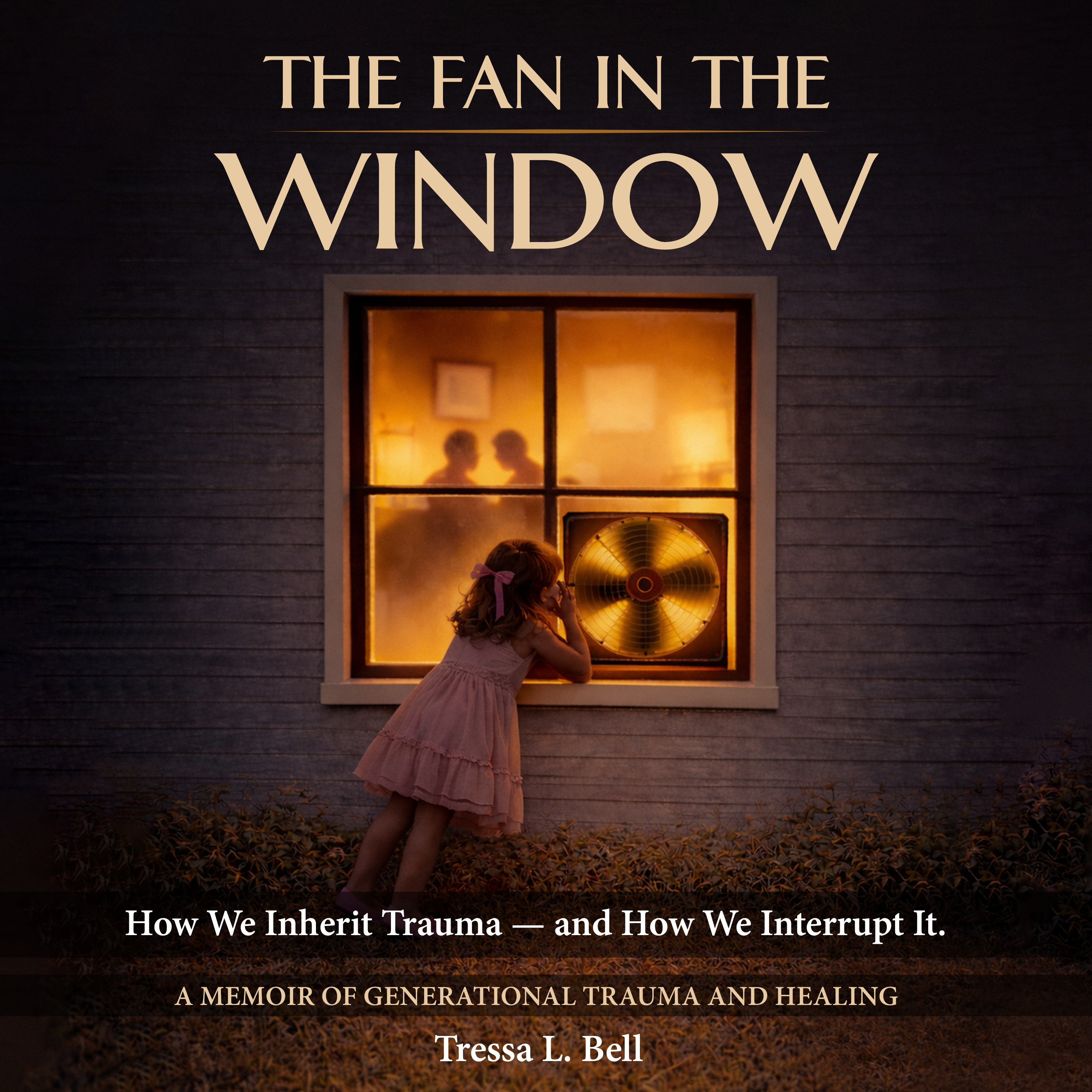
The Fan in the Window: Interrupting What We Inherit
by Tressa L. Bell, MBA, BSN, RN
This podcast is about trauma, nervous systems, and the patterns we inherit—often without realizing it.Through personal stories, clinical insight, and honest reflection, Tressa explores how family systems, caregiving roles, and early experiences shape the way we think, feel, and respond to the world.You’ll hear conversations about generational trauma, anxiety, emotional regulation, motherhood, and what it actually looks like to heal—not perfectly, but intentionally.This is not about blame.It’s about awareness.And what becomes possible when we begin to interrupt what we’ve carried.
-
9
When Mothers Apologize: Repair, Accountability, and What to Do When It Never Comes
Tressa Bell introduces a Mother’s Day episode of The Fan inthe Window: Interrupting What We Inherit focused on the complexity of maternal relationships, including grief, estrangement, and mixed feelings, and clarifies the show is not therapy while providing crisis resources. She explores generational patterns of harm and distinguishes between an apology and a “real apology,” drawing on Harriet Lerner’s ideas: a real apology names the harm specifically, avoids “but” and explanations, doesn’t demand forgiveness or reassurance, allows time, and is supported by changed behavior. Bell shares an example of repeating a hurtful name with her daughter and returning to repair as part of interrupting inherited patterns. She also addresses ambiguous loss (Pauline Boss) for those whose mothers never apologized and offers reflective questions and a brief grounding practice about being seen and deserving repair. 00:00 Mothers Day Is Complicated02:30 Holding Mixed Feelings03:46 Generational Wounds Travel05:44 What Makes Apologies Real07:01 How To Apologize Well10:07 When Apologies Fall Flat12:00 Receiving An Apology13:58 When No Apology Comes16:52 Modeling Repair Forward18:58 Reflection And Grounding22:02 Closing And Next StepsCONTENT NOTEThis podcast discusses trauma, family systems, grief, and emotional healing. If anything in this episode brings up strong feelings or memories, please take care of yourself and reach out for support. In the U.S., you can call or text 988 to reach the Suicide and Crisis Lifeline — free, confidential, 24/7.If you are outside the U.S., international crisis resources are available at findahelpline.com. You do not have to navigate this alone. ABOUT THE SHOWThe Fan in the Window: Interrupting What We Inherit is hosted by Tressa L. Bell, MBA, BSN, RN — author, podcaster, registered nurse, and former forensic nurse. This podcast is about trauma, nervous systems, generational patterns, and the complicated, imperfect work of healing. Each episode blends personal story with research-backed frameworks to help you recognize and interrupt what youinherited — so the next generation doesn’t have to carry it too. This didn’t start with you…but you can interrupt it. GET THE BOOK 📖 The Fan in the Window: How We Inherit Trauma — And How We Interrupt ItAvailable now on Amazon → amazon.com/author/tressalbellA companion self-help book is also in the works. Stay connected for updates.FOLLOW TRESSA🌐 Website: thefaninthewindow.com📸 Instagram: @tressalbell👤 Facebook: tressalbell🎵 TikTok: @tressalbell▶️ YouTube: tressalbell🐦 X/ Twitter: @tressalbell39905📩 Substack: tressalbell.substack.com LISTEN & SUBSCRIBE 🎤 Apple Podcasts🎤 Spotify🎤 iHeart Radio🎤 YouTube🎤 Substack New episodes every Tuesday.If this episode resonated, please leave a review on Apple Podcasts — it takes less than two minutes and helps new listeners find the show. DISCLAIMER This podcast is not therapy, medical advice, or psychological treatment. Tressa L. Bell is not your therapist. Content is for educational and informational purposes only. Please seek professional support if you are experiencing a mental health crisis. The Fan in the Window: Interrupting What We InheritHosted by Tressa L. Bell, MBA, BSN, RNthefaninthewindow.com | My Sweet Nurse Life, LLCThis didn’t start with you…but you can interrupt it!
-
8
The Grief of Losing a Role
Tressa Bell introduces her podcast, The Fan in the Window:Interrupting What We Inherit, explaining how surgery created the stillness that led her to build a book, podcast, business, and platform rooted in her frustration that it took until age 50 to understand what happened to her at five. In this episode, “The Grief of Losing a Role,” she explores howfamily-system roles formed in chaos become identity, and why stepping out of them brings grief, confusion, and relief at once. Sharing a childhood moment of learning her father wasn’t biological, she connects role-based identity tosurvival, nervous systems, and generational patterns. She reflects on smoothing over her mother’s deathbed apology, defines forgiveness as the absence of anger, and offers grounding, journaling prompts, and the idea that healing is“the accumulation of Tuesdays,” with a preview of an upcoming episode about mothers’ apologies. Learn more at thefaninthewindow.com.Grab the book at http://www.amazon.com/author/tressalbell.The podcast is available anywhere you listen, new episodes drop every Tuesday.Follow Tressa on Instagram, Facebook, TikTok, and YouTube. 00:00 Why Now01:26 Podcast Mission01:45 Episode Setup02:18 Listener Safety Note03:18 Grieving A Role04:20 The Girl At Window05:55 When Roles Become Identity06:52 What The Role Cost08:23 Role Relief Begins09:39 Grief Beyond Death10:47 Mother Deathbed Moment12:43 Redefining Forgiveness14:31 Grief And Relief Together16:01 Surviving Versus Healing17:46 You Are Not Late19:17 Weekly Reflection Prompt20:26 Grounding Exercise22:04 Healing Is Tuesdays23:15 Next Episode And Resources24:23 Closing MessageIf you need support:In the United States, you can call or text 988 to reach theSuicide and Crisis Lifeline—available 24/7, free, and confidential. Outside the U.S., visit findahelpline.com for international mental‑health hotlines and crisis services in your region.This didn’t start with you…but you can interrupt it!
-
7
When You Change and the System Doesn't
Host Tressa Bell introduces The Fan in the Window: Interrupting What We Inherit and explores what happens when someone tries to step out of inherited family or workplace roles and the surrounding system pushes back through silence, anger, manipulation, or guilt-inducing questions.Referencing Murray Bowen’s Differentiation of Self and Family Projection Process, she explains how systems seek equilibrium by pressuring members back into familiar functions, illustrated by her experiences setting boundaries in a relationship, at work, and with her family of origin. Drawing on Lindsey Gibson, she emphasizes that lasting change must be rooted internally rather than aimed at eliciting others’ approval. Using Steven Porges’ concept of neuroception, she frames both others’ reactions and one’s own guilt as nervoussystem responses to unfamiliarity, not moral wrongdoing, and offers reflection prompts and a brief grounding exercise before previewing a next episode on grieving lost roles. 00:00 When I Finally Spoke Up00:51 Podcast Intro and Episode Theme01:44 Safety Disclaimer and Support02:40 Family Roles and The Pushback03:38 Family Systems and Differentiation04:53 Work Boundaries Saying No06:01 Change Must Start Within07:05 Silence From Family08:26 Nervous System Safety Neuroception09:32 Guilt as a Signal11:46 Attachment and Fear of Abandonment12:55 What to Remember When You Change14:07 Weekly Reflection Practice15:05 Grounding Exercise16:37 Closing Next Episode and ResourcesIf you need support:In the United States, you can call or text 988 to reach theSuicide and Crisis Lifeline—available 24/7, free, and confidential. Outside the U.S., visit findahelpline.com for international mental‑health hotlines and crisis services in your region.Learn more at thefaninthewindow.com Subscribe tothe newsletter for early access and updates. Follow Tressa on Instagram and Facebook.This didn’t start with you…but you can interrupt it!
-
6
The Roles We Take On
Host Tressa Bell introduces The Fan in the Window: Interrupting What We Inherit and explores how children in chaotic, emotionally unpredictable homes adapt by organizing themselves into survival roles—responsible one, peacekeeper, protector, invisible one, performer, or mascot—often without realizing it. She connects this to family systems theory (Murray Bowen) and parentification, describing instrumental and emotional forms and noting research links between emotional parentification and adult anxiety, depression, emotional regulation difficulties, and boundary struggles. Bell shares a teenage memory of protecting a younger sister and explains, using Lindsey Gibson’s concept of the “Internalizer,” how these roles persist into adulthoodand across relationships and work because the nervous system keeps running “old programs.” She observes different roles emerging in her own children, reflects on Bruce Perry and Oprah Winfrey’s “what happened to you” lens, and invites listeners to identify their role, practice awareness, and use grounding to begin interruption and repair.Bell also mentions her book releasing April 21.If you need support:In the United States, you can call or text 988 to reach the Suicide and Crisis Lifeline—available 24/7, free, and confidential. Outside the U.S., visit findahelpline.com for international mental‑health hotlines and crisis services in your region.Learn more at thefaninthewindow.com. Subscribe to the newsletter for early access and updates. Follow Tressa on Instagram and Facebook.This didn’t start with you…but you can interrupt it!00:00 Unchosen Responsibility00:58 Show Intro and Episode Theme02:05 Safety Disclaimer03:03 Family Roles Explained04:34 Parentification Defined06:04 Common Survival Roles07:58 A Protector Moment09:55 Internalizer and Letting Go11:34 Roles Follow You14:03 Seeing Roles in My Kids17:29 What Happened to You Lens18:50 Awareness and Reflection20:44 Grounding Exercise22:42 Next Episode and Closing
-
5
What Children Carry: Repair, Nervous Systems, and Interrupting What We Inherit
Tressa Bell introduces her podcast, The Fan in the Window:Interrupting What We Inherit and the episode “What Children Carry,” exploring how children absorb tone, tension, silence, and adult nervous-system states without needing explanations. She argues that children make meaning from patterns in their environment, learning not only how adults fight but whathappens after conflict, and that lack of repair teaches rupture, hidden feelings, and unsafety, while accountability and apology teach resilience in relationships. Bell describes moments with her grandkids, noticing her stress and the impact of returning to name and repair a sharp interaction, emphasizing that healing is often in what happens after mistakes. She offers reflection questions and a short grounding exercise, previews a future episode on family roles, and mentions her book releasing April 21.If you need support:In the United States, you can call or text 988 to reach theSuicide and Crisis Lifeline—available 24/7, free, and confidential. Outside the U.S., visit findahelpline.com for international mental‑health hotlines and crisis services in your region.Learn more at www.thefaninthewindow.com. Subscribe to the newsletter for early access and updates. Follow Tressa on Instagram and Facebook.This didn’t start with you…but you can interrupt it!00:00 Children Sense Everything01:16 Podcast Welcome01:46 Episode Focus02:14 Safety Disclaimer03:16 Tone Over Words04:01 After Conflict Matters04:57 What Kids Carry06:49 A Grandchild Notices07:40 Nervous System Research09:26 Repair Changes Everything11:53 Reflection Invitation13:42 Grounding Pause16:20 Next Episode Teaser17:13 Closing Message
-
4
When Chaos Feels Normal
Host Tressa Bell introduces The Fan in the Window and explores how growing up around conflict, emotional unpredictability, and unresolved intensity can become “normal,” shaping adult templates for love, attraction, and resilience as conditioning rather than health. She explains that children prioritize attachment over accuracy, adapt to survive, and often can’t name dysfunction even when they perceive tension, power dynamics, and harm. Using a dinner-table memory where her mother cruelly told someone she hoped he would choke, Bell describes how normalization can trigger "management mode” instead of clarity and how lack of repair teaches that relationships are destabilizing and damaging. She discusses how the nervous system builds expectations, making familiar chaos feel more trustworthy than calm safety, invites listeners to notice “familiar vs. safe,” and closes with a brief grounding exercise, resources, and a preview of the next episode on what children carry.This didn't start with you…but you can interrupt it.🔗 thefaninthewindow.comThis podcast is for educational and reflective purposes only and does not constitute medical or mental health advice.If anything in this episode brings up strong feelings or memories, please take care of yourself and reach out for support. In the U.S., you can call or text 988 to reach the Suicide and Crisis Lifeline. If you’re outside the U.S., you can find international hotlines at findahelpline.com. You don’t have to navigate this alone.Listener discretion is encouraged.00:00 When Chaos Feels Normal02:01 Show Intro and Disclaimer04:10 Why Kids Normalize Chaos06:54 A Dinner Table Memory09:30 Conflict Without Repair11:54 Harm That Looks Ordinary14:33 Familiar Versus Safe16:45 Roles We Learn to Survive19:53 Body Knows First22:16 Rewriting the Template23:52 Calm Can Feel Wrong25:25 Questions for the Week26:28 Guided Grounding Exercise29:00 Closing and Next Episode
-
3
You Can Leave and Still Be Dysregulated
Tressa Bell explains that leaving an unhealthy situation can create external safety without bringing internal nervous system regulation, sharing how she left her marriage after escalating conflict and unpredictable self-harm threats and still stayed in survival mode, scanning for danger. She describes dysregulation as cycling between fight (irritability, reactivity) and freeze (numbing, dissociation), and distinguishes safety as external versus regulation as internal patterns that persist after danger ends. Citing Bruce Perry’s “four-lane highway” analogy from What Happened to You?, she notes healing builds new pathways through repetition rather than erasing old ones. She emphasizes that regulation happens in relationships and through rhythm, movement, community, and ritual, not insight alone, and highlights the importance of repair over perfection in breaking generational patterns. The episode ends with a brief grounding exercise and a preview on how chaos can feel familiar. This didn't start with you…but you can interrupt it.🔗 thefaninthewindow.comIf anything in this episode brings up strong feelings or memories, please take care of yourself and reach out for support. In the U.S., you can call or text 988 to reach the Suicide and Crisis Lifeline. If you’re outside the U.S., you can find international hotlines at findahelpline.com. You don’t have to navigate this alone.00:00 Leaving Isn’t Regulation01:02 Show Intro and Safety Note02:50 The Night I Left05:07 Fight Freeze Cycling06:51 Safety vs Regulation08:46 Healing Needs Community12:32 Repair Over Perfection14:17 Notice Your Patterns15:04 Short Grounding Practice16:23 You’re Not Broken17:01 Why Chaos Feels Normal17:46 Next Episode and Wrap Up
-
2
The Book Wasn’t the End
Tressa Bell introduces her podcast, The Fan in the Window, about trauma, nervous systems, generational patterns, and interrupting what gets passed down. In this episode, “The Book Wasn’t the End,” she describes finishing her manuscript and realizing it didn’t resolve her patterns but exposed that they are still active, including over-functioning, bracing, and feeling responsible for stabilizing others. She explains how childhood unpredictability shaped her nervous system, referencing Dr. Bruce Perry’s “bottom-up” brain development and the concept of implicit memory. Bell shares that she experienced sexual abuse as a child and that silence compounded its impact, embedding vigilance and responsibility in her body. She contrasts readiness with regulation, reflects on how these reactions can pass to the next generation, offers a self-inquiry about managing what isn’t yours, leads a brief grounding exercise, and provides a content warning and crisis resources.This didn't start with you…but you can interrupt it.🔗 thefaninthewindow.com If you need support:In the United States, you can call or text 988 to reach the Suicide and Crisis Lifeline—available 24/7, free, and confidential. Outside the U.S., visit findahelpline.com for international mental‑health hotlines and crisis services in your region.00:00 What We Inherit00:46 Show and Episode Setup01:22 Finishing the Book02:31 Exposure in Real Time04:01 Oldest Daughter Wiring05:54 Safety Disclaimer06:57 Silence and Implicit Memory09:15 Bracing vs Regulation11:57 Passing It On13:31 Pause and Grounding15:15 Closing and Next Steps
No matches for "" in this podcast's transcripts.
No topics indexed yet for this podcast.
Loading reviews...
ABOUT THIS SHOW
This podcast is about trauma, nervous systems, and the patterns we inherit—often without realizing it.Through personal stories, clinical insight, and honest reflection, Tressa explores how family systems, caregiving roles, and early experiences shape the way we think, feel, and respond to the world.You’ll hear conversations about generational trauma, anxiety, emotional regulation, motherhood, and what it actually looks like to heal—not perfectly, but intentionally.This is not about blame.It’s about awareness.And what becomes possible when we begin to interrupt what we’ve carried.
HOSTED BY
Tressa L. Bell, MBA, BSN, RN
Loading similar podcasts...
URL copied to clipboard!