PodParley PodParley
The Feminist Files

PODCAST · arts

The Feminist Files

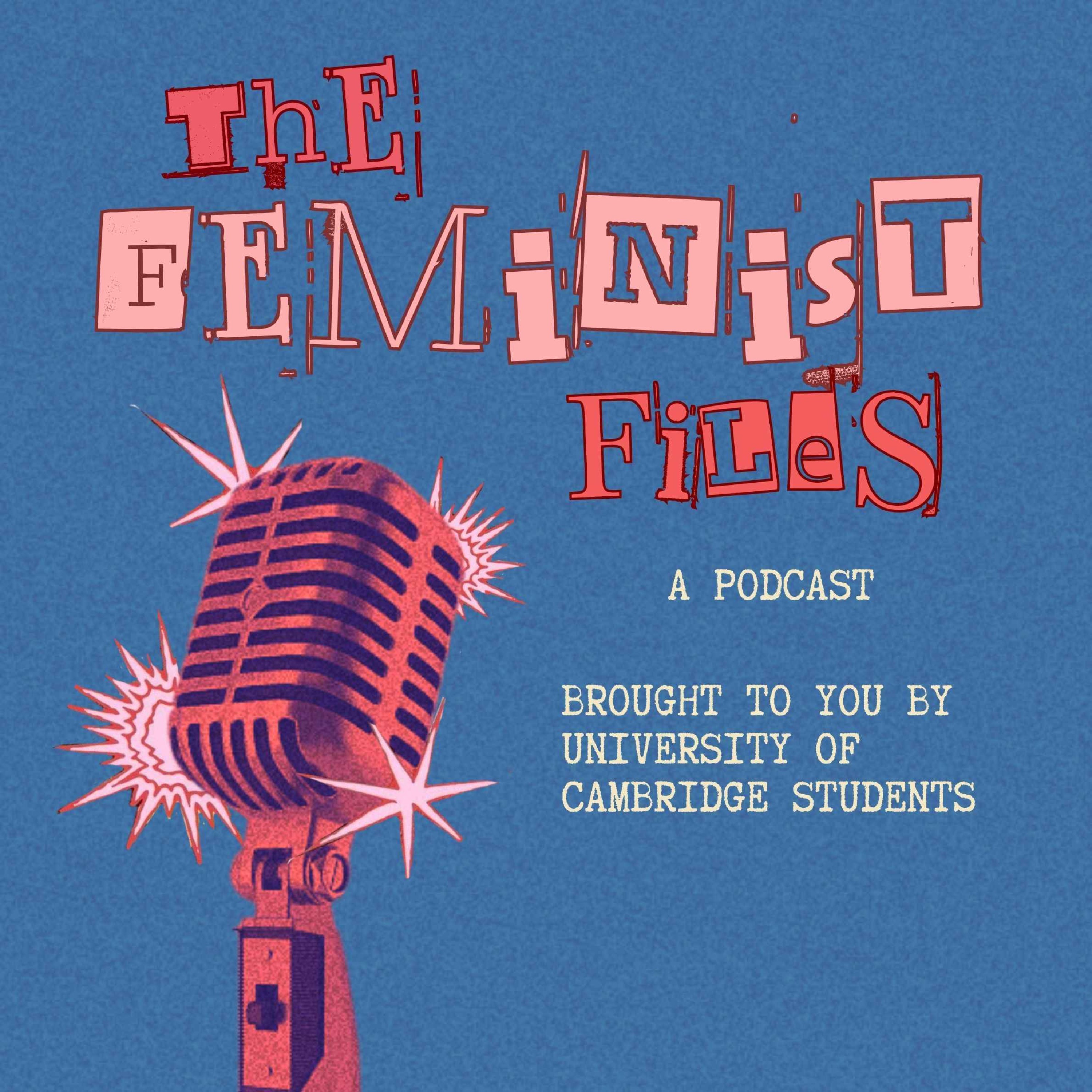
Welcome to The Feminist Files!Emerging from the University of Cambridge’s feminist collective, Gender Agenda, our student-run team digs deep into current feminist debates, talking with enthusiasts within the student body and those in the world of policy, academia and activism.Our originality stems from our desire to democratise feminist discussion; we encourage our enthusiastic team to pursue any feminist-focused topic they are passionate about.Follow us on Instagram!https://www.instagram.com/the_feminist_files_/. Hosted on Acast. See acast.com/privacy for more information.

  1. 55

    The survival of feminist diplomacy : An interview with Delphine O, former French ambassador for feminist diplomacy

    In this episode of The Feminist Files, Helena and Astrid are joined by Delphine O, the former French Ambassador and Secretary General of the 4th Conference on Feminist Foreign Policies. They explored Delphine O's exceptional career trajectory as the first person ever to lead and represent France's feminist diplomacy in multilateral and bilateral relations. She gave them insights into the inner workings of the French foreign ministry, international feminist collaboration, and critiques of feminist diplomacy. They also discussed the unique challenges and structures of the growing transnational backlash movements, as well as the tools feminist diplomacy has to combat them. For any comments or suggestions, please get in touch via [email protected] or on Instagram: @the_feminist_files_ CreditsHosted by Helena Kondak and Astrid Healy-CarrascoJoined by Delphine OEdited by Rowan BerkleyCover design by Madeleine BaberMusic by Jacob Carey Hosted on Acast. See acast.com/privacy for more information.

  2. 54

    "Justice can become blind to truth when it does not consider emotions": Insights into GREVIO, the independent monitoring body of the Istanbul Convention

    In this episode of The Feminist Files, Helena sits down with Dr Maria-Andriani Kostopoulou, President of GREVIO: the Council of Europe’s independent monitoring body for the Istanbul Convention. As the leading mechanism ensuring that states uphold their commitments to combat violence against women and domestic violence, GREVIO occupies a crucial role. President Kostopoulou give her insights on how GREVIO evaluates states, issues recommendations, and navigates political resistance. The conversation explores the deeper philosophical and political stakes of justice. Drawing on her powerful insight that “justice can become blind to truth when it does not consider emotions,” Dr Kostopoulou explains why listening to victims, beyond case files and formal procedures, is essential to achieving real accountability.Helena and Dr Kostopoulou also unpack some of the most pressing challenges facing gender equality today:The backlash against the Istanbul Convention, including controversies such as Latvia’s attempted withdrawalThe rise of reactionary and anti-gender ideologies across EuropeThe growing threat of cyberviolence and online misogynyPersistent barriers to justice, from underfunded systems to widespread impunityFor any comments or suggestions, please get in touch via [email protected] or on Instagram : @the_feminist_files_ CreditsHosted by Helena KondakJoined by Maria-Andriani Kostopoulou,Edited by Rowan BerkleyCover design by Madeleine BaberMusic by Jacob Carey Hosted on Acast. See acast.com/privacy for more information.

  3. 53

    Education in Exile: The Rohingya and Afghan Crises from an International Feminist Perspective

    In this episode, Rosie Hillary and Sophie Biancelli are joined by Rida Fatima, an intersectional feminist writer currently working at the Asian University for Women. Together, they discuss both the Rohingya crisis and Taliban rule in Afghanistan from an intersectional feminist perspective, questioning Western assumptions about what it means to be a refugee and a woman in the Global South. They focus on the opportunities which education can offer the women who are most affected by these these crises, particularly those living in refugee camps today.To read more of Rida's work, follow the links below!https://dirtychai.substack.com/https://www.instagram.com/ridax16/https://clandestinemagazine.com/the-rohingya-crisis-from-my-bedroom/Follow The Feminist Files on instagram:https://www.instagram.com/the_feminist_files_/ Follow The Feminist Files Substack:https://substack.com/@thefeministfiles Hosted on Acast. See acast.com/privacy for more information.

  4. 52

    Breaking the Silence: A Conversation About Sexual Exploitation

    In this episode, Isobelle Oppon is joined by Dr Elly Hanson, a clinical psychologist and research lead at Fully Human whose work and research focuses on reducing abuse, trauma and sexual exploitation. The Feminist Files also welcomes back Ella Perkin and Sam McQuaker from the Cambridge society, Coalition Against Sexual Exploitation (CASE). We discuss the problematic rhetorics of sex positivity that obscure coercion, and the psychological effects of sexual exploitation, in particular the notion of shame. We also talk about the upcoming CASE conference which will be held on the 7th of April and Ella and Sam’s motivations and goals related to the event. Cambridge Women’s Aid: 01223 361214 or via email at [email protected] Cambridge Rape Crisis Centre: 01223 245 888 or via [email protected] Rape Crisis England and Wales, Rape and Sexual Abuse 24/7 support line: 0808 500 2222Elly Hanson’s work and the three essays she mentions:https://fullyhuman.org.ukThe upcoming (free) CASE conference:https://www.eventbrite.com/e/case-conference-breaking-the-silence-tickets-1981565733451?aff=oddtdtcreatorScrub the Stigma:https://www.scrubthestigma.comNaked Truth Project:https://nakedtruthproject.com/get-educated/Episode edited by Rowan Berkley Hosted on Acast. See acast.com/privacy for more information.

  5. 51

    Iran: Roots of Resistance

    In this episode, “Iran : Roots of Resistance”, Asha Metcalfe and Astrid Healy Carrasco are joined by Iranian activist Zolal Habibi to discuss the current state of Iranian resistance politics and its generational heritage.Given current military and political developments, the episode starts with much-needed context from Zolal, but also with insights into the current Iranian resistance movement. She details exactly how it differs from previous waves of opposition. She develops her insights on the Iranian culture of resistance, with particular attention given to the women that give life to popular opposition. Looking to the future, Zolal argues against Western interventionism, including in potential support for a return to monarchy. Instead, she highlights the resistance’s 10 point roadmap for a democratic Iran. The Iranian revolution must be fashioned by and for Iranians and their freedom. For any comments or suggestions, please get in touch via [email protected] or on Instagram : @the_feminist_files_ CreditsHosted by Asha Metcalfe and Astrid Healy CarrascoJoined by Zolal HabibiEdited by Rowan BerkleyCover design by Madeleine BaberMusic by Jacob Carey Hosted on Acast. See acast.com/privacy for more information.

  6. 50

    A Brief History of International Women's Day

    In this episode, we discuss the socialist origins of International Women’s Day, how it has developed over time, and how it has been co-opted for corporate gain today. Exploring examples of pink washing and virtue signalling, we interrogate what ‘International Women’s Day’ really means for us today. Acknowledging the ongoing institutional inequality experienced by women, we reflect upon how we can feel hope for the future in our own lives. We explore how feminist inspiration is found through art, friendships and everyday conversations. https://substack.com/home/post/p-189983269 “Why IWD needs a complete rethink”https://shapetalent.com/glass-ceilings-and-sticky-floors-why-women-are-overworked-and-undervalued/ “Glass ceilings and sticky floors - why women are overworked and undervalued”https://www.theguardian.com/world/2017/mar/08/womens-protest-sparked-russian-revolution-international-womens-day Socialist History of IWD Hosted on Acast. See acast.com/privacy for more information.

  7. 49

    “Women Aren’t Funny!” and Other Myths: The Experience of Women in the Creative Industries

    In this episode, Asha Metcalfe and Rosie Hillary are joined by Eilis Boden and Jess Martins to discuss what it is like to be a woman in the creative industries. We investigate stereotypes imposed upon women, such as ‘women aren’t funny’ and ‘women can’t take a joke’, and unpack the harm caused when those generalisations are internalised. By looking at the comedy scene in and beyond Cambridge, we explore the way in which the male experience being regarded as universal impacts how and when women are ‘allowed’ to be funny. We also turn to the music industry, thinking about how songwriting can act as a form of emotional processing, and discuss why female ‘pop icons’ often face stigma for displaying vulnerability. Interrogating the concept of the ‘internalised male gaze’, we ask how societal perception shapes the way these women view their work and their place in the creative industries?Go watch Eilis in her upcoming shows!11th-13th March - Four Sketches and a Funeral https://www.adctheatre.com/whats-on/comedy/four-sketches-and-a-funeral/ 19th-21st March - Rushed Hour https://www.adctheatre.com/whats-on/comedy/rushed-hour/ Listen to Jess Martins on Spotify here… https://open.spotify.com/artist/4AqSqzn0lwECIcgbXSKyyJ … and keep up with her new releases on Instagram! https://www.instagram.com/jesssmartinsss Follow the Feminist Files on Instagram: https://www.instagram.com/the_feminist_files_ Follow the Feminist Files on Substack: https://substack.com/@thefeministfiles Episode edited by Rowan Berkley Hosted on Acast. See acast.com/privacy for more information.

  8. 48

    Heteronationalism: Sexual Politics in Ghana with Kwaku Adomako

    Faith Cunningham speaks with Kwaku Adomako about heteronationalism, colonialism and Ghana's 2021 "Promotion of Proper Human Sexual Rights and Ghanaian Family Values Bill." They discuss how anti-LGBTQ+ legislation reshapes Ghanaian cultural identity and the role of political actors in framing sexual and gender diversity as a national threat. NOTE: The NDC should be referred to as the National Democratic Congress. Read Kwaku's work:Adomako, K. (2022). An Overwhelming Consensus? How Moral Panics About Sexual and Gender Diversity Help Reshape Local Traditions in Ghana. Politique africaine, 168(4), 75-94. https://doi.org/10.3917/polaf.168.0075 Hosted on Acast. See acast.com/privacy for more information.

  9. 47

    Secondary traumatisation: An investigation into how domestic abuse victims are treated

    In this episode, Helena Kondak is joined by Professor Shazia Choudhry (University of Oxford) to discuss her two-year comparative European research project on how justice systems and family law deal with domestic abuse cases. Drawing on extensive work with women’s rights organisations and key stakeholders across England & Wales, France, Spain, Italy, and Bosnia & Herzegovina, the research exposes how survivors often face secondary traumatisation within legally sanctioned processes.We unpack how narrow legal understandings of violence, procedural barriers, and the growing reliance on concepts like “parental alienation” systematically discredit mothers and silence survivors, even where abuse is well-documented. Placing family law in conversation with human rights obligations under the ECHR and the Istanbul Convention, this episode asks what states are required to do to truly protect women and children, and why current systems can fail to do so.*Get in touch with us : For any responses, comments, or suggestions, please get in touch via [email protected], or on Instagram @the_feminist_files_ *CreditsHosted by Helena KondakJoined by Professor Shazia ChoudhryEdited by Rowan BerkleyCover design by Madeleine BaberMusic by Jacob Carey Hosted on Acast. See acast.com/privacy for more information.

  10. 46

    GROK: “A digital manifestation of a millennia felt entitlement”

    In this episode, Helena Kondak, Astrid Carrasco and Isobelle Oppon interview Dr Daisy Dixon, philosophy professor at the University of Cardiff, for insights on her embodied experience of AI assault.  What does the Grok sexual image generation scandal say of emerging digital violence, its impact on vulnerable bodies, and necessary legislation? Analysing the onset of Grok AI image-generation in recent weeks, Dr Dixon grounds her interpretation of new tech, sexist and sexual violence in the philosophical concept of “aesthetic injustice”. Dr Dixon insists on understanding the physical impacts produced by images, inducing new forms of digital age dysphoria. From concepts to law, this episode dissects how new digital laws are debated, from accusations of restricting free speech to concerns about weak law implementation.  References:Klein and D’Ignazio, Data feminism, 2024Bates, Laura, The New Age of Sexism: How the AI Revolution is Reinventing Misogyny, 2025. Dalaqua, Gustavo H. “Aesthetic injustice.” Journal of Aesthetics & Culture 12.1 (2020). Dixon, Daisy, and Tom Roberts. “Review of Dominic McIver Lopes: Aesthetic Injustice.” Ethics (2026).*Get in touch with us : For any responses, comments, or suggestions, please get in touch via [email protected], or on Instagram @the_feminist_files_ *CreditsHosted by Helena Kondak, Astrid Carrasco & Isobelle OpponJoined by Dr Daisy DixonEdited by Rowan BerkleyCover design by Madeleine BaberMusic by Jacob Carey Hosted on Acast. See acast.com/privacy for more information.

  11. 45

    This House Would Abolish Prisons: Theories of Power and Control

    In this episode, Asha Metcalfe and Rosie Hillary sit down with Lauren Sayers and Rosie Freeman after the debate: This House Would Abolish Prisons, held by Gender Agenda, the University of Cambridge’s largest feminist collective. In our first episode out in the field (breaking free from the recording studio), we are joined by two fellow Human, Social, and Political Science students to discuss abolitionism, crime, and systems of power and oppression. We move beyond the prison system to discuss theorists like Michel Foucault, Judith Butler, and Max Weber to explore the ways power and surveillance can be theorised in society. We apply these theories to our lives to examine how relationships and institutions are impacted by systems of power and control. What do we gain from understanding these topics? What is the benefit of social critique? If you are interested in our discussion, consider reading:The Right to Sex by Amia SrinivasanExperiments in Imagining Otherwise by Lola OlufemiThe New Spirit of Capitalism by Luc Boltanski and Ève ChiapelloDecolonial Feminism in Anya Yala: Caribbean, Meso, and Southern American Contributions and Challenges by Espinosa, Lugones and Maldonado Torres - particularly the chapter by Iris Hernandez MoralesIf you enjoyed this episode, please follow us on Instagram and Substack!https://www.instagram.com/the_feminist_files_/https://substack.com/@thefeministfiles  Hosted on Acast. See acast.com/privacy for more information.

  12. 44

    The Feminist Files in conversation with Gemma Kelly, anti-commercial sexual exploitation advocate

    We have been nominated for the Political Podcast Awards' People’s Choice Award, please vote for us here: https://politicalpodcastawards.co.uk/the-peoples-choice-award/ In this episode, we explore commercial sexual exploitation: its specificities, how it can be combated, and its evolving technological manifestations. In an era of rapid digital expansion, how can feminist organising and policy-making respond to this growing form of misogynistic violence?Drawing on eighteen years of experience across research institutions, frontline child protection services, and policy-making, Gemma Kelly unpacks the perverse dynamics of commercial sexual exploitation and its increasingly digital nature. Her work highlights the centrality of structural change, particularly through legislative and regulatory interventions, in addressing exploitation at its roots.This conversation probes the contradictions at the heart of feminist debates: how can we reconcile individual choice with structural misogynistic violence? Can the former ever truly be disentangled from the latter?We also discuss attempts to regulate the online space, often perceived as opaque and impenetrable, where regulatory efforts frequently fall short despite mounting harms.About the GuestGemma Kelly is a Policy Consultant at the SERP Institute (Sexual Exploitation Research and Policy Institute), Ireland’s only independent research body dedicated to the study of sexual exploitation.Throughout her career, she has worked on combatting human trafficking and addressing sexual exploitation in both online and offline contexts, with a particular focus on women’s rights, gender-based violence, and child rights.She holds an MA in Human Trafficking, Migration and Organised Crime from St Mary’s University, an MA in Equality Studies from University College Dublin, and a BA in Social Care from Dublin Institute of Technology.Get in TouchIf you’d like to respond to something discussed in this episode or propose an episode of your own, get in touch via email at [email protected] or on Instagram @the_feminist_files.CreditsHosted by Helena Kondak and Astrid Healy CarrascoJoined by Gemma KellyEdited by Rowan BerkleyCover design by Madeleine BaberMusic by Jacob Carey Hosted on Acast. See acast.com/privacy for more information.

  13. 43

    Black Girls’ Experiences in British Private Schools: Misogynoir and the Racialised Politics of Visibility

    In this episode, hosts Asha Metcalfe and Rosie Hillary are joined by Reese Marley Robinson, a recent Cambridge graduate, to discuss her sociology dissertation exploring the lived experiences of Black girls in Britain’s private schools. Drawing on interviews and her own experiences, Reese explains the “affective cost of inclusion” and the emotional labour of navigating elite, predominantly white institutions which marginalise the experiences of racial minorities. We discuss topics like misogynoir, structural racism, code-switching, hair politics, and the racialised politics of visibility. We explore how Black peer networks can be sites of resistance and care, and talk about what meaningful institutional change could look like for Britain’s education system. Here are some readings that are related to our discussion!  Anti-Community: The Kitchen & Our Cooked Community https://radicalblackbrits.substack.com/p/anti-community-the-kitchen-and-ourThe Brixton Balck Women’s Group https://blogs.lse.ac.uk/lsereviewofbooks/2024/07/30/book-review-speak-out-the-brixton-black-womens-group-milo-miller/Farleigh’s Place: Wealth, Privilege and Whiteness by Reese Marley Robinson https://www.thecambridgestudent.co.uk/culture/farleighs-place-wealth-privilege-and-whitenessLewis, Amanda E., 1970-. Race in the Schoolyard : Negotiating the Color Line in Classrooms and Communities. New Brunswick, N.J. :Rutgers University Press, 2003.Nash, J.C. (2019). Black Feminism Reimagined: After Intersectionality. Duke University Press. https://doi.org/10.2307/j.ctv111jhd0Carby, Hazel V. (1982) ‘White woman listen!: Black feminism and the boundaries of sisterhood’ in Centre for Contemporary Cultural StudiesDavis, Angela (2016) Freedom is a Constant Struggle Chicago: Haymarket Books.Episode Edited by Rowan BerkleyVote for us in People’s Choice Awards 2026:https://politicalpodcastawards.co.uk/the-peoples-choice-award/Follow The Feminist Files on instagram:https://www.instagram.com/the_feminist_files_/Follow The Feminist Files Substack:https://substack.com/@thefeministfiles Hosted on Acast. See acast.com/privacy for more information.

  14. 42

    The Feminist Files - How have attitudes towards sexual violence changed after the MeToo movement?

    In this episode, Helena Kondak is joined by Zoe Abrams, DPhil student in Sociology at the University of Oxford, to discuss her latest work: Explaining Societal Shifts in Victim Blaming and Perpetrator Culpability for Sexual Violence: Evidence From the #MeToo Era.Abrams studied Politics and Sociology at the University of Cambridge before pursuing an MSci in Sociology at the University of Oxford, where she was awarded the A. H. Halsey Prize for Best Performance. She is now pursuing a DPhil in Sociology, focusing on the gender gap in political mobilisation among young people.During the interview, Abrams and I discussed whether individuals reacted to the shift in public discourse concerning sexual violence after the MeToo movement in the same way that institutions did. Zoe's focus on Scotland was crucial to understanding how feminist politics and influence in policy-making led to Scotland being the only country to collect data on attitudes towards sexual violence."From the founding of the Scottish Parliament, the feminist movements were there, framing the key issues and collecting data on attitudes towards women". Here is a list of the resources mentioned in the episode: Diana E. H. Russell, & Howell, N. (1983). The Prevalence of Rape in the United States Revisited. Signs, 8(4), 688–695. http://www.jstor.org/stable/3173690 Wilson, L. C., & Miller, K. E. (2015). Meta-Analysis of the Prevalence of Unacknowledged Rape. Trauma, Violence, & Abuse, 17(2), 149-159. https://doi.org/10.1177/1524838015576391 (Original work published 2016).Want to respond to something said in this episode? Or propose an episode of your own? Get in touch via email: [email protected] or via Instagram: @the_feminist_filesYou can also find us on Instagram: @the_feminist_filesCredits:Hosted by Helena KondakJoined by Zoe AbramsEdited by Rowan BerkleyCover design by Madeleine BaberMusic by Jacob Carey Hosted on Acast. See acast.com/privacy for more information.

  15. 41

    The Feminist Files- Gender on the Pitch: How the UK Supreme Court’s New Definition of a Woman is Impacting College Football

    Women’s college-level football has recently taken the form of an informal intercollegiate league following the banning of transgender women from participation in college-affiliated league matches, in line with the UK Supreme Court ruling earlier this year. What are captains, colleges and Cambridge University doing in light of this legislative pressure? What does this mean for inclusivity and the future of women’s football as a whole? Faith Cunningham discusses this sensitive and complex issue with guests Lara and Tia, members of the college women's football league.For any welfare concerns, please get in contact with Louisa, the CUAFC Welfare Officer. If you have any questions or comments, please email [email protected] The Feminist Files on instagram:https://www.instagram.com/the_feminist_files_/Follow The Feminist Files Substack:https://substack.com/@thefeministfiles Hosted on Acast. See acast.com/privacy for more information.

  16. 40

    The Feminist Files in Conversation with Coalition Against Sexual Exploitation

    In this episode, we are joined by Sam McQuaker and Ella Perkin, founders of Cambridge society, Coalition Against Sexual Exploitation (CASE) to discuss impact and institutionalisation of sexual exploitation. We discuss perspectives on topics like porn and the decriminalisation of sex work, and question how existing institutions need to be reconfigured for gender and sexual equality to be achieved. This episode discusses themes of sexual exploitation and abuse which may be distressing to some listeners. If you have experienced sexual violence or abuse, consider reaching out to a trusted support service or helpline in your area for assistance.Cambridge Women’s Aid: 01223 361214 or via email at [email protected] Cambridge Rape Crisis Centre: 01223 245 888 or via [email protected] Crisis England and Wales, Rape and Sexual Abuse 24/7 support line: 0808 500 2222Galop run a helpline for LGBTQ+ survivors of sexual violence: 0800 999 5428Here are links to any articles or reports we mention in the podcast:Takedown: Inside the Fight to Shut Down Pornhub for Child Abuse, Rape, and Sex Trafficking, Leila Mickelwait https://blackwells.co.uk/bookshop/product/Takedown-by-Laila-Mickelwait/9780593542019?srsltid=AfmBOooCumndxCQkyq7crODi-8drrXZRhj30cBPSsqjWZkrF5t59hCQLHot Money Podcast: https://www.ft.com/hot-moneyChildren’s Commissioner, Children’s Experiences of the Online World:https://www.childrenscommissioner.gov.uk/resource/ive-seen-horrible-things-childrens-experiences-of-the-online-world/Lost Boys Report:https://www.centreforsocialjustice.org.uk/library/lost-boysThe Online Degradation of Women and Girls That We Met with a Shrug, Nicholas Kristof:​​https://www.nytimes.com/2024/03/23/opinion/deepfake-sex-videos.htmlElly Hanson’s work:https://fullyhuman.org.uk/Josh Pieter’s documentary with Lily Phillips: https://www.youtube.com/watch?v=mFySAh0g-MI&t=6sEveryone’s Invited:https://www.everyonesinvited.uk/Andrew Norfolk interview about the struggle to expose the Rochdale grooming gangs:https://www.youtube.com/watch?v=AHntVVOQRGY Naked Truth Project:https://nakedtruthproject.com/get-educated/ Episode edited by Rowan Berkley Hosted on Acast. See acast.com/privacy for more information.

  17. 39

    The Feminist Files - AI's Gender Bias: How Artificial Intelligence Reinforces Gender Discrimination

    In this episode, we are joined by Angèle Albrengues to discuss how current EU legal frameworks fail to address the risks of gender discrimination associated with artificial intelligence models. We discuss how AI technology reinforces the biases it is fed, reproducing inequality in both overt and covert ways. We highlight how sexism, misogyny, and gender-based violence cannot be escaped in digital spaces. Despite the prevalence of this issue, we explore how AI’s lack of transparency and lack of legal personhood makes it challenging to legislatively address the discrimination it perpetuates. Angèle discusses how existing frameworks can be used to confront this issue, and we consider whether AI can be reprogrammed to champion the feminist perspective.If you are interested in this topic, here are some further reading suggestions:‘Weight of gender in artificial intelligence models’ implementation in the European Union non-discrimination laws’ by Angèle Albrengues and Lerong Lu https://www.elspub.com/papers/j/1912463123407900672 ‘Generative AI exists because of the transformer’ written by Madhumita Murgia for the Financial Times https://ig.ft.com/generative-ai/ ‘Technology-Facilitated Gender-Based Violence: An Overview’ by Suzie Dunn https://www.cigionline.org/publications/technology-facilitated-gender-based-violence-overview/ New Age of Sexism by Laura BatesTo check out the charity Angele works for: https://stopfisha.org/, https://www.instagram.com/stopfisha/ If you enjoyed this episode, please follow our instagram and substack!https://www.instagram.com/the_feminist_files_/https://substack.com/@thefeministfiles Hosted on Acast. See acast.com/privacy for more information.

  18. 38

    The Feminist Files- Feminist Pedagogy: Affective Dissonance and Democracy in Australian Classrooms

    How can our political beliefs be shaped in the classroom?In this episode, hosts Rosie Hillary and Asha Metcalfe talk with Australian teacher and PHD Candidate, Alice Elwell about the power of feminist pedagogy in promoting democratic citizenship among students. Knowledge is never politically neutral; we discuss how feminist pedagogy conceptualises the classroom as a space for socio-political activism, aiming to challenge patriarchal paradigms in education. Alice discusses how teachers can use critical literacy to become 'affective curators' by harnessing feelings of discomfort among students. Feelings of affective dissonance emerge from one’s embodied sense of self, and the self we are socially expected to be. When these feelings arise among students in the classroom they can be a catalyst for political change.Media mentioned in this podcast:New Perspectives on Education for Democracy: Creative Responses to Local and Global Challenges by Alice Elwell https://doi.org/10.4324/9781003145806-13Feminist pedagogies in a time of backlash by Alice Elwell and Rachel Buchanan https://doi.org/10.1080/09540253.2019.1680810We Should All Be Feminists by Chimamanda Ngozi AdichieAffective Economies by Sara Ahmed https://voidnetwork.gr/wp-content/uploads/2016/08/Affective-economies-by-Ahmed-Sara-1.pdfThe problem of anti-feminist 'Denfluencer' Andrew Tate in Australian schools: women teachers' experiences of resurgent male supremacy by Stephanie Wescott https://doi.org/10.1080/09540253.2023.2292622Exploring the online experiences of young men and boys: what influences, motivates, shapes and informs their experiences by Deakin University https://theconversation.com/i-dont-really-wanna-consume-his-content-what-do-young-australian-men-think-of-andrew-tate-233654Why doesn't this feel empowering? Working through the repressive myths of critical pedagogy by Elizabeth Ellsworth https://mariaacaso.es/wp-content/uploads/2017/07/56fb22eadc6312a9894c7ad84547022b.pdfSee the works of Jessia Ringrose https:///profiles.ucl.oc.uk/48638-jesaica-ringroseSee the works of EJ Reynolds https://profiles.cardiff.ac.uk/staff/reynold Hosted on Acast. See acast.com/privacy for more information.

  19. 37

    From Sanctions to Reconstruction: Rebuilding Ukraine's economy

    How does one even begin to rebuild an economy while a war rages on? Faith Cunningham speaks with Vlada Yaremenko, Senior Project Officer at RUSI’s Centre for Finance and Security, about Ukraine’s fight for financial integrity. Hosted on Acast. See acast.com/privacy for more information.

  20. 36

    Beyond the Binaries: Exploring Gender Dynamics in queer relationships

    In this episode, co-hosts Niamh Cafferty and Ellen Brewster delve into the complexities of gender roles and expectations within queer relationships, challenging traditional norms and binaries. Through open conversation, personal reflection, and community voices, they explore how gender is navigated, expressed, and understood beyond the heteronormative framework. Whether it's discussing emotional labour, presentation, or power dynamics, this episode offers an honest and nuanced look at what it means to love and connect in queer spaces.Want to respond to something said in this episode? Or propose an episode of your own? Get in touch via our instagram @gender.agenda and @collective.phoenixCredits:Hosted by Niamh Cafferty and Ellen BrewsterEdited by Ellen BrewsterCover design by Madeleine BaberMusic by Jacob Carey Hosted on Acast. See acast.com/privacy for more information.

  21. 35

    The Digitalisation of Sex Work: Empowerment or Exploitation?

    In today’s episode, Barbara Foliot explores the democratisation of online sex work, using OnlyFans as a case study to examine whether it empowers sex workers or glamorises prostitution. Joined by Dr. Harriet Fletcher, a feminist media expert, they discuss how OnlyFans offer autonomy to creators but also raise ethical concerns, such as the lack of support for performers' well-being. While digital sex work has introduced new opportunities, it has also blurred lines between personal and professional content. This new, concise format aims to educate on the evolving landscape of sex work, its societal acceptance, and the challenges surrounding safety and legitimacy. Sources used to make this episode:Sex workers testimonies: - Privacy Issues in Online Sex Work : https://www.youtube.com/watch?v=Fy4GszKoYu8- Onlyfans: le commerce du X, nouvelle génération: https://www.la-croix.com/Onlyfans-commerce-X-nouvelle-generation-2022-11-02-1301240382- Creator Testimonials on OnlyFans: https://www.youtube.com/watch?v=uMh80ZfRgy0Find the rest of the sources on: https://linktr.ee/gender.agenda?utm_source=linktree_profile_share&ltsid=d88e9f98-5a2e-43ba-b27e-e720ebcd2b73 Want to respond to something said in this episode? Or propose an episode of your own? Get in touch via our instagram @gender.agenda and @collective.phoenix Credits:Hosted by Barbaria FoliotJoined by Dr. Harriet FletcherEdited by Barbara FoliotCover design by Madeleine BaberMusic by Jacob Carey Hosted on Acast. See acast.com/privacy for more information.

  22. 34

    Fashioning Expression: Archiving, Costuming and Historicising

    In this episode of the Feminist Files, Ellen Brewster is joined by guest Amber Gooding, Alanah Clarke and Esther Crasnow-Dodd to sit down and discuss the role of fashion and clothing in expression. Alanah and Amber are part of the Gonville and Caius Feminist and Gender Society (@caiusfemgensoc), and Esther is part of Gender Agenda and The Gentleman Zine (@thegentlemancam). They track through parts of history, through different trends, on the role of clothing, as well as other modifiers to express how someone wishes to be perceived. There is specific reference to female and queer expression, with insights into clothing and what it represents now for each of them as individuals. Queer Style by Adam Geczy and Vicki KaraminasMuseum of Transology. Heuritech. (2024, June 16). Gender fluid fashion: Freedom from distinctions. Want to respond to something said in this episode? Or propose an episode of your own? Get in touch via the form on our website: https://www.thecambridgestudent.co.uk/podcasts or via our social media.You can also find us on Instagram: @tcsnewspaper @gender.agenda @collective.phoenixCredits:Hosted by Ellen BrewsterJoined by Amber Gooding, Alanah Clarke and Esther Crasnow-DoddEdited by Ellen BrewsterCover design by Madeleine BaberMusic by Jacob Carey Hosted on Acast. See acast.com/privacy for more information.

  23. 33

    The Feminist Files - Intersectional Feminisms: Gendered Islamophobia & Black Feminist Praxis

    🎙 The Feminist Files – Intersectional Feminisms: Gendered Islamophobia & Black Feminist PraxisIn this episode of The Feminist Files, co-hosts Helena Kondak, Astrid Healy-Carrasco, and guest co-host Fatima Zahra Yusuf sit down with Faustine Petron-Daniels, an MPhil student and Cambridge Trust Scholar, to discuss her activism as founder of the Make it Mandatory campaign and her research on gendered Islamophobia and Muslim women’s resistance through the lens of Black feminist theory.💡 Key Topics Discussed:Faustine’s activism – Founding Make It Mandatory, a grassroots campaign advocating for mandatory sex and relationship education to combat domestic abuse among teenagers.Gendered Islamophobia – How it differs from broader Islamophobia and why understanding it as a racialized issue is crucial.Black feminist thought – How it provides a framework for resistance, community-building, and reimagining feminist praxis.The politics of carceral feminism vs. abolitionist feminism – Exploring alternatives to punitive justice and the role of education in addressing violence.Challenging stereotypes of Muslim women – How media representations and government rhetoric shape public perceptions, and what strategies can be used to counter this.The role of love as an ethic in activism – Inspired by bell hooks, the importance of community, care, and love in building sustainable feminist movements.Faustine shares insights from her academic research, her activism, and her experiences navigating both policy and grassroots spaces. We also explore the broader political landscape, including the UK’s approach to Islamophobia, feminism in media, and what an intersectional, anti-racist feminist movement should look like today.💬 Join us for this thought-provoking conversation on activism, academia, and resistance.Want to respond to something said in this episode? Or propose an episode of your own? Get in touch via the form on our website: https://www.thecambridgestudent.co.uk/podcastsYou can also find us on Instagram: @tcsnewspaper @gender.agenda @collective.phoenixCredits:Co-hosted by Helena Kondak and Astrid Healy-CarrascoGuest hosted by Fatima Zahra Yusuf (@fatimazahraa.y) Joined by Faustine Petron-Daniels (@thehoodwriter @makeitmandatory) Edited by Rose Papadopoulos-HeddenCover design by Madeleine BaberMusic by Jacob Carey Hosted on Acast. See acast.com/privacy for more information.

  24. 32

    Feminist Files - The first-class degree gender awarding gap.

    'In this episode, host Faith Cunningham talks with Izzy Webb Adams and Caela Ibata about their view of the gender awarding gap found by a report from the Higher Education Policy Institute (HEPI). The report, entitled ‘No magic bullet’: An investigation into the first-class degree gender awarding gap at Oxford and Cambridge and how to address it’, sheds some light on why men are more likely than women to achieve first-class degrees at Oxford and Cambridge. We discuss what forms this phenomenon takes in the English Literature tripos. Link to the report:  https://www.hepi.ac.uk/2024/11/14/no-magic-bullet-an-investigation-into-the-first-class-degree-gender-awarding-gap-at-oxford-and-cambridge-and-how-to-address-it/ Admissions and Examination statistics for the University of Cambridge can be found at these links:  https://www.information-hub.admin.cam.ac.uk/university-profile/ug-examination-results https://www.undergraduate.study.cam.ac.uk/apply/statistics ' Hosted on Acast. See acast.com/privacy for more information.

  25. 31

    The Feminist Files - Why feminism has to be messy: Frictions, encounters and movements within diasporic Black feminism with Dr Sophie Niang.

    In today’s episode, Helena Kondak and Astrid Healy Carrasco were joined by the fascinating Dr Sophie Niang to discuss her academic work. Dr Niang completed her PhD in 2023 at Cambridge, after a Masters at Goldsmiths and an undergraduate at Cambridge in Human, Social and Political Sciences. We explored her academic journey, from Afrofeminism in France to her concept of “Worldmaking” in France. We explored the multiplicity of Black feminism, Blackness and France as an object of study. We discussed how Black feminism can be understood as a necessarily diasporic movement; and how theoretical work can be channelled in public space, in the midst of governmental repression and deliberate attempts to ignore institutionalised racism and sexism. In the episode, we mention: ‘What is a nation’, Qu’est-ce qu’une nation?  - Ernest Renan on French nationality Maboula Soumahoro Kiffe ta race podcast episode - https://www.binge.audio/podcast/kiffetarace/2020-et-lon-decouvrit-le-racisme-made-in-france Afrofem by Mwasi - https://www.mwasicollectif.org/en/ Maboula Soumahoro interview on JINS podcast, Corps noirs, afroféminisme & Islam https://open.spotify.com/episode/2fujSP7tpsrrFEJWvei1Hl?si=062d665a6ff44b68 La conscience politique - Geoffroy de LagnaserieGod's bits of wood, Ousmane SembèneCredits:Co-hosts: Helena Kondak and Astrid Healy-CarrascoEditor: Rose Papadopoulos-HeddenCreative assistant: Reese Marley Robinson Hosted on Acast. See acast.com/privacy for more information.

  26. 30

    The Feminist Files - Political Lesbianism: A Useful Sacrifice?

    In this episode, the two co-hosts Helena Kondak & Astrid Healy-Carrasco, Gender Agenda member Martha Dacombe, and the newest member of the podcast team, Faith Cunningham, discuss how political lesbianism, defined as the wilful choice to disengage from any romantic or sexual relations with men, has been used to fight back against growing misogyny. We traced the history of the movement to the ideological debates of the feminist 2nd wave in the United States, and explored its modern application in South Korea through the 4b movement. We then weighed the pros and cons of this mode of action, as this movement offers an individual solution while perpetuating constraints on women’s freedom and establishing sexuality as a potential choice.Inviting you to debate with us, we made a few references: Alice Coffin, The Lesbian Genius Amia Srinivasan, The Right to Sex (2021); https://www.newyorker.com/magazine/2021/09/13/who-lost-the-sex-wars, https://www.bbc.co.uk/programmes/w3csvtw2#:~:text=A%20group%20of%20feminists%20in,of%20the%20first%20lesbian%20separatistsMonique Wittig, The Straight MindFigures & groups: - Andrea Dworkin- ⁠The Furies - ⁠The 4B movement Hosted on Acast. See acast.com/privacy for more information.

  27. 29

    Feminist Files: UNICEF with Lauren Rumble. Why Feminist Policy Matters.

    Helena Kondak and Astrid Healy Carrasco from The Feminist Files interview Lauren Rumble, Associate Director for Gender Equality at UNICEF, and discuss the links between academia and policy work, the workings of policymaking and why we need feminist policy now more than ever. Following a Cambridge MPhil and a PhD, Lauren Rumble has been working as a child and women’s rights advocate with the United Nations and other organisations for the past 15 years. She is passionate about using evidence to influence policy and leverage greater investments for women and girls, including to end poverty and violence. Hosted on Acast. See acast.com/privacy for more information.

  28. 28

    Debunking the King's Bunker: Myths, Misconceptions & the Magic of a Student-Run Night

    In this episode, TCS podcaster Rose Papadopoulos-Hedden speaks to Izzy Wilkinson and Edie Levine, co-presidents of The King’s Bunker, a bi-annual club event held at King’s College, Cambridge. They discuss its revival after a period of closure, and their team's efforts to make it a safe and inclusive space for the queer community. They also discuss the challenges of running student-led events within a college setting, the importance of accessibility and creative expression, and the power of music and dance to bring people together. Follow the event’s Instagram @the.kings.bunker for information on future events, or to get in touch if you have any stories of your own involvement in the space, which used to exist under the name of the King’s Cellars!The King’s Bunker Instagram: https://www.instagram.com/the.kings.bunker/ For more from Rose, you can listen to her radio show ‘Odyssey with Rose’ on CamFM 97.2 / www.camfm.co.uk / Instagram @odysseywithroseWant to respond to something said in this episode? Or propose an episode of your own? Get in touch via the form on our website:https://www.thecambridgestudent.co.uk/podcastsYou can also find us on Instagram: @thecambridgestudentCover design by Yuki HolleyMusic by Jacob Carey Hosted on Acast. See acast.com/privacy for more information.

  29. 27

    Feminist Files: Show us you've got balls - French feminism, "neutral" journalism and masculinity in crisis

    Listen to Episode 2 of Feminist Files, the new collaborative series between TCS Podcast and WomCam! In this episode, Helena Kondak and Astrid Healy-Carrasco interview Victoire Tuaillon about pseudo-neutrality in the media, why she focuses on masculinity in her feminist activism, and how we can tackle the "crisis of masculinity". Tuaillon is a French journalist and feminist author, known for her podcast Les Couilles sur la table, which deconstructs masculinity from a feminist perspective.Tuaillon's podcast: https://open.spotify.com/show/3xk078ZrBB5X75zQzHEHRN?si=78935b4117f745beWomCam on Instagram: @cambridgewomcamPhoenix Collective on Instagram: @collective.phoenixWant to respond to something said in this episode? Or propose an episode of your own? Get in touch via the form on our website:https://www.thecambridgestudent.co.uk/podcastsYou can also find us on Instagram: @thecambridgestudentCover design by Yuki HolleyMusic by Jacob Carey Hosted on Acast. See acast.com/privacy for more information.

  30. 26

    Feminist Files: Behind the Curtains - Feminism, Race & Intersectionality in the Cambridge Theatre Scene

    Introducing Feminist Files, the new collaborative series between TCS Podcast and WomCam! In this episode, Helena Kondak and Astrid Healy-Carrasco interview Ruby Iverson, Tia-Renee Mullings and Katiann Barros Rocha.'To briefly explain what this podcast is, you might have already heard our pilot where members of the WomCam committee presented their summer feminist piece of literature, and today we'll be talking about feminism and intersectionality in the theatre scene in Cambridge and beyond. This podcast aims to provide a platform for the Cambridge feminist scene, to debate ideas, but also to showcase how feminist is more than an ideology, a means to an end, but a practical lived experience.' - The Feminist Files teamOur Town Needs a Nando's by Samantha O'Rourke is at the ADC Theatre from 29th October-2nd November: https://www.adctheatre.com/whats-on/play/our-town-needs-a-nandos/WomCam on Instagram: @cambridgewomcamPhoenix Collective on Instagram: @collective.phoenixWant to respond to something said in this episode? Or propose an episode of your own? Get in touch via the form on our website:https://www.thecambridgestudent.co.uk/podcastsYou can also find us on Instagram: @thecambridgestudentCover design by Yuki HolleyMusic by Jacob Carey Hosted on Acast. See acast.com/privacy for more information.

  31. 25

    The Hidden Realities of Artificial Intelligence

    In the first episode of this season, TCS Podcast Producer Erica Lees-Smith dives into the world of AI in conversation with Annissa La Touche, Cambridge Geography graduate, and Alva Markelius, PhD student and founder of the Cambridge University AI Ethics Society. They discuss the rapidly expanding technology's repercussions on society for young people, human rights, systemic injustices and the environment. This episode was inspired by a TCS article by Annissa published in July which you can read here: https://www.thecambridgestudent.co.uk/opinion/ai-and-human-rights-reflections-on-expert-panels-stands-against-palantir-and-the-utilisation-of-ai-in-genocideContent warning: this episode briefly mentions self-harmSourcesDefinitions of AI - https://www.ibm.com/topics/artificial-intelligenceHistory of AI - https://www.scottishai.com/news/the-history-of-ai#:~:text=Artificial%20Intelligence%20(AI)%20may%20seem,foundations%20going%20back%20even%20furtherAlva's paper, 'The mechanisms of AI hype and its planetary and social costs' https://link.springer.com/article/10.1007/s43681-024-00461-2 Cambridge University AI Ethics Society: @cambridgeaiethics (Instagram)Amnesty International's Stop Killer Robots campaign: https://www.stopkillerrobots.org/stop-killer-robots-x-amnesty-international/Want to respond to something said in this episode? Or propose an episode of your own? Get in touch via the form on our website: https://www.thecambridgestudent.co.uk/podcastsYou can also find us on Instagram: @thecambridgestudentCover design by Yuki HolleyMusic by Jacob Carey Hosted on Acast. See acast.com/privacy for more information.

  32. 24

    Love Art After Dark: Reimagined Possibilities

    In this episode, TCS podcaster Erica Lees-Smith speaks to the curators behind Love Art After Dark at the Fitzwilliam Museum. They discuss their interests and inspirations within the art world, the process of putting together the exhibition and the event, and their interdisciplinary approach. William Blake's Universe is on at the Fitzwilliam Museum until 19 Mayhttps://fitzmuseum.cam.ac.ukWant to respond to something said in this episode? Or propose an episode of your own? Get in touch via the form on our website:https://www.thecambridgestudent.co.uk/podcastsYou can also find us on Instagram: @thecambridgestudentCover design by Yuki HolleyMusic by Jacob Carey Hosted on Acast. See acast.com/privacy for more information.

  33. 23

    Cambridge Theatre Behind the Scenes: Still Life

    In this episode, TCS podcaster Scotia Smith speaks to Stephen and Elly, co-directors of Still Life at the Corpus Playroom. They talk about coming to Cambridge theatre as 'freshers' to the scene, the work behind bringing Still Life to the stage, and the process of getting involved with theatre. Still Life is running from Tuesday 14th to Saturday 18th May at the Corpus Playroom, 7pm each night. Tickets are available here:https://www.adctheatre.com/whats-on/play/still-life/Want to respond to something said in this episode? Or propose an episode of your own? Get in touch via the form on our website:https://www.thecambridgestudent.co.uk/podcastsYou can also find us on Instagram: @thecambridgestudentCover design by Yuki HolleyMusic by Jacob Carey Hosted on Acast. See acast.com/privacy for more information.

  34. 22

    Connecting Through Music: Sing Inside and Music Therapy

    In this episode, TCS podcaster Erica Lees-Smith speaks to Sing Inside representative Andreana and music therapist Naomi about the importance of music in a range of communities and spaces. The first half of the episode discusses the work that Sing Inside is doing to bring music workshops to prisons. The second half of the episode (from 12:00) explores music therapy more broadly, and the range of psychological and social issues that can be tackled through music. Find out more about Andreana's work with Sing Inside at www.singinside.org or follow them on Instagram @singinsideFind out more about Naomi's work on the MELODIC project here:https://www.aru.ac.uk/cambridge-institute-for-music-therapy-research/our-research/older-people-dementia-and-stroke/melodicThompson, N., Iyemere, K., Underwood, B. R. and Odell-Miller, H. (2023) 'Investigating the impact of music therapy on two in-patient psychiatric wards for people living with dementia: retrospective observational study', BJPsych Open, 9(2), e42.Thompson, N. and Odell-Miller, H. (2022) 'An audit of music therapy in acute National Health Service (NHS) settings for people with dementia in the UK and adaptations made due to COVID-19', Approaches: An Interdisciplinary Journal of Music Therapy.You can sign up to their newsletter by emailing [email protected] to respond to something said in this episode? Or propose an episode of your own? Get in touch via the form on our website:https://www.thecambridgestudent.co.uk/podcastsYou can also find us on Instagram: @thecambridgestudentCover design by Yuki HolleyMusic by Jacob Carey Hosted on Acast. See acast.com/privacy for more information.

  35. 21

    Climate Justice and COP28: In Collaboration with CCS

    In this episode, TCS podcaster Erica Lees-Smith speaks to Aman and Beth from CCS. They talk about being a young person at COP28, the problems and limitations of the event, and the role of the UK in climate negotiations. They also discuss climate justice, its intersection with social justice, and its importance in the upcoming general election. This is a super informative episode that goes behind the scenes at the heart of global climate negotiations. You can find out more about the work that CCS does on Instagram @cambridge.climate.society. Or they have their very own podcast: https://open.spotify.com/show/3QskiJbBRTuf5bUemhzkE1?si=ca2d94845e334dc0Want to respond to something said in this episode? Or propose an episode of your own? Get in touch via the form on our website:https://www.thecambridgestudent.co.uk/podcastsYou can also find us on Instagram: @thecambridgestudentCover design by Yuki HolleyMusic by Jacob Carey Hosted on Acast. See acast.com/privacy for more information.

  36. 20

    Cam Uncut: The Good, the Bad, and the Neutral

    In this episode, TCS podcaster Miranda Crawford speaks to Tirza and Ollie, who are part of the team behind Cam Uncut. Cam Uncut is an independent docuseries that aims to demonstrate the vast range of perspectives held by the students at Cambridge. They talk about the filming process itself, the importance of nuance and avoiding sensationalism, as well as their own opinions on the 'Cambridge bubble'.The first episode of Cam Uncut will be screened at the Bateman Auditorium at Gonville & Caius College on the 9th March.Want to respond to something said in this episode? Or propose an episode of your own? Get in touch via the form on our website:https://www.thecambridgestudent.co.uk/podcastsYou can also find us on Instagram: @thecambridgestudentCover design by Yuki HolleyMusic by Jacob Carey Hosted on Acast. See acast.com/privacy for more information.

  37. 19

    Student Politics Part 2: Debating National and International Issues

    In the second instalment of this two-part episode, TCS podcaster Helena Kondak continues her discussion with representatives from Cambridge's major political societies: CUCA, CULC and CULA. This episode discusses each party's stance on both local and global issues, touching on the importance of representation versus targeting discrimination more widely, and the balance between electoral manoeuvres and ideological commitments. The discussion then turns to the recent parliamentary chaos over the possibility of a ceasefire in Gaza, as well as looking at British foreign policy more widely. Finally, each representative argues why their respective party deserves a vote in the upcoming general election. Want to respond to something said in this episode? Or propose an episode of your own? Get in touch via the form on our website:https://www.thecambridgestudent.co.uk/podcastsYou can also find us on Instagram: @thecambridgestudentCover design by Yuki HolleyMusic by Jacob Carey Hosted on Acast. See acast.com/privacy for more information.

  38. 18

    Student Politics Part 1: Introducing CUCA, CULC and CULA

    In the first instalment of this two-part episode, TCS podcaster Helena Kondak speaks to representatives from Cambridge's major political societies: CUCA, CULC and CULA. This episode explores how current Cambridge students relate to British politics, how political societies offer opportunities for debate that differ from the Cambridge Union, and how each society aligns itself with its respective political party. The guests then discuss pressing political issues which directly affect students, most notably the housing crisis and university tuition fees. Want to respond to something said in this episode? Or propose an episode of your own? Get in touch via the form on our website:https://www.thecambridgestudent.co.uk/podcastsYou can also find us on Instagram: @thecambridgestudentCover design by Yuki HolleyMusic by Jacob Carey Hosted on Acast. See acast.com/privacy for more information.

  39. 17

    Women's Football with Cambridge United and Cambridge City F.C.

    In this episode, TCS podcaster Scotia Smith explores the empowerment and prejudices of women's football. In the first half of the episode she is joined by the manager of Cambridge United's women's team, Darren Marjoram, who talks about his motivations for coaching women's football, the history of the team, and the disparity between men's and women's football on an economic level. In the second half of the episode (38:00 onwards), Scotia talks to two members of the reserve team for Cambridge City women's F.C, who talk about their love for the sport as well as some of the difficulties they have personally encountered. This episode is an eye-opening investigation into the work that still needs to be done to elevate women's football to the level of men's, and hopefully will encourage more people to invest in women's sport. Take a look at Cambridge United's next fixtures here: https://www.cambridgeunited.com/Teams/womens-team-fixtures/Want to respond to something said in this episode? Or propose an episode of your own? Get in touch via the form on our website:https://www.thecambridgestudent.co.uk/podcastsYou can also find us on Instagram: @thecambridgestudentCover design by Yuki HolleyMusic by Jacob Carey Hosted on Acast. See acast.com/privacy for more information.

  40. 16

    Celebrating Student Film: Watersprite Film Festival 2024

    In this episode, TCS podcaster Scotia Smith speaks to Zeb Goriely, the director of Watersprite Film Festival 2024. Zeb talks about the history of the festival, the introduction of new access schemes, and what to expect from Watersprite in the future.Watersprite is running from 1-3 March 2024. Get your FREE tickets to talks and screenings here: https://watersprite.org.uk/ticketsWant to respond to something said in this episode? Or propose an episode of your own? Get in touch via the form on our website:https://www.thecambridgestudent.co.uk/podcastsYou can also find us on Instagram: @thecambridgestudentCover design by Yuki HolleyMusic by Jacob Carey Hosted on Acast. See acast.com/privacy for more information.

  41. 15

    Voices of MUSE on 'Home'

    This episode spotlights some of the pieces of student writing from the upcoming TCS creative zine, MUSE, under the theme of 'home'. The featured writers discuss the inspiration behind their work and what 'home' means to them. MUSE will be launched on 6th February 2024 where you can read all the featured pieces in full alongside more brilliant pieces of student writing. Timestamps: Astrid at 0:52, Eanna at 8:50, Olivia at 18:16, Sam at 23:17.Want to respond to something said in this episode? Or propose an episode of your own? Get in touch via the form on our website:https://www.thecambridgestudent.co.uk/podcastsYou can also find us on Instagram: @thecambridgestudentCover design by Yuki HolleyMusic by Jacob Carey Hosted on Acast. See acast.com/privacy for more information.

  42. 14

    Homelessness in Cambridge: In Conversation with It Takes a City

    In this episode, TCS podcaster Erica Lees-Smith talks to Matt and Chris from It Takes a City, an organisation which aims to tackle homelessness in Cambridge. Matt and Chris discuss the misconceptions around homelessness, the importance of education and treating each case with empathy and care. They also highlight the practical steps that students can take to help end rough sleeping, both on an individual level and through their colleges. This is such an important episode which sheds light on a problem which can often be hidden, but is also a hopeful indication of the compassionate community work which is already in place around the city. It Takes a City can be found online: https://www.ittakesacity.org.uk/about/If you are concerned that someone might be sleeping rough, you can alert StreetLink here: https://thestreetlink.org.ukOr you can contact the street outreach team at Cambridgeshire's street support: https://streetsupport.net/cambridgeshire/Want to respond to something said in this episode? Or propose an episode of your own? Get in touch via the form on our website:https://www.thecambridgestudent.co.uk/podcastsYou can also find us on Instagram: @thecambridgestudentCover design by Yuki HolleyMusic by Jacob Carey Hosted on Acast. See acast.com/privacy for more information.

  43. 13

    Investigating the Black Atlantic with Shea Hendry and Darold Cuba

    In this episode, TCS podcaster Scotia Smith explores the Black Atlantic: Power, People, Resistance exhibition which is currently on at the Fitzwilliam Museum. The first half of the episode is in conversation with Shea Hendry, discussing how the exhibition interrogates the legacies of the transatlantic slave trade and who is afforded the power to shape how history remembers them. The second half of the episode (23:23) is in conversation with Darold Cuba, who explores the University of Cambridge's ties to slavery and abolition, the intersections of race and class, and the systemic work that remains to be done to dismantle the legacies of white supremacy both within the university and beyond.The Black Atlantic exhibition is on at the Fitzwilliam museum until Jan 7 2024. You can book tickets here: https://tickets.museums.cam.ac.uk/overview/6941Want to respond to something said in this episode? Or propose an episode of your own? Get in touch via the form on our website:https://www.thecambridgestudent.co.uk/podcastsYou can also find us on Instagram: @thecambridgestudentCover design by Yuki HolleyMusic by Jacob Carey Hosted on Acast. See acast.com/privacy for more information.

  44. 12

    Art, Politics and Intersectional Feminism: A Conversation with Gender Agenda

    In the first long-form episode of this season, TCS podcaster Miranda Crawford sits down with the committee members of Gender Agenda, the SU Women's Campaign zine. In this open and informal conversation, the committee members discuss the importance of art as a space for politicised feminist discourse. The second part of the episode (from 18.00 onwards) focuses on TCS opinion writer Madeleine Baber's recent article '(Medical) Neglect of the Female: A Manifesto for New Intersectionalism', discussing the necessity to consider the neglect and stigma that continues to surround the female sex.You can read Maddy's article in full here: https://www.thecambridgestudent.co.uk/opinion/medical-neglect-of-the-female-a-manifesto-for-new-intersectionalismWant to respond to something said in this episode? Or propose an episode of your own? Get in touch via the form on our website:https://www.thecambridgestudent.co.uk/podcastsYou can also find us on Instagram: @thecambridgestudentCover design by Yuki HolleyMusic by Jacob Carey Hosted on Acast. See acast.com/privacy for more information.

  45. 11

    Season 2: Introductory Episode

    Welcome to The Cambridge Student Podcast: Season 2! This short introductory episode briefly discusses what you can expect from the TCS Podcast this year, as well as introducing some of the hosts who will be producing episodes on a range of exciting topics.Stay tuned for more to come...Check out the TCS website: thecambridgestudent.co.ukFollow us on Instagram: @tcsnewspaperCover design by Yuki Holley Music by Jacob Carey Hosted on Acast. See acast.com/privacy for more information.

  46. 10

    Culture Episode 4: Brexit and Brits Abroad II

    TCS Podcaster Lara Zand speaks to Kasia Pendlebury about funding a year abroad following Brexit.TCS Culture Co-Editor Matilda Sidel reads from her now published series, linking chivalric romance with her favourite music of the 1980s. Matilda's articles can be found here: https://www.thecambridgestudent.co.uk/culture/the-chivalric-romance-of-the-1980s If you have any questions relating to this episode, or want to recommend something for discussion or review, please email us at [email protected]. You can also find more information on our Instagram @tcsnewspaper, on our Facebook writers group, or on our website.Thank you for your support and to those of you who have shared and reviewed our content over the last term! Keep your eyes peeled for fresh future content from TCS. Cover design by Tara Chittmittrapap.Intro music by Lior Solomons-Wise. Hosted on Acast. See acast.com/privacy for more information.

  47. 9

    News Episode 4: Interview with Dr Farhana Rahman

    Izzie Pyle, Audio-Visual team member, speaks to Dr Farhana Rahman about the Rohingya refugee crisis focusing on the experiences of women. Dr Rahman is a Leverhulme Early Career Fellow and Isaac Newton Trust Fellow at the Department of Politics and International Studies, University of Cambridge, as well as a Junior Research Fellow at Wolfson College Cambridge. Dr Rahman's upcoming book will focus on how the the gendered subjectivities and lived experiences of Rohingya refugee women. Dr Rahman is also co-founder of Silkpath Relief Organization, a non-profit providing humanitarian assistance to individuals devastated by calamities. Found here: silkpathrelief.orgIf you have any questions relating to this episode, or want to recommend something for discussion or review then please email us at [email protected]. You can also find more information on Instagram @tcsnewspaper, on our Facebook writers group, or on our website (https://www.thecambridgestudent.co.uk).Cover design by Tara Chittmittrapap.Intro music by Lior Solomons-Wise. Hosted on Acast. See acast.com/privacy for more information.

  48. 8

    News Episode 3: Professor Sian Lazar

    Madeleine Anderson, TCS Audio Visual Editor, speaks to Professor Sian Lazar about her experience of striking.Professor Lazar's book 'How We Struggle: A Political Anthropology of Labour' is available now, and can be purchased here: https://www.plutobooks.com/9780745347516/how-we-struggleMore information about striking and the recent pause in industrial action is available on the UCU website: https://www.ucu.org.ukIf you have any questions relating to this episode, or want to recommend something for discussion or review then please email us at [email protected]. You can also find more information on Instagram @tcsnewspaper, on our Facebook writers group, or on our website (https://www.thecambridgestudent.co.uk).Cover design by Tara Chittmittrapap.Intro music by Lior Solomons-Wise. Hosted on Acast. See acast.com/privacy for more information.

  49. 7

    Culture Episode 3: Brexit and Brits Abroad

    TCS Podcaster Lara Zand speaks to Polly Haythornthwaite about her new shows on Cam FM. TCS Audio-Visual Editor Madeleine Anderson speaks to new columnist Kitty Ford about her latest piece on queerness in Cambridge. Lara then speaks to Leanne Tyme about facing post-Brexit complications on her year abroad in Spain. Finally, Bella Cross shares her latest TCS article on working-class participation in the arts.To tune into Polly's shows on Cam FM:The pH scale on Wednesdays at 10amPolly and Joe's World Tour on Mondays at 12pm.If you have any questions relating to this episode, or want to recommend something for discussion or review, please email us at [email protected]. You can also find more information on our Instagram @tcsnewspaper, on our Facebook writers group, or on our website.Music recommended by Leanne: Sin tiempo by Georgia Izquierdo.Cover design by Tara Chittmittrapap.Intro music by Lior Solomons-Wise. Hosted on Acast. See acast.com/privacy for more information.

  50. 6

    News Episode 2: NHS Strikes

    TCS Audio Visual team members Donya Jeyabalasingham and Izzie Pyle speak to Nurses striking at Addenbrooke's Hospital, and discuss the largest RCN strike action to date as the government continues to dismiss efforts to negotiate.If you have any questions relating to this episode, or want to recommend something for discussion or review then please email us at [email protected]. You can also find more information on our Instagram or twitter @tcsnewspaper, or on our website (thecambridgestudent.co.uk). Cover design by Tara ChittmittrapapIntro music by Lior Solomons-Wise Hosted on Acast. See acast.com/privacy for more information.

Type above to search every episode's transcript for a word or phrase. Matches are scoped to this podcast.

Searching…

No matches for "" in this podcast's transcripts.

Showing of matches

No topics indexed yet for this podcast.

Loading reviews...

ABOUT THIS SHOW

Welcome to The Feminist Files!Emerging from the University of Cambridge’s feminist collective, Gender Agenda, our student-run team digs deep into current feminist debates, talking with enthusiasts within the student body and those in the world of policy, academia and activism.Our originality stems from our desire to democratise feminist discussion; we encourage our enthusiastic team to pursue any feminist-focused topic they are passionate about.Follow us on Instagram!https://www.instagram.com/the_feminist_files_/. Hosted on Acast. See acast.com/privacy for more information.

HOSTED BY

The Feminist Files

URL copied to clipboard!