
PODCAST · health
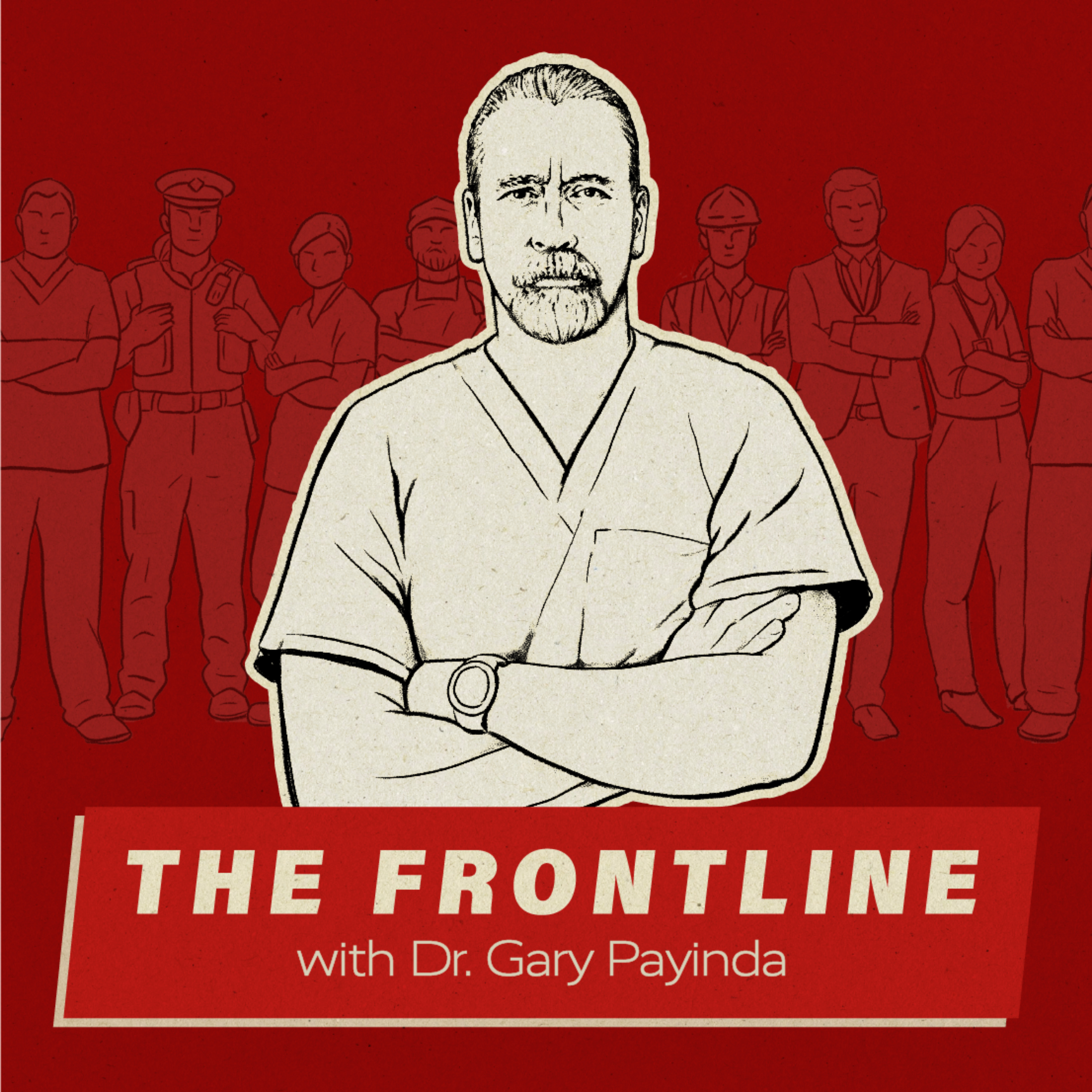
The Frontline with Dr Gary Payinda
by Big Hairy Network
Frontline Kiwi workers are struggling to pay for food and rent, while politicians are giving away billions to the very rich. Public services are being cut back, privatised, and sold off. This is not how you build a stronger, healthier, or safer society. It’s time to stop the vandalism and rebuild NZ. Join Dr Gary Payinda and guests on The Frontline.
-
58
Dr Paul Spoonley: Immigration: risks and rewards for NZ
One of the great minds of our nation, demographer and Distinguished Professor Emeritus and Senior Fellow at Koi Tū Centre for Informed Futures spoke with Dr Gary about immigration, productivity, xenophobia, and population growth in a New Zealand that is getting much older, more diverse, and more Auckland-centric. A far-reaching and heavy discussion with much food for thought.People, place and prosperity: the case for a population strategy https://informedfutures.org/population-media-release/
-
57
Alison Eddy, CEO of the NZ College of Midwives
Midwives are the most understaffed healthcare professionals in NZ. They're in scarce supply in part because reimbursement and working conditions are based on a decades old contract that some would describe as archaic and unfair. Listen in as ex-midwife Alison Eddy, CEO of the NZ College of Midwives, tells us all about the history of NZ midwifery, the recent High Court case they've won (which govt has already said they will appeal), and the ups-and-downs of a 24-hour a day profession caring for -- and sometimes saving -- the lives of mothers and babies.Whether you're self-employed or an employee, public worker or private, this conversation on the nature of work, public service, and fair wages should have relevance.
-
56
Each prisoner costs NZ $150,000 a year. Could that money be better spent keeping at-risk youth healthy, housed, fed and educated instead?
When kids or adults face poverty, hunger, and a breakdown in social relationships, is it any surprise that they turn to gangs, drugs, or violence? Isopo Samu of Tokotoko Solutions has spent a lifetime working with at-risk youth as a police officer, a teacher, and for the past 15 years as the founder or director of multiple youth and work-training organisations. We talk about how we can best use our time and money to help keep kids in school, and families together.
-
55
"Who wants to be dependent on Middle East Oil?" asks Rewiring Aotearoa
A chat with Mike Casey, cherry orchardist, tech bro, and green energy advocate. He's the CEO of Rewiring Aotearoa, a charity that envisions a time when NZ is free from its dependence on fossil fuels and foreign energy. We talk about electric cars, rooftop solar, learning from Australia's experience, and moving towards cheap, clean, and plentiful energy. Just a dream, or could it be a reality?
-
54
Are the new learning reforms innovative, or just a return to 1940s factory-style education?
Who would dare argue against a 'knowledge rich curriculum' or 'back to the basics' education? But what happens when 'knowledge rich' turns into regurgitating memorised lists, or when 'the basics' don't include enough teachers aides, school nurses, or that most basic thing of all: food?A reframing of the real problems and their solutions with education expert, teacher, principal, and President of the NZ Principals Federation Jason Miles, speaking to a recent report by 34 educational groups expressing concerns that the currently proposed education reforms may actually portend a return to the bad old days of rote memorisation and an educational framework based on an outdated industrial model that's not fit for NZ's needs, and which will not prepare our kids to be competitive in the modern world.
-
53
What drug kills 900 NZers a year, but may actually get easier to sell in NZ next year?
Alcohol harm costs the NZ taxpayer roughly $7 for every $1 collected in alcohol taxes. So why are we weakening, rather than strengthening, our alcohol regulations?Andrew Galloway of Alcohol Healthwatch talks about the proposed alcohol policy changes that will weaken our already remarkably feeble alcohol regulations.Have your say. Subscribe and follow. And click hapaitia.co.nz/resources/ for help giving your submission to Parliament.
-
52
NZ, Monaco, the Cayman Islands: the strange company we keep when it comes to taxes & public services
Glenn Barclay of Tax Justice Aotearoa answers our tax questions, from the $1 billion LNG import terminal 'levy/tax', to the IRD's treatment of high-net worth individuals, to how some multinational companies are diverting 94% of their NZ revenue offshore and avoiding paying billions in taxes. Plus the Salvation Army's report on surging child poverty and a 50% increase in food insecurity in NZ since 2019.
-
51
"Students become little more than backpacks full of cash." When private profit drives public school policy.
History teacher and Post-Primary Teachers Association (PPTA) president Chris Abercrombie discusses cut-rate lunches, school curriculum changes, and double standards when it comes to school privatisation. With a perhaps surprising chat about the cellphone ban in schools. Have a listen, get educated, and share with a friend. #teacher #education #nz
-
50
Raise your hand if you would like your public hospital to be there for you when you need it
A conversation with Rob Campbell, economist, healthcare expert, and co-founder of Kaitiaki Hauora, a new organisation that wants us to focus on 3 things: an adequately funded public healthcare system, a move away from healthcare privatisation, and a return to respect for Te Tiriti obligations in healthcare.We know the public backs our public healthcare system. In an election year, how can we get all our political parties to back the public healthcare system as well?
-
49
Spent or squandered? Where are your Health dollars going?
Dr Bagshaw (can we make him Health Minister please?) points out the 'secret' scam that is public-private partnerships...also known as dirty 'ol 'privatisation'.Surgeon Phil Bagshaw has dedicated his life’s work to helping people in need. He’s founded a charity hospital. Now he’s doing right by the people of Aotearoa educationally as well, pointing out the elegant scam used internationally to transfer wealth from taxpayers to corporate owners: the public-private healthcare ‘partnership’, in its many guises. Currently hitting NZ in a big way.Substack here https://drgarypayinda.substack.com/p/spent-or-squandered-where-are-your
-
48
Putting out the fire: a talk with firefighter Reuben Otto
An eye-opening talk with Reuben Otto, firefighter and member of the NZ Professional Firefighters Union (NZPFU) about the challenges of firefighting. Not just the heat and cancer risk, but the lack of a #FENZ employment contract for 571 days and counting, a broken funding model, public attacks by politicians, understaffing, and debilitated fire trucks. Despite it all he maintains a positive outlook and an undiminished dedication to the job that will inspire you. Share with your friends!
-
47
Tim Welch: Fast is slow, a conversation with a speed limit expert
Dr Tim Welch, urban planning researcher, talks to The Frontline about how faster speed limits can actually lead to slower driving times. And he introduces us to the concept of "network delay", which may be stripping our economy by up to 2% of its productivity.
-
46
Dave 'Bear' Hookway-Kopa on battling epidemics. From AIDS in the 1980s to alcohol harm today
HIV/AIDS, Covid, Syphilis, Fetal alcohol spectrum disorder. What, if anything, have we learned about the social determinants of health that will help us battle the next epidemic more successfully? Dave 'Bear' Hookway-Kopa talks to The Frontline about a lifetime looking after the people of Aotearoa New Zealand#HIV #AIDS #syphilis #PublicHealthwww.communitiesagainstalcoholharm.co.nzhttps://substack.com/@drgarypayinda
-
45
Malcolm Mulholland: "Someone's got to speak out..."
Malcolm Mulholland is the chair of Patient Voice Aotearoa, a patient advocacy group that The Frontline is happy to help support. They fought for better medicines access for New Zealanders, and now are fighting for public healthcare in NZ. Malcolm has traveled the length and breadth of Aotearoa holding community meetings and talking with patients and healthcare workers. He has stories to share about what's really happening to our healthcare system, and what we need to do to fix it.Sign the Buller Declaration, and donate to Patient Voice Aotearoa here: www.patientvoice.nz
-
44
Surf life saving: creating a nation of rescuers, helpers, and good citizens
Today the Frontline talks with Dan Short, paramedic, rescue swimmer and lifelong surf lifesaver...back by popular demand. We discuss some daring rescues, some good and bad outcomes, and what it means for society when 'regular New Zealanders' step up to help others. Is this a model for how we build a New Zealand that looks after its own people?
-
43
Safer inks for tattoos + reducing melanoma risk: the latest research
Around 20% of New Zealanders have tattoos. Around 350 people a year in New Zealand die from melanoma.Is there an association between melanoma and tattoo inks?Given the huge cultural importance of tattoos/moko in Aotearoa, and the widespread uptake of tattoos by so many, especially in younger age groups, are regulators doing everything they can to make sure what goes in our skin is as safe as it can be?Swedish toxicologist Dr Emelie Rietz Liljedahl discusses the sometimes poor international regulation of tattoo ink ingredients and discusses her research on whether there is an association between tattoo inks and skin cancer.Link to the study: https://link.springer.com/article/10.1007/s10654-025-01326-6
-
42
Turning teachers into technicians and education into regurgitation: the Education Amendment Bill
Jessie Moss, senior professional advisor at NZEI, talks us through attempts to rush the Education and Training (System Reform) Amendment Bill into law. Destabilising the curriculum, aiding public school privatisation, demoting the voice of professional organisations, and weakening community and Māori input is just the start of the far-reaching bill.
-
41
Hurdles on the path to a gentle death: Ann David speaks about a new bill to improve assisted dying for terminally ill patients
Ann David is the Past President of the End-of-Life Choice Society, and she's with us to talk about a newly proposed bill that seeks to reduce some of the hurdles, hoops and obstacles placed in the way of terminally ill patients at the end of their lives -- people who seek medical assistance to help them die gently.
-
40
"Roadside drug testing could be a great idea if it was accurate and effective. But is it either of those things?"
Accurate and effective, or a policy that will fill the jails while simultaneously not making the streets any safer? What does the international evidence show? We chat with Nikolai Siimes of the University of Auckland, a researcher who has published on roadside illicit drug testing.
-
39
Man on a wire: Dan Short Helicopter Paramedic and Rescue Swimmer
The Frontline spoke with Dan Short about what it takes to be a critical care paramedic. The training, the challenges, the teamwork, and the most memorable cases, both good and bad. Everything you wanted to know about being on one of the most highly exposed frontline jobs.
-
38
Half of NZ can't afford to see a dentist. Max Harris and Dental for All want to change that.
A conversation with Max Harris, lawyer, campaigner, and author, talking about Dental for All, a group that's got a national roadshow under way talking about the crazy idea that dental care should be a public service available to every New Zealander. Even the ones who are not 'wealthy and sorted'.If you want to imagine where the current government's push to healthcare privatisation will lead us, look no further than adult dental care in NZ: with almost half of people locked out due to cost. Together, let's say No, fight back, and build a better nation. Please share this video with a friend.For more, also check out my Substack @drgarypayinda.
-
37
The Mysterious Case of Health's Disappearing Half-Billion.
Craig Renney (Chief Economist of the CTU and host of The Locked-In Podcast) is our guest this week on The Frontline, telling us about the $500 million dollars in the Health budget that didn't get spent, despite overwhelming need. This half-billion of taxpayers' dollars evaporated at the same time the government was telling nurses they must accept real pay cuts, because there was just 'no money' left.
-
36
Gabrielle Baker: Connecting Māori life expectancy back to current health policies
Māori health ‘privilege’ starts in childhood with a 30X higher risk of rheumatic fever, continues in adulthood with later diagnosis, fewer treatments, and worse outcomes, and ends with an overall death gap that is a remarkable 7 years earlier than Pākehā. In this episode we talk with Health Policy Specialist Gabrielle Baker about whether current health policies will fix this, or make this woeful situation even worse.LINK to ASMS https://asms.org.nz/wp-content/uploads/2025/10/Maori-Health-Final.pdf
-
35
Dr Lisa Darragh: Setting education up to fail?
The Frontline spoke with a maths education researcher about international test scores, smartphones in classes, bullying and behavioural problems in students, streaming in classrooms, teacher defunding, charter schools, and the stripping of professional education funding from teacher's aides. Plus the introduction and rollout of the 3rd curriculum for schools in the past 3 years. There's a wrecking ball coming for public education that makes me wonder whether it's following the same model as public healthcare: "defund, destabilise, and privatise".Have a listen as Dr Lisa Darragh shares her learnings about maths education and how best to maximise resources and positive impact in the public school sector.
-
34
A Dim Prognosis? NZ healthcare at a crossroads
Ivor Popovich, the young ICU doctor who wrote A Dim Prognosis, gives us an insider's look at the best and worst of medicine and healthcare in NZ. He balances stories of bullying, abuse, corruption, overwork, and understaffing, with inspiring stories of seeing lives saved, deep connections with patients and whanau, and growing as a person during the approximately 14 years between starting med school and leaving as a fully-qualified specialist. Along the way, there are insights into health policy, politics, poverty, and ethnicity that make this book required reading for everyone from patients to politicians.
-
33
'Managing Decline': More than a Decade of Health Data Reveals Where We're Heading
Did you know that the growth in New Zealanders' life expectancy, increasing since basically forever, has finally fizzled out? That our levels of untreated youth mental health problems have shown a staggering increase? And that our lack of access to GPs has perfectly mirrored our blown-out numbers of ED presentations? Economist Andrea Black and I talked about data trends and a decade of economic insights. How good did we have it, how bad are things now, are there any bright spots, and where has the money gone? And perhaps most importantly, can we fix it?
-
32
Tales from the Crypt: Rogernomics and Ruthanasia reappear
Today Elliot Crossan, author and activist with System Change Aotearoa, is talking with The Frontline about neoliberalism's original grandparents: Roger Douglas and Ruth Richardson. They destroyed our social safety net 40 years ago, and started the movement that saddled us with ACT and David Seymour, and they ain't done yet. Like our current government, they were the worst of their generation, and like this one too, they created social and economic damage that would go on to affect the average New Zealander for decades to come.
-
31
Poverty, prison, and Foetal alcohol spectrum disorder: An ignored problem affecting far too many NZ children
Clinical psychologist and public health expert Dave (Bear) Hookway-Kopa tells us about a problem, FASD, which currently affects more than 1 in every 65 people in New Zealand. FASD is associated with problems reasoning, considering consequences, and controlling one's emotions. FASD increases the chance of ending up in prison by 2,000%. Yet corporate-favouring governments continue to side with the alcohol corporations and against public health advice. Not surprising given that alcohol revenues are measured in billions of dollars. That kind of power and political influence doesn't sneak through the back door: it boldly walks in through the front.
-
30
Rogernomics, privatisation, and your taxes: Haven't we tried this already? A conversation with Terry Baucher
Tax consultant Terry Baucher takes us through Sir Roger Douglas's recent proposal to 'save' the NZ economy. We touch on issues of wealth inequality, the retirement age, the potential collapse of superannuation, housing unaffordability, privatisation, and regressive taxes that hit the poor and spare the rich. If you think taxes are boring, think again.
-
29
Women's Pay Equity has been gutted: are you one of the 300,000 women (and men!) affected?
Melissa Ansell-Bridges, the National Secretary of the CTU, spoke with me about the far-reaching impacts the destruction of the Pay Equity laws will cause. It's not just about the 150,000 women immediately affected. It's about the 300K people whose incomes will be impacted. And it's not just about 2025, it's about financial injuries that will literally continue on for a decade. It's cooked.
-
28
Firecracker: Justine Sachs talks about Nurse Understaffing
Justine Sachs is a healthcare trade unionist based in Tamaki Makaurau. Speaking about the need for Labour to be bold to save our public health system.
-
27
"When cancer screening fails"
NZ found literally billions of tax dollars for weapons systems, property investors, and tobacco companies. But $3,000 for a colonoscopy to prevent colon cancer? Sorry, there's no money. "You're on your own."Malcolm Mulholland of Patient Voice Aotearoa takes us through the ins and outs of public bowel cancer screening in NZ. It's shittier than you might think.
-
26
Max Harris: Good guys finish last? Max says ‘No’
Lawyer, scholar, author and social advocate Dr Max Harris talks about how those in progressive political movements can win without selling their souls.
-
25
An ex-gun lobbyist Govt Minister weakening NZ's Alcohol Policies? It's exactly as bad as it sounds
I speak with Andrew Galloway of Alcohol Healthwatch, and Dr Rose Crossin, a public health researcher, about the changes being made to alcohol laws that will make it much harder for local communities to fight back against the multibillion-dollar alcohol industry. It's a simple matter of People vs Profits. This is NZ's David vs Goliath story, and Goliath is winning.
-
24
Tough times for patients: a path forward
Dr Aniva Lawrence is a Samoan Kiwi GP and educator and advocate for rural, Maori and Pacific communities. A leader in primary healthcare, she talks about the way forward for underserved communities, and all of New Zealand healthcare, during a time of heightened challenges.
-
23
Can a 'decent and thoughtful man' win in local politics?
In this Frontline interview, I talked with Whangarei Mayoral candidate Ken Couper for an hour...all about local government. But don't wander off, because it was a conversation not just for Northlanders--we covered issues are of nationwide importance: poverty, co-governance, pollution, dairy farming, rising rates, the role of central government, the repeal of 3 waters, the collapse of chronically unmaintained local infrastructure, the anti-fluoride/anti-vax/anti-mandate fringe and the politicians who harvest them for publicity, showmanship vs substance in politics, the Haves vs Have-nots, unemployment, cost-of-living crisis, local apprenticeships, generational poverty, windfall profits, and education.The conversation goes beyond left and right, and it gives me hope that this dyed-in-the-wool National voter and dairy farmer is still just someone who wants the best for our region and our people. There's a message in our conversation that I believe National's upper leadership would do well to heed. The fast-tracking of greed and division is not how you build a better nation -- it's the path to a Pyrrhic victory: a quick win that does little more than tear up the social fabric that binds us together. We need to build a stronger and more humane country for the average New Zealander. Share this podcast, and follow my writing on Substack: https://substack.com/@drgarypayindaAnd check out: Fabricated Consent, Paul the Other One's helpful primer on what local communities are up against in this year's local council elections.
-
22
No legal requirement for an equitable health system via changes to Pae Ora (Healthy Futures) Act
Alison McDougall is helping lead a citizen-run group called Protect Public Healthcare (PPH). They're publicising changes to the Pae Ora (Healthy Futures) Act which is travelling a little under the radar at the moment even though submissions are open and some of what the government are 'amending' in this bill could cause serious issues for many in the public health system.
-
21
Empty threats: If they have to pay their fair share of taxes, they will leave
Turns out it's not really true. 99.7 percent of them will stay. And the money they pay in taxes will help build our society up. A conversation on the Millionaire Migration Myth, with researcher Ed Miller of CICTAR.org.
-
20
On the backs of low-wage women: the secret schemes of a privatisation government
Fleur Fitzsimons and the PSA (Public Service Administration) have served as the voice and conscience of the NZ worker in the fight against unjust government policies and at times scandalous politician rhetoric and behaviour. Today on The Frontline, we talk about both as we discuss the government's demolition of the Pay Equity Act, affecting 130,000 New Zealand working women and the families that depend on them.
-
19
The conflagration: How much more damage could they possibly do in another 18 months?
Organising a resistance to the coalition can't wait until the next election. It's got to start now, locally. With strong resolve, and a fierce determination to avoid being divided-and-conquered by a government of, for, and by the rich.
-
18
Is there anything wrong with your public healthcare being a source of private profit? A chat with Ian Powell.
Ian Powell spent 35 years in healthcare policy as head of the public (salaried) doctors' union. He's seen it all, and has some surprising thoughts about the privatisation of healthcare.Read more of Ian's work at https://otaihangasecondopinion.wordpress.com/2025/07/14/who-benefits-from-outsourcing-planned-surgery-follow-the-funding/
-
17
Doctors ask Politicians to finally put some 'Skin in the Game'.
An interview with Dr Marcus Lee, a Northland cardiologist who, along with dozens of other doctors, penned an open letter to Simeon Brown, the Minister of Health, and other top politicians, asking them to put their money where their mouth is: To pause their private health insurance plans while they're in office, and to live with the same public healthcare system that the majority of New Zealanders, young and old, must rely on.What a great idea! I was happy to sign on. Just imagine a world where the understaffing of public hospitals and GPs and nurses actually affected those politicians making the laws and deciding where the taxpayers' money gets spent. We'd have a better public healthcare system as fast as you could say: "Wow, I guess that $2.9 billion dollars of our taxpayer money given to landlords really could have fixed all our healthcare staffing shortages nationwide and provided public dental care for every Kiwi."Skin in the Game matters! Accountability matters! Hypocrisy withers under the light of day. Sign the PUBLIC petition to demand accountability at https://chng.it/LCwBMGLhKc
-
16
Taupo ED underfunding, the alcohol industry doing the right thing and is wine a carcinogen?
Taupo's ED understaffing woes and close-down risk is making news again. A bit of good science news on the gut microbiome's effect on heart attacks. And a piece on the alcohol industry doing the right thing when forced to, by (gasp!) legal regulations: Ireland accurately labels wine as a known carcinogen. Will NZ follow?
-
15
The Hate that Social Media Brewed: When rage fuels Social Media corporate profits, how do nations avoid a descent into violence?
Paul Spoonley is a Distinguished Professor Emeritus at Massey University and an expert on how nations counter violent extremism. This episode of The Frontline, Prod Spoonley tells us whether the Christchurch Massacre was a wake-up call for New Zealand, or an unheeded warning.
-
14
Simeon Does it Again, Attacking Nurses on Social Media
The Frontline talks with Odie Matson, an experienced nurse and NZ Nurse's Organisation delegate, about Simeon's latest Facebook lash-out.How can a Health Minister who just got 4 annual pay rises in a row, find himself attacking nurses on Facebook for their attempts to negotiate safer working conditions? Nurses who are offered a pay rise that is less than the cost of inflation... and who have watched their request for "safe staffing ratios" eliminated from their negotiations by a government bent on austerity for workers, while handing out tax breaks for landlords, tobacco companies, and oil corporations.Come along with us: support The Frontline movement.
-
13
UBER hiding from taxes? Say it ain't so
Hiding 98% of your NZ profits in an offshore tax haven? Totally illegal. Unless you are a corporation like UBER, in which case it's totally legal. But should it be?Join me for a conversation with researcher Ed Miller, of CICTAR.org, on THE FRONTLINE.
-
12
Driving nurses away by the thousands
NZNO Delegate and Emergency Nurse extraordinaire Rachel Thorn RN talks about retention of nursing staff, the challenges of nurse understaffing, pay offers that don't keep up with the cost of inflation, and other challenges that face the people who work days, night, weekends, and holidays to keep us alive and cared for.
-
11
Who's counting anyway? Killing the NZ Census
The New Zealand government has announced that after 174 years, they're ending the NZ Census, to save money. The census helps decide what infrastructure and services YOUR community will get: roads, schools, police, hospitals. If it's inaccurate, your community loses stuff it needs. On The Frontline, Professor Paul Spoonley tells us whether dropping the census is likely to be a smart move forward, or a big step backward.https://www.rnz.co.nz/news/in-depth/564560/the-traditional-census-has-been-switched-off-what-happens-nowDr Gary's Substack https://substack.com/@drgarypayinda
-
10
'Work faster.' NZ nurses push for safety
Are nurses in Auckland being forced to work overtime, longer than they're contracted to and longer than they want to? Are those same nurses then getting underpaying and are their departments under staffed? Dawn Barrett from NZ Nurses Organisation joins Gary to talk about those issues and more.
-
9
The Frontline Trailer
The Frontline is a new podcast that is going to talk about whether there might be a better way to build a stronger nation than privatising our essential public services, and lavishing taxpayer billions on the very rich.Join Dr Gary Payinda on The Frontline… to talk about how we can win. How we can build a stronger New Zealand, one that takes care of ALL of its people. A New Zealand that serves the PUBLIC interest, not just the PRIVATE profit.
We're indexing this podcast's transcripts for the first time — this can take a minute or two. We'll show results as soon as they're ready.
No matches for "" in this podcast's transcripts.
No topics indexed yet for this podcast.
Loading reviews...
ABOUT THIS SHOW
Frontline Kiwi workers are struggling to pay for food and rent, while politicians are giving away billions to the very rich. Public services are being cut back, privatised, and sold off. This is not how you build a stronger, healthier, or safer society. It’s time to stop the vandalism and rebuild NZ. Join Dr Gary Payinda and guests on The Frontline.
HOSTED BY
Big Hairy Network
Loading similar podcasts...
Frequently Asked Questions
How many episodes does The Frontline with Dr Gary Payinda have?
The Frontline with Dr Gary Payinda currently has 50 episodes available on PodParley. New episodes are automatically indexed when they're published to the podcast feed.
What is The Frontline with Dr Gary Payinda about?
Frontline Kiwi workers are struggling to pay for food and rent, while politicians are giving away billions to the very rich. Public services are being cut back, privatised, and sold off. This is not how you build a stronger, healthier, or safer society. It’s time to stop the vandalism and rebuild...
How often does The Frontline with Dr Gary Payinda release new episodes?
The Frontline with Dr Gary Payinda has 50 episodes. Check the episode list to see recent publication dates and frequency.
Where can I listen to The Frontline with Dr Gary Payinda?
You can listen to The Frontline with Dr Gary Payinda on PodParley by clicking any episode. We provide an embedded audio player for direct listening, and you can also subscribe via your preferred podcast app using the RSS feed.
Who hosts The Frontline with Dr Gary Payinda?
The Frontline with Dr Gary Payinda is created and hosted by Big Hairy Network.
URL copied to clipboard!