
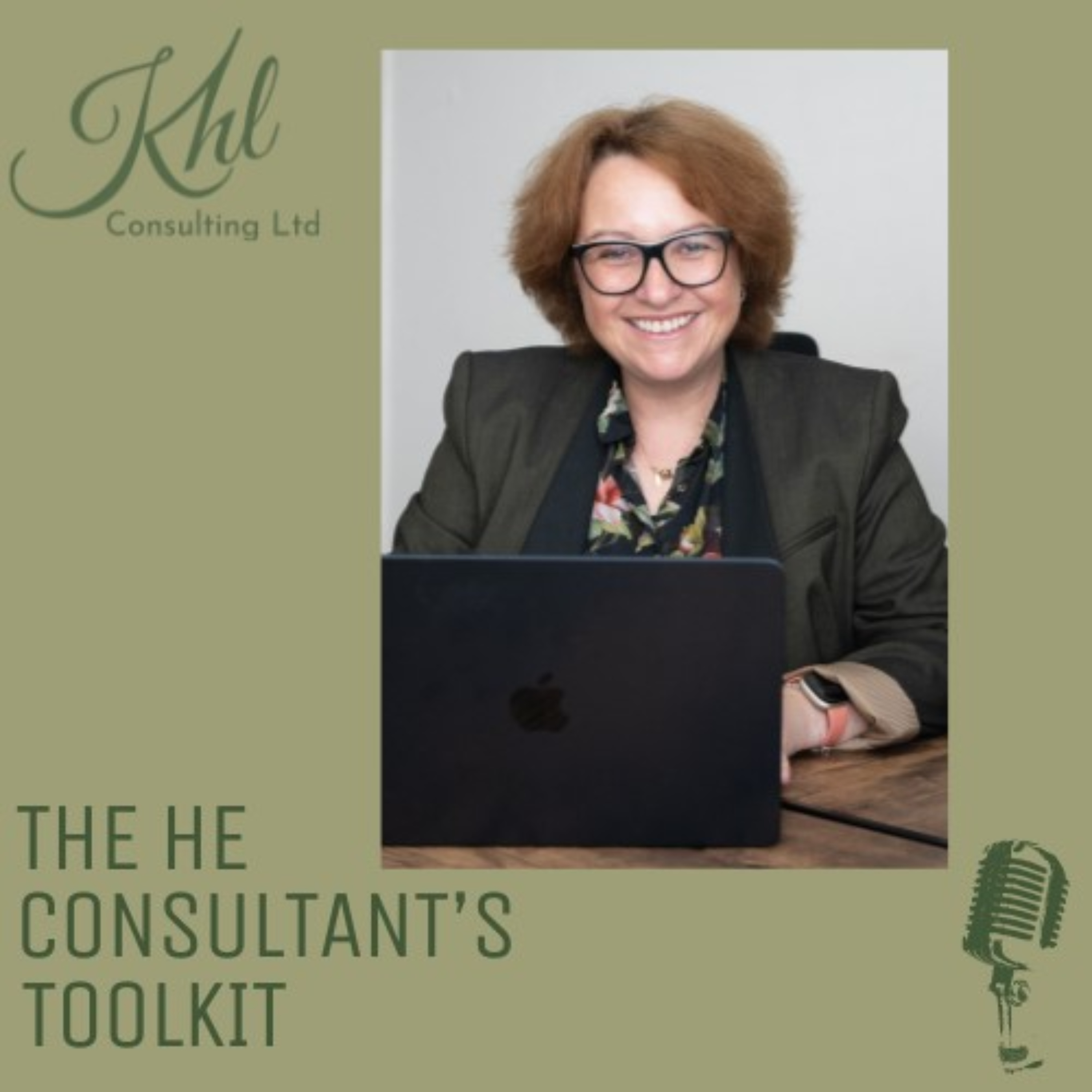
PODCAST · education
The HE Consultant's Toolkit
by Karen Heard-Lauréote - KHL Consulting
In The HE Consultant’s Toolkit podcast, Professor Karen Heard-Lauréote, Founder, Director, and Principal Consultant at KHL Consulting, shares insights into the world of higher education consultancy. Whether you’re new to consultancy, considering it a career move, or an experienced consultant, this podcast explores some of the foundational skills that all HE Consultants need to survive and thrive.
-
16
The Ethics of Independent Work
Episode summaryThis episode explores the ethical dimensions of independent work in higher education, focusing on the judgement required to navigate complex, ambiguous situations. It considers issues such as independence, scope, confidentiality, impact, and professional sustainability.Key takeawaysEthical challenges in independent work are often ambiguous rather than clear-cutIndependence requires careful navigation of influence and expectationScope, confidentiality, and impact all involve judgement callsSustainability is an ethical as well as a personal considerationEthical practice involves reflection rather than rigid rulesFurther ResourcesThinking about going freelance or setting up a consultancy in HE? My short courses offer practical guidance to help you take the first steps.https://khlconsulting.co.uk/coursesKHL Consulting websitehttps://www.khlconsulting.co.ukLinkedIn profile for Karen Heard-Lauréotehttps://www.linkedin.com/in/profkhlNetwork for Tertiaty Education Consultants (NTEC)https://www.linkedin.com/groups/14409504/Next stepsSubscribe and share: If you are finding this series helpful, please subscribe and share it with your network.Connect on LinkedIn: I would welcome your reflections on the episode.https://www.linkedin.com/in/profkhlLook out for the next episode: The next episode will be released soon. Make sure you are subscribed so you do not miss it.
-
15
Who gets to work with you? Building a client fit filter
This episode explores how client selection shapes the sustainability, reputation, and intellectual satisfaction of independent work in higher education. It introduces the concept of a client fit filter and reflects on how consultants and freelancers can make more strategic choices about which projects to accept and which to decline.Key takeawaysThe mix of clients you work with gradually shapes your professional lifeA client fit filter can guide decisions about new workWorking relationships, clarity of purpose, and values alignment all matterEarly signals in conversations often reveal project conditionsClient choices influence long-term reputation and referral networksLinks to relevant resourcesThinking about going freelance or setting up a consultancy in HE?My short courses offer practical guidance to help you take the first steps.https://khlconsulting.co.uk/coursesKHL Consulting websitehttps://www.khlconsulting.co.ukLinkedIn profile for Karen Heard-Lauréotehttps://www.linkedin.com/in/profkhlNetwork for Educational Enhancement Consultantshttps://www.linkedin.com/groups/14409504/Subscribe and shareIf you are finding this series helpful, please subscribe and share it with your network.Connect on LinkedInI would welcome your reflections on the episode.https://www.linkedin.com/in/profkhlLook out for the next episodeThe next episode will be released soon. Make sure you are subscribed so you do not miss it.
-
14
Beyond the day rate: developing income that supports sustainability
Episode summaryThis episode explores income beyond the day rate as a strategic and ethical issue in independent work in higher education. It reflects on the limitations of time-based pricing, the trade-offs involved in alternative income arrangements, and the importance of aligning income structures with long-term sustainability rather than short-term busyness.Key takeawaysThe day rate is not the problem, but it is rarely sufficient on its ownIncome structures shape vulnerability, choice, and sustainabilityDifferent income models involve different trade-offsSustainable portfolios are often uneven rather than elegantStrategic thinking about income requires attention to time horizonsLinks to relevant resourcesThinking about going freelance or setting up a consultancy in HE?My short courses offer practical guidance to help you take the first steps.https://khlconsulting.co.uk/coursesKHL Consulting websitehttps://www.khlconsulting.co.ukLinkedIn profile — Karen Heard-Lauréotehttps://www.linkedin.com/in/profkhlNetwork for Educational Enhancement Consultantshttps://www.linkedin.com/groups/14409504/Subscribe and shareIf you are finding this series helpful, please subscribe and share it with your network.Connect on LinkedInI’d welcome your reflections on the episode.https://www.linkedin.com/in/profkhlLook out for the next episodeThe next episode will be released soon. Make sure you’re subscribed so you don’t miss it.
-
13
Getting Strategic: What Do You Want This to Become?
Podcast summaryThis opening episode of Series 4 marks a shift in focus for The HE Consultant’s Toolkit. Moving beyond questions of survival and capacity, it explores what it means to work strategically on an independent practice in higher education.The episode invites experienced consultants and freelancers to step back from delivery mode and consider what they are building over time. It reflects on intentional choice, sustainability, and the difference between reacting to opportunities and shaping a practice that aligns with professional values and long-term aspirations.Rather than offering quick fixes, the episode creates space for reflection and sets the foundation for a series focused on strategy, ethics, and long-term practice design.Key takeawaysStrategy in independent work is less about growth and more about intentional choiceA full diary does not necessarily indicate a well-designed practiceSustaining a practice and shaping a practice are related but distinct forms of workLong-term viability requires periodic reflection, not just operational efficiencyAsking “what do I want this to become?” is a strategic act in its own rightLinks to relevant resourcesThinking about going freelance or setting up a consultancy in HE? My short courses offer practical guidance to help you take the first steps.Find out more at: https://khlconsulting.co.uk/coursesKHL Consulting websitehttps://www.khlconsulting.co.ukLinkedIn profile — Karen Heard-Lauréotehttps://www.linkedin.com/in/profkhlNetwork for Educational Enhancement Consultants (NEEC)https://www.linkedin.com/groups/14409504/Calls to actionSubscribe and shareIf you enjoyed this episode or are finding this series helpful, please subscribe and share it with your network.Connect on LinkedInI’d welcome your reflections on today’s episode. You can connect with me on LinkedIn at:https://www.linkedin.com/in/profkhlLook out for the next episodeThe next episode will be released soon. Make sure you’re subscribed so you don’t miss it.
-
12
When You're the Brand: Independent Work and Identity
Summary:In this reflective closing episode of Series 3, Karen explores the emotional and strategic dimensions of building a consultancy or freelance practice where you are the brand. From managing visibility to handling rejection, setting boundaries to staying authentic, this episode offers grounded insights into what it means to work in a way that reflects who you are and sustains you for the long haul.Key Takeaways:You are the brand and that brings both visibility and vulnerabilityAuthenticity doesn’t require overexposure choose what and how you shareRejection is hard, but not always personal timing and fit matter tooVisibility is part of the job not vanity, but contribution and connectionYou can shape your practice intentionally and it’s worth pausing to reflect on howLinks to Relevant Resources:Thinking about going freelance or setting up a consultancy in HE? My short courses offer practical guidance to help you take the first steps. Find out more at khlconsulting.co.uk/coursesKHL Consulting Website: www.khlconsulting.co.ukLinkedIn Profile for Karen Heard-Lauréote: www.linkedin.com/in/profkhlNetwork for Educational Enhancement Consultants: https://www.linkedin.com/groups/14409504/Calls to action:Subscribe and Share: If you enjoyed this episode or are finding this series or previous ones helpful, please subscribe and share it with your network.Connect on LinkedIn: I’d love to hear your thoughts on today’s podcast, so feel free to connect with me on LinkedIn: www.linkedin.com/in/profkhlLook Out for Series 4 Episode 1: We’ll be back soon with the next episode. Make sure you’re subscribed so you don’t miss it!
-
11
Working at Capacity and Knowing When to Say No
Podcast SummaryIn this episode, Karen Heard-Lauréote reflects on one of the most important and most difficult aspects of running a consultancy or freelance practice: recognising when you're at full capacity and how to say no with care and confidence.She explores the signs of overload, the quiet guilt of turning down work and the long-term value of becoming more selective. Drawing on lived experience, this episode offers practical strategies for protecting your time, energy and quality of work while maintaining relationships and your professional reputation.This one’s for anyone who’s ever said “yes” out of obligation, and later wondered how to claw back time for what matters.Key TakeawaysOver-commitment has a cost: Every “yes” uses up your creative, emotional and physical energy, not just your time.Capacity can be subtle: The signs you’re over capacity aren’t always dramatic. They can be subtle signs, such as brain fog, irritability, or a tendency to procrastinate.Saying no protects quality: Turning down work helps ensure the work you do take on gets your full attention and care.You can say no without burning bridges: Being honest, prompt, and helpful (such as recommending someone else) helps preserve relationships.Project stacking is risky: Overlapping work can lead to blurred focus, deadline collisions, and compromised delivery.Pause before you accept: Ask yourself whether the work aligns with your energy, values, and future direction.Space enables sustainability: Saying no makes room for the non-billable work that sustains your practice, like writing, reflection, or rest.Links to Relevant ResourcesThinking about going freelance or setting up a consultancy in HE? My short courses offer practical guidance to help you take the first steps. Find out more at khlconsulting.co.uk/coursesKHL Consulting Website: www.khlconsulting.co.ukLinkedIn Profile for Karen Heard-Lauréote: www.linkedin.com/in/profkhlNetwork for Educational Enhancement Consultants: https://www.linkedin.com/groups/14409504/Calls to ActionSubscribe and Share: If you enjoyed this episode or are finding this series or previous ones helpful, please subscribe and share it with your network.Connect on LinkedIn: I’d love to hear your thoughts on today’s podcast, so feel free to connect with me on LinkedIn: www.linkedin.com/in/profkhlLook Out for Series 3 Episode 3: We’ll be back soon with the next episode. Make sure you’re subscribed so you don’t miss it!
-
10
Balancing Client Work and Business Development
Podcast SummaryIn this opening episode of Series 3, I reflect on one of the quiet but critical challenges of working independently in HE: balancing client delivery with the development of your own consultancy or freelance practice.When you’re deep in delivery mode, business development can slip off the radar. And when you’re focused on visibility, networking, and strategy, it’s easy to worry that you’re not “earning” your time. This episode explores that tension and offers practical, sustainable strategies for building a practice that supports you, not just one that keeps you busy.I share lessons from my own practice, questions I revisit when I feel stuck, and a few systems that help me maintain the ongoing balance between working in the business and working on it.Key TakeawaysBalancing delivery and development is not a one-time task; it’s a recurring rhythm that needs tending.It’s easy to slip into reactive mode when you’re busy with client work, but setting time aside for your own business is essential to long-term sustainability.You don’t need to do everything; just focus on a few strategic activities you can do consistently.Guilt is common, especially when business development feels intangible or self-indulgent. But it’s part of the work, not a distraction from it.Tools, habits, and boundaries can help, but so can reframing what counts as legitimate work in your week.Links to Relevant ResourcesThinking about going freelance or setting up a consultancy in HE? My short courses offer practical guidance to help you take the first steps. Find out more at khlconsulting.co.uk/coursesKHL Consulting Website: www.khlconsulting.co.ukLinkedIn Profile for Karen Heard-Lauréote: www.linkedin.com/in/profkhlNetwork for Educational Enhancement Consultants: https://www.linkedin.com/groups/14409504Calls to Action· Subscribe and Share: If you enjoyed this episode or are finding this series or previous ones helpful, please subscribe and share it with your network.· Connect on LinkedIn: I’d love to hear your thoughts on today’s podcast, so feel free to connect with me on LinkedIn.· Look Out for Series 3 Episode 2: We’ll be back soon with thenext episode. Make sure you’re subscribed so you don’t miss it!
-
9
Working Independently in HE
Podcast SummaryIn the final episode of Series 2 of The HE Consultant's Toolkit, Karen Heard-Lauréote reflects on the often unspoken realities of working independently in the higher education sector. From working as an outsider and financial uncertainty to relational complexity, self-doubt and shifting definitions of success, Karen explores the nuanced emotional and professional dimensions of freelance and consultancy work in HE. With characteristic candour and insight, she shares the strategies and reflections that help her stay grounded, connected and purposeful between contracts.Key TakeawaysIndependent work can be isolating; connection requires effort and intentionality.Financial instability carries emotional as well as practical implications.Consultants can be perceived as a threat or disruption to institutional norms.Lack of feedback can breed self-doubt; tracking your own growth matters.Success is not always defined by outputs or prestige—values alignment and wellbeing matter.Links to Relevant ResourcesThinking about going freelance or setting up a consultancy in HE? My new short course offers practical guidance to help you take the first steps. Find out more at khlconsulting.co.uk/consultancy-courseKHL Consulting Website: www.khlconsulting.co.ukLinkedIn Profile for Karen Heard-Lauréote: www.linkedin.com/in/profkhlNetwork for Educational Enhancement Consultants: https://www.linkedin.com/groups/14409504/Calls to Action· Subscribe and Share: If you enjoyed this episode or found series two helpful, please subscribe and share it with your network.· Connect on LinkedIn: I’d love to hear your thoughts on today’s podcast, so feel free to connect with me on LinkedIn.· Look Out for Series 3: We’ll be back soon with the next series. Make sure you’re subscribed so you don’t miss it!
-
8
Handling the politics.
Podcast SummaryIn this episode of The HE Consultant’s Toolkit, Karen Heard-Lauréote explores the subtle but significant political dimensions of consultancy in higher education. When brought into a university or college, consultants step into environments shaped by power, history, and internal dynamics - and their presence can be misread, misunderstood, or even quietly resisted.Karen reflects on how she approaches these situations with care, insight, and professionalism. She discusses how to read the informal signals, assess institutional dynamics, and scope work in a way that builds trust rather than suspicion. With particular sensitivity to the current financial pressures facing the sector, she addresses how consultants can avoid being seen as a threat or a cost-cutting mechanism, and instead position themselves as constructive collaborators.This episode offers a thoughtful look at how to work ethically, respectfully, and with emotional intelligence when the politics are quietly at play - or right on the surface.✅ Key TakeawaysNot all politics are visible. Often, the context that shapes your work is shaped by longstanding tensions, informal influence, or unresolved decisions, not just formal governance.First impressions matter. Pay attention to tone, urgency, who is involved, and how decisions are made. These early cues can tell you a great deal.Influence doesn’t follow hierarchy. Informal authority can shape outcomes as much as formal roles. Understanding this dynamic is key to working effectively.Stay within your remit. Be clear about your role and boundaries. Don’t be drawn into internal dynamics that compromise your independence or neutrality.Anticipate concerns. In a financially pressured climate, consultants may be perceived as threatening. Be transparent about your purpose and take time to build trust.Hold steady. When things get politically difficult, don’t rush to fix or absorb it. Step back, clarify, or slow down if needed — without losing your professional footing.Use tone and timing to deliver difficult messages. Introduce findings in conversation first, offer space for reflection, and provide flexible framing options.Lead with humility. Approach institutional cultures with respect, curiosity and care. People may be tired, stretched, or uncertain — meet them with patience, not pressure.Links to Relevant ResourcesThinking about going freelance or setting up a consultancy in HE? My new short course offers practical guidance to help you take the first steps. Find out more at khlconsulting.co.uk/consultancy-courseKHL Consulting Website: www.khlconsulting.co.ukLinkedIn Profile for Karen Heard-Lauréote: www.linkedin.com/in/profkhlNetwork for Educational Enhancement Consultants: https://www.linkedin.com/groups/14409504/Calls to Action· Subscribe and Share: If you enjoyed this episode or found series two helpful, please subscribe and share it with your network.· Connect on LinkedIn: I’d love to hear your thoughts on today’s podcast, so feel free to connect with me on LinkedIn.· Look Out for Series 2: Episode 5: We’ll be back soon with the last episode in this series. Make sure you’re subscribed so you don’t miss it!
-
7
From brief to impact
Podcast SummaryIn this episode of The HE Consultant’s Toolkit, Karen Heard-Lauréote explores the often-overlooked - but vital - skill of turning a vague enquiry or brief into a purposeful and deliverable consultancy project. Drawing on her own experience, Karen discusses how to read between the lines of a client’s request, ask the right discovery questions, avoid common pitfalls, and shape a project that is realistic, aligned, and professionally respectful.The episode also addresses the risks of giving too much away too early, how to manage scope confidently, and why protecting your intellectual labour is just as important as delivering quality work. Whether you’re new to consultancy or looking to refine your practice, this episode offers both practical strategies and reflective insight into early-stage consultancy conversations.Key TakeawaysWhat’s asked isn’t always what’s meant. Clients often frame their need in technical terms, but the real issue may be cultural, strategic, or relational.Use discovery questions to dig deeper. Open questions, silence, and techniques like the Five Whys can uncover the real drivers behind a brief.Avoid common pitfalls. Don’t jump to solutions, overpromise, or allow scope to expand without a conversation about time, cost, and purpose.Be cautious about sharing detailed approaches. Even with “commercial in confidence” language, there’s a risk your thinking may be used without engagement.Offer enough to build confidence—but not a blueprint. A high-level outline of phases or methods shows your value without giving your work away.Check the project fits you. Ask yourself whether it suits your skills, capacity, and values. If not, suggest a phased start or recommend a colleague.Push back professionally. Reframe vague or unrealistic requests with outcome-focused alternatives that show clarity and leadership.Use a clear scoping framework: Listen – Clarify – Frame – Confirm. This supports collaboration and shared understanding from the outset.Links to Relevant Resources· Thinking about going freelance or setting up a consultancy in HE? My new short course offers practical guidance to help you take the first steps. Find out more at khlconsulting.co.uk/consultancy-courseKHL Consulting Website: www.khlconsulting.co.uk· LinkedIn Profile for Karen Heard-Lauréote: www.linkedin.com/in/profkhl· Network for Educational Enhancement Consultants: https://www.linkedin.com/groups/14409504/Calls to Action· Subscribe and Share: If you enjoyed this episode or found series one helpful, please subscribe and share it with your network.· Connect on LinkedIn: I’d love to hear your thoughts on today’s podcast, so feel free to connect with me on LinkedIn.· Look Out for Series 2: Episode 4: We’ll be back soon with the next episode. Make sure you’re subscribed so you don’t miss it!
-
6
What's Your Worth?
🎙️ Podcast SummaryIn this episode of The HE Consultant’s Toolkit, we explore one of the most uncomfortable - but essential - topics for independent consultants: pricing.How do you set a fair and sustainable day rate? What do you say when clients push back? And how do you manage your mindset when the money conversation gets awkward?Karen shares candid reflections from her own consultancy experiences, offering practical strategies for setting your fees, negotiating with confidence, and staying financially resilient during quiet periods.Whether you’re new to consultancy or still finding your pricing rhythm, this episode will help you approach your value with clarity, professionalism, and purpose.✅ Key TakeawaysYour day rate isn’t your old salary divided by 220. Price for value, not just time, and include your non-billable work, business costs, and downtime.Use others to inform your rate - but don’t simply copy. Your offer and experience are unique.Tiered or packaged services can give clients choice without undercutting your value.Pushback is negotiation, not rejection. Be open to scope changes - but protect your baseline.Use a three-point decision filter: pay, learning/enjoyment, and visibility. Two out of three? Consider saying yes.Have a BATNA. Know what you’ll do when a project doesn’t land - writing, CPD, business development, or creating content like this podcast.📣 Calls to Action👉 Subscribe and Share If you enjoyed this episode or found Series 1 helpful, please subscribe and share it with your network. It really helps the podcast reach others working in HE consultancy.🤝 Connect on LinkedIn I’d love to hear your thoughts on today’s episode. Do you find pricing tricky? What strategies work for you? Feel free to connect and join the conversation on LinkedIn.📅 Look Out for Series 2: Episode 3 We’ll be back soon with the next episode. Make sure you’re subscribed so you don’t miss it.🔗 Relevant Resources🌐 KHL Consulting Website: www.khlconsulting.co.uk👤 LinkedIn Profile for Karen Heard-Lauréote: www.linkedin.com/in/profkhl🤝 Network for Educational Enhancement Consultants (NEEC): Join here
-
5
Time & Wellbeing Management
Podcast SummaryIn this episode of The HE Consultant’s Toolkit, we explore the critical skill of time management for independent higher education consultants. With multiple projects, shifting client demands, and the pressure to maintain a work-life balance, effective time management is essential to sustaining a successful consultancy career.Karen shares personal insights from her own consultancy journey, discussing practical strategies for prioritising tasks, using productivity tools, managing quieter periods, and setting boundaries to prevent burnout. She also highlights common time management pitfalls and provides a simple, actionable framework for consultants to stay in control of their workload.Key Takeaways✅ Prioritise tasks effectively – Use tools like the Eisenhower Matrix to focus on work that delivers the most impact rather than constantly firefighting urgent but less important tasks.✅ Use productivity tools wisely – Platforms like Padlet and Google Calendar can help manage deadlines and allocate time for focused, deep work.✅ Schedule downtime intentionally – Rest and recovery are essential. Blocking out time for non-work activities can improve overall productivity and prevent burnout.✅ Manage quieter periods proactively – Have a BATNA (Best Alternative to a Negotiated Agreement) by engaging in high-quality, non-client work like research, thought leadership or professional development to maintain momentum.✅ Avoid common mistakes – Over-servicing clients, failing to build buffer time, and neglecting self-care can all lead to stress and inefficiency. Learning to set boundaries is key.✅ Follow a structured approach – Regularly review commitments, plan the week ahead, and reflect and adjust to maintain a sustainable workflow.By adopting these strategies, HE consultants can manage their time more effectively, maintain their professional wellbeing, and ensure long-term success in their consultancy practice.Links to Relevant Resources KHL Consulting Website: www.khlconsulting.co.uk LinkedIn Profile for Karen Heard-Lauréote: www.linkedin.com/in/profkhl Network for Educational Enhancement Consultants: https://www.linkedin.com/groups/14409504/Calls to Action Subscribe and Share: If you enjoyed this episode or found series one helpful, please subscribe and share it with your network. Connect on LinkedIn: I’d love to hear your thoughts on today’s podcast, so feel free to connect with me on LinkedIn. Look Out for Series 2: Episode 2: We’ll be back in February with episode 2. Make sure you’re subscribed so you don’t miss it!
-
4
Building Your Personal Brand
In this final episode of Series 1 of The HE Consultant’s Toolkit, Karen Heard-Lauréote explores the importance of building a strong personal brand and cultivating a professional network in Higher Education consultancy. Sharing practical, down-to-earth tips, Karen discusses how to define a personal brand that feels authentic, use LinkedIn effectively, and approach networking with curiosity rather than formality. Wrapping up the first series, she reflects on this podcasting experiment and hints at what listeners can look forward to in Series 2. Key Takeaways Defining your personal brand - Start by clarifying what makes your approach unique. Think about the specific strengths or experiences that set you apart and make sure your brand reflects those clearly and authentically. The value of LinkedIn - Use LinkedIn as a tool to share insights and engage with the sector, not as a soapbox. A clear headline and an active presence make it easier for potential clients to connect with you and remember you when they need support. Networking for connection, not transaction - Approach networking with genuine curiosity. Building relationships with HE colleagues is about taking an interest in their work and finding ways to be helpful, which leads to more meaningful connections and lasting opportunities. Supporting your brand through content - Creating and sharing content, whether that’s articles, posts, or comments, can strengthen your personal brand and showcase your expertise. Authentic, helpful insights resonate more than promotional content. Consistency is key - Building a strong personal brand and network takes time and consistent effort. Regularly engaging on LinkedIn, attending events, and nurturing connections will help reinforce your presence and reputation over time. Links to Relevant Resources: KHL Consulting Website. LinkedIn Profile for Karen Heard-Lauréote. Network for Educational Enhancement Consultants. Subscribe and Share: If you enjoyed this episode or found the series helpful, please subscribe and share it with your network.Connect on LinkedIn: I’d love to hear your thoughts on the series, so feel free to connect with me on LinkedIn. Look Out for Series 2: We’ll be back in the new year with Series 2, covering topics like time management, balancing consultancy projects, and more. Make sure you’re subscribed so you don’t miss it!
-
3
Communication
In Episode 2 of The HE Consultant’s Toolkit, Karen Heard-Lauréote explores one of the most crucial tools for any consultant: communication. From getting through the jargon-heavy world of Higher Education to handling tricky conversations with university leadership, Karen offers practical tips on getting to grips with communication in the consultancy space. Karen discusses the importance of tailoring your message to different audiences, the value of active listening, and the fine art of managing emails, meetings, and committee discussions. Whether you’re a new or seasoned consultant, this episode will equip you with the skills to communicate clearly, effectively, and with confidence in the HE sector.Key Takeaways:Know your audience - in Higher Education consultancy, your audience will vary from academics to finance officers, and you need to tailor your message accordingly. Flexibility in your communication style is key.Active listening is critical - don’t just listen to respond - listen to understand. Dig deeper into the problems universities face by genuinely hearing what’s being said (and what isn’t).Avoid jargon overload - while HE loves its jargon, as a consultant, your job is to simplify and translate complex ideas so that everyone is on the same page.Keep emails clear and meetings focused - emails should be concise and to the point, while meetings need structure and preparation. Be ready to pivot when the conversation takes unexpected turns.Managing difficult conversations - delivering bad news is part of the job. Be direct, but always frame the conversation with constructive solutions that will help the provider move forward.Build trust through communication - consultancy is all about relationships, and trust is built through transparent, consistent, and honest communication throughout a project.Committee meetings survival tips - stay focused on outcomes, keep presentations short, and be prepared for questions from every angle.Links to Relevant Resources:KHL Consulting Website.LinkedIn Profile for Karen Heard-Lauréote.Network for Educational Enhancement Consultants.Subscribe to the Podcast: If you enjoyed this episode, please subscribe to The HE Consultant’s Toolkit on your preferred podcast platform to stay updated on future episodes.Share with Your Network: Know someone who might benefit from this podcast? Share this episode with them to help them demystify the world of HE consultancy.Connect on LinkedIn: Let’s keep the conversation going. Connect with me on LinkedIn here to share your thoughts on the episode or ask any questions you might have about consultancy in Higher Education.
-
2
Introduction to The HE Consultant's Toolkit
In this inaugural episode of The HE Consultant’s Toolkit, Professor Karen Heard-Lauréote, Founder, Director and Principal Consultant at KHL Consulting, celebrates the first anniversary of her consultancy practice by sharing insights into the world of Higher Education consultancy. Karen reflects on her unexpected transition into consultancy, the unique challenges of the HE sector, and the essential skills and attributes every consultant needs to succeed. Whether you’re new to consultancy, considering it as a career move, or an experienced consultant, this episode sets the stage for the foundational skills that will be explored throughout the series.Links to Relevant Resources:KHL Consulting Website: www.khlconsulting.co.ukLinkedIn Profile for Karen Heard-Lauréote: www.linkedin.com/in/profkhlNetwork for Educational Enhancement Consultants: https://www.linkedin.com/groups/14409504/Subscribe to the podcast: if you enjoyed this episode, please subscribe to The HE Consultant’s Toolkit on your preferred podcast platform to stay updated on future episodes.Share with your network: do you know someone who might benefit from this podcast? Share this episode with them to help them demystify the world of HE consultancy.Connect on LinkedIn: let’s keep the conversation going. Connect with me on LinkedIn at http://www.linkedin.com/in/profkhl to share your thoughts on the episode or ask any questions you might have about consultancy in higher education.Provide feedback: I’d love to hear your thoughts on this episode. What resonated with you? What would you like to hear more about? Please leave a review or contact me directly through LinkedIn or my website.Check out my website: Visit for more information about my consultancy services, blog posts, and other helpful resources. www.khlconsulting.co.uk
-
1
Welcome to The HE Consultant's Toolkit
In this inaugural episode of The HE Consultant’s Toolkit, Professor Karen Heard-Lauréote, Founder, Director and Principal Consultant at KHL Consulting, celebrates the first anniversary of her consultancy practice by sharing insights into the world of Higher Education consultancy. Karen reflects on her unexpected transition into consultancy, the unique challenges of the HE sector, and the essential skills and attributes every consultant needs to succeed. Whether you’re new to consultancy, considering it as a career move, or an experienced consultant, this episode sets the stage for the foundational skills that will be explored throughout the series. Links to Relevant Resources: KHL Consulting Website: www.khlconsulting.co.uk LinkedIn Profile for Karen Heard-Lauréote: www.linkedin.com/in/profkhl Network for Educational Enhancement Consultants: https://www.linkedin.com/groups/14409504/ Calls to Action: Subscribe to the podcast: if you enjoyed this episode, please subscribe to The HE Consultant’s Toolkit on your preferred podcast platform to stay updated on future episodes. Share with your network: do you know someone who might benefit from this podcast? Share this episode with them to help them demystify the world of HE consultancy. Connect on LinkedIn: let’s keep the conversation going. Connect with me on LinkedIn at http://www.linkedin.com/in/profkhl to share your thoughts on the episode or ask any questions you might have about consultancy in higher education. Provide feedback: I’d love to hear your thoughts on this episode. What resonated with you? What would you like to hear more about? Please leave a review or contact me directly through LinkedIn or my website. Check out my website: Visit for more information about my consultancy services, blog posts, and other helpful resources. www.khlconsulting.co.uk
We're indexing this podcast's transcripts for the first time — this can take a minute or two. We'll show results as soon as they're ready.
No matches for "" in this podcast's transcripts.
No topics indexed yet for this podcast.
Loading reviews...
ABOUT THIS SHOW
In The HE Consultant’s Toolkit podcast, Professor Karen Heard-Lauréote, Founder, Director, and Principal Consultant at KHL Consulting, shares insights into the world of higher education consultancy. Whether you’re new to consultancy, considering it a career move, or an experienced consultant, this podcast explores some of the foundational skills that all HE Consultants need to survive and thrive.
HOSTED BY
Karen Heard-Lauréote - KHL Consulting
CATEGORIES
Loading similar podcasts...
Frequently Asked Questions
How many episodes does The HE Consultant's Toolkit have?
The HE Consultant's Toolkit currently has 16 episodes available on PodParley. New episodes are automatically indexed when they're published to the podcast feed.
What is The HE Consultant's Toolkit about?
In The HE Consultant’s Toolkit podcast, Professor Karen Heard-Lauréote, Founder, Director, and Principal Consultant at KHL Consulting, shares insights into the world of higher education consultancy. Whether you’re new to consultancy, considering it a career move, or an experienced consultant, this...
How often does The HE Consultant's Toolkit release new episodes?
The HE Consultant's Toolkit has 16 episodes. Check the episode list to see recent publication dates and frequency.
Where can I listen to The HE Consultant's Toolkit?
You can listen to The HE Consultant's Toolkit on PodParley by clicking any episode. We provide an embedded audio player for direct listening, and you can also subscribe via your preferred podcast app using the RSS feed.
Who hosts The HE Consultant's Toolkit?
The HE Consultant's Toolkit is created and hosted by Karen Heard-Lauréote - KHL Consulting.
URL copied to clipboard!