
PODCAST · business
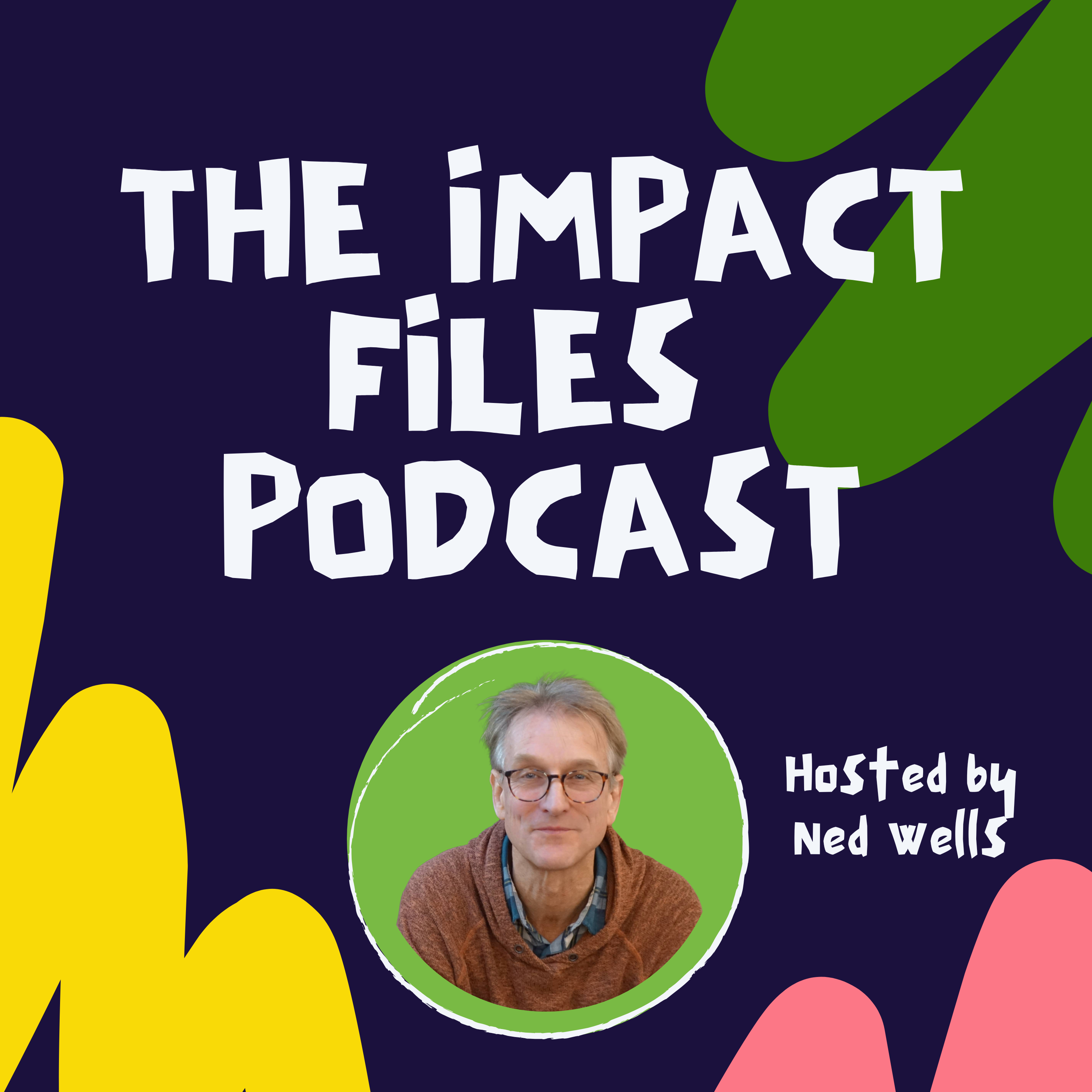
The Impact Files
by Ned Wells
Each episode of The Impact Files podcast explores the personal stories and leadership challenges behind meeting a business’s near-term financial needs, while creating lasting wellbeing for people and planet.We examine the roles that marketing, media and communications play in shaping trust, demand and impact.Our objective is to provide insight and encouragement for business leaders on a purpose-led journey, showing how financial performance can be aligned with long-term sustainability.Hosted by Ned Wells alongside a sustainability expert co-host, each episode features one guest: an experienced decision-maker in either a ‘green brand’ – founded as purpose-led – or an ‘amber brand’ – not founded as purposeful but now on the journey.
-
17
S3 E1, Rebuilding lives, rethinking work: fair global hiring with Geoff Hucker, CEO Work for Impact
Our guest in this episode is Geoff Hucker, a former Emirates pilot whose life underwent a dramatic change after a visit to a small Franciscan orphanage in Addis Ababa, at the height of the HIV/AIDS pandemic.The harsh reality of children dying because families couldn’t afford monthly fees for lifesaving medication, set Geoff on a new path and resulted in co-creation of Beyond the Orphanage, a model focused on reuniting street-connected children with family and supporting them through education into adulthood.Geoff’s story as a driver of positive change doesn’t stop there. In 2019 he launched Work for Impact — a for-profit platform connecting global employers with talent in low-income countries.We take a deep dive into how the business works today: a lean fee structure well below industry norms, 140,000 people on the platform, and contractors typically earning three times local wages. Clients range from Nasdaq-listed companies to small non-profits, and the company’s B Corp status underpins its commitment to transparency and ethical tech.Geoff also reflects on what he’s learned along the way — from balancing purpose with commercial reality to recognising that progress often comes from working with ‘amber’ organisations, not just the ‘perfect’ ones.A conversation about purpose-led entrepreneurship, practical impact, and the small operational decisions that make big social outcomes possible.Contact Geoff on LinkedIn: https://www.linkedin.com/in/geoff-hucker/Find out more about Work for Impact: https://www.workforimpact.com/
-
16
S2 E7, Dogs, sustainability & the power of professional standards, with Jay Light, PACT Dogs
Meet Jay Light, Director of PACT Dogs – a fast-growing membership and education organisation shaping professional standards for dog trainers and behaviourists.Jay shares the story behind PACT’s growth. Four and a half years ago it had just a few dozen members and one course. Today it has more than 400 members across the UK and internationally, delivering accredited training and influencing the future of the profession.We explore how PACT sits within the wider animal welfare ecosystem, working alongside the Animal Behaviour and Training Council and helping shape standards across charities, trainers, behaviourists, and regulators.A big theme is the unexpected reach of dog trainers. Jay argues they’re not just working with animals – they’re teaching people. Because dog ownership spans all of society, trainers often work with everyone from families to senior executives.That creates an opportunity: using everyday conversations with dog owners to raise awareness of sustainability and environmental impact.Jay also shares how sustainability runs through PACT’s model. The organisation publishes impact reports, measures its carbon footprint, and has donated more than £80,000 through scholarships, charity support, and sector initiatives.We hear about their unusual training venue – a three-acre former horse paddock turned into a nature-rich site with wildflowers, renewable energy, compost systems, and biodiversity projects.The conversation also explores PACT’s B Corp journey and what ethical business means in practice – from supplier choices and ethical banking to challenging poor industry norms.Finally, Jay reflects on where the sector is heading. With stronger standards and new certification frameworks emerging, he believes the next decade could see a major step forward in professionalism and animal welfare.A fascinating episode on dogs, sustainability, professional standards – and how a small organisation can influence a much larger system.Connect with Jay on LinkedIn: https://www.linkedin.com/in/jason-light-89a71259/ Visit PACT Dogs: https://www.pact-dogs.com/
-
15
S2 E6, Responsible workplace supply and smarter procurement, with Darren Aston, MD, Aston and James
Meet Darren Aston, Managing Director of Aston and James - a long-established family business helping organisations make their workplaces work, from office supplies and furniture to workwear, branded goods, and facilities essentials.Darren shares the story of a business built over 35 years, shaped by family and a strong sense of care, humility, and responsibility - now central to how it approaches sustainability.We hear how the company has evolved since Covid. Changing workplace patterns, shifting customer needs, and a more complex procurement landscape have pushed Aston and James to become more consultative and responsive.The conversation explores what responsible business looks like in a product-based company. Darren talks about eco delivery days, reducing van journeys, helping customers consolidate orders, and making more thoughtful choices around packaging, logistics, and sourcing.We also look at the challenge of influencing behaviour. Aston and James isn’t just selling products - it’s encouraging customers to buy less often, buy better, and reduce waste. Darren explains how clearer product information, approved ranges, and reuse schemes support that shift.There’s a discussion on supplier realities too. Progress is happening, but slowly. Darren reflects on the challenge of improving data, transparency, and supply chains as a smaller business without huge buying power.Internally, we hear about the Green Council - bringing people together to turn good intentions into steady action, from recycled materials to more ambitious reuse initiatives.Darren is open about the commercial tensions. More sustainable options can cost more, and not every idea is straightforward. But he makes a strong case for focusing on practical progress rather than perfect solutions.A grounded episode on practical sustainability, family business values, supply chain complexity, and the small changes that add up over time.For more on Aston & James visit https://www.aston-james.co.uk/Contact Darren on [email protected]
-
14
S2 E5, PR recruitment, and changing the world with tiny actions, with Dean Connelly, Founder, Latte.
Meet Dean Connelly, founder of Latte - a specialist PR and social media recruitment agency working across London, Sydney and Melbourne, at the sharp end of the communications job market. Latte is one of three recruitment agencies globally to have pledged against recruiting for agencies with fossil fuel clients, instead championing roles that use comms as a force for good. Dean shares what it’s like to run a recruitment business in a volatile sector, where demand shifts quickly and hiring trends give an early read on the wider agency market - and why things are starting to look more positive again.But the heart of the episode is values. Dean explains how Latte became involved with Clean Creatives, the movement encouraging agencies not to support fossil fuel clients. What began as a team conversation has become a clear line in the sand.We explore what that means in practice - turning down work, ending client relationships, and building a framework for navigating grey areas like networks and less visible client connections.Dean is honest about the tensions involved. This is not abstract ethics. It’s real revenue, real trade-offs, and moments where a small business owner chooses between short-term income and long-term principles.The conversation opens up a wider view of recruitment’s role in driving change. Dean argues recruiters are not neutral - they shape talent flows, influence agency choices, and can apply pressure by refusing to work with organisations that conflict with their values.We also discuss the ripple effects - from educating candidates to the idea that working on certain accounts could become a genuine career constraint.There’s a thoughtful reflection on how values evolve inside a business. Latte wasn’t founded as climate-focused - that perspective grew over time, shaped by the team and a sense that business should stand for more than profit.Finally, Dean looks ahead - from the rise of AI roles in agencies to a future where recruiters need to offer more strategic value as transactional models come under pressure.A candid episode on recruitment, values, climate accountability, and what it takes for a small business to back its principles when money is on the line.For more about Latte visit https://www.wearelatte.com/
-
13
S2 E4, Employee ownership and purposeful recruitment, with Nick Billingham, MD, Charity People
Meet Nick Billingham, Managing Director of Charity People - a recruitment business serving the UK non-profit sector, built around impact, employee ownership, and long-term thinking.Nick shares his route into charity recruitment, moving from a more traditional path to finding a better fit in the non-profit world. Ten years on, he leads a business working across charity, education, and social impact roles, from place-based hiring to senior leadership and trustee appointments.A central theme is what impact really means for a recruiter. For Charity People, it goes beyond filling vacancies. Nick talks about supporting life decisions, helping organisations hire better, and strengthening the sector’s long-term resilience.We also explore the internal side of impact - from staff wellbeing and flexible working to becoming wholly employee owned. Nick explains why they chose an employee ownership trust, what it changes in practice, and how it sharpens thinking on fairness, accountability, and shared success.There’s an honest discussion about the realities of purpose-led business. Nick reflects on a difficult period after the move to employee ownership - including market slowdown, limited access to capital, and the challenge of staying transparent with staff.The conversation then turns to equity, diversity and inclusion. Nick shares how Charity People works to make hiring fairer, while recognising the pressures many charities face. It’s a thoughtful look at the tension between long-term goals and short-term needs.We also touch on governance, B Corp, and the role of structure in making purpose credible. Nick argues that businesses serious about impact should think carefully about who benefits and how decisions are made.Finally, Nick looks ahead to the future of recruitment - including AI - while arguing that human judgement, trust, and partnership remain central.A thoughtful episode on recruitment, employee ownership, transparency, and building a business that tries to do right by its staff, clients, and sector.For more information visit https://charitypeople.co.uk/Connect with Nick at https://www.linkedin.com/in/nickbillinghamcharityrecruiter/
-
12
S2 E3, The power of communications in uncertain times, Amanda Powell-Smith, CEO, Forster Comms
Meet Amanda Powell-Smith, Chief Executive of Forster Communications - a purpose-led agency working at the intersection of communications, sustainability, and social change for nearly 30 years.Amanda shares the story behind Forster’s founding in 1996, inspired by the Body Shop era and the belief that business can be a force for good. That ambition still shapes the agency’s work, client choices, and how it runs day to day.We explore what it means to be selective about clients in practice. Forster works across sectors, but with clear red lines - and a constant question: will this work contribute to real change, or just polish the surface?Amanda talks through how those decisions are made - using evidence, research, and judgement - and the tension of balancing purpose with commercial reality in a values-led business.We also look inward at the people and processes behind the model. From colleague-led impact groups to sustainable travel incentives and a plant-based office, this is about building a healthier, fairer business from the inside out.Not everything is straightforward. Diversity remains a challenge. Recruitment is slow. And some initiatives take time to land. But Amanda makes a strong case for small businesses treating agility as a strength.There’s a wider discussion on the role of communications too. In a noisy, distrustful environment shaped by misinformation and greenwashing, Amanda argues the industry has a vital role to play - building trust, clarity, and support for change.We close by looking ahead - from growing European partnerships to preparing for new B Corp standards - and why small businesses should lean into their ability to experiment, learn fast, and lead.A thoughtful episode on purpose-led communications, client choice, trust, and the power of small businesses to move things forward.For more information visit forster.co.uk, and connect with Amanda on LinkedIn https://www.linkedin.com/in/amanda-powell-smith/
-
11
S2 E2, Sustainable packaging and the power of purpose, with Josh Pitman, MD, Priory Direct
Meet Josh Pitman, Managing Director of Priory Direct — a sustainable packaging supplier — and a kite surfer turned accidental entrepreneur.Priory Direct is a £10 million packaging business helping more than 16,000 UK e-commerce businesses ship products to customers — with as little waste as possible.We hear how they’re taking on one of e-commerce's most overlooked problems. Secondary packaging — the boxes, mailers and dispatch materials that move products from warehouse to doorstep — is a massive and growing waste stream. Josh's mission is to make it as efficient and as harmless as possible.Josh traces his journey from cutting out address labels for a teenage kite surfing side hustle, to a beach in Cape Verde littered with plastic, to the light bulb moment that gave Priory Direct its purpose: minimise the impact of e-commerce on the planet.We explore what sustainable packaging means in practice — forecasting demand, filling lorries, reducing shipped air, and coordinating supply chains across 16,000 UK businesses. The insight that sustainability and commercial efficiency can be the same thing runs throughout.Josh gives an honest account of embedding sustainability into the business — putting carbon footprint and waste streams on the same KPI dashboard as turnover and profit, democratising responsibility across every department, and letting people surprise you when you get out of their way.We get into the realities of certifying as a B Corp, working with fast fashion clients without conflict, and why EPR legislation is finally forcing large retailers to scrutinise their packaging spend. The conversation turns to what's next — a machine learning forecasting platform funded by Innovate UK, a new life cycle assessment tool covering 14 environmental factors, and an open letter campaign to ban misleading recyclability claims on soft plastic.Finally, Josh makes a grounded case for why marketing and sustainability belong together — and why green hushing may be more dangerous than greenwashing.A practical, energetic episode on purpose, packaging, and the unglamorous work of making supply chains less wasteful — one lorry load at a time.Find out more about Priory Direct at https://www.priorydirect.co.uk/
-
10
S2 E1, introducing Season 2 co-host Ruth Davis
Season two kicks off with a short introduction to co-host Ruth Davis.Ruth is co-founder of Oxygen, an Oxford-based creative agency and certified B Corp working with purpose-led organisations. Their work spans brand, design and websites, with a growing focus on low-carbon web design. In this short episode we learn how Oxygen started as the marketing team at Oxford HR, a leadership consultancy serving the global for-purpose sector such as WWF, Greenpeace and Médecins Sans Frontières and developed into a standalone agency.Ruth also shares a little of her own story - from studying at the LSE to building a career centred on purpose-led work, climate awareness and responsible business.Find Ruth on LinkedIn at https://www.linkedin.com/in/ruth-davis/Learn more about Oxygen at designedbyoxygen.com.
-
9
S1 E7, Giving new life to wood, and new life to people, with Adrian Sell, CEO, Oxford Wood Recycling
What does it take to build a social enterprise that truly sustains itself - financially, environmentally and socially?Ally and I had a wonderful chat with Adrian Sell, Chief Executive of Oxford Wood Recycling, a social enterprise turning waste timber into valuable items while helping people facing barriers to employment rebuild confidence, skills and working lives.Oxford Wood Recycling collects waste timber from businesses and households, diverts it from landfill, and resells reclaimed materials through its Abingdon wood shop. Alongside the environmental mission sits a powerful social one - supporting people facing barriers to employment into meaningful work.Adrian shares why trading income sits at the heart of the organisation’s sustainability. Grants can support innovation, he explains, but commercial activity builds resilience, learning and long-term stability.We explore how purpose-led organisations can balance mission and margin without losing their soul - and why building strong trading income is often the most responsible thing a social enterprise can do.You’ll also hear about:How earned income now accounts for over 95% of Oxford Wood Recycling’s £800k annual revenueThe circular economy in action - collecting, reclaiming and reusing wood locallyHow environmental impact is measured through tonnes of waste saved and CO₂ avoidedSupporting people into employment through practical skills and confidence buildingThe cultural reality of running a warm, neurodiverse workplace alongside commercial disciplineWhy marketing isn’t just about sustainability messaging - but value, service and trustThe challenge of building footfall when your best asset is hidden off the high streetGrowing demand for reclaimed materials - and the opportunity for national expansionAdrian also reflects on the wider future of the sector: a UK where reclaimed wood services are available everywhere, making reuse the easy, everyday choice.And his one piece of advice? Look carefully at what you already have - your expertise, your community, your audience. Somewhere in that sits value others are willing to support or pay for.Website: https://www.oxfordwoodrecycling.org.uk/Facebook: https://www.facebook.com/OxfordWoodRecyclingInstagram: https://www.instagram.com/oxfordwoodrecycling/
-
8
S1 E6, Every job is a green job, with Dr Karen Cripps, Oxford Brookes University
Meet Dr Karen Cripps, Associate Professor of Responsible Management and Leadership at Oxford Brookes University Business School. Karen has spent her career exploring the intersection of business, sustainability and education. Today, her focus is clear: green skills - and why every job is now a green job. We talk about what that really means in practice. Not just specialist sustainability roles, but marketing, operations, supply chain and leadership. The 99% of roles that need baseline carbon literacy, systems thinking and the confidence to act. Karen delves into why demand for green talent is outstripping supply, why many managers still lack clarity about their role in delivering net zero, and why resilience and influence are now core leadership skills. We explore the emotional toll on sustainability professionals - and why organisations must support them properly if they want progress to stick. You’ll also hear about: Why sustainability must be meaningfully embedded in educationThe gap between education for sustainable development and real-world green skillsThe visibility problem in job descriptions - and why organisations miss talent by failing to signal their sustainability ambitionsCarbon literacy training - and why no business graduate should leave university without itThe growing communities of climate professionals supporting each otherThe role of marketing and internal communications in mobilising the 99%Why advocacy is a professional skill - and influencing change without becoming “the activist in the room” Karen also shares encouraging signs of progress: packed green skills webinars, rising student demand for purposeful careers, and businesses continuing the work despite political headwinds. Karen’s one piece of advice for employers: Start with awareness. Reflect on how climate risk, regulation, talent expectations and cost efficiencies already affect your business. Then ask who in your organisation could act on that. That’s your green job. Contact Karen at [email protected] Karen's book at: Cripps, K, and Ho, C. (Eds.) 2026 (forthcoming). An organisational guide to skills for green workforce transformation. Abingdon: Routledge.Recent reports and publications: Holding back climate progress - sustainability's critical skills gap - with Climate Change CoachesSustainability in early careers, UK 2025 - with WindōLeading the Pathway to Net Zero - with the CMI
-
7
S1 E5, Making cleaner energy work for your wallet, with Tom Cox, Founder & MD, Decent Energy
Meet Tom Cox, founder and MD of Decent Energy, and host of People Planet Pint in Cambridge.Tom’s idea is simple: if you want people to live more sustainably, make it easy and make it affordable.Decent Energy’s platform cuts carbon and saves users money. And Decent Energy only gets paid when customers do.Tom explains their first product, Shîfter - software that helps households optimise when they use and store electricity, based on half-hourly shifts in UK energy prices and grid carbon intensity.We explore Decent Energy’s risk-reward model: no savings, no fee. Trust sits at the heart of it, backed by full transparency about what the software does and why.You’ll also hear about:Why “green tariffs” don’t remove the importance of when you use energyHow Decent Energy measures impact - money saved and CO₂ avoided, tracked against changing baselinesThe unexpectedly hard part: producing a bill that clearly proves the savingsEarly traction with councils, and why inverter integrations matterThe roadmap ahead: Shîfter; Flex̃er (flexibility markets with cash payouts); Switcher (tariff recommendations based on real usage); and, longer term, peer-to-peer energy tradingTom’s one piece of advice for sustainability-focused start-ups:Make sure the sustainability business case is watertight. Whatever your mission, it still has to be commercially viable - because saving money is a message everyone understands.Tom’s 10-year vision:A shift towards hyper-local energy systems, where communities intelligently balance their own demand using rooftop solar, batteries and smart software. Less strain on the grid. Lower carbon. Lower bills. And a model that avoids the grid congestion already seen in parts of Europe.Find out more at decentenergy.io, and try Power Hour - a simple tool showing the cheapest and lowest-carbon time to use electricity.
-
6
S1 E4, Pensions, influence and climate change, with Ali Peck
“Sustainability is about running a business well”Meet Ali Peck, Head of Communications and Engagement at a net-zero committed pension fund.We hear how an £8bn public sector pension fund, responsible for around 100,000 members, thinks about climate change not as a moral add-on, but as a material financial risk. Flooding, heat, supply chains, stranded assets – if investments aren’t resilient, pensions aren’t either.We explore the fund’s net zero commitment, and why fiduciary duty now means actively understanding and managing climate risk in portfolios that span everything from global equities to UK infrastructure.Ali gives a rare behind-the-scenes view of how a small communications team operates at serious scale – covering the full marketing mix, being deliberately vocal, and using transparency to influence asset managers, suppliers, and even other city pension funds around the world.We also get into the realities of reporting: imperfect data, evolving frameworks, and the challenge of explaining complex investment decisions in plain English – without slipping into greenwashing or going quiet.The conversation widens to divestment versus engagement, the limits of “just pulling out”, and why LPFA has also committed real capital to climate solutions – backing renewables, infrastructure, and technologies that support the transition.Finally, Ali shares a grounded take on sustainability inside large systems: real change comes from working both inside and outside the system, using transparency, pressure, and persistence – and from engaging employees, members, and partners rather than relying on top-down declarations.A thoughtful, practical episode on influence, money, risk – and how communications can be used to drive change where it really counts.
-
5
S1 E3, Designing corporate events with less waste and more impact, with Emma Wellstead, eventkind
Meet Emma Wellstead, founder of Warwick Events and genius organiser of B Corp’s Louder Than Words festival, which pretty much took over my home town of Oxford for two days in 2024. I volunteered there and it was a highlight of my professional year – brilliantly organised and with an eye to detail and sustainability that’s rarely seen at corporate events.In this episode we discuss Emma’s personal journey, her philosophy of designing events around people, place and emotion, and her B Corp journey. We also explore a challenge many event professionals will recognise: that few people notice when events work well, which makes it hard to prove value.Emma offers a practical critique of waste in the events industry, from single-use “sustainable” materials (is a bamboo fork really better than a reusable metal one?) to habits that are rarely questioned (does your event really need merch, or a branded backdrop?). She shows how questioning these defaults can save money and create better events with fewer materials, less clutter, and a more human experience.She’s also fascinating on the importance of using local suppliers, as a way of reducing emissions and keeping money flowing into local communities rather than faceless supply chains.Emma introduces Eventkind, her newly launched community for events managers – created in response to burnout, loneliness, and the lack of practical peer support in the sector. We finish by touching on Eventkind’s longer-term ambition: giving a collective voice to the doers in the industry and helping drive meaningful change from the ground up.Contact Emma at [email protected] out more about Warwick Events here: https://warwickevents.co.uk/ Learn about EventKind here: https://www.eventkind.org/
-
4
S1 E2, Practical sustainability in the co-working office space, with Andy Bedwell
Meet Andy Bedwell, owner and MD of Point of Difference Workspace, the boutique office and co-working business behind some of the nicest places to work in Bicester and beyond. From serviced offices to shared housing, Andy’s built a business that cares about people, place and long-term value.We discuss Andy’s journey from consultancy into property, and how he’s grown the business while deliberately keeping it local, human and design-led.We dig into the realities of making office space more sustainable – from LEDs, insulation and waste contracts to carpet recycling, bat boxes, beehives and bee-friendly planting. We also explore why Andy decided not to go down the B Corp route, and the importance of telling honest sustainability stories without overclaiming.Andy’s 10-year vision for the sector? For it to become a bit like the brewing industry - good quality local operators, connected to their communities and suppliers, although he fears it’ll be mopped up by bigger corporate entities, standardised and with costs driven out.And his one piece of advice for businesses juggling impact and profit? “Understand your landscape. Make a plan. Get on with it. Pick the first thing, do it, then move to the next. It’s not much more complicated than that.”Contact Andy at [email protected], and visit https://pointofdifference.co.uk/
-
3
Introducing The Impact Files, Season One
Welcome to the first episode of The Impact Files - conversations with leaders balancing purpose and profit. In this short episode you’ll hear how the podcast came about and the types of guests we chat with: business leaders working to meet near-term financial needs while creating lasting wellbeing for people and planet.You’ll also meet Season One co-host Ally Dunnett. Ally’s a sustainability consultant with experience in deforestation legislation, responsible sourcing, and an interest in optimising the life of wood products through reuse, repair and recycle.
-
2
Trailer.
Can businesses balance their short-term financial needs with positive long-term impact on people and planet?And what's the role of marketing, media and communications in all of this? I'm on a mission to find out by talking to business leaders who are balancing purpose and profit.I'm Ned Wells and this is the Impact Files podcast. Join me as I chat with leaders from across business, exploring their personal stories and the leadership challenges of balancing purpose and profit.Here's a flavour of what's coming up in season one.
No matches for "" in this podcast's transcripts.
No topics indexed yet for this podcast.
Loading reviews...
ABOUT THIS SHOW
Each episode of The Impact Files podcast explores the personal stories and leadership challenges behind meeting a business’s near-term financial needs, while creating lasting wellbeing for people and planet.We examine the roles that marketing, media and communications play in shaping trust, demand and impact.Our objective is to provide insight and encouragement for business leaders on a purpose-led journey, showing how financial performance can be aligned with long-term sustainability.Hosted by Ned Wells alongside a sustainability expert co-host, each episode features one guest: an experienced decision-maker in either a ‘green brand’ – founded as purpose-led – or an ‘amber brand’ – not founded as purposeful but now on the journey.
HOSTED BY
Ned Wells
Loading similar podcasts...
URL copied to clipboard!