
PODCAST · news
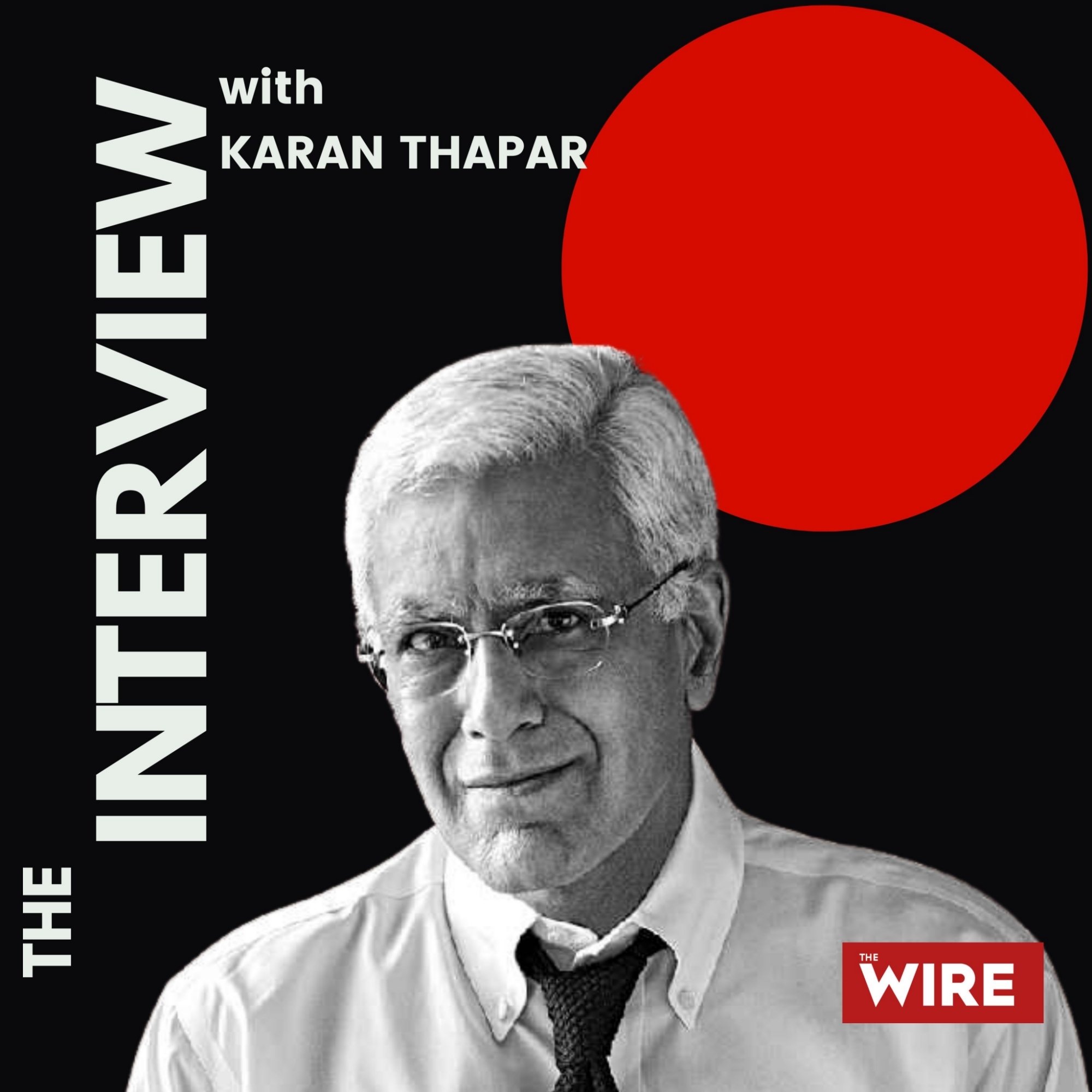
The Interview With Karan Thapar
by The Wire
From incisive questions to insightful responses, the most definitive interviews that you need to watch out for.
-
66
Was Chief Justice’s refusal to take up student case irresponsible? Dushyant Dave responds
Was Chief Justice's refusal to take up student case irresponsible? Dushyant Dave calls it "failure of constitutional duty": Dushyant Dave to Karan Thapar for The Wire........................................On Wednesday when a lawyer attempted to convince the Supreme Court to admit a case about how the fundamental rights of young students had been breached when they were beaten up by the police and miscreants the Chief Justice refused to take it up. He said don’t waste our time and don’t waste your time. Today we ask - What should we make of that response? Does it undermine our constitutional fundamental rights? Does it weaken the Supreme Court’s duty to protect those rights? Does it negate the power of Article 32, which was drafted to defend those rights? And how would Dr Ambedkar view all of this? Those are the issues I shall raise with one of India’s most highly regarded constitutional lawyers and a former president of the Supreme Court Bar Association, Dushyant Dave.
-
65
In 1947 India came far closer to balkanization than we realize
In 1947 India came far closer to balkanization than we realize: Josy Joseph, Author, Birth of a Nation: The Twenty-One Days That Made India, to Karan Thapar for The Wire........................................How close did India come to balkanization in 1947? A recent book, based on previously unseen documents from the archives of India, suggests that the last 21 days before independence were critical. During that period several states like Travancore, Hyderabad, Kashmir, Jodhpur, Bhopal, Junagadh and Indore sought ways of becoming independent or, even, acceding to Pakistan. The book is called ‘Birth of a Nation: The Twenty-One Days That Made India’. It’s author Josy Joseph is my guest.
-
64
I stand with the protesting students; this is not the India I love; I don’t take Modi seriously
I stand with the protesting students; this is not the India I love; I don't take Modi seriously: Naseeruddin Shah to Karan Thapar for The Wire........................................My guest today is probably one of the greatest actors on the Indian screen. Many rightly consider him an actor’s actor. Earlier today he posted a video expressing his anguish and deep concern about the way protesting students have been treated in Delhi on Monday. In this interview I speak to Naseeruddin Shah about what’s happened, about the government that’s responsible, about the students who have been protesting and about the implications of all of this for India’s democracy. But I start by replaying his one minute fifty second video.
-
63
Sonam Wangchuk symbolizes the best of India; the Modi government badly mishandled his fast
Sonam Wangchuk symbolizes the best of India; the Modi government badly mishandled his fast: Ramachandra Guha to Karan Thapar for The Wire........................................For 21 days Sonam Wangchuk has fasted to try and force Education Minister Dharmendra Pradhan to resign over the NEET issue. This morning the government forcibly took him to Safdarjung Hospital to end his fast. However, his wife, Gitanjali Angmo, has tweeted that nothing should be given to him orally or intravenously without her permission. Today we focus on Sonam Wangchuk’s fast, the political response it’s got and the role fasts play in the politics of India. My guest is the well-known historian, author and political commentator, Ramachandra Guha.
-
62
The cow belt has hijacked the future of India and is the curse of our politics
The cow belt has hijacked the future of India and is the curse of our politics: Author and Lawyer, Javed Gaya, to Karan Thapar for The Wire........................................Has the cow belt hijacked the future of India? Is its influence the curse of Indian politics? Is India in danger of being consumed by its past? And does the baleful influence of Uttar Pradesh dominate Indian politics? In his recent book ‘Heartland Rising: The Making of Majoritarian India’, the author and lawyer Javed Gaya suggests the answer is yes. In this interview he explains his thinking.
-
61
Trump versus Iran: Does Trump face a dilemma? Has Iran overplayed its hand?
President Trump has tweeted that the ceasefire is over but talks with Iran will continue. Can such talks be credible? Does Trump face a dilemma? If he opts to renew the war, his hopes of resolving the Iran nuclear issue could be dashed. If he restrains himself to secure a peace deal, he will have to accept Iran’s control of the Strait of Hormuz. On the other hand, has Iran overplayed its hand? Under the Memorandum of Understanding it’s committed to allowing safe passage through the Strait. But Iran insists that ships can only use passageways under its control. Is that a breach of the Memorandum? In these circumstances could the war restart? Listen to Karan Thapar in conversation with Iran Project Director of the International Crisis Group, Ali Vaez.
-
60
Claim passport only travel document serious mistake and govt should apologize: Justice Madan Lokur
Claim passport only travel document serious mistake and government should apologize: Justice Madan Lokur, former Supreme Court Judge, to Karan Thapar for The Wire..........................................One of India’s most highly regarded former Judges of the Supreme Court, who is presently Chairperson of the United Nations Internal Justice Council, says that the statement made by the government that an Indian passport is “only a travel document” and not proof of citizenship is “a serious mistake” and the government should apologize or, at least, clarify that this was an error. Justice Lokur points out that The Passports Act of 1967 repeatedly refers to passports and travel documents thus clearly indicating that passports and travel documents are not the same thing but two different entities. He says that “passports are accepted (by the receiving country) because they embody the issuing state’s assertion that the bearer is one of its own nationals … when the Republic places its seal upon a passport it’s doing more than permitting international travel. It’s formally vouching for one of its own citizens before the world.” That’s the critical message an Indian passport embodies and conveys. Justice Lokur also points out that if the government does not treat the Indian passport as proof of citizenship it could lead foreign embassies to deny visas to Indians until they can find some other way of proving their citizenship. This could create a major problem for Indian travellers and for those members of the Indian diaspora who retain Indian citizenship. Finally, Justice Lokur points out that Section 20 of The Passports Act, which permits the government to issue a passport to a person who is not a citizen of India if that is deemed to be in the public interest, does not weaken the argument that passports are intended for citizens but actually strengthens it. As he says, this is the exception that proves the rule. Justice Lokur also raises the question that if passports are deemed to be only travel documents then where does that leave diplomatic and official passports issued to ministers, government officials, ambassadors and, even, the Chief Justice of India and the Prime Minister of India? Are they just travel documents bearing a different colour and nothing more? If they are, on what grounds can ambassadors claim diplomatic immunity?
-
59
Starmer Will Resign, Perhaps Today, and Burnham Will Become UK’s PM
Andy Burnham’s emphatic victory in a bye-election in Makerfield has probably sealed Keir Starmer’s fate as prime minister of Great Britain. Initially Starmer refused to go. In fact he repeatedly said he would fight to keep the job. But now there’s speculation he could resign as early as later today. So this morning we ask what do the next few weeks hold for him? What sort of prime minister has he been? And what can we expect from Andy Burnham? My guest is a former Editor at Large at CNN Ashis Ray.
-
58
'The Real Trinamool is Mamata Banerjee and She Will Return to Power; The BJP is My Enemy till Death'
In a strong and passionate defence of Mamata Banerjee and Abhishek Banerjee, the well-known and highly regarded Trinamool Lok Sabha MP, Mahua Moitra, has forcefully said: “The real Trinamool is Mamata Banerjee and she will return to power.” Mahua Moitra said: “The Trinamool Congress is a Party that was started by Mamata Banerjee and gets its legitimacy, gets its vote, gets its mandate from Mamata Banerjee. So any so-called rebel or split, whatever there may be, they are not the Trinamool Congress. As long as Mamata Banerjee is alive and she is still involved in politics the Trinamool is the Trinamool.”
-
57
'I’m no defender of Abhishek Banerjee; TMC's in serious crisis; ultimately Mamata is responsible'
On the day the Trinamool Congress Party split at the Lok Sabha level in Delhi, following its earlier split at the legislature level in Bengal, one of its most highly regarded Lok Sabha MPs, Saugata Roy, has said that the Party is in serious crisis adding that he is no defender of Abhishek Banerjee and accepting that in the ultimate analysis Mamata Banerjee is responsible for what’s happened. However, Dr. Roy said that he would not himself defect from the Party and that those who had, whether in Delhi or Bengal, have done so as part of BJP’s Operation Lotus under threat and attracted by money.
-
56
Gymkhana Club takeover motivated by Govt greed, lack of democracy & destruction of institutions
In a hard-hitting and unremitting interview, the former Law Minister and former Human Resource Development Minister, Kapil Sibal, who is also one of the leading lawyers presenting the Gymkhana Club’s case in Court, has said that the government is seeking to acquire the Gymkhana Club not on the grounds it has argued in its letter of May 22, 2026 but for three other reasons i.e. “Bureaucratic greed, lack of democratic instincts and destruction of institutions”.
-
55
Should Nirmala Sitharaman be removed as Finance Minister?
Is the state of the Indian economy “near-crisis”? Is weak private investment the key problem? Despite the government’s well-intentioned reforms are its deeper instincts and habits putting off investors? And is the solution changing personnel at ministerial, technocratic and bureaucratic levels? And does that in fact mean it’s time to replace Nirmala Sitharaman as Finance Minister? Those are the views of my guest, former Chief Economic Advisor and Senior Fellow at the Peterson Institute for International Economics, Arvind Subramanian.
-
54
'Rahul Gandhi’s a Dilettante, Lacks Commitment and Charisma, Unlikely to Ever Be PM': Ramachandra Guha
In an interview to discuss how he views Rahul Gandhi as a leader of Congress and Leader of the Opposition, the well-known and highly regarded historian, author and political commentator, Ramachandra Guha, says Rahul Gandhi is a dilettante, who lacks commitment and certainly lacks charisma and is unlikely to ever make it to Prime Minister of India. Ramachandra Guha says: : “Rahul Gandhi may be a good fellow; nonetheless, those who wish for a successful pushback against the hate-filled regime of the BJP should perhaps stop looking to him as their principal source of hope.” Ramachandra Guha adds: “As a prospective prime ministerial challenger to Narendra Modi, Rahul Gandhi lacks discipline, gravitas and a curriculum vitae.”
-
53
'The Economy Seems to Be on the Brink of a Major Crisis - We Must Reduce the Fertiliser Subsidy'
In an interview to discuss the cumulative impact of the Gulf War on Indian agriculture, Ashok Gulati, Professor of Agriculture at ICRIER and arguably India's foremost authority on the subject, says: “The economy seems to be on the brink of a major crisis". Professor Gulati is particularly concerned about how the fertiliser subsidy is likely to surge this year. He believes that it could balloon from 1.71 lakh crore to 3.0 lakh crore. He also points out that the cost at which urea is imported is $935 per tonne but it's sold at $70 per tonne. Professor Gulati points out that the time has come to end such freebies and he proposes three reforms which would help reduce the fertiliser subsidy.
-
52
First Came the War, Then the Blockade, Now the Shortages; Epic Fury Has Become Epic Folly
In a recent op-ed in the Financial Times, headlined ‘The Gulf crisis may just be starting’, the paper’s well-known and highly regarded Chief Economics Commentator, Martin Wolf, analyses the impact of an aspect of the Gulf crisis that so far hasn’t got the attention it deserves i.e. the shortages and how their impact could get worse the longer they remain and the greater the physical damage done in the Gulf. He believes the real Gulf crisis may only just be starting. And he ends his Financial Times article with the following sentence: ‘The US called its war Operation Epic Fury. But Operation Epic Folly would have been a more realistic name’.
-
51
-
50
Current account deficit and falling rupee are biggest concerns of the Gulf crisis
The Chief Economist of Axis Bank and a Member of the Prime Minister’s Economic Advisory Council says in his opinion the current account deficit and the falling rupee are the “most binding constraints” emerging out of the current Gulf crisis. Neelkanth Mishra also believes that the impact of the Gulf war and the oil crisis could be around 0.7%-08% of GDP growth. He says: “The sensitivity is that about $15 per barrel increase in oil price costs the economy about $40 billion or 1% of GDP. So if you take the average price of $70 a barrel of last year, if the oil price averages $85 a barrel, there’s a 1% of GDP impact. If it’s a $100 a barrel, it’s a 2% of GDP impact.”
-
49
What does Trump's China visit mean for India and the world?
President Trump is on a three-day visit to China. What is he looking for from Beijing? What is he prepared to offer in return? Might China be willing to help Trump secure peace in the Middle East? And what are the implications of this visit for India’s relationship with both China and America?
-
48
'I’m deeply concerned by the election results; the Republic has no reason to celebrate'
In an interview to discuss the election results that were announced yesterday (the 4th of May) as well as what they mean for India as a whole and what they suggest about the BJP’s hold over the country, Yogendra Yadav, the National Convenor of the Bharat Jodo Abhiyan, has said he is deeply concerned, adding he doesn’t believe the Indian Republic has reasons to celebrate the outcome. “As a democrat, as someone who thinks about the future of the Indian Republic, I am deeply concerned. I don’t resent the winners. They have every reason to celebrate. But does the country, does the Republic, have reasons to celebrate? I am not sure.” Yogendra Yadav argues that the window that seemed to open with the Parliamentary election results of 2024, but was steadily narrowing thereafter, is now firmly shut. “The window of opportunity that opened in 2024 with the Parliamentary elections, suddenly a whiff of fresh air, suddenly the country looked more democratic than it appeared for a few years, and suddenly it seemed as if things could happen, could change, that window became narrower after Maharashtra and Haryana elections and particularly after the Bihar elections. I think it’s safe to say that the window is firmly shut today.”
-
47
Rising Oil Prices Could Reduce India’s GDP Upto 2.5% – A Fairly Substantial Fall
In an interview to discuss the impact of rising oil prices – which yesterday touched $126 per barrel – on both the world economy and India’s economy, economist and former Chief Statistician of India Pronab Sen said that rising oil prices could reduce India’s expected GDP growth by up to 2.5%. He agreed that this was a fairly substantial fall. Sen said he was particularly worried about India’s exports to the Gulf region which have presently been blocked by the closure of the Strait of Hormuz. He said he was not confident that India could find alternate markets for what it sells to the Gulf countries and if it can’t this will have a direct impact on the concerned exporters leading, he agreed, to losses in jobs. This, he believes, will be a major component of the decline in GDP growth that he talked about.
-
46
Keir Starmer is a Lawyer Not a Politician and That’s His Real Problem
Sir Keir Starmer the British Prime Minister’s real problem is that he has failed to transition from being a lawyer into a prime minister and senior politician and, as a result, lacks strategy and keeps going back on what he has said and done or acting inadvisably, such as with the appointment of Peter Mandelson as Ambassador to the United States. This is the verdict of former British Secretary of State for International Development and former Deputy Foreign Secretary Andrew Mitchell. Sir Andrew says that Starmer is now a Prime Minister with serious question marks about his longevity and his capabilities, many of which are recognized by the Labour Party, but who may not be easily removable from office because there is no clear contender to take his place. This means that the prime ministership of Britain, the future of the Labour Party government and of the country itself is surrounded by uncertainty and doubt.
-
45
Vice President Has 'Clearly, Patently Erred” in Accepting Merger of AAP MPs with BJP
Abhishek Manu Singhvi, one of the foremost legal minds in the country, a Rajya Sabha MP and Congress spokesperson, has said that Vice President Radhakrishnan has “clearly, patently erred” in accepting the merger of seven Aam Aadmi Party Rajya Sabha MPs with the BJP. Singhvi says that this decision by the Vice President can be challenged in Court and it’s quite possible that it will be overturned. Singhvi points out that in accepting the merger the Vice President has ignored what Singhvi calls “the preponderance of judgements” and instead allowed himself to be guided by “an awry judgement” in the Chodankar case.
-
44
Iran War a 'Strategic Disaster' for Trump and USA: Editor-in-Chief The Economist
The Editor-in-Chief of The Economist, Zanny Minton Beddoes, says the Iran war is a “strategic disaster” for President Donald Trump and the USA. She said: “I think this is along the line of Suez for the Brits. A very big geo-strategic misstep where the US has, I think, unambiguously lost from this. And it’s in a weaker position in the Gulf and it’s in a weaker position internationally.” Minton Beddoes said Trump should be thought of not as a conventional American President with a cabinet and advisors who speak their mind, debate and then come to agreed conclusions but as a King surrounded by courtiers who vie to tell him what he wants to hear. Minton Beddoes believes that there is a good chance the war could resume because, at the moment, both sides believe they have the upper hand and they are waiting for the other to give in.
-
43
Who does the ceasefire benefit more - Iran or the United States?
After the extension of the ceasefire we ask critical questions about the new situation in the Middle East. Is this an open ended and indefinite extension of the ceasefire? Who does it benefit more? Does Iran’s refusal to come to Islamabad indicate its feeling stronger? Or is the regime internally divided, as Trump has claimed? Now, whenever talks happen, how can the key differences be bridged? And is either side willing to make the compromises necessary? Those are the key issues Karan Thapar raises with the Co-founder and Executive Vice President of the Quincy Institute for Responsible Statecraft, Trita Parsi.
-
42
Where do things stand? What's the future of the Islamabad talks? And now what should we expect?
As uncertainty about the talks that were supposed to happen between America and Iran continues, we ask can the Pakistan-brokered talks still happen? If they do how significant will that be? In these circumstances what can they deliver? What does the confusion of the last two days suggest about America and Iran? And where does the advantage lie? Those are the key issues Karan Thapar raises with the well-known and highly regarded Iran Project Director of the International Crisis Group, Ali Vaez.
-
41
PM ‘lied’ Saturday; CEC should issue a notice, in fact, should’ve stopped his speech: Kapil Sibal
In an interview to discuss the Prime Minister’s address to the nation on Saturday and his own video response later the same night, former Law and Human Resource Development Minister Kapil Sibal has said “Prime Minister knowing the facts of history deliberately made statements that are inconsistent with those facts … people know what I mean … I have stated what I have stated (which is) based on the facts of history.” Speaking about the Chief Election Commissioner, Sibal said if the CEC had been truly independent and impartial “he should have issued him (the PM) a notice. (In fact), he would not have allowed the speech to go on. He should have made a statement. And he knew, he would have known, the Prime Minister was going to give a speech. He should have stopped it. He should have got the text of the speech. But he didn’t do (any of) it … that’s the problem in this country. If institutions, integrity, collapses, there’s nothing left.”
-
40
Is the Lack of Clarity About Delimitation Deliberate and Designed to be Deceptive?
There is confusion, concern and lack of clarity about the basis on which the government proposes to increase the number of seats in the Lok Sabha and the state assemblies. Will it be on the basis of the 2011 census, which is what the bills themselves suggest, or will it be a 50% proportionate increase in the Lok Sabha and all the state assemblies, which is what unnamed spokespersons have assured yesterday’s newspapers? And does a 50% proportionate increase make the bills more acceptable to the opposition? Or do they still have serious reservations? Those are the issues Karan Thapar raises with the Minister for Information Technology and Digital Services of the Tamil Nadu government, P. Thiaga Rajan.
-
39
Govts Proposed Delimitation is “Motivated Gerrymandering” & Threatens India’s Political Integrity
In sharp criticism of the government’s proposed delimitation on the basis of the 2011 census, which was circulated yesterday (Tuesday), former Information and Broadcasting Minister, Manish Tewari has called it “motivated gerrymandering” and says the “preponderance of possibility” is that it would threaten India’s political integrity. He says the proposed seat changes in the Lok Sabha are designed to ensure that the BJP’s political hold over the Hindi heartland brings it as close as possible to retaining power for the foreseeable future. Tewari has done a back of the envelope calculation which shows that if the government’s amendments are passed the number of seats UP has in the Lok Sabha will increase from 80 to around 140 whilst, in comparison, the number of seats Kerala has will only increase from 20 to around 23/24. This means that the present 60 seat difference in the size of their respective representation in the Lok Sabha will jump to somewhere around 123-125.
-
38
Trump Has Backed Off and This is Military Defeat for America but Pakistan’s Profile Has Risen
In an interview to analyse and help the audience understand the two week ceasefire announced by the US and Iran in the Middle East war and the prospects for talks, which are said to start in Islamabad on Friday, India’s former Ambassador to the USA, Navtej Sarna, says Trump has backed off and the truth is this is a military defeat for the USA. Sarna said: “I don’t think Trump has pulled of anything, as I see it. I think he’s backed off. He’s backed off not only from his hugely exaggerated and bombastic comments of yesterday but he’s actually backed off from this entire conflict that was a war of aggression, a war of choice, launched by the US and Israel.”
-
37
If Eligible Adults Denied Vote in Bengal It’ll Be Unconstitutional, Deplorable & Vitiate Election
Former Chief Election Commissioners S.Y. Quraishi has said that if eligible adults in Bengal are denied the right to vote in the forthcoming elections later this month it would be unconstitutional and deplorable, it would vitiate the elections and be a black mark on our democracy. Dr. Quraishi was referring to newspaper reports that the fate of 23.4 lakh Bengali voters, who have reportedly been deleted from the electoral rolls but have the right to appeal to tribunals, hangs in the balance because the tribunals are yet to start work whilst the last date for inclusion in the electoral rolls for the 152 constituencies voting in the first phase on the 23rd is 3:00 p.m. today. As he put it, this clearly suggests that many – we don’t have the precise number but it could be thousands, tens of thousands or even a few lakh – people won’t be able to vote even though they may be eligible.
-
36
FCRA Amendment Bill is “Loot and Theft of Christian Institutions – A Sangh Parivar Agenda"
The President of the All India Christian Council and Primate of the Good Shepherd Church of India, Archbishop Joseph Dsouza, has called the government’s proposed amendments to the FCRA Act, which was yesterday, at the last moment, deferred to the next session of parliament, “loot and theft of Christian institutions and their property”. He says this is “a Sangh Parivar agenda”. If passed in the next session of parliament, he says it will create an international storm with serious international repercussions for India. Archbishop Dsouza said: “This is a straight forward loot and theft of the Christian institutions and their properties through a legal amendment of a bill. Just as Prime Minister Manmohan Singh said years ago demonetization was organized loot and plunder, I say if this law is passed this will be the legalized loot of the Indian Christian community and the global Christian community.”
-
35
Iran War Will Be Remembered as Trump’s Big Mistake, “A Grave Grave Miscalculation”: Shyam Saran
In a comprehensive interview which covers many aspects of the Middle East war, India’s former Foreign Secretary, Shyam Saran, says that the present Middle East war will be remembered as Trump’s big mistake. He called it “a grave grave miscalculation”. He called it “a grievous blow to the United States and it will take a long time for the United States to recover from this.”
-
34
Gender is Not Between the Legs, It’s in the Heart and Mind
n an interview to explain the deep and serious concerns India’s transgender community has with the recently introduced Transgender Persons Amendment Bill, Prof. Aqsa Shaikh, Professor of Community Medicine at Jamia Hamdard University, points out that the key error the government has made in the amendment bill is to assume that gender lies between the legs of an individual whereas, in fact, it lies in the hearts and minds of individuals. As Prof. Shaikh puts it: “Gender cannot be reduced to anatomy or verified through physical examination: it is a deeply felt sense of self.” Prof. Shaikh points out that the amendment bill, which was introduced in the Lok Sabha on the 13th of March, is “a fundamental shift that undermines the core of what it means to be a transgender person in law. Under this formulation, tens of thousands of individuals who currently identify, and are legally recognized, as transgender may find themselves excluded. Their identities would not merely be ignored; they would be erased.”
-
33
Iran’s New Supreme Leader Injured and Could Have Survived a Second Israeli Attempt to Kill Him
In an interview to The Wire, Prof. Foad Izadi, Associate Professor of American Studies at Tehran University, who spoke from Tehran, says that Iran’s new supreme leader is injured and he cited reports to that effect from within Iran. Prof. Izadi also said it could be the case that BBC reports that the new supreme leader has survived a second attempt by Israel to kill him whilst he was in hospital could be correct. However, Prof. Izadi confirms that the new supreme leader is alive.
-
32
Mid-East War: Indian Foreign Policy Confused; We’re Not as Influential as We Used to Be: Former NSA
In strong and outspoken criticism of Indian foreign policy, a former National Security Advisor, M. K. Narayanan, has said that Indian foreign policy is confused and argues that we are not as influential as we once were. India may be internally and economically a more powerful country than it has ever been but our capacity to influence events around the world and win respect for our views is not as great as it was 20-30 or 40 years ago. Mr. Narayanan said: “I think we are confused. I think India’s foreign policy has been confused for a very long time. I think this is one more instance of that kind. Somewhere down the line India still believes we are, or we have the ability, the capacity, to sort out the problems of other nations … I think this is part of the Indian belief that we are leaders of the global south, we are in a position to mediate, we have the authority or even the influence or the ability to sort out other people’s problems, etc. I think there is this misplaced understanding of where we stand in the world today … I certainly think that we are poorer in the eyes of the world today than we were when we were economically weaker … I think this is the quandary that we are in. We still stick to the idea that the world looks upon us as an important power broker. I think we need to get out of that comfortable area that we are in and realize that we are probably just one of the other countries in the world and no longer one that other countries look up to … if you really look at it you are not even a power to reckon with even in the region in which you are located. How then can you speak for the rest of the world? So we have problems ... That’s what I am trying to say: what India does does not seem to matter today to the same extent that it did when we were much weaker economically and militarily … At one stage India was the leader of the non-alignment movement. We are now talking of multipolarity, of this and that. Nobody is quite clear where India stands. Nobody is quite clear how India reacts to situations … I think that (once) people saw there was an intrinsic strength that India possessed and they were willing to listen. We still possess that intrinsic strength and probably have much more of it but you are not able to make people see how we stand and where we have the weight to pull … Internally perhaps today we are stronger than we have ever been, economically we are stronger than we have ever been. The question is we have not been able to transmit that to the world at large that we are now in a position to do things elsewhere.”
-
31
“Trump is Netanyahu’s poodle, he plays him like a fiddle”: Avi Shlaim
Israeli professor of history and international relations Avi Shlaim says that Donald Trump is “Netanyahu’s poodle”, adding that Netanyahu “plays him like a fiddle”. Prof. Shlaim says that Donald Trump is the only American President who is gullible enough to become part of Netanyahu’s plan for regime change in Iran. However, Prof. Shlaim believes that regime change is almost impossible to achieve from the air and what is far more likely is that the regime will survive and if Mojtaba Khamenei remains the supreme leader he is likely to be more ruthless and a hardliner. Prof. Shlaim also believes that the regime only needs to survive to, in effect, win, whereas America if it doesn’t win has, in effect, lost.
-
30
"Delusional, Unhinged, Sociopath” Trump Underestimated Iran; He Could Even Consider Nukes
Kanwal Sibal, a former Foreign Secretary and former Ambassador to Russia and France and now Chancellor of Jawaharlal Nehru University, and Manoj Joshi, a Senior Fellow at the Observer Research Foundation and a highly regarded Strategic Affairs Analyst, discuss whether Donald Trump and Benjamin Netanyahu have underestimated Iran’s resilience and its capacity to retaliate and fight on. In particular, they analyze President Trump and his behaviour, the things he has said as well as the things he claims have taken him by surprise. For instance, Trump has claimed he didn’t realize Iran would retaliate by hitting American bases in the Gulf nor did he realize Iran would seek to block the Strait of Hormuz. But Iran had made it clear that if attacked it would retaliate on American bases in the Gulf and had been saying so for weeks before the war began. This is also what the Gulf countries feared. Trump’s own former Advisor, Nate Swanson, had written in February that if attacked Iran would block the Strait of Hormuz. So how come Trump didn’t know this? What does it tell us about him? His planning? The advice he gets? And his understanding of the Middle East?
-
29
India on the Side of Aggressors in Mid-East War & It’s Damaged Our Credibility as a Partner
The well-known historian, author and strategic affairs analyst Srinath Raghavan says “India is objectively on the side of the aggressors in this war”. He says what matters is not what India says but what it does and how its actions are perceived by others and, in this instance, India is perceived to be on the side of the aggressors. Speaking of the Prime Minister’s visit to Israel, 36 hours before the war began, Mr. Raghavan says: “The timing … was extraordinary … there was no substantive reason to go to Israel on the eve of the war … and it’s inconceivable that the Indian government was unaware of the impending attack.” This was the first clear sign that India was aligning itself with Israel and against Iran.
-
28
India’s GDP Overstated by Up to 2% Since 2011-12: Ex-CEA Arvind Subramanian
Whilst as yet it’s too early to say how good or how inadequate is the new methodology for calculating GDP, which came into operation last month, India’s former Chief Economic Advisor, Arvind Subramanian, has pointed out that the old methodology, which came into operation in 2015, overstated GDP growth between 2011-12 and 2023-24 by 1.5-2 percentage points and between 2004-05 and 2011-12 it underestimated growth by 1-1.5 percentage points. He has identified two principal reasons for this. The first is errors and inadequacies in the way growth in the informal sector, which in this period was pretty close to 45% of the economy, was estimated. The second is the deflator. The old methodology used the wholesale price index which understated inflation and didn’t really capture prices in the services sector. So when economists would try to find answers to puzzles such as if growth is strong why is private investment so weak, why is FDI declining, why is capacity utilization, wage growth and employment growth so tepid, the real answer is that growth was not as strong as we thought. This also means that for most of the UPA years growth was underestimated whilst for the NDA years, starting 2014, it was overestimated.
-
27
Sky-high Aspirations After Elections In Nepal Need Best Talent In Country To Deliver: Ranjit Rae
India’s former Ambassador to Nepal Ranjit Rae has called the performance of Balendra Shah and his Rashtriya Swatantra Party in Nepal’s recently held elections “an astounding victory”, the scale of which has taken everyone by surprise. He says Balendra Shah in his person bridged the traditional divide in Nepal between the hills and the plains. He presented himself in the Terai as the son of the soil, often speaking in Maithili, and, of course, was very familiar to the hills because he has served as a remarkably successful Mayor of Kathmandu. However, with his huge majority expectations are sky-high. The RSP has committed itself to creating 1.2 million jobs, doubling national income and starting a health insurance for all. Ambassador Rae says the RSP has “very competent leaders” which he called the best talent available in the country. They will need this to deliver on their commitments.
-
26
Mid-East War: India’s silences & action inexplicable; they diminish us; this isn’t Satyameva Jayate
In strong and outspoken criticism of the government’s refusal and failure to criticize the US-Israel strikes on Iran and the assassination of Ayatollah Khamenei, India’s former National Security Advisor and former Foreign Secretary Shivshankar Menon has said it is “inexplicable” and “sad”. He says this will not impress India’s BRICS partners and it “diminishes” the country’s reputation. Menon, who has also served as a former Ambassador to Israel and China and former High Commissioner to Pakistan and Sri Lanka, said: “I find our silences and our action quite inexplicable. Frankly. I mean not to have anything to say when a Head of State of a state you recognize and in your neighbourhood is assassinated by another country. By not signing the condolence book for five days and then sending the Foreign Secretary, not the Foreign Minister, not the Prime Minister. And to stay absolutely silent on the issues. Not to condemn the attack. And this is unfortunately part of a pattern. Not willing to call the Russian invasion of Ukraine an invasion. You are not willing to vote when Palestinians are being slaughtered in Gaza and on the West Bank. You abstain on voting at the UN. I find this very strange. And rather sad that a country like India with its traditions should end up absolutely mum.”
-
25
Flummoxed by Nepal election results; not just a landslide but an upheaval: Kanak Mani Dixit
One of Nepal’s most highly regarded journalists, the Founder Editor of Himal Southasian, Kanak Mani Dixit, says he is “flummoxed” by the Nepal election results which he said are “not just a landslide but up upheaval”. The BBC’s assessment of the result suggests that Balendra Shah and his Rashtriya Swatantra Party could have won 182 out of 275 seats, which is a two-thirds majority.
-
24
Modi’s Refusal to Criticize US-Israeli Strikes and Killing of the Ayatollah Have Let India Down
India’s former Foreign Minister, Salman Khurshid, says that Prime Minister Modi’s refusal to criticize the US-Israeli strikes on Iran and the killing of Ayatollah Khamenei have let India down. The strikes are a clear breach of the United Nations Charter and India’s silence is a break with its well-established tradition of speaking out and take clear positions in the interests of its strategic autonomy. Mr. Khurshid has also sharply criticized the timing of Prime Minister Modi’s visit to Israel, which happened roughly 36 hours before the US-Israeli strikes happened on Saturday. After explaining his view point, which is critical of the Modi government’s handling of this matter, Mr. Khurshid also answers questions about reasons why the government may have chosen silence rather than criticize and express concern about the strikes, which has been done by other leading BRICS members like Russia, China, Brazil and South Africa.
-
23
US-Israel-Iran: How Far Can the War Go? How Will it End?
With the US-Israel-Iran war becoming a regional crisis how much worse could the situation become? Can decapitation really lead to regime change in Iran? How long can Iran fight on? Will UAE, Qatar, Bahrain and Saudi Arabia retaliate? And what more does President Trump have in mind? Those are the key issues Karan Thapar discusses with the Defence Editor of The Economist, Shashank Joshi.
-
22
Nepal Elections: New Govt Will Be Unstable and Won’t Last Long; Sushila Karki’s Govt a Failure
The Editor of Desh Sanchar.com Yubaraj Ghimire says that the new Nepal government that will be elected by the polls to be held on the 5th of March is likely to be unstable and won’t last long. He also says that the interim administration under former Chief Justice Sushila Karki has been a failure and did not live up to the high expectation people had of it when it took over in September 2025. Ghimire says the final result of the elections to be held on the 5th may not be known for a month because Nepal has a hybrid system where 165 seats are chosen directly and the remaining 110 by proportional representation. It’s the proportional representation part that could take time to be finalised. Therefore, the new government may not take over till the end of March or even early April.
-
21
By Refusing To Hear Case Against Assam CM, SC Made ‘Himalayan blunder...Let Down India'
In strong and stinging criticism of the Supreme Court’s refusal to hear the hate speech against Assam chief minister Himanta Biswa Sarma, Dushyant Dave, a former President of the Supreme Court Bar Association, has said the top Court has made “a Himalayan blunder” and “let down 1.4 billion Indians”. Dave said the Supreme Court “insulted each one of us” by refusing to take up the matter and, additionally, it’s done a disservice to the institution and to the judges themselves.
-
20
India Should Walk Out of the India-US Interim Trade Deal: Ajay Srivastava
In an interview to discuss the implications and consequences of the United States Supreme Court striking down President Trump’s reciprocal tariffs and his decision to impose 15% global tariffs on all goods from all counties, the Founder of the Global Trade Research Initiative Ajay Srivastava says that India should now walk out of the India-US interim trade agreement. He said India should now invoke the clause of the joint statement that permits it to modify its commitments if the other country changes its tariffs.
-
19
Andrew’s Arrest a Blow for British Monarchy; If Charged & Convicted It Will Be Very Serious
In an interview to discuss the arrest of former Prince Andrew on suspicion of misconduct in public office and its implications and consequences for the British monarchy, the former Editor of the Financial Times, Lionel Barber, has said this is a blow for the monarchy and it will become a very serious blow if Andrew Mountbatten-Windsor is charged and convicted. However, Lionel Barber says that King Charles has done enough to distance the monarchy as an institution from the former Prince and there is no danger of Britain becoming a Republic. “Look, it’s taken a blow and if he’s charged and found guilty it will be a very serious blow but I think King Charles has done enough to distance the monarchy from Andrew and if they carry on in the way that they do there is no question of us turning into a republic or anything like that.”
-
18
Was There Serious Mischief Behind the 2024 Andhra Pradesh Polls?
Relying entirely on official data made available by the Election Commission of India and the Andhra Pradesh Chief Election Officer i.e. entirely official data, the well-known economist and current affairs commentator Parakala Prabhakar has revealed there is reason to believe serious mischief took place in the Andhra Pradesh polls of 2024, both at the Assembly and the Lok Sabha level. He points out that between 11.45 at night and 2 in the morning on 13th/14th May 2024 just over 17 lakh people cast their vote in 3,500 booths. This means that on an average 491 people would have voted in each of the 3,500 booths in just 135 minutes. That comes to 3.6 voters per minute or roughly 20 seconds per voter. If you deduct from this the time taken by VVPAT machines to reveal a vote (and remember there were two VVPATs because this was both an Assembly and Lok Sabha election) you come to the amazing conclusion that each voter got just 6 seconds to vote.
-
17
Hardeep Puri Must Apologize and Resign Over Epstein or PM Modi Must Sack Him
The well-known and popular Trinamool Congress MP, Mahua Moitra, has publicly called for Petroleum Minister, Hardeep Puri’s resignation and apology to the nation over his relationship with Jeffrey Epstein. “He owes it to the nation to apologize and resign”, she says. Mahua Moitra has also claimed that “Puri has lied repeatedly and brazenly about his relationship with Epstein.” Furthermore, his emails suggest a friendship and intimacy that he has not admitted to.
We're indexing this podcast's transcripts for the first time — this can take a minute or two. We'll show results as soon as they're ready.
No matches for "" in this podcast's transcripts.
No topics indexed yet for this podcast.
Loading reviews...
ABOUT THIS SHOW
From incisive questions to insightful responses, the most definitive interviews that you need to watch out for.
HOSTED BY
The Wire
CATEGORIES
Loading similar podcasts...
Frequently Asked Questions
How many episodes does The Interview With Karan Thapar have?
The Interview With Karan Thapar currently has 50 episodes available on PodParley. New episodes are automatically indexed when they're published to the podcast feed.
What is The Interview With Karan Thapar about?
From incisive questions to insightful responses, the most definitive interviews that you need to watch out for.
How often does The Interview With Karan Thapar release new episodes?
The Interview With Karan Thapar is no longer actively publishing new episodes, but the existing catalog remains available.
Where can I listen to The Interview With Karan Thapar?
You can listen to The Interview With Karan Thapar on PodParley by clicking any episode. We provide an embedded audio player for direct listening.
Who hosts The Interview With Karan Thapar?
The Interview With Karan Thapar is created and hosted by The Wire.
URL copied to clipboard!