
PODCAST · news
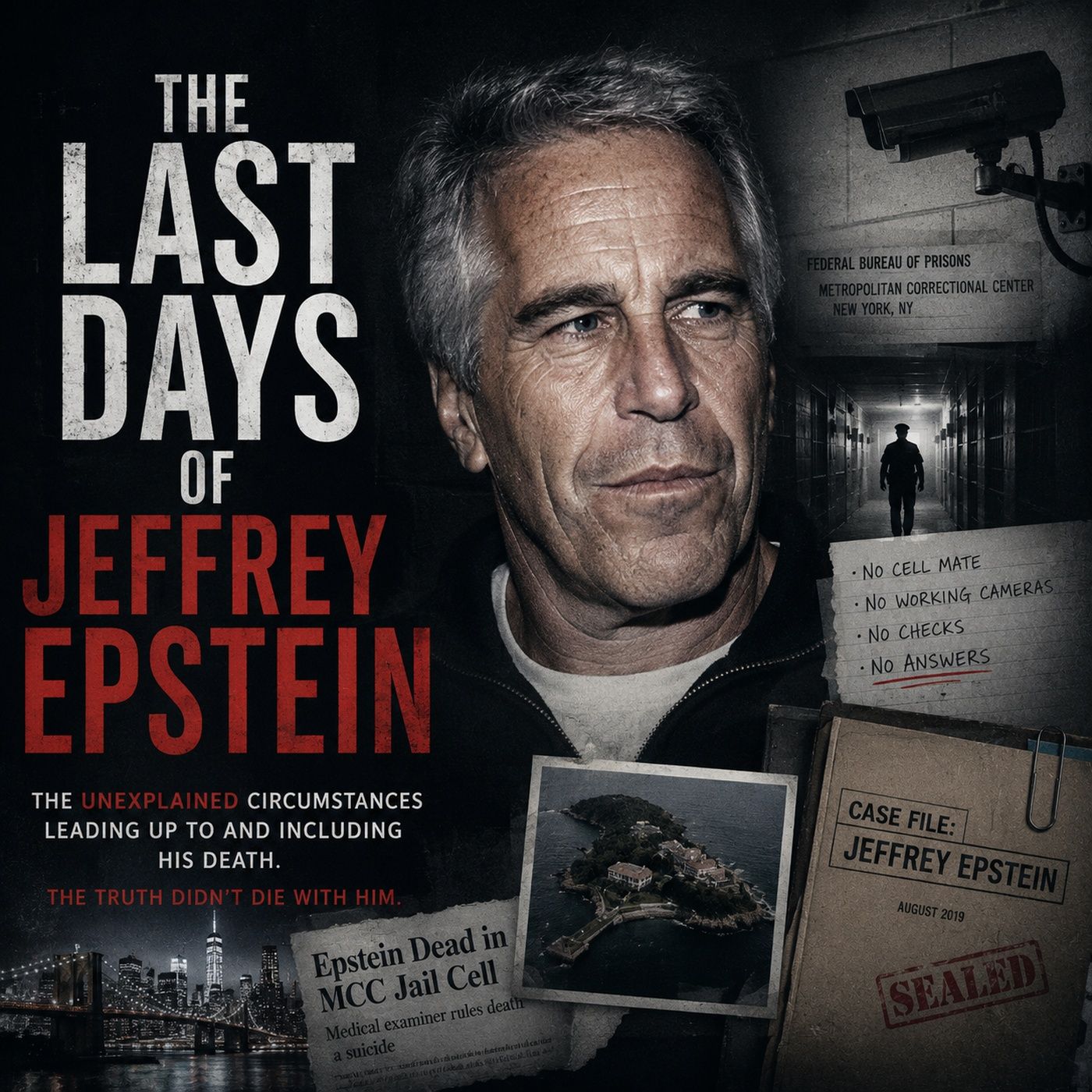
The Last Days Of Jeffrey Epstein
by Bobby Capucci
The Last Days of Jeffrey Epstein is a long-form investigative podcast that serves as both an archive and a real-time chronicle of the events surrounding the life, imprisonment, and death of Jeffrey Epstein. From the moment of his arrest in 2019 through the unanswered questions that continue to emerge years later, the podcast follows the timeline piece by piece — examining court filings, jail records, witness statements, surveillance failures, media reports, government investigations, and newly released documents as they become public. Rather than treating the story as a closed chapter, the series approaches it as an evolving historical event whose consequences continue to ripple through politics, finance, intelligence circles, law enforcement, and the media. Every episode is designed to preserve the record while also analyzing how the narrative around Epstein has shifted over time, what information has surfaced, what remains hidden, and why the case continues to gener
-
41
Inside The OIG Interview: The Testimony Of An Unnamed R&D Officer From MCC (Part 3) (6/26/26)
An unnamed correctional officer assigned to the Receiving and Discharge unit at the Metropolitan Correctional Center in New York was interviewed by the Department of Justice Office of Inspector General on July 15, 2021 as part of the federal investigation into the death of Jeffrey Epstein while in custody. The interview was formally recorded by OIG special agents, who identified themselves on the record before questioning the officer inside an executive office at MCC. The officer’s identity was redacted throughout the transcript, consistent with many of the prison staff interviews conducted during the wider review into Epstein’s incarceration and death in August 2019.The interview was part of the OIG’s broader effort to reconstruct conditions inside MCC and determine what failures occurred in the lead-up to Epstein’s death. Investigators questioned prison personnel across multiple departments as they examined issues including inmate monitoring, staffing shortages, housing procedures, missed rounds, and internal recordkeeping practices at the jail. The testimony from the unnamed R&D officer became one piece of the larger federal review into how MCC operated during the period Epstein was detained there, as scrutiny intensified over the breakdowns and inconsistencies uncovered during the investigation.to contact me:[email protected]:EFTA00115477.pdf
-
40
Inside The OIG Interview: The Testimony Of An Unnamed R&D Officer From MCC (Part 2) (6/26/26)
An unnamed correctional officer assigned to the Receiving and Discharge unit at the Metropolitan Correctional Center in New York was interviewed by the Department of Justice Office of Inspector General on July 15, 2021 as part of the federal investigation into the death of Jeffrey Epstein while in custody. The interview was formally recorded by OIG special agents, who identified themselves on the record before questioning the officer inside an executive office at MCC. The officer’s identity was redacted throughout the transcript, consistent with many of the prison staff interviews conducted during the wider review into Epstein’s incarceration and death in August 2019.The interview was part of the OIG’s broader effort to reconstruct conditions inside MCC and determine what failures occurred in the lead-up to Epstein’s death. Investigators questioned prison personnel across multiple departments as they examined issues including inmate monitoring, staffing shortages, housing procedures, missed rounds, and internal recordkeeping practices at the jail. The testimony from the unnamed R&D officer became one piece of the larger federal review into how MCC operated during the period Epstein was detained there, as scrutiny intensified over the breakdowns and inconsistencies uncovered during the investigation.to contact me:[email protected]:EFTA00115477.pdf
-
39
Inside The OIG Interview: The Testimony Of An Unnamed R&D Officer From MCC (Part 1) (6/26/26)
An unnamed correctional officer assigned to the Receiving and Discharge unit at the Metropolitan Correctional Center in New York was interviewed by the Department of Justice Office of Inspector General on July 15, 2021 as part of the federal investigation into the death of Jeffrey Epstein while in custody. The interview was formally recorded by OIG special agents, who identified themselves on the record before questioning the officer inside an executive office at MCC. The officer’s identity was redacted throughout the transcript, consistent with many of the prison staff interviews conducted during the wider review into Epstein’s incarceration and death in August 2019.The interview was part of the OIG’s broader effort to reconstruct conditions inside MCC and determine what failures occurred in the lead-up to Epstein’s death. Investigators questioned prison personnel across multiple departments as they examined issues including inmate monitoring, staffing shortages, housing procedures, missed rounds, and internal recordkeeping practices at the jail. The testimony from the unnamed R&D officer became one piece of the larger federal review into how MCC operated during the period Epstein was detained there, as scrutiny intensified over the breakdowns and inconsistencies uncovered during the investigation.to contact me:[email protected]:EFTA00115477.pdf
-
38
Inside The OIG Interview: The Testimony Of An Unnamed MCC Lieutenant (Part 15) (6/26/26)
The deposition of the unnamed MCC lieutenant reveals not just operational failures, but a striking level of evasiveness that runs throughout the testimony. When pressed on critical details—staffing levels, required inmate checks, chain of command responsibilities, and awareness of Epstein’s status—the lieutenant repeatedly falls back on vague answers, limited recollection, or an inability to provide specifics. This pattern isn’t occasional—it’s consistent, especially on the exact points where clarity matters most. Rather than offering firm timelines or accountability, the testimony often drifts into generalities, creating the impression that either key information was not retained or not being fully disclosed.That evasiveness becomes even more glaring when discussing the hours leading up to and immediately following Epstein’s death. Questions about whether protocols were followed, who was responsible for monitoring, and how breakdowns occurred are met with uncertainty or deflection, leaving major gaps in the narrative. Instead of clarifying what went wrong, the testimony reinforces the sense of confusion and lack of oversight already seen in other MCC accounts. The result is a record that feels less like a clear explanation and more like a fragmented, incomplete account—one that raises as many questions about credibility and accountability as it answers about the failures inside the facility.to contact me:[email protected]:EFTA00062649.pdf
-
37
Inside The OIG Interview: The Testimony Of An Unnamed MCC Lieutenant (Part 14) (6/26/26)
The deposition of the unnamed MCC lieutenant reveals not just operational failures, but a striking level of evasiveness that runs throughout the testimony. When pressed on critical details—staffing levels, required inmate checks, chain of command responsibilities, and awareness of Epstein’s status—the lieutenant repeatedly falls back on vague answers, limited recollection, or an inability to provide specifics. This pattern isn’t occasional—it’s consistent, especially on the exact points where clarity matters most. Rather than offering firm timelines or accountability, the testimony often drifts into generalities, creating the impression that either key information was not retained or not being fully disclosed.That evasiveness becomes even more glaring when discussing the hours leading up to and immediately following Epstein’s death. Questions about whether protocols were followed, who was responsible for monitoring, and how breakdowns occurred are met with uncertainty or deflection, leaving major gaps in the narrative. Instead of clarifying what went wrong, the testimony reinforces the sense of confusion and lack of oversight already seen in other MCC accounts. The result is a record that feels less like a clear explanation and more like a fragmented, incomplete account—one that raises as many questions about credibility and accountability as it answers about the failures inside the facility.to contact me:[email protected]:EFTA00062649.pdf
-
36
Inside The OIG Interview: The Testimony Of An Unnamed MCC Lieutenant (Part 13) (6/26/26)
The deposition of the unnamed MCC lieutenant reveals not just operational failures, but a striking level of evasiveness that runs throughout the testimony. When pressed on critical details—staffing levels, required inmate checks, chain of command responsibilities, and awareness of Epstein’s status—the lieutenant repeatedly falls back on vague answers, limited recollection, or an inability to provide specifics. This pattern isn’t occasional—it’s consistent, especially on the exact points where clarity matters most. Rather than offering firm timelines or accountability, the testimony often drifts into generalities, creating the impression that either key information was not retained or not being fully disclosed.That evasiveness becomes even more glaring when discussing the hours leading up to and immediately following Epstein’s death. Questions about whether protocols were followed, who was responsible for monitoring, and how breakdowns occurred are met with uncertainty or deflection, leaving major gaps in the narrative. Instead of clarifying what went wrong, the testimony reinforces the sense of confusion and lack of oversight already seen in other MCC accounts. The result is a record that feels less like a clear explanation and more like a fragmented, incomplete account—one that raises as many questions about credibility and accountability as it answers about the failures inside the facility.to contact me:[email protected]:EFTA00062649.pdf
-
35
Inside The OIG Interview: The Testimony Of An Unnamed MCC Lieutenant (Part 12) (6/25/26)
The deposition of the unnamed MCC lieutenant reveals not just operational failures, but a striking level of evasiveness that runs throughout the testimony. When pressed on critical details—staffing levels, required inmate checks, chain of command responsibilities, and awareness of Epstein’s status—the lieutenant repeatedly falls back on vague answers, limited recollection, or an inability to provide specifics. This pattern isn’t occasional—it’s consistent, especially on the exact points where clarity matters most. Rather than offering firm timelines or accountability, the testimony often drifts into generalities, creating the impression that either key information was not retained or not being fully disclosed.That evasiveness becomes even more glaring when discussing the hours leading up to and immediately following Epstein’s death. Questions about whether protocols were followed, who was responsible for monitoring, and how breakdowns occurred are met with uncertainty or deflection, leaving major gaps in the narrative. Instead of clarifying what went wrong, the testimony reinforces the sense of confusion and lack of oversight already seen in other MCC accounts. The result is a record that feels less like a clear explanation and more like a fragmented, incomplete account—one that raises as many questions about credibility and accountability as it answers about the failures inside the facility.to contact me:[email protected]:EFTA00062649.pdf
-
34
Inside The OIG Interview: The Testimony Of An Unnamed MCC Lieutenant (Part 11) (6/25/26)
The deposition of the unnamed MCC lieutenant reveals not just operational failures, but a striking level of evasiveness that runs throughout the testimony. When pressed on critical details—staffing levels, required inmate checks, chain of command responsibilities, and awareness of Epstein’s status—the lieutenant repeatedly falls back on vague answers, limited recollection, or an inability to provide specifics. This pattern isn’t occasional—it’s consistent, especially on the exact points where clarity matters most. Rather than offering firm timelines or accountability, the testimony often drifts into generalities, creating the impression that either key information was not retained or not being fully disclosed.That evasiveness becomes even more glaring when discussing the hours leading up to and immediately following Epstein’s death. Questions about whether protocols were followed, who was responsible for monitoring, and how breakdowns occurred are met with uncertainty or deflection, leaving major gaps in the narrative. Instead of clarifying what went wrong, the testimony reinforces the sense of confusion and lack of oversight already seen in other MCC accounts. The result is a record that feels less like a clear explanation and more like a fragmented, incomplete account—one that raises as many questions about credibility and accountability as it answers about the failures inside the facility.to contact me:[email protected]:EFTA00062649.pdf
-
33
Inside The OIG Interview: The Testimony Of An Unnamed MCC Lieutenant (Part 10) (6/25/26)
The deposition of the unnamed MCC lieutenant reveals not just operational failures, but a striking level of evasiveness that runs throughout the testimony. When pressed on critical details—staffing levels, required inmate checks, chain of command responsibilities, and awareness of Epstein’s status—the lieutenant repeatedly falls back on vague answers, limited recollection, or an inability to provide specifics. This pattern isn’t occasional—it’s consistent, especially on the exact points where clarity matters most. Rather than offering firm timelines or accountability, the testimony often drifts into generalities, creating the impression that either key information was not retained or not being fully disclosed.That evasiveness becomes even more glaring when discussing the hours leading up to and immediately following Epstein’s death. Questions about whether protocols were followed, who was responsible for monitoring, and how breakdowns occurred are met with uncertainty or deflection, leaving major gaps in the narrative. Instead of clarifying what went wrong, the testimony reinforces the sense of confusion and lack of oversight already seen in other MCC accounts. The result is a record that feels less like a clear explanation and more like a fragmented, incomplete account—one that raises as many questions about credibility and accountability as it answers about the failures inside the facility.to contact me:[email protected]:EFTA00062649.pdf
-
32
Inside The OIG Interview: The Testimony Of An Unnamed MCC Lieutenant (Part 9) (6/25/26)
The deposition of the unnamed MCC lieutenant reveals not just operational failures, but a striking level of evasiveness that runs throughout the testimony. When pressed on critical details—staffing levels, required inmate checks, chain of command responsibilities, and awareness of Epstein’s status—the lieutenant repeatedly falls back on vague answers, limited recollection, or an inability to provide specifics. This pattern isn’t occasional—it’s consistent, especially on the exact points where clarity matters most. Rather than offering firm timelines or accountability, the testimony often drifts into generalities, creating the impression that either key information was not retained or not being fully disclosed.That evasiveness becomes even more glaring when discussing the hours leading up to and immediately following Epstein’s death. Questions about whether protocols were followed, who was responsible for monitoring, and how breakdowns occurred are met with uncertainty or deflection, leaving major gaps in the narrative. Instead of clarifying what went wrong, the testimony reinforces the sense of confusion and lack of oversight already seen in other MCC accounts. The result is a record that feels less like a clear explanation and more like a fragmented, incomplete account—one that raises as many questions about credibility and accountability as it answers about the failures inside the facility.to contact me:[email protected]:EFTA00062649.pdf
-
31
Inside The OIG Interview: The Testimony Of An Unnamed MCC Lieutenant (Part 8) (6/24/26)
The deposition of the unnamed MCC lieutenant reveals not just operational failures, but a striking level of evasiveness that runs throughout the testimony. When pressed on critical details—staffing levels, required inmate checks, chain of command responsibilities, and awareness of Epstein’s status—the lieutenant repeatedly falls back on vague answers, limited recollection, or an inability to provide specifics. This pattern isn’t occasional—it’s consistent, especially on the exact points where clarity matters most. Rather than offering firm timelines or accountability, the testimony often drifts into generalities, creating the impression that either key information was not retained or not being fully disclosed.That evasiveness becomes even more glaring when discussing the hours leading up to and immediately following Epstein’s death. Questions about whether protocols were followed, who was responsible for monitoring, and how breakdowns occurred are met with uncertainty or deflection, leaving major gaps in the narrative. Instead of clarifying what went wrong, the testimony reinforces the sense of confusion and lack of oversight already seen in other MCC accounts. The result is a record that feels less like a clear explanation and more like a fragmented, incomplete account—one that raises as many questions about credibility and accountability as it answers about the failures inside the facility.to contact me:[email protected]:EFTA00062649.pdf
-
30
Inside The OIG Interview: The Testimony Of An Unnamed MCC Lieutenant (Part 7) (6/24/26)
The deposition of the unnamed MCC lieutenant reveals not just operational failures, but a striking level of evasiveness that runs throughout the testimony. When pressed on critical details—staffing levels, required inmate checks, chain of command responsibilities, and awareness of Epstein’s status—the lieutenant repeatedly falls back on vague answers, limited recollection, or an inability to provide specifics. This pattern isn’t occasional—it’s consistent, especially on the exact points where clarity matters most. Rather than offering firm timelines or accountability, the testimony often drifts into generalities, creating the impression that either key information was not retained or not being fully disclosed.That evasiveness becomes even more glaring when discussing the hours leading up to and immediately following Epstein’s death. Questions about whether protocols were followed, who was responsible for monitoring, and how breakdowns occurred are met with uncertainty or deflection, leaving major gaps in the narrative. Instead of clarifying what went wrong, the testimony reinforces the sense of confusion and lack of oversight already seen in other MCC accounts. The result is a record that feels less like a clear explanation and more like a fragmented, incomplete account—one that raises as many questions about credibility and accountability as it answers about the failures inside the facility.to contact me:[email protected]:EFTA00062649.pdf
-
29
Inside The OIG Interview: The Testimony Of An Unnamed MCC Lieutenant (Part 6) (6/24/26)
The deposition of the unnamed MCC lieutenant reveals not just operational failures, but a striking level of evasiveness that runs throughout the testimony. When pressed on critical details—staffing levels, required inmate checks, chain of command responsibilities, and awareness of Epstein’s status—the lieutenant repeatedly falls back on vague answers, limited recollection, or an inability to provide specifics. This pattern isn’t occasional—it’s consistent, especially on the exact points where clarity matters most. Rather than offering firm timelines or accountability, the testimony often drifts into generalities, creating the impression that either key information was not retained or not being fully disclosed.That evasiveness becomes even more glaring when discussing the hours leading up to and immediately following Epstein’s death. Questions about whether protocols were followed, who was responsible for monitoring, and how breakdowns occurred are met with uncertainty or deflection, leaving major gaps in the narrative. Instead of clarifying what went wrong, the testimony reinforces the sense of confusion and lack of oversight already seen in other MCC accounts. The result is a record that feels less like a clear explanation and more like a fragmented, incomplete account—one that raises as many questions about credibility and accountability as it answers about the failures inside the facility.to contact me:[email protected]:EFTA00062649.pdf
-
28
Inside The OIG Interview: The Testimony Of An Unnamed MCC Lieutenant (Part 5) (6/24/26)
The deposition of the unnamed MCC lieutenant reveals not just operational failures, but a striking level of evasiveness that runs throughout the testimony. When pressed on critical details—staffing levels, required inmate checks, chain of command responsibilities, and awareness of Epstein’s status—the lieutenant repeatedly falls back on vague answers, limited recollection, or an inability to provide specifics. This pattern isn’t occasional—it’s consistent, especially on the exact points where clarity matters most. Rather than offering firm timelines or accountability, the testimony often drifts into generalities, creating the impression that either key information was not retained or not being fully disclosed.That evasiveness becomes even more glaring when discussing the hours leading up to and immediately following Epstein’s death. Questions about whether protocols were followed, who was responsible for monitoring, and how breakdowns occurred are met with uncertainty or deflection, leaving major gaps in the narrative. Instead of clarifying what went wrong, the testimony reinforces the sense of confusion and lack of oversight already seen in other MCC accounts. The result is a record that feels less like a clear explanation and more like a fragmented, incomplete account—one that raises as many questions about credibility and accountability as it answers about the failures inside the facility.to contact me:[email protected]:EFTA00062649.pdf
-
27
Inside The OIG Interview: The Testimony Of An Unnamed MCC Lieutenant (Part 4) (6/24/26)
The deposition of the unnamed MCC lieutenant reveals not just operational failures, but a striking level of evasiveness that runs throughout the testimony. When pressed on critical details—staffing levels, required inmate checks, chain of command responsibilities, and awareness of Epstein’s status—the lieutenant repeatedly falls back on vague answers, limited recollection, or an inability to provide specifics. This pattern isn’t occasional—it’s consistent, especially on the exact points where clarity matters most. Rather than offering firm timelines or accountability, the testimony often drifts into generalities, creating the impression that either key information was not retained or not being fully disclosed.That evasiveness becomes even more glaring when discussing the hours leading up to and immediately following Epstein’s death. Questions about whether protocols were followed, who was responsible for monitoring, and how breakdowns occurred are met with uncertainty or deflection, leaving major gaps in the narrative. Instead of clarifying what went wrong, the testimony reinforces the sense of confusion and lack of oversight already seen in other MCC accounts. The result is a record that feels less like a clear explanation and more like a fragmented, incomplete account—one that raises as many questions about credibility and accountability as it answers about the failures inside the facility.to contact me:[email protected]:EFTA00062649.pdf
-
26
Inside The OIG Interview: The Testimony Of An Unnamed MCC Lieutenant (Part 3) (6/24/26)
The deposition of the unnamed MCC lieutenant reveals not just operational failures, but a striking level of evasiveness that runs throughout the testimony. When pressed on critical details—staffing levels, required inmate checks, chain of command responsibilities, and awareness of Epstein’s status—the lieutenant repeatedly falls back on vague answers, limited recollection, or an inability to provide specifics. This pattern isn’t occasional—it’s consistent, especially on the exact points where clarity matters most. Rather than offering firm timelines or accountability, the testimony often drifts into generalities, creating the impression that either key information was not retained or not being fully disclosed.That evasiveness becomes even more glaring when discussing the hours leading up to and immediately following Epstein’s death. Questions about whether protocols were followed, who was responsible for monitoring, and how breakdowns occurred are met with uncertainty or deflection, leaving major gaps in the narrative. Instead of clarifying what went wrong, the testimony reinforces the sense of confusion and lack of oversight already seen in other MCC accounts. The result is a record that feels less like a clear explanation and more like a fragmented, incomplete account—one that raises as many questions about credibility and accountability as it answers about the failures inside the facility.to contact me:[email protected]:EFTA00062649.pdf
-
25
Inside The OIG Interview: The Testimony Of An Unnamed MCC Lieutenant (Part 2) (6/24/26)
The deposition of the unnamed MCC lieutenant reveals not just operational failures, but a striking level of evasiveness that runs throughout the testimony. When pressed on critical details—staffing levels, required inmate checks, chain of command responsibilities, and awareness of Epstein’s status—the lieutenant repeatedly falls back on vague answers, limited recollection, or an inability to provide specifics. This pattern isn’t occasional—it’s consistent, especially on the exact points where clarity matters most. Rather than offering firm timelines or accountability, the testimony often drifts into generalities, creating the impression that either key information was not retained or not being fully disclosed.That evasiveness becomes even more glaring when discussing the hours leading up to and immediately following Epstein’s death. Questions about whether protocols were followed, who was responsible for monitoring, and how breakdowns occurred are met with uncertainty or deflection, leaving major gaps in the narrative. Instead of clarifying what went wrong, the testimony reinforces the sense of confusion and lack of oversight already seen in other MCC accounts. The result is a record that feels less like a clear explanation and more like a fragmented, incomplete account—one that raises as many questions about credibility and accountability as it answers about the failures inside the facility.to contact me:[email protected]:EFTA00062649.pdf
-
24
Inside The OIG Interview: The Testimony Of An Unnamed MCC Lieutenant (Part 1) (6/24/26)
The deposition of the unnamed MCC lieutenant reveals not just operational failures, but a striking level of evasiveness that runs throughout the testimony. When pressed on critical details—staffing levels, required inmate checks, chain of command responsibilities, and awareness of Epstein’s status—the lieutenant repeatedly falls back on vague answers, limited recollection, or an inability to provide specifics. This pattern isn’t occasional—it’s consistent, especially on the exact points where clarity matters most. Rather than offering firm timelines or accountability, the testimony often drifts into generalities, creating the impression that either key information was not retained or not being fully disclosed.That evasiveness becomes even more glaring when discussing the hours leading up to and immediately following Epstein’s death. Questions about whether protocols were followed, who was responsible for monitoring, and how breakdowns occurred are met with uncertainty or deflection, leaving major gaps in the narrative. Instead of clarifying what went wrong, the testimony reinforces the sense of confusion and lack of oversight already seen in other MCC accounts. The result is a record that feels less like a clear explanation and more like a fragmented, incomplete account—one that raises as many questions about credibility and accountability as it answers about the failures inside the facility.to contact me:[email protected]:EFTA00062649.pdf
-
23
Inside The OIG Interview: MCC Captain's Statement Detailing The Death Of Jeffrey Epstein (Part 17))
This deposition comes from an unnamed captain at the Metropolitan Correctional Center and provides a detailed account of how Jeffrey Epstein was managed inside the facility, particularly in the Special Housing Unit. The captain describes Epstein’s status following his prior suicide incident, including the decision-making process around his housing, monitoring level, and classification. The testimony highlights that Epstein had previously been placed under suicide watch but was later removed from those heightened precautions, despite ongoing concerns about his mental state. It also addresses Epstein’s resistance to having a cellmate and the facility’s shifting responses to that issue, revealing a pattern where known risks were acknowledged but not consistently acted upon.The deposition also exposes broader operational failures within MCC, particularly regarding supervision, communication, and adherence to protocol. The captain’s account suggests that while staff were aware of Epstein’s vulnerability, the systems in place failed to ensure continuous and effective monitoring. Decisions around staffing, inmate placement, and observation procedures appear fragmented, with lapses that ultimately left Epstein in a position that contradicted earlier risk assessments. The testimony reinforces the larger picture of institutional breakdown, where responsibility was diffused across personnel and safeguards that should have been firmly in place were instead inconsistently applied.What makes this account difficult to accept at face value is how neatly it shifts the burden onto procedural gray areas rather than confronting the glaring contradictions in custody decisions. The captain’s testimony acknowledges that Epstein was a known suicide risk, had already experienced a prior incident, and required heightened oversight, yet still attempts to frame the subsequent downgrade in monitoring as routine or justified. That explanation strains credibility when measured against the totality of circumstances, particularly the repeated deviations from established suicide prevention protocols and the failure to enforce basic safeguards like consistent observation and appropriate cell assignments. Instead of clarifying responsibility, the deposition reads more like an exercise in institutional self-preservation—where systemic failures are reframed as isolated judgment calls, and accountability is diluted across layers of bureaucracy. In that context, the official narrative begins to look less like a coherent explanation and more like a patchwork defense designed to explain away decisions that, taken together, point to a breakdown that should never have occurred in a high-security federal facility.to contact me:[email protected]:EFTA00059973.pdf
-
22
Inside The OIG Interview: MCC Captain's Statement Detailing The Death Of Jeffrey Epstein (Part 16))
This deposition comes from an unnamed captain at the Metropolitan Correctional Center and provides a detailed account of how Jeffrey Epstein was managed inside the facility, particularly in the Special Housing Unit. The captain describes Epstein’s status following his prior suicide incident, including the decision-making process around his housing, monitoring level, and classification. The testimony highlights that Epstein had previously been placed under suicide watch but was later removed from those heightened precautions, despite ongoing concerns about his mental state. It also addresses Epstein’s resistance to having a cellmate and the facility’s shifting responses to that issue, revealing a pattern where known risks were acknowledged but not consistently acted upon.The deposition also exposes broader operational failures within MCC, particularly regarding supervision, communication, and adherence to protocol. The captain’s account suggests that while staff were aware of Epstein’s vulnerability, the systems in place failed to ensure continuous and effective monitoring. Decisions around staffing, inmate placement, and observation procedures appear fragmented, with lapses that ultimately left Epstein in a position that contradicted earlier risk assessments. The testimony reinforces the larger picture of institutional breakdown, where responsibility was diffused across personnel and safeguards that should have been firmly in place were instead inconsistently applied.What makes this account difficult to accept at face value is how neatly it shifts the burden onto procedural gray areas rather than confronting the glaring contradictions in custody decisions. The captain’s testimony acknowledges that Epstein was a known suicide risk, had already experienced a prior incident, and required heightened oversight, yet still attempts to frame the subsequent downgrade in monitoring as routine or justified. That explanation strains credibility when measured against the totality of circumstances, particularly the repeated deviations from established suicide prevention protocols and the failure to enforce basic safeguards like consistent observation and appropriate cell assignments. Instead of clarifying responsibility, the deposition reads more like an exercise in institutional self-preservation—where systemic failures are reframed as isolated judgment calls, and accountability is diluted across layers of bureaucracy. In that context, the official narrative begins to look less like a coherent explanation and more like a patchwork defense designed to explain away decisions that, taken together, point to a breakdown that should never have occurred in a high-security federal facility.to contact me:[email protected]:EFTA00059973.pdf
-
21
Inside The OIG Interview: MCC Captain's Statement Detailing The Death Of Jeffrey Epstein (Part 15)
This deposition comes from an unnamed captain at the Metropolitan Correctional Center and provides a detailed account of how Jeffrey Epstein was managed inside the facility, particularly in the Special Housing Unit. The captain describes Epstein’s status following his prior suicide incident, including the decision-making process around his housing, monitoring level, and classification. The testimony highlights that Epstein had previously been placed under suicide watch but was later removed from those heightened precautions, despite ongoing concerns about his mental state. It also addresses Epstein’s resistance to having a cellmate and the facility’s shifting responses to that issue, revealing a pattern where known risks were acknowledged but not consistently acted upon.The deposition also exposes broader operational failures within MCC, particularly regarding supervision, communication, and adherence to protocol. The captain’s account suggests that while staff were aware of Epstein’s vulnerability, the systems in place failed to ensure continuous and effective monitoring. Decisions around staffing, inmate placement, and observation procedures appear fragmented, with lapses that ultimately left Epstein in a position that contradicted earlier risk assessments. The testimony reinforces the larger picture of institutional breakdown, where responsibility was diffused across personnel and safeguards that should have been firmly in place were instead inconsistently applied.What makes this account difficult to accept at face value is how neatly it shifts the burden onto procedural gray areas rather than confronting the glaring contradictions in custody decisions. The captain’s testimony acknowledges that Epstein was a known suicide risk, had already experienced a prior incident, and required heightened oversight, yet still attempts to frame the subsequent downgrade in monitoring as routine or justified. That explanation strains credibility when measured against the totality of circumstances, particularly the repeated deviations from established suicide prevention protocols and the failure to enforce basic safeguards like consistent observation and appropriate cell assignments. Instead of clarifying responsibility, the deposition reads more like an exercise in institutional self-preservation—where systemic failures are reframed as isolated judgment calls, and accountability is diluted across layers of bureaucracy. In that context, the official narrative begins to look less like a coherent explanation and more like a patchwork defense designed to explain away decisions that, taken together, point to a breakdown that should never have occurred in a high-security federal facility.to contact me:[email protected]:EFTA00059973.pdf
-
20
Inside The OIG Interview: MCC Captain's Statement Detailing The Death Of Jeffrey Epstein (Part 14)
This deposition comes from an unnamed captain at the Metropolitan Correctional Center and provides a detailed account of how Jeffrey Epstein was managed inside the facility, particularly in the Special Housing Unit. The captain describes Epstein’s status following his prior suicide incident, including the decision-making process around his housing, monitoring level, and classification. The testimony highlights that Epstein had previously been placed under suicide watch but was later removed from those heightened precautions, despite ongoing concerns about his mental state. It also addresses Epstein’s resistance to having a cellmate and the facility’s shifting responses to that issue, revealing a pattern where known risks were acknowledged but not consistently acted upon.The deposition also exposes broader operational failures within MCC, particularly regarding supervision, communication, and adherence to protocol. The captain’s account suggests that while staff were aware of Epstein’s vulnerability, the systems in place failed to ensure continuous and effective monitoring. Decisions around staffing, inmate placement, and observation procedures appear fragmented, with lapses that ultimately left Epstein in a position that contradicted earlier risk assessments. The testimony reinforces the larger picture of institutional breakdown, where responsibility was diffused across personnel and safeguards that should have been firmly in place were instead inconsistently applied.What makes this account difficult to accept at face value is how neatly it shifts the burden onto procedural gray areas rather than confronting the glaring contradictions in custody decisions. The captain’s testimony acknowledges that Epstein was a known suicide risk, had already experienced a prior incident, and required heightened oversight, yet still attempts to frame the subsequent downgrade in monitoring as routine or justified. That explanation strains credibility when measured against the totality of circumstances, particularly the repeated deviations from established suicide prevention protocols and the failure to enforce basic safeguards like consistent observation and appropriate cell assignments. Instead of clarifying responsibility, the deposition reads more like an exercise in institutional self-preservation—where systemic failures are reframed as isolated judgment calls, and accountability is diluted across layers of bureaucracy. In that context, the official narrative begins to look less like a coherent explanation and more like a patchwork defense designed to explain away decisions that, taken together, point to a breakdown that should never have occurred in a high-security federal facility.to contact me:[email protected]:EFTA00059973.pdf
-
19
Inside The OIG Interview: MCC Captain's Statement Detailing The Death Of Jeffrey Epstein (Part 13)
This deposition comes from an unnamed captain at the Metropolitan Correctional Center and provides a detailed account of how Jeffrey Epstein was managed inside the facility, particularly in the Special Housing Unit. The captain describes Epstein’s status following his prior suicide incident, including the decision-making process around his housing, monitoring level, and classification. The testimony highlights that Epstein had previously been placed under suicide watch but was later removed from those heightened precautions, despite ongoing concerns about his mental state. It also addresses Epstein’s resistance to having a cellmate and the facility’s shifting responses to that issue, revealing a pattern where known risks were acknowledged but not consistently acted upon.The deposition also exposes broader operational failures within MCC, particularly regarding supervision, communication, and adherence to protocol. The captain’s account suggests that while staff were aware of Epstein’s vulnerability, the systems in place failed to ensure continuous and effective monitoring. Decisions around staffing, inmate placement, and observation procedures appear fragmented, with lapses that ultimately left Epstein in a position that contradicted earlier risk assessments. The testimony reinforces the larger picture of institutional breakdown, where responsibility was diffused across personnel and safeguards that should have been firmly in place were instead inconsistently applied.What makes this account difficult to accept at face value is how neatly it shifts the burden onto procedural gray areas rather than confronting the glaring contradictions in custody decisions. The captain’s testimony acknowledges that Epstein was a known suicide risk, had already experienced a prior incident, and required heightened oversight, yet still attempts to frame the subsequent downgrade in monitoring as routine or justified. That explanation strains credibility when measured against the totality of circumstances, particularly the repeated deviations from established suicide prevention protocols and the failure to enforce basic safeguards like consistent observation and appropriate cell assignments. Instead of clarifying responsibility, the deposition reads more like an exercise in institutional self-preservation—where systemic failures are reframed as isolated judgment calls, and accountability is diluted across layers of bureaucracy. In that context, the official narrative begins to look less like a coherent explanation and more like a patchwork defense designed to explain away decisions that, taken together, point to a breakdown that should never have occurred in a high-security federal facility.to contact me:[email protected]:EFTA00059973.pdf
-
18
Inside The OIG Interview: MCC Captain's Statement Detailing The Death Of Jeffrey Epstein (Part 12)
This deposition comes from an unnamed captain at the Metropolitan Correctional Center and provides a detailed account of how Jeffrey Epstein was managed inside the facility, particularly in the Special Housing Unit. The captain describes Epstein’s status following his prior suicide incident, including the decision-making process around his housing, monitoring level, and classification. The testimony highlights that Epstein had previously been placed under suicide watch but was later removed from those heightened precautions, despite ongoing concerns about his mental state. It also addresses Epstein’s resistance to having a cellmate and the facility’s shifting responses to that issue, revealing a pattern where known risks were acknowledged but not consistently acted upon.The deposition also exposes broader operational failures within MCC, particularly regarding supervision, communication, and adherence to protocol. The captain’s account suggests that while staff were aware of Epstein’s vulnerability, the systems in place failed to ensure continuous and effective monitoring. Decisions around staffing, inmate placement, and observation procedures appear fragmented, with lapses that ultimately left Epstein in a position that contradicted earlier risk assessments. The testimony reinforces the larger picture of institutional breakdown, where responsibility was diffused across personnel and safeguards that should have been firmly in place were instead inconsistently applied.What makes this account difficult to accept at face value is how neatly it shifts the burden onto procedural gray areas rather than confronting the glaring contradictions in custody decisions. The captain’s testimony acknowledges that Epstein was a known suicide risk, had already experienced a prior incident, and required heightened oversight, yet still attempts to frame the subsequent downgrade in monitoring as routine or justified. That explanation strains credibility when measured against the totality of circumstances, particularly the repeated deviations from established suicide prevention protocols and the failure to enforce basic safeguards like consistent observation and appropriate cell assignments. Instead of clarifying responsibility, the deposition reads more like an exercise in institutional self-preservation—where systemic failures are reframed as isolated judgment calls, and accountability is diluted across layers of bureaucracy. In that context, the official narrative begins to look less like a coherent explanation and more like a patchwork defense designed to explain away decisions that, taken together, point to a breakdown that should never have occurred in a high-security federal facility.to contact me:[email protected]:EFTA00059973.pdf
-
17
Inside The OIG Interview: MCC Captain's Statement Detailing The Death Of Jeffrey Epstein (Part 11)
This deposition comes from an unnamed captain at the Metropolitan Correctional Center and provides a detailed account of how Jeffrey Epstein was managed inside the facility, particularly in the Special Housing Unit. The captain describes Epstein’s status following his prior suicide incident, including the decision-making process around his housing, monitoring level, and classification. The testimony highlights that Epstein had previously been placed under suicide watch but was later removed from those heightened precautions, despite ongoing concerns about his mental state. It also addresses Epstein’s resistance to having a cellmate and the facility’s shifting responses to that issue, revealing a pattern where known risks were acknowledged but not consistently acted upon.The deposition also exposes broader operational failures within MCC, particularly regarding supervision, communication, and adherence to protocol. The captain’s account suggests that while staff were aware of Epstein’s vulnerability, the systems in place failed to ensure continuous and effective monitoring. Decisions around staffing, inmate placement, and observation procedures appear fragmented, with lapses that ultimately left Epstein in a position that contradicted earlier risk assessments. The testimony reinforces the larger picture of institutional breakdown, where responsibility was diffused across personnel and safeguards that should have been firmly in place were instead inconsistently applied.What makes this account difficult to accept at face value is how neatly it shifts the burden onto procedural gray areas rather than confronting the glaring contradictions in custody decisions. The captain’s testimony acknowledges that Epstein was a known suicide risk, had already experienced a prior incident, and required heightened oversight, yet still attempts to frame the subsequent downgrade in monitoring as routine or justified. That explanation strains credibility when measured against the totality of circumstances, particularly the repeated deviations from established suicide prevention protocols and the failure to enforce basic safeguards like consistent observation and appropriate cell assignments. Instead of clarifying responsibility, the deposition reads more like an exercise in institutional self-preservation—where systemic failures are reframed as isolated judgment calls, and accountability is diluted across layers of bureaucracy. In that context, the official narrative begins to look less like a coherent explanation and more like a patchwork defense designed to explain away decisions that, taken together, point to a breakdown that should never have occurred in a high-security federal facility.to contact me:[email protected]:EFTA00059973.pdf
-
16
Inside The OIG Interview: MCC Captain's Statement Detailing The Death Of Jeffrey Epstein (Part 10)
This deposition comes from an unnamed captain at the Metropolitan Correctional Center and provides a detailed account of how Jeffrey Epstein was managed inside the facility, particularly in the Special Housing Unit. The captain describes Epstein’s status following his prior suicide incident, including the decision-making process around his housing, monitoring level, and classification. The testimony highlights that Epstein had previously been placed under suicide watch but was later removed from those heightened precautions, despite ongoing concerns about his mental state. It also addresses Epstein’s resistance to having a cellmate and the facility’s shifting responses to that issue, revealing a pattern where known risks were acknowledged but not consistently acted upon.The deposition also exposes broader operational failures within MCC, particularly regarding supervision, communication, and adherence to protocol. The captain’s account suggests that while staff were aware of Epstein’s vulnerability, the systems in place failed to ensure continuous and effective monitoring. Decisions around staffing, inmate placement, and observation procedures appear fragmented, with lapses that ultimately left Epstein in a position that contradicted earlier risk assessments. The testimony reinforces the larger picture of institutional breakdown, where responsibility was diffused across personnel and safeguards that should have been firmly in place were instead inconsistently applied.What makes this account difficult to accept at face value is how neatly it shifts the burden onto procedural gray areas rather than confronting the glaring contradictions in custody decisions. The captain’s testimony acknowledges that Epstein was a known suicide risk, had already experienced a prior incident, and required heightened oversight, yet still attempts to frame the subsequent downgrade in monitoring as routine or justified. That explanation strains credibility when measured against the totality of circumstances, particularly the repeated deviations from established suicide prevention protocols and the failure to enforce basic safeguards like consistent observation and appropriate cell assignments. Instead of clarifying responsibility, the deposition reads more like an exercise in institutional self-preservation—where systemic failures are reframed as isolated judgment calls, and accountability is diluted across layers of bureaucracy. In that context, the official narrative begins to look less like a coherent explanation and more like a patchwork defense designed to explain away decisions that, taken together, point to a breakdown that should never have occurred in a high-security federal facility.to contact me:[email protected]:EFTA00059973.pdf
-
15
MCC Captain's Statement Detailing The Death Of Jeffrey Epstein (Part 9) (6/23/26)
This deposition comes from an unnamed captain at the Metropolitan Correctional Center and provides a detailed account of how Jeffrey Epstein was managed inside the facility, particularly in the Special Housing Unit. The captain describes Epstein’s status following his prior suicide incident, including the decision-making process around his housing, monitoring level, and classification. The testimony highlights that Epstein had previously been placed under suicide watch but was later removed from those heightened precautions, despite ongoing concerns about his mental state. It also addresses Epstein’s resistance to having a cellmate and the facility’s shifting responses to that issue, revealing a pattern where known risks were acknowledged but not consistently acted upon.The deposition also exposes broader operational failures within MCC, particularly regarding supervision, communication, and adherence to protocol. The captain’s account suggests that while staff were aware of Epstein’s vulnerability, the systems in place failed to ensure continuous and effective monitoring. Decisions around staffing, inmate placement, and observation procedures appear fragmented, with lapses that ultimately left Epstein in a position that contradicted earlier risk assessments. The testimony reinforces the larger picture of institutional breakdown, where responsibility was diffused across personnel and safeguards that should have been firmly in place were instead inconsistently applied.What makes this account difficult to accept at face value is how neatly it shifts the burden onto procedural gray areas rather than confronting the glaring contradictions in custody decisions. The captain’s testimony acknowledges that Epstein was a known suicide risk, had already experienced a prior incident, and required heightened oversight, yet still attempts to frame the subsequent downgrade in monitoring as routine or justified. That explanation strains credibility when measured against the totality of circumstances, particularly the repeated deviations from established suicide prevention protocols and the failure to enforce basic safeguards like consistent observation and appropriate cell assignments. Instead of clarifying responsibility, the deposition reads more like an exercise in institutional self-preservation—where systemic failures are reframed as isolated judgment calls, and accountability is diluted across layers of bureaucracy. In that context, the official narrative begins to look less like a coherent explanation and more like a patchwork defense designed to explain away decisions that, taken together, point to a breakdown that should never have occurred in a high-security federal facility.to contact me:[email protected]:EFTA00059973.pdf
-
14
MCC Captain's Statement Detailing The Death Of Jeffrey Epstein (Part 8) (6/23/26)
This deposition comes from an unnamed captain at the Metropolitan Correctional Center and provides a detailed account of how Jeffrey Epstein was managed inside the facility, particularly in the Special Housing Unit. The captain describes Epstein’s status following his prior suicide incident, including the decision-making process around his housing, monitoring level, and classification. The testimony highlights that Epstein had previously been placed under suicide watch but was later removed from those heightened precautions, despite ongoing concerns about his mental state. It also addresses Epstein’s resistance to having a cellmate and the facility’s shifting responses to that issue, revealing a pattern where known risks were acknowledged but not consistently acted upon.The deposition also exposes broader operational failures within MCC, particularly regarding supervision, communication, and adherence to protocol. The captain’s account suggests that while staff were aware of Epstein’s vulnerability, the systems in place failed to ensure continuous and effective monitoring. Decisions around staffing, inmate placement, and observation procedures appear fragmented, with lapses that ultimately left Epstein in a position that contradicted earlier risk assessments. The testimony reinforces the larger picture of institutional breakdown, where responsibility was diffused across personnel and safeguards that should have been firmly in place were instead inconsistently applied.What makes this account difficult to accept at face value is how neatly it shifts the burden onto procedural gray areas rather than confronting the glaring contradictions in custody decisions. The captain’s testimony acknowledges that Epstein was a known suicide risk, had already experienced a prior incident, and required heightened oversight, yet still attempts to frame the subsequent downgrade in monitoring as routine or justified. That explanation strains credibility when measured against the totality of circumstances, particularly the repeated deviations from established suicide prevention protocols and the failure to enforce basic safeguards like consistent observation and appropriate cell assignments. Instead of clarifying responsibility, the deposition reads more like an exercise in institutional self-preservation—where systemic failures are reframed as isolated judgment calls, and accountability is diluted across layers of bureaucracy. In that context, the official narrative begins to look less like a coherent explanation and more like a patchwork defense designed to explain away decisions that, taken together, point to a breakdown that should never have occurred in a high-security federal facility.to contact me:[email protected]:EFTA00059973.pdf
-
13
Systemic Failure, Human Choices, and the Death of Jeffrey Epstein (6/23/26)
Calling Jeffrey Epstein’s death a “systemic failure” may be technically accurate, but it leaves out the human decisions that made that failure possible. Systems do not skip rounds, falsify logs, ignore cellmate requirements, or leave one of the most high-profile detainees in federal custody alone in a cell after an earlier incident. Tova Noel’s congressional testimony painted her as undertrained, overworked, and shaped by the dysfunctional culture inside MCC New York, but that does not erase the fact that she and Michael Thomas were assigned to watch Epstein and failed to carry out the checks that might have changed what happened. The larger institutional breakdown mattered, but it moved through people, choices, paperwork, missed warnings, and supervisors who allowed the conditions to exist.The most troubling unanswered questions remain higher up the chain: who approved Epstein being housed with Nicholas Tartaglione, who failed to replace his later cellmate after Reyes was moved, who knew Epstein was alone despite the cellmate requirement, and who decided Noel and Thomas should be working that shift despite fatigue, inexperience, or concerns about reliability. Noel and Thomas may have failed personally, but they also may have been placed inside a broken structure where failure was almost guaranteed. That does not prove they were deliberately set up, but it makes the question unavoidable. Until the public gets names, documents, and a clear chain of command for those critical decisions, the official explanation remains incomplete.to contact me:[email protected]
-
12
MCC Captain's Statement Detailing The Death Of Jeffrey Epstein (Part 7) (6/22/26)
This deposition comes from an unnamed captain at the Metropolitan Correctional Center and provides a detailed account of how Jeffrey Epstein was managed inside the facility, particularly in the Special Housing Unit. The captain describes Epstein’s status following his prior suicide incident, including the decision-making process around his housing, monitoring level, and classification. The testimony highlights that Epstein had previously been placed under suicide watch but was later removed from those heightened precautions, despite ongoing concerns about his mental state. It also addresses Epstein’s resistance to having a cellmate and the facility’s shifting responses to that issue, revealing a pattern where known risks were acknowledged but not consistently acted upon.The deposition also exposes broader operational failures within MCC, particularly regarding supervision, communication, and adherence to protocol. The captain’s account suggests that while staff were aware of Epstein’s vulnerability, the systems in place failed to ensure continuous and effective monitoring. Decisions around staffing, inmate placement, and observation procedures appear fragmented, with lapses that ultimately left Epstein in a position that contradicted earlier risk assessments. The testimony reinforces the larger picture of institutional breakdown, where responsibility was diffused across personnel and safeguards that should have been firmly in place were instead inconsistently applied.What makes this account difficult to accept at face value is how neatly it shifts the burden onto procedural gray areas rather than confronting the glaring contradictions in custody decisions. The captain’s testimony acknowledges that Epstein was a known suicide risk, had already experienced a prior incident, and required heightened oversight, yet still attempts to frame the subsequent downgrade in monitoring as routine or justified. That explanation strains credibility when measured against the totality of circumstances, particularly the repeated deviations from established suicide prevention protocols and the failure to enforce basic safeguards like consistent observation and appropriate cell assignments. Instead of clarifying responsibility, the deposition reads more like an exercise in institutional self-preservation—where systemic failures are reframed as isolated judgment calls, and accountability is diluted across layers of bureaucracy. In that context, the official narrative begins to look less like a coherent explanation and more like a patchwork defense designed to explain away decisions that, taken together, point to a breakdown that should never have occurred in a high-security federal facility.to contact me:[email protected]:EFTA00059973.pdf
-
11
MCC Captain's Statement Detailing The Death Of Jeffrey Epstein (Part 6) (6/22/26)
This deposition comes from an unnamed captain at the Metropolitan Correctional Center and provides a detailed account of how Jeffrey Epstein was managed inside the facility, particularly in the Special Housing Unit. The captain describes Epstein’s status following his prior suicide incident, including the decision-making process around his housing, monitoring level, and classification. The testimony highlights that Epstein had previously been placed under suicide watch but was later removed from those heightened precautions, despite ongoing concerns about his mental state. It also addresses Epstein’s resistance to having a cellmate and the facility’s shifting responses to that issue, revealing a pattern where known risks were acknowledged but not consistently acted upon.The deposition also exposes broader operational failures within MCC, particularly regarding supervision, communication, and adherence to protocol. The captain’s account suggests that while staff were aware of Epstein’s vulnerability, the systems in place failed to ensure continuous and effective monitoring. Decisions around staffing, inmate placement, and observation procedures appear fragmented, with lapses that ultimately left Epstein in a position that contradicted earlier risk assessments. The testimony reinforces the larger picture of institutional breakdown, where responsibility was diffused across personnel and safeguards that should have been firmly in place were instead inconsistently applied.What makes this account difficult to accept at face value is how neatly it shifts the burden onto procedural gray areas rather than confronting the glaring contradictions in custody decisions. The captain’s testimony acknowledges that Epstein was a known suicide risk, had already experienced a prior incident, and required heightened oversight, yet still attempts to frame the subsequent downgrade in monitoring as routine or justified. That explanation strains credibility when measured against the totality of circumstances, particularly the repeated deviations from established suicide prevention protocols and the failure to enforce basic safeguards like consistent observation and appropriate cell assignments. Instead of clarifying responsibility, the deposition reads more like an exercise in institutional self-preservation—where systemic failures are reframed as isolated judgment calls, and accountability is diluted across layers of bureaucracy. In that context, the official narrative begins to look less like a coherent explanation and more like a patchwork defense designed to explain away decisions that, taken together, point to a breakdown that should never have occurred in a high-security federal facility.to contact me:[email protected]:EFTA00059973.pdf
-
10
MCC Captain's Statement Detailing The Death Of Jeffrey Epstein (Part 5) (6/22/26)
This deposition comes from an unnamed captain at the Metropolitan Correctional Center and provides a detailed account of how Jeffrey Epstein was managed inside the facility, particularly in the Special Housing Unit. The captain describes Epstein’s status following his prior suicide incident, including the decision-making process around his housing, monitoring level, and classification. The testimony highlights that Epstein had previously been placed under suicide watch but was later removed from those heightened precautions, despite ongoing concerns about his mental state. It also addresses Epstein’s resistance to having a cellmate and the facility’s shifting responses to that issue, revealing a pattern where known risks were acknowledged but not consistently acted upon.The deposition also exposes broader operational failures within MCC, particularly regarding supervision, communication, and adherence to protocol. The captain’s account suggests that while staff were aware of Epstein’s vulnerability, the systems in place failed to ensure continuous and effective monitoring. Decisions around staffing, inmate placement, and observation procedures appear fragmented, with lapses that ultimately left Epstein in a position that contradicted earlier risk assessments. The testimony reinforces the larger picture of institutional breakdown, where responsibility was diffused across personnel and safeguards that should have been firmly in place were instead inconsistently applied.What makes this account difficult to accept at face value is how neatly it shifts the burden onto procedural gray areas rather than confronting the glaring contradictions in custody decisions. The captain’s testimony acknowledges that Epstein was a known suicide risk, had already experienced a prior incident, and required heightened oversight, yet still attempts to frame the subsequent downgrade in monitoring as routine or justified. That explanation strains credibility when measured against the totality of circumstances, particularly the repeated deviations from established suicide prevention protocols and the failure to enforce basic safeguards like consistent observation and appropriate cell assignments. Instead of clarifying responsibility, the deposition reads more like an exercise in institutional self-preservation—where systemic failures are reframed as isolated judgment calls, and accountability is diluted across layers of bureaucracy. In that context, the official narrative begins to look less like a coherent explanation and more like a patchwork defense designed to explain away decisions that, taken together, point to a breakdown that should never have occurred in a high-security federal facility.to contact me:[email protected]:EFTA00059973.pdf
-
9
MCC Captain's Statement Detailing The Death Of Jeffrey Epstein (Part 4) (6/22/26)
This deposition comes from an unnamed captain at the Metropolitan Correctional Center and provides a detailed account of how Jeffrey Epstein was managed inside the facility, particularly in the Special Housing Unit. The captain describes Epstein’s status following his prior suicide incident, including the decision-making process around his housing, monitoring level, and classification. The testimony highlights that Epstein had previously been placed under suicide watch but was later removed from those heightened precautions, despite ongoing concerns about his mental state. It also addresses Epstein’s resistance to having a cellmate and the facility’s shifting responses to that issue, revealing a pattern where known risks were acknowledged but not consistently acted upon.The deposition also exposes broader operational failures within MCC, particularly regarding supervision, communication, and adherence to protocol. The captain’s account suggests that while staff were aware of Epstein’s vulnerability, the systems in place failed to ensure continuous and effective monitoring. Decisions around staffing, inmate placement, and observation procedures appear fragmented, with lapses that ultimately left Epstein in a position that contradicted earlier risk assessments. The testimony reinforces the larger picture of institutional breakdown, where responsibility was diffused across personnel and safeguards that should have been firmly in place were instead inconsistently applied.What makes this account difficult to accept at face value is how neatly it shifts the burden onto procedural gray areas rather than confronting the glaring contradictions in custody decisions. The captain’s testimony acknowledges that Epstein was a known suicide risk, had already experienced a prior incident, and required heightened oversight, yet still attempts to frame the subsequent downgrade in monitoring as routine or justified. That explanation strains credibility when measured against the totality of circumstances, particularly the repeated deviations from established suicide prevention protocols and the failure to enforce basic safeguards like consistent observation and appropriate cell assignments. Instead of clarifying responsibility, the deposition reads more like an exercise in institutional self-preservation—where systemic failures are reframed as isolated judgment calls, and accountability is diluted across layers of bureaucracy. In that context, the official narrative begins to look less like a coherent explanation and more like a patchwork defense designed to explain away decisions that, taken together, point to a breakdown that should never have occurred in a high-security federal facility.to contact me:[email protected]:EFTA00059973.pdf
-
8
MCC Captain's Statement Detailing The Death Of Jeffrey Epstein (Part 3) (6/22/26)
This deposition comes from an unnamed captain at the Metropolitan Correctional Center and provides a detailed account of how Jeffrey Epstein was managed inside the facility, particularly in the Special Housing Unit. The captain describes Epstein’s status following his prior suicide incident, including the decision-making process around his housing, monitoring level, and classification. The testimony highlights that Epstein had previously been placed under suicide watch but was later removed from those heightened precautions, despite ongoing concerns about his mental state. It also addresses Epstein’s resistance to having a cellmate and the facility’s shifting responses to that issue, revealing a pattern where known risks were acknowledged but not consistently acted upon.The deposition also exposes broader operational failures within MCC, particularly regarding supervision, communication, and adherence to protocol. The captain’s account suggests that while staff were aware of Epstein’s vulnerability, the systems in place failed to ensure continuous and effective monitoring. Decisions around staffing, inmate placement, and observation procedures appear fragmented, with lapses that ultimately left Epstein in a position that contradicted earlier risk assessments. The testimony reinforces the larger picture of institutional breakdown, where responsibility was diffused across personnel and safeguards that should have been firmly in place were instead inconsistently applied.What makes this account difficult to accept at face value is how neatly it shifts the burden onto procedural gray areas rather than confronting the glaring contradictions in custody decisions. The captain’s testimony acknowledges that Epstein was a known suicide risk, had already experienced a prior incident, and required heightened oversight, yet still attempts to frame the subsequent downgrade in monitoring as routine or justified. That explanation strains credibility when measured against the totality of circumstances, particularly the repeated deviations from established suicide prevention protocols and the failure to enforce basic safeguards like consistent observation and appropriate cell assignments. Instead of clarifying responsibility, the deposition reads more like an exercise in institutional self-preservation—where systemic failures are reframed as isolated judgment calls, and accountability is diluted across layers of bureaucracy. In that context, the official narrative begins to look less like a coherent explanation and more like a patchwork defense designed to explain away decisions that, taken together, point to a breakdown that should never have occurred in a high-security federal facility.to contact me:[email protected]:EFTA00059973.pdf
-
7
MCC Captain's Statement Detailing The Death Of Jeffrey Epstein (Part 2) (6/22/26)
This deposition comes from an unnamed captain at the Metropolitan Correctional Center and provides a detailed account of how Jeffrey Epstein was managed inside the facility, particularly in the Special Housing Unit. The captain describes Epstein’s status following his prior suicide incident, including the decision-making process around his housing, monitoring level, and classification. The testimony highlights that Epstein had previously been placed under suicide watch but was later removed from those heightened precautions, despite ongoing concerns about his mental state. It also addresses Epstein’s resistance to having a cellmate and the facility’s shifting responses to that issue, revealing a pattern where known risks were acknowledged but not consistently acted upon.The deposition also exposes broader operational failures within MCC, particularly regarding supervision, communication, and adherence to protocol. The captain’s account suggests that while staff were aware of Epstein’s vulnerability, the systems in place failed to ensure continuous and effective monitoring. Decisions around staffing, inmate placement, and observation procedures appear fragmented, with lapses that ultimately left Epstein in a position that contradicted earlier risk assessments. The testimony reinforces the larger picture of institutional breakdown, where responsibility was diffused across personnel and safeguards that should have been firmly in place were instead inconsistently applied.What makes this account difficult to accept at face value is how neatly it shifts the burden onto procedural gray areas rather than confronting the glaring contradictions in custody decisions. The captain’s testimony acknowledges that Epstein was a known suicide risk, had already experienced a prior incident, and required heightened oversight, yet still attempts to frame the subsequent downgrade in monitoring as routine or justified. That explanation strains credibility when measured against the totality of circumstances, particularly the repeated deviations from established suicide prevention protocols and the failure to enforce basic safeguards like consistent observation and appropriate cell assignments. Instead of clarifying responsibility, the deposition reads more like an exercise in institutional self-preservation—where systemic failures are reframed as isolated judgment calls, and accountability is diluted across layers of bureaucracy. In that context, the official narrative begins to look less like a coherent explanation and more like a patchwork defense designed to explain away decisions that, taken together, point to a breakdown that should never have occurred in a high-security federal facility.to contact me:[email protected]:EFTA00059973.pdf
-
6
MCC Captain's Statement Detailing The Death Of Jeffrey Epstein (Part 1) (6/22/26)
This deposition comes from an unnamed captain at the Metropolitan Correctional Center and provides a detailed account of how Jeffrey Epstein was managed inside the facility, particularly in the Special Housing Unit. The captain describes Epstein’s status following his prior suicide incident, including the decision-making process around his housing, monitoring level, and classification. The testimony highlights that Epstein had previously been placed under suicide watch but was later removed from those heightened precautions, despite ongoing concerns about his mental state. It also addresses Epstein’s resistance to having a cellmate and the facility’s shifting responses to that issue, revealing a pattern where known risks were acknowledged but not consistently acted upon.The deposition also exposes broader operational failures within MCC, particularly regarding supervision, communication, and adherence to protocol. The captain’s account suggests that while staff were aware of Epstein’s vulnerability, the systems in place failed to ensure continuous and effective monitoring. Decisions around staffing, inmate placement, and observation procedures appear fragmented, with lapses that ultimately left Epstein in a position that contradicted earlier risk assessments. The testimony reinforces the larger picture of institutional breakdown, where responsibility was diffused across personnel and safeguards that should have been firmly in place were instead inconsistently applied.What makes this account difficult to accept at face value is how neatly it shifts the burden onto procedural gray areas rather than confronting the glaring contradictions in custody decisions. The captain’s testimony acknowledges that Epstein was a known suicide risk, had already experienced a prior incident, and required heightened oversight, yet still attempts to frame the subsequent downgrade in monitoring as routine or justified. That explanation strains credibility when measured against the totality of circumstances, particularly the repeated deviations from established suicide prevention protocols and the failure to enforce basic safeguards like consistent observation and appropriate cell assignments. Instead of clarifying responsibility, the deposition reads more like an exercise in institutional self-preservation—where systemic failures are reframed as isolated judgment calls, and accountability is diluted across layers of bureaucracy. In that context, the official narrative begins to look less like a coherent explanation and more like a patchwork defense designed to explain away decisions that, taken together, point to a breakdown that should never have occurred in a high-security federal facility.to contact me:[email protected]:EFTA00059973.pdf
-
5
Inside The OIG Interview: The Testimony Of The Electrical Engineer From MCC (Part 8) (6/21/26)
The document is a sworn statement from an electrical engineer assigned to the Metropolitan Correctional Center in New York, given in the aftermath of Jeffrey Epstein’s death. In his testimony, the engineer outlines the condition and functionality of the facility’s electrical and surveillance infrastructure, specifically addressing whether any power failures or technical malfunctions could have impacted the operation of cameras or monitoring systems on the night Epstein died. He indicates that, based on his review and knowledge of the systems, there were no significant electrical outages or systemic failures that would have disabled the cameras covering Epstein’s housing unit during the relevant timeframe. His statement is meant to clarify that the infrastructure itself was not compromised by a power-related issue.The engineer further explains how the MCC’s surveillance systems were designed to operate, including backup power measures and redundancies intended to keep critical systems running even in the event of localized disruptions. His account suggests that if cameras were not recording or footage was unavailable, the cause would likely not be attributable to an electrical failure but rather to other factors, such as equipment issues, configuration problems, or human involvement. In the broader context, this sworn statement undercuts the notion that a simple technical malfunction explains the lack of usable surveillance footage, instead reinforcing the unresolved questions surrounding how monitoring systems failed at such a critical moment.to contact me:[email protected]:EFTA00064043.pdf
-
4
Inside The OIG Interview: The Testimony Of The Electrical Engineer From MCC (Part 7) (6/21/26)
The document is a sworn statement from an electrical engineer assigned to the Metropolitan Correctional Center in New York, given in the aftermath of Jeffrey Epstein’s death. In his testimony, the engineer outlines the condition and functionality of the facility’s electrical and surveillance infrastructure, specifically addressing whether any power failures or technical malfunctions could have impacted the operation of cameras or monitoring systems on the night Epstein died. He indicates that, based on his review and knowledge of the systems, there were no significant electrical outages or systemic failures that would have disabled the cameras covering Epstein’s housing unit during the relevant timeframe. His statement is meant to clarify that the infrastructure itself was not compromised by a power-related issue.The engineer further explains how the MCC’s surveillance systems were designed to operate, including backup power measures and redundancies intended to keep critical systems running even in the event of localized disruptions. His account suggests that if cameras were not recording or footage was unavailable, the cause would likely not be attributable to an electrical failure but rather to other factors, such as equipment issues, configuration problems, or human involvement. In the broader context, this sworn statement undercuts the notion that a simple technical malfunction explains the lack of usable surveillance footage, instead reinforcing the unresolved questions surrounding how monitoring systems failed at such a critical moment.to contact me:[email protected]:EFTA00064043.pdf
-
3
Inside The OIG Interview: The Testimony Of The Electrical Engineer From MCC (Part 6) (6/21/26)
The document is a sworn statement from an electrical engineer assigned to the Metropolitan Correctional Center in New York, given in the aftermath of Jeffrey Epstein’s death. In his testimony, the engineer outlines the condition and functionality of the facility’s electrical and surveillance infrastructure, specifically addressing whether any power failures or technical malfunctions could have impacted the operation of cameras or monitoring systems on the night Epstein died. He indicates that, based on his review and knowledge of the systems, there were no significant electrical outages or systemic failures that would have disabled the cameras covering Epstein’s housing unit during the relevant timeframe. His statement is meant to clarify that the infrastructure itself was not compromised by a power-related issue.The engineer further explains how the MCC’s surveillance systems were designed to operate, including backup power measures and redundancies intended to keep critical systems running even in the event of localized disruptions. His account suggests that if cameras were not recording or footage was unavailable, the cause would likely not be attributable to an electrical failure but rather to other factors, such as equipment issues, configuration problems, or human involvement. In the broader context, this sworn statement undercuts the notion that a simple technical malfunction explains the lack of usable surveillance footage, instead reinforcing the unresolved questions surrounding how monitoring systems failed at such a critical moment.to contact me:[email protected]:EFTA00064043.pdf
-
2
Inside The OIG Interview: The Testimony Of The Electrical Engineer From MCC (Part 5) (6/21/26)
The document is a sworn statement from an electrical engineer assigned to the Metropolitan Correctional Center in New York, given in the aftermath of Jeffrey Epstein’s death. In his testimony, the engineer outlines the condition and functionality of the facility’s electrical and surveillance infrastructure, specifically addressing whether any power failures or technical malfunctions could have impacted the operation of cameras or monitoring systems on the night Epstein died. He indicates that, based on his review and knowledge of the systems, there were no significant electrical outages or systemic failures that would have disabled the cameras covering Epstein’s housing unit during the relevant timeframe. His statement is meant to clarify that the infrastructure itself was not compromised by a power-related issue.The engineer further explains how the MCC’s surveillance systems were designed to operate, including backup power measures and redundancies intended to keep critical systems running even in the event of localized disruptions. His account suggests that if cameras were not recording or footage was unavailable, the cause would likely not be attributable to an electrical failure but rather to other factors, such as equipment issues, configuration problems, or human involvement. In the broader context, this sworn statement undercuts the notion that a simple technical malfunction explains the lack of usable surveillance footage, instead reinforcing the unresolved questions surrounding how monitoring systems failed at such a critical moment.to contact me:[email protected]:EFTA00064043.pdf
-
1
Inside The OIG Interview: The Testimony Of The Electrical Engineer From MCC (Part 4) (6/21/26)
The document is a sworn statement from an electrical engineer assigned to the Metropolitan Correctional Center in New York, given in the aftermath of Jeffrey Epstein’s death. In his testimony, the engineer outlines the condition and functionality of the facility’s electrical and surveillance infrastructure, specifically addressing whether any power failures or technical malfunctions could have impacted the operation of cameras or monitoring systems on the night Epstein died. He indicates that, based on his review and knowledge of the systems, there were no significant electrical outages or systemic failures that would have disabled the cameras covering Epstein’s housing unit during the relevant timeframe. His statement is meant to clarify that the infrastructure itself was not compromised by a power-related issue.The engineer further explains how the MCC’s surveillance systems were designed to operate, including backup power measures and redundancies intended to keep critical systems running even in the event of localized disruptions. His account suggests that if cameras were not recording or footage was unavailable, the cause would likely not be attributable to an electrical failure but rather to other factors, such as equipment issues, configuration problems, or human involvement. In the broader context, this sworn statement undercuts the notion that a simple technical malfunction explains the lack of usable surveillance footage, instead reinforcing the unresolved questions surrounding how monitoring systems failed at such a critical moment.to contact me:[email protected]:EFTA00064043.pdf
-
0
Inside The OIG Interview: The Testimony Of The Electrical Engineer From MCC (Part 3) (6/21/26)
The document is a sworn statement from an electrical engineer assigned to the Metropolitan Correctional Center in New York, given in the aftermath of Jeffrey Epstein’s death. In his testimony, the engineer outlines the condition and functionality of the facility’s electrical and surveillance infrastructure, specifically addressing whether any power failures or technical malfunctions could have impacted the operation of cameras or monitoring systems on the night Epstein died. He indicates that, based on his review and knowledge of the systems, there were no significant electrical outages or systemic failures that would have disabled the cameras covering Epstein’s housing unit during the relevant timeframe. His statement is meant to clarify that the infrastructure itself was not compromised by a power-related issue.The engineer further explains how the MCC’s surveillance systems were designed to operate, including backup power measures and redundancies intended to keep critical systems running even in the event of localized disruptions. His account suggests that if cameras were not recording or footage was unavailable, the cause would likely not be attributable to an electrical failure but rather to other factors, such as equipment issues, configuration problems, or human involvement. In the broader context, this sworn statement undercuts the notion that a simple technical malfunction explains the lack of usable surveillance footage, instead reinforcing the unresolved questions surrounding how monitoring systems failed at such a critical moment.to contact me:[email protected]:EFTA00064043.pdf
-
-1
Inside The OIG Interview: The Testimony Of The Electrical Engineer From MCC (Part 2) (6/21/26)
The document is a sworn statement from an electrical engineer assigned to the Metropolitan Correctional Center in New York, given in the aftermath of Jeffrey Epstein’s death. In his testimony, the engineer outlines the condition and functionality of the facility’s electrical and surveillance infrastructure, specifically addressing whether any power failures or technical malfunctions could have impacted the operation of cameras or monitoring systems on the night Epstein died. He indicates that, based on his review and knowledge of the systems, there were no significant electrical outages or systemic failures that would have disabled the cameras covering Epstein’s housing unit during the relevant timeframe. His statement is meant to clarify that the infrastructure itself was not compromised by a power-related issue.The engineer further explains how the MCC’s surveillance systems were designed to operate, including backup power measures and redundancies intended to keep critical systems running even in the event of localized disruptions. His account suggests that if cameras were not recording or footage was unavailable, the cause would likely not be attributable to an electrical failure but rather to other factors, such as equipment issues, configuration problems, or human involvement. In the broader context, this sworn statement undercuts the notion that a simple technical malfunction explains the lack of usable surveillance footage, instead reinforcing the unresolved questions surrounding how monitoring systems failed at such a critical moment.to contact me:[email protected]:EFTA00064043.pdf
-
-2
Inside The OIG Interview: The Testimony Of The Electrical Engineer From MCC (Part 1) (6/21/26)
The document is a sworn statement from an electrical engineer assigned to the Metropolitan Correctional Center in New York, given in the aftermath of Jeffrey Epstein’s death. In his testimony, the engineer outlines the condition and functionality of the facility’s electrical and surveillance infrastructure, specifically addressing whether any power failures or technical malfunctions could have impacted the operation of cameras or monitoring systems on the night Epstein died. He indicates that, based on his review and knowledge of the systems, there were no significant electrical outages or systemic failures that would have disabled the cameras covering Epstein’s housing unit during the relevant timeframe. His statement is meant to clarify that the infrastructure itself was not compromised by a power-related issue.The engineer further explains how the MCC’s surveillance systems were designed to operate, including backup power measures and redundancies intended to keep critical systems running even in the event of localized disruptions. His account suggests that if cameras were not recording or footage was unavailable, the cause would likely not be attributable to an electrical failure but rather to other factors, such as equipment issues, configuration problems, or human involvement. In the broader context, this sworn statement undercuts the notion that a simple technical malfunction explains the lack of usable surveillance footage, instead reinforcing the unresolved questions surrounding how monitoring systems failed at such a critical moment.to contact me:[email protected]:EFTA00064043.pdf
-
-3
MCC Corrections Officer Michael Thomas And His OIG Interview Related To Epstein's Death (Part 20)
Michael Thomas was a veteran correctional officer employed by the Federal Bureau of Prisons at the Metropolitan Correctional Center in Manhattan — a federal detention facility — where Jeffrey Epstein was being held in the Special Housing Unit (SHU) while awaiting trial on federal sex-trafficking charges. Thomas had been with the Bureau of Prisons since about 2007 and, on the night of Epstein’s death (August 9–10, 2019), was assigned to an overnight shift alongside another officer, Tova Noel, responsible for conducting required 30-minute inmate checks and institutional counts in the SHU. Because Epstein’s cellmate had been moved and not replaced, Epstein was alone in his cell, making regular monitoring all the more crucial under bureau policy.Thomas became a focal figure in the official investigations into Epstein’s death because surveillance footage and institutional records showed that neither he nor Noel conducted the required rounds or counts through the night before Epstein was found unresponsive in his cell early on August 10. Prosecutors subsequently charged both officers with conspiracy and falsifying records for signing count slips that falsely indicated they had completed rounds they had not performed. Thomas and Noel later entered deferred prosecution agreements in which they admitted falsifying records and avoided prison time, instead receiving supervisory release and community service. Investigators concluded that chronic staffing shortages and procedural failures at the jail contributed to the circumstances that allowed Epstein to remain unmonitored for hours before his death, which was officially ruled a suicide by hanging.to contact me:[email protected]:EFTA00113577.pdf
-
-4
MCC Corrections Officer Michael Thomas And His OIG Interview Related To Epstein's Death (Part 19)
Michael Thomas was a veteran correctional officer employed by the Federal Bureau of Prisons at the Metropolitan Correctional Center in Manhattan — a federal detention facility — where Jeffrey Epstein was being held in the Special Housing Unit (SHU) while awaiting trial on federal sex-trafficking charges. Thomas had been with the Bureau of Prisons since about 2007 and, on the night of Epstein’s death (August 9–10, 2019), was assigned to an overnight shift alongside another officer, Tova Noel, responsible for conducting required 30-minute inmate checks and institutional counts in the SHU. Because Epstein’s cellmate had been moved and not replaced, Epstein was alone in his cell, making regular monitoring all the more crucial under bureau policy.Thomas became a focal figure in the official investigations into Epstein’s death because surveillance footage and institutional records showed that neither he nor Noel conducted the required rounds or counts through the night before Epstein was found unresponsive in his cell early on August 10. Prosecutors subsequently charged both officers with conspiracy and falsifying records for signing count slips that falsely indicated they had completed rounds they had not performed. Thomas and Noel later entered deferred prosecution agreements in which they admitted falsifying records and avoided prison time, instead receiving supervisory release and community service. Investigators concluded that chronic staffing shortages and procedural failures at the jail contributed to the circumstances that allowed Epstein to remain unmonitored for hours before his death, which was officially ruled a suicide by hanging.to contact me:[email protected]:EFTA00113577.pdf
-
-5
MCC Corrections Officer Michael Thomas And His OIG Interview Related To Epstein's Death (Part 18)
Michael Thomas was a veteran correctional officer employed by the Federal Bureau of Prisons at the Metropolitan Correctional Center in Manhattan — a federal detention facility — where Jeffrey Epstein was being held in the Special Housing Unit (SHU) while awaiting trial on federal sex-trafficking charges. Thomas had been with the Bureau of Prisons since about 2007 and, on the night of Epstein’s death (August 9–10, 2019), was assigned to an overnight shift alongside another officer, Tova Noel, responsible for conducting required 30-minute inmate checks and institutional counts in the SHU. Because Epstein’s cellmate had been moved and not replaced, Epstein was alone in his cell, making regular monitoring all the more crucial under bureau policy.Thomas became a focal figure in the official investigations into Epstein’s death because surveillance footage and institutional records showed that neither he nor Noel conducted the required rounds or counts through the night before Epstein was found unresponsive in his cell early on August 10. Prosecutors subsequently charged both officers with conspiracy and falsifying records for signing count slips that falsely indicated they had completed rounds they had not performed. Thomas and Noel later entered deferred prosecution agreements in which they admitted falsifying records and avoided prison time, instead receiving supervisory release and community service. Investigators concluded that chronic staffing shortages and procedural failures at the jail contributed to the circumstances that allowed Epstein to remain unmonitored for hours before his death, which was officially ruled a suicide by hanging.to contact me:[email protected]:EFTA00113577.pdf
-
-6
MCC Corrections Officer Michael Thomas And His OIG Interview Related To Epstein's Death (Part 17)
Michael Thomas was a veteran correctional officer employed by the Federal Bureau of Prisons at the Metropolitan Correctional Center in Manhattan — a federal detention facility — where Jeffrey Epstein was being held in the Special Housing Unit (SHU) while awaiting trial on federal sex-trafficking charges. Thomas had been with the Bureau of Prisons since about 2007 and, on the night of Epstein’s death (August 9–10, 2019), was assigned to an overnight shift alongside another officer, Tova Noel, responsible for conducting required 30-minute inmate checks and institutional counts in the SHU. Because Epstein’s cellmate had been moved and not replaced, Epstein was alone in his cell, making regular monitoring all the more crucial under bureau policy.Thomas became a focal figure in the official investigations into Epstein’s death because surveillance footage and institutional records showed that neither he nor Noel conducted the required rounds or counts through the night before Epstein was found unresponsive in his cell early on August 10. Prosecutors subsequently charged both officers with conspiracy and falsifying records for signing count slips that falsely indicated they had completed rounds they had not performed. Thomas and Noel later entered deferred prosecution agreements in which they admitted falsifying records and avoided prison time, instead receiving supervisory release and community service. Investigators concluded that chronic staffing shortages and procedural failures at the jail contributed to the circumstances that allowed Epstein to remain unmonitored for hours before his death, which was officially ruled a suicide by hanging.to contact me:[email protected]:EFTA00113577.pdf
-
-7
The Archives: Medical Examiner Barbra Sampson Refutes Dr. Baden's Claims About Epstein's Death (6/19/26)
After Jeffrey Epstein’s death in 2019, the official ruling from the New York City Medical Examiner’s Office was that he died by suicide in his Manhattan jail cell. However, that conclusion came under intense scrutiny when Dr. Michael Baden, a well-known forensic pathologist hired by Epstein’s brother, publicly suggested that the injuries were more consistent with homicide. In response, Barbara Sampson, then–Chief Medical Examiner of New York City, forcefully defended the office’s findings and rejected Baden’s assertions. She stated unequivocally that the autopsy results, combined with the investigation, supported suicide by hanging, not foul play.Sampson’s rebuttal was meant to put to rest the growing wave of speculation, but it also underscored the divide between official conclusions and the swirl of doubt fueled by Epstein’s powerful connections and the suspicious circumstances of his death. By directly countering Baden, she stood by the credibility of her office’s work, stressing that outside opinions could not outweigh the evidence they had gathered. Still, the public’s mistrust lingered, and her statements became part of the broader controversy over whether Epstein’s death was truly a suicide or part of a larger cover-up.to contact me:[email protected]
-
-8
The Archives: Dr. Michael Baden Questions The Results Of The OIG Report Into Epstein's Death(6/19/26)
Dr. Michael Baden, a veteran forensic pathologist hired by Jeffrey Epstein’s brother to oversee the autopsy, sharply criticized the U.S. Department of Justice Inspector General’s (OIG) report, which affirmed the official finding that Epstein’s death was a suicide due to “negligence and misconduct” by prison staff. Baden called the report “ridiculous” and accused investigators of ignoring key forensic evidence inconsistent with hanging—particularly multiple fractures in Epstein’s neck, such as to the hyoid and thyroid cartilage, which he asserted are exceedingly rare in suicidal hangings based on decades of experience. He emphasized that he was not consulted during the OIG’s investigation, despite his presence at the autopsy, arguing that a thorough probe would have considered these anomalies.The OIG’s report, released in June 2023, concluded that systemic failures—such as guards falsifying records, broken cameras, lack of proper inmate monitoring, and protocol breaches—enabled Epstein to take his own life. It upheld the medical examiner’s suicide ruling and found no evidence of foul play. However, Baden’s dissent, rooted in those distinct injuries and procedural exclusion, has reignited public skepticism and conspiracy theories around Epstein’s death. The divide underscores the tension between institutional conclusions and unresolved forensic questions that continue to haunt this high-profile case.to contact me:[email protected]:Forensic Pathologist Slams Dept. Of Justice Report on Jeffrey Epstein’s Death (radaronline.com)
We're indexing this podcast's transcripts for the first time — this can take a minute or two. We'll show results as soon as they're ready.
No matches for "" in this podcast's transcripts.
No topics indexed yet for this podcast.
Loading reviews...
ABOUT THIS SHOW
The Last Days of Jeffrey Epstein is a long-form investigative podcast that serves as both an archive and a real-time chronicle of the events surrounding the life, imprisonment, and death of Jeffrey Epstein. From the moment of his arrest in 2019 through the unanswered questions that continue to emerge years later, the podcast follows the timeline piece by piece — examining court filings, jail records, witness statements, surveillance failures, media reports, government investigations, and newly released documents as they become public. Rather than treating the story as a closed chapter, the series approaches it as an evolving historical event whose consequences continue to ripple through politics, finance, intelligence circles, law enforcement, and the media. Every episode is designed to preserve the record while also analyzing how the narrative around Epstein has shifted over time, what information has surfaced, what remains hidden, and why the case continues to gener
HOSTED BY
Bobby Capucci
CATEGORIES
Loading similar podcasts...
Frequently Asked Questions
How many episodes does The Last Days Of Jeffrey Epstein have?
The Last Days Of Jeffrey Epstein currently has 50 episodes available on PodParley. New episodes are automatically indexed when they're published to the podcast feed.
What is The Last Days Of Jeffrey Epstein about?
The Last Days of Jeffrey Epstein is a long-form investigative podcast that serves as both an archive and a real-time chronicle of the events surrounding the life, imprisonment, and death of Jeffrey Epstein. From the moment of his arrest in 2019 through the unanswered questions that continue to...
How often does The Last Days Of Jeffrey Epstein release new episodes?
The Last Days Of Jeffrey Epstein has 50 episodes. Check the episode list to see recent publication dates and frequency.
Where can I listen to The Last Days Of Jeffrey Epstein?
You can listen to The Last Days Of Jeffrey Epstein on PodParley by clicking any episode. We provide an embedded audio player for direct listening, and you can also subscribe via your preferred podcast app using the RSS feed.
Who hosts The Last Days Of Jeffrey Epstein?
The Last Days Of Jeffrey Epstein is created and hosted by Bobby Capucci.
URL copied to clipboard!