
PODCAST · health
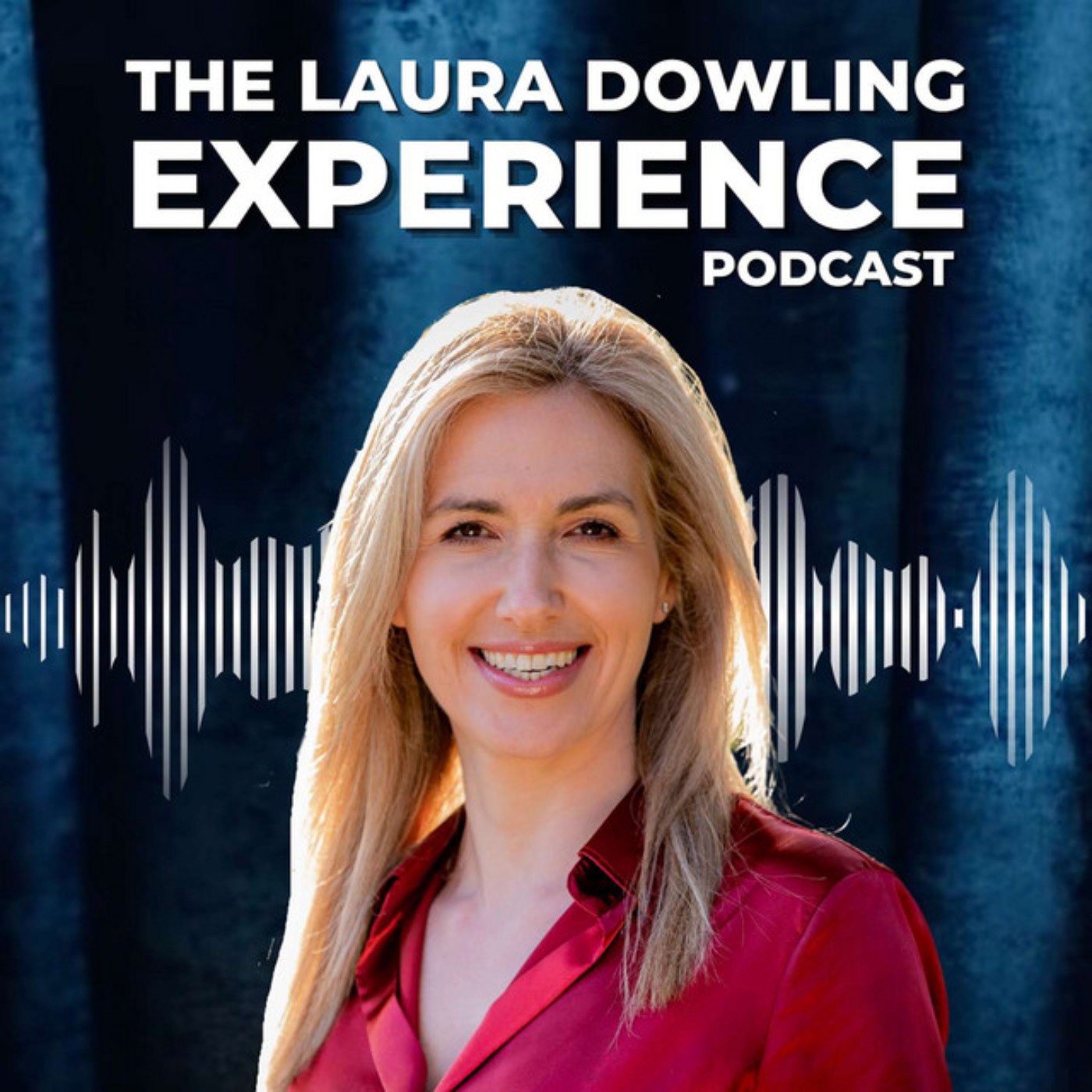
The Laura Dowling Experience
by Laura Dowling
Conversations about health, science, wellness, life, love, sex and everything in-between. Laura is a Pharmacist who loves to talk to interesting people about their unique life and work experiences. See @fabulouspharmacist on instagram for more information. Hosted on Acast. See acast.com/privacy for more information.
-
173
#169 Barbara Scully | The Things They Don't Tell You About Getting Older
Barbara Scully sits down with Laura for a wide-ranging conversation that starts with her own recent run-in with the medical system and opens out into what it actually means to age as a woman in Ireland today.Barbara talks about months of hip pain, a string of MRIs, a suspected stroke that turned out to be nothing, and the moment she decided to step off the treadmill of tests, hand back the prescription and rebuild her strength in the gym. She also shares her type 2 diabetes diagnosis in her mid-50s and the two years of remission she achieved through diet and exercise before her mother died and life became harder again.The conversation moves into menopause, brain fog, mood swings and the language used about older women. Barbara reframes brain fog as an information retrieval slowdown, makes the case that women's anger after menopause is real and warranted, and argues that being underestimated as you get older is closer to a superpower than to invisibility.There is also room for the story behind it all. Growing up tall in a male-dominated house. Becoming an unmarried mother in 1987 and listening to politicians and clergy describe women like her as a scourge on the radio. The close, unconventional friendship she had with her mother, who set up her own business teaching women word processing in the late 1980s. And the comedy career she fell into in her 60s, now touring with her one-woman show Older Bolder Wiser. Her best-selling book ‘Wise Up’ is available now in Irish bookstores nationwide & on Amazon.ie 📚🔑 Key PointsTrusting your gut with healthcareAfter months of MRIs and a hip replacement referral, Barbara declined the surgery and rebuilt her strength through physio and the gym.A diabetes diagnosis as a wake-up callA type 2 diagnosis in her mid-50s pushed her into healthier habits and into remission for two years.Brain fog reframedWomen in their 60s have decades more information stored than younger people; what is labelled brain fog is information retrieval slowdown.Anger after menopause is realAs life pressures lift, you have the headspace to notice ongoing inequalities, and that anger is not a hormonal mood swing.Underestimated, not invisibleBeing overlooked as an older woman gives you the element of surprise and the freedom to take risks without caring what people think.The cost of conformityA senior CEO told Barbara she would love to let her hair go grey but feared not being taken seriously at work.Becoming an unmarried mother in 1987Barbara remembers her father going upstairs to be sick, three weeks of silence, then a quiet "we'll stand by you" on a snowy morning.A friendship with her motherHer mother bought her her first baby cham at 12, set up her own business in her 50s and was a collaborator throughout Barbara's life.📚 ResourcesWise Up — Barbara ScullyMemoir reflecting on the years after menopause.Older Bolder WiserBarbara's one-woman comedy show currently touring Irish theatres.Funny Women IrelandSet up by Orla Doherty and Val Troy to promote women in comedy.⏱️ Timestamps00:00 — Hip pain and the MRI run-around03:00 — Stepping off the treadmill of tests07:30 — Type 2 diabetes and remission09:30 — Why brain fog is not what we are told11:00 — Anger after menopause is real13:00 — Underestimated rather than invisible17:00 — Letting the hair go grey22:00 — The freedom of getting older28:00 — A first smear test in the 80s36:00 — Growing up tall and the slow set44:00 — Giving up red wine and finding gin48:00 — Her mother as collaborator56:00 — Losing her mother in 2022Thanks for listening! You can watch the full episode on YouTube here. Don’t forget to follow The Laura Dowling Experience podcast on Instagram @lauradowlingexperience for updates and more information. You can also follow our host, Laura Dowling, @fabulouspharmacist for more insights and tips. If you enjoyed this episode, please subscribe and leave a review—it really helps us out! Stay tuned for more great conversations. Hosted on Acast. See acast.com/privacy for more information.
-
172
Bitesize Moment: "I Haven't Felt Right in Three Years." — Dr Sarah Callaghan on how perimenopause sneaks up
In this bitesize moment pulled from the Laura Dowling Experience back catalogue, GP and menopause specialist Dr Sarah Callaghan explains why perimenopause so rarely arrives with a bang — and why so many women spend years "muddling through" before they realise what's actually going on.She tells Laura about the slow, sneaky creep of symptoms, the patterns she sees most often in clinic, and the women who mistake their perimenopause for postnatal anxiety, burnout, grief, or "just life". It's a powerful reframe: if something feels off, you deserve more than "just cope".🔑 Key PointsWhy perimenopause symptoms rarely arrive all at once — and why that mattersThe fluctuating, "good week / bad week" pattern that makes women doubt themselvesCommon mislabels: postnatal anxiety, stress, grief, COVID, burnoutThe "I just don't feel like myself" phrase she hears in clinic over and overWhy you don't need to be in crisis to ask for help — even a 20–30% drop in functioning is worth investigating🎧 Listen to the full episode here.Thanks for listening! You can watch the full episode on YouTube here. Don’t forget to follow The Laura Dowling Experience podcast on Instagram @lauradowlingexperience for updates and more information. You can also follow our host, Laura Dowling, @fabulouspharmacist for more insights and tips. If you enjoyed this episode, please subscribe and leave a review—it really helps us out! Stay tuned for more great conversations. Hosted on Acast. See acast.com/privacy for more information.
-
171
#168 Maria Walsh | Deepfakes, Politics and Women's Health
Laura sits down with MEP Maria Walsh for a wide-ranging conversation about women, power and what is shifting in Europe right now. Maria has just returned from the UN Commission on the Status of Women in New York, where for the first time in seventy years member states could not agree a final text on access to justice for women.She talks honestly about online misogyny, the deepfakes already circulating in Irish secondary schools, conversion therapy, and the website created about her during the 2019 election that is still live today. Alongside that, she opens up about internalised homophobia, the loneliness of political life, and growing up as the gay Rose of Tralee at a time when Ireland was shifting on marriage equality.The conversation also moves through period poverty, FGM, the underfunding of women's healthcare, the pink tax, and what it would take to close the gap on cardiovascular care, menopause and reproductive health. It is a frank look at the work still ahead and the toll it takes on the women trying to do it.🔑 Key PointsThe UN couldn't agree on access to justice for women — For the first time in seventy years the Commission on the Status of Women failed to find consensus, after the US tabled eight late amendments including the definition of a woman.Deepfakes are already in Irish secondary schools — 99% of generated deepfakes are pornographic and 96% of victims are women and young girls, with nudification apps making explicit content from a single photo.Online attacks follow women in politicsA website created during the 2019 election is still live, and Coco's Law catches those who share content but not those who build or host the apps.Conversion therapy is still legal in most of the EUOnly eight EU countries have banned it, and Ireland's commitment sits inside the programme for government.Women's healthcare is underfundedMore research funding has gone into male baldness than endometriosis, and there are only six menopause clinics across Ireland.Cardiovascular care is still built around menHeart attack symptoms are taught through male presentation, leaving women under-treated when it matters.The pink tax keeps quietly costing womenRazors, dry cleaning and a 23% VAT rate on sunscreen all add up across a lifetime.Politics takes a real personal tollMaria speaks openly about loneliness, comfort eating, and learning to take up space in Brussels.📚 ResourcesUN Commission on the Status of WomenCoco's LawILGA-EuropeBelong ToWomen for ElectionSee Her ElectedRileyHope FoundationRuhamaEsker HouseHer Last Search (Croí)⏱️ Timestamps03:39 — Back from the UN Commission on the Status of Women07:33 — Why the US tabled eight amendments at the eleventh hour12:37 — Deepfakes, disinformation and the 90% statistic15:04 — Conversion therapy and the EU debate19:23 — The Burke website that is still live27:38 — Deepfakes in Irish secondary schools35:43 — What policy needs to do, and Ireland's chance to lead40:53 — Cardiovascular care and Her Last Search45:06 — Pink tax, menopause clinics and the funding gap49:29 — Why women are still underrepresented in politics53:01 — Period poverty, Riley and Any Time of the Month58:25 — Loneliness and learning to take up space59:30 — Calcutta, Hope Foundation and human traffickingThanks for listening! You can watch the full episode on YouTube here. Don’t forget to follow The Laura Dowling Experience podcast on Instagram @lauradowlingexperience for updates and more information. You can also follow our host, Laura Dowling, @fabulouspharmacist for more insights and tips. If you enjoyed this episode, please subscribe and leave a review—it really helps us out! Stay tuned for more great conversations. Hosted on Acast. See acast.com/privacy for more information.
-
170
#167 Michelle Flynn on Why Some Experiences Stay With Us
🎧 Episode DescriptionIn this episode, Michelle Flynn shares her deeply personal and professional insight into birth trauma, and why it’s not always about what happens, but how it’s experienced.Drawing on her own journey through pregnancy anxiety and her work as a perinatal psychotherapist, Michelle explains how trauma can live in the nervous system, showing up long after the moment has passed. From hypervigilance and intrusive thoughts to sensory triggers that bring the body straight back into the experience, she breaks down why these reactions happen and what they actually mean.Together, Michelle and Laura unpack the importance of feeling safe, seen and supported, both for patients and for healthcare professionals. This really comes back to understanding your body and how trauma can show up differently for each of us.📚 Mentioned in this EpisodePostnatal DepressionA type of depression that can occur after childbirth, affecting mood, energy, and ability to care for yourself or your baby.Postnatal AnxietyA condition involving excessive worry, fear, or intrusive thoughts during the postpartum period.Obsessive Compulsive Disorder (OCD)A mental health condition involving intrusive thoughts and repetitive behaviours, which can present during pregnancy or postpartum.Post-Traumatic Stress Disorder (PTSD)A condition that can develop after experiencing or witnessing a traumatic event, including childbirth.Perinatal Mental HealthMental health during pregnancy and the early years after birth, typically up until a child is around two years old, when individuals may be more vulnerable to anxiety and mood disorders.Somatic Experiencing (Peter Levine)A body-based trauma therapy focused on how the nervous system stores and processes traumatic experiences.The Body Keeps the Score - Dr Bessel van der KolkA widely recognised book exploring how trauma is stored in the body and how it can be treated.EMDR (Eye Movement Desensitisation and Reprocessing)A psychotherapy approach used to help people process and recover from traumatic memories.Cognitive Behavioural Therapy (CBT)A structured therapy that focuses on identifying and changing unhelpful thought and behaviour patterns.MBRRACE-UK ReportA UK report examining maternal deaths and inequalities, including higher risks among Black and ethnic minority women.⏱️ Timestamps00:00 - What is birth trauma02:00 - Michelle’s personal pregnancy experience04:00 - Pregnancy anxiety and early fears07:30 - Feeling dismissed and unsupported10:30 - Who is more vulnerable to trauma20:00 - PTSD in healthcare professionals24:00 - Communication and consent in care28:00 - Can trauma be prevented36:00 - The lemon experiment and body response45:00 - Understanding somatic therapy50:00 - Why CBT may not work for traumaThanks for listening! You can watch the full episode on YouTube here. Don’t forget to follow The Laura Dowling Experience podcast on Instagram @lauradowlingexperience for updates and more information. You can also follow our host, Laura Dowling, @fabulouspharmacist for more insights and tips. If you enjoyed this episode, please subscribe and leave a review—it really helps us out! Stay tuned for more great conversations. Hosted on Acast. See acast.com/privacy for more information.
No matches for "" in this podcast's transcripts.
No topics indexed yet for this podcast.
Loading reviews...
ABOUT THIS SHOW
Conversations about health, science, wellness, life, love, sex and everything in-between. Laura is a Pharmacist who loves to talk to interesting people about their unique life and work experiences. See @fabulouspharmacist on instagram for more information. Hosted on Acast. See acast.com/privacy for more information.
HOSTED BY
Laura Dowling
Loading similar podcasts...
URL copied to clipboard!