
PODCAST · education
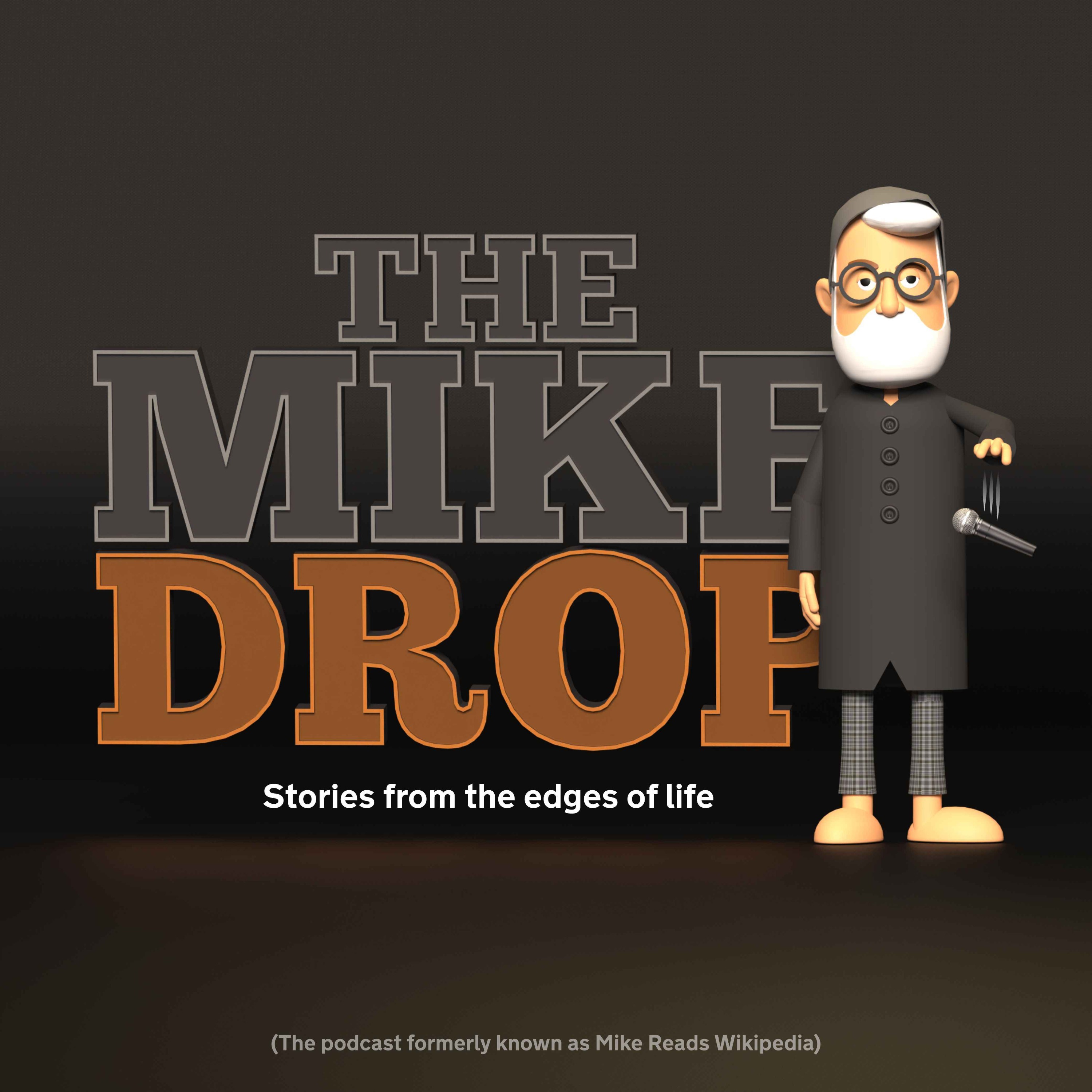
The Mike Drop - (formerly Mike Reads Wikipedia)
by Mike Dicks
I'm Mike Dicks the self styled Mayor of a fictitious town called Trumpton, an artist, book creator and podcaster - this podcast is a collection of stories that started as me just reading Wikipedia entries and now covers whatever shiney stories I find interesting when I'm near a microphone Hosted on Acast. See acast.com/privacy for more information.
-
24
Spoon Theory
Show Notes: The Spoon Theory and the 10% BatteryIn this episode of Mike Reads Wikipedia, Mike Dicks explores the invisible economy of energy. When you are living with a chronic illness or a mental health condition, energy isn't just a feeling—it’s a finite currency that must be budgeted with mathematical precision.Starting with the Wikipedia entry for Spoon Theory, Mike traces the history of this vital metaphor back to a 2003 diner conversation where Christine Miserandino used literal spoons to show a friend what it’s like to live with Lupus. We look at how the "Spoonie" identity has created a global community and a shared language for those whose stamina doesn't match the world's expectations.In this episode, we discuss:The Origin Story: How a handful of cutlery became a global symbol for disability advocacy and "crip time."The Morning Audit: Why the most important part of the day happens before you even get out of bed, as you "tune in" to calculate your daily budget.A Personal Perspective: Mike shares his experience navigating fatigue following Leukaemia and surgery, and how he and his partner (living with Rheumatoid Arthritis in Madrid) use this language to stay connected across the miles.The 10% Battery Theory: Mike proposes a modern evolution of the metaphor. In an age of smartphones, we all understand the panic of a 10% charge with no charger in sight. Mike explains how this helps him prioritize "essential apps" and accept the inevitable "blackout" when the power runs out.Whether you're a long-time "Spoonie" or someone trying to understand the red battery icon in a loved one's life, this episode offers a candid, accessible look at the cost of getting through the day. Hosted on Acast. See acast.com/privacy for more information.
-
23
The Danger of American Fascism - Henry Wallace
"The American fascist would prefer not to use violence. His method is to poison the channels of public information." These words, written in 1944 by Henry A. Wallace, Vice President under Franklin D. Roosevelt, resonate as deeply today as they did during the height of World War II. Wallace’s essay, The Danger of American Fascism, originally published in The New York Times, is a stark warning about the insidious threats to democracy from within. Henry Wallace’s essay, written nearly 80 years ago, serves as a guidepost in uncertain times. As Wallace himself said:"If we put our trust in the common sense of common men and 'with malice toward none and charity for all' go forward on the great adventure of making political, economic, and social democracy a practical reality, we shall not fail."So, I’ll leave you with this question: What are we doing today to ensure democracy remains a practical reality? And how can we resist the insidious influence of those who would sacrifice truth and justice for money and power? Hosted on Acast. See acast.com/privacy for more information.
-
22
The Life in the UK Test
Hello and welcome to Mike Reads Wikipedia. I’m Mike Dicks, your host. Traditionally, on this podcast, I read a random Wikipedia page—hence “Mike Reads Wikipedia”—but recently, I’ve been experimenting with feeding Wikipedia articles into ChatGPT, transforming them into scripts, and then adding my own touches before reading them out. As much as I like the idea of a podcast titled “Mike Gets ChatGPT to Read Wikipedia, Mangle it into a Script that I Edit and Read to You” it might be a bit of a mouthful so, I’m considering renaming it something snappier like “Mike Reads Something Out Loud” or just “Mike Reads Something.” We’ll see how that pans out. Today’s episode dives into The Life in the UK Test—a test that anyone wishing to settle in the UK and become a citizen must pass. It’s designed to assess knowledge of British history, culture, and institutions through a series of multiple-choice questions. So, I’m going to throw out a few questions to test your knowledge. Feel free to pause between each question but don’t look up the answers. If you can't answer at least 4 out of 5 correctly without Googling, I might just have to ask you to leave the UK: Question One: When was the Statute of Rith Luhn enacted? Question Two: What was the Heptarchy in early English history? Question Three: Who appoints the Archbishop of Canterbury? Question Four: How many people were counted in the UK's first census in 1801? And Question Five: What did Richard Arkwright invent in 1769? How would you fare with these? I’ll give you the answers at the end of this podcast, so stay tuned to find out if your UK residency is in jeopardy—don't worry, I can’t really deport you! Last week, a friend of mine took the Life in the UK Test and she failed. Now, she must retake it every seven days, paying £50 each time, until she passes. If she fails to do so, she risks not being allowed to live and work here in the UK. This process made me think about the test and the questions it asks. As a middle-aged British man, I found many of the questions quite challenging without referring to Wikipedia. I’ve been helping my friend revise, and the more I investigate, the more I question the purpose and practicality of this test. Why does it focus so heavily on obscure history and trivia? Is it genuinely useful for those trying to integrate into British life, or is it merely a bureaucratic hurdle to please politicians who enjoy creating barriers for those wanting to join British society? Hosted on Acast. See acast.com/privacy for more information.
-
21
Hugo Boss & The Nazis
The dark truth about Hugo Boss and the Nazis - great bedtime listening for anyone into uniforms Hosted on Acast. See acast.com/privacy for more information.
-
20
The 1945 Labour Party Manifesto
Britain is in the middle of a General Election, one that promises big change after a long period of austerity, war and privation the nation is ready for a change. It's June 2024 but Mike takes a look back at the Labour Manifesto from 1945 - the election that created the NHS, Free Secondary Education, Nationalised transport, power and industry, the Welfare State and the United Nations. It's not quite a Wikipedia page this episode, it's the original document and it's contents resonate today as much as they did back then.Read the original document here:http://www.labour-party.org.uk/manifestos/1945/1945-labour-manifesto.shtml Hosted on Acast. See acast.com/privacy for more information.
-
19
The Eurovision Song Contest
As it's Eurovision day (well it was when I recorded this) I thought I'd read about it on Wikipedia and I don't see why you shouldn't have to listen along with me.You van read the article yourself here EUROVISION Hosted on Acast. See acast.com/privacy for more information.
-
18
Count Binface and Lord Buckethead
This episode was recorded on election day (6/2021) and deals with a character who is standing for the Mayor of London, Count Binface - the article surprised me when I learnt that Binface was previously a version of Lord Buckethead and had to change due to a copyright dispute - it is, asmum always says, a bad day when you don't learn somethingRead along HERE and HERETOO Hosted on Acast. See acast.com/privacy for more information.
-
17
The Holy Foreskin (Prepuce)
In a vain attempt to pretend this podcast has any listeners I suggest that iepisode's subject was suggested by a listener, called Z (you don't know him, he lives in another town) Anyway, welcome to the Wikipedia page about Jesus's foreskin(s) and how it ended up as the rings of SaturnFeel free to read along HERE Hosted on Acast. See acast.com/privacy for more information.
-
16
Brighton Palace Pier
Amongst the many images I create and call 'art' are a series that I call "The Towers of Brighton and Hove and the most popular of those is loosely based on The Brighton Palace Pier, soo today I read the Wikipedia article about Brighton's most famous ico.You can read along here And look at my version of the pier here Hosted on Acast. See acast.com/privacy for more information.
-
15
Mike Read's Wikipedia (Page)
Since I started this podcast a number of people have asked if it's actually a version of Wikipedia created by 1980's heartthrob Mike Read - it isn't - but I thought I would go a little meta and read the article about Mike Read for Mike Reads Wikipedia - you can read along here Hosted on Acast. See acast.com/privacy for more information.
-
14
Friendly Floatees
Recently I've looking back over some of my old projects, the ones I start and never complete and I came across an idea I had to do a book about 3 rubber ducks lost at sea. The idea was inspired by a real story that involved over 28000 bath toys being set free in the ocean that were tracked by scientists and I thought I would find the Wikipedia article about the inspirational event - it's entitled Friendly Floatees and you can read along here Hosted on Acast. See acast.com/privacy for more information.
-
13
The Apple Crumble Controversy
Normally I avoid contentious articles on Wikipedia – you know ones that are controversial and badly in need of a brisk edit – but today I was thinking about Apple Crumbles so I went to Wikipedia to find out about the history of the dish, only to discover they had merged the article with one about an American dessert called an Apple Crisp! – you can hear my disbelief throughout this episode and read along yourself HERE: Hosted on Acast. See acast.com/privacy for more information.
-
12
Devil's Dyke in Sussex
There are quite a few places in the UK called Devil's Dyke, one of them is near to where I live in Sussex and I thought I would take a look at the Wikipedia entry for it today.You can read along HERE Hosted on Acast. See acast.com/privacy for more information.
-
11
Henry Box Brown
I read a newspaper article about a man who had posted himself from Australia to the UK in the 1960s, so I went to look in Wikipedia to find other stories of Human Post - this one, about Henry Box Brown caught my eye - so I read it into a mic and now here we are.Read along HERE Hosted on Acast. See acast.com/privacy for more information.
-
10
Zefram Cochrane
For the last few days I've been thinking about Star Trek and drew a couple of cartoons about the show, including a rendition of the HMSS Brexit - my spoof version of the show. The day after First Contact Day (5/4/2021) - thee day that celebrates a fictional event that won't happen till 2063 - I thought I'd turn to the page of Wikipedia that covers Zefram CochraneClick here to read the article yourselfor let me read it for you. Hosted on Acast. See acast.com/privacy for more information.
-
9
General Jumbo
General Jumbo, one of my all time favourite comic book characters, inspired me to do a drawing/photo montage this morning, so I thought I would investigate the, rather short, article about him on Wikipedia - I discovered his name - which I didn't know - and a little bit of his back story in this short episodeFollow along here Hosted on Acast. See acast.com/privacy for more information.
-
8
The Statue of Winston Churchill, Parliament Square
These days it seems that statues are becoming a protected species, so I thought I'd read the Wikipedia article about the Statue of Winston Churchill that was being protected by a dozen or so police officers yesterday.Read along, if you like, by opening the article here Hosted on Acast. See acast.com/privacy for more information.
-
7
David Low (Cartoonist)
This episode is not really a random article, it's a chosen page about David Low, my favourite political cartoonist who allegedly appeared in Hitler's Black Book of people he wanted arrested or killed when he invaded the UK. If you'd like to read the article click HERE - otherwise let me read it for you. Hosted on Acast. See acast.com/privacy for more information.
-
6
The London Beer Flood
Returning to the a link in The Boston Molassacre story in Episode 3 - Mike finds out about a flood of beer that swept through Soho in the 1814. Read the article yourself here Hosted on Acast. See acast.com/privacy for more information.
-
5
Trumpton!
This episode is a little less random than the previous 4 as it's about a fictional town that part of me now lives in called Trumpton. Surprising, even I found out a little more about my favourite town reading this article, so I hope you do too.Link to the Wikipedia Article here Hosted on Acast. See acast.com/privacy for more information.
-
4
The Clock of the Long Now
Another random Wikipedia entry read by Mike Dicks - this time about a clock that's being designed and built to measure time over the next 10,000 years - it involves the CEO of Amazon and Brian Eno and a lot of information about how clocks and civil unrest might not play nice together.If you want to read along here is a LINK Hosted on Acast. See acast.com/privacy for more information.
-
3
The Boston Molassacre
Mike reads a random article about The Boston Molassacre - and discovers more than we need to know about a 25ft tall wave of liquid sugar that killed 21 people in Boston in 1919 Hosted on Acast. See acast.com/privacy for more information.
-
2
Keep Calm And Carry On
This episode looks at the story of the famous Keep Calm and Carry On posters that we all believe were widely seen and used during the war but in fact turn out to have been pulped and forgotten till the 2000's when they were rediscovered by a small bookshop and a Guardian journalist.Link to Wikipedia article: https://en.wikipedia.org/wiki/Keep_Calm_and_Carry_On Hosted on Acast. See acast.com/privacy for more information.
-
1
Stereotypes Of The British
In the inaugural episode Mike logs onto Wikipedia reads a "Random Article" for the first time and discusses it, shares his thoughts and then follows a link to the next articleLink to Wikipedia article: https://en.wikipedia.org/wiki/Stereotypes_of_the_British Hosted on Acast. See acast.com/privacy for more information.
No matches for "" in this podcast's transcripts.
No topics indexed yet for this podcast.
Loading reviews...
ABOUT THIS SHOW
I'm Mike Dicks the self styled Mayor of a fictitious town called Trumpton, an artist, book creator and podcaster - this podcast is a collection of stories that started as me just reading Wikipedia entries and now covers whatever shiney stories I find interesting when I'm near a microphone Hosted on Acast. See acast.com/privacy for more information.
HOSTED BY
Mike Dicks
Loading similar podcasts...
URL copied to clipboard!