
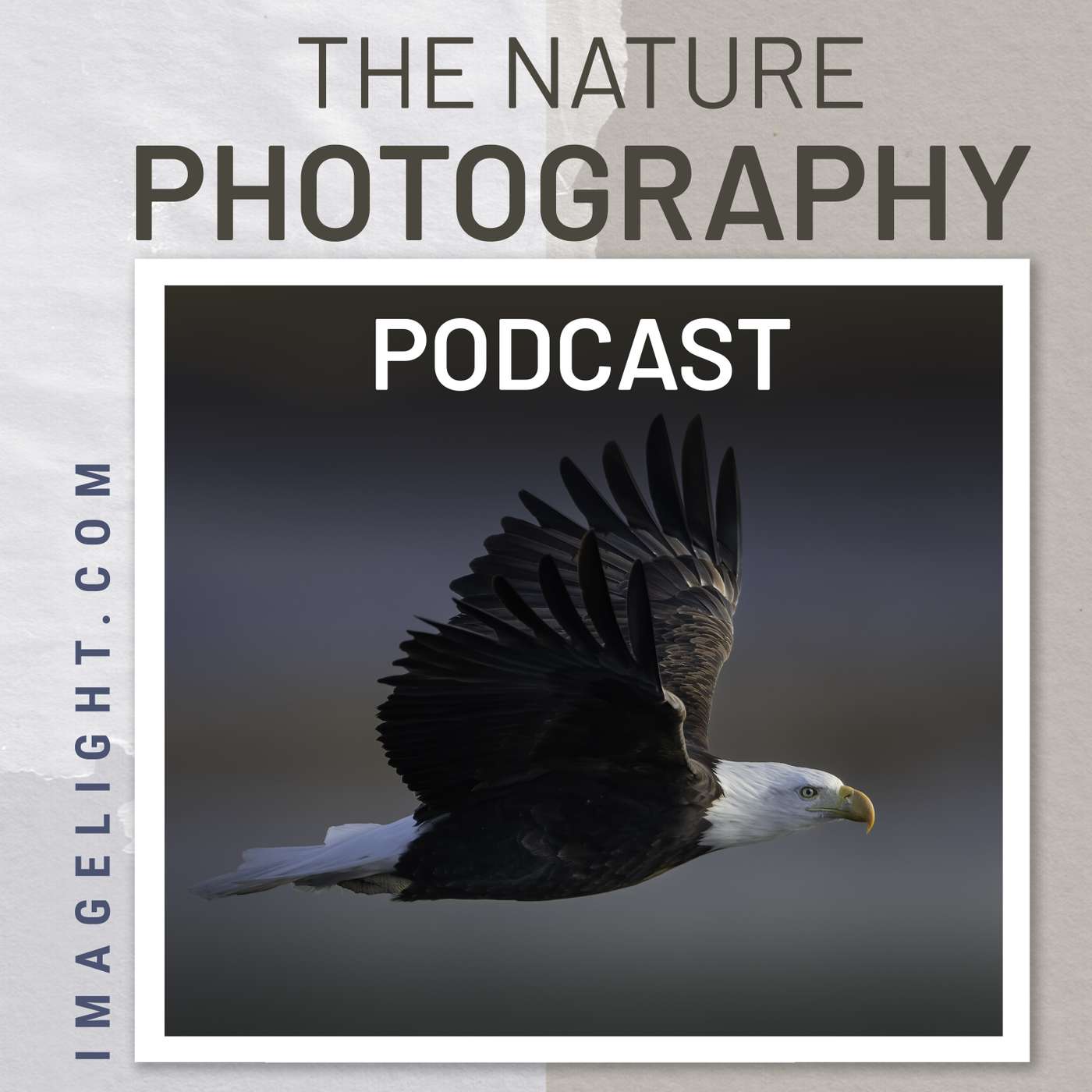
PODCAST · arts
The Nature Photography Podcast
by Terry VanderHeiden, Photographer
This podcast is about learning wildlife photography and landscape photography from a professional photographer.
-
42
Dark Skies author Jeff Pfaller
Book Purchase: https://jeffpfaller.com/Interview with photographer and author Jeff Pfaller who talks about his book Dark Skies: Rare Phenomena in America's Public Lands
-
41
Yosemite Begins
History of Yosemite Valley
-
40
Wildlife and Noise
This episode is all about the effects of human-made noise on wildlife. As we approach the 4th of July and the sound of fireworks fills the air across America, it’s a good time to stop and think about the impact our noise has—not just on our neighbors, but on the wildlife that shares our world.We often don’t realize just how disruptive human-made sounds can be. Fireworks, traffic, construction, leaf blowers, loud music—these may seem like part of everyday life to us, but to animals, they can be deeply distressing, even dangerous. These sounds interfere with their ability to find food, avoid predators, communicate, and raise their young.From birds abandoning their nests to deer stampeding in panic, to pets trembling under beds—the effects are real and often heartbreaking.But here’s the good news: unlike some environmental problems that seem out of our control, noise is something we can manage. We can choose when and how we make sound. We can advocate for quieter spaces, for wildlife-friendly policies, and we can be more aware of the timing and volume of our own activities.So, as the fireworks begin this week, I invite you to reflect on the power of quiet—and the role each of us can play in giving nature a break from the noise. [email protected] - for comments or suggestions.
-
39
Landscape Photography Ethics
LandScape Photography EthicseMail: [email protected]: https://bit.ly/4fzdfkZSupport the Podcast: https://bit.ly/3rqAqae This week’s topic came to me while I was shooting in Yosemite Valley. As I stood there, taking in the views and composing my shots, I started thinking about how someone might begin their journey into landscape photography. Like most hobbies or disciplines, I’d start by sharing the rules. And in nature photography, the number one rule—above all else—is ethics. So in this episode, we’re diving into the ethics of landscape photography. As with all the episodes I produce, this is just my perspective. It’s not necessarily the right way for everyone, but it’s what I believe and practice. If you’ve got thoughts, feel free to tag me in social media posts and share your opinions, or contact me directly via email if you’d rather have a more private conversation. I’ll get back to you. My email is [email protected]. Landscape photography is more than just an art form—it’s a bridge between people and the natural world. As photographers, we have the ability to inspire awe, provoke emotion, and encourage conservation. But with that power comes responsibility. Every choice we make, from how we interact with the land to how we edit our images, impacts the way others perceive nature. In today’s episode, we’ll explore the ethical aspects of landscape photography. We’ll talk about best practices in the field, responsible editing techniques, the appropriate use of artificial intelligence, and how to respect both wildlife and fellow outdoor adventurers. Whether you’re new to photography or a seasoned pro, I hope this episode helps you grow not only as a photographer but as a thoughtful steward of the landscapes you capture. Let’s start with the foundation of ethical photography: the Leave No Trace philosophy. It’s a set of outdoor ethics that promotes conservation through responsible recreation. The idea is simple—leave nature as you found it, or better. Plan ahead, travel on durable surfaces, dispose of waste properly, leave what you find, minimize campfire impacts, respect wildlife, and be considerate of other visitors. By following the Leave no Trace guidelines, photographers can minimize their impact on delicate ecosystems and ensure that natural spaces remain pristine for others to enjoy. Planning and Preparing for Ethical Photography Proper planning is not only the key to capturing great photos but also to minimizing your ecological footprint. Here are some important steps to consider when preparing for a shoot:Research the Location: Learn about the area you plan to visit. Understand the environmental conditions, access regulations, and sensitive habitats. Look into trail maps, permitted zones, and any seasonal restrictions they might have. Planning is a critical part of ethical photography. Not only does it help you get the best shot, but it also reduces your environmental impact. Before heading out, research your location. Learn about the terrain, any restrictions, sensitive habitats, and local guidelines. Check the weather and trail conditions to avoid any accidents that could force you off the path and potentially harm the landscape. Bring the right gear—reusable water bottles, containers, and trash bags to pack everything out. Always have a first aid kit and emergency supplies. Know what rules apply to your shoot, including permits, especially when you are in national parks or protected areas. Speaking of national parks, let’s talk about drones. I know those aerial angles are tempting, but flying drones in national parks is generally prohibited. Violating this can lead to serious fines—up to $5,000—and even jail time. The ban was put in place back in 2014 after a Dutch tourist crashed a drone into Yellowstone’s Grand Prismatic Spring. The drone couldn’t be retrieved right away due to the sensitive nature of the site, raising serious concerns about contamination and disturbance. The National Park Service (NPS) issued a policy on June 19, 2014, prohibiting the launching, landing, or operation of unmanned aircraft within all national parks. If you’re eager to capture drone footage, look for areas outside the National Park Service’s jurisdiction where it’s permitted. Always follow FAA guidelines and local laws. There are also other preparations to keep in mind. Always pack headlamps, extra batteries, a map or GPS device, and backup food. Leave a trip plan with someone, especially if you’re heading into remote areas. That way, you’re not only protecting nature but ensuring your own safety. When you’re out in the field, stick to established trails. It’s tempting to venture off-path for a unique composition, but doing so can damage delicate ecosystems like alpine meadows, desert crusts, and forest floors. Be aware of your surroundings and remind your fellow photographers too—sometimes, we get so focused on getting the shot, we forget we’re trampling something irreplaceable. Cultural and historical sites deserve equal respect. Indigenous lands, sacred sites, and heritage structures shouldn’t be disturbed or disrespected. If you’re unsure whether it’s okay to photograph a place, ask the local authorities or community leaders. When it comes to wildlife, don’t disturb the animals. Use a long lens, maintain distance, and never bait or call them in for a photo. Be especially careful during breeding seasons or in winter, when wildlife is more vulnerable. Birds, in particular, are sensitive to human interference—avoid their nesting areas and go easy on playback calls. Now let’s talk about editing—where the line between enhancement and deception can get blurry. Editing is part of the process, but it becomes problematic when it misleads. I remember seeing a photo of Yosemite Valley with the sun rising in an impossible direction, casting light on trees that don’t even grow there. The caption suggested that getting up early and putting in effort would reward you with similar views. It was so clearly manipulated, it felt dishonest. Ask yourself: are you adding elements that weren’t there? Are you removing anything in a way that changes the truth of the scene? Adjustments like exposure, contrast, and cropping are normal. But replacing skies or adding elements that didn’t exist crosses into digital art territory. That’s fine—just be upfront about it. Transparency is key. If your image is heavily edited or a composite, say so. Let your viewers know. Over-editing color or saturation to unrealistic levels can distort a viewer’s perception of nature and create false expectations. Let your edits enhance the truth, not fabricate a fantasy. After the break, we’ll talk about the role AI plays in photo editing and how to use it responsibly. Thanks for tuning into the Nature Photography Podcast. If you’d like to see more of my work and learn about the software I use to process RAW files, check out my YouTube channel by searching @TV510. That same handle works on Instagram, Twitter, and most social platforms. If you have questions or just want to connect, you can reach me at [email protected]. That’s T-E-R-R-Y at I-M-A-G-E-L-I-G-H-T dot com. Drop me a note and I’ll get back to you. I’ll also add you to my mailing list so you’ll be th...
-
38
Long Glass Stories
If you love nature, wildlife, and photography, you're in the right place. Now if all goes well, right about now I'm driving into Yosemite National Park to do some spring waterfall photography. I've been checking the weather and I think it snowed there yesterday, so hopefully the park is going to look great. So this week I pre-recorded this episode so I can be up there enjoying Yosemite, one of my favorite national parks. I'll try to make some recordings from inside the park to put in a future podcast. Today we're going to talk about long lens stories from the field. Now if you're like me, you like to go out often and shoot in nature. Depending on what I plan to shoot, I'll have a variety of gear with me. However, by far, the piece of equipment that garners the most interest is my long last setup. As of late, I'm using the Nikon Z9 with a 600 f4 TC lens. The lens is covered in a lens coat. This is a set of neoprene sleeves that protect the outside of the lens. Mine happens to be camo color. Now, I don't really subscribe to the thought that camouflage is going to make a big difference to the subjects I'm photographing. I doubt that a bulk elk is going to look over to me and say to himself, I see a guy standing over there, but I can't really tell what he's doing. It doesn't have a camera because if you did, I'd be able to see it. Yeah, I just don't think that camouflage on my lens just makes that much of a difference. There are so many other things that would make a subject uncomfortable that having a lens covered doesn't seem to make much of a difference. My thought is this, the neoprene sleeves provide excellent protection for the exterior of the lens, shielding it from scratches, dents, and other potential damages that can often occur when you're outside in photographic sessions. The lens coat can also help in preventing dirt, dust, and moisture from accumulating on the lens, which is particularly beneficial when shooting in adverse weather conditions and rugged environments like, say, the beach. By using a lens coat, I feel like I can extend the lifespan of my expensive lenses, ensuring that they remain in optimal condition for capturing wildlife action. Moreover, for those who frequently photograph wildlife like myself, Moreover, for those who frequently while moreover, for those who frequently photograph wildlife moreover, for people who frequently while moreover, For those who frequently photograph wildlife like myself, it's essential to minimize any reflective surfaces that could alert animals to their presence. It's essential to minimize any reflective surfaces that could alert animals to your presence. While camouflage isn't going to entirely conceal the photographer, While camouflage isn't going to entirely conceal the photographer, the reduced glare from the lens coat can make a subtle difference in approaching subjects discreetly. In essence, a lens coat serves as a practical accessory for me to preserve my gear while potentially enhancing the field experience. Let's talk about support. I often use a tripod and a Wimberly gimbal head. This is an invaluable asset to have in the field as it's pretty quick to set up and goes and allows good maneuverability. Here's how I work. I get to my spot and extend the tripod legs to the desired height. Then I balance the head using a knob that operates what's called the leveling base. A leveling base is attachment on the top of the legs of the tripod. It's kind of like a small bowl. Loosening it allows me to get the base of the head perfectly level in all directions. I keep an eye on the bubble level that's attached to the leveling base to get it spot on. The head sits on top of the base. The Wimberly head is a gimbal head. This has a large knob for the vertical axis and a large knob for the horizontal axis. Next, I attach the lens foot into the head and tighten it down. Once tightened, I loosen the vertical axis. Once tightened, I loosen the vertical axis to see if the lens tips forward or leans back. I loosen the vertical axis to see if the lens tips forward or leans back. I then adjust it by sliding the lens back or forward. I then adjust the sliding. Then I adjust this by sliding the lens just a little bit backwards or a little bit forward until I achieve the perfect center balance.Razor-Sharp Nature Photography eBook: https://imagelight.com/lightroom-brushes Now this can be a bit of a sketchy part because you never want to let your hands off of the camera and lens while you're centering this. But as long as you never let go before you lock it down, you should be good. But as long as you never let it go before you lock it down, you should be fine. Once centered, I locked down the lens foot onto the head and now it's in the exact spot I want for shooting. Now I can point the lens in any direction. Now I can point the lens in any direction. And since it's centered and balanced, the lens always stays in place without needing to tighten the knobs. It's pretty slick. Commercial. Thanks again for listening to the nature photography podcast. If you'd like to see images or learn more about photography and the software I use to process my raw images, check out my YouTube channel. You can find it by typing in a T that little at signal at. Thanks again for listening to the nature photography podcast. If you'd like to see images and learn more about photography and the software that I use to process my raw images, check out my YouTube channel. It's found at at TV five, ten So that's that little at symbol plus the letters T, V, then 510, at TV510. You can use, at TV510, you can use the same call sign to find me on Instagram, Twitter, and all the other social media locations. Now, if you have questions and want to contact me directly, try using my email address, terry at imagelight.com. That's T-E-R-R-Y at I-M-A-G-E-L-I-G-H-T dot com. I'll answer your note and put you on my mailing list to let you know when I have new podcasts released and videos to watch on YouTube. If you'd like to support the podcast, consider purchasing some of the digital products I offer like my popular ebook, razor sharp nature photography. It's packed with information on getting sharper images with both your wildlife images and your landscape images. It's sold exclusively on my website, www.imagelite.com. Just look under the digital products, you can find it there. Now, as always, product, as always, podcast reviews on the platform you're listening to this on like Spotify or Apple is great. A good review will often bring more attention to this podcast when people are looking for something to listen to. Lastly, just sharing this podcast with other photographers or nature lovers will lead to more listeners as well. Whatever way you choose to support the podcast, I do appreciate it. If I find myself out in Yellowstone or say Grand Teton National Park and have my long lens out, and especially if it's on a tripod, this is a traffic jam creator. I could just be looking at the mountains or I could just be looking at the mountains and other park visitors will see the lens out and the cars will come screeching to a halt. No one wants to miss anything. Well, this is a technique for finding wildlife in those popular parks. So as you drive, you just look for traffic tie ups and a lot of times somebody has stopped for an elk or a bison or moose or even bears. Last fall. Last fall when I was up at Grand Teton, we had a wonderful time capturing images of just about everything. One iconic wildlife subject we were missing, though, was grizzly bears. On one of the last days in the park, we headed out in our van, myself and five other wildlife enthusiasts, and I announced that today we would be number one. And what I meant by that is I wanted to be first on the scene...
-
37
Tracking Wolves in Yellowstone
Tracking & Photographing Wolves in Yellowstone! 📸Join host Terry VanderHeiden on an unforgettable journey into Yellowstone & Grand Teton National Parks as we track one of North America’s most elusive predators—the wolf!🎙️ What’s Inside:🔹 The incredible story behind Yellowstone’s wolf reintroduction🔹 Where & when to find wolves in the wild🔹 Expert wolf photography tips for stunning shots🔹 The latest on new wolf packs & conservation effortsWhether you’re a wildlife photographer or just love these majestic creatures, this episode is packed with insights you won’t want to miss!#NaturePhotography #WildlifePhotography #Wolves #Yellowstone #GrandTeton #Conservation
-
36
Saving the Spotted Owl
On this episode we discuss the lethal removal of the Barred Owl in order to save the Spotted Owl. Plus, info about photographing owls. What equipment to use and how to find them.
-
35
Grizzly Bears
This episode talks about the new protections of Grizzly Bears in the lower 48 states. Also, Learn some tips on photographing these magnificent animals.
-
34
Scary Sounds..to Animals
Just in time for Halloween, this episode covers scary sounds. The sounds that creep us out and surprisingly, the sounds that unnerve the bravest wild animals.
-
33
Nikon's New Zoom
This is a full breakdown of the new Nikon 180-600 Zoom lens for the mirrorless Z system. I breakdown all the parts of this lens, and why you might want to add it to your wildlife kit.YouTube Channel: https://www.youtube.com/channel/UCHmSpF_nvSRSrvQ9E7PEUGgGet a copy of the eBook - Razor-Sharp Nature Photography: http://bit.ly/3L7nP3MContact Terry directly: [email protected]
-
32
Yosemite 1920
This is a little audio story about the early years and the famous people of Yosemite Valley.Link to Razor-Sharp Nature Photography e-Book
-
31
Copyright Your Photographs
What is new in the world of copyright? Plenty. Why as a photographer, professional or not - you should take the steps to copyright your images.After years as a professional photographer, here is what I know about copyright.
-
30
Olympic National Park
This episode is all about Olympic National Park in the state of Washington. I take a tour to Madison falls with a local enthusiast and park volenteer, Tim Williams, and we talk about what to see when visiting Olympic National Park.Email the show; [email protected] my ebook on getting sharper images: Razor-Sharp Nature Photography - http://bit.ly/3L7nP3MLink to YouTube Channel: https://www.youtube.com/@tv510/videos
-
29
Wildlife Backgrounds
Wildlife Backgrounds. (Use your Headphones for this episode) This episode is all about improving your backgrounds for your wildlife photography. Moving just the smallest amount can make a big difference in the final images. Terry VanderHeiden discusses some of the options you have and what to look for as he broadcasts on location, while on a wildlife photography shoot. Try listening with your headphones for a more immersive experience.Link to email: [email protected] to Razor-Sharp the eBook: http://bit.ly/3L7nP3MLink to Image Light Digital Products: http://imagelight.com/lightroom-brushes
-
28
"I hadn't realized these creatures were here." Interview with David Bozsik
This episode is an interview with wildlife photographer David Bozsik. David has a ton of knowledge about wildlife photography and we talk about some techniques for creating your best nature images. He shares his images from his daily treks on Facebook and his own site just about everyday.Bozsik Imagery Facebook link bit.ly/3ITRejXNature’s Camera.com bit.ly/3XZZfb2Razor-Sharp Nature Photography eBook: bit.ly/3L7nP3M
-
27
Chasing Waterfalls
From California to Oregon, this episode covers photographing waterfalls from Yosemite valley to the middle of Oregon. Finding the water at the best time of year and how to photograph waterfalls.Razor-Sharp Nature Photography eBook: http://bit.ly/3L7nP3Mwww.imagelight.com(email) [email protected]
-
26
Backyard Birds
Bringing the subjects to you.From setting up a backyard bird feeder to all the aspects of attracting song birds to your pose for you in front of your camera.Get your copy of Razor-Sharp Nature Photography e-Book: http://bit.ly/3L7nP3M
-
25
Going Mirrorless
In this episode, Terry talks about the experience going from the DSLR over to Mirrorless cameras. Several months after getting his Nikon Z9, what he's learned.Get your copy of Razor-Sharp Nature Photography e-Book: http://bit.ly/3L7nP3M
-
24
Yosemite in Winter
Yosemite National Park in the winter is a fabulous place to photograph. Away from the summer crowds and a few unique landscape happenings that you need to be aware of.Full transcript and photos of this podcast episodeRazor-Sharp Image E-BookVallerret Photography Gloves
-
23
Behind The Scenes of the The Nature Photography Podcast
If you are curious as to how a podcast like The Nature Photography Podcast comes together, this episode is for you. If you are thinking of starting your own podcast this is also a good episode to get you on your way.Here are the links to the equipment discussed in this episode.Neuman TLM 103 - https://amzn.to/3pHJVm6Sennheiser MHK 416 - https://amzn.to/2ZrsOtOWildtronics Parabolic Microphone - https://bit.ly/319aC9fRode Podcaster - https://amzn.to/3Bcc3jqMicro SD cards - https://amzn.to/3Ehszk2Zoom F2 - https://amzn.to/3mgZTBtSound Devices Mix Pre ii - https://amzn.to/3jGX0YZMusic from Artlist: https://artlist.io/Terry-854158
-
22
Birds In Flight with Steve Perry
This is an in-depth episode all about getting better Bird-In-Flight photographs. In this episode, we interview Steve Perry. Steve is a popular author, YouTube Creator and wildlife photographer.Steve hosts a very popular YouTube channel - Backcountry Gallery where he shows the viewers precisely how to operate many different equipment brands and discusses wildlife photography techniques.We discuss in depth - Steve's new book, Secrets to Stunning Bird-In-Flight Photography. Everything from equipment choices to exposure to auto focus. This is a comprehensive interview that is our longest podcast episode to date, so settle in to absorb a ton of great information.You can also send you comments to me at [email protected] or visit my web site www.imagelight.com
-
21
Fall Colors
This episode is about photographing the fall colors. No matter where you are, Autumn is a spectacular time to go out shooting landscape images. In this episode there are lots of tips to getting great fall images. Check out the transcript and photographs here
-
20
Seals and Sea Lions
The Nature Photography Podcast goes to Pier 39 in San Francisco to photograph Sea Lions, then out to the ocean to photograph Harbor Seals. How to tell the difference an how to best photograph them.Learn how to get permits for seeing the 3000 pound Elephant Seals in Año Nuevo, in Northern California.Complete transcript
-
19
Bats In Motion
This episode finds the crew under a specially built freeway that is home to thousands of Mexican Free Tail bats. Here, Terry is joined by nature photographer David Bozsik to set up an elaborate system for capturing images of these bats in flight.Check out the set up and the images at Imagelight.comCognisys Saber Camera TriggerBozsik ImageryDavid Bozsik on Facebook
-
18
Honey Bees
Visit with Ronni Brega with Oaktown Bees and learn about bee keeping and why we need to keep this keystone species, safe and thriving.Learn techniques to photograph and enjoy this very important species.Special thanks to Chrissy @buzzentineempire (instagram) for letting me photograph the hives she watches over.
-
17
Long Lenses
A question that most professional photographer’s get asked is; what is your favorite lens? I guess with the thought that if a new photographer could buy one lens, what would it be. As you can imagine, there is no right answer to this. But I will let you know what lenses I use most for wildlife photography.Long lenses Blog with LinksLensProToGo - Lens rentalDiscount Code for LensProToGo - TERRYV10
-
16
Dirty Crows
Crows are despised by many but possibly they have been given a bad rap. These supremely intelligent birds are easy to find but difficult to get good photographs. You want a challenging subject to photograph? Check out the dirty crows.Photos of Crows
-
15
Tide Pool Photography
Exploring the tide pools of Northern California is a great place to find wildlife to photograph. Professional photographer, Terry VanderHeiden shows you how to get started with equipment and techniques in this special environment. Imagelight.com / PodcastsRing LightCircular Polarizer
-
14
Yosemite National Park
Yosemite. An iconic place to photograph. On this podcast, take the tour with a professional photographer and find out all the places to shoot in Yosemite National Park.Get the full transcript hereGet the Lightroom Brushes Here
-
13
Seeing in Black and White
Professional photographer,Terry VanderHeiden, takes us on a journey in black and white. From how it was shooting film and making black and white prints, to working with the technology of today to get true black and white images. Link to You Tube channel for converting color to black and white (tutorial)Link to Image LightLink to video on how use brushesLink to blog pages for podcast
-
12
Winter Photography
Photographers need to be prepared to go out and shoot in all kinds of weather. Preparing for winter photography, dealing with snow and rain can be a challenge. This episode covers everything from head to toe on how to dress for the elements and how to protect your gear.Link to buy Lightroom BrushesLink to episode on YouTubeImage Light Web SiteDown VestsCarhartt JacketsMerrell Hiking BootsGaitersRedington WadersSimms Wader BootsVallerret Photography Gloves
-
11
California Sea Otters
Learn about one of the essential animals in the Monterey Bay of California - the California Sea Otter. Learn about their behaviors and where to find them and of course, how to photograph the California Sea Otter. Get the full set of Wildlife Lightroom Brushes HereRead Full Transcript hereVisit blog site with transcripts to other podcasts
-
10
Grand Teton Wildlife
This is an interview with Kevin Taylor of the Teton Science Schools in Jackson, Wyoming.The episode is all about finding the wildlife in Grand Teton National Park and learning much more about each species in the park. How to find moose.How to find black bears and breakdown of why Grizzly Bear 399 is so famous and how she is so readily seen in Grand Teton National Park. To book your own tour, check out www.wildlifeexpeditions.org or www.tetonscience.org you can also call 307-733-2623Get your Lightroom wildlife brushes here.Check out the some photographs from our wildlife tour with Kevin Taylor at the Teton Science Schools
-
9
How to Close-Up Photography
This episode is all about close-up photography. You have plenty of wildlife subjects all around you, you might as well get started learning how to get great close-up photographs. The episode covers, lens choice, electronic flash, and how to do image stacking in your computer. Here is the link to the Lightroom Wildlife brushes.Check out the full transcript and links here at the podcast website
-
8
Wild Turkeys
Photographing Wild Turkeys. How to find them and how to call them right to you where you are.All links are here at the blog siteBuy Lightroom Brushes Here
-
7
Photographing Hummingbirds
This episode is all about photographing hummingbirds. Set up a feeder in your own backyard and start shooting this fascinating and willing subject. Learn how to use electronic flash and set up an outdoor studio to make some great captures of the hummingbirds in your area. See the complete transcript hereGet your Lightroom Wildlife Brushes here
-
6
Pacific Chorus Frogs
The tree frog that we are listening to here, is the Pacific Chorus frog, also known to many as the Pacific tree frog. This is considered to be one of the most plentiful amphibians on the west coast of North America. They can be found everywhere from Baha California to up into British Columbia and as far east as Montana. While it is sometimes referred to as a “tree” frog, this little guy seldom ventures up trees, it will mostly stay near the ground. While his little suction cup feet can propel this frog on just about any surface, in shallow creeks and ponds are the home of choice, for this guy.They can be found as either brown or green, depending on the background he’s living in. One of the keys to this frog’s survival is not being seen as easily, so the ability to change his own coloring is a big asset. Full Transcript and photos here at imagelight.comBuy Lightroom Brushes Here
-
5
Photographing Coyotes
In this episode, we learn about coyotes and how to find them. Learn ways to get them to come to you, and how to photograph them. Also learn the best ways to prepare and practice for photographing coyotes. These animals can be found all over North America and increasingly, the coyote, rather than being pushed away when humans move into its territory is adapting to the urban landscape.While coyotes have been known to cross paths with humans, they prefer open wooded areas where they can hide from humans, THEIR number one predator. Wimberly Gimbal HeadCheck out Lightroom BrushesAll the links to the products used are here in this article.Photographing Coyotes at Imagelight.com
-
4
American White Pelicans
In this episode of the Nature Photography Podcast, host, Terry VanderHeiden shows you all about the fantastic photographic subject the American White Pelican. When is the best time to photograph these large birds and how to find them? The white pelican has some challenges in that they are a bird with mostly white feathers. How do you get great detail in your photographs of white birds? How to turn on highlight warnings on your camera and how to properly use them.Complete transcript and links hereGet Lightroom Brushes here
-
3
Stop Blurry Images
This episode walks the photographer through how to use shutter speed and ISO to stop shooting blurry images. Host, Terry VanderHeiden will guide you on how to improve your photography of moving wildlife subjects.Terry heads out to photograph seagulls at the marina to work on tracking moving subjects. He also tackles using very slow shutter speeds to eliminate tourists in your landscape photographs. A complete transcript and links can be found hereLightroom Wildlife Brushes can be found here
-
2
Finding Raptors
This episode tells you not only how to photograph raptors like bald eagles and hawks, but it tells you when and where to find them, exactly! Photographer Terry VanderHeiden takes you to the Lower Klamath Wildlife refuge and gives precise directions on how to get some great raptor photographs.Complete transcript and maps are found hereLightroom Wildlife Brushes can be ordered hereWimberley Gimbal HeadsReally Right Stuff Tripods
-
1
Trailer for The Nature Photography Podcast
The Nature Photography Podcast kicks off with this short trailer of introduction and what the listener can expect throughout season one.www.imagelight.com
We're indexing this podcast's transcripts for the first time — this can take a minute or two. We'll show results as soon as they're ready.
No matches for "" in this podcast's transcripts.
No topics indexed yet for this podcast.
Loading reviews...
Loading similar podcasts...
Frequently Asked Questions
How many episodes does The Nature Photography Podcast have?
The Nature Photography Podcast currently has 42 episodes available on PodParley. New episodes are automatically indexed when they're published to the podcast feed.
What is The Nature Photography Podcast about?
This podcast is about learning wildlife photography and landscape photography from a professional photographer.
How often does The Nature Photography Podcast release new episodes?
The Nature Photography Podcast has 42 episodes. Check the episode list to see recent publication dates and frequency.
Where can I listen to The Nature Photography Podcast?
You can listen to The Nature Photography Podcast on PodParley by clicking any episode. We provide an embedded audio player for direct listening, and you can also subscribe via your preferred podcast app using the RSS feed.
Who hosts The Nature Photography Podcast?
The Nature Photography Podcast is created and hosted by Terry VanderHeiden, Photographer.
URL copied to clipboard!