PODCAST · business
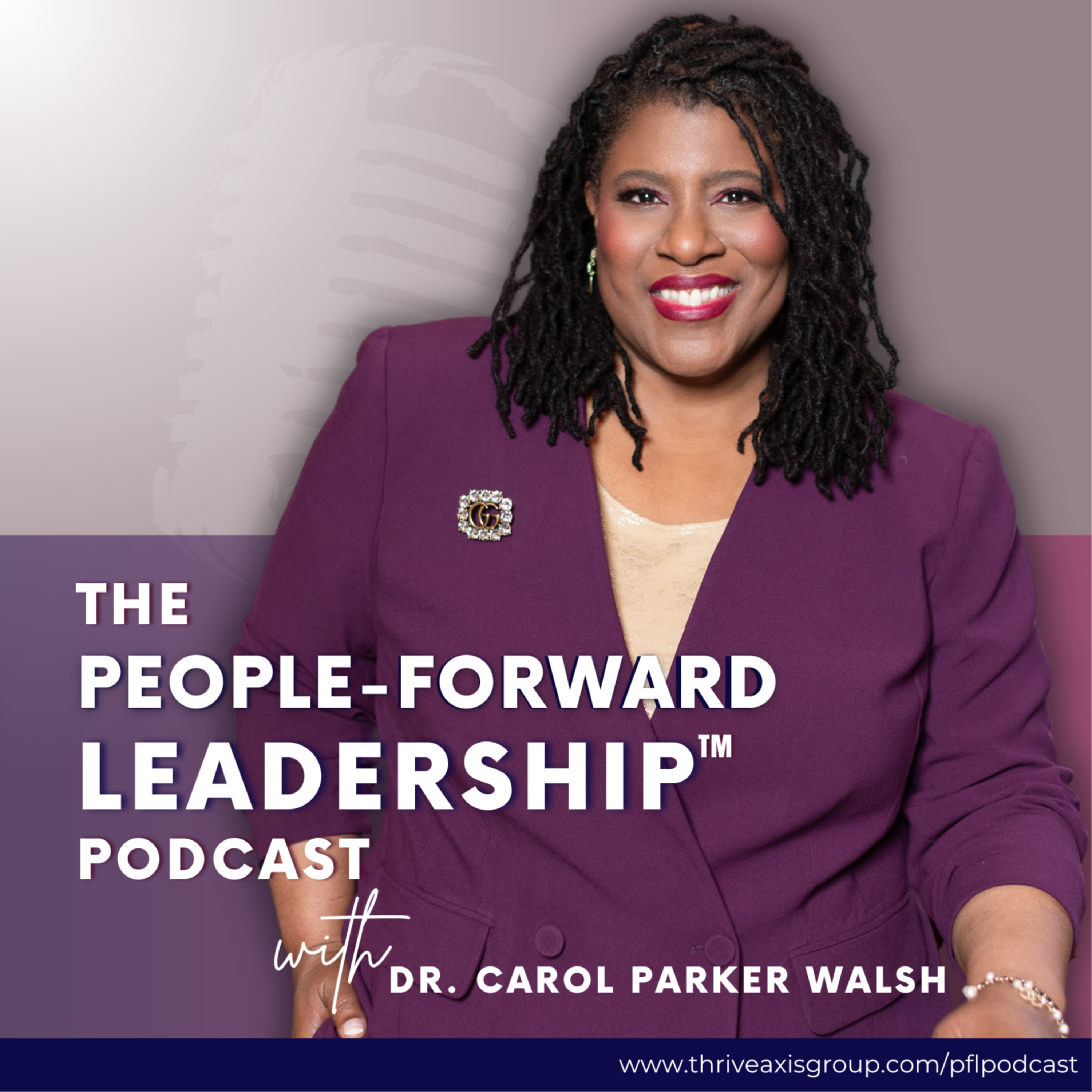
The People-Forward Leadership™ Podcast
by Dr. Carol Parker Walsh, JD, PhD, ACC
Perspective and insights needed to address today’s challenges while positioning for tomorrow’s opportunities.
-
40
What AI Can't Replace in a Great Leader
Episode 40: What AI Can't Replace in a Great Leader "AI can think faster, write better, and analyze more than you. So the question isn't how do you keep up with it, it’s how do you level up what you bring to the table that AI simply cannot replicate." ~ Dr. Carol Parker Walsh Episode Summary AI isn't coming…it’s here. And while the conversation around AI often focuses on tools, productivity, and keeping up, this episode goes deeper. Dr. Carol Parker Walsh makes the case that the most important leadership work right now isn't learning to use AI, it's honing the distinctly human skills it can never replace: critical thinking, judgment, presence, courage, and emotional intelligence. Because in a world where AI levels the playing field on technical skills, how you show up for people is what will set you apart. Key Takeaways AI is raising the bar on critical thinking, don’t let it think for you Judgment, presence, and courage are the leadership skills that can't be outsourced Emotional intelligence isn't a personality trait, it’s a skill you build through consistent practice The professional pause (3–5 seconds) is one of the most powerful EQ tools you have How you show up in the storm sets the tone for how your entire team shows up Use AI as a tool to support your growth, never as a replacement for what's uniquely you Resources & Links Learn more about the People-Forward Leadership™ framework: https://www.carolparkerwalsh.com Recommended reading: The 3 Pillars of People-Forward Leadership™ Radical Candor by Kim Scott: https://www.amazon.com/shop/drcarolparkerwalsh/list/NU2PW07SCC6R?ref_=aip_sf_list_spv_ons_mixed_d&ccs_id=e5333e0e-d357-4992-9482-0593c4fbda41 Call to Action Connect with us for behind-the-scenes content and leadership tips: LinkedIn Instagram Facebook YouTube Enjoyed this episode? Don’t miss the next one. Subscribe to the People-Forward Leadership™ Podcast: Spotify Apple Podcasts Leave a 5-Star Review: Share your biggest takeaway from today’s episode by leaving a review on your podcast platform. Reach out: To learn how we can support your organization in implementing People-Forward Leadership™, email us at [email protected]. Thank you for listening! If you found this conversation valuable, please share it with a colleague or friend who might benefit from learning how to rebuild their leadership container for stronger results. We appreciate your support and look forward to having you tune in for future episodes.
-
39
The Messy Middle: Why Your Growth Is Hiding in the Hard Parts
Episode 39: The Messy Middle: Why Your Growth Is Hiding in the Hard Parts "Growth always comes out of the messy middle. Not the planning stage. Not the retreat. Not after you've figured it out. In the mess. Through the mess." ~ Dr. Carol Parker Walsh Episode Summary The leaders who are growing the most aren't the ones who have it all figured out, they're the ones willing to stay in the hard parts. In this episode, Dr. Carol Parker Walsh talks about the messy middle and makes the case that the discomfort, tension, and uncertainty you're trying to get out of so fast is actually where your greatest growth lives. Drawing from conversations with three extraordinary leaders this season, Shawn Donaghy, Donishea Martinez, and Traci Rossi, Carol explores what it really looks like to lead through conflict, learning, and trust-building without taking the easy exit. Key Takeaways Conflict isn't a sign something is broken, it’s a sign two people are actually thinking Defaulting to your old playbook when the context changes is fear-based leadership, not strength Psychological safety isn't announced, it’s built in small, repeated acts of showing up The most advanced leadership move you can make is admitting what you don't know yet Rushing to resolution robs you of what the mess is trying to teach you Leaders Featured in This Episode: Traci Rossi - Executive Director, Friends of the Children – Portland - Episode 34 Donishea Martinez - Executive Commercial Leader, Genentech - Episode 35 Shawn Donaghy - CEO, North County Transit District - Episode 36 Resources & Links Learn more about the People-Forward Leadership™ framework: https://www.carolparkerwalsh.com Recommended reading: The 3 Pillars of People-Forward Leadership™ Call to Action Connect with us for behind-the-scenes content and leadership tips: LinkedIn Instagram Facebook YouTube Enjoyed this episode? Don’t miss the next one. Subscribe to the People-Forward Leadership™ Podcast: Spotify Apple Podcasts Leave a 5-Star Review: Share your biggest takeaway from today’s episode by leaving a review on your podcast platform. Reach out: To learn how we can support your organization in implementing People-Forward Leadership™, email us at [email protected]. Thank you for listening! If you found this conversation valuable, please share it with a colleague or friend who might benefit from learning how to rebuild their leadership container for stronger results. We appreciate your support and look forward to having you tune in for future episodes.
-
38
Why Leadership Development Fails (And What Actually Works)
Episode 38: Why Leadership Development Fails (And What Actually Works) "Leadership development fails when it's treated as an event. And it works when it becomes part of the system." ~ Dr. Carol Parker Walsh Organizations spend billions on leadership training every year, and yet the same problems keep surfacing on engagement surveys, in exit interviews, and across leadership teams: breakdowns in trust, accountability gaps, and employees who are present but not truly invested. So what's actually going wrong? In this episode, Dr. Carol Parker Walsh makes the case that most leadership development fails not because of poor content or lack of investment, but because it's designed as an event rather than a system. Drawing from conversations with three leaders across aviation, philanthropy, and healthcare, Carol unpacks the second pillar of the People-Forward Leadership™ framework (Empowered Ecosystems ), and explores what it looks like when development stops being something that happens in a classroom and starts being something woven into how an organization actually operates. Carla Jeter of Delta Air Lines reveals how a founding principle shapes a continuous loop of listening, acting, and going back to ask if they got it right. Kate Azizi of the OHSU Foundation shows what it looks like to delegate decisions, not just tasks. And Dr. Kecia Kelly of Legacy Health demonstrates what system design actually produces. These leaders are getting extraordinary results not because they’re investing in better programs, but because they’re building better environments, and that distinction changes everything. Key Takeaways: Designing with your people instead of for them is the difference between compliance and genuine ownership. The listening loop only works when it closes, silence after feedback is more damaging than never asking at all. Delegating a task and delegating a decision are not the same thing, and only one of them actually builds a team. The leader who always provides the answer becomes the ceiling, the coaching question builds the muscle. Retention is the new recruitment, and the organizations that invest in development pathways, not just programs, are the ones that keep their best people. Leaders Featured in This Episode: Dr. Kecia Kelly - SVP & Chief Nurse, Legacy Health - Episode 31 Carla Jeter - Senior Manager, Brand Experience, Delta Air Lines - Episode 32 Kate Azizi - President, OHSU Foundation - Episode 33 Resources & Links Learn more about the People-Forward Leadership™ framework: https://www.carolparkerwalsh.com Recommended reading: The 3 Pillars of People-Forward Leadership™ Call to Action Connect with us for behind-the-scenes content and leadership tips: LinkedIn Instagram Facebook YouTube Enjoyed this episode? Don’t miss the next one. Subscribe to the People-Forward Leadership™ Podcast: Spotify Apple Podcasts Leave a 5-Star Review: Share your biggest takeaway from today’s episode by leaving a review on your podcast platform. Reach out: To learn how we can support your organization in implementing People-Forward Leadership™, email us at [email protected]. Thank you for listening! If you found this conversation valuable, please share it with a colleague or friend who might benefit from learning how to rebuild their leadership container for stronger results. We appreciate your support and look forward to having you tune in for future episodes.
-
37
The Quiet Shift in Leadership: What Today’s Best Leaders Are Doing Differently
Episode 37: The Quiet Shift in Leadership: What Today’s Best Leaders Are Doing Differently "The quiet shift in leadership isn't louder strategy or bigger authority. It's a deeper, more honest relationship with yourself, so you can build a more honest, more effective relationship with the people you lead." ~ Dr. Carol Parker Walsh What separates leaders getting extraordinary results from those stuck in average outcomes? It's rarely strategy. It's rarely credentials. Across six conversations with leaders spanning healthcare, transit, transportation, philanthropy, biopharma, and nonprofit work, one pattern kept emerging: the leaders performing at the highest levels had done the inner work first. In this episode, Dr. Carol Parker Walsh draws from the season's most powerful guest conversations to explore what Leader Awareness (the first pillar of the People-Forward Leadership™ framework), actually looks like in practice. Not as a concept. Not as a competency to check off. But as a lived, daily discipline that changes the way you show up, decide, and lead. Carol unpacks how six extraordinary leaders developed a deeper, more honest relationship with themselves, and how that shift changed everything about the way they led others. This episode is for the leader who's tired of reacting and ready to start choosing. Who wants to understand not just what they do, but who they are when they do it. And for those leaders willing to let what they discover actually change how they lead. Key Takeaways: Why most leaders aren't as self-aware as they think and why that's not a character flaw. The difference between self-criticism and self-awareness, and why confusing the two keeps leaders stuck. What a meaningful self-reflective practice actually looks like inside high-stakes leadership roles. How to find your "trust mirror,” the person willing to tell you the truth about your leadership impact. Why every strength casts a shadow, and what to do when yours shows up. What the quiet shift in leadership looks like across six leaders in six very different industries. Leaders Featured in This Episode: Dr. Kecia Kelly - SVP & Chief Nurse, Legacy Health - Episode 31 Carla Jeter - Senior Manager, Brand Experience, Delta Air Lines - Episode 32 Kate Azizi - President, OHSU Foundation - Episode 33 Traci Rossi - Executive Director, Friends of the Children – Portland - Episode 34 Donishea Martinez - Executive Commercial Leader, Genentech - Episode 35 Shawn Donaghy - CEO, North County Transit District - Episode 36 Resources & Links Learn more about the People-Forward Leadership™ framework: https://www.carolparkerwalsh.com Recommended reading: The 3 Pillars of People-Forward Leadership™ Call to Action Connect with us for behind-the-scenes content and leadership tips: LinkedIn Instagram Facebook YouTube Enjoyed this episode? Don’t miss the next one. Subscribe to the People-Forward Leadership™ Podcast: Spotify Apple Podcasts Leave a 5-Star Review: Share your biggest takeaway from today’s episode by leaving a review on your podcast platform. Reach out: To learn how we can support your organization in implementing People-Forward Leadership™, email us at [email protected]. Thank you for listening! If you found this conversation valuable, please share it with a colleague or friend who might benefit from learning how to rebuild their leadership container for stronger results. We appreciate your support and look forward to having you tune in for future episodes.
-
36
From Family Legacy to Industry Champion: Trust, Authenticity, and Redefining Transit Leadership with Shawn Donaghy
Episode 36: From Family Legacy to Industry Champion: Trust, Authenticity, and Redefining Transit Leadership with Shawn Donaghy "Before policy, before anything, it starts with employees knowing that no matter what happens, you are working in their best interest." ~ Shawn Donaghy Episode Summary What does it mean to lead not just a system, but the people who make it run? In this episode, Dr. Carol Parker Walsh welcomes Shawn Donaghy, CEO of the North County Transit District in San Diego, for a candid and deeply personal conversation about the kind of leadership that actually changes organizations. As a third-generation public transit CEO - his grandfather and father both pioneers who fought for civil rights within the industry - Shawn brings a rare perspective on how values forged at the dinner table shape how you show up in the boardroom. From his first days at NCTD, where he had to restore psychological safety and rebuild a culture of candor, to onboarding nearly 500 employees overnight during a historic bus operations insourcing, Shawn shares what it really looks like to lead with authenticity, accountability, and intentionality. He opens up about building feedback loops by walking the floors, why healthy conflict is essential (not optional), and how he deliberately sponsors women and diverse leaders, not as a gesture, but as a practice that has shaped the transit industry itself. This episode is equal parts practical and profound. Whether you're navigating a culture shift, managing a complex team, or wondering how to build a legacy that outlasts your tenure, Shawn's wisdom will challenge you to lead from the inside out. Key Takeaways Authenticity isn't optional - employees know within the first year whether you're the real deal. Psychological safety isn't about keeping the peace; it's about creating space for real, productive conflict. Your legacy lives in the people you elevate, not the projects you build. Visibility is a leadership strategy - proximity to your people is a practice, not a perk. Widening the hiring pool is how you change who leads; intentional sponsorship means seeing someone's capacity before they see it themselves. The most effective leaders aren't perfect - they're self-aware, own their mistakes publicly, and course-correct out loud. About Shawn Donaghy Shawn M. Donaghy currently serves as the Chief Executive Officer of the North County Transit District in San Diego County, one of only three transit agencies in the nation to have Hybrid Rail, Heavy, Rail and Bus Operations. NCTD is also the owner, common carrier, and railroad of record by the Federal Railroad Administration. Prior to NCTD, Donaghy served as Chief Executive Officer of C-TRAN in Vancouver, WA, Chief Operating Officer of Trinity Metro in Fort Worth, TX, and Chief Operations Officer at the Southwest Ohio RTA (SORTA) in Cincinnati, OH. His career has spanned several areas of focus, including operations and maintenance for bus and rail, information technology, safety and risk management, security and transit police, service scheduling, contract management, key performance and regulatory metrics, and large-scale capital project experience. A third-generation public transit CEO, Donaghy serves in several industry capacities such as the Board of Directors Executive Committee for the American Public Transportation Association (APTA), President of the Bus Coalition, former President of the American Bus Benchmarking Group (ABBG) and is a former Mass Transit 40-Under-40 recipient. He has worked on several key large-scale transit projects such as the Cincinnati Streetcar, TEXRail, the Vine Bus Rapid Transit Line, the Interstate 5 Bridge Replacement Program, and the Del Mar Bluffs Rail Realignment Project. Donaghy has also managed fleet transitions to low/zero emission technology, including the first electric bus fleet, charging network and hydrogen infrastructure at C-TRAN. Donaghy is also a proud member and supporter of the Conference of Minority Transportation Officials (COMTO), Latinos in Transit, WTS International, and serves on APTA’s Diversity and Inclusion Council. Resources & Links Learn more about Shawn Donaghy: https://www.linkedin.com/in/shawn-m-donaghy-mpa-2b0800a/ Learn more about NCTD: https://gonctd.com/ Learn more about the People-Forward Leadership™ framework: https://www.carolparkerwalsh.com Recommended reading: The 3 Pillars of People-Forward Leadership™ Book Recommendation: Crucial Conversations Call to Action Connect with us for behind-the-scenes content and leadership tips: LinkedIn Instagram Facebook YouTube Enjoyed this episode? Don’t miss the next one. Subscribe to the People-Forward Leadership™ Podcast: Spotify Apple Podcasts Leave a 5-Star Review: Share your biggest takeaway from today’s episode by leaving a review on your podcast platform. Reach out: To learn how we can support your organization in implementing People-Forward Leadership™, email us at [email protected]. Thank you for listening! If you found this conversation valuable, please share it with a colleague or friend who might benefit from learning how to rebuild their leadership container for stronger results. We appreciate your support and look forward to having you tune in for future episodes.
-
35
Empowerment Isn’t a Vibe: The Structures That Make Matrix Teams Work featuring Donishea Martinez
Episode 35: Empowerment Isn’t a Vibe: The Structures That Make Matrix Teams Work featuring Donishea Martinez “People don’t experience your org chart, they experience how you deliver it.” ~Donishea Martinez Episode Summary When Genentech shifted to a new Customer Engagement structure, bringing reimbursement, sales, patient educators, and medical teams closer together, Donishea Martinez found herself leading within a larger, more ambiguous ecosystem. And while she personally thrives in ambiguity (“give me the problem and we’ll solve it”), she realized something pivotal: what works for you as a leader doesn’t automatically work for the people you lead. In this episode, Donishea shares what changed when she stopped assuming others could “see the fix” the way she could, and started leading with more intentional clarity, expectations, and permission. We also talked about the less-discussed leadership trap that shows up at higher levels, like leading out of fear, and how that fear led her to over-manage a high-potential leader, and what it took to return to her best leadership self. Key Takeaways Ambiguity might energize you and exhaust your team. Leaders have to translate vision into clarity that others can execute. Don’t confuse capability with mind-reading. High performers still need explicit expectations, encouragement, and context, especially in a new season or role. Empowerment is a structure, not a slogan. Ownership, decision rules, norms, and accountability are what create real autonomy. You can’t lead out of fear. Fear quietly turns into control, especially with high-potential people you don’t want to “mess up.” Stop creating “mini-me” expectations. Your job isn’t to clone your instincts; it’s to build the system that helps others succeed. Clarity isn’t one thing; there are multiple versions of “clear.” Without alignment, teams create chaos even when everyone feels confident. Continuous learning needs rhythms. Poll checks, after-action reviews, and a living leadership charter keep teams adaptive, even with AI and constant change. About Donishea Martinez Donishea Martinez is a Healthcare Executive Director at Genentech, leading the Inland Texas ecosystem where she engages and inspires teams to generate innovative solutions that improve patient care and access. With more than two decades in BioPharma across strategy, marketing, managed care, customer operations, and customer engagement, Donishea is known for bridging gaps between teams, strategies, and goals, so people can move from alignment to execution. A decade in the U.S. Army Reserves shaped her leadership philosophy of adaptability, trust, and team dynamics as mission-critical skills. That foundation shows up in how she leads today, which is ensuring people feel heard, valued, and motivated while still delivering results. Resources & Links Learn more about Donishea Martinez: https://www.linkedin.com/in/donisheamartinez/ Learn more about Genentech: https://www.gene.com/ Learn more about the People-Forward Leadership™ framework: https://www.carolparkerwalsh.com Recommended reading: The 3 Pillars of People-Forward Leadership™ Call to Action Connect with us for behind-the-scenes content and leadership tips: LinkedIn Instagram Facebook YouTube Enjoyed this episode? Don’t miss the next one. Subscribe to the People-Forward Leadership™ Podcast: Spotify Apple Podcasts Leave a 5-Star Review: Share your biggest takeaway from today’s episode by leaving a review on your podcast platform. Reach out: To learn how we can support your organization in implementing People-Forward Leadership™, email us at [email protected]. Thank you for listening! If you found this conversation valuable, please share it with a colleague or friend who might benefit from learning how to rebuild their leadership container for stronger results. We appreciate your support and look forward to having you tune in for future episodes.
-
34
No Matter What Leadership: Building Trust, Standards, and Sustainable Systems with Traci Rossi
Episode 34: No Matter What Leadership: Building Trust, Standards, and Sustainable Systems with Traci Rossi “Keep the standards high, be clear about what those standards are, provide the support, bring in the community.” ~Traci Rossi Episode Summary What does it take to lead with steadiness over the long haul, especially when your mission depends on relationships, not quick wins? In this episode of The People-Forward Leadership™ Podcast, I sit down with Traci Rossi, Executive Director of Friends of the Children – Portland, for a powerful conversation about "no matter what" leadership: the kind that stays grounded, human, and accountable year after year. Traci shares how her earliest leadership lessons were shaped inside her grandparents' beauty salon and barbershop, a place where community, care, and high standards weren't separate things, they were the same thing. From there, we unpack what it looks like to build a team culture where people feel safe enough to tell the truth, strong enough to hold standards, and supported enough to keep learning without burning out. This conversation matters because people-forward leadership™ doesn’t just happen, it’s structured, intentional, and designed. If you're leading a complex organization, this episode will challenge the way you think about psychological safety, resilience, and performance. Key Takeaways Build community on purpose, not by accident. Create one recurring connection ritual that is not agenda-driven. Ten minutes, same cadence, same expectation: be present. Psychological safety is behavior, not a vibe. In your next meeting, model safety by naming one uncertainty you're working through and inviting the team's perspective. High standards + high support is the formula. Pick one team standard you've allowed to drift. Re-clarify it, then ask: "What support do you need to meet this consistently?" Your leadership shadow shows up at scale. Schedule five short check-ins this month with people you don't normally talk to. Just listen, don’t solve. Stop hiring "happy." Start hiring whole. Add one interview question that assesses wholeness: "Tell me about a hard season—what helped you stay steady?" About Traci Rossi Traci Rossi serves as the Executive Director of Friends of the Children – Portland, an organization dedicated to breaking the cycle of poverty by providing youth facing the toughest challenges with 12+ years of relentless professional mentoring from kindergarten through high school graduation, no matter what. She is responsible for setting the strategic direction of the organization and managing day-to-day operations. Friends – Portland has won the Most Admired Nonprofit in Oregon for eleven consecutive years. Traci was born and raised in Oregon and has over 25 years of nonprofit leadership experience with an emphasis on education, community outreach, and service to underserved communities. Her efforts have been recognized as a 2023 Catlin Gabel School Distinguished Alumni Award, a 2020 Woman of Influence by the Portland Business Journal and as a Hometown Hero by the Portland Trail Blazers in 2021 for her service-before-self mentality and significant positive impact on the Portland community. She volunteers on local boards in alignment with her personal and professional commitment to youth success and equitable access to services and systems to foster a more equitable Oregon. Traci currently sits on the boards of Rivermark Credit Union, the Gray Family Foundation, and is a founding member of the Women’s Foundation of Oregon Board and an American Leadership Forum Fellow. Resources & Links Learn more about Traci Rossi: https://www.linkedin.com/in/traci-rossi/ Learn more about Friends of the Children - Portland:” https://friendspdx.org/ Learn more about the People-Forward Leadership™ framework: https://www.carolparkerwalsh.com Recommended reading: The 3 Pillars of People-Forward Leadership™ Call to Action Connect with us for behind-the-scenes content and leadership tips: LinkedIn Instagram Facebook YouTube Enjoyed this episode? Don’t miss the next one. Subscribe to the People-Forward Leadership™ Podcast: Spotify Apple Podcasts Leave a 5-Star Review: Share your biggest takeaway from today’s episode by leaving a review on your podcast platform. Reach out: To learn how we can support your organization in implementing People-Forward Leadership™, email us at [email protected]. Thank you for listening! If you found this conversation valuable, please share it with a colleague or friend who might benefit from learning how to rebuild their leadership container for stronger results. We appreciate your support and look forward to having you tune in for future episodes.
-
33
Clarity Is Kind: The 80% Rule for Trust at Scale with OHSU Foundation President Kate Azizi
Episode 33: Clarity Is Kind: The 80% Rule for Trust at Scale with OHSU Foundation President Kate Azizi “Giving praise is free and specific praise is powerful.”~Kate Azizi Episode Summary What does People-Forward leadership look like when your “team” includes not just employees, but boards, donors, clinicians, researchers, and the broader community? In this episode, Dr. Carol Parker Walsh sits down with Kate Azizi, President of the OHSU Foundation, to unpack the leadership practices that build trust across a high-stakes ecosystem without burning people out or slowing execution. Kate shares how transparency, communication cadence, and real empowerment create alignment, and why decisive leaders move forward with 80% of the information instead of getting trapped in analysis paralysis. When it comes to the People-Forward Leadership™ framework, Kate laid a clear roadmap: Leader Awareness anchored in a clear North Star, Empowered Ecosystems built through real delegation and communication cadence, and Adaptive Continuous Learning fueled by psychological safety and smart risk-taking create a powerful leadership operating system that can be scaled. You’ll also hear Kate’s origin story (yes, it starts with a PBS segment and a bold cold call), and the “North Star” mindset she returns to when the work is complex and the pressure is high. Key Takeaways Your North Star is your stabilizer under pressure. Direct feedback (delivered with care) is a culture-strengthening act, not a conflict trigger. Trust is built through cadence, not charisma. Empowerment means decision rights. Delegation isn’t just tasks, it’s real authority. Move at 80%, then learn fast. Psychological safety must be modeled. Innovation needs a “proof point.” Boldness opens doors and speed protects opportunity. About Kate Azizi Kate Azizi is the President of the OHSU Foundation. She worked in partnership with OHSU and Knight Cancer Center leaders to secure the historic $2 billion gift to support the Knight Cancer Institute in 2025. Kate has served in leadership positions at the Medical University of South Carolina (Vice President of Institutional Advancement), Northwestern University Feinberg School of Medicine (Assistant Dean of Development), the University of Chicago Medicine (Senior Director of Principal Gifts and Campaign Director), and NC State University. Kate began her career in New York City, where she worked in the financial services sector and at several nonprofit organizations. She received an M.B.A. from NCSU and a B.A. from Drew University. Resources & Links Learn more about Kate Azizi: https://www.linkedin.com/in/katesmithazizi/ Learn more about OHSU Foundation: https://ohsufoundation.org/ Learn more about the People-Forward Leadership™ framework: https://www.carolparkerwalsh.com Recommended reading: The 3 Pillars of People-Forward Leadership™ Book recommended: One Bold Move a Day by Shanna Hocking Call to Action Connect with us for behind-the-scenes content and leadership tips: LinkedIn Instagram Facebook YouTube Enjoyed this episode? Don’t miss the next one. Subscribe to the People-Forward Leadership™ Podcast: Spotify Apple Podcasts Leave a 5-Star Review: Share your biggest takeaway from today’s episode by leaving a review on your podcast platform. Reach out: To learn how we can support your organization in implementing People-Forward Leadership™, email us at [email protected]. Thank you for listening! If you found this conversation valuable, please share it with a colleague or friend who might benefit from learning how to rebuild their leadership container for stronger results. We appreciate your support and look forward to having you tune in for future episodes.
-
32
People-Forward by Design: The Operating System for Exceptional Performance at Delta Airlines with Carla Jeter
Episode 32: People-Forward by Design: The Operating System for Exceptional Performance at Delta Airlines with Carla Jeter “When we come together, if we respect the expertise of our people, we tend to have a well-executed project.” ~Carla Jeter Episode Summary Delta Airlines is consistently recognized for excellence in everything from passenger experience to customer service, operational performance to workplace culture. Exceptional performance doesn’t come from slogans, it comes from an operating system leaders build on purpose: trust, clear decision rights, learning loops, and recognition that reinforces the behaviors you want. In this episode, Dr. Carol Parker Walsh sits down with Carla Jeter, Senior Manager of Brand Experience at Delta Airlines, to explore what it takes to translate strategy into frontline execution in complex operational environments. Carla shares her leadership journey, from electrical engineering at Motorola, through international revenue management, and into brand experience, and the consistent thread: designing systems where people feel trusted, equipped, and connected to purpose. She also unpacks how trust is built through proximity and respect for expertise (including becoming flight-attendant qualified to deepen credibility), how leaders balance being people-first with real accountability, and why Delta’s “Listen, Act, Listen” model works because it’s a continuous loop, not a one-time survey. This people-first focus comes from the founder’s words: Everything we do can be duplicated, but what can't be duplicated is our people. Our people are everything to Delta. The result: teams that can deliver at a high level, even under pressure. Key Takeaways Why “people-forward” is not a soft skill, but a designed system and framework How proximity and credibility build trust with frontline teams The balance of empathy and accountability through clarity and transparency How to build cross-functional trust without pretending to know everything Delegation with guardrails: pushing decisions down while protecting outcomes Psychological safety in practice (including “vulnerable moments” as a team ritual) The power of Listen → Act → Listen feedback loops that drive learning and innovation How recognition that’s specific, consistent, and multi-channel, reinforces top performance About Carla Jeter Carla Jeter is a Senior Manager of Brand Experience at Delta Air Lines, where she leads people-forward brand strategy initiatives designed to improve frontline employee experience and strengthen customer outcomes in complex operational environments. Her work focuses on translating strategy into execution—building trust, elevating employee ownership, and creating the systems and rituals that help teams deliver at a high level. Carla holds a Bachelor of Science in Electrical Engineering from Tennessee State University and an MBA with an emphasis in Marketing from Clark Atlanta University. She began her career as an electrical engineer at Motorola, then joined Delta Air Lines as part of the International Revenue Management team. In that role, she helped develop strategies that maximized revenue performance across international routes—experience that continues to shape her lens on enterprise decision-making, trade-offs, and execution. Today, Carla’s team develops tools, experiences, and initiatives that support frontline employees while driving brand consistency and customer enhancements. She is a strong proponent of building sustainable communities and volunteers with programs focused on food distribution and community support. Resources & Links Learn more about Carla Jeter: https://www.linkedin.com/in/carla-roberts-jeter-7703891b6/ Learn more about “Distinctively Delta:” https://news.delta.com/new-era-style-introducing-distinctly-delta-uniform-collection Learn more about Delta Airlines People-First Culture: https://news.delta.com/delta-reward-employees-average-4-weeks-extra-pay https://esghub.delta.com/content/esg/en/2024/employee-engagement.html https://news.delta.com/delta-americas-most-awarded-airline Learn more about the People-Forward Leadership™ framework: https://www.carolparkerwalsh.com Recommended reading: The 3 Pillars of People-Forward Leadership™ Call to Action Connect with us for behind-the-scenes content and leadership tips: LinkedIn Instagram Facebook YouTube Enjoyed this episode? Don’t miss the next one. Subscribe to the People-Forward Leadership™ Podcast: Spotify Apple Podcasts Leave a 5-Star Review: Share your biggest takeaway from today’s episode by leaving a review on your podcast platform. Reach out: To learn how we can support your organization in implementing People-Forward Leadership™, email us at [email protected]. Thank you for listening! If you found this conversation valuable, please share it with a colleague or friend who might benefit from learning how to rebuild their leadership container for stronger results. We appreciate your support and look forward to having you tune in for future episodes.
-
31
Future-Ready Nursing: Rebuilding an Empowered Nursing Workforce at Legacy Health with Dr. Kecia M. Kelly
Episode 31: Future-Ready Nursing: Rebuilding an Empowered Nursing Workforce at Legacy Health with Dr. Kecia M. Kelly “Curiosity and humility. That's the piece that’s missing in leadership right now.” ~Dr. Kecia Kelly Episode Summary The nursing workforce conversation often gets reduced to pipeline math: hiring, vacancy rates, and retention targets. In this episode, Dr. Kecia Kelly, Senior Vice President, Chief Nurse, and Philanthropy Officer at Legacy Health, reframes the real challenge and the real leverage. This isn't only a staffing problem. It's a systems design problem. Dr. Kelly shares what future-ready nursing leadership looks like when the stakes are high and the pressure is constant, which includes leading with curiosity and humility, building empowered ecosystems where every person knows their value, and creating adaptive learning cultures where trust and psychological safety make room for growth, innovation, and honest reflection. The results of this approach? A 93% nurse retention rate and overall turnover around 11%, which is well below the national average of 20-24%. You'll hear practical, actionable leadership tools, including her framework for delegation as a development tool, the leader's role as an executive sponsor, and why Legacy Health shifted from a preceptor model to a coaching model for new nurses. We also explore how AI tools like ambient listening technology are reducing administrative burden so nurses can focus on patient care. And if you've ever felt pressure to wear "busy" as a badge of honor, Dr. Kelly offers a powerful counter-narrative and the boundaries she's built to lead with intention instead. Key Takeaways Why the nursing shortage can’t be solved by recruiting alone and how a systems lens changes the strategy. How curiosity and humility and knowing your strengths helps leaders learn how to recognize strengths in others. (Leader Awareness) Why the job of leaders is to help every team member connect their work to the organizational mission (and how that drives trust + execution). (Empowered Ecosystems) How you develop leaders through training and delegation and use delegation as a tool for empowerment, not a task dump. What it means to use the executive sponsor model when delegating. Reframing learning as a “check, adjust, pivot,” process that helps you learn from mistakes and build real psychological safety. (Adaptive Continuous Learning) Why you should stop romanticizing overwhelm and busyness so you have time to think, strategize, and lead people well. About Dr. Kecia M. Kelly Dr. Kecia M. Kelly, DNP, RN, NEA-BC, FACHE, serves as Senior Vice President, Chief Nurse, and Philanthropy Officer at Legacy Health. In addition to these roles, Dr. Kelly provides senior executive oversight of pharmacy, laboratory services, care management, and environment of care. Her nursing career began as an officer in the United States Army Nurse Corps, and she has since held various leadership positions within multiple healthcare organizations. Dr. Kelly holds a Bachelor of Science in Nursing and a Doctor of Nursing Practice in Executive Leadership from Texas Christian University, as well as a Master of Business Administration in Healthcare Management from the University of Phoenix. She is Board Certified as a Nurse Executive and is recognized as a Fellow of the American College of Healthcare Executives. Resources & Links Learn more about Dr. Kecia M. Kelly, DNP, RN, NEA-BC, FACHE: https://www.linkedin.com/in/drkeciakellyfache/ Learn more about Legacy Health: http://www.legacyhealth.org/ Learn more about the People-Forward Leadership™ framework: https://www.carolparkerwalsh.com Recommended reading: The 3 Pillars of People-Forward Leadership™ Recommended reading: 1st Break All the Rules Call to Action Connect with us for behind-the-scenes content and leadership tips: LinkedIn Instagram Facebook YouTube Enjoyed this episode? Don’t miss the next one. Subscribe to the People-Forward Leadership™ Podcast: Spotify Apple Podcasts Leave a 5-Star Review: Share your biggest takeaway from today’s episode by leaving a review on your podcast platform. Reach out: To learn how we can support your organization in implementing People-Forward Leadership™, email us at [email protected]. Thank you for listening! If you found this conversation valuable, please share it with a colleague or friend who might benefit from learning how to rebuild their leadership container for stronger results. We appreciate your support and look forward to having you tune in for future episodes.
-
30
Leading WITH AI, Not Just Through It
Episode 30: Leading WITH AI, Not Just Through It "AI doesn't replace people-forward leadership™. It amplifies it. But only if you engage with it yourself first." ~Dr. Carol Parker Walsh In this solo episode, Dr. Carol Parker Walsh challenges leaders to rethink their relationship with AI, not as a technology to manage or a disruption to survive, but as a tool that can actually make them better people-forward leaders™. With 70-85% of AI initiatives failing to meet expectations and research showing the biggest barrier isn't technology or employees but leadership itself, Carol unpacks why AI adoption is fundamentally a trust problem, not a tech problem. She shares the latest research on why employees resist AI, what high-performing organizations do differently, and how leaders can use AI to deepen self-awareness, develop their teams, and create the psychological safety required for transformation. Whether you're skeptical of AI or already experimenting, this episode will shift how you think about your role in leading through this unprecedented moment of change. Key Takeaways: Employees won't trust AI if they don't trust their leaders. Leaders must go first. The 10-20-70 rule separates winners from everyone else. AI adoption negatively impacts psychological safety. AI can make you a better people-forward leader. Resources & Links McKinsey's AI in the Workplace Report 2025: "The biggest barrier to success is not employees—who are ready—but leaders" - https://www.mckinsey.com/capabilities/quantumblack/our-insights/the-state-of-ai Harvard Business Review: "Employees Won't Trust AI If They Don't Trust Their Leaders" - https://hbr.org/2025/03/employees-wont-trust-ai-if-they-dont-trust-their-leaders Boston Consulting Group: AI Adoption Research (10-20-70 rule and high performer insights) - https://www.bcg.com/press/24october2024-ai-adoption-in-2024-74-of-companies-struggle-to-achieve-and-scale-value PwC Global Workforce Hopes and Fears Survey 2025 (psychological safety and motivation) - https://www.pwc.com/gx/en/issues/workforce/hopes-and-fears.html World Economic Forum: "One of the largest change management exercises in history" - https://www.weforum.org/stories/2025/01/ai-2025-workplace/ Learn more about the People-Forward Leadership™ framework Get The 3 Pillars of People-Forward Leadership™ Recommended reading from People-Forward Leadership™ Call to Action Connect with us for behind-the-scenes content and leadership tips: LinkedIn Instagram Facebook YouTube Enjoyed this episode? Don’t miss the next one. Subscribe to the People-Forward Leadership™ Podcast on Spotify or Apple Podcasts Leave a 5-Star Review: Share your biggest takeaway from this episode on your podcast platform. Reach out: To learn how we can support your organization in implementing People-Forward Leadership™, email us at [email protected]. Thank you for listening! If you found this conversation valuable, please share it with a colleague or friend who might benefit from learning how to rebuild their leadership container for stronger results. We appreciate your support and look forward to having you tune in for future episodes.
-
29
When Someone Gives You Every Reason to React: Leadership Lessons from an Unlikely Place
Episode 29: When Someone Gives You Every Reason to React: Leadership Lessons from an Unlikely Place "People-forward leadership is about consistently showing up for your people when they give you every reason not to." ~Dr. Carol Parker Walsh In this solo episode, Dr. Carol Parker Walsh breaks down a powerful real-world example of People-Forward Leadership™, and it didn't happen in a boardroom. It happened on the side of a road in North Carolina. When Deputy Shawn Singleton pulled over a woman named Katelyn for speeding, she met him with hostility, but what happened next is a masterclass in staying grounded under pressure, asking instead of telling, and creating safety for transformation. Carol walks through the entire interaction, unpacking what leaders can learn about not taking it personally, leading with questions, and building the kind of trust that allows people to change. Whether you're leading a team through conflict, navigating resistance, or wondering how to show up when someone pushes every button you have, this episode will stay with you. Key Takeaways: Don't take it personally, even when it feels personal. Ask instead of tell. Transformation requires safety. Your reactions become part of the culture. The work is on you, not your people. Resources & Links The Traffic Stop That Changed Everything - A PFL Example - https://drive.google.com/file/d/16VfT1CTVkZ7LoHDQEOFNso5ObBZH-eWn/view?usp=sharing Watch the video: Deputy Shawn Singleton's traffic stop with Katelyn Ricchini (Cabarrus County, NC) - https://www.youtube.com/watch?v=8tTT56F_I84 WRAL News coverage: "NC deputy's kindness turns tense traffic stop into heartwarming moment" - https://www.wral.com/news/state/nc-deputy-turns-tense-traffic-stop-heartwarming-cabarrus-county/ Learn more about the People-Forward Leadership™ framework Get The 3 Pillars of People-Forward Leadership™ Recommended reading from People-Forward Leadership™ Call to Action Connect with us for behind-the-scenes content and leadership tips: LinkedIn Instagram Facebook YouTube Enjoyed this episode? Don’t miss the next one. Subscribe to the People-Forward Leadership™ Podcast on Spotify or Apple Podcasts Leave a 5-Star Review: Share your biggest takeaway from this episode on your podcast platform. Reach out: To learn how we can support your organization in implementing People-Forward Leadership™, email us at [email protected]. Thank you for listening! If you found this conversation valuable, please share it with a colleague or friend who might benefit from learning how to rebuild their leadership container for stronger results. We appreciate your support and look forward to having you tune in for future episodes.
-
28
What Your Team's Not Telling You And Why It's a Psychological Safety Issue
Episode 28: What Your Team's Not Telling You And Why It's a Psychological Safety Issue "Psychological safety isn't about lowering standards. It's about raising relational and learning standards so your people can actually meet the demands you're facing.” ~Dr. Carol Parker Walsh In this solo episode, Dr. Carol Parker Walsh tackles one of the most misunderstood and most critical concepts in leadership today: psychological safety. With trust in senior leadership at its lowest point since the pandemic, and mentions of employee "distrust" and "misalignment" skyrocketing in workplace reviews, leaders can no longer afford to assume silence means everything is fine. Carol breaks down what psychological safety actually is (and isn't), explains why it's the foundation of the Adaptive Continuous Learning pillar in her People-Forward Leadership™ framework, and reveals the silent killer that's eroding trust in organizations everywhere: toxic positivity. Whether you're leading a team of five or five hundred, this episode will challenge you to examine the gap between the openness you think you've created and the safety your people actually experience. Key Takeaways: Psychological safety is the soil, not the garden. Without it, your strategies won't take root, your change initiatives will wither, and your best people will leave to find better ground. Toxic positivity is the silent killer. When everyone smiles and agrees but no one speaks up, that's not safety—that's silence wearing a smile. And it takes years to unwind. Your nervous system becomes part of the culture. Your reactions to mistakes, disagreement, and hard truths tell your team whether it's safe to be honest—every single day. An open door isn't enough. Move from performative openness to structured voice by creating routines that make speaking up normal, not courageous. Close the loop. The fastest way to destroy psychological safety is to ask for input and do nothing with it. Transparency and follow-through build trust. Resources & Links The Leader's Guide to Psychological Safety: A practical blueprint for developing psychological safety for productivity, innovation, and growth - https://www.carolparkerwalsh.com/services (scroll toward the bottom of the page) Boston Consulting Group's study on psychological safety and retention (28,000 employees across 16 countries) - https://www.bcg.com/publications/2024/psychological-safety-levels-playing-field-for-employees Glassdoor's Worklife Trends Report on workplace trust and the "Great Detachment” - https://www.glassdoor.com/blog/worklife-trends-2026/ Dr. Amy Edmondson's work on psychological safety - https://hbr.org/2025/05/what-people-get-wrong-about-psychological-safety Learn more about the People-Forward Leadership™ framework Get The 3 Pillars of People-Forward Leadership™ Recommended reading from People-Forward Leadership™ Call to Action Connect with us for behind-the-scenes content and leadership tips: LinkedIn Instagram Facebook YouTube Enjoyed this episode? Don’t miss the next one. Subscribe to the People-Forward Leadership™ Podcast on Spotify or Apple Podcasts Leave a 5-Star Review: Share your biggest takeaway from this episode on your podcast platform. Reach out: To learn how we can support your organization in implementing People-Forward Leadership™, email us at [email protected]. Thank you for listening! If you found this conversation valuable, please share it with a colleague or friend who might benefit from learning how to rebuild their leadership container for stronger results. We appreciate your support and look forward to having you tune in for future episodes.
-
27
The Reorg Playbook - How People-Forward Leaders Can Turn Disruption Into Opportunity
Episode 27: The Reorg Playbook - How People-Forward Leaders Can Turn Disruption Into Opportunity “Restructuring, while disruptive, can be a catalyst for growth when leaders are intentional about the right things.” ~Dr. Carol Parker Walsh Episode Summary Reorganizations aren’t slowing down, and uncertainty is hard on the brain, teams, and results. In this solo episode, Dr. Carol Parker Walsh shares a practical, people-forward way to navigate reorgs so you don’t just protect productivity, but you create opportunities for growth, innovation, and engagement. You’ll hear why restructures have become a permanent feature of organizational life, why treating them as “org chart swaps” backfires, and how to lead through three high-leverage moves. The goal: restore trust, distribute leadership, and use the disruption to build capability, so your organization emerges stronger, faster, and more resilient. Key Takeaways Reorgs are here to stay; uncertainty drives worst-case thinking. Leaders must name the disruption and guide people to a new baseline. “Reset the baseline” means re-forming the team, clarifying vision, and showing how each role contributes to the next chapter. Elevate the bench to identify and develop emerging leaders so capacity isn’t bottlenecked at the top. Engagement and speed follow. Make communication restorative by soliciting “bad ideas,” reducing pressure to be right, and rebuilding psychological safety during change. Use the window to upskill through micro-learning, cross-functional knowledge shares, and new tools turn disruption into durable capability. Resources & Links Learn more about the People-Forward Leadership™ framework Get The 3 Pillars of People-Forward Leadership™ Recommended reading from People-Forward Leadership™ Call to Action Connect with us for behind-the-scenes content and leadership tips: LinkedIn Instagram Facebook YouTube Enjoyed this episode? Don’t miss the next one. Subscribe to the People-Forward Leadership™ Podcast on Spotify or Apple Podcasts Leave a 5-Star Review: Share your biggest takeaway from this episode on your podcast platform. Reach out: To learn how we can support your organization in implementing People-Forward Leadership™, email us at [email protected]. Thank you for listening! If you found this conversation valuable, please share it with a colleague or friend who might benefit from learning how to rebuild their leadership container for stronger results. We appreciate your support and look forward to having you tune in for future episodes.
-
26
The Brain-Smart Feedback Loop: Your Operating System of High-Performing Teams
Episode 26: The Brain-Smart Feedback Loop: Your Operating System of High-Performing Teams “Feedback isn’t an HR ritual; it’s the operating system of your culture.” ~Dr. Carol Parker Walsh Episode Summary Most people don’t hate feedback, they hate how it’s delivered. In this solo episode, Dr. Carol Parker Walsh breaks down what the recipient’s brain is doing in those moments, why annual review rituals backfire, and how a living feedback loop turns coaching into a weekly habit that actually accelerates performance and retention. Drawing on her experience as a labor & employment attorney, Carol explains how silence, surprises, and vague judgments escalate into conflict and churn, and shows how simple, frequent, future-focused conversations (separate from compensation) calm the threat response and unlock real growth. You’ll hear a quick Deloitte example, one clean way to shape the conversation (CARES), and the leadership moves that make feedback feel like oxygen, not a fire alarm. Key Takeaways The brain often hears “We need to talk” as a threat. Clarity, control, and assurance can flip fight-or-flight off so people can learn and improve. Annual, score-driven processes drain time and trigger defensiveness. Short, frequent, future-focused conversations are what move performance. Keep development separate from compensation. When pay enters the room, learning leaves; give growth its own safe space. Use a simple framework like CARES (Context, Action, Result, Explore, Support/Strengthen) to keep feedback specific, human, and actionable without turning it into a script. Real change is a system shift: build manager capability, model from the top, measure conversation frequency, and give it time to take root. Resources & Links Learn more about the People-Forward Leadership™ framework Get The 3 Pillars of People-Forward Leadership™ Recommended reading from People-Forward Leadership™ Reinventing Performance Management, Harvard Business Review (Deloitte Example) Call to Action Connect with us for behind-the-scenes content and leadership tips: LinkedIn Instagram Facebook YouTube Enjoyed this episode? Don’t miss the next one. Subscribe to the People-Forward Leadership™ Podcast on Spotify or Apple Podcasts Leave a 5-Star Review: Share your biggest takeaway from this episode on your podcast platform. Reach out: To learn how we can support your organization in implementing People-Forward Leadership™, email us at [email protected]. Thank you for listening! If you found this conversation valuable, please share it with a colleague or friend who might benefit from learning how to rebuild their leadership container for stronger results. We appreciate your support and look forward to having you tune in for future episodes.
-
25
Driving Culture Change: Trust, Growth, and the Power of People-Strong Leadership – Melinda Adams, Executive Director of Island Transit
Episode 25: Driving Culture Change: Trust, Growth, and the Power of People-Strong Leadership – Melinda Adams, Executive Director of Island Transit “Leadership begins with an investment in your people, focusing on their development in order to achieve the highest results for your organization and provide the highest level of service to your community.” ~Melinda Adams Episode Summary Melinda Adams, Executive Director of Island Transit, joins Dr. Carol Parker Walsh to share how she’s reshaping culture, strengthening leadership, and restoring trust at a pivotal moment for the agency. With over 17 years in public transportation leadership, including her time at Everett Transit, Melinda brings a deep commitment to workforce development and an employee-first philosophy. In this candid conversation, she reveals how she met one-on-one with every Island Transit employee in her first months, asked for “two problems and two solutions,” and set the tone for a solution-focused, people-forward culture. As one of the growing number of female leaders in transit, Melinda reflects on her journey in a historically male-dominated industry, the quiet confidence she’s built over time, and her responsibility to mentor the next generation of leaders. From breaking down silos to instilling psychological safety and accountability, she offers a powerful playbook for leaders in transit and beyond. Key Takeaways Vision with Action: Melinda translated her employee-first philosophy into practice by meeting with every employee and making solution-focused dialogue a norm. Self-Awareness & Growth: Her leadership journey has evolved from “I” to “we,” emphasizing humility, compassion, and continual growth. Psychological Safety in Action: Integrity, consistency, and accountability created the foundation for renewed trust at Island Transit. Upskilling Leaders: Weekly leadership meetings, training, and tough conversations ensure technical managers grow into people-first leaders. Women Leading Transit Forward: Melinda models quiet confidence and mentors rising female leaders to expand representation and opportunity. People-Forward Ripple Effect: By prioritizing employee development, shifting language and culture, and modeling transparency, Melinda is building a stronger organization that better serves the community. Resources & Links Learn more about Melinda Adams Learn more about Island Transit: https://www.islandtransit.org Learn more about the People-Forward Leadership™ framework: https://www.carolparkerwalsh.com Recommended reading: The 3 Pillars of People-Forward Leadership™ Call to Action Connect with us for behind-the-scenes content and leadership tips: LinkedIn Instagram Facebook YouTube Enjoyed this episode? Don’t miss the next one. Subscribe to the People-Forward Leadership™ Podcast: Spotify Apple Podcasts Leave a 5-Star Review: Share your biggest takeaway from Melinda’s episode by leaving a review on your podcast platform. Reach out: To learn how we can support your organization in implementing People-Forward Leadership™, email us at [email protected]. Thank you for listening! If you found this conversation valuable, please share it with a colleague or friend who might benefit from learning how to rebuild their leadership container for stronger results. We appreciate your support and look forward to having you tune in for future episodes.
-
24
People-Forward Leadership™ in the Age of AI - 4 Skills That Can’t Be Automated
Episode 24: People-Forward Leadership™ in the Age of AI - 4 Skills That Can't Be Automated "AI tools aren't what create value, your leadership does." ~Dr. Carol Parker Walsh Episode Summary AI adoption is happening fast. Twenty-seven percent (27%) of white-collar employees now use it frequently, nearly double from two years ago. (Gallup) But the disconnect is that nearly 90% of companies describe AI in glowing terms, yet most can't articulate specific value beyond vague "productivity gains." (Harvard Business Review) Why? It's not a technology problem; it's a leadership problem. In this episode, Carol breaks down the four deeply human leadership skills that AI simply cannot automate, and shows you how each connects to the People-Forward Leadership™ framework. You'll learn why strengthening these capabilities is what transforms AI from just another tool into a genuine strategic accelerant. Key Takeaways Humanize change through presence: AI can draft words, but it can't read the room, build trust in real time, or regulate your state. Presence is how values are felt—not just heard. Own the hard calls: Judgment can't be outsourced. State who owns the decision, your criteria, the trade-offs, and the review date. Anchor teams to purpose: Delegation and critical thinking thrive when the "why" is explicit. Make purpose personal; grant real decision rights so people become partners, not task-takers. Champion curiosity & growth: Innovation requires conditions where questioning, experimenting, and fast feedback are safe and expected. Resources & Links Learn more about the People-Forward Leadership™ framework Get The 3 Pillars of People-Forward Leadership™ Recommended reading from People-Forward Leadership™ Call to Action Connect with us for behind-the-scenes content and leadership tips: LinkedIn Instagram Facebook YouTube Enjoyed this episode? Don't miss the next one. Subscribe to the People-Forward Leadership™ Podcast on Spotify or Apple Podcasts Leave a 5-Star Review: Share your biggest takeaway from this episode on your podcast platform. Reach out to learn how we can support your organization in implementing People-Forward Leadership™. Email us at [email protected]. Thank you for listening! If you found this conversation valuable, please share it with a colleague or friend who might benefit from learning how to rebuild their leadership container for stronger results. We appreciate your support and look forward to having you tune in for future episodes.
-
23
Rising Through Complexity: Leading with Authenticity and Trust – Lori Kahikina, CEO of HART
Episode 23: Rising Through Complexity: Leading with Authenticity and Trust – Lori Kahikina, CEO of HART “As a leader, you have to take all the hits publicly and give your team the credit privately. That’s how you build trust and credibility.” ~Lori Kahikina Episode Summary Lori Kahikina, Executive Director and CEO of the Honolulu Authority for Rapid Transportation (HART), joins Dr. Carol Parker Walsh to share her journey leading one of the nation’s most ambitious infrastructure projects, the Skyline rail system in Honolulu. In this candid conversation, Lori reflects on her evolution from a “hard-edged” leader to one who blends toughness with compassion and authenticity. She discusses how she rebuilt trust within HART and with the public, managed political and board pressures, and created an “Ohana” culture where employees, once embarrassed to work for HART, now wear their logos with pride. As the first woman and the first Native Hawaiian to lead HART, Lori also shares how her unique perspective shapes her leadership style and legacy, offering practical lessons for leaders navigating complexity, scrutiny, and high-stakes decision-making. Key Takeaways Leader Awareness in Action: Leadership isn’t static; Lori reshaped her style from toughness to authenticity, blending accountability with compassion. Mission Over Noise: By anchoring her team in purpose and taxpayer impact, she turned negativity into pride and ownership. Culture by Design: From “mini safaris” to monthly all-hands, Lori created a culture of trust, transparency, and a true Ohana at HART. Grace Under Fire: When board dynamics became contentious, Lori modeled composure, proving that calm, transparent leadership wins long-term credibility. People-Forward Ripple Effect: By protecting her team, mentoring rising leaders, and leading with humility, Lori strengthened HART’s reputation and impact beyond the rail itself. Resources & Links Learn more about Lori Kahikina Learn more about Honolulu Authority for Rapid Transportation (HART) Learn more about the People-Forward Leadership™ framework Recommended reading: The 3 Pillars of People-Forward Leadership™ Call to Action Connect with us for behind-the-scenes content and leadership tips: LinkedIn Instagram Facebook YouTube Enjoyed this episode? Don’t miss the next one. Subscribe to the People-Forward Leadership™ Podcast on Spotify or Apple Podcasts. Leave a 5-Star Review: Let us know your biggest takeaway from Lori’s episode by leaving a review. Reach out: To learn how we can support your organization in implementing People-Forward Leadership™, reach out at [email protected]. Thank you for listening! If you found this conversation valuable, please share it with a colleague or friend who might benefit from learning how to rebuild their leadership container for stronger results. We appreciate your support and look forward to having you tune in for future episodes.
-
22
Leading Through Chaos: 4 Ways to Create Calm in Unpredictable Times
Episode 22: Leading Through Chaos: 4 Ways to Create Calm in Unpredictable Times “You can’t control the chaos, but you can absolutely control how your team responds to it.” ~Dr. Carol Parker Walsh Episode Summary In this episode, Dr. Carol Parker Walsh tackles the rising anxiety leaders are seeing across workplaces and offers four practical, research-backed strategies you can use this week to create calm and momentum without waiting for things to “go back to normal.” Grounded in the People-Forward Leadership™ framework, Carol shows how steady communication, adaptive rhythms, a focus on controllables, and quick, visible wins help teams perform with confidence even in a continuing “permacrisis.” Key Takeaways Over-communicate (even when you don’t have all the answers): Short, frequent updates reduce fear. Use a simple script: What we know/What we’re tracking/What you can do now. Stop waiting for “back to normal”: Treat volatility as ongoing; redesign how you work (shorter cycles, faster feedback) so progress doesn’t stall. Focus on controllables: Co-create two lists: “outside our control” and “in our control”, then go all-in on the second with owners and due dates. Quick wins over long plans: Work in two-week sprints with one concrete outcome, a visible tracker, and a celebration to build belief and momentum. Trust is built through consistency: Acknowledge, act, and report back so people see change and know what to expect from you. PFL™ pillar alignment: Leader Awareness (humility and focus), Empowered Ecosystems (clear standards and psychological safety), AdaptiveContinuous Learning (short cycles and fast feedback). Resources & Links Learn more about the People-Forward Leadership™ framework Get The 3 Pillars of People-Forward Leadership™ Recommended reading from People-Forward Leadership™ Deloitte 2025 Global Human Capital Trends (on workplace tension and human needs) Call to Action Connect with us for behind-the-scenes content and leadership tips: LinkedIn Instagram Facebook YouTube Enjoyed this episode? Don’t miss the next one. Subscribe to the People-Forward Leadership™ Podcast on Spotify or Apple Podcasts Leave a 5-Star Review: Share your biggest takeaway from this episode on your podcast platform. Reach out: To learn how we can support your organization in implementing People-Forward Leadership™, email us at [email protected]. Thank you for listening! If you found this conversation valuable, please share it with a colleague or friend who might benefit from learning how to rebuild their leadership container for stronger results. We appreciate your support and look forward to having you tune in for future episodes.
-
21
Operator-to-CEO: Dottie Watkins’ Playbook for People-Forward Transit Leadership - Dottie Watkins, CEO, CapMetro
Episode 21:Operator-to-CEO: Dottie Watkins’ Playbook for People-Forward Transit Leadership “You can’t say you’re committed to the customer if you’re not committed to the people who serve that customer. Leadership is ultimately customer service.” ~Dottie Watkins Dottie Watkins, the President and CEO of CapMetro in Austin, Texas, shares her leadership journey and insights on building a people-first culture in public transit. Watkins discusses how her early experience riding the bus as a child shaped her understanding of the empowering role of public transit. She emphasizes the importance of listening to frontline employees, ensuring their psychological safety, and seeing them as partners rather than adversaries, especially in working with labor unions. Watkins also emphasizes the importance of leaders demonstrating humility, vulnerability, and a willingness to learn, in addition to operational expertise, to effectively guide their teams through crises and organizational changes. Her people-centered approach has enabled CapMetro to navigate challenges such as the COVID-19 pandemic while maintaining service and protecting jobs. Key Takeaways Servant Leader Mindset – Teach your leaders how to take care of their people the way their people take care of our customers. Psychological Safety in Practice – Build a no-fault/near-miss reporting channel and normalize speaking up: “I can’t fix it if I don’t know it’s broken.” Close-the-Loop Communication – Share simple “We Heard / We Did” updates after open houses so staff can see how feedback is turned into action. Service Over Optics – In times of disruption, protect people and purpose People-Forward Ripple Effect – When leaders back their frontline and close feedback loops, trust, reliability, and retention rise across the system. Resources & Links: Learn more about Dottie Watkins, CEO of CapMetro Learn more about CapMetro Learn more about the People-Forward Leadership™ framework Recommended reading on People-Forward Leadership™ Get the 3 Pillars of People-Forward Leadership™ Call to Action: Connect with us on social for behind-the-scenes content and leadership tips: LinkedIn Instagram Facebook YouTube Enjoyed this episode? Don't miss out on the next one—subscribe to the People-Forward Leadership™ Podcast on Spotify or Apple Podcasts. Leave a Review: Let us know your biggest takeaway from this episode by leaving a review. Reach out to us to learn more about how we can support you in implementing a people-forward leadership™ framework in your organization at [email protected]. Thank you for listening! If you found this conversation valuable, please share it with a colleague or friend who might benefit from learning how to rebuild their leadership container for stronger results. We appreciate your support and look forward to having you tune in for future episodes.
-
20
Catalyst Field Guide: 9 Guest Lessons That Redefined People-Forward Leadership
Episode 20: Catalyst Field Guide: 9 Guest Lessons That Redefine People-Forward Leadership™ "Leadership is not about perfection, it's about being perfectly willing to grow.” ~Dr. Carol Parker Walsh Welcome to a very special Season 2 finale! This episode is a celebration and synthesis of the incredible wisdom shared by nine remarkable Catalysts across both seasons of The People-Forward Leadership™ Podcast. From transit CEOs navigating billion-dollar operations to leadership consultants transforming organizational cultures, each guest brought unique perspectives that reinforced a fundamental truth: when you put people first, extraordinary things happen. In this episode, we delve into the most powerful insights from two seasons, organized around the three core pillars of People-Forward Leadership™: Leader Awareness, Empowered Ecosystems, and Continuous Learning. These are battle-tested strategies from leaders who've transformed organizations, driven results, and created workplaces where people actually want to show up. Featured Catalysts: Season 1: Leann Caver, CEO of C-Tran Tomika Monterville, Chief of South Central Region, Federal Railroad Administration Billy Terry, Former Executive Director of the National Transit Institute Paul Comfort, Host of Transit Unplugged and transit industry veteran Season 2: Mick Spiers, Founder of The Leadership Project and bestselling author Matt Tenney, Author of "Inspire Greatness" Debra Johnson, CEO of Denver's RTD James Jones, CEO of JKT Packaging Solutions and Financial Group Dr. Nadia Anderson, Chief Strategy Officer at Sound Transit Key Takeaways: Leader Awareness - The Foundation of Everything: Vulnerability is a Leadership Superpower: Breaking through traditional leadership conditioning requires courage to lead authentically and admit when you don't have all the answers Building Your Leadership Amalgam: Consciously choosing who you want to be as a leader, rather than unconsciously copying what you've seen Daily Growth Discipline: Committing to learning something new every day about yourself and others through structured self-reflection The Power of Trusted Advisors: Recognizing that growth doesn't happen in isolation—you need people who can tell you the truth about your leadership impact Empowered Ecosystems - Where Others Thrive: Development as THE Work: Seeing people development not as an extra burden but as the core responsibility of leadership The Platinum Rule in Action: Treating people the way they want to be treated by asking them how they want to be treated Embracing Unconventional Brilliance: Actively seeking out and valuing people who don't fit traditional molds From Star Player to Coach: Shifting focus from being the smartest person in the room to inspiring greatness in others Continuous Learning - The Competitive Edge: Psychological Safety as Strategy: Creating environments where people feel safe to experiment, fail, and learn without fear of career-ending consequences Feedback as a Gift: Treating all input, good, bad, or indifferent, as valuable data for growth and improvement Learning Multiplier Effect: Understanding that organizations that learn together don't just survive, they thrive together Structure and Spirit: Balancing systematic feedback processes with the trust that feedback comes from a place of growth, not judgment Micro-Challenges for Implementation: Leader Awareness Challenge: Try Mick Spiers' daily five-question reflection (5 questions in 5 minutes) and identify one person who can serve as your "trust mirror" Empowered Ecosystems Challenge: In your next team meeting, try the "extreme question experiment"—convert every directive into a question and watch what happens when people own the solutions Continuous Learning Challenge: Start a weekly 15-minute "learning lab" to discuss what didn't go as planned and what you collectively learned from it Resources & Links: Learn more about the People-Forward Leadership™ framework Recommended reading on People-Forward Leadership™ Get the 3 Pillars of People-Forward Leadership™ Call to Action: Connect with us on social for behind-the-scenes content and leadership tips: LinkedIn Instagram Facebook YouTube Enjoyed this episode? Don't miss out on Season 3—subscribe to the People-Forward Leadership™ Podcast on Spotify or Apple Podcasts. Leave a Review: Let us know your biggest takeaway from this episode by leaving a review. Reach out to us to learn more about how we can support you in implementing a People-Forward Leadership™ framework in your organization at [email protected]. Thank you for listening! This Season 2 finale represents the culmination of incredible wisdom from leaders across industries who are proving that when people thrive, organizational success is inevitable. Take some time before Season 3 launches to revisit the individual Catalyst interviews—there's a wealth of insights we could only touch on in this synthesis episode. Keep leading people forward, and we'll see you in Season 3!
-
19
Rebuild the Container – The Mid-Year Leader Awareness Reset
Episode 19: Rebuild the Container – The Mid-Year Leader Awareness Reset "Goals thrive, or starve, inside the container you create. When you rebuild it, when you expand your emotional capacity to sit momentarily in the unknown, you allow for new, exciting, and innovative ideas to emerge, creating space for bolder tactics and truer collaboration.” ~Dr. Carol Parker Walsh Mid-year often feels like halftime in a championship game: the scoreboard shouts numbers, but the real decider is the mindset running the plays. In this solo episode, Dr. Carol Parker Walsh reveals why frantic tactical tweaks (new KPIs, promo blitzes, stricter policies) rarely move the needle unless leaders first strengthen the container, the mix of mindset, emotional agility, and micro-behaviors that actually hold every goal. Drawing on her mentorship of entrepreneurs in Goldman Sachs’ One Million Black Women: Black in Business and Xcelerate Women and her coaching of CEOs grappling with achieving their own strategic goals, Dr. Parker Walsh unpacks three pillars that help leaders rebuild their inner infrastructure so that strategies can finally stick. Key Takeaways: Mindset Over Metrics: Mid-year panic typically focuses on what to fix; sustainable progress begins by auditing how you think. Mental Pattern Audit: Set three random phone alarms, capture the thought you’re having, and then separate facts from the story you’re telling yourself. Emotional Response Mapping: Keep a two-week Emotion-Impact Log to spot which feelings fuel or derail performance. Behavioral Alignment Sprint: List five behaviors that guarantee a priority goal; track the weakest for 30 days to close your intention-action gap. People-Forward Ripple Effect: When leaders fortify their own container, they expand their capacity to hold space for their teams’ growth, amplifying engagement, innovation, and retention. Resources & Links: Explore Susan David’s research on Emotional Agility Goldman Sachs One Million Black Women: Black in Business program Xcelerate Women business mentorship and think tank Learn more about the People-Forward Leadership™ framework Recommended reading on People-Forward Leadership™ Get the 3 Pillars of People-Forward Leadership™ Call to Action: Connect with us on social for behind-the-scenes content and leadership tips: LinkedIn Instagram Facebook YouTube Enjoyed this episode? Don't miss out on the next one—subscribe to the People-Forward Leadership™ Podcast on Spotify or Apple Podcasts. Leave a Review: Let us know your biggest takeaway from this episode by leaving a review. Reach out to us to learn more about how we can support you in implementing a people-forward leadership™ framework in your organization at [email protected]. Thank you for listening! If you found this conversation valuable, please share it with a colleague or friend who might benefit from learning how to rebuild their leadership container for stronger results. We appreciate your support and look forward to having you tune in for future episodes.
-
18
Strategy Meets Empathy: How Data-Driven Leaders Can Build People-Forward Cultures with Dr. Nadia Anderson
Episode 18: Strategy Meets Empathy: How Data-Driven Leaders Can Build People-Forward Cultures with Dr. Nadia Anderson "Feedback is a gift. That's the only way that you learn. You're never done growing, you're never done learning. Even if it's flawlessly executed, there's still a lesson in there somewhere about what can make it a little bit better." ~ Dr. Nadia Anderson In this episode, you'll discover how to seamlessly blend rigorous data analysis with deep empathy to create cultures where innovation thrives. Dr. Nadia Anderson, Sound Transit's inaugural Chief Strategy Officer, shares how her journey from tech giants like Uber and GM's autonomous vehicle unit to public transit leadership has taught her that the real competitive edge comes from pairing spreadsheets with psychological safety. Drawing from her diverse background spanning urban policy, Silicon Valley innovation, and martial arts discipline, Nadia reveals how leaders can create environments where teams feel empowered to take calculated risks, admit missteps, and propose bold ideas without fear. This conversation matters because too many organizations still operate under the false choice between being data-driven OR people-centered, when the most transformational leaders understand these approaches are not just compatible, they're essential partners. Key Takeaways: Leading with Vulnerability: Proactively sharing your own missteps and recovery strategies creates psychological safety faster than any policy or procedure ever could. Multiple Feedback Channels Matter: Using everything from anonymous QR code surveys to analog post-it sessions ensures you capture authentic input across different communication styles. Accessibility as Leadership Philosophy: Making yourself available to connect 1:1 and build relationships with your team members equally builds fairness, trust, and word-of-mouth credibility that transforms culture. Growth Over Perfection Mindset: Fostering a culture where making new mistakes is encouraged while learning from them becomes the norm for continuous improvement. Empowerment Through Ownership: Giving people decision-making authority in their domains while providing the safety net of knowing they can recover from errors. Resources & Links: Learn more about Sound Transit and Dr. Nadia Anderson. Learn more about the People-Forward Leadership™ framework Recommended reading on People-Forward Leadership™ Get the 3 Pillars of People-Forward Leadership™ Call to Action: Connect with us on social for behind-the-scenes content and leadership tips: LinkedIn Instagram Facebook YouTube Enjoyed this episode? Don't miss out on the next one—subscribe to the People-Forward Leadership™ Podcast on Spotify or Apple Podcasts. Leave a Review: Let us know your biggest takeaway from this episode by leaving a review. Reach out to us at [email protected] to learn more about how we can support you in implementing a people-forward leadership™ framework in your organization. Thank you for listening! If you found this conversation valuable, please share it with a colleague or friend who might benefit from learning how to blend data-driven decision making with empathetic leadership. We appreciate your support and look forward to having you tune in for future episodes.
-
17
Lean Manufacturing Meets People-Forward Leadership: How Performance Management Leads to Operational Excellence with James Jones
Episode 17: Lean Manufacturing Meets People-Forward Leadership: How Performance Management Leads to Operational Excellence with James Jones “Approach every situation with curiosity, not judgment. When you give people space to explain their logic, you turn mistakes into momentum.” — James Jones In this episode, you'll discover how to blend operational excellence with deep human connection to build teams that don't just perform but thrive. James Jones, founder of JKT Financial Group and president of JKT Packaging Solutions, shares how his journey from Boeing engineer to successful business owner taught him that the most overlooked principle in lean manufacturing is also the most critical: performance management through people-forward leadership™. Drawing from two decades in manufacturing leadership and over $100 million in global packaging contracts, James reveals why the people who "don't fit anywhere else" often make the best team members, and how approaching every situation with curiosity rather than judgment transforms both individual performance and organizational culture. This conversation matters because too many leaders still believe they must choose between operational rigor and people-centered leadership, when the most successful operations require both. Key Takeaways: Leader awareness drives hiring fit. James only recruits “Avengers”—specialists who excel and mesh with his leadership style, then tailors roles so they can bring their best work. Performance management is the missing lean pillar. Kanban cards and takt time only work when managers hold effective performance conversations that make growth non-negotiable. Pay for value, not hours. By “overpaying and underworking” high performers, JKTFG rewards outcomes, fuels loyalty, and accommodates flexible lives. Psychological safety starts by changing the narrative. Banning “good news / bad news” labels keeps teams solution-focused and unafraid to surface issues early. Curiosity before judgment. Leaders who first seek to understand unlock root-cause insights and turn missteps into process improvements. Resources & Links: Learn more about James Jones JKT Financial Group: Global packaging supply chain consulting and contract negotiation JKT Packaging Solutions: Sustainable and innovative packaging solutions Food Share of Ventura County: Board service fighting food insecurity Bpeace: Supporting entrepreneurs in conflict-torn regions Learn more about the People-Forward Leadership™ framework Recommended reading on People-Forward Leadership™ Get the 3 Pillars of People-Forward Leadership™ Call to Action: Connect with us on social for behind-the-scenes content and leadership tips: LinkedIn Instagram Facebook YouTube Enjoyed this episode? Don't miss out on the next one—subscribe to the People-Forward Leadership™ Podcast on Spotify or Apple Podcasts. Leave a Review: Let us know your biggest takeaway from this episode by leaving a review. Reach out to us to learn more about creating a People-Forward culture in your organization, [email protected]. Thank you for listening! If you found this conversation valuable, please share it with a colleague or friend who might benefit from learning how operational excellence and people-centered leadership create unstoppable teams. We appreciate your support and look forward to having you tune in for future episodes.
-
16
Elevating Performance through People Power: How Empathetic Leadership Drives Results with Debra Johnson
Episode 16: Elevating Performance through People Power: How Empathetic Leadership Drives Results with Debra Johnson "We are all imperfectly perfect human beings. We are people in the people business, and once we have that collective understanding, we can be a lot more engaged and be advocates for others and be thorough problem solvers with the assistance of others." ~ Debra Johnson In this episode, you'll discover how authentic, people-centered leadership translates directly into measurable organizational success. Debra Johnson, the first woman to serve as General Manager and CEO of Denver's Regional Transportation District (RTD), shares how she's transformed a $1.2 billion operation by leading with empathy, vulnerability, and unwavering commitment to seeing employees as whole human beings rather than employee ID numbers. Drawing from her journey through the pandemic's challenges, civil unrest, and organizational transformation, Debra reveals how investing in people isn't just the right thing to do, it’s the strategic imperative that drives retention rates from 70% to 82% and positions organizations as employers of choice. This conversation matters because too many leaders still view people development as a "nice to have" rather than recognizing it as the essential input that creates every meaningful organizational output. Key Takeaways: Empathy as Strategy: Leading with empathy isn't soft leadership, it’s understanding others' pain points through a design thinking lens before rushing to solve problems, creating stronger solutions and deeper buy-in. People as Individuals, Not Numbers: When leaders see employees as whole human beings with names, stories, and lives outside work rather than just employee ID numbers, it transforms engagement and performance. Retention as Revenue Driver: In labor-intensive industries like transit, investing in people development, apprenticeship programs, and professional growth directly impacts the bottom line through improved retention and service delivery. Vulnerability Enables Courage: Leaders must model vulnerability and continuous learning (like having executive coaches) to create cultures where teams can take risks and innovate. The Input-Output Connection: Understanding that employee engagement, training, and development are the inputs that create customer satisfaction, ridership growth, and organizational success as outputs. Resources & Links: Learn more about Denver's RTD and Debra Johnson Learn more about the People-Forward Leadership™ framework Recommended reading on People-Forward Leadership™ Get the 3 Pillars of People-Forward Leadership™ Call to Action: Connect with us on social for behind-the-scenes content and leadership tips: LinkedIn Instagram Facebook YouTube Enjoyed this episode? Don't miss out on the next one—subscribe to the People-Forward Leadership™ Podcast on Spotify or Apple Podcasts. Leave a Review: Let us know your biggest takeaway from this episode by leaving a review. Reach out to us to learn more about we can support you in implementing a people-forward leadership™ framework in your organization at [email protected]. Thank you for listening! If you found this conversation valuable, please share it with a colleague or friend who might benefit from understanding how empathetic leadership drives measurable results. We appreciate your support and look forward to having you tune in for future episodes.
-
15
Operator-to-Leader: Engineering a Middle-Management Pipeline That Doesn’t Derail
Episode 15: Operator-to-Leader: Engineering a Middle-Management Pipeline That Doesn't Derail "Being great at the work and being great at leading people who do the work are completely different skill sets. It's like expecting someone who's great at playing the violin to automatically conduct the orchestra." ~ Dr. Carol Parker Walsh In this episode, you'll discover why six out of ten first-time managers fail within 24 months, and more importantly, how to rewrite that story. Drawing from 30 years of leadership development experience, this episode reveals the critical gap between individual excellence and leadership effectiveness. You'll learn why promoting your superstar without proper preparation is like asking a marathon runner to compete without training, and how to build a leadership pipeline that creates successful transitions from "I do" to "We grow." Key Takeaways: The Identity Shift Challenge: Leadership requires a fundamental mindset shift from individual achievement ("I do") to team development ("We grow")—a transition most organizations fail to support. Prevention Over Intervention: Building a leadership pipeline with pre-promotion development activities creates better outcomes than scrambling to save drowning managers after promotion. The Five Pipeline-Priming Activities: Shadow assignments, stretch projects, teaching tests, reverse mentoring, and leadership simulation labs help identify and develop leader-ready talent before promotion. The Transformation Journey: When you've already promoted an unprepared manager, success requires intensive support through mindset revolution, skill development, and ongoing reinforcement—not one-time training. Systems Gap, Not Skills Gap: The difference between star performers and star leaders isn't about individual capability—it's about having intentional systems for leadership development. Resources & Links: Pipeline Scorecard - Free diagnostic tool to assess your leadership development gaps People-Forward Leadership™ Framework - Learn more about Pillar 2: Developing Others The SBI Model - Situation-Behavior-Impact feedback framework Leadership Pipeline-Priming Activities: Shadow Assignments That Matter Stretch Projects with Safety Nets The Teaching Test Reverse Mentoring Relationships Leadership Simulation Labs The Five Leadership Survival Skills: Delegation without Abdication Feedback as Fuel Influence without Authority Managing Former Peers Self-Management Under Pressure Recommended reading on People-Forward Leadership™ Get the 3 Pillars of People-Forward Leadership™ Call to Action: Connect with us on social for behind-the-scenes content and leadership tips: LinkedIn Instagram Facebook YouTube Enjoyed this episode? Don't miss out on the next one—subscribe to the People-Forward Leadership™ Podcast on Spotify or Apple Podcasts. Leave a Review: Share your biggest insight about leadership development and pipeline building by leaving a review. Take Action Today: Download the Leadership Pipeline Scorecard and assess whether you need to build a pipeline or save a struggling manager. Choose one action from this episode to implement this week. Reach out to learn more about building your leadership pipeline at [email protected]. Thank you for listening! If you found this conversation valuable, please share it with a colleague who's either struggling as a new manager or responsible for developing leaders. Together, we can transform the way organizations develop their next generation of leaders. We appreciate your support and look forward to having you tune in for future episodes.
-
14
Finding Your X-Factor: Paul Comfort on Self-Aware Transit Leadership
Episode 14: Finding Your X Factor: Where Leadership Awareness Meets Strategic Action in the Transit Industry with Paul Comfort "Leadership isn't just about being in charge, it's about understanding how to lead and manage people." ~ Paul Comfort Paul Comfort has a panoramic view of the transit industry, having worked as a CEO, consultant, author, and host of the leading industry podcast, Transit Unplugged. In this interview, he shares insights on his journey into public service and the transit industry, driven by a passion to make a difference in people's lives. He discusses the importance of finding one's "X factor" - the intersection of one's interests and abilities - as the key to career fulfillment. Paul also invites leaders to make a "gearshift," shifting into neutral: that reflective space where you examine who you are as a leader and decide how you'll show up for your people. He also provides guidance on overcoming leadership blind spots, the need for trusted advisors, and the challenges of promoting frontline workers into management roles without proper support and training. His forthcoming book "Finding Your X Factor" is poised to be a valuable resource for those seeking to align their careers with their true passions and skills. Drawing on decades of transit leadership and insights from hundreds of CEO interviews, Paul, "a living archive of leadership wisdom," explains what it takes to guide complex, people-centric agencies with clarity, empathy, and purpose. Key Takeaways: Shift to Neutral for Leader Awareness: Paul's "neutral chair" ritual quiets the noise long enough to reveal the "invisible villains" of blind spots and clarify the kind of leader you intend to be. Find a Trusted Advisor: Build a trusted inner circle and invite consistent feedback so you don't always believe your own headlines. Build Empowered Ecosystems (including your board): Alignment starts by building relationships, staying informed of shared KPIs, and a focus on strategy instead of micromanagement to turn departmental siloes into collaboration. Foster Continuous-Learning Cultures: Promotions fail when we teach paperwork but skip people skills. Paul's 3 Cs anchor the training every first-time supervisor needs to succeed. Future-Proof Your Career: Leaders avoid mid-career stagnation by finding their "X Factor," the intersection of interests and abilities, and testing it through small, low-risk experiments before making big leaps. Resources & Links: Paul Comfort's Website: Sign up for the e-newsletter to get updates on his forthcoming book, Finding Your X Factor Transit Unplugged Podcast: The #1 podcast in the transit industry Paul Comfort's Books: The Future of Public Transportation Conversations on Equity & Inclusion in Public Transportation Paul Comfort on LinkedIn - Connect with Paul for industry insights APTA - The only association in North America that represents all modes of public transportation. Learn more about the People-Forward Leadership™ framework Recommended reading on People-Forward Leadership™ Get the 3 Pillars of People-Forward Leadership™ Call to Action Enjoyed this episode? Subscribe to the People-Forward Leadership™ Podcast on Spotify or Apple Podcasts so you never miss an insight. Connect with us for more behind-the-scenes content: LinkedIn Instagram Facebook YouTube Leave a review and let us know your biggest takeaway. Put the Insights to Work Block 15 minutes of phone-free "neutral time" this week and note the blind spots that surface. Identify one board or executive relationship that needs a tune-up, then schedule a coffee chat. Onboarded a new supervisor? Share this episode and explore a first-time-leader workshop. Do you have questions or want an outside perspective on your leadership ecosystem? Email us at [email protected] to explore our coaching, workshops, and leadership-development programs.
-
13
The Leadership Equation: Why Executive Presence Multiplies Your Influence
Episode 13: The Leadership Equation: Why Executive Presence Multiplies Your Influence "Leadership isn't just about being in the room. It's about moving the room. It's about creating the kind of presence that authenticates your message and the type of influence that transforms organizations from the inside out." ~ Dr. Carol Parker Walsh In this episode, you’ll explore the critical relationship between executive presence and influence, two essential leadership qualities that create a multiplier effect when combined. Drawing from recent executive leadership workshops, this episode reveals how presence opens doors while influence moves people through them. For decades, executive presence has been subjectively defined, creating systemic inequities. This episode introduces a framework of 32 behavior indicators across four domains that objectively measure and develop both presence and influence. This matters because the presence-influence disconnect costs organizations trillions globally in disengagement and talent loss. By mastering both elements, leaders transform from being merely present to becoming genuinely transformational. Key Takeaways: The Presence-Influence Connection: Presence is the foundation upon which all lasting influence stands; one without the other creates an incomplete leadership equation. The Cost of Disconnection: Nearly 10% of global GDP ($8.8 trillion) evaporates due to disengagement driven by leaders who lack authentic presence and positive influence. The Four Domains Framework: Master executive presence and influence through measurable behaviors in how you show up, decide, inspire, and manage emotions. From Subjective to Objective: Move beyond the vague "I-know-it-when-I-see-it" approach to leadership development with 32 specific behavior indicators that can be measured and improved. Resources & Links: Coequal - Executive Presence Key Findings Employee Engagement Strategies: Fixing the World's $8.8 Trillion Problem Why Employees Leave The Leadership Pause - Video Clip Learn more about the People-Forward Leadership™ framework Recommended reading on People-Forward Leadership™ Get the 3 Pillars of People-Forward Leadership™ Call to Action: Connect with us on social for behind-the-scenes content and leadership tips: LinkedIn Instagram Facebook YouTube Enjoyed this episode? Don't miss out on the next one—subscribe to the People-Forward Leadership™ Podcast on Spotify or Apple Podcasts. Leave a Review: Let us know your biggest takeaway from this episode by leaving a review. Reach out to us to learn more about the Executive Presence and Influence Assessment at [email protected]. Thank you for listening! If you found this conversation valuable, please share it with a colleague or friend who might benefit from understanding the powerful multiplier effect of executive presence and influence. We appreciate your support and look forward to having you tune in for future episodes.
-
12
Inspiring Greatness: Stepping into Your Purpose as a Leader
Episode 12: Inspiring Greatness: Stepping into Your Purpose as a Leader "What is the primary job of a leader? And the primary job of a leader is to inspire greatness in her team or his team, by serving as a coach who helps people to thrive." - Matt Tenney In this episode, we welcome leadership and mindset expert Matt Tenney, author of "Inspire Greatness.” Matt shares how his journey from monk to leadership coach shaped his philosophy that workplace cultures should consistently make a positive impact on team members' well-being and growth. He discusses the importance of shifting from a command-and-control leadership mindset to a servant leadership mindset focused on developing and empowering team members. He also articulates a compelling vision where leaders prioritize employee development over short-term metrics, explaining that even the best business strategies fail without engaged teams to execute them. Throughout the conversation, Matt offers practical frameworks for leaders to inspire greatness by serving as coaches who help people thrive both professionally and personally. Key Takeaways: Coach, Don't Boss - The most effective leaders see themselves as coaches who develop talent rather than bosses who direct tasks, creating self-sufficient teams that excel even in their absence. Meta Habits Drive Change - Small daily practices like reframing your job description and dedicated calendar time for development create environments where all other positive leadership habits can flourish. Meet Universal Needs - All employees share 14 fundamental needs, including appreciation, clear expectations, and well-being support—systematically addressing these needs is the foundation of exceptional leadership. Make Incremental Progress - Leadership transformation happens through consistent small improvements over time, not through one-time training events or dramatic overhauls. Balance Your Leadership Portfolio - Exceptional leaders intentionally allocate their time across four domains: strategic thinking, individual contribution, developing others, and self-development. Resources & Links Inspire Greatness: How to Motivate Employees with a Simple, Repeatable, Scalable Process by Matt Tenney Atomic Habits by James Clear Insight by Dr. Tasha Eurich Inspire Greatness Podcast with Guest Dr. Carol Parker Walsh Creating Safe Spaces: Dr. Carol Parker Walsh on Psychological Safety - Inspired Greatness Podcast TED Talk: Why the Best Leaders Make Love the Top Priority by Matt Tenney Learn more about the People-Forward Leadership™ framework Recommended reading on building trust and collaboration in teams Get the 3 Pillars of People-Forward Leadership™ Learn more about Matt Tenney Call to Action Connect with us on social for behind-the-scenes content and leadership tips: Linkedin Instagram Facebook YouTube Enjoyed this episode? Don't miss out on the next one—subscribe to the People-Forward Leadership™ Podcast on Spotify or Apple Podcasts. Leave a Review: Let us know your biggest takeaway from this episode by leaving a review. Thank you for listening! If you found this conversation valuable, please share it with a colleague or friend who might benefit from a people-forward perspective on leadership. We appreciate your support and look forward to having you tune in for future episodes. The People-Forward Leadership™ Podcast offers straightforward advice on becoming a better leader without the academic jargon. Join me every other week for real-world strategies that actually work in today's workplace.
-
11
Creating Your Team's Shared Vision & Unique Promise To Fuel Success
Episode 11: People-Forward Leadership Podcast: Creating Your Team's Shared Vision & Unique Promise To Fuel Success "Without a clear promise, you're just gathering bodies, not hearts and minds passionate about your mission.” ~Dr. Carol Parker Walsh Summary In this episode of the People-Forward Leadership™ podcast, you’ll discover how creating a shared vision for your team can transform team performance and establish a foundation for an empowered ecosystem. You’ll learn how a powerful shared vision articulates the team's unique promise of value within the organization, functioning like a team brand that defines who they are, how they uniquely deliver results, and why that matters. The episode connects this concept to the second pillar of the People-Forward Leadership™ framework: "empowered ecosystems," showing how clarity of purpose enables team members to feel confident in their work, take accountability for results, communicate effectively, and solve problems independently. Through practical steps, real examples, and research-backed insights, you’ll learn how to craft and implement a shared vision that inspires collective commitment and drives extraordinary results. Key Takeaways: Hearts over hands: Inspire commitment, not just compliance, because people join for what they'll do and stay for what they'll build together. Brand your team: Make your promise visible, ensuring your team's unique value proposition is intentionally crafted and clearly articulated throughout the organization. One band, one sound: Excellence comes through harmony. Individual talent matters less than how everyone's contributions blend into something greater than any one person could create. Empowerment requires clarity: Freedom needs direction. Team members can't take initiative or solve problems independently if they don't understand their collective purpose. Vision anchors action: Keep your North Star visible, ensuring your daily decisions, priorities, and accountability all flow from a shared understanding of what your team uniquely delivers. Resources & Links Gallup Research on Employee Engagement: Organizations with high employee engagement are 21% more profitable and report 22% higher productivity. Gallup: The Link Between Employee Engagement and Business Performance The People-Forward Leadership™ Podcast - Episode 6: Empowered Ecosystems Movie Reference: Drumline (2002) - "One band, one sound" philosophy of excellence through collective harmony rather than individual performance. Learn more about the People-Forward Leadership™ framework Recommended reading on People-Forward Leadership™. Get the 3 Pillars of People-Forward Leadership™ Call to Action Connect with us on social for behind-the-scenes content and leadership tips: Linkedin Instagram Facebook YouTube Enjoyed this episode? Don’t miss out on the next one—subscribe to the People-Forward Leadership™ Podcast on Spotify or Apple Podcasts. Leave a Review: Let us know your biggest takeaway from this episode by leaving a review. Thank you for listening! If you found this conversation valuable, please share it with a colleague or friend who might benefit from a people-forward perspective on leadership. We appreciate your support and look forward to having you tune in for future episodes.
-
10
Think Different, Lead Different: How Your Mindset Shapes Your Leadership Legacy
Episode 10: "Think Different, Lead Different: How Your Mindset Shapes Your Leadership Legacy" "The greatest leaders understand that leadership isn't just about what you do – it's about who you become and help others become through the power of belief and expectation." ~ Dr. Carol Parker Walsh In this season finale episode, our host explores the powerful connection between leadership thinking patterns and leadership results. Drawing from cognitive behavioral theory, the episode reveals how leaders' beliefs about themselves and their teams directly create the outcomes they experience. When leaders believe their team members lack potential, they unconsciously create environments that limit growth. Conversely, when leaders adopt growth-oriented thinking, they unlock hidden capabilities in themselves and others. This episode matters because many leadership challenges stem not from lack of skill or strategy, but from limiting thought patterns that create self-fulfilling prophecies. By examining and expanding their thinking, leaders can break through performance plateaus and develop truly exceptional teams. Key Takeaways: The Belief Blueprint - Your thoughts about leadership capabilities create a self-fulfilling prophecy through the actions they inspire. The Question Catalyst - Asking "What if I'm wrong?" about your leadership assumptions opens the door to breakthrough possibilities. The Level 4 Leap - Moving from producing results yourself to developing people requires a fundamental shift in what you believe leadership is about. The Thought-Action Cycle - Break limiting leadership patterns by consciously examining your thoughts, challenging them, and experimenting with new beliefs. Resources & Links Developing the Leader Within You 2.0 by John Maxwell Learn more about the People-Forward Leadership™ framework Recommended reading on People-Forward Leadership™. Get the 3 Pillars of People-Forward Leadership™ Call to Action Connect with us on social for behind-the-scenes content and leadership tips: Linkedin Instagram Facebook YouTube Enjoyed this episode? Don’t miss out on the next one—subscribe to the People-Forward Leadership™ Podcast on Spotify or Apple Podcasts. Leave a Review: Let us know your biggest takeaway from this episode by leaving a review. Thank you for listening! If you found this conversation valuable, please share it with a colleague or friend who might benefit from a people-forward perspective on leadership. We appreciate your support and look forward to having you tune in for future episodes.
-
9
Generational Leadership: Bridging Divides for a People-Forward Workplace
Episode 9: Generational Leadership: Bridging Divides for a People-Forward Workplace "People-Forward Leadership means putting people at the center – all people, across all generations. When you do that well, you unlock engagement, innovation, and performance levels that would otherwise remain untapped." ~ Dr. Carol Parker Walsh This episode of the People-Forward Leadership™ podcast explores the complex dynamics of leading across multiple generations in today's workplace. For the first time in history, organizations are navigating the challenges and opportunities of having up to five generations working side by side. Understanding how each generation perceives leadership differently isn't just interesting—it's essential for creating high-performing teams and reducing costly turnover in our increasingly diverse workforce. You'll learn practical, research-backed strategies for adapting leadership approaches while maintaining authenticity and building cohesive teams that leverage generational diversity as a competitive advantage. Key Takeaways: Flex Without Breaking: Successful multigenerational leadership requires adaptability without losing your authentic leadership identity. Cross-Pollination Power: Intentionally creating opportunities for cross-generational collaboration leads to more innovative solutions by combining diverse perspectives. Values Bridge Divides: While preferences may differ, all generations share fundamental desires for respect, meaningful work, and opportunities to grow. Curiosity Conquers Judgment: When generational differences create friction, choose questions over assumptions. Explicit Intentions, Flexible Methods: Communicate the "why" behind your leadership decisions while varying the "how" to accommodate generational preferences. Resources & Links Carr, E., Reece, A., Rosen Kellerman, G., & Robichaux, A. (2019). "The value of belonging at work" "Bridging the Generational Gap: Leadership Strategies for Today's Diverse Workforce" "Understanding Gen Z Communication Styles for Managers" Learn more about the People-Forward Leadership™ framework Recommended reading on People-Forward Leadership™. Get the 3 Pillars of People-Forward Leadership™ Call to Action Connect with us on social for behind-the-scenes content and leadership tips: Linkedin Instagram Facebook YouTube Enjoyed this episode? Don't miss out on the next one—subscribe to the People-Forward Leadership™ Podcast on Spotify or Apple Podcasts. Leave a Review: Let us know your biggest takeaway from this episode by leaving a review. Thank you for listening! If you found this conversation valuable, please share it with a colleague or friend who might benefit from a people-forward perspective on leadership. We appreciate your support and look forward to having you tune in for future episodes.
-
8
From New to Great: Mastering the Fundamentals of Exceptional People-Forward Leadership
Episode 8: From New to Great: Mastering the Fundamentals of Exceptional People-Forward Leadership™ “You don't have to be the smartest person in the room to be a good leader and to become a multiplier.” ~Mick Spiers In this episode of The People-Forward Leadership™ Podcast, Mick Spiers, bestselling author of "You're A Leader, Now What?: The Proven Path to High Performance Leadership,” joins as the special guest. As founder of The Leadership Project and an experienced executive with a track record of developing high-performance teams in global organizations, Mick shares his transformative journey from struggling new manager to inspirational leader. The conversation delves into the critical mindset shifts required when transitioning from individual contributor to leader, exploring how the very skills that make someone exceptional in their field can become obstacles in leadership. This episode provides actionable insights for both new and established leaders seeking to create environments where people feel valued, heard, and motivated to do their best work. Key Takeaways Your Strengths as an Individual Contributor Can Become Your Leadership Kryptonite - What made you successful as a subject matter expert—being the answer to everyone's questions—creates dependency and makes you the bottleneck when you become a leader. Questions Over Answers - Great leaders ask better questions rather than providing all the answers, which unlocks team potential and creates ownership instead of dependency. Give Choice, Not Commands - People fundamentally need freedom and resist being told what to do; involve them in solutions and they'll take ownership of results. Celebrate Speaking Up - The path to psychological safety begins by visibly rewarding people who share ideas, ask questions, or admit mistakes, even when their contributions aren't perfect. Listen at Four Levels - Move beyond selective listening to embrace new information (open mind), emotions (open heart), and possibilities (open will) to unlock true co-creation. Resources & Links You're A Leader, Now What?: The Proven Path to High Performance Leadership by Mick Spiers The Leadership Project Podcast Multipliers by Liz Wiseman Theory U by Otto Scharmer - Framework for deep listening and co-creation William Glasser's Choice Theory - Understanding human needs and behavior Learn more about the People-Forward Leadership™ framework Recommended reading on building trust and collaboration in teams. Get the 3 Pillars of People-Forward Leadership™ About Mick Spiers Call to Action Connect with us on social for behind-the-scenes content and leadership tips: Linkedin Instagram Facebook YouTube Enjoyed this episode? Don’t miss out on the next one—subscribe to the People-Forward Leadership™ Podcast on Spotify or Apple Podcasts. Leave a Review: Let us know your biggest takeaway from this episode by leaving a review. Thank you for listening! If you found this conversation valuable, please share it with a colleague or friend who might benefit from a people-forward perspective on leadership. We appreciate your support and look forward to having you tune in for future episodes. The People-Forward Leadership™ Podcast offers straightforward advice on becoming a better leader without the academic jargon. Join me every other week for real-world strategies that actually work in today's workplace.
-
7
Fostering Collective Learning - Creating a Culture Where Innovation Flourishes
Episode 7: Fostering Collective Learning - Creating a Culture Where Innovation Flourishes Want your team to innovate more? The secret might surprise you – it's not about hiring more creative people; it's about making it safe for them to actually share their ideas! In this episode, the People-Forward Leadership™ Podcast continues its tour of the people-forward leadership™ framework by diving into Collective Learning. We explain why psychological safety isn't just feel-good fluff but a business essential that directly impacts the bottom line. Listeners will learn practical ways to create an environment where people feel comfortable speaking up, taking smart risks, and turning mistakes into stepping stones rather than career-enders. This episode combines everything we've covered about self-awareness and team empowerment to show how they create the foundation for a continuously learning organization. Don't miss this one if you're tired of stale ideas and want to unlock your team's full creative potential! Key Takeaways: Safety equals performance – Teams that feel psychologically safe are 5x more productive and significantly more innovative than those walking on eggshells. Be human, not superhuman – Showing appropriate vulnerability as a leader isn't a weakness – it's the fastest way to build trust and encourage honest communication. Celebrate "beautiful failures" – Your reaction to mistakes sets the tone; when you treat them as learning opportunities, innovation flourishes. Silence is expensive. When the same voices always dominate, you miss insights from quieter team members that could transform your business. Create feedback loops, not feedback events – Make learning continuous, not something that happens only during annual reviews or postmortems. Resources & Links Learn more about the People-Forward Leadership™ framework Recommended reading on building trust and collaboration in teams. Get the 3 Pillars of People-Forward Leadership™ A Leader's Guide to Psychological Safety Call to Action Connect with us on social for behind-the-scenes content and leadership tips: Linkedin Instagram Facebook YouTube Enjoyed this episode? Don't miss out on the next one—subscribe to the People-Forward Leadership™ Podcast on Spotify or Apple Podcasts. Leave a Review: Let us know your biggest takeaway from this episode by leaving a review. Thank you for listening! If you found this conversation valuable, please share it with a colleague or friend who might benefit from a people-forward perspective on leadership. We appreciate your support and look forward to having you tune in for future episodes. The People-Forward Leadership™ Podcast offers straightforward advice on becoming a better leader without the academic jargon. Join me every other week for real-world strategies that actually work in today's workplace.
-
6
Building an Empowered Ecosystem - How to Develop a Team That Thrives Without You
Episode 6: Building an Empowered Ecosystem - How to Develop a Team That Thrives Without You "Great leadership isn't about having all the answers – it's about empowering others to find them.” ~Dr. Carol Parker Walsh Ever feel like you're the bottleneck in your organization? Like nothing gets done unless you're involved? In this episode, we unpack the second pillar of People-Forward Leadership™: the Empowered Ecosystem. You’ll learn some practical ways to stop being the answer machine and start building a team that can confidently solve problems without you. Through real stories you’ll see how shifting your approach can free up your time, reduce your stress, and help your team members grow into the leaders they're capable of becoming. Key Takeaways: Stop being the hero – When you constantly provide answers, you're creating dependency, not developing your team. Delegation isn't just passing tasks – True delegation means giving both responsibility AND authority so your team can truly own their work. Create clear decision zones – Help your team understand precisely where they can decide independently and where they need input, eliminating the constant "Can I...?" questions. Demand solutions, not just problems – Train your team to bring recommendations, not just issues, changing the "What should I do?" dynamic. Watch your automatic reactions – Those thoughts like "It's faster if I do it myself" are red flags that you're undermining team development. Resources & Links Learn more about the People-Forward Leadership™ framework Recommended reading on building trust and collaboration in teams. Get the 3 Pillars of People-Forward Leadership™ Delegation Strategies for People Leaders - LinkedIn Learning Course Call to Action Connect with us on social for behind-the-scenes content and leadership tips: Linkedin Instagram Facebook YouTube Enjoyed this episode? Don’t miss out on the next one—subscribe to the People-Forward Leadership™ Podcast on Spotify or Apple Podcasts. Leave a Review: Let us know your biggest takeaway from this episode by leaving a review. Thank you for listening! If you found this conversation valuable, please share it with a colleague or friend who might benefit from a people-forward perspective on leadership. We appreciate your support and look forward to having you tune in for future episodes. _______________________ The People-Forward Leadership™ Podcast brings you straightforward talk about becoming a better leader without the academic jargon. Join me every other week for real-world strategies that work in today's workplace.
-
5
Bridging the Leadership “GAPS” In the Transit Industry
Episode 5: BRIDGING THE LEADERSHIP “GAPS” IN THE TRANSIT INDUSTRY "Emotional intelligence is the linchpin... If you can't manage self, then you won't be able to handle that $10,000 worth of stress that's coming your way.” ~Billy Terry This week on the People-Forward Leadership™ Podcast, I talk with the former Executive Director of the National Transit Institute about the critical leadership skills missing in today's transportation industry. Discover what transportation CEOs say about their leadership challenges, how emotional intelligence is necessary in reshaping technical workplaces, and practical approaches to developing people-forward leader™s in highly regulated environments. Whether in transportation or another technical field, you'll gain valuable insights on addressing leadership gaps in your organization. About the Guest: Billy Terry is the current Vice President for the Northeast Region for AtkinsRéalis and the former Executive Director of the National Transit Institute at Rutgers University. His extensive career includes senior roles at the American Public Transportation Association, Washington Metropolitan Area Transit Authority, and the District Department of Transportation. Key Takeaways for Leaders: Technical Expertise ≠ Leadership Ability: Organizations often promote individuals based on technical skills without providing proper leadership training. Recognize this gap and implement structured development programs to help technical experts transition successfully into leadership roles. Mid-Level Managers Are Your Critical Link: As Billy notes, mid-level managers represent the largest volume of leaders in most organizations and can become efficiency bottlenecks when not properly equipped with communication, conflict resolution, and emotional intelligence skills. Make Learning Accessible: When NTI shifted to virtual training during the pandemic, they unexpectedly reached a more diverse audience, including smaller rural agencies that couldn't afford travel expenses. Consider how your leadership development approach might unintentionally exclude valuable talent. Tiered Learning Works Better Than One-Size-Fits-All: Develop different levels of training for varying experience levels rather than "shoehorning" everyone into the same curriculum. This approach dramatically improves engagement and learning outcomes. Micro-Learning Can Bridge the Gap: If comprehensive programs aren't feasible, implement shorter, focused training sessions. As Billy said, "My grandmother used to say something better than nothing" – even partial development is better than none at all." Resources & Links Learn more about the People-Forward Leadership™ framework Recommended reading on building trust and collaboration in teams. Get the 3 Pillars of People-Forward Leadership™ Call to Action Connect with us on social for behind-the-scenes content and leadership tips: Linkedin Instagram Facebook YouTube Enjoyed this episode? Don’t miss out on the next one—subscribe to the People-Forward Leadership™ Podcast on Spotify or Apple Podcasts. Leave a Review: Let us know your biggest takeaway from this episode by leaving a review. Thank you for listening! If you found this conversation valuable, please share it with a colleague or friend who might benefit from a people-forward perspective on leadership. We appreciate your support and look forward to having you tune in for future episodes.
-
4
Elevating Leadership In Public Transit: A Chief's People-Forward Journey
Episode 4: ELEVATING LEADERSHIP IN PUBLIC TRANSIT: A CHIEF’S PEOPLE-FORWARD JOURNEY “People-forward leadership™ creates freedom—for your team to grow, for you to delegate effectively, and for the organization to thrive beyond any single leader's tenure.” – Tomika Monterville In this powerful episode, Tomika Monterville shares her transformative 30-year journey to the executive level and her Chief role at the US Department of Transportation’s Federal Railroad Administration (FRA), revealing how people-forward leadership™ principles fundamentally changed her management and team development approach. This conversation goes beyond typical leadership advice, offering a masterclass in authentic leadership that balances vulnerability with strength. Leaders at all levels will find immense value in Tomika's candid discussion of overcoming self-doubt, building dynamic teams across generational divides, and creating psychological safety for difficult conversations. For emerging leaders especially, Tomika's insights on succession planning and developing others provide an actionable blueprint for growth. The episode powerfully demonstrates how investing in people-forward leadership practices doesn't just improve workplace culture—it directly impacts organizational performance, reduces risks, and creates sustainable success across industries. About the Guest Tomika Monterville is a trailblazer in the transportation industry with 30 years of experience. Tomika has had a remarkable journey from the Los Angeles County Metropolitan Transportation Authority to her current leadership role as Chief of the Federal Railroad Administration. Key Takeaways The leadership journey begins with self-awareness: Coaching with the Host helped Tomika recognize her true capabilities and stop "selling herself short," allowing her to lead authentically. It helps to overcome self-doubt and grow as a leader. People-forward leadership has three pillars: Leader awareness, empowered ecosystem, and collective learning—creating spaces where teams can have "intellectual friction without social friction.” It creates an environment where relationships and trust drive organizational success. Focus on people first, work second: Understanding that employees are humans first helps leaders identify when performance issues require coaching, counseling, or additional training. Leadership is relational, not tactical: The transit industry often promotes based on tenure without equipping supervisors with crucial emotional intelligence and relationship-building skills, which creates costly blind spots and risks. Vulnerability is strength: Allowing team members to shine in their areas of expertise and being open about your own limitations creates stronger, more innovative teams. Create succession pathways through relationships: By building relationships, understanding individual needs, and bringing emerging leaders "to the table," leaders create sustainable growth that outlasts their tenure. Resources & Links Learn more about the People-Forward Leadership™ framework Recommended reading on building trust and collaboration in teams. Get the 3 Pillars of People-Forward Leadership™ Call to Action Connect with us on social for behind-the-scenes content and leadership tips: Linkedin Instagram Facebook YouTube Enjoyed this episode? Don’t miss out on the next one—subscribe to the People-Forward Leadership™ Podcast on Spotify or Apple Podcasts. Leave a Review: Let us know your biggest takeaway from this episode by leaving a review. Thank you for listening! If you found this conversation valuable, please share it with a colleague or friend who might benefit from a people-forward perspective on leadership. We appreciate your support and look forward to having you tune in for future episodes.
-
3
Driving Change: How a Transit CEO Became a People-Forward Catalyst
Episode 3: Driving Change: How a Transit CEO Became a People-Forward Catalyst “We’ve been conditioned to think leaders must be heavy-handed and have all the answers. That’s not me.” – Leann Caver In this illuminating episode, we sit down with a transit CEO who is working on blending operational excellence with a people-first mindset. She shares her remarkable journey into the CEO role, reflecting on how her innate desire to help people shaped her two-decade career in transit. She also discusses the challenges of leading a newly assembled executive team, embracing a People-Forward Leadership™ framework, the power of establishing core values, and why embracing authenticity and empathy can be game-changers for leaders everywhere. About the Guest Leann Caver is the CEO of C-Tran, leading a team of about 450 employees who provide vital transit services to their region and community. With over 20 years in public transportation, she’s dedicated to uplifting people—from frontline staff to executive leaders—through authentic, empathetic leadership. Key Takeaways From the Front Lines to the C-Suite How Leann “fell into” transportation as a bus driver Her steady climb through supervisory, managerial, and executive roles Why hands-on industry experience fosters respect and trust at every level Redefining Leadership Challenging the traditional, top-down mindset Embracing vulnerability, empathy, and open communication Overcoming the fear of not having all the answers immediately Building a People-Forward Culture The role of core values in uniting teams and guiding decisions Breaking down silos and encouraging honest dialogue across departments How personal coaching and team development accelerated the cultural shift Authenticity as a Catalyst Leann’s journey of self-discovery and confidence-building Modeling transparency and trust to empower direct reports Giving executives the autonomy to lead while still aligning around a shared vision Advice for Aspiring and New CEOs Why embracing a people-first approach yields long-term benefits How investing in coaching and leadership development pays off Recognizing the time it takes to shift culture—and why it’s worth it Resources & Links Learn more about C-Tran and Leann Caver Learn more about the People-Forward Leadership™ framework Recommended reading on building trust and collaboration in teams. Get the 3 Pillars of People-Forward Leadership™ Call to Action: Connect with us on social for behind-the-scenes content and leadership tips: Linkedin Instagram Facebook YouTube Enjoyed this episode? Don’t miss out on the next one—subscribe to the People-Forward Leadership Podcast on Spotify or Apple Podcasts. Leave a Review: Let us know your biggest takeaway from this episode by leaving a review. Thank you for listening! If you found this conversation valuable, please share it with a colleague or friend who might benefit from a people-forward perspective on leadership. We appreciate your support and look forward to having you tune in for future episodes.
-
2
Leader Awareness: Cultivating Self-Awareness and Vulnerability
Episode #2: Leader Awareness: Cultivating Self-Awareness and Vulnerability This episode focuses on the first pillar of People-Forward Leadership™ and the heart of effective leadership--leader awareness or self-leadership. Learn how embracing vulnerability and authenticity isn't a sign of weakness but a powerful tool for growth. Some game-changing tools can help you understand your leadership compass. If you're ready to step into the core of what it means to be a People-Forward Leader™, this episode is for you! Key Takeaways: Embracing Vulnerability: Why admitting you don't have all the answers can be one of your greatest strengths. The Power of Reflective Journaling: Why most leaders aren't as aware as they should be and how this tool can help. Using DISC For Deeper Awareness: Using Maxwell DISC as a tool for greater insights. Daily Vulnerability Practice: Learn a simple practice to raise awareness and increase vulnerability. Featured on This Episode and Additional Resources: Maxwell DISC Behavior Analysis The ROI of DISC: A Clear Path to Better Leadership Carol Parker Walsh Consulting Group Get the 3 Pillars of People-Forward Leadership™ Get Time Savvy for Busy Leaders Join and Connect with Us on Social: Linkedin Instagram Facebook YouTube Thanks for listening!
-
1
Introducing People-Forward Leadership™: Why Managing People Matters More Than Ever
Episode #1: Introducing People-Forward Leadership™: Why Managing People Matters More Than Ever This first episode of The People-Forward Leadership™ Podcast explores why human capital management is more critical than ever in today’s fast-paced and unpredictable workplace. This episode introduces People-Forward Leadership™, a research-based, action-oriented approach that puts people at the center of every decision. It outlines key components of the framework and emphasizes that successful leaders cultivate talent rather than merely manage tasks. When you lead with people in mind, you boost engagement, drive innovation, reduce turnover, and ultimately shape a culture where everyone thrives. This premiere sets the stage for upcoming conversations with expert “catalysts”—leaders who’ve put these principles into practice. Each episode will deliver concise insights leaders can apply immediately to help develop self-awareness, empower their teams, and build the foundation for a resilient, future-focused organization. Key Takeaways From This Episode: The need to shift from simply managing tasks to cultivating talent. A fresh approach—People-Forward Leadership™—designed to help you engage, empower, and elevate your teams. Why empathy, active listening, and continuous development are the keys to thriving cultures and high-performing organizations. Featured on This Episode and Additional Resources: DDI Global Leadership Forecast McKinsey Women in the Workplace Report Carol Parker Walsh Consulting Group Get the 3 Pillars of People-Forward Leadership™ Get Time Savvy for Busy Leaders Join and Connect with Us on Social: Linkedin Instagram Facebook YouTube Thanks for listening!
We're indexing this podcast's transcripts for the first time — this can take a minute or two. We'll show results as soon as they're ready.
No matches for "" in this podcast's transcripts.
No topics indexed yet for this podcast.
Loading reviews...
ABOUT THIS SHOW
Perspective and insights needed to address today’s challenges while positioning for tomorrow’s opportunities.
HOSTED BY
Dr. Carol Parker Walsh, JD, PhD, ACC
CATEGORIES
Loading similar podcasts...