
PODCAST · fiction
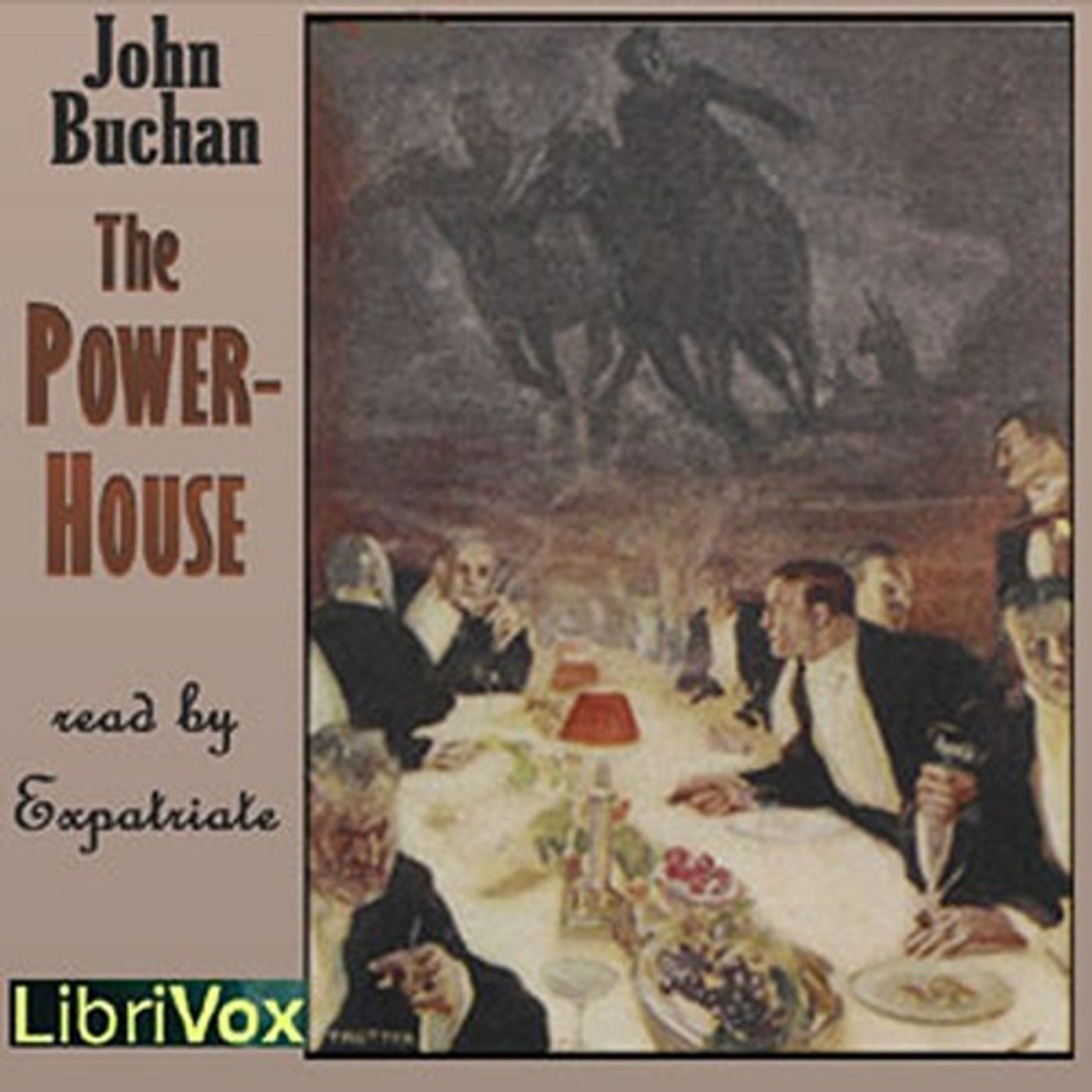
The Power-House by John Buchan.
by Popular Culture and Religion.
The Power-House by John Buchan. The Power-House is a novel by John Buchan, a thriller set in London, England. It was written in 1913, when it was serialised in Blackwood's Magazine, and it was published in book form in 1916. The narrator is the barrister and Tory MP Edward Leithen, who features in a number of Buchan's novels. The urban setting contrasts with that of its sequel, John Macnab, which is set in the Scottish Highlands. The Power-House of the title is an international anarchist organization led by a rich Englishman named Andrew Lumley. Its plan to destroy Western civilisation is thwarted by Leithen with the assistance of a burly Labour MP. "The dominant theme of Buchan's fiction is the fragility of civilisation," it has been said in the context of a discussion of The Power-House. What the critic Christopher Harvie calls "perhaps the most famous line in all Buchan" occurs during the first meeting between Leithen and Lumley, when the latter tells the former
-
9
09 - Chapter 09. The Power-House by John Buchan.
09 - Chapter 09. The Power-House by John Buchan. The Power-House is a novel by John Buchan, a thriller set in London, England. It was written in 1913, when it was serialised in Blackwood's Magazine, and it was published in book form in 1916. The narrator is the barrister and Tory MP Edward Leithen, who features in a number of Buchan's novels. The urban setting contrasts with that of its sequel, John Macnab, which is set in the Scottish Highlands. The Power-House of the title is an international anarchist organization led by a rich Englishman named Andrew Lumley. Its plan to destroy Western civilisation is thwarted by Leithen with the assistance of a burly Labour MP. "The dominant theme of Buchan's fiction is the fragility of civilisation," it has been said in the context of a discussion of The Power-House. What the critic Christopher Harvie calls "perhaps the most famous line in all Buchan" occurs during the first meeting between Leithen and Lumley, when the latter tells the former, "You think that a wall as solid as the earth separates civilisation from barbarism. I tell you the division is a thread, a sheet of glass" (Chapter 3). Harvie cites a comparable passage from the second volume of The Golden Bough, where Frazer speaks of "a solid layer of savagery beneath the surface of society," which, "unaffected by the superficial changes of religion and culture," is "a standing menace to civilisation. We seem to move on a thin crust which may at any time be rent by the subterranean forces slumbering beneath."
-
8
08 - Chapter 08. The Power-House by John Buchan.
08 - Chapter 08. The Power-House by John Buchan. The Power-House is a novel by John Buchan, a thriller set in London, England. It was written in 1913, when it was serialised in Blackwood's Magazine, and it was published in book form in 1916. The narrator is the barrister and Tory MP Edward Leithen, who features in a number of Buchan's novels. The urban setting contrasts with that of its sequel, John Macnab, which is set in the Scottish Highlands. The Power-House of the title is an international anarchist organization led by a rich Englishman named Andrew Lumley. Its plan to destroy Western civilisation is thwarted by Leithen with the assistance of a burly Labour MP. "The dominant theme of Buchan's fiction is the fragility of civilisation," it has been said in the context of a discussion of The Power-House. What the critic Christopher Harvie calls "perhaps the most famous line in all Buchan" occurs during the first meeting between Leithen and Lumley, when the latter tells the former, "You think that a wall as solid as the earth separates civilisation from barbarism. I tell you the division is a thread, a sheet of glass" (Chapter 3). Harvie cites a comparable passage from the second volume of The Golden Bough, where Frazer speaks of "a solid layer of savagery beneath the surface of society," which, "unaffected by the superficial changes of religion and culture," is "a standing menace to civilisation. We seem to move on a thin crust which may at any time be rent by the subterranean forces slumbering beneath."
-
7
07 - Chapter 07. The Power-House by John Buchan.
07 - Chapter 07. The Power-House by John Buchan. The Power-House is a novel by John Buchan, a thriller set in London, England. It was written in 1913, when it was serialised in Blackwood's Magazine, and it was published in book form in 1916. The narrator is the barrister and Tory MP Edward Leithen, who features in a number of Buchan's novels. The urban setting contrasts with that of its sequel, John Macnab, which is set in the Scottish Highlands. The Power-House of the title is an international anarchist organization led by a rich Englishman named Andrew Lumley. Its plan to destroy Western civilisation is thwarted by Leithen with the assistance of a burly Labour MP. "The dominant theme of Buchan's fiction is the fragility of civilisation," it has been said in the context of a discussion of The Power-House. What the critic Christopher Harvie calls "perhaps the most famous line in all Buchan" occurs during the first meeting between Leithen and Lumley, when the latter tells the former, "You think that a wall as solid as the earth separates civilisation from barbarism. I tell you the division is a thread, a sheet of glass" (Chapter 3). Harvie cites a comparable passage from the second volume of The Golden Bough, where Frazer speaks of "a solid layer of savagery beneath the surface of society," which, "unaffected by the superficial changes of religion and culture," is "a standing menace to civilisation. We seem to move on a thin crust which may at any time be rent by the subterranean forces slumbering beneath."
-
6
06 - Chapter 06. The Power-House by John Buchan.
06 - Chapter 06. The Power-House by John Buchan. The Power-House is a novel by John Buchan, a thriller set in London, England. It was written in 1913, when it was serialised in Blackwood's Magazine, and it was published in book form in 1916. The narrator is the barrister and Tory MP Edward Leithen, who features in a number of Buchan's novels. The urban setting contrasts with that of its sequel, John Macnab, which is set in the Scottish Highlands. The Power-House of the title is an international anarchist organization led by a rich Englishman named Andrew Lumley. Its plan to destroy Western civilisation is thwarted by Leithen with the assistance of a burly Labour MP. "The dominant theme of Buchan's fiction is the fragility of civilisation," it has been said in the context of a discussion of The Power-House. What the critic Christopher Harvie calls "perhaps the most famous line in all Buchan" occurs during the first meeting between Leithen and Lumley, when the latter tells the former, "You think that a wall as solid as the earth separates civilisation from barbarism. I tell you the division is a thread, a sheet of glass" (Chapter 3). Harvie cites a comparable passage from the second volume of The Golden Bough, where Frazer speaks of "a solid layer of savagery beneath the surface of society," which, "unaffected by the superficial changes of religion and culture," is "a standing menace to civilisation. We seem to move on a thin crust which may at any time be rent by the subterranean forces slumbering beneath."
-
5
05 - Chapter 05. The Power-House by John Buchan.
05 - Chapter 05. The Power-House by John Buchan. The Power-House is a novel by John Buchan, a thriller set in London, England. It was written in 1913, when it was serialised in Blackwood's Magazine, and it was published in book form in 1916. The narrator is the barrister and Tory MP Edward Leithen, who features in a number of Buchan's novels. The urban setting contrasts with that of its sequel, John Macnab, which is set in the Scottish Highlands. The Power-House of the title is an international anarchist organization led by a rich Englishman named Andrew Lumley. Its plan to destroy Western civilisation is thwarted by Leithen with the assistance of a burly Labour MP. "The dominant theme of Buchan's fiction is the fragility of civilisation," it has been said in the context of a discussion of The Power-House. What the critic Christopher Harvie calls "perhaps the most famous line in all Buchan" occurs during the first meeting between Leithen and Lumley, when the latter tells the former, "You think that a wall as solid as the earth separates civilisation from barbarism. I tell you the division is a thread, a sheet of glass" (Chapter 3). Harvie cites a comparable passage from the second volume of The Golden Bough, where Frazer speaks of "a solid layer of savagery beneath the surface of society," which, "unaffected by the superficial changes of religion and culture," is "a standing menace to civilisation. We seem to move on a thin crust which may at any time be rent by the subterranean forces slumbering beneath."
-
4
04 - Chapter 04. The Power-House by John Buchan.
04 - Chapter 04. The Power-House by John Buchan. The Power-House is a novel by John Buchan, a thriller set in London, England. It was written in 1913, when it was serialised in Blackwood's Magazine, and it was published in book form in 1916. The narrator is the barrister and Tory MP Edward Leithen, who features in a number of Buchan's novels. The urban setting contrasts with that of its sequel, John Macnab, which is set in the Scottish Highlands. The Power-House of the title is an international anarchist organization led by a rich Englishman named Andrew Lumley. Its plan to destroy Western civilisation is thwarted by Leithen with the assistance of a burly Labour MP. "The dominant theme of Buchan's fiction is the fragility of civilisation," it has been said in the context of a discussion of The Power-House. What the critic Christopher Harvie calls "perhaps the most famous line in all Buchan" occurs during the first meeting between Leithen and Lumley, when the latter tells the former, "You think that a wall as solid as the earth separates civilisation from barbarism. I tell you the division is a thread, a sheet of glass" (Chapter 3). Harvie cites a comparable passage from the second volume of The Golden Bough, where Frazer speaks of "a solid layer of savagery beneath the surface of society," which, "unaffected by the superficial changes of religion and culture," is "a standing menace to civilisation. We seem to move on a thin crust which may at any time be rent by the subterranean forces slumbering beneath."
-
3
03 - Chapter 03. The Power-House by John Buchan.
03 - Chapter 03. The Power-House by John Buchan. The Power-House is a novel by John Buchan, a thriller set in London, England. It was written in 1913, when it was serialised in Blackwood's Magazine, and it was published in book form in 1916. The narrator is the barrister and Tory MP Edward Leithen, who features in a number of Buchan's novels. The urban setting contrasts with that of its sequel, John Macnab, which is set in the Scottish Highlands. The Power-House of the title is an international anarchist organization led by a rich Englishman named Andrew Lumley. Its plan to destroy Western civilisation is thwarted by Leithen with the assistance of a burly Labour MP. "The dominant theme of Buchan's fiction is the fragility of civilisation," it has been said in the context of a discussion of The Power-House. What the critic Christopher Harvie calls "perhaps the most famous line in all Buchan" occurs during the first meeting between Leithen and Lumley, when the latter tells the former, "You think that a wall as solid as the earth separates civilisation from barbarism. I tell you the division is a thread, a sheet of glass" (Chapter 3). Harvie cites a comparable passage from the second volume of The Golden Bough, where Frazer speaks of "a solid layer of savagery beneath the surface of society," which, "unaffected by the superficial changes of religion and culture," is "a standing menace to civilisation. We seem to move on a thin crust which may at any time be rent by the subterranean forces slumbering beneath."
-
2
02 - Chapter 02. The Power-House by John Buchan.
02 - Chapter 02. The Power-House by John Buchan. The Power-House is a novel by John Buchan, a thriller set in London, England. It was written in 1913, when it was serialised in Blackwood's Magazine, and it was published in book form in 1916. The narrator is the barrister and Tory MP Edward Leithen, who features in a number of Buchan's novels. The urban setting contrasts with that of its sequel, John Macnab, which is set in the Scottish Highlands. The Power-House of the title is an international anarchist organization led by a rich Englishman named Andrew Lumley. Its plan to destroy Western civilisation is thwarted by Leithen with the assistance of a burly Labour MP. "The dominant theme of Buchan's fiction is the fragility of civilisation," it has been said in the context of a discussion of The Power-House. What the critic Christopher Harvie calls "perhaps the most famous line in all Buchan" occurs during the first meeting between Leithen and Lumley, when the latter tells the former, "You think that a wall as solid as the earth separates civilisation from barbarism. I tell you the division is a thread, a sheet of glass" (Chapter 3). Harvie cites a comparable passage from the second volume of The Golden Bough, where Frazer speaks of "a solid layer of savagery beneath the surface of society," which, "unaffected by the superficial changes of religion and culture," is "a standing menace to civilisation. We seem to move on a thin crust which may at any time be rent by the subterranean forces slumbering beneath."
-
1
01 - Chapter 01. The Power-House by John Buchan.
01 - Chapter 01. The Power-House by John Buchan. The Power-House is a novel by John Buchan, a thriller set in London, England. It was written in 1913, when it was serialised in Blackwood's Magazine, and it was published in book form in 1916. The narrator is the barrister and Tory MP Edward Leithen, who features in a number of Buchan's novels. The urban setting contrasts with that of its sequel, John Macnab, which is set in the Scottish Highlands. The Power-House of the title is an international anarchist organization led by a rich Englishman named Andrew Lumley. Its plan to destroy Western civilisation is thwarted by Leithen with the assistance of a burly Labour MP. "The dominant theme of Buchan's fiction is the fragility of civilisation," it has been said in the context of a discussion of The Power-House. What the critic Christopher Harvie calls "perhaps the most famous line in all Buchan" occurs during the first meeting between Leithen and Lumley, when the latter tells the former, "You think that a wall as solid as the earth separates civilisation from barbarism. I tell you the division is a thread, a sheet of glass" (Chapter 3). Harvie cites a comparable passage from the second volume of The Golden Bough, where Frazer speaks of "a solid layer of savagery beneath the surface of society," which, "unaffected by the superficial changes of religion and culture," is "a standing menace to civilisation. We seem to move on a thin crust which may at any time be rent by the subterranean forces slumbering beneath."
We're indexing this podcast's transcripts for the first time — this can take a minute or two. We'll show results as soon as they're ready.
No matches for "" in this podcast's transcripts.
No topics indexed yet for this podcast.
Loading reviews...
ABOUT THIS SHOW
The Power-House by John Buchan. The Power-House is a novel by John Buchan, a thriller set in London, England. It was written in 1913, when it was serialised in Blackwood's Magazine, and it was published in book form in 1916. The narrator is the barrister and Tory MP Edward Leithen, who features in a number of Buchan's novels. The urban setting contrasts with that of its sequel, John Macnab, which is set in the Scottish Highlands. The Power-House of the title is an international anarchist organization led by a rich Englishman named Andrew Lumley. Its plan to destroy Western civilisation is thwarted by Leithen with the assistance of a burly Labour MP. "The dominant theme of Buchan's fiction is the fragility of civilisation," it has been said in the context of a discussion of The Power-House. What the critic Christopher Harvie calls "perhaps the most famous line in all Buchan" occurs during the first meeting between Leithen and Lumley, when the latter tells the former
HOSTED BY
Popular Culture and Religion.
Loading similar podcasts...
Frequently Asked Questions
How many episodes does The Power-House by John Buchan. have?
The Power-House by John Buchan. currently has 9 episodes available on PodParley. New episodes are automatically indexed when they're published to the podcast feed.
What is The Power-House by John Buchan. about?
The Power-House by John Buchan. The Power-House is a novel by John Buchan, a thriller set in London, England. It was written in 1913, when it was serialised in Blackwood's Magazine, and it was published in book form in 1916. The narrator is the barrister and Tory MP Edward Leithen, who features in...
How often does The Power-House by John Buchan. release new episodes?
The Power-House by John Buchan. has 9 episodes. Check the episode list to see recent publication dates and frequency.
Where can I listen to The Power-House by John Buchan.?
You can listen to The Power-House by John Buchan. on PodParley by clicking any episode. We provide an embedded audio player for direct listening, and you can also subscribe via your preferred podcast app using the RSS feed.
Who hosts The Power-House by John Buchan.?
The Power-House by John Buchan. is created and hosted by Popular Culture and Religion..
URL copied to clipboard!