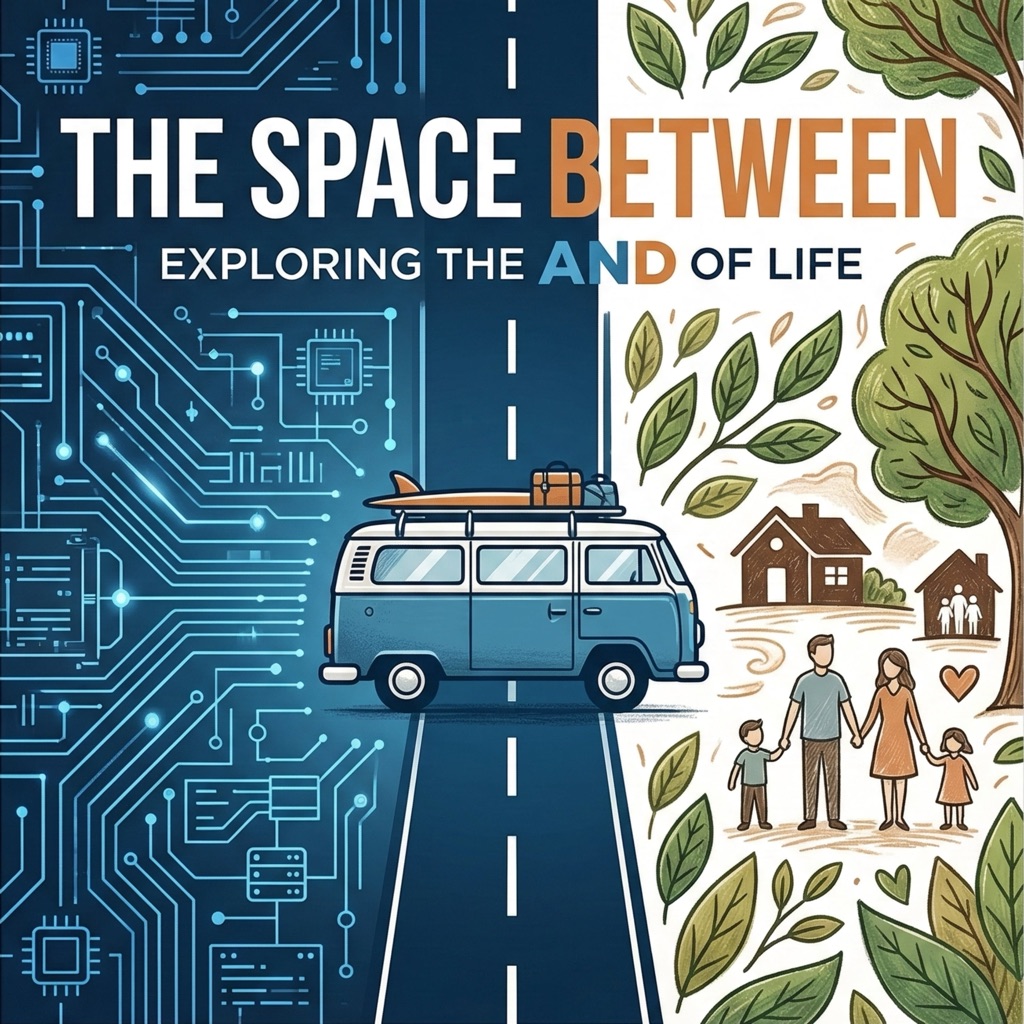
The Space Between podcast artwork

PODCAST · society

The Space Between

Exploring the space between life and work

  1. 7

    In (Limited) Praise of the Algorithm

    Algorithms get a bad reputation, mostly for good reason. But posting about Widow's Bay on Mastodon and Bluesky and getting almost total silence made me think more carefully about what algorithms are actually bad at versus what they're quietly good at. Those platforms are built around who you follow, not what you care about, so if you don't already have the right people in your feed, you're posting into a void. Threads worked differently. A couple of posts, a bit of engagement, and suddenly my For You feed was full of other people's theories, GIFs, and reactions to the same show. It's an echo chamber, technically, but when the echo is built around something you're enjoying, that's a different thing from the political echo chambers everyone rightly complains about. The same mechanics that surface fans of a show you love also surface conflict, though, and I got my first genuinely snarky reply on Threads after a long stretch of the platform feeling pleasant. One rude correction on a minor plot detail, and the old Twitter instincts came right back. The algorithm sees someone saying they dislike a thing, then routes in someone who likes it and makes sure their paths cross. Conflict generates engagement, engagement generates views, and the platform profits either way. Knowing which mode you're in before you start engaging is probably the only real protection: for surfacing fans of an obscure show, the algorithm is useful; for anything involving politics or tribalism, it's a trap. Published on Subwave https://subwave.app/@thespacebetween/post/in-limited-praise-of-the-algorithm-

  2. 6

    Podcasting Into the Void

    Podcasting gets none of the algorithmic help that TikTok or Instagram Reels give you. When you drop an episode into a feed, there's no machine surfacing it to people who don't already know you exist. I've been sitting with that reality on my morning walks lately, and the honest answer is: the freedom from algorithmic control is real, but the cost is a near-total absence of feedback. No replies flooding in ten minutes after you post, no engagement signals telling you whether something landed. The opt-in nature of podcasting also shapes the listener experience differently than social video does. Platforms like TikTok are built to detect the moment you disengage and immediately serve you something else. Podcast listening doesn't work that way. Someone can have it going while washing dishes, half-listening, and rewind 15 seconds when something catches their ear. That lower-friction relationship cuts both ways: there's no pressure to produce exactly six minutes because the feed rewards it this week, but there's also a much higher bar for a listener to actually respond to something you said. I've also been thinking about whether podcasts are really social media at all. What's being pushed on YouTube and Netflix is mostly video with audio attached. The RSS-based, app-driven, subscription model runs on different logic, closer to a newsletter or a radio show than a social feed. My last episode on self-esteem and self-worth resonated with a few people, not many, and that turned out to feel like enough. Published on Subwave https://subwave.app/@thespacebetween/post/podcasting-into-the-void

  3. 5

    You Are Not Forgotten or Expendable

    A friend posted to a private list feeling forgotten, expendable, not interesting or important enough. I read it and felt it immediately, because I know that feeling from the inside. The gap between what you know and what you feel is what makes it so hard. I can run through the list of people who genuinely care about me and still wake up the next morning feeling like garbage because nobody noticed whatever I thought would be noticeable. The logic doesn't hold up under inspection, but you can't inspect your way out of it when you're inside it. The standard advice (walk, water, sleep, eat) is all true and genuinely helpful, but what actually moves the needle for me is being pulled into a situation where I have to interact with the world outside my own head. A neighbor stopping me on the way to my truck, a friend needing technical help, my kids, my wife, a random interruption. The embarrassment of acting like I don't matter to the people around me overrides the brain signal saying I don't. The frustrating part is you can't always force it. When you're feeling invisible, the last thing you want to do is reach out and risk confirming that nobody cares enough to respond. If you're in that place right now, feeling forgotten or not enough in whatever direction, the opposite is true. Knowing that and feeling that are two completely different experiences, and I'm not pretending otherwise. But if it helps to have someone on the other end, reach out. And if things are darker than a rough morning, please seek proper help. You deserve more than a video for that. Published on Subwave https://subwave.app/@thespacebetween/post/you-are-not-forgotten-or-expendable

  4. 4

    Widow's Bay Is Worth the Scares

    Widow's Bay on Apple TV+ sits in a strange and comfortable place between horror and comedy, leaning hard into the horror while using comedy as seasoning rather than the main course. Unlike Shaun of the Dead, where the jokes are front and center and the horror serves as backdrop, Widow's Bay inverts that dynamic entirely: the horror leads, and the comedy keeps things from going relentlessly bleak before the next episode pivots into full-on genre territory, packed with callbacks to famous films and series that fans will catch without the show ever stopping to wink at them. The show leans more thriller than gore-fest, building tension through mystery and that slow creeping sense of what is actually happening on this island. It draws comparisons to Lost and Midnight Mass, and if you've seen Midnight Mass, there's a familiar face worth watching for. The cast is sharp, the writing holds up, and for viewers who find some scenes genuinely uncomfortable, pushing through is worth it. Post-episode conversation on Threads has been genuinely entertaining, with waves of memes, fan theories, and speculation after each new installment. Whether you're watching in real time or a day late, that community layer adds something. Widow's Bay earns the discomfort it asks of you. Published on Subwave https://subwave.app/@thespacebetween/post/widows-bay-is-worth-the-scares

  5. 3

    I Want More Whimsy Online in 2026

    My theme for 2026 is simple: more whimsy. More silliness, more lighthearted experiences that don't need to justify themselves with monetization, user growth, tokens, or AI slop. Just fun for its own sake. Roost is the app that crystallized this for me. It's a social messaging app where your messages are carried by virtual birds traveling at roughly the speed a real bird would fly between two locations. A message from Canada to England takes a few days to arrive. I currently have one landing in about 13 hours and another in three days. The artificial delay is entirely the point. It pulls you off the anxious loop of checking for responses and forces you to send the bird and wait. Yes, there are fair criticisms: the bird avatars are AI-generated rather than accurate depictions of real birds. And maybe Roost gets bought, maybe it fades out after a few months. That's fine. A solo developer's app blew up over a weekend, and it'll run its course. What matters is that the internet still has room for things that exist purely because they're delightful, with no further justification required. Published on Subwave https://subwave.app/@thespacebetween/post/i-want-more-whimsy-online-in-2026

  6. 2

    Threads Feels Like Twitter Used To

    A post about the Survivor finale sparked a real back-and-forth with Eliza, a former contestant, and pulled a whole pocket of Survivor fans into the thread. That kind of spontaneous, cross-cultural collision is exactly what made early Twitter worth checking, and it's what Threads is quietly recreating. The platform has somehow managed to stay culturally mixed and largely tolerable, whether through algorithmic tuning, actual moderation, or both. Threads sits in a different category than Mastodon, Bluesky, or the other networks that filled the post-Twitter gap. Those platforms are good for finding specific communities, but they don't produce the moment where sports, entertainment, and tech all bump into each other in real time. That interaction also brought around 200,000 new followers, which is a nice side effect, but the more telling detail is that Threads is now a place where those moments happen at scale, with random people, famous or not. One thing Threads hasn't cracked yet is the logo moment. TV commentators still link to their Twitter accounts. Movie credits still promote Instagram and Facebook pages. When a platform's icon starts appearing in broadcast graphics and end-credit crawls, it signals mainstream acceptance as infrastructure. Threads isn't there yet, but the recent logo tweak, moving away from something that reads as a plain @ sign, suggests Meta knows it's close. Published on Subwave https://subwave.app/@thespacebetween/post/threads-feels-like-twitter-used-to

  7. 1

    Aubrey Deserved the Survivor 50 Win

    Aubrey won Survivor 50, and of the three people sitting at final tribal council, she earned it by doing something the other two didn't: she told a story. Joe and Jonathan rattled off moves and challenge wins like a résumé. Aubrey connected the dots, made it personal, and gave the jury something to hold onto. There's a fair asterisk around how much speaking last helped her, but she had the slot and used it well. The live finale felt like a missed opportunity for a milestone season. A proper reunion with real time to reflect on the cast and season would have fit the moment better. And Stephanie making it to the jury at all, given how she spent the finale, was a mild frustration. The bigger uncertainty going forward is what production took as the lesson from season 50. Jeff's "anything can happen" chaos energy created noise more than drama, and if that's the thing being amplified next season, it's worth watching carefully. Published on Subwave https://subwave.app/@thespacebetween/post/aubrey-deserved-the-survivor-50-win

  8. 0

    Detail Is Worth Adding to Your Workflow

    Detail is an iOS app for recording multi-camera video on your phone, and it does more than most people expect. You can run the front and back cameras simultaneously, bring in other participants on their own iPhones or iPads, and record podcast interviews whether everyone's in the room or connecting remotely. The app handles the multi-angle cutting automatically, which removes a significant chunk of the usual post-production work. Editing happens inside Detail after you finish recording. Trim, arrange, and adjust clips without touching a separate app. You can also layer in secondary sources during recording: react to a YouTube video, drop in a photo, or loop a clip next to your talking head. Picture-in-picture setups that once required a full editing suite are built directly into the recording flow. The export integration with Subwave, the same company's social video and podcast platform, is where the workflow closes the loop. Once you finish editing inside Detail, you can send the video straight to Subwave in about two taps. The handoff is clean enough that it changes what's realistic for someone producing interviews, reactions, or talking-head content entirely from their phone. Published on Subwave https://subwave.app/@thespacebetween/post/detail-is-worth-adding-to-your-workflow

  9. -1

    Trying Out Subwave for the First Time

    In this first post on Subwave, I explore what the platform appears to be and why it caught my attention. Subwave comes from the team behind Detail, the iOS video and audio editing app, and represents their move into social media and podcast creation. The platform blends content creation tools with social sharing in a way that feels distinct from typical editing apps or social networks. Rather than just another tool for making podcasts, it's designed as a space where creation and community happen together. I share my initial impressions and the key question I'm watching: whether this combination of creation and social features actually works in practice. The real test will be seeing how it evolves and what kind of community develops around it. Published on Subwave https://subwave.app/@thespacebetween/post/trying-out-subwave-for-the-first-time

Type above to search every episode's transcript for a word or phrase. Matches are scoped to this podcast.

Searching…

We're indexing this podcast's transcripts for the first time — this can take a minute or two. We'll show results as soon as they're ready.

No matches for "" in this podcast's transcripts.

Showing of matches

No topics indexed yet for this podcast.

Loading reviews...

ABOUT THIS SHOW

Exploring the space between life and work

HOSTED BY

The Space Between

Produced by Lemon Productions

CATEGORIES

Frequently Asked Questions

How many episodes does The Space Between have?

The Space Between currently has 9 episodes available on PodParley. New episodes are automatically indexed when they're published to the podcast feed.

What is The Space Between about?

Exploring the space between life and work

How often does The Space Between release new episodes?

The Space Between has 9 episodes. Check the episode list to see recent publication dates and frequency.

Where can I listen to The Space Between?

You can listen to The Space Between on PodParley by clicking any episode. We provide an embedded audio player for direct listening, and you can also subscribe via your preferred podcast app using the RSS feed.

Who hosts The Space Between?

The Space Between is created and hosted by The Space Between.
URL copied to clipboard!