
PODCAST · history
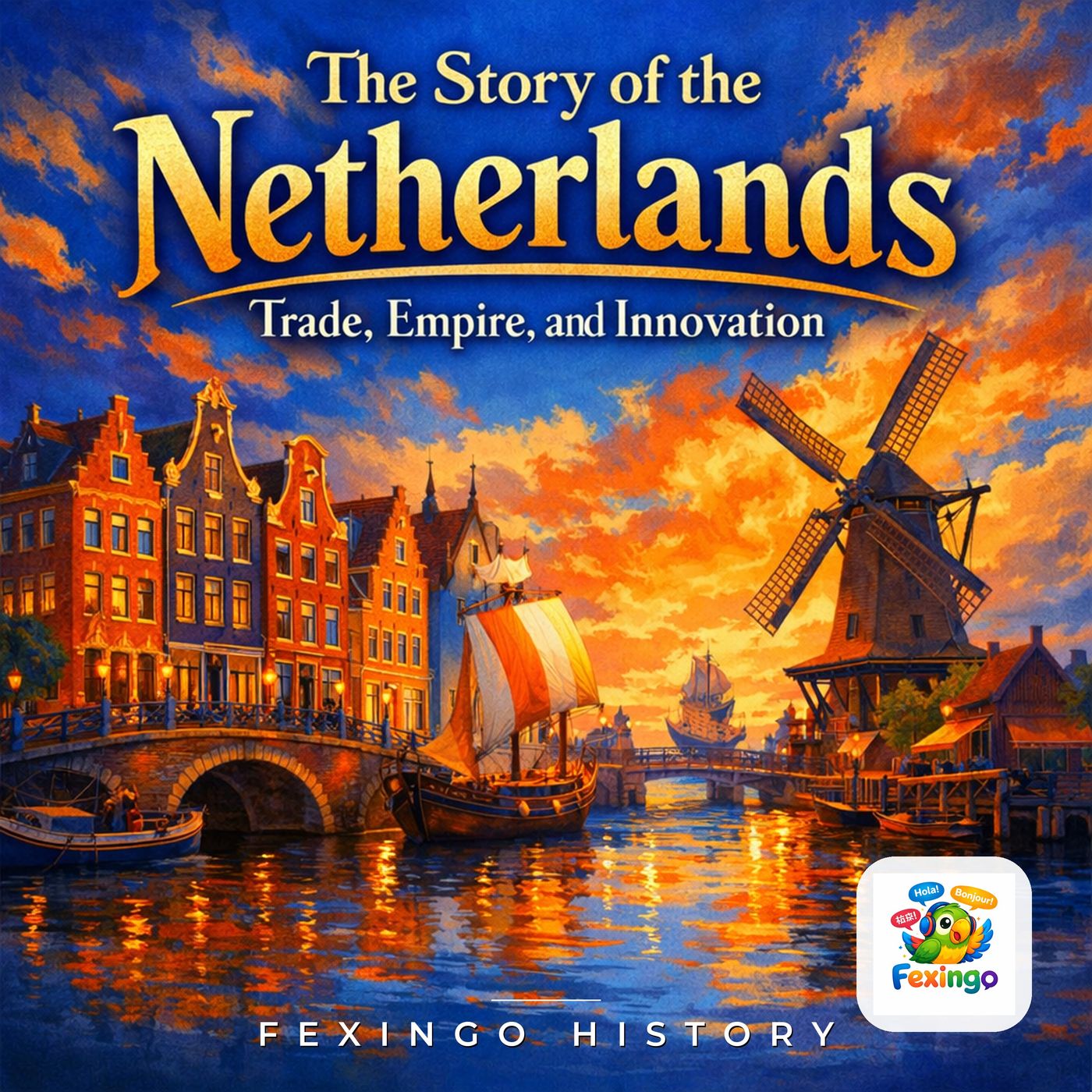
The Story of the Netherlands: Trade, Empire, and Innovation — Fexingo History
by Fexingo
The Netherlands: a small country that shaped the modern world. From the revolt against Spanish Habsburg rule to the Golden Age of the Dutch Republic, this show traces the rise of a trading empire that pioneered global capitalism, built vast colonial networks, and fostered an unprecedented culture of artistic and scientific innovation. Lucas and Luna guide listeners through the polders and canals of Dutch history, examining how a nation of merchants, sailors, and painters transformed from a rebel province into a maritime superpower. Episodes delve into the Eighty Years' War, the Dutch East India Company (VOC) and its role in early globalization, the tulip mania, the lives of figures like William of Orange and Rembrandt, the Batavian Republic, and the Netherlands' later transition to a constitutional monarchy. We explore the legacies of colonialism in Indonesia, Suriname, and the Caribbean, the impact of the Dutch on international law and finance, and the country's modern identity as a h
-
34
Dutch Quinine and the Global Plague War
This episode explores how the Dutch Republic turned a bitter bark into a geopolitical superpower. We trace the origins of quinine, the world’s first effective antimalarial drug, from its discovery in the Andes to its cultivation in Java. Lucas and Luna discuss the VOC’s secret monopoly on cinchona trees, the role of Governor-General Joan Maetsuycker in establishing plantations, and how controlling the cure for malaria allowed the Dutch to dominate Southeast Asia while European rivals faltered. You will learn about the specific alkaloids extracted by later scientists, the tragic cost of colonial extraction, and how this botanical monopoly reshaped global trade routes and imperial ambitions in the seventeenth century. #Quinine #Cinchona #VOC #DutchEastIndiaCompany #JoanMaetsuycker #Java #MalariaHistory #ColonialMedicine #BotanicalMonopoly #DutchGoldenAge #IndonesiaHistory #Pharmacology #Alkaloids #Sovereignty #TradeRoutes #EmpireBuilding #FexingoHistory #History Keep every episode free: buymeacoffee.com/fexingo
-
33
The Dutch Republic's Invisible Army of Spies
While the VOC’s ships and fluyts are well-documented, the Dutch Republic’s survival often rested on a quieter, more perilous network. This episode explores the clandestine intelligence apparatus that protected the fledgling United Provinces during the Eighty Years' War and the subsequent Golden Age. We follow the trail of Isaac de l'Olive, a merchant-spymaster who turned trade routes into information highways, and Johan de Witt, the Grand Pensionary who weaponized diplomacy through secret correspondence. The conversation delves into the Geheime Raad, or Secret Council, which coordinated espionage across Europe, from London to Constantinople. You will learn how Dutch agents infiltrated Spanish courts, decoded French diplomatic cables, and manipulated public opinion in England to secure Dutch independence. Beyond state-sponsored spying, we examine the role of private merchants like Willem Boreel, whose letters served as both business records and intelligence reports. This narrative highlights the ingenuity of Dutch intelligence—relying not on grand battles, but on patience, literacy, and the sheer speed of the printing press. It is a story of how a small nation outmaneuvered empires by knowing their secrets before they acted. #DutchGoldenAge #EightyYearsWar #IsaacdeOlive #JohandeWitt #VOC #GeheimeRaad #DutchEspionage #HollandHistory #MaritimeIntelligence #BarbadosSpying #SpanishSuccession #DiplomaticCorrespondence #WillemBoreel #RepublicOfTheSevenUnitedNetherlands #IntelligenceHistory #17thCenturyEurope #AmsterdamArchives #FexingoHistory Keep every episode free: buymeacoffee.com/fexingo
-
32
Dutch Delftware: The Blue Pottery That Conquered the World
While Amsterdam’s canals and VOC ships dominate our earlier stories, this episode explores a quieter revolution in household aesthetics. We trace the rise of Delftware, or Delfts Blauw, from its humble origins as an imitation of expensive Chinese porcelain to a global export that defined Dutch artistic identity. Lucas and Luna discuss how Jan van Call and other potters in Delft developed the tin-glazed earthenware technique, adapting blue-and-white designs from Ming Dynasty ceramics to suit European tastes. You’ll meet the key figures like Karel van Middelburg and learn about the technical hurdles of firing these delicate pieces without cracking them. The conversation also covers the cultural impact of these tiles and plates on middle-class homes across Europe, the decline of the industry due to cheaper English alternatives, and the legacy of the Royal Tichelaar Makkink factory that still operates today. This is a story of innovation, adaptation, and the everyday objects that connected the Dutch Golden Age to the world. #Delftware #DelftsBlauw #DelftPottery #JanvanCall #KarelvanMiddelburg #TinGlazedEarthenware #ChinesePorcelain #MingDynasty #RoyalTichelaarMakkink #DutchGoldenAge #CeramicHistory #BlueAndWhite #HouseholdArt #EuropeanTrade #VOC #AmsterdamHistory #FexingoHistory #History Keep every episode free: buymeacoffee.com/fexingo
-
31
The Dutch Painters Who Built an Invisible Empire
While we have explored the VOC’s spice monopolies, sugar refineries in Recife, and the engineering marvels of the Beemster Polder, this episode turns inward to the canvas. We examine how the Dutch Golden Age art market functioned as a financial engine rivaling the East India Company. Lucas traces the rise of Rembrandt van Rijn and Jan Vermeer, detailing their workshop economies, the role of merchant-collector Pieter de Rooy, and the innovative auction systems that democratized art ownership. Luna helps us unpack the social mechanics behind these masterpieces, from the specific pigments sourced through VOC trade routes to the credit networks that allowed artists to survive market fluctuations. Together, they reveal how Amsterdam’s unique cultural infrastructure turned painting into a commodity, influencing global aesthetics while funding the very empire that supplied the raw materials for those paints. #Rembrandt #JanVermeer #DutchGoldenAge #AmsterdamArtMarket #PieterdeRooy #VOCartTrade #UtrechtCaravaggism #HalsPainting #LeydenEtching #ArtAuctionHistory #PigmentTrade #CarmineLake #VermeerDelft #BaroqueArtEconomics #DutchMerchantClass #FexingoHistory #EuropeanHistory #ArtInvestment Keep every episode free: buymeacoffee.com/fexingo
-
30
Dutch Golden Age Science: The Microscope and the Telescope
While Amsterdam’s canals and VOC ships defined the Dutch Golden Age economically, a quieter revolution was transforming how humanity saw the world. This episode explores the rise of Dutch lens grinding in the late 16th and early 17th centuries, focusing on figures like Zacharias Janssen and Constantijn Huygens. We trace how optical instruments—the microscope and the telescope—shifted from curiosities to essential tools for navigation, trade, and scientific inquiry. Discover how Dutch craftsmanship bridged the gap between art and empirical observation, laying the groundwork for modern biology and astronomy. Featuring insights into the collaboration between artisans and scholars, the role of the Republic’s tolerance in fostering innovation, and the global impact of Dutch-made lenses on the Scientific Revolution. #ZachariasJanssen #ConstantijnHuygens #MiddelburgLensGrinders #DutchGoldenAge #MicroscopeHistory #TelescopeInvention #OpticalScience #ScientificRevolution #LeeuwenhoekPrecursors #HuygensLens #AmsterdamTrade #EmpireAndScience #LensGrinding #EarlyModernScience #NetherlandsHistory #FexingoHistory #HistoryPodcast #Education Keep every episode free: buymeacoffee.com/fexingo
-
29
Dutch Glass: The Invisible Empire of Venetian Glassmakers
While the Dutch are famous for their ships and spices, a quieter revolution was happening in Amsterdam’s workshops. This episode explores how the Dutch Republic became the world’s leading producer of glassware, largely by attracting skilled artisans from Venice and Germany. We follow the journey of Giovanni Carlo Battaglia, a master glassblower who fled the strict regulations of the Venetian Republic to find freedom in the North. His story opens the door to understanding the 'Venetian style' that defined luxury dining across Europe. Lucas and Luna discuss the technical innovations like the 'cristallo' glass, the economic impact of the glass trade on cities like Middelburg and Delft, and how this industry fueled the cultural confidence of the Dutch Golden Age. From the furnaces of the Zaanstreek to the tables of the Heeren XVII, we uncover how transparent glass helped shape a modern, visible society. #DutchGoldenAge #GlassHistory #AmsterdamHistory #VenetianGlass #GiovanniBattaglia #Cristallo #Zaanstreek #Middelburg #Delft #TradeHistory #IndustrialInnovation #EuropeanCrafts #FexingoHistory #HistoryPodcast #ArtisanLife #LuxuryGoods #RenaissanceTechnology #History Keep every episode free: buymeacoffee.com/fexingo
-
28
Amsterdam's Canals: The Art and Economics of the Grachtengordel
In this episode of The Story of the Netherlands, Lucas and Luna explore how Amsterdam's famous canal ring — the grachtengordel — was not just a pretty face but a sophisticated piece of urban planning driven by trade, tax incentives, and a booming economy. They trace the city's expansion in the early 1600s, the engineering decisions that shaped its concentric waterways, and how the canals became a stage for merchant power and innovation. From the Herengracht to the Jordaan, they uncover the stories of the people who built and lived along these waters, including a wealthy merchant who turned a canal house into a floating warehouse. They also touch on the environmental challenges the canals face today, from pollution to the famous 'Amsterdam foot' — the sunken wooden pilings that support the city. Along the way, they discuss the role of the canals in the Dutch Golden Age economy and their enduring legacy as a UNESCO World Heritage site. This episode offers a fresh perspective on a beloved landmark, revealing how a network of water became the backbone of a global empire. #History #FexingoHistory #Amsterdam #Grachtengordel #DutchGoldenAge #Canals #UrbanPlanning #Herengracht #Jordaan #CityExpansion #Trade #DutchHistory #UNESCO #WoodenPilings #17thCentury #AmsterdamFoot #WaterManagement #GoldenAge Keep every episode free: buymeacoffee.com/fexingo
-
27
The Dutch Sugar Refining Boom: Amsterdam's Sweet Transformation
In this episode, Lucas and Luna explore how a small but potent industry transformed Amsterdam in the seventeenth century: sugar refining. From the first refineries in the 1590s, powered by a workforce of skilled German and Sephardic Jewish migrants, to the rise of the sugar baker's guild, this is the story of how colonial raw sugar from Brazil and the Caribbean became a refined luxury product that fed a booming European market. They trace the physical layout of the refineries, the dangerous work of the 'sugar bakers', and the surprising role of the Amsterdam city council in regulating the trade. Along the way, they uncover the connection between sugar refining and the city's famous canal houses, and the fierce competition with London that eventually spelled the industry's decline. A surprising part of the story is how the demand for sugar even influenced the shape of Dutch ceramics. This episode takes a fresh look at a lesser-known pillar of the Dutch Golden Age economy. #DutchGoldenAge #SugarRefining #Amsterdam #SephardicJews #EconomicHistory #ColonialTrade #SugarBakers #CanalHouses #SeventeenthCentury #Guilds #Brazil #Caribbean #London #DutchCraftsmanship #MigrationHistory #FoodHistory #History #FexingoHistory Keep every episode free: buymeacoffee.com/fexingo
-
26
The Dutch Beemster Polder: Engineering an Empire's Breadbasket
In this episode of The Story of the Netherlands, Lucas and Luna explore the remarkable story of the Beemster Polder, a seventeenth-century land reclamation project that turned a shallow lake into fertile farmland. They discuss the engineering genius of Jan Adriaanszoon Leeghwater, his windmill-driven drainage system, and the political maneuvering that made it possible. The episode covers the role of the ringvaart and boezem in water management, the impact on the Dutch Golden Age economy, and the polder's transformation into a UNESCO World Heritage site. Along the way, they reflect on the enduring legacy of Dutch water engineering and the careful balance between human ambition and nature's forces. #Beemster #Leeghwater #DutchPolder #LandReclamation #WaterManagement #GoldenAge #UNESCO #Windmill #NetherlandsHistory #SeventeenthCentury #Engineering #Agriculture #Ringvaart #Boezem #Droogmakerij #History #FexingoHistory #DutchInnovation Keep every episode free: buymeacoffee.com/fexingo
-
25
The Dutch Colonial Governor Who Defied the VOC
In 1629, Jan Pieterszoon Coen, the ruthless architect of the Dutch East India Company's spice monopoly, returned to Batavia to find a city in crisis. But his most dangerous enemy wasn't a rival trader or a native prince—it was his own successor, Jacques Specx, and the members of the Council of the Indies who had grown fat on corruption. In Episode 207, we step into the tense world of Dutch colonial governance, where ambition, greed, and a single letter from the Heeren XVII in Amsterdam could make or break a fortune. We follow Coen's final years as he battles the English in the East Indies, negotiates with the Sultan of Bantam, and tries to hold together a fledgling empire that was already fracturing from within. Along the way, we uncover the scandal of the 'private trade' that drained the VOC's coffers, the fate of the 'Banda orphans', and the quiet rebellion of a governor who dared to defy the Company's rules. It's a story of power, profit, and the human cost of building a global monopoly. #JanPieterszoonCoen #VOC #Batavia #DutchEastIndiaCompany #DutchEmpire #SpiceTrade #BandaIslands #JacquesSpecx #HeerenXVII #ColonialHistory #17thCentury #TradeHistory #Corruption #PowerStruggle #Amsterdam #History #FexingoHistory #Europe Keep every episode free: buymeacoffee.com/fexingo
-
24
New Netherland The Dutch Colony That Became New York
In this episode, Lucas and Luna explore the Dutch colony of New Netherland, the fur-trading outpost that grew into the multicultural heart of the future New York. They trace the colony's founding by the West India Company in 1624, the iconic purchase of Manhattan by Peter Minuit, and the turbulent governorship of Peter Stuyvesant. The conversation covers the colony's diverse population, the patroon system, and its surprising surrender to the English in 1664 without a shot fired. Along the way, they touch on the legacy of Dutch place names, legal concepts, and the enduring myth of the Manhattan purchase. This is the story of a forgotten corner of the Dutch empire that planted the seeds for one of the world's great cities. #NewNetherland #DutchEmpire #PeterMinuit #PeterStuyvesant #ManhattanPurchase #NieuwAmsterdam #WestIndiaCompany #17thCentury #ColonialAmerica #NewYorkHistory #FurTrade #Lenape #PatroonSystem #1600s #Netherlands #History #FexingoHistory #DutchGoldenAge Keep every episode free: buymeacoffee.com/fexingo
-
23
The Dutch at the Cape: Jan van Riebeeck and the Birth of Cape Town
In 1652, the Dutch East India Company established a tiny refreshment station at the southern tip of Africa—a place that would grow into Cape Town. This episode follows the early years of the Cape Colony under commander Jan van Riebeeck. We explore the VOC's strategic need for fresh supplies on the long voyage to Batavia, the encounters with the indigenous Khoikhoi, the introduction of slavery in 1658, and the first free burghers who began farming the land. It's a story of trade, conflict, and the unexpected birth of a new society that would shape southern Africa for centuries. Hosts Lucas and Luna discuss the gardens, the fort, the clashes over cattle, and the complex legacy of the Dutch presence at the Cape. #DutchCapeColony #JanVanRiebeeck #VOC #CapeTown #Khoikhoi #HistoryOfSouthAfrica #DutchEastIndiaCompany #KaapDeGoedeHoop #RefreshmentStation #SlaveryAtTheCape #FortDeGoedeHoop #TableMountain #1652 #ColonialHistory #TradeAndEmpire #DutchGoldenAge #History #FexingoHistory Keep every episode free: buymeacoffee.com/fexingo
-
22
The Dutch Tulip Trade: Bulbs, Bubbles, and the First Crash
In the 1630s, the Dutch Republic became gripped by a frenzy over tulip bulbs—a speculative mania that saw single bulbs trade for more than a skilled craftsman's annual wage. This episode explores how the tulip, originally from the Ottoman Empire, became a luxury status symbol, the role of the VOC in importing bulbs, and the rise of 'florists' who bred rare color patterns. We follow the story of the Semper Augustus bulb, the notorious 'sailor and the onion' anecdote, and the sudden crash of February 1637 that left speculators bankrupt. Featuring the tavern-based 'college' trading system, the professional florist Pieter van der Molen, and the enduring myth versus reality of tulip mania—debated by economists like Earl Thompson and Anne Goldgar—this episode uncovers the origins of modern financial bubbles. A cautionary tale of greed, beauty, and the Dutch knack for turning anything into a commodity. #TulipMania #DutchGoldenAge #SemperAugustus #ViceroyBulb #SpeculativeBubble #FinancialHistory #VOC #OttomanEmpire #Florist #Bloembollen #PieterVanDerMolen #EarlThompson #AnneGoldgar #EconomicHistory #1630s #Amsterdam #History #FexingoHistory Keep every episode free: buymeacoffee.com/fexingo
-
21
The Dutch in Formosa: Sugar, Deer, and the Fall of Fort Zeelandia
In Episode 181 of The Story of the Netherlands, we explore a lesser-known but pivotal chapter of Dutch colonial history: Formosa (Taiwan). The VOC established a colony there in 1624, building Fort Zeelandia on the southwestern coast. We delve into the colony's economic backbone—sugar cultivation by Chinese settlers and the lucrative deer hide trade with Japan. The episode details the tense relations with indigenous tribes and the eventual dramatic siege by Ming loyalist Koxinga (Zheng Chenggong) in 1661–1662, which ended Dutch rule after nine months. Governor Frederick Coyett's surrender led to his exile by the VOC. We discuss the legacy of Dutch Taiwan, including the introduction of the sweet potato and lingering place names. A tale of empire, exploitation, and human drama. #DutchFormosa #VOC #FortZeelandia #Koxinga #ZhengChenggong #FrederickCoyett #TaiwanHistory #DeerHideTrade #DutchColonialism #SiegeOfFortZeelandia #17thCentury #Batavia #SugarTrade #AboriginalTaiwan #DutchEastIndiaCompany #History #FexingoHistory #TradeAndEmpire Keep every episode free: buymeacoffee.com/fexingo
-
20
The Dutch in Brazil: Sugar, Slavery, and a Lost Colony
Long before the Dutch lost New Netherland, they had another American colony: Brazil. In 1630, the West India Company captured Recife and Olinda, building a sugar empire in the Northeast. Under Governor Johan Maurits van Nassau-Siegen, Dutch Brazil became a laboratory of tolerance, art, and natural science—but also a brutal slave society. This episode traces the rise and fall of New Holland (1630–1654), the sugar engenhos, the artists Frans Post and Albert Eckhout, and the legacy of a colony that shaped the Atlantic world. We explore how Portuguese resistance, Dutch company politics, and the African slave trade intertwined. Featuring the Jewish planters from Holland, the siege of Recife, and the Treaty of The Hague. A forgotten chapter of the Golden Age. #DutchBrazil #JohanMaurits #SugarTrade #WestIndiaCompany #Recife #Olinda #Mauritsstad #FransPost #AlbertEckhout #Engenho #SlaveTrade #Portuguese #NewHolland #SeventeenthCentury #DutchHistory #AtlanticWorld #History #FexingoHistory Keep every episode free: buymeacoffee.com/fexingo
-
19
The Dutch and Japan: Deshima Island's Two-Century Trade
In the early 1600s, the Dutch were the only Europeans permitted to trade with Japan during its isolationist Sakoku period. This episode explores the unique conditions of the Deshima trading post in Nagasaki Bay, where VOC merchants were confined to a small artificial island from 1641 to 1853. We discuss the annual hofreis pilgrimage to Edo, the goods exchanged—silk, porcelain, copper, and scientific instruments—and the flourishing of Dutch learning (rangaku) among Japanese scholars. Figures like Philipp Franz von Siebold and Jan Cock Blomhoff are featured, along with the strict rules that governed the Dutch presence. The episode ends with the end of isolation after Commodore Perry's arrival. It's a story of trade, cultural exchange, and the persistence of connection despite barriers. #Deshima #VOC #DutchInJapan #Sakoku #Nagasaki #Rangaku #PhilippFranzVonSiebold #JanCockBlomhoff #DutchTrade #EdoPeriod #Hofreis #CopperTrade #PorcelainTrade #IslandNation #EarlyModernTrade #JapanHistory #NetherlandsHistory #FexingoHistory Keep every episode free: buymeacoffee.com/fexingo
-
18
The Dutch Gunpowder Trade: Saltpeter, Powder Mills, and Empire
In this episode, Lucas and Luna explore the explosive Dutch gunpowder trade that powered the Golden Age. From the saltpeter fields of the Mughal Empire and Baltic forests to the powder mills of the Zaanstreek, they trace how the Dutch Republic became Europe's leading arms supplier. They discuss the strategic role of Amsterdam's Wisselbank in financing gunpowder, the VOC's massive powder orders for its fleets, and the dangers of an industry where a single spark could level a neighborhood. Along the way, they meet figures like Pieter van der Horst and the powder millers who risked their lives. They also cover the 1653 Haarlem powder mill explosion that killed dozens and shaped safety regulations. This episode builds on the show's exploration of Dutch trade networks and innovation, offering a granular look at a commerce that was both essential and terrifying. #DutchGunpowderTrade #Saltpeter #Zaanstreek #VOC #Wisselbank #PieterVanDerHorst #HaarlemExplosion #Amsterdam #MughalEmpire #BalticTrade #GunpowderMills #GoldenAge #NetherlandsHistory #MilitaryHistory #Trade #Innovation #History #FexingoHistory Keep every episode free: buymeacoffee.com/fexingo
-
17
The Dutch Baltic Fleet: How Amsterdam's Timber Lifeline Survived War
In 1658, the Dutch Republic faced a sudden crisis: the Baltic Sea was blockaded and the timber ships that built Amsterdam's ships and houses could not get through. For a trading empire dependent on Norwegian and Polish wood, this was an existential threat. This episode follows the dramatic story of the Dutch Baltic fleet of 1658 — the largest single convoy ever assembled by the Republic. We track how Grand Pensionary Johan de Witt and Admiral Jacob van Wassenaer Obdam negotiated with Denmark and Sweden, and how the Battle of the Sound decided the fate of Amsterdam's supply chains. Along the way, we explore the little-known role of the fluyt, the humble workhorse vessel, and how the Dutch built a wooden navy that protected their floating empire. We also discuss the long-term consequences: the shift from Baltic to Rhine timber, the decline of the Sound Toll, and the quiet end of Dutch naval dominance. #DutchBalticFleet #JohanDeWitt #JacobVanWassenaerObdam #BattleOfTheSound #SoundToll #Fluyt #TimberTrade #DutchRepublic #1658 #BalticSea #Amsterdam #VOC #WIC #GoldenAge #NavalHistory #TradeWar #Europe #FexingoHistory Keep every episode free: buymeacoffee.com/fexingo
-
16
The Dutch Gunpowder Trade: Saltpeter and War
In this episode of The Story of the Netherlands, Lucas and Luna delve into the Dutch gunpowder trade that fueled the Eighty Years' War and the Golden Age. They trace the quest for saltpeter, the critical ingredient for gunpowder, from Dutch merchants trading in the Baltic and India to the establishment of powder mills in the Republic. Learn about the VOC's role in importing saltpeter from Bengal and the Coromandel Coast, the innovative powder mills of Zaandam, and the strategic importance of gunpowder for the Dutch Revolt against Spain. The episode also covers the Wisselbank's financing of the trade and the environmental impact of saltpeter mining. A specific focus is on the figure of Cornelis Drebbel, who experimented with gunpowder and even built a submarine. The conversation ends with a reflection on how the gunpowder trade intertwined with Dutch independence and commerce. #DutchGunpowderTrade #Saltpeter #EightyYearsWar #VOC #Wisselbank #CornelisDrebbel #Zaandam #Bengal #CoromandelCoast #Gunpowder #DutchGoldenAge #PowderMills #DutchRevolt #BalticTrade #Amsterdam #FexingoHistory #Europe #History Keep every episode free: buymeacoffee.com/fexingo
-
15
The Dutch Blue Dye Trade: Indigo and Woad in the Golden Age
In this episode, Lucas and Luna explore the little-known story of the Dutch blue dye trade. From the medieval woad industry in Zeeland to the VOC's massive importation of indigo from India and the Caribbean, they uncover how blue became the color of Dutch prosperity. Learn about the woad mills of Veere, the indigo plantations of Coromandel and Java, the role of the Wisselbank in financing dye imports, and the Amsterdam dye workshops that turned raw plant matter into the vibrant blues of Dutch Golden Age paintings. They also discuss the environmental impact of woad cultivation, the labor systems behind indigo production (including slavery in the Atlantic), and how a single color shaped economy, art, and empire. #DutchIndigoTrade #Woad #VOC #GoldenAge #TextileHistory #Zeeland #Veere #CoromandelCoast #IndigoPlantations #Slavery #Wisselbank #AmsterdamDyeWorkshops #BluePaint #Rembrandt #17thCentury #TradeHistory #History #FexingoHistory Keep every episode free: buymeacoffee.com/fexingo
-
14
The Dutch Grain Trade: How Baltic Wheat Fed the Golden Age
Amsterdam's Golden Age wasn't built on spices or tulips alone—it floated on shiploads of Baltic rye and wheat. In this episode, Lucas and Luna explore the forgotten engine of Dutch prosperity: the moedernegotie, or mother trade, in grain. They trace the journey of Polish and Prussian grain from the Vistula River through Gdańsk, across the Baltic Sea, and into Amsterdam's warehouses. Lucas explains how the Dutch fluyt ship—a slow, cheap, and spacious design—gave the Republic a decisive edge in bulk transport. He describes how Amsterdam became the 'granary of Europe,' storing enough grain to feed entire regions during shortages. The conversation covers the role of the Baltic grain trade in freeing Dutch land for dairy and cash crops, the political tensions with the Hanseatic League, and the eventual decline of the trade as Prussia and Poland asserted control. Along the way, Lucas introduces key figures like Isaac Le Maire and the shipbuilder Pieter Jansz Liorne. The episode also touches on the 'Holocene Optimorum' climate period that boosted yields, and the devastating 'Great Frost' of 1709 that exposed how dependent Europe had become on Dutch grain reserves. #Moedernegotie #BalticGrainTrade #AmsterdamGranary #FluytShip #VistulaRiver #Gdansk #DutchGoldenAge #IsaacLeMaire #PieterJanszLiorne #HanseaticLeague #GreatFrost1709 #HoloceneOptimorum #DutchMaritimeHistory #BalticSeaTrade #GrainTrade #History #FexingoHistory #Netherlands Keep every episode free: buymeacoffee.com/fexingo
-
13
The Dutch Water Management System That Defied the Sea
In this episode of The Story of the Netherlands, Lucas and Luna explore how the Dutch didn't just build windmills and dikes—they created an entire water management system that turned a flood-prone delta into the heart of a global empire. They trace the story from early Roman-era terpen (artificial dwelling mounds) through the medieval water boards (waterschappen), the invention of the polder mill, and the engineering marvel of the Beemster and Schermer polders. The discussion highlights key figures like Jan Leeghwater, who transformed hydrology, and the controversial role of the Wisselbank in funding reclamation projects. They also examine how drainage technology enabled the Dutch Golden Age by creating fertile land for dairy, peat extraction, and urbanization. The episode isn't just about technology—it's about the political and social structures that allowed these projects to succeed, including the first democratic water boards. Specific names and terms include: terpen, dijken, polders, waterschappen, molens, Beemster, Schermer, Leeghwater, Rijnland, Hoogheemraadschap, Wisselbank, and the impact on cities like Amsterdam and Leiden. This is a fresh angle that hasn't been covered in prior episodes, focusing on the long arc of water management as the hidden foundation of Dutch prosperity. #DutchWaterManagement #Polders #Windmills #JanLeeghwater #Beemster #Schermer #Waterboards #Waterschappen #Terpen #Dijken #GoldenAge #Netherlands #Amsterdam #Rijnland #Hydrology #Reclamation #FexingoHistory #History Keep every episode free: buymeacoffee.com/fexingo
-
12
The Dutch Pepper Trade: How Black Gold Spiced the Golden Age
Pepper was the most valuable spice in early modern Europe—more precious than gold by weight. This episode traces the Dutch Republic's ruthless entry into the pepper trade, from the first VOC fleet to the Moluccas in 1599 to the establishment of a monopoly that would last centuries. We explore how the VOC used violence and treaties to dominate the Sunda Strait, the role of the Chinese junk trade in supplying pepper from Sumatra and Java, and the ingenious logistics of storing and shipping millions of pounds of black gold to Amsterdam. Along the way, we meet figures like Cornelis de Houtman, the brash explorer whose first voyage ended in disaster but opened the door, and Jan Pieterszoon Coen, whose iron grip on the Banda Islands reshaped the spice economy. We also consider the environmental toll—how deforestation for pepper cultivation altered landscapes in Indonesia—and the human cost in enslaved labor and coerced cultivation. This is a story of ambition, exploitation, and the true engine of the Dutch Golden Age: not tulips or herring, but black pepper. #DutchGoldenAge #VOC #PepperTrade #CornelisDeHoutman #JanPieterszoonCoen #Moluccas #SundaStrait #Amsterdam #SpiceTrade #BlackPepper #Sumatra #Java #Colonialism #Deforestation #SlaveTrade #History #FexingoHistory #Netherlands Keep every episode free: buymeacoffee.com/fexingo
-
11
The Dutch Wisselbank and the Birth of Modern Banking
In this episode, Lucas and Luna explore the Amsterdam Wisselbank, founded in 1609, which revolutionized finance by introducing the first stable currency, the bank guilder, and pioneering practices like deposit banking, transfer systems, and the principle of bank secrecy. They discuss how the Wisselbank facilitated the Dutch Golden Age by providing a reliable means of exchange amidst a chaos of coinage, attracting international trade, and influencing modern central banking. The conversation touches on key figures like the city's burgemeesters who oversaw the bank, the challenge of the 'agio' premium, and the bank's eventual decline during the French period. This episode offers a detailed look at an institution that was as innovative in its time as the VOC or the polders, yet often overlooked. #Wisselbank #Amsterdam #DutchGoldenAge #BankingHistory #AmsterdamseWisselbank #FinancialRevolution #CentralBanking #BankGuilder #Agio #Coinage #Trade #VOC #DutchRepublic #17thCentury #History #FexingoHistory #EconomicHistory #Netherlands Keep every episode free: buymeacoffee.com/fexingo
-
10
The Dutch Peat Economy That Fueled the Golden Age
In this episode of The Story of the Netherlands, Lucas and Luna dig into the humble fuel that powered the Dutch Golden Age: peat. They explore the vast peat bogs of Drenthe, Friesland, and Holland, the canals built to transport 'turf,' and the environmental cost of mining this carbon-rich resource. Learn how peat fueled brick kilns, breweries, and homes, and how the Dutch Republic became the first economy to industrialize on fossil fuels. Along the way, they touch on the role of the Wisselbank, the VOC, and the polder mills that drained the bogs. A story of innovation, energy, and unintended consequences. #Netherlands #DutchHistory #PeatEconomy #Turf #DutchGoldenAge #FossilFuels #Drenthe #Friesland #Wisselbank #VOC #Poldermolen #IndustrialRevolution #EnergyHistory #EnvironmentalHistory #History #FexingoHistory #Podcast #DutchTrade Keep every episode free: buymeacoffee.com/fexingo
-
9
The Dutch Beer Boycott: How a Tax Revolt Changed Amsterdam
In 1644, the Dutch Republic imposed a tax on beer that sparked a city-wide boycott in Amsterdam. Brewers and citizens alike refused to buy or sell taxed beer, leading to riots in the streets. Lucas and Luna explore how this uprising, led by brewer Jan Claeszoon, forced the States General to repeal the tax, reshaping Amsterdam's economic and political landscape. They discuss the role of the Brouwersgracht, the impact on the city's famous breweries, and how this moment foreshadowed later Dutch resistance to central authority. A forgotten story of everyday people using their wallets as weapons. #DutchBeerBoycott #JanClaeszoon #Amsterdam #Brouwersgracht #BeerTax #1644 #DutchRevolt #Brewers #Brouwerij #Gruit #Hop #StatenGeneraal #GoldenAge #TaxRevolt #EconomicHistory #AmsterdamRiots #History #FexingoHistory Keep every episode free: buymeacoffee.com/fexingo
-
8
The Dutch Slave Ship Mutiny of 1763
In 1763, a Dutch slave ship called De Meermin set sail from Madagascar to the Cape Colony with a cargo of enslaved Malagasy people. But off the coast of South Africa, the captives rose up, overpowered the crew, and tried to sail back to freedom. This episode tells the story of the mutiny, the desperate navigation attempt, and the tragic aftermath. We explore the brutal conditions aboard Dutch slave ships, the role of the VOC in the Indian Ocean slave trade, and the complex motivations of the mutineers. How did the enslaved seize control? Why did they trust a makeshift compass? And what happened when they were recaptured? We also discuss the Dutch legal response and the legacy of this rare but powerful act of resistance. A tale of courage, desperation, and the limits of empire. #DeMeermin #DutchSlaveTrade #VOC #Madagascar #CapeColony #SlaveMutiny #1763 #IndianOcean #Slavery #Resistance #DutchEmpire #CapeTown #Malagasy #Baobab #18thCentury #MaritimeHistory #History #FexingoHistory Keep every episode free: buymeacoffee.com/fexingo
-
7
The Dutch Windmill: How a Machine Powered a Golden Age
In this episode, Lucas and Luna explore the engineering marvel that transformed the Netherlands: the windmill. Focusing on the polder mill and the innovations of Cornelis Corneliszoon van Uitgeest, they discuss how windmills drained lakes, powered industries, and shaped the landscape. From the Beemster Polder to the iconic Kinderdijk, they uncover the technology behind the Dutch Golden Age. Along the way, they touch on the social impact of millers, the rivalry with sawmills, and why these structures still define the Dutch horizon. #Windmill #DutchGoldenAge #Polder #CornelisCorneliszoon #BeemsterPolder #Kinderdijk #MolenDeValk #SmockMill #PolderMill #Wipmolen #Netherlands #History #FexingoHistory #IndustrialRevolution #RenewableEnergy #WaterManagement #Zaanstreek #Sawmill Keep every episode free: buymeacoffee.com/fexingo
-
6
The Dutch Canal Ring: How Amsterdam Built a Watery Wonder
In this milestone 100th episode, Lucas and Luna explore the engineering marvel that is Amsterdam's Canal Ring (Grachtengordel). Starting in the early 1600s, the Dutch Republic's Golden Age saw Amsterdam explode in wealth and population. To manage growth and trade, the city government planned an ambitious expansion: three concentric canals—Herengracht, Keizersgracht, and Prinsengracht—dug in a semi-circle around the old medieval center. This wasn't just urban planning; it was a statement of power, a solution to drainage issues, and a real estate gold rush. The episode dives into the technical challenges of digging canals on peat bog, the social hierarchy shown by house widths (wider on Herengracht), and how the canals doubled as transport arteries and defense lines. Learn about the role of city carpenter Hendrick de Keyser, the innovative use of pile foundations to support heavy brick houses, and how the Canal Ring remains a UNESCO World Heritage site today. The hosts also touch on the darker side: the displacement of poorer residents and the connection to colonial wealth from the VOC. A fascinating look at how water shaped Dutch identity. #Amsterdam #CanalRing #Grachtengordel #GoldenAge #DutchHistory #UrbanPlanning #HendrickDeKeyser #Herengracht #Keizersgracht #Prinsengracht #PileDriving #PeatBog #UNESCO #VOC #PolderModel #17thCentury #History #FexingoHistory Keep every episode free: buymeacoffee.com/fexingo
-
5
The Dutch in New Netherland: Beyond Manhattan
When we think of the Dutch in America, we usually think of Peter Minuit and the purchase of Manhattan. But New Netherland was so much more than just one island. In this episode, Lucas and Luna explore the colony's heart—the Hudson River Valley—and the diverse society that existed there long before the English took over. They discuss the patroon system, a feudal-like land grant program that gave vast estates to wealthy investors; the multicultural makeup of New Amsterdam, where 18 languages were spoken; and the tragic Peach Tree War that erupted between Dutch settlers and the Esopus tribe. They also look at the key role of Fort Orange (modern Albany) as a fur trading hub, and the surprising influence of the Dutch on American customs—from Santa Claus (Sinterklaas) to the word 'cookie' (koekje). Finally, they consider the legacy of director-general Peter Stuyvesant, his controversial policies, and the surrender of the colony in 1664. It's a story of ambition, conflict, and cultural fusion that shaped the future United States. #NewNetherland #DutchColonial #PeterStuyvesant #FortOrange #PatroonSystem #PeachTreeWar #Esopus #HudsonRiverValley #NewAmsterdam #DutchRepublic #Sinterklaas #KiliaenVanRensselaer #AdriaenVanDerDonck #Lenape #FurTrade #History #ColonialAmerica #FexingoHistory #DutchHistory #GoldenAge Keep every episode free: buymeacoffee.com/fexingo
-
4
The Dutch in Brazil: Johan Maurits and a Lost Colony
In the 1630s, the Dutch West India Company seized a chunk of northeastern Brazil from Portugal, creating a colony called New Holland. At its heart was Johan Maurits van Nassau-Siegen, a German prince who ruled from the capital Mauritsstad (modern Recife) with surprising tolerance and ambition. Under his guidance, the colony became a laboratory of Dutch innovation—featuring the first botanical garden in the Americas, a grand palace called Vrijburg, and a diverse population of Dutch, Portuguese, Jews, and enslaved Africans. But after Maurits returned to Europe in 1644, mismanagement and Portuguese rebellions doomed the colony, culminating in the 1654 Siege of Recife. This episode explores how Brazil shaped Dutch ambitions in the Atlantic, the legacy of Maurits's enlightened governance, and why this 'Dutch Brazil' remains a little-known chapter of colonial history. Join Lucas and Luna as they uncover the rise and fall of a tropical Dutch empire. #DutchBrazil #JohanMaurits #WIC #NewHolland #Mauritsstad #Recife #SiegeOfRecife #VrijburgPalace #SugarTrade #DutchColonial #17thCentury #Brazil #Portugal #AtlanticWorld #History #FexingoHistory #ColonialHistory #Netherlands #DutchHistory #GoldenAge Keep every episode free: buymeacoffee.com/fexingo
-
3
The Dutch and the Slave Trade: Profit, Guilt, and Legacy
In this episode, Lucas and Luna explore the Dutch role in the transatlantic slave trade, a dark chapter in the nation's golden age. They discuss the involvement of the West India Company (WIC), the fortress of Elmina on the Gold Coast, and the brutal middle passage. Lucas explains how Dutch merchants shipped over half a million Africans to the Americas, primarily to Suriname and Curaçao, and how this trade fueled the economy of Amsterdam. They touch on the abolition movement, the relatively late Dutch abolition in 1863, and the persistent legacy of slavery in the Netherlands today. Specific figures like the WIC director Johannes de Laet and the Surinamese plantation economy are highlighted. The conversation also covers the 'Dutch Brazil' period under Johan Maurits van Nassau-Siegen and its reliance on enslaved labor. Listeners will learn about the 'slavenregisters' (slave registers) that now help descendants trace their roots, and the ongoing debate about apologies and reparations. A sobering look at how the Dutch Republic's prosperity was built on human suffering. #DutchSlaveTrade #WIC #Elmina #MiddlePassage #Suriname #CuraAo #JohanMaurits #JohannesDeLaet #Abolition #Slavenregisters #DutchBrazil #GoldCoast #SeventeenthCentury #EighteenthCentury #AtlanticHistory #Slavery #History #FexingoHistory #DutchHistory #GoldenAge Keep every episode free: buymeacoffee.com/fexingo
-
2
The Dutch and the Baltic Grain Trade: Holland's True Gold
Episode 37 of The Story of the Netherlands turns to the unsung engine of the Dutch Golden Age: the Baltic grain trade. While spices and tulips grab headlines, the real wealth came from humble rye and wheat shipped through the Danish Sound. Lucas and Luna explore how the Dutch dominated the 'mother trade' (moedernegotie) with the Baltic, using advanced ships like the fluyt (fluit) to carry grain from Danzig (Gdańsk) to Amsterdam. They discuss the pivotal role of the Dutch in breaking the Hanseatic League's monopoly, the strategic importance of the Sound Dues, and how Amsterdam became the granary of Europe. The conversation touches on the shipbuilding innovations of the Zaanstreek, the centrality of grain for Dutch urbanisation, and the eventual decline as other powers rose. A fresh look at the foundations of Dutch prosperity. #DutchHistory #BalticGrainTrade #Moedernegotie #Fluyt #Amsterdam #GoldenAge #HanseaticLeague #SoundDues #Danzig #GdaSk #Zaanstreek #Shipbuilding #Grain #Trade #Netherlands #Europe #History #FexingoHistory #VOC #EightyYearsWar Keep every episode free: buymeacoffee.com/fexingo
-
1
The Dutch Windmill: Industrial Power Before Steam
When we think of windmills today, we picture postcard-perfect structures dotting a peaceful Dutch landscape. But in the 16th and 17th centuries, these were the high-tech engines of a global empire. In this episode, Lucas and Luna explore how Dutch engineers mastered wind power to drain polders, saw timber, grind spices, and drive the industries that made the Netherlands a superpower. They trace the evolution from early post mills to the towering smock mills, the invention of the rotating cap, and the ingenious cranks and gears that converted rotary motion into pumping, sawing, and grinding. Learn about the polder mills that reclaimed land from the sea, the sawmills of the Zaanstreek that built the Dutch fleet, and the spice mills that processed cargoes from the East Indies. Discover how wind power gave the Dutch a decisive advantage in energy, allowing them to industrialize two centuries before coal. This episode reveals the hidden history behind an icon — and how a humble windmill shaped the modern world. #Windmill #DutchGoldenAge #Polder #Zaanstreek #IndustrialRevolution #CornelisCorneliszoon #Sawmill #SpiceTrade #VOC #Molen #Netherlands #RenewableEnergy #HistoryOfTechnology #Pumping #Drainage #SmockMill #PostMill #FexingoHistory #DutchHistory #GoldenAge Keep every episode free: buymeacoffee.com/fexingo
-
0
The Dutch and the Manhattan Purchase: Fact and Fiction
In this episode, Lucas and Luna peel back the layers of one of the most enduring legends of Dutch colonial history: the purchase of Manhattan Island for 60 guilders. Lucas explains the real context of Pieter Schaghen's famous 1626 letter to the States General, which records the transaction, and the role of Peter Minuit as the director of the Dutch West India Company's New Netherland colony. They explore the actual value of those trade goods—cloth, kettles, axes, and beads—and what they meant to the Lenape people, who viewed land as a shared resource, not a commodity. The conversation also covers the Lenape's seasonal use of the island, the violent conflicts that followed as Dutch settlement expanded, and the controversy over whether the Lenape ever truly 'sold' their land. Lucas highlights the work of historians like Paul Otto and the ongoing debates about indigenous land rights. The episode ends with a reflection on how the story has been simplified into a myth, and what it tells us about early Dutch colonialism and its long-term consequences. #ManhattanPurchase #PeterMinuit #PieterSchaghen #Lenape #NewNetherland #DutchWestIndiaCompany #WIC #60Guilders #ColonialHistory #IndigenousLandRights #PaulOtto #NewAmsterdam #Manhattan #ForgottenHistory #ColonialMyth #DutchColonialism #History #FexingoHistory #DutchHistory #GoldenAge Keep every episode free: buymeacoffee.com/fexingo
-
-1
The Dutch Invented the Stock Market: Amsterdam 1602
In 1602, the Dutch East India Company (VOC) launched the world's first stock exchange in Amsterdam, transforming finance forever. This episode traces how VOC shares were traded on the Beurs van Hendrick de Keyser, the rise of speculation, the role of Isaac le Maire in the first bear raid, and how the Dutch created financial instruments like futures and options. We explore the chaotic trading floor, the East India House, and how this innovation funded the Dutch Golden Age—while also planting seeds for modern capitalism's excesses. A story of ambition, risk, and the birth of global finance. #VOC #AmsterdamStockExchange #StockMarketHistory #DutchGoldenAge #HendrickdeKeyser #IsaacleMaire #BearRaid #FinancialHistory #Capitalism #Trading #Futures #Options #DeBeurs #EastIndiaHouse #1602 #Netherlands #History #FexingoHistory #DutchHistory #GoldenAge Keep every episode free: buymeacoffee.com/fexingo
-
-2
The Dutch and the Spice Islands: Nutmeg, Banda, and Massacre
In this episode, Lucas and Luna explore the dark history of the Dutch colonization of the Banda Islands, the world's only source of nutmeg and mace in the 17th century. They discuss the VOC's ruthless campaign to monopolize the spice trade, the massacre of the Bandanese people in 1621 under Governor-General Jan Pieterszoon Coen, and the subsequent establishment of nutmeg plantations using enslaved labor. The episode also covers the Dutch conquest of the Banda Neira fort, the role of the English in the islands, and the lasting legacy of these events on the region's demographics and economy. Key figures include Jan Pieterszoon Coen, the VOC, and the Bandanese leaders. The conversation brings to light a brutal chapter often overshadowed by the Dutch Golden Age's more celebrated achievements. #BandaIslands #VOC #JanPieterszoonCoen #Nutmeg #SpiceTrade #DutchColonialism #Massacre #BandaNeira #Maluku #Elmina #Driehoekshandel #DutchEastIndies #ColonialViolence #SpiceIslands #Indonesia #History #FexingoHistory #Colonialism #DutchHistory #GoldenAge Keep every episode free: buymeacoffee.com/fexingo
-
-3
The Dutch Beer Brewing Revolution: From Medieval Gruyt to Modern Heineken
In this episode, Lucas and Luna explore the rich history of Dutch brewing, from medieval gruyt — a herb-infused beer — to the rise of the modern lager giants Heineken, Grolsch, and Bavaria. They delve into the role of the VOC in spreading beer globally, the shift from gruyt to hops, the invention of pilsner, and the impact of Gerard Adriaan Heineken, who bought a struggling brewery in 1864 and turned it into an international icon. The conversation touches on the Amstel Brouwerij, the Oudezijds Achterburgwal, and the unique tradition of Dutch beer culture, including the famous Heineken Experience and the enduring popularity of Belgian-style abbey beers in the Netherlands. Perfect for history buffs and beer lovers alike. #DutchBeer #Heineken #Grolsch #Bavaria #Gruyt #Pilsner #VOC #GerardAdriaanHeineken #BeerHistory #Netherlands #Brewing #GoldenAge #Amsterdam #BeerCulture #Hops #Lager #History #FexingoHistory #DutchHistory #EightyYearsWar Keep every episode free: buymeacoffee.com/fexingo
-
-4
The Dutch East India Company: A Corporate Empire
In this episode, Lucas and Luna explore the rise and fall of the Dutch East India Company, the world's first multinational corporation. From its founding in 1602 to its dissolution in 1800, the VOC pioneered joint-stock finance, corporate governance, and global trade networks. Lucas explains how the company's ruthless pursuit of profit in the Spice Islands — including the brutal conquest of the Banda Islands — laid the foundations for modern capitalism while leaving a legacy of exploitation. The conversation also covers the VOC's innovative business practices, its role in creating Amsterdam's financial markets, and the ethical questions its history raises. Specific figures like Jan Pieterszoon Coen and locations like Batavia are discussed. A must-listen for anyone interested in the origins of global commerce. #VOC #DutchEastIndiaCompany #SpiceTrade #JanPieterszoonCoen #BandaIslands #Amsterdam #CorporateHistory #Colonialism #GlobalTrade #17thCentury #DutchGoldenAge #Capitalism #Finance #Batavia #History #FexingoHistory #Netherlands #Empire #DutchHistory #GoldenAge Keep every episode free: buymeacoffee.com/fexingo
-
-5
The Dutch Cheese Trade: A Staple of the Golden Age
In this episode, Lucas and Luna explore the fascinating history of the Dutch cheese trade, from its medieval origins to its central role in the Golden Age economy. They focus on the famous cheese markets of Alkmaar, Gouda, and Edam, explaining how cheeses like Edam and Gouda became global commodities. Lucas delves into the role of the VOC in exporting cheese to the East Indies, the 'kaasdragers' guilds, and the unique 'kaasmarkt' traditions that survive today. The conversation also touches on the impact of dairy farming on the Dutch landscape, the innovation of cheese-making techniques, and how cheese even featured in the Eighty Years' War as a form of economic resistance. A rich, specific look at a humble food that helped build a nation. #DutchHistory #CheeseTrade #GoldenAge #VOC #Alkmaar #Gouda #Edam #Kaasmarkt #DairyFarming #TradeHistory #FoodHistory #Netherlands #FexingoHistory #EarlyModern #EconomicHistory #Culture #Tradition #History #EightyYearsWar #WilliamOfOrange Keep every episode free: buymeacoffee.com/fexingo
-
-6
The Dutch Beer Brewing Revolution: From Medieval Gruyt to Modern Heineken
Before Heineken and Grolsch became global icons, Dutch beer was a very different brew. In this episode, Lucas and Luna explore the fascinating history of beer in the Netherlands, from the medieval 'gruyt' — a herbal mixture that gave beer its bitter flavor before hops took over — to the rise of Amsterdam as a brewing hub. They dive into the role of the Dutch East India Company in importing exotic ingredients, the invention of lager brewing techniques that transformed the industry, and the story of Gerard Adriaan Heineken, who bought a struggling brewery in 1864 and turned it into a world-beating brand. Along the way, they touch on the beer hall culture of the Golden Age, the impact of water quality (or lack thereof) on brewing, and the peculiar tax laws that shaped where breweries could operate. This episode is a toast to the innovators, risk-takers, and thirsty citizens who made Dutch beer famous. #DutchBeer #Heineken #Grolsch #Amsterdam #BrewingHistory #Gruyt #Hops #Lager #GerardHeineken #VOC #GoldenAge #BeerTax #IndustrialRevolution #Breweries #Netherlands #History #FexingoHistory #Podcast #DutchHistory #EightyYearsWar Keep every episode free: buymeacoffee.com/fexingo
-
-7
The Dutch Whale Hunt: Arctic Blubber and Economic Boom
In the 17th and 18th centuries, the Dutch dominated the Arctic whaling industry, hunting bowhead whales around Spitsbergen and Jan Mayen. This episode of The Story of the Netherlands explores the brutal and lucrative world of the walvisvaart. We follow the rise of the Noordsche Compagnie, the bastion of Smeerenburg with its tryworks, and the harrowing life of a harpoenier. Discover how whale oil lit Dutch homes and fueled the Golden Age, while baleen became the plastic of its day. We also reckon with the environmental cost: the near-extermination of the Greenland right whale by overhunting. From Zeelandic captains to Greenlandic waters, this episode dives into a forgotten pillar of Dutch prosperity. #Whaling #Netherlands #Arctic #NoordscheCompagnie #Smeerenburg #BowheadWhale #Walvisvaart #DutchGoldenAge #Spitsbergen #JanMayen #Harpoenier #Tryworks #WhaleOil #Baleen #MaritimeHistory #EnvironmentalHistory #History #FexingoHistory #DutchHistory #GoldenAge Keep every episode free: buymeacoffee.com/fexingo
-
-8
The Dutch Watery Grave: The 1953 North Sea Flood
In this episode, Lucas and Luna explore the catastrophic North Sea flood of 1953, a turning point in Dutch history that reshaped the nation's relationship with water. They discuss the storm surge that breached dikes across Zeeland, South Holland, and North Brabant on the night of January 31–February 1, claiming over 1,800 lives. Lucas explains the meteorological setup—a deep low pressure system combined with a spring tide—and the failure of the dike maintenance system post-World War II. The conversation covers the heroic efforts of local responders, the delayed national response due to communication failures, and the international relief effort, including the British Navy's involvement. They delve into the political aftermath: the Delta Works, a massive engineering project to close off sea arms and shorten the coastline. Lucas highlights the role of Prime Minister Willem Drees and the Delta Commission's decision to prioritize safety over ecosystem preservation. The episode also touches on the human stories, like the village of Oude-Tonge where 684 died, and the lasting cultural memory embodied in the Watersnoodmuseum. This episode continues the series' exploration of Dutch water management, but focuses on a specific disaster that forced a paradigm shift. #NorthSeaFlood1953 #Watersnoodramp #DeltaWorks #WillemDrees #Zeeland #StormSurge #Dikes #NetherlandsHistory #DutchWaterManagement #DisasterResponse #CivilEngineering #1950s #ColdWar #Rijkswaterstaat #BritishNavy #OudeTonge #Watersnoodmuseum #FexingoHistory #DutchHistory #GoldenAge Keep every episode free: buymeacoffee.com/fexingo
-
-9
The Polder Model: How Dutch Consensus Built a Nation
In this episode, Lucas and Luna explore the Dutch 'polder model' — the distinctive tradition of consensus-based decision-making that emerged from centuries of cooperative water management. They trace how medieval water boards, called 'waterschappen', evolved into a political culture of negotiation and compromise that shaped the Netherlands' response to the 20th-century crisis of pillarization ('verzuiling'). We meet Abraham Kuyper, the theologian and prime minister who formalized the system of 'soevereiniteit in eigen kring' (sovereignty in one's own circle), and learn how Catholic, Protestant, socialist, and liberal 'pillars' coexisted through top-down agreements. The episode covers the 1917 Pacification that ended the School Struggle and introduced universal suffrage, the post-war reconstruction under a corporatist model, and the eventual cracks in the system during the 1960s. Lucas also reflects on how the polder model's legacy influences modern Dutch politics, from the 'purple' coalitions to the rise of populism. A nuanced look at a concept often invoked but rarely understood. #Poldermodel #Verzuiling #AbrahamKuyper #Waterschappen #Pacification1917 #SchoolStruggle #CornelisLely #NetherlandsHistory #ConsensusPolitics #Corporatism #DutchPolitics #Pillarization #SoevereiniteitInEigenKring #PurpleCoalition #WaterManagement #DutchRepublic #History #FexingoHistory #DutchHistory #GoldenAge Keep every episode free: buymeacoffee.com/fexingo
-
-10
The Batavian Republic: A Dutch Experiment in Liberty
In 1795, French revolutionary armies swept into the Netherlands, toppling the old Dutch Republic and replacing it with the Batavian Republic—a sister republic modeled on the ideals of the French Revolution. This episode explores the dramatic transformation: the flight of Stadtholder Willem V, the rise of the Patriot movement, and the ambitious but short-lived experiment in democratic governance. We delve into the debates over a new constitution, the role of the National Assembly, and the tensions between unitarists and federalists. Key figures like Pieter Paulus and Rutger Jan Schimmelpenninck come to life as they navigate factionalism, financial crisis, and foreign domination. The episode also examines the darker side: the Batavian Republic's reliance on French military support, its suppression of dissent, and how it paved the way for the Kingdom of the Netherlands. Through vivid details—from the Patriot exile in France to the 1798 coup—we reveal a pivotal chapter that reshaped Dutch identity and governance. #BatavianRepublic #DutchRevolution #Patriotten #PieterPaulus #RutgerJanSchimmelpenninck #WillemV #Stadtholder #FrenchRevolution #Unitarists #Federalists #NationalAssembly #1798Coup #NetherlandsHistory #DutchPolitics #Democracy #Constitution #History #FexingoHistory #DutchHistory #GoldenAge Keep every episode free: buymeacoffee.com/fexingo
-
-11
The Dutch East India Company: The World's First Corporation
In this episode, Lucas and Luna explore the birth of the Dutch East India Company (VOC), arguably the world's first multinational corporation and the first company to issue publicly traded stock. They trace its founding in 1602, when the Staten-Generaal granted a charter to merge competing Dutch trading firms into a single entity with quasi-governmental powers—including the right to wage war, negotiate treaties, and mint coins. The discussion covers the innovative financial structure that allowed ordinary citizens to buy shares, the explosive growth that followed, and the darker legacies of colonial exploitation and the spice monopoly. Key figures like Jan Pieterszoon Coen and Governor-General Gerard Reynst are mentioned, along with the infamous 'Amsterdam chamber' and the role of the Heeren XVII (the Lords Seventeen) who governed the company. The episode also touches on the VOC's decline in the late 18th century and its eventual dissolution in 1800. A must-listen for anyone curious about the roots of modern corporate capitalism and the intertwined histories of trade, finance, and empire. #VOC #DutchEastIndiaCompany #HeerenXVII #JanPieterszoonCoen #GerardReynst #BandaIslands #SpiceTrade #CorporateHistory #StockMarket #Amsterdam #Colonialism #1602 #Statengeneraal #Batavia #Monopoly #History #FexingoHistory #Netherlands #DutchHistory #GoldenAge Keep every episode free: buymeacoffee.com/fexingo
-
-12
The Dutch Tulip Mania: Bubble or Myth?
Episode 23 of The Story of the Netherlands pulls back the gable of tulip mania, the 1630s craze that saw single bulbs trade for ten times a craftsman's annual income. Lucas and Luna reexamine the familiar story: were speculators really trading houses for 'Semper Augustus'? Or did later moralists exaggerate the frenzy? They explore how tulips arrived from the Ottoman Empire via Carolus Clusius at Leiden's Hortus Botanicus, the role of futures contracts and 'wind trade', and why the crash of February 1637 left no economic depression in its wake. Along the way, they meet the bubonic plague that coincided with the boom, the weavers and brewers who gambled on flowers, and the pamphlet wars that cemented the legend. Drawing on recent research by Anne Goldgar and others, they separate market reality from moral panic—and ask what tulip mania tells us about Dutch Golden Age capitalism, risk, and the stories we tell about bubbles. #TulipMania #DutchGoldenAge #CarolusClusius #SemperAugustus #HortusBotanicus #Speculation #EconomicBubble #FuturesContracts #Windhandel #AnneGoldgar #Leiden #Haarlem #Amsterdam #OttomanTulips #FinancialHistory #Netherlands #History #FexingoHistory #DutchHistory #GoldenAge Keep every episode free: buymeacoffee.com/fexingo
-
-13
The Dutch Diamond Trade: From Antwerp to Amsterdam
In this episode of The Story of the Netherlands, Lucas and Luna explore how a trickle of rough stones from India and Borneo became the glittering heart of Amsterdam's economy. They trace the diamond trade from the 16th century, when Sephardic Jewish merchants fleeing the Spanish Inquisition brought their skills to the low countries, through the establishment of the Amsterdam Diamond Bourse in the 17th century, and into the industrial age. Learn about the role of the Vereenigde Oostindische Compagnie in supplying rough diamonds, the rise of the diamond-cutting workshops in the Jodenbreestraat, the invention of the diamond saw by the van Moorsel family, and the global dominance of Amsterdam's diamond industry until World War II. The episode also touches on the darker side: the colonial extraction of diamonds from India and later South Africa, the monopolistic practices of the De Beers company, and the human cost of the trade. Along the way, Lucas brings in key figures like Isaac van Doorn, the founder of the Bourse, and the legendary cutter Abraham van der Wijk, who transformed rough gems into brilliant cuts. The conversation weaves together economic history, cultural heritage, and the very human stories behind the sparkle. #DiamondTrade #Amsterdam #GoldenAge #SephardicJews #VOC #DiamondCutting #Jodenbreestraat #Antwerp #DeBeers #ColonialTrade #Luxury #Craftsmen #IndustrialRevolution #NetherlandsHistory #Gemstones #TradeHistory #History #FexingoHistory #DutchHistory #EightyYearsWar Keep every episode free: buymeacoffee.com/fexingo
-
-14
The Dutch Conquest of Ceylon: Cinnamon and Colonial War
In the 17th century, the Dutch East India Company (VOC) set its sights on the island of Ceylon, modern-day Sri Lanka, a land rich in cinnamon and strategically positioned in the Indian Ocean. This episode charts the VOC's military campaigns against the Portuguese and the Kingdom of Kandy, from the capture of Batticaloa in 1638 to the fall of Colombo in 1656. We explore the brutal siege of Galle, the role of native ruler Rajasinha II, and the transition from Portuguese to Dutch control. Learn how the VOC established a monopoly on cinnamon, the harsh labor conditions on cinnamon gardens, and the lasting impact on Ceylon's society, including the introduction of Roman-Dutch law. Through the eyes of Governors like Rijckloff van Goens and the writings of Baldaeus, we uncover a forgotten chapter of Dutch colonialism that reshaped the island's history. #VOC #Ceylon #Cinnamon #DutchColonialism #SriLanka #RajasinhaII #Batticaloa #Galle #Colombo #RomanDutchLaw #SpiceTrade #PortugueseEmpire #RijckloffvanGoens #Baldaeus #Kandy #ColonialHistory #History #FexingoHistory #DutchHistory #GoldenAge Keep every episode free: buymeacoffee.com/fexingo
-
-15
The Dutch and the Cocoa Trade: From Bean to Bar
In this episode of The Story of the Netherlands, Lucas and Luna explore the Dutch role in the global cocoa trade—a story of innovation, empire, and the bittersweet legacy of colonialism. From the early 17th-century cultivation of cacao in Dutch colonies like Java and Suriname, to the invention of the cocoa press by Coenraad Johannes van Houten in 1828, which made chocolate affordable for the masses, they trace how the Netherlands became a chocolate powerhouse. They discuss the rise of Dutch cocoa companies like Van Houten, Droste, and Verkade, the use of child labor on plantations, and the modern push for fair trade. Along the way, they touch on the chemistry of chocolate, the Dutching process, and the bittersweet taste of a history that still shapes the industry today. #CocoaTrade #VanHouten #DutchChocolate #Suriname #Java #CoenraadVanHouten #Cacao #ChocolateHistory #DutchColonialism #FairTrade #PlantationEconomy #ChildLabor #Droste #Verkade #19thCentury #TradeHistory #FoodHistory #FexingoHistory #DutchHistory #GoldenAge Keep every episode free: buymeacoffee.com/fexingo
We're indexing this podcast's transcripts for the first time — this can take a minute or two. We'll show results as soon as they're ready.
No matches for "" in this podcast's transcripts.
No topics indexed yet for this podcast.
Loading reviews...
ABOUT THIS SHOW
The Netherlands: a small country that shaped the modern world. From the revolt against Spanish Habsburg rule to the Golden Age of the Dutch Republic, this show traces the rise of a trading empire that pioneered global capitalism, built vast colonial networks, and fostered an unprecedented culture of artistic and scientific innovation. Lucas and Luna guide listeners through the polders and canals of Dutch history, examining how a nation of merchants, sailors, and painters transformed from a rebel province into a maritime superpower. Episodes delve into the Eighty Years' War, the Dutch East India Company (VOC) and its role in early globalization, the tulip mania, the lives of figures like William of Orange and Rembrandt, the Batavian Republic, and the Netherlands' later transition to a constitutional monarchy. We explore the legacies of colonialism in Indonesia, Suriname, and the Caribbean, the impact of the Dutch on international law and finance, and the country's modern identity as a h
HOSTED BY
Fexingo
Loading similar podcasts...
Frequently Asked Questions
How many episodes does The Story of the Netherlands: Trade, Empire, and Innovation — Fexingo History have?
The Story of the Netherlands: Trade, Empire, and Innovation — Fexingo History currently has 50 episodes available on PodParley. New episodes are automatically indexed when they're published to the podcast feed.
What is The Story of the Netherlands: Trade, Empire, and Innovation — Fexingo History about?
The Netherlands: a small country that shaped the modern world. From the revolt against Spanish Habsburg rule to the Golden Age of the Dutch Republic, this show traces the rise of a trading empire that pioneered global capitalism, built vast colonial networks, and fostered an unprecedented culture...
How often does The Story of the Netherlands: Trade, Empire, and Innovation — Fexingo History release new episodes?
The Story of the Netherlands: Trade, Empire, and Innovation — Fexingo History has 50 episodes. Check the episode list to see recent publication dates and frequency.
Where can I listen to The Story of the Netherlands: Trade, Empire, and Innovation — Fexingo History?
You can listen to The Story of the Netherlands: Trade, Empire, and Innovation — Fexingo History on PodParley by clicking any episode. We provide an embedded audio player for direct listening, and you can also subscribe via your preferred podcast app using the RSS feed.
Who hosts The Story of the Netherlands: Trade, Empire, and Innovation — Fexingo History?
The Story of the Netherlands: Trade, Empire, and Innovation — Fexingo History is created and hosted by Fexingo.
URL copied to clipboard!