
PODCAST · business
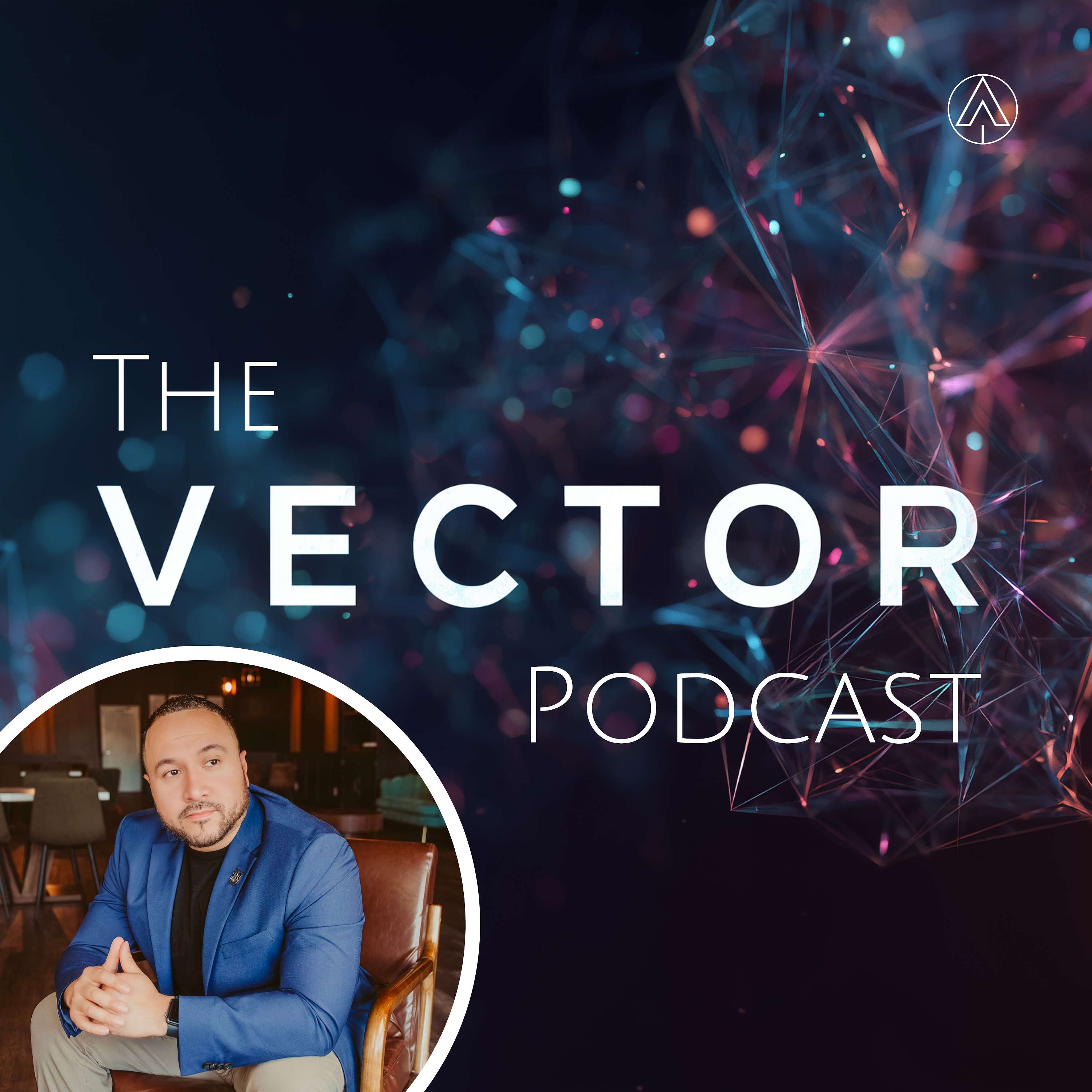
The Vector Podcast
by Altivum™ Inc.
The Vector Podcast delivers mission-focused conversations at the intersection of veteran experience, small business, and modern technology. We break down artificial intelligence, cloud solutions, and entrepreneurship into clear, actionable insights anyone can apply.
-
6
The Standard: Riley Gruppo on Leadership in the Infantry, Entrepreneurship, and Raising the Bar
Connect with Riley Gruppohttps://www.linkedin.com/in/rileygruppo/https://www.instagram.com/rileygruppo/Personal Website: https://rileygruppo.com/Coaching Application Form: https://api.leadconnectorhq.com/widge...In this episode of The Vector Podcast, Christian sits down with Riley Gruppo, a U.S. Army veteran, trauma-informed leadership coach, and founder of The Standard. Riley was one of the first women to serve as an infantry platoon leader in the Army, navigating an environment where female leaders were not just uncommon but actively unwelcome. She shares what that experience was like from day one, including the cultural resistance she faced, the leadership failures she witnessed, and the senior NCO who told her at 18 years old that her men would never respect her because of how she looked.Riley opens up about the realities of being the only woman in her unit, the misogyny and harassment she endured, and why she believes the friction around women in combat arms has more to do with insecurity than capability. She and Christian dig into some of the toughest questions surrounding gender integration in the military, from physical standards and whether they should differ by gender, to social dynamics in deployed environments, to whether women should be eligible for the draft. Riley does not hold back, and her answers are grounded in lived experience rather than theory.The conversation shifts to Riley's transition out of the military, a process she describes as fast, and bittersweet. She talks honestly about losing herself after leaving service, the failures of the Transition Assistance Program, and what she wishes someone had told her before day one as a civilian. Her advice to transitioning service members is direct: you are the mission now, and nobody is coming to save you.Riley then walks through her time in the corporate world, where she encountered many of the same toxic dynamics she thought she left behind in uniform. After quitting two jobs, she went full-time entrepreneur just four months before recording this episode. She talks about how her faith, intensive therapy, and a deep sense of calling led her to build The Standard, a coaching brand centered on helping veterans, founders, and high-performing professionals close the gap between where they are and what they are truly capable of.Christian and Riley also explore the power of personal branding, networking, and building an online presence, particularly for veterans who were conditioned not to put themselves out there. Riley shares how LinkedIn opened nearly every major opportunity in her post-military career and why she believes your network is your net worth.This episode is for veterans navigating transition, entrepreneurs building something from scratch, leaders who care about culture, and anyone who has ever been told they do not belong.Connect with Riley Gruppo on Instagram and LinkedIn.
-
5
Service Beyond the Military: Brittinie Wick on Women Veterans, AI in Defense & the Power of Purpose
Connect with Brittinie WickLinkedIn: https://www.linkedin.com/in/brittinie...Instagram: https://www.instagram.com/dr.brittini...Facebook: https://www.facebook.com/profile.php?...YouTube: https://www.youtube.com/@WomenServeTooIn this episode of The Vector Podcast, Christian Perez sits down with Brittinie Wick — US Air Force veteran, Doctor of Physical Therapy, and founder of the @WomenServeToo podcast. Brittinie shares how her childhood sparked her path to military service, what the transition to civilian life really looks like when your identity has been built around the mission, and why mental health remains one of the most critical and underserved issues facing veterans today. The conversation covers the growing role of AI in military operations, the unique challenges women veterans face in gaining recognition for their service, and why Brittinie believes standards should never be lowered regardless of gender. They also dig into how social media is driving polarization, why open and honest conversations are more important than ever, and what it means to find purpose after the uniform comes off. Whether you're a veteran navigating your own transition or someone looking to understand the realities of military service, this is a must-watch.Main Takeaways1. Women veterans occupy a space that is both powerful and overlooked. Their contributions to national defense are substantial, yet the recognition and support systems available to them remain disproportionately inadequate.2. AI is reshaping the battlefield in ways we are only beginning to comprehend. From logistics to decision-making, artificial intelligence is becoming an embedded element of modern military operations, raising profound questions about the future of warfare.
-
4
What If This Could Be Better? – A Veteran's Approach to Innovation with A'Yana Leonard
Connect with A'Yana LeonardLinkedIn: https://www.linkedin.com/in/ayanaleonardtexas/In this episode of The Vector Podcast, host Christian Perez sits down with A'Yana Leonard—U.S. Army veteran, former Director of Marketing and Digital Strategy, and self-taught technologist exploring AI, cloud systems, and even FPGA hardware.A'Yana's path into tech didn't follow the traditional blueprint. No CS degree straight out of high school. No linear career ladder. Instead, she moved from tech support to sales to marketing leadership, teaching herself cloud services and AI along the way. Her driving question throughout: What if this could be better?That mindset—rooted in her military experience where you often have to make something out of nothing—shaped how she approaches technology, business problems, and even personal challenges. A'Yana shares the story behind Mom Hive, an AI tool she built to support her daughter who has autism, and discusses what companies consistently get wrong about artificial intelligence.This conversation is for veterans early in their tech journey, anyone curious about AI's role in marketing, or those who need a reminder that ambition and resourcefulness can outpace credentials.Topics DiscussedA'Yana's military-to-tech transition and unconventional career pathThe "what if this could be better" mindset and where it comes fromAI as a tool, not a magic solution—and what businesses get wrongThe history of AI (hint: it didn't start with ChatGPT)Building custom AI solutions for small businessesMom Hive: A'Yana's personal AI project for her daughter with autismThe future of AI, developers vs. researchers, and quantum computing's potentialWhy veterans already have the skills tech companies need"You already did the hard part"—advice for transitioning service membersKey TakeawaysAI isn't new—it's been studied since the 1950s. What's new is accessibility.AI should be customized to your business, not copied from someone else's playbook.The tech industry may shift toward more researchers and fewer traditional developers.Quantum computing could unlock breakthroughs in medicine and beyond.Veterans don't start from zero—military service builds problem-solving, adaptability, and grit.Continuous learning isn't optional in tech. Stay curious, stay competitive.
-
3
Leading Through the Cloud: Daniel Gaina on AI & the Human Domain in the era of Autonomous Agents
Daniel Gaina Social Media Accounts: LinkedIn: https://www.linkedin.com/in/danielgaina/ YouTube Channel: https://www.youtube.com/@UCUWhBmG99Iy9nH3hGRu--ogEPISODE SUMMARYIn this episode of the Vector Podcast, host Christian Perez engages in an in-depth conversation with Daniel Gaina, Senior Cloud Engineer and AWS Community Builder, to explore the intersection of technical expertise, leadership, and the evolving role of artificial intelligence in modern cloud engineering. Daniel shares his compelling journey from a non-technical background to earning AWS's prestigious Golden Jacket certification; a distinction requiring mastery across 12+ AWS specializations. The discussion examines the critical importance of certifications as foundational knowledge tools, the irreplaceable value of community engagement, and the human-centered leadership skills that distinguish exceptional technologists from merely competent ones. As AI and agentic systems reshape the technology landscape, Perez and Gaina emphasize that sustained success in tech demands not just technical proficiency, but emotional intelligence, accountability, and the capacity for meaningful human connection.KEY TAKEAWAYS- Non-Traditional Pathways Work: Technical excellence doesn't require a traditional CS degree; certifications, self-study, and community involvement provide viable alternative routes to expertise.- Certifications Bridge Knowledge Gaps: AWS certifications offer both theoretical grounding and hands-on practice, serving as accelerators for career advancement.- Tech Requires Lifelong Learning: The field evolves continuously; success demands a growth mindset and commitment to perpetual skill development. - Community is Competitive Advantage: Active community participation accelerates learning, builds networks, and establishes credibility in the tech ecosystem.- Soft Skills Differentiate Leaders: In an increasingly automated world, interpersonal skills, emotional intelligence, and leadership capabilities become the true competitive differentiators.- AI Augments Rather Than Replaces: While AI optimizes processes and reduces operational friction, it cannot replicate human accountability, judgment, or meaningful connection.- Production Reality Differs from Demos: Deployable, reliable systems require fallback mechanisms, human-in-the-loop oversight, and rigorous reliability engineering—not just compelling prototypes.- Human Responsibility Remains Central: As systems grow more autonomous, the human stakeholder's willingness to assume accountability for outcomes becomes increasingly valuable.- 2026 Will Bring Agentic Maturation: Expect proliferation of specialized AI agents and speech-to-speech systems, but significant ROI optimization still needed across the industry. - People-Centric Tech Leadership: The industry's greatest need isn't more technical capability—it's leaders who understand that technology ultimately serves human needs and growth.
-
2
Empowering Minds: AI, Neurodiversity & The Future of Mental Healthcare with Jay Getten
On this episode of The Vector Podcast I sat down with Jay Getten, a mental health innovator, author, and creator of open-source clinical decision support software. In this profound conversation, Jay shares his transformative journey from special education teacher to developing precision mental healthcare software.Key Topics Discussed:- Revolutionary Mental Healthcare - How Jay developed Seidr Software, a free open-source clinical decision support system that combines quantitative and qualitative data to enhance precision mental health treatment- AI as a Game-Changer - Discover how large language models revolutionized Jay's approach to patient care, leading to significant drops in depression and anxiety scores while improving appointment attendance rates- Neurodiversity by Design - Exploring the evolutionary purpose of different neurotypes and their role in human consciousness and society- The Future of AI - A philosophical deep-dive into what true AI consciousness might look like, including the importance of embodiment and understanding interdependence- From Adversity to Innovation - How Jay's post-concussion syndrome from a car accident transformed his relationship with technology and accelerated his AI adoptionConnect with Jay:Neurodivergence by Design - https://www.ndbydesign.org/Workbooks - https://www.ndbydesign.org/product-page/adult-adhd-self-discovery-and-assessment-prep-workbookSeidr Software - https://www.ndbydesign.org/seidr-softwareLinkedIn - https://www.linkedin.com/in/jay-getten-2868aa73 Facebook - https://www.facebook.com/profile.php?viewas=100000686899395&id=61572249902519Highlights:- Using AI to connect patient experiences with medical literature for precision treatment- The power of RAG systems in healthcare applications- Practical AI applications: from handwritten note transcription to complex research synthesis- Why curiosity and interdisciplinary thinking are crucial for innovation- The philosophical implications of AI consciousness and embodimentSupport the show
-
1
Ethics, Education, and Empathy in the Age of AI with Dr. Sarah Mendoza
In this episode of The Vector Podcast, Dr. Sarah Mendoza of Austin Peay State University joins Christian Perez to explore how artificial intelligence is transforming human-centered work. Drawing from her background in counseling and higher education, Dr. Mendoza reflects on the realities of clinical practice, the ethics of data and privacy, and the role of empathy in a world increasingly shaped by technology.The discussion traces her path from front-line mental health care to the classroom, where she now integrates AI tools to enhance learning while maintaining ethical standards and human connection. Together they examine questions at the core of the modern era: How should educators and counselors use AI responsibly? What are the limits of automation when human well-being is involved? And how do we preserve critical thinking, compassion, and professional integrity as machines grow more capable?A grounded and candid conversation on ethics, education, and empathy in the age of AI.Connect with Dr. MendozaLinkedIn - https://www.linkedin.com/in/sarah-mendoza-615bb6121/E is for Empathy - https://a.co/d/ariPxahE is for Empathy is a children's picture book written and created to enhance children's social emotional learning. E is for Empathy uses real life situations to exemplify empathy for young readers. Empathy is a vital part of children's social development. The authors created E is for Empathy to fill a gap in children's literature, so parents and children have a go-to book for how to behave in supportive, empathic ways with those around us. Enjoy E is for Empathy!Key Takeaways:- Dr. Mendoza emphasizes the importance of ethical considerations in using AI in counseling.- The human element in therapy cannot be replaced by AI.- AI can be a supportive tool in education, enhancing student engagement.- Counselors must verify AI-generated information to ensure accuracy.- The future of healthcare will involve a blend of AI and human interaction.- Dr. Mendoza encourages future professionals to embrace technology while maintaining ethical standards.- Building trust with clients is essential, especially in initial sessions.- The landscape of mental health care is rapidly evolving with technology.Disclaimer: The views and opinions expressed in this episode are those of the speakers and do not reflect the official policy or position of any institution, employer, or organization.Altivum Inchttps://altivum.ai
No matches for "" in this podcast's transcripts.
No topics indexed yet for this podcast.
Loading reviews...
ABOUT THIS SHOW
The Vector Podcast delivers mission-focused conversations at the intersection of veteran experience, small business, and modern technology. We break down artificial intelligence, cloud solutions, and entrepreneurship into clear, actionable insights anyone can apply.
HOSTED BY
Altivum™ Inc.
CATEGORIES
Loading similar podcasts...
URL copied to clipboard!