
PODCAST · business
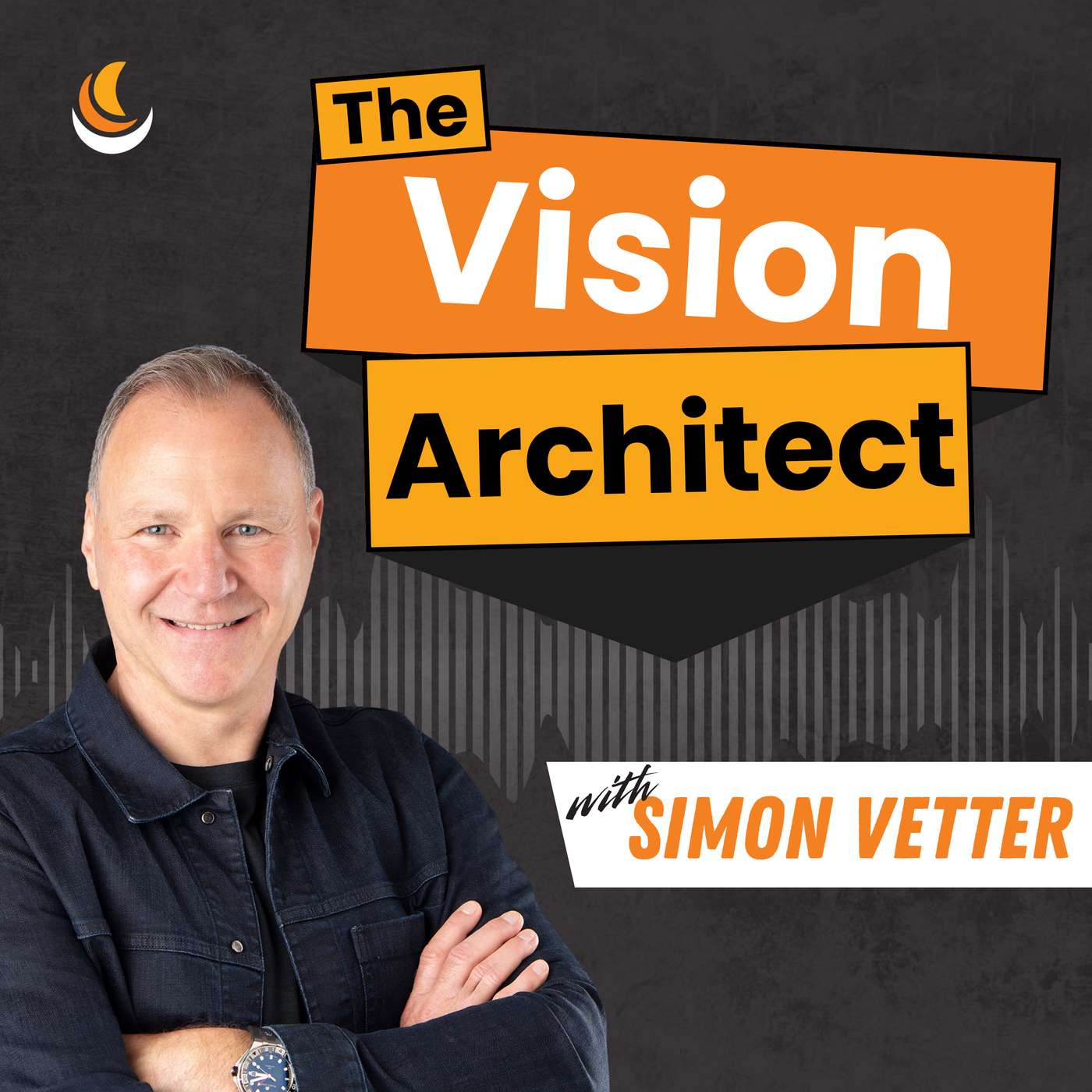
The Vision Architect
by Simon Vetter
The Vision Architect is the podcast about crafting bold, aspiring futures that inspires lasting change. It is for leaders facing pivotal moments or crucial challenges - those crucible experiences where big decisions shape the future. Each episode is filled with stories, ideas and tools to intentionally design a meaningful path forward, gain clarity amid uncertainty, and ignite the courage needed for enduring change. It's a powerful conversation about what's next - for your life, career, team, and organization.
-
17
Brad Lee: How to Craft a Compelling Vision and Build a High-Performance Leadership Team | #206
Many leaders feel trapped in the daily grind of problem-solving, leaving them overwhelmed and disconnected from the larger purpose that once drove them. The result? Misaligned teams, organizational friction, and a career that crowds out a fulfilling personal life.This episode features Brad Lee, a former CEO of a leading orthopedic company and now a CEO coach who uses the **Scaling Up** methodology. Brad shares the wake-up call that forced him to define a clear vision and the frameworks he now uses to help other leaders do the same.The conversation centers on three critical areas. First, **defining and communicating a compelling "why."** Brad explains how to move beyond generic mission statements by using Jim Collins's "Hedgehog Concept" to identify what your organization can truly be best in the world at. Second, **building a culture of accountability.** Instead of platitudes like "integrity" and "excellence," Brad advocates for specific "cultural beliefs" that define how teams think and act together, using stories to reinforce them in every meeting. Third, **balancing professional success with personal fulfillment.** Brad shares his own system for keeping the five key areas of life (personal, family, friends, partner, work) in constant view, allowing leaders to intentionally rebalance their time before a crisis hits.HighlightsStop being the chief problem-solver. Your job is to build the team and systems that solve problems, not to solve them all yourself.Define specific "cultural beliefs," not generic values. Use them to hire, fire, and performance-manage with clarity.Tell stories at every all-hands meeting that connect daily work directly to the company's purpose and patient or customer impact.Review your vision and strategy monthly to ensure execution hasn't drifted from the core purpose.Keep a visual map of your five life areas in front of you to consciously rebalance your time when one area is neglected.Important Concepts and FrameworksHedgehog Concept (Jim Collins) — A framework to find the intersection of what you are deeply passionate about, what you can be best in the world at, and what drives your economic engine. | https://www.jimcollins.com/concepts/the-hedgehog-concept.htmlThe Flywheel (Jim Collins) — The concept of building momentum by aligning a series of reinforcing steps that build upon one another over time. | https://www.jimcollins.com/concepts/the-flywheel.htmlScaling Up (Verne Harnish) — A methodology for managing a growing company with a focus on People, Strategy, Execution, and Cash. | https://scalingup.com/verne-harnish/Balanced Scorecard — A strategic planning and management system used to align business activities to the vision and strategy, monitor performance against strategic goals, and balance stakeholder needs (investors, customers, employees).Good to Great (Jim Collins) — The foundational book that introduced the Hedgehog Concept and Flywheel. | https://www.jimcollins.com/article_topics/articles/good-to-great.htmlCultural Beliefs / Operating Norms — A set of 4-6 specific, non-generic behaviors that define how a team agrees to think and act together, used for hiring and performance management.Tools & Resources MentionedLinkedIn — Brad Lee is active on LinkedIn under "Brad Lee, scaling up." | https://www.linkedin.com/in/brad-lee-clarus/Clarus Leadership Partners — Brad's CEO coaching business. | https://clarus-leadership-partners.mailchimpsites.comScaling Up (Verne Harnish) — The methodology Brad uses to help companies scale. | https://scalingup.com/verne-harnish/Calls to ActionTake 18 months to deeply clarify your company's Hedgehog Concept (passion, best in world, economic engine) with your leadership team.Start every team meeting by asking for a story that exemplifies one of your cultural beliefs—either a success or a challenge.Create a visual list of your five most important life areas (e.g., personal, family, friends, partner, work) and place it where you can see it daily.The next time a leader feels overwhelmed and unable to delegate, they should intentionally show vulnerability and ask their team for help.Key Quotes"Your job is to create the capabilities that are necessary to problem solve and make decisions inside the organization." — Brad Lee"If you don't tell us where we're going, we're not gonna be here to support you." — Brad Lee's Head of HR"It saves so much time, it's more than pays off." — Brad Lee (on investing in cultural beliefs)"Most leaders lack the level of vulnerability they need to exhibit to leverage the people around them." — Brad Lee"If you take the friction out of the system, it has massively powerful impacts." — Brad LeeChapters00:00 — The Wake-Up Call: Why Vision is Non-Negotiable03:18 — Building Emotional Connection: From "What" to "Why"05:56 — The Hedgehog Concept: Getting Real About Your Best-in-World Capability09:23 — Storytelling as a Leadership Tool: Reinforcing Purpose Monthly13:49 — Staying Aligned: The Discipline of Frequent Vision Reviews16:51 — Balancing Stakeholders: Investors, Customers, and Employees18:41 — The CEO's Real Job: Building Capability, Not Solving Problems22:03 — Short-Term vs. Long-Term: Giving Yourself Grace to Change Course24:55 — Creating a Culture of Accountability: From Generic Values to Specific Beliefs32:39 — The Holistic CEO: How to Strategize Your Life Like Your Business- - - -This Episode's Guest:Brad LeeWebsite: https://clarus-leadership-partners.mailchimpsites.com LinkedIn: https://www.linkedin.com/in/brad-lee-clarus/- - - -About the HostSimon VetterWebsite: https://simonvetter.com/LinkedIn: https://www.linkedin.com/in/thevisionarchitect/
-
16
Tom Adams: Plan and Prepare for the Future | #205
Most business leaders approach organizational problems through traditional business lenses—marketing strategies, financial models, and operational efficiencies. Yet executive coach Tom Adams reveals that the most persistent business challenges often stem from personal issues masquerading as corporate problems. Through 25 years of coaching experience, Adams has developed a counterintuitive approach that starts not with business metrics, but with personal vision and values.The conversation begins with Adams' unconventional career path, illustrating how following fascinations rather than rigid plans can lead to unexpected opportunities. His transition from ministry to fashion entrepreneurship, then to television hosting and podcasting, demonstrates how media platforms can serve as powerful business development tools when traditional consulting approaches fail. This "multi-door" philosophy—entering rooms with many potential exits rather than linear career paths—forms the foundation of his coaching methodology.At the core of Adams' approach is the principle that business owners must first clarify their personal vision before attempting to craft organizational direction. He employs a rigorous pre-engagement process that explores clients' deepest values, regrets, and life aspirations before addressing any business concerns. This includes examining what success looks like if they had unlimited resources, what they would do with limited time, and what personal habitats reveal about their operational patterns. Only after establishing this personal foundation does Adams transition to business strategy, ensuring that organizational goals serve life objectives rather than the reverse.Adams introduces several transformative frameworks, including his values-based success metrics that begin with "I know I'm being successful when..." statements. These move beyond financial targets to encompass meaningful work, enjoyable relationships, curiosity exploration, and non-adversarial self-relationships. His 25-year planning concept—visualizing life at age 85 and working backward—provides a long-term perspective that prevents short-term reactive decision-making.The discussion pivots to technological adaptation, where Adams shares insights on AI's impact on the future of work. He predicts fundamental shifts in how we measure "units of work," with AI agents enabling individuals to accomplish what previously required teams. His concept of "new collar work" describes emerging roles that prioritize skills over traditional credentials in the AI era. However, he emphasizes that technological adaptation requires the same personal foundation as business leadership—presence, curiosity, and self-trust.Adams concludes with practical embodiment practices drawn from equine therapy, demonstrating how physical presence and body awareness enable better decision-making. His "mirror" concept—asking "how am I complicit in creating the conditions I say I don't want?"—provides a powerful tool for personal accountability that transforms both leadership effectiveness and business outcomes.HighlightsIdentify how personal beliefs and patterns create recurring business challenges that traditional solutions can't fixDevelop a 25-year personal vision that informs business strategy rather than serving external success metricsImplement values-based success measurements that prioritize meaningful work and relationships over financial targets aloneLeverage AI and automation to transform work units while maintaining human connection and intuitionPractice embodiment techniques that improve decision-making by connecting intellectual planning with physical presenceApply the "mirror" concept to recognize personal complicity in unwanted business outcomesImportant Concepts and FrameworksPersonal Problems Disguised as Business Problems — The framework that most persistent organizational challenges stem from underlying personal issues, beliefs, or patterns that manifest in business operations25-Year Planning Framework — A long-term visioning approach that starts with imagining life 25 years in the future and working backward to create present-day alignmentValues-Based Success Metrics — A system for measuring success through personal values statements beginning with "I know I'm being successful when..." rather than external financial targetsEquine Therapy for Presence — Using work with horses to develop body awareness and presence, as horses respond to embodied connection rather than intellectual intentionNew Collar Work — Emerging job categories in the AI era that prioritize skills and adaptability over traditional educational credentialsUnit of Work Transformation — How AI and automation are fundamentally changing what constitutes a "unit of work" and how value is createdThe Mirror Concept — The practice of asking "how am I complicit in creating the conditions I say I don't want?" to identify personal responsibility in challenging situationsTools & Resources MentionedTomAdams.com — Tom Adams' personal website and primary platform for his coaching practice and resources | https://www.tomadams.com/ Flourish Press — Tom Adams' executive coaching and advisory company focused on helping business owners thrive | https://flourishpress.comBOSU Ball — Balance training equipment used for developing physical presence and body awareness as part of leadership development | https://bosu.comAI Agents — Automated systems that perform tasks and make decisions, transforming how work gets accomplished in the AI eraCalls to ActionConduct a personal visioning session exploring what your life would look like with unlimited success, limited time, and identifying deep regrets to clarify true priorities before setting business goals.Implement a quarterly review of your values using "I know I'm being successful when..." statements to ensure business decisions align with personal fulfillment metrics.Practice daily embodiment exercises—such as standing on a BOSU ball or focused breathing—to develop the body awareness needed for intuitive decision-making.Schedule time each week to explore new technologies and AI tools with curiosity rather than resistance, focusing on how they could transform your "unit of work."When facing business challenges, ask the mirror question: "How am I complicit in creating these conditions I say I don't want?" to identify personal patterns needing adjustment.Begin 25-year planning by visualizing what you want your life to look like at age 85, then work backward to identify immediate actions that support that long-term vision.Key Quotes"Most business problems are personal problems in disguise." — Tom Adams"Anytime you hit a wall, it's a mirror." — Tom Adams"How am I complicit in getting the conditions I say I don't want?" — Tom Adams"I know I'm being successful when I wake up every morning and do the work I wanna do." — Tom Adams"We built a business to serve our life, and now what we do is just serve the business." — Tom AdamsChapters00:00 — Unconventional Career Paths: Following Fascination Over Linear Planning04:48 — Media as Business Development: From TV Hosting to Client Acquisitio...
-
15
Unlocking Heart Coherence for Creative Performance and Stress Resilience | #204
When stress hijacks your decision-making and creativity feels blocked, the solution may lie in regulating your heart's rhythm rather than just managing your thoughts. This episode reveals how heart coherence—the smooth, efficient pattern of heartbeats associated with positive emotions—serves as a physiological foundation for peak performance, creative insight, and emotional resilience. Through decades of research at the HeartMath Institute, Bruce Cryer demonstrates that our emotional states directly influence heart rhythms, with frustration creating chaotic patterns while appreciation generates coherent sine waves.The conversation explores the profound implications of this heart-brain connection, revealing that stressful triggers initiate 1,400 biochemical changes in the body—a survival mechanism that now works against us in modern life. Unlike relaxation, coherence represents focused alertness—the "eye of the hurricane" state that enables first responders and surgeons to perform under pressure while maintaining clarity. This physiological state amplifies brain function, making coherent thinking and creative problem-solving more accessible.Practical applications extend from individual stress management to organizational culture transformation. The Inner Quality Management framework shows how heart coherence principles can enhance team communication, particularly by ensuring quieter team members feel heard—often unlocking their creative contributions. Beyond workplace applications, the discussion reveals how playfulness serves as the "wonder drug of creativity," counteracting the heavy-heartedness that blocks innovation.Bruce introduces his VYBRATO system and the Wave of Relief technique—practical methods for releasing accumulated stress and generating positive emotional waves. These approaches address the modern epidemic of overwhelm by teaching people to consciously create internal states of appreciation and gratitude rather than being overwhelmed by external pressures. The episode provides concrete strategies for integrating heart coherence practices into daily life, from simple breathing techniques to movement breaks that counteract sedentary work patterns.HighlightsShift from chaotic to coherent heart rhythms by focusing on appreciation and gratitude to enhance decision-making clarityPractice the Wave of Relief technique to release accumulated stress through intentional breathing and imageryIncorporate movement and nature exposure to counteract sedentary work patterns and stimulate creative thinkingApply playfulness as a strategic tool for enhancing team creativity and communication in workplace environmentsUse heart-focused breathing to regulate emotional responses during stressful meetings or challenging conversationsDevelop daily coherence practices through scheduled reminders to build emotional resilience circuitryImportant Concepts and FrameworksHeart Coherence — The smooth, efficient pattern of heartbeats associated with positive emotional states that enhances brain function and overall physiological efficiency | https://www.heartmath.org/Inner Quality Management (IQM) — A framework developed by HeartMath for applying coherence principles to individual and organizational performance | https://www.heartmath.org/research/research-library/organizational/an-inner-quality-approach-to-reducing-stress-and-improving-physical-and-emotional-well-being-at-work/VYBRATO System — Bruce Cryer's methodology for creating positive emotional waves to counteract stress and overwhelmWave of Relief Technique — A breathing and imagery practice for releasing accumulated stress and tensionCoherence vs. Relaxation Distinction — Understanding that coherence represents focused alertness rather than passive relaxation, enabling high-performance under pressureTools & Resources MentionedHeartMath Institute — Research organization that pioneered heart coherence science and applications | https://www.heartmath.org/Bruce Cryer's Platforms — Website, LinkedIn newsletter, and social media channels for accessing his teachings | https://brucecryer.comStanford University — Institution where Bruce teaches courses on creativity and performance | https://www.stanford.edu/Dr. Joe Dispenza's Work — Research connecting heart coherence with brain function and healing | https://drjoedispenza.com/Calls to ActionSet hourly reminders to practice heart-focused breathing combined with feelings of appreciation for someone or something you genuinely loveImplement the Wave of Relief technique whenever you notice tension building—breathe in as if receiving positive energy from the ocean, then exhale fully to release what you're holding ontoSchedule regular movement breaks throughout your workday, especially outdoors when possible, to counteract sedentary patterns and stimulate creative thinkingPractice making quieter team members feel heard in meetings by actively listening and acknowledging their contributions before moving to more vocal participantsIntentionally bring playful energy to challenging situations by finding moments of genuine human connection, even during routine interactionsKey Quotes"Coherence is not relaxation. Coherence means you can be an EMT first responder and go into an incredibly dangerous situation and still function at a high level." — Bruce Cryer"Playfulness is the wonder drug of creativity." — Bruce Cryer"The heart's coherence is a huge booster because the heart's so powerful, it sets the tone in the body." — Bruce Cryer"We have to let go more often. We have to, and there's something designed into our body called a sigh of relief." — Bruce Cryer"Every human being, we're born to create life. Whether we create another life isn't even the point." — Bruce CryerChapters00:24 — Introduction to Heart Coherence and Emotional Physiology01:22 — The Heart as Intelligence System Beyond Mechanical Pump04:58 — Live Demonstration of Emotional Impact on Heart Rhythms08:27 — Daily Practices for Building Heart Coherence Resilience13:53 — Physiological Costs of Chaotic Heart Signals on Body Systems18:43 — Applying Coherence Principles to Leadership and Team Dynamics25:30 — Creativity, Playfulness and Reawakening Creative Expression34:07 — Simple Movement and Nature Practices for Enhanced Creativity37:28 — Introducing the VYBRATO System for Modern Stress Management41:53 — The Wave of Relief Technique for Releasing Accumulated Tension45:42 — Accessing Resources and Continuing the Coherence Journey- - - - This Episode's Guest: Bruce Cryer - Strategy & Performance PartnerWebsite: https://brucecryer.comLinkedIn: https://www.linkedin.com/in/brucecryer/- - - - About the Host - Simon VetterWebsite: https://simonvetter.com/LinkedIn...
-
14
Building Unbreakable Organizational Culture Through Clear Agreements | #203
Organizations often struggle with vague cultural definitions, misaligned values, and broken trust that undermine performance and employee retention. The fundamental problem isn't a lack of desire for strong culture, but rather missing frameworks for creating intentional, high-trust environments where people thrive and business objectives are consistently met.Culture begins as a feeling—that immediate sense you get when entering any group of people. At its core, culture represents what happens in communication between two or more people, encompassing behaviors, beliefs, values, actions, and results. However, the most critical elements defining any culture are the two bookends: who you let in and who you kick out. This hiring and firing framework establishes the permeable boundary that shapes everything within an organization.The breakthrough insight for building intentional culture lies in understanding agreements. Every interaction, from job descriptions to project deadlines, represents an agreement. Strong cultures are characterized by clear agreements that are consistently upheld, while weak cultures suffer from ambiguous expectations and broken commitments. This agreements framework provides the underlying structure that determines trust levels and operational effectiveness.Vision and values operate in tandem within this cultural ecosystem. Vision answers the "what"—what are we doing here and where are we going—while values define the "how"—the behaviors and approaches we'll use to achieve that vision. Effective visions must be verifiably achievable within two to five years, allowing employees to see themselves as part of the accomplishment and maintain engagement.Practical culture building involves both macro and micro strategies. At the macro level, hiring processes must reflect organizational values through behavioral interview questions that reveal authentic alignment. At the micro level, time synchronization emerges as a powerful universal agreement point—everyone shares the same 24 hours, making starting meetings on time, ending on time, and delivering on time a foundational cultural practice.Employee retention connects directly to four happiness factors from positive psychology: feeling like you're making progress, having control over that progress, developing strong workplace relationships (particularly having a best friend at work), and pursuing purpose beyond money. Organizations that cultivate these four elements naturally retain talent and build resilient cultures.Trust building requires specific practices, most notably the two-question feedback approach: first asking for general feedback, then specifically requesting "what you think I don't want to hear." This creates psychological safety for honest communication. Additionally, involving people in decisions before implementation—even if their input isn't used—ensures they feel heard and valued.The hunter versus farmer distinction provides crucial insight for role alignment. Hunters thrive on new projects, innovation, and achieving specific objectives, while farmers excel at maintaining processes, consistency, and operational excellence. Attempting to force hunters into farmer roles or vice versa creates frustration and undermines performance.Ultimately, financial success follows cultural excellence rather than preceding it. The Alcoa Steel example demonstrates how focusing on safety (a leading indicator) rather than revenue (a lagging indicator) created operational excellence that naturally improved financial performance while earning employee loyalty. This leading versus lagging indicator framework helps organizations prioritize cultural elements that drive sustainable business results.HighlightsCulture is defined by who you let in and who you kick out—strategic hiring and intentional firing create cultural boundariesClear agreements consistently upheld build trust and operational effectiveness across all organizational levelsSynchronize teams using time as universal agreement point—starting and ending meetings on time demonstrates respectFour happiness factors determine retention: progress, control, relationships, and purpose beyond moneyDistinguish between hunters (project-focused innovators) and farmers (process-focused maintainers) for optimal role alignmentFocus on leading indicators like safety and customer experience rather than lagging financial metrics for sustainable successImportant Concepts and FrameworksCulture Blueprint Framework — Systematic approach to building intentional organizational culture through defined values and practices | https://robertrichman.com/book-long/Agreements Framework — Understanding that all organizational interactions represent agreements that must be clear and upheldFour Happiness Factors — Positive psychology elements that determine employee satisfaction and retention: progress, control, relationships, and purposeHunter vs Farmer Distinction — Framework for aligning personality types with appropriate organizational rolesLeading vs Lagging Indicators — Strategic framework prioritizing cultural drivers over financial outcomesTools & Resources MentionedThe Culture Blueprint — Robert Richmond's framework for building intentional organizational culture | https://robertrichman.com/book-long/Zappos — Company example of values-driven culture with CEO Tony Hsieh's humble leadership practicesNavy Seals — Organization with exceptionally strong culture due to life-or-death consequences of cultural breakdownsThe Power of Habit — Book by Charles Duhigg featuring the Alcoa Steel case study | https://charlesduhigg.com/the-power-of-habit/Alcoa Steel — Case study demonstrating how focusing on safety (leading indicator) improved financial performanceCalls to ActionAudit your hiring process to ensure interview questions reveal authentic value alignment rather than asking directly about valuesImplement time synchronization practices by starting and ending all meetings precisely on time as cultural foundationConduct agreement clarity exercises with teams to identify ambiguous expectations and establish clear commitmentsAssess hunter versus farmer roles within your organization and realign responsibilities according to natural strengthsEstablish regular feedback sessions using the two-question approach to build psychological safety and trustPrioritize leading indicators like employee safety, customer experience, and team cohesion over lagging financial metricsKey Quotes"Culture is a feeling" — Robert Richmond"Who we let in and who we kick out" — Robert Richmond"Late is subjective, on time is not" — Robert Richmond"Money can't be the focus as the strategy" — Robert Richmond"Clear agreements and upholding them builds trust" — Robert RichmondChapters00:00:25 — Introduction to Vision and Culture Foundations 00:01:21 — Defining Culture as Feeling and Agreements Framework 00:06:46 — Vision, Values and Their Strategic Intersection 00:09:13 — Practical Culture Building Strategies and Implementation 00:11:29 — Four Happiness Factors for Employee Retention
-
13
Mastering Endurance Performance Through Vision, Recovery, and Mental Rehearsal | #202
Endurance performance presents a compelling challenge that feels out of reach for most people, yet the strategies used by elite athletes offer powerful lessons for sustained leadership and peak performance. The key distinction lies between goal management and vision-driven motivation—while goals focus on execution and accountability, vision provides the purpose and intrinsic motivation needed to persist through challenges like training in pouring rain or recovering from significant setbacks.Anne Bowers-Evangelista shares her personal journey of recovering from a hip-breaking bike accident while training for an Ironman, revealing how this experience forced her to confront identity questions and rediscover her deeper purpose beyond athletic achievement. This experience underscores the critical importance of having a vision that extends beyond specific outcomes, preventing what she calls "falling off the identity cliff" when external goals aren't met.The conversation explores three essential frameworks for sustained performance: different types of goals (outcome, process, and performance goals), the neuroscience of focusing on your ideal self, and strategic disengagement for recovery. Research shows that when people focus on their ideal self, they access brain regions associated with creative thinking and solution-finding, while goal-setting activates more regulatory brain functions that narrow vision. This explains why organizations that excel at goal management often struggle with driving commitment and motivation.Practical applications include multisensory visualization techniques used by elite athletes, where individuals mentally rehearse performances using all senses—sight, sound, smell, and physical sensations. This mental rehearsal activates mirror neurons and builds neural pathways that enhance actual performance. For leaders, this translates to better preparation for high-stakes presentations, difficult conversations, and team challenges. The episode also addresses the critical importance of recovery, contrasting athletes' intentional periodization with leaders' tendency toward continuous output, and offers strategies for implementing strategic disengagement in corporate environments.HighlightsDistinguish between outcome goals (what you achieve) and process goals (what you do daily) to maintain focus on controllable actionsUse multisensory visualization to mentally rehearse performances, activating mirror neurons that enhance actual executionImplement strategic disengagement periods for recovery, recognizing that continuous output diminishes long-term performanceFocus on your ideal self to access brain regions associated with creative thinking and broader perspective-takingDevelop pre-performance routines that prepare both mind and body for high-stakes situations through intentional sequencingCultivate team rituals and shared purpose to transform project execution into meaningful collective experiencesImportant Concepts and FrameworksGoal Setting Theory (Locke and Latham) — Research showing how goal setting enhances focus and self-efficacy but can lead to burnout without broader meaning | https://people-shift.com/articles/locke-lathams-goal-setting-theory/Intentional Change Theory (Richard Boyatzis) — Framework focusing on the ideal self to access creative brain functions and open thinking | https://www.keystepmedia.com/intentional-change-theory/Periodization in Training — Athletic approach of alternating intense training with recovery periods to build strength over time | https://www.trainingpeaks.com/blog/what-is-training-periodization/Strategic Disengagement — Psychology of intentionally stepping back from goal pursuit to prevent burnout and maintain perspective | https://www.linkedin.com/pulse/art-strategic-disengagement-why-giving-fk-good-your-career-arun-verma-pvvlf/Multisensory Visualization (PETTLEP Model) — Mental rehearsal technique engaging all senses to enhance performance preparation | https://www.coachtrainingedu.com/blog/the-power-of-visualization-transform-your-mindset/Mirror Neuron System — Neuroscience of how mental rehearsal activates the same brain pathways as physical execution | https://pmc.ncbi.nlm.nih.gov/articles/PMC2900004/Tools & Resources MentionedThe Endurance Leader — Anne Bowers-Evangelista's book on leading with passion and purpose through endurance principles | https://www.amazon.com/Endurance-Leader-Leadership-Longevity-Fast-Paced/dp/1957651954Llumos Consulting — Anne Bowers-Evangelista's professional website and consulting practice | https://llumos.com/Calls to ActionDistinguish your outcome goals from process goals and focus daily energy on the controllable process elementsSchedule strategic disengagement periods in your calendar—whether brief pauses between meetings or dedicated recovery daysPractice multisensory visualization before important events by mentally rehearsing sights, sounds, smells, and physical sensationsReflect on your ideal self through journaling or coaching conversations to access more creative brain functionsDevelop team rituals that define your collective identity and performance culture beyond task completionImplement pre-performance routines that prepare both physiological and psychological states for challenging situationsKey Quotes"Goal setting can enhance your focus, but they also can lead to burnout if disconnected from broader meaning" — Anne Bowers-Evangelista"Recovery is not a nice to have. It's a requirement" — Anne Bowers-Evangelista"Think of leadership as the long game—your vision is your compass to the top" — Anne Bowers-Evangelista"These people are not superhuman. They've just trained themselves mentally to go beyond" — Anne Bowers-Evangelista"If you don't take your own leadership personally, no one else will" — Anne Bowers-EvangelistaChapters00:00 — Introduction to Endurance Performance and Leadership01:35 — Why Endurance Feels Compelling Yet Out of Reach03:21 — Personal Story: Identity Crisis After Injury06:19 — Coaching Strategies and Goal Type Distinctions09:24 — Vision vs. Goals: The Motivation Divide12:05 — Uncovering Purpose Through Ideal Self Focus16:09 — Recovery Strategies: From Athletics to Leadership20:10 — Pre-Performance Routines and Multisensory Visualization25:25 — Neuroscience of Mental Rehearsal and Mirror Neurons28:16 — Team Performance Strategies and Collective Rituals33:05 — Evidence: Purpose-Driven Leadership Outcomes36:06 — Reflection Questions for Sustained Leadership39:14 — Long-Game Perspective and Final Insights- - - - This Episode's Guest: Ann Bowers-Evangelista Website: https://llumos.com/LinkedIn:
-
12
Transforming Leadership Through Vision and Enterprise Agility | #201
In this powerful conversation, leadership expert Mike Richardson reveals how intentional vision and strategic agility can transform careers and organizations. Drawing from over three decades of experience as a CEO advisor and thought leader, Richardson shares his journey of purposeful pivots—from petroleum engineer to aerospace CEO to portfolio professional—demonstrating how clear vision creates career momentum even in turbulent times.The discussion centers on the critical distinction between true vision statements and mission statements, emphasizing that a genuine vision must be a picture of the future you can unambiguously declare victory on. Richardson introduces the three essential questions that guide effective leadership: What do you want? How do you get it? How do you give as much of it away as possible? These questions form the foundation for both personal and organizational direction.A key insight emerges around enterprise agility in an accelerating world of disruptive change. Richardson explains that most organizations mistake frenetic activity for true agility, which actually requires a harmonious integration of strategic rigor and entrepreneurial spark. He introduces the three levels of adaptability: post-adaptive (reactive, behind the curve), adaptive (on the curve), and pre-adaptive (ahead of the curve, ready for anything). True agility means operating in the pre-adaptive space while maintaining vision as your true north.The conversation explores practical frameworks for developing whole-brain thinking, using visual tools like mind mapping and sketchbooks to crystallize vision. Richardson shares his personal method of using artist sketchbooks during strategic thinking sessions, which eventually evolved into the vision board that has guided his career for over 20 years. He emphasizes that leading with vision becomes more crucial, not less, as change accelerates, and that the ability to hold vision "just so"—not too tightly, not too loosely—is the key to navigating complexity.HighlightsTransform reactive leadership into pre-adaptive agility that anticipates change before it happensDistinguish between true vision statements and disguised mission statements for clearer directionDevelop whole-brain thinking to integrate analytical rigor with creative visioningBuild peer advisory networks to combat leadership loneliness and gain diverse perspectivesCreate visual representations of your vision using mind mapping and sketch techniquesBalance short-term execution with long-term vision through harmonious integrationImportant Concepts and FrameworksThree Questions Framework — What do you want? How do you get it? How do you give as much of it away as possible? | https://www.linkedin.com/pulse/three-question-framework-reading-your-prospect-without-stewart-holley-53ape/Enterprise Agility — The ability to adapt, pivot, and evolve while maintaining strategic direction | https://www.pmi.org/disciplined-agile/agile/whatisenterpriseagilityThree Levels of Adaptability — Post-adaptive (reactive), adaptive (on-curve), pre-adaptive (ahead of curve) | https://www.linkedin.com/pulse/three-degrees-organizational-adaptability-minor-medium-ernest-wilson/Whole-Brain Thinking — Integrating left-brain analytical thinking with right-brain creative visioning | https://www.thinkherrmann.com/whole-brain-thinking-methodologyPortfolio Career Model — Building a diverse professional portfolio across multiple roles and engagements | https://www.linkedin.com/pulse/portfolio-career-concept-advantages-disadvantages-robert-annis-clqwe/Vision vs Mission Distinction — Vision as a picture of future victory vs mission as current purposeTools & Resources MentionedDale Carnegie Training — Leadership development programs for executives and teams | https://www.dalecarnegie.com/London Business School MBA — Advanced business education for career transformation | https://www.london.edu/masters-degrees/mbaREF (Renaissance Executive Forums) — Peer advisory groups for CEOs and executives | https://ref.global/Mind Mapping — Visual thinking technique for organizing ideas and creating connections | https://www.mindmapping.com/Peer Advisory Boards — Confidential peer groups for leadership development and problem-solvingCalls to ActionPurchase an artist's sketchbook and dedicate time to visually map your professional vision without constraintsAudit your organization's vision statement to ensure it represents a true picture of future victory, not just a restated missionJoin or create a peer advisory group where you can discuss challenges confidentially with non-competitive colleaguesPractice whole-brain thinking by representing strategic problems visually before analyzing them analyticallySchedule quarterly "vision check-ins" to assess alignment between your current direction and your true northKey Quotes"Leaders are dealers in hope" — "Mike Richardson""If you don't know where you're going, any road will do" — "Mike Richardson""The work that I can't not do is facilitating peer forums" — "Mike Richardson""Agility is an AND proposition where you have the best of both worlds" — "Mike Richardson""Leading with vision becomes more crucial when things are speeding up" — "Mike Richardson"Chapters00:00 — Introduction to Vision-Driven Leadership01:29 — Career Pivots: From Petroleum Engineer to Portfolio Professional04:52 — The Vision Board Method: Sketching Your Future09:57 — Quiet Time and Creative Thinking for Strategic Clarity16:53 — The Three Questions Framework for Direction20:37 — Enterprise Agility in Accelerating Change27:06 — Abundance Mindset vs Scarcity Thinking34:05 — Whole-Brain Approaches to Vision Development38:23 — Complexity Management Through Strategic Moves45:08 — Leadership Composure in Turbulent Times52:08 — Advice for Next-Generation Leaders- - - - This Episode's Guest: Mike Richardson – Agility, Peer Power & Collective IntelligenceWebsite: https://mikerichardson.live/LinkedIn: https://www.linkedin.com/in/agilityexpertmikerichardson/- - - - About the Host - Simon VetterWebsite: https://simonvetter.com/LinkedIn: https://www.linkedin.com/in/thevisionarchitect/
-
11
Forgiveness & Compassion
That is a quote from today’s guest, Azim Khamisa. His personal life experiences taught him the practice of compassion, forgiveness, and peacemaking – something we and our world need more of.Azim became a peace activist after losing his 20-year-old son Tariq to a tragic, gang-related murder in 1995. Out of unspeakable grief and despair, Azim chose the path of forgiveness and compassion rather than revenge and bitterness. This amazing choice led to the establishment of the Tariq Khamisa Foundation (www.TKF.org) and the subsequent forgiveness movement which has reached millions.Azim Khamisa is an author, thought leader, and international inspirational speaker. He has received over 80 national and international awards for his work and has written several books, including The Secrets of the Bulletproof Spirit: How to Bounce Back from Life’s Hardest Hits. He also conducts public workshops and training programs in both the corporate world and the nonprofit sector to foster effective, purposeful, and impactful leadership through the process of forgiveness. Over the last 25 years, he has helped thousands of children, families, professionals, and management teams.“Azim has had a positive impact on my life as I have applied the power of forgiveness in my own relationships with family, friends, and in business. It has given me a sense of relief, and joy and alleviated pain. I encourage everyone to take the concept of forgiveness to heart to heal ourselves, our relationships, families, and communities.” Simon VetterDiscussion PointsThe tragic specifics of his son’s murder in 1995What the path of forgiveness can to do to individuals and communitiesSome staggering statistics on kids killing kids in the U.S.Four steps to find and practice forgivenessEmbrace the process of grief – practice healthy ways to work through griefForgiveness will change your life’s trajectory and possibly blow your mind!Restorative justice and its societal impactThe five questions to ask in the restorative justice movementHow to apply forgiveness and restorative justice in the corporate worldWords to live by: “Forgiveness is the crown jewel of personal freedom”Teaming Up Conversations is powered by Stand Out International, and hosted by Simon Vetter. He is an expert on behavior and culture change. He trains and enables teams to create high-performing organizations.
-
10
Building Trust Through Secure Base Leadership
High-stress situations pushes people to the edge.Some people rise the occasion, others fail.What makes the difference?Hostage negotiation tactics may at first seem a little too extreme, or intense, to be utilized at work. It’s exactly those situations that can teach us how to deal with tough and highly demanding situations. My guest, Geroge Kohlrieser, a leadership expert and a former hostage negotiator, believes that high-performing leaders are able to use these techniques in any personal or business relationship to ensure they are never a hostage to anyone, including themselves.In this episode, we speak about the “secure base” concept. George gives us real-life examples and practical advice on how this may manifest in leaders and how to become a secure base for themselves in order to build an inspiring work environment.George A. Kohlrieser, trained as an organizational and clinical psychologist, is a Distinguished Professor of Leadership and Organizational Behavior at IMD Business School in Switzerland. He is the founder of the High-Performance Leadership (HPL) Program, the flagship six-day program for experienced senior leaders. George is a frequent speaker at management conferences including the World Business Forum, the World Economic Forum, and the United Nations. He is a media commentator on issues related to leadership, conflict, aggression management, and hostage negotiation and has been a presenter at TEDx talks in both New York and Lausanne.TEAMING UP Podcast is hosted by Simon Vetter. He is an executive leadership coach and expert on building compelling cultures and inspired workplaces.Discussion PointsWhat is ‘secure base’ leadership?Consequences when people don’t have a ‘secure base’The brain is fundamentally negative – and what to do about itHow to successfully apply the ‘secure base’ concept in salesImportance of understanding a person’s pain pointsTechniques to calm down an angry personWhy do so many leaders often lack excellent listening skills?Using the mind’s eye to play to win instead of not to loseAffirmations to shift a mindset or emotional stateHow to find a secure base at work: be open and emotionally availableRecognize the power of ‘choice’
-
9
Self-Esteem, Dignity and Trust
How do we build a team culture in which teammates feel safe for risk-taking in the face of being seen as ignorant, incompetent, negative, or disruptive?In a workplace with high psychological safety, everyone is confident that no one on the team will embarrass or punish anyone else for admitting a mistake, asking a question, or offering a new idea.Today I’m talking with Maya Hu-Chan about the fundamental concept of “saving face”. “Face” represents one’s self-esteem, self-worth, reputation, and dignity. Saving face is often understood as saving someone from embarrassment. It is also about developing an understanding of the background, individuality, and perspective of others to discover the unique facets each person possesses. Without that understanding, we risk causing others to lose face without even knowing it.Maya Hu-Chan is a globally recognized leadership educator, executive coach, and best-selling author. Her latest book “Saving Face: How to Preserve Dignity and Build Trust” is an Amazon #1 Best Seller. Maya has built a reputation for excellence in global leadership, cross-cultural management, diversity, and inclusion. Born and raised in Taiwan, Maya received her BA in journalism from National Chengchi University. She was an anchor for the China Broadcasting Company, then moved to the U.S. to earn a MA from The University of Pennsylvania’s Annenberg School for Communication. She lives in San Diego, California, with her husband and three children.Teaming Up Conversations is powered by Stand Out International, and hosted by Simon Vetter. He is an expert on behavior and culture change. He trains and enables teams to create high-performing organizations.Discussion PointsWhat does “saving face” mean? What happens when a person “loses face”?Psychological safety – how can we foster it?Microaggressions – often unintentional offenses caused by biasUsing the AAA model to work through biasImpact versus intent – why is it important to understand the nuanceLife lessons from having raised tripletsTurning the Golden Rule into the Platinum Rule: Treat others as THEY wish to be treated
-
8
Wellbeing: Practice and Science
According to a recent survey, 78% of people stated that the pandemic had a negative effect on their work life. 56% said it had a negative effect on their family life. The 2020 pandemic has forced people to reflect on our “do” culture and has raised the awareness and importance of health, balance, and overall well-being.Our discussion today is centered on WELL-BEING: what is it, how do you maintain it, and what are effective practices. You will receive ideas, tips, and methods on how to begin or enhance your “Well-Being Journey”.Today’s guest is my good friend Beth Schumaker with Bright Star Leadership. Beth is an expert in emotional intelligence, communication, and team, and leadership effectiveness. She has over 20 years of experience working with organizations such as Microsoft; American Airlines; Mayo Clinic; Centers for Disease Control; Kaiser Permanente; and many others.Teaming Up Conversations is hosted by Simon Vetter, CEO of Stand Out International, Inc. As a behavioral change expert, Simon trains managers and leadership teams toward higher performance, increased collaboration, accountability, and engagement.Discussion PointsWhat does “Well-Being” mean?The PERMAH concept: Positive Emotion, Engagement, Relationships, Meaning, Accomplishment and Health.Three levels of assessing Well-Being: Me, We, and UsBeth’s personal daily habits for enhancing Well-BeingEstablish healthy habits around positive emotions, relationships and meaningHow to show “appropriate” vulnerability as a leaderTeam building activities for remote teamsRecommendations in improving mindfulness, eating habits and sleep hygieneAdvice on changing a habit: Start small and be kind to yourself!
-
7
Tragedy, Hardship and Joy
Carlos Paulet’s LinkedIn profile reads: “I am a nerd, with social skills, that help people get results & enjoy their lives! Executive Coach, VR Pioneer, philanthropist & most important job in the world; Dad!”Carlos is a multi-cultural international management consultant, and an expert in leadership metrics, technology, and team alignment. His focus is on supporting successful people to identify and empower the “X-Factors” that drive performance and results.Join me for a conversation with my dear friend Carlos about his fascinating path through life. He has experienced many different cultures (Haiti, Peru, Brazil, and Spain) a wide variety of jobs (from Incan trail guide to American Airlines Operations Director to Executive Coach), and also more than enough hardship and tragedy. Losing his daughter to glioblastoma in 2015 shapes his worldview today, but as he tells it, you can eventually progress to feeling joy again, even after this kind of devastation.Teaming Up Conversations is hosted by Simon Vetter. He is an executive leadership coach and CEO of Stand Out International, Inc. His focus is on cultural transformation and behavioral change, guiding companies and their executive teams toward increased collaboration, accountability and agility.Discussion PointsWhat makes Carlos so uniqueBeing risk-open instead of risk-adverseThe life-changing devastation of losing his daughterRecovering from the loss, starting a foundationAdvice to others when losing a childThe end of Carlos’ “hippie years” after disillusionment in HaitiAmerican Airlines job, grad school, and executive coachingSimilarities in different cultures, not differences, are importantGaming and Virtual Reality: teaching teamwork and problem solvingBest tool in coaching: Getting feedback from othersThe “asshole” client storyAdvice to younger Carlos? Dare to make more mistakes, then learn from themYou can be the hero or the villain of your own story – be the hero!
-
6
Collaboration and Design
Creative design is a universal, success-critical process in many organizations and businesses: invent a new product; design a new kitchen; plan your office space; craft a new drink; make a movie; design a new wardrobe; build a house, road, or airport.Design a complex approach requires vision, collaboration, execution, and an inspired team.This episode features an expert on “Creative Design Process”: Jennifer Luce is the founder and principal of Luce et Studio, a collaborative architecture and design studio practicing at the intersection of architecture, art, and design. The firm’s cross-disciplinary approach supports creative explorations with a wide array of practitioners in various fields, including designers, artists, poets, craftspeople, and thinkers.Teaming Up Conversations is powered by Stand Out International, and hosted by Simon Vetter. Simon is an executive leadership coach and CEO of Stand Out International, Inc., His expertise is in behavioral change and culture transformation. Simon trains managers and teams in Fortune 500 companies, guiding them toward better performance outcomes, increased collaboration, alignment, and accountability.Discussion points:How to bring various, interdisciplinary voices into the design processLearnings from Mingei International Museum, San Diego, CaliforniaThe astounding fundraising efforts at MingeiKey challenges and obstacles in the design projectCareer advice that propelled Jennifer’s design skillsTransferring the Luce et Studio collaboration method into businessValue of idols and mentorsMerging art and scienceJennifer’s Advice: Stay true to your vision and persevered
-
5
Helping Executive Teams Get Even Better
How are you leading a team of amazing individuals? If your team ranks at 9 on the 10 scale, what does 12 look like? What does it take to help a strong, effective team get even better?Join our discussion on how executive teams transform and move from good to great. My guest today is my good friend Larry Levin, a sought-after executive team facilitator, advisor, and leadership coach. Larry is the founder and president of The Levin Group LLC. He specializes in working with leadership teams in global Fortune 100 to mid-sized organizations in planning strategic direction and implementing critical business initiatives. His role is to help organizations focus on understanding the dynamics and capabilities of their executive teams. He utilizes custom assessments, team-based interventions, and coaching techniques to improve their effectiveness.Teaming Up Conversations is powered by Stand Out International, and hosted by Simon Vetter. He is an executive leadership coach and CEO of Stand Out International, Inc., and his focus is on behavioral change and executive leadership coaching. Simon trains managers and teams in Fortune 500 companies, guiding them toward better performance outcomes, increased collaboration, alignment, and accountability.Discussion PointsWhat a team is for, and why does a team exist? Develop excellent, honest, and transparent dialogue in a top team The importance of “collective intelligence”- the team as a whole is smarter than the smartest member Challenges and struggles of ineffective, dysfunctional teams Importance of building trust and establishing psychological safety Three purposes of meetings: reporting, problem-solving, decision making How to make executive decisions that everyone commits to (instead of complying) Team consensus is okay if somebody would speak up if they disagree Three questions any great leader asks Examples of highly interdependent teams are medical teams, sports teams Teams should continually ask, “How are we doing? and, “What does even better look like?”Larry’s leadership advice: (1) Be comfortable being uncomfortable(2) Know what you don’t knowLast words: Ask that next question, go deeper, find out what’s not being said
-
4
Leading Positive Change with Humility
How do you build a brand that captures people’s emotions? What can you do to lead organizational change? What does the wine-making process consist of? If you like to drink wine, you’ll love this episode. Chris Fehrnstrom is the CEO of White Barn Consulting Group, LLC. He has a deep background in the wine industry and has served as the Chairman of the Wine Institute and the Chairman of the Wine Market Council. He was also the CFO and general manager of the startup, wine.com, Chairman of the Wine Market Council, Brand Manager at the E. & J. Gallo Winery, and even worked as the Business Unit Manager at Ocean Spray Cranberries. Today we’re talking about leadership, team development strategy, in addition to wine. I am your host, Simon Vetter. Chris has amassed more than 25 years of work experience in both public and private corporations. He’s held the title of everything from President to Chief Financial Officer, to Chief Marketing Officer and has handled tasks that have included organizational design, executive leadership, brand marketing, and innovation. Chris has an MBA from the University of North Carolina at Chapel Hill. Teaming Up Conversations is powered by Stand Out International, and hosted by Simon Vetter. Simon is an executive leadership coach and CEO of Stand Out International, Inc., and his focus is on behavioral change and executive leadership coaching. Simon trains managers and teams in Fortune 500 companies, guiding them toward better focus, increased clarity, and personal balance. Simon is the author of “STAND OUT! Branding Strategies for Business Professionals,” and has a Masters in Business and Marketing (lic.rer.pol.) from the University of Bern, Switzerland. He is certified in DISC, CDR, Hogan, Opposite Strengths, viaEdge Leadership Agility, Strength Development Inventory, Alpha Leadership, and 360 Leadership Survey Tools.Discussion PointsA time when Chris was a part of an engaging and motivating teamWhat to focus on to make a great product more accessible to a larger groupThe uniqueness of working in the wine industryDo’s and don’ts about acquiring and integrating a companyThe importance of staying on messageStrategizing as a management teamWhy execution can be so difficult in a businessThe importance of incentives and behaviorsValues are an important element of the cultureSmall gestures that speak volumesTeaching and practicing emotional intelligenceResourcesWhite Barn ConsultingChris Fehrnstrom, LinkedInLead with Humility, Twitter
-
3
Endurance Leadership: Develop Mindset, Discipline and Mental Toughness
How can today’s best leaders thrive in the face of challenges? How can you reframe that internal negative self-talk and harness the power of encouragement? We’re going to find out in this episode.My guest today is a licensed psychologist, a successful Iron(woman) athlete, and a contributing author to “Voices for Leadership” who has applied her methods in her own life and has translated them to coaching families, teams, organizations, and communities around her. I’m so pleased to welcome my friend, Dr. Ann Bowers-Evangelista to today’s episode of the Teaming Up Conversations podcast. I am your host, Simon Vetter. Dr. Bowers-Evangelista is an expert in “endurance leadership.” With 20+ years as a leadership consultant, coach, and endurance athlete, Ann helps clients discover their individual and collective potential to achieve challenging goals AND long-lasting success – a critical combination to meet today’s business and people needs. Teaming Up Conversations is powered by Stand Out International, and hosted by Simon Vetter. Simon is an executive leadership coach and CEO of Stand Out International, Inc., and his focus is on behavioral change and executive leadership coaching. Simon trains managers and teams in Fortune 500 companies, guiding them toward better focus, increased clarity, and personal balance. Simon is the author of “STAND OUT! Branding Strategies for Business Professionals,” and has a Masters in Business and Marketing (lic.rer.pol.) from University of Bern, Switzerland. He is certified in DISC, CDR, Hogan, Opposite Strengths, viaEdge Leadership Agility, Strength Development Inventory, Alpha Leadership, and 360 Leadership Survey Tools.Discussion PointsAnn’s introduction/backgroundWhat is it that draws you to Ironman competitions?How Ann defines endurance“High performance” is very different at Morgan Stanley vs. a tech startupWhat is “winning” for you?What does a successful year look like for you? Simon’s exercise in visualizationTraining and developing your mindsetThe mental rehearsing before an event that will help you see a successful outcomeSelf-talk– how listening to yourself is different than talking to yourselfEncouraging others is an important part of your own successWhat are some tips you can offer us for “self listening”The difference between mental toughness and resilienceAnn’s four areas of coaching:Anchoring your mindsetExcelling in executionForaging for disciplineLeveraging supportWho is your team? Ann tells us about her support systemResourcesDr. Ann Bowers-Evangelista on LinkedInLlumos.com Website
-
2
Gourmet Leadership: What Top Chefs Do
Welcome to the inaugural episode of the Teaming Up Conversations podcast. I am your host, Simon Vetter. My guest today is Carolyn Maue, author of the new book, “Gourmet Leadership: Turn Up the Heat on Your Secret Sauce.” A fellow executive coach, Carolyn is the founder of The Maue Center, where she transforms teams, organizations and industry sectors by coaching them on innovative and inspiring leadership. Her mission is to “change the world one leader at a time.” Are you searching for the perfect recipe of ingredients to create a harmonious, high-performance team? Join us for a discussion surrounding the sometimes intangible qualities of that “secret sauce” that can help leaders and teams strike the right balance for optimum performance.Teaming Up Conversations is powered by Stand Out International, and hosted by Simon Vetter. Simon is an executive leadership coach and CEO of Stand Out International, Inc., and his focus is on behavioral change and executive leadership coaching. Simon trains managers and teams in Fortune 500 companies, guiding them toward better focus, increased clarity, and personal balance. Simon is the author of “STAND OUT! Branding Strategies for Business Professionals,” and has a Masters in Business and Marketing (lic.rer.pol.) from University of Bern, Switzerland. He is certified in DISC, CDR, Hogan, Opposite Strengths, viaEdge Leadership Agility, Strength Development Inventory, Alpha Leadership, and 360 Leadership Survey Tools.Discussion PointsCarolyn’s introduction/backgroundHow a passion for cooking food led to writing her bookWhat is the “secret sauce” of leadership?Some examples of stand-out chefs in the bookBeing honest with yourself about your skill levelA previous boss that Carolyn admiredWhat are some of the biggest challenges for the chefs you interviewed?Carolyn shares some insights on teams and employee retention gleaned from some of the best chefs in the worldHow to apply the lessons learned from these chefs to other teams in the workplaceA great leader identifies the special skill set in each of her employeesMany sectors are stuck in “Industrial Age” thinking Examples of the best and worst teams and leaders Carolyn has worked with in her pastAll good leaders should work to “catch people doing a great job” more oftenResourcesThe Maue Center WebsiteCarolyn Maue on LinkedInMaue Center on FacebookSimon Vetter WebsiteSimon Vetter LinkedIn
No matches for "" in this podcast's transcripts.
No topics indexed yet for this podcast.
Loading reviews...
ABOUT THIS SHOW
The Vision Architect is the podcast about crafting bold, aspiring futures that inspires lasting change. It is for leaders facing pivotal moments or crucial challenges - those crucible experiences where big decisions shape the future. Each episode is filled with stories, ideas and tools to intentionally design a meaningful path forward, gain clarity amid uncertainty, and ignite the courage needed for enduring change. It's a powerful conversation about what's next - for your life, career, team, and organization.
HOSTED BY
Simon Vetter
CATEGORIES
Loading similar podcasts...
URL copied to clipboard!