
PODCAST · news
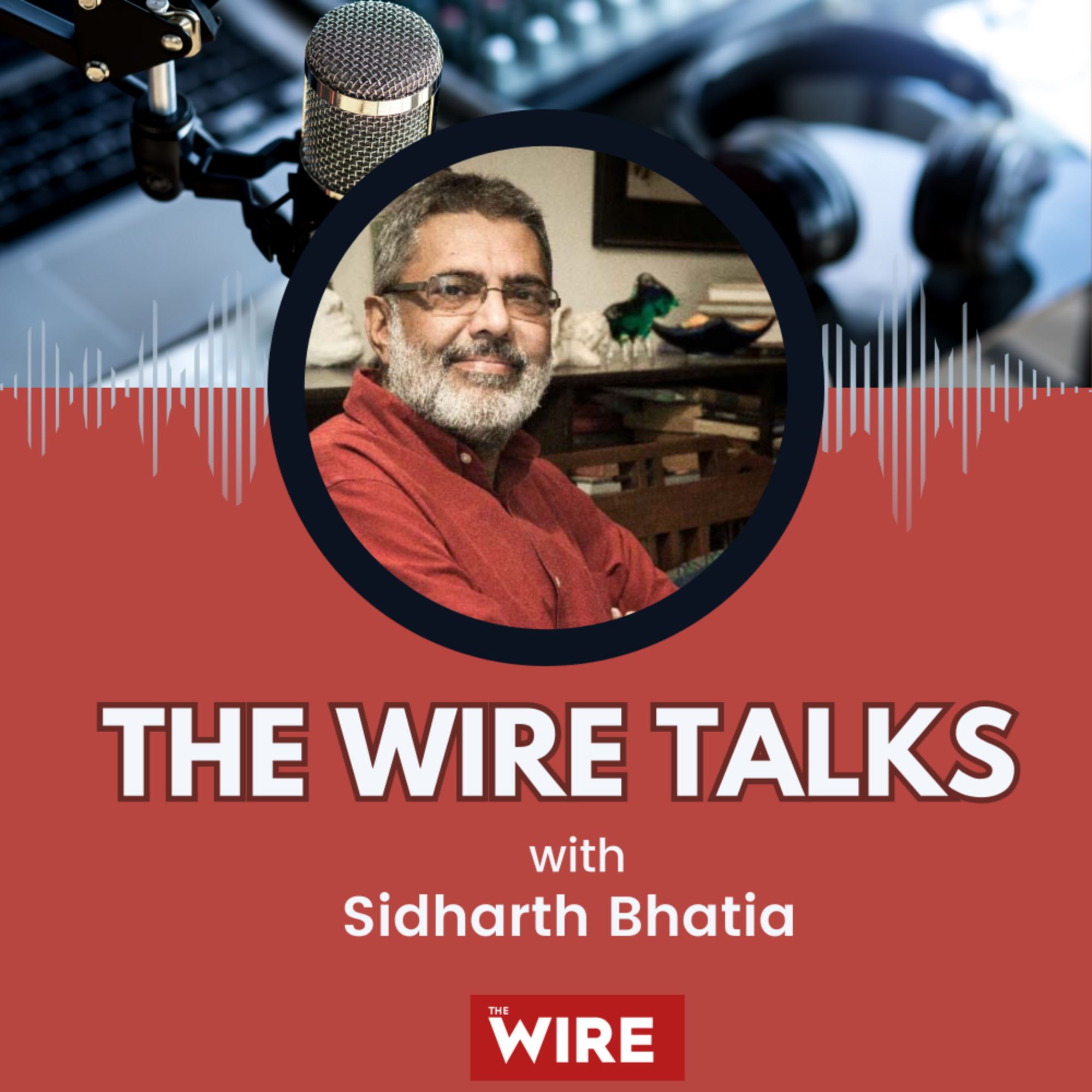
The Wire Talks
by The Wire
The Wire Talks is back, but with a new look. Now, host Sidharth Bhatia will chat with guests on video as well as audio, on issues such as culture, politics, books and much more. Our guests will be well-informed domain experts. The idea is not to get crisp sound bites but to have a real discussion, resulting in an explanation that is insightful and offers the audience much to think about.
-
44
The Heat Wave in India is an Emergency. And Its Only Going to Get Worse in the Future
India is extremely hot right now. Recently, it was reported that 50 of the world’s hottest cities in the world were in India. The media calls it a “heat wave.” This is only going to continue and get worse, says Amita Baviskar, Professor of Environmental Studies and Sociology and Anthropology at Ashoka University. “We're going to see many, many more deaths of workers on building sites… We're talking about huge levels of distress, including fatalities, including people dying. And I think people are already struggling. My imagination fails me, but I can see that there will be violence around water because water is going to become more scarce,” she said in a podcast conversation with Sidharth Bhatia. Baviskar paints a grim picture of the situation now and in the future. She says it is getting hotter not only in the plains of north India but also in the mountains. She points to the ‘urban heat island effect’— “our buildings, the fact that they trap heat and they release that heat in a way that adds to the solar radiation that we are experiencing as a part of summer. The fact that we have a lot of traffic, a lot of motorized vehicles that are releasing exhaust fumes.” She says to untangle this problem and change things it would require a consensus—“It would be not only the government, it would also have to be the media, you know, civic, civil society, NGOs. Everybody would have to come on board and say we need to do this.” She adds, “this is what is a classic, you know, binding crisis. A binding crisis is one that affects everybody, irrespective of class and caste and region and gender and religion.”
-
43
“The Election Commission Is The Key Player In This Election"
Crucial elections will take place in West Bengal in two phases on April 23 and 29. Mamata Bannerjee’s Trinamool Congress has to fight anti-incumbency, because it has been in power since 2011, and the main challenger the Bharatiya Janata Party sees its best opportunity to win the state. This time, the Special Intensive Revision ordered by the Election Commission has also complicated matters since over 90 lakh voters have been struck off the rolls and between 30 and 34 lakh have appealed their removal. The Trinamool Congress and other opposition parties have said that the Election Commission is playing a partisan role and helping the BJP. “The Election commission is the key player in this election. It is election commission that has issued an ultimatum to the Trinamool Congress. It is the election commission that is taking the administration in their control,” said Snigdhendu Bhattacharya. In this election, it looks like Gyanesh Kumar has emerged as the face that wants the change to happen in Bengal. So that means Trinamool Congress, which is the main party in West Bengal and the other smaller opposition parties are fighting not the BJP so much as Gyanesh Kumar,” he said, in a podcast discussion with Sidharth Bhatia.
-
42
The Amount Of Censorship Of Online Content Has Expanded Exponentially
The recent proposed amendments to IT rules inviting public comments has been explained by the Ministry of Electronics and Information Technology as just procedural but this is not the case. Activists say that if passed, the new rules will further tighten censorship of online content. Rules were already there and takedown orders were being issued in large numbers, but now it will further expand to censor not just publications but also comments by citizens, said Nikhil Pahwa, founder and editor of Medianama and also activist on tech policy. Of the many changes proposed, “There is an expansion of the powers of the ministry, that it can issue advisories and circulars and all sorts of notifications, and those are basically going to be binding obligations on online platforms,” Pahwa said in a podcast discussion with Sidharth Bhatia.
-
41
Indian Americans Are Very Afraid in a Way That, They Haven’t Been Probably Since the Post 9-11 Era
With the Immigration and Customs Enforcement (ICE) picking up immigrants especially brown looking people, and even deporting them, a climate of fear has built up among the Indian community, says Sravya Tadepalli. “Indians are the third most undocumented community in America,” says Tadepalli, deputy executive director of Hindus for Human Rights (HfHR). “Among Indians there is a perception that we are all here legally, as tech workers, doctors, but many Indians are not in a position of privilege,” she says in a podcast conversation with Sidharth Bhatia. Many organisations are working on educating Indians of their rights vis a vis ICE, she says. HfHR runs a Know Your Rights programme. “We’ve operated at Hindu mandir’s in New York City, coordinating with 10 of them and distributed Know Your Rights cards, conducted training.”
-
40
A Political Element Cannot be Ruled Out in the Lack of Bail to Umar Khalid and Sharjeel Imam | Sarim Naved
Umar Khalid and Sharjeel Imam have been in prison for the last five years. Their bail has been denied repeatedly. Last week their five colleagues, also arrested in the Delhi riot case of 2020, were granted bail. Why haven’t they? Lawyer Sarim Naved, who fights both civil and criminal cases, analyses this in a podcast discussion with Sidharth Bhatia. While bail not jail is a general principle, “the courts have a lot of discretion in this matter”, he said. But he says, “the way the current government behaves, yes, a political element cannot be ruled out.” Also, he says, times change and “our understanding of civil liberty shifts from time to time.” He points to cases from the 1990s when “somebody said Khalistan Zindabad and the Supreme Court said this does not amount to terrorism.” But, he says that the cases of Khalid and Imam cannot be discussed by themselves without considering the larger systemic issues of police investigations and the judiciary. “Even in UAPA, there are people who are waiting for a longer period for their trials to start.”
-
39
There is a Sense of Complacency Among Indian Americans That We Are Doing Quite Well | Salil Tripathi
The strong statements by President Trump against India are echoed by the growing anti-Indian sentiment in parts of the country. No longer are Indians viewed as the model minority — well educated, successful, tax-paying members of the US. Instead, they are rousing the anger of local communities. Some of the traits which are not very well liked, says journalist and author Salil Tripathi who lives in the US, “such as noisy celebrations, weddings, and you know, you take over the entire street and then after the after the wedding is over, you have a lot of garbage on the street or something like that. All of those things are attracting unwanted and untoward attention.” He says the soft power of India is very much visible—Ravi Shankar was popular and now Yoga is, but such things are “a little more in your face.”
-
38
No Bail for Umar-Sharjeel, US-Venezuela-India, Ikkis and a Banished IPL Star
In Seema Says, this week, The Wire’s Editor, Seema Chishti discusses the reasons behind the United States’ attack on Venezuela and India’s muted response to the flagrant violation of international law. She also discusses how the strained ties between Bangladesh and India following India not allowing Bangladesh cricketer, Mustafizur Rehman for KKR in the IPL have got more strained. In a discussion with Elisha Vermani, Seema discusses the denial of bail to Umar Khalid and Sharjeel Imam and why everyone must go and watch the latest Hindi war film – Ikkis, based on a real life story. Recommendations: Seema: 1. Watch Varun Grover in Nothing Makes Sense - • Varun Grover || Comedy Special || Nothing ... 2. Neil Postman’s ‘Amusing Ourselves to Death’ / 74034.amusing_ourselves_to_death Elisha: On a woman rescued after two years of being locked up in a bathroom. https://www.himalmag.com/culture/dome...
-
37
What Makes Mumbai’s Food History Different From Other Cities
Mumbai’s cuisine has been shaped by its migrants, not just from other parts of India but also from different countries. “Irani food, for example, is not available in such abundance in other cities,” says Pronoti Datta, in this podcast conversation with Sidharth Bhatia. Datta’s new book In the Beginning There was Bombay Duck, a Food History of Mumbai, details the various cuisines brought by the city’s communities when they moved here. They brought their food traditions, met other food traditions and it all got transformed in the city. “I suppose my one thought, one idea that runs through the book, or I hope it runs through the book, is the idea of what it means to be native. And the idea of you know, being native is a very strong political idea in the state” she says. She explains that the dining out culture did not start in the then Bombay till quite late. Most eating places catered to the working classes of their particular communities—Maharashtrians, south Indians, Gujaratis, Muslims. Only the westernised restaurants, which became popular in the 1930s, were patronised by the elite. It was only the Irani restaurants that were open to all communities and classes, she points out.
-
36
The Poetry Has Gone From Our Lives, but Hate Cannot Last Forever | Saeed Akhtar Mirza
Thirty years ago, Saeed Akhtar Mirza made his final feature film, Naseem, about an aging Urdu poet, played by Kaifi Azmi, and set in the days preceding the demolition of the Babri Masjid. The film opened with a title card which said, “That one act of demolition wrote the epitaph of an age that has passed, perhaps never to return!” “The Babri Masjid epitomised the final collapse, you know, of an idea of India, of a sovereign, secular, democratic republic, equal for all, equality and justice. You saw it collapse in front of your eyes,” he said. “I was in despair but I was also angry when I made the film,” Mirza said in a podcast conversation with Sidharth Bhatia. He has not made any feature film since, though he still makes documentaries and has written two books. Mirza spoke about how the “Hindu-Muslim binary was stupid” and said that those who promoted it hadn’t read any history. Their idea of history is “fundamentally flawed”, he said. He said over 10 million young persons finished school every year and they too had aspiration. “They see glamorous weddings on television, they see cars, fashion and they want all that. And why not?” Without adequate jobs, “where will all that energy be channelled”, he asked. He also spoke about the growing trend of Hindutva-oriented films and said that the filmmakers “know exactly what they are doing and in a strange way I believe they think they are doing no wrong because this is the time for retribution”. But in the end, he said, “Hate cannot last forever, it has to have an expiry date.”
-
35
India Badly Needs a Zohran Mamdani to Take On the Right Wing | Saira Shah Halim
India’s left parties are no longer as influential as they used to be. In her new book, Comrades and Comebacks: The Battle of the Left to Win the Indian Mind, Saira Shah Halim, CPI(M) candidate in the 2024 elections, analyses the reasons for this and suggests the way forward. “There have been strategic decisions that went wrong, but morally the Left has never made a mistake,” she said in a podcast conversation with Sidharth Bhatia. Halim talks of the need to bring in the youth and look at contemporary issues – “Let’s look at gig workers, at student networks, at climate change movements, at women,” she said. She felt that the BJP could not be taken on by showing "soft-Hindutva”. She believes Mamdani had shown radical ideas — “I mean, this guy is unfazed, he is taking on Donald Trump, he is taking on these right wing oligarchs, he is taking on these big capitalists, and he is winning because, you know, people are liking these new ideas, which are a far cry from the traditional morals of what the old communists stood for,” though she clarifies that the old guard was right in its own way.
-
34
Religion is a No-Go Area in Stand Up Comedy, Now Even the Law Says So | Punit Pania
Comedians and satirists have borne the brunt of the state and of people who are offended by something or the other, but even so, the stand up comedy scene is quite active with many faces. One such is Punit Pania, who left his corporate job 10 years ago and is now a very successful stand up comic. His topics range from poor roads and civic architecture, know-all bhakt uncles, and NRIs, but he also talks about social issues. “In my first open mic, I had two minutes and talked about domestic violence because I felt it had to be talked about,” he said to Sidharth Bhatia in a podcast conversation. He noticed that a man from the audience left, “dragging a woman behind.” Pania says he is not a political activist, but his comedy cannot help being political. “Why there are potholes on the road and why there is no beef on your plate, both things are politically driven. And those are just the most blatant examples. If you really drill down, almost every aspect of your life has a political background to it.” Even so, he slips in references to political leaders. “When you completely inundate the country with your image and your persona and then people can't even mention your name. Even slightly critically. How is that fair? So, when you take all the credit you will get all the blame also.” He also explains why the laws have made religion out of bounds but there are still “innovative ways to say what you want to say.”
-
33
Senior Citizens Are the Most Vulnerable to Online Scams Such as Digital Arrests and Sextortion | Ruby Dhingra
Why have digital scams become so commonplace? And why are senior citizens falling prey to scamsters? “We can say that a vast number of people who fall for cyber scams are senior citizens,” says Ruby Dhingra, a former journalist who co-founded Saksham Senior which works to digitally empowers senior citizens. “There are a number of reasons for this, ranging from neurological factors and the fact that seniors have money in the bank, property etc.,” Dhingra said in a podcast conversation with Sidharth Bhatia. She gives some examples of the kind of scams that are being perpetrated—from sextortion to investment opportunities to ‘digital arrest’ which has become very common. “A banker in Delhi lost Rs 23 crore to a digital arrest scam.” “The digital arrest is the scariest,” she said. The victim is isolated from everyone and threatened with arrest if they step out of the house. “There have been cases where the victim is under digital arrest for a month.” She said most scam organisations work out of South East Asia and the government brought back many hundreds of Indians last year who had been kept there forcefully.
-
32
More Young Indians Are Opting for Therapy as Mental Health Stigma Is Fading | Maherra Desai
It is no longer unusual to hear of someone, especially from a younger generation, who is undergoing therapy from a mental health professional, which is a big change from some years ago. The Covid lockdown increased “stress, depression and anxiety for many” says Maherra Desai, clinical psychologist in Mumbai’s Jaslok Hospital on World Mental Health Day. “Social media too has increased a sense of isolation,” she says during a podcast discussion with Sidharth Bhatia. Desai explains there are many reasons why people seek out therapists — they may be in distress or feel they need help — “They recognise the need for mental health.” She says not only do younger Indians seek out therapists for themselves, but also persuade their elders to do so too. “A de-stigmatisation has happened.” And queries come from all kinds of places. “I get messages from remote parts of the country from people who have found my number.” Many consult online too. “Online consultation too has taken off—earlier I was skeptical, but I now see it can be effective.” India has a need but also a severe shortage of qualified counsellors. “The World Health Organisation recommends 3 psychiatrists per one lakh population, but India has only 0.75 per lakh.”
-
31
Donald Trump is a Bully and He Sees India as a Weaker Party Than China | Manoj Joshi
In President Trump’s second term, he has imposed several sanctions against India, starting from 50% tariffs on Indian exports for importing oil from Russia and the latest one of a massive $100,000 fee for new H1B applications. Considering that Indians get 70% of new H1B visas, it will affect professionals from India the most. What is the reason behind these decisions, especially since many countries, including China, import oil from Russia? Does he have anything against India, more so since he calls Narendra Modi his friend? “Trump is a bully and he likes strong leaders. ” says Manoj Joshi, Distinguished Fellow at the Observer Research Foundation in this candid interview. Also, he says, “India does not offer the kind of business opportunities that China does.” As far as his praise for Pakistan, he has business opportunities with crypto deals there. “Plus, Pakistan. Nominated him for the Nobel Prize. He desperately wants it,” he said to Sidharth Bhatia on the podcast The Wire Talks. He said the Indian side has chosen not to respond to Trump’s claims, “keeping a discreet silence.” “When we have no leverage, there is no point posturing.” Also, he said, “Indian leaders are not known for taking a courageous stand.” Joshi also mentioned the huge fee on H1B visas, which, it has been clarified, are only for new applicants. “I don’t think H1B is a closed chapter.”
-
30
Indians in Australia are Becoming More Visible and Not Always in a Positive Manner | Surjeet Dhanji
There has been growing anti-immigration and anti-Indian sentiment in many countries, including in Australia. A Member of Parliament recently claimed that the government was bringing in too many Indians so that they would vote for it. The government criticised her and her own party demoted her status. A government report in 2021 called Indians a “national asset”. “The educated people and those in white collar jobs know this, but the rest of the populace does not,” says Surjeet Dhanji, an academic fellow at the Australia India Institute and a scholar of migration. “But when you have the Liberal party saying we need to cap migration or cap international students, and when Indians are among the leading numbers of migrants, what kind of message are you sending?” The Indians are polite, they work hard, they pay taxes, they speak English, but “there are no Indians in leadership roles,” she said to Sidharth Bhatia in a podcast conversation. “We need a concerted effort by the Indian community to tell the layperson who watches the news or is on social media that Indians are contributing.” But Australians don’t like it when “migrants bring their home issues to this country.” She explains that after the anti-Indian violence in 2008 and after Covid, migration slowed down and a huge backlog built up. “But the numbers of Indians are no more than of any other community,” she said. However, they are visible in many blue collar jobs such as couriers, hospitality, security guards.
-
29
The Violence in Nepal Was Very Well Planned, by Forces Other Than GenZ Protesters | Mahendra P. Lama
The agitation in Nepal last week had three dimensions—the total collapse of the state machinery, multiple forces joining the GenZ agitators and unprecedented destruction of public and private property, says Mahendra P. Lama, senior professor at Jawaharlal Nehru University, Delhi and an astute observer of Nepal for several decades. Lama was in Kathmandu during the agitation and also spoke to several local citizens. “There was a huge gap between GenZ and the government,” he said in a podcast conversation with Sidharth Bhatia, ”but there was a pattern to the violence-it was well sequenced, with arson, looting, mayhem, killing.” He expressed surprise that the army was not summoned on the first day and the political parties remained quiet. Over the past 10 years, there have been 14 prime ministers, some lasting barely three months and none of them had done anything for the country or its citizens. He said Nepalis were not violent people but the “Maoists had inculcated a culture of violence in the country.” He embossed that over this period, “India had nothing to bring stability to Nepal or help build institutions,” he said, adding, “India needs to change its strategy in Nepal.”
-
28
Flooding Will Continue in Immediate and Maybe Long-Term Future, But I'm Still Hopeful | Mihir Bhatt
What is the cause of the severe flooding seen in northern states and cities? “Climate change and its impact is intensifying rainfall pattern. The bigger failure is how our cities are designed, planned and managed and continue to grow,” says Mihir Bhatt, Ahmedabad based architect and urban planner. Bhatt is the director of the All India Disaster Management Institute, which works on initiatives in risk reduction and climate resilience. He said there was a “design mismatch.” “Our stormwater systems and drainage networks are built for rainfall pattern for the past, not for the present, even less for the future,” he said to Sidharth Bhatia in a podcast conversation. He also gave the example of Gurugram, where “rapid urbanisation filled in natural catchments that once absorbed excess water from the neighbouring area.” Flooding would be seen in rural and urban areas for the near and perhaps long term future, but many solutions are there. He gave the example of Nagaland, where 39 local government bodies came together to work with the state government on disaster mitigation. “I am not a pessimist” he said. “Indians can build something if we let them.”
-
27
Maharashtra Govt’s Resolution Won’t By Itself do Much for Maratha Reservations | Sumeet Mhaskar
The reason why the Marathas have begun agitating for reservations in recent years is because there is a “rural as well as urban crisis” in the state’s political economy, says Sumeet Mhaskar, professor of sociology in OP Jindal University. Marathas are getting no access to economically secure jobs because more and more government jobs are contractual. Mhaskar explains the process for getting reservations is not the Government Resolution (GR) such as the Maharashtra government has done. “Reservations can only be given by the Backward Caste Commission.” Nonetheless, he says, now the “OBC groups will agitate. They may go to court.” One danger for the OBCs is that the Marathas will stand for election in seats which are reserved for OBCs, he explains. He also feels there is a political dimension to the entire agitation, especially since Fadnavis is a Brahmin and power traditionally has been held by Marathas. He points out that elections to municipal bodies are to be held soon and if Devendra Fadnavis hadn’t granted what the agitators wanted it would have had an impact on the elections.
-
26
How Would Gandhiji React to a PM Dogwhistling From the Red Fort? | Manoj Kumar Jha
A rupture has taken place within our community relationships and this will take a long time to heal even if the government changes. This is the candid analysis by Manoj Kumar Jha, academic and one of the more articulate Indian parliamentarians. “Dogwhistling has moved from the fringe to the centre,” he says in a podcast conversation with Sidharth Bhatia. Jha’s collection of columns has recently been published under the title In Praise of Coalition Politics and Other Essays on Indian Democracy. The essays cover a variety of subjects ranging from the caste census, Waqf properties, the RSS and government servants, and Jha’s letters to Mahatma Gandhi and Jawaharlal Nehru. Jha says university appointments are made keeping in mind the candidate’s affiliation to the organisation. “The only thing spoken in favour of the new vice-president is that he is a die-hard RSS man. Is this a qualification for a post where the first one (vice-president) was Sarvepalli Radhakrishnan?” Jha says, “If I love my nation, I must critique my government.” He points out that Nehru sat through debates where he was critiqued. “What is so sacrosanct today that you report from Assam and sedition laws are applied?”
-
25
India Will Never Get Rid of the Mughals, Their Influence is All Over | Richard M. Eaton
Historian Richard M Eaton says he is “very concerned” at the erasure of the Mughals — “one of the most spectacular empires in the world” — from school history books. Eaton, one of the most eminent historians of pre-modern Indian history, debunks some myths about the Mughals in this podcast conversation with Sidharth Bhatia. He pointedly says that though the Mughals were Muslims, “they saw religion as a very personal affair and rarely tried to convert non-Muslims.” According to him, “they saw fooling around with religion as something that would only endanger the stability of the state. Akbar and Aurangzeb were both very explicit about not allowing religion to interfere with state policy.” It was the British who painted the Mughal rule as a “dark period”, because that way they could “project themselves as bringing peace, stability, efficiency” to the land which had till then experienced incompetent rule. He talks about how for a long time Aurangzeb was revered and venerated among his subjects, Muslims as well as well as Hindus. “His grave was a pilgrimage site,” he says. All this changed after the five volume biography of Jadunath Sarkar in the early 20th century. Eaton makes it clear that this villainising Mughals will not change the basic fact that their influence on art, culture, good, language and everything else in India is all pervasive and part of India. “You will never get rid of the Mughals, you will have to live with them.”
-
24
Guru Dutt, Raj Kapoor and the Golden Age of Hindi Cinema in the 1950s | Rachel Dwyer
There is a widespread belief that the 1950s were a time of great Hindi films, in terms of stories, songs and film-making. Seventy-five years later, fans still remember those songs, those stars and, most of all, those directors. We look back and call it the Golden age. What does that mean? “I think it’s partly because the 1950s are also seen as a kind of Golden Age of India,” according to Rachel Dwyer, a former professor of film at the School of Oriental and African Studies (SOAS) who has written several books and articles on Hindi cinema. “A figure like Nehru at the time was seen as a major world figure. But also something exciting going on in Indian cinema at the time.” “We saw several great directors working, the rise of major stars, playback singing being normalised and the stories too, which were usually about a hero looking to find a place in this new world, really spoke to people in a very direct way, and not just people in India, of course, but people across the world,” she said in a podcast discussion with Sidharth Bhatia. Two of the major directors of the period were Guru Dutt and Raj Kapoor. This is the 100th birth anniversary of Guru Dutt and last year was Raj Kapoor’s birth centenary. Dwyer discusses their work, through their films Pyaasa and Shri 420. “These have a great appeal about a certain innocence, about a freshness, and the way that they just happen to be really good entertaining films.” She also analyses their personas – the Raj Kapoor on-screen persona, the ordinary everyman, and Guru Dutt the poet.
-
23
If a Large Number Are Excluded From Voting in Bihar, Entire Electoral Process will be Suspect | Ashwani Kumar
The Election Commission’s announcement in Bihar that a citizen should prove his or her credentials to vote has sparked outrage among political parties. They say that a large number of marginalised communities will lose their right to vote. “It is indeed very problematic. To shift the onus of establishing identity or citizenship on the voter is fraught on principle in a democratic country,” says Ashwani Kumar, senior advocate and a former minister for law and justice and also former Additional Solicitor General. “What was the justification of excluding Aadhaar or ration cards from the process,” Kumar said in a podcast discussion with Sidharth Bhatia. He said that there is an element of distrust which has cropped up in the last couple of years. “So Election Commission now has the duty to dispel to the satisfaction of all concerned that its circular or its Special Intensive Revision (SIR) will not be exclusionary.” He also spoke about declining standards of Indian democracy. “Political opposition in a democracy cannot be treated as personal enemies,” he said. “All parties, without exception, are being seduced by the temptation of using the harshest possible language against political opponents. That is what we have come to.”
-
22
BJP’s Push for Hindi in Different States Has a Larger Cultural Agenda Behind it | Alok Rai
The Devendra Fadnavis government has withdrawn its proposal to introduce Hindi in the early classes in schools in Maharashtra because of the opposition’s pressure. In Tamil Nadu too, there has been pushback on the introduction of Hindi by the Modi government. “In Maharashtra the BJP cannot afford to take electoral risks,” says Professor Alok Rai, academic and author who has taught in universities in India and in the US and has written a book called Hindi Nationalism. But, he points out, the BJP does not want just to introduce the language. “It has a larger cultural agenda behind it. Hindi carries within it a coded language,” he tells Sidharth Bhatia in this podcast. “The agenda is a Hindu agenda, an upper caste agenda.” The introduction of Hindi in the south “consolidates their support in the Hindi belt.” Also, “School Hindi is very different from what is spoken on the streets,” he says. Everyday Hindi, that is Hindustani, "has evolved". “School Hindi is sterile”, he says.
-
21
It is Very Easy to Say that We Want to be a World Power, but a Vishwaguru Cannot be Self-Appointed | Salman Khurshid
India’s stand on global events is becoming increasingly unclear. Whether on the Israel Iran war or the Ukraine-Russia war, India has not taken a clear position, though in recent years, India has been supportive of Israel, giving up the country’s long standing support of Palestine. Nor has prime minister Modi clearly repudiated President Trump’s repeated statements that it was he who brought an end to the India-Pakistan conflict. Does India have a voice in global affairs? Salman Khurshid, a former external affairs minister in the Manmohan Singh government, thinks not. In a podcast discussion with Sidharth Bhatia, Khurshid says. “We are doing too much lecturing and parroting phrases and not enough diplomacy.” “India requires to get up and be able to say something and do something that will make a difference. We could and should have a role” in world affairs. But we are simply “making phone calls”. Khurshid, who also was in a multi-party delegation that travelled to south-east Asia and the Far East, said that the outcome of the trip was “satisfactory” but “we could not get any commitments”. The discussion covers a wide range of topics, including India’s relations with its neighbours, India’s stance on Israel and its bombing of Gaza and the lack of clear information by the Modi government.
-
20
Post Degree Jobs Won’t be Available Any More in the US, But It is Still the Best Option
India sends students to the US in record numbers, but this academic year, applicants are feeling anxious before they head out. The changing policies of the Trump administration is likely to cause delays and tougher immigration questioning, among other things. Moreover, it is likely that the Optional Practical Training (OPT) programme, which allows F-1 visa holding students to work for a year or more, will be modified if not terminated. That was one of the great attractions for foreign students in the US. So is it still worth going to the US to study? “Absolutely,” says Viral Doshi, who has advised Indian students heading to the US for the last 20 years. “No other country can match up to the US,” he says, in sheer number of colleges, in the kinds of courses it offers and in the experiences one can have. He acknowledges that parents have anxieties but “I tell them, have patience,” he says in a podcast discussion with Sidharth Bhatia. “Almost 50 percent students have already got visas and others will too, maybe a few weeks late for the first semester.” He says universities depend foreign students and are saying they will allow students to come late.” “America is not the same as it was some years ago. Things have changed. No more internships and no more jobs or work experience.” And most important, he adds, “Avoid political activism.”
-
19
Planning in Mumbai has Come to Mean Only Real Estate Schemes | Hussain Indorewala
Every year, parts of Mumbai’s streets and tracks get flooded after the rains, but this year, the floods happened in the southern parts of the city. South Mumbai is generally considered immune to this kind of monsoon flooding, but this year, things were different. Citizens of Mumbai have got used to such inconveniences during the rainy season, especially in the first few days and weeks, but things are getting worse year after year. “Poor planning is part of it,” says Hussain Indorewala, teacher and urban researcher, in a podcast discussion with Sidharth Bhatia. “Planning in Mumbai has come to mean real estate schemes”, he said. “ Apart from real estate development, there is very little thinking on transport, sewage, water supply etc.” he says. He says this kind of flooding will probably happen every year. The digging for construction activity is one reason, and the open space around the new construction is reducing, could be another. The Coastal Road too has shut down many water channels. Mumbai needs better governance and one idea suggested is to have a directly elect a mayor and representatives. “Decision making now is done by bureaucrats and the state government.
-
18
India’s Reaction to Turkey Understandable, But We Should Not Give Up on Diplomacy | Talmiz Ahmad
Veteran Indian diplomat Talmiz Ahmad, who is an authority on the Middle East, says Turkey has been bringing up Kashmir for a long time but relations were slowly warming up. “But it helped Pakistan during its conflict with India” and that was too much for India, he said in a podcast discussion with Sidharth Bhatia. “Turkey is on a high and wants to expand its footprint to South Asia,” he said. “Pakistan brings geopolitical value to Turkey and if they get together, they will form a formidable alliance.” Even so, Ahmad said, he is a strong believer in diplomacy and he felt that India should continue on the diplomatic path. “Its important also to talk to those who disagree with you,” he said. Discussing India’s growing ties in the Gulf countries, Ahmad, who was Ambassador to UAE, Oman and Saudi Arabia, (twice), said that “our ties go back over a millennia” and “India should be seen to be “as a role player in the security scenario in the region.” “We should be an influencer in the Gulf region.”
-
17
New Canadian PM Carney a Technocrat, Will Want to Increase Trade With India | Daniel Lak
With the election of a new prime minister in Canada, there are hopes that relations between India and Canada will improve. Under Justin Trudeau, the previous one, ties had plummeted after he made allegations that India had a role in the killing of a Canadian citizen Hardeep Singh Nijjar. “Trudeau had five Sikhs in his cabinet and was responding to diaspora politics,” says veteran journalist Daniel Lak in a podcast discussion with Sidharth Bhatia. Lak was with Al Jazeera as the US and Canada correspondent and earlier had served in India, Pakistan and Nepal as a BBC correspondent. He says Sikhs have been coming to Canada for over a century and most of them are here to make a life for themselves rather than get involved in what he calls ‘diaspora politics’. “They are two percent of the Canadian population and have established themselves in several sectors including transportation." “I get India’s anger,” he says, at the Indian insistence that supporters of Khalistan be restrained. The new prime minister will also at some stage have to manage this part of the relationship, but “he is a technocrat” and Canada will want to increase trading links across the world, including with countries like India, especially after the US President Donald Trump threatening to make Canada the 51st state. The discussion includes issues like the loss of NDP leader Jagmeet Singh and immigration and from India.
-
16
Beneath the Modi Government’s Push for Tourism in Kashmir Was the Disempowering of Kashmiris | Anuradha Bhasin
The killing of 26 tourists in Pahalgam on April 23 came as a ‘shock’, because never before had terrorists targeted tourists, says Anuradha Bhasin, an astute observer of events in the Union Territory. It's not that terrorism had disappeared after the removal of Article 370 in 2019, as the Modi government constantly claimed, Bhasin said in a podcast discussion with Sidharth Bhatia. The reaction among ordinary Kashmiris was one of grief, she said. “They came out to help, as they have on every occasion earlier – that is Kashmiriyat.” But, she said, the constant pushing of the “tourism narrative” to show things were normal was creating “alienation” among the locals. It hid the “ugliness of the Kashmiris being economically disempowered—new land laws, allowing outsiders to bid for contracts” were causing resentment, she said. “There was a complete erasure of what is happening in Kashmiris.”
-
15
A 'Concentrated Attack' on the CJI Because of His Questions on Waqf Bill | Sanjay Hegde
Vice President Jagdeep Dhankar went “much beyond his Constitutional Role as the Presiding Officer of the Rajya Sabha” when he spoke against the Supreme Court. “His language was intemperate,” says Supreme Court Senior Advocate Sanjay Hegde in a podcast discussion with Sidharth Bhatia. “The conjecture is that he is auditioning for a higher role,” Hegde said. Pointing to the unseemly comments of BJP MP Nishikant Dubey against the Chief Justice of India, and also the social media campaign attacking the CJI, Hegde said it all seemed like a “concentrated attack”. “Indian democracy is not in a healthy position,” he said, and the situation was more like an “elected autocracy”. There were occasions in the 1970s when the judges were criticised by the executive but “the language was never so crass” as now.
-
14
Hindutva Hate Music (H-Pop) Is Now All Around Us | Kunal Purohit
Journalist and author Kunal Purohit began monitoring Hindutva WhatsApp groups several years ago and saw how they disseminated propaganda. “The things people were then scared to speak openly are now all around us,” he says to Sidharth Bhatia in a podcast discussion. Purohit, who wrote the book H-Pop about songs spreading hate, says he finds those songs being played all over the place. He followed Ram Navami processions in Mumbai recently where marchers hurled the most obscene messages openly towards Muslims. The police stood by mutely. The songs of hate were being played openly and loudly. His social media posts forced the police to file FIRs against the organisers of the march, but he says “the genie is out of the bottle”. Such demonstrations rarely took place in Mumbai even a few years ago. “Basically what was happening in Uttar Pradesh has now come to Mumbai,” he feels.
-
13
Waqf Amendment is Seen as a Continuation of the Disenfranchisement of the Muslim Community | Shadan Farasat
The Waqf (Amendment) Bill that has now come into force will effectively take control of any Waqf (Charity) property from the Muslim community wherever there is a dispute. “For example, Sambal mosque will be affected and will now come under the control of the Archeological society of India,” explains Shadan Farasat, senior advocate in the Supreme Court in this podcast discussion with Sidharth Bhatia. “It could be very problematic going forward” because in any dispute arising with a government agency, the community is bound to lose control of the Waqf property, he says. “From the community’s perspective, it is important to use the existing Waqf properties well.” At the same time, it should be challenged in the courts. “Some provisions are unconstitutional.” He says the passing of the bill will have political implications—“certainly there will be an impact in Bihar, where elections are due later this year.” The Janata Dal (United) of Nitish Kumar, a part of the coalition with the BJP, had voted in the Bill’s support.
-
12
Indian Govt Cancelled My OCI Twice, Courts Restored it Both Times | Ashok Swain
Academic and commentator Dr Ashok Swain of Uppsala University in Sweden is in the unique position of having his Overseas Citizen of India status cancelled twice by the Indian government. The government did not give any public reason for doing so but said it had “sensitive information” which it submitted to the courts when Swain challenged the decision. On both occasions the courts overturned it. “I have great faith in the Indian judiciary,” Swain told Sidharth Bhatia in a podcast decision. Swain’s writings and tweets have been sharply critical of the Modi government. Now his X account is ‘withheld' in India and he says all his tweets before December 2024 have vanished. “I got a lot of threats of a serious nature” and petitions to the university, but his colleagues have been very supportive. “OCIs of many academics have been targeted.” However, he insisted he did not want to indulge in “victimhood”.
-
11
The Very Real Dangers of the Great Nicobar Project | Pankaj Sekhsaria
Plans to develop the Great Nicobar island, initiated by the Niti Aayog, have alarmed scientists and activists alike. A massive project, involving a transhipment terminal, port, a township, an airport and more, has been made. It is estimated to cost over Rs 70,000 crore. Pankaj Sekhsaria, who has been associated with the islands for over three decades says on every front – environmental, geological and social – the project will ruin the islands. “The township is for accommodating 3.5 lakhs people: residents, tourists, etc.,” he tells Sidharth Bhatia in this podcast. “A reserved forest has been denotified – its not easy to cut down a forest,” he says. He lists the damage to the local flora and fauna. “The beaches there are the nesting place for the great leatherback turtle – that will be finished."
-
10
Fifty-Five Years After they Broke Up, Why Are the Beatles Still Popular? | Oliver Craske
Generations have come and music genres have changed, but The Beatles and their music go on and on. In this podcast, Oliver Craske and Sidharth Bhatia, both fans of the world’s first pop group, try to crack the mystery of their enduring popularity 60 years after The Beatles broke up. “Their music sounds deceptively simple but it was actually not simple,” says Craske, who has worked on several books about the group including The Beatles Anthology: Get Back, which accompanied the Peter Jackson film on them. “Lennon and McCartney – there has been no song writing duo like them,” says Craske. The two analyse Rubber Soul and Revolver, and how with each album The Beatles evolved, trying out new instruments and recording techniques. "Many of their songs, such as 'A Day in the Life' were revolutionary when they came out,” Craske says. “The group just continued to evolve.” And of course, no discussion on the group is complete without speculating why they broke up.
-
9
The Government is Using Every Means to Put Pressure on Journalists | N. Ram
N. Ram, a journalist and media manager for over five decades, has seen Indian journalism through its ups and downs. He recalls the Emergency, when there was censorship and most of the media simply succumbed to government pressure. What he sees today is different. “It was a dictatorship then but it was not ideological. Today’s media management is toxic,” he says. He also talks about the "weaponisation of the arms of the state” by introducing new laws and regulations, such as cancelling the non-profit status of digital news outfits such as the Reporters Collective. However, he sees hope, he says in this podcast discussion with Sidharth Bhatia. He points to the vast diversity of Indian media and the emergence of independent digital platforms which will be difficult to control for the state.
-
8
Yogi Adityanath Has Been Getting the Support of Hindutva Types, But He Is No Modi | Nilanjan Mukhopadhyay
Reports are emerging that after the Kumbh Mela, Yogi Adityanath’s profile has increased for holding a successful event, the stampede apart. But there are others too. “If Modi is the Alpha Hindutva Male, Adityanath is the Alpha Hindutva Male in waiting,” says Nilanjan Mukhopadhyay, longtime observer and analyst of the right-wing Hindutva ecosystem. “He has been getting a lot of support from Hindutva people and even the RSS.” In a podcast with Sidharth Bhatia, Mukhopadhyay discusses a possible post-Modi scenario. “Many things will depend on the circumstances in which he goes.” For example, “if he decides to step down after turning 75 in September, following the BJP’s own rule.” He says for all his appeal among Hindutva types, Yogi will not get the support of “allies or the middle-classes. No one is the complete package like Narendra Modi,” he says. In this wide-ranging discussion, Mukhopadhyay also talks about the differences between Modi and the RSS, the many other pending Hindutva issues before the BJP, and the agenda behind the One Nation One Election proposal.
-
7
India Will Not Benefit by Being a US Ally. We Need to Have Autonomy in Decision Making | Sanjay Bhattacharya
Retired diplomat and now academic Sanjay Bhattacharya says President Donald Trump believes disruption is the only way to achieve the kind of world order he wants to. In a podcast conversation with Sidharth Bhatia, Bhattacharyya says Trump still wants a Pax Americana, but wants allies like Europe and Japan to meet their share of the expenses of being protected. According to Bhattacharyya, Trump is aiming for a reset of the global order and advancing ideas he had started in his previous presidency. He believes India has a role to play in the world. “Our voice for liberal values is recognised” globally, but this will not amount to much if we do not “improve the condition of our own citizens”. He also cautions that we should have a certain amount of “autonomy in decision making”. He is critical of the high price India will be paying for the F-35 aircraft which will be bought from the US. Listen to the podcast during which Bhattacharyya and Bhatia will cover some of Trump’s other ideas, including his plans for Gaza, buying over Greenland and imposing tariffs on imports.
-
6
After Beer Biceps Case, Could Broadcast Bill Be Pushed Through the Backdoor? | Amit Varma
The crass statements made by YouTuber Ranveer Allahbadia, who goes by the name of Beer Biceps, have caused outrage among the general public. The police too is after him and the Supreme Court, while giving him some relief, has made strong statements against him. But does the state have any business to get after him? Amit Varma, a veteran podcaster who also runs a YouTube show, thinks not. Describing himself as a ‘free speech absolutist', Verma says unless there is direct incitement to violence, no one should be prevented from saying what they want to. “The principle of free speech should matter. But Article 19 (2) of the Constitution talks about decency and morality – who interprets them?” he asks, in a podcast interview with Sidharth Bhatia. He says he is not as worried about politicians or the courts as much as society. “As Ambedkar said, a liberal Constitution was imposed over an illiberal society.” He says top government ministers like Dr S. Jaishankar, Nitin Gadkari and Piyush Goyal were happy to talk to him because “he fawned all over them” rather than ask tough questions. “But it was a question of use and dump,” he says. There is a lot of more obscene and violence-inciting content online, but no one bothers about that. “But now if the Broadcast Bill comes there won’t be much opposition to that. This Bill will be a disaster.”
-
5
'I Am Disturbed, Disappointed at S. Jaishankar’s Statement in Parliament' | Vivek Katju
There are established procedures to identify and return undocumented migrants from one country to another. It has to be done keeping in mind their dignity, says Vivek Katju, a former Indian diplomat, in this podcast interview with Sidharth Bhatia. He emphasised twice that he was “disappointed in Jaishankar’s statement” in Parliament explaining the manner in which the migrants were sent was according to American procedures. India too has a Standard Operating Procedure in taking back its nationals once they are identified. Jaishankar talked about the American SOPs, “why did he not talk about Indian ones?” Katju says the restraints on them were not necessary and generally “military aircraft was not used, they are very uncomfortable”. Modi is visiting the US at a time when the Washington DC was “quite unsettled”. He would be discussing all manner of subjects, including tariffs and also the migrants. He says countries have various ways to put their point across. According to him Modi is not a confrontational kind of person. He says India did not have the leverage that Canada, Mexico and China had. “But we should never be a pushover,” he emphatically says.
-
4
UIDAI Not Answerable to Anyone, There Has Been Only One Audit So Far | Usha Ramanathan
The Aadhaar card, which was to be only for smooth transfer of welfare benefits, is now asked for all kinds of things, from opening bank accounts to getting a SIM card. And it has led to many problems since the first enrolment, 15 years ago. Usha Ramanathan, a legal researcher who was among those who warned of some its dangers, says that it is creating a digital economy that is for the benefit of business. While other resources, such as land or water, are tangible and can be contested, data is not. People willingly give their information as long they get convenience in return, she says to Sidharth Bhatia in a podcast interview. But they also give away their privacy. The result is surveillance on every aspect of their lives, she says. She says the marginalised suffer the most since they lose benefits because of problems such as change of fingerprints, misspelling of names and so on. And there is nowhere to turn for help.
-
3
H1B Visas Still Business as Usual In Trump’s US, But Green Card Backlog for Indians a Big Problem | Duriya Dhinojwala
After his inauguration, many of US President Donald Trump’s announcements and executive orders have caused fear and anxiety among applicants and holders of the H1B visas. Of particular concern is the ending of citizenship by birthright, though this particular provision has been stayed by the courts. Indians have a particular interest because they hold the maximum number of H1B visas. Duriya Dhinojwala, who practices law with a special focus on immigration issues, talks about some of these complex questions in this podcast interview with Sidharth Bhatia. For one thing, she says the H1B programme still goes strong and the birthright citizenship condition has not been halted – “so please talk to your physician before you rush into a decision”. She explains that not winning the H1B lottery is not the end of the world – there are many other ways to reapply. She also explains in detail the issue of undocumented migrants that the US wants to send back. The bigger problem, she says, is that the green card backlog for Indians is long and is growing and the Indian government should discuss that with the Trump administration.
-
2
Adding Secular, Socialist to Constitution From Start Would Have Been Superfluous | Raju Ramachandran
The Indian Constitution came into effect on January 26, 1950 and Republic Day is a commemoration of that. The framers of the Constitution gave the nation a document that had the vision to guide matters of the Indian state. Many questions have been raised about the Constitution – some members of the BJP want to remove the words secular and socialist because they were not in the original document. “It would have superfluous to add the words then,” says veteran constitutional lawyer Raju Ramchandran in this podcast discussion with Sidharth Bhatia. “It was obvious from the document that it would be a welfare state and a secular state,” he says. Ramachandran says the One Nation One Election idea “militates against federalism” because it “subordinates the rights against the states”. He rejects the idea that it would save money: “In fact it will be more expensive, with the cost of additional manpower, EVMs etc.” On the threats against the Constitution being changed, he says citizens – and more importantly, courts – should be vigilant against any such attempt.
-
1
Israel’s Bombing of Gaza Has Made a Bonfire of International Norms | Pankaj Mishra
Can the world ever be the same after Israel’s brutal, non-stop bombing of Gaza? That is the question author Pankaj Mishra writes about in his latest book, The World After Gaza. Mishra’s well researched book explodes several myths, not least being that Israel was formed in 1948 to provide a safe place for survivors of the Holocaust. On the contrary, he writes, the survivors who did move there were treated badly by the European Jews. Most Jews who moved there were from the Arab countries who knew little about the Holocaust. In his interview with Sidharth Bhatia, Mishra also talks about how Western countries have backed Israel fully, allowing it to get away with a lot – and this will have long term consequences.
We're indexing this podcast's transcripts for the first time — this can take a minute or two. We'll show results as soon as they're ready.
No matches for "" in this podcast's transcripts.
No topics indexed yet for this podcast.
Loading reviews...
ABOUT THIS SHOW
The Wire Talks is back, but with a new look. Now, host Sidharth Bhatia will chat with guests on video as well as audio, on issues such as culture, politics, books and much more. Our guests will be well-informed domain experts. The idea is not to get crisp sound bites but to have a real discussion, resulting in an explanation that is insightful and offers the audience much to think about.
HOSTED BY
The Wire
CATEGORIES
Loading similar podcasts...
Frequently Asked Questions
How many episodes does The Wire Talks have?
The Wire Talks currently has 44 episodes available on PodParley. New episodes are automatically indexed when they're published to the podcast feed.
What is The Wire Talks about?
The Wire Talks is back, but with a new look. Now, host Sidharth Bhatia will chat with guests on video as well as audio, on issues such as culture, politics, books and much more. Our guests will be well-informed domain experts. The idea is not to get crisp sound bites but to have a real discussion,...
How often does The Wire Talks release new episodes?
The Wire Talks has 44 episodes. Check the episode list to see recent publication dates and frequency.
Where can I listen to The Wire Talks?
You can listen to The Wire Talks on PodParley by clicking any episode. We provide an embedded audio player for direct listening, and you can also subscribe via your preferred podcast app using the RSS feed.
Who hosts The Wire Talks?
The Wire Talks is created and hosted by The Wire.
URL copied to clipboard!