
PODCAST · history
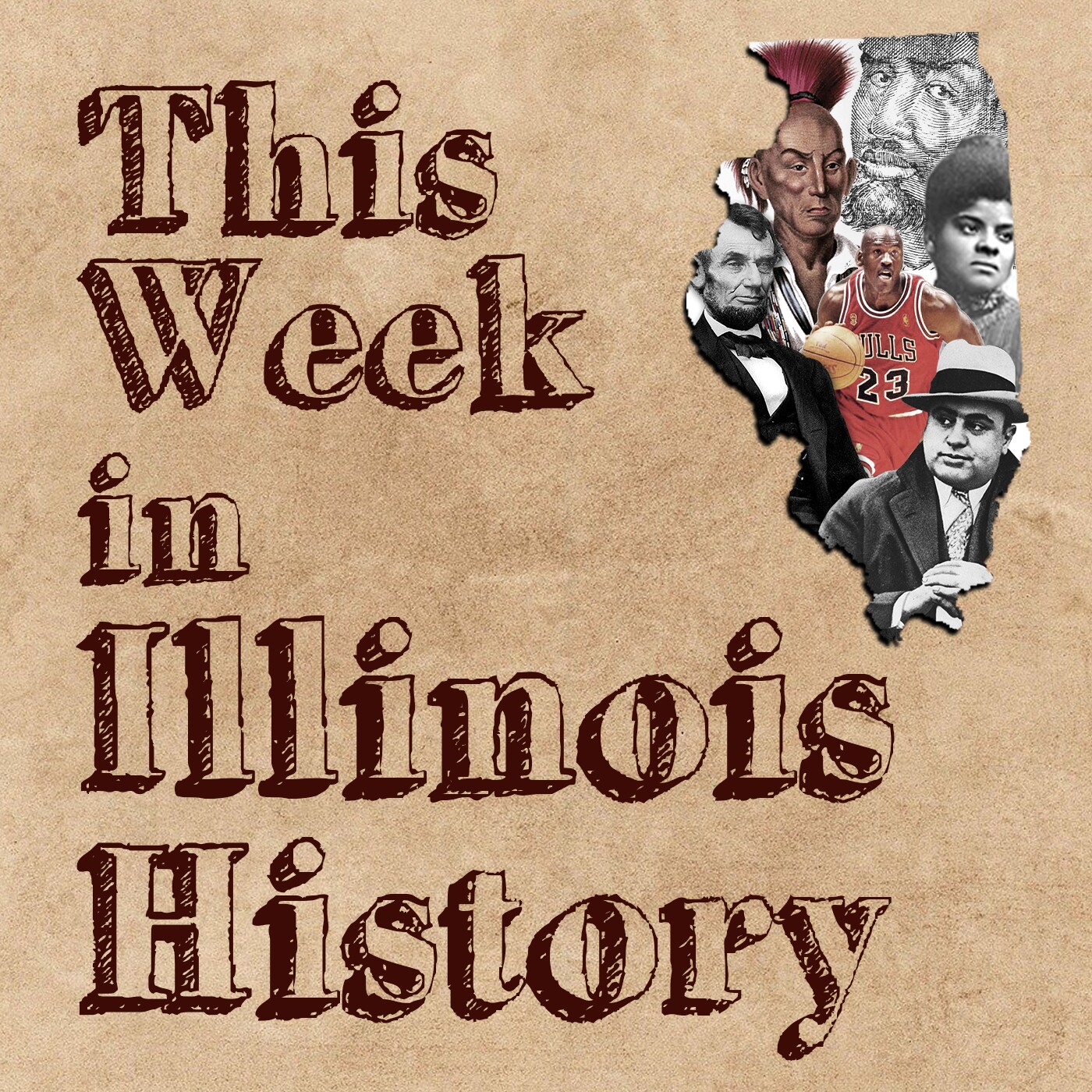
This Week in Illinois History
by Northern Public Radio
This Week in Illinois History provides a 90-second snapshot of an event significant to Illinois history. Join Host Clint Cargile as he covers big events while also exposing little-known pieces of Illinois history.
-
63
This Week In Illinois History: Svengoolie! (June 16, 1979)
On June 16, 1979, Rich Koz made his TV debut on WFLD in Chicago as horror host "Son of Svengoolie."
-
62
This Week In Illinois History: Krafting Cheese (June 6, 1916)
This week's slice of history is a uniquely American invention: processed cheese.
-
61
This Week In Illinois History: All-American Girls Professional Baseball (May 30, 1943)
Seventy-eight years ago, the All-American Girls Professional Baseball League had its first day of league play. The women's league was founded, in part, because many Major League Baseball players were serving in World War II. Baseball executives had to find a new way to maintain revenue and keep people interested in the sport.
-
60
This Week In Illinois History: Big Eli, The First Portable Ferris Wheel (May 23, 1900)
On May 23, 1900, the world's first portable Ferris wheel, known as "Big Eli," made its debut. Its inventor, William Sullivan, launched an amusement ride business that still thrives today.
-
59
This Week In Illinois History: The Sucker State (May 17, 1955)
On May 17, 1955, the Illinois General Assembly approved the official state slogan: "Land of Lincoln." Before that, Illinois was known as the Prairie State. But Illinois also had an older, unofficial slogan that dates back to the state’s earliest days: the Sucker State.
-
58
This Week In Illinois History: Eight-Hour Workdays . . . For Children (May 15, 1903)
On May 15, 1903, Illinois established the nation's first eight-hour workday . . . for children. The new law also set a 48-hour weekly limit on child labor.
-
57
This Week In Illinois History: The Haymarket Riot (May 4, 1886)
The story of the Haymarket Riot of 1886 actually begins 20 years earlier. After the Civil War, Chicago's labor unions had been pushing for an eight-hour workday instead of the usual 12 to 14. In response, Illinois passed an eight-hour law, but it had loopholes that allowed employers to ignore it. So on Saturday, May 1, 1867, unions called for a city-wide strike to protest the flawed law. Six thousand workers flooded into the streets, and the protest spread from there. The strike crippled the city's economy for almost a week, but the movement eventually fell apart, and the ineffectual law went unchanged.
-
56
This Week In Illinois History: Illinois Congressman Battles Jim Crow (April 28, 1941)
On April 28, 1941, Illinois Congressman Arthur Mitchell argued before the U.S. Supreme Court that African Americans were entitled to railroad accommodations equal to white passengers.
-
55
This Week In Illinois History: First Railroad Crosses Mississippi River (April 22, 1856)
On April 22, 1856, crowds cheered and bands played in Rock Island, Ill., and Davenport, Iowa, as a train chugged across the first bridge to span the Mississippi River. The bridge connected the Chicago and Rock Island Railroad in Illinois and the Mississippi and Missouri Railroad in Iowa.
-
54
This Week In Illinois History: Doomed Donner Party Departs Springfield (April 15, 1846)
Almost everyone is familiar with the tragedy of the Donner Party, but few remember that their ill-fated journey began in Springfield, Illinois.
-
53
This Week In Illinois History: Birth Of The Twinkie (April 6, 1930)
The Twinkie, America’s model junk food, got its start in Illinois. Twinkies were invented on April 6, 1930, at the Continental Baking Company in River Forest. Manager James Dewar noticed that the equipment used to make the company's small baked strawberry shortcakes sat idle when strawberries were out of season. He came up with the idea to inject the spongy yellow cakes with a fluffy white cream filling, and the Twinkie was born.
-
52
This Week In Illinois History: Cheap Trick Day (April 1, 2007)
No Foolin’: On April 1, 2007, the Illinois General Assembly passed Senate Resolution 255, designating every April 1 in Illinois as "Cheap Trick Day."
-
51
This Week In Illinois History: Remembering Ida B. Wells (March 25, 1931)
On March 25, 1931, Illinois, and the nation, mourned the loss of suffragist and civil rights icon Ida B. Wells. But before she became a crusader for women’s rights, Wells came to national attention as a crusader against lynchings of African Americans in the South.
-
50
This Week In Illinois History: The Pinball Prohibition (March 17, 1939)
March 17, 1937: Illinois Attorney General John E. Cassidy declared that all pinball machines were to be outlawed as gambling devices. He called them "pernicious and dangerous to the public welfare." Law enforcement officers around the state pledged their support, ready to seize the machines just as they would slot machines.
-
49
This Week In Illinois History: Bobby Hull Breaks NHL Record (March 12, 1966)
On March 12, 1966, just five minutes into the third period against the New York Rangers, Chicago Blackhawk Bobby Hull scored his 50th goal of the season. The Chicago Stadium crowd roared as their hometown hero tied a league record he already shared with two others. The Blackhawks' winger, known as "The Golden Jet" for his speed, skill and dashing blond hair, was one of the most popular players in the National Hockey League.
-
48
This Week In Illinois History: Salt In Our State’s Wounds (March 3, 1803)
Before coal, before oil, even before corn, the biggest and busiest industry in Illinois was salt.
-
47
This Week in Illinois History: Carl Sandburg named state Poet Laureate (February 28, 1962)
Carl Sandburg, author, journalist, folk singer, and poet of the people, appointed Poet Laureate of Illinois.
-
46
This Week in Illinois History: Birth of Wyatt Earp, the Peoria Bummer (March 19, 1848)
Brave. Courageous. Bold. All words used to describe legendary Western lawman Wyatt Earp. But novels, films and TV shows often overlook his reckless youth in Illinois, where he earned a reputation as a thief, swindler and pimp.
-
45
This Week in Illinois History: Chicago Mayor killed by assassin (March 6, 1933)
A popular Chicago Mayor and champion to the city's overlooked immigrant communities is struck down by an assassin’s bullet, a bullet that was meant for someone else.
-
44
-
43
This Week in Illinois History: Clyde Tombaugh discovers Pluto (February 18, 1930)
No longer considered a planet, but always number nine in our hearts. This week in Illinois history, we celebrate the discovery of Pluto by Streator native Clyde Tombaugh.
-
42
This Week in Illinois History: Illinois’ First Duel (February 8, 1819)
Illinois was barely two months old when it experienced its first duel, an intoxicated altercation over a horse that destroyed the lives of two families.
-
41
This Week in Illinois History: Fighting Winter Floods with Dynamite (late January to early February, 1938)
When flooding and ice jams threatened these northern Illinois communities, the people fought back, with Dynamite.
-
40
This Week in Illinois History: Bears shuffle over Patriots at Super Bowl XX (January 26, 1986)
The 1985 Bears lineup is one of the greatest in NFL history. This cast of colorful characters dominated the league before shuffling right over the New England Patriots at Super Bowl XX.
-
39
This Week in Illinois History: Betty White born in Oak Park (January 17, 1922)
The late, great actress Betty White might have ended up hot in Cleveland, but she was born right here in Illinois. Learn about Oak Park's very own Golden Girl on This Week in Illinois History.
-
38
This Week in Illinois History: Fudge Fever of ’85 (January 13, 1985)
Thirsty for some fudge? This week, we revisit the story of Canfield’s Diet Chocolate Fudge Soda, the Chicago-based beverage that created a fad and a fizzle in the 1980s.
-
37
This Week in Illinois History: The DeKalb County Soil Improvement Association (January 5, 1912)
The DeKalb winged ear logo is recognized around the world. Its origin traces back to one of the nation’s first organized farm associations.
-
36
This Week in Illinois History: Josephine Cochrane patents the dishwasher (December 28, 1886)
Cleaning up after your holiday parties? Pause to thank Illinoisan Josephine Cochrane for making your life a lot easier.
-
35
This Week in Illinois History: Raggedy Ann creator Johnny Gruelle born (December 24, 1880)
No other character personifies early 20th-century, pop-culture Americana better than Raggedy Ann, the creation of Arcola, Illinois, native Johnny Gruelle.
-
34
This Week in Illinois History: Moving Shawneetown (December 14, 1937)
After a great flood nearly destroys one of Illinois’ oldest towns, the state takes a huge step. It moves the whole town to higher ground.
-
33
This Week in Illinois History: Popeye creator E. C. Segar born (December 8, 1894)
Chester, Illinois native E. C. Segar spent years working as a struggling cartoonist until he created one of the world's most iconic characters: Popeye the Sailor.
-
32
This Week in Illinois History: World’s first man-made nuclear reaction (December 2, 1942)
At the height of World War II, scientists in the U. S. raced to build a nuclear weapon before Germany. One of the first stages of this race, the harnessing of nuclear energy, took place beneath the grandstand of a football field in Chicago.
-
31
This Week in Illinois History: Joseph Glidden patents barbed wire (November 24, 1874)
Barbed wire may seem like a simple invention, but when it was invented in the 1870s, it changed the world, made millions for its creators and put DeKalb, Illinois on the map.
-
30
This Week in Illinois History: Bessie Coleman departs for Paris (November 20, 1920)
Bessie Coleman had to travel to Paris, France to fulfill her dream of becoming a pilot. Though her life came to a tragic end, she inspired generations of Black women.
-
29
This Week in Illinois History: First train in Illinois (November 8, 1838)
In early November 1838, the first railroad in Illinois went into operation. The train went on a symbolic, eight-mile run, introducing the state to the transportation that would dominate the next century.
-
28
This Week In Illinois History: The great horse epidemic (early November, 1872)
In late 1872 a horse epidemic brought the nation to a standstill. Never before had the country’s ability to conduct business been so paralyzed.
-
27
This Week in Illinois History: H. V. Porter, father of March Madness (October 27, 1975)
The term “March Madness,” used in connection with basketball, originated in Illinois. This is the story of H. V. Porter, who popularized “March Madness” and created many of basketball’s rules still in use today.
-
26
This Week In Illinois History: The End Of Al Capone (October 17, 1931)
He is remembered as one of the nation’s most notorious gangsters, but Al Capone’s career as head of Chicago organized crime came to a sudden and ignominious end after only six years.
-
25
This Week In Illinois History: Red Stripe Beer – An Illinois Original? (October 11, 1886)
What's the connection between Red Stripe Beer from Jamaica and Red Stripe Beer from Galena, Illinois? It's an Illinois history mystery.
-
24
This Week In Illinois History: Dr. Pearl Kendrick (October 8, 1980)
In the 1930s, Wheaton, Illinois, native Pearl Kendrick created a vaccine that has saved millions of lives and is still standard for American children today.
-
23
This Week In Illinois History: Victory Speed! (October 1, 1942)
How do you convince fast-moving Americans that driving slow will conserve rubber and help the war effort? You call the new speed limit “Victory Speed."
-
22
This Week In Illinois History: Army Abandons Massive Hospital Complex (September 20, 1946)
During World War II, the United States Army built sprawling hospital complexes across the country to treat wounded soldiers. One of the largest was built in Galesburg, Illinois.
-
21
This Week In Illinois History: Remote Learning By Radio (September 13, 1937)
When a deadly polio outbreak hit Chicago in 1937, the city shuttered its schools. But kids didn’t get a free pass. They took part in a remote learning experiment with the best technology available: the radio.
-
20
This Week In Illinois History: The Battle Of Nauvoo (September 10, 1846)
In 1846, an Illinois militia laid siege to Nauvoo, one of the state’s largest cities. Their goal? Drive out the last members of the Mormon Church.
-
19
This Week In Illinois History: The Tully Monster (August 31, 1989)
Illinois has a state fossil, the Tully Monster, a strange sea creature that swam over Illinois 300 million years ago.
-
18
This Week In Illinois “History”: The Lincoln-Douglas Debate That Never Was (August 28, 1858)
In the early 1900s, the city of West Chicago celebrated its history as the site of a historic Lincoln-Douglas debate. The only problem? The debate never happened.
-
17
This Week In Illinois History: Soul Train Premieres (August 17, 1970)
Sooooouuuuuuullllllllll Train! Before it became one of the longest-running syndicated shows in television history, before it propelled up-and-coming Black artists to worldwide fame, "Soul Train" debuted as a small, local dance show in Chicago.
-
16
This Week In Illinois History: Chicago’s Nazi Spy (August 9, 1942)
Nazi spy or hapless traveler? Chicago’s Herbert Hans Haupt and his conspirators set off a national sensation when they were rounded up as part of a Nazi spy ring.
-
15
This Week In Illinois History: Elisha Gray, Inventor Of The Telephone? (August 2, 1835)
While he's not a household name like Edison or Bell, Highland Park's Elisha Gray cranked out some of the 19th Century's most creative inventions, including the first electronic synthesizer and— some argue — the first telephone.
-
14
This Week In Illinois History: Barack Obama Steps Onto The National Stage (July 27, 2004)
A 2004 speech at the Democratic National Convention propels Illinois State Senator Barack Obama into the national spotlight.
We're indexing this podcast's transcripts for the first time — this can take a minute or two. We'll show results as soon as they're ready.
No matches for "" in this podcast's transcripts.
No topics indexed yet for this podcast.
Loading reviews...
Loading similar podcasts...
Frequently Asked Questions
How many episodes does This Week in Illinois History have?
This Week in Illinois History currently has 50 episodes available on PodParley. New episodes are automatically indexed when they're published to the podcast feed.
What is This Week in Illinois History about?
This Week in Illinois History provides a 90-second snapshot of an event significant to Illinois history. Join Host Clint Cargile as he covers big events while also exposing little-known pieces of Illinois history.
How often does This Week in Illinois History release new episodes?
This Week in Illinois History has 50 episodes. Check the episode list to see recent publication dates and frequency.
Where can I listen to This Week in Illinois History?
You can listen to This Week in Illinois History on PodParley by clicking any episode. We provide an embedded audio player for direct listening, and you can also subscribe via your preferred podcast app using the RSS feed.
Who hosts This Week in Illinois History?
This Week in Illinois History is created and hosted by Northern Public Radio.
URL copied to clipboard!