
PODCAST · education
Time, Einstein and the coolest stuff in the universeTime, Einstein and the coolest stuff in the universe
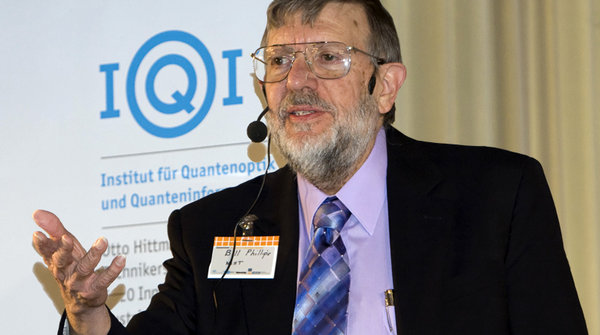
by William D. Phillips
At the beginning of the 20th century Einstein changed the way we think about Time. Near the end of the 20th century scientists learned how to cool a gas of atoms to temperatures billions of times lower than anything else in the universe. Now, in the 21st century, Einstein's thinking, and ultracold atoms, are shaping one of the key scientific and technological wonders of contemporary life: atomic clocks, the best timekeepers ever made. Such super-accurate clocks are essential to industry, commerce, and science; they are the heart of the Global Positioning System (GPS), which guides cars, airplanes, and hikers to their destinations. Today, the best primary atomic clocks use ultracold atoms, achieve accuracies better than a second in 300 million years, and are getting better all the time. Super-cold atoms, with temperatures that can be below a billionth of a degree above absolute zero, use, and allow tests of, some of Einstein's strangest predictions.
-
1
Vorlesung Donnerstag, 02. Oktober 2014
Univ.-Prof. Justus Piater, PhD
No matches for "" in this podcast's transcripts.
No topics indexed yet for this podcast.
Loading reviews...
ABOUT THIS SHOW
At the beginning of the 20th century Einstein changed the way we think about Time. Near the end of the 20th century scientists learned how to cool a gas of atoms to temperatures billions of times lower than anything else in the universe. Now, in the 21st century, Einstein's thinking, and ultracold atoms, are shaping one of the key scientific and technological wonders of contemporary life: atomic clocks, the best timekeepers ever made. Such super-accurate clocks are essential to industry, commerce, and science; they are the heart of the Global Positioning System (GPS), which guides cars, airplanes, and hikers to their destinations. Today, the best primary atomic clocks use ultracold atoms, achieve accuracies better than a second in 300 million years, and are getting better all the time. Super-cold atoms, with temperatures that can be below a billionth of a degree above absolute zero, use, and allow tests of, some of Einstein's strangest predictions.
HOSTED BY
William D. Phillips
CATEGORIES
Loading similar podcasts...
URL copied to clipboard!