
PODCAST · society
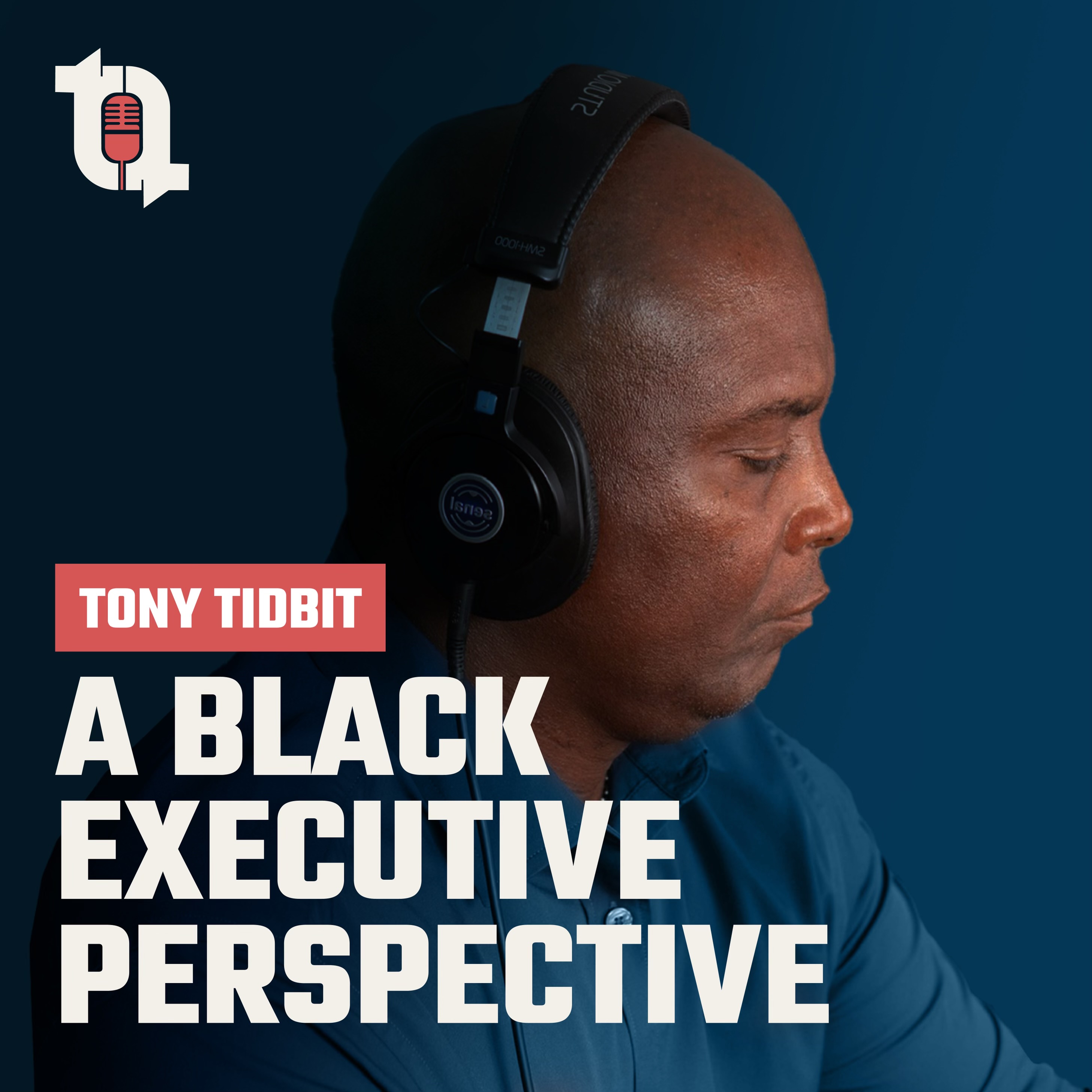
TonyTidbit: A Black Executive Perspective
by TonyTidbit ™
About the Podcast: "TonyTidbit: A Black Executive Perspective" offers a deep dive into the corporate world through the lens of diversity, equity, and inclusion. Hosted by Tony Franklin, aka Tony Tidbit, this podcast shines a light on vital conversations around race, leadership, and diversity, fostering understanding and change.https://ablackexec.comMeet Your Host: Tony Franklin has over three decades of corporate experience and provides transformative insights into diversity and inclusion, making each episode a journey of learning and empowerment.Why You Should Listen:- Diverse Perspectives: Insights from a variety of voices on challenges and triumphs in the corporate sphere.-Action-Oriented: Practical advice for advocating equity and allyship in the workplace.- Educational & Empathetic: A focus on empathy and education to drive impactful change.What to Expect: #BEPpodcast brings powerful transformations, empowering voices, addressing barriers, and delving into topics reshaping
-
300
Mixed, Black, and Done Explaining
Episode Title: Episode Audio Link: https://podcast.ablackexec.com/episode/mixed-black-and-done-explaining-Episode Video Link: Grace Fooden-Correy has heard two seemingly opposite judgments throughout her life: “She thinks she’s white” and “You don’t have to tell people you’re mixed. You look Black.”In this episode of A Mixed Executive Perspective, Grace explains how both comments placed the same burden on her: making her identity easier for other people to categorize.She explores mixed identity, Black identity, belonging, code-switching, and the pressure to manage other people’s comfort in predominantly Black and white spaces. Grace also discusses how identifying herself as mixed became a workplace and social survival strategy, and why she ultimately stopped performing her identity for acceptance.For parents raising mixed children, this episode offers an important reminder: children need honest conversations and practical language to understand how race, culture, and identity may be interpreted by others.You do not have to pick a side. You have the right to own your complete identity.▶︎ In This Episode00:00 Welcome and Introduction00:45 Two Comments, One Message01:32 “She Thinks She’s White”02:28 “You Look Black”03:12 Identity as a Safety Strategy04:22 Preparing Mixed Children05:24 The Pressure to Pick a Side07:08 Owning Your Full Identity08:34 Closing Thoughts🔗 ResourcesLinks and resources mentioned in this episode:🔔 Listen and SubscribeListen to this episode and subscribe for future updatessubscribe to A Black Executive Perspective podcast onYouTube PodcastsApple PodcastsSpotify PodcastsAmazon MusicOther platforms or by searching "TonyTidbit"if you like what we're doing and would like to support us, here's some ways you can help us continue the uncomfortable conversations that drive changesubscribe to our newslettergive us up to a 5 star review on Apple Podcastsshare an episode with a friend, family member or colleague🗣️ Follow @ablackexecfollow us across social media @aBlackExecLinkedInInstagramFacebookYouTubeTwitterTikTokWhatsApp⭐️ Follow @TonyTidbitfollow Tony across social media @TonyTidbitTwitterLinkedInFacebookThis episode was produced by TonyTidbit ™ . Copyright © 2024 A BLACK EXECUTIVE PERSPECTIVE LLC. All rights reserved. No part of this podcast may be reproduced without prior written permission. For permissions, email [email protected] .
-
299
Black Lives Lost: Who Owns the Solution? | Part 2
Episode Title: Episode Audio Link: https://podcast.ablackexec.com/episode/black-lives-lost-who-owns-the-solution-part-2-Episode Video Link: In Part 2 of Black Lives Lost, Tony Tidbit and Chris P. Reed II move beyond identifying the causes of community violence and confront the question that matters most: Who owns the solution?Using Baltimore’s historic decline in homicides as a case study, they examine how focused deterrence, credible messengers, community violence intervention, targeted enforcement, trauma care, jobs, mentoring, business investment, and measurable public accountability can work together.Tony and Chris challenge elected officials, law enforcement, educators, clergy, business leaders, families, and community members to stop relying on speeches, outrage, and blame. If Black lives truly matter, the commitment must be visible in our strategies, budgets, leadership, and daily choices before another family is forced to plan a funeral.This is an honest conversation about Black lives, responsible representation, systemic barriers, personal responsibility, community accountability, and the collective action required to reduce violence.▶︎ In This Episode00:00 Baltimore’s Historic Homicide Decline01:07 Black Lives Lost, Part 203:00 What Part 1 Left Unresolved05:00 Why We Avoid This Conversation12:52 Baltimore’s Violence-Reduction Blueprint20:00 Strategy, Transparency, and Accountability27:18 Why Policing Alone Is Not the Solution36:42 Crime Data and Political Narratives41:40 What Real Leadership Requires45:00 Families, Schools, and Community Responsibility52:00 Business Investment and Youth Opportunity59:45 Judge Leaders by Fewer Funerals61:42 Moving From Awareness to Ownership63:18 Tony’s Tidbit: Hope Is Not a Strategy64:14 Closing Thoughts and the LESS Pledge🔗 ResourcesLinks and resources mentioned in this episode:🔔 Listen and SubscribeListen to this episode and subscribe for future updatessubscribe to A Black Executive Perspective podcast onYouTube PodcastsApple PodcastsSpotify PodcastsAmazon MusicOther platforms or by searching "TonyTidbit"if you like what we're doing and would like to support us, here's some ways you can help us continue the uncomfortable conversations that drive changesubscribe to our newslettergive us up to a 5 star review on Apple Podcastsshare an episode with a friend, family member or colleague🗣️ Follow @ablackexecfollow us across social media @aBlackExecLinkedInInstagramFacebookYouTubeTwitterTikTokWhatsApp⭐️ Follow @TonyTidbitfollow Tony across social media @TonyTidbitTwitterLinkedInFacebookThis episode was produced by TonyTidbit ™ . Copyright © 2024 A BLACK EXECUTIVE PERSPECTIVE LLC. All rights reserved. No part of this podcast may be reproduced without prior written permission. For permissions, email [email protected] .
-
298
Only One Black Seat?
Episode Title: Episode Audio Link: https://podcast.ablackexec.com/episode/only-one-black-seat-Episode Video Link: Is there only room for one Black leader at the table?In this episode of BEP Live, Tony Tidbit and Chris P. Reed challenge the scarcity mindset that turns another Black professional’s promotion into evidence that fewer opportunities remain for everyone else.Through real conversations and lived executive experience, they examine tokenism, corporate politics, workplace competition, leadership insecurity, loyalty, and the expectation that Black executives must compete for opportunities that are never treated as scarce for white leaders.Tony and Chris also debate Queen Bee Syndrome, the “crabs in a barrel” metaphor, DEI rollbacks, representation versus allocation, and whether Black professionals can confront systemic barriers without letting those barriers undermine their confidence or relationships.This is an honest conversation about competing without undermining one another, controlling your attitude and work ethic, and recognizing that someone else’s success is not your failure.▶︎ In This Episode00:00 The Scarcity Mindset: There Can Only Be One07:20 The Myth of One Black Seat13:35 Performance, Relationships and Corporate Politics18:00 Loyalty, Fear and Threatened Leaders23:35 Competing Without Sabotaging Each Other31:10 Queen Bee Syndrome and Corporate Hazing35:25 Who Built the “Crabs in a Barrel” Bucket?41:45 Career Options and Escaping Scarcity43:10 Representation, Allocation and DEI Rollbacks45:20 Attitude, Work Ethic and an Abundance Mindset52:00 Corporate Cliques, Loyalty and Insecurity55:25 Someone Else’s Success Is Not Your Failure57:00 The BEP Network, LESS Pledge and Closing🔗 ResourcesLinks and resources mentioned in this episode:🔔 Listen and SubscribeListen to this episode and subscribe for future updatessubscribe to A Black Executive Perspective podcast onYouTube PodcastsApple PodcastsSpotify PodcastsAmazon MusicOther platforms or by searching "TonyTidbit"if you like what we're doing and would like to support us, here's some ways you can help us continue the uncomfortable conversations that drive changesubscribe to our newslettergive us up to a 5 star review on Apple Podcastsshare an episode with a friend, family member or colleague🗣️ Follow @ablackexecfollow us across social media @aBlackExecLinkedInInstagramFacebookYouTubeTwitterTikTokWhatsApp⭐️ Follow @TonyTidbitfollow Tony across social media @TonyTidbitTwitterLinkedInFacebookThis episode was produced by TonyTidbit ™ . Copyright © 2024 A BLACK EXECUTIVE PERSPECTIVE LLC. All rights reserved. No part of this podcast may be reproduced without prior written permission. For permissions, email [email protected] .
-
297
Black Girls Are Not Grown Women
Episode Title: Episode Audio Link: https://podcast.ablackexec.com/episode/Black Girls Are Not Grown WomenEpisode Video Link: Why do we continue blaming Black girls for the choices and misconduct of grown men?In this episode of Need to Know with Dr. Nsenga Burton, presented by A Black Executive Perspective, Dr. Burton uses the public conversation surrounding Brandy’s teenage relationship with Wanya Morris as the starting point for a larger discussion about adultification bias, victim blaming, and the sexual exploitation of Black girls.She challenges the “fast girl” stereotype, the glorification of abuse involving young boys, and the cultural hypocrisy that demands accountability in some cases while making excuses in others. Dr. Burton also connects today’s attitudes to the historical exploitation of Black girls and the policing of Black women’s bodies.This is a direct call to stop judging children through an adult lens, hold grown people accountable, and give Black children the protection, empathy, and humanity they deserve.Content Warning: This episode contains direct discussion of sexual abuse, exploitation, and the mistreatment of minors.▶︎ In This Episode00:00 Brandy’s Story and the Public Reaction01:35 The Double Standard Around Adults and Minors03:18 The “Fast” Black Girl Stereotype05:05 Adultification and Cultural Hypocrisy06:38 Why Black Girls Deserve Protection07:52 The Historical Exploitation of Black Girls09:10 Boundaries and Adult Accountability11:48 Stop Blaming Exploited Black Girls12:30 Final Takeaway🔗 ResourcesLinks and resources mentioned in this episode:🔔 Listen and SubscribeListen to this episode and subscribe for future updatessubscribe to A Black Executive Perspective podcast onYouTube PodcastsApple PodcastsSpotify PodcastsAmazon MusicOther platforms or by searching "TonyTidbit"if you like what we're doing and would like to support us, here's some ways you can help us continue the uncomfortable conversations that drive changesubscribe to our newslettergive us up to a 5 star review on Apple Podcastsshare an episode with a friend, family member or colleague🗣️ Follow @ablackexecfollow us across social media @aBlackExecLinkedInInstagramFacebookYouTubeTwitterTikTokWhatsApp⭐️ Follow @TonyTidbitfollow Tony across social media @TonyTidbitTwitterLinkedInFacebookThis episode was produced by TonyTidbit ™ . Copyright © 2024 A BLACK EXECUTIVE PERSPECTIVE LLC. All rights reserved. No part of this podcast may be reproduced without prior written permission. For permissions, email [email protected] .
-
296
Why I Chose Not to Have Children
Episode Title: Episode Audio Link: https://podcast.ablackexec.com/episode/Why I Chose Not to Have ChildrenEpisode Video Link: Grace Fooden-Correy always knew she did not want children, but the real reason had little to do with career, freedom, or ambition.In this deeply personal episode of A Mixed Executive Perspective, Grace reveals how growing up biracial shaped her decision not to become a parent. She reflects on learning how race, whiteness, wealth, and social status affected power and belonging, navigating dating across racial and cultural lines, and questioning whether she could bring a mixed child into a world that had made her feel like an outsider.Mentoring eventually forced Grace to revisit the decision and confront the truth she had allowed others to misunderstand for years.This is a raw and honest conversation about mixed identity, biracial experiences, motherhood, colorism, cultural belonging, and the deeply personal choices people often carry in silence.▶︎ In This Episode00:00 Mixed Identity and Motherhood01:00 Learning How Whiteness Shaped Power02:00 Dating Across Racial and Cultural Lines03:00 Why Career Was the Easier Explanation04:00 Revisiting the Decision Through Mentoring05:00 You Belong🔗 ResourcesLinks and resources mentioned in this episode:🔔 Listen and SubscribeListen to this episode and subscribe for future updatessubscribe to A Black Executive Perspective podcast onYouTube PodcastsApple PodcastsSpotify PodcastsAmazon MusicOther platforms or by searching "TonyTidbit"if you like what we're doing and would like to support us, here's some ways you can help us continue the uncomfortable conversations that drive changesubscribe to our newslettergive us up to a 5 star review on Apple Podcastsshare an episode with a friend, family member or colleague🗣️ Follow @ablackexecfollow us across social media @aBlackExecLinkedInInstagramFacebookYouTubeTwitterTikTokWhatsApp⭐️ Follow @TonyTidbitfollow Tony across social media @TonyTidbitTwitterLinkedInFacebookThis episode was produced by TonyTidbit ™ . Copyright © 2024 A BLACK EXECUTIVE PERSPECTIVE LLC. All rights reserved. No part of this podcast may be reproduced without prior written permission. For permissions, email [email protected] .
-
295
Black Lives Lost: Who’s Failing Black Men? | Part 1
Episode Title: Episode Audio Link: https://podcast.ablackexec.com/episode/Black Lives Lost: Who’s Failing Black Men? Part 1Episode Video Link: Black men are dying at a rate America cannot explain away.Although America’s national murder rate is declining, Black men and Black youth continue to experience a devastatingly disproportionate share of homicide. Why does this crisis remain so concentrated, and who must be held responsible?In Part One of Black Lives Lost, Tony Tidbit and Chris P. Reed have an unfiltered conversation about community violence, systemic racism, economic inequality, access to guns, family responsibility, personal choices, policing, opportunity, and community accountability.They challenge the politically weaponized phrase “Black-on-Black crime” and examine evidence from predominantly Black communities where higher incomes, lower poverty, and greater homeownership correspond with dramatically lower homicide rates.But they do not use systemic barriers to erase individual responsibility. Tony and Chris confront the difficult question of whether families, churches, schools, elected officials, business leaders, and community members are doing enough to protect Black lives before another family is forced to plan a funeral.This is the kind of real conversation that defines A Black Executive Perspective: honest, grounded, and unwilling to trade truth for comfort.▶︎ In This Episode00:00 Black men and America’s homicide crisis01:10 The conversation America keeps avoiding07:05 Mothers confront the human cost of violence11:05 Murder is falling, but the danger remains concentrated15:15 Economics versus personal responsibility20:55 Debunking the myth that Blackness produces violence29:50 How “Black-on-Black crime” becomes a political weapon38:15 When one person’s actions stain an entire community41:45 Family responsibility, environment, and gun access57:00 Barack Obama’s message about accountability01:01:10 Loving Black people enough to tell the whole truthSubscribe to A Black Executive Perspective on Apple Podcasts, Spotify, YouTube, or wherever you listen to podcasts. Visit https://ablackexec.com for more real conversations about race, culture, leadership, power, politics, and community accountability.🔗 ResourcesLinks and resources mentioned in this episode:🔔 Listen and SubscribeListen to this episode and subscribe for future updatessubscribe to A Black Executive Perspective podcast onYouTube PodcastsApple PodcastsSpotify PodcastsAmazon MusicOther platforms or by searching "TonyTidbit"if you like what we're doing and would like to support us, here's some ways you can help us continue the uncomfortable conversations that drive changesubscribe to our newslettergive us up to a 5 star review on Apple Podcastsshare an episode with a friend, family member or colleague🗣️ Follow @ablackexecfollow us across social media @aBlackExecLinkedInInstagramFacebookYouTubeTwitterTikTokWhatsApp⭐️ Follow @TonyTidbitfollow Tony across social media @TonyTidbitTwitterLinkedInFacebookThis episode was produced by TonyTidbit ™ . Copyright © 2024 A BLACK EXECUTIVE PERSPECTIVE LLC. All rights reserved. No part of this podcast may be reproduced without prior written permission. For permissions, email [email protected] .
-
294
Did Tuskegee’s Dress Code Go Too Far?
Episode Title: Episode Audio Link: https://podcast.ablackexec.com/episode/did-tuskegees-dress-code-go-too-far-Episode Video Link: Tuskegee University’s decision to prohibit bonnets, durags, bedroom shoes, and other casual attire in classrooms and professional campus settings has ignited a larger conversation about Black culture, career preparation, and respectability politics.In this episode of BEP Live, Chris P. Reed and Tony Tidbit are joined by Felicia Smith and Sina Banks to examine whether the policy prepares Black students for Corporate America or reinforces the unequal standards Black professionals already face.The panel discusses workplace bias, self-expression, first impressions, professional expectations, first-generation college students, and HBCUs' responsibility to prepare graduates for the realities of the workplace.Is learning how to navigate the system surrendering to it, or is it giving Black students another tool for success?▶︎ In This Episode00:00 Welcome to BEP Live and Meet the Guests05:43 Tuskegee’s New Dress Code Sparks Debate09:12 Professional Preparation or University Overreach?17:03 The Double Standard Facing Black Professionals25:25 Who Gets to Define Professionalism?31:10 First-Generation Students and Career Readiness38:15 Respectability Politics and Workplace Reality40:00 Why the Bonnet and Durag Backlash Exploded48:02 Will More Colleges Adopt Dress Codes?51:45 Black Fashion, Cultural Expression, and Dressing for the Occasion🔗 ResourcesLinks and resources mentioned in this episode:🔔 Listen and SubscribeListen to this episode and subscribe for future updatessubscribe to A Black Executive Perspective podcast onYouTube PodcastsApple PodcastsSpotify PodcastsAmazon MusicOther platforms or by searching "TonyTidbit"if you like what we're doing and would like to support us, here's some ways you can help us continue the uncomfortable conversations that drive changesubscribe to our newslettergive us up to a 5 star review on Apple Podcastsshare an episode with a friend, family member or colleague🗣️ Follow @ablackexecfollow us across social media @aBlackExecLinkedInInstagramFacebookYouTubeTwitterTikTokWhatsApp⭐️ Follow @TonyTidbitfollow Tony across social media @TonyTidbitTwitterLinkedInFacebookThis episode was produced by TonyTidbit ™ . Copyright © 2024 A BLACK EXECUTIVE PERSPECTIVE LLC. All rights reserved. No part of this podcast may be reproduced without prior written permission. For permissions, email [email protected] .
-
293
Why Are Black Women Still Fighting to Survive?
Episode Title: Episode Audio Link: https://podcast.ablackexec.com/episode/Why Are Black Women Still Fighting to Survive?Episode Video Link: Black women are confronting serious threats to their health, reproductive freedom, employment, and economic security.In this episode of Need to Know, Dr. Nsenga Burton examines the case of Adriana Smith and what it reveals about Black maternal mortality, bodily autonomy, government intervention, healthcare costs, and the burdens placed on Black families.Dr. Burton also addresses unemployment among Black women, political rollbacks, meaningful self-care, strategic voting, economic boycotts, and the importance of supporting Black-owned and women-owned businesses.This is a direct call for Black families and communities to establish their own priorities, protect their resources, and pay attention to the stories mainstream media leaves behind.▶︎ In This Episode00:00 Why 2026 Demands Our Attention01:03 The Adriana Smith Case02:08 Black Maternal Mortality and Healthcare Costs03:03 Reproductive Rights and Government Control04:56 Black Women, Unemployment, and Real Self-Care06:04 Setting Priorities for Black Families and Communities07:51 Economic Power, Boycotts, and Real Allyship08:39 Black Women Deserve Better🔗 ResourcesLinks and resources mentioned in this episode:🔔 Listen and SubscribeListen to this episode and subscribe for future updatessubscribe to A Black Executive Perspective podcast onYouTube PodcastsApple PodcastsSpotify PodcastsAmazon MusicOther platforms or by searching "TonyTidbit"if you like what we're doing and would like to support us, here's some ways you can help us continue the uncomfortable conversations that drive changesubscribe to our newslettergive us up to a 5 star review on Apple Podcastsshare an episode with a friend, family member or colleague🗣️ Follow @ablackexecfollow us across social media @aBlackExecLinkedInInstagramFacebookYouTubeTwitterTikTokWhatsApp⭐️ Follow @TonyTidbitfollow Tony across social media @TonyTidbitTwitterLinkedInFacebookThis episode was produced by TonyTidbit ™ . Copyright © 2024 A BLACK EXECUTIVE PERSPECTIVE LLC. All rights reserved. No part of this podcast may be reproduced without prior written permission. For permissions, email [email protected] .
-
292
Why Corporate America Keeps Burning Out Black Women Leaders
Episode Title: Episode Audio Link: https://podcast.ablackexec.com/episode/why-corporate-america-keeps-burning-out-black-women-leaders-Episode Video Link: Black women are praised for being strong, but that praise often becomes an excuse to place more work, responsibility, and emotional pressure on their shoulders.Tony Tidbit and Chris P. Reed sit down with Ebonie Grover, founder of Love You Like a Sister, for an honest conversation about the invisible load Black women carry inside corporate America.Ebonie examines the superwoman expectation, emotional taxation, workplace burnout, unequal standards, and why boundaries are frequently mistaken for anger or disengagement. She also explains why hard work is not enough to secure advancement, the difference between mentorship and sponsorship, and why Black women must build strategic relationships, document their accomplishments, and advocate for themselves.The conversation challenges organizations to acknowledge workplace bias, conduct meaningful stay interviews, invest in culturally relevant leadership development, and create environments where Black women can lead authentically without sacrificing their wellbeing.Black women should not have to earn leadership by breaking themselves. Sustainable leadership is not weakness. It is a strategy.▶︎ In This Episode00:00 The Invisible Load Black Women Carry02:00 Ebonie Grover’s Career and Mission06:00 The Superwoman Expectation12:00 Recognition, Promotion, and Workplace Bias18:00 Burnout, Boundaries, and Misperceptions26:00 Emotional Taxation in the Workplace31:00 Safe Spaces and Support for Black Women40:00 The Power of Career Sponsorship52:00 Wellness, Authenticity, and Sustainable Leadership🔗 ResourcesLinks and resources mentioned in this episode:🔔 Listen and SubscribeListen to this episode and subscribe for future updatessubscribe to A Black Executive Perspective podcast onYouTube PodcastsApple PodcastsSpotify PodcastsAmazon MusicOther platforms or by searching "TonyTidbit"if you like what we're doing and would like to support us, here's some ways you can help us continue the uncomfortable conversations that drive changesubscribe to our newslettergive us up to a 5 star review on Apple Podcastsshare an episode with a friend, family member or colleague🗣️ Follow @ablackexecfollow us across social media @aBlackExecLinkedInInstagramFacebookYouTubeTwitterTikTokWhatsApp⭐️ Follow @TonyTidbitfollow Tony across social media @TonyTidbitTwitterLinkedInFacebookThis episode was produced by TonyTidbit ™ . Copyright © 2024 A BLACK EXECUTIVE PERSPECTIVE LLC. All rights reserved. No part of this podcast may be reproduced without prior written permission. For permissions, email [email protected] .
-
291
They Banned Our Drums. Black Ingenuity Refused to Die
Episode Title: Episode Audio Link: https://podcast.ablackexec.com/episode/they-banned-our-drums-black-ingenuity-refused-to-die-Episode Video Link: Black ingenuity is more than invention. It is the intelligence found in our relationships, cultural memory, creativity, rhythm, resistance, and ability to build community when established systems fail us.Dr. Kim McLear joins Tony Tidbit and Chris P. Reed to explore Afrofuturism as a civic practice and challenge society’s narrow definition of intelligence. Drawing from her experiences as a retired U.S. Coast Guard officer, educator, engineer, artist, and first-generation American with roots in Trinidad and Tobago, Dr. Kim explains why our humanity must remain at the center of progress.The conversation examines the growing tension between technology and human connection, America’s literacy crisis, the loss of community relationships, and why productive conflict is necessary for growth.Dr. Kim also reveals how colonizers banned African drums in Trinidad because rhythm created solidarity. Black communities responded with bamboo and discarded metal, ultimately helping create the steelpan. They could outlaw the instrument, but they could not erase the rhythm.This episode is a powerful reminder that Black people are not merely consumers of the future. We are architects of it.▶︎ In This Episode00:00 Blackness Is More Than What People See02:42 Meet Dr. Kim McLear07:12 Public Service, Creativity, and Practicing Courage11:44 A Racial Awakening and the History Schools Leave Out19:52 Black Ingenuity Is Civic Intelligence28:06 Who Gets to Define Intelligence?34:08 Can We Embrace the Future Without Losing Our Roots?44:26 Literacy, Misinformation, and Civic Power49:27 Rebuilding Relationships and Restoring the Village57:00 Why Colonizers Banned African Drums01:07:03 Belonging and Resistance in Fascist Times01:12:22 Tony’s Tidbit: Imagination Is a Leadership Tool🔗 ResourcesLinks and resources mentioned in this episode:🔔 Listen and SubscribeListen to this episode and subscribe for future updatessubscribe to A Black Executive Perspective podcast onYouTube PodcastsApple PodcastsSpotify PodcastsAmazon MusicOther platforms or by searching "TonyTidbit"if you like what we're doing and would like to support us, here's some ways you can help us continue the uncomfortable conversations that drive changesubscribe to our newslettergive us up to a 5 star review on Apple Podcastsshare an episode with a friend, family member or colleague🗣️ Follow @ablackexecfollow us across social media @aBlackExecLinkedInInstagramFacebookYouTubeTwitterTikTokWhatsApp⭐️ Follow @TonyTidbitfollow Tony across social media @TonyTidbitTwitterLinkedInFacebookThis episode was produced by TonyTidbit ™ . Copyright © 2024 A BLACK EXECUTIVE PERSPECTIVE LLC. All rights reserved. No part of this podcast may be reproduced without prior written permission. For permissions, email [email protected] .
-
290
Is Selective Outrage Sabotaging Black Progress?
Episode Title: Episode Audio Link: https://podcast.ablackexec.com/episode/is-selective-outrage-sabotaging-black-progress-Episode Video Link: Is selective outrage creating real progress, or dividing the Black community?Chris P. Reed and Felicia Smith confront the complicated reality of modern Black activism through the Target boycott, economic power, community accountability, and the difference between symbolic protest and systemic change.They examine whether national boycotts can succeed without clear goals, how Black-owned businesses can become unintended casualties, and why shaming people for not participating may do more damage than good.The conversation also explores generational resilience, local organizing, flawed movement leaders, social media influence, and the importance of supporting meaningful action, even when everyone’s contribution looks different.▶︎ In This Episode00:00 Welcome to BEP Live01:45 Is Selective Outrage Helping Black America?07:02 Rejection, Resilience, and the Next Generation19:12 The Target Boycott Dilemma25:43 What Does a Successful Boycott Look Like?35:39 Local Victories Versus Nationwide Movements41:19 Symbolic Victories or Systemic Change?49:34 Social Media, Influence, and Critical Thinking53:25 Stop Shaming and Start Supporting57:06 The Climb and Final Takeaways🔗 ResourcesLinks and resources mentioned in this episode:🔔 Listen and SubscribeListen to this episode and subscribe for future updatessubscribe to A Black Executive Perspective podcast onYouTube PodcastsApple PodcastsSpotify PodcastsAmazon MusicOther platforms or by searching "TonyTidbit"if you like what we're doing and would like to support us, here's some ways you can help us continue the uncomfortable conversations that drive changesubscribe to our newslettergive us up to a 5 star review on Apple Podcastsshare an episode with a friend, family member or colleague🗣️ Follow @ablackexecfollow us across social media @aBlackExecLinkedInInstagramFacebookYouTubeTwitterTikTokWhatsApp⭐️ Follow @TonyTidbitfollow Tony across social media @TonyTidbitTwitterLinkedInFacebookThis episode was produced by TonyTidbit ™ . Copyright © 2024 A BLACK EXECUTIVE PERSPECTIVE LLC. All rights reserved. No part of this podcast may be reproduced without prior written permission. For permissions, email [email protected] .
-
289
Trump’s Behavior Could Get You Fired
Episode Title: Episode Audio Link: https://podcast.ablackexec.com/episode/Trump’s Behavior Could Get You FiredEpisode Video Link: Donald Trump may be able to insult journalists, ignore protocol, and escape workplace consequences—but you probably cannot.In this episode of Need to Know, Dr. Nsenga Burton delivers a candid warning about privilege, professionalism, and abusive leadership. She examines Trump’s treatment of women journalists, particularly Black women and other women of color, and explains why remaining silent allows toxic behavior to spread.Dr. Burton also challenges professionals not to imitate conduct that could destroy their credibility, damage workplace relationships, or cost them their jobs. Power may delay accountability, but it does not erase the consequences of how a leader treats people.▶︎ In This Episode00:00 Why Decorum Still Matters01:05 Trump’s Treatment of Women Journalists02:35 How Silence Enables Abusive Leadership04:10 When Misconduct Destroys Credibility05:35 Workplace Complicity and Consequences07:17 Don’t Copy Behavior That Could Get You Fired09:05 Protect Your Professional Standards🔗 ResourcesLinks and resources mentioned in this episode:🔔 Listen and SubscribeListen to this episode and subscribe for future updatessubscribe to A Black Executive Perspective podcast onYouTube PodcastsApple PodcastsSpotify PodcastsAmazon MusicOther platforms or by searching "TonyTidbit"if you like what we're doing and would like to support us, here's some ways you can help us continue the uncomfortable conversations that drive changesubscribe to our newslettergive us up to a 5 star review on Apple Podcastsshare an episode with a friend, family member or colleague🗣️ Follow @ablackexecfollow us across social media @aBlackExecLinkedInInstagramFacebookYouTubeTwitterTikTokWhatsApp⭐️ Follow @TonyTidbitfollow Tony across social media @TonyTidbitTwitterLinkedInFacebookThis episode was produced by TonyTidbit ™ . Copyright © 2024 A BLACK EXECUTIVE PERSPECTIVE LLC. All rights reserved. No part of this podcast may be reproduced without prior written permission. For permissions, email [email protected] .
-
288
No Internet, No Opportunity: America’s Digital Divide Exposed.
Episode Title: Episode Audio Link: https://podcast.ablackexec.com/episode/no-internet-no-opportunity-americas-digital-divide-exposed-Episode Video Link: Reliable internet access can determine whether someone receives an education, applies for a job, connects with a doctor, launches a business, or reaches emergency services. So why are millions of Americans still being left behind?Tony Tidbit speaks with Al Adjahoe, founder and CEO of Culture Wireless Group, about the widening digital divide and its impact on underserved Black communities in urban and rural areas.Al explains why broadband must be treated as essential infrastructure and how community-centered connectivity can create local employment, entrepreneurship, economic mobility, and long-term ownership. He also introduces Aurora360, a model designed to deliver secure and seamless connectivity throughout entire communities.This conversation examines digital equity, Black leadership in technology, community ownership, and what becomes possible when people stop waiting for someone else to solve the problem.WHAT YOU’LL LEARN• How unreliable internet access affects everyday survival and opportunity• Why economics continues to prevent broadband expansion into underserved communities• How Culture Wireless Group is building community-centered connectivity solutions• Why Black ownership and collaboration can reshape the telecommunications industry▶︎ In This Episode00:00 The Digital Divide Hiding in Plain Sight01:13 Meet Al Adjahoe of Culture Wireless Group04:20 From Military Service to Telecommunications Leadership09:08 What Is the Digital Divide?12:00 Why Millions Still Lack Reliable Internet20:40 The Real Cost of Being Disconnected26:05 The Birth of Culture Wireless Group35:25 Aurora360 and Community-Wide Connectivity45:00 Black Representation, Ownership, and Technology50:20 Destination Crenshaw and the Global Vision1:00:45 Tony’s Tidbit and the L.E.S.S. Call to ActionFollow, rate, review, and share A Black Executive Perspective.Embrace L.E.S.S. to eliminate all forms of discrimination.Learn. Empathy. Share. Stop.🔗 ResourcesLinks and resources mentioned in this episode:🔔 Listen and SubscribeListen to this episode and subscribe for future updatessubscribe to A Black Executive Perspective podcast onYouTube PodcastsApple PodcastsSpotify PodcastsAmazon MusicOther platforms or by searching "TonyTidbit"if you like what we're doing and would like to support us, here's some ways you can help us continue the uncomfortable conversations that drive changesubscribe to our newslettergive us up to a 5 star review on Apple Podcastsshare an episode with a friend, family member or colleague🗣️ Follow @ablackexecfollow us across social media @aBlackExecLinkedInInstagramFacebookYouTubeTwitterTikTokWhatsApp⭐️ Follow @TonyTidbitfollow Tony across social media @TonyTidbitTwitterLinkedInFacebookThis episode was produced by TonyTidbit ™ . Copyright © 2024 A BLACK EXECUTIVE PERSPECTIVE LLC. All rights reserved. No part of this podcast may be reproduced without prior written permission. For permissions, email [email protected] .
-
287
ICE Threats and the Attack on Workplace Accountability
Episode Title: Episode Audio Link: https://podcast.ablackexec.com/episode/ice-threats-and-the-attack-on-workplace-accountability-Episode Video Link: Who gets to count as American, and who gets held accountable when discrimination occurs?In this episode of BEP Live from A Black Executive Perspective, Tony Tidbit connects two troubling stories involving identity, power, and accountability.First, a United Airlines employee allegedly threatened a Mexican American citizen with ICE after he challenged her refusal to assist his family. Tony examines how a customer service failure escalated into an alleged racial threat, why no one appeared willing to intervene, and how workplace culture can empower repeated misconduct.Then, Tony discusses the EEOC proposal to eliminate longstanding workforce demographic reporting requirements. Without data tracking race, ethnicity, sex, and job categories, will discrimination in hiring, promotions, and compensation become harder to uncover and prove?This provocative conversation examines systemic racism, workplace equity, AI hiring bias, corporate accountability, and the danger of claiming society is “colorblind” while removing the tools used to measure unequal outcomes.Because data does not create discrimination. Data exposes it.▶︎ In This Episode00:00 Who Counts as American? 03:00 United Airlines ICE Threat Incident 05:18 Customer Service and Abuse of Power 10:00 Weaponizing ICE Against a Citizen 16:00 Corporate Culture and Accountability 28:00 EEOC Workforce Reporting Proposal 30:00 AI Hiring, Pay Equity, and Disparate Impact 38:00 The “Colorblind” Enforcement Contradiction 42:00 Why Workplace Data Matters 48:25 Identity, Discrimination, and Accountability🔗 ResourcesLinks and resources mentioned in this episode:🔔 Listen and SubscribeListen to this episode and subscribe for future updatessubscribe to A Black Executive Perspective podcast onYouTube PodcastsApple PodcastsSpotify PodcastsAmazon MusicOther platforms or by searching "TonyTidbit"if you like what we're doing and would like to support us, here's some ways you can help us continue the uncomfortable conversations that drive changesubscribe to our newslettergive us up to a 5 star review on Apple Podcastsshare an episode with a friend, family member or colleague🗣️ Follow @ablackexecfollow us across social media @aBlackExecLinkedInInstagramFacebookYouTubeTwitterTikTokWhatsApp⭐️ Follow @TonyTidbitfollow Tony across social media @TonyTidbitTwitterLinkedInFacebookThis episode was produced by TonyTidbit ™ . Copyright © 2024 A BLACK EXECUTIVE PERSPECTIVE LLC. All rights reserved. No part of this podcast may be reproduced without prior written permission. For permissions, email [email protected] .
-
286
Why America Keeps Erasing Black Soldiers From History
Episode Title: Episode Audio Link: https://podcast.ablackexec.com/episode/why-america-keeps-erasing-black-soldiers-from-history-Episode Video Link: Black soldiers have defended America throughout its history, even while America denied them full citizenship, equal treatment, and recognition. Why have so many of their sacrifices been erased from the stories the country tells about itself?Tony Tidbit and Chris P. Reed sit down with veteran journalist and author Stephen A. Holmes, whose distinguished career includes nearly 50 years covering race, politics, history, and American institutions for CNN, The New York Times, and The Washington Post.Stephen discusses his historical novel, Black Messiahs, inspired by the true story of a young Jewish Holocaust survivor rescued by a Black tank battalion during World War II.He explains how he uses a “spine of truth” to combine documented history with fictional characters and emotionally powerful storytelling. The conversation explores the sacrifices of Black soldiers and their families, the shared struggle against racism and antisemitism, the myth of a colorblind society, and the continuing effort to remove Black history from America’s national narrative.Stephen also shares how he entered an entirely new creative chapter after turning 70. He reveals how consistency helped him defeat self-doubt, build creative momentum, complete his first novel, and transform the responsibility of promoting his book into running a small business.This episode is about more than war or forgotten history. It is about courage, empathy, discipline, reinvention, and the responsibility to recover stories that were pushed into silence.Because it is never too late to begin again, tell the truth, or complete the assignment still living inside you.▶︎ In This Episode00:00 The Black Military History America Erased02:00 Meet Journalist and Author Stephen A. Holmes07:20 From Award-Winning Journalism to Historical Fiction12:50 The True Story Behind Black Messiahs20:10 Fighting for a Country That Denied Black Citizenship29:10 Using Storytelling to Bring Forgotten History to Life32:00 Connecting Black Soldiers and Jewish Holocaust Survivors40:10 Reinventing Yourself and Defeating Self-Doubt After 7049:20 What Stephen Wants Readers to Learn1:03:10 Tony’s Tidbit: The Assignment Is Not Finished🔗 ResourcesLinks and resources mentioned in this episode:🔔 Listen and SubscribeListen to this episode and subscribe for future updatessubscribe to A Black Executive Perspective podcast onYouTube PodcastsApple PodcastsSpotify PodcastsAmazon MusicOther platforms or by searching "TonyTidbit"if you like what we're doing and would like to support us, here's some ways you can help us continue the uncomfortable conversations that drive changesubscribe to our newslettergive us up to a 5 star review on Apple Podcastsshare an episode with a friend, family member or colleague🗣️ Follow @ablackexecfollow us across social media @aBlackExecLinkedInInstagramFacebookYouTubeTwitterTikTokWhatsApp⭐️ Follow @TonyTidbitfollow Tony across social media @TonyTidbitTwitterLinkedInFacebookThis episode was produced by TonyTidbit ™ . Copyright © 2024 A BLACK EXECUTIVE PERSPECTIVE LLC. All rights reserved. No part of this podcast may be reproduced without prior written permission. For permissions, email [email protected] .
-
285
Should Black Kids Trust White Friends?
Episode Title: Episode Audio Link: https://podcast.ablackexec.com/episode/should-black-kids-trust-white-friends-Episode Video Link: Should Black parents warn their children about being the only Black person in a predominantly white environment?In this episode of BEP Live, Chris P. Reed and his guest debate how parents should balance cultural identity, safety, friendship, education, opportunity, and exposure to different communities. They challenge viral reactions suggesting that Black children should avoid white friends while also acknowledging the historical realities that require Black families to remain vigilant.The conversation examines victim shaming, parental responsibility, diverse schools, racial stereotypes, media sensationalism, the Black tax, and the limits of what even good parents can control.This episode of the award-winning A Black Executive Perspective delivers a real conversation about power, politics, culture, community accountability, and raising children who are informed by history but not controlled by fear.▶︎ In This Episode00:00 Welcome to BEP Live01:42 The Tragedy and the Limits of Speculation04:34 Viral Commentary, Race, and Victim Shaming07:12 Should Black Children Avoid Being the “Only One”?11:05 Education, Safety, and Opportunity15:40 Does Diversity Build Better Leaders?20:00 Culture, Community, and Supporting Black Businesses24:22 Critical Thinking and Home Training28:20 When Every Story Becomes About Race31:05 Safety, Risk, and the “Anomaly” Debate34:02 Parenting, Trust, and Letting Children Grow41:02 Good Parents Cannot Control Every Outcome45:12 “Stop Hanging Around White People?”51:18 Media Narratives, the Black Tax, and Who Controls the Story58:22 Final Takeaways and the LESS Pledge🔗 ResourcesLinks and resources mentioned in this episode:🔔 Listen and SubscribeListen to this episode and subscribe for future updatessubscribe to A Black Executive Perspective podcast onYouTube PodcastsApple PodcastsSpotify PodcastsAmazon MusicOther platforms or by searching "TonyTidbit"if you like what we're doing and would like to support us, here's some ways you can help us continue the uncomfortable conversations that drive changesubscribe to our newslettergive us up to a 5 star review on Apple Podcastsshare an episode with a friend, family member or colleague🗣️ Follow @ablackexecfollow us across social media @aBlackExecLinkedInInstagramFacebookYouTubeTwitterTikTokWhatsApp⭐️ Follow @TonyTidbitfollow Tony across social media @TonyTidbitTwitterLinkedInFacebookThis episode was produced by TonyTidbit ™ . Copyright © 2024 A BLACK EXECUTIVE PERSPECTIVE LLC. All rights reserved. No part of this podcast may be reproduced without prior written permission. For permissions, email [email protected] .
-
284
AI Needs You More Than You Need It
Episode Title: Episode Audio Link: https://podcast.ablackexec.com/episode/ai-needs-you-more-than-you-need-itEpisode Video Link: Artificial intelligence can generate answers in seconds, but that does not mean those answers are accurate, unbiased, or complete.In this episode of Need to Know with Dr. Nsenga Burton, Dr. Burton examines the dangers of placing unquestioned trust in AI. She explains that artificial intelligence learns from human-created information, which means it can reproduce misinformation, systemic bias, historical erasure, and the perspectives of those who have traditionally controlled society’s dominant narratives.These limitations are especially serious when AI provides information about Black people, women, LGBTQIA+ communities, and other historically disenfranchised populations whose contributions and experiences have often been excluded from the historical record.Dr. Burton encourages listeners to use AI as a tool, not an authority. Verify information, conduct independent research, think critically, and report inaccurate information when technology gets your history or someone else’s legacy wrong.The robots are studying us. Without human knowledge, experiences, and creativity, artificial intelligence has nothing to imitate.The message is clear: You do not need AI nearly as much as AI needs you.▶︎ In This Episode00:00 AI Is Wrong More Than You Think01:09 AI Learns from Us02:18 Bias Against Marginalized Communities03:28 Misinformation and the Grand Narrative04:55 Anti-Intellectualism and Hidden History06:02 Use Your Brain and Correct the Record07:17 AI Needs You More Than You Need It🔗 ResourcesLinks and resources mentioned in this episode:🔔 Listen and SubscribeListen to this episode and subscribe for future updatessubscribe to A Black Executive Perspective podcast onYouTube PodcastsApple PodcastsSpotify PodcastsAmazon MusicOther platforms or by searching "TonyTidbit"if you like what we're doing and would like to support us, here's some ways you can help us continue the uncomfortable conversations that drive changesubscribe to our newslettergive us up to a 5 star review on Apple Podcastsshare an episode with a friend, family member or colleague🗣️ Follow @ablackexecfollow us across social media @aBlackExecLinkedInInstagramFacebookYouTubeTwitterTikTokWhatsApp⭐️ Follow @TonyTidbitfollow Tony across social media @TonyTidbitTwitterLinkedInFacebookThis episode was produced by TonyTidbit ™ . Copyright © 2024 A BLACK EXECUTIVE PERSPECTIVE LLC. All rights reserved. No part of this podcast may be reproduced without prior written permission. For permissions, email [email protected] .
-
283
Can Community Power Break Mass Incarceration?
Episode Title: Episode Audio Link: https://podcast.ablackexec.com/episode/can-community-power-break-mass-incarceration-Episode Video Link: Can community power succeed where the criminal justice system has failed?Tony Tidbit and Chris P. Reed sit down with Thena Robinson Mock, Vice President of Programs at the Public Welfare Foundation, for a powerful conversation about mass incarceration, criminal justice reform, youth justice, systemic racism, grassroots leadership, and coalition building.Thena explains how the Public Welfare Foundation supports community-based organizations working to reduce incarceration, protect young people, develop alternatives to punitive systems, and place directly impacted people at the center of justice reform.The conversation explores why incarceration has become deeply connected to economics, employment, politics, and public policy. Thena discusses how prisons can become financial engines for communities, how dehumanizing narratives influence punishment, and why reform requires more than changing individual laws.She also shares lessons from the Igniting Futures youth justice initiative, including the different challenges facing coalitions in Tennessee and Michigan. While one coalition must defend against increasingly punitive policies, another is helping communities implement reforms that have already been approved.WHAT YOU WILL LEARN• How community-based organizations are challenging mass incarceration• Why directly impacted people must help lead criminal justice reform• How youth justice strategies differ across states and political environments• Why collective leadership, resilience, and community care are essential to lasting change▶︎ In This Episode00:00 The Crisis of Mass Incarceration01:00 Meet Thena Robinson Mock06:15 The Public Welfare Foundation’s Justice Mission13:35 Grassroots Funding and Coalition Power20:25 Local Action and Youth Justice Narratives25:00 Reform Coalitions in Tennessee and Michigan28:15 Prisons, Profit, Racism, and Root Causes35:20 Staying in the Fight When Progress Is Reversed39:45 Justice Wins and the Power of Lived Experience45:10 Can People Power Transform the System?49:00 Black Women, Leadership, and Protecting Your Purpose52:30 How to Support Community Justice Reform56:30 Tony’s Tidbit and the LESS Call to Action🔗 ResourcesLinks and resources mentioned in this episode:🔔 Listen and SubscribeListen to this episode and subscribe for future updatessubscribe to A Black Executive Perspective podcast onYouTube PodcastsApple PodcastsSpotify PodcastsAmazon MusicOther platforms or by searching "TonyTidbit"if you like what we're doing and would like to support us, here's some ways you can help us continue the uncomfortable conversations that drive changesubscribe to our newslettergive us up to a 5 star review on Apple Podcastsshare an episode with a friend, family member or colleague🗣️ Follow @ablackexecfollow us across social media @aBlackExecLinkedInInstagramFacebookYouTubeTwitterTikTokWhatsApp⭐️ Follow @TonyTidbitfollow Tony across social media @TonyTidbitTwitterLinkedInFacebookThis episode was produced by TonyTidbit ™ . Copyright © 2024 A BLACK EXECUTIVE PERSPECTIVE LLC. All rights reserved. No part of this podcast may be reproduced without prior written permission. For permissions, email [email protected] .
-
282
Are You Being Informed or Manipulated?
Episode Title: Episode Audio Link: https://podcast.ablackexec.com/episode/are-you-being-informed-or-manipulated-Episode Video Link: In this episode of Need to Know with Dr. Nsenga Burton, presented by A Black Executive Perspective, Dr. Burton explains the difference between misinformation and disinformation, and why both have serious consequences.Misinformation can be accidental, but it can still mislead people. Disinformation is different. It is intentional, organized, and often designed to harm reputations, shift public opinion, or manipulate how people understand events.Dr. Burton connects this issue to politics, media soundbites, AI, deepfakes, and the public conversation surrounding Jordan Chiles and the Olympics. Her message is clear: before we repeat, repost, or react, we need to practice discernment.This episode is about truth, accountability, media literacy, and learning how not to be manipulated by narratives designed to divide, distract, or deceive.▶︎ In This Episode00:00 – Introduction00:32 – Misinformation vs. disinformation01:17 – When wrong information spreads02:03 – Why soundbites can mislead02:45 – Intentional disinformation campaigns03:45 – Jordan Chiles and harmful narratives06:28 – AI, deepfakes, and manipulated messaging07:41 – Final reminder: practice discernment🔗 ResourcesLinks and resources mentioned in this episode:🔔 Listen and SubscribeListen to this episode and subscribe for future updatessubscribe to A Black Executive Perspective podcast onYouTube PodcastsApple PodcastsSpotify PodcastsAmazon MusicOther platforms or by searching "TonyTidbit"if you like what we're doing and would like to support us, here's some ways you can help us continue the uncomfortable conversations that drive changesubscribe to our newslettergive us up to a 5 star review on Apple Podcastsshare an episode with a friend, family member or colleague🗣️ Follow @ablackexecfollow us across social media @aBlackExecLinkedInInstagramFacebookYouTubeTwitterTikTokWhatsApp⭐️ Follow @TonyTidbitfollow Tony across social media @TonyTidbitTwitterLinkedInFacebookThis episode was produced by TonyTidbit ™ . Copyright © 2024 A BLACK EXECUTIVE PERSPECTIVE LLC. All rights reserved. No part of this podcast may be reproduced without prior written permission. For permissions, email [email protected] .
-
281
Will You Die with Your Gifts Still Inside?
Episode Title: Episode Audio Link: https://podcast.ablackexec.com/episode/will-you-die-with-your-gifts-still-inside-Episode Video Link: In this episode of A Black Executive Perspective, Christina Kenney, known as MC Inhergy, shares a raw and powerful story about recovery, identity, faith, family expectations, entrepreneurship, and the courage to become fully yourself.After heartbreak, job loss, alcoholism, homelessness, and the pressure of living according to other people’s rules, Christina made a decision to stop shrinking. Her journey led her through sobriety, self-reflection, hard family boundaries, creative rebirth, and the creation of MC Inhergy, a high-energy force redefining what it means to lead with joy, purpose, and authenticity.This conversation is for anyone who has ever asked, “Is this all there is?” It is a reminder that faith requires action, healing requires honesty, and purpose requires the courage to use what is already inside you.What You’ll LearnHow to separate who you are from who your family, culture, relationships, or institutions told you to be.Why personal healing is foundational to sustainable leadership, entrepreneurship, and creative success.How to turn faith into stewardship, discipline, and real-world momentum.▶︎ In This Episode00:00 Why “Dying Empty” Matters02:05 Meet Christina Kenney, aka MC Inhergy07:25 The Wake-Up Call and Refusing the Script19:35 Sobriety, Family Boundaries, and Ego Death36:10 Reclaiming Her Energy and Finding the Mic43:35 Losing It All and the Birth of MC Inhergy48:35 Faith, Discipline, and Doing the Work55:15 Choose Creation Over Destruction1:00:40 Tony’s Tidbit and the Power of LESS🔗 ResourcesLinks and resources mentioned in this episode:🔔 Listen and SubscribeListen to this episode and subscribe for future updatessubscribe to A Black Executive Perspective podcast onYouTube PodcastsApple PodcastsSpotify PodcastsAmazon MusicOther platforms or by searching "TonyTidbit"if you like what we're doing and would like to support us, here's some ways you can help us continue the uncomfortable conversations that drive changesubscribe to our newslettergive us up to a 5 star review on Apple Podcastsshare an episode with a friend, family member or colleague🗣️ Follow @ablackexecfollow us across social media @aBlackExecLinkedInInstagramFacebookYouTubeTwitterTikTokWhatsApp⭐️ Follow @TonyTidbitfollow Tony across social media @TonyTidbitTwitterLinkedInFacebookThis episode was produced by TonyTidbit ™ . Copyright © 2024 A BLACK EXECUTIVE PERSPECTIVE LLC. All rights reserved. No part of this podcast may be reproduced without prior written permission. For permissions, email [email protected] .
-
280
Fairness Is Not Protection
Episode Title: Episode Audio Link: https://podcast.ablackexec.com/episode/fairness-is-not-protection-Episode Video Link: Dr. Burton examines the controversy surrounding the National Association of Black Journalists, the decision to engage Donald Trump during an election year, and the broader dilemma facing Black journalists and identity-based organizations.Should institutions always follow tradition in the name of fairness? Or should they prioritize the people, communities, and legacies they were created to serve?This episode explores Black media, political accountability, journalistic neutrality, representation, institutional protection, and the consequences of extending grace to people who have not extended it to your community.What You’ll Learn• Why access to political power must come with strategy and safeguards • How journalistic neutrality can conflict with organizational responsibility • Why Black institutions must protect their people, purpose, and legacy • What leaders can learn about fairness, boundaries, and accountability▶︎ In This Episode00:00 – Introduction: What Black Journalists Need to Know00:35 – Why NABJ Invited Donald Trump02:18 – Fairness Versus Culture and Protection04:02 – When Political Access Becomes a Risk05:18 – Journalism, Neutrality, and Community Accountability07:40 – Why the Interview Went Wrong09:18 – Kamala Harris, Rules, and Missed Opportunities11:05 – Put Your Membership and Mission First13:05 – Protect Your Neck: The Final Lesson15:00 – Closing🔗 ResourcesLinks and resources mentioned in this episode:🔔 Listen and SubscribeListen to this episode and subscribe for future updatessubscribe to A Black Executive Perspective podcast onYouTube PodcastsApple PodcastsSpotify PodcastsAmazon MusicOther platforms or by searching "TonyTidbit"if you like what we're doing and would like to support us, here's some ways you can help us continue the uncomfortable conversations that drive changesubscribe to our newslettergive us up to a 5 star review on Apple Podcastsshare an episode with a friend, family member or colleague🗣️ Follow @ablackexecfollow us across social media @aBlackExecLinkedInInstagramFacebookYouTubeTwitterTikTokWhatsApp⭐️ Follow @TonyTidbitfollow Tony across social media @TonyTidbitTwitterLinkedInFacebookThis episode was produced by TonyTidbit ™ . Copyright © 2024 A BLACK EXECUTIVE PERSPECTIVE LLC. All rights reserved. No part of this podcast may be reproduced without prior written permission. For permissions, email [email protected] .
-
279
They Never Told Us These Careers Existed
Episode Title: Episode Audio Link: https://podcast.ablackexec.com/episode/they-never-told-us-these-careers-existed-Episode Video Link: They never told us these careers existed.In this episode of A Black Executive Perspective, Tony Tidbit and Chris P. Reed speak with Ben Gilbarg and Angel Diaz, co-founders of STEAM the Streets, about changing the way young people discover career opportunities.Using hip hop, media, live performances, storytelling, curriculum, and community engagement, STEAM the Streets helps students see themselves in STEM, STEAM, technology, design, science, engineering, and emerging industries. Ben and Angel share why traditional career education often misses Black, Brown, Indigenous, and underserved students, and why relatability, representation, and exposure can change a young person’s future.They also discuss their own journeys, the full-circle impact of mentorship, the importance of reaching students early, and what schools, founders, educators, and business leaders must do to build real pathways to opportunity.This is a conversation about purpose, education equity, career access, culture, and helping young people understand that their future is bigger than what they have been shown.What You’ll LearnHow STEAM the Streets uses culture and creativity to make career exploration memorable.Why students need to see people from their communities succeeding in high-growth careers.How one opportunity, one mentor, or one moment of exposure can shift a young person’s confidence and direction.What it takes to build a mission-driven organization with consistency and staying power.▶︎ In This Episode00:00 Why Career Awareness Is an Equity Issue01:22 Meet Ben Gilbarg and Angel Diaz08:09 Why STEAM the Streets Was Created16:56 Schoolhouse Rock Meets Hip Hop Career Education23:36 Turning Inspiration Into Action29:13 When the School System Fails a Student34:28 Why Middle School and Ninth Grade Matter41:26 A Full Circle Story of Confidence and Opportunity51:34 What Schools Must Do Differently55:28 Purpose, Patience, and Staying Power1:00:20 How to Support STEAM the Streets1:06:09 Tony’s Tidbit, Talent Is Everywhere🔗 ResourcesLinks and resources mentioned in this episode:🔔 Listen and SubscribeListen to this episode and subscribe for future updatessubscribe to A Black Executive Perspective podcast onYouTube PodcastsApple PodcastsSpotify PodcastsAmazon MusicOther platforms or by searching "TonyTidbit"if you like what we're doing and would like to support us, here's some ways you can help us continue the uncomfortable conversations that drive changesubscribe to our newslettergive us up to a 5 star review on Apple Podcastsshare an episode with a friend, family member or colleague🗣️ Follow @ablackexecfollow us across social media @aBlackExecLinkedInInstagramFacebookYouTubeTwitterTikTokWhatsApp⭐️ Follow @TonyTidbitfollow Tony across social media @TonyTidbitTwitterLinkedInFacebookThis episode was produced by TonyTidbit ™ . Copyright © 2024 A BLACK EXECUTIVE PERSPECTIVE LLC. All rights reserved. No part of this podcast may be reproduced without prior written permission. For permissions, email [email protected] .
-
278
Is Family Business the Problem, or Is It Bad Governance?
Episode Title: Episode Audio Link: https://podcast.ablackexec.com/episode/is-family-business-the-problem-or-is-it-bad-governance-Episode Video Link: Is family business really the problem, or is bad governance the real issue?In this episode of BEP Live, Tony Tidbit and Chris P. Reed take on the popular warning, “Don’t do business with family.” They explore the truth behind family-owned businesses, generational wealth, legacy, nepotism, leadership, and the difficult reality of holding relatives accountable.This conversation goes beyond stereotypes. It examines why some family businesses become wealth-building engines while others fall apart, often because there are no boundaries, no written agreements, no merit-based roles, and no succession plan.The conversation also challenges the damaging myth that Black people cannot work together, while asking a larger question: Why is family legacy celebrated for some communities but questioned when Black families build together?A Black Executive Perspective is where uncomfortable conversations become comfortable through honest dialogue, lived executive experience, and real accountability.What You’ll LearnThe difference between family loyalty and business accountability Why structure matters more than family ties in a successful business How legacy, generational wealth, and succession planning work together What families must establish before going into business together ▶︎ In This Episode00:00 Is Family Business Really the Problem?03:42 Why Firing Family Is So Difficult07:18 From Family Trades to Modern Business Conflict13:05 Governance, Roles, and Accountability22:00 Legacy Wealth, Nepotism, and the Double Standard30:20 Black Family Businesses and the Myth We Cannot Work Together37:12 Qualifications, Nepotism, and Workplace Accountability44:04 Capitalism vs. Legacy, Sell It or Build It?50:08 The Rules Every Family Business Needs55:28 Final Takeaways, LESS, and What’s Next🔗 ResourcesLinks and resources mentioned in this episode:🔔 Listen and SubscribeListen to this episode and subscribe for future updatessubscribe to A Black Executive Perspective podcast onYouTube PodcastsApple PodcastsSpotify PodcastsAmazon MusicOther platforms or by searching "TonyTidbit"if you like what we're doing and would like to support us, here's some ways you can help us continue the uncomfortable conversations that drive changesubscribe to our newslettergive us up to a 5 star review on Apple Podcastsshare an episode with a friend, family member or colleague🗣️ Follow @ablackexecfollow us across social media @aBlackExecLinkedInInstagramFacebookYouTubeTwitterTikTokWhatsApp⭐️ Follow @TonyTidbitfollow Tony across social media @TonyTidbitTwitterLinkedInFacebookThis episode was produced by TonyTidbit ™ . Copyright © 2024 A BLACK EXECUTIVE PERSPECTIVE LLC. All rights reserved. No part of this podcast may be reproduced without prior written permission. For permissions, email [email protected] .
-
277
Is the DEI Backlash Hurting Black College Students
Episode Title: Episode Audio Link: https://podcast.ablackexec.com/episode/is-the-dei-backlash-hurting-black-college-students-Episode Video Link: In this episode of Need to Know with Dr. Nsenga Burton, Dr. Burton explores how the national DEI backlash is reshaping higher education.She breaks down what is at stake when colleges retreat from scholarships, equity programs, academic hiring, campus protests, and difficult conversations under outside political pressure. This is an unfiltered conversation about access, belonging, power, and the real-world consequences of institutions stepping back from their commitment to inclusion.What You’ll LearnWhy DEI rollbacks can affect more than corporate workplacesThe larger purpose behind equity scholarships and student-support programsWhy higher education must make room for complex, difficult, and necessary dialogue▶︎ In This Episode00:00 The DEI Backlash Reaches Higher Education01:20 Why Black Scholarships Still Matter03:20 Fear, Power, and Institutional Retreat05:30 Academic Freedom and the Cost of Silence07:45 Who Gets Left Behind When DEI Disappears?09:20 The Need for Real Conversations🔗 ResourcesLinks and resources mentioned in this episode:🔔 Listen and SubscribeListen to this episode and subscribe for future updatessubscribe to A Black Executive Perspective podcast onYouTube PodcastsApple PodcastsSpotify PodcastsAmazon MusicOther platforms or by searching "TonyTidbit"if you like what we're doing and would like to support us, here's some ways you can help us continue the uncomfortable conversations that drive changesubscribe to our newslettergive us up to a 5 star review on Apple Podcastsshare an episode with a friend, family member or colleague🗣️ Follow @ablackexecfollow us across social media @aBlackExecLinkedInInstagramFacebookYouTubeTwitterTikTokWhatsApp⭐️ Follow @TonyTidbitfollow Tony across social media @TonyTidbitTwitterLinkedInFacebookThis episode was produced by TonyTidbit ™ . Copyright © 2024 A BLACK EXECUTIVE PERSPECTIVE LLC. All rights reserved. No part of this podcast may be reproduced without prior written permission. For permissions, email [email protected] .
-
276
Can Leaders Build Wealth Without Losing Integrity?
Episode Title: Episode Audio Link: https://podcast.ablackexec.com/episode/can-leaders-build-wealth-without-losing-integrity-Episode Video Link: How can leaders build wealth, create lasting impact, and protect their integrity along the way?In this episode of A Black Executive Perspective, Tony Tidbit and Chris P. Reed welcome entrepreneur, innovator, and humanitarian Shelton Mercer III for an honest conversation about leadership, legacy, business growth, purpose, and social impact.Shelton reflects on his journey from Philadelphia to Silicon Valley, his experience building multiple companies, the Audigent exit, and the mindset required to create enterprises that last. He also discusses the lack of equitable access to venture capital for Black founders, the danger of ego-driven leadership, and why founders must know when to hold on, when to let go, and when to put the mission ahead of the title.The conversation explores Shelton’s Mercer Innovation Outcome Systems, his Activate movement, and the importance of creating measurable outcomes for communities, cities, companies, and future generations.This episode is for founders, executives, investors, innovators, and anyone ready to lead with courage, competence, curiosity, and purpose.What You’ll LearnHow to define success through outcomes instead of recognition or job titles What entrepreneurs must understand about focus, risk, leadership, and humility? How leaders can create business success while advancing community impact and legacy ▶︎ In This Episode00:00 Leadership Beyond Labels04:20 Philly, Family, and Silicon Valley11:40 Wealth, Integrity and Shared Success19:10 Race, Identity and Tech Leadership29:10 Entrepreneurship, Focus and Ego38:35 Capital Equity and the CEO of Outcomes52:15 Activate and Building 25-Year Impact1:04:10 Curiosity, Courage, and Legacy1:09:45 Outcomes, LESS, and Closing Thoughts🔗 ResourcesLinks and resources mentioned in this episode:🔔 Listen and SubscribeListen to this episode and subscribe for future updatessubscribe to A Black Executive Perspective podcast onYouTube PodcastsApple PodcastsSpotify PodcastsAmazon MusicOther platforms or by searching "TonyTidbit"if you like what we're doing and would like to support us, here's some ways you can help us continue the uncomfortable conversations that drive changesubscribe to our newslettergive us up to a 5 star review on Apple Podcastsshare an episode with a friend, family member or colleague🗣️ Follow @ablackexecfollow us across social media @aBlackExecLinkedInInstagramFacebookYouTubeTwitterTikTokWhatsApp⭐️ Follow @TonyTidbitfollow Tony across social media @TonyTidbitTwitterLinkedInFacebookThis episode was produced by TonyTidbit ™ . Copyright © 2024 A BLACK EXECUTIVE PERSPECTIVE LLC. All rights reserved. No part of this podcast may be reproduced without prior written permission. For permissions, email [email protected] .
-
275
Is It Racism, Capitalism, or Both?
Episode Title: Episode Audio Link: https://podcast.ablackexec.com/episode/is-it-racism-capitalism-or-both-Episode Video Link: In this episode of A Black Executive Perspective, BEP Live tackles a hard question with no safe takes: is racism or capitalism the bigger barrier to success in America?This conversation explores systemic racism, poverty, corporate promotion barriers, personal responsibility, generational wealth, policing, housing discrimination, Black Wall Street, and whether money can protect Black people from racial bias.Through honest dialogue, sharp debate, and real-world examples, this episode challenges listeners to think deeper about power, opportunity, workplace equity, and what it really takes to succeed in America.What You’ll LearnYou’ll learn how racism and capitalism intersect in housing, employment, policing, wealth, and Corporate America.You’ll hear why individual success stories do not erase systemic barriers.You’ll walk away with a sharper understanding of how power, money, race, and accountability shape opportunity in America.▶︎ In This Episode00:00 Welcome to BEP Live01:00 Race, money, and the struggle for opportunity03:00 Are people truly free to live, work, and succeed?05:00 The danger of using outliers as proof08:00 Redlining, loans, and systemic barriers10:00 Running the same race with different obstacles15:00 Personal choices vs. unequal consequences20:00 Corporate receipts, sales numbers, and promotion gaps29:00 Boycotts, capitalism, and the power of money35:00 Socioeconomic status and access40:00 Tulsa, Black wealth, and community economics47:00 Henry Louis Gates Jr. and racial profiling52:00 Poverty, racism, and the bigger American barrier57:00 LESS framework and final thoughts🔗 ResourcesLinks and resources mentioned in this episode:🔔 Listen and SubscribeListen to this episode and subscribe for future updatessubscribe to A Black Executive Perspective podcast onYouTube PodcastsApple PodcastsSpotify PodcastsAmazon MusicOther platforms or by searching "TonyTidbit"if you like what we're doing and would like to support us, here's some ways you can help us continue the uncomfortable conversations that drive changesubscribe to our newslettergive us up to a 5 star review on Apple Podcastsshare an episode with a friend, family member or colleague🗣️ Follow @ablackexecfollow us across social media @aBlackExecLinkedInInstagramFacebookYouTubeTwitterTikTokWhatsApp⭐️ Follow @TonyTidbitfollow Tony across social media @TonyTidbitTwitterLinkedInFacebookThis episode was produced by TonyTidbit ™ . Copyright © 2024 A BLACK EXECUTIVE PERSPECTIVE LLC. All rights reserved. No part of this podcast may be reproduced without prior written permission. For permissions, email [email protected] .
-
274
How Hypervisibility Erases Black Women at Work
Episode Title: Episode Audio Link: https://podcast.ablackexec.com/episode/How Hypervisibility Erases Black Women at WorkEpisode Video Link: In this Need to Know with Dr. Nsenga Burton episode, Dr. Burton explores the harsh reality of hypervisibility and its impact on Black women in leadership, politics, academia, and the workplace.Black women are often highly visible when difficult work needs to be done, but overlooked when credit, promotion, succession, or power is being discussed. Using Kamala Harris as an example, Dr. Burton examines how reproductive rights, immigration, voting rights, and leadership expectations reveal a deeper double standard.This is a powerful conversation about workplace equity, unconscious bias, Black women’s leadership, and the selective memory that appears when Black women are ready to be elevated.▶︎ In This Episode00:00 Introduction to Need to Know00:35 What Hypervisibility Really Means01:06 Black Women and Workplace Heavy Lifting02:05 Kamala Harris and the Leadership Double Standard03:20 Why Women of Color Are Expected to Do More04:41 Reproductive Rights and Public Leadership05:53 Immigration, Central America, and Economic Strategy07:19 Voting Rights and Political Coalition Building08:42 Heavy Lifting Without Fanfare09:28 When Black Women Get Leapfrogged10:24 Academia, Bias, and Being Graded Differently11:38 Unlearning Bias and Questioning the Narrative12:34 Leadership, Succession, and Who Gets Considered13:31 Closing Reflection🔗 ResourcesLinks and resources mentioned in this episode:🔔 Listen and SubscribeListen to this episode and subscribe for future updatessubscribe to A Black Executive Perspective podcast onYouTube PodcastsApple PodcastsSpotify PodcastsAmazon MusicOther platforms or by searching "TonyTidbit"if you like what we're doing and would like to support us, here's some ways you can help us continue the uncomfortable conversations that drive changesubscribe to our newslettergive us up to a 5 star review on Apple Podcastsshare an episode with a friend, family member or colleague🗣️ Follow @ablackexecfollow us across social media @aBlackExecLinkedInInstagramFacebookYouTubeTwitterTikTokWhatsApp⭐️ Follow @TonyTidbitfollow Tony across social media @TonyTidbitTwitterLinkedInFacebookThis episode was produced by TonyTidbit ™ . Copyright © 2024 A BLACK EXECUTIVE PERSPECTIVE LLC. All rights reserved. No part of this podcast may be reproduced without prior written permission. For permissions, email [email protected] .
-
273
Making History They Can’t Erase
Episode Title: Episode Audio Link: https://podcast.ablackexec.com/episode/making-history-they-cant-erase-Episode Video Link: In this episode of A Black Executive Perspective, Tony Tidbit and Chris P. Reed welcome back Valeria Howard Cunningham, President and CEO of the Bill Pickett Invitational Rodeo.This conversation goes beyond the arena. Valeria shares the truth about Black cowboys and cowgirls, the history America tried to erase, and the work required to preserve Black Western culture for future generations.The episode explores legacy, ownership, representation, Black women in rodeo, soul country music, community health, leadership, and the question of why the Bill Pickett Invitational Rodeo remains the greatest show on dirt.This is a powerful conversation about making history that they cannot erase.▶︎ In This Episode00:00 Black cowboys, erased history, and why this story matters04:00 Valeria Howard Cunningham and the Bill Pickett legacy08:00 Making history, they can’t erase12:00 Why a Black rodeo had to exist18:00 The global impact of Black rodeo culture23:00 Ownership, independence, and protecting the mission29:00 Black women, cowgirls, and representation36:00 Soul country music and the Black roots of country47:00 Community health, leadership, and responsibility59:00 Recognition, legacy, and advice for future leaders1:09:00 Tony’s Tidbit, LESS pledge, and closing🔗 ResourcesLinks and resources mentioned in this episode:🔔 Listen and SubscribeListen to this episode and subscribe for future updatessubscribe to A Black Executive Perspective podcast onYouTube PodcastsApple PodcastsSpotify PodcastsAmazon MusicOther platforms or by searching "TonyTidbit"if you like what we're doing and would like to support us, here's some ways you can help us continue the uncomfortable conversations that drive changesubscribe to our newslettergive us up to a 5 star review on Apple Podcastsshare an episode with a friend, family member or colleague🗣️ Follow @ablackexecfollow us across social media @aBlackExecLinkedInInstagramFacebookYouTubeTwitterTikTokWhatsApp⭐️ Follow @TonyTidbitfollow Tony across social media @TonyTidbitTwitterLinkedInFacebookThis episode was produced by TonyTidbit ™ . Copyright © 2024 A BLACK EXECUTIVE PERSPECTIVE LLC. All rights reserved. No part of this podcast may be reproduced without prior written permission. For permissions, email [email protected] .
-
272
Is College Still Worth the Debt?
Episode Title: Episode Audio Link: https://podcast.ablackexec.com/episode/is-college-still-worth-the-debt-Episode Video Link: In this episode of BEP Live, Chris P. Reed, Tony Tidbit, and MOB, also known as Brilz, tackle one of the biggest questions facing families today: Is college still worth the debt?The conversation explores student loans, trade schools, apprenticeships, Corporate America, Black professional access, workforce readiness, and the growing impact of AI on entry-level jobs.This is a real conversation about education, power, economics, and opportunity. College may still matter, but it can no longer be treated as the only path to success.▶︎ In This Episode00:00 BEP Live opens the conversation02:45 Why this college debate matters now04:50 The history of college, class, and opportunity09:00 Did America sell families the wrong formula for education?15:00 Degrees, receipts, work ethic, and real-world skills20:00 Trade schools, stigma, debt, and the American Dream22:00 Are graduate jobs losing value?25:00 Student loans, access, and the cost of opportunity30:00 Experience versus credentials in Corporate America36:00 Why college alone does not guarantee readiness42:00 AI, entry-level jobs, and the future of work50:00 Final thoughts on education, success, and choice56:00 Closing and BEP Live call to action🔗 ResourcesLinks and resources mentioned in this episode:🔔 Listen and SubscribeListen to this episode and subscribe for future updatessubscribe to A Black Executive Perspective podcast onYouTube PodcastsApple PodcastsSpotify PodcastsAmazon MusicOther platforms or by searching "TonyTidbit"if you like what we're doing and would like to support us, here's some ways you can help us continue the uncomfortable conversations that drive changesubscribe to our newslettergive us up to a 5 star review on Apple Podcastsshare an episode with a friend, family member or colleague🗣️ Follow @ablackexecfollow us across social media @aBlackExecLinkedInInstagramFacebookYouTubeTwitterTikTokWhatsApp⭐️ Follow @TonyTidbitfollow Tony across social media @TonyTidbitTwitterLinkedInFacebookThis episode was produced by TonyTidbit ™ . Copyright © 2024 A BLACK EXECUTIVE PERSPECTIVE LLC. All rights reserved. No part of this podcast may be reproduced without prior written permission. For permissions, email [email protected] .
-
271
When Did DEI Become a Racial Dog Whistle?
Episode Title: Episode Audio Link: https://podcast.ablackexec.com/episode/when-did-dei-become-a-racial-dog-whistle-Episode Video Link: In this Need-to-Know episode, Dr. Nsenga Burton explains how DEI, diversity, equity, and inclusion, has been distorted into a racial and political dog whistle.Using the backlash after the Francis Scott Key Bridge collapse in Baltimore, Dr. Burton examines how Black leaders were unfairly labeled “DEI” in an attempt to question their qualifications, minimize their leadership, and fuel misinformation.This episode clarifies what DEI actually means, why it matters, and why inclusion and belonging are not about handouts. They are about fairness, access, and opportunity for people who have historically been excluded, even when they were qualified.What you will learnWhat DEI actually meansHow DEI became a political dog whistleWhy qualified Black leaders are often mislabeled and attackedHow misinformation distorts diversity, equity, inclusion, and belongingWhy DEI is about access, fairness, and opportunity▶︎ In This Episode00:00 Welcome00:30 Defining DEI01:20 Why DEI is being attacked02:20 The dog whistle strategy03:00 Baltimore bridge collapse example04:05 Black leadership under scrutiny05:10 Dehumanization and misinformation06:20 Belonging and fairness07:20 What DEI is not08:05 Closing moment🔗 ResourcesLinks and resources mentioned in this episode:🔔 Listen and SubscribeListen to this episode and subscribe for future updatessubscribe to A Black Executive Perspective podcast onYouTube PodcastsApple PodcastsSpotify PodcastsAmazon MusicOther platforms or by searching "TonyTidbit"if you like what we're doing and would like to support us, here's some ways you can help us continue the uncomfortable conversations that drive changesubscribe to our newslettergive us up to a 5 star review on Apple Podcastsshare an episode with a friend, family member or colleague🗣️ Follow @ablackexecfollow us across social media @aBlackExecLinkedInInstagramFacebookYouTubeTwitterTikTokWhatsApp⭐️ Follow @TonyTidbitfollow Tony across social media @TonyTidbitTwitterLinkedInFacebookThis episode was produced by TonyTidbit ™ . Copyright © 2024 A BLACK EXECUTIVE PERSPECTIVE LLC. All rights reserved. No part of this podcast may be reproduced without prior written permission. For permissions, email [email protected] .
-
270
Is AI the Next Civil Rights Battlefield?
Episode Title: Episode Audio Link: https://podcast.ablackexec.com/episode/Is AI the Next Civil Rights Battlefield?Episode Video Link: In this episode of A Black Executive Perspective Podcast, Roy L. Austin Jr. joins Tony Tidbit and Chris P. Reed for a powerful conversation about artificial intelligence, civil rights, racial justice, technology, and accountability.Roy explains why AI is not neutral when the data behind it reflects the same discrimination found in housing, policing, criminal justice, employment, media, and corporate systems. The conversation explores biased data, cultural competency, predictive policing, content moderation, responsible innovation, and the urgent need to make civil rights part of the AI blueprint.This episode challenges listeners to think more deeply about who builds technology, who is protected by it, who is harmed by it, and why Black communities must be present in shaping the future.▶︎ In This Episode 00:00 Opening01:05 Welcome to BEP02:00 AI and civil rights08:30 Why the civil rights fight continues15:00 Housing, policing, and systemic discrimination23:05 Race, law, and power28:30 The 16th Street Baptist Church case39:30 Civil rights meets AI47:00 AI bias, imagery, and responsibility52:00 Cultural competency in technology57:05 Fairness, red teaming, and AI accountability01:05:40 Howard Law AI Initiative01:07:50 What gives Roy hope01:13:40 Tony’s Tidbit01:14:20 L.E.S.S. and closing🔗 ResourcesLinks and resources mentioned in this episode:🔔 Listen and SubscribeListen to this episode and subscribe for future updatessubscribe to A Black Executive Perspective podcast onYouTube PodcastsApple PodcastsSpotify PodcastsAmazon MusicOther platforms or by searching "TonyTidbit"if you like what we're doing and would like to support us, here's some ways you can help us continue the uncomfortable conversations that drive changesubscribe to our newslettergive us up to a 5 star review on Apple Podcastsshare an episode with a friend, family member or colleague🗣️ Follow @ablackexecfollow us across social media @aBlackExecLinkedInInstagramFacebookYouTubeTwitterTikTokWhatsApp⭐️ Follow @TonyTidbitfollow Tony across social media @TonyTidbitTwitterLinkedInFacebookThis episode was produced by TonyTidbit ™ . Copyright © 2024 A BLACK EXECUTIVE PERSPECTIVE LLC. All rights reserved. No part of this podcast may be reproduced without prior written permission. For permissions, email [email protected] .
-
269
Is Merit Still Sacred in Military Promotions?
Episode Title: Episode Audio Link: https://podcast.ablackexec.com/episode/is-merit-still-sacred-in-military-promotions-Episode Video Link: In this BEP Live audio episode, Tony Tidbit and Chris P. Reed examine allegations that Secretary Hegseth blocked promotions for Black and female officers inside the U.S. Defense Department.Tony draws from his military experience to explain why promotion boards, merit, leadership readiness, and military vetting matter. Chris expands the conversation into race, gender, trust, representation, and what happens when leadership decisions appear to send a message about who deserves power.This episode challenges listeners to think deeper about military leadership, fairness, accountability, DEI backlash, and whether merit is being protected or politically manipulated.▶︎ In This Episode00:00 Opening01:00 Merit and promotions05:45 Hegseth allegations08:10 How military boards work15:00 Race, gender, and bias23:30 Networking and visibility30:30 Impact on Black leadership34:00 Military diversity and command culture44:00 Leadership double standards53:30 Merit, trust, and transparency56:00 Final thoughts and L.E.S.S.58:00 Closing🔗 ResourcesLinks and resources mentioned in this episode:🔔 Listen and SubscribeListen to this episode and subscribe for future updatessubscribe to A Black Executive Perspective podcast onYouTube PodcastsApple PodcastsSpotify PodcastsAmazon MusicOther platforms or by searching "TonyTidbit"if you like what we're doing and would like to support us, here's some ways you can help us continue the uncomfortable conversations that drive changesubscribe to our newslettergive us up to a 5 star review on Apple Podcastsshare an episode with a friend, family member or colleague🗣️ Follow @ablackexecfollow us across social media @aBlackExecLinkedInInstagramFacebookYouTubeTwitterTikTokWhatsApp⭐️ Follow @TonyTidbitfollow Tony across social media @TonyTidbitTwitterLinkedInFacebookThis episode was produced by TonyTidbit ™ . Copyright © 2024 A BLACK EXECUTIVE PERSPECTIVE LLC. All rights reserved. No part of this podcast may be reproduced without prior written permission. For permissions, email [email protected] .
-
268
Should You Quit Corporate America or Build Your Exit Plan First?
Episode Title: Episode Audio Link: https://podcast.ablackexec.com/episode/should-you-quit-corporate-america-or-build-your-exit-plan-first-Episode Video Link: Dr. Nsenga Burton unpacks what professionals need to know before leaving corporate America for entrepreneurship. After the Great Resignation, many people are questioning burnout, toxic workplaces, low pay, limited opportunities for advancement, and a lack of flexibility. But the answer is not always to quit immediately.This episode explains how a side hustle can help you test a business idea, build income, strengthen your skills, expand your network, and create a safer transition from employee to entrepreneur.What you will hearWhy corporate burnout pushed many people to reconsider workWhy is entrepreneurship not for the faint of heartHow side hustles can protect your financial stabilityWhy should building a business start with strategy, not impulse▶︎ In This Episode00:00 Welcome to Need to Know00:31 The Great Resignation01:18 Burnout, pay, respect, and flexibility01:48 Why quitting without a plan is risky02:24 The side hustle transition strategy03:19 The economics of side hustles04:17 Use the skills you already have05:10 Keep the side hustle manageable06:05 Test the market first07:10 Build multiple income streams08:12 Grow your skills and network09:10 Pilot your business idea10:24 Entrepreneurship is hard work11:36 Plan your corporate exit12:15 Pick the right side hustle13:10 Closing moment🔗 ResourcesLinks and resources mentioned in this episode:🔔 Listen and SubscribeListen to this episode and subscribe for future updatessubscribe to A Black Executive Perspective podcast onYouTube PodcastsApple PodcastsSpotify PodcastsAmazon MusicOther platforms or by searching "TonyTidbit"if you like what we're doing and would like to support us, here's some ways you can help us continue the uncomfortable conversations that drive changesubscribe to our newslettergive us up to a 5 star review on Apple Podcastsshare an episode with a friend, family member or colleague🗣️ Follow @ablackexecfollow us across social media @aBlackExecLinkedInInstagramFacebookYouTubeTwitterTikTokWhatsApp⭐️ Follow @TonyTidbitfollow Tony across social media @TonyTidbitTwitterLinkedInFacebookThis episode was produced by TonyTidbit ™ . Copyright © 2024 A BLACK EXECUTIVE PERSPECTIVE LLC. All rights reserved. No part of this podcast may be reproduced without prior written permission. For permissions, email [email protected] .
-
267
What Happens When You Stop Waiting for a Seat at the Table?
Episode Title: Episode Audio Link: https://podcast.ablackexec.com/episode/what-happens-when-you-stop-waiting-for-a-seat-at-the-table-Episode Video Link: Today, Carlos Benjamin, Founder of High Profile Lifestyle and The Assembly Global, joins A Black Executive Perspective Podcast for a powerful conversation about Black entrepreneurship, ownership, mindset, and the hidden infrastructure behind culture.Carlos shares his journey from Selma, Alabama, to New York City, from corporate America to homelessness, from film production to experiential marketing, and from working inside someone else’s system to building his own.This episode explores faith, fear, personal development, Black founder confidence, experiential marketing, and Carlos’s mission to build an ecosystem for independent professionals who deserve community, opportunity, protection, and support.What you will learn• How Carlos transformed setbacks into entrepreneurial clarity • Why personal development helped him remove self-imposed limits • How major brand activations depend on unseen cultural labor • Why independent professionals need infrastructure, not just inspiration▶︎ In This Episode00:00 Opening, mindset, faith, and vision01:00 Welcome to A Black Executive Perspective02:00 The hidden labor behind culture and major brands06:30 From Selma to self-discovery17:00 Speaking success into existence22:00 Fear, faith, and the mindset shift30:00 Leaving corporate ceilings behind40:00 New York, film production, and reinvention46:30 The pivot into experiential marketing54:30 Building High Profile Lifestyle58:00 Navigating success as a Black founder01:02:00 Creating infrastructure for independent professionals01:06:00 Final message, Tony’s Tidbit, and L.E.S.S.01:15:00 Closing thoughts🔗 ResourcesLinks and resources mentioned in this episode:🔔 Listen and SubscribeListen to this episode and subscribe for future updatessubscribe to A Black Executive Perspective podcast onYouTube PodcastsApple PodcastsSpotify PodcastsAmazon MusicOther platforms or by searching "TonyTidbit"if you like what we're doing and would like to support us, here's some ways you can help us continue the uncomfortable conversations that drive changesubscribe to our newslettergive us up to a 5 star review on Apple Podcastsshare an episode with a friend, family member or colleague🗣️ Follow @ablackexecfollow us across social media @aBlackExecLinkedInInstagramFacebookYouTubeTwitterTikTokWhatsApp⭐️ Follow @TonyTidbitfollow Tony across social media @TonyTidbitTwitterLinkedInFacebookThis episode was produced by TonyTidbit ™ . Copyright © 2024 A BLACK EXECUTIVE PERSPECTIVE LLC. All rights reserved. No part of this podcast may be reproduced without prior written permission. For permissions, email [email protected] .
-
266
Did the American Dream Become Unaffordable?
Episode Title: Episode Audio Link: https://podcast.ablackexec.com/episode/did-the-american-dream-become-unaffordable-Episode Video Link: In this audio episode, Chris P. Reed and Tony Tidbit explore whether the American Dream has disappeared or has become too expensive for everyday Americans to achieve.They break down wages, rent, housing, inflation, retirement, ownership, and the hard math behind middle-class life in America. This is a real conversation about economic pressure, working families, and why the old formula of school, work, and stability no longer feels guaranteed.What You Will LearnWhy the American Dream feels out of reachHow housing and rent reshaped financial stabilityWhy do many Americans feel behind, even when they are working hardWhy the dream may need to be rebuilt, not romanticized▶︎ In This Episode00:00 Opening the uncomfortable conversation02:20 Has the American Dream disappeared?03:10 Wages did not accelerate with everything else05:00 The value of money then versus now09:20 Minimum wage and modern survival12:45 Why $100K does not stretch like it used to16:15 The New Deal and economic safety nets20:55 Factory jobs, unions, and working class ownership23:20 The generational housing cost explosion29:10 Rent, ownership, and the missing down payment33:45 Retirement savings and the new financial reality35:10 Do young people still dream of ownership?41:20 The difference between dreaming and affording45:20 Audience reflections on adulthood and money49:20 The true cost of the American Dream52:35 Redefining success in today’s economy56:10 L.E.S.S call to action and closingEmbrace L.E.S.S to eliminate all forms of discrimination. Learn: Educate yourself in cultural and racial realities. Empathy: Understand and respect different lived experiences. Share: Share your knowledge and your story to uplift others. Stop: Stop discrimination when you see it.🔗 ResourcesLinks and resources mentioned in this episode:🔔 Listen and SubscribeListen to this episode and subscribe for future updatessubscribe to A Black Executive Perspective podcast onYouTube PodcastsApple PodcastsSpotify PodcastsAmazon MusicOther platforms or by searching "TonyTidbit"if you like what we're doing and would like to support us, here's some ways you can help us continue the uncomfortable conversations that drive changesubscribe to our newslettergive us up to a 5 star review on Apple Podcastsshare an episode with a friend, family member or colleague🗣️ Follow @ablackexecfollow us across social media @aBlackExecLinkedInInstagramFacebookYouTubeTwitterTikTokWhatsApp⭐️ Follow @TonyTidbitfollow Tony across social media @TonyTidbitTwitterLinkedInFacebookThis episode was produced by TonyTidbit ™ . Copyright © 2024 A BLACK EXECUTIVE PERSPECTIVE LLC. All rights reserved. No part of this podcast may be reproduced without prior written permission. For permissions, email [email protected] .
-
265
Who Stole Black Women’s Capital?
Episode Title: Episode Audio Link: https://podcast.ablackexec.com/episode/who-stole-black-womens-capital-Episode Video Link: In this audio episode, Dr. Nsenga Burton examines the fight for Black women entrepreneurs to access capital, resources, and institutional support in a climate where equity programs are being challenged and dismantled.From the Fearless Fund to entrepreneurship centers serving students and communities, this conversation is a direct call for stewardship, measurable outcomes, and real investment in Black business ownership.What you will learn:Why access to capital remains a major barrier for Black women entrepreneursWhy entrepreneurship centers must operate with accountabilityHow community investment can help build self-sustaining businessesWhy generational wealth matters in the fight for equity▶︎ In This Episode00:00 Introduction to entrepreneurship00:48 Fearless Fund and Black women founders01:43 Access to capital and resources02:35 Entrepreneurial centers and community impact03:52 Accountability and stewardship05:00 Generational wealth06:05 Final messageEmbrace L.E.S.S to eliminate all forms of discrimination. Learn: Educate yourself in cultural and racial realities. Empathy: Understand and respect different lived experiences. Share: Share your knowledge and your story to uplift others. Stop: Stop discrimination when you see🔗 ResourcesLinks and resources mentioned in this episode:🔔 Listen and SubscribeListen to this episode and subscribe for future updatessubscribe to A Black Executive Perspective podcast onYouTube PodcastsApple PodcastsSpotify PodcastsAmazon MusicOther platforms or by searching "TonyTidbit"if you like what we're doing and would like to support us, here's some ways you can help us continue the uncomfortable conversations that drive changesubscribe to our newslettergive us up to a 5 star review on Apple Podcastsshare an episode with a friend, family member or colleague🗣️ Follow @ablackexecfollow us across social media @aBlackExecLinkedInInstagramFacebookYouTubeTwitterTikTokWhatsApp⭐️ Follow @TonyTidbitfollow Tony across social media @TonyTidbitTwitterLinkedInFacebookThis episode was produced by TonyTidbit ™ . Copyright © 2024 A BLACK EXECUTIVE PERSPECTIVE LLC. All rights reserved. No part of this podcast may be reproduced without prior written permission. For permissions, email [email protected] .
-
264
Why Are Black Mothers Still Fighting to Survive Healthcare?
Episode Title: Episode Audio Link: https://podcast.ablackexec.com/episode/why-are-black-mothers-still-fighting-to-survive-healthcare-Episode Video Link: Dana Langford joins A Black Executive Perspective for a necessary conversation on Black maternal health, healthcare racism, policy failure, and why Black mothers are still fighting to be heard, protected, and treated like human beings.From preeclampsia and postpartum mental health to insurance reimbursement, obstetric deserts, provider bias, and culturally responsive care, this episode exposes the gap between awareness and action.This is a conversation about healthcare, but it is also about leadership, justice, community accountability, and the urgent responsibility to protect Black women.▶︎ In This Episode00:00 Why Black mothers are still at risk03:00 Dana Langford returns to BEP06:15 Why Black Maternal Health Week matters08:30 Why modern medicine still fails Black women15:30 Preeclampsia, postpartum health, and ignored symptoms22:30 Awareness is not the same as action27:00 Being treated as human in healthcare31:00 Policy, Medicaid, reimbursement, and obstetric deserts39:00 Misogynoir, representation, and Black women-centered care47:00 How to find providers who see and hear you53:00 Dana’s final message and Village of Healing58:00 Tony’s Tidbit and the L.E.S.S. call to action🔗 ResourcesLinks and resources mentioned in this episode:🔔 Listen and SubscribeListen to this episode and subscribe for future updatessubscribe to A Black Executive Perspective podcast onYouTube PodcastsApple PodcastsSpotify PodcastsAmazon MusicOther platforms or by searching "TonyTidbit"if you like what we're doing and would like to support us, here's some ways you can help us continue the uncomfortable conversations that drive changesubscribe to our newslettergive us up to a 5 star review on Apple Podcastsshare an episode with a friend, family member or colleague🗣️ Follow @ablackexecfollow us across social media @aBlackExecLinkedInInstagramFacebookYouTubeTwitterTikTokWhatsApp⭐️ Follow @TonyTidbitfollow Tony across social media @TonyTidbitTwitterLinkedInFacebookThis episode was produced by TonyTidbit ™ . Copyright © 2024 A BLACK EXECUTIVE PERSPECTIVE LLC. All rights reserved. No part of this podcast may be reproduced without prior written permission. For permissions, email [email protected] .
-
263
Did Politicians Hijack Democracy?
Episode Title: Episode Audio Link: https://podcast.ablackexec.com/episode/did-politicians-hijack-democracy-Episode Video Link: Are voters choosing their leaders, or are politicians choosing their voters?Tony Tidbit and Chris P. Reed take on one of the most uncomfortable conversations in American politics: voter restrictions, gerrymandering, race, representation, and the fight for political power.This A Black Executive Perspective audio episode examines how district maps can shape outcomes before voters ever step into the booth. The conversation moves from Louisiana and the Voting Rights Act to Black representation, midterm consequences, and the urgent need for community accountability.This is a real conversation about democracy, systemic racism, civic responsibility, and what happens when power protects itself.What you will learnHow gerrymandering can dilute Black political representationWhy voter restrictions remain central to the fight over democracyWhy the midterms matter beyond party politicsWhy voting remains one of the strongest tools for accountability▶︎ In This Episode00:00 Opening, power, politics, culture, and the question of democracy03:00 Is gerrymandering just politics, or is it voter suppression?07:00 The history of gerrymandering and why it still matters11:00 Race, Louisiana, representation, and the Voting Rights Act19:00 Cracking, packing, and how maps dilute political power27:00 The viral clip, MAGA politics, and the midterm warning40:00 Gangster politics, courts, accountability, and the power of voting56:00 Black representation, civic responsibility, and what comes next59:00 Closing thoughts and call to actionEmbrace L.E.S.S to eliminate all forms of discrimination. Learn: Educate yourself in cultural and racial realities. Empathy: Understand and respect different lived experiences. Share: Share your knowledge and your story to uplift others. Stop: Stop discrimination when you see it.🔗 ResourcesLinks and resources mentioned in this episode:🔔 Listen and SubscribeListen to this episode and subscribe for future updatessubscribe to A Black Executive Perspective podcast onYouTube PodcastsApple PodcastsSpotify PodcastsAmazon MusicOther platforms or by searching "TonyTidbit"if you like what we're doing and would like to support us, here's some ways you can help us continue the uncomfortable conversations that drive changesubscribe to our newslettergive us up to a 5 star review on Apple Podcastsshare an episode with a friend, family member or colleague🗣️ Follow @ablackexecfollow us across social media @aBlackExecLinkedInInstagramFacebookYouTubeTwitterTikTokWhatsApp⭐️ Follow @TonyTidbitfollow Tony across social media @TonyTidbitTwitterLinkedInFacebookThis episode was produced by TonyTidbit ™ . Copyright © 2024 A BLACK EXECUTIVE PERSPECTIVE LLC. All rights reserved. No part of this podcast may be reproduced without prior written permission. For permissions, email [email protected] .
-
262
Who Gets Funded When Equity Gets Blocked?
Episode Title: Episode Audio Link: https://podcast.ablackexec.com/episode/who-gets-funded-when-equity-gets-blockedEpisode Video Link: In this audio episode of Need to Know with Dr. Nsenga Burton, Dr. Burton discusses the Fearless Fund ruling and the larger fight over Black women entrepreneurs, access to capital, systemic racism, workplace equity, and DEI rollback.This conversation asks a hard question: when systems already limit opportunity, what happens when targeted support is attacked too?What you will learnWhy the Fearless Fund ruling mattersHow Black women entrepreneurs face unequal access to capitalWhy equity programs are being challengedWhat this means for power, politics, culture, and economic justice▶︎ In This Episode0:00, Introduction0:42, Fearless Fund ruling2:00, Capital barriers4:00, Why support matters6:00, Equity under attack7:25, ClosingEmbrace L.E.S.S to eliminate all forms of discrimination. Learn: Educate yourself in cultural and racial realities. Empathy: Understand and respect different lived experiences. Share: Share your knowledge and your story to uplift others. Stop: Stop discrimination when you see it.🔗 ResourcesLinks and resources mentioned in this episode:🔔 Listen and SubscribeListen to this episode and subscribe for future updatessubscribe to A Black Executive Perspective podcast onYouTube PodcastsApple PodcastsSpotify PodcastsAmazon MusicOther platforms or by searching "TonyTidbit"if you like what we're doing and would like to support us, here's some ways you can help us continue the uncomfortable conversations that drive changesubscribe to our newslettergive us up to a 5 star review on Apple Podcastsshare an episode with a friend, family member or colleague🗣️ Follow @ablackexecfollow us across social media @aBlackExecLinkedInInstagramFacebookYouTubeTwitterTikTokWhatsApp⭐️ Follow @TonyTidbitfollow Tony across social media @TonyTidbitTwitterLinkedInFacebookThis episode was produced by TonyTidbit ™ . Copyright © 2024 A BLACK EXECUTIVE PERSPECTIVE LLC. All rights reserved. No part of this podcast may be reproduced without prior written permission. For permissions, email [email protected] .
-
261
If Love Is So Powerful, Why Hasn’t It Erased Racism?
Episode Title: Episode Audio Link: https://podcast.ablackexec.com/episode/if-love-is-so-powerful-why-hasnt-it-erased-racism-Episode Video Link: Dorothy Roberts joins A Black Executive Perspective for a powerful audio conversation about The Mixed Marriage Project, interracial marriage, systemic racism, Black identity, family, law, and the structures that still shape who we love and how society responds.This episode explores her parents’ interracial marriage in 1950s Chicago, the 500-plus interviews her father conducted with Black and white couples, and the deeper question at the center of the conversation. If love is powerful, why has it not erased racism?What You Will Learn• How race and law shaped interracial marriage in America • Why Chicago’s segregation exposed racism far beyond the South • How intimacy, family, and identity are shaped by structural racism • Why love must be connected to justice, accountability, and action▶︎ In This Episode00:00 Opening, Love, Race, and Family History01:20 Welcome to A Black Executive Perspective03:25 Dorothy Roberts’ Journey and Work10:00 Why The Mixed Marriage Project Matters13:30 Race, Love, Intimacy, and Law18:45 Slavery, Family Status, and White Power27:35 Dorothy’s Father and the 500 Interviews33:30 Was Her Family Part of the Research?40:10 Dorothy’s Mother, Courage, and Colorism47:20 Family Resistance, Marriage, and Moral Choices51:45 The Manassa Society and Anti-Blackness55:30 Chicago Segregation and Northern Racism01:03:15 Family Acceptance, Grandchildren, and Survival01:06:40 Love, Protest, and Racial Accountability01:11:20 Dorothy’s Message to the Audience01:14:15 Where to Find The Mixed Marriage Project01:18:20 Tony’s Tidbit and Closing ReflectionEmbrace L.E.S.S to eliminate all forms of discrimination. Learn: Educate yourself in cultural and racial realities. Empathy: Understand and respect different lived experiences. Share: Share your knowledge and your story to uplift others. Stop: Stop discrimination when you see it.🔗 ResourcesLinks and resources mentioned in this episode:🔔 Listen and SubscribeListen to this episode and subscribe for future updatessubscribe to A Black Executive Perspective podcast onYouTube PodcastsApple PodcastsSpotify PodcastsAmazon MusicOther platforms or by searching "TonyTidbit"if you like what we're doing and would like to support us, here's some ways you can help us continue the uncomfortable conversations that drive changesubscribe to our newslettergive us up to a 5 star review on Apple Podcastsshare an episode with a friend, family member or colleague🗣️ Follow @ablackexecfollow us across social media @aBlackExecLinkedInInstagramFacebookYouTubeTwitterTikTokWhatsApp⭐️ Follow @TonyTidbitfollow Tony across social media @TonyTidbitTwitterLinkedInFacebookThis episode was produced by TonyTidbit ™ . Copyright © 2024 A BLACK EXECUTIVE PERSPECTIVE LLC. All rights reserved. No part of this podcast may be reproduced without prior written permission. For permissions, email [email protected] .
-
260
Why Doesn’t War Feel Like War Anymore?
Episode Title: Episode Audio Link: https://podcast.ablackexec.com/episode/why-doesnt-war-feel-like-war-anymore-Episode Video Link: In this audio episode of A Black Executive Perspective Live, Tony Tidbit and Chris P. Reed examine why America keeps fighting conflicts while rarely calling them formal wars.This conversation explores power, politics, culture, military action, congressional accountability, public numbness, and the human cost of conflict. Tony and Chris break down the difference between war and conflict, why Americans often do not feel war unless it reaches our own soil, and how language can make military action easier to start, fund, and justify.It is a raw, timely, and necessary BEP conversation about leadership, accountability, civic responsibility, and the uncomfortable truth that war may not feel like war to the people watching from a distance.What you will learnWhy Congress and war declarations still matterHow Americans define war differently depending on who feels the painWhy military spending and domestic priorities are deeply connectedHow language, power, and politics shape public understanding▶︎ In This Episode00:00 Welcome to BEP Live02:20 America’s long history of conflicts03:45 War vs. conflict07:00 Congress and formal declarations of war10:15 Why 9/11 felt different12:00 Distance changes how America sees war23:00 Do Americans feel like we are at war?24:45 Gas prices, human loss, and public disconnect29:00 America, power, and the bully question33:15 Covert power and foreign policy history41:30 The cost of conflict and military spending47:30 Priorities, taxes, and political distraction53:00 When war stops feeling like war55:00 Embrace L.E.S.S. and closing thoughtsL.E.S.S. Call to ActionEmbrace L.E.S.S to eliminate all forms of discrimination. Learn: Educate yourself in cultural and racial realities. Empathy: Understand and respect different lived experiences. Share: Share your knowledge and your story to uplift others. Stop: Stop discrimination when you see it.🔗 ResourcesLinks and resources mentioned in this episode:🔔 Listen and SubscribeListen to this episode and subscribe for future updatessubscribe to A Black Executive Perspective podcast onYouTube PodcastsApple PodcastsSpotify PodcastsAmazon MusicOther platforms or by searching "TonyTidbit"if you like what we're doing and would like to support us, here's some ways you can help us continue the uncomfortable conversations that drive changesubscribe to our newslettergive us up to a 5 star review on Apple Podcastsshare an episode with a friend, family member or colleague🗣️ Follow @ablackexecfollow us across social media @aBlackExecLinkedInInstagramFacebookYouTubeTwitterTikTokWhatsApp⭐️ Follow @TonyTidbitfollow Tony across social media @TonyTidbitTwitterLinkedInFacebookThis episode was produced by TonyTidbit ™ . Copyright © 2024 A BLACK EXECUTIVE PERSPECTIVE LLC. All rights reserved. No part of this podcast may be reproduced without prior written permission. For permissions, email [email protected] .
-
259
What Happens When America Fails the Open Book Test?
Episode Title: Episode Audio Link: https://podcast.ablackexec.com/episode/what-happens-when-america-fails-the-open-book-test-Episode Video Link: Today, Dr. Nsenga Burton, host of Need to Know with Dr. Nsenga, delivers a bold reflection on buyer’s remorse, political accountability, and the consequences of failing the “open book test.”In this audio episode from A Black Executive Perspective, Dr. Burton examines what happens when people have access to the truth, ignore it, and later ask for sympathy after damage has been done. Through the lens of power, politics, culture, workplace equity, DEI rollback, civic responsibility, and community accountability, this episode challenges listeners to think seriously about voting choices, public hypocrisy, and the real impact of political decisions on Black communities, veterans, families, and workers.What You Will Learn• Why buyer’s remorse is not the same as accountability • How the open-book test explains political denial and civic failure • Why voters must own the consequences of their choices • Why staying informed is a responsibility, not a luxury▶︎ In This Episode0:00, Introduction to Need to Know0:34, Buyer’s Remorse and the Open Book Test1:28, When People Ignore What Was Clear2:20, Public Hypocrisy and Political Accountability3:25, Conflict, Veterans, and Policy Consequences5:15, Voting Rights, Redistricting, and Failing the Test6:10, Why Apologies Are Not Enough7:05, What Voters Accepted and Must Answer For8:13, A Message on Accountability and Leadership9:20, The Emotional Toll of Open Hostility10:22, No Do-Overs After Destruction11:42, Stay Informed, Stay Kind, Stay Focused🔗 ResourcesLinks and resources mentioned in this episode:🔔 Listen and SubscribeListen to this episode and subscribe for future updatessubscribe to A Black Executive Perspective podcast onYouTube PodcastsApple PodcastsSpotify PodcastsAmazon MusicOther platforms or by searching "TonyTidbit"if you like what we're doing and would like to support us, here's some ways you can help us continue the uncomfortable conversations that drive changesubscribe to our newslettergive us up to a 5 star review on Apple Podcastsshare an episode with a friend, family member or colleague🗣️ Follow @ablackexecfollow us across social media @aBlackExecLinkedInInstagramFacebookYouTubeTwitterTikTokWhatsApp⭐️ Follow @TonyTidbitfollow Tony across social media @TonyTidbitTwitterLinkedInFacebookThis episode was produced by TonyTidbit ™ . Copyright © 2024 A BLACK EXECUTIVE PERSPECTIVE LLC. All rights reserved. No part of this podcast may be reproduced without prior written permission. For permissions, email [email protected] .
-
258
Stroke of Success: The Hidden Cost of Climbing the Corporate Ladder
Episode Title: Episode Audio Link: https://podcast.ablackexec.com/episode/stroke-of-success-the-hidden-cost-of-climbing-the-corporate-ladder-Episode Video Link: In this audio episode of A Black Executive Perspective Podcast, Tony Tidbit and Chris P. Reed sit down with Roderick Jefferson, author of Stroke of Success, for a deeply honest conversation about success, burnout, health, family, faith, leadership, and purpose.Roderick shares how he rose through Corporate America, helped shape the sales enablement profession, and built a powerful executive career, only to realize that professional success was costing him connection, presence, and peace.After surviving a near-fatal stroke, Roderick rebuilt his life around faith, family, friends, and fun. This conversation challenges high performers, Black executives, Corporate America navigators, allies, and advocates to rethink what success really means.What you will learn:The hidden cost of success and burnoutWhy self-care is leadership, not weaknessHow to balance ambition with family, health, and purposeWhy IQ, EQ, and AI must work together in modern leadership▶︎ In This Episode00:00 What Is Success Costing You?05:40 Building a Sales Enablement Career10:00 Black Executive Navigation and Safe Spaces22:00 The Hidden Price of Achievement25:00 The Stroke That Changed Everything40:30 IQ, EQ, AI, and the Four Fs47:00 Redefining Success and Self-Care58:00 Roderick’s Work, Tony’s Tidbit, and LESSEmbrace L.E.S.S to eliminate all forms of discrimination. Learn: Educate yourself in cultural and racial realities. Empathy: Understand and respect different lived experiences. Share: Share your knowledge and your story to uplift others. Stop: Stop discrimination when you see it.🔗 ResourcesLinks and resources mentioned in this episode:🔔 Listen and SubscribeListen to this episode and subscribe for future updatessubscribe to A Black Executive Perspective podcast onYouTube PodcastsApple PodcastsSpotify PodcastsAmazon MusicOther platforms or by searching "TonyTidbit"if you like what we're doing and would like to support us, here's some ways you can help us continue the uncomfortable conversations that drive changesubscribe to our newslettergive us up to a 5 star review on Apple Podcastsshare an episode with a friend, family member or colleague🗣️ Follow @ablackexecfollow us across social media @aBlackExecLinkedInInstagramFacebookYouTubeTwitterTikTokWhatsApp⭐️ Follow @TonyTidbitfollow Tony across social media @TonyTidbitTwitterLinkedInFacebookThis episode was produced by TonyTidbit ™ . Copyright © 2024 A BLACK EXECUTIVE PERSPECTIVE LLC. All rights reserved. No part of this podcast may be reproduced without prior written permission. For permissions, email [email protected] .
-
257
Can You Really Be Your Authentic Self at Work?
Episode Title: Episode Audio Link: https://podcast.ablackexec.com/episode/can-you-really-be-your-authentic-self-at-work-Episode Video Link: In this BEP Live audio episode of A Black Executive Perspective, Chris P. Reed leads a powerful conversation with Felicia Smith and Obrin Bills about authenticity, code switching, workplace equity, and the real cost of navigating Corporate America as a Black professional.The episode examines what it really means to bring your authentic self to work, why professionalism is often judged differently across race and gender, and how Black professionals, women of color, and corporate leaders manage appearance, tone, behavior, ambition, and visibility inside workplace systems that were not always built with them in mind.What you will learnThe difference between authenticity, professionalism, and oversharingWhy code switching is often a survival strategy, not a personality flawHow workplace bias shows up in promotions, team building, appearance, and leadership perceptionWhy honest dialogue is necessary for workplace equity and corporate accountability▶︎ In This Episode00:00, Welcome to BEP Live03:25, Is It Profitable to Be Phony at Work?06:35, Authenticity Versus Oversharing10:00, Code Switching and Workplace Survival14:15, Double Standards in Corporate Behavior19:15, Connection, Promotion, and Office Politics24:05, Dressing for the Interview and the Role29:30, Hair, Beards, the CROWN Act, and Bias35:20, When Skinfolk Are Not Kinfolk at Work41:00, Success, Nice Things, and Workplace Judgment45:00, Building Diverse Teams Without Apology50:10, We Wear the Mask53:30, The Cost of Calibration56:00, Final Reflections and L.E.S.S. Call to ActionL.E.S.S. Call to ActionEmbrace L.E.S.S to eliminate all forms of discrimination. Learn: Educate yourself in cultural and racial realities. Empathy: Understand and respect different lived experiences. Share: Share your knowledge and your story to uplift others. Stop: Stop discrimination when you see it.🔗 ResourcesLinks and resources mentioned in this episode:🔔 Listen and SubscribeListen to this episode and subscribe for future updatessubscribe to A Black Executive Perspective podcast onYouTube PodcastsApple PodcastsSpotify PodcastsAmazon MusicOther platforms or by searching "TonyTidbit"if you like what we're doing and would like to support us, here's some ways you can help us continue the uncomfortable conversations that drive changesubscribe to our newslettergive us up to a 5 star review on Apple Podcastsshare an episode with a friend, family member or colleague🗣️ Follow @ablackexecfollow us across social media @aBlackExecLinkedInInstagramFacebookYouTubeTwitterTikTokWhatsApp⭐️ Follow @TonyTidbitfollow Tony across social media @TonyTidbitTwitterLinkedInFacebookThis episode was produced by TonyTidbit ™ . Copyright © 2024 A BLACK EXECUTIVE PERSPECTIVE LLC. All rights reserved. No part of this podcast may be reproduced without prior written permission. For permissions, email [email protected] .
-
256
Why Are Black Women Still Unsafe at Home?
Episode Title: Episode Audio Link: https://podcast.ablackexec.com/episode/why-are-black-women-still-unsafe-at-home-Episode Video Link: Trigger warning: this episode discusses domestic violence, intimate partner violence, murder suicide, and harm against Black women.In this urgent Need to Know with Dr. Nsenga Burton episode, Dr. Burton examines domestic violence, Black women’s safety, warning signs, survivor resources, and the responsibility communities have to intervene before abuse turns fatal.This conversation addresses intimate partner violence, control, silence, mental health excuses, gun violence, and the role men must play in holding other men accountable.What you will learn:Why Black women’s safety must be treated as a public and community priorityWhy separation can be a dangerous moment for survivorsHow warning signs often appear before violence escalatesWhy does silence protects harm, not healing▶︎ In This Episode00:00 Introduction and trigger warning01:00 Recent tragedies involving Black women04:15 Why leaving can become dangerous05:05 Mental health is not an excuse for violence06:00 Control, gender roles, and women’s autonomy08:35 Men must hold each other accountable10:20 Resources, safety planning, and community support12:45 Warning signs and when to intervene15:30 Final message, stay informed and protect Black womenIf you or someone you know is in immediate danger, call 911. In the U.S., the National Domestic Violence Hotline provides support by phone at 1-800-799-SAFE, by chat, and by texting START to 88788. Embrace L.E.S.S to eliminate all forms of discrimination. Learn: Educate yourself in cultural and racial realities. Empathy: Understand and respect different lived experiences. Share: Share your knowledge and your story to uplift others. Stop: Stop discrimination when you see it.🔗 ResourcesLinks and resources mentioned in this episode:🔔 Listen and SubscribeListen to this episode and subscribe for future updatessubscribe to A Black Executive Perspective podcast onYouTube PodcastsApple PodcastsSpotify PodcastsAmazon MusicOther platforms or by searching "TonyTidbit"if you like what we're doing and would like to support us, here's some ways you can help us continue the uncomfortable conversations that drive changesubscribe to our newslettergive us up to a 5 star review on Apple Podcastsshare an episode with a friend, family member or colleague🗣️ Follow @ablackexecfollow us across social media @aBlackExecLinkedInInstagramFacebookYouTubeTwitterTikTokWhatsApp⭐️ Follow @TonyTidbitfollow Tony across social media @TonyTidbitTwitterLinkedInFacebookThis episode was produced by TonyTidbit ™ . Copyright © 2024 A BLACK EXECUTIVE PERSPECTIVE LLC. All rights reserved. No part of this podcast may be reproduced without prior written permission. For permissions, email [email protected] .
-
255
Can Foster Youth Rewrite Their Future Through Film?
Episode Title: Episode Audio Link: https://podcast.ablackexec.com/episode/can-foster-youth-rewrite-their-future-through-film-Episode Video Link: Today, Tige Charity, Founder and CEO of Kids in the Spotlight, joins A Black Executive Perspective Podcast for a deeply personal and powerful conversation about foster youth, storytelling, filmmaking, access, healing, and workforce development.Tige shares how an encounter with girls in foster care moved her to build Kids in the Spotlight, a nonprofit that helps young people write, act, produce, and tell their own stories through film. What began as a purpose-driven idea has grown into a platform creating real pathways into the entertainment industry.This conversation explores leadership, responsible representation, Black women building with conviction, and why young people should never be reduced to their hardest chapter.What You Will LearnWhy storytelling can be a tool for healing and identityHow Kids in the Spotlight creates access for foster youthWhy filmmaking can open doors to workforce developmentWhat purpose-driven leadership looks like in real life▶︎ In This Episode00:00 Foster Care Does Not Define Your Story 02:00 Meet Tige Charity and Kids in the Spotlight 08:30 Building a Platform for Storytelling and Healing 15:15 Why Foster Youth Became the Mission 18:45 Turning Stories Into Films and Career Pathways 27:05 Earning Trust From the Child Welfare System 33:00 Building as a Black Woman Nonprofit Leader 40:15 Purpose, Faith, and Execution 47:15 Asking for Support and Scaling the Vision 50:15 Helping Foster Youth Thrive, Not Just Survive 52:45 How to Support Kids in the Spotlight 56:15 Tony’s Tidbit and Final Reflections 57:00 The LESS Call to Action 59:00 Closing and Where to Follow BEP🔗 ResourcesLinks and resources mentioned in this episode:🔔 Listen and SubscribeListen to this episode and subscribe for future updatessubscribe to A Black Executive Perspective podcast onYouTube PodcastsApple PodcastsSpotify PodcastsAmazon MusicOther platforms or by searching "TonyTidbit"if you like what we're doing and would like to support us, here's some ways you can help us continue the uncomfortable conversations that drive changesubscribe to our newslettergive us up to a 5 star review on Apple Podcastsshare an episode with a friend, family member or colleague🗣️ Follow @ablackexecfollow us across social media @aBlackExecLinkedInInstagramFacebookYouTubeTwitterTikTokWhatsApp⭐️ Follow @TonyTidbitfollow Tony across social media @TonyTidbitTwitterLinkedInFacebookThis episode was produced by TonyTidbit ™ . Copyright © 2024 A BLACK EXECUTIVE PERSPECTIVE LLC. All rights reserved. No part of this podcast may be reproduced without prior written permission. For permissions, email [email protected] .
-
254
Remote Work vs Return to Office: Productivity or Control?
Episode Title: Episode Audio Link: https://podcast.ablackexec.com/episode/remote-work-vs-return-to-office-productivity-or-controlEpisode Video Link: In this audio episode of BEP Live, Tony Tidbit and Chris P. Reed debate the future of work, remote work vs return to office, and whether companies are really focused on productivity or simply trying to regain control.The conversation covers hybrid work, office culture, commute costs, employee trust, micromanagement, coffee badging, leadership accountability, and the changing expectations inside Corporate America.What You Will LearnWhy return to office policies are creating frustration for workers and leadersHow remote work reshaped productivity and workplace expectationsWhy trust is becoming one of the biggest leadership tests in Corporate AmericaWhether hybrid work is the practical answer or just another corporate compromise▶︎ In This Episode00:00, Introduction 01:00, Remote work vs return to office 04:00, The corporate bait and switch 06:30, Proximity, career growth, and office culture 08:30, Return to office planning problems 12:00, Pay, commute costs, and remote work 16:30, Productivity vs control 24:00, Time, results, and leadership expectations 29:00, Micromanagement and trust 38:00, Training, new employees, and workplace culture 41:00, Coffee badging 45:00, Corporate real estate and control 50:00, Outsourcing and the future of remote jobs 54:00, Final thoughts 55:00, LESS closingEmbrace L.E.S.S to eliminate all forms of discrimination. Learn: Educate yourself in cultural and racial realities. Empathy: Understand and respect different lived experiences. Share: Share your knowledge and your story to uplift others. Stop: Stop discrimination when you see it.🔗 ResourcesLinks and resources mentioned in this episode:🔔 Listen and SubscribeListen to this episode and subscribe for future updatessubscribe to A Black Executive Perspective podcast onYouTube PodcastsApple PodcastsSpotify PodcastsAmazon MusicOther platforms or by searching "TonyTidbit"if you like what we're doing and would like to support us, here's some ways you can help us continue the uncomfortable conversations that drive changesubscribe to our newslettergive us up to a 5 star review on Apple Podcastsshare an episode with a friend, family member or colleague🗣️ Follow @ablackexecfollow us across social media @aBlackExecLinkedInInstagramFacebookYouTubeTwitterTikTokWhatsApp⭐️ Follow @TonyTidbitfollow Tony across social media @TonyTidbitTwitterLinkedInFacebookThis episode was produced by TonyTidbit ™ . Copyright © 2024 A BLACK EXECUTIVE PERSPECTIVE LLC. All rights reserved. No part of this podcast may be reproduced without prior written permission. For permissions, email [email protected] .
-
253
Surviving Workplace Hostility
Episode Title: Episode Audio Link: https://podcast.ablackexec.com/episode/surviving-workplace-hostility-Episode Video Link: In this audio episode of Need to Know with Dr. Nsenga Burton, Dr. Burton examines workplace hostility, business etiquette, microaggressions, and the professional discipline required when your identity-based perspective is challenged.Using Ta-Nehisi Coates’ composed response during a difficult interview as a framework, Dr. Burton explains how Black professionals, women, people of color, and historically disenfranchised communities can respond to aggression without sacrificing their livelihood, reputation, or peace.This episode is a sharp reminder that standing firm does not mean self-destruction. Sometimes, the real power is knowing how to defend your perspective without burning down your own house.What You Will Learn• How hostility and microaggressions show up in professional spaces • Why is composure a survival skill in workplace conflict • How lived experience shapes disagreement around power, race, and equity • Why protecting your career does not mean abandoning your truth▶︎ In This Episode00:00, Introduction00:45, Business etiquette and professional respect01:35, The Ta-Nehisi Coates example02:30, Staying composed under pressure03:50, Identity and unpopular workplace opinions05:00, Power, race, and lived experience06:15, Microaggressions and workplace aggression08:10, The damage of disrespectful disagreement09:35, Protecting your livelihood10:45, Final takeawayEmbrace L.E.S.S to eliminate all forms of discrimination. Learn: Educate yourself in cultural and racial realities. Empathy: Understand and respect different lived experiences. Share: Share your knowledge and your story to uplift others. Stop: Stop discrimination when you see it.🔗 ResourcesLinks and resources mentioned in this episode:🔔 Listen and SubscribeListen to this episode and subscribe for future updatessubscribe to A Black Executive Perspective podcast onYouTube PodcastsApple PodcastsSpotify PodcastsAmazon MusicOther platforms or by searching "TonyTidbit"if you like what we're doing and would like to support us, here's some ways you can help us continue the uncomfortable conversations that drive changesubscribe to our newslettergive us up to a 5 star review on Apple Podcastsshare an episode with a friend, family member or colleague🗣️ Follow @ablackexecfollow us across social media @aBlackExecLinkedInInstagramFacebookYouTubeTwitterTikTokWhatsApp⭐️ Follow @TonyTidbitfollow Tony across social media @TonyTidbitTwitterLinkedInFacebookThis episode was produced by TonyTidbit ™ . Copyright © 2024 A BLACK EXECUTIVE PERSPECTIVE LLC. All rights reserved. No part of this podcast may be reproduced without prior written permission. For permissions, email [email protected] .
-
252
Can AI Save the World, Or Just Protect Power?
Episode Title: Episode Audio Link: https://podcast.ablackexec.com/episode/can-ai-save-the-world-or-just-protect-power-Today, Jacqueline Corbelli, Technology Emmy Award winner, entrepreneur, founder of Brightline and SustainChain, and author of Changemaker, joins A Black Executive Perspective Podcast for a powerful audio conversation about sustainability, poverty, ethical AI, and what real change requires.Tony Tidbit and Jackie unpack why impact cannot stop at branding, donations, or good intentions. They discuss the Millennium Villages Project, wasted philanthropy, systems thinking, the danger of concentrated AI power, and the urgent need for responsible representation in technology and leadership.This conversation challenges leaders, changemakers, Black executives, allies, advocates, and Corporate America navigators to rethink what it means to create impact that actually reaches people.What You Will LearnWhy sustainable change requires structure, funding, and accountability How early hardship shaped Jackie Corbelli’s leadership and purpose Why philanthropy can fail when it ignores real communities on the ground How ethical AI can either expand opportunity or reinforce existing power ▶︎ In This Episode00:00 Opening Preview, Sustainable Change and the Missing Money01:00 Welcome to A Black Executive Perspective02:00 Meet Jacqueline Corbelli05:20 Why Jackie Wanted This Conversation06:00 Born Into Small, Wanting Something Bigger11:00 The First Changemaker Moment17:20 Humility, Perspective, and Privilege19:30 The Book That Led Jackie to Africa25:30 What Poverty Looks Like Up Close30:00 Why Philanthropy Fails Without Systems35:00 Building Sustainability Like a Business43:30 AI, Power, and the Ethics of Control50:00 How AI Can Help Everyday People Create Change56:00 Bias, Representation, and Who Gets Left Out1:00:00 What Is a Changemaker?1:16:18 Closing Reflection🔗 ResourcesLinks and resources mentioned in this episode:🔔 Listen and SubscribeListen to this episode and subscribe for future updatessubscribe to A Black Executive Perspective podcast onYouTube PodcastsApple PodcastsSpotify PodcastsAmazon MusicOther platforms or by searching "TonyTidbit"if you like what we're doing and would like to support us, here's some ways you can help us continue the uncomfortable conversations that drive changesubscribe to our newslettergive us up to a 5 star review on Apple Podcastsshare an episode with a friend, family member or colleague🗣️ Follow @ablackexecfollow us across social media @aBlackExecLinkedInInstagramFacebookYouTubeTwitterTikTokWhatsApp⭐️ Follow @TonyTidbitfollow Tony across social media @TonyTidbitTwitterLinkedInFacebookThis episode was produced by TonyTidbit ™ . Copyright © 2024 A BLACK EXECUTIVE PERSPECTIVE LLC. All rights reserved. No part of this podcast may be reproduced without prior written permission. For permissions, email [email protected] .
-
251
Is This About Jobs… or Fear?
Episode Title: Episode Audio Link: https://podcast.ablackexec.com/episode/is-this-about-jobs-or-fear-Episode Video Link: Today, Tony Tidbit and Chris P. Reed lead a candid BEP Live discussion on H-1B visas, immigration, and the narratives shaping Americans' views of workforce competition and cultural change.With insights from Walter Rhein and Will Fullwood, this episode challenges assumptions and confronts the uncomfortable truth at the heart of immigration debates.What You Will LearnThe real impact of H-1B visas on the workforce How fear shapes public opinion on immigration Why media narratives drive division The role of identity in economic conversations ▶︎ In This Episode00:00 Welcome to BEP Live02:00 Immigration debate begins05:30 “Too many people?” discussion10:15 Understanding H-1B visas15:20 Fear vs facts20:45 Media influence27:30 Race and identity34:10 Real-world consequences40:20 Immigrant tensions46:00 What is really driving this52:00 Closing thoughtsCall to ActionEmbrace L.E.S.S to eliminate all forms of discrimination. Learn: Educate yourself in cultural and racial realities. Empathy: Understand and respect different lived experiences. Share: Share your knowledge and your story to uplift others. Stop: Stop discrimination when you see it.🔗 ResourcesLinks and resources mentioned in this episode:🔔 Listen and SubscribeListen to this episode and subscribe for future updatessubscribe to A Black Executive Perspective podcast onYouTube PodcastsApple PodcastsSpotify PodcastsAmazon MusicOther platforms or by searching "TonyTidbit"if you like what we're doing and would like to support us, here's some ways you can help us continue the uncomfortable conversations that drive changesubscribe to our newslettergive us up to a 5 star review on Apple Podcastsshare an episode with a friend, family member or colleague🗣️ Follow @ablackexecfollow us across social media @aBlackExecLinkedInInstagramFacebookYouTubeTwitterTikTokWhatsApp⭐️ Follow @TonyTidbitfollow Tony across social media @TonyTidbitTwitterLinkedInFacebookThis episode was produced by TonyTidbit ™ . Copyright © 2024 A BLACK EXECUTIVE PERSPECTIVE LLC. All rights reserved. No part of this podcast may be reproduced without prior written permission. For permissions, email [email protected] .
We're indexing this podcast's transcripts for the first time — this can take a minute or two. We'll show results as soon as they're ready.
No matches for "" in this podcast's transcripts.
No topics indexed yet for this podcast.
Loading reviews...
ABOUT THIS SHOW
About the Podcast: "TonyTidbit: A Black Executive Perspective" offers a deep dive into the corporate world through the lens of diversity, equity, and inclusion. Hosted by Tony Franklin, aka Tony Tidbit, this podcast shines a light on vital conversations around race, leadership, and diversity, fostering understanding and change.https://ablackexec.comMeet Your Host: Tony Franklin has over three decades of corporate experience and provides transformative insights into diversity and inclusion, making each episode a journey of learning and empowerment.Why You Should Listen:- Diverse Perspectives: Insights from a variety of voices on challenges and triumphs in the corporate sphere.-Action-Oriented: Practical advice for advocating equity and allyship in the workplace.- Educational & Empathetic: A focus on empathy and education to drive impactful change.What to Expect: #BEPpodcast brings powerful transformations, empowering voices, addressing barriers, and delving into topics reshaping
HOSTED BY
TonyTidbit ™
Loading similar podcasts...
Frequently Asked Questions
How many episodes does TonyTidbit: A Black Executive Perspective have?
TonyTidbit: A Black Executive Perspective currently has 50 episodes available on PodParley. New episodes are automatically indexed when they're published to the podcast feed.
What is TonyTidbit: A Black Executive Perspective about?
About the Podcast: "TonyTidbit: A Black Executive Perspective" offers a deep dive into the corporate world through the lens of diversity, equity, and inclusion. Hosted by Tony Franklin, aka Tony Tidbit, this podcast shines a light on vital conversations around race, leadership, and diversity,...
How often does TonyTidbit: A Black Executive Perspective release new episodes?
TonyTidbit: A Black Executive Perspective has 50 episodes. Check the episode list to see recent publication dates and frequency.
Where can I listen to TonyTidbit: A Black Executive Perspective?
You can listen to TonyTidbit: A Black Executive Perspective on PodParley by clicking any episode. We provide an embedded audio player for direct listening, and you can also subscribe via your preferred podcast app using the RSS feed.
Who hosts TonyTidbit: A Black Executive Perspective?
TonyTidbit: A Black Executive Perspective is created and hosted by TonyTidbit ™.
URL copied to clipboard!