
PODCAST · society
Transitional Objects
by Bridget Tremblay and Laura Walton
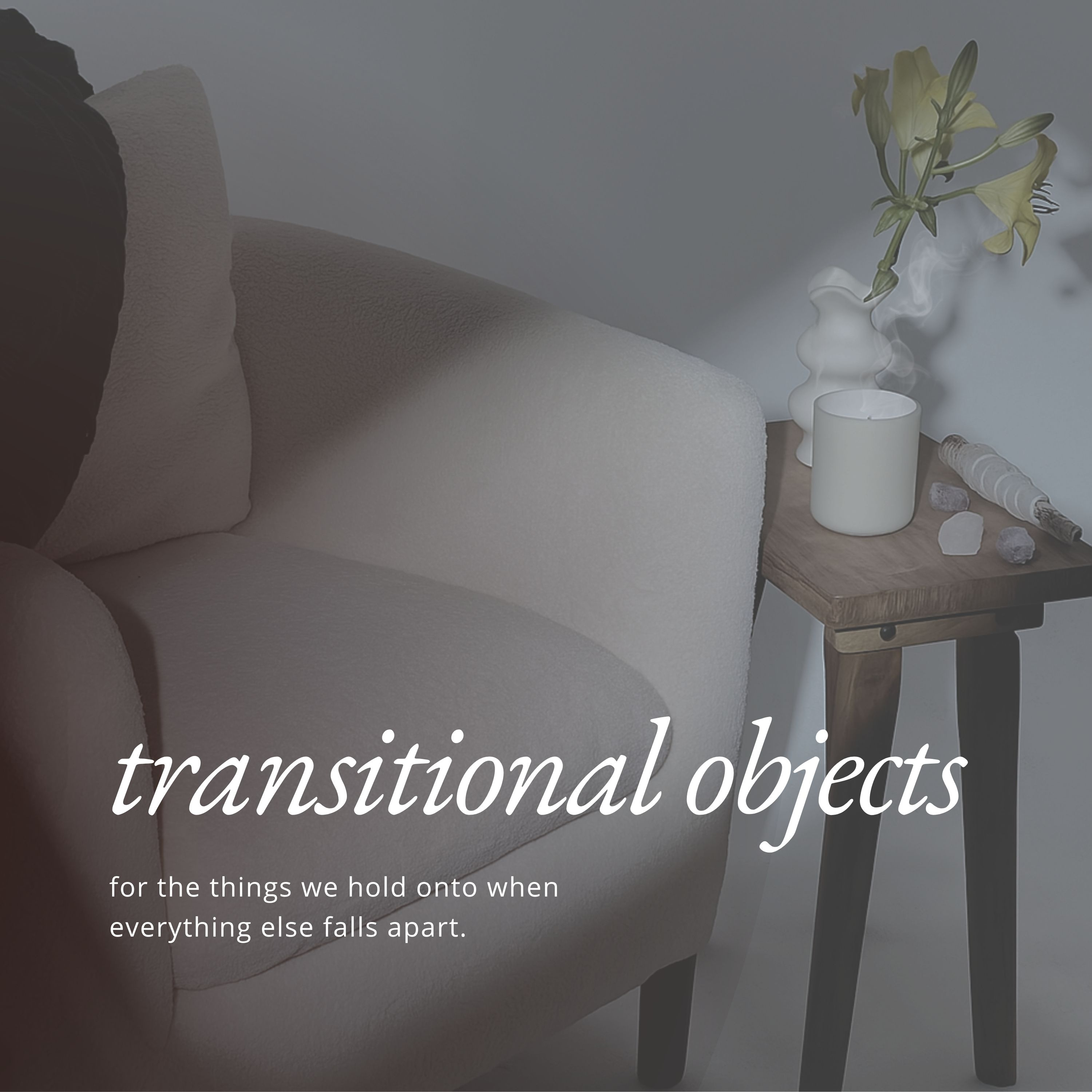
Transitional Objects is a podcast about the things we hold when everything else falls apart.Hosted by two longtime friends and therapists, this show explores the soft underbelly of being human—grief, trauma, intimacy, identity, and the strange comfort of things that tether us to ourselves when life gets unrecognizable.Equal parts sacred and irreverent, clinical and confessional, Transitional Objects is for anyone who’s ever lost the thread and gone looking for meaning in a song, a conversation, a hoodie, a heartbreak.Come for the emotional resonance, stay for the well-timed swearing.
-
21
Running on Empty: What You Reach For When There’s Nothing Left
In this episode of Transitional Objects, Bridget & Laura arrive exactly as they are...exhausted, underslept, hormonally off, and trying to function in a world that feels like A LOT. What unfolds is a real-time exploration of what it actually looks like to cope when both your inner world and the outside world feel overwhelming at the same time.They return to the core question behind the podcast itself: what helps us get through? What are our transitional objects? From the blurry line between isolation and solitude, to the struggle of reaching out for connection, to the ways the body keeps score, the conversation moves through the messy reality of being human when you’re running on empty.Meditation, movement, and mindfulness come up as practices full of resistance, inconsistency, and (sometimes) moments of relief. Bridget opens up about losing running as her grounding force after injury, while Laura reflects on the push-pull relationship she has with slowing down. Together, they unpack what it means to know what helps… and still struggle to do it.This episode is a reminder that transitional objects aren’t always obvious. And sometimes, just noticing what steadies you (even a little) is enough to get through the day.If you enjoyed this episode, be sure to follow us on Instagram and Substack. If you're interested in being a guest on Transitional Objects, feel free to message us at [email protected]
-
20
Legacy: What We Leave Behind
In this episode of Transitional Objects, Laura and Bridget explore the weighty, surprisingly personal question of legacy...what we leave behind, whether we mean to or not.What begins as a conversation about death, memory, and the stories that outlive us quickly expands into the much bigger (and philosophical) question of legacies passed through families, the burdens we inherit, the values we model, and the ways culture shapes what we call “worthwhile.” From intergenerational wounds to midlife reflection, they unpack how legacy can feel both sparkly and suffocating, full of meaning and impossible to define.Together, they challenge the pressure hidden inside the word itself. Does legacy have to be grand? Is it something we create intentionally, or is it defined by the people who receive it long after we’re gone? Along the way, the conversation moves through grief, parenting, generativity, identity, and the liberating realization that maybe legacy is less about control and more about curiosity.Send us a message at [email protected] if you're interested in being a guest on Transitional Objects
-
19
Another Year, Another Transition: A Birthday Episode
In this episode of Transitional Objects, Bridget & Laura talk about birthdays as markers of time, of change, of who we were and who we’re becoming.For a lot of people, birthdays don’t just bring cake and texts. Instead, they bring reflection & pressure, forcing you into taking inventory of your life or celebrating how far you have come. We get into the way birthdays can stir up unexpected emotions like why your body might feel off, why your mood shifts, why things you thought you’d “moved past” suddenly feel close again. The stories we carry about where we thought we’d be by now. The people who are missing. The versions of ourselves we’ve outgrown (or maybe haven’t yet).If you enjoyed this episode, be sure to follow us on Instagram and Substack. If you are interested in being a guest on Transitional Objects, feel free to message us at [email protected]
-
18
After Betrayal: Protecting Your Heart Without Hardening It
In this episode of Transitional Objects, Laura and Bridget talk about betrayal... and not just the obvious kind, but the quieter, more complicated versions that crack something open in us. They explore what happens when trust feels ruptured, why our minds rush to fill in the blanks, and how old wounds can shape our reactions in the present.The conversation moves through grief, vulnerability, self-protection, toxic relationship dynamics, and the difference between reacting from pain versus responding with clarity. At the center of it all is a question: when betrayal happens, how do we stay connected to ourselves without hardening completely?
-
17
The Helper Interrupted: Showing Up When Your World Falls Apart
What happens when the helper’s life is the one unraveling?In this tender conversation, Bridget and Laura explore what it means to hold space for others when your own world feels like it's falling apart...whether by personal loss, political tension, systemic chaos, or the weight of being human right now. Bridget shares about practicing in Maine during a surge of ICE activity, navigating sessions where clients ask, “How are you doing?” Laura reflects on showing up for clients in the middle of heartbreak and fertility treatments. Together, they unpack the strange phenomenon of doing some of your best clinical work while privately falling apart. They talk compassion fatigue, burnout, social media avoidance, political divide, and why transitions (even packing a suitcase) can feel like existential events.This episode is a love letter to the therapists, the helpers, and anyone trying to show up despite it all.
-
16
Embodied Echoes: When the Body Remembers
In this episode of Transitional Objects, Laura and Bridget sit down for another unstructured, honest conversation.Bridget opens up about experiencing a Crohn’s flare-up and the way her body immediately shifts into “alert mode,” even when her mind logically knows she’s safe and capable of handling it. That moment sparks a larger discussion about how our bodies store memory, respond to stress, and sometimes react before we’ve even consciously connected the dots.Laura reflects on the anniversary of Beau’s death, an event that profoundly shaped her relationship with grief and the way the nervous system holds onto trauma over time. Together, Laura and Bridget explore the eerie timing of early morning wake-ups, the emotional weight anniversaries can carry, and the ways grief can show up in the body long after we think we’ve “moved on.”This conversation is a thoughtful reminder that healing isn’t linear (and sometimes our bodies speak first, long before our minds catch up).
-
15
Vulnerability Hangovers: Why Opening Up Feels SO Hard
What happens after you’re vulnerable?In this episode of Transitional Objects, Laura and Bridget explore the experience many people don’t expect after opening up...the vulnerability hangover. That uneasy mix of emotional exposure, self-doubt, and nervous system overload that can show up after you share something personal, speak honestly, or allow yourself to be seen.They unpack why vulnerability can feel connecting in the moment but unsettling afterward, and how shame, self-protection, and emotional exhaustion often follow moments of openness. Through clinical insight and real-life reflection, this episode reframes vulnerability hangovers as a natural response and offers ways to stay grounded rather than shutting down or pulling away.Follow us on Instagram: @transitional.objects.podcast
-
14
Working Through Work Wounds
In this conversation, Laura and Bridget pull back the curtain on how work shapes us, scars us, and sometimes traumatizes us. From knocking on strangers’ doors as brand-new therapists under impossible timelines, to sitting on paint buckets in homes no one prepared them for, to carrying a level of responsibility that was never actually theirs to hold, they explore how certain work environments train our nervous systems into constant urgency, hyper-vigilance, and self-blame.This episode moves through vicarious trauma, unethical systems, productivity culture, difficult supervisors, and the way toxic jobs can start to feel normal (even when they’re slowly dismantling your sense of self). Along the way, they unpack how these wounds linger years later, showing up as anxiety, over-responsibility, and the feeling that you’re never doing enough, even when you are.
-
13
“Coping” with Coping Skills
In the first episode of 2026, Laura and Bridget take a lovingly skeptical look at the idea of “coping skills”...what we’re taught they should look like, why so many of them fail us, and what actually helps when life feels tender, overwhelming, or just plain unmanageable. Set in that disorienting space between Christmas and New Year’s, coping skills are on the top of their minds.They unpack how coping skills can morph into another form of self-pressure, especially in therapy culture and productivity culture, where “doing the right thing” can override what our bodies are actually asking for. From sensory regulation to the radical permission to do nothing, they explore the difference between caring for ourselves and controlling ourselves (and how often we confuse the two).Warm, honest, and subversive, this episode is for anyone who’s ever felt like they were “failing” at coping. It offers a gentler reframe: that the skills that actually work aren’t always pretty, impressive, or Instagrammable. Instead, they’re the ones that help you stay with yourself when everything else feels like too much.
-
12
Saying "No" to New Year's Resolutions
In this episode of Transitional Objects, Laura and Bridget do what they do best...gently dismantle a culturally accepted idea and see what actually resonates. This time, it’s New Year’s resolutions (and yes, they dislike them).Using the end of 2025 as a reflective pause rather than a self-improvement launchpad, the conversation moves through what this past year held, what it demanded, and what it reshaped. Instead of goal-setting or productivity theater, they talk about noticing. About patterns that revealed themselves slowly. About the difference between forcing change and allowing clarity to arrive on its own timeline.Together, they explore why the language of “resolutions” often feels disruptive to the nervous system - rigid, moralized, and disconnected from how humans actually grow. In its place, they experiment with something softer for 2026; intentions rooted in capacity, curiosity, and truth-telling rather than performance.There’s humor, skepticism, tenderness, and a shared rebellion to the notion that January 1st has magical powers. This one is for anyone who feels allergic to “new year, new you” energy.
-
11
Thinning the Veil with Ashley Rosales
In this episode of Transitional Objects, Laura and Bridget welcome their first-ever guest, psychic medium and energy healer Ashley Rosales. Together, they step into the space between what we can explain and what we feel but don’t always have language for, exploring intuition and the ways those we’ve loved can come through after death. Later in the episode, Ashley gives a medium reading to Bridget.Together, they explore what it means to stay connected to the people (and animals) who have died, how grief can open doors we didn’t know existed, and why some relationships don’t end so much as they change form. Ashley shares her own path into mediumship, what shaped it, and how learning to listen (to energy, to spirit, to the body) altered her forever.The conversation is tender, curious, and deeply human. There’s laughter, skepticism, awe, and a live reading that invites reflection on ancestry, care, and the unseen ways we’re supported. Ashley Rosales is a spirit communicator and energy healer. Her practices are based in curanderismo, or traditional Latino Indigenous medicine and healing. She has been using her gifts to intentionally guide and bring healing to my life since 2011 and to help others since 2022.She offers intro-level classes to help you develop your own intuition and monthly subscriptions for personal and collective card readings.If you want to work with her directly, she offers 60-minute mediumship sessions on Zoom and limited in-person energy healing sessions in Bellingham, WA. You can find out more about Ashley at ashdelasrosas.square.site/
-
10
Self as Story
In this episode of Transitional Objects, Laura and Bridget explore the idea of self as story. They talk about the narratives we inherit, the roles we fall into, and why all of it gets especially weird around the holidays. Because nothing says “personal growth” like returning home and instantly feeling like the kid who used to mediate every argument.They talk about how identity shifts over time, what happens when your family still interacts with the old version of you, and why boundaries, consent, and emotional responsibility hit differently this time of year. With plenty of laughs and some therapist-level real talk there are a few moments that might make you go, “Okay…maybe it’s not just my family.”
-
9
Inner Child Calling
In this episode of Transitional Objects, Laura and Bridget get real about the inner child - that messy, magical, occasionally rebellious little part of us that still shows up in adult life (often uninvited). From tantrums over Monday mornings to teenage-style rebellion with a glass of wine, they share the moments when their younger selves totally hijacked the wheel and what it looks like to gently take notice. They talk parts work, unmet needs, and how sometimes our most “un-grown-up” behaviors are just our childhood selves trying to get attention. They unpack why self-soothing often looks like overeating, overthinking, or overscheduling, and how to meet those old needs in kinder, more conscious ways.By the end, you might be rethinking the way you talk to yourself (and maybe offering your inner kid a well-deserved nap).
-
8
Holy Ghosts
In this episode, Laura and Bridget get ghostly (and not just because they recorded on Halloween). From confession booths and catechism to growing up with zero religion and a healthy dose of skepticism, they unpack how early beliefs - or the total absence of them - shape the way we think about life, death, and whatever lingers in between.They talk about being raised Catholic versus being raised to think all of it was “bullshit,” and what happens when those childhood teachings collide with adult grief, spirituality, and the strange sense that maybe the dead aren’t really gone after all. There’s talk of guilt, heaven and hell, meditation-as-prayer, and the surprising ways rituals can still feel holy even without a church pew in sight.Laura shares her experiences of staying connected with those who have died, from soul retrievals to synchronicities that made her question everything she thought she didn’t believe in. Bridget opens up about what it means to find grounding, grace, and even humor in the messy in-between -- and how sometimes using your voice (literally, on this podcast) can be its own kind of healing.
-
7
Gut Feelings
In this episode, Laura and Bridget get gutsy (literally and emotionally) diving into the strange and scientific link between intuition, digestion, and all the feelings we try (and sometimes fail) to swallow. From Crohn’s and colitis to cosmic gut instincts, they unpack how the body keeps the score, what it means to trust your gut, and why sometimes your belly knows the truth before your brain catches up.They swap stories about mediumship, chronic illness, and that mysterious mind–body conversation happening along the vagus nerve highway - with plenty of laughter, a few cringe memories, and one or two “did my intestines just text me?” moments.Part science, part soul talk, and fully human, this episode reminds us that intuition isn’t woo, it’s wisdom (with digestive side effects).
-
6
Intrusion Confusion
In this episode, Laura and Bridget dive into the world of intrusive thoughts and fantasies...the unsettling images, urges, and daydreams that slip in (mostly) uninvited. They share stories from their own lives and practices, from postpartum spirals and highway what-ifs to everyday brushes with mortality, and unpack why our minds come up with these scenarios in the first place.The conversation explores the difference between intrusive and intentional fantasies, how shame can make them heavier, and why saying the unspeakable out loud can actually help loosen its grip. They wander through sex, grief, chronic illness, and even social media fights, tracing how fantasies sometimes hold our unprocessed fears, our need for control, or simply the energy that has nowhere else to go.Equal parts candid and compassionate, this episode reframes intrusive fantasies not as proof of brokenness, but as the mind’s ingenious ( and maybe unnerving?) way of working things out.
-
5
Friend-Shifts
In this episode of Transitional Objects, our co-hosts dive into the tender, funny, and sometimes awkward territory of friendship shifts. From the spontaneous, “what are you doing right now?” hangouts of their twenties to the carefully orchestrated (typically canceled) plans of adulthood, Bridget and Laura explore how friendships inevitably change over time.They open up about what it feels like to outgrow old friend groups, how divorce and grief can dismantle social circles overnight, and the ache of realizing that some connections just… fade. Along the way, they laugh about their own missed calls and canceled brunches, compare notes on parenting vs. non-parenting friendships, and reflect on how shame, protection, and unspoken assumptions sneak into even our closest bonds.Equal parts vulnerable and hilarious, this conversation is for anyone who has ever wondered why friendships don’t feel the same as they used to (and why that’s not necessarily a bad thing). It’s an episode that validates the messiness of adult connection, while celebrating the rare, soul-deep friendships that always seem to pick up right where they left off.
-
4
Burning Out
In this episode of Transitional Objects, our co-hosts discuss the all-too-familiar territory of burnout. Kicking off with a candid discussion about Bridget's recent break from work, they explore how therapists, and really anyone, grapple with the pressures of nonstop productivity, especially in a climate as focused on productivity as the United States.From recounting vacations that started with colonoscopies to defining what burnout looks like, Laura & Bridget truly leave nothing out. The conversation takes a global turn, comparing the work cultures of Italy and the U.S., and ends with a compassionate plea for all of us to give ourselves permission to rest (even if it's just for a moment). Equal parts witty, warm, and real, it's an episode that validates your weariness and maybe even helps you find a way to catch your breath.
-
3
Hot & Hormonal
In this episode of Transitional Objects, Laura and Bridget explore the ever-daunting, rarely spoken about perimenopause. Through recounting their sleep (or lack of sleep) habits, they talk about the complexities of hormonal health as women. They discuss how a few drinks used to mean a good night, but now all they want is a good night's sleep. They candidly (and with a few laughs) share their personal experiences with mood fluctuations and the reality of migraines -- the kind that you think are a brain tumor because you're only 40 and perimenopause isn't even on your radar. Together, they reflect on societal misconceptions about aging women and what it feels like to get older. Laura opens up about her intense journey through IVF and the emotional toll it took. With a love and honesty that only two best friend's can have, they tackle the often-taboo topics of miscarriages and identity shifts. They ask themselves the big questions and the smaller ones like "would we get hit on if we went back to the same bars we did in our 20s?".
-
2
Getting Grounded
In this episode, Laura and Bridget ride the waves of their current dysregulation and look back on how their coping mechanisms have changed throughout the years…from drinking in their twenties (and following it up with a few workout classes) to getting grounded with plants and yoga. With BFF level humor and therapist level insight, they explore how the body keeps the score, over and over again. Neighbor conflicts trigger old trauma, ice cream becomes a childhood transitional object, and travel snacking signal nervous system flares. They reflect on past coping (bourbon and unfiltered sake) and celebrate their evolution toward a much gentler self-regulation. Through laughter, honesty, and a few cringe memories, Laura and Bridget show how naming the hard stuff can soften its grip and remind us that sometimes growth looks like regression.
-
1
Getting Our Bear-ings
In this inaugural episode, longtime friends and therapists Laura Walton and Bridget Tremblay introduce themselves and explore how their 20-year friendship began at a Lululemon group interview in 2005. They dive into the concept of transitional objects—from Bridget's childhood thumb-sucking and Laura's lack of soothing mechanisms to the mysterious stranger who helped them through a hellish layover in Tokyo.The conversation takes a deeper turn as they share personal stories about childhood experiences that shaped their coping mechanisms: Bridget's early independence as a latchkey kid and Laura's moment of being called a "ham" that changed how she showed up in the world. They also explore the cosmic synchronicities that have followed their friendship, including powerful signs after the death of Laura's then-boyfriend that involved flickering lights, phantom phone calls, and electrical disturbances.From bachelorette party omens on Catalina Island to gratitude for both healthy and unhealthy transitional objects, this episode sets the foundation for what promises to be an honest, vulnerable exploration of how we navigate life's transitions. Laura and Bridget prove that sometimes the best transitional object is a friend who witnesses your journey—and all the unexplainable moments along the way.
We're indexing this podcast's transcripts for the first time — this can take a minute or two. We'll show results as soon as they're ready.
No matches for "" in this podcast's transcripts.
No topics indexed yet for this podcast.
Loading reviews...
ABOUT THIS SHOW
Transitional Objects is a podcast about the things we hold when everything else falls apart.Hosted by two longtime friends and therapists, this show explores the soft underbelly of being human—grief, trauma, intimacy, identity, and the strange comfort of things that tether us to ourselves when life gets unrecognizable.Equal parts sacred and irreverent, clinical and confessional, Transitional Objects is for anyone who’s ever lost the thread and gone looking for meaning in a song, a conversation, a hoodie, a heartbreak.Come for the emotional resonance, stay for the well-timed swearing.
HOSTED BY
Bridget Tremblay and Laura Walton
Loading similar podcasts...
URL copied to clipboard!