
PODCAST · news
Trashing the High Seas (The Takeaway)
by GBH, PRX, WNYC Studios
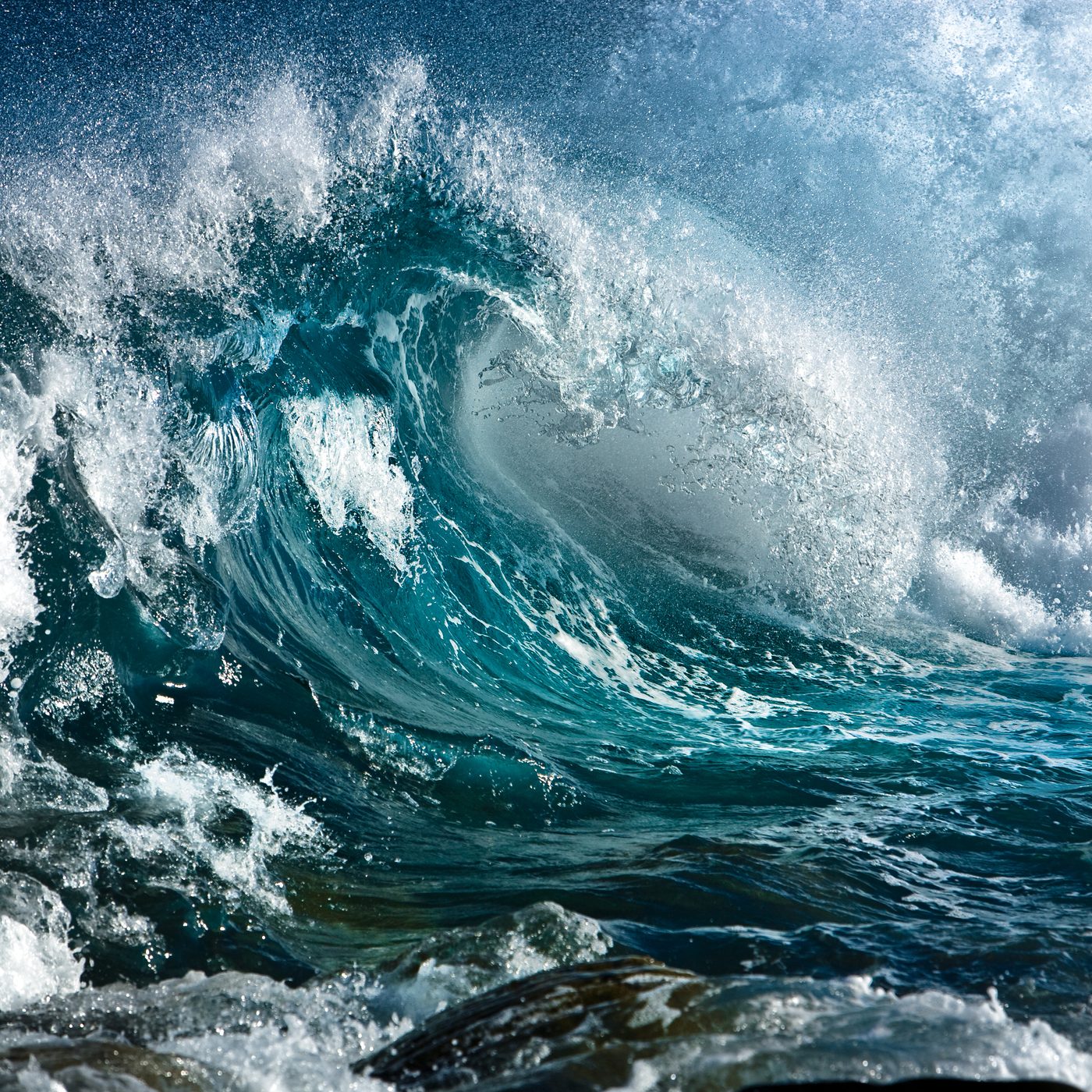
"Trashing the High Seas" is an original series from The Takeaway that explores our oceans, how human behavior is changing them, and what can be done to sustain large bodies of water for future generations.
-
5
Scientists Discover Link Between Fins and Hands
Click on the 'Listen' button above to hear this interview. This week, we've been chronicling the plight of the oceans in our series "Trashing the High Seas," and today we look at a new study that binds us even closer to the oceans and its inhabitants. Researchers at the University of Chicago found a link between the genes in fish fins and the genes responsible for finger and toe formation among land animals. Andrew Gehrke, a co-author of the study and a biologist now at Harvard University, has the details on this breakthrough.
-
4
A Strategy for Reducing Underwater Noise Pollution
Click on the 'Listen' button above to hear this interview. The singing world underwater is filled with whales, fish, and other species that use sound like grunts, whistles, drumming, and sonar for various reasons — to forage, to find mates, and to avoid predators. But human-generated noise from ships, drilling, and industrial work often interferes with these vital behaviors. In order to fix this problem, the National Oceanic and Atmospheric Administration (NOAA) released The Ocean Noise Strategy Roadmap — it's a push for more research on the impact of these sounds on the creatures below, and outreach to other governmental, military, environmental and industry groups. Michael Jasny is director of the Marine Mammal Protection Project, and the Land & Wildlife Program for the Natural Resources Defense Council. He teamed up with a group of biologists to raise concern to the Obama Administration, comparing the rising level of noise to a growing smog. Jasny says the effects on marine life are wide-ranging, and hopes the Roadmap is a step in the right direction. Click on the 'Listen' button above to hear the full interview with Jasny.
-
3
Quantifying the Value of the Ocean's Resources
Click on the 'Listen' button above to hear this interview. Certain habitats are great for generating fish, some habitats are key for storing carbon, and others are great for tourism. But we've never put a number on how much they are worth. The Nature Conservancy, an organization devoted to protecting ecologically important lands and waters, has been working on a solution with "The Atlas of Ocean Wealth." It's a book that maps the benefits of ocean ecosystems to help governments and businesses make informed decisions and investments for the sustainable growth of coastal and marine resources. Researchers gathered data from traditional sources, new technology, and various photography and travel sites. Mark Spalding, senior marine scientist at The Nature Conservancy, is the lead author of the Atlas. He says the project started at least 10 years ago, and the work began with the value of oysters to ecosystems. Click on the 'Listen' button above to hear our full interview with Mark Spalding.
-
2
A Millennial's Fight to Clean Up 150 Million Pounds of Ocean Trash
Click on the 'Listen' button above to hear this interview. Plastics, litter, and all sorts of debris have polluted our waters for years. While prevention is key, ocean cleanup also presents an important and daunting task, but one young ocean lover is confronting this challenge head on. At just 22-years-old, Boyan Slat has created a barrier system that's designed to collect and remove trash from the Pacific Ocean without disrupting marine life. A Dutch inventor and entrepreneur, Slat is the founder and CEO of The Ocean Cleanup, a foundation dedicated to developing advanced technologies to rid the oceans of pollution. When he was 16-years-old, Slat came up with the ambitious idea to clean up the oceans while he was diving in Greece and came across more plastic bags than fish. In the years since that dive he's dedicated countless hours to the project. If all goes as planned, Slat and his team hope to collect almost half of the remnants in the Great Pacific Garbage Patch, which stretches across waters from the West Coast of America to Japan. That's over 150 million pounds of trash in just 10 years. Slat is currently testing his prototype the North Sea, and plans to roll out the final barrier system within the next few years. “It’s sort of like a long floating curtain, which is about five feet above the water and five feet below the water,” he says. “It acts like an artificial coastline where there is no coastline. Ocean currents in the area, they rotate, so it doesn’t stay in one spot, and we are basically making use of that movement to let the plastic hit the barrier, and because the barrier is in a ‘V’ shape, the plastic gets pushed towards the center. Once in the center, you can hardly see the water, and that’s the spot where we can easily take it out and store it before we ship it to land for recycling.” Artist rendering of The Ocean Cleanup prototype. (The Ocean Cleanup) The Ocean Cleanup prototype doesn’t use any nets. Instead, the organization employs non-permeable screens to collect trash and plastics, something that helps protect marine life. “The current would flow underneath these barriers and that will take away neutrally buoyant materials, including things like fish and plankton,” he says. “We actually have a prototype of our system here off the coast of the Netherlands right now, and there we didn’t observe any negative interaction between sea life and the structure. So we expect that won’t be a problem, though we will certainly continue to monitor it — the whole reason why we’re doing this is because we want to solve a problem.” While some pieces of trash and plastic are too small to be extracted from the oceans, Slat says that Ocean Cleanup models show that 98 percent of materials can be collected by the group’s system. He hopes that the materials that are collected can be recycled and transformed into car bumpers or chairs — plastic items that have a low likelihood of winding up in the oceans once again, unlike something like a plastic bag. “In the early days, a lot of the [ocean] impact we had as humans was sort of temporal and stuff would disappear by itself,” he says. “Plastic is unique in the sense that it doesn’t go away by itself, and as we now see, it becomes more harmful over time. And this is something we only started using on the large scale in the 1950s. The consumption grew exponentially, and it has this side effect, which is that millions of tons of plastic enter the oceans each year.” Though some are skeptical of Slat’s plan, he’s hopeful that he can make a difference. “I really think the only way to show that it can be done is to go out there and try it,” he says. Check out a video about The Ocean Cleanup prototype below.
-
1
Oceanographer Sylvia Earle is on a Mission to Save Our Seas
Sea habitats are being destroyed at an alarming pace. Since the 1960s, humans have removed over 20 million tons of wildlife from the world's oceans by means of dragging nets across the ocean floor. 90 percent of fish and sharks are snatched from the ocean and placed on dinner plates faster than they can reproduce. Not to mention scientists believe climate change and pollution have also put our oceans in jeopardy, putting one of our most valuable natural resources at risk. In part one of our series on oceans "Trashing the High Seas," renowned oceanographer and National Geographic Explorer-In-Residence Sylvia Earle has had a lifelong fondness and connection with our oceans, ever since she got knocked over by a wave on the Jersey Shore. Earle's mission to save the seas is shaped by her friend and author E. O. Wilson's writing: Leave half of the Earth alone. She wants to create "blue parks" — safe spaces that humans do not harm in the same way we create national parks on land.
We're indexing this podcast's transcripts for the first time — this can take a minute or two. We'll show results as soon as they're ready.
No matches for "" in this podcast's transcripts.
No topics indexed yet for this podcast.
Loading reviews...
ABOUT THIS SHOW
"Trashing the High Seas" is an original series from The Takeaway that explores our oceans, how human behavior is changing them, and what can be done to sustain large bodies of water for future generations.
HOSTED BY
GBH, PRX, WNYC Studios
CATEGORIES
Loading similar podcasts...
URL copied to clipboard!