
PODCAST · arts
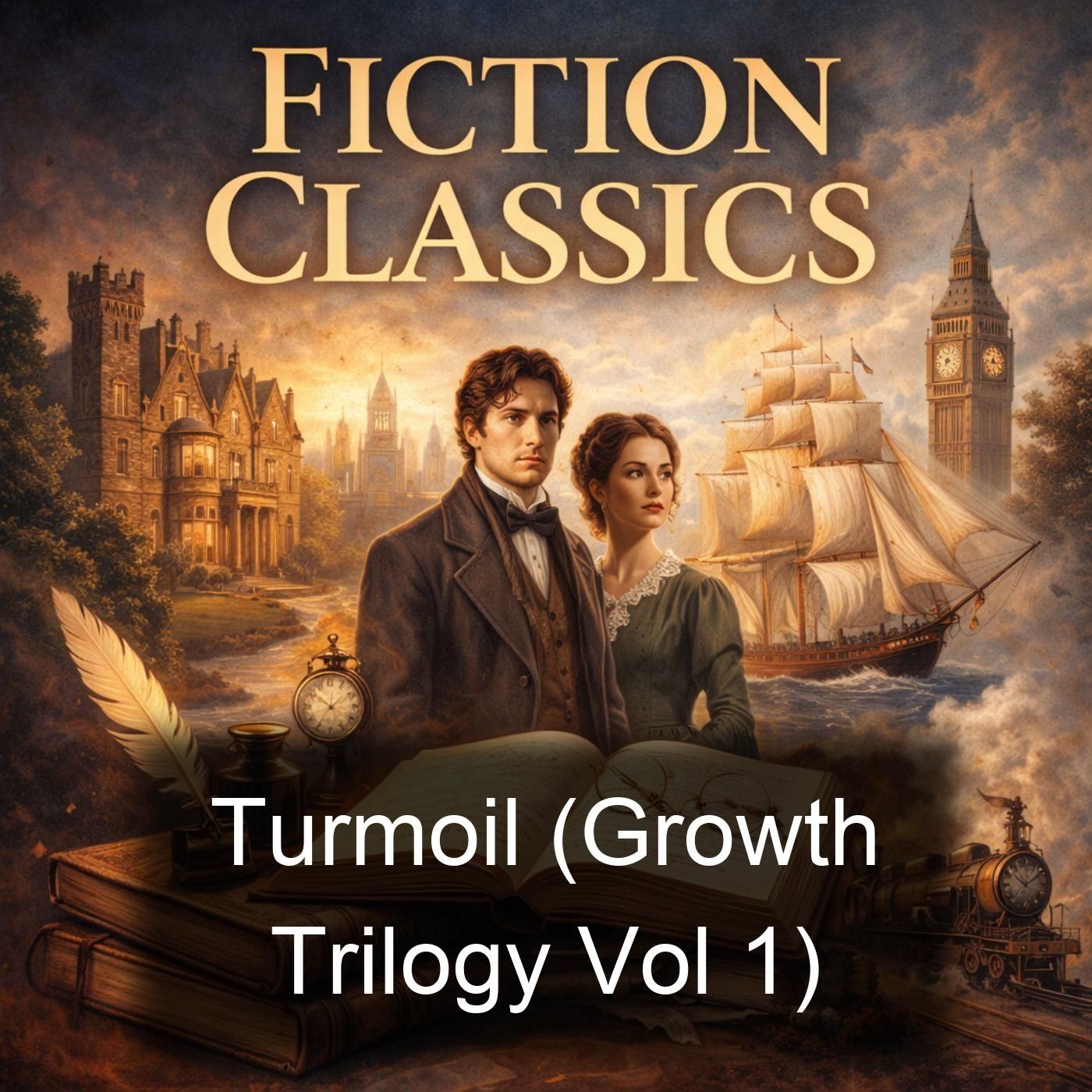
Turmoil (Growth Trilogy Vol 1)
by Booth Tarkington
Turmoil is the captivating first novel in the Growth trilogy, which also features The Magnificent Ambersons (1918) and The Midlander (1923, later retitled National Avenue in 1927). In 1942, Orson Welles brought the second volume to life with his film adaptation, also titled The Magnificent Ambersons. This trilogy intricately explores the evolution of the United States through the lens of the declining fortunes of the aristocratic Amberson family in a fictional Midwestern town, set against the backdrop of the rapid industrialization and socio-economic transformation that occurred between the end of the Civil War and the early 20th century. The fall of the Ambersons starkly contrasts with the rise of industrial tycoons and new-money families, who gained power not through lineage but through their actions. As George Ambersons friend famously remarks, dont you think being things is rahthuh bettuh than doing things? (Summary adapted from Wikipedia by Gesine)
-
33
033 - Chapter 33
Turmoil is the captivating first novel in the Growth trilogy, which also features The Magnificent Ambersons (1918) and The Midlander (1923, later retitled National Avenue in 1927). In 1942, Orson Welles brought the second volume to life with his film adaptation, also titled The Magnificent Ambersons. This trilogy intricately explores the evolution of the United States through the lens of the declining fortunes of the aristocratic Amberson family in a fictional Midwestern town, set against the backdrop of the rapid industrialization and socio-economic transformation that occurred between the end of the Civil War and the early 20th century. The fall of the Ambersons starkly contrasts with the rise of industrial tycoons and new-money families, who gained power not through lineage but through their actions. As George Ambersons friend famously remarks, dont you think being things is rahthuh bettuh than doing things? (Summary adapted from Wikipedia by Gesine)
-
32
032 - Chapter 32
Turmoil is the captivating first novel in the Growth trilogy, which also features The Magnificent Ambersons (1918) and The Midlander (1923, later retitled National Avenue in 1927). In 1942, Orson Welles brought the second volume to life with his film adaptation, also titled The Magnificent Ambersons. This trilogy intricately explores the evolution of the United States through the lens of the declining fortunes of the aristocratic Amberson family in a fictional Midwestern town, set against the backdrop of the rapid industrialization and socio-economic transformation that occurred between the end of the Civil War and the early 20th century. The fall of the Ambersons starkly contrasts with the rise of industrial tycoons and new-money families, who gained power not through lineage but through their actions. As George Ambersons friend famously remarks, dont you think being things is rahthuh bettuh than doing things? (Summary adapted from Wikipedia by Gesine)
-
31
031 - Chapter 31
Turmoil is the captivating first novel in the Growth trilogy, which also features The Magnificent Ambersons (1918) and The Midlander (1923, later retitled National Avenue in 1927). In 1942, Orson Welles brought the second volume to life with his film adaptation, also titled The Magnificent Ambersons. This trilogy intricately explores the evolution of the United States through the lens of the declining fortunes of the aristocratic Amberson family in a fictional Midwestern town, set against the backdrop of the rapid industrialization and socio-economic transformation that occurred between the end of the Civil War and the early 20th century. The fall of the Ambersons starkly contrasts with the rise of industrial tycoons and new-money families, who gained power not through lineage but through their actions. As George Ambersons friend famously remarks, dont you think being things is rahthuh bettuh than doing things? (Summary adapted from Wikipedia by Gesine)
-
30
030 - Chapter 30
Turmoil is the captivating first novel in the Growth trilogy, which also features The Magnificent Ambersons (1918) and The Midlander (1923, later retitled National Avenue in 1927). In 1942, Orson Welles brought the second volume to life with his film adaptation, also titled The Magnificent Ambersons. This trilogy intricately explores the evolution of the United States through the lens of the declining fortunes of the aristocratic Amberson family in a fictional Midwestern town, set against the backdrop of the rapid industrialization and socio-economic transformation that occurred between the end of the Civil War and the early 20th century. The fall of the Ambersons starkly contrasts with the rise of industrial tycoons and new-money families, who gained power not through lineage but through their actions. As George Ambersons friend famously remarks, dont you think being things is rahthuh bettuh than doing things? (Summary adapted from Wikipedia by Gesine)
-
29
029 - Chapter 29
Turmoil is the captivating first novel in the Growth trilogy, which also features The Magnificent Ambersons (1918) and The Midlander (1923, later retitled National Avenue in 1927). In 1942, Orson Welles brought the second volume to life with his film adaptation, also titled The Magnificent Ambersons. This trilogy intricately explores the evolution of the United States through the lens of the declining fortunes of the aristocratic Amberson family in a fictional Midwestern town, set against the backdrop of the rapid industrialization and socio-economic transformation that occurred between the end of the Civil War and the early 20th century. The fall of the Ambersons starkly contrasts with the rise of industrial tycoons and new-money families, who gained power not through lineage but through their actions. As George Ambersons friend famously remarks, dont you think being things is rahthuh bettuh than doing things? (Summary adapted from Wikipedia by Gesine)
-
28
028 - Chapter 28
Turmoil is the captivating first novel in the Growth trilogy, which also features The Magnificent Ambersons (1918) and The Midlander (1923, later retitled National Avenue in 1927). In 1942, Orson Welles brought the second volume to life with his film adaptation, also titled The Magnificent Ambersons. This trilogy intricately explores the evolution of the United States through the lens of the declining fortunes of the aristocratic Amberson family in a fictional Midwestern town, set against the backdrop of the rapid industrialization and socio-economic transformation that occurred between the end of the Civil War and the early 20th century. The fall of the Ambersons starkly contrasts with the rise of industrial tycoons and new-money families, who gained power not through lineage but through their actions. As George Ambersons friend famously remarks, dont you think being things is rahthuh bettuh than doing things? (Summary adapted from Wikipedia by Gesine)
-
27
027 - Chapter 27
Turmoil is the captivating first novel in the Growth trilogy, which also features The Magnificent Ambersons (1918) and The Midlander (1923, later retitled National Avenue in 1927). In 1942, Orson Welles brought the second volume to life with his film adaptation, also titled The Magnificent Ambersons. This trilogy intricately explores the evolution of the United States through the lens of the declining fortunes of the aristocratic Amberson family in a fictional Midwestern town, set against the backdrop of the rapid industrialization and socio-economic transformation that occurred between the end of the Civil War and the early 20th century. The fall of the Ambersons starkly contrasts with the rise of industrial tycoons and new-money families, who gained power not through lineage but through their actions. As George Ambersons friend famously remarks, dont you think being things is rahthuh bettuh than doing things? (Summary adapted from Wikipedia by Gesine)
-
26
026 - Chapter 26
Turmoil is the captivating first novel in the Growth trilogy, which also features The Magnificent Ambersons (1918) and The Midlander (1923, later retitled National Avenue in 1927). In 1942, Orson Welles brought the second volume to life with his film adaptation, also titled The Magnificent Ambersons. This trilogy intricately explores the evolution of the United States through the lens of the declining fortunes of the aristocratic Amberson family in a fictional Midwestern town, set against the backdrop of the rapid industrialization and socio-economic transformation that occurred between the end of the Civil War and the early 20th century. The fall of the Ambersons starkly contrasts with the rise of industrial tycoons and new-money families, who gained power not through lineage but through their actions. As George Ambersons friend famously remarks, dont you think being things is rahthuh bettuh than doing things? (Summary adapted from Wikipedia by Gesine)
-
25
025 - Chapter 25
Turmoil is the captivating first novel in the Growth trilogy, which also features The Magnificent Ambersons (1918) and The Midlander (1923, later retitled National Avenue in 1927). In 1942, Orson Welles brought the second volume to life with his film adaptation, also titled The Magnificent Ambersons. This trilogy intricately explores the evolution of the United States through the lens of the declining fortunes of the aristocratic Amberson family in a fictional Midwestern town, set against the backdrop of the rapid industrialization and socio-economic transformation that occurred between the end of the Civil War and the early 20th century. The fall of the Ambersons starkly contrasts with the rise of industrial tycoons and new-money families, who gained power not through lineage but through their actions. As George Ambersons friend famously remarks, dont you think being things is rahthuh bettuh than doing things? (Summary adapted from Wikipedia by Gesine)
-
24
024 - Chapter 24
Turmoil is the captivating first novel in the Growth trilogy, which also features The Magnificent Ambersons (1918) and The Midlander (1923, later retitled National Avenue in 1927). In 1942, Orson Welles brought the second volume to life with his film adaptation, also titled The Magnificent Ambersons. This trilogy intricately explores the evolution of the United States through the lens of the declining fortunes of the aristocratic Amberson family in a fictional Midwestern town, set against the backdrop of the rapid industrialization and socio-economic transformation that occurred between the end of the Civil War and the early 20th century. The fall of the Ambersons starkly contrasts with the rise of industrial tycoons and new-money families, who gained power not through lineage but through their actions. As George Ambersons friend famously remarks, dont you think being things is rahthuh bettuh than doing things? (Summary adapted from Wikipedia by Gesine)
-
23
023 - Chapter 23
Turmoil is the captivating first novel in the Growth trilogy, which also features The Magnificent Ambersons (1918) and The Midlander (1923, later retitled National Avenue in 1927). In 1942, Orson Welles brought the second volume to life with his film adaptation, also titled The Magnificent Ambersons. This trilogy intricately explores the evolution of the United States through the lens of the declining fortunes of the aristocratic Amberson family in a fictional Midwestern town, set against the backdrop of the rapid industrialization and socio-economic transformation that occurred between the end of the Civil War and the early 20th century. The fall of the Ambersons starkly contrasts with the rise of industrial tycoons and new-money families, who gained power not through lineage but through their actions. As George Ambersons friend famously remarks, dont you think being things is rahthuh bettuh than doing things? (Summary adapted from Wikipedia by Gesine)
-
22
022 - Chapter 22
Turmoil is the captivating first novel in the Growth trilogy, which also features The Magnificent Ambersons (1918) and The Midlander (1923, later retitled National Avenue in 1927). In 1942, Orson Welles brought the second volume to life with his film adaptation, also titled The Magnificent Ambersons. This trilogy intricately explores the evolution of the United States through the lens of the declining fortunes of the aristocratic Amberson family in a fictional Midwestern town, set against the backdrop of the rapid industrialization and socio-economic transformation that occurred between the end of the Civil War and the early 20th century. The fall of the Ambersons starkly contrasts with the rise of industrial tycoons and new-money families, who gained power not through lineage but through their actions. As George Ambersons friend famously remarks, dont you think being things is rahthuh bettuh than doing things? (Summary adapted from Wikipedia by Gesine)
-
21
021 - Chapter 21
Turmoil is the captivating first novel in the Growth trilogy, which also features The Magnificent Ambersons (1918) and The Midlander (1923, later retitled National Avenue in 1927). In 1942, Orson Welles brought the second volume to life with his film adaptation, also titled The Magnificent Ambersons. This trilogy intricately explores the evolution of the United States through the lens of the declining fortunes of the aristocratic Amberson family in a fictional Midwestern town, set against the backdrop of the rapid industrialization and socio-economic transformation that occurred between the end of the Civil War and the early 20th century. The fall of the Ambersons starkly contrasts with the rise of industrial tycoons and new-money families, who gained power not through lineage but through their actions. As George Ambersons friend famously remarks, dont you think being things is rahthuh bettuh than doing things? (Summary adapted from Wikipedia by Gesine)
-
20
020 - Chapter 20
Turmoil is the captivating first novel in the Growth trilogy, which also features The Magnificent Ambersons (1918) and The Midlander (1923, later retitled National Avenue in 1927). In 1942, Orson Welles brought the second volume to life with his film adaptation, also titled The Magnificent Ambersons. This trilogy intricately explores the evolution of the United States through the lens of the declining fortunes of the aristocratic Amberson family in a fictional Midwestern town, set against the backdrop of the rapid industrialization and socio-economic transformation that occurred between the end of the Civil War and the early 20th century. The fall of the Ambersons starkly contrasts with the rise of industrial tycoons and new-money families, who gained power not through lineage but through their actions. As George Ambersons friend famously remarks, dont you think being things is rahthuh bettuh than doing things? (Summary adapted from Wikipedia by Gesine)
-
19
019 - Chapter 19
Turmoil is the captivating first novel in the Growth trilogy, which also features The Magnificent Ambersons (1918) and The Midlander (1923, later retitled National Avenue in 1927). In 1942, Orson Welles brought the second volume to life with his film adaptation, also titled The Magnificent Ambersons. This trilogy intricately explores the evolution of the United States through the lens of the declining fortunes of the aristocratic Amberson family in a fictional Midwestern town, set against the backdrop of the rapid industrialization and socio-economic transformation that occurred between the end of the Civil War and the early 20th century. The fall of the Ambersons starkly contrasts with the rise of industrial tycoons and new-money families, who gained power not through lineage but through their actions. As George Ambersons friend famously remarks, dont you think being things is rahthuh bettuh than doing things? (Summary adapted from Wikipedia by Gesine)
-
18
018 - Chapter 18
Turmoil is the captivating first novel in the Growth trilogy, which also features The Magnificent Ambersons (1918) and The Midlander (1923, later retitled National Avenue in 1927). In 1942, Orson Welles brought the second volume to life with his film adaptation, also titled The Magnificent Ambersons. This trilogy intricately explores the evolution of the United States through the lens of the declining fortunes of the aristocratic Amberson family in a fictional Midwestern town, set against the backdrop of the rapid industrialization and socio-economic transformation that occurred between the end of the Civil War and the early 20th century. The fall of the Ambersons starkly contrasts with the rise of industrial tycoons and new-money families, who gained power not through lineage but through their actions. As George Ambersons friend famously remarks, dont you think being things is rahthuh bettuh than doing things? (Summary adapted from Wikipedia by Gesine)
-
17
017 - Chapter 17
Turmoil is the captivating first novel in the Growth trilogy, which also features The Magnificent Ambersons (1918) and The Midlander (1923, later retitled National Avenue in 1927). In 1942, Orson Welles brought the second volume to life with his film adaptation, also titled The Magnificent Ambersons. This trilogy intricately explores the evolution of the United States through the lens of the declining fortunes of the aristocratic Amberson family in a fictional Midwestern town, set against the backdrop of the rapid industrialization and socio-economic transformation that occurred between the end of the Civil War and the early 20th century. The fall of the Ambersons starkly contrasts with the rise of industrial tycoons and new-money families, who gained power not through lineage but through their actions. As George Ambersons friend famously remarks, dont you think being things is rahthuh bettuh than doing things? (Summary adapted from Wikipedia by Gesine)
-
16
016 - Chapter 16
Turmoil is the captivating first novel in the Growth trilogy, which also features The Magnificent Ambersons (1918) and The Midlander (1923, later retitled National Avenue in 1927). In 1942, Orson Welles brought the second volume to life with his film adaptation, also titled The Magnificent Ambersons. This trilogy intricately explores the evolution of the United States through the lens of the declining fortunes of the aristocratic Amberson family in a fictional Midwestern town, set against the backdrop of the rapid industrialization and socio-economic transformation that occurred between the end of the Civil War and the early 20th century. The fall of the Ambersons starkly contrasts with the rise of industrial tycoons and new-money families, who gained power not through lineage but through their actions. As George Ambersons friend famously remarks, dont you think being things is rahthuh bettuh than doing things? (Summary adapted from Wikipedia by Gesine)
-
15
015 - Chapter 15
Turmoil is the captivating first novel in the Growth trilogy, which also features The Magnificent Ambersons (1918) and The Midlander (1923, later retitled National Avenue in 1927). In 1942, Orson Welles brought the second volume to life with his film adaptation, also titled The Magnificent Ambersons. This trilogy intricately explores the evolution of the United States through the lens of the declining fortunes of the aristocratic Amberson family in a fictional Midwestern town, set against the backdrop of the rapid industrialization and socio-economic transformation that occurred between the end of the Civil War and the early 20th century. The fall of the Ambersons starkly contrasts with the rise of industrial tycoons and new-money families, who gained power not through lineage but through their actions. As George Ambersons friend famously remarks, dont you think being things is rahthuh bettuh than doing things? (Summary adapted from Wikipedia by Gesine)
-
14
014 - Chapter 14
Turmoil is the captivating first novel in the Growth trilogy, which also features The Magnificent Ambersons (1918) and The Midlander (1923, later retitled National Avenue in 1927). In 1942, Orson Welles brought the second volume to life with his film adaptation, also titled The Magnificent Ambersons. This trilogy intricately explores the evolution of the United States through the lens of the declining fortunes of the aristocratic Amberson family in a fictional Midwestern town, set against the backdrop of the rapid industrialization and socio-economic transformation that occurred between the end of the Civil War and the early 20th century. The fall of the Ambersons starkly contrasts with the rise of industrial tycoons and new-money families, who gained power not through lineage but through their actions. As George Ambersons friend famously remarks, dont you think being things is rahthuh bettuh than doing things? (Summary adapted from Wikipedia by Gesine)
-
13
013 - Chapter 13
Turmoil is the captivating first novel in the Growth trilogy, which also features The Magnificent Ambersons (1918) and The Midlander (1923, later retitled National Avenue in 1927). In 1942, Orson Welles brought the second volume to life with his film adaptation, also titled The Magnificent Ambersons. This trilogy intricately explores the evolution of the United States through the lens of the declining fortunes of the aristocratic Amberson family in a fictional Midwestern town, set against the backdrop of the rapid industrialization and socio-economic transformation that occurred between the end of the Civil War and the early 20th century. The fall of the Ambersons starkly contrasts with the rise of industrial tycoons and new-money families, who gained power not through lineage but through their actions. As George Ambersons friend famously remarks, dont you think being things is rahthuh bettuh than doing things? (Summary adapted from Wikipedia by Gesine)
-
12
012 - Chapter 12
Turmoil is the captivating first novel in the Growth trilogy, which also features The Magnificent Ambersons (1918) and The Midlander (1923, later retitled National Avenue in 1927). In 1942, Orson Welles brought the second volume to life with his film adaptation, also titled The Magnificent Ambersons. This trilogy intricately explores the evolution of the United States through the lens of the declining fortunes of the aristocratic Amberson family in a fictional Midwestern town, set against the backdrop of the rapid industrialization and socio-economic transformation that occurred between the end of the Civil War and the early 20th century. The fall of the Ambersons starkly contrasts with the rise of industrial tycoons and new-money families, who gained power not through lineage but through their actions. As George Ambersons friend famously remarks, dont you think being things is rahthuh bettuh than doing things? (Summary adapted from Wikipedia by Gesine)
-
11
011 - Chapter 11
Turmoil is the captivating first novel in the Growth trilogy, which also features The Magnificent Ambersons (1918) and The Midlander (1923, later retitled National Avenue in 1927). In 1942, Orson Welles brought the second volume to life with his film adaptation, also titled The Magnificent Ambersons. This trilogy intricately explores the evolution of the United States through the lens of the declining fortunes of the aristocratic Amberson family in a fictional Midwestern town, set against the backdrop of the rapid industrialization and socio-economic transformation that occurred between the end of the Civil War and the early 20th century. The fall of the Ambersons starkly contrasts with the rise of industrial tycoons and new-money families, who gained power not through lineage but through their actions. As George Ambersons friend famously remarks, dont you think being things is rahthuh bettuh than doing things? (Summary adapted from Wikipedia by Gesine)
-
10
010 - Chapter 10
Turmoil is the captivating first novel in the Growth trilogy, which also features The Magnificent Ambersons (1918) and The Midlander (1923, later retitled National Avenue in 1927). In 1942, Orson Welles brought the second volume to life with his film adaptation, also titled The Magnificent Ambersons. This trilogy intricately explores the evolution of the United States through the lens of the declining fortunes of the aristocratic Amberson family in a fictional Midwestern town, set against the backdrop of the rapid industrialization and socio-economic transformation that occurred between the end of the Civil War and the early 20th century. The fall of the Ambersons starkly contrasts with the rise of industrial tycoons and new-money families, who gained power not through lineage but through their actions. As George Ambersons friend famously remarks, dont you think being things is rahthuh bettuh than doing things? (Summary adapted from Wikipedia by Gesine)
-
9
009 - Chapter 09
Turmoil is the captivating first novel in the Growth trilogy, which also features The Magnificent Ambersons (1918) and The Midlander (1923, later retitled National Avenue in 1927). In 1942, Orson Welles brought the second volume to life with his film adaptation, also titled The Magnificent Ambersons. This trilogy intricately explores the evolution of the United States through the lens of the declining fortunes of the aristocratic Amberson family in a fictional Midwestern town, set against the backdrop of the rapid industrialization and socio-economic transformation that occurred between the end of the Civil War and the early 20th century. The fall of the Ambersons starkly contrasts with the rise of industrial tycoons and new-money families, who gained power not through lineage but through their actions. As George Ambersons friend famously remarks, dont you think being things is rahthuh bettuh than doing things? (Summary adapted from Wikipedia by Gesine)
-
8
008 - Chapter 08
Turmoil is the captivating first novel in the Growth trilogy, which also features The Magnificent Ambersons (1918) and The Midlander (1923, later retitled National Avenue in 1927). In 1942, Orson Welles brought the second volume to life with his film adaptation, also titled The Magnificent Ambersons. This trilogy intricately explores the evolution of the United States through the lens of the declining fortunes of the aristocratic Amberson family in a fictional Midwestern town, set against the backdrop of the rapid industrialization and socio-economic transformation that occurred between the end of the Civil War and the early 20th century. The fall of the Ambersons starkly contrasts with the rise of industrial tycoons and new-money families, who gained power not through lineage but through their actions. As George Ambersons friend famously remarks, dont you think being things is rahthuh bettuh than doing things? (Summary adapted from Wikipedia by Gesine)
-
7
007 - Chapter 07
Turmoil is the captivating first novel in the Growth trilogy, which also features The Magnificent Ambersons (1918) and The Midlander (1923, later retitled National Avenue in 1927). In 1942, Orson Welles brought the second volume to life with his film adaptation, also titled The Magnificent Ambersons. This trilogy intricately explores the evolution of the United States through the lens of the declining fortunes of the aristocratic Amberson family in a fictional Midwestern town, set against the backdrop of the rapid industrialization and socio-economic transformation that occurred between the end of the Civil War and the early 20th century. The fall of the Ambersons starkly contrasts with the rise of industrial tycoons and new-money families, who gained power not through lineage but through their actions. As George Ambersons friend famously remarks, dont you think being things is rahthuh bettuh than doing things? (Summary adapted from Wikipedia by Gesine)
-
6
006 - Chapter 06
Turmoil is the captivating first novel in the Growth trilogy, which also features The Magnificent Ambersons (1918) and The Midlander (1923, later retitled National Avenue in 1927). In 1942, Orson Welles brought the second volume to life with his film adaptation, also titled The Magnificent Ambersons. This trilogy intricately explores the evolution of the United States through the lens of the declining fortunes of the aristocratic Amberson family in a fictional Midwestern town, set against the backdrop of the rapid industrialization and socio-economic transformation that occurred between the end of the Civil War and the early 20th century. The fall of the Ambersons starkly contrasts with the rise of industrial tycoons and new-money families, who gained power not through lineage but through their actions. As George Ambersons friend famously remarks, dont you think being things is rahthuh bettuh than doing things? (Summary adapted from Wikipedia by Gesine)
-
5
005 - Chapter 05
Turmoil is the captivating first novel in the Growth trilogy, which also features The Magnificent Ambersons (1918) and The Midlander (1923, later retitled National Avenue in 1927). In 1942, Orson Welles brought the second volume to life with his film adaptation, also titled The Magnificent Ambersons. This trilogy intricately explores the evolution of the United States through the lens of the declining fortunes of the aristocratic Amberson family in a fictional Midwestern town, set against the backdrop of the rapid industrialization and socio-economic transformation that occurred between the end of the Civil War and the early 20th century. The fall of the Ambersons starkly contrasts with the rise of industrial tycoons and new-money families, who gained power not through lineage but through their actions. As George Ambersons friend famously remarks, dont you think being things is rahthuh bettuh than doing things? (Summary adapted from Wikipedia by Gesine)
-
4
004 - Chapter 04
Turmoil is the captivating first novel in the Growth trilogy, which also features The Magnificent Ambersons (1918) and The Midlander (1923, later retitled National Avenue in 1927). In 1942, Orson Welles brought the second volume to life with his film adaptation, also titled The Magnificent Ambersons. This trilogy intricately explores the evolution of the United States through the lens of the declining fortunes of the aristocratic Amberson family in a fictional Midwestern town, set against the backdrop of the rapid industrialization and socio-economic transformation that occurred between the end of the Civil War and the early 20th century. The fall of the Ambersons starkly contrasts with the rise of industrial tycoons and new-money families, who gained power not through lineage but through their actions. As George Ambersons friend famously remarks, dont you think being things is rahthuh bettuh than doing things? (Summary adapted from Wikipedia by Gesine)
-
3
003 - Chapter 03
Turmoil is the captivating first novel in the Growth trilogy, which also features The Magnificent Ambersons (1918) and The Midlander (1923, later retitled National Avenue in 1927). In 1942, Orson Welles brought the second volume to life with his film adaptation, also titled The Magnificent Ambersons. This trilogy intricately explores the evolution of the United States through the lens of the declining fortunes of the aristocratic Amberson family in a fictional Midwestern town, set against the backdrop of the rapid industrialization and socio-economic transformation that occurred between the end of the Civil War and the early 20th century. The fall of the Ambersons starkly contrasts with the rise of industrial tycoons and new-money families, who gained power not through lineage but through their actions. As George Ambersons friend famously remarks, dont you think being things is rahthuh bettuh than doing things? (Summary adapted from Wikipedia by Gesine)
-
2
002 - Chapter 02
Turmoil is the captivating first novel in the Growth trilogy, which also features The Magnificent Ambersons (1918) and The Midlander (1923, later retitled National Avenue in 1927). In 1942, Orson Welles brought the second volume to life with his film adaptation, also titled The Magnificent Ambersons. This trilogy intricately explores the evolution of the United States through the lens of the declining fortunes of the aristocratic Amberson family in a fictional Midwestern town, set against the backdrop of the rapid industrialization and socio-economic transformation that occurred between the end of the Civil War and the early 20th century. The fall of the Ambersons starkly contrasts with the rise of industrial tycoons and new-money families, who gained power not through lineage but through their actions. As George Ambersons friend famously remarks, dont you think being things is rahthuh bettuh than doing things? (Summary adapted from Wikipedia by Gesine)
-
1
001 - Chapter 01
Turmoil is the captivating first novel in the Growth trilogy, which also features The Magnificent Ambersons (1918) and The Midlander (1923, later retitled National Avenue in 1927). In 1942, Orson Welles brought the second volume to life with his film adaptation, also titled The Magnificent Ambersons. This trilogy intricately explores the evolution of the United States through the lens of the declining fortunes of the aristocratic Amberson family in a fictional Midwestern town, set against the backdrop of the rapid industrialization and socio-economic transformation that occurred between the end of the Civil War and the early 20th century. The fall of the Ambersons starkly contrasts with the rise of industrial tycoons and new-money families, who gained power not through lineage but through their actions. As George Ambersons friend famously remarks, dont you think being things is rahthuh bettuh than doing things? (Summary adapted from Wikipedia by Gesine)
We're indexing this podcast's transcripts for the first time — this can take a minute or two. We'll show results as soon as they're ready.
No matches for "" in this podcast's transcripts.
No topics indexed yet for this podcast.
Loading reviews...
ABOUT THIS SHOW
Turmoil is the captivating first novel in the Growth trilogy, which also features The Magnificent Ambersons (1918) and The Midlander (1923, later retitled National Avenue in 1927). In 1942, Orson Welles brought the second volume to life with his film adaptation, also titled The Magnificent Ambersons. This trilogy intricately explores the evolution of the United States through the lens of the declining fortunes of the aristocratic Amberson family in a fictional Midwestern town, set against the backdrop of the rapid industrialization and socio-economic transformation that occurred between the end of the Civil War and the early 20th century. The fall of the Ambersons starkly contrasts with the rise of industrial tycoons and new-money families, who gained power not through lineage but through their actions. As George Ambersons friend famously remarks, dont you think being things is rahthuh bettuh than doing things? (Summary adapted from Wikipedia by Gesine)
HOSTED BY
Booth Tarkington
Loading similar podcasts...
Frequently Asked Questions
How many episodes does Turmoil (Growth Trilogy Vol 1) have?
Turmoil (Growth Trilogy Vol 1) currently has 33 episodes available on PodParley. New episodes are automatically indexed when they're published to the podcast feed.
What is Turmoil (Growth Trilogy Vol 1) about?
Turmoil is the captivating first novel in the Growth trilogy, which also features The Magnificent Ambersons (1918) and The Midlander (1923, later retitled National Avenue in 1927). In 1942, Orson Welles brought the second volume to life with his film adaptation, also titled The Magnificent...
How often does Turmoil (Growth Trilogy Vol 1) release new episodes?
Turmoil (Growth Trilogy Vol 1) has 33 episodes. Check the episode list to see recent publication dates and frequency.
Where can I listen to Turmoil (Growth Trilogy Vol 1)?
You can listen to Turmoil (Growth Trilogy Vol 1) on PodParley by clicking any episode. We provide an embedded audio player for direct listening, and you can also subscribe via your preferred podcast app using the RSS feed.
Who hosts Turmoil (Growth Trilogy Vol 1)?
Turmoil (Growth Trilogy Vol 1) is created and hosted by Booth Tarkington.
URL copied to clipboard!