
PODCAST · science
Tweet of the Day
by BBC Radio 4
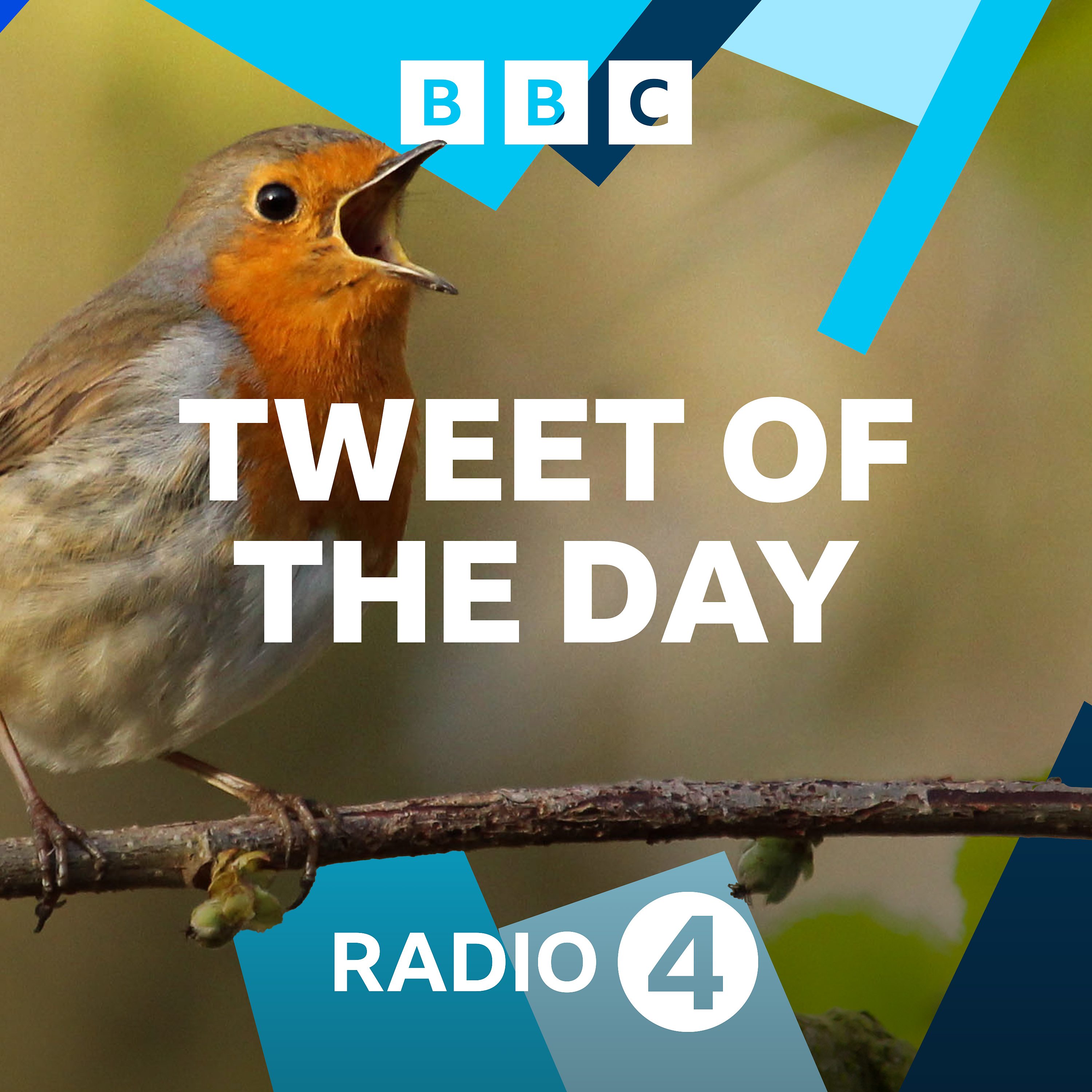
Discover birds through their songs and calls. Each Tweet of the Day begins with a call or song, followed by a story of fascinating ornithology inspired by the sound.
-
719
Isabella Tree on the Cuckoo
Conservationist Isabella Tree tells the story of a remarkable cuckoo called Sayaan, who in April this year returned to her home and rewilding project at Knepp for the third year running. They are part of the British Trust for Ornithology’s Cuckoo Tracking Project, putting GPS trackers on cuckoos so we can learn about their migrations and help conservation. Sayaan left his overwintering grounds in the Congo in January, and crossed Nigeria, Benin, Togo, Ghana and Côte d’Ivoire, refuelling on insects before heading off across the Sahara desert to Algeria, Ibiza and the Pyrenees. Finally he made the last 1000 km sprint to Knepp. For Isabella, the sound of every cuckoo, is the sound of triumph.This programme features recordings by Hazel Reeves recorded at Knepp, and audio from Xeno-Canto by Frode Falkenberg (Common Cuckoo - XC1139781).Produced by Sophie Anton for BBC Audio Production in Bristol.
-
718
Roland Arnison on the Storm Petrel
We join explorer Roland Arnison on a kayaking expedition to the outer Hebrides on a quest to record the call of the storm petrel. These small and elusive seabirds spend most of their time at sea, nesting on rocky isles around the western coasts of the UK. While camping on the coastline of a remote uninhabited island, Roland patiently waited through the night until he heard the digital trill of the 'stormy' ring out in the dark.This programme features audio recorded by Roland Arnison, and it was produced by Sophie Anton for BBC Audio Production in Bristol.
-
717
Mike Dilger on the Whimbrel
For Naturalist Mike Dilger the whimbrel has just as much star power as the curlew. He likes to spot whimbrel on the Severn estuary as they migrate north on route to their breeding grounds in Scandinavia, Iceland and Russia. But to see this wader at its best, Mike recommends heading to their solitary British breeding outpost in Shetland where whimbrel combine their distinctive piping call with a bubbling flight song.Produced by Sophie Anton for BBC Audio in Bristol.
-
716
Juliet Vickery on the Woodcock
The CEO of the British Trust for Ornithology, Juliet Vickery, describes an encounter with a patrolling male woodcock 30 years ago, watching it circle its territory from high in the sky. Apart from this display these waders are very hard to see, usually inhabiting dense woods and heathland, which also makes them hard to monitor. However thanks to generations of volunteer observers, we know that the distribution of breeding woodcock in the UK is sadly less than half of what it was in the 1960s. Produced by Sophie Anton for BBC Audio in Bristol.
-
715
Isabella Tree on the Nightingale
Author and conservationist Isabella Tree began inviting friends over to hear nightingales at Knepp, her home and rewilding project in West Sussex, 15 years ago. Nightingales used to be associated with coppiced woodland, but at Knepp they’re thriving in dense, thorny scrub which provides protection for their nests, which they build a foot or so above the ground. Though nightingales are still one of the UK's rarest birds, today Knepp has around 60 singing males a year – around 1% of the UK population. Produced by Sophie Anton for BBC Audio in Bristol.This programme features audio recorded by Hazel Reeves at Knepp.
-
714
Jack Baddams on the Spotted Flycatcher
Ornithologist Jack Baddams remembers chancing upon his first spotted flycatcher nest at Creswell Crags in Derbyshire. He became hooked on them after that, and fitted the adult birds with coloured rings to see who had safely returned from Africa. Although the spotted flycatcher may not have the most interesting song, Jack was drawn to them by their behaviour, and the way they would dart out from the limestone crags to snatch an insect on the wing.Produced by Sophie Anton for BBC Audio Bristol.
-
713
George McGavin on the Swift
Entomologist George McGavin worked at the Oxford University Museum of Natural History for 25 years, where each year he looked forward to the return of swifts to their nest boxes.Produced by Sophie Anton for BBC Audio in Bristol.
-
712
Liz Berry on the Kingfisher
Poet Liz Berry has been sailing the Shropshire Union canal on a narrow boat since she was young. She describes the canal winding out of Wolverhampton into beautiful emerald green cuttings, where if you're lucky you might see a kingfisher. The canal's shallow and slowly moving waters are perfect hunting grounds. For Liz the azure and copper flash of a kingfisher darting low across the water is a magical sight.Produced by Sophie Anton for BBC Audio Production in Bristol.
-
711
Roland Arnison on the Fulmar
Explorer and wildlife filmmaker Roland Arnison has been kayaking along Scotland's west coast on a quest to record the sounds of seabirds. Of all the many species he's encountered, it was the fulmar that really captured his heart.Produced by Sophie Anton for BBC Audio in Bristol.This programme features audio recorded by Roland Arnison on the Isle of Mingulay.
-
710
Polly Atkin on the Grey Wagtail
Non-fiction writer Polly Atkin tells the story of a magical moment when a grey wagtail joined her swimming by a waterfall in a tree-lined gorge.Produced by Sophie Anton for BBC Audio in Bristol.Featuring audio recorded by Jarek Matusiak from Xeno-Canto (Grey Wagtail -XC360715).
-
709
Jo Wimpenny on the Red Kite
The zoologist and writer Jo Wimpenny shares a story of a close encounter with a red kite in the Chiltern Hills, which swooped in to steal some food. This has become a more common experience in the area with the bird's population having grown by over 1,000% since the 1990s. Jo points out that although the return of a species that lives so well alongside humans won't always be welcomed, it's helpful to remember our shared past, like when hundreds of years ago red kites were valued for clearing streets of carrion and waste.Produced by Sophie Anton for BBC Audio in Bristol.This programme features audio recorded by Simon Elliott from Xeno-Canto (Red Kite - XC1070598).
-
708
Jack Baddams on the Siskin
For ornithologist and wildlife researcher for BBC's Springwatch, Jack Baddams, March is 'siskin season'. As a licenced bird ringer, he puts ID rings on wild birds so we can learn more about their lives. One of Jack's favourite bird encounters while ringing was during a bird ringing demonstration for the public. The crowd was fascinated by a female siskin with its delicate citrus green and yellow plumage, but then she became even more amazing when they discovered she was already wearing a ring of Swedish origin. Produced by Sophie Anton for BBC Audio in Bristol.This programme features audio from Xeno-Canto recorded by Simon Elliott (Eurasian Siskin - XC594919).
-
707
Mike Dilger on the Cetti's Warbler
Naturalist and TV presenter Mike Dilger remembers spending a bird breeding season 30 years ago surveying the Cetti's warbler. The Cetti's has a secretive nature, and like most birders Mike is more familiar with its explosive song rather than it's appearance, which has been described as ‘someone dropping a saxophone in a reed-bed’. Since Mike's foray into the world of conservation science in the mid-nineties the population of the Cetti's warbler has increased rapidly in the UK, most likely due to milder winters.Produced by Sophie Anton for BBC Audio in Bristol.This programme features audio from Xeno-Canto recorded by Simon Elliott (Cetti's Warbler - XC792549).
-
706
Juliet Vickery on the Dipper
CEO of the British Trust for Ornithology Juliet Vickery fell in love with dippers while studying them during her PhD in south-west Scotland. She finds them packed full of character, and perfectly adapted to life between water and land. Dippers have to make sure their complex song is heard above the sound of rushing water, and for Juliet the combination of bubbling bird song and bubbling brook is completely magical.Produced by Sophie Anton for BBC Audio in Bristol.
-
705
Roland Arnison on the Manx Shearwater
In 2024 and 2025 expedition leader and film-maker Roland Arnison kayaked along the west coast and isles of Scotland to find and record the sounds of seabird species. As part of his quest he stopped on the island of Lunga, a protected area for its breeding seabird colonies and incredible place to spot them. One night Roland climbed the cliffs to find a colony of Manx shearwaters and recorded them calling from their burrows.Presented by Roland Arnison and produced by Sophie Anton for BBC Audio in BristolThis programme features audio recorded on Lunga by Roland Arnison.
-
704
Horatio Clare on the Buzzard
The writer Horatio Clare remembers the buzzards of his childhood, which soared above his home in the Black Mountains in south Wales.Produced by Sophie Anton for BBC Audio in Bristol.
-
703
Liz Berry on the Wren
Poet Liz Berry lived near the Wren's Nest Nature Reserve in the Black Country for years, but it was only recently that she stopped and listened to a real wren there. It made her think how the bird was hiding in the place name, which is one of Britain's most important geological sites. The wren's latin name Troglodytes troglodytes means 'cave-dweller', reminding Liz of the folk that used to work in the mines that have shaped the Wren's Nest landscape.Produced by Sophie Anton for BBC Audio in Bristol.
-
702
Hannah Stitfall on the Long-tailed Tit
Every Spring wildlife filmmaker Hannah Stitfall heads out to look for long-tailed tits. She hopes to film them building their nests - intricate, domed structures built out of moss, feathers and spider silk. Unlike many other small birds, the long-tailed tit is capable of cooperative breeding, and will help relatives raise their chicks if their own don't survive. For Hannah the long-tailed tit is one of the quiet wonders of the countryside, and a reminder that even the smallest creatures live fascinating lives.Produced by Sophie Anton for BBC Audio in Bristol.
-
701
Polly Atkin on the Long-eared Owl
The non-fiction writer Polly Atkin is particularly fond of owls. Tawny owls surround her home in Grasmere in Cumbria, and she has observed the wintering of short-eared owls at the coast. One which remains elusive is the highly secretive long-eared owl, which Polly has never seen in the wild. Considered to be thinly but widely-spread in the UK, they are a scarce breeding species and very difficult to survey. Polly recalls stories from centuries ago of large colonies of long-eared owls resident in the Cumbrian woodland.Polly Atkin is the author of The Company of Owls (Elliott & Thompson).Produced by Sophie Anton for BBC Audio in Bristol.
-
700
George McGavin on the Gannet
As a child, the entomologist George McGavin found a dead gannet on the beach, and set about extracting the skull for his collection. He was fascinated to discover the hundreds of pointed barbs in its mouth. Now years later he marvels at this clever bit of evolution which prevents fish falling out of gannets' beaks as they dive into the water then become airborne again.Produced by Sophie Anton for BBC Audio in Bristol.
-
699
Juliet Vickery on the Brent Goose
CEO of the British Trust for Ornithology Juliet Vickery is particularly fond of brent geese, having studied them on the Norfolk coast for three winters. They are our smallest goose, which migrate from the Arctic Circle every year. She describes what she learnt about fluctuations in their population, and the fascinating connection with lemmings in the Siberian tundra.Produced by Sophie Anton for BBC Audio in Bristol.This programme features recordings from Xeno-Canto by David Darrell-Lambert (XC994302 and XC994306)
-
698
Horatio Clare on the Rook
The writer Horatio Clare has a message from the rooks, pointing out the ways they differ from crows.Produced by Sophie Anton for BBC Audio in Bristol.This programme features audio from Xeno-Canto recorded by Olivier Swift (Rook - XC703729)
-
697
Tolga Aktas on the Jackdaw
Conservation biologist Tolga Aktas shares his fascination with watching jackdaws. He was struck by the contrast between its black plumage and piercing pale eyes, which they likely use as a communication tool. Jackdaws form large, noisy communal winter roosts with other species, and aren't afraid to mob predators behaviour which Tolga finds spectacular to see.Presented by Tolga Aktas and produced by Sophie Anton for BBC Audio Production in Bristol.
-
696
Polly Atkin on the Short-Eared Owl
The poet and non-fiction writer Polly Atkin observes the wintering of short-eared owls in Cumbria. They are the UK's most nomadic owl, with residents joined by migrants from Scandinavia, Iceland and Russia, seeking a gentler version of the season. Fellow owl-lovers have told Polly of the moment they arrive exhausted at the coast, and she has watched a pair nest in a building site near the sea, concerned how they would survive.Polly Atkin is the author of The Company of Owls (Elliott & Thompson).Presented by Polly Atkin and produced by Sophie Anton for BBC Audio Production in Bristol.This programme features recordings from Xeno-Canto by Lars Edenius (XC731000 and XC731272 - Short-eared owl)
-
695
Liz Berry on the Robin
For poet Liz Berry, December is the robin's month, when our hearts are warmed by its singing under frosty streetlights. She wonders if its midwinter song is one of the reasons why we feel close to robins, and imagine them as our companions in the thin places between living and dying. Liz tells the story of how the robin brought her hope during a difficult pregnancy, inspired by its fierceness and willingness to survive. Presented by Liz Berry and produced by Sophie Anton for BBC Audio in Bristol.This programme features a recording by Martin Billard from Xeno-Canto (XC871726 - European Robin)
-
694
Horatio Clare on the Pheasant
The author and journalist Horatio Clare reflects on the cultural history of the human relationship with pheasants. Its Latin name Phasianus Colchicus links the pheasant to the ancient kingdom of Colchis on the shores of the Black Sea, made famous in Greek mythology as the land of the Golden Fleece. These large, colourful long-tailed birds are native to Asia, and likely journeyed to western Europe with the Romans, becoming a symbol of wealth and status. The Normans are credited with popularising the shooting of pheasants in the 11th century, an industry which today releases an estimated 30-45 million captive-bred pheasants into the British countryside every year.Presented by Horatio Clare and produced by Sophie Anton for BBC Audio in Bristol.This programme features audio from Xeno-Canto recorded by Simon Elliot, David M and Tanguy Loïs (XC155202, XC640749 and XC727854 - Common Pheasant).
-
693
Paul Farley on the Starling
In the season where starlings gather to murmurate in our winter skies, poet Paul Farley is admiring this dazzling bird up close. Every spring a pair of starlings used to nest in a hollow wall in the house where Paul grew up, and he never got tired of studying its dark iridescent plumage. Laying in bed at night Paul would hear the starlings' impressive mimicry, and remembers the sound of a radio being tuned and even human voices, imagining that these intelligent birds have been curiously studying us.Presented by Paul Farley and produced by Sophie Anton for BBC Audio in Bristol.This programme features a recording by Oliver Swift from Xeno-Canto (XC710439 - Common Starling)
-
692
Amy-Jane Beer on the Carrion Crow
When nature writer Amy-Jane Beer moved to her current home, it seemed like the perfect rural dream. However, there then came an insistent knocking sound every morning - a pair of carrion crows would tap the windows, affronted by their reflections. Amy describes watching and learning to love these birds, which she sees as her quirky, idiosyncratic neighbours.Presented by Amy-Jane Beer and produced by Sophie Anton for BBC Audio in Bristol.Featuring a recording by Martin Billard from Xeno-Canto (Carrion Crow - XC929595)
-
691
Polly Atkin on the Tawny Owl
The home of poet and non-fiction writer Polly Atkin is surrounded by tawny owls. They are the most common owl in Britain, ranging from 20,000 to 50,000 breeding pairs, though we don't know exactly how many. Polly describes hearing the first melancholy call of a tawny owl in autumn, echoing around the lake at Grasmere. Kept awake by chronic illness, the owls' nighttime calls remind Polly that we are not alone, the sound means company, community and home.Polly Atkin is the author of The Company of Owls (Elliott & Thompson).Presented by Polly Atkin and produced by Sophie Anton for BBC Audio in Bristol.
-
690
Paul Farley on the Shelduck
Poet Paul Farley welcomes the return of the shelduck to our shores, back after their summer migration to the Wadden Sea. These vast mudflats off the coast of The Netherlands and Germany provide a refuge for shelducks as they go through their so-called 'catastrophic moult' where they simultaneously loose all their flight and tail feathers. Paul imagines this vast gathering of around 200,000 birds as sort of 'Shelduck Glastonbury' where they get completely flightless, and is always glad to see them home.Presented by Paul Farley and produced by Sophie Anton for BBC Audio in Bristol
-
689
Roland Arnison on the Leach's Petrel
In 2024 and 2025 expedition leader and film-maker Roland Arnison kayaked along the west coast and isles of Scotland to find and record the sounds of seabird species. His quest took him 40 miles out into the Atlantic to St Kilda in search of the Leach's petrel, one of Britain's rarest birds that only nests on a handful of offshore rocky islands. We join Roland scrambling up a cliff at midnight to hear the extraordinary call of this nocturnal bird.Presented by Roland Arnison and produced by Sophie Anton for BBC Audio in BristolThis programme features audio recorded on St Kilda by Roland Arnison.
-
688
George McGavin on the Red-backed Shrike
Entomologist and wildlife presenter George McGavin describes his lifelong fascination with the red-backed shrike. When George bought his first bird guide at the age of 10, this small shrike caught his eye because of its habit of impaling large insects and small vertebrates on thorns. This 'butcher bird' was once a common visitor to the south of England but was lost as a British breeding species by the 1990s - and it wasn't until 50 years after first reading about it that George finally got to see one.Presented by George McGavin and produced by Sophie Anton for BBC Audio in BristolFeaturing a recording from Xeno-canto by Elias A. Ryberg (Red-backed shrike - XC676551)
-
687
Paul Farley on the Redwing
Poet Paul Farley muses on the autumnal arrival of redwings, small thrushes that migrate here from continental and northern Europe to spend the winter. Paul watches a flock of redwings feast on a rowan tree laden with berries, and listens out for their high-pitched nocturnal call as they move under the cover of darkness.Presented by Paul Farley and produced by Sophie Anton for BBC Audio in Bristol.This programme features a recording from Xeno-canto by Mats Rellmar (Redwing - XC711115)
-
686
Hannah Stitfall on the Firecrest
As autumn ripens in Cornwall, wildlife filmmaker and TV presenter Hannah Stitfall goes out in search of the firecrest. For Hannah, the firecrest is a jewel of the forest, with its dazzling golden crest and bright white eye-stripe. The dense evergreen woodlands and mild climate in Cornwall offer the perfect shelter and feeding grounds. Most firecrests seen in Cornwall in autumn are migrants from central Europe, pausing here on their way to their wintering grounds in southern Europe and north Africa. Hannah finds them notoriously difficult to film, but if you're lucky you might spot one hunting for insects hidden in leaves and pine needles.Presented by Hannah Stitfall and produced by Sophie Anton for BBC Audio in Bristol.
-
685
Jo Wimpenny on the Moorhen
Standing on a lake edge and eager to spot some wildlife, zoologist and author Jo Wimpenny is disappointed to just find a moorhen. But then she stops herself - why does no one get excited about seeing these birds? From climbing trees to promiscuity and egg dumping, Jo finds out there is far more to moorhen life than its humble status suggests.Presented by Jo Wimpenny and produced by Sophie Anton for BBC Audio in BristolThis programme features recordings from Xeno-Canto by Simon Elliott (Common Moorhen - XC572582 and XC572900)
-
684
Tolga Aktas on the Jay
Conservation biologist Tolga Aktas remembers his first encounter with a jay, in a busy park in south London. Even though jays are widespread in the UK, they can be elusive, so to see such a colourful and exotic-looking bird in his humble park was a special moment. Autumn is a great time to look out for jays, when they're foraging for and burying acorns, to retrieve later in the winter.Presented by Tolga Aktas and produced by Sophie Anton for BBC Audio in BristolThis programme features a recording from Xeno-Canto by Arjun Dutta (Eurasian Jay - XC915378)
-
683
Amy-Jane Beer on the Song Thrush
The song thrush's morning proclamations remind naturalist and writer Amy-Jane Beer that she's home. In this episode Amy describes how she finds the confident delivery of this species' song reassuring and grounding in troubled times.Produced by Sophie Anton for BBC Audio in Bristol
-
682
George McGavin on the Snowy Owl
Entomologist and wildlife presenter George McGavin describes a magical encounter with a snowy owl. The sighting happened while George was on a university field recording trip fifty years ago, on the island of Unst in Shetland. Snowy owls primarily live in the polar Arctic regions, and while a small number have previously bred in Shetland, they remain rare visitors, so to spot one in the British Isles is incredibly lucky. Presented by George McGavin and produced by Sophie Anton for BBC Audio in BristolFeaturing a recording from Xeno-Canto by Patrik Åberg: Snowy owl - XC277682
-
681
Hannah Stitfall on the Chiffchaff
For wildlife filmmaker and TV presenter Hannah Stitfall, the chiffchaff's song is the first sign of Spring. Each year in March and April she will spend hours following these little birds along the hedgerows trying to get some good shots, watching them feeding from flowering blackthorn, with their beaks covered in pollen. By mid-summer chiffchaffs shift their energy from courtship to preparation, as they will soon be off on their long migration to their wintering grounds. Hannah always listens out for the chiffchaff's last song of the season, before they head back to southern Europe and North Africa.Presented by Hannah Stitfall and produced by Sophie Anton for BBC Audio Production in Bristol.
-
680
Paul Farley on the Reed Bunting
In poet Paul Farley's house the reed bunting is known as The Vicar. For Paul, the way it finds a high place on the tip of a reed from which to call gives off a pulpit vibe, and the contrast between the jet-black head and the brilliant white collar beneath makes it like a bird of the cloth. Whenever he sees a reed bunting in the reedbeds at the Leighton Moss nature reserve in Lancashire, a poem always writes itself.Presented by Paul Farley and produced by Sophie Anton for BBC Audio Production in BristolFeaturing a recording from Xeno-Canto by Simon Elliott: Common Reed Bunting - XC787452.
-
679
Jo Wimpenny on the New Caledonian Crow
If you were walking past the Zoology building at the University of Oxford in the mid-noughties, you might have heard an unusual bird call. It’s undeniably crow-like, but not a UK native. It’s the New Caledonian crow, and zoologist and author Jo Wimpenny was studying them for her PhD. Jo describes her fondness for this bird, which is one of nature's smartest, due to its ability to make and use tools.Presented by Jo Wimpenny and produced by Sophie Anton for BBC Audio Production in Bristol.Featuring a recording from Xeno-Canto by Patrik Åberg: New Caledonian Crow - XC40120.
-
678
Amy-Jane Beer on the Reed Warbler
For naturalist and writer Amy-Jane Beer, the scratchy song of a reed warbler reminds her of a superstar DJ. In a marshy corner of a lake in Yorkshire she comes across this tiny brown-beige bird – or ‘classic little brown job’. But Amy finds the reed warbler’s song anything but nondescript – from his spot in the reedbed he is holding space like a DJ in an Ibiza club, scratching and mixing a hypnotic blend of sound.Produced by Sophie Anton for BBC Audio Bristol Production
-
677
Tolga Aktas on the Wood Pigeon
For conservation biologist Tolga Aktas, a walk through the city is an opportunity to observe different species of pigeon. His favourite is the wood pigeon, which is the UK’s most widespread and common pigeon. Walking through London’s parks and squares, Tolga spots the differences between wood pigeons and feral pigeons by the colours of their neck patches. Now he’s moved to the Gloucestershire countryside, the cooing call of a wood pigeon is one of the sounds that evokes the feeling of home and childhood nostalgia.Produced by Sophie Anton for BBC Audio Production in Bristol
-
676
Anita Sethi on the Lapwing
Nature author and travel writer Anita Sethi describes a vivid experience of seeing - and hearing - lapwings while walking on the West Pennine Moors. While being too fast for her to capture on camera, she recognised their distinctive call, and was stuck by their "acrobatics of sound" as they soared above her. Anita has also seen lapwings up close too, admiring their "funky hairdo" and the way their iridescent green and purple sheen lights up in the sun. Lapwings can be seen throughout the UK and their display flights are most visible during the breeding season, which typically runs from mid-March to June. Lapwings are now on the IUCN Red List of Threatened Species due to significant population declines – so every sighting makes Anita's heart soar.Producer: Sophie Anton for BBC Audio in Bristol
-
675
Satish Kumar and the Peacock
Satush Kumar was born in Rajasthan, India, where the Peacock, the Mayura, is a sacred bird and also associated with the monsoon. In India, it is believed that after the long, hot summer peacocks come out and display their bright and vibrant feathers in an extravagant dance to please Indra, the god of rain, before calling to let the rains begin, bringing relief to plants, animals, soils and humans. Producer : Andrew Dawes Image : Copyright Resurgence Magazine
-
674
Satish Kumar on the Blackbird
Peace & environment activist, Satish Kumar has lived in Devon for many years. In his garden he loves hearing the sweet melodious calls from a blackbird singing on a stone wall. Producer : Andrew Dawes Picture : Copyright Gregg Dalgllish / Resurgence Magazin
-
673
Gillian Clarke and the Grey Heron
For Welsh poet and playwright Gillian Clarke she has had two close encounters with a grey heron, including the one in her garden reminding her of a Bishop wearing vestments.You can hear more from Gillian in the Tweet of the Week Omnibus available on BBC SoundsProducer : Andrew Dawes
-
672
Gillian Clarke on the Red Kite
Welsh poet and playwright Gillian Clarke first saw a red kite in the Welsh mountains as a child, a bird which now has expanded east and now Gillian regularly sees them sky-dancing over Reading while she travels to London on the train.Producer : Andrew Dawes
-
671
Geoff Samples Dupont's Lark
For wildlife sound recordist Geoff Sample the strange sound of Dupont's lark is something of an enigma, as despite recording half a dozen birds he has never actually seen one.Producer : Andrew Dawes
-
670
Geoff Sample's Orphean Warbler
For wildlife sound recordist Geoff Sample hearing the jazz like notes of the Orphean warbler on the island of Lesvos reminds me of the legend of how the bird got its name.All this week Geoff will be selecting his bird species from the Tweet of the Day archive which can be heard again on the Tweet of the Week Omnibus.Producer : Andrew Dawes
We're indexing this podcast's transcripts for the first time — this can take a minute or two. We'll show results as soon as they're ready.
No matches for "" in this podcast's transcripts.
No topics indexed yet for this podcast.
Loading reviews...
ABOUT THIS SHOW
Discover birds through their songs and calls. Each Tweet of the Day begins with a call or song, followed by a story of fascinating ornithology inspired by the sound.
HOSTED BY
BBC Radio 4
CATEGORIES
Loading similar podcasts...
Frequently Asked Questions
How many episodes does Tweet of the Day have?
Tweet of the Day currently has 50 episodes available on PodParley. New episodes are automatically indexed when they're published to the podcast feed.
What is Tweet of the Day about?
Discover birds through their songs and calls. Each Tweet of the Day begins with a call or song, followed by a story of fascinating ornithology inspired by the sound.
How often does Tweet of the Day release new episodes?
Tweet of the Day has 50 episodes. Check the episode list to see recent publication dates and frequency.
Where can I listen to Tweet of the Day?
You can listen to Tweet of the Day on PodParley by clicking any episode. We provide an embedded audio player for direct listening, and you can also subscribe via your preferred podcast app using the RSS feed.
Who hosts Tweet of the Day?
Tweet of the Day is created and hosted by BBC Radio 4.
URL copied to clipboard!