
PODCAST · society
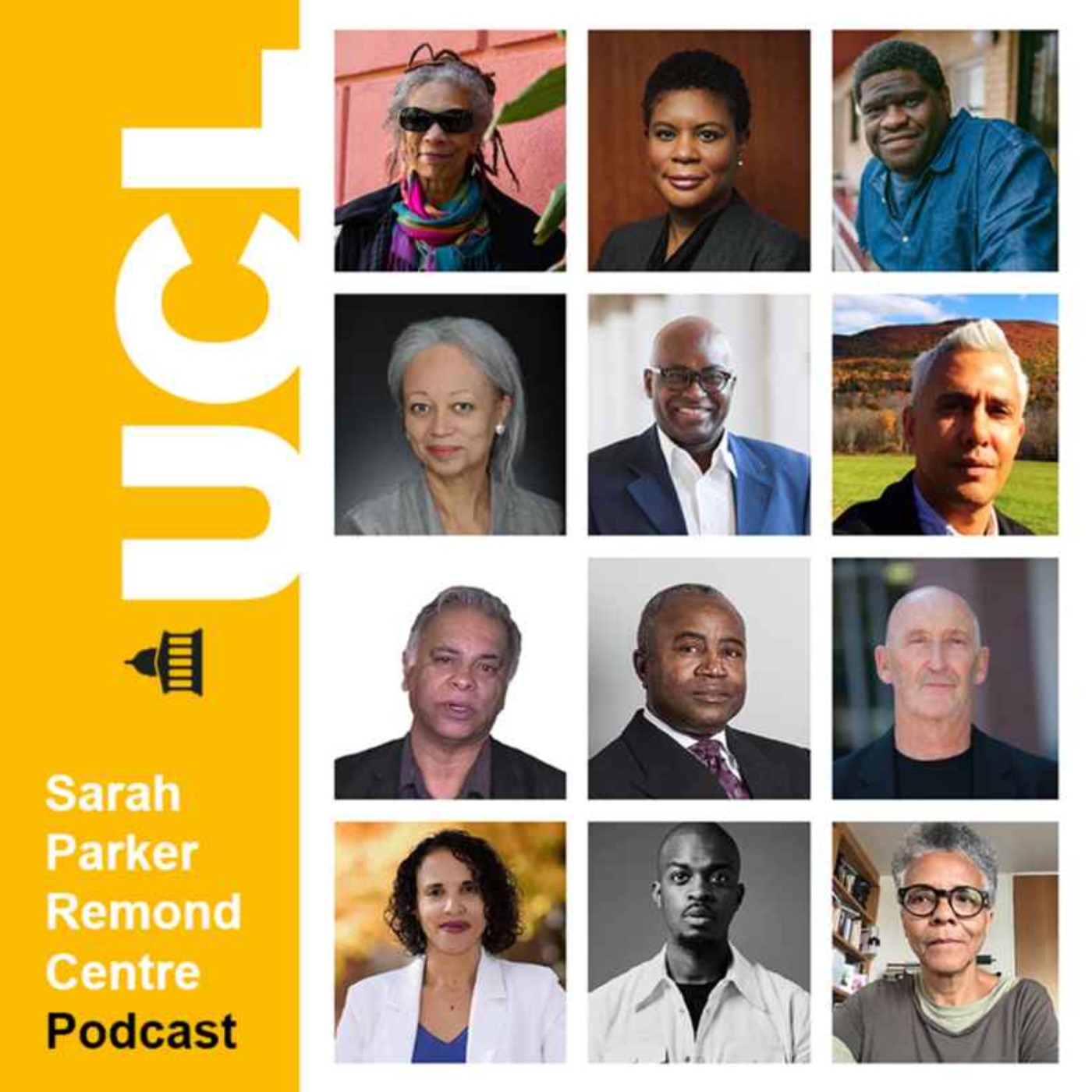
UCL Sarah Parker Remond Centre Podcast
by UCL Sarah Parker Remond Centre
UCL Sarah Parker Remond Centre for the Study of Racism and Racialisation. Welcome to our podcast highlighting important research and conversations on racism and racialisation, with contributions from academics, activists and cultural practitioners.Transcripts available here: www.ucl.ac.uk/racism-racialisation/transcriptswww.ucl.ac.uk/racism-racialisation/ Hosted on Acast. See acast.com/privacy for more information.
-
78
SPRC In Conversation with Dr Chenchen Zhang
Luke de Noronha is joined by Chenchen Zhang, Associate Professor in International Relations at Durham University. Chenchen’s book Easting the West: Theorizing the Postliberal Conjuncture from China, was published by Oxford University Press in June 2026. The book examines how ideas of ‘the West’ and articulations of China-West difference are produced and mobilized in contemporary China, with a focus on reactionary political discourse in Chinese cyberspace. Chenchen situates the Chinese case study within a wider critique of the global far right and postcolonial nationalisms. This podcast was recorded in June 2026. Hosted on Acast. See acast.com/privacy for more information.
-
77
SPRC In conversation with Rahul Rao: Statues, idols and why we love the idea of an animate object
A conversation about Rahul Rao’s book, ‘The Psychic Lives of Statues’. The conversation considers the agitation caused by attempts to remove celebratory statues of figures involved in the violence of the Atlantic Slave trade or of colonialism. Are statues made into ‘idols’ by people who want to defend these histories? How should we understand the sudden ‘coming alive’ of these previously forgotten and unnoticed representations of the human form? What can we learn from the distinctive erection of statues by corporate or state projects in our time and should we view these recent attempts to mark and control space through statues as a continuation of the spatial and representation tactics of European colonialism?The conversation was recorded in July 2025.Speakers: Gargi Bhattacharyya and Rahul Rao. Hosted on Acast. See acast.com/privacy for more information.
-
76
SPRC In conversation with Gavan Titley
Luke de Noronha is joined by Gavan Titley, Professor in the Department of Media Studies at Maynooth University. Gavan has written several books on race, racism and multiculturalism, with a particular focus on the generative role of media and communication, including Is Free Speech Racist? with Polity Press in 2020. They discuss the question of free speech, which has become so central to questions of native entitlement and authoritarian populism in the present. The conversation was recorded in November 2025. Speakers: Luke de Noronha and Gavan Titley Hosted on Acast. See acast.com/privacy for more information.
-
75
SPRC In Conversation with Sita Balani
Luke de Noronha welcomes Sita Balani, Senior Lecturer in English at Queen Mary University of London and the author, most recently, of Deadly and Slick: the Sexual Life of Race in Britain (Verso Press, 2023). They discuss Sita’s recent writings on culture wars, melodrama as a mode of political communication, and the difference between the ordinary and normal. This conversation was recorded in November 2025Speakers: Luke de Noronha and Sita BalaniProducer: Trisha HartEditor: James Fox Hosted on Acast. See acast.com/privacy for more information.
-
74
SPRC In Conversation with Keir Milburn and Kai Heron: Part 3
Radical Abundance – understanding the reconfiguration of the global economy and how we might survive itKeir Milburn and Kai Heron in conversation with Gargi Bhattacharyya. This conversation was recorded in the summer of 2025 and discusses the changing role and approach of the United States and the extreme hardships arising from climate catastrophe as triggers to re-imagine the global economy.The conversation was recorded before the publication of Kai and Keir’s excellent and celebrated book, ‘Radical Abundance’, but the themes of the conversation echo the preoccupations of the book.There was a lot to discuss here – as a result we have split the conversation into three sections for ease of listening. Hosted on Acast. See acast.com/privacy for more information.
-
73
SPRC In Conversation with Keir Milburn and Kai Heron: Part 2
Radical Abundance – understanding the reconfiguration of the global economy and how we might survive itKeir Milburn and Kai Heron in conversation with Gargi Bhattacharyya. This conversation was recorded in the summer of 2025 and discusses the changing role and approach of the United States and the extreme hardships arising from climate catastrophe as triggers to re-imagine the global economy.The conversation was recorded before the publication of Kai and Keir’s excellent and celebrated book, ‘Radical Abundance’, but the themes of the conversation echo the preoccupations of the book.There was a lot to discuss here – as a result we have split the conversation into three sections for ease of listening. Hosted on Acast. See acast.com/privacy for more information.
-
72
SPRC In Conversation with Keir Milburn and Kai Heron: Part 1
Radical Abundance – understanding the reconfiguration of the global economy and how we might survive itKeir Milburn and Kai Heron in conversation with Gargi Bhattacharyya. This conversation was recorded in the summer of 2025 and discusses the changing role and approach of the United States and the extreme hardships arising from climate catastrophe as triggers to re-imagine the global economy.The conversation was recorded before the publication of Kai and Keir’s excellent and celebrated book, ‘Radical Abundance’, but the themes of the conversation echo the preoccupations of the book.There was a lot to discuss here – as a result we have split the conversation into three sections for ease of listening. Hosted on Acast. See acast.com/privacy for more information.
-
71
SPRC In Conversation with Edna Bonhomme
Gala Rexer talks to Edna Bonhomme, culture writer, historian of science, journalist, and author of “A History of the World in Six Plagues: How Contagion, Class, and Captivity Shaped Us, from Cholera to COVID-19” (2025). The conversation covers theoretical and methodological questions about the relationship between confinement and disease, Edna’s anti/inter-disciplinary approach to writing, health and illness in literature, and how the intersectional fight for prison abolition relates to struggles for health equality. This conversation was recorded in June 2025Speakers: Dr Gala Rexer, Leverhulme Fellow at the University of Warwick and Honorary Research Fellow at the SPRC // Dr Edna Bonhomme Producer: Gala Rexer and Trisha HartEditors: James Fox Hosted on Acast. See acast.com/privacy for more information.
-
70
In conversation with Subhadra Das: Ten Lies, Ten Questions
In this podcast, Subhadra Das answers ten questions on ten lies that make up Western Civilisation. The conversation covers looting, the value of art, the history of statistics, remaking public history, repatriating stolen objects, and what museums and institutions could be doing with their zombies.Subhadra Das is a writer, historian, broadcaster and comedian who looks at the relationship between science and society. She specialises in the history and philosophy of science, particularly the history of scientific racism and eugenics. For nine years she was Curator of the Science Collections at University College London. She has written and presented podcasts and stand-up comedy shows, curated museum exhibitions, and has appeared on radio and TV. She is now working on a book about the golden age of detective fiction and the history of eugenics.Lara Choksey is Lecturer in Colonial and Postcolonial Literatures at UCL English, and Associate Faculty at the UCL Sarah Parker Remond Centre. Hosted on Acast. See acast.com/privacy for more information.
-
69
In Conversation: Geopolitics, catastrophe and trying to comprehend the world
Discussion of Gargi’s research and the new module designed to open conversations about how we might understand the interplay between global politics and the global economy in this moment of rapid realignment.Speakers:Gargi Bhattacharyya, Paige Patchin, Luke de Noronha Hosted on Acast. See acast.com/privacy for more information.
-
68
In Conversation: The politics of health in a time of climate crisis
Discussion of Paige’s research on questions of health, racism and why we must learn to understand the languages of the biological and the pharmaceutical if we are to grasp emerging technologies of racialisation.Speakers:Paige Patchin, Luke de Noronha, Gargi Bhattacharyya Hosted on Acast. See acast.com/privacy for more information.
-
67
In Conversation: Movement, bodies and the question of race-making
Discussion of Luke’s research and why thinking about movement and bordering allows us understand emerging machineries of (perhaps) racialised violence.Speakers:Luke de Noronha, Paige Patchin, Gargi Bhattacharyya Hosted on Acast. See acast.com/privacy for more information.
-
66
Short Takes: Deporting Black Britons – 5 Years On
In this Short Takes, Luke reads the preface to the paperback edition of Deporting Black Britons: Portraits of Deportation to Jamaica, published with Manchester University Press in June 2025. Hosted on Acast. See acast.com/privacy for more information.
-
65
In conversation with Baroness Lola Young of Hornsey
Dr Clive Chijioke Nwonka is joined by Baroness Lola Young of Hornsey. Lola Young became one of the first Black Women members of the House of Lords in 2004. Raised in foster care in north London, she studied at the New College of Speech and Drama, then worked as an actress, before becoming Professor of Cultural Studies at Middlesex University. Later, she worked in arts administration before receiving an OBE in 2001 for services to Black British History, and becoming an independent crossbench member of the House of Lords. She is active in campaigns on modern slavery and ethical fashion. Her new book, Eight weeks: Looking Back, Moving Forwards, Defying the Odds (Penguin 2024) is a deeply moving memoir that tells the remarkable life story of Baroness Young from her childhood in foster care the House of Lords. Here, Clive and Lola they discuss her latest book, its themes and some of the ideas and experiences that have shaped Lola’s writing, scholarship, and public life. Hosted on Acast. See acast.com/privacy for more information.
-
64
In conversation with Vron Ware and Jim Scown
Vron Ware and Jim Scown join Lara Choksey for a conversation about the histories that connect soil to colonialism and imperialism, and why these connections matter for agricultural production now and in the future. Vron and Jim reflect on links between militarism and the English countryside, online far-right content and the decline of rural mental health services, and what nineteenth-century soil science might tell us about national identity. Discussing Vron’s book, Return of a Native (Repeater 2022), and their shared interest in the organic chemist Justus von Liebig, the conversation addresses the many scales operating in our sense of the local, from the parochial to the planetary. Hosted on Acast. See acast.com/privacy for more information.
-
63
In conversation with George the Poet
Clive Chijioke Nwonka is joined by George the Poet. George is a spoken word artist, poet, rapper, podcast host and author, who has gained a following of over millions through his commentary and creative work addressing systemic injustice in the UK. Here, we discuss his latest book, Track Record, a fascinating memoir in intellectual exploration of race, belonging, music and injustice. Throughout this podcast, they’ll be discussing George’s latest book, its themes, their shared experiences growing up in North West London, and some of the ideas that formed and shaped George’s writing and intellectual work.Speakers: George the Poet, spoken-word artist, poet and podcast host of Have You Heard George’s Podcast // Dr Clive Chijioke Nwonka, Associate Professor in Film, Culture and Society and Faculty Associate in the UCL Sarah Parker Remond Centre. Hosted on Acast. See acast.com/privacy for more information.
-
62
In conversation with Ben Woodard and Camille Crichlow
Lara Choksey welcomes Ben Woodard and Camille Crichlow for a conversation on scientific racism, drawing together the work of evolutionary biologist Stephen Jay Gould and decolonial theorist Sylvia Wynter. Focusing on two key works, Gould's The Mismeasure of Man (1981) that debunks the statistical methods and cultural beliefs of biological determinism, and Wynter's open letter to her colleagues on the 1992 Los Angeles Race Riots, 'No Humans Involved' (1994), the discussion ranges across fudged data, AI facial surveillance, the pseudo-science of white supremacy, and why a concept of the human beyond the purely biological matters.Ben Woodard is an affiliated fellow at the ICI in Berlin. He received his PhD in Theory and Criticism from Western University in 2016. He regularly lectures at the Melbourne School of Continental Philosophy, the School of Materialist Research, and the New Centre for Research and Practice. He has two forthcoming books: Uninhabited: Science Fiction and the Decolonial (Zero Books) and F.H. Bradley and the History of Philosophy: Animating a Lost Idealism (Edinburgh University Press). Camille Crichlow is a PhD candidate at the UCL Sarah Parker Remond Centre for the Study of Racism and Racialisation. Her research interrogates how the historical and socio-cultural narrative of race manifests in contemporary algorithmic surveillance technologies. Her PhD project traces the historical expansion of biometric facial surveillance, considering both its present and historical iterations within evolving regimes of racial thinking. Lara Choksey is Lecturer in Colonial and Postcolonial Literatures in UCL English, and Faculty Associate in the UCL Sarah Parker Remond Centre.This conversation was recorded on 2 July 2024.Speakers: Dr Lara Choksey, Ben Woodard and Camille CrichlowProducer: Dr Lara Choksey and Kaissa KarhuEditors: Kaissa Karhu Hosted on Acast. See acast.com/privacy for more information.
-
61
In conversation with Alexandre White
Gala Rexer and a group of Race, Ethnicity, and Postcolonial Studies master students, Aisha Rana-Deshmukh, Gabriel Rahman, Julia Snow, and Alex Eaglestone, welcome Alexandre White, Assistant Professor of Sociology at Johns Hopkins University and author of Epidemic Orientalism (Stanford University Press, 2023). Dr. White discusses health and illness through the lens of racial and sexual boundaries in Victorian and contemporary horror and figures of the monstrous, the role of health regulations in the making of racial difference in the Middle East, and a humanistic approach to sociology and history.This conversation was recorded on 17th June 2024. Speakers: Dr Gala Rexer, Leverhulme Early Career Fellow, University of Warwick // Dr Alexandre White, Johns Hopkins University // students of the MA in REPS cohort: Aisha Rana-Deshmukh, Gabriel Rahman, Julia Snow, and Alex EaglestoneProducer: Dr Gala Rexer and Kaissa KarhuEditors: Kaissa Karhu Hosted on Acast. See acast.com/privacy for more information.
-
60
In conversation with Xine Yao
Gala Rexer welcomes Xine Yao, Associate Professor at UCL and author of Disaffected: The Cultural Politics of Unfeeling in Nineteenth-Century America (Duke University Press, 2021). Reflecting on how Disaffected has travelled as a book, a theory, and a method over the past two years, Xine speaks about what thinking though and with the fields of Black studies, Indigenous studies, Asian diasporic studies, and queer of colour critique does to our understanding of race, gender, and affect, and how we approach literary and cultural text as theory. They discuss how their citational practices shape teaching and scholarship, and explore the modes of affective disobedience that engender counter-intimacies and new forms of decolonial solidarity. This conversation was recorded on 19th July 2023. Speakers: Dr Gala Rexer, Lecturer at the Sarah Parker Remond Centre // Dr Xine Yao, University College LondonProducer: Dr Gala Rexer and Trisha HartEditors: Kaissa Karhu Hosted on Acast. See acast.com/privacy for more information.
-
59
In conversation with Akwugo Emejulu
Gala Rexer welcomes Akwugo Emejulu, Professor of Sociology at the University of Warwick and author of Fugitive Feminism (Silver Press, 2022). Discussing the figure of the fugitive from a Black feminist perspective, Akwugo addresses questions about solidarity and coalitional work, strategies of counter-storytelling and playing with new forms of writing, and discusses the difficulties of staying in the liminal space of fugitivity as a mode of experimentation, ambivalence, and disidentification from the figure of the Human. This conversation was recorded on 6th July 2023. Speakers: Dr Gala Rexer, Lecturer at the Sarah Parker Remond Centre // Professor Akwugo Emejulu, University of WarwickProducer: Dr Gala Rexer and Trisha HartEditors: Kaissa Karhu Hosted on Acast. See acast.com/privacy for more information.
-
58
In conversation with Musab Younis
Luke de Noronha welcomes Musab Younis, senior lecturer in politics and international relations at Queen Mary, University of London, and author of On the Scale of the World: The Formation of Black Anticolonial Thought (University of California Press, 2022). Musab traces the themes and arguments of his important new book, which examines the reverberations of anticolonial ideas that spread across the Atlantic between the two world wars. Musab gathers the work of writers and poets, journalists and editors, historians and political theorists whose insights speak urgently to contemporary movements for liberation. This conversation was recorded on 13th January 2023. Speakers: Dr Luke de Noronha, Lecturer in Race, Ethnicity & Postcolonial Studies Producer: Dr Luke de Noronha Editors: Kaissa Karhu Hosted on Acast. See acast.com/privacy for more information.
-
57
In conversation with Maya Mikdashi
Gala Rexer welcomes Maya Mikdashi, Associate Professor in the Department of Women’s, Gender, and Sexuality Studies and Lecturer in the Middle East Studies Program at Rutgers University, to talk about her book Sextarianism: Sovereignty, Secularism and the State in Lebanon (Stanford, 2022). Maya reflects on the multi-disciplinary genealogy of her book, and describes what it means to take different fields (anthropology, gender studies, and Middle East studies) seriously. This conversation also engages with the relationship between geopolitics, epistemology, and methodology, and with the making and unmaking of categories when we ask the same question from different locations. Maya also talks about doing ethnography and archival work, and our own investment in meaning and the desire to fix truth as scholars. This conversation was recorded on 27th January 2023. Speakers: Dr Gala Rexer, postdoctoral fellow at the Sarah Parker Remond Centre // Maya Mikdashi, Associate Professor in the Department of Women’s, Gender, and Sexuality Studies at Rutgers University. Producer: Lucy Stagg and Dr Gala Rexer Editors: Kaissa Karhu Hosted on Acast. See acast.com/privacy for more information.
-
56
In conversation with Maurice Stierl
Luke de Noronha welcomes Maurice Stierl, researcher at Osnabrück University in Germany and author of Migrant Resistance in Contemporary Europe (Routledge, 2019). Maurice describes the varied patterns of movement and militarisation at the sea borders of Europe: the Atlantic, Central Mediterranean, Aegean and Channel crossings. In both his intellectual and activist work, Maurice joins those demanding free movement for all and an end to Europe’s border violence. This conversation charts those urgent political struggles by and for people on the move.This conversation was recorded on 15th December 2022. Speakers: Dr Luke de Noronha, Lecturer in Race, Ethnicity & Postcolonial Studies, SPRC // Maurice Stierl, researcher at Osnabrück University in GermanyProducers: Dr Luke de Noronha and Lucy StaggEditor: Kaissa Karhu Hosted on Acast. See acast.com/privacy for more information.
-
55
In conversation with Françoise Vergès
Gala Rexer welcomes Françoise Vergès, franco-Reunionnese activist, independent curator, and public educator, to talk about her most recent books, A Feminist Theory of Violence (2022), The Wombs of Women. Race, Capital, Feminism (2020,) and A Decolonial Feminism (2019). Françoise discusses how women’s rights have been deployed in the service of the carceral state, and how a decolonial feminism needs to reimagine a collective politics of protection against violence, pollution, and exhaustion outside of the nation-state form and capital. Françoise calls upon us to strike, unionize, and fight back, to rethink the family, reproduction, and care outside of racialized frameworks of security and deservingness, and to nourish comrade- and friendship, revolutionary love, and inter-generational transmission of feminist thought. Hosted on Acast. See acast.com/privacy for more information.
-
54
In conversation with Karimah Ashadu
Karimah Ashadu joins the SPRC podcast to discuss two of her recent films, Brown Goods (2020) and Plateau (2022), on the labour and labourers that sustain informal economies of waste disposal and tin mining in Germany and Nigeria. Plateau (excerpt), 2021-2022HD digital film, colour with sound - two channelwww.youtube.com/watch?v=d8oOp-dX6hkcourtesy the artist and Fondazione in between Art Film Brown Goods (excerpt), 2020HD digital film, colour with sound - single channelwww.youtube.com/watch?v=4RJxFRBjqwscourtesy the artist Transcript: www.ucl.ac.uk/racism-racialisation/transcript-conversation-karimah-ashadu This conversation was recorded on 2nd September 2022Speakers: Lara Choksey is Lecturer in Colonial and Postcolonial Literatures at UCL English, and Faculty Associate at the UCL Sarah Parker Remond Centre // Karimah Ashadu is a British-born Nigerian artist and recipient of the 2020 ars viva Prize for Visual ArtsProducer and editor: Kaissa Karhuwww.ucl.ac.uk/racism-racialisation/podcasts Hosted on Acast. See acast.com/privacy for more information.
-
53
In conversation with Coretta Phillips
Coretta Phillips, Professor of Criminology and Social Policy, joins Clive Nwonka for a conversation on race, criminal justice and social policy. Coretta discusses ethnographically capturing both the organic experiences of multi-culture and the more structured and governed forms of multiculturalism taking place within the prison system, her recent work on criminal justice experiences of Gypsy and Traveller communities in England since 1960, and the complacency and the complicity in racist practices in higher education. Transcript: www.ucl.ac.uk/racism-racialisation/transcript-conversation-coretta-phillips This conversation was recorded on 20th May 2022Speakers: Clive Nwonka, Lecturer in Film, Culture and Society at UCL’s Institute of Advanced Studies // Coretta Phillips, Professor of Criminology and Social Policy at the London School of Economics and Political ScienceProducer: Kaissa KarhuEditors: Amie Liebowitz and Kaissa Karhu www.ucl.ac.uk/racism-racialisation/podcasts Hosted on Acast. See acast.com/privacy for more information.
-
52
In conversation with James Doucet-Battle
Medical anthropologist, James Doucet-Battle, joins us to talk about his book, Sweetness in the Blood: Race, Risk and Type 2 Diabetes. Discussing the importance of delinking race from risk in order to tell a more holistic, anthropological story of what it means to be Black, James brings autobiographical elements into his work and explores the relationship between race, gender and ancestry, the mapping of Henrietta Lacks’ HeLa cells and his own journey into Black feminist thought. Transcript: www.ucl.ac.uk/racism-racialisation/transcript-conversation-james-doucet-battle This conversation was recorded on 9th June 2022Speakers: Paige Patchin, Lecturer in Race, Ethnicity & Postcolonial Studies, UCL Sarah Parker Remond Centre // James Doucet-Battle, Assistant Professor in the Department of Sociology at the University of California, Santa Cruz // Alya Harding, Elinor Gibbs and Liz Kombate, MA students in Race, Ethnicity and Postcolonial Studies at UCLProducer and Editor: Kaissa Karhuwww.ucl.ac.uk/racism-racialisation/podcasts Hosted on Acast. See acast.com/privacy for more information.
-
51
In conversation with Kojo Koram
Luke de Noronha welcomes Kojo Koram, Lecturer in Law at Birkbeck School of Law and author of Uncommon Wealth: Britain and the Aftermath of Empire (John Murray Press, 2022). Discussing his recent book, Kojo addresses questions around 20th century decolonisation, neoliberalism and national sovereignty, tying these threads to today’s spiralling global wealth inequality, accelerating climate crisis, migration and bordering, and the precarity expanding across so many different sectors in our society. Transcript: www.ucl.ac.uk/racism-racialisation/transcript-conversation-kojo-koram This conversation was recorded on 15th April 2022Speakers: Luke de Noronha, Lecturer in Race, Ethnicity & Postcolonial Studies, UCL Sarah Parker Remond Centre // Kojo Koram, Lecturer in Law at Birkbeck School of Law, University of LondonProducer: Kaissa KarhuEditors: Anita Langary and Kaissa Karhuwww.ucl.ac.uk/racism-racialisation/podcasts Hosted on Acast. See acast.com/privacy for more information.
-
50
In conversation with Shakuntala Banaji
Co-author of Social Media and Hate, Shakuntala Banaji joins Clive Nwonka to delve into the theoretical and practical intersections of misinformation and online hate speech in contemporary societies. Shakuntala discusses online and offline activism, the intellectual source that inspired her work, and the broader question of media and communication study and its relevance for the analysis of race and racism. Trigger warning: reference to threat of sexual assault and violent imagery (12:45 – 13:05) Transcript: www.ucl.ac.uk/racism-racialisation/transcript-conversation-shakuntala-banaji This conversation was recorded on 15th March 2022Speakers: Clive Nwonka, Lecturer in Film, Culture and Society at UCL’s Institute of Advanced Studies // Shakuntala Banaji, Professor of Media, Culture and Social Change at LSEProducer: Kaissa KarhuEditors: Amie Liebowitz and Kaissa Karhuwww.ucl.ac.uk/racism-racialisation/podcasts Hosted on Acast. See acast.com/privacy for more information.
-
49
In conversation with Farah Jasmine Griffin
Clive Nwonka is joined by Farah Jasmine Griffin, author of Read Until You Understand, a deeply personal and wide-ranging mediation on Black culture, political freedom and humanity. Farah discusses writing with an ethic of care, honouring grace, mercy and beauty, and the relationship between rage and resistance. Farah also reflects on what she sees as the three sites of engagement for African-American and African diasporic studies: in the classroom, in the world, and in the planet.Transcript: www.ucl.ac.uk/racism-racialisation/transcript-conversation-farah-jasmine-griffinThis conversation was recorded on 18th February 2022Speakers: Clive Nwonka, Lecturer in Film, Culture and Society at UCL’s Institute of Advanced Studies // Farah Jasmine Griffin, William B. Ransford Professor of English and Comparative Literature and African American Studies at Columbia UniversityImage: Photo © Peggy Dillard TooneProducer: Kaissa KarhuEditors: Kaissa Karhu and Anita Langarywww.ucl.ac.uk/racism-racialisation/podcasts Hosted on Acast. See acast.com/privacy for more information.
-
48
In conversation with Lisa Lowe
Luke de Noronha welcomes Lisa Lowe, Professor of American Studies and Ethnicity, Race and Migration, to talk about her book, The Intimacies of Four Continents, where she examines links between transatlantic slavery, Asian indenture, imperial trades and colonialism. Concerning liberalism, Lisa discusses how ideas of reason, civilisation and freedom are continually dividing the human according to a coloniality of power or a colonial division of humanities, affirming liberty for European man but subordinating the colonised and disposed. Transcript: www.ucl.ac.uk/racism-racialisation/transcript-conversation-lisa-loweThis conversation was recorded on 19th July 2021Speakers: Luke de Noronha, Lecturer in Race, Ethnicity & Postcolonial Studies, UCL Sarah Parker Remond Centre // Lisa Lowe, Samuel Knight Professor of American Studies and Professor of Ethnicity, Race, and Migration, Director of American Studies Graduate Studies at Yale UniversityProducer: Kaissa KarhuEditors: Kaissa Karhu and Anita Langarywww.ucl.ac.uk/racism-racialisation/podcasts Hosted on Acast. See acast.com/privacy for more information.
-
47
In conversation with Laleh Khalili
Laleh Khalili,, Professor of International Politics and author of Sinews of War & Trade, joins us for a conversation on land reclamation, dredging and the role of maritime infrastructures as conduits of the movement of technologies, capital, people and cargo. Addressing the significant bodies of water around which a politics has taken shape, Laleh discusses the tension of the sea as a romanticised incredible and abstract space, yet also a space of death, exploitation, slavery and colonialism, highlighting the geoeconomical inequalities in the world. Transcript: www.ucl.ac.uk/racism-racialisation/transcript-conversation-laleh-khalili This conversation was recorded on 30th June 2021Speakers: Luke de Noronha, Lecturer in Race, Ethnicity & Postcolonial Studies, UCL Sarah Parker Remond Centre // Laleh Khalili, Professor of International Politics at Queen Mary University of LondonProducer: Kaissa KarhuEditor: Amie Liebowitzwww.ucl.ac.uk/racism-racialisation/podcasts Hosted on Acast. See acast.com/privacy for more information.
-
46
In conversation with Alexis Pauline Gumbs
Alexis Pauline Gumbs, writer, independent scholar and poet, joins us to reflect on engaging with the works of Black feminist scholars, ancestral listening and her connectedness to seals. Author of Undrowned: Black Feminist Lessons from Marine Mammals, Alexis discusses how colonialism, enslavement and the plantation economy resulted in the extinction of the Caribbean monk seal. Alexis also talks about her forthcoming biography of Audre Lorde and deep diving into Lorde’s life and love of geology. Transcript: www.ucl.ac.uk/racism-racialisation/transcript-conversation-alexis-pauline-gumbs This conversation was recorded on 29th July 2021Speakers: Ashish Ghadiali, Activist-in-Residence, UCL Sarah Parker Remond Centre // Alexis Pauline Gumbs, writer, independent scholar, poet and activistProducer: Kaissa KarhuEditors: Kaissa Karhu and Amie Liebowitzwww.ucl.ac.uk/racism-racialisation/podcasts Hosted on Acast. See acast.com/privacy for more information.
-
45
In conversation with Nandita Sharma
Luke de Noronha welcomes Nandita Sharma, activist scholar and Professor of Sociology at the University of Hawaiʻi at Mānoa, to discuss borders, migration and citizenship in relation to the pandemic and climate catastrophes. Nandita addresses the demand for a planetary commons, and the need to live in a worldly space in which the fundamental political foundation is freedom from exclusion, freedom from dispossession and freedom from displacement.Transcript: www.ucl.ac.uk/racism-racialisation/transcript-conversation-nandita-sharmaThis conversation was recorded on 21st June 2021Speakers: Luke de Noronha, Lecturer in Race, Ethnicity & Postcolonial Studies, UCL Sarah Parker Remond Centre // Nandita Sharma, Professor of Sociology, University of Hawaiʻi at MānoaProducer and Editor: Kaissa Karhuwww.ucl.ac.uk/racism-racialisation/podcasts Hosted on Acast. See acast.com/privacy for more information.
-
44
In conversation with Dipesh Chakrabarty
We’re joined by Dipesh Chakrabarty, Professor of History and author of The Climate of History in a Planetary Age, for a conversation on his intellectual trajectory and the idea of the planetary. Speaking on the climate crisis and the human condition, Dipesh states that “unless we realise our geological agency and the geomorphological role we play that is changing the landscape of the planet, we won’t realise the depth of the predicament that we’re in.” Transcript: www.ucl.ac.uk/racism-racialisation/transcript-conversation-dipesh-chakrabarty This conversation was recorded on 13th June 2021Speakers: Ashish Ghadiali, Activist-in-Residence, UCL Sarah Parker Remond Centre // Dipesh Chakrabarty, Lawrence A. Kimpton Distinguished Service Professor of History, South Asian Languages and Civilizations at the University of ChicagoProducer: Kaissa KarhuEditor: Amie Liebowitzwww.ucl.ac.uk/racism-racialisation/podcasts Hosted on Acast. See acast.com/privacy for more information.
-
43
In conversation with Gracie Mae Bradley
Luke de Noronha is joined by Gracie Mae Bradley, policy expert, writer and campaigner, and Interim Director of Liberty. Involved in the wider grassroots movement for social justice in the UK and having written extensively on state racism and civil liberties, Gracie joins us to speak about the state response and policing throughout the pandemic, race disproportionality, and the trend towards pre-criminalisation.Transcript: www.ucl.ac.uk/racism-racialisation/transcript-conversation-gracie-mae-bradley This conversation was recorded on 24th June 2021Speakers: Luke de Noronha, Lecturer in Race, Ethnicity & Postcolonial Studies, UCL Sarah Parker Remond Centre // Gracie Mae Bradley, policy expert, writer and campaigner, and Interim Director of LibertyProducer and Editor: Kaissa Karhuwww.ucl.ac.uk/racism-racialisation/podcasts Hosted on Acast. See acast.com/privacy for more information.
-
42
In conversation with Shabaka Hutchings
Shabaka Hutchings, jazz musician and band leader, joins us to talk about his new album with Sons of Kemet, Black to the Future, delving into transcending from the individual to the collective state, and the healing and spiritual force of music. Discussing his musical influences and progression, Shabaka reflects on how “…being in a metropole makes you think that you understand what culturally is vital in the world, where actually we aren’t in the centre of the world, musically or socially, and there are cultures that are formulating real vital relations between music and living.” Transcript: www.ucl.ac.uk/racism-racialisation/transcript-conversation-shabaka-hutchings This conversation was recorded on 17th June 2021Speakers: Ashish Ghadiali, Activist-in-Residence, UCL Sarah Parker Remond Centre // Shabaka Hutchings, jazz saxophonist, clarinettist and band leader of ‘Sons of Kemet’, ‘The Comet Is Coming’ and ‘Shabaka and the Ancestors’Image: © Pierrick GuidouProducer: Kaissa KarhuEditors: Kaissa Karhu and Anita Langarywww.ucl.ac.uk/racism-racialisation/podcasts Hosted on Acast. See acast.com/privacy for more information.
-
41
In conversation with Adam Elliott-Cooper
Adam Elliott-Cooper joins Luke de Noronha to talk about resistance to racist state violence in Britain, and how this resistance is shaped by histories of imperialism and anti-imperialism. Discussing his book, Black Resistance to British Policing (MUP, 2021), Adam situates current mobilisations in a longer history of anti-racist resistance in the UK, and explores the politics of abolitionism and anti-colonial struggles in the context of Black Britain and Black politics in the 21st century. Transcript: www.ucl.ac.uk/racism-racialisation/transcript-conversation-adam-elliott-cooperThis conversation was recorded on 26th May 2021 Speakers: Luke de Noronha, Lecturer in Race, Ethnicity & Postcolonial Studies, UCL Sarah Parker Remond Centre // Adam Elliott-Cooper, Research Fellow in Sociology at the University of GreenwichProducer: Kaissa KarhuEditor: Anita Langarywww.ucl.ac.uk/racism-racialisation/podcasts Hosted on Acast. See acast.com/privacy for more information.
-
40
In conversation with Robbie Shilliam
Luke de Noronha welcomes Robbie Shilliam, Professor of International Relations at Johns Hopkins University, to discuss his recent book Decolonizing Politics: An Introduction (Polity Press, 2021). Across his writing, Robbie’s made several critical interventions on questions surrounding race, colonialism and global order, and in Decolonizing Politics he methodologically looks at what it might mean to decolonize political science by reconceptualizing and reimagining the logics of the field.Transcript: www.ucl.ac.uk/racism-racialisation/transcript-conversation-robbie-shilliamThis conversation was recorded on 17th May 2021Speakers: Luke de Noronha, Lecturer in Race, Ethnicity & Postcolonial Studies, UCL Sarah Parker Remond Centre // Robbie Shilliam, Professor of International Relations at Johns Hopkins UniversityProducer: Kaissa KarhuEditor: Amie Liebowitzwww.ucl.ac.uk/racism-racialisation/podcasts Hosted on Acast. See acast.com/privacy for more information.
-
39
What Does Eugenics Mean To Us? Episode 6: People, people, people
One of the ways in which eugenics became incorporated into mainstream society all around the world was through the birth control movement. Early twentieth-century birth control pioneers like Marie Stopes and Margaret Sanger were also ardent eugenicists, and their motives were bound up with imperial concerns about, as eugenicists saw it, the deterioration of the 'white race'. Their arguments were taken up in the cause of another imperialist concern, which was the growing population of non-white people in the colonies. In this episode, Subhadra and her guests consider how we can confront historical and contemporary eugenics practices in the continuing struggle for reproductive justice.Transcript: www.ucl.ac.uk/racism-racialisation/transcript-what-does-eugenics-mean-us-episode-6This conversation was recorded on 22nd April 2021Host: Subhadra Das, Critical Eugenics Researcher, UCL Sarah Parker Remond CentreGuests: Kate Law is a feminist historian who specialises in twentieth-century Southern African history. She is currently a Nottingham Research Fellow in the School of History at the University of Nottingham, and a Research Fellow in the International Studies Group at the University of the Free State. Her first book, Gendering the Settler State: White Women, Race, Liberalism and Empire in Rhodesia, 1950-1980 was published by Routledge in 2016, and her current research project is Fighting Fertility: The British Anti-Apartheid Movement and the Politics of Race and Contraception in South Africa.Kalpana Wilson is a Lecturer in Geography and her research explores questions of race/gender, labour, neoliberalism, and reproductive rights and justice, with a particular focus on South Asia and its diasporas. She is the author of Race, Racism and Development: Interrogating History, Discourse and Practice (Zed Books, 2012) and has published widely on race, gender, international development, women’s agency and rural labour movements.Paige Patchin is a Lecturer in Race, Ethnicity and Postcolonial Studies, and one of the founding lecturers at the Sarah Parker Remond Centre. Paige is a feminist geographer whose work looks at structures of power in biological, health, and earth sciences. Her research interests include infectious disease, race, and empire, genetics and epigenetics, reproductive health, and the Anthropocene. Her current book project looks at the Zika public health emergency between Puerto Rico and the United States.Producer: Cerys BradleyMusic: Blue Dot Sessionswww.ucl.ac.uk/racism-racialisation/what-does-eugenics-mean-uswww.ucl.ac.uk/racism-racialisation/podcasts Hosted on Acast. See acast.com/privacy for more information.
-
38
What Does Eugenics Mean To Us? Episode 5: Race and space
The places and spaces we inhabit profoundly affect our lives and how we live them in ways we need to think about more critically. At the launch of the project that is the subject of today's episode, Kamna Patel spoke to how people have been affected by the Covid-19 pandemic by saying "It is not who we are and what we eat that will kill us, but where we live and where we work." Subhadra’s guests in this episode came together to write a curriculum to help students and researchers of the built environment be more mindful about the ways in which their discipline actively reinforces and reproduces racism and ableism.Transcript: www.ucl.ac.uk/racism-racialisation/transcript-what-does-eugenics-mean-us-episode-5This conversation was recorded on 21st April 2021Host: Subhadra Das, Critical Eugenics Researcher, UCL Sarah Parker Remond CentreGuests: Kamna Patel is Associate Professor at the Bartlett Development Planning Unit.Yasminah Beebeejaun is Associate Professor at the Bartlett School of Planning.George Burridge is Senior Teaching and Learning Officer at the Bartlett Faculty Admissions Office.Producer: Cerys BradleyMusic: Blue Dot Sessions'Race' and Space: What is 'race' doing in a nice field like the built environment (The Bartlett, UCL Faculty of the Built Environment, 2020): www.ucl.ac.uk/bartlett/sites/bartlett/files/race_and_space_pdf_final.pdfOther authors of the curriculum were Solomon Zewolde, Tania Sengupta and Catalina Ortiz.Race, space and architecture: towards an open-access curriculum (LSE Department of Sociology, 2019) by Huda Tayob and Suzanne Hall: eprints.lse.ac.uk/100993/www.ucl.ac.uk/racism-racialisation/what-does-eugenics-mean-uswww.ucl.ac.uk/racism-racialisation/podcasts Hosted on Acast. See acast.com/privacy for more information.
-
37
What Does Eugenics Mean To Us? Episode 4: Confronting ableism in eugenics
Along with being inherently racist, eugenics was also an inherently ableist concern. In this episode Subhadra speaks to experts in the field of disability studies to explore the ways in which power delineates difference between people, and how this relates to the much broader structures of our society, as well as how we think and perceive of ourselves.Transcript: www.ucl.ac.uk/racism-racialisation/transcript-what-does-eugenics-mean-us-episode-4This conversation was recorded on 14th April 2021Host: Subhadra Das, Critical Eugenics Researcher, UCL Sarah Parker Remond CentreGuests: Nicole Brown is Lecturer in Education at the Institute of Education here at UCL, and the editor of two books: Ableism in Academia, Theorising Experiences of Disabilities and Chronic Illnesses in Higher Education, and the follow-up Lived Experiences of Ableism in Academia, Strategies for Inclusion in Higher Education, which is due out in May 2021.Nora Groce is Leonard Cheshire Professor of Disability and Inclusive Development at UCL. A medical anthropologist, Nora works on issues of global health, international development and human rights, with a particular focus on global disability issues. Producer: Cerys BradleyMusic: Blue Dot Sessionswww.ucl.ac.uk/racism-racialisation/what-does-eugenics-mean-uswww.ucl.ac.uk/racism-racialisation/podcasts Hosted on Acast. See acast.com/privacy for more information.
-
36
What Does Eugenics Mean To Us? Episode 3: The legacy of Cyril Burt
Two of the fields where eugenic thinking had an enormous influence, and where some of its legacies continue to hold sway are Psychology and Education Studies. An influential figure in both those fields was a former UCL Professor of Psychology, Sir Cyril Burt. In this episode Subhadra and her guests wade through Burt’s legacy and reflect on how to confront and confound eugenic thinking in both these fields.Transcript: www.ucl.ac.uk/racism-racialisation/transcript-what-does-eugenics-mean-us-episode-3This conversation was recorded on 31st March 2021Host: Subhadra Das, Critical Eugenics Researcher, UCL Sarah Parker Remond CentreGuests: If you believe what you read on Twitter, Jack Bicker is just another millennial philosopher. By day, though, he is Senior Teaching Fellow in Philosophy and Education Studies at UCL's Institute of Education, where his work encompasses critical theory, aspects of political philosophy, philosophy of mind, psychoanalysis, and developmental psychology.Peter Fonagy is an award-winning psychologist and academic whose research centres on issues of early attachment relationships, social cognition, borderline personality disorder and violence. Among many other roles, he is Chief Executive of the Anna Freud National Centre for Children and Families in London and also Head of the Division of Psychology and Language Sciences at UCL.Lasana Harris is Associate Professor of Evolutionary Psychology at UCL. He is one of the brains behind the Unstereotype Experiment, which explored how increasing empathy in marketing professionals could increase creative and inclusive thinking, and his research at UCL examines the many different aspects of how we as humans perceive things and each other.Producer: Cerys BradleyMusic: Blue Dot Sessionswww.ucl.ac.uk/racism-racialisation/what-does-eugenics-mean-uswww.ucl.ac.uk/racism-racialisation/podcasts Hosted on Acast. See acast.com/privacy for more information.
-
35
What Does Eugenics Mean To Us? Episode 2: Curating Heads
This episode documents and commemorates a collaborative research project at UCL, which brought together geneticists, historians, archaeologists and museum curators to consider how science mediates the dilemma of death. It was called Curating Heads and its scientific aims were to use the latest techniques in Ancient DNA analysis to sequence the genomes of two historic figures at UCL: the philosopher Jeremy Bentham and the archaeologist, William Matthew Flinders Petrie. The exhibition that grew out of this research showcased this work and also critically examined the legacies of eugenics in genetics and archaeology. Join Subhadra and her guests as they reminisce about the project and reflect on the benefits of collaborative and interdisciplinary work.Transcript: www.ucl.ac.uk/racism-racialisation/transcript-what-does-eugenics-mean-us-episode-2This conversation was recorded on 30th March 2021Host: Subhadra Das, Critical Eugenics Researcher, UCL Sarah Parker Remond CentreGuests: Alice Stevenson was Curator of the Petrie Museum of Egyptian Archaeology during the run of this project. She is now Associate Professor in Museum Studies at UCL's Institute of Archaeology, and also the co-founder of a brilliant decolonial museum project called 100 Histories of 100 Worlds in 1 Object.A historian and classicist by training, Debbie Challis was Audience Development at the Petrie Museum where her research, public programmes and exhibitions are seminal milestones in the history of critical eugenics at UCL. She is the author of The Archaeology of Race, and she is now Education and Outreach Officer at the London School of Economics Library. Mark Thomas is Professor of Evolutionary Genetics in the Research Department of UCL Genetics, Evolution and Environment. He is also UCL's ancient DNA researcher to the stars, having worked on aDNA projects on Richard III, and Charles Byrne (who was known as the Irish giant).Tim Causer is Research Fellow at The Bentham Project based at UCL Laws, and as such one of UCL's go-to Bentham experts. Together with Professor Philip Schofield, Tim is an editor of Panopticon vs. New South Wales and Other Writings on Australia, a forthcoming collection of the works of Jeremy Bentham.Producer: Cerys BradleyMusic: Blue Dot SessionsThe rest of the team behind Curating Heads, and its accompanying exhibition What Does It Mean to Be Human? were: Dr Elizabeth Dobson, Dr Lucy van Dorp, Dr Tom Booth and Dr Selina Hurley. Nick Booth was the Curator of the Auto-icon of Jeremy Bentham at the time of the project.www.ucl.ac.uk/racism-racialisation/what-does-eugenics-mean-uswww.ucl.ac.uk/racism-racialisation/podcasts Hosted on Acast. See acast.com/privacy for more information.
-
34
What Does Eugenics Mean To Us? Episode 1: The stories we tell are powerful
It has often been argued that eugenicists were not real scientists, but almost all of their ideas were grounded in late nineteenth and early twentieth-century scientific discourse. Science is a social and a socialised endeavour. Scientists are people, and their work is embodied in the social and historical contexts in which they live. In this episode, Subhadra speaks to science historians and communicators who are experts in exploring and uncovering the stories around our science. Together they look at how eugenic thinking can be perpetuated, but also confronted by the stories we tell.Transcript: www.ucl.ac.uk/racism-racialisation/transcript-what-does-eugenics-mean-us-episode-1This conversation was recorded on 23rd March 2021Host: Subhadra Das, Critical Eugenics Researcher, UCL Sarah Parker Remond CentreGuests: Chiara Ambrosio, Associate Professor in History and Philosophy of Science in UCL Department of Science and Technology Studies, with a special focus on the history of art and science. Chiara is one of the co-founders of Muso at IMPROPERA, the improvised opera production inspired by objects from science museums.Emily Dawson is Associate Professor in Science Communication at UCL Science and Technology Studies. She was awarded The Philip Leverhulme Prize in 2020 for her work on the sociology of science and education, getting people to talk across the science/non-science disciplinary divide. Emily is the author of Equity, Exclusion & Everyday Science Learning, which was published by Routledge in 2019.Rokia Ballo is part of the team who run Science London, a volunteer-led organization dedicated to training and enabling scientists and science communicators to employ equitable practise within their work. Science London have been nominated for the National Diversity Awards 2021.Angela Saini is an award-winning writer, science journalist and broadcaster whose two most recent books tackle and challenge the inbuilt inequalities in the life sciences. In Inferior, she looked at the science of gender, and in Superior, she looked at the science of race.Producer: Cerys BradleyMusic: Blue Dot Sessionswww.ucl.ac.uk/racism-racialisation/what-does-eugenics-mean-uswww.ucl.ac.uk/racism-racialisation/podcasts Hosted on Acast. See acast.com/privacy for more information.
-
33
Short Takes: We’re Here Because You Were There: Immigration and the End of Empire
Our latest Short Takes comes from Ian Sanjay Patel, author of the new book We’re Here Because You Were There: Immigration and the End of Empire (Verso, 2021). This important book provides a global history of post-war migration to the UK, offering fresh insights into the relationship between migration, citizenship and decolonization.Transcript: www.ucl.ac.uk/racism-racialisation/transcript-were-here-because-you-were-there-immigration-and-end-empireSpeaker: Ian Sanjay Patel, LSE Fellow in Human Rights, London School of EconomicsImage: We’re Here Because You Were There: Immigration and the End of Empire (Verso, 2021)Producer and Editor: Kaissa Karhuwww.ucl.ac.uk/racism-racialisation/podcasts Hosted on Acast. See acast.com/privacy for more information.
-
32
In conversation with Angela Saini
Paige Patchin is joined by science journalist, Angela Saini, for a conversation on her book Superior: The Return of Race Science, discussing the resurgence of race science, pseudoscientific racial myths and problematic narratives of human difference. Angela looks at how the changing figure of the Neanderthal is an example of how the circle of humanity can be used as tool of racism in science, and discusses the implications of race science in the context of the Covid-19 pandemic.This conversation was recorded on 22nd March 2021Speakers: Paige Patchin, Lecturer in Race, Ethnicity & Postcolonial Studies, UCL Sarah Parker Remond Centre // Angela Saini, science journalist, broadcaster and authorProducer and Editor: Kaissa Karhuwww.ucl.ac.uk/racism-racialisation/podcasts Hosted on Acast. See acast.com/privacy for more information.
-
31
In conversation with Nicholas De Genova
Nicholas De Genova joins Luke de Noronha for a conversation about the relationship between bordering, migration and the pandemic, and his current thinking around The Migrant Metropolis. Nicholas discusses why it’s important to think of migrant crises as racial crises, recapturing the subjectivity of migration, and the autonomy of migration as a framework.Transcript: www.ucl.ac.uk/racism-racialisation/transcript-conversation-nicholas-de-genovaThis conversation was recorded on 8th February 2021Speakers: Luke de Noronha, Lecturer in Race, Ethnicity & Postcolonial Studies, UCL Sarah Parker Remond Centre // Nicholas De Genova, Professor and Chair of the Department of Comparative Cultural Studies at the University of HoustonProducer and Editor: Kaissa Karhuwww.ucl.ac.uk/racism-racialisation/podcasts Hosted on Acast. See acast.com/privacy for more information.
-
30
In conversation with Linton Kwesi Johnson
As we approach the 40th anniversary of the Black People’s Day of Action march that took place on 2nd March 1981, Paul Gilroy welcomes Linton Kwesi Johnson, poet and activist, to reflect on the events of that day and year, and discuss how we see these patterns repeated in Black life in this country today in the forms of inequality and conflict and demands for truth, right and justice.Transcript: www.ucl.ac.uk/racism-racialisation/transcript-conversation-linton-kwesi-johnsonThis conversation was recorded on 9th February 2021Speakers: Paul Gilroy, Director of the UCL Sarah Parker Remond Centre // Linton Kwesi Johnson, world-renowned reggae poet and recording artistProducer and Editor: Kaissa Karhuwww.ucl.ac.uk/racism-racialisation/podcasts Hosted on Acast. See acast.com/privacy for more information.
-
29
In conversation with Les Back
Luke de Noronha is joined by Les Back, Professor of Sociology at Goldsmiths, to talk about the concept of the ‘metropolitan paradox’, reflecting on how the events of 1981 – the New Cross house fire and the resulting Black People’s Day of Action march – formed his thinking and future academic work. Discussing how the tragedy of Grenfell Tower paralleled that of 1981, Les explores how the demonstrations and silent walks provide a service of hope.Transcript: www.ucl.ac.uk/racism-racialisation/transcript-conversation-les-backThis conversation was recorded on 29th January 2021Speakers: Luke de Noronha, Lecturer in Race, Ethnicity & Postcolonial Studies, UCL Sarah Parker Remond Centre // Les Back, Professor of Sociology, Goldsmiths University of LondonProducer and Editor: Kaissa Karhuwww.ucl.ac.uk/racism-racialisation/podcasts Hosted on Acast. See acast.com/privacy for more information.
We're indexing this podcast's transcripts for the first time — this can take a minute or two. We'll show results as soon as they're ready.
No matches for "" in this podcast's transcripts.
No topics indexed yet for this podcast.
Loading reviews...
ABOUT THIS SHOW
UCL Sarah Parker Remond Centre for the Study of Racism and Racialisation. Welcome to our podcast highlighting important research and conversations on racism and racialisation, with contributions from academics, activists and cultural practitioners.Transcripts available here: www.ucl.ac.uk/racism-racialisation/transcriptswww.ucl.ac.uk/racism-racialisation/ Hosted on Acast. See acast.com/privacy for more information.
HOSTED BY
UCL Sarah Parker Remond Centre
Loading similar podcasts...
Frequently Asked Questions
How many episodes does UCL Sarah Parker Remond Centre Podcast have?
UCL Sarah Parker Remond Centre Podcast currently has 50 episodes available on PodParley. New episodes are automatically indexed when they're published to the podcast feed.
What is UCL Sarah Parker Remond Centre Podcast about?
UCL Sarah Parker Remond Centre for the Study of Racism and Racialisation. Welcome to our podcast highlighting important research and conversations on racism and racialisation, with contributions from academics, activists and cultural practitioners.Transcripts available...
How often does UCL Sarah Parker Remond Centre Podcast release new episodes?
UCL Sarah Parker Remond Centre Podcast has 50 episodes. Check the episode list to see recent publication dates and frequency.
Where can I listen to UCL Sarah Parker Remond Centre Podcast?
You can listen to UCL Sarah Parker Remond Centre Podcast on PodParley by clicking any episode. We provide an embedded audio player for direct listening, and you can also subscribe via your preferred podcast app using the RSS feed.
Who hosts UCL Sarah Parker Remond Centre Podcast?
UCL Sarah Parker Remond Centre Podcast is created and hosted by UCL Sarah Parker Remond Centre.
URL copied to clipboard!