
PODCAST · society
Ukrainian Roots Podcast / Подкаст «Українське коріння»
by Ukrainian Roots Podcast / Подкаст «Українське коріння»
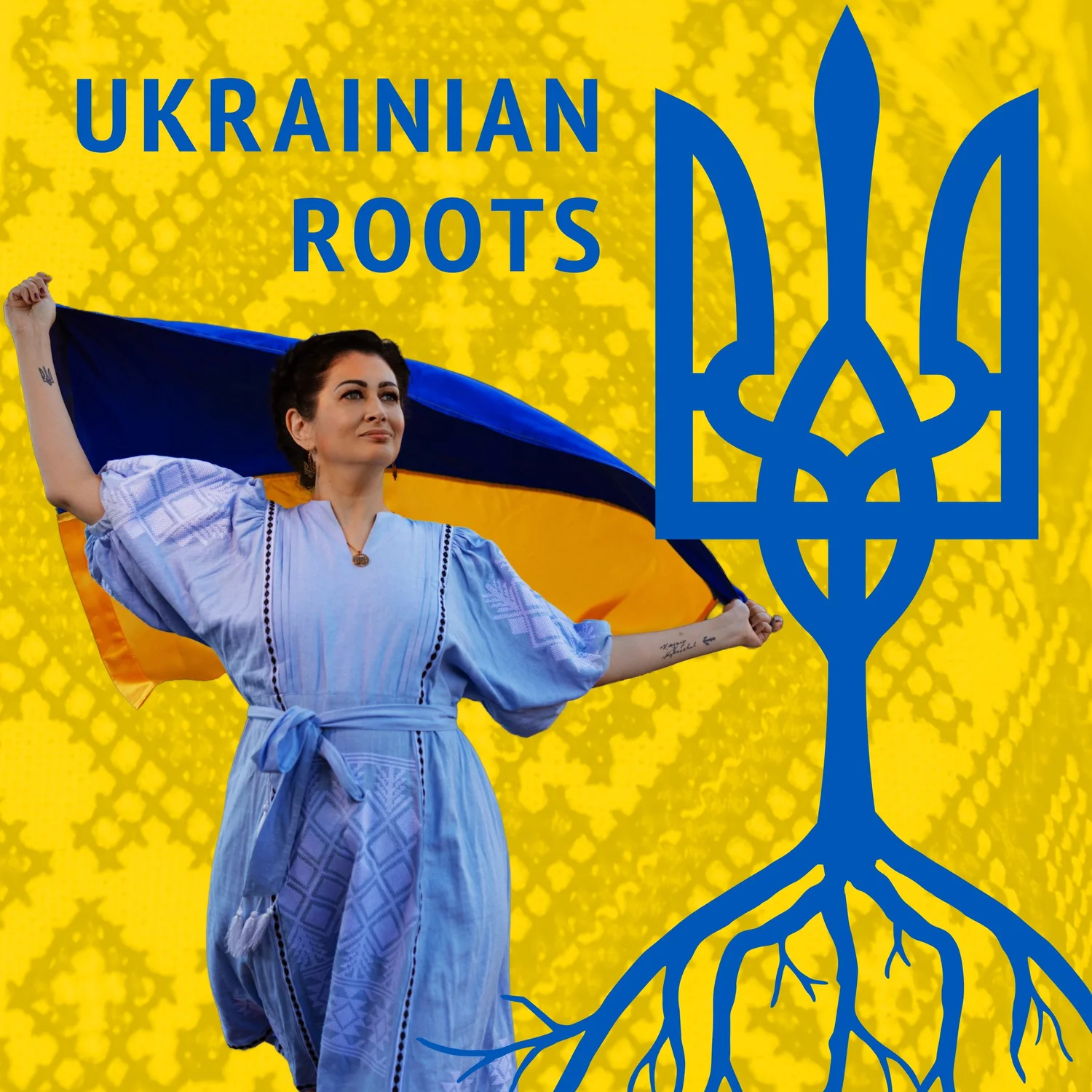
The Ukrainian Roots Podcast / Подкаст «Українське коріння» is dedicated to building a bridge between all Ukrainians – diaspora, displaced, and in Ukraine – and sharing our culture with the world. The Ukrainian Roots Podcast / Подкаст «Українське коріння» is a celebration and exploration of what it means to be Ukrainian, specifically during this tumultuous time in our history. The podcast is hosted by Ukrainian Canadian activist, community organiser, and award-winning journalist Sabrina Rani Furminger (YVR Screen Scene Podcast). “Our Ukrainianness is what separates us from those who seek to erase us,” says Sabrina. “Our Ukrainianness propels us forward.”The Ukrainian Roots Podcast / Подкаст «Українське коріння» is produced by YVR Screen Scene, a division of Fish Flight Entertainment in Vancouver, Canada.
-
16
Episode 13: We Need to Talk About the Holodomor
Over the course of a few short months in 1932 and 1933, more than seven million Ukrainians died in a massive man-made famine now widely known as the Holodomor. These Ukrainians didn’t die because there wasn’t any food. There was grain; they were growing it themselves, in abundance. But then the Soviet state stole the grain and killed the animals so that Ukrainians wouldn’t have anything to eat, and then they sealed the villages so people couldn’t leave in search of food. Holodomor means "death inflicted by starvation" or "extermination by hunger,” and it was designed to kill Ukrainians and crush the Ukrainian soul. The Soviet state suppressed the truth of the Holodomor for decades. Since full-scale invasion, the russian terrorist state has callously destroyed Holodomor memorials throughout Ukraine, including in Mariupol, Luhansk, and Kherson. They seek to erase the mass violence of the past, while simultaneously repeating it in occupied Ukraine today (see: Oleshky). We can’t allow them to do so. The most effective tool in the war against denialism is truth – and one institution in Canada is wielding this tool with exceptional purpose. In April 2026, the Holodomor Research and Education Consortium at the Canadian Institute of Ukrainian Studies launched a Massive Open Online Course all about the Holodomor. The free 13-module course integrates new research, archival documents, survivor testimony, and photographs to honour those we’ve lost, combat denialism, and keep the lessons and victims of the Holodomor top of mind.In this fascinating episode, Sabrina speaks with Marta Baziuk, executive director of the Holodomor Research and Education Consortium at the Canadian Institute of Ukrainian Studies at the University of Alberta, about the continuing impact of the Holodomor, and what we lose when we don’t remember our past.
-
15
Episode 12: Diaspora in the Hot Seat
In this special episode, displaced filmmaker Olia Byrledianu (War Tails) guests hosts and puts our usual host Sabrina Rani-Kiperchuk Furminger in the hot seat for a conversation about diaspora identity, storytelling as resistance, the persecution of Ukrainians in Canada, her family’s legacy of Ukrainian community activism, and why Kiperchuk suddenly appeared in her name. Says Sabrina: “You’ve heard the name of today’s guest host at the end of every single episode of the Ukrainian Roots Podcast / Подкаст «Українське коріння» to date: our ever-vigilant consultant Oli Byrledianu. And what I mean when I describe her as an ‘ever-vigilant consultant’ is that she’s my enthusiastic sounding board for episode ideas and topics. This episode is one that Oli has wanted to do ever since I’d mentioned that I wanted to do a podcast to build that bridge between diaspora Ukrainians, displaced Ukrainians, and Ukrainians in Ukraine. Spoiler alert: bridges were built; songs were sung; laughter was had; tears were shed.”
-
14
Episode 11: Please See Us
Since 2024, Liliia Ratushna has spent part of every single weekend at high visibility locations around Vancouver, holding a sign about Ukraine, raising money for Ukrainian defenders, and reminding Canadians that the war isn’t over and Ukraine is still fighting for its freedom. These weekly rallies are organized by UA Rally, whose abiding mission is to draw attention to russia’s war in Ukraine. In short, the point of these weekly rallies is to be seen – and what better way to do that than to literally put yourself in front of people and command their attention with signs, facts, and conversation? In this moving and fascinating conversation with Sabrina Rani Furminger, Liliia reflects on life as a displaced Ukrainian in Canada, her relationship with the diaspora community, how her volunteerism impacts her grief, why it’s important to be seen, and why she sets aside time each week to stand outside and raise awareness about Ukraine.
-
13
Episode 10: Diary of War
Daria Kolomiec is a cultural activist, producer, performer, a TIME Magazine Next Generation leader, and creator of the Diary of War documentary podcast and performance project. Diary of War captures the raw and emotional stories of real Ukrainians enduring russia’s full-scale war in Ukraine; stories from Diary of War have been performed by non-Ukrainian actors in North America and Europe. Through these performances, Daria has raised more than $150,000 for Ukrainian humanitarian relief, while elevating and amplifying the deeply personal stories of an array of Ukrainians in wartime. In this special episode, Daria speaks with Sabrina about the importance of art during wartime, and why she’s dedicated herself to sharing Ukrainian stories with people all over the world.
-
12
Episode Nine: A Voice from Kyiv
Margo Gontar is many things: a journalist, artist, musician, co-founder of StopFake.org, and in 2017, Kyiv Post named her one of Ukraine’s Top 30 Under 30. Since the full-scale invasion of Ukraine in February 2022, Margo has leveraged social media to educate people outside of Ukraine about life under bombardment. If you’re one of the tens of thousands of people who follow Margo on X or Threads or Substack, you’ve seen that her social media usage takes many forms: her weekly lessons in Ukrainian swearing for eager students all over the world; her middle-of-the-night missives from hallways and other shelters that demonstrate the physical and emotional toll of russia’s missiles and bombs; her photos from late-night bars where Ukrainians gather to converse and drink and dance, even under bombardment; her effortless takedowns of the russian trolls who inevitably spread their lies and vitriol in her comments; her love for her city of Kyiv – which she immortalised in a song she released in 2025 called My K.Y.I.V., the vibe for which evokes Bjork and Tori Amos – and her love for that world-famous Ukrainian coffee.In this fascinating and far-reaching episode, Margo speaks with Sabrina about why she started sharing her experiences with the world, the toll this sharing has taken on her heart and art, and what she wants the world to know about her Kyiv.
-
11
Episode Eight: Listen to the Children
The plight of Ukrainian children is the subject of Children in the Fire, a soul-stirring documentary feature from the celebrated filmmaker behind the Academy Award-nominated Winter on Fire: Ukraine’s Fight for Freedom. Children in the Fire highlights the ways in which Putin and the terrorist state are intentionally targeting Ukraine’s children. What makes Children in the Fire truly remarkable is that the stories are told by Ukrainian children themselves. Its main narrator is 17-year-old Valeriia, who says she started to keep a diary so that it could be used as evidence in future war crime tribunals. From Mariupol to Nova Kahkovka, from Odesa to Lviv, the film introduces us to children who have endured terrible indignities but who are, somehow, triumphant. Children in the Fire asks us all to bear witness, and to redouble our efforts – whatever those might be – to ensure that all Ukrainian children have the opportunity to live free, safe, and fulfilling lives. Children in the Fire will screen all over the world as part of four-year anniversary observances, including in Vancouver, in a special screening that we’re organising with our friends at the Ukrainian Student Union at the University of British Columbia. In this special episode, Children in the Fire filmmaker Evgeny Afineevsky joins Sabrina to discuss Putin’s war on Ukrainian children.
-
10
Episode Seven: Ukrainians of Colour
It might surprise some listeners to know that Ukraine has a significant Afro-Ukrainian population. Many of them are descendants of the African students who studied in Ukraine during Soviet times. Some have gone on to great fame, like Olympian and MP Zhan Beleniuk, who has a Rwandan father and Ukrainian mother, or Gaita-Lurdes Klaverivna Essami, AKA Gaitana, who was the first Afro-Ukrainian to represent Ukraine in the Eurovision Song Contest. Outside of Ukraine, there are Ukrainians of colour like our host Sabrina, whose mother is Ukrainian and whose father is from India. All this is to say that Ukrainians of colour exist, both in Ukraine and in the diaspora.But identity is complicated, and for Ukrainians of colour, it can be hard to feel like you belong to a community when you stand out in a crowd, and your own people want to know why you’re there. And when you feel separate and apart from your own people, you can start to feel separate and apart from yourself, too.Today’s episode examines how Ukrainians of colour navigate identity when they’ve been conditioned to see themselves as Ukrainian with an asterisk. Sabrina is joined in the studio by Oleksiy Grynishyn, founder and artistic director of KOLO Choir in Vancouver. Oleksiy – who is Ukrainian and Nigerian and grew up in Vinnytsia – speaks with poignancy and vulnerability about his journey to reconcile his two sides, how he deals with discrimination and micro-aggressions, and the impact that his identity has had on his artistry.
-
9
Episode Six: Mental Health Under Attack
CONTENT WARNING: This episode deals with mental health and mental illness. For mental health resources, visit the episode footnotes below. Please, take care. Ukrainians are fighting more than just the invaders from Moscovia. We’re also in the midst of a mental health crisis, and the casualties are mounting. Studies found that up to 60% of internally displaced individuals and more than 40% of Ukrainian refugees meet the criteria for post traumatic stress disorder. Ukraine's Ministry of Health is already predicting that some 15 million require psychological support, and around 3 to 4 million people need medication to manage mental health problems resulting from the war.But just because people require help doesn’t mean they’ll reach for it. Stigma remains a massive barrier to treatment, and this stigma is costing us lives. A study published earlier this year by the Journal of the American Medical Association revealed that suicidal ideation in Ukraine is on the rise. The human suffering associated with that statistic is heart-wrenching. In this important episode, our host Sabrina speaks with Nataliya Chorna, a compassionate registered clinical counsellor, psychotherapist, and neurofeedback practitioner. Nataliya discusses the impact that russia’s cruel war is having on Ukrainian mental health, and how we can support each other during this devastating time in our history.
-
8
Episode Five: Am I Ukrainian?
As long as there have been Ukrainians, there have been forces – russian, Muscovite – who have sought to erase us: through famine, forced assimilation, annexation, and all manner of colonial and imperial violence. They view our Ukrainianness as a threat – as well they should, because our Ukrainianness is a source of immense strength and sustenance. Alas, for many diaspora Ukrainians who’ve lost their connection to their roots for a myriad of reasons, it can be difficult and even uncomfortable to identify as Ukrainian. But every Ukrainian is needed right now in this existential fight, including diaspora Ukrainians – and Ukrainianness, once activated, is an incredibly powerful tool of resistance. As poet Katya Komlach wrote in her 2023 poem “To the diaspora”: “You are a child of the most / Fertile soil on Earth / Carry on your cause / The rear of the rear.” (Listen for a full reading of Katya’s remarkable poem at the end of this episode, at timecode 45:54). In this special episode of Ukrainian Roots Podcast / Подкаст «Українське коріння», Sabrina is joined by her молодший брат Adrian Petriw – actor, voice actor, activist, and co-founder of the Ukrainian Canadian Advocacy Group – to discuss what it means to be a Ukrainian in the diaspora during a time of war, who gets to call themselves Ukrainian, and why it even matters. Listen on Apple Podcasts, Spotify, or the Ukrainian Roots Podcast / Подкаст «Українське коріння» site.
-
7
Episode Four: Why We Laugh
Ukrainians love to laugh. We laugh when we’re grieving, when there’s danger, in the darkness, and in the face of war. Ukrainian humour is self-deprecating, very dry, and dark. This proclivity for dark humour is not new, but it’s been front and centre since the terrorist state next door invaded Ukraine in 2022. We are the people who told a russian warship to go fuck itself, and then immortalized that exchange on an official postage stamp. We are the people who hook up busted russian tanks to our tractors and haul they away for scraps. We are the people whose бабуся brought down a drone with a jar of pickled tomatoes. Our ability to laugh is a survival strategy. We laugh because we know it’s all so absurd, and that acknowledgment keeps us upright. We laugh because if the only option was crying, we’d never, ever stop.The connection between laughter and crying – between humour and grief – is front and centre in Maria Reva’s 2025 novel, Endling. Maria’s darkly comic novel tells the story of three angry Ukrainian women, a truckful of kidnapped bachelors, and Lefty, a last-of-his-kind snail. Oh, and it takes place before and during the invasion of Ukraine in February 2022. Endling exemplifies the Ukrainian propensity for dark humour, while also portraying the endless grief of this endless war. It’s a wildly entertaining and cathartic read, but don’t just take our word for it: it was recently nominated for the Booker Prize.In this contemplative and yes, funny, conversation, Maria Reva – who is proud to be on russia’s sanction list, and rightly so! – reflects on writing and sharing stories during this war, the connection between grief and humour, and why we as Ukrainians are the way that we are. Listen on Apple Podcasts, Spotify, or the Ukrainian Roots Podcast site.
-
6
Episode Three: Words and Warfare
Words – and language in general – are at once a tool in this war, a front in this war, and a barometer for how the war is going. Language can sway hearts and minds, stave off disinformation, and also harm us through propaganda. And if we listen close enough, language can tell us where we are in this war and, perhaps, help us achieve our goals.For this wildly fascinating episode of the Ukrainian Roots Podcast, Sabrina is joined by someone who has dedicated her life to the study of language: Dr. Valentyna Ushchyna, who is a Professor of English Philology at Lesya Ukrainka Volyn National University of Lutsk, Ukraine. She is a Fulbright Scholar, an author, a public speaker, an educator, and a voice for media literacy, sociolinguistics, and critical thinking. She more than most understands the power of words in this moment. Dr. Ushchyna speaks with Sabrina about the intersection of words and warfare. What can the arena of language tell us about the state of the war? What is derussification, and how can we fold it into our lives? How can we protect ourselves or the non-Ukrainians in our lives from falling prey to Moscovian propaganda? Find this thought-provoking conversation on Apple Podcasts, Spotify, or on the Ukrainian Roots Podcast site.
-
5
Episode Two: Language Matters
We might be biased, but we stand firm in the belief that Ukrainian is the most beautiful, lyrical, clever, and nuanced language on Planet Earth. Unfortunately, it’s also one of the first things that diaspora Ukrainians lost when mass migration swept them far from Ukraine in the first half of the 20th century. This is especially evident in Canada, where there are more than 1.3 million Ukrainians but only around 10% speak the language. For Ukrainian Canadians like podcast host Sabrina Rani Furminger whose families lost the language along the way, it’s not uncommon for them to experience a sense of loss and yearning where Ukrainian is concerned. But many diaspora Ukrainians are finding the language again. They’re reclaiming it as a form of resistance, to heal intergenerational trauma, and to strengthen their connection to their Ukrainianness. Recently, Sabrina invited Tetyana Denford to the podcast to speak with her about this most beautiful of languages. Tetyana is a brilliant Ukrainian American author and freelance writer who is equally skilled in both English and Ukrainian. She’s a translator for Frontline News, has written and edited articles for magazines in New York and the UK, and is featured in The Telegraph and The New York Times. Tetyana’s first novel, Motherland (which was relaunched by Bookouture and Hachette UK as The Child of Ukraine), was inspired in her бабуся’s storied life, love, and losses. Additionally, Tetyana worked as a translator on the Academy Award winning documentary 20 Days in Mariupol, and earlier this year, her latest translation work with Frontline PBS was released as 2000 Meters to Andriivka.In this very special episode, Tetyana reflects on her own relationship with the Ukrainian language, how she feels when she encounters russian in the wild, and what we lose when we lose our language.
-
4
Episode One: A Displacement Story
Putin’s war in Ukraine has wreaked havoc on all aspects of life for Ukrainians, including the very notion of home. Since February 2022, an estimated 3.7 million Ukrainians have been displaced internally, while an additional 6.9 million have sought refuge outside of the country. Whether internally or externally displaced, to be displaced is to feel like you’ve been quite literally knocked out of place. Your default place is safe at home – maybe in your family home in Odesa or your new flat in Kyiv – but the terrorist state knocked the world off its axis and, you, out of place. So now, you’re where you need to be to be safe, but a part of you is where you were, where your friends and family and everything you’ve ever known is still under fire. And so you occupy this uncomfortable space between places. Although it’s a relatively safe existence, it’s not without its burdens.Khrystyna Syvolap lives in the space between places. The Ukrainian filmmaker (Viddana) arrived in Canada in spring 2022, determined to provide for her young daughter and build something resembling a normal life thousands of miles from home. In this contemplative and deeply personal conversation with Sabrina Rani Furminger, Khrystyna reflects on her journey to this new normal, the emotional distance she feels from friends back home, the heartache she experiences as her daughter learns Canadian history (but not Ukrainian history) in her new school, and her complicated feelings about her own future.
We're indexing this podcast's transcripts for the first time — this can take a minute or two. We'll show results as soon as they're ready.
No matches for "" in this podcast's transcripts.
No topics indexed yet for this podcast.
Loading reviews...
ABOUT THIS SHOW
The Ukrainian Roots Podcast / Подкаст «Українське коріння» is dedicated to building a bridge between all Ukrainians – diaspora, displaced, and in Ukraine – and sharing our culture with the world. The Ukrainian Roots Podcast / Подкаст «Українське коріння» is a celebration and exploration of what it means to be Ukrainian, specifically during this tumultuous time in our history. The podcast is hosted by Ukrainian Canadian activist, community organiser, and award-winning journalist Sabrina Rani Furminger (YVR Screen Scene Podcast). “Our Ukrainianness is what separates us from those who seek to erase us,” says Sabrina. “Our Ukrainianness propels us forward.”The Ukrainian Roots Podcast / Подкаст «Українське коріння» is produced by YVR Screen Scene, a division of Fish Flight Entertainment in Vancouver, Canada.
HOSTED BY
Ukrainian Roots Podcast / Подкаст «Українське коріння»
Loading similar podcasts...
Frequently Asked Questions
How many episodes does Ukrainian Roots Podcast / Подкаст «Українське коріння» have?
Ukrainian Roots Podcast / Подкаст «Українське коріння» currently has 13 episodes available on PodParley. New episodes are automatically indexed when they're published to the podcast feed.
What is Ukrainian Roots Podcast / Подкаст «Українське коріння» about?
The Ukrainian Roots Podcast / Подкаст «Українське коріння» is dedicated to building a bridge between all Ukrainians – diaspora, displaced, and in Ukraine – and sharing our culture with the world. The Ukrainian Roots Podcast / Подкаст «Українське коріння» is a celebration and exploration of what it...
How often does Ukrainian Roots Podcast / Подкаст «Українське коріння» release new episodes?
Ukrainian Roots Podcast / Подкаст «Українське коріння» has 13 episodes. Check the episode list to see recent publication dates and frequency.
Where can I listen to Ukrainian Roots Podcast / Подкаст «Українське коріння»?
You can listen to Ukrainian Roots Podcast / Подкаст «Українське коріння» on PodParley by clicking any episode. We provide an embedded audio player for direct listening, and you can also subscribe via your preferred podcast app using the RSS feed.
Who hosts Ukrainian Roots Podcast / Подкаст «Українське коріння»?
Ukrainian Roots Podcast / Подкаст «Українське коріння» is created and hosted by Ukrainian Roots Podcast / Подкаст «Українське коріння».
URL copied to clipboard!