
PODCAST · news
Uncut interviews with Jeremy Goldkorn
by Jeremy Goldkorn
The world's most interesting people who can talk about China and our world today. goldkorn.substack.com
-
0
Hegemonic suicide and medieval peasant brain
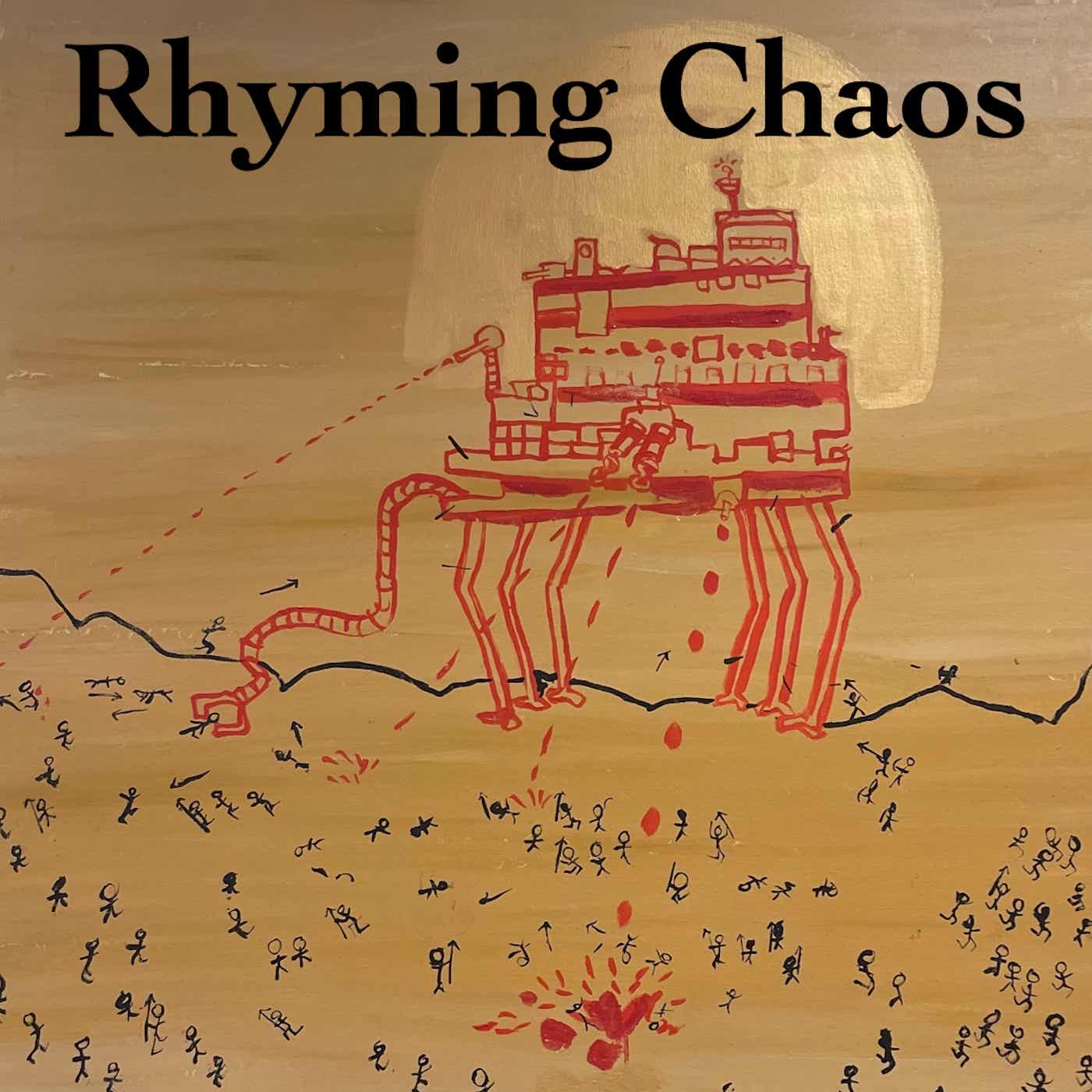
Seva Gunitsky is author of Aftershocks: Great Powers and Domestic Reforms in the Twentieth Century. He studies Russian and late Soviet politics, international relations, and hegemonic transitions and their global effects as associate professor and George Ignatieff Chair of Peace and Conflict Studies at the University of Toronto, and writes the excellent newsletter Hegemon.We chatted on March 24, 2026. The New York Times top headline that day was: “Trump Says U.S. Is Negotiating End to War, but Iranians Push Back.” Our discussion included these topics (the links are to relevant articles by Seva):* Hegemonic suicide: The U.S.S.R. and the current American crisis. * The fatal misunderstanding in Trump, Stephen Miller and gang’s tough guy reading of Thucydides’ aphorism “The strong do what they can, the weak suffer what they must.” * The return of Medieval Peasant Brain and antisemitism.* Personalist leadership in Russia, China, and the U.S. * Why Putin and Xi might not like their wished-for multipolar world. * The Three Gulf Wars of American hegemony: Stages of U.S. decline in the wars against Iraq in 1991 and 2003, and against Iran in 2026.* “The Epstein Files and Russiagate are the same thing.”* What outsiders see that Americans miss about how much worse things can get.The Rhyming Chaos podcast is produced by Jeremy Goldkorn and Maria Repnikova, and edited by Cadre Scripts. The theme music is Paper Boy, composed and performed on the guzheng by Wu Fei. Our closing music is Erik Satie’s Gymnopédie No. 1, arranged and performed by Wu Fei. Our cover art is by Li Yunfei.Please subscribe wherever you get your podcasts, leave us a review, and if you want to support what we’re doing, take out a paid subscription at rhymingchaos.com. Get full access to Rhyming Chaos at www.rhymingchaos.com/subscribe
-
-1
"That devil has to follow you everywhere"—activism in Singapore
Singapore is a business-friendly, illiberal democracy, or what some political scientists call a “competitive authoritarian regime,” or a “façade electoral” system. So there’s much in that island nation for Americans to learn about their own future. Kirsten Han is a great guide: She runs We, The Citizens, a newsletter covering Singapore from a rights-based perspective, and is the managing editor of Mekong Review, an Asia-focused literary journal. She is also a key member of the Transformative Justice Collective, which works towards the end of the death penalty and Singapore’s war on drugs.In this conversation, we discuss:* Singapore’s political landscape* The illusion of democracy, media control, and freedom of expression* Activism and civil society in Singapore* The LGBTQ community and social change* Public perceptions of the death penalty* Cultural context of drug policies, sex work vs. drugs* The loneliness of activism* How activists are targeted in SingaporeThe Rhyming Chaos podcast is produced by Jeremy Goldkorn and Maria Repnikova, and edited by Cadre Scripts. The theme music is Paper Boy, composed and performed on the guzheng by Wu Fei. Our closing music is Erik Satie’s Gymnopédie No. 1, arranged and performed by Wu Fei. Our cover art is by Li Yunfei.Please subscribe wherever you get your podcasts, leave us a review, and if you want to support what we’re doing, take out a paid subscription at rhymingchaos.com. Get full access to Rhyming Chaos at www.rhymingchaos.com/subscribe
-
-2
China's disastrous first president
Yuán Shìkǎi 袁世凯 was post-imperial China’s first president. He led China’s first exploration of democracy down a dead end, and his presidency was “disastrous,” says historian James Carter in an essay that inspired this podcast. Jay is a historian and author of This Week in China’s History, and a number of books on China’s history. Jay is also Dean of the College of Arts and Sciences at St. Joseph’s University in Philadelphia.In this episode, we discuss: * The Rise of Yuan Shikai* Yuan’s presidency and early governance* Political turmoil and assassination* Yuan as emperor * The aftermath of Yuan’s rule* The Warlord Era and personal loyalties* Yuan’s American advisor, Frank Johnson Goodnow * Astroturfing, democratic façades* Challenges in American higher education todayThe Rhyming Chaos podcast is produced by Jeremy Goldkorn and Maria Repnikova, and edited by Cadre Scripts. The theme music is Paper Boy, composed and performed on the guzheng by Wu Fei. Our closing music is Erik Satie’s Gymnopédie No. 1, arranged and performed by Wu Fei. Our cover art is by Li Yunfei.Please subscribe wherever you get your podcasts, leave us a review, and if you want to support what we’re doing, take out a paid subscription at rhymingchaos.com. Get full access to Rhyming Chaos at www.rhymingchaos.com/subscribe
-
-3
The end of a Mongolian-language newspaper
Soyonbo Borjgin is from Hohhot, Inner Mongolia, China, where he worked as a journalist at the state-owned, Mongolian-language Inner Mongolia Life Weekly in the last few years of its existence. He later moved to New York, where has peed in a bottle while delivering packages for Amazon and worked for VOA’s Mongolian language service before getting DOGEd. It’s a long way from home: His grandfather was an illiterate shepherd who kept 30 dogs and ate wolf hearts; his father became a professor at Inner Mongolia University, then a prisoner for protesting in the 1989 demonstrations.The Inner Mongolia Life Weekly went defunct after the Chinese government’s reversal of long-standing policies of encouraging ethnic minority language learning, which resulted in the cancellation of classes taught in Tibetan, Uyghur, and Mongolian languages, shuttering of vernacular media, and removal of street signs. Soyonbo had to attend re-education classes, and his career as a journalist in China was over.He now writes a newsletter on Mongolian issues and recently published a fascinating piece in Equator that describes his experiences being re-educated in Xi Jinping thought after the crackdown on Mongolian identity.In this conversation, we discuss:* Growing up in a Mongolian-speaking community in Hohhot* Working as a journalist at Inner Mongolia Life Weekly* Storytelling and navigating censorship* Scandal and corruption at state media* Changes in China’s ethnic policies and language rights and the 2020 campaign against Mongolian language and identity* Shaman curses and creative resistance against language suppression* End of the Inner Mongolia Life Weekly* Cultural identity and language among Mongolians abroad* “Re-education” and the ways authoritarianism affects daily life* Exile and cultural adaptationThe Rhyming Chaos podcast is produced by Jeremy Goldkorn and Maria Repnikova, and edited by Cadre Scripts. The theme music is Paper Boy, composed and performed on the guzheng by Wu Fei. Our closing music is Erik Satie’s Gymnopédie No. 1, arranged and performed by Wu Fei. Our cover art is by Li Yunfei.Please subscribe wherever you get your podcasts, leave us a review, and if you want to support what we’re doing, take out a paid subscription at rhymingchaos.com. Get full access to Rhyming Chaos at www.rhymingchaos.com/subscribe
-
-4
The CIA plot to kill the Congolese prime minister
Stuart Reid is author of The Lumumba Plot, a rip-roaring read about the CIA plan to assassinate the newly independent Congo’s charismatic prime minister Patrice Lumumba in 1960. Stuart is a Senior Fellow for History and Foreign Policy at the Council on Foreign Relations. He has written for many publications including The New York Times and Bloomberg Businessweek, and interviewed world leaders for Foreign Affairs, including former Congo president Joseph Kabila, African billionaire mobile phone entrepreneur Mo Ibrahim, and French far-right leader Marine Le Pen. In this podcast we discuss: * Congo’s independence, Prime Minister Patrice Lumumba, Belgian military intervention, and the Katanga secession* The misreading of Lumumba’s Soviet outreach and Cold War paranoia * Eisenhower’s assassination order* The poison plot * The torture and assassination of Lumumba, and the destruction of his body * The return of Lumumba’s tooth to the Congo* Mobutu’s three decades of U.S.-supported rule and its legacy * The Congo today* A pattern of failed American-sponsored regime change * Blowing up boats in the Caribbean and the history of failed U.S. covert actions For more on the Congo, listen to our episode Mobutu: The dictator who wanted to make Zaire great again, with scholar Pedro Monaville. The Rhyming Chaos podcast is produced by Jeremy Goldkorn and Maria Repnikova, and edited by Cadre Scripts. The theme music is Paper Boy, composed and performed on the guzheng by Wu Fei. Our closing music is Erik Satie’s Gymnopédie No. 1, arranged and performed by Wu Fei. Our cover art is by Li Yunfei.Please subscribe wherever you get your podcasts, leave us a review, and if you want to support what we’re doing, take out a paid subscription at rhymingchaos.com. Get full access to Rhyming Chaos at www.rhymingchaos.com/subscribe
-
-5
Trump is the symptom, not the disease
Moshik Temkin is the author of The Sacco-Vanzetti Affair: America on Trial, and Warriors, Rebels, and Saints: The Art of Leadership from Machiavelli to Malcolm X, based on a course which he taught at Harvard University for over a decade. He is currently Distinguished Visiting Professor of Leadership and History at Schwarzman College, Tsinghua University.In the podcast, we discuss:* Defining leadership beyond the Great Men * Senators Wayne Morse and Ernest Gruening—whose names few remember, the lone dissenters against the 1964 Gulf of Tonkin Resolution* Trump as a product of historical and socio-economic forces, a symptom of the disease* The rise of authoritarianism in America* Why historical analogies can be weak toolst o understand contemporary politics; the constructive use of comparisons* The Democratic Party’s problems and inability to unite behind Mamdani * Local resistance against authoritarianismSurveillance and control around the world The Rhyming Chaos podcast is produced by Jeremy Goldkorn and Maria Repnikova, and edited by Cadre Scripts. The theme music is Paper Boy, composed and performed on the guzheng by Wu Fei. Our closing music is Erik Satie’s Gymnopédie No. 1, arranged and performed by Wu Fei. Our cover art is by Li Yunfei.Please subscribe wherever you get your podcasts, leave us a review, and if you want to support what we’re doing, take out a paid subscription at rhymingchaos.com. Get full access to Rhyming Chaos at www.rhymingchaos.com/subscribe
-
-6
How does a city feel when it's invaded by an occupying army?
Clarissa Ward is a British-American journalist who frequently reports on global conflicts and crises as CNN’s Chief International Correspondent, including the fall of Kabul to the Taliban, the overthrow of the Assad regime by rebel forces in Syria, and the Russian invasion of Ukraine. Clarissa is the recipient of multiple Peabody and Murrow awards, and the author of the 2020 book On All Fronts: The Education of a Journalist.In this interview we talk about:* The fall of Kabul and the atmosphere in the city * The role of women in Afghanistan, and being a female journalist in Muslim countries* Code switching and reporting* The end of the Assad regime in Syria* Lessons the Syrian rebels took from the Taliban* Reporting from Kharkiv as the 2022 Russian invasion * Perceptions of war and media coverage of different wars Challenges for American media The Rhyming Chaos podcast is produced by Jeremy Goldkorn and Maria Repnikova, and edited by Cadre Scripts. The theme music is Paper Boy, composed and performed on the guzheng by Wu Fei. Our closing music is Erik Satie’s Gymnopédie No. 1, arranged and performed by Wu Fei. Our cover art is by Li Yunfei.Please subscribe wherever you get your podcasts, leave us a review, and if you want to support what we’re doing, take out a paid subscription at rhymingchaos.com. Get full access to Rhyming Chaos at www.rhymingchaos.com/subscribe
-
-7
Protest and repression in Belarus
Dr. Natalya Chernyshova is author of the book Soviet consumer culture in the Brezhnev era, and the upcoming The most Soviet republic: Belarus in the long 1970s. She is a historian of the Soviet Union and Eastern Europe, and Senior Lecturer in Modern European History, Queen Mary University of London. In this podcast we discuss: * A brief history of Belarus and its quarrelsome but dependent relationship with Russia* Belarusian president Alexander Lukashenko’s populist appeal as an outsider and anti-corruption fighter, and his rise to power* Belarusian national identity; Soviet identity, nostalgia, and legacies* The 2020 protests, sometimes called the Anti-Cockroach Revolution, triggered by the government’s COVID-19 response, the contested 2020 elections, and pent up dissatisfaction with Lukashenko’s rule * Jews in Belarus* Memories, censorship, and internet controls* Stuck between Russia, Poland, Ukraine, Latvia, and Lithuania * Media and opposition in exile The Rhyming Chaos podcast is produced by Jeremy Goldkorn and Maria Repnikova, and edited by Cadre Scripts. The theme music is Paper Boy, composed and performed on the guzheng by Wu Fei. Our closing music is Erik Satie’s Gymnopédie No. 1, arranged and performed by Wu Fei. Our cover art is by Li Yunfei.Please subscribe wherever you get your podcasts, leave us a review, and if you like what we’re doing, please take out a paid subscription at rhymingchaos.com. Get full access to Rhyming Chaos at www.rhymingchaos.com/subscribe
-
-8
When will people rise up and overthrow the dictator? Not now.
Edward Schatz is author of the book Slow Anti-Americanism: Social Movements and Symbolic Politics in Central Asia, and other influential books and articles in political science, and on Kazakhstan. He is a professor of Political Science at the University of Toronto, and directs the Centre for European and Eurasian Studies at the Munk School. In this conversation we discuss: * The significant differences between authoritarian regimes in Central Asia* The Soviet inheritance of Central Asian states* The hopes of the 1990s and mistaking the whiff of a weak state for the smell of freedom * What authoritarianism means* Clan Politics in Central Asia* The nature of Kazakhstan’s government and responsive authoritarianism* The 2022 protests in Kazakhstan * Russia’s role in suppressing the protests and the influence of Russian media * Acts of resistance * The shift from pro- to anti-Americanism * Defending democracy The Rhyming Chaos podcast is produced by Jeremy Goldkorn and Maria Repnikova, and edited by Cadre Scripts. The theme music is Paper Boy, composed and performed on the guzheng by Wu Fei. Our closing music is Erik Satie’s Gymnopédie No. 1, arranged and performed by Wu Fei. Our cover art is by Li Yunfei.Please subscribe wherever you get your podcasts, leave us a review, and if you like what we’re doing, please take out a paid subscription at rhymingchaos.com. Get full access to Rhyming Chaos at www.rhymingchaos.com/subscribe
-
-9
Charm and authoritarianism in the 21st century
Julia Sonnevend is the author of Charm: How Magnetic Personalities Shape Global Politics, one of the New Yorker’s Best Books of 2024. She is an associate professor of sociology and communications at the New School, and currently a CARGC Visiting Scholar at the Annenberg School for Communication at the University of Pennsylvania. In this conversation we discuss: * Viktor Orbán’s political journey and charm* Defining charm, charisma, and soft power* Techniques of charm in politics* Liberal vs. illiberal charm: Jacinda Ardern and Viktor Orbán* Jacinda Ardern and the perils of charm in politics* The anti-corruption “zebra protests” mocking the corruption of Viktor Orbán* Iran’s Mohammad Javad Zarif, Germany’s Angela Merkel, North Korea’s Kim Jong-un, and other world leaders* The impact of digital media on political charm* Gender dynamics in political charm* Everyday courage in politicsThe Rhyming Chaos podcast is produced by Jeremy Goldkorn and Maria Repnikova, and edited by Cadre Scripts. The theme music is Paper Boy, composed and performed on the guzheng by Wu Fei. Our closing music is Erik Satie’s Gymnopédie No. 1, arranged and performed by Wu Fei. Our cover art is by Li Yunfei.Please subscribe wherever you get your podcasts, leave us a review, and if you like what we’re doing, please take out a paid subscription at rhymingchaos.com. Get full access to Rhyming Chaos at www.rhymingchaos.com/subscribe
-
-10
A constant bombardment of noise and information: China, 1974 to America, 2025
The daily onslaught of outrageous news of corruption, destruction of government capacity, and attacks on science and education in the U.S. right now is dizzying. “What now?” you scream as you scroll through the morning’s news. It’s a little like the world Geremie R. Barmé stepped into in 1974, when he arrived in China as an exchange student from Australia. The late Cultural Revolution was a “constant bombardment of noise and information” that likewise made one dizzy before breakfast. Geremie is a Sinologist, historian, filmmaker, translator, and author of a number of books on Chinese culture and politics. You can read a recent interview with him on his work here, and find his most recent writings at China Heritage. He was the guest on the first episode of Rhyming Chaos, released on February 20, 2025: How to commit a self-coup, in the U.S. and in China. In this follow-up podcast, recorded on September 30, the same day Donald Trump told a gathering of senior leaders of the U.S. armed forces that they must target “the enemy within,” we discussed:* The relentless daily “bombardment of noise and information” in 1970s China.* The “Hall of One Voice” 一言堂: Deng Xiaoping’s term for when only Mao’s voice mattered, and the sycophants around him ensured he heard nothing that might upset him. * Snitching in the Cultural Revolution, JD Vance, and Laura Loomer.* The surveillance state in China and the U.S., and Larry Ellison’s vision. * Big character posters 大字报 and Twitter. * Attacks on expertise, science, and learning under Mao and Trump. * The progress of Project 2025; Russell Vought and Stephen Miller’s radical plans to reshape America. * Perpetual anger: Why Trumpists remain furious and the maintenance of grievance culture in China. * The Mao-era disconnect between rhetoric and reality; current American conspiracy theories and inability to distinguish fact from fiction. * Lin Biao’s militarization of China (1968-1971), and increasing military control of American society.The Rhyming Chaos podcast is produced by Jeremy Goldkorn and Maria Repnikova, and edited by Cadre Scripts. The theme music is Paper Boy, composed and performed on the guzheng by Wu Fei. Our closing music is Erik Satie’s Gymnopédie No. 1, arranged and performed by Wu Fei. Our cover art is by Li Yunfei.Please subscribe wherever you get your podcasts, leave us a review, and if you like what we’re doing, please take out a paid subscription at rhymingchaos.com. Get full access to Rhyming Chaos at www.rhymingchaos.com/subscribe
-
-11
Mobutu: The dictator who wanted to make Zaire great again
Pedro Monaville is a historian of modern Africa and an associate professor at McGill University who researches colonial and postcolonial Congo, revolutionary movements, and the connections between art and history, among other subjects.He is the author of Students of the World: Global 1968 and Decolonization in the Congo, which one review called “a fine-grained examination of the radicalization of Congolese students, their slow maturation during the fin d’empire…that put them on a collision course with the dystopian regime of President Mobutu.” Mobutu Sese Seko was the president and dictator of Zaire from 1971 to 1997. He changed the country’s name from Congo to Zaire as part of an “authenticity campaign” to remove colonial influence. In some ways, he was a cartoonish dictator, with palaces, gold tchotchkes everywhere, yachts, fleets of limousines, a personality cult, and self-bestowed titles such as “Father of the Nation,” “Helmsman,” and “Supreme Combatant.” Despite his anti-colonial ideological rhetoric, Mobutu controlled an incompetent government that caused misery and hunger for ordinary people. But above all, Mobutu was corrupt, and he saw a phenomenal business deal for himself in the proxy conflicts and power plays in Africa during the Cold War. He presented himself as a bulwark against communism, which allowed him to loot his country and commit human rights abuses with the tacit blessing of the U.S. In 1988, the New York Times cited a State Department estimate of Mobutu’s personal wealth: $5 billion (equivalent to $13.65 billion in 2025).Mobutu surrounded himself with corrupt lackeys, whose loyalty was partly assured by fear, and partly by his blessing of their place at the trough. He is said to have once admonished officials whose corruption was becoming excessive: “If you want to steal, steal a little in a nice way, but if you steal too much to become rich overnight, you will be caught.” In the podcast we discuss: * Mobutu’s rise from journalist to military chief to dictator* Congo’s brutal exploitation under King Leopold II, Belgian colonial rule, and the assassination of independence leader Patrice Lumumba in 1961* Mobutu’s early legitimacy building: “authenticity” campaigns involving cultural nationalism, renaming cities, and economic nationalization * The Congolese student movement, and how it developed into a credible opposition force through the 1960s* Student identity and elitism * Systematic violence against intellectuals: The June 4, 1969 student massacre in Kinshasa and the destruction of universities* Mobutu’s control mechanisms: His use of complicity, unpredictable cycles of punishment and reward, and keeping elites “on their toes” to maintain power* Language and cultural politics: The role of Lingala as a unifying language through military, music, and Mobutu’s political communication* Mobutu’s tactics and current threats to higher education and intellectual freedom in the United States* Congo’s ongoing conflicts The Rhyming Chaos podcast is produced by Jeremy Goldkorn and Maria Repnikova, and edited by Cadre Scripts. The theme music is Paper Boy, composed and performed on the guzheng by Wu Fei. Our closing music is Erik Satie’s Gymnopédie No. 1, arranged and performed by Wu Fei. Our cover art is by Li Yunfei.Please subscribe wherever you get your podcasts, leave us a review, and if you like what we’re doing, please take out a paid subscription at rhymingchaos.com. Get full access to Rhyming Chaos at www.rhymingchaos.com/subscribe
-
-12
The illusion of benevolent dictatorship
Huey Li is the author of Dividing the Rulers: How Majority Cycling Saves Democracy, and a popular explainer of U.S. and Chinese politics on TikTok, YouTube, and Substack. He regularly debunks misguided ideas that trend on those platforms, pouring cold water on some of the excessive enthusiasms of his audience, and helping them to understand the way authoritarian rulers and dictators exercise their power. In this show, we discuss: * Majority cycling* The state of American politics* Misguided perceptions of China* Political polarization * TikTok and whether the Chinese government is manipulating its algorithm * Constraints on presidential power in the U.S. * The importance of voting* The illusion of benevolent dictatorshipThe Rhyming Chaos podcast is produced by Jeremy Goldkorn and Maria Repnikova, and edited by Cadre Scripts. The theme music is Paper Boy, composed and performed on the guzheng by Wu Fei. Our closing music is Erik Satie’s Gymnopédie No. 1, arranged and performed by Wu Fei. Our cover art is by Li Yunfei.Please subscribe wherever you get your podcasts, leave us a review, and if you like what we’re doing, please take out a paid subscription at rhymingchaos.com. Get full access to Rhyming Chaos at www.rhymingchaos.com/subscribe
-
-13
The abuse of history in China, Russia, North Korea, and Trump's America
Katie Stallard is the author of Dancing on Bones: History and Power in China, Russia, and North Korea, which was named political book of the year 2022 by the Financial Times, Sunday Times, and BBC History magazine. She was previously based in Russia and China as a foreign correspondent for Sky News, and is now Senior Editor, China and Global Affairs, at the New Statesman. She is also an endurance athlete.In this show, we discuss: * The role of history in authoritarian regimes* Symbolism and power in military parades* Trump and authoritarian spectacles* The mechanics of narrative control* The disturbing trends in American history education* The courage of dissent in authoritarian regimes* Journalism in hostile environments* Lessons for American dissenters from running ultramarathons The Rhyming Chaos podcast is produced by Jeremy Goldkorn and Maria Repnikova, and edited by Cadre Scripts. The theme music is Paper Boy, composed and performed on the guzheng by Wu Fei. Our closing music is Erik Satie’s Gymnopédie No. 1, arranged and performed by Wu Fei. Our cover art is by Li Yunfei.Please subscribe wherever you get your podcasts, leave us a review, and if you like what we’re doing, please take out a paid subscription at rhymingchaos.com. Get full access to Rhyming Chaos at www.rhymingchaos.com/subscribe
-
-14
An African vision for freedom
Howard French has reported for the Washington Post and New York Times from nearly every country in Africa; all over the Caribbean; Japan; and Korea. He is the author of several books, including Disappearing Shanghai: Photographs and Poems of an Intimate Way of Life, and China's Second Continent: How a Million Migrants are Building a New Empire in Africa His latest book, The Second Emancipation: Nkrumah, Pan-Africanism, and Global Blackness at High Tide is an examination of the life of Ghanaian Prime Minister Kwame Nkrumah, who in 1957 became the first leader of a post-colonial country in sub-Saharan Africa. On this show, we discuss: * Kwame Nkrumah’s rise from the son of a goldsmith in a small town to activist to leader of Ghana * Nkrumah's role in Ghana's independence* Pan-Africanism* If there are any lessons from Ghana for Trump’s America Get full access to Rhyming Chaos at www.rhymingchaos.com/subscribe
-
-15
Lysenko: RFK Jr.'s Soviet predecessor
William de Jong Lambert is a historian of science whose research focuses on evolution, genetics and heredity. He is the author of many papers and books including The Cold War Politics of Genetic Research: An Introduction to the Lysenko Affair. Trofim Lysenko was a Soviet agronomist and promoter of kooky theories that greatly exacerbated the famines of the Stalin era. Which makes William the perfect guest for Rhyming Chaos this week, as the destruction of the U.S. science and healthcare system accelerates under the leadership of U.S. Health Secretary Robert F. Kennedy Jr. and Donald Trump. As Rick Wilson put it:RFK, Jr., heroin addict, sex addict, anti-vaccination lunatic and aspiring architect of millions of deaths purged the CDC last night. He gutted the world’s premiere public-health agency in his endless quest to destroy vaccine science and plunge this nation into the Middle Ages.It is widely reported that Kennedy has ordered a clampdown on reporting of COVID and human cases of H5N1 bird flu, and that he plans to entirely ban COVID-19 vaccines in the coming months. In this podcast, we discuss:* Lysenko’s background and rise to prominence in Soviet agriculture* Lysenko’s animus against genetics and his theories about plant reproduction and animal husbandry* Stalin's Great Plan for the Transformation of Nature, which was supposed to turn Siberia into a Garden of Eden * The stifling of scientific progress in the Soviet Union under Lysenkoism, and how long it took to recover* Why American institutions are vulnerable to anti-science sentiments* The challenges of communicating complex scientific ideas to the public * Life on American campuses in 2025 The Rhyming Chaos podcast is produced by Jeremy Goldkorn and Maria Repnikova, and edited by Cadre Scripts. The theme music is Paper Boy, composed and performed on the guzheng by Wu Fei. Our closing music is Erik Satie’s Gymnopédie No. 1, arranged and performed by Wu Fei. Our cover art is by Li Yunfei.Please subscribe wherever you get your podcasts, leave us a review, and if you like what we’re doing, please take out a paid subscription at rhymingchaos.com. Get full access to Rhyming Chaos at www.rhymingchaos.com/subscribe
-
-16
American concentration camps
Andrea Pitzer is the author of One Long Night: A Global History of Concentration Camps, among other books, host of the excellent podcast Next Comes What, and writer and publisher of the newsletter Degenerate Art. In this podcast we discuss: * How the ethics of journalism as taught in the U.S. system empower Trump * The definition of “concentration camp” and if Trump’s camps meet the definition* Forced labor in Nazi Germany and Trump’s America * How Trump uses the perception of crisis in America for political gain.* The economic incentives behind the ICE bonanza and how companies profit from detention systems (in history and now)* Vladimir Nabokov and what he might think of Trump’s America * And much more… Other links: Andrea Pitzer on How to Get ICE Out of Your Town: text, video.Nazi Republican candidate for California governor Kyle Langford’s Auschwitz tweet: Screenshot by AuschwitzMuseum. The Rhyming Chaos podcast is produced by Jeremy Goldkorn and Maria Repnikova, and edited by Cadre Scripts. The theme music is Paper Boy, composed and performed on the guzheng by Wu Fei. Our closing music is Erik Satie’s Gymnopédie No. 1, arranged and performed by Wu Fei. Our cover art is by Li Yunfei.Please subscribe wherever you get your podcasts, leave us a review, and if you like what we’re doing, please take out a paid subscription at rhymingchaos.com. Get full access to Rhyming Chaos at www.rhymingchaos.com/subscribe
-
-17
A mathematician looks at Trump's authoritarian takeover
Christina Pagel has a PhD in space physics and is a professor of operational research in health care at University College London. Operational research is a pragmatic branch of mathematics used to help people solve real-life problems.She has an excellent newsletter called Diving into Data and Decision Making, where she has recently turned her attention to mapping and explaining the Trump administration’s retreat from science, and its authoritarian attacks on universities. She also produces the Trump Action Tracker, which documents “the actions, statements, and plans of President Donald Trump and his administration that may pose a threat to American democracy.” The Rhyming Chaos podcast is produced by Jeremy Goldkorn and Maria Repnikova, and edited by Cadre Scripts. The theme music is Paper Boy, composed and performed on the guzheng by Wu Fei. Our closing music is Erik Satie’s Gymnopédie No. 1, arranged and performed by Wu Fei. Our cover art is by Li Yunfei.Please subscribe wherever you get your podcasts, leave us a review, and if you like what we’re doing, please take out a paid subscription at rhymingchaos.com. Get full access to Rhyming Chaos at www.rhymingchaos.com/subscribe
-
-18
Africa's most famous dictator, Idi Amin, and Donald Trump
Derek R. Peterson is Ali Mazrui Collegiate Professor in the History Department and the Department of Afro-American and African Studies at the University of Michigan. He is the author of many books and articles on East Africa, including A Popular History of Idi Amin’s Uganda, just published this year, and co-author of The Unseen Archive of Idi Amin: Photographs from the Uganda Broadcasting Corporation. In this episode we cover:* Idi Amin's rise to power * Amin's charismatic personality * The new technology of radio—the Twitter of Uganda in the 1970s—that allowed Idi Amin to communicate directly with the populace* How the Amin government relied on local officials to implement policies without providing necessary resources * The expulsion of the Asian community, and Amin’s “Economic War”* Zohran Mamdani’s Ugandan background* The media environment of Amin's Uganda and contemporary America * Lessons for America from the Rwenzururu Kingdom about living off the grid The Rhyming Chaos podcast is produced by Jeremy Goldkorn and Maria Repnikova, and edited by Cadre Scripts. The theme music is Paper Boy, composed and performed on the guzheng by Wu Fei. Our closing music is Erik Satie’s Gymnopédie No. 1, arranged and performed by Wu Fei. Our cover art is by Li Yunfei.Please subscribe wherever you get your podcasts, leave us a review, and if you like what we’re doing, please take out a paid subscription at rhymingchaos.com. Get full access to Rhyming Chaos at www.rhymingchaos.com/subscribe
-
-19
Iran's past and the future of America
Arash Azizi is a writer and historian who grew up in Iran and now lives in the U.S. His first book, The Shadow Commander, is about Qassem Soleimani, the head of the country's elite Quds Force who was killed by a U.S. drone strike near Baghdad International Airport in January 2020, in the last days of Trump’s first presidency. His second book, What Iranians Want: Women, Life, Freedom, is an account of the uprising that began after a young woman, Mahsa Amini, died in September 2022 while detained by Iran’s morality police for allegedly not wearing the hijab in accordance with government standards.In this episode we cover:* Daily life and activism in Iran* Women's rights and misogyny * Feminism and other activism in Iran* Iran and global right-wing movements* The role of the Supreme Leader in Iran* The end of the Islamic Republic * Pro- and anti-Americanism, anti-Zionism and philosemitism* Apathy and political engagement in Iran and the U.S. The Rhyming Chaos podcast is produced by Jeremy Goldkorn and Maria Repnikova, and edited by Cadre Scripts. The theme music is Paper Boy, composed and performed on the guzheng by Wu Fei. Our closing music is Erik Satie’s Gymnopédie No. 1, arranged and performed by Wu Fei. Our cover art is by Li Yunfei.Please subscribe wherever you get your podcasts, leave us a review, and if you like what we’re doing, please take out a paid subscription at rhymingchaos.com. Get full access to Rhyming Chaos at www.rhymingchaos.com/subscribe
-
-20
Why the U.S. is now a developing country
Richard Poplak is an author, investigative journalist, and filmmaker based in Johannesburg, South Africa, and a regular Rhyming Chaos guest. In this episode, we catch up after half a year of Trump 2.0 and of this podcast. Topics include: * State capture in South Africa and the U.S.* Trump’s bullying of the tiny and crushingly poor nation of Lesotho. * Science denialism in South Africa and America. * How the middle class suffers and survives in South Africa and the future of the American middle class.* The scapegoating and persecution of immigrants in South Africa and the U.S. * Why the U.S. is looking like a developing country.The Rhyming Chaos podcast is produced by Jeremy Goldkorn and Maria Repnikova, and edited by Cadre Scripts. The theme music is Paper Boy, composed and performed on the guzheng by Wu Fei. Our closing music is Erik Satie’s Gymnopédie No. 1, arranged and performed by Wu Fei. Our cover art is by Li Yunfei.Please subscribe wherever you get your podcasts, leave us a review, and if you like what we’re doing, please take out a paid subscription at rhymingchaos.com. Get full access to Rhyming Chaos at www.rhymingchaos.com/subscribe
-
-21
Balkan wars and culture wars, from Slobodan Milošević to Trump
Misha Glenny reported on the 1989 revolutions and the wars in the former Yugoslavia for the BBC. He has written a number of bestselling books on Eastern European history, the Balkan wars, and organized crime, and is regularly consulted by governments and law enforcement agencies on the Balkans and Eastern Europe and on transnational organized crime. In this wide-ranging episode we discuss:* The fragmentation of Yugoslavia and the political and cultural factors behind the Balkan wars* Slobodan Milošević's rise to power and his control of the media* Scapegoating as a political tool* The current political climate in the U.S. and historical patterns of authoritarianism and populism.* Organized crime and state capture* Cybercrime and cryptocurrencies * The prognosis for AmericaThe Rhyming Chaos podcast is produced by Jeremy Goldkorn and Maria Repnikova, and edited by Cadre Scripts. The theme music is Paper Boy, composed and performed on the guzheng by Wu Fei. Our closing music is Erik Satie’s Gymnopédie No. 1, arranged and performed by Wu Fei. Our cover art is by Li Yunfei.Please subscribe wherever you get your podcasts, leave us a review, and if you like what we’re doing, please take out a paid subscription at rhymingchaos.com. Get full access to Rhyming Chaos at www.rhymingchaos.com/subscribe
-
-22
The surveillance state in China and America
Megan K. Stack has been a foreign correspondent in China, Russia, Egypt, and Israel, and covered the post-9/11 wars in Pakistan and Afghanistan, after which she wrote the book, Every Man in This Village is a Liar: An Education in War. Her second book is Women's Work: A Personal Reckoning with Labor, Motherhood, and Privilege.Megan is a contributing opinion writer to the New York Times, and recently published a piece there: Can we see our future in China’s cameras? In this podcast, we discuss: * Living under state surveillance in Moscow and Beijing * Being a foreign correspondent in Beijing from 2010 to 2013* Traveling in the Chinese panopticon in 2025 * Algorithmic policing in China* The perils of data centralization * DOGE and U.S. government surveillance and AI policy * How to cope The Rhyming Chaos podcast is produced by Jeremy Goldkorn and Maria Repnikova, and edited by Cadre Scripts. The theme music is Paper Boy, composed and performed on the guzheng by Wu Fei. Our closing music is Erik Satie’s Gymnopédie No. 1, arranged and performed by Wu Fei. Our cover art is by Li Yunfei.Please subscribe wherever you get your podcasts, leave us a review, and if you like what we’re doing, please take out a paid subscription at rhymingchaos.com. Get full access to Rhyming Chaos at www.rhymingchaos.com/subscribe
-
-23
Five decades in Russia: From the Era of Stagnation to the invasion of Ukraine
In the Soviet Union in the 1970s, “nobody gave a damn” about the official ideology, although “people with higher education were expected to pledge allegiance to it,” says Maria Lipman. She began her career as a medical translator at that time, a job that allowed her to work from home and have as little to do with the state as possible. She became a translator, researcher, and contributor to the Washington Post in the years immediately after the fall of the Soviet Union, and from 2001 to 2011 a columnist for the newspaper. She has been a fellow at the Carnegie Moscow Center, editor of the Pro et Contra journal, contributor to Foreign Affairs and many other publications, and held a number of prestigious academic positions. Maria continued to live in Moscow until 2022, closely observing Russian society and politics under Gorbachev, Yeltsin, and Putin. She is currently a visiting scholar at George Washington University.In this conversation, we cover: * Life in the Soviet Union during the Era of Stagnation—not all grim* The post-Soviet era: Journalism under a weakened state * The rise of Putin and the recentralization of power* The emergence of political activism and Alexei Navalny* A shift from hope to repression* Can Russian journalism thrive in exile?* Reflections on authoritarianism in the U.S.The Rhyming Chaos podcast is produced by Jeremy Goldkorn and Maria Repnikova, and edited by Cadre Scripts. The theme music is Paper Boy, composed and performed on the guzheng by Wu Fei. Our closing music is Erik Satie’s Gymnopédie No. 1, arranged and performed by Wu Fei. Our cover art is by Li Yunfei.Please subscribe wherever you get your podcasts, leave us a review, and if you like what we’re doing, please take out a paid subscription at rhymingchaos.com. Get full access to Rhyming Chaos at www.rhymingchaos.com/subscribe
-
-24
Modi and the rise of the Hindu Right
Rohit Chopra is a professor in the Department of Communication at Santa Clara University and the author of Technology and Nationalism in India: Cultural Negotiations from Colonialism to Cyberspace, The Gita for a Global World: Ethical Action in an Age of Flux, and other books.His research centers on global media and cultural identity, new media, and media and memory, with a focus on global Hindu nationalist and far-right online communities.We discussed Narendra Modi’s rise to power, his use of Hindu nationalism as a political tool, and India’s lessons for America. GlossaryThe discussion goes into some detail about people, places, and political parties that may sound unfamiliar to some listeners, so below we include a brief glossary if you need a little more context:The CongressThe Indian National Congress, colloquially the Congress Party, or simply the Congress, was founded in 1885 and became the leading movement organizing for independence from the British Empire under the leadership of Mahatma Gandhi. After independence in 1947, Congress dominated Indian politics for the next half century, initially led by India's first Prime Minister Jawaharlal Nehru. His daughter, Indira Gandhi—the surname is from her husband Feroze Gandhi, not related to Mahatma—was prime minister of India from 1966 to 1977, and again from 1980 until her assassination in 1984. Her son Rajiv Gandhi was prime minister from 1984 to 1989. He was assassinated in 1991.The BJP and the RSSThe Bharatiya Janata Party (BJP) has been the ruling political party in India since 2014 under the incumbent Prime Minister Narendra Modi. The BJP is aligned with right-wing, Hindu nationalist politics and has links to the Rashtriya Swayamsevak Sangh (RSS), a far-right paramilitary organization that began life as a Hindu cultural organization in 1925.The EmergencyThe Emergency in India was a 21-month period from 1975 to 1977 when Prime Minister Indira Gandhi declared a state of emergency across the country after a court found her guilty of electoral malpractices, invalidating her election win. Citing imminent internal and external threats to the Indian state, the government suspended elections, imprisoned political opponents, censored the press, banned worker strikes, and imposed wage freezes.The Babri Mosque and the Ram TempleThe Babri Mosque (or Babri Masjid) was built in 1528 in the city of Ayodhya, in the northern Indian state of Uttar Pradesh (where the Taj Mahal is located, a few hundred miles away). A Hindu nationalist mob destroyed it in 1992, claiming it had been built on the birthplace of Lord Rama, an important god of the Hindu pantheon, and that it had been a sacred Hindu site before the mosque’s construction. In 2019 (after Modi was entrenched as prime minister), the Supreme Court of India decided to give the disputed land to Hindus for construction of a temple, while Muslims were given land nearby.Shah Bano caseShah Bano Begum, a Muslim woman, was divorced by her husband under customary Muslim law in 1978. In India, “personal laws” govern matters of marriage, divorce, and inheritance, and may be decided by different religious communities, and under personal law, the husband would not need to pay alimony. She sued, and in 1985, won the right to alimony in a case heard by India’s Supreme Court. Protests by Muslims against the judgment broke out across India. A group of Muslim politicians also tried to get the verdict nullified. Amit ShahIndia’s current Minister of Home Affairs who has been accused of crimes including arranging an extrajudicial killing, but has never been found guilty.Umar KhalidA student activist who has been accused of sedition and later of being a “key conspirator” in ethnic clashes and has been in jail since 2020 without being formally charged or having a trial.The Rhyming Chaos podcast is produced by Jeremy Goldkorn and Maria Repnikova, and edited by Cadre Scripts. The theme music is Paper Boy, composed and performed on the guzheng by Wu Fei. Our closing music is Erik Satie’s Gymnopédie No. 1, arranged and performed by Wu Fei. Our cover art is by Li Yunfei.Please subscribe wherever you get your podcasts, leave us a review, and if you like what we’re doing, please take out a paid subscription at rhymingchaos.com. Get full access to Rhyming Chaos at www.rhymingchaos.com/subscribe
-
-25
The horrors of European history and today's America
From Sarah Palin to the Dreyfus Affair to Stalinist torture rooms, from World War II to the Russian invasion of Ukraine, this conversation with Marci Shore covers a lot of ground. Marci is a Professor and Chair of intellectual history at the University of Toronto. She is the translator of Michał Głowiński’s The Black Seasons, and the author of Caviar and Ashes: A Warsaw Generation’s Life and Death in Marxism, The Taste of Ashes: The Afterlife of Totalitarianism in Eastern Europe, and The Ukrainian Night: An Intimate History of Revolution.Towards the end of the podcast, she mentions the website Small Acts of Democratic Resistance. This site is meant to be a platform for solidarity and moral support, but also a resource for journalists, especially those outside of the U.S.If you’re in the U.S. and are taking part in any acts of democratic resistance, large or small, you can write to [email protected] to get in touch with the website. The Rhyming Chaos podcast is produced by Jeremy Goldkorn and Maria Repnikova, and edited by Cadre Scripts. The theme music is Paper Boy, composed and performed on the guzheng by Wu Fei. Our closing music is Erik Satie’s Gymnopédie No. 1, arranged and performed by Wu Fei. Our cover art is by Li Yunfei.Please subscribe wherever you get your podcasts, leave us a review, and if you like what we’re doing, please take out a paid subscription at rhymingchaos.com. Get full access to Rhyming Chaos at www.rhymingchaos.com/subscribe
-
-26
Lessons for America from the Milk Tea Alliance
Historian and sinologist Jeffrey Wasserstrom is the Chancellor's Professor of History at the University of California, Irvine, and the author of many books, including The Oxford Illustrated History of Modern China, China in the 21st Century: What Everyone Needs to Know, and most recently, The Milk Tea Alliance: Inside Asia's Struggle Against Autocracy and Beijing.We chatted to him about the Milk Tea Alliance, and America. This was recorded on the resonant date of June 4, 2025, before the No Kings protests in the U.S. of June 14. The Rhyming Chaos podcast is produced by Jeremy Goldkorn and Maria Repnikova, and edited by Cadre Scripts. The theme music is Paper Boy, composed and performed on the guzheng by Wu Fei. Our closing music is Erik Satie’s Gymnopédie No. 1, arranged and performed by Wu Fei. Our cover art is by Li Yunfei.Please subscribe wherever you get your podcasts, leave us a review, and if you like what we’re doing, please take out a paid subscription at rhymingchaos.com. Get full access to Rhyming Chaos at www.rhymingchaos.com/subscribe
-
-27
If we had learned the lessons of Italy's Berlusconi, we would not have Trump
We can learn a lot about Trump and Musk from studying other strongmen in other countries and at other times, especially those who have entered politics after careers in media and business.This interview, recorded on the afternoon of June 6 as the terrible two of the Oval Office were feuding online, is an amazing crash course in the Italian strongmen Mussolini and Berlusconi, with Professor Ruth Ben-Ghiat. She is a leading scholar of fascism, authoritarianism, propaganda, and how democracies can stay resilient, Professor of History and Italian Studies at New York University, and the author of numerous books in English and Italian. Her most recent book, Strongmen: Mussolini to the Present, examines how how illiberal leaders use propaganda, corruption, the persecution of scapegoats, and machismo. As the author of the first book to look at how Trump compares to other authoritarians of the last 100 years, Ruth is the perfect guest for Rhyming Chaos to help us understand how Musk and Trump function. And how we might defeat them. The Rhyming Chaos podcast is produced by Jeremy Goldkorn and Maria Repnikova, and edited by Cadre Scripts. The theme music is Paper Boy, composed and performed on the guzheng by Wu Fei. Our closing music is Erik Satie’s Gymnopédie No. 1, arranged and performed by Wu Fei. Our cover art is by Li Yunfei.Please subscribe wherever you get your podcasts, leave us a review, and if you like what we’re doing, please take out a paid subscription at rhymingchaos.com. Get full access to Rhyming Chaos at www.rhymingchaos.com/subscribe
-
-28
Paul Kagame's Rwanda, big men of Africa, and Trump
Michela Wrong has reported from many African countries for the BBC, Reuters, and the Financial Times since the 1980s. Her books include In the Footsteps of Mr. Kurtz: The Rise and Fall of Mobutu Sese Seko and the Destruction of Zaire (now called the Democratic Republic of Congo); I Didn’t Do It For You, a history of Eritrea; It’s Our Turn to Eat, about the Kenyan corruption whistleblower John Githongo; and Do Not Disturb: The Story of a Political Murder and an African Regime Gone Bad on President Paul Kagame’s Rwanda. In this show, we focus on Rwanda, Kagame, and the chilling tale of a hit squad murdering one of Kagame’s oldest friends. The Rhyming Chaos podcast is produced by Jeremy Goldkorn and Maria Repnikova, and edited by Cadre Scripts. The theme music is Paper Boy, composed and performed on the guzheng by Wu Fei. Our closing music is Erik Satie’s Gymnopédie No. 1, arranged and performed by Wu Fei. Our cover art is by Li Yunfei.Please subscribe wherever you get your podcasts, leave us a review, and if you like what we’re doing, please take out a paid subscription at rhymingchaos.com. Get full access to Rhyming Chaos at www.rhymingchaos.com/subscribe
-
-29
"Don’t open the door to nobody!” Life in Pinochet's Chile and Trump's America.
Stacy Torres is an assistant professor of sociology at the University of California, San Francisco, and author of At Home in the City: Growing Old in Urban America. She recently wrote an essay for The Guardian newspaper, titled “I used to laugh at my Chilean father’s paranoia about life in the U.S.—not any more.”We talked to her about her father, intergenerational paranoia, life at an American university right now, how to cope in an authoritarian regime, fingerspitzengefühl, and more. The Rhyming Chaos podcast is produced by Jeremy Goldkorn and Maria Repnikova, and edited by Cadre Scripts. The theme music is Paper Boy, composed and performed on the guzheng by Wu Fei. Our closing music is Erik Satie’s Gymnopédie No. 1, arranged and performed by Wu Fei. Our cover art is by Li Yunfei.Please subscribe wherever you get your podcasts, leave us a review, and if you like what we’re doing, please take out a paid subscription at rhymingchaos.com.Related: A short photo essay about hats Get full access to Rhyming Chaos at www.rhymingchaos.com/subscribe
-
-30
How should we live in Erdoğan's Turkey and Trump's America?
Kaya Genç is the author of The Lion and the Nightingale, an account of happenings and conversations in 2017 in Istanbul and around Turkey and stories of the lives of all kinds of people from different social strata, the year after the 2016 coup attempt. His other books are Under the Shadow: Rage and Revolution in Modern Turkey (2016), An Istanbul Anthology, and in Turkish, Macera, a novel that has yet to be translated into English.We talked about recent Turkish history, life under the rule of strongman Recep Tayyip Erdoğan, and what the United States might learn from Turks, young and old. The Rhyming Chaos podcast is produced by Jeremy Goldkorn and Maria Repnikova, and edited by Cadre Scripts. The theme music is Paper Boy, composed and performed on the guzheng by Wu Fei. Our closing music is Erik Satie’s Gymnopédie No. 1, arranged and performed by Wu Fei. Our cover art is by Li Yunfei.Please subscribe wherever you get your podcasts, leave us a review, and if you like what we’re doing, please take out a paid subscription at rhymingchaos.com. Get full access to Rhyming Chaos at www.rhymingchaos.com/subscribe
-
-31
Rhyming News: Trump and Musk's "white genocide" scam
Richard Poplak is a South African investigative journalist, author, and filmmaker who was the guest on the second episode of Rhyming Chaos, How to loot a country: Lessons for the U.S. from South Africa.He returns to answer my questions about the absurd “white genocide” story currently being propagated by Elon Musk, Donald Trump, and other bigots, and what real South Africans think of the 59 people who came to the United States invited by the Trump administration as “refugees” from the fake “white genocide.” The Rhyming Chaos podcast is produced by Jeremy Goldkorn and Maria Repnikova, and edited by Cadre Scripts.This Rhyming News special episode opens with The daffodil, improvised and performed on the guzheng by Wu Fei, and closes with Erik Satie’s Gymnopédie No. 1, arranged and performed by Wu Fei. Our cover art is by Li Yunfei. Please subscribe wherever you get your podcasts, leave us a review, and if you like what we’re doing, please take out a paid subscription at rhymingchaos.com. Get full access to Rhyming Chaos at www.rhymingchaos.com/subscribe
-
-32
The fall of Saigon and the fall of D.C.
Andrew Lam is a Vietnamese-American journalist and author of Perfume Dreams: Reflections On The Vietnamese Diaspora which won the PEN American Beyond Margins award in 2006. He has also reported as a journalist from around the U.S. and Asia, and written many essays, and a number of other books, including a wonderful collection of short fiction, Stories from the Edge of the Sea, published in March this year.Andrew spent his early childhood in Vietnam, but fled with his family to the United States when Saigon fell to the Communist North Vietnamese forces on April 30, 1975. The Rhyming Chaos podcast is produced by Jeremy Goldkorn and Maria Repnikova, and edited by Cadre Scripts. The theme music is Paper Boy, composed and performed on the guzheng by Wu Fei. Our closing music is Erik Satie’s Gymnopédie No. 1, arranged and performed by Wu Fei. Our cover art is by Li Yunfei.Please subscribe wherever you get your podcasts, leave us a review, and if you like what we’re doing, please take out a paid subscription at rhymingchaos.com. Get full access to Rhyming Chaos at www.rhymingchaos.com/subscribe
-
-33
Don’t shoot your neighbors, invite them to dinner
Filip Noubel is the Editor at Large for Global Voices, “an international community of writers, bloggers and digital activists that aim to translate and report on what is being said in citizen media worldwide,” and Senior China Analyst at AMO, the Prague-based Association for International Affairs. From 2006 to 2016, Filip was the Managing Director for Internews China, training Chinese journalists and lawyers before such work became impossible. He has lived all over Europe, in China and Central Asia, and worked in Ukraine and West Africa. In our first show co-hosted by both of us—Maria Repnikova and Jeremy Goldkorn—we asked Filip how his experiences in other countries compare with what he sees in the United States right now, and how Americans can resist and remain resilient in these dark times. The Rhyming Chaos podcast is produced by Jeremy Goldkorn and Maria Repnikova, and edited by Cadre Scripts. The theme music is Paper Boy, composed and performed on the guzheng by Wu Fei. Our closing music is Erik Satie’s Gymnopédie No. 1, arranged and performed by Wu Fei. Our cover art is by Li Yunfei.Please subscribe wherever you get your podcasts, leave us a review, and if you like what we’re doing, please take out a paid subscription at rhymingchaos.com. Get full access to Rhyming Chaos at www.rhymingchaos.com/subscribe
-
-34
North Korea, a model for Donald Trump?
Paul French is the bestselling author of the historical murder mystery, Midnight in Peking, and many other books about people and historical events in China. He has visited North Korea several times, and written the book North Korea: State of Paranoia, and a Kindle Special titled Our Supreme Leader: The Making of Kim Jong-un. Paul also presented the BBC radio drama documentary, The Defectors, about people who have fled the Democratic People’s Republic of Korea (DPRK), as its rulers like to call it. We discussed what rhymes with the U.S.A. in 2025 in North Korean history, from the country’s founding at the end of the Korean War in 1953, and the subsequent rule of the Kim dynasty: Kim Il-sung who ruled until 1994; Kim Jong-il, who ruled until 2011; and Kim Jong-un, who still runs the country. The Rhyming Chaos podcast is produced by Jeremy Goldkorn, and edited by Cadre Scripts. The theme music is Paper Boy, composed and performed on the guzheng by Wu Fei. Our closing music is Erik Satie’s Gymnopédie No. 1, arranged and performed by Wu Fei. Our cover art is by Li Yunfei.Please subscribe wherever you get your podcasts, leave us a review, and if you like what we’re doing, please take out a paid subscription at rhymingchaos.com. Get full access to Rhyming Chaos at www.rhymingchaos.com/subscribe
-
-35
South Korea: Hope for democracy in an age of madmen
Anthony Kuhn is the NPR (National Public Radio) correspondent in Seoul, South Korea. He has been reporting from Asia for decades, including long stints in China and Indonesia.Anthony told me all about recent events in South Korea, a country that only became a democracy very recently, but that has vigorously defended its democratic system against the Trumpish former president Yoon Suk-Yeol, who attempted to subvert that system in December 2024 with the declaration of martial law. His trial for insurrection charges began on April 14. If found guilty, Yoon faces life imprisonment, or even the death penalty (although there has been a moratorium on executions in South Korea since 1997).Anthony also dropped a bombshell at the end of the podcast—or at least a bombshell to those of us not immersed in Korean politics. * The recording and editing on this episode is a little rough, which is particularly painful for me since Anthony is an NPR veteran: please forgive me the rough cuts! The Rhyming Chaos podcast is produced by me, Jeremy Goldkorn and edited by Cadre Scripts. The theme music is Paper Boy, composed and performed on the guzheng by Wu Fei. Our closing music is Erik Satie’s Gymnopedie No. 1, arranged and performed by Wu Fei. Our cover art is by Li Yunfei.Please subscribe wherever you get your podcasts, leave us a review, and if you like what we’re doing, please take out a paid subscription at rhymingchaos.com. Get full access to Rhyming Chaos at www.rhymingchaos.com/subscribe
-
-36
Self-censorship and media control in China, Russia, and the U.S.A.
Maria Repnikova is a scholar of political communication in China and Russia. Originally from Latvia, she is an Associate Professor in Global Communication at Georgia State University. She is author of the books Chinese Soft Power and Media Politics in China: Improvising Power Under Authoritarianism, as well as many articles and papers on related topics. Now, here we are in the U.S. where the Trump and Musk administration are pressuring and squeezing universities, law firms, and the media, and American news organization—not all but many—are bending the knee one by one to our new authoritarian government. I asked Maria what we can learn from China and Russia when it comes the mechanisms by which authoritarian regimes control and manipulate the news, and how critical journalism can survive in a newly hostile environment.The Rhyming Chaos podcast is produced by Jeremy Goldkorn and edited by Cadre Scripts. The theme music is Erik Satie’s Gymnopédie No. 1, arranged and performed by Wu Fei. Our cover art is by Li Yunfei. Please support Rhyming Chaos with a paid subscription! Get full access to Rhyming Chaos at www.rhymingchaos.com/subscribe
-
-37
Falsified democracy in Hungary and America
Miklós Haraszti is a writer, journalist, human rights advocate, scholar, and erstwhile politician who was born in Jerusalem, and grew up Hungary. He became an opposition activist in the 1960s. He continued to organize politically, and write and publish critical works for the next two decades. His books include A Worker in a Worker's State (1978) and The Velvet Prison (1988). He participated in the negotiations on the transition to free elections in Hungary in 1989, and was a member of the Hungarian Parliament from 1990 to 1994, after which he spent most of his time as a scholar and university professor, including at Columbia University in New York. He has also served as a UN Special Rapporteur on the situation of human rights in Belarus as the Representative on Freedom of the Media for the Organization for Security and Co-operation in Europe. In this interview we discuss the American parallels with the rise of Viktor Orbán, who was elected prime minister of Hungary in 2010. Since then, Orbán has overseen a transition to an “illiberal, falsified democracy.” There are many lessons for Musk and Trump’s America. Thanks to Jeff Wasserstrom for introducing me to Miklós. The Rhyming Chaos podcast is produced by Jeremy Goldkorn and edited by Cadre Scripts. The theme music is Erik Satie’s Gymnopédie No. 1, arranged and performed by Wu Fei. Our cover art is by Li Yunfei. Get full access to Rhyming Chaos at www.rhymingchaos.com/subscribe
-
-38
Pol Pot's Cambodia, Musk and Trump's America
Elizabeth Becker began reporting for the Washington Post in 1973 from Cambodia. She covered the Vietnam War and the rise of the Khmer Rouge for the paper. In December 1978, together with two other Westerners, she interviewed Pol Pot, the genocidal leader of the Khmer Rouge.Elizabeth is the author of When the War Was Over, a modern history of Cambodia and the Khmer Rouge, and was an expert witness in 2015 at the international war crimes tribunal of senior Khmer Rouge leaders. She is also the author of You Don’t Belong Here: How Three Women rewrote the Story of War about three female journalists who reported on the Vietnam war, breaking barriers and taboos and blazing a trail for women in media.In this episode, Elizabeth outlines the story of Cambodia under the Khmer Rouge, and we discuss some of the ways that Washington D.C. under Musk and Trump resemble Phnom Penh under Pol Pot. The Rhyming Chaos podcast is produced by Jeremy Goldkorn and edited by Cadre Scripts. The theme music is Erik Satie’s Gymnopédie No. 1, arranged and performed by Wu Fei. Our cover art is by Li Yunfei. Get full access to Rhyming Chaos at www.rhymingchaos.com/subscribe
-
-39
Trump—the Hugo Chávez of the U.S.A?
Donald Trump likes to insult Venezuela and its people. But Trump has a lot in common with Hugo Chávez, the strongman who ruled Venezuela from 1999 until his death in 2013, and is often blamed for the once-prosperous country’s turn away from democracy, and decline into poverty. In this episode of Rhyming Chaos, we discuss what the U.S. can learn from Venezuela with Parsifal D’Sola, a Venezuelan and advisor in 2019 to the country’s interim government. Parsifal is the founder and Executive Director of the Andrés Bello Foundation — China Latin America Research Center, and a non-resident senior fellow at the Atlantic Council’s Global China Hub. The Rhyming Chaos podcast is produced by Jeremy Goldkorn and edited by Cadre Scripts. The theme music is Erik Satie’s Gymnopédie No. 1, arranged and performed by Wu Fei. Our cover art is by Li Yunfei. Get full access to Rhyming Chaos at www.rhymingchaos.com/subscribe
-
-40
How to loot a country: Lessons for the U.S. from South Africa
Richard Poplak is an author, investigative journalist, and filmmaker based Johannesburg, South Africa. Much of his work has focused on corruption, and especially state capture, which refers to business people using their influence over government officials to appropriate government decision-making for their own profit. With Elon Musk’s companies already benefiting from his high-profile role in the U.S. government, this might sound familiar to Americans. There’s a lot else going on in the U.S. right now that rhymes with South Africa’s recent past, and in this episode, we discuss state capture and other parallels in this episode of the podcast. Poplak is the author of many things, including Ja No Man: Growing Up White In Apartheid Era South Africa, The Sheikh's Batmobile: In Pursuit of American Pop Culture in the Muslim World, and the journalistic graphic novel Kenk: A Portrait about notorious Toronto bike thief Igor Kent. He is also co-author of Continental Shift: A Journey into Africa's Changing Fortunes, the co-director of Influence, a documentary film about corruption in South Africa, senior contributor to the Daily Maverick, an extraordinary South African news organization.The Rhyming Chaos podcast is produced by Jeremy Goldkorn and edited by Cadre Scripts. The theme music is Erik Satie’s Gymnopedie No. 1, arranged and performed by Wu Fei. Our cover art is by Li Yunfei. Get full access to Rhyming Chaos at www.rhymingchaos.com/subscribe
-
-41
How to commit a self-coup, in the U.S. and in China, with Geremie Barmé
Geremie R. Barmé is a Sinologist, historian, filmmaker, translator, and author of a shelf of books on China.In 1974, in the dying days of the Cultural Revolution, he went to China as a student and occasional farm laborer. He has studied both the ancient and modern history of the country, and observed firsthand momentous changes from the death of Mao to the rise of Xi Jinping.In this podcast, we discuss the echoes, parallels, and rhymes he sees happening now in Musk and Trump’s America with power grabs and self-coups in recent Chinese history, when the ruler carries out a self-authored coup against the system he is running. Links * China Heritage: Contra Trump — American Tedium by Geremie Barmé * New York Times: Welcome to America’s Fourth Great Constitutional Rupture by Noah Millman The Rhyming Chaos podcast is produced by Jeremy Goldkorn and edited by Cadre Scripts. The theme music is Erik Satie’s Gymnopédie No. 1, arranged and performed by Wu Fei. Our cover art is by Li Yunfei. Get full access to Rhyming Chaos at www.rhymingchaos.com/subscribe
We're indexing this podcast's transcripts for the first time — this can take a minute or two. We'll show results as soon as they're ready.
No matches for "" in this podcast's transcripts.
No topics indexed yet for this podcast.
Loading reviews...
Loading similar podcasts...
Frequently Asked Questions
How many episodes does Uncut interviews with Jeremy Goldkorn have?
Uncut interviews with Jeremy Goldkorn currently has 42 episodes available on PodParley. New episodes are automatically indexed when they're published to the podcast feed.
What is Uncut interviews with Jeremy Goldkorn about?
The world's most interesting people who can talk about China and our world today. goldkorn.substack.com
How often does Uncut interviews with Jeremy Goldkorn release new episodes?
Uncut interviews with Jeremy Goldkorn has 42 episodes. Check the episode list to see recent publication dates and frequency.
Where can I listen to Uncut interviews with Jeremy Goldkorn?
You can listen to Uncut interviews with Jeremy Goldkorn on PodParley by clicking any episode. We provide an embedded audio player for direct listening, and you can also subscribe via your preferred podcast app using the RSS feed.
Who hosts Uncut interviews with Jeremy Goldkorn?
Uncut interviews with Jeremy Goldkorn is created and hosted by Jeremy Goldkorn.
URL copied to clipboard!