
PODCAST · education
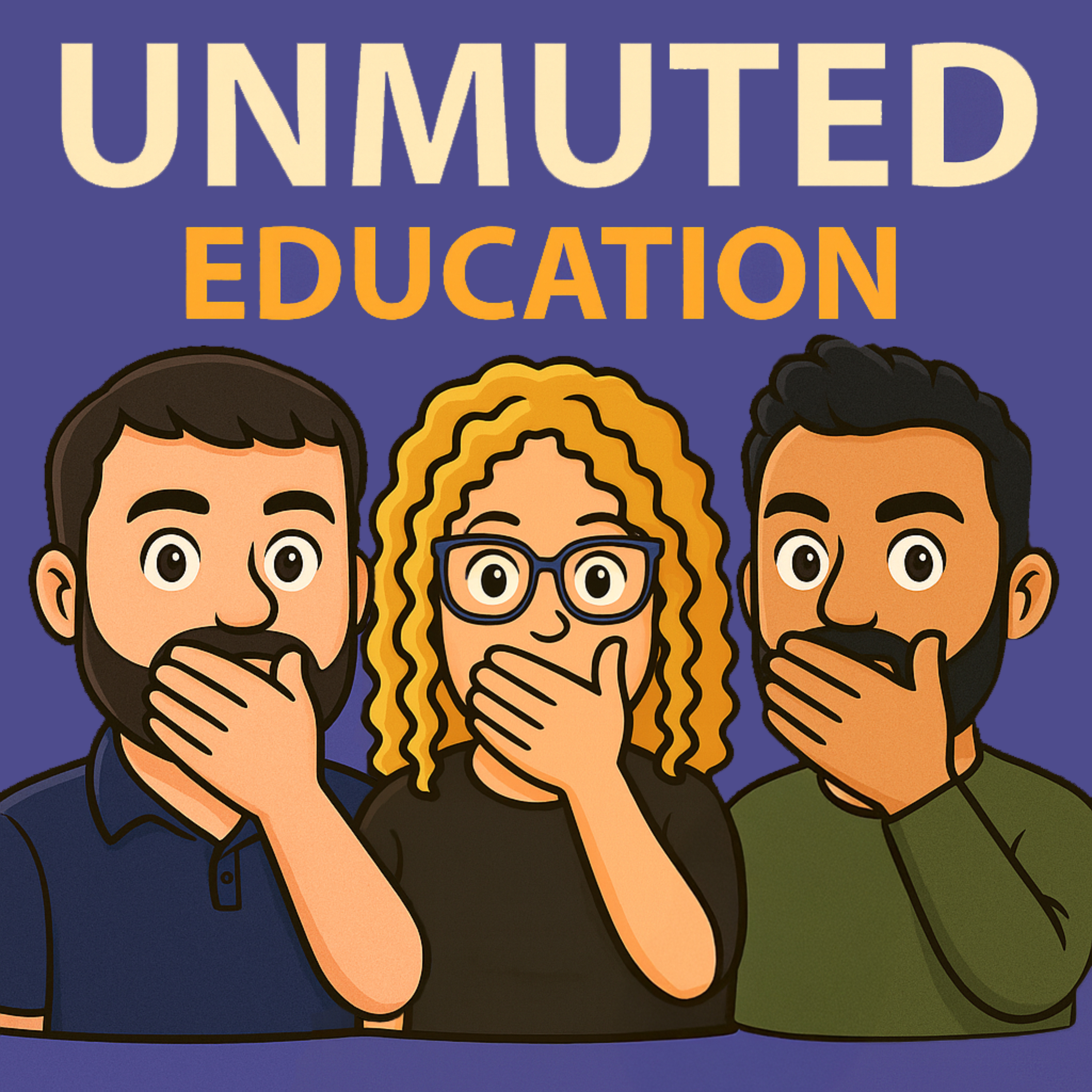
Unmuted Education Podcast
by Seth Hollier, Coebie Logan, and Derek
Unmuted is where real conversations happen. Hosted by three friends with very different worldviews—one deeply religious, one spiritual, and one atheist—we explore the messy, meaningful topics that shape our lives. From parenting and education to leadership and personal growth, we talk openly and honestly about what matters. No filters, no echo chambers—just thoughtful dialogue, unexpected laughter, and a commitment to learning from one another. Whether you agree, disagree, or land somewhere in between, Unmuted is a space to listen, reflect, and be heard.
-
57
Episode 38 (Cathy and Brandy Go to Cheyenne: How HB 8 and HB 9 Became Law)
Cathy Holman and Brandy Sorensen return to share the powerful story behind Wyoming’s HB 8 and HB 9, two new laws aimed at protecting children from stalking and grooming. They walk through the emotional, exhausting, and unexpected journey from committee hearings to unanimous votes, the governor’s signature, and the real impact these laws are already having for Wyoming families. This episode is a look at advocacy, persistence, and what can happen when everyday citizens refuse to let broken laws stay broken.
-
56
Episode 37 (How Natrona Lost the Table)
In this episode, we sit down with longtime Natrona County educator Doreen McGlade to trace the origins of the district’s compact and the trust-based, consensus-driven process it was meant to protect. From its roots in the turmoil of 1999 to today’s concerns over school closures, broken communication, and missing stakeholder voices, this conversation asks a hard question: what happens when a system designed to bring people to the table stops being used? Alongside Dirk Andrews and others, we explore what the compact originally meant, why it mattered, and what it could take to rebuild trust for students, staff, and the community
-
55
Episode 36 (The Sandlot Comes to Wyoming: Grant Gelt on Baseball, Nostalgia, and Community)
In this special episode, we sit down with Grant Gelt, best known as Bertram from The Sandlot, for a fun and heartfelt conversation about the lasting legacy of the film, lifelong friendships with the cast, and how that childhood classic has grown into something bigger than baseball. Grant shares the story behind Play Forever, a nonprofit founded by members of The Sandlot cast that helps remove barriers keeping kids out of youth sports. We also talk about Celebrities for a Cause and Grant’s upcoming trip to Wyoming for a weekend of golf, softball, community events, and fundraising. If you love The Sandlot, believe in the power of sports, or just want to hear a great conversation about nostalgia, purpose, and giving back, this is an episode you won’t want to miss. Play Forever says it works to remove obstacles and equip young athletes with the support they need to participate in sports, and Celebrities for a Cause lists its 2026 Wyoming events for August 6–9. Websites mentioned in the episodePlay Forever: playforever.org Celebrities for a Cause: celebritiesforacausewyo.org
-
54
Episode 35 (Natural Healing, Herbal Wisdom, and Alpenglow Natural Living with Terri)
In this episode, we welcome Terri, owner of Alpenglow Natural Living in Casper, Wyoming, to talk about her journey from education into natural healing and herbal wellness. Terri shares how personal experiences with her children’s health, family healing stories, and her own recovery from a serious injury led her deeper into natural medicine and eventually to taking over one of Casper’s long-standing wellness businesses.We talk about the roots of herbal healing, the difference between treating symptoms and finding the source, and why so many people are looking for more natural options for pain relief, immune support, detox, and everyday wellness. Terri also shares practical insight into culinary herbs, teas, tinctures, natural cleaning products, and the value of returning to simple habits that support long-term health.This conversation is a reminder that there are many paths to wellness, and that small, intentional choices can make a big difference.Show NotesIn this episode:Terri shares her path from education to owning Alpenglow Natural LivingThe history of Alpenglow and its long-standing place in CasperHow natural healing became part of her life and family storyCommon reasons people seek herbal and natural wellness supportThe importance of identifying the root cause of painCulinary herbs and everyday ingredients that support wellnessNatural approaches to reducing toxins in the homeWhy simple habits still matter for long-term healthFeatured Business:Alpenglow Natural LivingCasper, WyomingListener Offer:Mention this podcast episode in-store and receive 10% off your purchase.
-
53
Episode 34 (From School Counseling to Cold-Pressed Wellness: Anna Studer of The Lovely Lemon)
In this episode, we take a refreshing break from our usual education-focused conversations to talk health, wellness, and community impact with Anna Studer, owner of The Lovely Lemon in Casper, Wyoming. Anna shares how her personal journey with juicing, motherhood, and health led her from school counseling into entrepreneurship, and how Casper helped turn her passion into a thriving local business.We talk about the benefits of cold-pressed juice, the difference between juice and smoothies, the realities of building a small business, and how Anna is creating community through her Lunch and Learn events. Along the way, the conversation also explores career transitions out of education, the value of transferable skills, and what it means to keep educating others in a new way.Plus, Derek shares details about his upcoming Love and Logic parenting class, designed to help parents bring more calm, connection, and confidence into family life.Show NotesIn this episode:Anna Studer shares the story behind The Lovely LemonWhy cold-pressed juice is differentHealth, nutrition, and community in CasperLeaving education and building something newThe Lovely Lemon’s Lunch and Learn eventsDerek’s upcoming Love and Logic parenting classLove and Logic Parenting Class Registration:https://docs.google.com/forms/d/e/1FAIpQLSf5CiVftB5c6TfGMo0tqmStuKMsuUNEbz-ljordfFxKTn8-aQ/viewform
-
52
Episode 33 (Charter Schools in Wyoming: What They Are, How They Work, and What’s Next)
With school closures stirring anxiety for parents across Natrona County, the conversation turns to one big question: what other options are there? In this episode, the hosts sit down with Joe Feiler—a 35-year education veteran, former CTE teacher, and current member of the Wyoming Charter School Authorization Board—to break down what charter schools actually are in Wyoming (and what they’re not).Joe walks through Wyoming’s charter-school history, the two pathways to launch a charter (district-authorized vs. state-authorized), and how funding, enrollment, special education services, and statewide accountability work. The group also tackles common misconceptions—like “charters are private schools”—and discusses why families are increasingly drawn to theme-based models like classical education.The conversation then expands into what could come next: CTE and trades-focused charter schools, stronger partnerships with industry, and how Wyoming might better connect academic learning to real-world skills—without abandoning core standards. If you’re a parent, educator, or community member wondering what school choice could look like after closures, this episode is a practical starting point.
-
51
Episode 32 (From Jetsons to Westworld: When AI Gets Useful—and When It Gets Scary)
Cody Sullivan returns and the conversation goes from light jokes to big questions fast. The crew debates whether AI is “smarter” than humans, why our brains run on about 12 watts while AI gulps city-sized power, and what happens when automation doesn’t just replace jobs—but replaces purpose. From robot caregivers (Jetsons) and sci-fi warnings (Westworld, Ex Machina, Subservience) to real-world concerns like farming, education adapting to AI, and AI-powered cyberattacks, the discussion keeps circling back to one core tension: we’re building powerful tools faster than we can agree on the morals guiding them.They close by unpacking the “positive reinforcement” issue—when AI mirrors your assumptions so well that truth, wisdom, and virtue matter more than ever, especially for raising kids in a world where the tool is everywhere.
-
50
Episode 31 (The Wellness Way: Why We Test, Not Guess with Dr. Isaac Castellanos)
The hosts shift into the wellness space with special guest Dr. Isaac Castellanos, a chiropractor and former Fleet Marine Force Corpsman whose path into healthcare began in high school volunteering in the ER and running emergency calls with a California fire department. Isaac shares how years in emergency medicine, deployments, and repeated exposure to seriously ill and injured children shaped his focus on pediatric and perinatal care and, ultimately, pushed him to look beyond “protocol-only” treatment.A pivotal part of his story involves his sister’s long struggle with chronic illness, misdiagnosis, and dismissal inside the conventional medical system—until she was finally tested and treated for Lyme disease. That experience, along with watching providers get penalized for practicing outside narrow guidelines, led Isaac toward chiropractic and a more investigative, whole-person approach.The conversation explores the difference between emergency care and long-term healing using Isaac’s “firefighter vs. carpenter” analogy: medicine is critical for putting out the fire, but real recovery requires rebuilding the house. From nervous system regulation and individualized adjustments to advanced lab work (hormones, stool testing, inflammation, toxins), the group discusses why supplement quality matters, why many health plans fail due to incomplete testing, and how lifestyle, stress, and environment drive outcomes in areas like energy, digestion, and fertility. Isaac also shares how people can find him locally through The Wellness Way Casper and why he believes a doctor’s job is to teach—not just prescribe.
-
49
Episode 30 (Taking Ownership of Education: A Conversation on Homeschooling and Connection)
In this episode, the hosts sit down with Cross True—homeschooled K–12 and now planning to homeschool his own children—to unpack why more families are considering homeschooling and what it actually looks like day to day. The conversation avoids “anti-public school” framing and instead focuses on the real questions parents are asking: safety and peer environments, moral formation, family connection, and flexibility.Cross shares what homeschooling looked like across a large family, from early play-and-learn rhythms to a more demanding high-school season built around Casper College dual-enrollment (BOCES), athletics, and higher-level coursework. The group digs into common misconceptions (academic rigor and “socialization”), argues that education always forms a worldview, and explores how incentives in large systems can drift away from student outcomes. They close by emphasizing responsibility and intentionality—whatever education model a family chooses—and the importance of staying connected to kids in a rapidly changing world.
-
48
Episode 29 (CTE: The Workforce We Can’t Afford to Lose)
In this episode of Unmuted, we’re joined by Rob Hill and Andy Elston for a candid conversation about Career & Technical Education (CTE) and the urgent workforce gap facing Wyoming.Rob shares his path from the trades into teaching and workforce policy, and Andy explains how early hands-on experience turned into a career in engineering and building systems across the state. Together, we break down why Wyoming is facing an aging skilled workforce, why students often get blocked out of CTE pathways (capacity, scheduling, “level one bottlenecks”), and why “industry-ready” can’t just mean a couple of classes and a credential.We also challenge some long-held assumptions in education: what “21st century jobs” really require, why competency-based learning matters, and why communities need stronger partnerships between schools, employers, colleges, and mentors. If Wyoming wants to stop exporting talent—and start building opportunity at home—this conversation is a blueprint.
-
47
Bonus Episode (What Recalibration Could Mean for Teachers: Class Sizes, Cuts, and Categorical Funding)
Julie Jarvis returns with a boots-on-the-ground legislative update as Wyoming heads into session—and the stakes for public education are high. In this episode, the crew breaks down the Wyoming school funding “recalibration” bill and why Julie believes the current proposal could reshape classrooms across the state.Julie explains recalibration in plain terms, then highlights key concerns educators should track: proposed class size changes, a potential reduction of hundreds of classroom teachers, and a major shift away from a block-grant model toward categorical funding—which could reduce local flexibility in how districts staff schools, support students, and use Title I resources. The conversation also digs into the bill’s language around teacher pay (base vs. average salary), the loss of longer-term funding stability, and how these changes could affect everything from staffing to services like counselors, nurses, and intervention supports.From there, the discussion widens to the bigger budget picture: property tax, the use of the term “backfill,” and how Wyoming’s reserve and investment accounts tie into school funding and statewide services. Julie lays out why she believes the public narrative doesn’t match Wyoming’s education outcomes—and why she’s urging citizens to pay attention and get involved as decisions move quickly.If you’re a teacher, parent, or taxpayer trying to understand what’s coming and why it matters, this episode is your roadmap to the debate—and what to watch next.
-
46
Transparency Test: The Records Request Runaround
In this stripped-down, two-host check-in, Seth and Coebie pull listeners behind the scenes of their ongoing public records fight with Natrona County School District. They break down two key requests: who authored the Barnon and Woods school closure recommendation documents (and the broader facilities recommendation), and policies tied to class waitlists and student absences—and why the lack of clear authorship and delayed responses have become a major community trust issue.Along the way, they connect the district’s “stall-and-stress” tactics to a familiar everyday experience: the exhausting runaround of dealing with a massive corporation that keeps billing you even after you’ve done everything right. The takeaway is simple: this process is designed to wear people down—but they’re not backing off. The episode closes with next steps (including the public records ombudsman route), an update for listeners, and a reminder to stay steady, document everything, and keep pushing for transparency.
-
45
Episode 28 Problem Based Learning with Don Anderson
On this episode the team talks with don anderson about his implementation of problem based learning and his transition from college to k-12 teaching.
-
44
HB9: Closing the Grooming Loophole — Brandy Sorensen’s Fight to Protect Wyoming Kids
In this episode of Unmuted, we sit down with Brandy Sorensen—Wyoming mom, realtor, and advocate—to unpack House Bill 9 (HB9), a proposal aimed at making the grooming of minors a felony. Brandy shares how her family’s experience exposed legal gaps, what “grooming” looks like before it crosses current criminal thresholds, and why protections for kids can’t rely on “it’s concerning, but not illegal.” We also talk warning signs for parents, the role of protective orders, and how listeners can contact their representatives to support HB8 and HB9.Content warning: discussion includes sensitive, adult topics involving minor
-
43
Bonus Episode (The Petition, What Happens Next: Woods & Bar Nunn School Closures)
After the district’s decision to close Woods Learning Center and Bar Nunn Elementary, Seth and Coebie explain why they launched a petition—and why transparency matters, especially when families feel blindsided. Joined by Eric Nelsen, they unpack the petition process, what the school board can (and might) do next, and what the community is asking for moving forward: clearer analysis, better communication, and real engagement before future closures are decided.
-
42
Episode 27 (Same Goal, Different Path: Rethinking Discipline w/ Ted Hanson
In this episode, I chat with Ted Hanson about the complexities of behavior and discipline in education, building on our previous discussion. We explore the importance of understanding each child's unique background and context when addressing behavioral issues. Ted emphasizes a nuanced approach to disciplinary methods, debating corporal punishment versus positive reinforcement while highlighting societal influences on student behavior. We discuss the challenges educators face, particularly in under-resourced settings, and the value of restorative practices in fostering accountability. This thought-provoking dialogue urges listeners to consider empathy and community involvement as essential components of effective behavior management.
-
41
Episode 26 (Grit, Grace, and a Broken System w/ Prairie Wife in Heels)
In this episode of Unmuted, we sit down with Cathy Holman, known to many as Prairie Wife and Heels, to talk about a story no family should ever have to live through: an adult stalking and harassing a minor through fake numbers, impersonation, and calculated attacks meant to isolate and destabilize kids.Cathy shares how it started, how long it lasted, and what it did to her daughter, her family, and their small-town sense of safety. We unpack the investigative hurdles (including months-long delays to obtain digital evidence), the emotional toll of living on high alert, and the brutal reality of what happens when the legal system lacks teeth.Most importantly, we discuss Wyoming House Bill 8—a one-sentence fix with major implications: making adult stalking of a minor a felony. This isn’t about attacking a person; it’s about repairing a broken system, protecting kids, and ensuring background checks and school safeguards can actually do their job.Content note: This episode includes discussions of stalking, harassment, sexualized rumors about minors, and mental health impacts.
-
40
Episode 25 (Artificial Intelligence, Real Consequences: A Foundational Conversation w/ Cody Sulivan)
This episode features Cody Sullivan discussing his journey into artificial intelligence as a product change manager at Mesa Power Solutions. The conversation covers the evolution of AI, the distinction between traditional and modern applications, and the concept of AI "hallucinations." The hosts explore human versus artificial intelligence and the implications of AI in education, stressing the importance of foundational problem-solving skills for children. They advocate for a balanced approach to integrating AI in learning and announce plans for a multi-part series on AI.
-
39
Episode 24 (Permission to Create — Ditching the one-path myth with Whitney Asay and Ari Burback)
In this interview, Whitney Asay discusses her journey from a family photography business to becoming a community advocate and entrepreneur. She reflects on her experiences in education, emphasizing the challenges faced by marginalized students and the need for understanding socioeconomic factors in learning. Whitney shares the creation of Funky Junk, a platform supporting local artisans, and how it fosters community engagement. Joining her is former student Ari Burback, who highlights the significance of mentorship and safe spaces for youth expression. The conversation underscores the need for inclusive community events and diverse pathways for youth empowerment and success.
-
38
Episode 23 (No Voice, No Vote, No $$$: Send Your Funding Where You’re Heard - Wyoming Virtual Academy - a better option)
When districts stop listening, families have another option — take their kids, and the dollars that follow them, to schools that do. We sit down with Lisa Williams, principal of the Wyoming Virtual Academy and State Board of Education member, to talk about transparency, accountability, and why families across Wyoming are choosing schools that actually listen.
-
37
Addendum 3: "Bottlenecks to Breakthroughs — The real job of an administrator"
In this episode, we explore the crucial role of school administrators in removing barriers that hinder effective learning. Inspired by Shane's insights, we discuss how educational leaders can navigate systemic challenges by embodying qualities like humility and clear communication. The conversation emphasizes collaborative problem-solving, encouraging educators to suggest solutions and fostering a culture of innovation. We address the bureaucratic obstacles that often stifle creativity and stress the need for flexibility in leadership. The episode culminates in a reflection on the true nature of educational leadership as a strategic vision focused on supporting teaching and learning.
-
36
Addendum 2: "Life Ready - The School That Put Students in Charge" - Shane Ogden Interview
In this episode, Shane Ogden, Superintendent of Meeteetse, Wyoming, discusses his transformative vision for education focused on problem-based learning and student-led initiatives. He shares insights on the implementation of programs like Genius Hour, fostering a culture of professional development among teachers, and engaging students in their learning experiences. Shane critiques standardized testing, advocating for deeper learning experiences and emphasizes the importance of community engagement and collaboration in driving educational reform.
-
35
Episode 22 (Beyond the Headline: What We Really Said About School Closures)
In this episode, we critically analyze a Casper Star Tribune article about our community's school closures, emphasizing the need for accurate media representation. Joined by Seth and Derek, we discuss our petition advocating for educational continuity and community engagement. We highlight the importance of schools as community hubs and the necessity for collaborative decision-making that includes all voices. Our conversation aims to inspire constructive dialogue and accountability, inviting listeners to engage in shaping a positive educational future.
-
34
Addendum 1: “Behind the Desk — The Hidden Responsibilities of a Superintendent
The interview features Deb, the superintendent of Fremont County School District 21 in Fort Washakie, Wyoming. Deb begins by outlining her typical day, emphasizing the diverse responsibilities a superintendent holds that often go unrecognized by the public. She notes that her work starts with daily meetings, including those with staff members across various departments, including transportation, facilities, special education, and counseling. Deb highlights the importance of regular communication with department heads and school principals to ensure smooth operations within the district, particularly in addressing logistical challenges such as field trips, sporting events, and routine safety drills like fire drills.Deb delves into her administrative functions, explaining how crucial it is for superintendents to oversee various aspects of the district, including payroll and financial management. She explains the complexity behind approving leave requests, managing substitute coverage, and ensuring that payroll is processed accurately and on time. Deb emphasizes the significance of timely approval processes, noting that one individual's delay can impact the entire district’s operational rhythm. Moreover, her role entails managing numerous reports required by the state, monitoring the accuracy of data submissions, and understanding the nuances of grant processes. She shares how the evolving expectations and accountability measures in education magnify these responsibilities.As she talks about the financial aspects of running the school district, Deb points to the critical role of impact aid due to the unique geographical location of Fremont County, where the absence of tax revenues necessitates federal funding. Over half of the district's budget relies on these impact aid dollars, which are influenced by the federal government and tribal approvals. Deb raises concerns about the implications of government decisions, particularly in light of delays in funding that could threaten the district’s operational stability. She emphasizes fiscal responsibility, deliberating on the balance between providing adequate funding for educational resources and ensuring the district's financial sustainability.The conversation then transitions to the complexities of implementing new policies mandated by the state or the school board. Deb outlines the procedural steps involved in adopting new policies, such as consultations with legal counsel and discussions with fellow superintendents. One pressing example she provides is the contentious debate surrounding the carry and conceal weapons policy, where she stresses the importance of community context and the cultural implications of such a policy on a reservation. This indicates the delicate balance she must strike between state regulations and local tribal governance.Deb highlights the collaborative culture she seeks to foster within her district, noting that building trust and encouraging open dialogue among staff has made it easier for individuals to express concerns and share ideas. She emphasizes the importance of recognizing every staff member’s contribution, fostering a sense of belonging, and prioritizing student needs. This inclusive approach has improved morale and enhanced communication processes, ensuring that operational challenges are collaboratively addressed rather than unilaterally dictated.In discussing her journey to obtaining her superintendent certification despite it not being a state requirement, Deb outlines her motivations: not only to enhance her knowledge and skills for effective district management but also to ensure that her potential future successor possesses the skills needed to lead the district thoughtfully. She found the coursework invaluable and urges other education leaders to pursue similar certifications to bolster their effectiveness in their roles.
-
33
Episode 21 (The Meeteetse Model: Family-First, Student-Led, Community-Built)
This episode features a compelling discussion with my co-hosts, Seth and Derek, about our transformative field trip to Meeteetse, focused on the role of leadership in education. We explore insights gained from interviewing 48 superintendents and visiting Shane Ogden's school, where collaboration and community feedback are prioritized. The emphasis on project-based learning and life skills over standardized testing creates a dynamic environment for students to take ownership of their education. We contrast Meeteetse's inclusive approach with the challenges in our own district, highlighting the need for greater transparency and community engagement in education. This conversation advocates for a compassionate and community-driven educational system that values the voices of students, parents, and educators.
-
32
Finding Your Inner Calm: Integrative Healing with Nurse Practitioner Lynn Misch
Lynn Misch, a family nurse practitioner with nearly 40 years of experience, discusses her health journey and her upcoming wellness summit focused on cultivating inner calm. She shares insights from her cancer diagnosis that led her to explore integrative health practices and the importance of addressing burnout in healthcare. The summit, occurring from December 1 to December 12, will feature experts on mindfulness and stress management. Lynn emphasizes the value of finding the right integrative practitioner and the coexistence of conventional and alternative medicine while promoting a holistic approach to wellness.
-
31
Not Muted: Community Voice, School Closures, and Media Spin
In this episode, we analyze a contentious article from the Casper Star Tribune regarding school closures in Natrona County. Joined by Derek and Seth, we reflect on how media language shapes public perception and misrepresents our intentions. We clarify our commitment to meaningful discourse about educational choices rather than sensationalism. Highlighting the community-driven petition, we emphasize our goal of advocating for transparency and collaboration in decision-making processes. We discuss the long-term implications of school closures on community identity and stress the importance of open dialogue among all stakeholders. Our podcast aims to foster constructive conversations and encourage community involvement while navigating the complexities of educational policy changes. We invite listeners to engage with our insights and explore further through our blog and media release.
-
30
Episode 20 (Ted Hanson — Relationships Before Rules): Trauma-Informed Special Ed
In this episode, I speak with Ted Hanson, Deputy Executive Director at BOCES 5, about his journey in special education. Ted emphasizes the importance of building relationships with students, especially those from trauma backgrounds, and discusses the unique challenges faced by BOCES 5 in providing comprehensive services. We explore the impacts of trauma on behavior and the necessity of adopting trauma-informed practices, particularly post-COVID-19. Ted challenges conventional views on discipline and advocates for a compassionate, equitable approach to education, making this conversation a crucial reflection on improving our educational systems.
-
29
Episode 19 (After the Announcement w/ Beth and Abby)
When a school closes, the loss is real for students, families, educators, and the neighborhoods around them. In this conversation, Beth, Abby, Seth, and Kobe talk about what happens inside us after news like this and how to move through it with care and intention.We name what grief can look like, why uncertainty fuels anxiety, and how timely information helps. We also explore how leaders and receiving schools can welcome displaced staff and students with true attunement, plus practical supports you can use right away.In this episode:Recognizing grief and why it is not a straight lineManaging anxiety when details are unclearAttunement and validation for colleagues and familiesEveryday supports like journaling, movement, connection, and gratitudeGuidance for educators and parents visiting potential new schoolsA mindset of autonomy and choice in the middle of changeHave a question or a story to share? Send it in and we may include it in a future episode.
-
28
Tech Tips - Wait, That’s a Real Punctuation Mark‽
In this episode, we explore the unique punctuation mark known as the interrobang, which marries a question mark with an exclamation point. I share my personal journey in educational technology, reflecting on my experiences as a classroom teacher and principal, while my colleague Seth introduces me to the interrobang, prompting an engaging discussion about its history and significance. We delve into its 1960s origins and enjoy a light-hearted conversation on how to integrate this mark into our daily communications. I provide listeners with practical tips for adding the interrobang as a text replacement shortcut on their smartphones, culminating in a fun family text exchange. Our episode emphasizes the joy of language and the importance of keeping communication vibrant and curious.
-
27
Episode 18 - Classroom Discipline
In this episode, I explore the complexities of discipline in the classroom, drawing from my experiences as a former educator. We question the educator's role in discipline and emphasize the importance of building respectful relationships with students. I share personal anecdotes illustrating the challenges of gaining respect, while co-host Derek offers strategies for fostering rapport.We discuss the necessity of clear behavioral expectations and the relevance of consequences in promoting accountability. Our conversation also addresses parental involvement and the implications of labeling students. Ultimately, we assert that discipline should be rooted in care and consistency, highlighting the challenges educators face in creating a positive learning environment.
-
26
Episode 17 - Failing Up
In this episode titled "Failing Up," we address the alarming trend of educational institutions prioritizing promotion over actual learning. Starting with a listener's account of high schools as diploma mills, we discuss the ethics of passing unprepared students and the impact of ineffective leadership in education. We highlight the need for a fundamental shift in educational philosophy, exploring research on delayed formal schooling and its benefits.We tackle issues of grade inflation and the culture of fear surrounding failure, advocating for the importance of accountability while acknowledging the necessity of failure for growth. This episode calls for meaningful change in the educational landscape, aiming to better prepare students for real-world challenges.
-
25
Recess Talk and Exciting New updates
In this episode, we delve into the recent transformations taking place not just in our podcast space but also in our broader approach to content creation. The discussion kicks off with an entertaining dialogue about the mall's revitalization, providing a light-hearted backdrop that mirrors our own changes. As we explore the influx of new stores and shifting ownership dynamics, it serves as a metaphor for how we’re also evolving to better meet the needs of our audience.We’re also excited to announce the upcoming launch of a new podcast segment titled “Unmuted Brains,” intended to explore deeper discussions around mental health and educational topics alongside our friends Abby and Beth. This new venture will allow us to broaden our dialogue and engage different perspectives, creating a richer tapestry of conversation that complements our mission. Alongside addressing listener inquiries, our goal is to foster an environment of growth—one where questions are welcomed and knowledge is shared.
-
24
Episode 16 - From Saddle to Statehouse: JD Williams on “Keeping Wyoming, Wyoming”
In this episode, J.D. Williams, a key player in Wyoming politics and a seasoned rancher, discusses his upbringing in a conservative ranching family and the values of hard work and self-reliance that shaped him. He reflects on his transition from cowboying to community service, emphasizing that true leadership is about serving others.J.D. addresses challenges facing Wyoming, including the influences that threaten local governance, and advocates for decisions that prioritize long-term community needs. He also highlights the disconnect between education legislation and real-world impacts, calling for critical thinking and responsible fiscal policies to ensure future stability. The episode concludes with J.D.’s insights on the importance of civic engagement and countering misinformation.
-
23
Live Recess Talk (School Closures)
In this episode, we explore the complexities of school management and community engagement amid recent school closures. We discuss concerns from parents and educators about transparency in decision-making and the tension between standardized testing and nurturing creativity in schools. Highlighting the need for smaller educational settings, we address how bureaucracy can hinder innovation and community responsiveness. Through real-world anecdotes, we emphasize the importance of recognizing diverse student needs and advocate for greater community involvement in shaping educational policies. This conversation serves as a call to action for families to unite for a more supportive and personalized approach to education.
-
22
Episode 15 (Julie Jarvis - Understanding Literacy)
In this episode, I talk with Julie Jarvis, an educator and curriculum director, about her journey through the educational system. We discuss her challenges and triumphs in literacy, emphasizing the need for explicit reading instruction and effective assessment strategies. Julie shares insights from her doctoral research and her work advocating for literacy reforms in Wyoming. Our conversation also touches on the complexities of educational leadership and concludes with a lighthearted look at her involvement in unique legislative proposals.0:17 Introduction to the Podcast2:00 Julie's Background in Education4:24 The Importance of Literacy8:16 Overcoming Personal Literacy Challenges13:01 Assessing Literacy Needs17:22 The Role of Curriculum Directors23:21 Exploring Vocabulary in Education32:02 The Disconnect in Teacher Training35:17 Addressing Literacy Standards42:32 The Impact of Administration Structures49:00 Government Involvement in Education52:39 Drafting the K-3 Literacy Bill1:00:28 The Need for Accurate Assessments1:04:03 The Importance of Literacy in Society1:11:19 Unique Legislative Initiatives1:18:12 Conclusions and Future Discussions
-
21
Emergency Bonus Episode (Dirk and School Closures)
On this episode we answer listener feedback about school closures in Natrona County
-
20
Episode 14 (Dirk and the Compact)
On this episode we answer some questions by you about the Compact in Natrona County School District
-
19
Where is the love Bonus Episode
In this episode, we discuss the societal implications following the passing of conservative commentator Charlie Kirk, exploring reactions of celebration and the quest for sympathy amidst controversial views. We critique social media's role in amplifying division and echo chambers, and reflect on the historical context of public reactions. Highlighting the need for education on empathy and ethical discourse, we encourage listeners to foster open dialogue and understanding in today's polarized environment.
-
18
Episode 13 (Jillian)
On this episode we talk with Jillian a former office administrator who worked with Coebie to open Journey Elementary School
-
17
Teachers are asking "What About Our Raises" w/ Julie Jarvis
Julie Jarvis discusses misconceptions about teacher raises in Wyoming, specifically an 8.5% increase proposed for certified and non-certified staff. She explains the state's school funding structure, which allocates funds based on Average Daily Membership (ADM) and Full-Time Equivalents (FTEs). The conversation highlights disparities in how the raise is distributed across districts, with smaller districts often receiving more funding per student due to block grants. Jarvis points out that rising healthcare costs and employment practices complicate the ability of districts to implement the full raises as intended. She emphasizes the need for transparency in funding communication and encourages educators to engage with their districts about financial allocations. Overall, the discussion sheds light on the complexities of educational funding in Wyoming and advocates for better understanding and dialogue within the community.
-
16
Episode 12 (Shawna and the Jae Foundation)
In this episode, I chat with Shauna Trujillo about mental health and community support. Transitioning from teaching to grant management at Casper College, Shauna discusses her work with the Jay Foundation, which raises awareness about mental health and suicide prevention following the loss of Jay Bing.We explore initiatives like providing cowboy boots to graduating seniors as symbols of connection and the importance of open conversations around mental well-being. Shauna emphasizes the need for social-emotional learning in schools and encourages listeners to foster supportive environments for youth. This episode highlights the crucial role of community in addressing mental health challenges.
-
15
Episode 11 (Twins Redefining Education)
In this powerful episode of Unmutted, identical twin educators Abby and Beth share their groundbreaking approach to teaching, revealing the transformative power of partnership, emotional intelligence, and human-centered learning. They candidly discuss their journey from co-teaching in elementary classrooms to pursuing advanced degrees in neuroscience and mental health, challenging traditional educational paradigms and offering profound insights into student-teacher relationships.Listeners will gain unprecedented access to the raw, unfiltered experiences of educators who are reimagining what it means to truly support and understand students. From behavioral strategies to the importance of co-regulation, this episode is a must-listen for anyone passionate about education, human development, and creating meaningful connections.
-
14
Episode 10 (Why Derek Left Education)
The interview explores Derek's extensive journey in education, from his academic background and initial inspiration to teach, to his various roles, including instructional facilitator and assistant principal. He discusses challenges faced during the COVID-19 pandemic, which prompted a move to Wyoming, and shares insights into the complexities of school leadership, emphasizing the importance of relationships and mentorship. Derek expresses his disillusionment with current educational philosophies, advocating for a more humanistic approach focused on character and community. The conversation highlights his internal struggle as he contemplates leaving education for a new career opportunity, underscoring the balance between passion and pragmatism in leadership. The discussion culminates in reflections on fostering nurturing environments for educators and the moral responsibilities inherent in teaching.
-
13
Episode 9 (One Year Only W/ Dirk Andrews)
In this episode, Dirk Andrews, Vice President of the Wyoming Education Association, discusses the challenges facing Wyoming's education system, particularly the detrimental effects of the one-year-only contract system for teachers in Natrona County. He emphasizes the negative impact of high turnover rates on student outcomes and community ties, and critiques the financial motivations driving these policies. Dirk also addresses broader issues like gun regulations and education vouchers, advocating for community involvement and collaborative decision-making to enhance educational quality. The conversation concludes with his vision for strengthening public schools in Wyoming.
-
12
Episode 8 (Ari Burback, a 22-year-old fashion entrepreneur)
Ari Burback, a 22-year-old fashion entrepreneur from Casper, Wyoming, shares her journey as a clothing designer focused on upcycling in this episode of "Unmuted." She discusses her experiences at major fashion events and reflects on her educational path, highlighting the constraints of traditional learning and the influence of inspiring teachers. Ari advocates for practical education that fosters creativity and exploration, urging students to pursue their passions despite societal pressures. Her story emphasizes the importance of following one's unique path and nurturing personal interests as vital to success.
-
11
Episode 7 (I Won't Wait to Live: Breaking Free from Educational Burnout)
Join hosts Coebie and Seth as they sit down with Kristie Benabisi, a former school support staff member who shares her transformative journey from feeling stuck in a traditional education role to embracing a life of passion, purpose, and personal freedom. Kristie opens up about her experiences in schools, the challenges of burnout, and how she courageously chose to rewrite her life's narrative, offering inspiring insights for anyone feeling trapped in their current career. Discover how one woman's leap of faith led to a life of adventure, intuitive work, and true happiness.Links:https://unmuted-pod.comhttps://www.youtube.com/@ChriNKrishttps://www.facebook.com/MystikalRootzhttps://www.instagram.com/mystikal_rootz_/https://mystikalmusings.com/
-
10
Back to School with Abby and Beth
In this episode, we explore the crucial topic of preparing for the back-to-school season with insights from experienced educators Abby Bishop and Beth Corley. We discuss the emotional challenges parents face, especially those sending children to kindergarten for the first time, and the shift in educational standards that have made early schooling more rigorous. The conversation highlights the importance of allowing downtime after school, as well as the role of co-regulation in helping children manage their emotions. We suggest strategies for establishing effective after-school routines, including visual schedules and creating comforting routines to ease separation anxiety. Additionally, we offer parenting tips on nurturing healthy habits and discuss foundational classroom management strategies for new teachers, emphasizing the importance of creating nurturing environments that support both academic success and emotional well-being.
-
9
Episode 6 (Religious Public Charters)
Derek and Coebie discuss the potential impact of the Supreme Court's decision to allow the first public religious charter school, which is Catholic. They debate the historical separation of church and state in education, questioning whether it's necessary or beneficial. Derek argues that education should incorporate philosophy and theology, while Coebie emphasizes the need for a moral foundation in schools. They explore the implications of allowing religious charter schools, including the potential for diverse educational options and the importance of community involvement. They also discuss innovative educational approaches, such as integrating play and real-world learning, to create a more holistic and family-centered educational experience.
-
8
Episode 5 (Pre-K)
Unmuted podcast focusing on early childhood education and parenting. The episode features two preschool educators, Alice and Dolly, who discuss significant changes in child development, social-emotional skills, and parenting approaches. They explore challenges like increased technology use, decreased social interaction, and the importance of teaching children basic skills like manners, self-help abilities, and emotional regulation. The conversation provides insights into how preschool education has evolved and the critical role of parents in child development.
No matches for "" in this podcast's transcripts.
No topics indexed yet for this podcast.
Loading reviews...
ABOUT THIS SHOW
Unmuted is where real conversations happen. Hosted by three friends with very different worldviews—one deeply religious, one spiritual, and one atheist—we explore the messy, meaningful topics that shape our lives. From parenting and education to leadership and personal growth, we talk openly and honestly about what matters. No filters, no echo chambers—just thoughtful dialogue, unexpected laughter, and a commitment to learning from one another. Whether you agree, disagree, or land somewhere in between, Unmuted is a space to listen, reflect, and be heard.
HOSTED BY
Seth Hollier, Coebie Logan, and Derek
CATEGORIES
Loading similar podcasts...
URL copied to clipboard!