
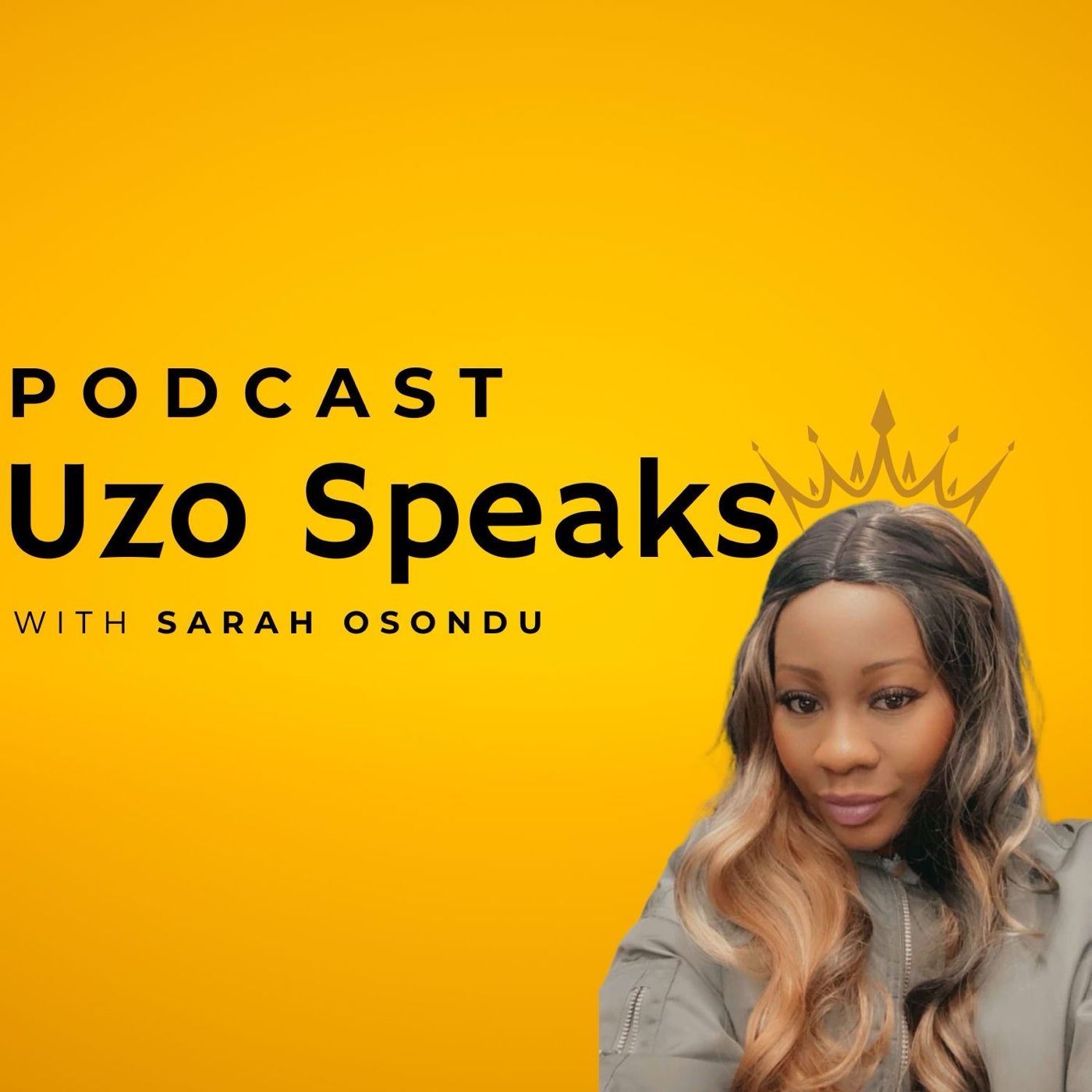
PODCAST · society
Uzo Speaks
by Sarah Osondu
The Uzo Speaks podcast is to inspire and encourage thought provoking conversations on the current political climate. This podcast will also provide commentary on a range of pop culture topics.
-
71
What Happens When Black Women Disappear?: A family’s grief & media bias in Britain
Three sisters. One tragedy. And a painful conversation about race, grief, and visibility. In this episode, I explore the deaths of Jane Adetoro, Christina Walters, and Rebecca Walters, and the wider discussions surrounding Black women, media attention, institutional distrust, and public empathy in the UK. This is not about conspiracy theories or spreading misinformation. It is an honest and compassionate conversation about why so many Black women feel unseen until tragedy forces attention.
-
70
The gravest crime against humanity : Slavery, UN Recognition, and What Comes Next
In this episode, I unpack the United Nations’ historic decision to declare the transatlantic slave trade the gravest crime against humanity. Blending history and lived experience as a Black woman, this episode explores the true scale of slavery, its lasting global impact, and the uncomfortable truths behind the UN vote. From the Middle Passage to modern inequality, and from Haiti’s debt to today’s reparations debate, this is more than a history lesson—it’s a conversation about justice. Because recognition matters, but the real question is: what happens next?
-
69
AFCON Final Overturned: When the Final Whistle Wasn’t the End
This episode explores the controversial Africa Cup of Nations final where Senegal’s on-field victory was later overturned by the Confederation of African Football. I break down what happened, the backlash it sparked, and why figures like George Weah say the decision has damaged African football’s credibility — raising bigger questions about trust, governance, and the future of the game.
-
68
Oscars 2026: Sinners, One Battle After Another & the Bigger Picture
In this episode, I share my reflections on the 2026 Oscars, focusing on the night’s biggest talking point — the success of Sinners and its loss of Best Picture to One Battle After Another. While Sinners took home major awards, including Best Actor for Michael B. Jordan and Best Cinematography for Autumn Durald Arkapaw, its overall outcome sparked widespread debate. I explore what the results reveal about the film industry, including ongoing conversations around racism and the under-recognition of films centred on African American experiences. I also discuss about the controversy surrounding One Battle After Another, particularly discussions about the portrayal and fetishisation of Black women, and why these themes resonated so strongly with audiences. This is more than a recap — it’s a look at what the Oscars say about whose stories are celebrated, whose are overlooked, and why that still matters today.
-
67
Manon’s Hiatus and the history of black girls being overlooked in pop girl groups
Manon’s recent hiatus from KATSEYE has sparked a wave of conversation across pop culture media and fan communities. In this episode, I explore about Manon’s break from the group and why it has reignited a larger discussion about the experiences of Black girls in multiracial pop groups. Looking at examples from past and present—including artists like Mel B, Normani, Leigh-Anne Pinnock, and others—I unpack the pressures, stereotypes, and industry dynamics that have often left Black members overlooked or held to different standards. By placing Manon’s story within this broader history, this episode examines how fandom, media narratives, and the music industry shape who gets supported, who gets scrutinized, and who gets remembered in pop.
-
66
From Nuclear Deal to Airstrikes: The Road to the U.S.–Israel Attack on Iran
In this episode, I break down the dramatic escalation that saw the United States and Israel launch strikes on targets inside Iran, sending shockwaves across the world. I examine the timeline of events that led to the attacks, from the 2015 Iran nuclear deal and its collapse to years of mounting tensions, covert operations, and regional confrontations. I also explore the reported assassination of Iran’s leader, the strategic importance of Iran’s energy resources and geography, and why the United Kingdom has taken only a limited role so far. Finally, I discuss about the global reactions, the battle of narratives unfolding on social media, and what Iran’s potential response could mean for the future of the Middle East and global stability.
-
65
The Life, Legacy, and Passing of Jesse Jackson
Reverend Jesse Jackson was a prominent figure in the civil rights movement. In this episode, I discuss his early life growing up in the segregated American South, to his work alongside Martin Luther King Jr., his leadership after King’s assassination, his groundbreaking presidential campaigns, and his decades of activism that helped reshape American politics and civil rights advocacy. This episode is about persistence, courage, complexity, and hope — and about what it means when history moves from living memory into legacy.
-
64
More Than Music: The Grammys, The Super Bowl & America’s Identity Crisis
In this episode, I discuss about two of the most talked-about cultural moments of the year: the 2026 Grammy Awards and Bad Bunny’s Super Bowl halftime show. What initially felt like music celebrations quickly turned into conversations about identity, belonging, language, and power. I share my reflections on the winners at the Grammys and why their triumphs matter, explore the speeches that shook the internet, and examine how artists used their biggest platforms to express more than just gratitude. Next segment is about Bad Bunny’s historic Super Bowl halftime show — delivered almost entirely in Spanish and packed with cultural symbolism — and I discuss how it became both a love letter to Puerto Rican and Latin identity and a flashpoint for political backlash, including criticism from Donald Trump and others who labeled it “un-American.”
-
63
The Epstein Files: What’s Actually in the Documents
Millions of pages tied to Jeffrey Epstein have been released — and headlines are flying. Celebrities, politicians, billionaires, and royals are all being named. But what do these documents really show… and what’s just noise? In this episode, I break down the latest reporting, explain what the files actually contain, and separate verified facts from unverified claims. From document dumps and redaction failures to high-profile names like Bill Clinton, Prince Andrew, Elon Musk, I discuss about the context — without trying to speculate or create conspiracy theories.
-
62
ICE and Border Patrol in Minneapolis: The Fatal Shooting of Alex Pretti
This weeks episode is about the killing of Alex Pretti on January 24th 2026 by federal immigration agents in Minneapolis. I examine how early alleged claims of political violence, emerging video evidence, and witness testimonies fuelled public backlash, intensified scrutiny of ICE enforcement tactics, and forced the American federal government to reassess its own narrative.
-
61
The Price of Perfection: Inside the Beckham Family Breakdown
For decades, the Beckhams represented the ultimate image of success, unity, and control — a family that became a global brand. But when Brooklyn Beckham broke his silence, that carefully curated illusion fractured. In this episode, I explore the emotional cost of growing up inside a brand family, where love is conditional, narratives are controlled, and public image comes before private truth. Through Brooklyn’s own words and a broader examination of power, loyalty, and identity, this episode unpacks how control masquerades as care — and why walking away can be the only path to peace. This is not a story about celebrity scandal. It’s a story about family, freedom, and the price of perfection.
-
60
Netflix, Paramount and the battle for Warner Bros
This episode is about the high-stakes battle between Netflix and Paramount to acquire Warner Bros — and what that struggle reveals about the future of cinema, streaming, and cultural power. Moving beyond headlines, I also examine why Hollywood is fighting so fiercely over a single studio, how audience behaviour has already reshaped the industry, and why this battle isn’t really about saving movies — but about who gets to control them next.
-
59
Netflix’s Diddy: The Reckoning — A Documentary Breakdown
In this week’s episode, I examine the Netflix documentary Diddy: The Reckoning, episode by episode. I discuss about the claims made throughout this explosive documentary, interviews, and central themes — from the rise of Bad Boy Records and the East Coast–West Coast rivalry to the personal allegations, and lawsuits. Each episode offers a clear, chronological breakdown of what the documentary presents, alongside summaries of public reaction and social-media discourse, including how viewers responded across Twitter and other platforms. I also provide my personal reflections as well as additional context and critical analysis of how power, fame, and silence intersect.
-
58
After the National Guard Shooting: Trump Proposes Ban on Migration from ‘Third-World’ Nations
In this episode, I unpack President Donald Trump’s announcement that he plans to “permanently pause migration from third-world countries” following a tragic National Guard shooting. Through a balanced exploration, I examine what happened during the incident, the legal and political implications of the proposed pause, reactions from across the political spectrum, and how this moment reflects larger questions about national identity, security, and humanitarian responsibility. Drawing from historical precedent, economic analysis, and expert commentary, this episode aims to inform rather than inflame—offering listeners a clear, thoughtful understanding of one of the most contentious issues shaping America today.
-
57
Former Reform Leader Jailed
In 2025, former Reform UK Wales leader and MEP Nathan Gill was jailed for 10 years for accepting cash to deliver pro-Russian messaging on air and in Parliament. This episode uncovers how his paid speech blended into political debate, and asks whether democracies are ready to defend themselves against influence that masquerades as opinion.
-
56
Mandated Disclosure: What Congress’s Bill on Epstein Means for Trump
In this episode, I explore the explosive turn of events surrounding the late financier Jeffrey Epstein and the newly passed legislation that mandates the release of his federal files. With Congress approving the Epstein Files Transparency Act — a bill overwhelmingly supported by both the United States House of Representatives and the United States Senate, I explain what’s in the bill, what it means for transparency, and why Donald Trump finds himself at the center of the storm. I’ll also discuss about how the legislation came about, the political and emotional dimensions of the files release, and what this moment reveals about power, accountability, and the public’s demand for truth.
-
55
review into the 2026 GRAMMY Nominations
In this episode, I share my personal reflections on the 2026 GRAMMY nominations. I break down what makes each song and album stand out, why certain artists rose to the top this year, and who I think has the strongest chance of winning. From the big categories all the way through Pop, R&B, Rap, African, and Global music, I share my own reflections on the sounds, voices, and moments that shaped this year’s list. (I did not give a breakdown of every category mainly the genres that I mentioned). I also talk about the stories they tell and the current landscape of music.
-
54
The Fall of Prince Andrew - A Royal Scandal
This episode explores the disgrace, and aftermath of Prince Andrew — now Andrew Mountbatten Windsor. I also discuss how allegations of sexual abuse linked to Jeffrey Epstein brought unprecedented scrutiny to the British monarchy and forced it to confront questions of power, privilege, and accountability. Drawing on verified public statements, media coverage, and expert commentary, I also examine how one royal scandal reshaped the House of Windsor and the public’s expectations of justice.
-
53
Too Diverse? The Backlash Against Representation in Modern Britain
When Reform UK MP Sarah Pochin claimed British adverts “no longer look like Britain,” her comments ignited a national row about race, identity, and belonging. In this episode, I unpack the backlash — from Parliament’s fiery debate to social media outrage — and I explore why representation in media continues to divide the nation. Tracing the history of diversity in British advertising, from invisibility to inclusion, I ask: Why does seeing a changing Britain still make some people uncomfortable — and what does that say about who we think we are?
-
52
Stand Your Ground - Fear, Race, and the Cost of Justice
This episode explores how America’s self-defense laws fail Black communities. Through the lens of Netflix’s The Perfect Neighbor and the story of Ajike Owens, I blend emotion and investigation to expose how the “Stand Your Ground” law protects fear — not fairness. I also reflect on the tragedy of Trayvon Martin, and I confront racial bias, legal hypocrisy, and the human cost of injustice — while raising awareness of those whose lives were taken by it.
-
51
Israel & Palestine - A Century of Conflict
This episode traces the complex history of Israel and Palestine — from ancient origins to modern wars and failed peace efforts. I also explain how generations of displacement, diplomacy, and division have shaped one of the world’s most enduring struggles. The episode concludes with the 2025 ceasefire — a fragile pause that offers a glimpse of relief, but no guarantee of lasting peace. Disclaimer: This episode is intended for educational and historical insight only. It does not promote any political stance or justify violence. Listeners are encouraged to approach this episode with empathy, curiosity, and respect for the lives affected on all sides.
-
50
When Power Breaks - The Diddy Reckoning
Diddy was sentenced to 4 years in prison. I talk about the rise, fall, and sentencing of Sean “Diddy” Combs — and what his story reveals about fame, accountability, and the culture that protects power. This episode also explores how celebrity influence distorts justice, how survivors reclaimed their voices, and what redemption really means in the aftermath.
-
49
Nicki Minaj v. Cardi B - Rap Queens at War
This week’s episode is about breaking down one of hip-hop’s fiercest rivalries. I start at the beginning with Nicki’s rise and her precedent-setting clash with Lil’ Kim, then trace how Cardi B broke out and opened the doors for a new generation of women in mainstream rap. From “MotorSport” and the Harper’s Bazaar altercation to years of subliminals, memes and chart wars, I bring you right up to the release of Cardi’s second album and the explosive new wave of posts, taunts and eagle-versus-crow metaphors that followed. Finally, I explore the deeper themes behind this beef — jealousy, gatekeeping, stan culture, and the role of social media and blogs in keeping this feud alive.
-
48
Late Night Under Fire, The Jimmy Kimmel–Charlie Kirk Scandal and the Battle for Free Speech
When Jimmy Kimmel’s sharp monologue about Charlie Kirk led to his suspension from ABC, it ignited a firestorm that stretched far beyond late-night comedy. In this episode, I explain how Disney’s corporate interests, political pressure from the Trump administration, and a staggering $4 billion stock loss collided to create one of the most explosive media controversies in recent memory. From firings across newsrooms to an open letter signed by more than 400 celebrities — this story became a referendum on free speech in America.
-
47
Charlie Kirk - His Rise, Movement, Controversies, Assassination & Aftermath
On September 10th, 2025, conservative activist Charlie Kirk was assassinated while speaking at Utah Valley University. In this week’s episode, I talk about his rise as the founder of Turning Point USA, the controversies that made him a polarising figure, the details of his killing, and the divided aftermath. Kirk’s story is one of influence, outrage, and the enduring question of what his legacy means for America.
-
46
Truth or Hoax? The Jussie Smollett Scandal Revisited
Following the release of the Netflix documentary covering this story, I revisit the Jussie Smollett scandal—one of the most polarizing stories of the past decade. Was the Empire star the victim of a brutal hate crime, or did he stage an elaborate hoax? Through storytelling, expert insights, and cultural commentary, I explore the evidence, the trial, the Netflix documentary, and the lasting impact on race, justice, and truth in America.
-
45
Crossroads of Identity: The Debate over the St George’s Flag
In this episode of Crossroads of Identity, I explore the controversy surrounding the St George’s Cross — England’s national flag. Once a medieval emblem and now a familiar sight at football matches, it has also been used by far-right groups, leaving many to question whether it symbolises unity or exclusion. I unpack the history, the laws around flying flags, and the recent campaign Operation Raise the Colours, which covered towns and cities in red and white but also stirred fear and division. Through political debate, community voices, and reflections from ethnic minority experiences, I ask: can the St George’s flag ever truly belong to everyone?
-
44
No Room for Racism - Football’s Ongoing Fight
In this episode, I take a deep dive into racism in English football — from the recent abuse aimed at Antoine Semenyo at Anfield to the fallout after Euro 2020 and the treatment of Rashford, Saka, and Sancho. I explore the history of racism in the Premier League, the role of Kick It Out, and provide my perspectives on football pundits, police, fans, football clubs and social media. I also share some powerful reflections on how the game can truly become a space for everyone.
-
43
Sydney Sweeney vs Beyoncé: Jeans, Race & Representation
From Sydney Sweeney’s “Great Jeans, Great Genes” ad to Beyoncé’s Levi’s homage, two denim campaigns sparked two very different public reactions. In this episode, I unpack the imagery, the backlash, and the racial double standards woven into America’s favorite fabric.
-
42
Breonna Taylor’s death, aftermath & sentencing
On March 13, 2020, officers executed a "no-knock" search warrant at Breonna Taylor’s home in Louisville, Kentucky. In the resulting raid, Taylor was shot and killed in her hallway. Her boyfriend, Kenneth Walker, fired once, striking an officer, prompting return fire by officers. The drug search warrant ultimately yielded no evidence of drugs. Taylor’s family received a wrongful death settlement of $12 million from the City of Louisville, which also implemented reforms including a statewide ban on “no-knock” warrants via “Breonna’s Law.” Brett Hankison is the first officer held criminally accountable in the raid. The 33‑month federal sentence falls well short of the maximum potential penalty and was described by family and advocates as a partial victory. This case has sparked continued debate over whether justice was fully served and renewed attention on systemic policing reforms.
-
41
Trump refuses to release the Epstein files….but releases the MLK Jr files
During the Trump administration, there was notable controversy over the handling of sensitive government files. The administration refused to release the full set of documents related to Jeffrey Epstein, a financier and convicted sex offender with alleged connections to powerful individuals. Critics argued that the refusal to declassify Epstein-related files fueled suspicion of a cover-up to protect prominent figures. In contrast, the Trump administration did release a portion of the FBI's files on Martin Luther King Jr., some of which included controversial and previously redacted material. These documents, stemming from the FBI’s surveillance and smear campaigns against King, drew renewed attention to the bureau's historical efforts to discredit civil rights leaders. The juxtaposition of withholding Epstein-related information while releasing sensitive files on MLK Jr. sparked public debate over transparency, selective declassification, and the motives behind government disclosure.
-
40
Nicki Minaj v Jay-Z/Roc Nation & SZA
Nicki reignited her long-standing beef with Jay‑Z and Roc Nation CEO Desiree Perez, publicly alleging she was severely short‑changed in the 2021 sale of TIDAL. She claims she received just $1 million for a 3% equity stake—far below the $100–$200 million she says she’s owed—calling it “karmic debt” and a betrayal of their artist-led platform approach. Nicki Minaj also exposed how allegedly Roc Nation were trying to dismiss a sexual harassment lawsuit against Meg thee Stallion and the paternity suit against Jay-Z. Nicki Minaj escalated a subtle SZA post into a full-on social media feud—insulting SZA's looks, music, and credibility — while SZA responded by leaning on her strong fan support and chart-topping success. Has Nicki Minaj further destroyed her legacy by her crashouts? I share my thoughts in this episode
-
39
Diddy’s trial & verdict
After a seven-week federal trial in New York, Sean “Diddy” Combs was found guilty on two counts of transportation for prostitution (for allegedly arranging for two former partners and others to engage in paid sex across state lines). He was acquitted of the more serious charges—racketeering conspiracy and sex trafficking. Judge Arun Subramanian denied bail, citing evidence of Diddy’s history of domestic violence and the prosecution’s argument that he posed a risk to witnesses and the community. Sentencing is scheduled for October 3, 2025, with prosecutors seeking 4–5 years in prison under federal guidelines, while the defense recommends a shorter term of 21–27 months. *DISCLAIMER - this episode does contain some graphic accounts of allegations of sexual abuse
-
38
Anna Wintour steps down from the editor-in-chief position at Vogue
Anna Wintour was appointed Editor‑in‑Chief in July 1988. She made actors, musicians, and cultural icons—from Beyoncé to Kim Kardashian—cover stars, reshaping public expectations of Vogue and expanding its audience . She also advocated fiercely for designers like Marc Jacobs, Alexander McQueen, and John Galliano, often through the CFDA/Vogue Fashion Fund. Anna played a key role in the transformation of the annual Met Gala from a niche fundraiser into the most influential fashion event since taking the reins in 1995. Wintour's departure marks the end of an era at Condé Nast. Though she held multiple roles—including artistic director and global content advisor—her departure is seen as symbolic of the broader transformation in media, where traditional editorial power has shifted toward digital platforms and influencer-driven content. Her successor has not yet been officially named, but speculation surrounds whether Condé Nast will choose a global face of Vogue or a new structure altogether. Her exit reflects both her enduring impact and the significant change sweeping the fashion and publishing industries.
-
37
U.S-Iran Tensions, Israeli Bombings, and Trump’s Intervention
Over the past 70 years, U.S.–Iran relations have been marked by deep mistrust and periodic conflict. Tensions began in 1953 when the CIA orchestrated a coup that overthrew Iran’s democratically elected Prime Minister, installing the Shah. This fueled anti-American sentiment that exploded during the 1979 Islamic Revolution, when the Shah was deposed and 52 Americans were taken hostage in Tehran. Diplomatic ties were severed and never fully restored. In the decades since, disputes over Iran’s nuclear ambitions, regional influence, and support for militant groups have kept the two nations at odds. Israel, viewing Iran as a major threat, has allegedly carried out covert operations and cyberattacks. In June 2025, both Iran and Israel exchanged aerial bombardments - and Trump intervened…not to keep the peace, but instead joined in on the attacks against Iran….
-
36
Trump’s continued attacks on America & America fights back!
On the 6th June, U.S. Immigration and Customs Enforcement (ICE) carried out aggressive raids on workplaces, schools, and public areas, aiming to arrest undocumented individuals—allegedly targeting up to 3,000 per day under Trump’s order. Thousands of protesters took to the streets. Los Angeles declared a state of emergency; the California National Guard (2,100 troops under federal command) and 700 Marines were stationed nearby. Anti‑ICE demonstrations spread to NYC, Chicago, Dallas, Atlanta, Denver, Seattle, and more—some peaceful, others marked by arrests and confrontation. In response to Trump staging a lavish military parade in Washington, D.C.—coinciding with his 79th birthday and the U.S. Army’s 250th anniversary, was the “No Kings” protest. This was about solidarity against what activists view as Trump’s authoritarian demeanor—militarized display and suppression of dissent.
-
35
The fallout of Donald Trump and Elon Musk
President Donald Trump and Elon Musk have experienced a significant fallout which exploded on social media over the Trump administration's proposed "One Big Beautiful Bill Act," leading to a public dispute that has attracted widespread attention. Key provisions of this bill include; tax reforms, a $150 billion increase in military spending and healthcare access requirements. However, the bill has faced criticism for potentially adding to the national debt, with some analysts warning it could exacerbate budget deficits. So far, the bill has passed the House of Representatives but awaits a vote in the Senate, where its passage remains uncertain due to concerns over fiscal responsibility. Musk labeled the bill a "disgusting abomination," citing concerns over its potential to increase the national debt and its impact on economic stability. In retaliation, President Trump accused Musk threatened to revoke federal contracts with Musk's companies.
-
34
Andrew & Tristan Tate’s legal troubles
Andrew and Tristan Tate, British-American social media influencers, are facing serious legal challenges in both the UK and Romania, alongside widespread criticism for their misogynistic views. In May 2025, the Crown Prosecution Service (CPS) authorized 21 criminal charges against the Tate brothers, including rape, human trafficking, actual bodily harm, and controlling prostitution for gain. They are currently in Romania, and UK authorities plan to extradite them once Romanian legal proceedings conclude. In December 2022, the Tates were arrested in Romania on charges of human trafficking, rape, and forming an organized crime group to sexually exploit women. In August 2024, Andrew Tate was placed under house arrest as Romanian authorities investigated new allegations, including the trafficking of minors and money laundering.
-
33
Toxic Masculinity- Chris Brown released on bail, Tory Lanez stabbed in jail & abusive allegations about DDG
Recent events involving Chris Brown, Tory Lanez, and DDG have sparked discussions about toxic masculinity and the systemic disregard for Black women's safety and dignity. On May 15, 2025, Chris Brown was arrested in London on charges of grievous bodily harm following an alleged assault on producer Abe Diaw at TAPE nightclub. He was later released on bail was on May 21st. Tory Lanez, convicted in 2022 for shooting Megan Thee Stallion in 2020, was recently stabbed 14 times in a California prison. The attack, captured on CCTV, left Lanez with collapsed lungs and serious injuries. I also reflect on the broader issues of violence and retribution that often overshadow the original victim's trauma. Megan Thee Stallion's experience was marred by public mockery and victim-blaming, highlighting the systemic disregard for Black women's safety and well-being. In May 2025, Halle Bailey was granted a restraining order against her ex-partner, rapper DDG, after she alleged physical and emotional abuse during their relationship.
-
32
A new pope has been elected & racism in the Catholic Church
The election of a new pope marks a pivotal moment in the Catholic Church, symbolizing both continuity and the potential for transformation. This process, held within the sacred walls of the Sistine Chapel, follows centuries-old traditions involving the College of Cardinals. In recent decades, as the Church has become increasingly globalized, the selection of new popes has brought renewed attention to issues of diversity, inclusion, and systemic inequality. While popes have emerged from Europe for centuries, there has been a growing call to recognize the Church’s deep roots in Africa, Asia, and Latin America. This episode therefore also briefly touches on the broader issue of racism within the Catholic Church.
-
31
Very Dark Man arrested by EFCC
Martins Otse, widely known as VeryDarkMan (VDM), is at the center of multiple defamation cases in Nigeria, particularly in Abuja. These legal challenges stem from his controversial social media posts targeting various public figures in Nigeria. He was arrested by the Economic and Financial Crimes Commission (EFCC) on May 2, 2025, inside a Guaranty Trust Bank (GTBank) branch in Abuja. According to the EFCC, VDM was invited for questioning over multiple petitions alleging serious financial crimes. VDM's arrest sparked widespread outrage, leading to protests in the Federal Capital Territory (FCT) as supporters and admirers demanded his unconditional release - and was subsequently released. These cases highlight ongoing concerns regarding online defamation, freedom of expression, and the legal accountability of social media influencers in Nigeria.
-
30
Diddy on trial
The first week of Sean “Diddy” Combs’ federal criminal trial in New York, which began on May 5, 2025, has been marked by intense jury selection and significant courtroom developments. Combs faces serious charges, including sex trafficking, racketeering, and transporting individuals for prostitution, with potential penalties ranging from 15 years to life in prison if convicted.
-
29
Shannon Sharpe sued for $50 million in sexual assault lawsuit
Shannon Sharpe, a Hall of Fame NFL tight end and prominent ESPN analyst, is currently facing a $50 million civil lawsuit filed by a woman who was previously identified as “Jane Doe.” The lawsuit, filed in April 2025, in Clark County, Nevada, alleges that Sharpe sexually assaulted and threatened the plaintiff during a nearly two-year relationship. The woman claims that Sharpe manipulated, controlled, and abused her, including instances of rape and physical intimidation. In response, Sharpe has denied all allegations, describing the lawsuit as a "blatant and cynical attempt" to extort money from him. His attorney, Lanny J. Davis, confirmed that Sharpe had previously offered a $10 million settlement to the accuser. Sharpe has temporarily stepped away from his ESPN duties to address the legal matters, stating his intention to return before the NFL preseason. The lawsuit has garnered significant media attention, with various outlets covering the details of the allegations and Sharpe's response. As the legal proceedings continue, further developments are expected.
-
28
Karmelo Anthony charged with first-degree murder in the fatal stabbing of Austin Metcalf
On April 2, 2025, 17-year-old Karmelo Anthony, a high school student, was charged with the fatal stabbing of fellow 17-year-old Austin Metcalf during a school track meet at Kuykendall Stadium in Texas. The situation escalated when Anthony allegedly warned Metcalf not to touch him; when Metcalf did, Anthony reportedly pulled a knife from his backpack and fatally stabbed him . Following the incident, Anthony was arrested and charged with first-degree murder. He was initially held on a $1 million bond, which was later reduced to $250,000, allowing him to be released under house arrest with an ankle monitor. I will also be discussing racial tensions in America and their criminal justice system.
-
27
The Menendez brothers murders and resentencing hearings
The Menendez brothers, Erik and Lyle, were convicted in 1996 for the 1989 murders of their parents, Jose and Kitty Menendez, in their Beverly Hills home. Initially, the brothers claimed they acted in self-defense after enduring years of sexual abuse by their father. However, prosecutors argued that the murders were financially motivated. The case gained national attention in America and the rest of the world due to the brothers' affluent background and the nature of the crime and trials. After serving over 35 years in prison, the brothers have sought resentencing, aiming for eligibility for parole. Their efforts have been supported by former Los Angeles County District Attorney George Gascón, who recommended a reduced sentence. However, the current DA, Nathan Hochman, has opposed this move, stating that the brothers have not fully accepted responsibility for their actions. A Los Angeles judge recently ruled that the resentencing hearings can proceed, despite Hochman's opposition. The hearings are scheduled for April 17-18 2025.
-
26
Trump’s Third Term? & Trumps Tariffs
Donald Trump has been bragging to reporters about trying to potentially run for a third term as President of the United States….but does this go against the U.S. Constitution? I explain more about whether legally Trump is able to do this. The other part of the episode is fully breaking down Trumps very controversial Tariffs and the effect it will have on the global economy. Has Trump gone too far?
-
25
Adolescence Netflix & the dangers of social media
This 4-part series centers on 13-year-old Jamie Miller (portrayed by Owen Cooper), who is arrested for the murder of his classmate, Katie Leonard. The narrative unfolds in real-time, exploring the events leading up to and following the incident, delving into Jamie's personal struggles, the impact on his family, and the broader societal issues influencing his actions. I explore the different themes as well as highlighting the dangers of social media.
-
24
Kanye West has another meltdown….again!
On this weeks episode I go through the history of his scandals in recent years and also share my honest reflections about his fall from grace…
-
23
Diddy pleads not guilty!
Diddy pleaded not guilty to the new indictment in Manhattan, with U.S. District Judge Arun Subramanian noting jury selection for Combs’ trial will begin May 5 for a tentative trial date of May 12. The new indictment, filed in New York federal court, accuses Combs of maintaining control over employees by forcing them to “work long hours with little sleep” by subjecting them to, or threatening them with, “physical force, psychological harm, financial harm, and reputational harm”. This is on top of the sex trafficking and racketeering charges that he’s been accused of.
-
22
60th anniversary of “Bloody Sunday” and the Civil Rights Movement
It was recently the 60th anniversary of “Bloody Sunday” which is a pivotal event that happened on March 7, 1965, during the Civil Rights Movement in the United States. On that day, a peaceful march in Selma, Alabama, aimed at securing voting rights for African Americans, was violently interrupted by state and local law enforcement. As marchers tried to cross the Edmund Pettus Bridge, they were brutally beaten, leading to widespread outrage and drawing national attention to the struggle for civil rights. This event was instrumental in galvanising support for the Voting Rights Act of 1965, a landmark piece of legislation that aimed to eliminate racial discrimination in voting. Bloody Sunday symbolised the larger Civil Rights Movement, which sought to end racial segregation and discrimination, advocating for equal rights for African Americans across the country.
We're indexing this podcast's transcripts for the first time — this can take a minute or two. We'll show results as soon as they're ready.
No matches for "" in this podcast's transcripts.
No topics indexed yet for this podcast.
Loading reviews...
Loading similar podcasts...
Frequently Asked Questions
How many episodes does Uzo Speaks have?
Uzo Speaks currently has 50 episodes available on PodParley. New episodes are automatically indexed when they're published to the podcast feed.
What is Uzo Speaks about?
The Uzo Speaks podcast is to inspire and encourage thought provoking conversations on the current political climate. This podcast will also provide commentary on a range of pop culture topics.
How often does Uzo Speaks release new episodes?
Uzo Speaks has 50 episodes. Check the episode list to see recent publication dates and frequency.
Where can I listen to Uzo Speaks?
You can listen to Uzo Speaks on PodParley by clicking any episode. We provide an embedded audio player for direct listening, and you can also subscribe via your preferred podcast app using the RSS feed.
Who hosts Uzo Speaks?
Uzo Speaks is created and hosted by Sarah Osondu.
URL copied to clipboard!