
PODCAST · history
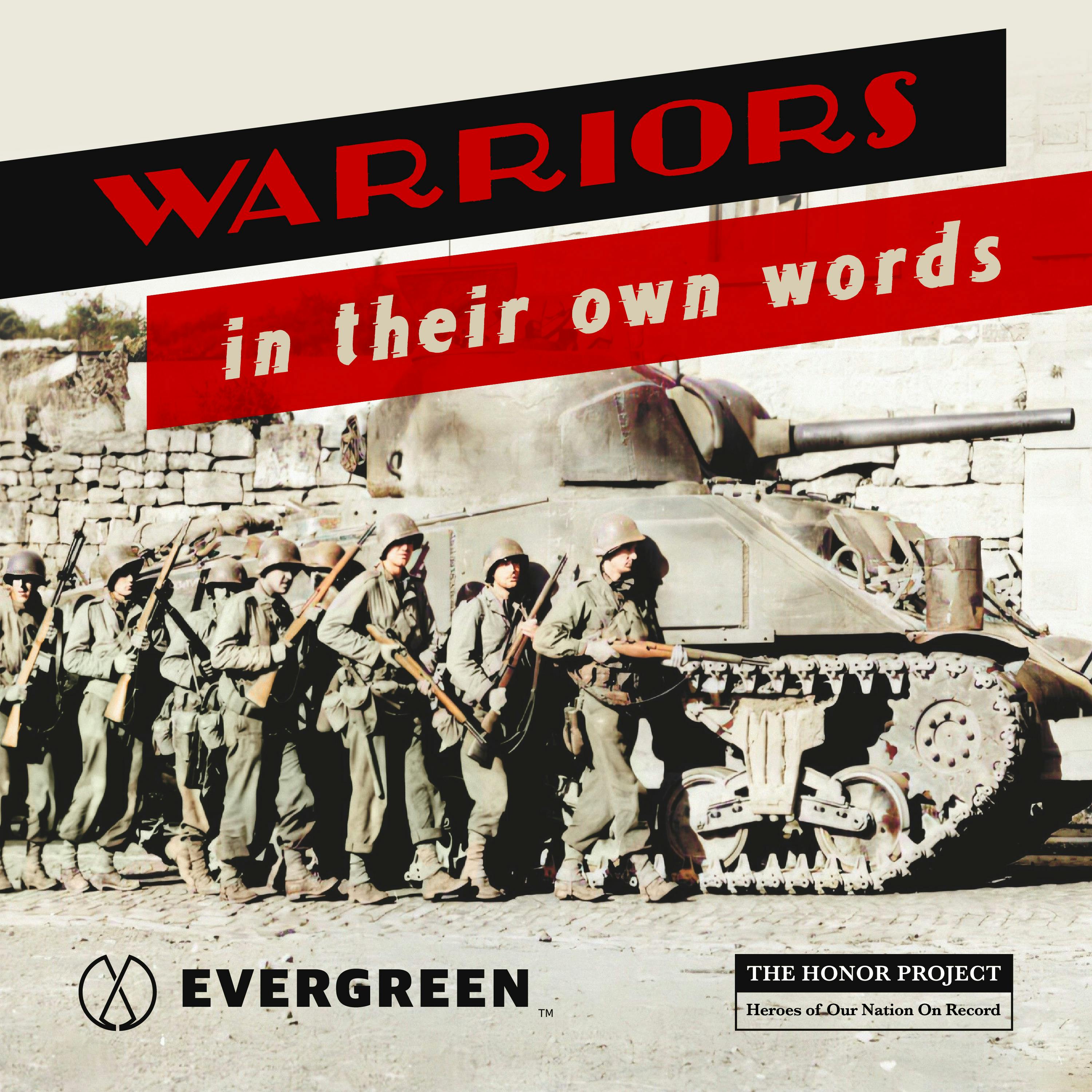
Warriors In Their Own Words | First Person War Stories
by Evergreen Podcasts | The Honor Project
The unsanitized truth of what we have asked of those who defend this nation. From archived tapes of WWI veterans, to conversations with modern-day warriors, these are their stories, in their own words.
-
271
Intelligence Officer Fighting in Europe: From the Archive
Walter Bodlander was a military intelligence officer for the US Army during WWII. He was born in Germany in 1920. As a Jew, he knew he had to flea Hitler’s regime. He eventually made his way to the United States and volunteered to join the Army to fight the Nazis. Military Intelligence wanted to use his fluency in German to interrogate Nazi prisoners on the front lines. Walter was soon dispatched to England to join the D-Day invasion and the march into Germany. Learn more about your ad choices. Visit megaphone.fm/adchoices
-
270
Fighter Pilot of the Tuskegee Airmen: From the Archive
Colonel Charles Bussey courageously flew P-51 Mustangs as a fighter pilot in World War II. His training came with the famed Tuskegee Airmen, the all black Army Air Corps unit. Bussey also went on to serve as a decorated Commander of Army engineers during the Korean War. Charles Bussey was a war hero, but his first struggle wasn't in a combat zone overseas. His first battle was at home in what you might call the fight for the right to fight. This is his dramatic story, in his own words. Learn more about your ad choices. Visit megaphone.fm/adchoices
-
269
Three War Army Hero: From the Archive
This episode tells the dramatic story of an Army veteran who served in three wars, World War II, Korea and Vietnam. Al Ungerleider’s first taste of combat came on the beaches of Normandy on D-Day. He went on to march towards Germany, liberating a Nazi concentration camp along the way. Brig. General Al Ungerleider retired from the Army after 36 years of service. His final active-duty assignment was commanding the Aberdeen Proving Ground in Maryland. Al Ungerleider is a true American hero. Learn more about your ad choices. Visit megaphone.fm/adchoices
-
268
Pacific War Diary: From the Archive
During World War II, the United States Marines played a central role in the battle for the islands of the Pacific. Marine Corps veteran Bill Swanson was often in the first wave to hit the beach in many of these brutal campaigns. In this episode, he paints a vivid picture of what it was like to fight in the "living hell" of these steaming jungles and swamps. He shares his experiences on Bougainville, Guam and Iwo Jima, battling a hidden and determined enemy. Learn more about your ad choices. Visit megaphone.fm/adchoices
-
267
Flying Tigers & Silver Streaks: From the Archive
This is the tale of two American pilots of World War II. One, R.T. Smith, was a fighter ace in Burma flying P-40s with the legendary Flying Tigers. He recorded 9 confirmed victories, aiding the Chinese in their conflict with Japan. The other, Al Freiburger, was a bomber pilot in Europe flying B-26 Marauders with his unit, the Silver Streaks. He logged numerous missions in the conflict, including key bombing runs on D-Day. Both men were engaging characters with unique war time experiences. Learn more about your ad choices. Visit megaphone.fm/adchoices
-
266
Medal of Honor & Battlefield Recordings: From the Archive
Medal of Honor recipient Walter Ehlers tells his dramatic stories of combat in North Africa and Europe and details the events surrounding his heroic actions during the Normandy campaign. He also offers his unique perspectives on the infantry, his fellow soldiers and the enemy. This episode also features rare recordings of live combat, direct from the battlefields of World War II. Learn more about your ad choices. Visit megaphone.fm/adchoices
-
265
D-Day Diary: From the Archive
1994 was the 50th anniversary of D-Day. Throughout that year, The Honor Project sat down with dozens of veterans off the Normandy Invasion to hear their stories and to put these Heroes of Our Nation On Record. O.B. Hill was a member of the 508th Parachute Infantry Regiment. In this Episode, he recounts dramatic stories of his training and combat experiences and he eloquently expresses his thoughts on the nature of war and and how it impacted him and his fellow paratroopers. Learn more about your ad choices. Visit megaphone.fm/adchoices
-
264
D-Day- The First Hours: From the Archive
Hours before the Allied Forces hit the beaches of Normandy, courageous British and American soldiers entered France with parachutes and gliders to secure key bridges and enemy artillery positions. Their dangerous missions led the way for the D-Day invasion and ultimate victory in Europe. Wally Parr, Terance Otway and Bill True recount their dramatic stories, In Their Own Words. Learn more about your ad choices. Visit megaphone.fm/adchoices
-
263
First Helicopter Combat Rescue Mission: From the Archive
Today helicopters carry the firepower of an artillery battery and can strike deep behind every lines, flying day or night in any weather. But back in 1944 helicopters were a brand new technology. Aviation pioneer Igor Sikorsky supplied the first primitive choppers to the US Army and four pilots were trained to fly the untested aircraft in the jungles of Burma. Carter Harman was one of those first courageous pilots and he performed the world's first helicopter combat rescue mission. Learn more about your ad choices. Visit megaphone.fm/adchoices
-
262
Combat Medics in Vietnam: From the Archive
Combat Medics courageously fought to save lives as the war raged around them in Vietnam. Helicopters became virtual hospitals in the air, buying the medic valuable time to heal the wounded. Max Cleland, a future US Senator from Georgia, lost three limbs when a grenade exploded in his hand. His life was saved by four beleaguered field medics. In this dramatic episode, Max Cleland recounts his story and we also hear from Clarence Sasser, who earned the Medal of Honor as a Combat Medic in Vietnam. Learn more about your ad choices. Visit megaphone.fm/adchoices
-
261
Tunnel Rats in Vietnam: From the Archive
The Tunnel Rats were courageous soldiers who performed underground search and destroy missions during the Vietnam War. American and Australian troops uncovered the enemy's intricate network of tunnels while conducting larger operations. Tunnel rats were tasked with gathering intelligence within them, and killing or capturing their occupants--often in conditions of close combat. CW Bowman, Gerry Schooler and Art Tejeda spent days maneuvering through the tunnels clearing lethal booby-traps. Learn more about your ad choices. Visit megaphone.fm/adchoices
-
260
Snipers in Vietnam: From the Archive
Military snipers were trained sharpshooters assigned to kill a man with one perfect shot. These highly disciplined marksman often stalked a target for days waiting for just the right moment to squeeze the trigger. Lurking in the shadows alone, the deadly stealth of the sniper made him the most feared man on the battlefield. As a young hunter, Chuck Mawhinney grew up with a gun in his hand. In October 1967, Mawhinney was just 19 years old when he made his first kill as a scout sniper in Vietnam. Learn more about your ad choices. Visit megaphone.fm/adchoices
-
259
SOG Covert Task Force in Vietnam: From the Archive
Studies and Observations Group (SOG) was a highly classified, special ops unit that conducted unconventional warfare during the Vietnam War. SOG carried out the capture of enemy prisoners, rescued downed pilots, and conducted rescue operations to retrieve prisoners of war throughout Southeast Asia. The Task Force also engaged in clandestine intelligence, propaganda and psychological operations. J.D. Bath and Bill Deacy were members of this elite group. Learn more about your ad choices. Visit megaphone.fm/adchoices
-
258
Wild Weasels in Vietnam: From the Archive
The Wild Weasels of the United States Air Force were some of the most courageous pilots in Vietnam. In a deadly game of cat and mouse, they flew fighters like the F-100, F-105 and F-4s deep into hostile airspace to coax the enemy into opening fire with their surface to air missiles. Once the Weasels located the site, other fighter bombers were called in to destroy the installations. In this episode, Wild Weasels, Jerry Hoblit, Bill Sparks, Mike Gilroy and Tom Wilson tell their dramatic stories. Learn more about your ad choices. Visit megaphone.fm/adchoices
-
257
Bat 21Rescue in Vietnam: From the Archive
On Easter Sunday, April 2, 1972, two EB-66 aircraft, call signs Bat 21 and Bat 22 were flying pathfinder escort for three B-52s, which were assigned to bomb the two primary access routes to the Ho Chi Minh Trail through Laos. Gene Hambleton, a navigator aboard Bat 21, was shot down behind North Vietnamese lines. His rescue became known as the largest, longest, and most complex search-and-rescue operation during the Vietnam War. In this episode, Gene Hambleton recounts his dramatic story. Learn more about your ad choices. Visit megaphone.fm/adchoices
-
256
Forward Air Controllers in Vietnam: From the Archive
Forward Air Controllers or FACs choreographed this skies over the battlefield in Vietnam. They courageously flew low, slow and unarmed over enemy territory in small, propeller driven aircraft like the Cessna 0-1 Bird Dog and 0-2 Skymaster. The FACs were experts at spotting an evasive, well camouflaged enemy and they often braved a battery of enemy ground fire to target the opposing force. In this episode, FACs William Platt and Bill Townsley tell their dramatic stories, In Their Own Words. Learn more about your ad choices. Visit megaphone.fm/adchoices
-
255
Vietnam Forward Observers: From the Archive
During the Vietnam War, all too often the chaos of battle found Allied forces trapped and facing annihilation. The situation called for courageous men to carry out some of the deadliest missions in the history of warfare. Forward Observers, often alone, moved behind enemy lines to serve as the eyes of the artillery gunner in delivering rounds on vital targets. In this episode, Medal of Honor recipients Barney Barnum and Brian Thacker tell their dramatic stories, In Their Own Words. Learn more about your ad choices. Visit megaphone.fm/adchoices
-
254
Iwo Jima: From the Archive
The battle for Iwo Jima in World War II became the bloodiest in U. S. Marine Corps history. But for survivors like Chuck Tatum, it also represents the best, the Marines and the United States has to give. For despite the 23,000 U.S. casualties, including 5,400 dead, the flag atop Mount Suribachi, is a symbol of this nation's willingness to fight for freedom and liberty, no matter what the cost. This episode is an in-depth interview with Chuck Tatum. These are his experiences in his own words. Learn more about your ad choices. Visit megaphone.fm/adchoices
-
253
Marine Raiders in the Pacific: From the Archive
The Marine Raiders were elite units established by the United States Marine Corp during World War II to conduct special amphibious assault missions, operating behind the lines. The Raiders were created by an order from President Franklin D. Roosevelt in February 1942. They are said to be the first U.S. special forces operations see combat in World War II. William Lansford was a member of the 2nd Raider Battalion during the Pacific campaigns. These are his dramatic stories told in his own words. Learn more about your ad choices. Visit megaphone.fm/adchoices
-
252
Amphibious Assault in the Pacific: From the Archive
By 1943, the war in the Pacific burned in its full fury. On November 20th, the Allies launched the first amphibious assault against heavily defended beaches in US history. The 2nd division of the US Marine Corps, used amphibious tractors and assault boats to reach the beaches of the Tarawa atoll, an enemy stronghold protected by 5,000 hardened Imperial Japanese marines. Ed Moore and Tommy Reed were decorated veterans of the 2nd Marine Division during the island campaigns in the Pacific War. Learn more about your ad choices. Visit megaphone.fm/adchoices
-
251
Guadalcanal: From the Archive
The unrelenting ferocity of the Pacific War was without a doubt the bloodiest and most savage of the two theaters of World War II. The memories of brutal battles like Guadalcanal, Tarawa, Midway and Iwo Jima are forever seared into minds of the courageous men who fought there. The island of Guadalcanal represented one of the last chances for the Allies to turn back the Japanese advance in the Pacific. Marine veteran Victor Croizat experienced the "hell of earth" of the battle for Guadalcanal. Learn more about your ad choices. Visit megaphone.fm/adchoices
-
250
Glider Attack On D-Day
They are known as America's first military stealth aircraft. Under cover of darkness, the Waco CG-4A combat glider carried U.S. troops and materiel into battle during World War II. William Horn and Leo Cordier, pilots who flew these unarmed and un-powered planes, landed behind enemy lines before the invasion troops arrived in Europe on D-Day. Their courageous stories are a little known chapter in the Allied march to victory during WWII. Learn more about your ad choices. Visit megaphone.fm/adchoices
-
249
U.S. Rangers On D-Day: From the Archive
This episode features the dramatic role of the U.S Rangers on D-Day during World War II. Leonard Lomell and Sidney Salomon, from the 2nd Ranger Battalion, were among those who comprised America's first Special Forces group. They were part of the first wave landing on Omaha Beach on June 6th, 1944. Learn more about your ad choices. Visit megaphone.fm/adchoices
-
248
Hitting the Beach On D-Day: From the Archive
On June 6, 1944, the Allies launched the largest amphibious military assault in history known as D-Day. More than 150,000 American, British and Canadian forces landed on five beaches along the heavily fortified coast of France’s Normandy region. Some of the first men to hit the beach on D-Day were the U.S. Navy Combat Demolition Unit. Jerry Markham and John Talton were members of this elite group. In this episode, these courageous veterans tell their dramatic stories, In Their Own Words. Learn more about your ad choices. Visit megaphone.fm/adchoices
-
247
Airborne Assault On D-Day: From the Archive
June 6th, 1944...D-Day. It was the greatest military assault ever staged. Code named Operation Overlord, the massive invasion of Normandy by the Allies involved more than a quarter of a million soldiers, sailors and airmen as well as 5000 ships and 3000 aircraft. Tom McCarthy and Francis Lamoureux were Parachute Infantrymen during the epic conflict. They tell their riveting first-hand accounts in this dramatic presentation, Airborne Assault on D-Day. Learn more about your ad choices. Visit megaphone.fm/adchoices
-
246
Vietnam Forward Observers: From the Archive
During the Vietnam War, all too often the chaos of battle found Allied forces trapped and facing annihilation. The situation called for courageous men to carry out some of the deadliest missions in the history of warfare. Forward Observers, often alone, moved behind enemy lines to serve as the eyes of the artillery gunner in delivering rounds on vital targets. In this episode, Medal of Honor recipients Barney Barnum and Brian Thacker tell their dramatic stories, In Their Own Words. Learn more about your ad choices. Visit megaphone.fm/adchoices
-
245
Assault on Germany in World War Two: From the Archive
In 1944, the Allies fought their way from the beaches of Normandy towards German soil. Their sites were firmly set on pushing all the way to Hitler's capital Berlin and putting an end to WWII. Robert Weiss was a US Army forward observer. His mission was to move ahead of the troops and find targets for the artillery, but being out in front placed him closer to the enemy and a greater risk of being cut off from his comrades. These are his experiences In His Own Words. Learn more about your ad choices. Visit megaphone.fm/adchoices
-
244
Battle of the Bulge: From the Archive
Toward the end of 1944, it was clear that Germany was losing WWII. Low on fuel, munitions and morale, the ability of the Nazis was slipping away. Still Hitler burned with a passion for one more mad assault. In December, 1944, 600,000 Germans surged into the western front. The stage was set for total Allied defeat. Hitler could count the thousands of guns, the tons of munitions and the hundreds of tanks, but he failed to grasp the most important element, the unfailing courage and valor of the Allied troops Learn more about your ad choices. Visit megaphone.fm/adchoices
-
243
Air War Over Europe in World War Two: From the Archive
By 1942, the skies over Germany were aflame with German fighters battling Allied bombers for the survival of Europe and the free world. Central to victory were the fighter planes of the Allies. At first they were obsolete and woefully inadequate. But with the advent of aircraft like the P-47 Thunderbolt and the P-51 Mustang, the tide of war was about to change. In this episode we hear the words of fighter aces Clarence "Bud" Anderson in his revolutionary P-51 and Francis "Gabby" Gabreski, flying the P-47 Learn more about your ad choices. Visit megaphone.fm/adchoices
-
242
Armored Warfare in World War Two: From the Archive
In this episode of Warriors In Their Own Words, veterans of the 3rd Armored Division, Belton Cooper and Bertrand Close, transport us to the Race Across Europe in World War Two. Learn more about your ad choices. Visit megaphone.fm/adchoices
-
241
The Surrender of Wake Island: From the Archive
On December 8th, 1941, Japanese forces attacked Wake Island. The Americans were outmanned and out gunned, but fought hard for 15 days before surrendering. Sgt. Pearsall and his fellow Marines were taken as prisoners of war, and spent 3 ½ years at a prison camp in China during WWII. Sergeant John Edward ‘Swede’ Pearsall served in the Marines as a part of the 1st Defense Battalion, D Battery on Wake Island in 1941. Wake Island is located 2,458 miles west of Hawaii in the Pacific Ocean. The U.S. knew a Japanese attack was coming, so men were stationed on the island to protect it. On December 8th, 1941, the day after the attack on Pearl Harbor, the Japanese attacked Wake Island. The Battle of Wake Island lasted for a little over two weeks until American forces surrendered in order to protect civilian lives. After the surrender, Sgt. Pearsall and his fellow Marines were almost executed before the Japanese decided to take them as prisoners. They would eventually be taken on a prison ship to Yokohama Harbor, and then transported to Wusong China, where they would spend three and a half years in a prison camp. At the camp, conditions were brutal. They had little water to drink or bathe with, were beaten often, were not adequately fed, and were forced to do physical labor. During the interview, Pearsall had this to say about the camps: “Starvation, I found, was the toughest thing. The beatings you took. Almost daily, you took beatings from the Japanese, but you kind of became punch-drunk, so to speak. You expected them and you lived with them. But starvation you don't live with. When you're hungry, you're hungry 24 hours a day. You go to sleep hungry. You wake up during the night hungry, and you're hungry all day. Starvation is one of the toughest things we found to face. The work and labor that they made us do was tough, but the food was totally inadequate for the work and to sustain life. Myself, I went from a 200 pound Marine. When the war ended, I weighed somewhere around 85 pounds, so that when the war finally came to end, there wasn't much left of us. We couldn't have sustained life, under the food we were getting, much longer.” Finally on Easter Sunday, 1945, American forces arrived and liberated the camp, saving Sgt. Pearsall and his fellow prisoners. Upon arriving home, Pearsall was awarded the Purple Heart. To learn more about J. Edward Pearsall and the Battle of Wake Island, check out Son of Wake Island. It's written by J. Edward Pearsall's son, David Pearsall, with the help of his father and the other surviving defenders of Wake island. Learn more about your ad choices. Visit megaphone.fm/adchoices
-
240
The Horrific Documentation of Death: From the Archive
Warning: This episode contains depictions of corpses, substance abuse, a suicide attempt, and some foul language. Viewer discretion is advised. Kris Goldsmith is an Army combat Veteran who served in Iraq. As a 19 year-old, he was assigned the task of photographing corpses and documenting mass graves. He developed severe PTSD, and in 2007, as the result of a suicide attempt that caused him to miss redeployment, he was given a less-than-honorable discharge. After years of legal battles, that discharge was upgraded. Kris went on to become an advocate for veterans with “bad paper” discharges, and helped pass crucial legislation that helps them receive the benefits they deserve. Learn more about your ad choices. Visit megaphone.fm/adchoices
-
239
Captured By the NVA: From the Archive
Colonel Leo Thorsness served as a fighter pilot in Vietnam. He was a Wild Weasel, whose missions required them to draw surface-to-air (SAM) missiles away from bombers, and then destroy the SAM sites. This meant that Weasels spent sometimes more than 20 minutes over the target, as opposed to the one or two minutes bomber pilots spent. On one mission, COL Thorsness’ wingman was shot down, forcing him to eject. As he parachuted to the ground, rescue helicopters were called in to rescue him, but they were threatened by encroaching enemy fighters. Despite being incredibly low on fuel, Thorsness fought off the enemy, saving his wingman and the rescue helicopters. Eleven days later, Thorsness was shot down and captured by the North Vietnamese Army. He was captured, and became a prisoner of war. During his first three years in captivity, torture was common. After six years, he was released and sent home. Shortly after returning to the United States, COL Thorsness was awarded the Medal of Honor for saving his wingman. Learn more about your ad choices. Visit megaphone.fm/adchoices
-
238
The Candy Bomber: From the Archive
Every other week, we'll be re-releasing an episode we think deserves more attention. Today, we'll hear about The Candy Bomber. After World War Two, Germany was split up and occupied by the United States, France, Britain and the Soviet Union. In June of 1948, the U.S., France, and Britain announced they were creating a unified West German currency. Joseph Stalin opposed this unification, and cut off land routes from Berlin to West Germany. In order to bypass the land routes, bombers transported supplies (primarily food) and delivered them to West Berlin in what was called Operation Vittles. Colonel Gail S. Halvorsen was one of several pilots recruited to fly these missions. One day, after sneaking out and flying to Berlin for some R&R, COL Halvorsen met some local children who were survivors of the war. Talking with them changed his life, and he decided he wanted to do something to help them. He returned to base, gathered as much candy and gum as he could, fashioned parachutes with handkerchiefs, and put all the goodies inside. The next day, he flew over West Berlin and dropped the parachutes full of candy out of his bomb bay. The children were delighted. COL Halvorsen did this several more times, and gained international acclaim for his actions. To learn more about COL Halvorsen, check out his book, The Berlin Candy Bomber. Learn more about your ad choices. Visit megaphone.fm/adchoices
-
237
An Honest Look: Col. John Folsom
Colonel John Folsom served in the Marine Corps from 1980 to 2010. He was trained as a CH-46 helicopter pilot and a Forward Air Controller, but never flew combat missions. Instead he did staff work at various levels of command. In this interview, Folsom gives an honest look into the lives of non-combat military personnel. He also talks about his work with the Dunham House, a unique assisted living facility for combat-wounded veterans. Learn more about your ad choices. Visit megaphone.fm/adchoices
-
236
Life of an F/A-18 Pilot: LCDR Mike Smith
Lieutenant Commander Mike Smith served in the Navy as an F/A-18 pilot. He deployed 3 times between 2002 and 2014, and was stationed in Japan, Italy, Virginia, Mississippi, Texas, and Florida. He was also Strike/Fighter Pilot of the Year in 2009. Learn more about your ad choices. Visit megaphone.fm/adchoices
-
235
F/A-18 Pilot in Iraq: LtCol Neal Rickner
Lieutenant Colonel Neal Rickner served in the US Marine Corps as an F/A-18 pilot and a Forward Air Controller. He completed three tours in Iraq between 2003 and 2007. As a Forward Air Controller (FAC), he toured with an infantry battalion, tasked with coordinating air support based on the needs of the battalion. After coming back from deployment, Rickner served as an instructor pilot for the F/A-18. Learn more about your ad choices. Visit megaphone.fm/adchoices
-
234
Tank Gunner in WWII: T/5 Clement Elissondo
Technician Fifth Grade Clement Elissondo served in World War II as a tank gunner. He deployed to France just days after the Invasion of Normandy, and survived the destruction of four of his tanks. In this interview, Elissondo describes the difficulties of tank warfare, narrowly escaping enemy capture, and the camaraderie amongst a tank’s crew. Learn more about your ad choices. Visit megaphone.fm/adchoices
-
233
Near-Death on Omaha Beach: CAPT Sidney Salomon
Captain Sidney Salomon served in World War II as an Army Ranger. The Rangers were an elite American unit that trained and operated with the famous British Commandos. Using the element of surprise as their main weapon, the Rangers played an important role in the Invasion of Normandy, the Dieppe Raid, and many other significant campaigns. In this interview, Salomon describes his experiences on D-Day. He took part in the amphibious landing of Omaha Beach with 2nd Ranger Battalion, C Company. C Company was depicted at the beginning of ‘Saving Private Ryan’, when Captain Miller, played by Tom Hanks, led them through the landing. It was Salomon’s job to storm the beach, climb a cliff, take a mortar position, and then storm a fortified house that held an automatic weapon. On the beach, Salomon was hit by shrapnel from a mortar explosion, and thought he was going to die. Thankfully the injury wasn’t that serious, and a medic was able to patch him up. Solomon continued up the cliff and successfully captured the German mortar position, but his unit suffered too many casualties to move onto the fortified house. They held that position until morning. Salomon was awarded a Silver Star for his actions on D-Day. Learn more about your ad choices. Visit megaphone.fm/adchoices
-
232
From Vietnam to Hollywood: Cpl. Jim Beaver
Jim Beaver is an actor most widely known for his role as Bobby Singer in the TV series Supernatural. Before his acting career, Beaver served in Vietnam with the Marine Corps as a radio operator. Learn more about your ad choices. Visit megaphone.fm/adchoices
-
231
Pearl Harbor & Guadalcanal: Mal Middlesworth
Mal Middlesworth served in World War II in the Marine Corps. He was 17 years old during the Attack on Pearl Harbor, serving on a Marine Detachment on the USS San Francisco. In this interview, he describes what he saw during Pearl Harbor, the Guadalcanal Campaign, and the Battle of Peleliu. Learn more about your ad choices. Visit megaphone.fm/adchoices
-
230
The Black Cats: Charles Sternburg
Charles Sternburg served in the Navy in World War II with the Black Cats. The Black Cats were a group of bombers that flew stealth missions in the Pacific, tasked often with destroying enemy submarines or flying reconnaissance. They flew seaplanes called PBY Catalinas which were nearly invisible during the night, but were incredibly vulnerable to enemy munitions. Sternburg flew as a co-pilot and bombardier with the Black Cats. Learn more about your ad choices. Visit megaphone.fm/adchoices
-
229
Authentic Leadership: LTG Charles D. Luckey
Lieutenant General Charles D. Luckey served in the Army as an infantry officer, special forces officer (Green Beret), and a JAG officer. He retired as the oldest Green Beret in uniform. In this interview, Luckey tells stories from his service, and what he learned about leadership during his career. Learn more about your ad choices. Visit megaphone.fm/adchoices
-
228
Navy SEAL in Afghanistan: CDR Jon Macaskill
Commander Jon Macaskill served in Afghanistan as a Navy SEAL. He graduated from the Naval Academy, and served in the SEAL teams from 2003 to 2020. Learn more about your ad choices. Visit megaphone.fm/adchoices
-
227
Gliding Into Sicily: Samuel Fine
Samuel Fine served as a glider pilot in World War II. He trained British Glider pilots, and flew in with them during the Invasion of Sicily. Fine also flew troops into D-Day & Operation Market Garden. Learn more about your ad choices. Visit megaphone.fm/adchoices
-
226
FEED DROP: Unsolved Histories
Hi, I’m Ken Harbaugh, host of Warriors In Their Own Words. In order to gear up for some exciting new episodes, we’re taking a break this week. In the meantime, I wanted to share an episode from another podcast I think you’ll enjoy. Unsolved Histories explores forgotten mysteries and other little-known stories. The episode I’m sharing with you covers missing flight 293, where 101 people disappeared with no distress call. This multi-part story they covered in season 1 was so impactful that it directly resulted in Congress passing new legislation. Here is Flight 293 Episode One: Brothers. -- The Unsolved Histories podcast team was pleased to get a phone call letting us know a U.S. senator not only listened to Season 1 but wanted to address a problem raised by our recounting of the tragic story of Flight 293. Military men and women who go missing, but not in action, are not remembered or memorialized and the families left without the support that is given to other MIA families. If passed, the Flight 293 Remembrance Act will change that. Host Feliks Banel researched this and other accidents involving service members who seemed to be forgotten by the government they served. Here’s a clip from episode one of Unsolved Histories: What Happened to Flight 293? For more information, including pictures and all episodes, see our website, unsolvedhistoriespod.com Learn more about your ad choices. Visit megaphone.fm/adchoices
-
225
The Raid at Cabanatuan: MAJ Robert Prince
Major Robert Prince served as an Army Ranger during World War II. He fought throughout the Phillippines, and helped plan the Raid on Cabanatuan, a Japanese POW camp. With the help of Filipino civilians, the Rangers, Alamo Scouts and guerilla forces traveled 24 miles under the cover of darkness to launch a surprise attack on the camp. They successfully defeated the Japanese and liberated over 500 prisoners of war. Actor James Franco portrayed MAJ Prince in The Great Raid (2005), which tells the story of Cabanatuan. Learn more about your ad choices. Visit megaphone.fm/adchoices
-
224
The Suicide Cliffs: Cpl Roy Roush Part II
Corporal Roy Roush served in the United States Marine Corps during World War II. He fought in the Guadalcanal Campaign, the Battle of Tarawa, the Battle of Saipan, and the Battle of Tinian. He later served in the Air Force as a fighter pilot during the Korean War. In this interview, Roush describes his experiences during the Battle of Saipan & the Battle of Tinian To learn more about Roush, check out his book, Open Fire. Learn more about your ad choices. Visit megaphone.fm/adchoices
-
223
Fighting Ghosts in Tarawa: Cpl Roy Roush Part I
Corporal Roy Roush served in the United States Marine Corps during World War II. He fought in the Guadalcanal Campaign, the Battle of Tarawa, the Battle of Saipan, and the Battle of Tinian. He later served in the Air Force as a fighter pilot during the Korean War. In this interview, Roush describes the Battle of Tarawa. To learn more about Roush, check out his book, Open Fire. Learn more about your ad choices. Visit megaphone.fm/adchoices
-
222
Falling Out of the Sky: COL Francis “Gabby” Gabreski
Colonel Francis Gabreski served in World War II as a fighter pilot. He flew bomber escort missions with the 56th Fighter Group in the P-47 Thunderbolt, and was the top U.S. fighter ace in the European theater. He’s credited with destroying 34 ½ enemy aircraft in combat, and is one of only seven American pilots to become an ace in two wars (WWII & Korea). Learn more about your ad choices. Visit megaphone.fm/adchoices
We're indexing this podcast's transcripts for the first time — this can take a minute or two. We'll show results as soon as they're ready.
No matches for "" in this podcast's transcripts.
No topics indexed yet for this podcast.
Loading reviews...
ABOUT THIS SHOW
The unsanitized truth of what we have asked of those who defend this nation. From archived tapes of WWI veterans, to conversations with modern-day warriors, these are their stories, in their own words.
HOSTED BY
Evergreen Podcasts | The Honor Project
CATEGORIES
Loading similar podcasts...
Frequently Asked Questions
How many episodes does Warriors In Their Own Words | First Person War Stories have?
Warriors In Their Own Words | First Person War Stories currently has 50 episodes available on PodParley. New episodes are automatically indexed when they're published to the podcast feed.
What is Warriors In Their Own Words | First Person War Stories about?
The unsanitized truth of what we have asked of those who defend this nation. From archived tapes of WWI veterans, to conversations with modern-day warriors, these are their stories, in their own words.
How often does Warriors In Their Own Words | First Person War Stories release new episodes?
Warriors In Their Own Words | First Person War Stories has 50 episodes. Check the episode list to see recent publication dates and frequency.
Where can I listen to Warriors In Their Own Words | First Person War Stories?
You can listen to Warriors In Their Own Words | First Person War Stories on PodParley by clicking any episode. We provide an embedded audio player for direct listening, and you can also subscribe via your preferred podcast app using the RSS feed.
Who hosts Warriors In Their Own Words | First Person War Stories?
Warriors In Their Own Words | First Person War Stories is created and hosted by Evergreen Podcasts | The Honor Project.
URL copied to clipboard!