
PODCAST · society
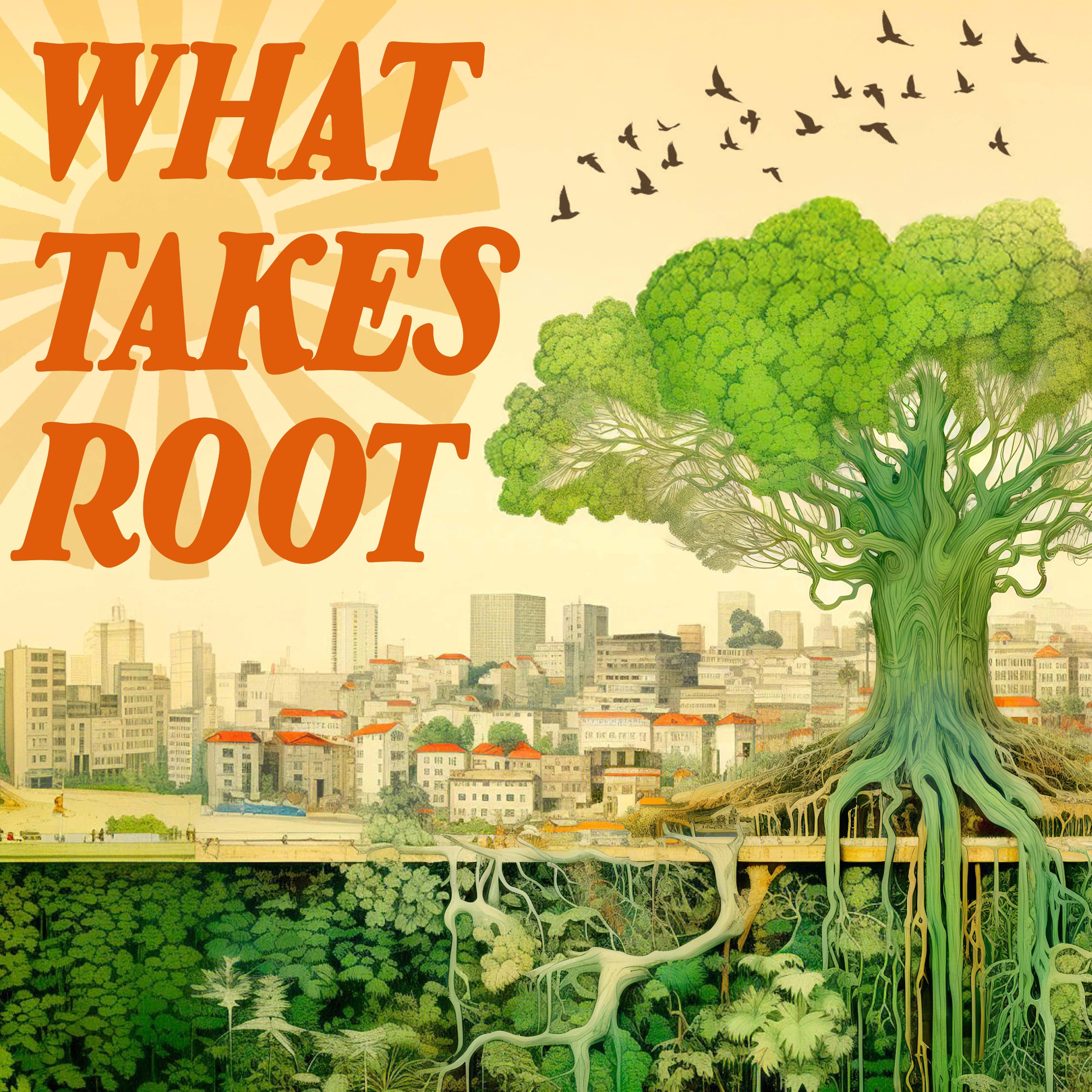
What Takes Root: Stories of Resistance and Reclamation
by Karen Given
What Takes Root: Stories of Resistance and Reclamation is a first-person podcast featuring changemakers from the Global South. From how Muslim girls learned to play soccer in India, to political music shaped by Kenya’s long history of resistance, to community radio reaching isolated Indigenous communities in Bolivia, these are intimate stories of people reclaiming power, voice, and possibility.Longer series description What happens when we stop talking — and start listening?What Takes Root: Stories of Resistance and Reclamation is a first-person storytelling series built around that question. Across nine episodes, changemakers from India, Africa and Latin America share stories of resistance, reclamation, and renewal – in their own words.Social justice leader Sabah Kahn, a formerly “puny” kid who had no interest in sports, explains how she helped launch a soccer program for Muslim girls in India. Musician and histor
-
11
Cómo una bióloga colombiana reimagina el cuidado y la resistencia desde el bosque
En este episodio de Echando Raíces, la bióloga y gestora comunitaria colombiana María Clara Botero Zapata comparte cómo crecer en una familia campesina, rodeada de montañas y bosques, dio forma a su manera de entender la vida, el cuidado y la resistencia.Reflexiona sobre la decisión de su familia de crear una reserva natural, restaurando un territorio que ya había sido profundamente afectado por la deforestación y la degradación ambiental, y cómo ese proceso transformó no solo el ecosistema, sino también su relación con la comunidad. A través de sus estudios en biología, María Clara comenzó a cuestionar los enfoques tradicionales, muchas veces colonizantes, de la ciencia, y a acercarse a formas de conocimiento más relacionales y centradas en la comunidad.En el corazón de su historia está el reconocimiento del trabajo de cuidado, especialmente el trabajo invisible que sostienen las mujeres y las niñas incluso en medio de crisis ambientales. María Clara nos invita a repensar lo que significa proteger la naturaleza, recordándonos que no podemos proteger lo que no conocemos y que, a veces, nuestras mayores maestras son los árboles, la tierra y las comunidades que viven en relación cercana con ellos.Para más información sobre ORA, visitahttps://orawards.org/
-
10
How a Colombian Biologist Reimagines Care and Resistance in the Forest
Short description: In this episode of What Takes Root, Colombian biologist and community advocate María Clara Botero Zapata shares how growing up in a campesino family surrounded by mountains and forests shaped her understanding of life, care, and resistance.She reflects on her family’s decision to create a natural reserve, restoring land that had already been deeply impacted by deforestation and environmental degradation, and how that process transformed not only the ecosystem, but their relationship with their community. Through her studies in biology, María Clara began to question traditional, often colonizing approaches to science, and instead turned toward a more relational and community centered way of knowing.At the heart of her story is a deep recognition of care work, especially the invisible labor carried by women and girls who sustain life even in the face of environmental crisis. María Clara invites us to rethink what it means to protect nature, reminding us that we cannot protect what we do not know, and that sometimes, our greatest teachers are the trees, the soil, and the communities who live in close relationship with them.For more information about ORA, visithttps://orawards.org/
-
9
She Ran Away to Learn—And Came Back to Change Everything
Growing up in an Adivasi village in Jharkhand, Jacinta Kerketta never imagined she would become a voice for her people. In this episode of What Takes Root, Jacinta recalls how she fled violence in her home and journeyed to the unfamiliar and often hostile world of the city in search of an education. Moving between these two realities, she’s forced to confront caste, gender violence, and the erasure of her people’s stories.Jacinta finds her purpose in writing, where she can challenge harmful narratives about Adivasi communities and carve out space for her own voice. But her work doesn’t stop there—what starts as one young woman’s determination to get an education grows into something much larger.Returning to the villages that shaped her, Jacinta begins organizing with girls like her—creating spaces to write, speak, and imagine new futures.
-
8
Cómo una narradora boliviana utiliza el sonido como herramienta de resistencia y educación
En este episodio de Echando Raíces, la comunicadora y artista sonora boliviana Isapi Rua comparte cómo su camino comenzó en las calles, documentando protestas sociales y ambientales que impactan profundamente a su comunidad. Lo que empezó como observar y grabar pronto se convirtió en algo más, un llamado a contar historias a través del sonido.Isapi reflexiona sobre un momento clave en el que entendió que muchas luchas no se pierden porque la gente deje de resistir, sino porque no tienen su propio relato. A través del audio, encontró una forma de llevar las voces, las memorias y las emociones de quienes luchan por proteger su territorio y su forma de vida.Su trabajo se sitúa en la intersección entre el arte de contar historias, el activismo y la escucha. Nos invita a pensar el sonido no solo como un medio, sino como una forma de sentir, recordar y sostener la resistencia colectiva.Para más información sobre ORA, visitahttps://orawards.org/
-
7
How a Bolivian Storyteller Uses Sound as a Tool for Resistance and Education
In this episode of What Takes Root, Bolivian communicator and sound artist Isapi Rua shares how her journey began in the streets, documenting social and environmental protests that were deeply impacting her community. What started as witnessing and recording quickly became something more, a calling to tell stories through sound.Isapi reflects on a pivotal moment when she realized that many struggles are not lost because people stop resisting, but because they lack their own narratives. Through audio, she found a way to carry the voices, memories, and emotions of those fighting to protect their land and way of life.Her work sits at the intersection of storytelling, activism, and listening. She invites us to think about sound not just as a medium, but as a way of feeling, remembering, and sustaining collective resistance.For more information about ORA, visithttps://orawards.org/
-
6
How A Refugee is Turning Skills Into Hope
In 2015, when political violence erupted in Burundi, Emery Ndayizeye fled with no plan and no destination, eventually landing in a refugee camp in Uganda. For three years, he says, he had “no life.” Then, an entrepreneurship class helped him discover his passion for photography. Today, living in Cameroon, Emery runs an organization he co-founded to help other displaced people learn skills, start businesses, and send their children to school.For more information about ORA, visit https://orawards.org/And to learn more about Emery and the work that he does, see his profile on LinkedIn: https://www.linkedin.com/in/ndayizeye-emery-a878b81a8/
-
5
For Youth in Zimbabwe, Leadership Begins with Listening
Lindsay Nyabereka grew up in Zimbabwe in a school system that prized grades, competition, and clear paths to success. But behind the country’s high literacy rates, she says something vital was missing. Now, as a law student in Harare, Lindsay leads groups for young people focused on mindfulness, emotional resilience, and a philosophy called Ubuntu: I am because we are. In a country where many young people face unemployment, online exploitation, and deep uncertainty, Lindsay’s work creates space for resilience to grow. For more information about ORA, visit https://orawards.org/To learn more about Lindsay’s work, follow @global_citizens_zw on Instagram.The definition of alienation read by Lindsay comes from Return Fire Magazine: Alienation.
-
4
Cómo una actriz chilena convirtió el arte en activismo (Versión en Español)
En este episodio de Echando Raíces, What Takes Root, en inglés, la actriz y activista chilena Evaluna Valdivieso reflexiona sobre el momento en que entendió que ser artista y ser activista no eran caminos separados, sino el mismo camino. Comparte la historia de su compañía, Teatro La Crisis, y las obras que ha creado en torno a los movimientos feministas, la violencia contra mujeres lesbianas y los impactos desiguales de la crisis climática en el Sur Global.Evaluna habla también de lo que ella llama la herida latinoamericana, esa marca profunda y persistente que dejaron la colonización, el despojo y la desigualdad, y cómo esa historia atraviesa tanto su arte como su activismo. A través del teatro, explica, se pueden abrir espacios de encuentro, de duelo y de imaginación colectiva para pensar cómo sería habitar una sociedad más justa e igualitaria.Para más información sobre ORA, visitahttps://orawards.org/Y para más información sobre Evaluna Valdivieso, la compañía de teatro y activismo Teatro La Crisis, y la compañía teatral Núcleo Remanente, sigue en Instagram a @teatrolacrisis y @remanente.nucleo.
-
3
How a Chilean Actress Turned Art Into Activism (English version)
In this episode of What Takes Root, Chilean actress and activist Evaluna Valdivieso describes how she came to see herself as both an artist and an activist. She shares the story of her company, Teatro La Crisis, and the projects she’s created about feminist movements, violence against lesbian women, and the unequal impacts of the climate crisis in the Global South. Evaluna also speaks about what she calls the Latin American wound, the deep and ongoing impact of colonization, dispossession, and inequality, and how that history shapes both her art and her activism. Through theater, she explains, art can open space for people to connect, to grieve, and to imagine what a more just and equal society could look like.For more information about ORA, visit https://orawards.org/And for more information about Evaluna Valdivieso, the theater and activism company Teatro La Crisis, and the theatre company Núcleo Remanente, follow @teatrolacrisis and @remanente.nucleo on Instagram.
-
2
How a Doctor in India Came to See Stories as Protest
In medical school, Raviraj Shetty was trained to see bodies as problems to fix. Until he met a 14-year-old client who changed everything. What followed was a shift toward narrative practices that treat people not as diagnoses, but as authors of their own lives. Now, working with indigenous communities, Raviraj uses narrative practices as resistance and protest against structural violenceFor more information about ORA, visit https://orawards.org/And for more information about Raviraj and the work that he does, visit https://www.narrativepracticesindia.com/
-
1
The Soundtrack of Kenyan Resistance
Kenyan artist Mwongela Kamencu, known as Monaja, has spent his life writing music shaped by history, politics and protest. In this episode of What Takes Root, he traces the moments that radicalized him: from his childhood under an authoritarian regime to student uprisings, election violence, and the killing of a classmate. As Kenya’s youth-led protests erupt in 2024, his music moves alongside the protests, urging people not to despair, but to rise.And for more information about Mwongela Kamencu and the work that he does, follow @monajamwenyewe on Instagram.
-
0
What Happened When Muslim Girls Started Playing Football
In 2012, almost on a whim, social justice leader Sabah Khan helped to found a football team for Muslim girls in Mumbra, India’s largest Muslim ghetto. But it wasn’t easy. From fighting for time on Mumbra’s crowded fields to overcoming societal pressures to keep girls indoors, Sabah explains how something as simple as playing a game can be a powerful act of resistance.For more information about ORA, visit https://orawards.org/And for more information about Sabah Khan and the work that she does, see her profile on LinkedIn.
-
-1
Introducing What Takes Root
What Takes Root: Stories of Resistance and Reclamation is a first-person podcast featuring changemakers from the Global South. From how Muslim girls learned to play soccer in India, to political music shaped by Kenya’s long history of resistance, to community radio reaching isolated Indigenous communities in Bolivia, these are intimate stories of people reclaiming power, voice, and possibility.
We're indexing this podcast's transcripts for the first time — this can take a minute or two. We'll show results as soon as they're ready.
No matches for "" in this podcast's transcripts.
No topics indexed yet for this podcast.
Loading reviews...
ABOUT THIS SHOW
What Takes Root: Stories of Resistance and Reclamation is a first-person podcast featuring changemakers from the Global South. From how Muslim girls learned to play soccer in India, to political music shaped by Kenya’s long history of resistance, to community radio reaching isolated Indigenous communities in Bolivia, these are intimate stories of people reclaiming power, voice, and possibility.Longer series description What happens when we stop talking — and start listening?What Takes Root: Stories of Resistance and Reclamation is a first-person storytelling series built around that question. Across nine episodes, changemakers from India, Africa and Latin America share stories of resistance, reclamation, and renewal – in their own words.Social justice leader Sabah Kahn, a formerly “puny” kid who had no interest in sports, explains how she helped launch a soccer program for Muslim girls in India. Musician and histor
HOSTED BY
Karen Given
Loading similar podcasts...
Frequently Asked Questions
How many episodes does What Takes Root: Stories of Resistance and Reclamation have?
What Takes Root: Stories of Resistance and Reclamation currently has 13 episodes available on PodParley. New episodes are automatically indexed when they're published to the podcast feed.
What is What Takes Root: Stories of Resistance and Reclamation about?
What Takes Root: Stories of Resistance and Reclamation is a first-person podcast featuring changemakers from the Global South. From how Muslim girls learned to play soccer in India, to political music shaped by Kenya’s long history of resistance, to community radio reaching isolated Indigenous...
How often does What Takes Root: Stories of Resistance and Reclamation release new episodes?
What Takes Root: Stories of Resistance and Reclamation has 13 episodes. Check the episode list to see recent publication dates and frequency.
Where can I listen to What Takes Root: Stories of Resistance and Reclamation?
You can listen to What Takes Root: Stories of Resistance and Reclamation on PodParley by clicking any episode. We provide an embedded audio player for direct listening, and you can also subscribe via your preferred podcast app using the RSS feed.
Who hosts What Takes Root: Stories of Resistance and Reclamation?
What Takes Root: Stories of Resistance and Reclamation is created and hosted by Karen Given.
URL copied to clipboard!