
PODCAST
Women, Gender, and Sex in the Ottoman World
by Ottoman History Podcast
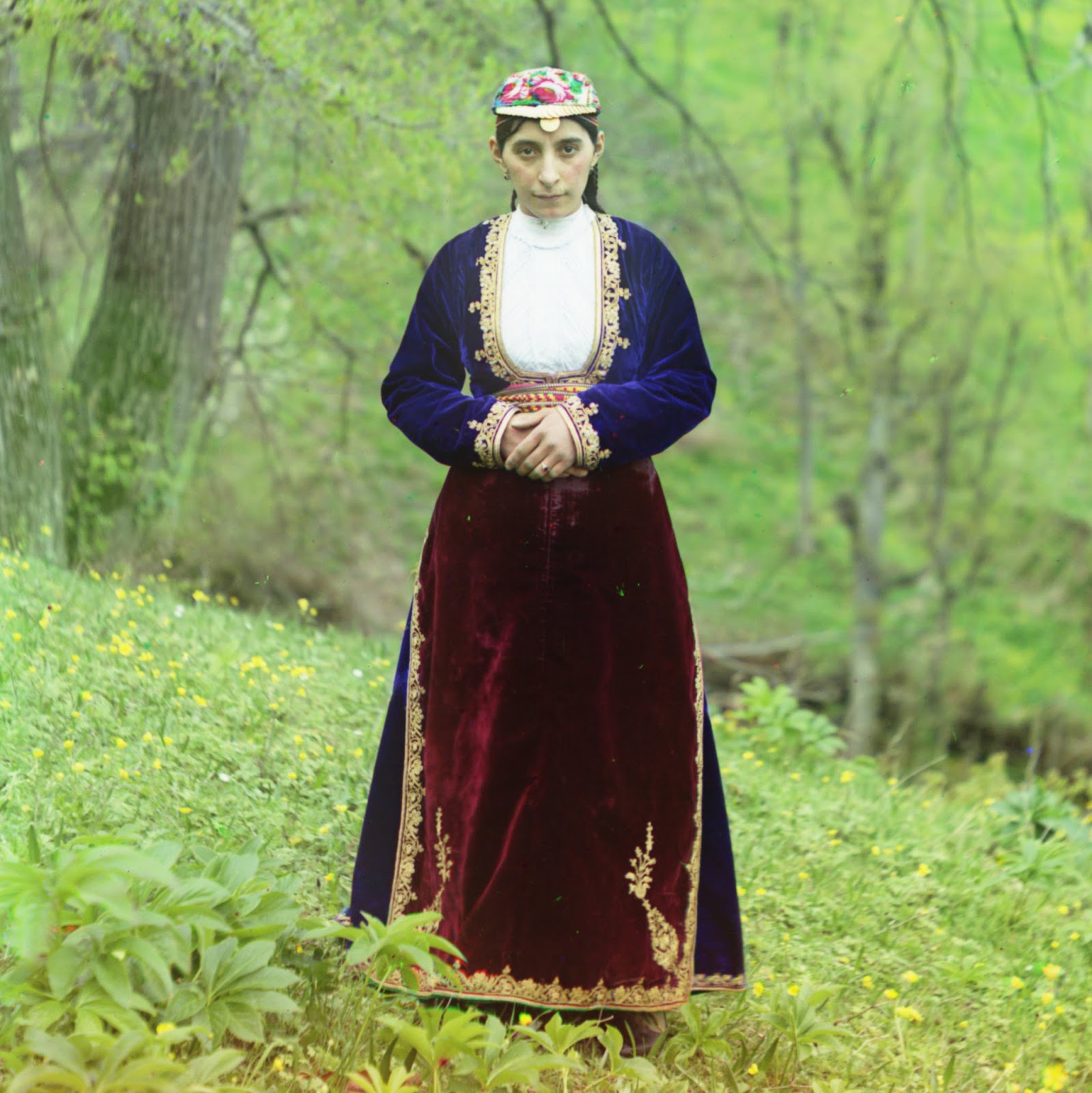
"Women, Gender, and Sex in the Ottoman World" is a series of podcasts that pulls together women’s history and the history of gender and sex in the Ottoman Empire and beyond. It explores the particular historical experiences of women and girls based on the conviction that returning the lives, experiences, and ideas of women to the historical record will change the way we look at historical periods and transformations at large. It also investigates the ways in which gender and sexuality can serve as useful categories of historical analysis (Scott, 1986) as they help us to better understand broad transformations in regimes of knowledge and politics, relations of property, forms of governance, and the nature of the state. (podcast image by Russian photographer Prokudin-Gorskiĭ of Armenian woman in Artvin ca. 1905-1915 courtesy of US Library of Congress http://www.loc.gov/pictures/item/prk2000001172/)
-
37
Osmanlı İstanbul'unda Evlilik ve Boşanma
Bölüm 437 Leyla Kayhan Elbirlik Sunucu Can Gümüş Podcast'i indir Feed | iTunes | GooglePlay | SoundCloud Osmanlı'da çiftler nasıl evlenir, nasıl boşanırdı? Bu podcast'te Leyla Kayhan Elbirlik ile İstanbul Bab, Davud Paşa ve Ahi Çelebi mahkemelerinin 1755-1840 yıllarındaki kayıtlarını inceleyerek tamamladığı doktora araştırması odağında, Osmanlı İstanbul'unda evlilik ve boşanma davaları üzerine sohbet ediyoruz. Elbirlik'in araştırması, kadınların evlilik, boşanma ve mülkiyetle ilişkili konularda mahkemeleri aktif olarak kullandıklarını gösterirken, Osmanlı ailesinde ve toplumunda kadının rolüne dair yaygın kanıları da yeniden değerlendiriyor. « Click for More »
-
36
The Story Has It
<!-- function toggle_visibility(id) { var e = document.getElementById(id); if(e.style.display == 'block') e.style.display = 'none'; else e.style.display = 'block'; } //--> a:hover { cursor:pointer; } Episode 419 with İpek Hüner Cora hosted by Işın Taylan Download the podcast Feed | iTunes | GooglePlay | SoundCloud Ottoman literature is heavily associated with verse, namely, Ottoman court poetry, and to some extent, folk literature. Ottoman stories, however, remain unexplored, even though they circulated in the empire and entertained many. For us, today, they are an invaluable source to study daily life, gender and space in the early modern Ottoman world. What is an Ottoman story? What do Ottoman stories tell us? In this episode, İpek Hüner Cora joins the podcast to talk about fictional prose stories in the Ottoman Empire and we discuss the gendered and spatial aspects of stories scattered in manuscript collections. « Click for More »
-
35
Osmanlı'da Kadınlar ve Mimarlık Üretimi
Bölüm 384 Muzaffer Özgüleş Sunucu: Can Gümüş Podcast'i indir Feed | iTunes | GooglePlay | SoundCloud Toplumsal cinsiyet bakış açısının son birkaç on yılda Osmanlı tarih yazımına yaptığı müdahaleler, saray kadınlarının imar faaliyetlerinde üstlendiği rolün giderek daha çok araştırılmasına da vesile oldu. Muzaffer Özgüleş’i konuk ettiğimiz bu bölümde, Sultan IV. Mehmed’in hasekisi, Sultan II. Mustafa ve Sultan III. Ahmed’in validesi Gülnuş Emetullah Sultan’ın imar faaliyetlerini detaylandırırken kadın baniler odağında kent, mimarlık üretimi ve toplumsal cinsiyet ilişkisini değerlendiriyoruz. « Click for More »
-
34
Industrial Sexualities in Twentieth-Century Egypt
Episode 350 with Hanan Hammad hosted by Susanna Ferguson and Seçil Yilmaz Download the podcast Feed | iTunes | GooglePlay | SoundCloud In this episode, we discuss the emergence of new masculinities, femininities, and visions of "good sex" in Egypt's al-Mahalla al-Kubra, a city in the Nile Delta that became one of the main centers of industrial production and manufacturing in the early twentieth century. How did men and women who came to al-Mahalla to work in the factory, run boardinghouses, and perform other forms of labor negotiate the coercive hierarchies of industrial capitalism in their daily and intimate lives? What can we learn about modes of existence and resistance from considering their experiences, and how do the stories of working-class men and women challenge or nuance the more well-known accounts of gender and family in Egypt that have been based on the middle-class press? « Click for More »
-
33
Women and Colonial Legal Pluralism in Algeria
Episode 296 with Sarah Ghabrial hosted by Edna Bonhomme and Sam Dolbee Download the podcast Feed | iTunes | GooglePlay | SoundCloud In French Algeria, the colonial imperatives of assimilation and difference gave birth to legal pluralism. In this episode, Dr. Sarah Ghabrial explains what it meant for Algerian women to have different legal structures operating at the same time. The ability to argue one's case in an Islamic court and also appeal it in French common law provided openings for women in matters of personal status. But it also had limits. They may have ultimately been able to divorce their husbands, but divorcing themselves from patriarchal structures of power proved more difficult, if not impossible. At the same time as legal codes changed, so, too, did medicine. As in much of the world, a state-sponsored scientific medicine, mostly practiced by men, began to crowd out local healing practices and knowledge of bodies, in many cases performed and possessed by women such as midwives. But it would have a particularly racialized impact in French Algeria. We also examine the impact of this change in court, where the latter form of medicine came to be an arbiter of truth, particularly in divorce cases. We close by shifting from matters of impotence to questions of agency, and how useful of a concept it is for this history. « Click for More »
-
32
Marginalized Women in Khedival Egypt
with Liat Kozmahosted by Chris Gratien and Susanna Ferguson Download the podcast Feed | iTunes | GooglePlay | SoundCloud With political and economic developments in 19th century Egypt, the lives of women began to change in dramatic ways. From the rise of wage labor and the restructuring of rural households to the emergence of women's movements and publications, pre-colonial Egypt witnessed numerous transformation in the realm of gender. In this episode, Liat Kozma shares her research regarding some of the most marginalized women in Egyptian society during this period of change. Manumitted slaves, doctors and midwives, factory employees, and sex workers were some groups of women who left many historical traces in the police, court, and medical records of the Khedival government. « Click for More »
-
31
Women and the American Protestant Mission in Lebanon
with Ellen Fleischmann & Christine Lindner hosted by Susanna Ferguson This episode is part of a series entitled Women, Gender, and Sex in the Ottoman World Download the seriesPodcast Feed | iTunes | Hipcast | Soundcloud In this episode, Ellen Fleischmann and Christine Lindner discuss the history of women and gender and the American Protestant Mission in Lebanon. How did American missionary women experience and transform the American Protestant project in the Levant in the 19th and 20th centuries? How did American missionaries, both women and men, interact with women from Beirut and Mt. Lebanon, both those who converted and those who did not? And how did these heterogeneous interactions produce new experiences of womanhood, family, power, and authority in the Levant? Drs. Fleischmann and Lindner reflect on these questions based on their considerable research in Lebanon and elsewhere, and also share their thoughts about sources and strategies for tracing women's history and missionary history in the Ottoman and post-Ottoman Levant. « Click for More »
-
30
Gender, Politics, and Passion in the Christian Middle East
with Akram Khater hosted by Graham Pitts . Scholars have long neglected the Middle East’s Christian communities in general and Christian women in particular. In this episode, Akram Khater draws attention to the biography of Hindiyya al-'Ujaimi (1720-1798) to explore the religious and political upheavals of 18th-century Aleppo and Mount Lebanon. Hindiyya’s story speaks to the dynamic history of the Maronite Church, the fraught encounter between Arab and European Christianities, and the role of faith as a historical force. For half a century, she held as much sway over the Maronite Church as any other cleric. The extent of her influence won her powerful enemies in Lebanon and the Vatican. Hindiyya weathered one inquisition but was eventually convicted of heresy and confined to a solitary cell for the final decade of her life. The story of her ascent and demise illuminates gendered aspects of piety and politics in the Christian Middle East. Download the podcast Feed | iTunes | GooglePlay | Soundcloud Scholars have long neglected the Middle East’s Christian communities in general and Christian women in particular. In this episode, Akram Khater draws attention to the biography of Hindiyya al-'Ujaimi (1720-1798) to explore the religious and political upheavals of 18th-century Aleppo and Mount Lebanon. Hindiyya’s story speaks to the dynamic history of the Maronite Church, the fraught encounter between Arab and European Christianities, and the role of faith as a historical force. For half a century, she held as much sway over the Maronite Church as any other cleric. The extent of her influence won her powerful enemies in Lebanon and the Vatican. Hindiyya weathered one inquisition but was eventually convicted of heresy and confined to a solitary cell for the final decade of her life. The story of her ascent and demise illuminates gendered aspects of piety and politics in the Christian Middle East. « Click for More »
-
29
Health and Home in a Turkish Village
with Sylvia Wing Önder hosted by Chris Gratien and Seçil Yılmaz Download the episode Podcast Feed | iTunes | Soundcloud The subject of health in the modern period is often discussed as a transition from traditional to scientific medicine and what Foucault has called "the birth of the clinic." Such perspectives view medicine and healing through the lens of changing methods, forms of knowledge, and types of authority. In this podcast, our guest Sylvia Wing Önder offers a slightly different approach to the subject in a discussion of her monograph "We Have No Microbes Here (Carolina Academic Press, 2007)," looking at continuities in the centrality of households and women in making decisions about medical care within a Black Sea village. « Click for More »
-
28
Osmanlı'da Kadın ve Savaş
Zeynep Kutluata Seçil Yılmaz ile Chris Gratien'in sunuculuklarıyla Bölümü dinle Podcast Feed | iTunes | SoundCloud Osmanlı tarihinde, tıpkı dünya tarihinde olduğu gibi, büyük toplumsal dönüşümlere, devrimlere, savaşlara ve barışlara dair anlatılara erkeklerin eylemleri, sesleri ve kalemleri egemen olurken, kadınlar ve çocuklar sıklıkla bu anlatıların ya dışında bırakıldı yada yardımcı öğesi olageldi. Sosyal ve feminist tarih yazımının en önemli katkısı kadın anlatılarını merkez alarak ve görünür kılarak Osmanlı toplumunda toplumsal cinsiyet rolleri, vatandaşlık hakları ve emek ilişkilerini yeni bir tarih anlayışı ve Osmanlı tarihi anlatısı sunmak oldu. Zeynep Kutluata ile bu bölümde Osmanlı’nın savaşlara ve göçlere karışmış ‘’en uzun yüzyılı’’nda kadınların gerek savaş alanlarında gerekse cephe gerisinde aldıkları aktif siyasi ve toplumsal rolleri vatandaşlık ve toplumsal cinsiyet tartışmaları ekseninde ele aldık. « Click for More »
-
27
Women and Suicide in Early Republican Turkey
with Nazan Maksudyan hosted by Susanna Ferguson Download the episode Podcast Feed | iTunes | Soundcloud In the 1920s and 1930s, politicians, intellectuals, and members of the public joined a lively debate about the issue of female suicide in Turkey. While we cannot know whether the rates of female suicide were actually skyrocketing during this period, the fact that so many public figures began to treat this issue as a central concern tells us a lot about the relationship between the modernizing state of Early Republican Turkey and the women whom it governed. In this episode, Nazan Maksudyan explores what might have provoked this debate, what it might say about the state and its relationship to women, gender, and the female body, and how women themselves might have used suicide as a means of asserting their agency. « Click for More »
-
26
Naked Anxieties in the Baths of Ottoman Aleppo
with Elyse Semerdjian hosted by Chris Gratien Download the episode Podcast Feed | iTunes | Soundcloud Bath houses or hamams were mainstays of the Ottoman city. But as semi-public spaces where people could mix and implicitly transgressed certain boundaries regarding nudity, they were also spaces that produced anxiety and calls for regulation. In this episode, Elyse Semerdjian discusses how in a certain time and place of eighteenth century Aleppo, the issue of Muslim and Christian women bathing together aroused the concern of Ottoman state and society. « Click for More »
-
25
Sexology in Hebrew and Arabic
with Liat Kozma hosted by Susanna Ferguson and Chris Gratien Download the episode Podcast Feed | iTunes | Soundcloud During the late nineteenth and early twentieth century, scientists and physicians the world over began to think of sex as something that could be studied and understood through rational methods. In places like Germany, these sexologists were associated with progressive political movements that combated stigmatization of homosexuality and contraception and broke taboos regarding issues such as impotence and masturbation. In this episode, Liat Kozma examines how sexology traveled and transformed in Middle Eastern contexts through the writings of Egyptian doctors and Jewish exiles. « Click for More »
-
24
Illicit Sex in Ottoman and French Algeria
with Aurelie Perrier hosted by Sam Dolbee This episode is part of a series on Women, Gender, and Sex in Ottoman history Download the seriesPodcast Feed | iTunes | Soundcloud The association of Algeria with sex figured prominently in the artwork and literature that was critiqued so famously by Edward Said in Orientalism. In this episode, Dr. Aurelie Perrier discusses the practical backdrop of this argument beyond the level of discourse by exploring illicit sex in 19th century Algeria under both Ottoman and French rule. Beginning with the fluid boundaries of Ottoman-administered sex work, she describes the transformations that accompanied French colonialism beginning in 1830. Contextualizing the sex trade in both eras with flows of labor migration, Perrier also illuminates the spatial dynamics of the French approach to prostitution, namely the birth of red-light districts and brothels. At once centralizing and segregating sex work, this new politics of space was intimately connected to the boundaries of race and class that were the premise of colonialism in the first place. Yet it appears in many cases these boundaries were transgressed, undermining the credibility of the colonial state. Moreover, even as the state claimed unprecedented control over the intimate lives of its citizens/subjects, people still managed to use the system for their own purposes, or evade it altogether. Still, the undeniable encroachment of the state left an indelible mark on Algeria's history with distinctly gendered implications. « Click for More »
-
23
Yeni Çağ Osmanlı Hukuk Sistemi'nde Kadın Mülkiyet Hakları
Hadi Hosainy ile 17. yüzyıl İstanbulu'nda kadın mülkiyet hakları üzerine konuştuğumuz bu podcastımızda kadınların hukuki yollara başvurarak nasıl kendilerini koruduklarına ve Osmanlı toplumunun şeri hukukun kadını dezavantajlı bir konuma iten kurallarının nasıl arkasından dolandığına değindik. Toplumsal cinsiyetin hukukun işleyişine etkilerini tartıştık. « Click for More »
-
22
Missionaries and the Making of the Muslim Brotherhood
with Beth Baron hosted by Chris Gratien and Susanna Ferguson In this episode, Beth Baron discusses the historical context of the Muslim Brotherhood's rise during the interwar period and how the organization's activities and goals were shaped by the actions of European missionaries in Egypt. « Click for More »
-
21
Osmanlı Toplumunda Çocukluk
Yahya Araz This episode is part of a series on Women, Gender, and Sex in Ottoman history Download the seriesPodcast Feed | iTunes | Hipcast | Soundcloud Osmanlı'da çocukluk algısının olup olmadığı son dönem tarih yazıcılığında sıkça sorulan sorular arasındadır. Bu bölümde Yahya Araz bize çocukların sadece küçük insanlar olmanın ötesinde Osmanlı'da çocukluk tanımının çerçevesini oluşturan toplumsal, hukuki ve biyolojik etmenleri anlatıyor. « Click for More »
-
20
Education, Politics, and the Life of Zabel Yessayan
with Jennifer Manoukian hosted by Susanna Ferguson This episode is part of a series on Women, Gender, and Sex in Ottoman history Download the seriesPodcast Feed | iTunes | Soundcloud The late 19th century was a time of intellectual and cultural flourishing for the Armenian community in Constantinople, as a new generation of Armenian thinkers traveled to Europe to study, debated new ideas in the press, and settled on a new vernacular for their literary endeavors. Zabel Yessayan was one of the most important female figures of this generation, publishing articles on subjects including educational reform, art and aesthetics, and the question of women. In this podcast, Jennifer Manoukian discusses her new translation of Yessayan's memoir, The Gardens of Silihdar, and explores questions of women, gender, and politics in Yessayan's work. « Click for More »
-
19
Kocalarını Zehirleyen Osmanlı Kadınları
Ebru Aykut Tanzimat’in ilanıyla beraber gündelik hayatın pek çok alanına nüfuz etmeyi hedefleyen yasal uygulamalar eczane ve attar dükkanlarının tozlu raflarına kadar ulaşmayı başarmıştı. Bu bölümde Ebru Aykut, Tanzimat sonrası Osmanlısı'nda zehir satışını düzenleyen uygulamalarla kocalarıyla hesaplaşmayı zehir yoluyla seçen kadınların kesişen hikayelerini anlatıyor. Geç Osmanlı dönemi taşrasında suç ve cezalandırma pratiklerinin sosyal-hukuki tarihi üzerine çalışmalarını sürdüren Dr. Ebru Aykut, Mimar Sinan Güzel Sanatlar Üniversitesi Sosyoloji Bölümü'nde öğretim üyesidir. (academia.edu) Yeniçağ Akdeniz ve Osmanlı İmparatorluğu üzerine uzmanlaşan Dr. Emrah Safa Gürkan İstanbul 29 Mayıs Üniversitesi'nde öğretim üyeliği yapmaktadır. (academia.edu) Episode No. 164 Release date: 13 July 2014 Location: Koç RCAC, Istanbul Editing and Production by Chris Gratien Bibliography courtesy of Ebru Aykut Citation: "Kocalarını Zehirleyen Osmanlı Kadınları," Ebru Aykut, Emrah Safa Gürkan, and Chris Gratien, Ottoman History Podcast, No. 164 (13 July 2014) http://www.ottomanhistorypodcast.com/2014/07/poison-murder-women-ottoman-empire.html. SEÇME KAYNAKÇA Aykut, Ebru. Alternative Claims on Justice and Law: Rural Arson and Poison Murder in the 19th Century Ottoman Empire, Ph.d diss. (Boğaziçi University Atatürk Institute, 2011). Aykut, Ebru. “Osmanlı’da Zehir Satışının Denetimi ve Kocasını Zehirleyen Kadınlar,” Toplumsal Tarih, no. 194 (Şubat 2010): 58-64. Aykut, Ebru. "Osmanlı Mahkemelerinde Şüpheli Zehirlenme Vakaları, Adli Tıp Pratikleri ve Tıbbi Deliller," Tarih ve Toplum Yeni Yaklaşımlar, no. 17 (Bahar 2014): 7-36. Bodó, Bela. “The Poisoning Women of Tiszazug,” Journal of Family History 21, no. 1 (January 2002): 40-59. Imber, Colin. “Why You Should Poison Your Husband: A Note on Liability in Hanafî Law in the Ottoman Period,” Islamic Law and Society 1, no. 2 (1994): 206-216. Robb, George. “Circe in Crinoline: Domestic Poisoning in Victorian England,” Journal of Family History 22, no. 2 (April 1997): 176-190. Rubin, Avi. Ottoman Nizamiye Courts: Law and Modernity (New York: Palgrave Macmillan, 2011). Shapiro, Ann-Louis. Breaking the Codes: Female Criminality in Fin-de-Siècle Paris (Stanford, California: Stanford University Press, 1996). Müzik: Ayla Dikmen - Zehir Gibi Aşkın Var, Müslüm Gürses - Kadehinde Zehir Olsa, Samira Tawfiq - Ballah Tsabbou Halgahwe
-
18
Reconstituting the Stuff of the Nation
with Lerna Ekmekçioğlu hosted by Chris Gratien The World War I period irrevocably changed the life of Ottoman Armenians and ultimately heralded the end of Christian communities throughout most of Anatolia. However, following the Ottoman defeat in the war, the brief Armistice period witnessed efforts by Armenians in Istanbul to reconstitute their community in the capital. In this episode, Lerna Ekmekçioğlu explores these efforts and in particular activities to locate and gather Armenian orphans and widows dislocated by war and genocide. Lerna Ekmekçioğlu is Assistant Professor of History at MIT. Her research focuses on the intersections of minority identity and gender in the modern Middle East. (see faculty page) Chris Gratien is a doctoral candidate at Georgetown University researching the social and environmental history of the Ottoman Empire and the modern Middle East. (see academia.edu) Episode No. 161 Release date: 27 June 2014 Location: Beyoğlu, Istanbul Editing and Production by Chris Gratien Bibliography courtesy of Lerna Ekmekçioğlu Citation: "Reconstituting the Stuff of the Nation: Armenians of Istanbul during the Armistice Period," Lerna Ekmekçioğlu and Chris Gratien, Ottoman History Podcast, No. 161 (27 June 2014) http://www.ottomanhistorypodcast.com/2014/06/armenian-widows-orphans-istanbul.html. SELECT BIBLIOGRAPHY Lerna Ekmekcioglu, “A Climate for Abduction, A Climate for Redemption: The Politics of Inclusion during and after the Armenian Genocide.” Comparative Studies in Society and History 55, no. 3 (2013): 522–53. Uğur Ümit Üngör, “Orphans, Converts, and Prostitutes: Social Consequences of War and Persecution in the Ottoman Empire, 1914–1923,” War in History 19, 2 (2012): 173–92. Taner Akçam, The Young Turks’ Crime against Humanity: The Armenian Genocide and Ethnic Cleansing in the Ottoman Empire (Princeton: Princeton University Press, 2012), 287–339. Victoria Rowe, “Armenian Women Refugees at the End of Empire: Strategies of Survival,” in Panikos Panayi and Pipa Virdee, eds., Refugees and the End of Empire: Imperial Collapse and Forced Migration in the Twentieth Century (New York: Palgrave Macmillan, 2011), 164. Keith David Watenpaugh, “The League of Nations’ Rescue of Armenian Genocide Survivors and the Making of Modern Humanitarianism, 1920–1927,” American Historical Review 115, 5 (2010): 1315–39, here 1315. Matthias Bjørnlund, “‘A Fate Worse than Dying:’ Sexual Violence during the Armenian Genocide,” in Dagmar Herzog, ed., Brutality and Desire: War and Sexuality in Europe’s Twentieth Century (New York: Palgrave Macmillan, 2009), 16–58. Vahé Tachjian, “Gender, Nationalism, Exclusion: The Reintegration Process of Female Survivors of the Armenian Genocide,” Nations and Nationalism 15, 1 (2009): 60–80 Vahé Tachjian, “Recovering Women and Children Enslaved by Palestinian Bedouins,” in Raymond Kévorkian and Vahé Tachjian, eds., The Armenian General Benevolent Union, One Hundred Years of History (Cairo: AGBU, 2006). Katharine Derderian, “Common Fate, Different Experience: Gender-Specific Aspects of the Armenian Genocide, 1915–1917,” Holocaust and Genocide Studies 19, 1 (May 2005): 1–25. Vahakn Dadrian, “Children as Victims of Genocide: The Armenian Case,” Journal of Genocide Research 5 (2003): 421–38. Vahram Shemmassian, “The League of Nations and the Reclamation of Armenian Genocide Survivors,” in Richard Hovannisian, ed., Looking Backward, Moving Forward: Confronting the Armenian Genocide (New Brunswick, N.J.: Transaction Publishers, 2003), 94. Ara Sarafian, “The Absorption of Armenian Women and Children into Muslim Households as a Structural Component of the Armenian Genocide,” in Omer Bartov and Phyllis Mack, eds., In God’s Name: Genocide and Religion in the Twentieth Century (New York: Berghahn Books, 2001), 209–21. Isabel Kaprielian-Churchill “Armenian Refugee Women: The Picture Brides 1920–1930,” Journal of American Ethnic History 12, 3 (1993): 3–29. Eliz Sanasarian, “Gender Distinction in the Genocidal Process: A Preliminary Study of the Armenian Case,” Holocaust and Genocide Studies 4, 4 (1989): 449–61.
-
17
The Lives of Ottoman Children
with Nazan Maksudyan hosted by Chris Gratien This episode is part of a series on Women, Gender, and Sex in Ottoman history Download the seriesPodcast Feed | iTunes | Soundcloud Much has been written about shifts in the concept of childhood and the structure of families, particularly for the period following industrialization. However, seldom do the voices and experiences of children find their way into historical narratives. In this podcast, Nazan Maksudyan offers some insights about how to approach the history of children and childhood and discusses the lives of Ottoman children during the empire's last decades. Nazan Maksudyan is an Assistant Professor in the Department of Sociology at Istanbul Kemerburgaz University. Her work examines the social, cultural, and economic history of children and youth during the late Ottoman period. (see academia.edu) Chris Gratien is a doctoral candidate at Georgetown University researching the social and environmental history of the Ottoman Empire and the modern Middle East. (see academia.edu) Episode No. 150 Release date: 22 March 2014 Location: Istanbul Kemerburgaz University Editing and Production by Chris Gratien Bibliography and images courtesy of Nazan Maksudyan Citation: "The Lives of Ottoman Children," Nazan Maksudyan and Chris Gratien, Ottoman History Podcast, No. 150 (22 March 2014) http://www.ottomanhistorypodcast.com/2014/03/children-childhood-ottoman-empire-turkey.html. SELECT BIBLIOGRAPHY Nazan Maksudyan, Orphans and Destitute Children in Late Ottoman Empire (Syracuse: Syracuse University Press, 2014). Nazan Maksudyan, “Foster-Daughter or Servant, Charity or Abuse: Beslemes in the Late Ottoman Empire”, Journal of Historical Sociology, vol. 21, no. 4, December 2008, pp. 488-512. Yahya Araz, Osmanlı Toplumunda Çocuk Olmak (İstanbul: Kitap Yayınevi, 2013). Mine Göğüş Tan, Özlem Şahin, Mustafa Sever, Aksu Bora, Cumhuriyet'te Çocuktular (İstanbul: Boğaziçi Üniversitesi Yayınevi, 2007). François Georgeon, Klaus Kreiser (eds.), Childhood and Youth in the Muslim World (Paris: Maisonneuve & Larose, 2007). Elizabeth W. Fernea, ed., Children in the Muslim Middle East (Austin: Univ. of Texas Press, 1996). _________, ed., Remembering Childhood in the Middle East: Memoirs from a Century of Change (Austin: Univ. of Texas Press, 2003). Karen Sanchez-Eppler, Dependent States: The Child's Part in Nineteenth-Century American Culture (Chicago: Univ. of Chicago Press, 2005). Carl Ipsen, Italy in the Age of Pinocchio: Children and Danger in the Liberal Era (New York: Palgrave Macmillan, 2006). Marjatta Rahikainen, Centuries of Child Labor: European Experiences from the Seventeenth to the Twentieth Century (Hampshire: Ashgate Publishing, 2004). IMAGES Nursery/Wet-nursing Ward (ırzahane) of Darülaceze in Ottoman Istanbul Band of Ottoman islahhane (reform home) in Salonika Surgery patients at Hamidiye Children's Hospital in Istanbul, c1905
-
16
Lubunca and the History of Istanbul Slang
with Nicholas Kontovas hosted by Chris Gratien and Lydia Harrington This episode is part of a series on Women, Gender, and Sex in Ottoman history Download the seriesPodcast Feed | iTunes | Soundcloud The term Lubunca refers to a type of slang historically used among Istanbul’s LGBTQ communities. The term has gained currency only in the past decades, but in this podcast, Nicholas Kontovas suggest much deeper orgins in an overview of this underground jargon and its connections to the historical sociolinguistics of Turkey’s urban communities. « Click for More »
-
15
Mulberry Fields Forever
with Zoe Griffith hosted by Chris Gratien and Kalliopi Amygdalou Inheritance and the transfer of property across generations connects the history of families to a broader analysis of political economy, particularly in societies where wealth and capital are deeply rooted in the earth. In this episode, Zoe Griffith provides a framework for the study of family history through the lens of the mulberry tree and its produce in a study of Ottoman court records from Tripoli (modern-day Lebanon). Stream via Soundcloud (preferred / US) Zoe Griffith is a doctoral candidate at Brown University studying the early modern Mediterranean (see academia.edu) Chris Gratien is a doctoral candidate at Georgetown University researching the social and environmental history of the Ottoman Empire and the modern Middle East. (see academia.edu) Kalliopi Amygdalou is a doctoral candidate in the Bartlett School of Architecture at University College in London working on the relationship between national historiographies and the built environment in Greece and Turkey (see academia.edu) Episode No. 130 Release date: 18 November 2013 Location: Kurtuluş, Istanbul Editing and Production by Chris Gratien Bibliography courtesy of Zoe Griffith Citation: "Mulberry Fields Forever: Family, Property, and Inheritance in Ottoman Lebanon," Zoe Griffith, Chris Gratien, and Kalliopi Amygdalou, Ottoman History Podcast, No. 130 (November 18, 2013) http://www.ottomanhistorypodcast.com/2011/11/ottoman-lebanon-property.html. BIBLIOGRAPHY Abu Husayn, Abdul Rahim. Provincial Leaderships in Syria, 1575-1650. Beirut: American University in Beirut, 1985. Cuno, Kenneth. The Pasha’s Peasants: land, society and economy in Lower Egypt, 1740-1858. Cambridge: Cambridge University Press, 1992. Doumani, Beshara. “Introduction.” In Beshara Doumani, ed. Family History in the Middle East: Household, Property, and Gender. Albany: State University of New York Press, 2003: 1-19. --- “Adjudicating Family: The Islamic Court and Disputes between Kin in Greater Syria, 1700-1860.” In Beshara Doumani, Family History in the Middle East: Household, Property, and Gender. Albany: State University of New York Press, 2003: 173-200. Ergene, Boğaç. Local Court, Provincial Society, and Justice in the Ottoman Empire: legal practice and dispute resolution in Çankırı and Kastamonu (1652-1744). Leiden: Brill, 2003. Fay, Mary Ann. “Women and Waqf: toward a reconsideration of women’s place in the Mamluk household.” International Journal of Middle East Studies 29 (1997): 33-51. Ferguson, Heather. “Property, Language, and Law: Conventions of Social Discourse in Seventeenth-Century Tarablus al-Sham.” In Beshara Doumani, ed. Family History in the Middle East: Household, Property, and Gender. Albany: State University of New York Press, 2003: 229-244. ‘Imad, ‘Abd al-Ghani. Mujtama’ Trablus fi zaman al-tahawwulat al-‘uthmaniya. Tripoli, Lebanon: Dar al-Insha’ lil’Sihafah wa’l-Tiba’ah wa’l-Nashr, 2002. Imber, Colin. “The Status of Orchards and Fruit Trees in Ottoman Law.” Tarih Enstitüsü Dergisi, 12 (1981-82): 763-774. Mundy, Martha and Richard Saumarez-Smith. Governing Property, Making the Modern State: law, administration, and production in Ottoman Syria. London: I.B. Taurus, 2007. Tezcan, Baki. The Second Ottoman Empire: political and social transformations in the early modern world. New York: Cambridge University Press, 2010. Music: Wadi al-Safi - Ya al-Tut al-Shami
-
14
Child and Nation in Early Republican Turkey
with Yasemin Gencer hosted by Chris Gratien and Emily Neumeier Following the World War I period, the founders of a new Turkish Republic sought to define and legitimize the new order as a break with the Ottoman past. In this episode, Yasemin Gencer explains the ways in which notions such as childhood were used to construct the image of a renewed Turkish society in the nationalist press during the early years of the Republican period. « Click for More »
-
13
Prostitution in the Eastern Mediterranean
with Gary Leiser hosted by Emrah Safa Gürkan, Kahraman Şakul, and Louis Fishman This episode is part of a series on Women, Gender, and Sex in Ottoman history Download the seriesPodcast Feed | iTunes | Soundcloud The image of prostitution as humanity's "oldest profession" often obscures the fact that this phenomenon has carried different social meaning and economic value across time and space. In this episode, Dr. Gary Leiser explores social understandings of prostitution in the Eastern Mediterranean between various political and legal frameworks during the medieval period. Gary Leiser is a retired civil servant whose work focuses on medieval Islamic history. Emrah Safa Gürkan is an Assistant Professor at İstanbul 29 Mayıs University. His work focuses on early modern Mediterranean and Ottoman History. (see academia.edu) Kahraman Şakul is an Assistant Professor of History at İstanbul Şehir University focusing on Ottoman military history. (see academia.edu) Louis Fishman is an Assistant Professor of History at CUNY-Brooklyn College studying Palestinian and Israeli history during the late Ottoman Period. (see faculty page) Episode No. 98 Release date: 25 March 2013 Location: Istanbul Şehir University Editing and Production by Chris Gratien Bibliography courtesy of Gary Leiser SELECT BIBLIOGRAPHY Stavroula Leontsini, Die Prostitution im früher Byzanz (Vienna: Verband der wissenschaftlichen Gesellschaften Österreichs, 1989) al-Maqrīzī, al-Mawāʿiẓ wa ʾl-iʿtibār bi-dhikr al-khiṭaṭ wa ʾl-āthār, (Cairo: Būlāq, 1853-54), 2 vols. James Brundage, “Prostitution, Miscegenation and Sexual Purity in the First Crusade,” in Crusade and Settlement, edited by Peter W. Edbury, pp. 57-65 (Cardiff: University College Cardiff Pr., 1985). Bernadette Martel-Thoumian, “Plaisirs illicites et châtiments dans les sources mamloukes fin ixe/xve – début xe/xvie siècle,” Annales Islamologiques, 39 (2005): 275-323. Mark D. Meyerson, “Prostitution of Muslim Women in the Kingdom of Valencia: Religious and Sexual Discrimination in a Medieval Plural Society,” in The Medieval Mediterranean: Cross-cultural Contacts, edited by Marilyn J. Chiat and Kathryn Reyerson, pp. 87-95 (St. Cloud, MN: North Star Press, 1988). Aḥmad ʿAbd ar-Rāziq (ed.), La Femme au temps des Mamlouks en Égypte (Cairo: Institut Français d’Archéologie Orientale, 1973). “Bighāʾ,” Encyclopedia of Islam, 2nd edition, Supplement Abdelwahab Bouhdiba, La Sexualité en Islam, 2nd ed. (Paris: Presses Universitaires de France, 1979).
-
12
Women Literati and Ottoman Intellectual Culture
with Didem Havlioğlu hosted by Chris Gratien and Emrah Safa Gürkan This episode is part of a series on Women, Gender, and Sex in Ottoman history Download the seriesPodcast Feed | iTunes | Soundcloud While almost all of the well-known authors of the Ottoman period are men, women also participated in Ottoman intellectual circles as authors and artists. In this podcast, Didem Havlioğlu describes the world of early modern Ottoman intellectuals and discusses how we can study the cultural of production of women within this context. Didem Havlioğlu is an Assistant Professor of Turkish Literature at Istanbul Şehir University (see academia.edu) Emrah Safa Gürkan is a recent Ph.D. from the department of history at Georgetown University specializing in the early modern Mediterranean and Ottoman Empire (see academia.edu) Chris Gratien is a PhD candidate studying the history of the modern Middle East at Georgetown University (see academia.edu) Episode No. 71 Release date: 24 September 2012 Location: Istanbul Şehir University Editing and Production by Chris Gratien Citation: "Women Literati and Ottoman Intellectual Culture," Didem Havlioğlu, Chris Gratien and Emrah Safa Gürkan, Ottoman History Podcast, No. 71 (September 24, 2012) http://www.ottomanhistorypodcast.com/2012/09/women-literati-and-ottoman-intellectual.html Image: Osman Hamdi Bey, "Mihrap" Select Bibliography Havlioğlu, Didem. "On the margins and between the lines: Ottoman women poets from the fifteenth to the twentieth centuries," Turkish Historical Review, 1 (2010) 25-54. Andrews, Walter G. and Mehmet Kalpaklı, The Age of Beloveds: Love and the Beloved in Early-Modern Ottoman and European Culture and Society (Durham: Duke University Press, 2005). Behar, Cem. Aşk olmayınca meşk olmaz: geleneksel Osmanlı/Türk müziğinde öğretim ve intikal. İstanbul: Yapı Kredi Yayınları, 1998. Tys-Şenocak, L. Ottoman Women Builders: The Architectural Patronage of Hadice Turhan Sultan (Burlington: Ashgate, 2006). Kızıltan, Mübeccel, “Divan Edebiyatı Özelliklerine Uyarak Șiir Yazan Kadın Şairler” (1994).
-
11
Sex, Love, and Worship in Classical Ottoman Texts
with Selim Kuru hosted by Chris Gratien and Oscar Aguirre-Mandujano This episode is part of a series on Women, Gender, and Sex in Ottoman history Download the seriesPodcast Feed | iTunes | Soundcloud Historians have used classical Ottoman texts to explore social issues such as sexuality, with compiled manuscripts from various literary genres often forming a data-mine for historical information. However, this type of selective reading has often distorted or obscured the original meaning and context of literary works. Sometimes, texts that appear erotic or sexual in nature such as gazel could have been intended for an entirely different purpose. In this episode, Dr. Selim Kuru examines the concepts of mahbub peresti (worship of the beloved) and gulâm pâregi (pederasty) and various motifs concerning male beauty in the shehrengiz (Gibb's "city-thrillers") genre in search of a more contextualized approach these would-be erotic texts. « Click for More »
We're indexing this podcast's transcripts for the first time — this can take a minute or two. We'll show results as soon as they're ready.
No matches for "" in this podcast's transcripts.
No topics indexed yet for this podcast.
Loading reviews...
ABOUT THIS SHOW
"Women, Gender, and Sex in the Ottoman World" is a series of podcasts that pulls together women’s history and the history of gender and sex in the Ottoman Empire and beyond. It explores the particular historical experiences of women and girls based on the conviction that returning the lives, experiences, and ideas of women to the historical record will change the way we look at historical periods and transformations at large. It also investigates the ways in which gender and sexuality can serve as useful categories of historical analysis (Scott, 1986) as they help us to better understand broad transformations in regimes of knowledge and politics, relations of property, forms of governance, and the nature of the state. (podcast image by Russian photographer Prokudin-Gorskiĭ of Armenian woman in Artvin ca. 1905-1915 courtesy of US Library of Congress http://www.loc.gov/pictures/item/prk2000001172/)
HOSTED BY
Ottoman History Podcast
Loading similar podcasts...
Frequently Asked Questions
How many episodes does Women, Gender, and Sex in the Ottoman World have?
Women, Gender, and Sex in the Ottoman World currently has 27 episodes available on PodParley. New episodes are automatically indexed when they're published to the podcast feed.
What is Women, Gender, and Sex in the Ottoman World about?
"Women, Gender, and Sex in the Ottoman World" is a series of podcasts that pulls together women’s history and the history of gender and sex in the Ottoman Empire and beyond. It explores the particular historical experiences of women and girls based on the conviction that returning the lives,...
How often does Women, Gender, and Sex in the Ottoman World release new episodes?
Women, Gender, and Sex in the Ottoman World has 27 episodes. Check the episode list to see recent publication dates and frequency.
Where can I listen to Women, Gender, and Sex in the Ottoman World?
You can listen to Women, Gender, and Sex in the Ottoman World on PodParley by clicking any episode. We provide an embedded audio player for direct listening, and you can also subscribe via your preferred podcast app using the RSS feed.
Who hosts Women, Gender, and Sex in the Ottoman World?
Women, Gender, and Sex in the Ottoman World is created and hosted by Ottoman History Podcast.
URL copied to clipboard!