
PODCAST · education
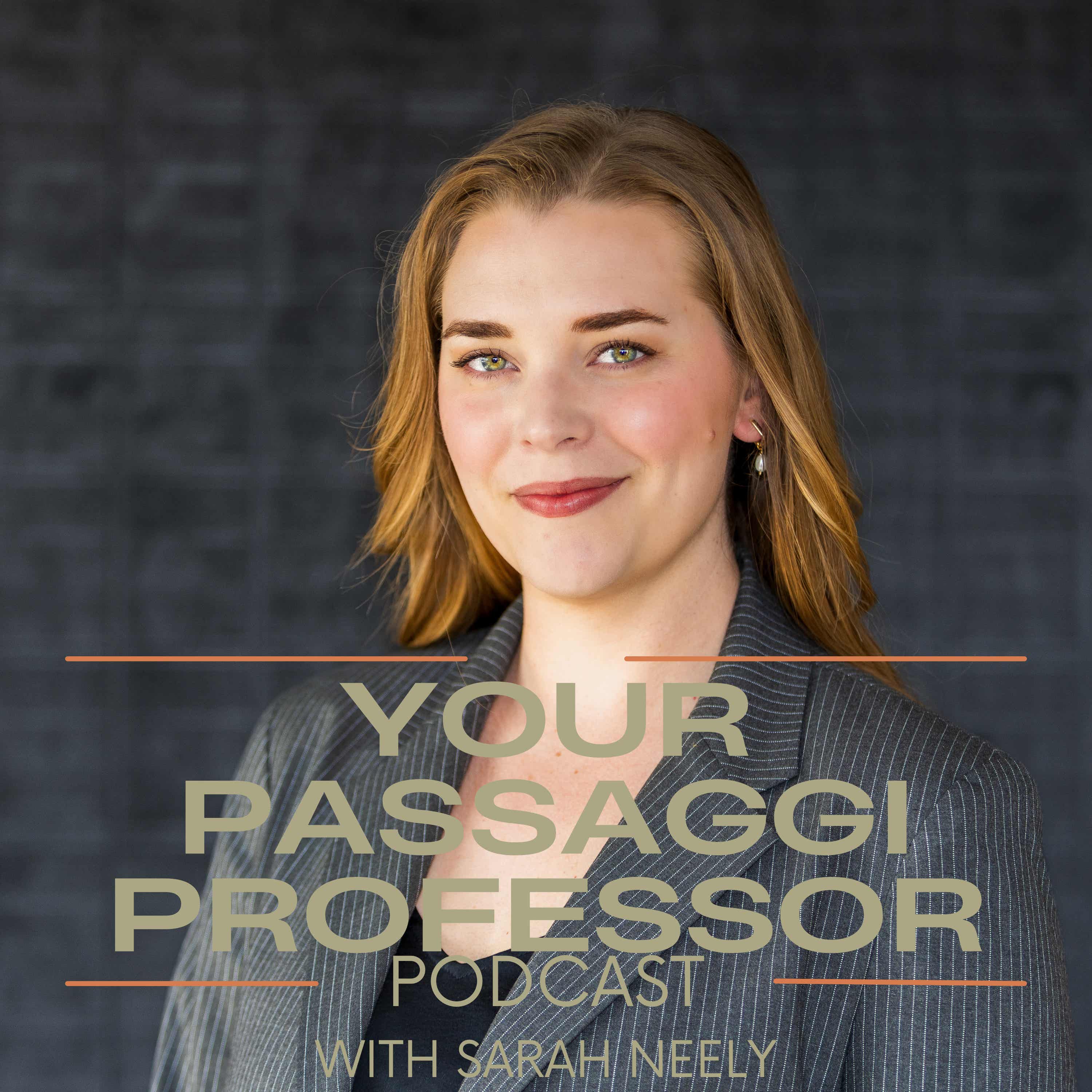
Your Passaggi Professor with Sarah Neely
by Sarah Neely
Your Passaggi Professor with Sarah Neely is a podcast for singers that provides tools to help you bridge the gap between the "hard" skills you learn in your music degree and the "soft" skills needed to live a focused, intentional life. We’ll talk about mindset, emotional regulation, boundaries and more, so you can navigate the passaggi of your life both on and off the stage. yourpassaggiprofessor.substack.com
-
16
Performance Anxiety for Singers
Last week we talked about what performance anxiety actually is — the neuroscience, the evolutionary wiring, and why nothing has gone wrong if you’re nervous. This week we get practical.If you’ve ever stood backstage running worst-case scenarios, lost access to your breath right when you needed it most, or heard that inner voice tell you you’re not ready— this episode is for you. We go tool by tool through eight specific things that actually help, why they work at the physiological level, and how to build a pre-performance plan that your nervous system can actually use when the nerves hit.These are not generic relaxation tips. They’re real tools drawn from years of performing, coaching, and learning and they’re offered here as a starting point for building a toolkit that is genuinely personal to you.In this episode, you’ll learn:* Why stopping fighting your anxiety is the foundation every other tool rests on* How to recognize the three inner voices of performance anxiety* Why “name it to tame it” is more than a catchy phrase* How to talk directly to the feeling — and why calling the voices by name changes your relationship with them* How box breathing works, why it can backfire when your heart rate is already elevated, and how to adapt it to meet your nervous system where it actually is* The physical breath technique — what it is, why it works, and why it has a specific bonus for singers* Why your pre-performance plan needs to be built before the anxiety arrives — and what to actually put in it* How acting tools and character work can help you with your performance anxiety✨ Coming next: Season 2 of the YPP Podcast will start summer 2026📣 Resources & Mentions* Episode 15: Performance Anxiety for Singers, Part 1: Nothing Has Gone Wrong* Episode 3: The Dreaded “F” Word (Feelings) — the backpack concept* Arneson, Christopher. “Performance Anxiety: A Twenty-First Century Perspective.” Journal of Singing 66, no. 5 (May/June 2010): 537–546.* Ruiz, Don Miguel. The Four Agreements: A Practical Guide to Personal Freedom. San Rafael, CA: Amber-Allen Publishing, 1997.* Siegel, Daniel J. Mindsight: The New Science of Personal Transformation. New York: Bantam Books, 2010.* Michelle Grosser — High Capacity Podcast (formerly Calm Mom) — highcapacitypodcast.com🔔 Subscribe & Review If this episode gave you something concrete to bring into your next performance, please share it with a singer who needs it. And if you’re enjoying the podcast, leaving a rating and review helps more singers find this work.📲 Connect with Sarah* Instagram: @Your_Passaggi_Professor* Newsletter: sarah-neely.kit.com/d7d3234f95🎵 Music Credit “Carpe Diem” by Kevin MacLeod (incompetech.com) Licensed under Creative Commons: Attribution 4.0 License http://creativecommons.org/licenses/by/4.0/ This is a public episode. If you would like to discuss this with other subscribers or get access to bonus episodes, visit yourpassaggiprofessor.substack.com
-
15
Performance Anxiety for Singers
If you’ve ever stood in the wings with your heart pounding, hands shaking, or mind suddenly blank — and then told yourself something must be wrong with you — this episode is for you.Performance anxiety is one of the most universal experiences in a singer’s life, and one of the least openly talked about. In this first episode of a two-part series, we go back to basics: what performance anxiety actually is, what’s happening in your brain and body when it shows up, and why understanding it might be the most important first step toward managing it. This isn’t a quick-fix episode. It’s a reframe — one that I hope genuinely changes your relationship with the feeling.I share two personal stories from my own performing life (vulnerable moment), including one that quietly shaped the entire direction of my artistic path. We talk about the neuroscience of fight-or-flight, what the amygdala and prefrontal cortex are actually doing when the alarm fires, and why singers are particularly vulnerable to the physical effects of anxiety. And we end with an invitation to stop treating your nervous system like the enemy.In this episode, you’ll learn:* Why performance anxiety is not a personal flaw, a sign of unreadiness, or evidence that something has gone wrong* What the fight-or-flight response is actually doing in your body — and why your brain can’t tell the difference between a stage and a survival threat* Why performance anxiety is especially disruptive for singers* How the amygdala and prefrontal cortex work together — and what happens when the alarm system takes over* Why avoidance feels like relief but quietly reinforces the anxiety pattern over time* What the inner judge, doubter, and timid soul are — and how to recognize them in yourself* Why being impeccable with your word starts with the language you use about yourself* Why the goal is not to eliminate performance anxiety — but to stop fighting it✨ Coming next: Performance Anxiety for Singers, Part 2: Tools for Your Nervous System — practical, specific techniques for working with your nervous system before and during performance.📣 Resources & Mentions* Episode 14: When Everything Hits at Once (And You’re Still Standing)* Arneson, Christopher. “Performance Anxiety: A Twenty-First Century Perspective.” Journal of Singing 66, no. 5 (May/June 2010): 537–546.* Ruiz, Don Miguel. The Four Agreements: A Practical Guide to Personal Freedom. San Rafael, CA: Amber-Allen Publishing, 1997.🔔 Subscribe & Review If this episode resonated with you, please share it with a singer in your life who needs to hear it. And if you’re enjoying the podcast, leaving a rating and review helps more singers find this work.📲 Connect with Sarah* Instagram: @Your_Passaggi_Professor* Newsletter: sarah-neely.kit.com/d7d3234f95🎵 Music Credit “Carpe Diem” by Kevin MacLeod (incompetech.com) Licensed under Creative Commons: Attribution 4.0 License http://creativecommons.org/licenses/by/4.0/ This is a public episode. If you would like to discuss this with other subscribers or get access to bonus episodes, visit yourpassaggiprofessor.substack.com
-
14
When Everything Hits at Once:
This episode wasn’t planned. I recorded it in the middle of one of the most overwhelming stretches I’ve had in a long time — tech week for a musical, a new puppy, a concert on the horizon, and a business I’m trying not to let slip. I almost didn’t record it at all. But I think there’s something valuable about showing you what it looks like to use these tools from inside the mess, not looking back on it. I hope it resonates.What happens when everything hits at once — and your brain starts making it worse?In this episode, I’m pulling back the curtain on a genuinely hard season in my own life and walking you through how I’m using the coaching tools I teach on this podcast to get through it. Not perfectly. Not gracefully. But forward.In this episode, you’ll learn:* The difference between the actual difficulty of a hard season and the unnecessary suffering your brain adds on top of it* How to use the model in real time when guilt, shame, and resentment start showing up (with a real example from my week)* Why the thought in a model doesn’t have to be positive — it just has to be intentional* How to keep making progress when your plans fall apart, even in 10-minute increments* Why recognizing a hard season as a season changes how you move through it* The difference between coaching tools making things easy vs. making things manageableP.S. Sorry for the Sonny barks in the background. I’m in the messiness of life right now and choosing the thought that B- level podcast posted is better than waiting for the perfect conditions to record and not creating the episode. That is honestly a game changing mindset! 📲 Connect with SarahI’d genuinely love to hear from you on this one — is this kind of episode (teaching from inside the experience) something you find valuable? Send me a DM on Instagram @your_passaggi_professor or leave a comment and let me know.Download your free copy of The Singer’s Survival Guide: 5 Mindset Shifts for Life, Auditions, and Everything In Between at the link in my bio or at https://sarah-neely.kit.com/4e1c5a7382.🔔 Subscribe & Review If this episode helped you, please share it with a fellow singer or creative who needs a dose of healthy self-confidence. And if you’re enjoying the podcast, leaving a rating and review is one of the best ways to help more singers find this work.🎵 Music Credit “Carpe Diem” by Kevin MacLeod (incompetech.com) Licensed under Creative Commons: Attribution 4.0 License http://creativecommons.org/licenses/by/4.0/ This is a public episode. If you would like to discuss this with other subscribers or get access to bonus episodes, visit yourpassaggiprofessor.substack.com
-
13
How to Build Self-Confidence as a Singer Pt. 2
Last week we talked about what self-confidence actually is. This week we bring it into the practice room — where confidence is either built or quietly broken every single day. If you’ve ever wondered why your technique holds up alone but falls apart under pressure, this episode is for you.Knowing what self-confidence is and actually building it are two different things. In this second episode of the series, we get practical — walking through the mindset tools that make the difference between practicing from fear and practicing from intention. From the thoughts you’re thinking before you attempt the hard thing, to the difference between technical brain, performance brain, and audience brain, to why recording yourself and reviewing it promptly might be the most underrated confidence-building habit you can develop.In this episode, you’ll learn:* Why “don’t crack the high note” is often the thought that causes the crack — and what to think instead* How your thoughts create physical sensations in your body that directly affect your singing* The difference between technical brain, performance brain, and audience brain — and why all three matter* Why practicing performance brain with the same intentionality as technique is non-negotiable* How a structured song learning process builds the kind of trust that holds up under pressure* Why reviewing a setback quickly is a confidence-building practice, not just a practice technique* Why comfort and confidence are not the same thing — and what immersion actually looks like* How to separate your sense of worth from casting decisions, and why that changes everything about how you show up✨ Coming next: Mindset tools for performance anxiety 📣Resources & Mentions* Episode 12: How to Build Self-Confidence as a Singer (Part 1: The Foundation)* Brené Brown — The Messy Middle is messy, but it’s also where the magic happens* James Clear — Atomic Habits — atomichabits.com* Sarah’s Song Learning Process (resource coming soon — stay tuned!)🔔 Subscribe & Review If this episode helped you, please share it with a fellow singer or creative who needs a dose of healthy self-confidence. And if you’re enjoying the podcast, leaving a rating and review is one of the best ways to help more singers find this work.📲 Connect with Sarah* Instagram: @Your_Passaggi_Professor* Newsletter: sarah-neely.kit.com/d7d3234f95🎵 Music Credit “Carpe Diem” by Kevin MacLeod (incompetech.com) Licensed under Creative Commons: Attribution 4.0 License http://creativecommons.org/licenses/by/4.0/ This is a public episode. If you would like to discuss this with other subscribers or get access to bonus episodes, visit yourpassaggiprofessor.substack.com
-
12
How to Build Self-Confidence as a Singer
A note from Sarah: Early in my career, a mentor told me I didn’t have the right foundation of confidence — and I believed him for years. This episode is the one I wish I’d had back then. If you’ve ever felt like confidence was something other people were born with and you just... weren’t, this one is for you.Self-confidence isn’t a personality trait. It’s a skill — and that changes everything. In this first episode of a two-part series, Sarah breaks down what self-confidence actually is, why it’s so hard to cultivate, and what’s really going on beneath the surface when we feel like we don’t have enough of it. The practical, singer-specific tools come in Episode 13 — but this is the foundation everything else is built on.In this episode, you’ll learn:* The difference between self-esteem, self-efficacy, and self-confidence — and why the distinctions matter* Why your brain is working against your confidence (and why that’s not a character flaw)* How perfectionism and self-confidence are fundamentally incompatible* The real difference between confidence and arrogance — and why confusing the two might be keeping you stuck* Why most confidence problems are actually belief problems* How avoiding painful emotions quietly shrinks your world over time* Why your opinion of yourself doesn’t have to be earned or proven — and how to start changing it✨ Coming next: Next week we’re deep diving into how to apply these concepts to more singer specific situations.📣 Resources & Mentions* The Life Coach School: thelifecoachschool.com🔔 Subscribe & Review If this episode helped you, please share it with a fellow singer or creative who needs a dose of healthy self-confidence. And if you’re enjoying the podcast, leaving a rating and review is one of the best ways to help more singers find this work.📲 Connect with Sarah* Instagram: @Your_Passaggi_Professor* Newsletter: sarah-neely.kit.com/d7d3234f95🎵 Music Credit “Carpe Diem” by Kevin MacLeod (incompetech.com) Licensed under Creative Commons: Attribution 4.0 Licensehttp://creativecommons.org/licenses/by/4.0/ This is a public episode. If you would like to discuss this with other subscribers or get access to bonus episodes, visit yourpassaggiprofessor.substack.com
-
11
Done Is Better Than Perfect:
You have a goal. You know what it would take. So why does it keep not happening?In this episode, we’re getting practical. Drawing on tools from the Life Coach School, we walk through a complete framework for turning your goals into action — from building your intentional thought model, to brainstorming and busting through obstacles, to structuring your week in a way that actually works. We also talk about why these tools apply far beyond your singing career, and how the same framework that helps you save for auditions can help you change your relationship with food, time, money, or anything else you’re working on.This is the episode for singers who are done dreaming and ready to take action.In this episode, you’ll learn:* Why productivity is a skill you practice — not a personality trait you either have or don’t have* How to use the Model to identify what’s keeping you stuck and what you need to think and feel to move forward* Why your obstacles are not evidence that you can’t do it — they’re your roadmap* Practical strategies for common singer obstacles: money, time, fear of visibility, and perfectionism* An introduction to Monday Hour One — a weekly planning practice that creates structure and freedom* Why B-minus work done will always beat perfect work never finished* The 30-Day Goal exercise to get you started today✨ Coming next: Next week we’re talking about self-confidence — what it actually is, where it comes from, and how to build it intentionally as a singer.📣 Resources & Mentions* The Thought Model (Thought → Feeling → Action → Result) — introduced in Episode 2* Monday Hour One — a weekly planning method from the Life Coach School* Quote: “Every obstacle can be turned into a strategy” — Dan Sullivan🔔 Subscribe & Review If this episode helped you get moving on a goal, share it with a fellow singer or creative who needs a push. And if you’re enjoying the podcast, leaving a rating and review is one of the best ways to help more singers find this work.📲 Connect with Sarah If you’re ready to apply these tools to your real-life situations — auditions, performance anxiety, time management, or confidence — coaching is where we take this work from theory into transformation. Follow along on Instagram: @Your_Passaggi_Professor Subscribe to the weekly newsletter: https://sarah-neely.kit.com/d7d3234f95🎵 Music Credit “Carpe Diem” by Kevin MacLeod (incompetech.com) Licensed under Creative Commons: Attribution 4.0 License http://creativecommons.org/licenses/by/4.0/ This is a public episode. If you would like to discuss this with other subscribers or get access to bonus episodes, visit yourpassaggiprofessor.substack.com
-
10
Goal Setting for Singers
What if the life you want is actually possible for you?In this episode, we’re diving into goal setting—not as pressure or perfection—but as a tool for creating possibility.If you’ve ever felt stuck in “I don’t know,” overwhelmed by the how, or caught in cycles of starting and stopping, this episode will give you a clear, grounded way to move forward.We explore how your thoughts shape your results, why your brain resists big goals, and how to use imagination, specificity, and action to create real momentum in your life and career.In this episode, you’ll learn:* Why your brain defaults to survival mode—and how that keeps you stuck* The difference between scarcity-driven goals vs. growth-driven goals* How to use your imagination as a tool for creating possibility* Why feeling fear, doubt, and overwhelm is part of the process—not a problem* The power of specific, written goals* What “do goals” are and how they increase your chances of success* How to create an action plan (even when you don’t know how yet)* Why massive action + adjustment is the real formula for growth✨ Coming next: In the next episode, we’ll dive deeper into specific strategies for accomplishing your goals—including how to structure your calendar, stay consistent, and keep moving forward even when your brain wants to retreat back into “I don’t know.”📣Resources & Mentions* The Model (Thought → Feeling → Action → Result)* Concept of Do Goals / Massive Action* Scientific Method mindset: try, evaluate, adjust🔔 Subscribe & Review If you’re enjoying the podcast, make sure to subscribe so you never miss an episode. And if this episode resonated with you, leaving a rating and review is one of the best ways to support the show and help more singers find this work.📲 Connect with Sarah If you’re ready to apply these tools to your real-life situations — auditions, feedback, performance anxiety, relationships, or confidence — coaching is where we take this work from theory into transformation. Follow along on Instagram: @Your_Passaggi_Professor And subscribe to the weekly newsletter: https://sarah-neely.kit.com/d7d3234f95🎵 Music Credit “Carpe Diem” by Kevin MacLeod (incompetech.com)Licensed under Creative Commons: Attribution 4.0 Licensehttp://creativecommons.org/licenses/by/4.0/ This is a public episode. If you would like to discuss this with other subscribers or get access to bonus episodes, visit yourpassaggiprofessor.substack.com
-
9
Decide and Move: Getting Out of “I Don’t Know” Land
Indecision feels productive… but it quietly drains your energy.In this episode, we’re talking about the hidden cost of “I don’t know” land — the waffling, over-researching, waiting-for-clarity cycle that keeps so many singers stuck. You’ll learn how to move from past-focused hesitation to future-focused intention, make clean decisions, and build trust with yourself through follow-through.If you’ve been delaying an audition, second-guessing a big move, or stuck in overwhelm, this episode is your nudge forward.In this episode, you’ll learn:* Why confusion, overwhelm, and “I just need more information” are indulgent emotions that keep you stuck* The difference between past-focused and future-focused decision-making* Practical tools like the 25 Wants exercise, decision deadlines, and the Future Diagram to help you move forward✨ Coming next: Next week, we’re building on this foundation. Once you decide what you want… how do you actually build it? We’ll dive into goal-setting strategy, aligning your daily time with your top life outcomes, and turning desire into structured action.📣Resources & Mentions* The 25 Wants Exercise* The Future Diagram Tool🔔 Subscribe & Review If this episode helped you get out of “I don’t know” land, share it with a friend and leave a review. It helps more singers find these tools and build careers with clarity and confidence.📲 Connect with Sarah If you’re ready to apply these tools to your real-life situations — auditions, feedback, performance anxiety, relationships, or confidence — coaching is where we take this work from theory into transformation. Follow along on Instagram: @Your_Passaggi_Professor And subscribe to the weekly newsletter: https://sarah-neely.kit.com/d7d3234f95🎵 Music Credit “Carpe Diem” by Kevin MacLeod (incompetech.com)Licensed under Creative Commons: Attribution 4.0 Licensehttp://creativecommons.org/licenses/by/4.0/ This is a public episode. If you would like to discuss this with other subscribers or get access to bonus episodes, visit yourpassaggiprofessor.substack.com
-
8
Your Worth Is Not Up for Audition:
You are 100% lovable.Not when you’re perfect.Not when you’re successful.Not when you’re chosen.Now. And always.In this episode, we explore one of the most foundational truths underneath your relationships, your artistry, and your peace: lovability is not earned.We unpack the difference between love and attraction, why unconditional love is a gift you give yourself, and how to process pain without slipping into resentment or toxic positivity.This episode is about emotional adulthood. It’s about agency. It’s about choosing love — not because someone earned it, but because it creates more peace in you.In this episode, you’ll learn:* Why lovability is inherent — and not a performance metric* The difference between attraction and love* How to process hurt without tying someone else’s behavior to your worth or theirsKey takeaways:* You always have access to the full spectrum of emotion. So the real question is: How do you want to feel?✨ Coming next: In upcoming episodes, we’re shifting into practical skills:* Motivation and follow-through* Decision-making without overthinking* Goal-setting that actually works* How to get things done without burning out📣Resources & Mentions* 🎧 Kwik Brain with Jim Kwik Episode: “The Brain Science of Gratitude, Memory, and Human Connection”* 📚 Brené Brown — researcher and author on vulnerability, belonging, and love (Recommended: The Gifts of Imperfection, Daring Greatly, Atlas of the Heart)🔔 Subscribe & Review If this episode resonated with you, please subscribe and leave a review wherever you listen. It helps this podcast reach more singers who need these tools.📲 Connect with Sarah If you’re ready to apply these tools to your real-life situations — auditions, feedback, performance anxiety, relationships, or confidence — coaching is where we take this work from theory into transformation.Subscribe to the weekly newsletter: https://sarah-neely.kit.com/d7d3234f95Follow along on Instagram: @Your_Passaggi_Professor🎵 Music Credit “Carpe Diem” by Kevin MacLeod (incompetech.com)Licensed under Creative Commons: Attribution 4.0 Licensehttp://creativecommons.org/licenses/by/4.0/ This is a public episode. If you would like to discuss this with other subscribers or get access to bonus episodes, visit yourpassaggiprofessor.substack.com
-
7
Growing Up Emotionally:
What if the biggest shift in your relationships — and your singing career — isn’t about other people changing… but about how you process your emotions?In this episode, Sarah explores the difference between emotional childhood and emotional adulthood — two ways of relating to our feelings, our circumstances, and the people around us. You’ll learn why blaming others (or yourself) keeps you stuck, how to take powerful responsibility without shame, and how emotional maturity directly impacts your confidence, auditions, and artistic growth.This episode is about empowerment, repair, and learning to manage your emotional life like the professional you are becoming.In This Episode, You’ll Learn:* The difference between emotional childhood and emotional adulthood* How victim mentality quietly blocks growth in relationships and careers* Why taking responsibility is empowering — not self-blaming* A real-life example of repair and apology in a high-stress production setting* How singers can respond to harsh or unfair feedback without giving away their power* A 6-step process for taking responsibility for your feelings* How your brain’s Reticular Activating System (RAS) reinforces either victimhood or agency based on the questions you ask yourself✨ Coming next: In the next episode, we’ll continue this conversation by exploring lovability and worthiness — and what unconditional love actually means.🔔 Subscribe & Review If this episode resonated with you, be sure to subscribe so you never miss a conversation.And if you found this helpful, leaving a review is one of the best ways to support the podcast and help more singers discover these tools.Your voice matters — on stage and off.📲 Connect with Sarah If you’re ready to apply these tools to your real-life situations — auditions, feedback, performance anxiety, relationships, or confidence — coaching is where we take this work from theory into transformation.Subscribe to the weekly newsletter: https://sarah-neely.kit.com/d7d3234f95Follow along on Instagram: @Your_Passaggi_Professor🎵 Music Credit “Carpe Diem” by Kevin MacLeod (incompetech.com)Licensed under Creative Commons: Attribution 4.0 Licensehttp://creativecommons.org/licenses/by/4.0/ This is a public episode. If you would like to discuss this with other subscribers or get access to bonus episodes, visit yourpassaggiprofessor.substack.com
-
6
Boundaries Without Drama
A boundary is something that protects your emotional or physical well-being. It does not mean anything about the people outside of you, and it should never be used as a way to try to control someone else’s behavior.In this episode, we redefine what boundaries actually are, how to set them clearly (without guilt or ultimatums), and why managing yourself — not managing others — is the real work..If you’ve been feeling resentment in a relationship, this episode will help you identify whether a property line has been crossed… and what to do next.In This Episode, You’ll Learn:The true definition of a boundary (and what most people get wrong)Why boundaries require both a request and a consequenceWhy enforcement is essential How boundaries apply in artistic spaces like rehearsals, auditions, and collaborationsKey Takeaways:A boundary protects you — it is not about controlling someone else.A boundary without enforcement is not a boundary.Not every unmet desire is a boundary violation — sometimes it’s simply a request.Boundaries come from love and self-respect, not anger or ultimatums.Self-responsibility includes protection.✨ Coming next: In the next episode, we’ll continue this conversation about relationships by exploring a concept called emotional childhood and emotional adulthood. 📣Resources & MentionsBrooke Castillo’s boundary framework (request + consequence)The Life Coach School Model (Thoughts → Feelings → Actions → Results)Property line metaphor for emotional boundaries🔔 Subscribe & Review If this episode resonated with you, please subscribe and leave a review wherever you listen. It helps this podcast reach more singers who need these tools.📲 Connect with Sarah Follow along on Instagram: @Your_Passaggi_Professor Link in bio to join the weekly newsletter and learn more about coaching opportunities.🎵 Music Credit “Carpe Diem” by Kevin MacLeod (incompetech.com)Licensed under Creative Commons: Attribution 4.0 Licensehttp://creativecommons.org/licenses/by/4.0/ This is a public episode. If you would like to discuss this with other subscribers or get access to bonus episodes, visit yourpassaggiprofessor.substack.com
-
5
The Relationship Mistake You Don’t Know You’re Making
In this episode, we explore a subtle but powerful concept from life coaching: manuals — the unspoken rules we carry for how other people should behave. These invisible expectations often feel like truth or fairness, but they quietly create resentment, disappointment, and emotional exhaustion when others don’t follow them.Rather than focusing on how to get people to change, this episode invites you to reclaim your emotional agency. You’ll learn how manuals show up in relationships, artistic spaces, and professional environments — especially for singers and high-achieving creatives — and how letting go of them can radically change your experience of connection, confidence, and peace.In this episode, you’ll learn:* What a “manual” is and why most of us don’t realize we’re carrying them* Why “treat others how you want to be treated” can backfire* The difference between “manuals” and healthy expectations* Why this work is not toxic positivity* A personal example of releasing a friendship manual* How to create a manual for yourself instead of others* How emotional self-responsibility creates freedom — in life and in your voiceIf you’ve ever felt stuck in resentment, disappointed by people you care about, or emotionally📣Resources & Mentions:* The Life Coach School* Brooke Castillo* The Model (thoughts → feelings → actions → results)✨ Coming next: We’ll continue building tools for emotional self-responsibility, boundaries, and healthier relationships — because freedom in your voice starts with freedom in your mind.🔔 Subscribe & Review If this episode resonated with you, please subscribe and leave a review wherever you listen. It helps this podcast reach more singers who need these tools.📲 Connect with Sarah Follow along on Instagram: @Your_Passaggi_Professor Link in bio to join the weekly newsletter and learn more about coaching opportunities.🎵 Music Credit “Carpe Diem” by Kevin MacLeod (incompetech.com)Licensed under Creative Commons: Attribution 4.0 Licensehttp://creativecommons.org/licenses/by/4.0/ This is a public episode. If you would like to discuss this with other subscribers or get access to bonus episodes, visit yourpassaggiprofessor.substack.com
-
4
Buffering — Why We Avoid Feelings (and How to Stop)
In this episode of Your Passaggi Professor Podcast, we continue the conversation about feelings by exploring buffering — the habits we use to avoid uncomfortable emotions.Buffering isn’t a moral failure or a lack of discipline. It’s a normal human response. But for singers and high-achievers, buffering often disguises itself as “productive” behavior like over-practicing, overworking, or staying busy — and can quietly keep us stuck.In this episode, we break down what buffering is, why our brains are wired to do it, and how learning to process emotions builds emotional self-confidence, self-trust, and healthier motivation. You’ll learn practical ways to notice buffering sooner, pause with curiosity, and choose more intentional responses — in both your singing and your life.In this episode, you’ll learn:* What buffering is and why we all do it* How buffering often shows up for singers* Quick dopamine vs. earned dopamine* Emotional self-confidence and why it matters* Simple ways to practice not buffering✨ Coming next: Next week, we’re shifting the conversation to relationships and how our subconscious expectations of other people can unknowingly create tension, disconnection, and unnecessary conflict. We’ll explore how unexamined thoughts shape the way we show up in relationships, and how building awareness around those expectations can lead to healthier communication, stronger boundaries, and more ease both personally and professionally.🔔 Subscribe & Review If this episode resonated with you, please subscribe and leave a review wherever you listen. It helps this podcast reach more singers who need these tools.📲 Connect with Sarah Follow along on Instagram: @Your_Passaggi_Professor Link in bio to join the weekly newsletter and learn more about coaching opportunities.🎵 Music Credit “Carpe Diem” by Kevin MacLeod (incompetech.com)Licensed under Creative Commons: Attribution 4.0 Licensehttp://creativecommons.org/licenses/by/4.0/ This is a public episode. If you would like to discuss this with other subscribers or get access to bonus episodes, visit yourpassaggiprofessor.substack.com
-
3
The Dreaded “F” Word (Feelings)
In this episode of The Passaggi Professor Podcast, we dive into one of the most important — and often misunderstood — parts of both singing and life: feelings.If you’ve ever tried to “think your way out” of a negative emotion…If you’ve ever felt tension show up in your body when emotions go unacknowledged…Or if you’ve noticed yourself avoiding discomfort through overworking, overthinking, or distraction — this episode is for you.We explore what emotions actually are (hint: they’re not the problem), why emotional avoidance creates more tension for singers, and how learning to feel emotions builds both vocal and personal resilience.This conversation connects emotional awareness directly to the singing body, performance pressure, and the idea that growth — vocally and personally — happens by going through discomfort, not around it.In This Episode, You’ll Learn:* What emotions really are and why they don’t need to be feared* How emotional states create unconscious physical tension in singers* The three common ways people avoid processing emotions* Why allowing emotions builds capacity and emotional maturity* How emotional awareness supports vocal freedom and consistency* A simple, practical process for moving through difficult emotionsKey Takeaways:* Negative emotions are not something to fix, suppress, or escape.They are information — and when felt fully, they pass.* Learning to process emotions builds capacity in your nervous system, your singing, and your life.✨ Coming next: In the next episode, we’ll continue this conversation by diving into buffering — the subtle and not-so-subtle ways we avoid emotions through overworking, over-practicing, over-thinking, over-scrolling, and more. We’ll explore how buffering shows up for singers and how awareness creates space for more intentional choices.📣Resources & Mentions* The Life Coach Model (as introduced in Episode 2)* Concept of emotional processing and nervous system awareness* Book: The Secret by Rhonda Byrne🔔 Subscribe & Review If this episode resonated with you, please subscribe and leave a review wherever you listen. It helps this podcast reach more singers who need these tools.📲 Connect with Sarah Follow along on Instagram: @Your_Passaggi_Professor Link in bio to join the weekly newsletter and learn more about coaching opportunities.🎵 Music Credit “Carpe Diem” by Kevin MacLeod (incompetech.com)Licensed under Creative Commons: Attribution 4.0 Licensehttp://creativecommons.org/licenses/by/4.0/ This is a public episode. If you would like to discuss this with other subscribers or get access to bonus episodes, visit yourpassaggiprofessor.substack.com
-
2
The Most Powerful Mindset Tool for Singers
In this episode of Your Passaggi Professor, we explore one of the most useful mindset tools singers can learn: The ModelYou’ll learn why mindset work isn’t about avoiding stress or negative emotions, how your thoughts—not circumstances—drive your feelings and results, and how to use self-coaching to feel more empowered in your practice and performance.Using a singer-specific example around practice frustration, we walk through how to ladder-step your thoughts—choosing the next believable thought instead of forcing confidence—so change feels sustainable and supportive.You’ll learn:* Why stress is part of growth* What The Model is and how it works* A practical practice example for singers* How small mindset shifts lead to better results over time✨ Coming next: In Episode 3, we’re going to explore the power of feelings. We’ll unpack the difference between emotions and physical sensations, and how they influence your motivation, your behavior, and your results as a singer. This episode will help you better understand why you do what you do—and how to work with your feelings instead of against them.🔔 Subscribe & Review If this episode resonated with you, please subscribe and leave a review wherever you listen. It helps this podcast reach more singers who need these tools.📲 Connect with Sarah Follow along on Instagram: @Your_Passaggi_Professor Link in bio to join the weekly newsletter and learn more about coaching opportunities.🎵 Music Credit “Carpe Diem” by Kevin MacLeod (incompetech.com)Licensed under Creative Commons: Attribution 4.0 Licensehttp://creativecommons.org/licenses/by/4.0/ This is a public episode. If you would like to discuss this with other subscribers or get access to bonus episodes, visit yourpassaggiprofessor.substack.com
-
1
Life Coaching for Singers—What is it? Do I need one?
What happens when the hard skills of singing aren’t enough to support the life you’re building?In this inaugural episode of Your Passaggi Professor, Sarah Neely—voice professor and certified life coach—introduces the concept of life coaching through the lens of a singer’s lived experience. From post-degree uncertainty to performance anxiety and emotional burnout, this episode explores why so many singers feel stuck despite years of rigorous musical training.You’ll learn:What a life coach actually does (and what coaching is not)How mindset and “thought work” shape your emotions, actions, and resultsWhy singers are uniquely impacted by emotional and identity challengesThe difference between the role of a voice teacher and a life coachHow outside perspective supports both vocal and personal growthThis episode lays the foundation for a new kind of education—one that supports not just your instrument, but the person using it.✨ Coming next: In Episode 2, Sarah introduces the #1 mindset tool she uses for thought work and emotional regulation—the first in a foundational series of practical coaching tools for singers.🔔 Subscribe & Review If this episode resonated with you, please subscribe and leave a review wherever you listen. It helps this podcast reach more singers who need these tools.📲 Connect with Sarah Follow along on Instagram: @Your_Passaggi_Professor Link in bio to join the weekly newsletter and learn more about coaching opportunities.🎵 Music Credit “Carpe Diem” by Kevin MacLeod (incompetech.com)Licensed under Creative Commons: Attribution 4.0 Licensehttp://creativecommons.org/licenses/by/4.0/ This is a public episode. If you would like to discuss this with other subscribers or get access to bonus episodes, visit yourpassaggiprofessor.substack.com
No matches for "" in this podcast's transcripts.
No topics indexed yet for this podcast.
Loading reviews...
ABOUT THIS SHOW
Your Passaggi Professor with Sarah Neely is a podcast for singers that provides tools to help you bridge the gap between the "hard" skills you learn in your music degree and the "soft" skills needed to live a focused, intentional life. We’ll talk about mindset, emotional regulation, boundaries and more, so you can navigate the passaggi of your life both on and off the stage. yourpassaggiprofessor.substack.com
HOSTED BY
Sarah Neely
CATEGORIES
Loading similar podcasts...
URL copied to clipboard!