
PODCAST · business
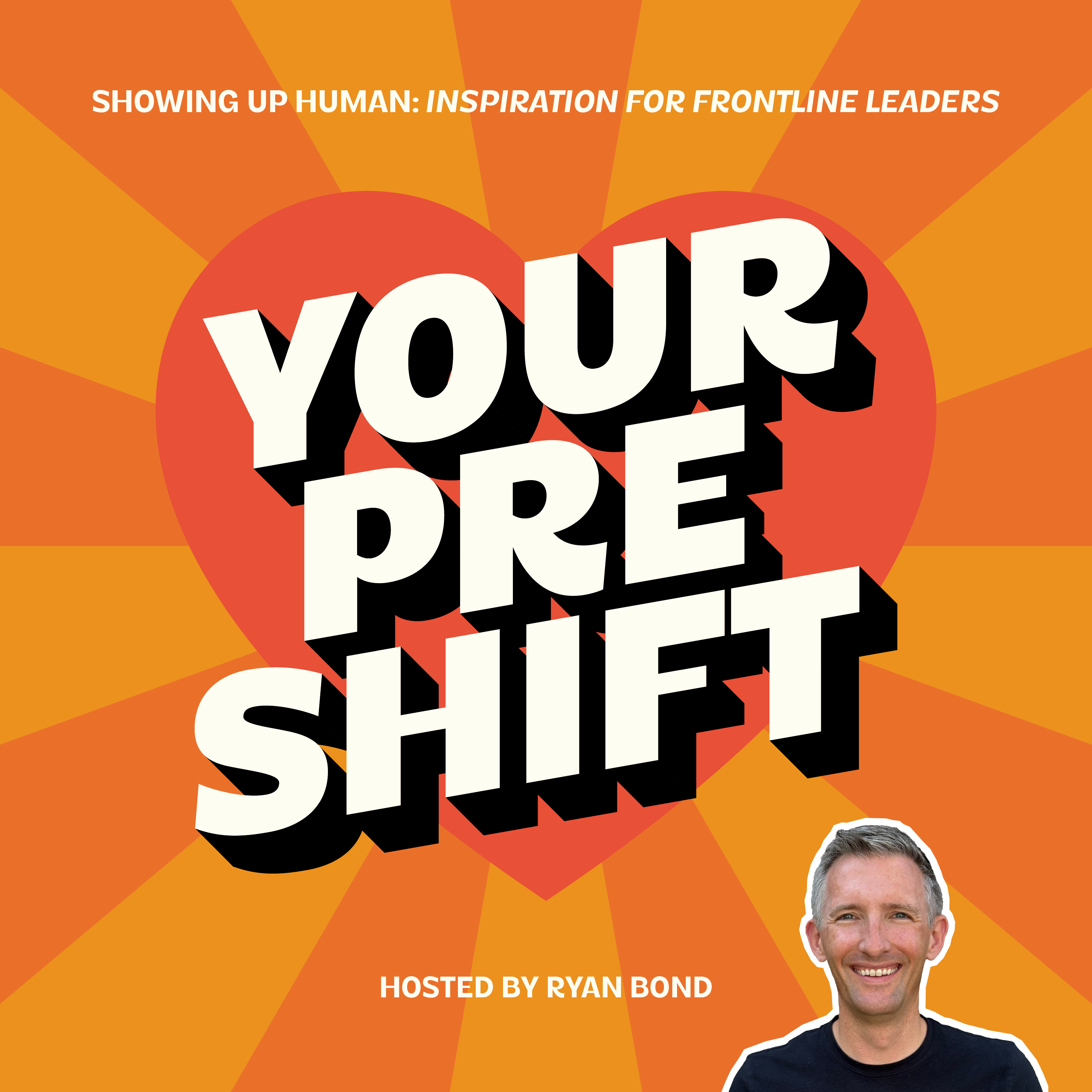
Your Preshift
by Ryan Bond
Showing up human and leading with heart.Leadership is tough—especially on the frontlines of restaurants, retail, and fast-paced industries where the pressure is high, and the stakes are real. Your Preshift is your five to ten minute boost of insight, encouragement, and challenge to help you show up as a more human, more intentional leader. Whether you’re managing a team or leading yourself, this podcast equips you with actionable ideas to lead in truly human way.Tune in, open your heart, and lead better—one shift at a time.
-
60
The AI Great Divide: Are You a Creator or a Symptom-Solver
In the age of AI, Ryan argues that frontline leadership is splitting into two distinct classes. On one side is the Receiver, the leader who treats new tech as a set of instructions to follow, often using AI to solve symptoms while ignoring the real problems. On the other is the Creator, who uses the tools in their pocket to hunt down root causes and redesign the system itself.In this episode, Ryan's differentiates each type of leader and dives into why nearly 45% of AI initiatives fail due to frontline exclusion and how you can take the reins of your own leadership. We’ll discuss how to stop waiting for corporate permission and start using the organization in your pocket to move from merely managing the business to leading it.Reference LinksNew Study from PwC, MI Finds Frontline Leaders Play a Key Role in Manufacturing AI AdoptionOrganizational Learning - Single and Double Loop
-
59
AI and Frontline Leadership - Series Kickoff - From Doer to Director
Ryan kicks off a new series on AI and frontline leadership, starting from a place a lot of people can relate to, he was late to take it seriously. What once felt like fantasy is now showing up in real ways across everyday work. In this episode, he breaks down what AI actually is, how it’s shifting from a tool to something that can act alongside you, and why that changes what it means to be valuable at work.The focus is on a simple but uncomfortable shift, moving from being the one who gets the work done to the one who leads how the work gets done. It’s a practical starting point for frontline leaders trying to stay human and relevant as everything around them starts to change.
-
58
Why Your Best People Are Getting Average Results
Why do talented leaders end up with average results?This episode looks at how systems, not people, usually cause the slide, rigid rules, busy work that doesn’t use your brain, and losing your say in how things run. It also gets into the shift happening right now with technology, where holding onto the old work can actually keep you stuck.The challenge is simple: step out of the “machine work” and get back to the part of leadership only a human can do.
-
57
Hitting the number, missing the work
A seasoned restaurant leader shares a story from early in his career, when the pressure to hit numbers led him to game the system, not out of defiance, but because he didn’t actually understand what he was being asked to do. This episode unpacks how easily leaders can fall into the same trap, asking for results without creating understanding. When numbers become the focus, behavior starts bending to protect the metric instead of improving the work. Teams work harder, but not always better. Short-term fixes start to chip away at long-term performance.Drawing on ideas like “line of sight,” systems thinking, and the reality of pressure on the frontline, this episode challenges leaders to slow down and really understand what’s driving their numbers before reacting.The shift is simple, but not easy: stop leading the number, and start leading the work behind it.Because when you help people understand the work, the numbers usually follow.
-
56
The Number Isn’t the Problem
In this episode of Your Preshift, Ryan challenges a common leadership habit, chasing numbers as if they’re the problem. Using the metaphor of trying to hold an inner tube underwater, he shows why pushing metrics only creates new issues somewhere else.The real shift is learning to see numbers as signals and symptoms, not causes. Every metric is the result of human behavior shaped by the environment leaders create.Through simple root cause thinking and the “5 Whys,” this episode helps leaders move from reacting to numbers to understanding what’s actually driving them, so they can lead behavior instead of chasing outcomes.
-
55
Better for Your Time Here
In this Preshift, we talk about a simple question for every leader and organization: are people actually better off for having worked with you?This one is also a small tribute to Bob Chapman, whose work in Everybody Matters shaped how many of us think about leadership and human dignity at work. Bob believed the way we lead impacts the way people live, and that shows up most clearly in the day-to-day moments between a frontline leader and their team.We get into what that looks like in real life. Not in big ideas, but in everyday leadership choices: how you train someone on their first shift, whether you take time to listen, whether people feel like they belong or like they’re just filling a spot.The episode closes with a simple reflection, imagine your 85th birthday and all the people you’ve led over the years showing up. What would you hope they say about working with you?That answer is being shaped right now, one shift at a time.
-
54
When You Inherit a Mess
When you step into a struggling team or organization, it’s easy to focus on fixing the numbers. But most of the time, the numbers are just a reflection of something deeper, the beliefs, behaviors, and patterns that have taken root over time.In this episode, Ryan explores what it really means to lead a turnaround. Drawing on ideas from Spiral Dynamics and real-world examples like Barry-Wehmiller and Ford, we look at how leaders shift not just performance, but the way a team thinks, communicates, and operates under pressure.We also go into the harder side of leadership, what to do when some people don’t move with the new environment. At that point, the question shifts from capability to alignment, and leaders are faced with a decision that impacts the entire team.If you ever inherit(ed) a mess, this episode will help you see it more clearly and lead it more intentionally.
-
53
What kind of organization are you growing?
Leaders don’t just lead differently, they see the world differently. And the way we see people shapes the kind of workplace we build around them.In this episode of Your Preshift, we explore a powerful question: What kind of organization are you growing?Drawing on the work of Frederic Laloux and the Spiral Dynamics framework, we walk through five common ways organizations operate: Red, Amber, Orange, Green, and Teal, and the leadership beliefs behind each one. From fear-driven environments to rule-based systems, performance cultures, relationship-focused teams, and organizations that function more like living systems, each stage reflects a different assumption about people and how work gets done.You’ll hear how these dynamics show up in everyday in your leadership through how decisions get made, how mistakes are handled, what gets rewarded, and how people experience your presence as a leader.One important reminder: most organizations aren’t just one stage. Different teams, departments, and leaders often operate from different mindsets at the same time. The real opportunity for leaders is not labeling their organization, but noticing the environment their leadership is creating.This episode invites you to reflect on three simple questions:What currently motivates the people on your team?What behaviors does your leadership reinforce?And how might you help your environment move one healthier step forward?Every leader is cultivating something, and the environment we create shapes how people grow.If you lead a shift, a classroom, a department, or a team, this conversation will help you better understand the culture you’re building and the role your leadership plays in shaping it.
-
52
Rewind: Here Comes Help or Here Comes Trouble? (New episode next week!)
How does your team feel when they see you coming? Do they breathe easier, or brace for impact?This episode takes a look at one of the truths of leadership: your presence, your reputation, arrives before your words do, and your team already has a reputation for you, whether you’ve named it or not.We explore how your internal view of leadership shapes the way you show up either from the “mechanic” mindset of correcting and tightening to the “gardener” mindset of teaching and growing. Then we break down some patterns that often determine whether leaders get experienced as help or trouble: the Fix-It Reflex, emotional whiplash, and chronic urgency. And yes, we name the infamous “Swoop and Poop”—the habit of flying in, dropping criticism and direction, and disappearing before any help or support can take root.This episode is about awareness of patterns that aren’t character flaws; simply learned habits. And because they’re learned, they can be unlearned.
-
51
Why Leaders See the Same Situation Differently
Why do smart, well-intentioned leaders look at the same struggling team and come to completely different conclusions?In this opening episode, Ryan explores how leaders don’t just disagree on solutions, they disagree on what the actual problem is. One sees accountability. Another sees burnout. Another sees broken systems. Same facts. Different stories.Drawing on Spiral Dynamics and Karl Weick’s research on sensemaking, the episode unpacks how we don’t react to reality itself, we react to the story we build about it. And under pressure, we double down on the lens that has worked for us before.The invitation is simple and practical: before arguing about solutions, ask, “What problem do we believe we’re trying to solve?”That question alone can create connection and change how you lead.
-
50
Leadership is Locating Yourself
Leading people over time requires more than good intentions. It requires self-location.Before you recalibrate trust, adjust structure, or change your level of involvement, you have to know where you’re actually standing. Not on your best day. Not in theory. In pressure.This episode explores three mirrors that help you locate yourself as a leader over time: pressure, which reveals your reflex, repetition, which exposes the edge of your strengths, and your wake, which shows what your leadership consistently produces.Because when you lead people over time, your defaults compound. And you cannot intentionally develop others if you don’t know where you are starting from.
-
49
Mistaking stability for effectiveness
In this episode, we look at a tension most frontline leaders deal with: stability versus effectiveness.Stability keeps stuff from falling apart and unfortunately become the goal. Leaders start protecting what’s steady instead of improving what’s possible. Standards get softened. Feedback gets delayed. Rescue replaces development. The team functions, but it doesn’t get better.This episode challenges you with two questions:What are you compromising to keep things stable?What are you willing to risk to make things more effective?The goal isn’t to blow anything up. It’s to protect what’s working while making small, intentional moves that improve performance over time.
-
48
The Leadership Trap of Familiarity
Familiarity sets in faster than most of us realize, and when it does, leadership effort drops. Expectations go unstated, involvement fades, and leaders start leading from old assumptions instead of present reality.Nothing is wrong. Performance often looks fine. But development stalls.In this episode, Ryan helps leaders spot when they’re on autopilot with people they know well, understand why trust without attention creates distance, and learn how to reopen familiar relationships with clarity, presence, and intention.
-
47
Why Your Brain Keeps Reusing Old Leadership
In this episode of Your Preshift, we explore why good leaders keep leading people the same way, even as those people change. Drawing from cognitive psychology and leadership research, the episode unpacks how the brain rewards familiarity and efficiency, quietly pushing leaders to reuse approaches that once worked instead of reassessing what’s needed now.You’ll learn why consistent performers often receive the least intentional leadership, how assumptions replace curiosity over time, and why development stalls when leaders stop asking present-tense questions. The episode introduces practical ways to interrupt autopilot using a healthy view of the 9-box and Trust, Structure, and Involvement.If you’ve ever been surprised by a performance dip, disengagement, or loss of momentum from someone you “know well,” this episode helps you see why, and what to do before drift turns into frustration.Link to TSI inspired 9-Box
-
46
Leading People Where They Are, Not Where They Used to Be
Leadership doesn’t stop working because people get worse. It stops working because the approach stops fitting.This episode challenges the idea that great leaders have a single leadership “style.” Instead, it makes the case that effective leadership adjusts as people grow and the work changes. When leaders stay fixed: friction and frustration follow.Using Trust, Structure, and Involvement alongside a healthy take on the 9-box, this episode helps leaders see where someone is right now and make small, intentional adjustments instead of reactive swings.If leadership has been feeling tougher than it should, this episode explains why, and shows how to realign without lowering standards or starting over.
-
45
Adjusting Your Leadership as People Grow
Most leaders don’t struggle with caring about development, they struggle with knowing how to adjust as people change.In this episode, we talk about a core issue in leadership development: binary thinking. Leaders are often taught to choose between trust or structure, involvement or empowerment, autonomy or accountability, when real development requires holding these together.This episode introduces a practical way to think more clearly about how people grow through the work, not outside of it. You’ll be introduced to Trust, Structure, and Involvement as a lens for noticing how you’re already leading, and how to adjust intentionally as people grow, stall, or step into new responsibility.We also reframe the 9-box, not as a label or verdict, but as a snapshot in time that helps leaders locate where someone is right now, so they can choose how to show up next.This isn’t about new tools or fixing people.It’s about helping leaders stop guessing, stop swinging between extremes, and start leading with clarity over time.If you’ve ever thought, “Something’s off, but I don’t know what to change,” this episode gives you the map before the journey.
-
44
Leading Over Time: How Leaders Develop People as They Grow
People development has become an industry. Programs, trainings, certifications, and frameworks promise growth, but most leaders don’t struggle with knowledge. They struggle with application. They’re leading real people, in real roles, under real pressure, where growth isn’t clean, linear, or predictable.In this opening episode of Leading Over Time, we talk about how development is relational. Over time, people become more like the leaders who lead them, not because of formal training, but because of proximity, observation, and repeated interaction. How you show up shapes how others think, decide, and grow.This episode explores why developing people in real life is so difficult, even for good leaders. Growth is uneven. Life doesn’t pause. Confidence, ownership, and capability fluctuate. And most leadership systems focus on evaluating people instead of helping leaders adapt their approach as individuals and situations change.Leading Over Time is about closing that gap. Instead of asking only “Where is this person?”, the series shifts the focus to a more useful question: “How should I be showing up now?” It’s about moving from static assessments to leadership that adjusts over time, responding to growth, pressure, and change with greater clarity and intention.This episode invites you to bring one real person, one real situation, and one real development question with you as the series unfolds. Not to fix anyone, but to lead more intentionally, one shift at a time.
-
43
Rewind: Inspiring Curiosity (New Episodes Next Week!)
Ryan will be back next week with a brand new series, but in the meantime, please enjoy a rewind of the final episode of our Fantastic Four of Frontline Leadership series, where we explore how curiosity keeps teams engaged, adaptive, and human. We unpack what healthy curiosity looks like, and how unhealthy curiosity can subtly erode trust. You’ll learn how curiosity is rooted in trust, agency, and hope, and why cultivating it makes leadership easier, not harder. We offer practical ways to model and inspire curiosity on the frontline, including how to turn reactive moments into reflective ones. Plus, we dig into how humility powers curiosity, and how staying open as a leader helps your team grow. Because when you lead with curiosity, you don’t just solve problems, you develop people.
-
42
Rewind: Buddy to Boss Series Recap
This episode is one of our most talked about and what so many new leaders feel but don't acknowledge out loud.The transition from peer to leader isn’t awkward because you’re not good at it, it’s awkward because your identity, relationships, responsibilities, and expectations are all shifting at once. In this final episode of the From Buddy to Boss series, we pull together the most shaping ideas from each of those shifts and talk what actually helps leaders find their footing.You’ll hear why imposter syndrome is a normal, not a flaw, how relationships change when roles change, why leadership work is about cultivating people and capabilities rather than doing tasks, and how organizations are counting on you to grow.More than anything, this episode offers ideas and encouragement for leaders who are in the middle of becoming, reminding them that their steadiness, honesty, and small daily choices matter more than confidence or polish.If you’ve ever wondered, “Am I doing this right?”, this episode is for you!
-
41
Rewind: Inspiring Hope
This is our most-listened-to episode for a reason.Frontline leaders don’t need hype, they need something more eduring. This episode breaks down real hope, not optimism or cheerleading, but the belief that the future can be better and that your actions matter in bringing it to life.You’ll hear why hope is a practical leadership skill, especially in hard seasons, and how it’s built through trust, agency, and honest conversations, not slogans. We explore how leaders can inspire hope without ignoring reality, and why pairing truth with belief is often the most powerful thing you can offer your team.If you’re leading tired, stretched people, or feeling that weight yourself, this episode gives you language and a way to help people keep moving forward, including you.This isn’t feel-good leadership.It’s hope that actually works.
-
40
Here comes Help
When you walk into the room, your team expects what your presence brings.In this episode of Your Preshift, we focus on what it means to be a “here comes help” leader, someone whose presence makes work clearer, steadier, and more doable.A “help” leader doesn’t rush in to fix or take over. They show up focused on people, not just tasks. They listen before deciding, bring context others don’t have, and use their authority to help bring clarity and insight instead of pressure.This episode explores how helpful leadership looks in real life: staying present with people, doing the work only a leader can do, and using power in ways that keep responsibility with the team.
-
39
Here Comes Help…Or Here Comes Trouble?
How does your team feel when they see you coming? Do they breathe easier, or brace for impact?This episode takes a look at one of the truths of leadership: your presence arrives before your words do, and your team already has a reputation for you, whether you’ve named it or not.We explore how your internal view of leadership shapes the way you show up either from the “mechanic” mindset of correcting and tightening to the “gardener” mindset of teaching and growing. Then we break down some patterns that often determine whether leaders get experienced as help or trouble: the Fix-It Reflex, emotional whiplash, and chronic urgency. And yes, we name the infamous “Swoop and Poop”—the habit of flying in, dropping criticism and direction, and disappearing before any help or support can take root.This episode is about awareness of patterns that aren’t character flaws; simply learned habits. And because they’re learned, they can be unlearned.
-
38
Buddy to Boss Series Recap
In this final episode of the From Buddy to Boss series, we step back and look at the four major shifts every new leader has to navigate: identity, relationships, responsibility, and expectations. And instead of covering everything, we focus on the two ideas in each category that tend to shape a new leader the fastest.We talk about how imposter syndrome isn’t a flaw but a sign you’re standing between two versions of yourself, and why honoring those internal nudges toward leadership is part of growing into the role. We revisit the “pool” metaphor and unpack how teams naturally push back when your role changes, and why friendships don’t disappear when you become a leader.Then we get practical about responsibility: why leadership isn’t about doing the work anymore but cultivating the conditions for others to do it well, and why credibility, not perfection, is the real currency. We close with the expectation that's easy to miss but is always there: you’re expected to help things get better. We explore what growth actually means, how to learn the business you’re part of, and why your development becomes growth for your team.This final episode is honest, encouraging, and a reminder that leadership is built through small choices that add up over time, and that this is how you become a leader.
-
37
Shifting Expectations: When Growth Becomes Part of the Job
In this final episode of the From Buddy to Boss series, you explore how stepping into leadership comes with an expectation of growth, not just in results, but in how you think, see, and lead. You walk through three surprising starting points: growth by subtraction (removing friction, clutter, and outdated habits that weigh your team down), growth by noticing (paying attention to people, patterns, and small signals that reveal where the real opportunities are), and growth by understanding the business (learning which numbers actually matter so your decisions move the needle, not just the paperwork). This episode gives you simple ways to put this into motion right where you are by asking better questions, clearing one barrier, spotting one overlooked strength, and learning one key metric, so growth becomes less about pressure and more about creating space for your team, and yourself, to move forward together.
-
36
Shifting Expectations: The Choice of Managing Your Time
In this episode, Ryan moves from awareness to action with a set of practical tools to help leaders take back their time, and their focus. Because managing time isn’t just about efficiency, it’s about leadership.Building on the last two episodes, Ryan talks about how time slips away through small, well-intentioned moments, a meeting you didn’t need, a “quick favor” that turns into 30 minutes, and how reclaiming it begins with choice. Using the “See it. Own it. Solve it. Do it.” framework from The Oz Principle, he walks through how leaders can recognize where their time’s really going and start making intentional changes.He also shares three simple, powerful tools for structuring your week:Ben Hutton’s Weekly Planning Rhythm — a four-quadrant chart to prioritize what must, should, could, and can wait. (You can check out Ben’s With Purpose podcast here).The Eisenhower Matrix (with a twist) — redefining what’s important by asking, “Important to who?”The Pomodoro Technique (leadership version) — reclaiming focus through short, present work blocks instead of constant firefighting.The message: time management isn’t just about doing more, it’s about choosing better.
-
35
Shifting Expectations: Managing Your Time (Part 2)
In this episode, Ryan takes a look at how a leader’s relationship with time shapes team culture. Because how you manage your time isn’t just a personal habit, it’s contagious.Ryan explores four common patterns that create chaos on teams: constant firefighting, hesitation and delay, overcommitting out of good intentions, and neglecting rest. Each one starts from a well-meaning place like caring, helping, wanting to do good, but when left unchecked, they leave teams reactive, exhausted, and unsure of what really matters.You’ll learn how to replace urgency with intention, trade hesitation for clarity, say no with kindness, and protect your own rest as an act of leadership.Because the way you spend your minutes becomes the way your team spends theirs, and that's where culture is created.
-
34
Shifting Expectations: Managing Your Time (Part 1)
In this episode, Ryan talks about one of the biggest struggles for new and seasoned leaders alike: how we use our time.Most leaders don’t waste time because they’re careless. They waste it because they care. The instinct to help, include, and stay available comes from good intentions, but over time, those same habits start to cost energy, focus, and clarity.Ryan explores the hidden ways leaders misuse time and how each one, though well-meaning, ends up holding teams back instead of moving them forward. You’ll learn how to step back without disengaging, protect your focus without becoming unavailable, and use your time in ways that actually build capacity in others.
-
33
Shifting Expectation: Managing Your Emotions
In this episode, Ryan digs into one of the biggest shifts that happens when you move from peer to leader: learning to manage yourself first.You can’t manage others well if you can’t manage your own reactions, time, and focus. And for most new leaders, that starts with emotions. Ryan breaks down the difference between regulating, suppressing, and reacting, and why calm leadership isn’t about hiding emotion but handling it with intention.Drawing from Emotional Intelligence, Bowen Theory, and Nonviolent Communication, he explains how emotions move through teams, how to keep yours from taking over, and how to clear tension before it builds.You’ll walk away with practical tools for staying grounded in stressful moments, repairing when you lose your cool, and creating a team climate that feels steady, even when things aren’t.Because leadership maturity starts here: learning to lead yourself before you lead anyone else.
-
32
Shifting Relationships: Punishment or Consequences
In this episode, Ryan talks about one of the most uncomfortable but necessary parts of leadership: consequences.Over the past few episodes, we’ve covered responsibility, self-accountability, and accountability. But none of those mean much without follow-through. When consequences aren’t clear or consistent, standards slip, trust fades, and good people end up frustrated.This episode breaks down what consequences actually are, and what they’re not.You’ll learn the difference between punishment (about control and compliance) and consequence (about trust and restoration), plus how to make accountability feel fair, not fearful.Ryan walks through four simple practices that make consequences both effective and human:Connect the consequence to the behavior.Communicate expectations up front.Use autonomy and dignity.Follow through consistently.It’s a practical look at how follow-through builds trust, teaches ownership, and keeps your culture healthy.Because at the end of the day, accountability only works when people know their commitments actually mean something.
-
31
Shifting Relationships: Responsibility, Self Accountability and Accountability in Practice
In this episode, Ryan takes last week’s big ideas—responsibility, self-accountability, and accountability—and puts them to work in real life. Because it’s one thing to define them. It’s another to live them on a Tuesday morning when your shift is short-staffed, someone’s late, and the fryer’s down.He breaks down how each plays out on the frontline:Responsibility is what you’re for, t’s clarity of ownership and outcomes.Self-accountability is what you’re to yourself, owning your gaps before someone else has to.Accountability is what you’re with others, the shared follow-through that keeps teams healthy and honest.Ryan also riffs on Dan Davies idea of The Unaccountability Machine, a system that quietly runs on blame, excuses, confusion, and waiting. He shows how to shut it down by turning blame into curiosity, excuses into ownership, confusion into clarity, and waiting into action.
-
30
Shifting Relationships: "Hold 'em accountable." What's that really mean?
What does it actually mean to hold people accountable?We say it all the time, “hold them accountable”, but most leaders can’t clearly define what that means. In this episode, Ryan breaks down three connected but very different ideas: responsibility, self-accountability, and accountability.They get used interchangeably all the time, but they’re not the same, and when leaders blur the lines, trust erodes, expectations get fuzzy, and teams stall.You’ll learn:Why responsibility is what you’re for: the commitments and outcomes you’ve said yes toHow self-accountability is what you’re to yourself: the honesty and integrity that keep you alignedHow accountability is what you’re with others: the trust, clarity, and follow-through that hold teams togetherThese ideas shape your leadership, your team, every relationship, and every culture you are a part of - let this episode help you do it more intentionally.
-
29
Deep Dive: Non-Violent Communication
Difficult conversations don’t have to blow up, or get avoided until they do. In this deep dive, Ryan unpacks Nonviolent Communication (NVC), a framework created by psychologist Marshall Rosenberg that’s been used everywhere from workplaces to classrooms to peace talks.You’ll hear the story behind NVC and get practical tools to use in your own leadership, relationships, and even at home. Ryan walks step by step through the four moves of NVC:Observation – describe what you saw without judgmentFeeling – name the impact it had on youNeed – identify the value or standard at stakeRequest – make a clear, respectful askIt’s not about softening accountability. It’s about leading conversations that reduce defensiveness, build trust, and create a path forward, whether with your team, your kids, or your closest relationships.Here are some resources to help you on your NVC journey:Nonviolent Communication (NVC) ResourcesOfficial & Core ResourcesCenter for Nonviolent Communication (CNVC)The official international organization founded by Marshall B. Rosenberg.Link: https://www.cnvc.org/PuddleDancer Press Free ResourcesOffers free printable handouts on the 4-Part NVC Process, and essential Feelings and Needs lists.Link: https://nonviolentcommunication.com/resources/Learning & TrainingNVC AcademyA major online learning hub with courses, a resource library, and free introductory materials.Link: https://nvcacademy.com/BayNVC – Basics of NVCA concise and helpful article explaining the core concepts of Nonviolent Communication.Link: https://baynvc.org/basics-of-nonviolent-communication/Foundational BookBook: Nonviolent Communication: A Language of Life by Marshall B. Rosenberg, PhD. (Available wherever books are sold or via link above.)
-
28
Shifting Relationships: Difficult Conversations
Most leaders avoid difficult conversations because they feel risky. Beneath the surface sits an unspoken value: “don’t blow it up.” The fear is simple, if they confront the issue, someone might quit. If someone quits, the team is short-staffed. And if the team is short-staffed…the spiral begins.But silence doesn’t solve the problem, it stockpiles it. And when it finally blows, it’s usually bigger, messier, and more expensive than if the conversation had happened earlier.This episode introduces a simple framework that helps leaders step into hard conversations with clarity and less defensiveness: Nonviolent Communication (NVC):Observation – “Here’s what I’ve noticed…”Feeling – “Here’s how it impacts me/the team…”Need – “Here’s what we need moving forward…”Request – “Can we work on this together?”The point isn’t to soften accountability, but to create space for honesty that builds trust instead of breaking it.
-
27
Shifting Relationships: Friendships
Friendships at work are more than inside jokes or shared breaks—they’re survival systems. They’re the people who drive you when your car breaks down, watch your kids when they’re sick, and remind you you’re not crazy when the shift gets overwhelming. That’s why the transition from buddy to boss can feel like such a threat: it doesn’t just disrupt your role, it disrupts a safety net you rely on.In this episode, Ryan shares his own 15-year experience of working for a close friend and what it taught him about building friendships that don’t just survive leadership shifts but grow stronger through them. He explores three hard-earned practices—resetting expectations, keeping short accounts through daily forgiveness, and respecting organizational structure—that make friendships both life-giving and sustainable when one of you becomes the boss.You’ll also hear why blurred friendships so often lead to favoritism, resentment, or burnout—and how the same principles that make for healthy relationships outside of work are exactly what keep workplace friendships from breaking under the weight of leadership.By the end, you’ll be challenged to take one step toward clarity, honesty, or respect in a friendship at work—so your relationships can give life back to you, not drain it from you.
-
26
Shifting Relationships: Resetting the System
When you step into leadership, the system around you doesn’t stay the same, it reshapes itself in response to you. And if you don’t guide that reset, you might find yourself stuck in old dynamics, blurred roles, and sideways conversations that drain your time and trust.In this episode, you’ll learn how to recognize and reset your team’s system in a healthy way. We use the image of a pool to help you visualize what happens when the current changes and how your role affects the entire flow.You’ll explore:How promotions shift the dynamics of everyone on the teamWhat functional vs. dysfunctional resets actually look likeThe difference between people problems and system problemsFour simple steps to guide a healthy resetWhat happens if you don’t guide the reset and how that creates lasting dysfunctionBefore you focus on fixing relationships, you’ve got to make sure the water you’re all swimming in is clear. This episode talk about how.
-
25
Shifting Identity: How others see you
When you become a leader, your identity doesn’t just shift inside, you also start to show up differently to others. This episode explores how your team’s experience of you becomes the foundation for trust, action, and results. Ryan introduces the Results Pyramid framework -- Experience → Belief → Action → Result -- and helps frontline leaders understand how their everyday behavior shapes the beliefs their teams form about leadership, risk-taking, and ownership.Through stories, research, and practical reflection, this episode shows how to:Build credibility through consistencyCreate trust through experienceUncover how your own beliefs about leadership shape your team's performanceWhether you’re new to the role or trying to reset after a rocky start, this episode offers a clear path to becoming the leader your team wants to follow—by paying attention to the experience you create every single day.
-
24
Shifting Identity: How you see yourself
When you step into leadership, your job changes, but so does your identity.In this episode of Your Preshift, we talk about the internal shift new leaders face when the work that used to define them is no longer theirs. From imposter syndrome to over-functioning, this transition can shake your confidence, and your sense of self.We’ll explore:Why “I am” statements shape our leadership storyHow imposter syndrome shows up for new leaders (and what it’s really saying)What Leadership and Self-Deception teaches us about ignoring the inner nudgeThree practices that help leaders stay grounded in their real identity.So, whether you’re stepping into leadership for the first time or supporting someone who is, this episode will help you lead with more clarity, humility, and steadiness—without losing yourself in the process.
-
23
Shifting Responsibilities
You got promoted… now what? In this episode of Your Preshift, we explore one of the biggest mindset shifts new leaders face: you're no longer responsible for doing the work—you're responsible for leading the people who do it. That shift sounds simple. But in the chaos of a busy shift, it’s tempting to jump back in instead of stepping up.We’ll unpack what real leadership responsibility looks like—how to stop being the fixer, start being the coach, and build the kind of credibility your team can count on. Plus, we’ll talk about pacing, burnout, micromanagement, and how to redefine what “helping” really means now.Whether you’re newly promoted or trying to grow as a seasoned frontline leader, this one’s for you.
-
22
The Awkward Shift
At some point, we all had a first leadership role. And if you’ve ever gone from being a peer to being the boss, you know: that shift can be SUPER awkward.In this kickoff to our From Buddy to Boss series, we’re talking about what really changes when you get promoted—how people see you, what they expect, how much you doubt yourself, and what you’re suddenly responsible for.We’ll walk through the four big shifts new leaders face (responsibilities, relationships, identity, and expectations), why they hit so hard, and how to show up with presence instead of panic.Whether you’re new to leadership or you’re helping someone step into their first role, this episode will help you see the moment for what it is—and lead through it with more clarity, care, and self-awareness.You’ll hear:Why the transition from peer to boss feels so disorientingWhat new leaders often miss—and how to avoid that trapA personal story of what not to do when stepping into your first people leadership roleA practical challenge to help you adjust your approach for where you are nowThis series is for new promotes—and the leaders supporting them. Because when we understand this shift better, we lead better.
-
21
Buddy to Boss: Series Intro
We were all a first-time boss at some point.And if you lead on the frontline, helping someone else take that step might be one of the most rewarding, enjoyable and important parts of your role.This new Your Preshift series, From Buddy to Boss, is for both the newly promoted leader trying to figure out how to lead, and the seasoned leader guiding someone else through that shift.Because this transition isn’t just a title change. It’s a full-body, whole-brain shift in how someone is seen, trusted, and expected to show up.And here’s the thing: if we can better understand this moment, both as the person stepping in, and the one offering support, we can help people take that next step with more steadiness, and a sense of what’s actually changing. We can help them lead better, sooner.We can create healthier connection and team dynamics.We can build workplaces where people feel supported as they grow.This kickoff episode sets the stage. We name what actually changes when you go from part of the team to leading it—and why that moment matters more than most people realize.Whether you’ve just been promoted, or you’re promoting someone else—this one’s for you.Let’s get into it.
-
20
What it Might Look Like to Lead Like a Gardener: Series Finale
In this final episode of the Lead Like a Gardener series, Ryan doesn’t offer a framework or checklist—he offers a story.This capstone episode traces one leader’s full growing season—from the urgency of early decisions, through the quiet work of tending, pruning, and waiting, all the way to harvest and rest. It’s a story about choosing presence over pressure, care over control, and how the hardest leadership work is often the most human.As the season unfolds, so does the leader herself—becoming more grounded, more intentional, more like a gardener.Because in the end, leadership isn’t just about what we get done.It’s about who we’re becoming—and what we help others become—along the way.If you’ve been growing with us through this series, this one brings it all home.
-
19
What a Gardener Knows About Change
In this episode of Your Preshift, we explore how great leaders prepare for the next season—not by rushing forward, but by making thoughtful changes in the present.We look at three powerful practices from gardening and what they teach us about leadership:Grafting: how to bring new energy and perspective onto what’s already rooted and strong—without tearing everything downControlled burning: how to intentionally let go of old meetings, traditions, or emotional weight that no longer serves the teamCutting back: how to scale down even good things so something better can grow—including things you’re great at but may need to do less ofWhether you’re leading through a season of growth, fatigue, or transition, this episode offers a grounded, practical approach to making change with purpose. Because the healthiest next season starts with the choices you make now.Reflection and Team Discussion Questions
-
18
The In-Between Is Where You Grow
This episode of Your Preshift turns inward. It's not about your team, your goals, or your results—it’s about you.When one season ends and the next hasn’t yet begun, there’s an in-between space. In the garden, it’s when the soil rests. In leadership, it’s where you catch your breath. But more than that, it’s where you begin to notice who you’re becoming.This episode explores:How becoming isn’t about adding more—but about unlearning what no longer servesWhy other people’s growth can stir up fear, and how to respond with presence instead of protectionWhat your default reactions under pressure reveal about your patterns—and how to change themWhy personal growth doesn’t happen in isolation, and how the right relationships help you growHow overfunctioning as a leader can step on the very growth you’re trying to cultivateThis isn’t about pushing to the next thing. It’s about noticing what’s shifting in you—and choosing to let it take root.Reflection and Team Discussion Questions
-
17
The Work of Rest
In a culture that glorifies constant motion, this episode of Your Preshift explores the leadership power of slowing down.We often think of rest as a break we earn after burnout. But real rest—the kind that happens between seasons—isn’t passive. It’s not time off. It’s intentional, human work.In this episode, Ryan talks about:Why rest is productive, not wastefulHow good leaders build space into transitions instead of rushing throughWhat it looks like to create breathing room on the frontlineAnd how rest reconnects us—to ourselves, our values, and the people we leadThis isn’t about stopping. It’s about tending the soil so the next season can actually grow something worth harvesting.Reflection and Team Discussion Questions
-
16
The Harvest: Letting Go
We usually think of harvest as the reward—the fruit, the results, the success.But harvest is also about endings. And how we end a season says a lot about the kind of leaders we are.In this episode of Your Preshift, we explore how our mindset—scarcity or abundance—shapes the way we let go:Of people.Of processes.Of plans that no longer serve.Scarcity says:“Hold on. There might not be enough.”“Don’t risk the loss.”“Keep what’s working—even if it’s no longer right.”Abundance says:“There is enough for all of us.”“What I release creates room for something/someone new.”“Letting go can be an act of care.”We’ll walk through:🌾 What it looks like to lead from each mindset in real leadership moments🌿 Why letting go with intention builds trust—even when the decision is hard🧭 Three practical ways to help things end well:Let go with careLeave something nourishingReflect before replantingBecause leadership isn’t just about starting strong.It’s about closing with clarity, courage, and heart.Click here for personal reflection and team discussion questions.
-
15
The Harvest: Inviting Others In
When we think about harvest at work, we usually picture outcomes—goals hit, results delivered, the job well done. But this episode of Your Preshift is about a different side of the harvest:Inviting others into the moment.Because harvest isn’t meant to be a solo act.It’s a time to ask for help, share the work, and recognize that what we’ve grown—we’ve grown together.In this episode, we explore:🌾 Why asking for help isn’t a weakness, but a sign of trust and shared purpose🌱 How inviting others in can combat loneliness—for your team and yourself🍽 A story about farmers, shared meals, and how simple traditions can create deep connection🧠 And why people feel most loyal to what they’ve helped buildIf you’ve been carrying a lot on your own—or leading like you have to—this episode is a reminder:You don’t have to do it all alone.The harvest is better when it’s shared.Click here to download personal reflections and team discussion questions.
-
14
The Fruit you Produce
In this episode of Your Preshift, we’re talking about what leadership actually produces—not just in your team, but in you.Because whether you notice it or not, your leadership creates results. The way people show up. The tone of a shift. How your team handles stress. How you handle stress. That’s the fruit.This episode helps you pay attention to:What’s growing around you—and whyHow your leadership habits shape the people you work withWhat you’re becoming through the way you leadAnd how to work on the root—not just the outcome—when something feels offWe also share the story of a farmer who grows apples with incredible care and patience—not because he’s chasing results, but because he knows the process shapes him too.If you're leading a team and want to understand what you're really growing, this one's worth your time.
-
13
Tending what you've Planted - Part 2
In this follow-up to Part 1, we continue exploring what it takes to sustain growth—especially after things have taken root.Because once something’s growing, you don’t walk away. You prune, shape, and protect.In Part 2, we talk about:✂️ Pruning – making space for healthy growth by removing what no longer serves🏗 Structure – how boundaries can free people instead of boxing them in🛡 Protecting Vulnerable Growth – offering support without enabling or coddlingThis episode reminds leaders that tending isn’t just gentle—it’s deliberate.And sometimes, what looks like limitation is actually love.
-
12
Tending what you've Planted - Part 1
Planting is just the beginning. The real work of leadership starts when you stick around.In Part 1 of Tending What You’ve Planted, we explore what it means to stay present with your team after the role is assigned and the shift has started. Like gardeners, leaders have to tend—through attention, encouragement, and care.This episode covers:👀 Observation – how noticing patterns, effort, and energy helps you lead better💧 Watering – why everyday recognition matters more than we realize🌿 Weeding – how small corrections early on can prevent bigger problems laterBecause what you don’t deal with grows just as fast as what you do.You can’t outsource this part. Leadership shows up in the daily tending.
-
11
Planting with Intention
In this episode of Your Preshift, we turn our attention to one of the most powerful questions a leader can ask:“What am I cultivating here?”Because like a garden, your team culture doesn’t grow by accident. It grows from what—and who—you plant.We explore how planting isn’t just about putting people in roles—it’s about why you put them there, and what you expect to grow.You’ll hear:Why intentional leaders don’t just fill spots—they shape ecosystemsHow seemingly small decisions (like who trains a new hire or greets at the front door) have lasting ripple effectsHow to recognize what you're really planting—clarity or confusion, support or pressureAnd why patience, timing, and internal growth matter more than quick fixesWhether you’re leading a restaurant team, a project group, or a classroom—this episode reminds you that every planting decision is a cultural one.It’s not just about getting the job done.It’s about building the kind of place where people can grow.
No matches for "" in this podcast's transcripts.
No topics indexed yet for this podcast.
Loading reviews...
ABOUT THIS SHOW
Showing up human and leading with heart.Leadership is tough—especially on the frontlines of restaurants, retail, and fast-paced industries where the pressure is high, and the stakes are real. Your Preshift is your five to ten minute boost of insight, encouragement, and challenge to help you show up as a more human, more intentional leader. Whether you’re managing a team or leading yourself, this podcast equips you with actionable ideas to lead in truly human way.Tune in, open your heart, and lead better—one shift at a time.
HOSTED BY
Ryan Bond
Loading similar podcasts...
URL copied to clipboard!