
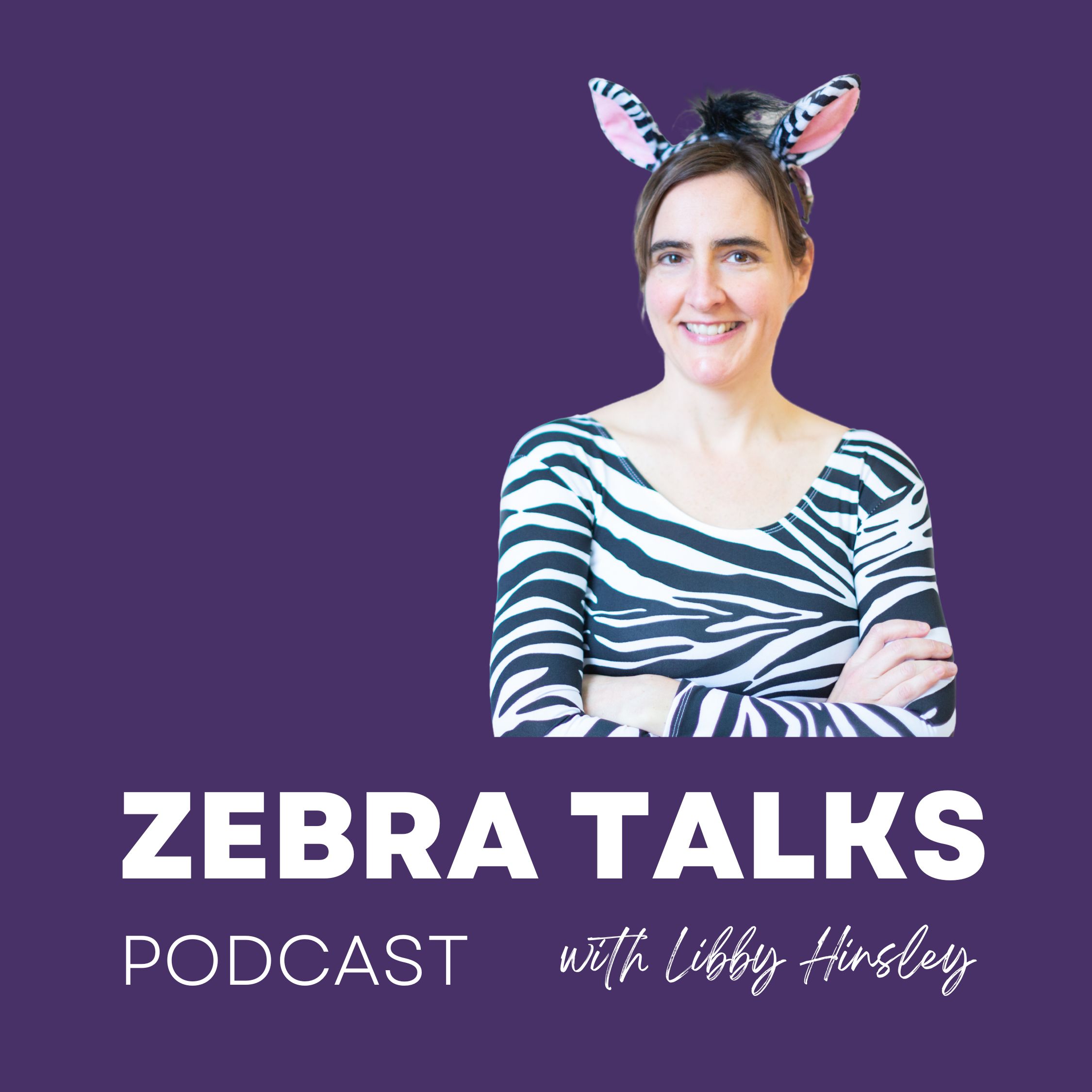
PODCAST · health
Zebra Talks: Living Your Best Bendy Life
by Dr Libby Hinsley
Dr Libby Hinsley and guests help people with hypermobility live their best bendy lives.
-
45
Nutrition Foundations for Hypermobility with Jennifer Parkinson
Host Dr. Libby Hinsley welcomes Jennifer Parkinson, a certified functional nutrition practitioner and founder of EDS Nutritionist, who supports people with Ehlers-Danlos Syndrome, MCAS, and POTS. Jennifer shares her long journey from early joint pain, repeated shoulder surgeries, gut and gynecologic surgeries, dizziness and brain fog, and eventual EDS diagnosis after years of dismissal, to pursuing functional nutrition training. She explains differences among nutrition professionals, emphasizing individualized, root-cause approaches rather than one-size-fits-all diets. Key themes include stabilizing blood sugar, assessing mineral patterns, histamine “bucket” concepts, and iron dysregulation. She also highlights how mineral balance can impact pain, muscle-building, and subluxations alongside physical therapy. 00:00 Welcome to Zebra Talks 00:35 Meet Jennifer Parkinson 01:50 Early Symptoms and Surgeries 03:50 Finally Naming EDS 06:09 Finding Functional Nutrition 09:35 Credentials and Training Paths 11:10 Nutrition Is Individual 12:48 Minerals Explained 15:04 Foundations Beyond Food 16:22 Sensitive Bodies and Normal Labs 17:55 Iron and Next Steps 18:00 Iron Testing Pitfalls 19:07 Iron Overload Clues 20:16 Liver Link to Iron 22:33 Liver Support Basics 23:36 Castor Oil Packs 24:46 Minerals and Blood Sugar 27:30 Protein and Meal Timing 29:22 Signs of Dysregulated Glucose 30:20 Minerals for Joint Stability 33:46 Whole Body Approach 34:17 Where to Find Jennifer 34:48 Final Wrap Up
-
44
Scoliosis and Hypermobility: Symptoms, Treatment, and Moving Without Fear with Dr. Laura Glazebrook
Host Dr. Libby Hinsley welcomes physical therapist Dr. Laura Glazebrook to discuss scoliosis, especially its overlap with hypermobility. Laura shares her own history of rapidly progressing scoliosis, undergoing a spinal fusion at age 11, and later realizing she likely falls on the hypermobility spectrum. They review scoliosis prevalence in the general population, current thinking on adolescent development, and why Cobb angle doesn’t reliably predict pain. Glazebrook describes typical signs and symptoms and outlines scoliosis-specific exercise approaches like the Schroth method using breath, pressure management, and progressive stabilization. They discuss surgical thresholds (often >46°), evolving views on quality of life at higher angles, and counter fear-based messaging by emphasizing safe, individualized movement and strength. 00:00 Welcome to Zebra Talks 00:35 Meet Dr. Laura Glazebrook 02:04 Laura’s Scoliosis Story 04:12 Fusion Surgery Aftermath 04:56 How Common Is Scoliosis 06:14 Why Scoliosis Develops 07:58 Degrees vs Symptoms 09:46 Common Signs and Clues 12:02 Schroth Method Basics 14:48 What Improves With Therapy 16:17 When Surgery Is Considered 19:05 Fusion and Tethering Options 19:52 Hypermobility Overlap Patterns 22:05 Movement Fear and Confidence 25:08 Activity Myths Debunked 27:19 Where to Find Dr. Glazebrook 28:11 Final Thanks and Goodbye
-
43
Bendy Menopause: Impacts of Hypermobility on Menopause with Vanessa Weiland
Dr. Libby Hinsley welcomes menopause specialist and nurse practitioner Vanessa Weiland, founder of Phases Clinic and creator of Bendy Menopause, who also has hypermobile EDS and MCAS. Their conversation covers why hypermobility symptoms can shift with hormonal changes, how perimenopause is driven by fluctuating ovarian hormones, and why blood tests are often unhelpful in perimenopause except in specific situations. They discuss HRT in perimenopause, contraception considerations, benefits and risks of modern hormone therapy (including heart and bone health), and the possible role of testosterone. Vanessa emphasizes the importance of individualized symptom-based care, and notes nuances like MCAS sensitivity and progesterone intolerance. 00:00 Welcome to Zebra Talks 00:35 Meet Vanessa Weiland 01:16 Her Menopause Journey 03:53 Discovering hEDS 05:00 Hypermobility Meets Menopause 07:25 Why Symptoms Shift 10:35 Defining Perimenopause 12:48 Do Hormone Tests Help 14:26 HRT in Perimenopause 15:56 Tracking and Advocacy Tips 18:23 HRT Risks and Benefits 21:38 Bones and Brain Fog 24:58 Testosterone Talk 28:25 Avoiding Misinformation 33:36 Progesterone Intolerance 35:15 Where to Find Vanessa 36:02 Final Thanks and Wrap Up
-
42
Abbey Phillipson on Visibility & Advocacy for Rare Types of EDS
Host Dr. Libby Hinsley interviews Abbey Phillipson, a classical Ehlers-Danlos syndrome (EDS) advocate and Paralympic strength and conditioning coach at the University of Michigan. Abbey shares her experience with early signs, diagnosis via genetics (COL5A1), and serious complications of Classical EDS. She discusses why some rare EDS types may be diagnosed earlier yet still missed, de novo mutation rates, and definitions and prevalence of rare vs ultra-rare EDS types. Abbey describes founding the patient-led Collagen Advocacy Network to connect people with rare subtypes, critiques how growing EDS awareness can create misunderstanding of rare types, and proposes more nuanced naming to support individualized care amid anticipated 2026 criteria changes. She also shares a bit about her inspiring work in adaptive sports and disability-inclusive fitness. 00:00 Welcome to Zebra Talks 00:35 Meet Abbey Phillipson 01:59 Classical EDS Diagnosis Story 04:07 Symptoms and Complications 05:55 When Rare Types Get Diagnosed 07:46 De Novo Mutations Explained 08:42 Rare vs Ultra Rare Prevalence 11:51 Building a Rare Types Group 13:21 Making Rare Real Together 14:36 Awareness Boom and Erasure 19:21 A More Nuanced Future 22:54 Renaming and Reorganizing EDS 26:34 Criteria Changes and 2026 30:58 Collagen Advocacy Network 32:08 Paralympic Coaching and Adaptive Sport 34:34 Strength Training and Joyful Movement 35:48 Final Thanks and Goodbye
-
41
Pelvic Floor Dysfunction & Hypermobility with Dr. Amy Stein
Host Dr. Libby Hinsley interviews pelvic floor physical therapist and author Dr. Amy Stein, founder of Beyond Basics Physical Therapy. Stein discusses the strong overlap she sees between hypermobility and pelvic floor dysfunction (estimating about 70% of her patients), including patterns of pelvic floor gripping used for stability, pelvic pain, prolapse, hernias, constipation/IBS symptoms, possible pelvic congestion, and bladder, bowel, and sexual dysfunction across all genders. She emphasizes a multimodal approach: calming tissues, building stability gradually with isometrics and deep core work, modifying exercise, and prioritizing nervous system regulation and mindfulness. Stein also addresses perimenopause/menopause and their effects on symptoms, tissue elasticity, muscle health, and the role of hormone therapy and topical creams. She describes her Wellness By Nature CBD products and advises seeking experienced pelvic floor PTs with thorough assessment. Highlights of this episode include: 00:00 Welcome to Zebra Talks 00:35 Meet Amy Stein 01:45 Hypermobility overlap 03:59 Amy’s bendy story 05:57 Common pelvic patterns 07:26 Multimodal treatment 09:47 Pelvic floor basics 12:07 Stability and exercise 15:35 Bowel and congestion 18:18 Perimenopause and hormones 22:48 Tissue changes and creams 24:18 CBD products explained 27:37 Lifestyle and whole body 31:27 Finding the right pelvic PT 33:40 Wrap up and resources
-
40
Hip Dysplasia, Micro-Instability, and Hypermobility with Dr. Ginger Garner
Host Dr. Libby Hinsley welcomes pelvic and orthopedic rehabilitation expert Dr. Ginger Garner to Zebra Talks to discuss hip pain in hypermobility syndromes, focusing on hip dysplasia, borderline dysplasia, and micro-instability, which commonly coexist with generalized joint hypermobility. Garner cites studies showing over two thirds—and up to 78% in one cohort—of patients with hip dysplasia meet hypermobility criteria, emphasizing screening beyond labral tears and FAI. She describes practical signs and stresses the value of weight-bearing x-rays, manual therapy, and self-treatment tools, and shares her background integrating yoga, public health, and lifestyle medicine. 00:00 Welcome to Zebra Talks 00:35 Meet Dr Ginger Garner 02:28 Why Hips Matter 03:07 Dysplasia and Hypermobility 05:33 What Hip Dysplasia Is 07:00 Quick Screening Clues 10:36 Why Dysplasia Gets Missed 13:17 Stuck Tight Yet Unstable 15:40 Choosing the Right Surgeon 19:01 Imaging Red Flags 20:54 Treatment Phases Overview 22:39 Imaging the Glute Med 25:24 Trauma and Pelvic Floor Findings 26:40 Manual Therapy for Relief 27:46 Imaging Breakthrough 28:36 Manual Therapy Matters 29:54 Rant on Rehab Protocols 32:14 Self Treatment Tools 36:46 Surgery vs Rehab Choices 38:35 Hormones and Systemic Drivers 40:04 Origin Story and Yoga 47:36 Red Flags and Where to Find Help 49:40 Wrap Up and Next Episode
-
39
Hypermobility & Foot Pain with Kala Hildebrand
In this episode, Dr. Libby Hinsley hosts Zebra Talks and interviews physical therapist and massage therapist Kala Hildebrand about hypermobility and feet, including common presentations of chronic foot pain in bendy bodies and why issues aren’t limited to “floppy” overpronation. Kala discusses how long-standing pain often comes with fear, limited information, and habituated strategies like constant shoe use or lifelong orthotics without an exit plan, and emphasizes reassessing current reality rather than old stories. They explore the value of gradually reintroducing sensory input and progressing slowly toward functional strength, while considering whole-chain contributors from foot to hip and pelvis. 00:00 Welcome to Zebra Talks 00:35 Meet Kala Hildebrand 02:03 Dance and Hypermobility 04:13 Common Foot Pain Patterns 05:41 Chronic Pain Stories 09:03 Barefoot Tolerance Check 11:24 Feet Freedom Myth 13:56 Libby Foot Pain Journey 15:59 Whole Body Foot Clues 18:45 Hip Mobility Meets Feet 20:43 Pain Free Loading 21:26 Motor Control Lightbulbs 22:44 Compression vs Distraction 23:02 Force Transmission Chain 24:01 Isometrics for Foot Pain 25:33 Progressive Loading Mindset 28:16 Thriving Not Striving 29:29 Plantar Fasciitis Myths 30:58 Orthotics Exit Strategy 33:28 Intrinsic Foot Strength Plan 36:35 Resources and Wrap Up
-
38
Taming the Zebra: Tethered Cord and Cranio-Cervical Instability in Hypermobility with Heather Purdin
Host Dr. Libby Hinsley welcomes physical therapist and manual therapist Heather Purdin, co-author of “Taming the Zebra,” to discuss her book and her biopsychosocial approach to treating hypermobility syndromes. The conversation continues by highlighting tethered cord syndrome, its key features, imaging considerations, conservative/manual approaches, and surgical cautions. They also discuss cranio-cervical instability versus a hypermobile neck, the role of inflammation/MCAS, stabilization strategies, and referrals, and share where to find Purdin’s resources and courses. 00:00 Welcome to Zebra Talks 00:35 Meet Heather Purdin 02:31 Becoming a Zebra Tamer 04:15 Why Write Taming the Zebra 06:52 What Volume Two Covers 09:56 Systemic Context for PT 11:36 Reader Feedback and Hope 12:29 Tethered Cord Explained 15:30 Symptoms and Screening Clues 17:28 Bladder Testing and Differentials 19:06 MCAS and Fascia Research 21:43 When to Refer and Imaging 23:46 Prone MRI Insights 24:36 Gentle Tethered Cord Relief 25:29 Alignment Triggers and Safety 27:52 CCI Versus Hypermobility 28:56 Symptoms and Muscle Retraining 32:05 Inflammation, MCAS, and Imaging 34:45 Stabilization Training Example 38:48 Posture Pelvis Ribcage Link 40:22 Neck Exercise Progressions 42:41 Mindset and Finding Providers 44:31 Resources and Wrap Up EPISODE LINKS & RESOURCES: Taming the Zebra Good Health Physical Therapy and Wellness Follow Heather Purdin on Instagram @heather_purdinpt Follow Taming the Zebra on Instagram @tamingthezebra Follow Good Health Physical Therapy and Wellness on Instagram @goodhealthptpdx Follow Good Health Physical Therapy and Wellness on Facebook LINKS AND RESOURCES: Learn more about Dr. Libby Hinsley, How to Work with Her, or Join her Email List Follow Libby Hinsley on Instagram @libbyhinsleypt Follow Libby Hinsley on Facebook Leave a review on iTunes
-
37
Eating Disorders and Hypermobility: An Embodied Recovery Approach with Heidi Andersen
Host Dr. Libby Hinsley welcomes Heidi Andersen, a licensed clinical mental health counselor supervisor and founder of Reclaiming Beauty, to discuss eating disorders and their overlap with hypermobility syndromes. Heidi describes shifting from traditional CBT/DBT-focused treatment toward Embodied Recovery for Eating Disorders, reframing disordered eating and chronic tension as adaptive responses shaped by nervous system regulation, sensory processing, trauma, attachment history, and underlying health issues, including hypermobility syndromes and related comorbidities. EPISODE HIGHLIGHTS: 00:00 Welcome to Zebra Talks 00:41 Meet Heidi Andersen 02:45 From Burnout to Embodied Recovery 06:58 Hypermobility and Nourishment Clues 08:08 Why This Overlap Is Trending 11:07 Eating Disorder Definitions 15:41 Age of Onset and Diagnostic Confusion 18:16 Research on Anorexia and Hypermobility 21:23 Containment Safety and Proprioception 23:09 Strength Training Grounding 24:25 Developmental Movement Push 27:15 Reframing Restriction Wisdom 28:06 Autism Sensory Overlap 31:21 Treatment Window Tolerance 33:43 Medical Motility Referrals 34:55 Vagus Nerve Compression 38:07 Somatic Tools Boundaries 39:00 Directories Closing Resources EPISODE LINKS & RESOURCES: Reclaiming Beauty Follow Heidi Andersen at Reclaiming Beauty on Instagram @reclaimingbeauty LINKS AND RESOURCES: Learn more about Dr. Libby Hinsley, How to Work with Her, or Join her Email List Follow Libby Hinsley on Instagram @libbyhinsleypt Follow Libby Hinsley on Facebook Leave a review on iTunes
-
36
POTS, MCAS, and Pelvic Venous Disease: Dr. Alexis Cutchins on the “Bendy, Itchy, and Dizzy” Trifecta
Host Dr. Libby Hinsley welcomes cardiologist Dr. Alexis Cutchins, who left Emory after 13 years to open a private practice in New York City with the goal of building a multidisciplinary center for hypermobility spectrum disorders. Dr. Cutchins describes how curiosity led her into treating patients with POTS, dysautonomia, long COVID, EDS, and MCAS, and explains that MCAS can both drive and be triggered by POTS physiology. She also explains pelvic venous disease/left iliac vein compression as a frequent contributor to pooling, reduced cerebral perfusion, and orthostatic symptoms, sometimes treated mechanically with venous stenting. EPISODE HIGHLIGHTS: 00:00 Welcome to Zebra Talks 00:35 Meet Dr Alexis Cutchins 02:13 Why She Focuses on POTS 04:24 Leaving Emory for NYC 05:09 Building a Center of Excellence 06:40 Hypermobility in POTS Patients 07:44 MCAS and Connective Tissue Link 08:35 How MCAS Worsens POTS 12:24 Treating MCAS Stepwise 14:56 Do POTS Subtypes Matter 16:30 Tilt Table Test Debate 19:07 Stigma Around POTS Diagnosis 20:04 Stigma And Awareness 20:27 Primary Care POTS Care 20:51 Heart Rate Reassurance 22:11 MCAS Symptom Overlap 23:55 Why Mast Cells Trigger 26:04 Pelvic Venous Disease 27:51 Iliac Compression Explained 31:14 Symptoms And Red Flags 33:19 Stents And Treatment 35:39 Where To Find Dr. Cutchins 36:34 Telehealth And Wrap EPISODE LINKS & RESOURCES: Cutchins Cardiovascular Medicine Follow Dr. Alexis Cutchins, MD on Instagram @drcutchins Follow Dr. Alexis Cutchins, MD on YouTube @DrCutchins LINKS AND RESOURCES: Follow Libby Hinsley on Instagram @libbyhinsleypt Follow Libby Hinsley on Facebook Learn more about Libby Hinsley, How to Work with Her, or Join her Email List Leave a review on iTunes
-
35
Genetic Testing and hEDS: The Risks of Direct-to-Consumer Tests with Dr. Poorvi Desai
Host Dr. Libby Hinsley welcomes Dr. Poorvi Desai, a board-certified hematologist-oncologist living with hypermobile Ehlers-Danlos syndrome (hEDS) and comorbidities. Dr. Desai explains genetic testing basics (single-gene, exome, and whole-genome sequencing), distinguishing somatic testing from germline inherited testing used for hereditary connective tissue disorders. She notes that 13 of 14 EDS subtypes have identified single-gene causes, but hEDS does not. They warn that direct-to-consumer genetic tests can be misleading, produce uncertain results, and may require retesting, emphasizing clinician-ordered, validated testing mainly to exclude other conditions like vascular EDS, and expressing hope for updated 2026 criteria and improved evidence-based care. 00:00 Welcome to Zebra Talks 00:36 Meet Dr Poorvi Desai 01:14 Poorvi’s Hypermobility Journey 03:47 Genetic Testing Basics 06:00 Germline vs Somatic Testing 08:24 How Sequencing Works Today 10:10 Why HEDS Lacks a Gene 10:37 HEDGE Study Findings 15:05 Polygenic Neuroimmune Model 18:05 Direct to Consumer Pitfalls 28:26 Using Testing to Exclude Types 32:08 Access Cost and System Gaps 34:49 Hope New Criteria and Treatments 39:10 Evidence Based Caution 41:10 Where to Find Dr. Desai 42:05 Final Thanks and Goodbye EPISODE LINKS & RESOURCES: Follow Dr. Poorvi Desai, MD on Instagram @drpoorvidesai Follow Dr. Poorvi Desai, MD on Substack @drpoorvidesai Follow Dr. Poorvi Desai, MD on YouTube @drpoorvidesai LINKS AND RESOURCES: Follow Libby Hinsley on Instagram @libbyhinsleypt Follow Libby Hinsley on Facebook Learn more about Libby Hinsley, How to Work with Her, or Join her Email List Leave a review on iTunes
-
34
Navigating Life with Hypermobile Ehlers-Danlos Syndrome: Lauren Brown's Journey
In this episode of Zebra Talks, host Dr. Libby Hinsley discusses the challenges and experiences of living with hypermobility syndromes with guest Lauren Brown. Diagnosed with hypermobile Ehlers-Danlos Syndrome and POTS, Lauren shares her long and complicated journey through a diagnostic maze, frequent medical gaslighting, and the significant impact of finding knowledgeable and empathetic healthcare providers. Despite her struggles, Lauren started a YouTube channel, POTS Zebra, to raise awareness and support others facing similar conditions. This episode highlights the importance of community, persistence, and self-advocacy in managing chronic illnesses. Highlights of this episode include: 00:00 Introduction to Zebra Talks 00:35 Meet Lauren Brown: A Journey with EDS and POTS 01:44 Early Signs and Misdiagnoses 04:13 High School Struggles and a Breakthrough 06:29 College and Beyond: Continued Challenges 12:45 A Lifesaving Diagnosis 13:46 Ongoing Health Battles and Advocacy 19:11 Finding the Right Doctor 19:45 Sharing the Journey 22:02 Medical Gaslighting and Bias 23:11 The Importance of Diagnosis 27:19 Building a Support Network 30:10 Starting a YouTube Channel 33:11 Resources and Support 36:02 Final Thoughts and Community
-
33
Green and Red Flags: Strength Coaching for Bendy People with Dena Mellick
In this episode of Zebra Talks, host Dr. Libby Hinsley, physical therapist and author of 'Yoga for Bendy People,' talks with guest Dena Mellick, a barbell coach and founder of Strength Equity. Dena shares her journey from chronic illness and pain management to becoming a strength coach. They delve into the intricacies of training clients with hypermobility syndromes (HSD) and Ehlers-Danlos Syndrome (EDS), emphasizing the importance of resistance training and collaborative approaches for managing pain and improving quality of life. Dena explains the benefits of strength training, particularly in combating age-related muscle loss, and offers practical tips for finding the right coach, avoiding common red flags, and accommodating individual needs. They also discuss the significance of progressive overload, appropriate equipment, and the critical role of protein in muscle recovery and maintenance. Highlights of this episode include: 00:00 Introduction to Zebra Talks 00:35 Meet Dena Mellick: Strength Coach and Lifter 01:47 Dena's Journey to Lifting 03:30 The Importance of Strength Training 06:19 Powerlifting and Olympic Lifting Explained 09:04 Training Hypermobile Clients 16:26 Finding the Right Coach or Trainer 19:46 Resources for Training with Pain 22:30 Training with Hand Injuries 23:26 Green Flags in a Strength Coach 23:50 Red Flags to Avoid in a Coach 25:07 Importance of Proper Equipment 28:32 Personal Experiences with Coaching 30:08 One-on-One vs Group Training 32:25 Adapting Training to Life Stressors 35:17 Encouraging Barbell Use at Home 38:12 Getting Started with Resistance Training 40:43 Final Thoughts and Contact Information
-
32
Heart Rate Variability: a Tool to Manage Spoons with Dr. Derik Anderson
In this episode of Zebra Talks, Dr. Libby Hinsley hosts Dr. Derik Anderson, a chiropractor and expert in soft tissue research and treatment, to discuss various facets of managing hypermobility syndromes. Dr. Anderson shares his journey into treating Ehlers Danlos Syndrome, insights on fascia differences in bendy bodies, and the role of heart rate variability (HRV) in energy management. They also delve into the importance of joint stabilization, nutrition, and innovative approaches like vibration therapy to improve the quality of life for those with hypermobility. The episode emphasizes the significance of a holistic and individualized approach to care, reflecting on the need for managing systemic inflammation and energy levels to enhance recovery and overall health. Highlights of this episode include: 00:00 Introduction to Zebra Talks 00:40 Meet Dr. Derik Anderson 01:34 Dr. Anderson's Journey with EDS 05:40 Understanding Fascia in Bendy Bodies 16:23 Heart Rate Variability and Energy Management 28:08 Tools and Techniques for Fascia and Muscle Health 34:40 Nutritional Insights for Bendy Bodies 36:51 Conclusion and Contact Information
-
31
Enhancing POTS Management with Blood Flow Restriction Training Featuring Rob West
In this episode of Zebra Talks, host Dr. Libby Hinsley speaks with Rob West, a physical therapist and board certified orthopedic specialist. They discuss the use of blood flow restriction (BFR) training as a tool for improving strength and managing symptoms in patients with Ehlers Danlos Syndrome (EDS) and Postural Orthostatic Tachycardia Syndrome (POTS). Rob shares his journey from learning about EDS through a classmate to becoming a specialist in treating this population. He provides insights into how BFR works, its benefits, and necessary precautions. Rob also highlights the positive impact BFR and trunk compression with weightlifting belts can have on cerebral perfusion and symptom management for POTS patients. Additionally, he shares inspiring case studies of patients who have significantly improved their quality of life through these training methods. Listeners will gain a deeper understanding of these innovative approaches to physical therapy and their practical applications. Highlights of this episode include: 00:00 Introduction to Zebra Talks 00:35 Meet Rob West: Physical Therapist and Strength Specialist 02:58 Understanding Blood Flow Restriction Training 05:37 Applying BFR in Clinical Practice 08:29 BFR for POTS Management 27:22 Patient Success Stories with BFR 31:15 Closing Thoughts and Contact Information
-
30
POTS Diagnosis and Treatment with Dr. David Saperstein
In this episode of Zebra Talks, Libby welcomes Dr. David Saperstein, Director of the Center for Complex Neurology, EDS, and POTS in Phoenix, Arizona. Dr. Saperstein shares his journey into specializing in EDS and POTS, the complexities of diagnosing and treating POTS, and the importance of staying curious and open-minded in medical practice. They discuss the challenges of diagnosing POTS, the importance of thorough testing, and various treatment strategies, including the critical role of salt and water intake. Dr. Saperstein also emphasizes the need for flexibility in treatment plans to better meet individual patient needs. Tune in to gain valuable insights into managing these complex conditions and hear about Dr. Saperstein's innovative approaches. 00:00 Introduction to Zebra Talks 00:35 Meet Dr. David Saperstein 01:45 Dr. Saperstein's Journey into EDS and POTS 03:47 Challenges in Diagnosing and Treating POTS 10:00 Understanding POTS and Its Complexities 18:29 Diagnostic Criteria and Testing for POTS 31:06 Treatment Strategies for POTS 36:54 Managing POTS with Lifestyle Changes 41:36 Conclusion and Contact Information
-
29
Hypermobility: Not Just a Tissue Difference, with Katy Bowman
In this episode of Zebra Talks, Dr. Libby Hinsley hosts biomechanist and bestselling author Katy Bowman to discuss the unique features of hypermobile bodies. Katy shares her insights on biomechanics, tissue creep, and the importance of proprioception and attentional focus for hypermobile bodies. They also explore the impact of sedentary culture and strategies for integrating more diverse movements into daily life. Katie explains her evolutionary perspective on movement and emphasizes the need for hypermobile individuals to engage in movement that enhances body awareness and stability. Practical tips, theoretical insights, and Katie's innovative approach to movement therapy make this a must-listen for those living with hypermobility. Highlights of this episode include: 00:35 Meet Katie Bowman: Biomechanist and Movement Expert 01:56 Understanding Biomechanics and Hypermobility 09:40 The Impact of Sedentary Culture on Hypermobility 17:17 Practical Tips for Managing Hypermobility 22:15 The Psychological Aspect of Movement 34:00 Final Thoughts and Resources
-
28
The Making of Bendy & Badass with Libby & Becca Lee
In this episode of Zebra Talks, host Dr. Libby Hinsley is joined by strength and conditioning coach Becca Lee to discuss their collborative innovative strength training class 'Bendy and Badass,' designed specifically for people with hypermobility syndromes. They share their journey in developing the class, discuss the unique challenges faced by hypermobile individuals, and explain effective strategies and exercises used to help participants build strength and improve quality of life. The conversation also highlights the importance of slow, controlled movements, personalized programming, and the significance of community support within the class setting. Highlights of this episode include: 00:35 Meet Becca Lee: Strength and Conditioning Coach 01:03 The Journey to Bendy and Badass 01:23 Becca's Coaching Philosophy 03:28 Libby's Personal Training Experience 12:59 The Birth of Bendy and Badass Class 14:23 Class Structure and Community Impact 16:14 Exercise Selection and Programming 23:10 Dumbbells and Progressive Loading 23:34 Four-Week Programming Cycle 28:36 Importance of Slow and Controlled Movements 34:11 Rate of Perceived Exertion (RPE) 40:57 Community and Individual Progress 46:13 Conclusion and Final Thoughts
-
27
Running and Hypermobility with Kate Bochnewetch
In this episode of Zebra Talks, host Dr. Libby Hinsley is joined by Dr. Kate Bochnewetch, a physical therapist and run coach, to discuss running with hypermobile Ehlers-Danlos Syndrome (hEDS), Hypermobility Spectrum Disorders (HSD), and other chronic illnesses. Kate shares her personal journey with hypermobility, POTS, and chronic migraine, and how these experiences influenced her approach to training runners with similar conditions. Topics covered include the importance of a gentle, conservative, and health-focused training plan, the role of strength training, managing stress, and the selection of appropriate footwear. Kate also offers insights into pacing and mental preparedness, emphasizing the need for individualized care and flexibility in exercise routines. Listeners interested in learning more about Kate's work can find her on Instagram at @the_running_dpt or visit her website at therunningdpt.com. Highlights of this episode include: 00:00 Introduction to Zebra Talks 00:35 Meet Kate Bognawicz: Physical Therapist and Coach 01:36 Kate's Journey with Hypermobility 03:30 Challenges in Traditional PT Practice 06:34 Approach to Running Training for EDS/HSD 08:20 Indicators for Running Readiness 10:07 Debunking Myths About Running with EDS/HSD 14:31 Strength Training for Joint Stability 16:51 Running Progression Timeline 22:04 Managing POTS in Running Training 24:14 Footwear Recommendations 27:08 Run-Walk Approach and Stress Management 32:18 Conclusion and Contact Information
-
26
Heavy Lifting and Hypermobility with Nikki Naab-Levy
In this episode of Zebra Talks, host Dr. Libby Hinsley welcomes Nikki Naab-Levy, a certified strength and nutrition coach with extensive experience in helping hypermobile individuals. Nikki shares her personal journey with hypermobility and discusses the benefits of strength training for those with hypermobility syndromes. They explore the importance of understanding one's limits, the concept of rate of perceived exertion (RPE), and how to adjust training programs appropriately. The conversation also touches on the significance of proper nutrition and body autonomy. Listeners are provided with practical advice on how to approach strength training safely and effectively, even when dealing with chronic conditions. Highlights of this episode include: 00:00 Introduction to Zebra Talks 00:35 Meet Nikki Naab-Levy 01:29 Nikki's Personal Journey with Hypermobility 04:16 The Benefits of Strength Training for Hypermobile People 04:40 Understanding 'Heavy' in Strength Training 06:43 Approach to Strength Training for Hypermobile Individuals 15:53 Progressing in Strength Training 23:52 The Importance of Deloading 25:11 The Importance of Deload Weeks 25:45 Listening to Your Body's Cues 27:52 Adjusting Workouts for Hypermobility 31:39 Indicators for Slowing Down 32:13 Mental Strategies for Setbacks 37:11 Nutrition and Recovery for Hypermobility 40:30 The Role of Alignment and Load 46:41 Final Thoughts on Body Autonomy 48:32 Where to Find More Information
-
25
Understanding Hypermobile Bodies: Insights from Dr. Mamak Shakib
In this episode of Zebra Talks, host Dr. Libby Hinsley talks with Dr. Mamak Shakib, a chiropractic physician specializing in functional mobility, joint hypermobility, and pelvic floor dysfunction. Dr. Shakib shares her 30-year journey in treating hypermobile patients, emphasizing the importance of developmental kinesiology and dynamic neuromuscular stabilization (DNS) for sustainable joint health and stability. She discusses common issues faced by hypermobile individuals in traditional chiropractic and rehabilitation settings, the significance of tailored approaches, and the role of proper breathing techniques in maintaining functional stability. The episode sheds light on Dr. Shakib's unique methodologies and her advocacy for better communication and understanding between healthcare providers and patients with hypermobility syndromes. Highlights of this episode include: 00:00 Introduction to Zebra Talks 00:35 Meet Dr. Mamak Shakib 01:58 Discovering Hypermobility 07:23 Challenges in Traditional Rehabilitation 20:55 Dynamic Neuromuscular Stabilization (DNS) 34:05 Breathing Techniques for Bendy People 45:45 Final Thoughts and Resources
-
24
Navigating Hypermobility and Fibromyalgia with Dr. Melissa Koehl
In this episode of Zebra Talks, host Dr. Libby Hinsley welcomes Dr. Melissa Koehl to discuss her journey with Hypermobile Ehlers-Danlos Syndrome (EDS) and how it has shaped her career in physical therapy. Melissa shares her personal struggles with diagnosis, the importance of recognizing hypermobility in the context of fibromyalgia, and the intersection of these conditions with other systemic issues like dysautonomia and mast cell activation syndrome. She also discusses the significance of personalized exercise programs, gut health, and the holistic approaches necessary to manage these complex conditions effectively. 00:00 Introduction to Zebra Talks 00:35 Meet Melissa Kahle: A Journey with Hypermobile EDS 01:40 Melissa's Personal and Professional Journey 03:35 The Diagnosis and Its Impact 06:19 Exploring Fibromyalgia and Hypermobility 06:48 Understanding Fibromyalgia: Diagnosis and Criteria 12:04 Treatment Approaches for Fibromyalgia 16:13 Exercise and Movement Strategies 22:35 Exploring Mast Cells and Fibromyalgia 24:28 The Gut Microbiome and Pain Connection 24:53 Personal Struggles with SIBO 29:20 Navigating Healthcare as a Hypermobile Human 31:59 Creating Resources for the Hypermobile Community 37:33 Final Thoughts and Resources
-
23
Bendy Brains: Hypermobility, Anxiety, and Neurodivergence with Dr. Jessica Eccles
In this episode of Zebra Talks, host Dr. Libby Hinsley welcomes Dr. Jessica Eccles, a prominent consultant psychiatrist and researcher, to discuss her personal and professional experiences with hypermobility syndromes. Dr. Eccles shares insights from her extensive research on the links between hypermobility, anxiety, neurodevelopmental conditions, and chronic health issues such as fibromyalgia and ME/CFS. She explains how differences in brain structure and function, along with abnormal autonomic nervous system responses, can affect those with hypermobility. Dr. Eccles also introduces a novel treatment approach, the ADAPT therapy, designed to reduce anxiety in hypermobile individuals. The conversation highlights the importance of proper diagnosis, medical education, and innovative therapeutic strategies for managing these complex conditions. 00:00 Introduction to Zebra Talks 00:35 Meet Dr. Jessica Echols 01:34 Dr. Echols' Personal Journey with Hypermobility 04:00 Discovering the Link Between Hypermobility and Anxiety 08:50 Exploring Brain Differences in Hypermobile Individuals 11:00 The Role of the Involuntary Nervous System 17:02 Novel Treatments and Future Research 21:05 Connections Between Hypermobility and Neurodivergence 35:45 Challenges and Future Directions in Medical Education 39:53 Conclusion and Final Thoughts
-
22
Understanding Upper Cervical Instability with Taylor Goldberg
If you have a bendy neck, this one's for you! For this week's episode of Zebra Talks, Libby has a fascinating conversation with Taylor Goldberg, a chiropractor turned virtual hypermobility coach. Taylor shares a bit about her personal journey with hypermobility and her shift to a virtual coaching model, and then helps us understand all things upper cervical instability (UCI), including its causes, symptoms, diagnostic challenges, and treatment options. UCI affects a whole lot of people with hypermobility, but good news: the most severe cases requiring surgery are quite rare even among us bendy types. Whew! Taylor unpacks a lot of definitions such as distinguishing between hypermobility and instability (no, they're not the same thing!). She also covers lots of good info about safe exercise practices, and emphasizes why it's so important to avoid certain chiropractic adjustments. The episode also touches on yoga practices for hypermobile individuals and the significance of conservative care in managing UCI. Highlights of this episode include: 00:00 Introduction to Zebra Talks 00:35 Meet Taylor Goldberg: Chiropractor to Hypermobility Coach 01:49 Taylor's Personal Journey with Hypermobility 03:40 Understanding Hypermobility and Instability 06:11 Upper Cervical Instability: Symptoms and Diagnosis 14:42 Managing Upper Cervical Instability 19:01 Activities to Avoid and Chiropractic Cautions 24:12 Challenges in Chiropractic and PT Training 25:23 The Need for Comprehensive Connective Tissue Education 27:02 Creating Realistic Expectations in Recovery 27:49 Step-by-Step Recovery Process 29:39 Exercise Categories and Proprioception 33:46 Managing Upper Cervical Instability 35:01 Yoga and Hypermobility 39:11 Resources and Offerings for Hypermobility 41:16 Conclusion and Final Thoughts
-
21
Bendy Belly Trouble with Lisa Sherman
In this episode of Zebra Talks, Dr. Libby Hinsley welcomes Lisa Sherman, a licensed acupuncturist with expertise in functional medicine and molecular biology, to discuss digestive issues among people with hypermobility syndromes. They delve into the prevalence of gastrointestinal problems like dysmotility, microbial dysbiosis, and structural droopiness that hypermobile individuals often face. Lisa offers insights on contributing factors such as the autonomic nervous system and mast cell activation, and shares practical advice for lifestyle changes, nutritional strategies, and supplements that can help manage these conditions. The episode highlights the importance of mindful eating, movement practices, and vagus nerve activation for improving gut health in hypermobile individuals. Highlights of this episode include: 00:35 Meet Lisa Sherman: Expert on Bendy Bellies 01:39 Understanding Digestive Issues in Hypermobile People 02:56 Prevalence and Impact of GI Issues 04:00 Common GI Conditions in the Bendy Population 07:03 Functional Gastrointestinal Disorders (FGIDS) 08:54 The Role of the Nervous System in Digestion 11:14 Hypermobile Gut and Hypomotility 18:19 Testing and Treating Gut Motility Issues 28:54 The Bendy, Itchy, and Dizzy Trifecta 37:57 Understanding Functional Gastrointestinal Disorders 39:24 Practical Tips for Gut Health 43:44 The Importance of Protein and Collagen 49:15 Navigating Histamine and FODMAPs 56:47 Supplements and Prokinetics 01:04:15 Vagus Nerve Stimulation and Lifestyle Changes 01:08:53 Research and Future Directions 01:10:25 Conclusion and Contact Information
-
20
The Science of Stretching with Jules Mitchell
In this episode of Zebra Talks, Libby welcomes biomechanics expert Jules Mitchell to discuss the science of stretching and connective tissue behavior, particularly in the context of hypermobility syndromes. Jules provides insights from her extensive research and professional experience, addressing common misconceptions about stretching, the adaptive capabilities of connective tissue, and how people with hypermobility can safely engage in physical activities. The discussion includes the impact of mechanical tension on tissue adaptation, the importance of understanding individual responses to stretching, and the role of exercise science in improving joint stability and resilience. Jules, who is also the author of 'Yoga Biomechanics Stretching Redefined' and an educator of yoga teachers worldwide, shares valuable perspectives on the interplay between biomechanics and yoga practices, offering practical advice for both practitioners and instructors. 00:35 Meet Jules Mitchell: Yoga Biomechanics Expert 02:18 Jules' Journey into Stretching Research 04:55 Understanding Connective Tissue and Hypermobility 12:46 The Science of Stretching and Tissue Adaptation 18:37 Practical Advice for Bendy People 40:22 Final Thoughts and Resources
-
19
Unraveling Endometriosis and Hypermobility with Alanna Trzcinski
In this Zebra Talks episode, host Dr. Libby Hinsley interviews Alanna Trzcinski, host of the Endo Battery Podcast and president of EndoVillage. The episode delves into Alanna's journey with endometriosis, advocacy work, and the surprising intersections with hypermobility syndromes. Alanna sheds light on the challenges of living with both conditions, the importance of excision surgery for endometriosis, and the nuanced nature of these overlapping chronic illnesses. The two discuss the critical role of multidisciplinary care, the need for increased research, and the psychological aspects of managing chronic pain. Listeners will gain valuable insights into the complexity of these conditions and the importance of informed, holistic care. Highlights of this episode include: 00:35 Meet Alanna Trzcinski: Advocate for Endometriosis Awareness 02:24 Alana's Personal Journey with Endometriosis 05:21 Understanding Endometriosis: Definitions and Misconceptions 07:25 The Overlap Between Endometriosis and Hypermobility Syndromes 11:33 Challenges in Diagnosing and Treating Endometriosis 15:18 Effective Management and Treatment Options 18:54 The Importance of Multidisciplinary Care 24:54 Surgical Treatments: Excision vs. Ablation 31:20 Living with Endometriosis and Hypermobility 34:08 Advocacy and Future Research 40:39 Final Thoughts and Resources
-
18
Managing Long COVID and Dysautonomia in the Hypermobile Community with Naomi Bauer
This episode of Zebra Talks features a discussion with Naomi Bauer, a Doctor of Physical Therapy with personal and professional experience in treating dysautonomia and Long COVID. Hosted by Dr. Libby Hinsley, they explore the challenges and management strategies for those living with hypermobility syndromes, focusing on the overlap between long COVID, dysautonomia, and hypermobility. Naomi shares her journey from a healthcare professional to a patient after developing long COVID dysautonomia herself and highlights the importance of understanding personal energy management through pacing and the 50 percent rule. The conversation also addresses potential underlying connections between hypermobility and the increased risk of developing long COVID, emphasizing the significance of social support, proactive resting, and setting boundaries for energy use. Highlights of this episode include: 00:32 Meet Naomi Bauer: A Journey from PT to Long COVID Survivor 01:42 Exploring the Intersection of Long COVID and Hypermobility Syndromes 01:56 Naomi's Personal Battle with Long COVID and Suspected Hypermobility 05:55 The Complex World of Dysautonomia: From POTS to Long COVID 14:28 The Link Between Hypermobility Syndromes and Long COVID 23:47 Managing Long COVID and Hypermobility: Strategies for Recovery 41:24 Concluding Thoughts and Finding Support
-
17
Navigating Hypermobility and Perinatal Health with Megan Beach Gomes
In this episode of the Zebra Talks podcast, host Libby Hinsley interviews Megan Beach Gomes, a specialized pelvic health physical therapist focusing on pelvic pain and perinatal care. She discusses her journey into specializing in pelvic health and the importance of physical therapy for pregnant and postpartum individuals, especially those dealing with hypermobility. Gomes highlights the key role of the hormone relaxin during pregnancy and its effects on the body's mobility, the challenges hypermobile individuals may face during and after pregnancy, and provides practical advice and exercises to help manage symptoms. Gomes emphasizes the need for comprehensive care, including pelvic support belts, specific exercises, and how to deal with issues such as diastasis recti postpartum. She also touches on finding specialized help through resources like the EDS Society, the importance of patient advocacy, and options like telehealth for individuals with limited access to specialized care. Highlights of this episode include: - Welcome to Zebra Talks: Introducing Megan Beach Gomes - Journey into Pelvic Health: Megan's Story - Understanding Hypermobility in Pregnancy - Managing Pregnancy Symptoms for the Hypermobile - Navigating Labor and Delivery with Hypermobility - Preparation and Advocacy for Hypermobile Pregnant Persons - Pregnancy Wellness Tips for the Hypermobile - Ergonomic Supports for Comfortable Sitting - Exercise Tips for Pregnancy with Increased Laxity - Hip Hinge: The Ultimate Exercise for Pregnancy - Managing Pelvic Girdle Pain with Simple Adjustments - Postpartum Considerations for the Bendy Population - Navigating Postpartum Recovery: Scar Care and Core Support - Addressing Diastasis Recti in Postpartum Recovery - Preventing and Managing Mommy Thumb Postpartum - Finding Specialized Perinatal Physical Therapy
-
16
Gender Affirming Care and Hypermobility with Dr. Laura Ross
In this episode of Zebra Talks, host Dr. Libby Hinsley discusses the intersection of hypermobility syndromes and gender affirming care with Dr. Laura Ross, a pelvic health physical therapist and sex counselor. Dr. Ross, based in Decatur, Georgia, shares her journey and passion for providing inclusive care for all genders, focusing on pelvic pain, sexual health, pelvic health in athletes, and care specific to transgender and gender expansive individuals. She emphasizes the importance of creating a safe space for LGBTQ+ patients, especially those dealing with hypermobility. Their conversation explores the high prevalence of hypermobility among individuals seeking gender affirming surgeries, citing research that highlights a significant connection between hypermobility and gender diversity. The conversation also covers the importance of comprehensive care that includes prehabilitation, rehabilitation, and the consideration of sensory processing issues. Dr. Ross stresses the necessity for healthcare providers to develop competencies in treating gender diverse individuals, suggesting resources for both patients and practitioners. The episode aims to raise awareness about the need for accessible and affirming healthcare for hypermobile and gender diverse communities. Highlights of this episode include: 00:38 Introducing Dr. Laura Ross: A Journey into Pelvic Health and Gender Affirming Care 02:24 Exploring the Intersection of Hypermobility and Gender Affirming Care 04:39 Demystifying Gender Affirming Care: Terminology and Importance 10:35 The Link Between Hypermobility and Gender Diversity: Emerging Research 22:17 Gender Affirming Surgeries and Hypermobility: Pre and Postoperative Considerations 39:19 Empowering Healthcare: Inclusivity and Competency in Gender Diverse Care 45:46 Connecting with Dr. Laura Ross and Final Thoughts
-
15
Pelvic Health Challenges in the Hypermobility Community
In this episode of Zebra Talks, host Dr. Libby Hinsley delves into the complexities of pelvic health in individuals with hypermobility syndromes with special guest Beth Kemper. Beth is a seasoned physical therapist with dual certification in Women's Health and Pelvic Health. She discusses the prevalence of hypermobility among her pelvic PT patients and the unique challenges they face. The conversation covers a range of pelvic-related issues, including elimination dysfunctions, pelvic organ prolapse, gynecological concerns, and pelvic pain, offering insights into their treatment. Beth emphasizes the importance of a comprehensive approach that includes manual therapy and retraining of the pelvic floor and related muscle groups, alongside utilizing support devices where necessary. Additionally, the podcast touches on the importance of proper diagnosis and the potential impact of surgeries. Listeners are encouraged to seek skilled pelvic PTs, and the episode underscores the importance of hope and proactive care in managing pelvic health for the hypermobile population. Highlights of this episode include: 00:36 Meet Beth Kemper: A Deep Dive into Pelvic PT and Hypermobility 01:23 Exploring the Prevalence and Impact of Hypermobility in Pelvic PT 04:09 Unpacking Common Pelvic Issues in the Bendy Population 11:58 Addressing Incontinence and Elimination Challenges 13:01 Comprehensive Treatment Approaches for Pelvic Conditions 18:58 The Importance of Tailored Rehabilitation for Hypermobility 20:04 Exploring Supportive Devices and Surgical Considerations 32:40 Finding the Right Pelvic PT: Tips and Advice 37:11 Final Thoughts and Upcoming Episodes
-
14
Drop it Like it's POTS with Emily Rich, OT
This episode of Zebra Talks features Dr. Libby Hinsley, physical therapist and author, hosting Emily Rich, an occupational therapist with a focus on treating Ehlers Danlos syndromes, dysautonomia, and related conditions. The discussion begins with Emily sharing her personal journey with Hypermobile Ehlers Danlos Syndrome and her motivation for specializing in this field. She explains the role of occupational therapy in managing these conditions, emphasizing patient-partnered, evidence-based treatment approaches to improve daily living activities. The conversation delves into the nuances of dysautonomia, particularly Postural Orthostatic Tachycardia Syndrome (POTS), detailing its symptoms, diagnosis, and the three main types: neuropathic, hypovolemic, and hyperadrenergic POTS. Emily outlines the 'big five' non-pharmacological management strategies (compression, increasing blood volume, exercise/movement, managing anxiety, and sleeping on an incline) and discusses the importance of pharmaceutical management. She stresses the significance of tailored treatment plans, the potential of vagus nerve stimulation, and encourages seeking knowledgeable healthcare providers. Emily ends by highlighting resources for both patients and healthcare professionals looking to learn more about managing POTS and related conditions. Highlights of this episode include: 00:33 Introducing Emily Rich: A Deep Dive into Occupational Therapy for EDS and POTS 01:32 Emily's Personal Journey with Hypermobility and Career Shift 02:40 The Role of Occupational Therapy in Managing Chronic Conditions 03:45 Exploring Dysautonomia and POTS: Definitions and Diagnoses 07:34 The Common Forms of Dysautonomia in Hypermobility Syndromes 10:57 Diagnosing POTS: Techniques and Challenges 11:53 Understanding the Different Types of POTS 21:47 Non-Pharmacological Approaches to Managing POTS 33:38 Pharmaceutical Management of POTS: A Critical Overview 37:09 Innovative Treatments and the Future of POTS Management 39:53 Empowering Patients and Providers: Resources and Education 42:22 Closing Thoughts and Resources for Further Learning
-
13
The Body Braid and its Benefits for Hypermobility Syndromes
In this edition of Zebra Talks, Libby welcomes Blair Voyvodic, the developer of an innovative product called the Body Braid. Blair, a former physician with a background in biophysics, shares the story of his career shift from academic research to providing person-focused service, leading to his work in a small village in Canada. Blair's work was influenced by his experience with an organization that inspired the movie 'Patch Adams', which takes an unconventional approach to healthcare. The discussion then delves into Blair's personal struggle with hypermobility and how it led to the development of the Body Braid, a product that supports connective tissue and improved proprioception, and provides relief for those with hypermobility syndromes and Ehlers Danlos. Blair shares details about the Body Braid's design, use, and its benefits, alongside his experiences with the EDS Society and its role in promoting awareness. Highlights of this episode include: Blair's Journey and Inspiration from Patch Adams Blair's Personal Experience with Hypermobility The Birth of the Body Braid Understanding the Body Braid The Impact of the Body Braid on Hypermobility The Science Behind the Body Braid Understanding Collagen and its Role in Hypermobility Understanding Sensory Receptors in Connective Tissue The Importance of Tension in Connective Tissues Experiencing Gaslighting in Medical Settings The Role of the EDS Community in Understanding Connective Tissue Disorders Misconceptions and Confusions about Hypermobility The Body Braid: A New Approach to Postural Support Understanding the Body Braid: Usage and Benefits The Challenges and Solutions in Using the Body Braid The Evolution and Adaptation of the Body Braid The Body Braid as a Tool for Sensory Feedback and Movement Control The Body Braid: A Wearable Set of Movement Brakes The Body Braid: A Tool for Everyone, Not Just the Hypermobile Conclusion: The Future of the Body Braid and Its Impact on Healthcare
-
12
Nutrition Management for Hypermobility Syndromes with Savita Sandhu
For this episode, Libby welcomes Savita Sandhu (Savvy) onto the Zebra Talks Podcast to discuss the impact of hypermobility syndromes on nutrition and daily living. They dive deep into topics like MCAS (Mast Cell Activation Syndrome), gut health, hydration, blood sugar regulation, and the role of nutrients in managing symptoms of hypermobility. Savita is an accredited dietitian based in Australia. She shares her own experience with hypermobile Ehlers Danlos syndrome and emphasizes the importance of focusing on the basics: regular balanced meals, hydration, controlling blood sugar, and nervous system regulation in improving quality of life for those with hypermobility syndromes. She also sheds light on considerations such as the role specific nutritional deficiencies can play, and how gut health interacts with MCAS and POTS in hypermobility syndromes. Highlights of this episode include: Savita's Personal Journey with Hypermobility Savita's Professional Experience with Hypermobility Clients Discussion on Yoga and Hypermobility Understanding Gastrointestinal Issues in Hypermobility Syndromes The role TMJ dysfunction plays in nutrition The importance of meeting basic nutritional needs before trying to eliminate certain foods Addressing Micronutrient Deficiencies Importance of Regular Balanced Meals Managing Mast Cell Activation Syndrome (MCAS) The Role of Liver in MCAS Final Thoughts and Conclusion
-
11
Neurodivergence and Hypermobility
In the episode, host Dr. Libby Hinsley discusses the intersection of neurodivergence and hypermobility with guest Iris Warchall, a physical therapist and an autistic self-advocate. They delve into the importance of recognizing the diversity of neurocognitive functioning styles in healthcare settings. Iris shares her insight into how she became aware of her own neurodivergence and how this has influenced her approach toward treating her patients. She highlights the importance of accommodating the diverse needs of neurodivergent patients and presents some strategies to improve communication and caregiving in the therapeutic space. The conversation also addresses misconceptions and stigmas concerning autism, ADHD, and hypermobility. Highlights of this episode include: Iris's Personal Journey with Hypermobility and Neurodivergence Understanding Autism and Neurodivergence The Connection Between Neurodivergence and Hypermobility The Importance of Neurodiversity Affirming Practice Understanding Neurodivergence Terminology Exploring the Overlap Between Neurodivergence and Hypermobility Best Practices for Working with Neurodivergent and Hypermobile Patients Final Thoughts and Resources
-
10
Strength Training for Hypermobility: A Conversation with Trina Altman
The episode of Zebra Talks features a conversation with Trina Altman, an experienced yoga and pilates practitioner and teacher with training in modern movement science. Trina speaks about her own experiences with hypermobility and the benefits of strength training, addressing the misconceptions about this form of exercise and how it can benefit those living with hypermobility. She provides practical advice and examples of how to incorporate strength training into a wellness routine while addressing how to overcome potential challenges hypermobile people might face. Some highlights of this episode include: Trina's Early Life and Experience with Hypermobility Trina's Journey into Yoga and Pilates and eventually Strength Training Trina's Personal Life and Career Shifts Trina's Love for Yoga and Teaching Transitioning Clients into Weightlifting Challenges and Strategies in Training Hypermobile Clients Specific Training Techniques for Hypermobile Clients The Importance of Lifting Heavy for Bendy People Tracking Progress and Adjusting Workouts The Role of Perceived Exertion in Training Overcoming the Fear of Strength Training The Role of Load in Strength Training The Transition from Stability Training to Strength Training The Benefits of Strength Training for Hypermobility The Journey to Single Leg Transitions The Importance of Functional Movements in Training The Impact of Strength Training on Daily Life Final Words of Encouragement and Tips for Bendy People The Potential of Plyometric Training
-
9
Navigating Invisible and Dynamic Disability
In this episode of Zebra Talks, I get to chat with Jess Gregory, an Australian disability advocate living with hEDS. Through her work through Delicate Little Petal, Jess gives voice to those living with chronic health conditions such as hEDS that aren't well understood by the medical community. In this conversation, she shares insights about the unique challenges of navigating life with an invisible and dynamic disability. Some highlights of this episode include: Jess’s personal experience with hypermobility and advocacy work through Delicate Little Petal Unique challenges of having an invisible and dynamic disability The stigma many experience around using mobility aids Risk of burnout when managing a chronic health condition Why self care must be tailored to each individual’s unique situation How to resume your exercise routine after a flare up or illness Reasons bendy people love to stretch The movement and physical therapy approaches that have been most helpful for Jess Why manual therapy techniques can be so important for bendy people Our shared appreciation of dry needling as a manual therapy technique How our habit of pushing harder gets in the way of sustainable self care practices The importance of cultivating safety and agency for hypermobile patients Key characteristics of practitioners who cultivate a positive experience for bendy people The importance of allowing space for grief as you navigate life in a bendy body
-
8
MCAS: When Good Cells Turn Bad
In this week's episode of Zebra Talks, we will get into the "itchy" part of the terrible trifecta that so often impacts people with hypermobility syndromes. Lisa Sherman is back to take us on a deep dive into the world of mast cells: what they are, what they do, and why so many bendy people struggle with the multi-system affects of some seriously unruly mast cells. Some highlights of this episode include: Understanding mast cells and their role in the immune system Clarity on what mast cell activation syndrome (MCAS) is and is not Some theories on why so many bendy people have MCAS Common signs and symptoms of MCAS Why MCAS can be difficult to identify The diagnostic process and criteria for MCAS How MCAS interacts with the other pieces of the "terrible trifecta" Ways you can manage your "histamine bucket" and keep it emptying efficiently Why we should all focus first on the four basic pillars of health Common supplements that can support people with MCAS (always ask your doctor first!)
-
7
Bendy Bodies Need a Unique Approach to Exercise
For this episode of Zebra Talks, I got to chat with Jeannie DiBon about the unique needs of the bendy body when it comes to exercise. Jeannie's contributions to the hypermobility community have been huge for me and many other bendy people the world over, so we are fortunate to have her with us on Zebra Talks! Some highlights of this episode include: Jeannie's personal story about managing life with hEDS and regaining health after a low point The central role that meditation and daily rest have played in Jeannie's self care Insight into some of the key principles of Jeannie's Integral Movement Method The importance of starting any movement practice by cultivating a sense of safety How pain science informed Jeannie's to working with hypermobile clients The challenge of not having a whole lot of evidence on "best practices" for hypermobile exercise The importance of working towards heavier loading of tissues at the right time Why the standard approach to exercise doesn't usually work for bendy people Tips on avoiding the common "boom and bust" exercise cycle Why Jeannie is hopeful about the future of research into hypermobility syndromes
-
6
The Genetic Mystery of Hypermobile EDS
In this episode, Libby talks with Victoria Daylor from the Norris Lab at the Medical University of South Carolina, where she and a team of researchers have identified candidate genes that may explain many cases of hypermobile EDS. Since their research is currently in the peer review process, Victoria can’t spill the beans. But she sheds light on what we know about the various subtypes of EDS and why this one has been so tough to nail down. Some highlights of this episode include: The prevalence of the various subtypes of EDS What we understand about the genetic basis for all EDS subtypes except hypermobile EDS Why you can’t just get a genetic blood test to diagnose hEDS How the Norris lab is developing research models to help understand hEDS and HSD The process that has led to discovering some potential genetic variants to explain hEDS What the scientific peer review process looks like and why it takes so long What a day in lab life is like for Victoria The summer internship program at the Norris Lab Some other research projects happening at the Norris Lab including one related to tethered cord syndrome A questionnaire-based research project for anyone with an EDS or HSD diagnosis currently underway A discussion about the differences and similarities between hEDS and HSD The wide variety of symptom presentation among people with hEDS and HSD How increased diagnosis rates can drive improvements in resource allocation for research
-
5
Journey to Diagnosis with Lisa Sherman
In this episode, Libby talks with Lisa Sherman about the long journey to diagnosis that many people with HSD/hEDS undertake. They explore barriers to diagnosis, the pros and cons of diagnosis, why the medical system hasn’t done a great job identifying and treating this patient population, and how things might be changing. Some key points discussed in this episode: How Lisa began her journey of specializing in the treatment of people with hypermobility syndromes How Libby and Lisa started collaborating through their personal and professional overlaps How common hypermobility syndromes are currently diagnosed The nature of the HSD/hEDS “spectrum” as a spectrum of variety, in addition to severity The history and limitations of the Beighton Scale as an assessment for generalized hypermobility The imperfect nature of current diagnostic criteria and how the diagnostic landscape is evolving Why HSD/hEDS present a confusing clinical picture for many medical practitioners Some systemic barriers within the medical system that prevent early diagnosis and treatment for this patient population The unfortunate experience of medical gaslighting A silver lining of the covid crisis for people with complex chronic conditions What it’s like wandering in the wasteland of non-diagnosis Why medical appointments are often so anxiety-provoking for bendy people The validation and empowered action that can stem from diagnosis How having a clear diagnosis can help reduce anxiety and support nervous system regulation The overwhelm that can stem from diagnosis How a good working hypothesis can be just as good as a diagnosis for some people How focusing on the basic pillars of overall health is always a good place to start -- appropriate movement, nervous system regulation, nutrition, and sleep.
-
4
Bendy People Have Weird Fascia
Connective tissue or fascia plays a major role in the differences between bendy people and their non-bendy counterparts. But what even is fascia and why does it affect so many systems of the body? In this episode, Libby & Dr. Tina Wang discuss her fascinating research into the qualities of fascial tissue in people with hypermobility syndromes. She provides insights into why bendy people’s fascial tissue is different from “standard issue” fascia, how this impacts force transfer and structural support, and finally, why bendy people benefit so much from manual therapy techniques. The important structural and sensory roles fascia plays in the body Why the term 'fascia' is difficult to define Why bendy people display decreased force output and how that relates to fascia differences Why bendy people’s fascial layers don’t glide as well as standard issue fascia The “diagnostic odyssey” that so many bendy people experience Systemic barriers to high quality medical care for people with HSD/hEDS How movement practices to help our fascia make positive adaptations and function better Why manual therapy techniques such as dry needling and myofascial release are often so effective for people with HSD/hEDS. Reasons to be hopeful about all the patient experts and practitioners working to improve quality of care.
-
3
Is Yoga Bad for Bendy People?
Ever been told that hypermobile people shouldn’t practice yoga? In this episode Libby shares how different ways to practice yoga can be helpful or harmful for bendy people. Episode highlights include: Hypermobility basics – what does it actually mean to be bendy? Unique needs for bendy people in Asana practice Alternatives to passive stretching that work better for bendy people What yoga practice injuries are telling us An overview of Libby’s book; Yoga for Bendy People ----- Purchase Libby's book: Yoga for Bendy People Sign up for free hypermobility-friendly movement practices.
-
2
Jill Miller On Nervous System Regulation for Bendy People
Hypermobility syndromes often include an extremely sensitive nervous system. This makes nervous system regulation an essential skillset for bendy people. Jill Miller is a pioneer in forging relevant links between the worlds of fitness, yoga, athletics, massage, and pain management. In this episode, Jill describes specific practices that can help people with hypermobility learn to regulate their nervous systems. Here are some highlights of the episode: Jill’s personal experience with hypermobility Why learning to feel and identify body sensations is such a key skillset for bendy people. How self-massage can help you explore sensation and learn about your inner emotional experience Breathing mechanics for nervous system regulation Exploration of the three zones of respiration Why breathing dysfunction can contribute to neck and shoulder pain, thoracic outlet, carpal tunnel and other complaints Why resting can sometimes feel uncomfortable for bendy people The 5 P’s of the parasympathetic nervous system and how to work with them. The Hypermobility Hub Waitlist Yoga Tune Up
-
1
What to Expect on Zebra Talks
Zebra talks is a podcast dedicated to helping you live your best bendy life. Join host Dr Libby Hinsley and guest experts for in-depth conversations about hypermobility syndromes.
We're indexing this podcast's transcripts for the first time — this can take a minute or two. We'll show results as soon as they're ready.
No matches for "" in this podcast's transcripts.
No topics indexed yet for this podcast.
Loading reviews...
Loading similar podcasts...
Frequently Asked Questions
How many episodes does Zebra Talks: Living Your Best Bendy Life have?
Zebra Talks: Living Your Best Bendy Life currently has 45 episodes available on PodParley. New episodes are automatically indexed when they're published to the podcast feed.
What is Zebra Talks: Living Your Best Bendy Life about?
Dr Libby Hinsley and guests help people with hypermobility live their best bendy lives.
How often does Zebra Talks: Living Your Best Bendy Life release new episodes?
Zebra Talks: Living Your Best Bendy Life has 45 episodes. Check the episode list to see recent publication dates and frequency.
Where can I listen to Zebra Talks: Living Your Best Bendy Life?
You can listen to Zebra Talks: Living Your Best Bendy Life on PodParley by clicking any episode. We provide an embedded audio player for direct listening, and you can also subscribe via your preferred podcast app using the RSS feed.
Who hosts Zebra Talks: Living Your Best Bendy Life?
Zebra Talks: Living Your Best Bendy Life is created and hosted by Dr Libby Hinsley.
URL copied to clipboard!