

All Episodes - Engineering Out Loud
From the College of Engineering at Oregon State University, this is "Engineering Out Loud"—a podcast telling the stories of how our research and innovation here are helping change the world out there.
View Podcast Details40 Episodes
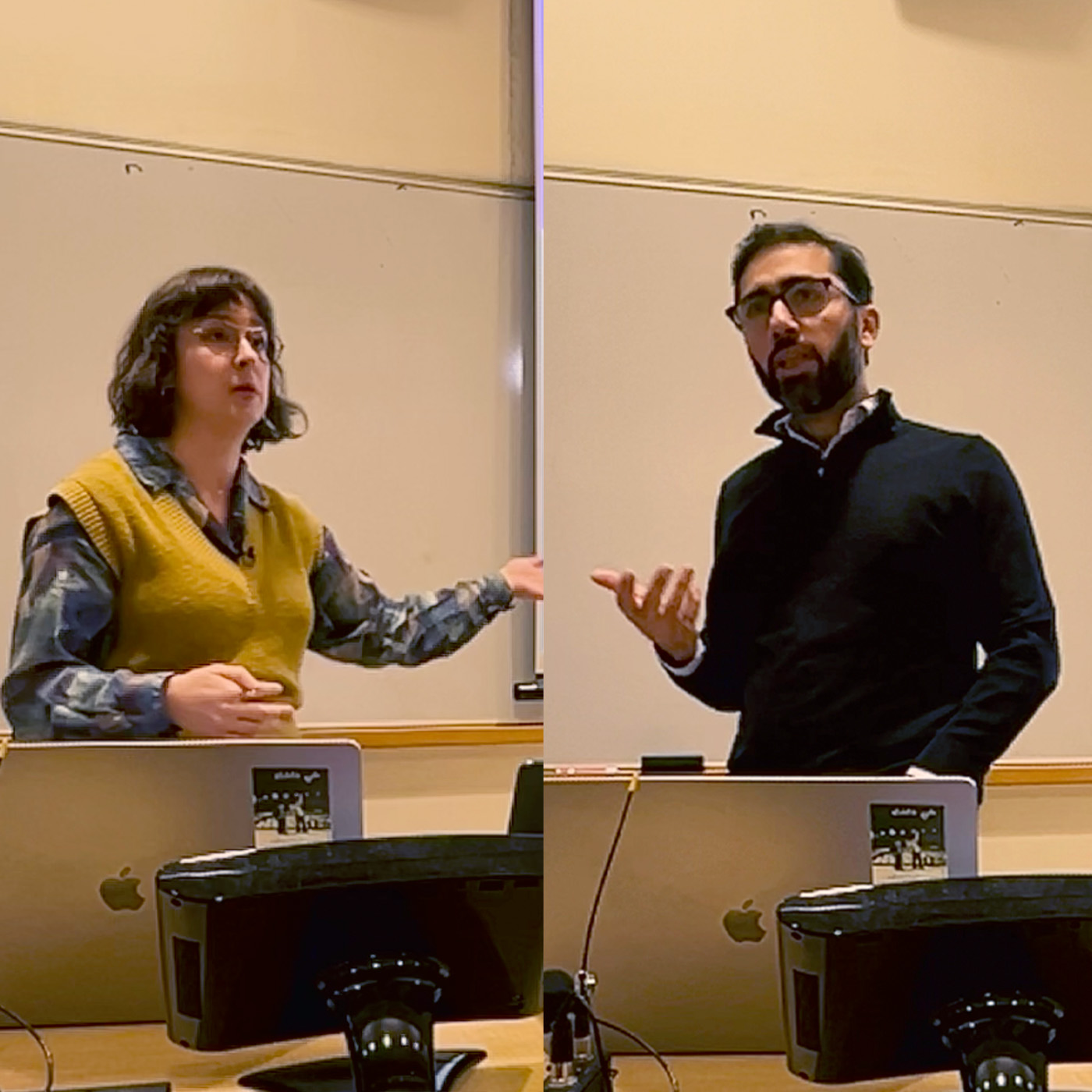
Ethics in AI presentation, S13E2
Imagine the camera of a self-driving car switches to a power-saving mode and takes low-resolution images. As a result, the car hits a pedestrian. A mundane decision to save battery thus becomes a decision to value battery life over human life. While we have long relied on software and automation, the prospect of a fully automated decision process charges many algorithmic decisions with a variety of ethical problems. The talk presented in this podcast, "Where do Ethics Belong in Artificial Intelligence?", explores how philosophers and engineers think about ethics in artificial Intelligence. It was presented at Oregon State University by Houssam Abbas, assistant professor of electrical engineering and Alicia Patterson, assistant professor of philosophy, as part of an AI seminar series. BONUS CONTENT Artificial intelligence program at Oregon State AI Newsletter at Oregon State AI seminars at Oregon State

Ethics in AI presentation, S13E2
Imagine the camera of a self-driving car switches to a power-saving mode and takes low-resolution images. As a result, the car hits a pedestrian. A mundane decision to save battery thus becomes a decision to value battery life over human life. While we have long relied on software and automation, the prospect of a fully automated decision process charges many algorithmic decisions with a variety of ethical problems. The talk presented in this podcast, “Where do Ethics Belong in Artificial Intelligence?”, explores how philosophers and engineers think about ethics in artificial Intelligence. It was presented at Oregon State...

Immersed in learning on the Klamath River, S14E3
The Klamath River is transforming after four dams were removed in 2024. In this episode, we join the research team studying the impacts of the dam removals on plant and algae. Hear from the students and faculty about what they are learning at the confluence of engineering and ecology. BONUS CONTENT River Rebalance (story) Mark Bransom Heads the Historic Klamath Dam Removals (video) How Engineers Decommissioned Four Dams Along the Klamath River (lecture video) Rewilding the Klamath (story) What it Takes to Take Down a Dam (podcast)

How will the Klamath River transform? S14E2
The removal of four dams from the Klamath River was a once-in-a-lifetime opportunity to capture the interplay of science, engineering, and culture. Desirée Tullos, professor of water resources engineering at Oregon State University assembled a collaborative team that unites Western science and traditional ecological knowledge of Indigenous people. BONUS CONTENT: What it Takes to Take Down a Dam (podcast) Unrestricted Flow (video about River Engineering field trip on the Klamath)

What is behind the Klamath dam removals? S14E1
This is a historic year on the Klamath River, where the biggest dam removal in the U.S. is underway. The hope for the monumental engineering project is that it will restore some balance to a damaged ecological system. We hear from Mark Bransom, who is overseeing the demolition and restoration, about why and how it's happening and some of the challenges of the project. Bonus content: Video: Mark Bransom heads the historic dam removals Clean Water Showcase: May 21-22, 2024. Join us at the 2024 Clean Water Showcase hosted by Oregon State University to learn more about innovative and leading work to protect this precious resource through talks by keynote speakers, panel discussions, student presentations, and professional development activities. Video: Sowing Seeds Series: Episode 4 with Brook Thompson

NEWS: How many robots can a single human supervise? S13E1
Will swarms of unmanned aerial vehicles be able to aid humans in wildland firefighting or package delivery? Research summarized in a new paper in Field Robotics represents a big step towards realizing such a future. In this interview, Professor Julie A. Adams describes the research showing that one person can supervise more than 100 autonomous ground and aerial robots.

Graduation day, S12E4
The final episode of the season occupies a time of transition, as spinoff company Espiku ramps up. We get an update on two systems that received patents and a third that could provide an environmentally benign technology for extracting lithium. We also hear from four graduating students who reflect on their experiences. Bonus content: Tapping technology to ensure the world has enough clean water OSU-Cascades spinout is semifinalist in $4 million federal lithium extraction contest

And so, it flows, S12E3
The pandemic didn't stop Bahman Abbasi's desalination research. In this third episode, we learn about the successful lab-scale demonstration of his team's technology and the next steps toward its commercialization. Plus, the team takes on a new project to clean up wastewater from oil and gas production. Bonus content: Espiku, OSU spin-off company Turning freshwater into saltwater, Bend Source article
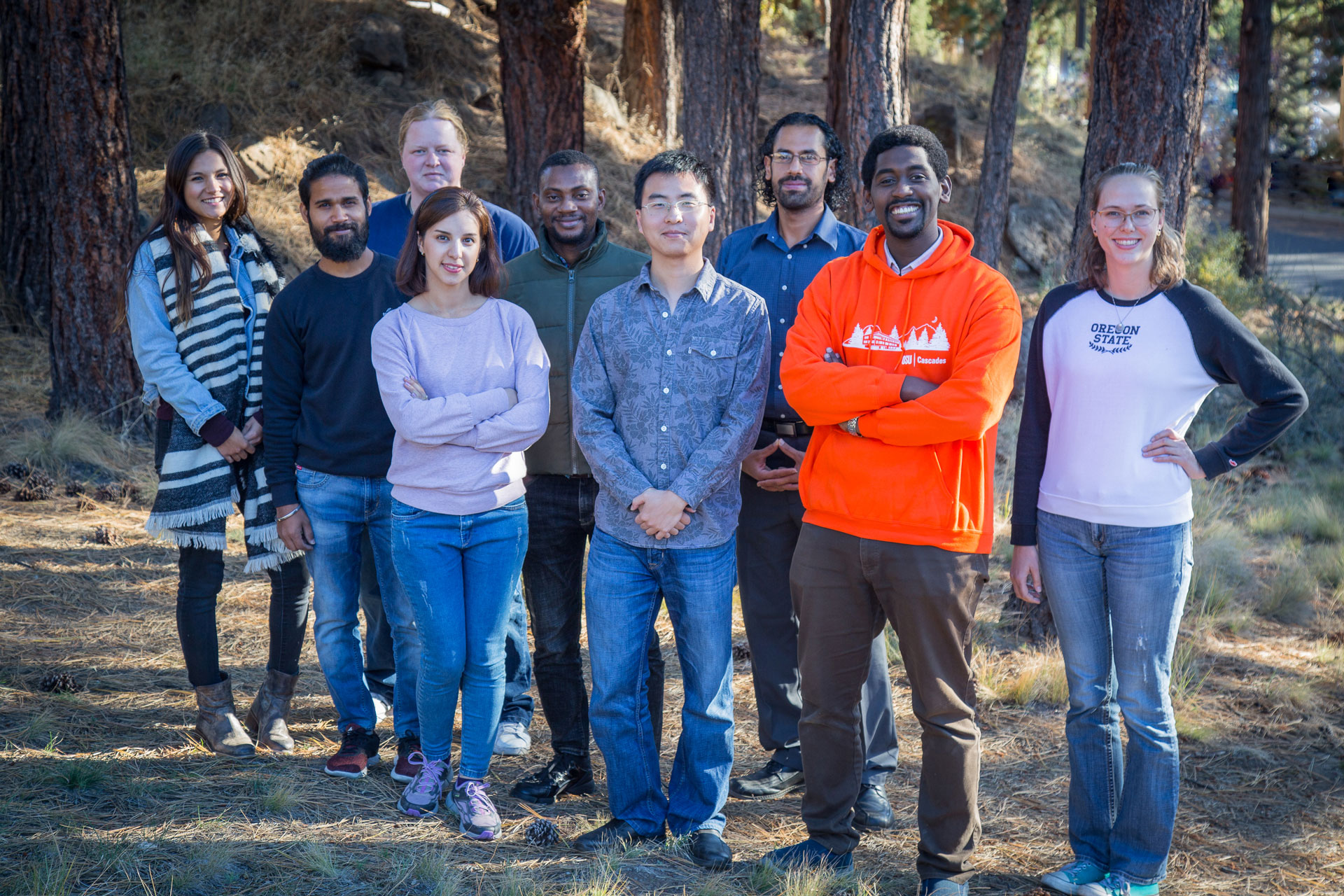
Building the foundation, S12E2
In the second episode of this four-part season, we travel to Bend, Oregon to visit the Water and Energy Technologies Laboratory and meet the team that is inventing a new technology to desalinate water. Bahman Abbassi, associate professor of mechanical engineering, talks about building the lab from the ground up, and graduate student Mohammed Elhashimi demonstrates their system to desalinate water. Bonus content: Quest for Clean Water (story, video) Water and Energy Technologies Laboratory

Turning seawater into sweet water, S12E1
Can turning seawater into drinking water be a cost-effective way to provide clean, fresh water for the growing numbers of people facing water scarcity? Bahman Abbasi, associate professor of mechanical engineering, is taking up that challenge with a mobile, modular, solar-powered, desalination system. This is the first episode in a four-part season. Bonus content OSU-Cascades researcher awarded $2 million for research turning salt water into drinking water Department of Energy Solar Desalination program Energy Systems Engineering — OSU-Cascades

Preparing for nature's worst, S11E8
What is Oregon doing to prepare for earthquakes, tsunamis, and wildfire? Researchers at Oregon State University are working with the state Legislature to help them make informed decisions about how to prepare for natural hazards. BONUS CONTENT: "A Song for Japan" project Japan 2011 Earthquake Japan quake: Infrastructure damage will delay recovery. BBC News, March 17, 2011 Mar 11, 2011 CE: Tohoku Earthquake and Tsunami, National Geographic 2011 Japan earthquake and tsunami: Facts, FAQs, and how to help, World Vision Earthquake and tsunami Oregon Resilience Plan, Supporting documents Oregon should make itself resilient for a big quake, by Yumei Wang, Jay Raskin and Edward Wolf, The Oregonian, Jan. 9, 2011. Will the Cascadia Earthquake be the Worst Disaster North America's Ever Seen? | Weathered (PBS Terra video) Partners Preparing for the Big One, S4E5, Engineering Out Loud The Tsunami Could Kill Thousands? Can They Build and Escape? OSU Newport facility built vertically for earthquake, tsunami (KOIN) Oregon State University president affirms decision for new marine studies building location Preparing for an Earthquake, Centers for Disease Control and Prevention Wildfire Senate Bill 762 Oregon's work to minimize wildfires gets a boost from federal legislation, Oregon Capital Chronicle, November 17, 2021 As Oregon's wildfire season fades, new approaches to managing risk need to take hold, Oregon Capital Chronical, October 6, 2021. Spreading like Wildfire: The Rising Threat of Extraordinary Landscape Fires, United Nations report. Protect your Property from Wildfires, Federal Emergency Management Agency https://engineering.oregonstate.edu/season-11-engineering-natural-hazard-impacts/preparing-for-natures-worst

Dune erosion solutions, S11E7
Can plants fortify Oregon's coastal dunes against storm surge? Meagan Wengrove, assistant professor of coastal and ocean engineering, built scale versions of dunes in one of the world's largest wave flumes to find out. BONUS CONTENT: Protecting coastal regions with natural defenses New faculty members bring expertise in wave energy, structural and coastal engineering Four College of Engineering faculty win early-career investigator awards https://engineering.oregonstate.edu/season-11-engineering-natural-hazard-impacts/dune-erosion-solutions-s11e7

RAPID reconnaissance: Capturing data in the aftermath of a disaster, S11E6
After a major disaster, hidden amid the rubble and debris are precious clues about the extreme forcesstructures were subjected to, and exactly what caused them to fail. How can researchers collect this perishable data before it's swept away? Michael Olsen, professor of geomatics and technical director of the NHERI RAPID Facility, talks about a major effort to get crucial technology into the hands of reconnaissance experts quickly, wherever disaster strikes. https://beav.es/URn BONUS CONTENT: RAPID Facility website Natural Hazards Reconnaissance with the NHERI RAPID Facility (Frontiers in Built Environment) A new laser-toting disaster lab aims to save lives by saving data (Fast Company) https://engineering.oregonstate.edu/season-11-engineering-natural-hazard-impacts/rapid-reconnaissance-capturing-data-aftermath-disaster-s11e6

Saving PDX, S11E5
What will it take for Oregon to recover after a magnitude 9.0 Cascadia subduction zone earthquake? Among other things, it will need a major airport to receive the tons of relief supplies from around the world. Prof. Armin Stuedlein and a research team from Oregon State University conducted crucial testing that guided engineers with big plans to make sure one of the runways at Portland International Airport survives the shaking. BONUS CONTENT: Video: Blast-induced liquefaction tests at PDX Preparing for an earthquake Cascadia Lifelines Program https://engineering.oregonstate.edu/season-11-engineering-natural-hazard-impacts/saving-pdx-s11e5

What's in the water after a wildfire? S11E4
Wildfires that devastate mountain communities have the potential to foul the water distribution system running underneath residential structures. But knowing which water pipes have been affected is challenging. Erica Fischer, assistant professor of structural engineering, is working with a team of engineers and scientists to develop and test sensors that can easily indicate if water pipes need to be replaced following a fire. BONUS CONTENT: Oregon State University fire expert panel: Oregonians' mindset needs to expect, accept wildfires Science Pub: Fires in the West Study of destructive California fire finds resilience planning must account for socially vulnerable https://engineering.oregonstate.edu/season-11-engineering-natural-disasters/what%E2%80%99s-water-after-wildfire-s11e4
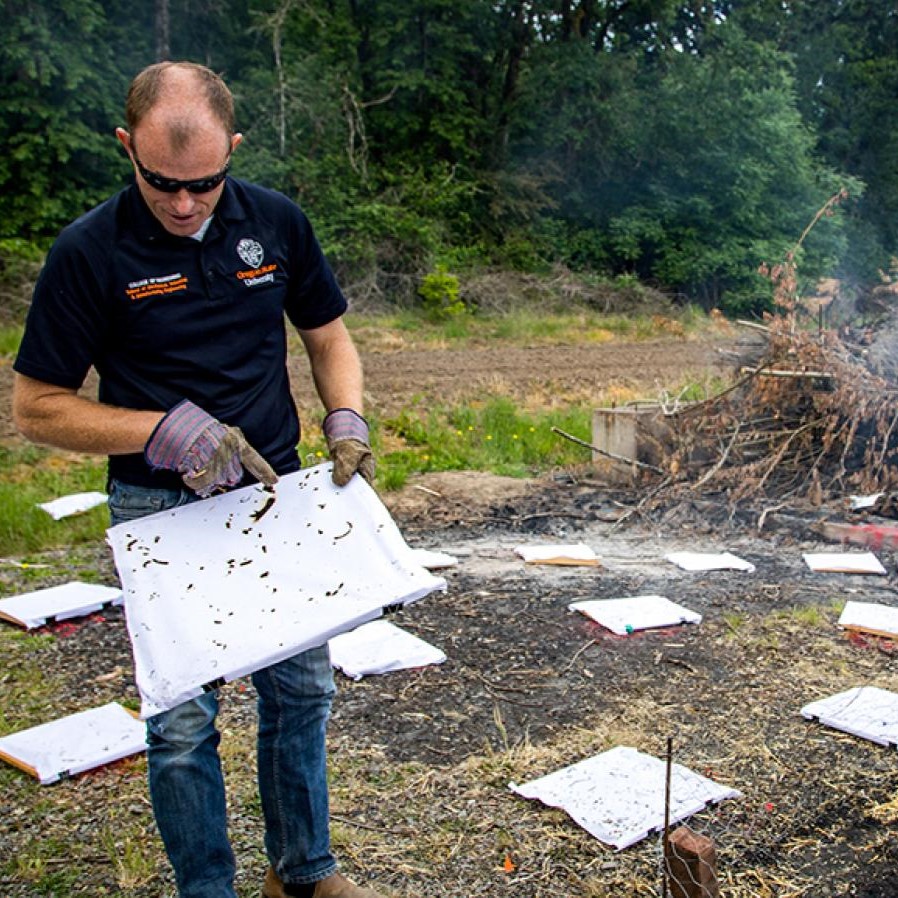
Burning to learn, S11E3
How do engineers fight wildfires? With fire. David Blunck, associate professor of mechanical engineering, is trying to better understand and predict the behavior of embers that spread blazes. To do this, he has to burn a few of his own. BONUS CONTENT: Firebrands: How to protect your home from wildfires' windblown flaming debris, by David Blunck (The Conversation) National Fire Protection Association's Firewise USA website https://engineering.oregonstate.edu/season-11-engineering-natural-hazard-impacts/burning-learn-s11e3
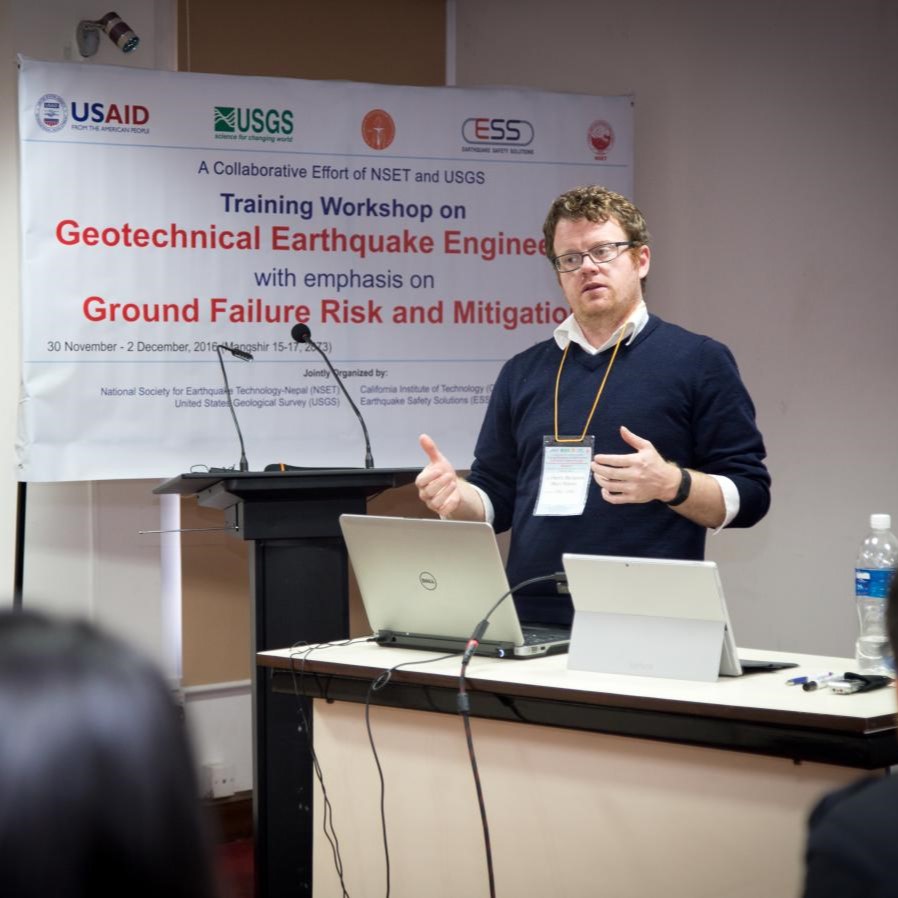
When the Earth moves, E11S2
What happens to bridges, buildings, and pipelines when the soil holding them up behaves like a liquid? Ben Mason, associate professor geotechnical engineering, has traveled the world doing post-earthquake reconnaissance to find out and make us better prepared for impending earthquakes. BONUS CONTENT: At Work: Ben Mason (Seismological Society of America) General Information Cascadia Subduction Zone (Oregon.gov) Earthquake Hazards (USGS) Geotechnical Extreme Events Reconnaissance Association (GEER) Op-eds Napa earthquake argues for better education in Oregon: Guest opinion (Oregonian) Education is our best ally for earthquake and tsunami preparedness (Gazette Times) News articles A Pacific Northwest Earthquake Could Cause Thousands of Landslides (Newsweek) Earthquake study could make Pacific Northwest safer (Tillamook Headlight Herald) Napa quake spurs advice for earthquake preparedness in Oregon (quiz) (Oregonian) https://engineering.oregonstate.edu/season-11-engineering-natural-disasters/when-earth-moves-s11e2
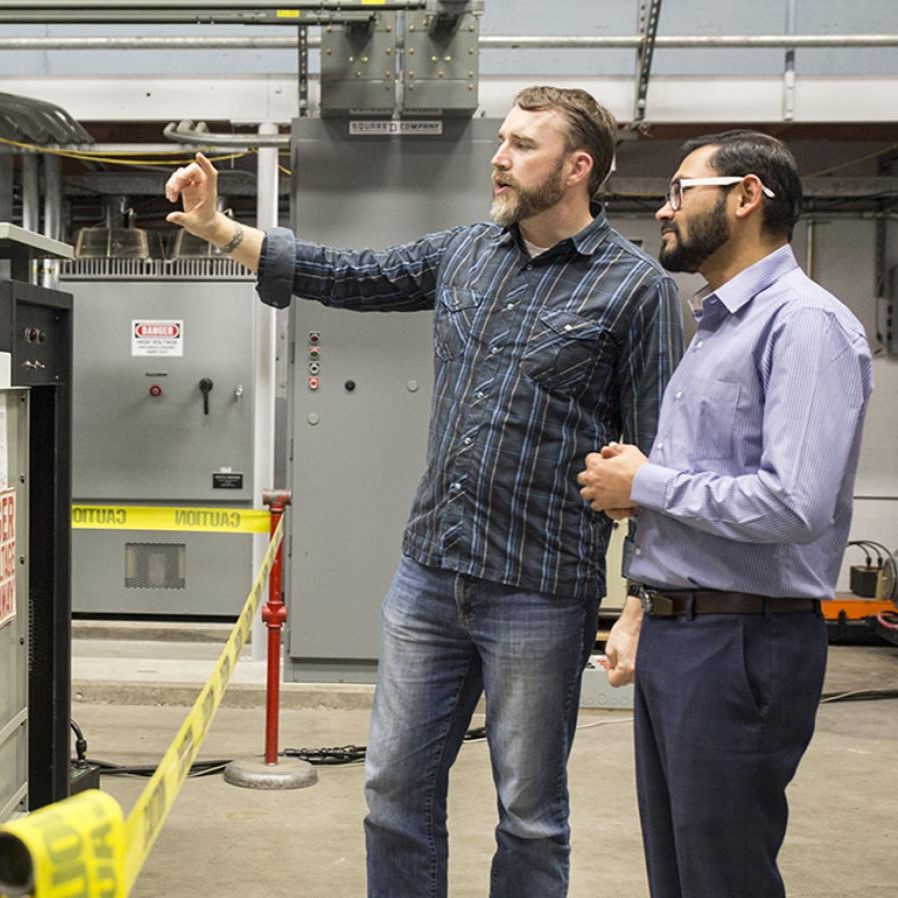
The day the lights go out in Oregon, S11E1
The long-feared 9.0 magnitude Cascadia subduction zone earthquake, which seismologists say is inevitable, will damage or destroy large swaths of Oregon's electrical grid. How long will it take to get the juice flowing again? Weeks? Months? Professor Ted Brekken and his team are applying high-powered simulations to find out and to identify which parts of the system should be hardened against the quake at any cost. BONUS CONTENT: Oregon Resilience Plan NSF Award: Earthquake Resilience of the Western Power Grid Powering Back up in the Aftermath of the Big One https://engineering.oregonstate.edu/season-11-engineering-natural-disasters/day-lights-go-out-oregon-s11e1

Documenting the surge
How do you manage a COVID-19 surge? When intensive care units are beyond capacity, health care workers are stretched thin, and life-saving equipment is in short supply, there are a lot of tough choices to be made, and quickly. Joe Agor, assistant professor of industrial engineering, is gathering the data on how hospitals prepared and responded to the pandemic, as well as how their patients fared, with the goal of helping to better manage surge capacity for future pandemics or disasters. https://engineering.oregonstate.edu/season-10-pandemic-puzzles/documenting-surge-s10e5

Changing the culture of computer science education, S10E4
How can we get a more diverse group of young people interested in computer science? Focus on equity, says Jill Hubbard, instructor of computer science and co-principal investigator of a multi-university project to change how computer science is taught in high school, funded by the National Science Foundation. Over 40 schools are part of a program to make computer science more welcoming to underrepresented groups. BONUS CONTENT: Website: Computer Science for All in Oregon Video: Democratizing Computer Science at Oregon State Story: Changing course https://engineering.oregonstate.edu/changing-culture-computer-science-education-s10e4
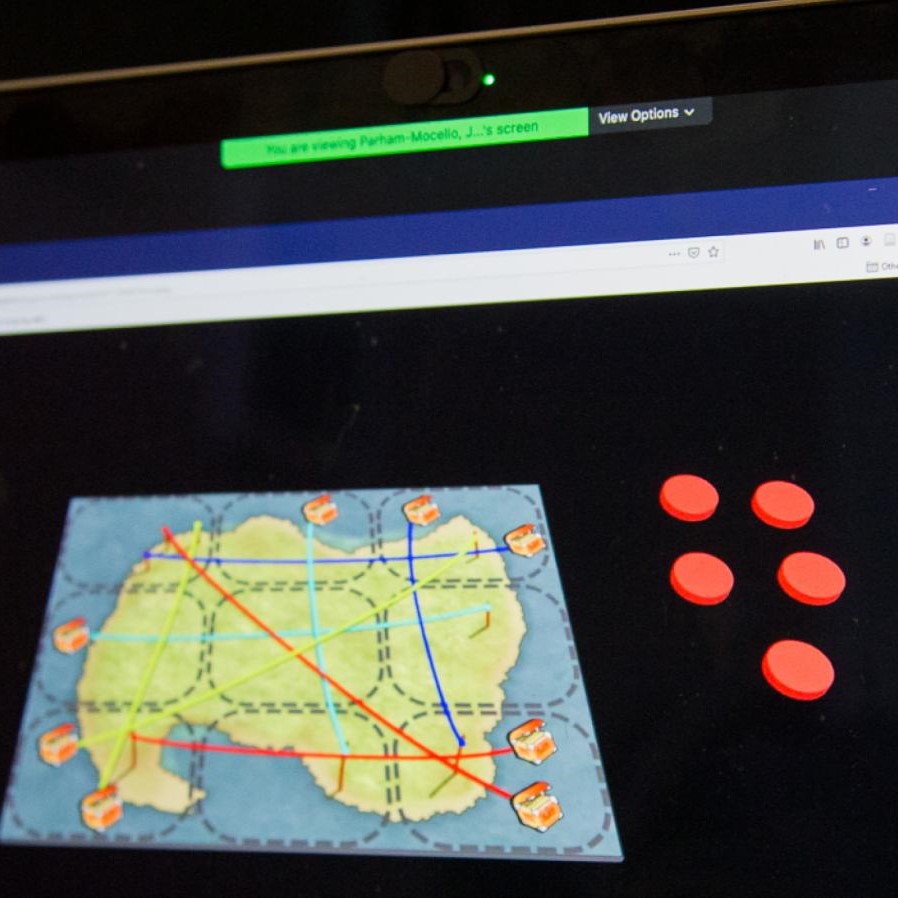
Using games to teach computer science remotely, S10E3
Can middle schoolers learn computer science concepts using tabletop games? How about during a pandemic, when classroom interaction takes place remotely? Researchers in computer science and education are working closely with teachers to develop an innovative curriculum designed to broaden participation in computer science classes. BONUS CONTENT: Learning Computer Science Through Tabletop Games in a Dual Language Immersion Middle School: description of NSF grant featured in the podcast. Board Game Language (BoGL): programming language used in the course curriculum described in the podcast. Once Upon an Algorithm: book by Martin Erwig, Stretch Professor of Computer Science. Ain't We Got Fun in the College of Engineering: video collaboration of musicians in the College of Engineering, recorded remotely. https://engineering.oregonstate.edu/season-10-pandemic-puzzles/using-games-teach-computer-science-remotely-s10e3
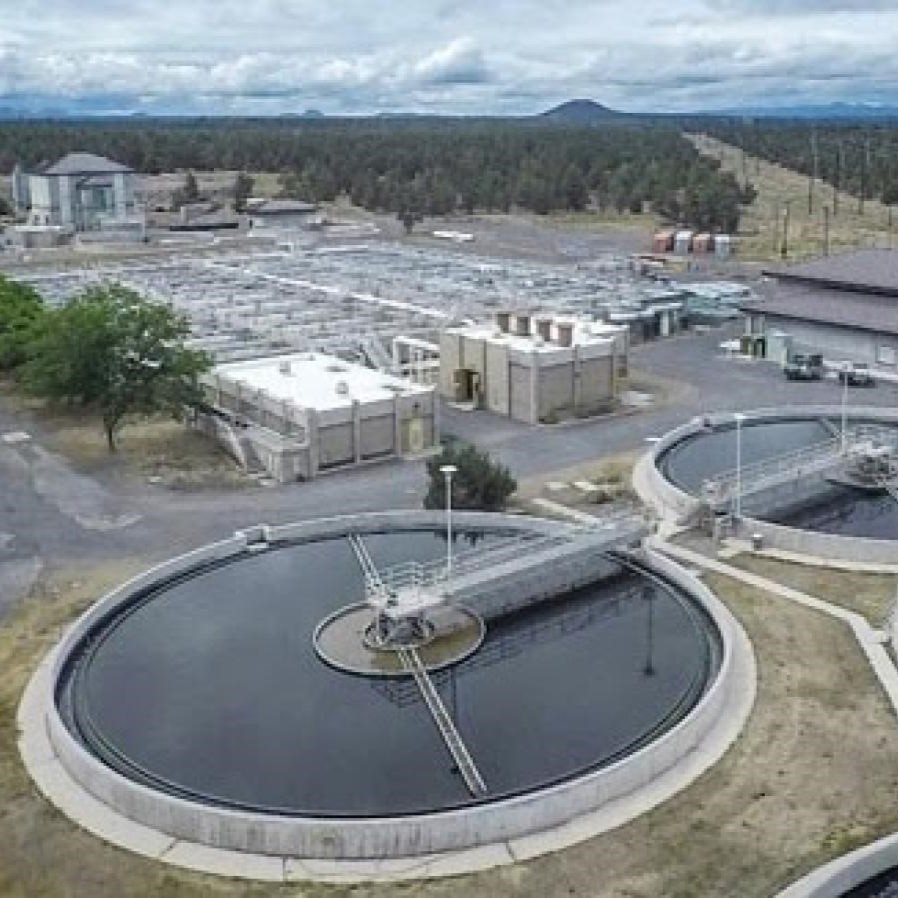
Tracing the virus through the sewers, S10E2
What can wastewater tell us about the spread of disease? Could the coronavirus' signature RNA sequence tip public health officials to where the next COVID-19 outbreaks will occur? In this episode, we'll talk to two researchers who are leading the effort to monitor Oregon's wastewater streams for coronavirus, in partnership with treatment facilities throughout the state. BONUS CONTENT: Watcher in the wastewater (Nature) Wastewater sampling proves useful in tracking coronavirus (Oregonian) TRACE Community (Oregon State) https://engineering.oregonstate.edu/season-10-pandemic-puzzles/tracing-virus-through-sewers-s10e2

Trucking through COVID, S10E1
What's life like for long-haul truck drivers in a COVID-19 world? We'll get behind-the-wheel perspectives from driver (and musician) Paul Marhoefer and from Associate Professor Sal Hernandez who's looking into how drivers have adapted to demanding conditions caused by the pandemic and the resiliency of the nation's freight system. BONUS CONTENT: Music by Paul Marhoefer (aka Long Haul Paul) Over the Road: Stories of American Truckers Podcast: The National Truck Parking Shortage https://engineering.oregonstate.edu/season-10-pandemic-puzzles/trucking-through-covid-s10e1
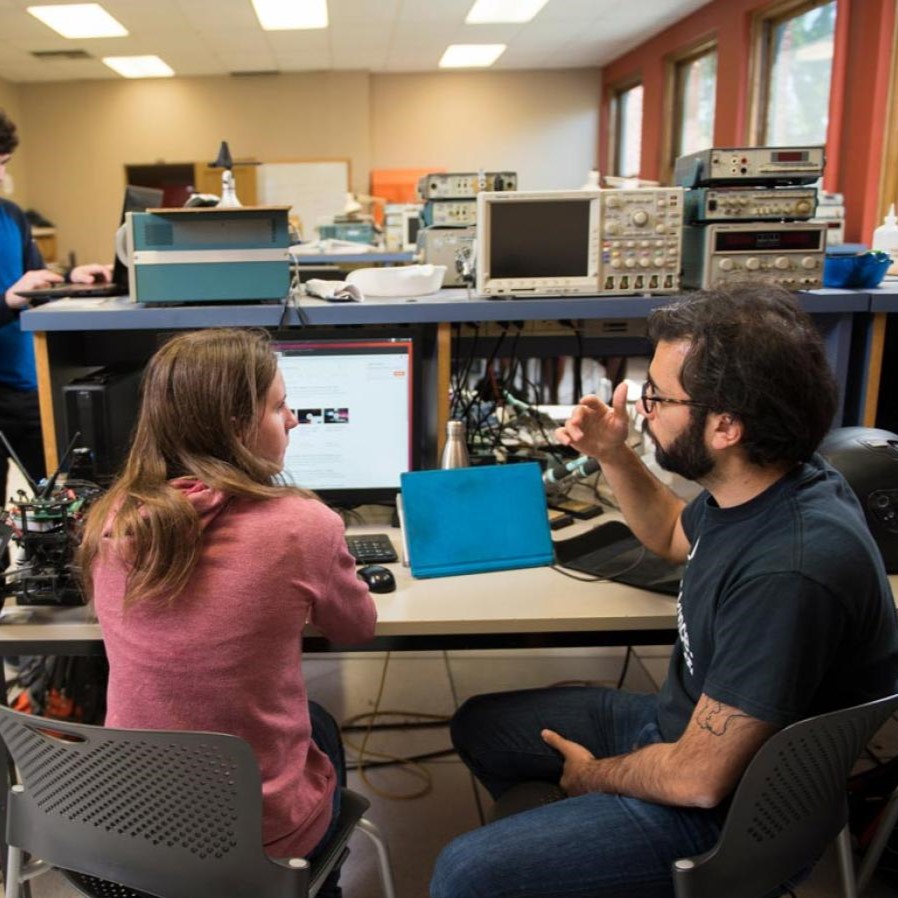
The age of autonomous vehicles, S9E7
Self-driving cars and planes are in our future. What are we doing to make them safe? Assistant Professor Houssam Abbas uses tiny race cars to test autonomous driving systems. And Oregon State graduate Robert Rose is using his past experience with SpaceX to develop a safe system to automate existing aircraft. BONUS CONTENT Beyond the Books - Autonomous Racing (video) Running in the real world (feature story about Houssam Abass) Explained: Neural networks, MIT News Reliable Robotics (website) https://engineering.oregonstate.edu/season-9-robotics-and-ai/age-autonomous-vehicles-s9e7

With a little help from my robot friend, S9E6
What will it take for robot assistants to become more integrated in our daily lives? Assistant Professor Naomi Fitter thinks they'll need to master the physical aspects of social interactions, while Associate Professor Cindy Grimm cautions against programming them to behave just like us. BONUS CONTENT Social Haptics, Assistive Robotics, and Embodiment (SHARE Lab) at Oregon State University Collaborative Robotics and Intelligent Systems Institute (CoRIS) at Oregon State University How High Fives Help Us Get in Touch With Robots (IEEE Spectrum) A robot walks onto the stage: Robotic comedy, variety show comes to the Majestic Cindy Grimm research page https://engineering.oregonstate.edu/season-9-robotics-and-ai/little-help-my-robot-friend-s9e6
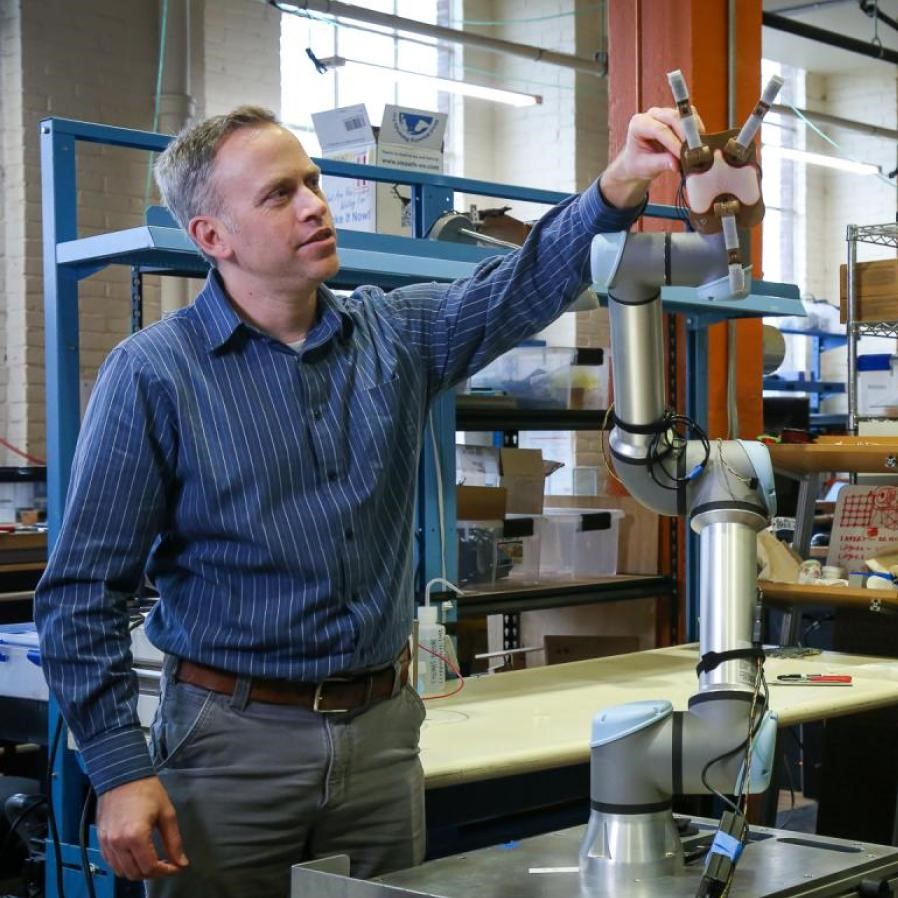
And on that farm, he had a robot, S9E5
Will robots someday replace farm workers? Do we want them to? Assistant Professor and agricultural robotics expert Joe Davidson talks about the potential benefits of using robots in agriculture, and what goes into designing the perfect robotic apple picker. BONUS CONTENT Design, integration, and field evaluation of a robotic apple harvester (Wiley) Robotics for Sugarcane Cultivation: Analysis of Billet Quality using Computer Vision (IEEE Xplore) https://engineering.oregonstate.edu/season-9-robotics-and-ai/and-farm-he-had-robot-s9e5
Socializing robots, S9E4
Why should robots have artificial social intelligence? According to Heather Knight, assistant professor of computer science, if robots are going to help in hospitals or work with people in factories, they will need to be adapted to our social conventions.
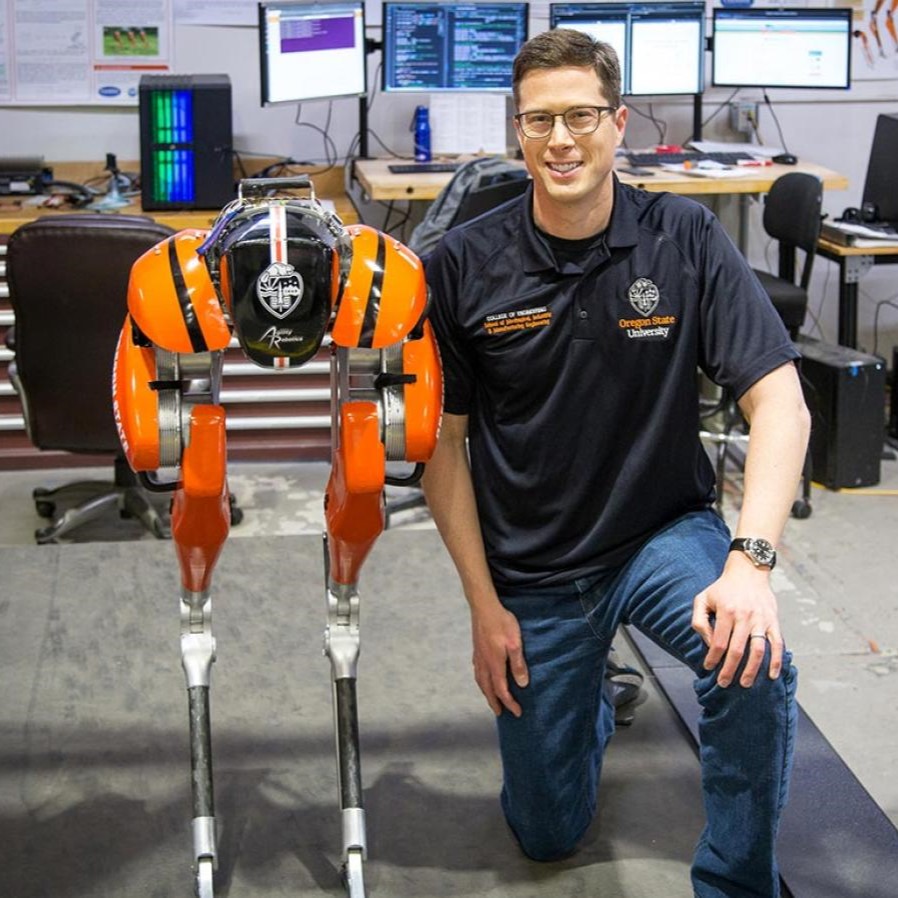
Robots: Will they walk among us? S9E3
For robots to be more useful around people, they'll need to go where we go. But how? Associate Professor Jonathan Hurst thinks the answer is simple. Walking. But actually making a walking robot is no simple feat.
Robots: Will they walk among us?
For robots to be more useful around people, they’ll need to go where we go. But how? Associate Professor Jonathan Hurst thinks the answer is simple. Walking. But actually making a walking robot is no simple feat.

AI, explain yourself, S9E2
Can we trust artificial intelligence to make good decisions? The answer is a resounding maybe. More and more, society and individuals are entrusting AI to make potentially life-changing decisions. Rather than putting blind trust in the judgment of these remarkable systems, Alan Fern and a team of computer scientists want to reveal their reasoning processes.
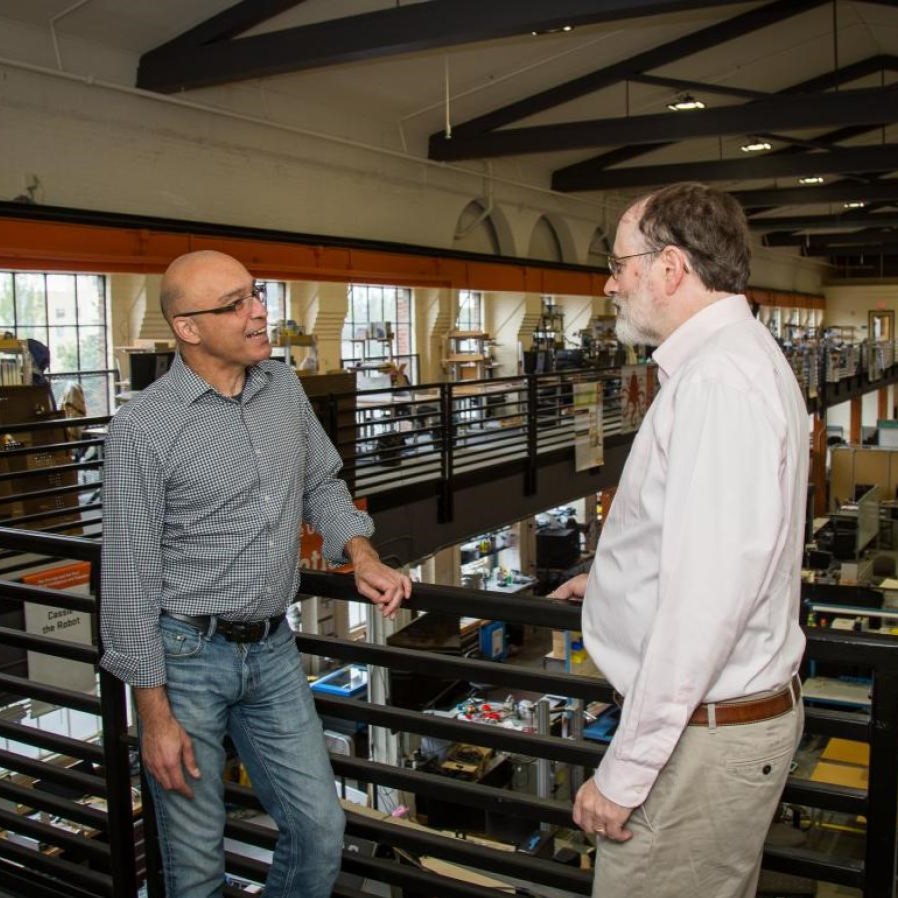
The beautiful music of robotics and AI, S9E1
How do you combine ethics, policy, and practicality into the design of revolutionary robotics and artificial intelligence systems? Researchers Kagan Tumer and Tom Dietterich are collaborating to find out as they help lead the Oregon State Collaborative Robotics and Intelligent Systems Institute. BONUS CONTENT The Promise and Peril of Artificial Intelligence and Robotics symposium CoRIS Artificial Intelligence Roadmap TWIML podcast episode featuring Tom Dietterich https://engineering.oregonstate.edu/season-9-robotics-and-ai/beautiful-music-robotics-and-ai-s9e1

Rebroadcast — Robots at sea, S1E2
Geoff Hollinger, associate professor of mechanical engineering, is teaching underwater robots to use human preferences to take on risk as they complete their scientific missions. https://engineering.oregonstate.edu/season-1-data-science-and-engineering/sea-and-sky-s1e2
Keeping construction workers out of harm's way, S8E6
What can be done to protect workers in one of the most dangerous industries on Earth? For much of his career, John Gambatese has studied, developed and evaluated a wide range of options designed to keep construction workers out of harm's way.
Rebroadcast — From Toy Story to tumors, S3E1
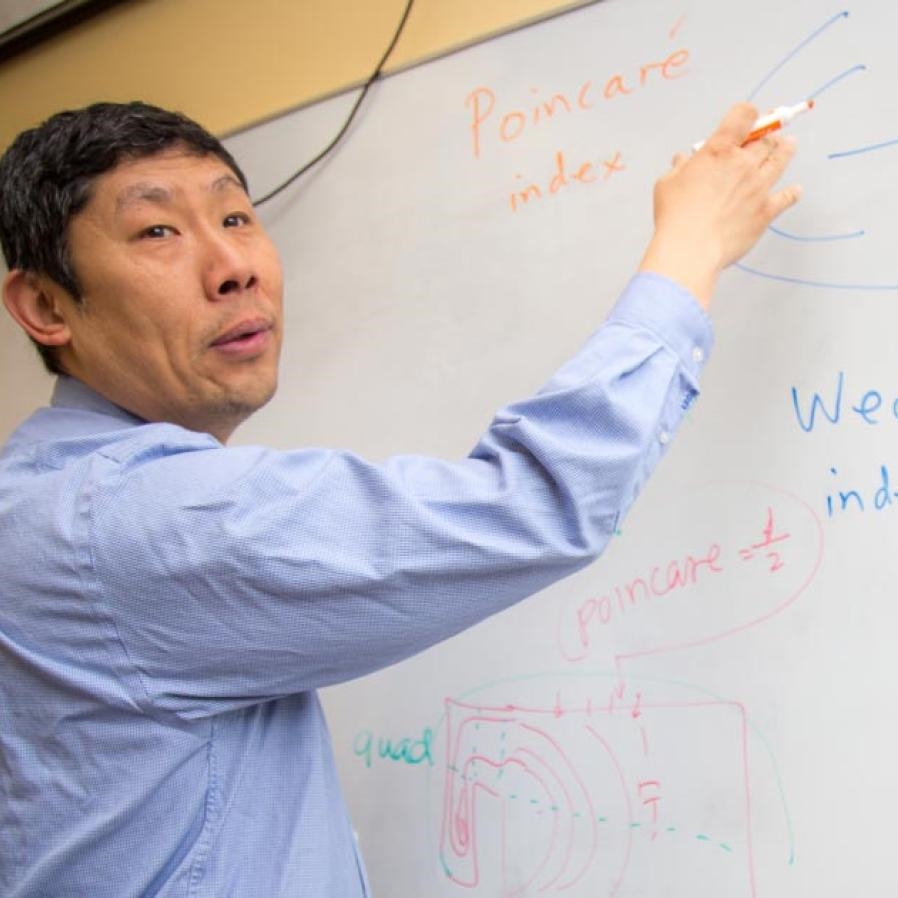
Advances in 3D graphics have made movies and video games more realistic, but can also have an impact on science. Associate Professor Eugene Zhang and Assistant Professor Yue Zhang describe their research to help medical doctors better target cancerous tumors by using 3D modeling and simulation. BONUS MATERIAL Associate Professor Eugene Zhang's website. Associate Professor (Senior Research) Yue Zhang's website. https://engineering.oregonstate.edu/season-3-environmental-and-human-health/toy-story-tumors-s3e1
Detecting Parkinson's early for better outcomes, S8E5
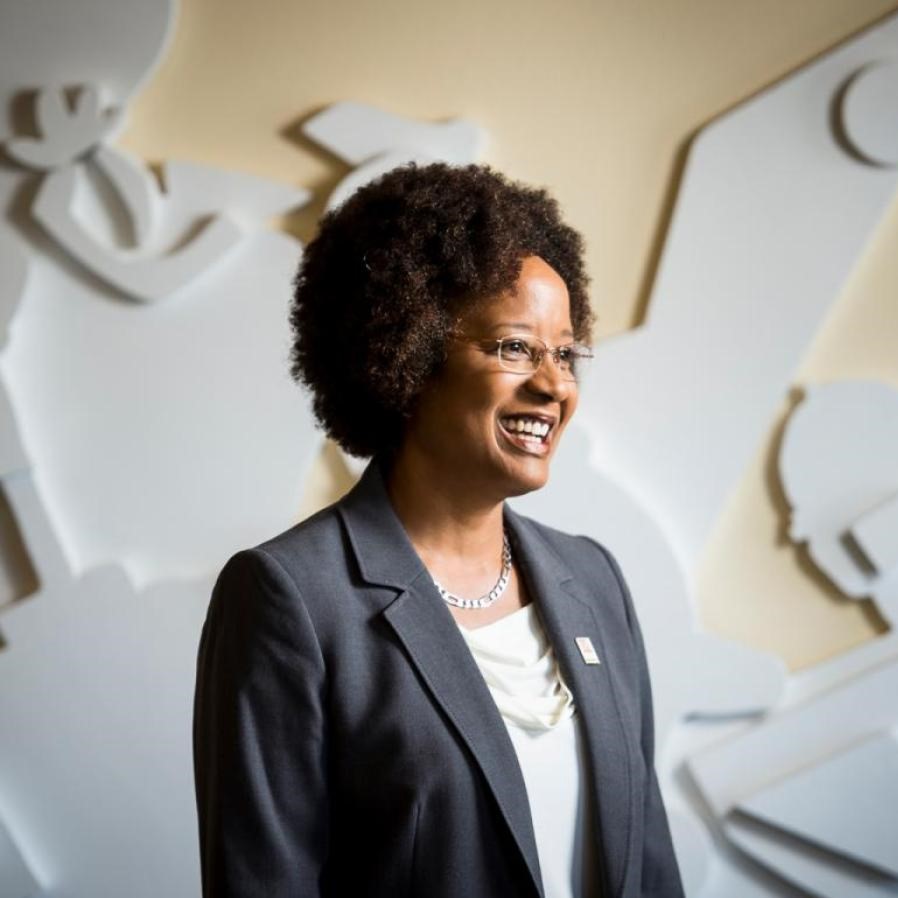
How can we help in the fight against Parkinson's disease? Harriet Nembhard and her colleagues developed a sensor system to detect the disease early on, opening the door to earlier treatment and improved quality of life. Nembhard is the head of the School of Mechanical, Industrial, and Manufacturing Engineering and Eric R. Smith Professor of Engineering. BONUS CONTENT Michael J. Fox profile in The New York Times Magazine The Michael J. Fox Foundation for Parkinson's Research Interview with Michael J. Fox on "CBS Sunday Morning" "A data mining methodology for predicting early stage Parkinson's disease using non-invasive, high-dimensional gait sensor data" "Evaluating the Cost-Effectiveness of an Early Detection of Parkinson's Disease through Innovative Technology" Narration for this episode was provided by Adam Keenan, a student with the Oregon State University Theatre. https://engineering.oregonstate.edu/season-8-health-and-safety/detecting-parkinson%E2%80%99s-early-better-outcomes-s8e5

Robots without borders: Finding new ways to treat Ebola, S8E4
Aid workers put their lives on the line to treat patients with Ebola. Can robots help make their jobs a little easier and allow more people to survive the disease? Bill Smart, professor of robotics at Oregon State University, is exploring how robots may be most useful during disease outbreaks. BONUS CONTENT Doctors Without Borders Oregon State's simulated Ebola treatment unit https://engineering.oregonstate.edu/season-8-health-and-safety/robots-without-borders-finding-new-ways-treat-ebola-s8e4

Sticky and slippery science for biomedical applications, S8E3
What makes a frog's tongue sticky, or a snake's skin slippery? Joe Baio, assistant professor of bioengineering, looks to nature for substances that could provide clues to developing new biomedical adhesives and anti-fouling surfaces. BONUS CONTENT The Baio Lab home page "Snake Scales" video featuring Joe Baio Press release https://engineering.oregonstate.edu/season-8-health-and-safety/sticky-and-slippery-science-biomedical-applications-s8e3
Safer solutions for the national truck parking crisis, S8E2
Ever wonder why so many truckers park their rigs on highway off-ramps, in retail store parking lots and at other odd locations? It's not their first choice, and it's not the safest choice either, but sometimes it's their only choice. Research by Sal Hernandez reveals that the national truck parking shortage takes an enormous toll on people and commerce.
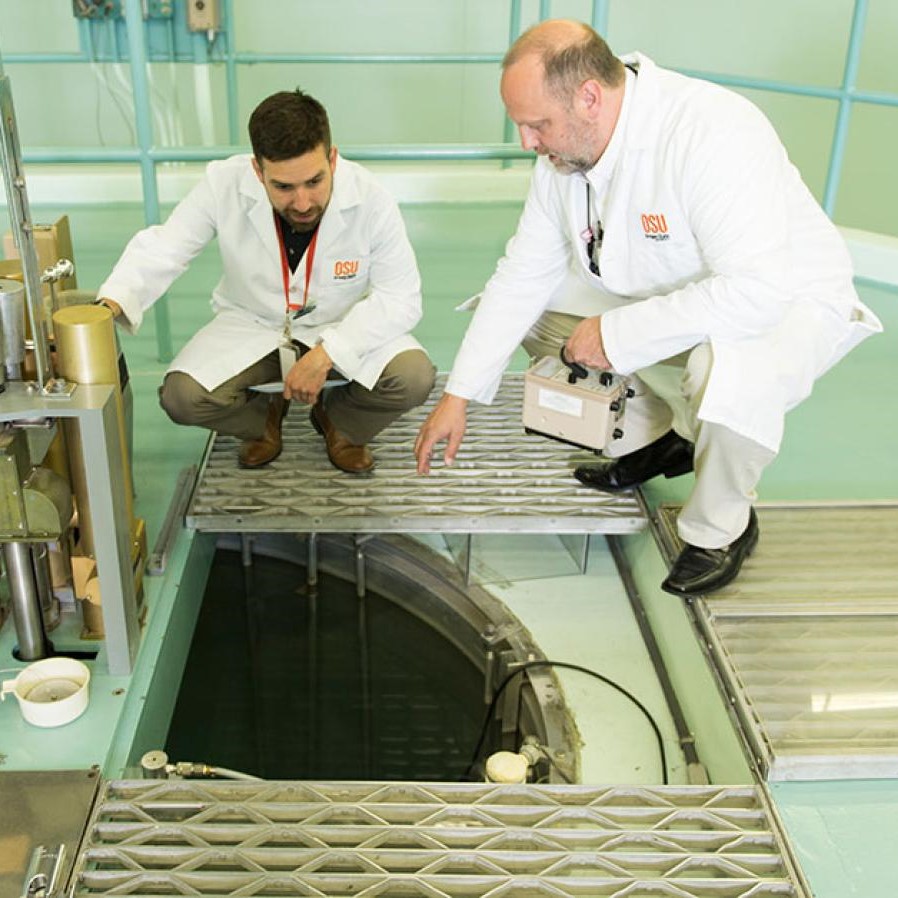
Making a medical isotope used by millions, S8E1
How can we support nuclear medicine efforts that help more than 40,000 people in the U.S. everyday? Researchers at the Oregon State University College of Engineering have developed a way to produce the much-needed radioisotope technetium-99m using small research reactors like the one here at the university. BONUS CONTENT The Oregon State TRIGA Reactor Northwest Medical Isotopes "Bringing medical isotope production closer to home" Molybdenum-99 for Medical Imaging Moly target https://engineering.oregonstate.edu/season-8-health-and-safety/making-medical-isotope-used-millions-s8e1
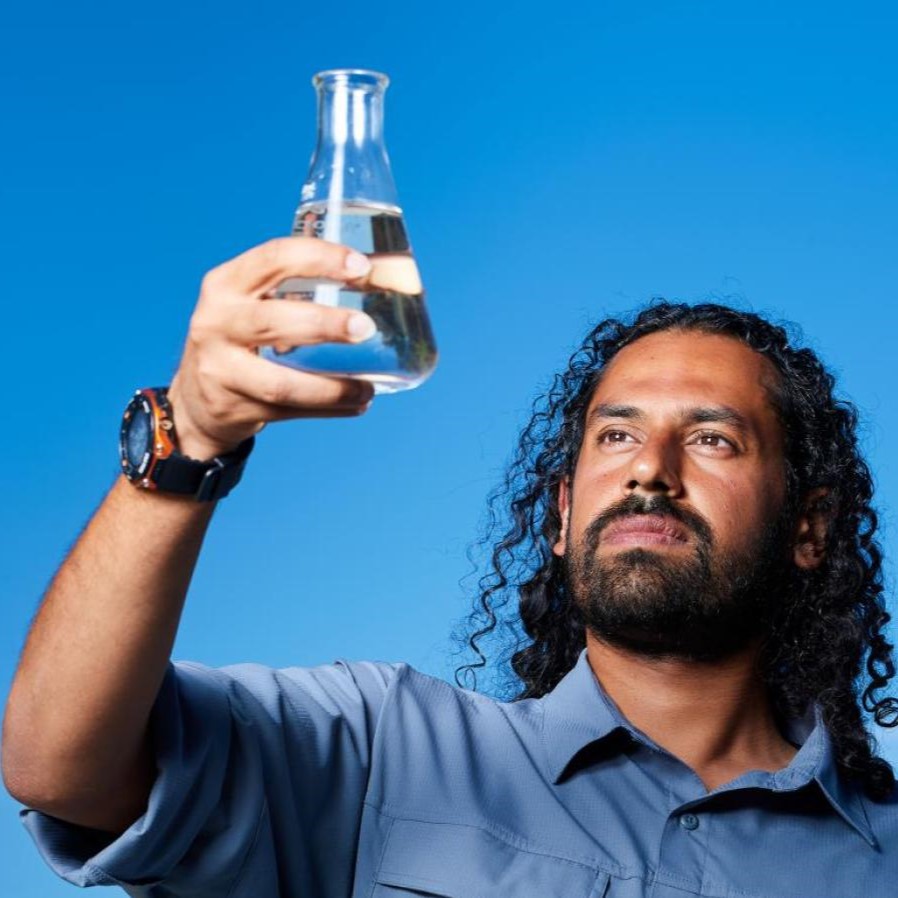
Turning Seawater into Sweet Water, S7E6
Can turning seawater into drinking water be a cost-effective way to provide clean, fresh water for the growing numbers of people facing water scarcity? Bahman Abbasi, assistant professor of mechanical engineering, is taking up that challenge with a mobile, modular, solar-powered, desalination system. Bonus content OSU-Cascades researcher awarded $2 million to develop solar-powered desalination technology Department of Energy Solar Desalination program Energy Systems Engineering -- OSU Cascades https://engineering.oregonstate.edu/season-7-clean-water/turning-seawater-sweet-water-s7e6