
EPISODE · Jun 30, 2009 · 39 MIN
126: Art Davis Retrospective
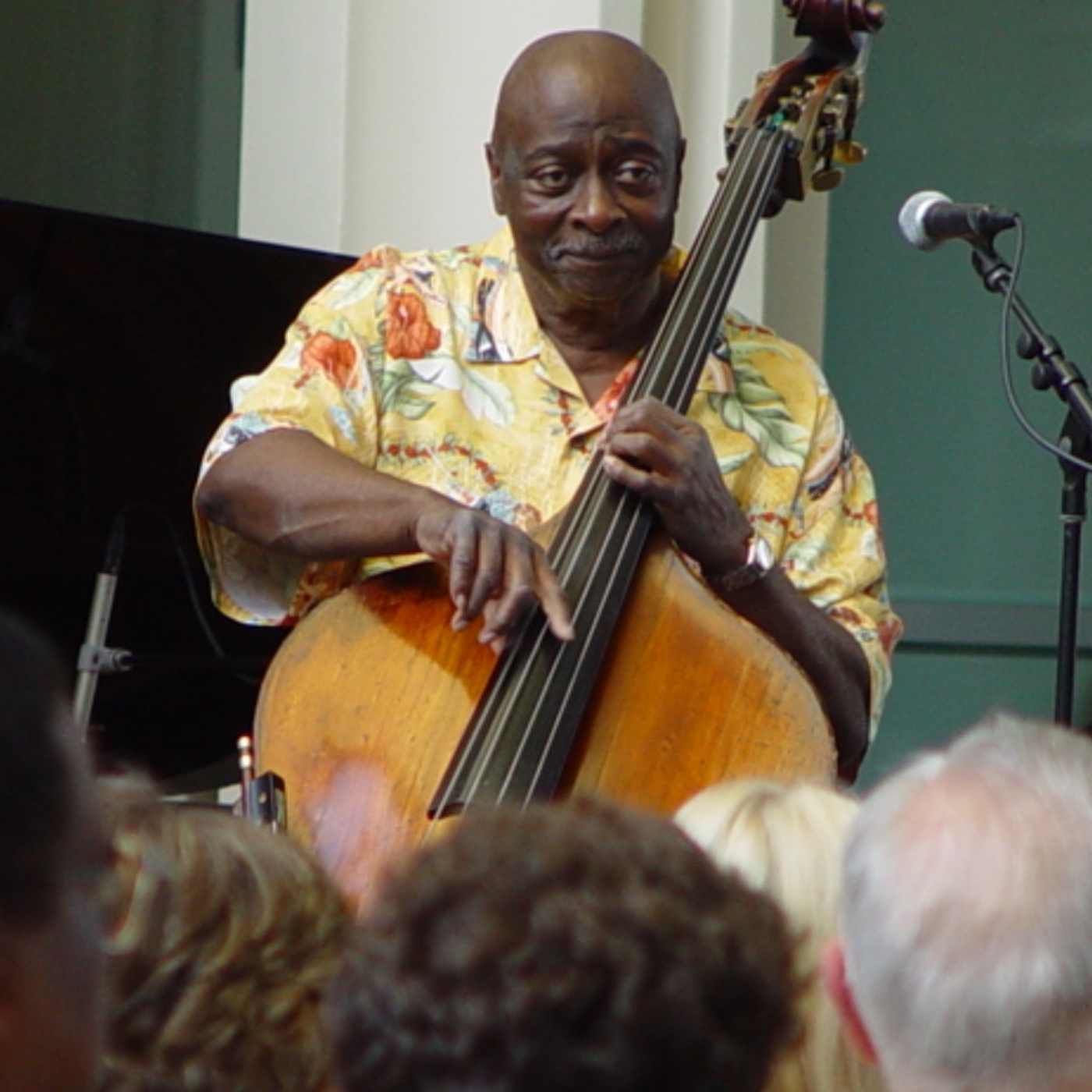
We're featuring a guest interview by bassist Tim Wolfe, Jr. interviewing his former teacher Jim Miller about Art Davis. Tim and Jim discuss Art Davis' life, career, and pedagogical approach. They discuss Art's book and his four-finger approach to the double bass, among other subjects. We're also featuring excerpts from "Duo," a track from the Art Davis Quartet album Life and featuring Art Davis, John Hicks, Idris Muhammad & Pharoah Sanders. This album (along with other music from Art's considerable career) is available through iTunes. Tim also created a timeline (PDF) detailing milestones in Art's career: Art Davis Timeline About Art Davis: In a musical career that has spanned four decades, Dr. Art Davis has played his bass with a myriad of the greatest jazz, classical, and popular artists in the world. He has shared his talents with not only the best jazz musicians (John Coltrane,Max Roach, Dizzy Gillespie, Lena Horne, Thelonius Monk, Louis Armstrong, Count Basie, Quincy Jones, etc.), but with notable figures from popular music such as Judy Garland, Bob Dylan, Minne Pearl, Barbara Streisand, Hank Williams. Davis' career has also seen performances with major orchestras such as the National Symphony, NBC Symphony, New York Philharmonic, Los Angeles Philharmonic, Radio City Music Hall Symphony, Westchester Symphony, Orange County Symphony and others. Davis studied the tuba as well as the piano as a boy in his hometown of Harrisburg, Pennsylvania before switching to the bass in high school. He won numerous awards on both tuba and double-bass while attending high school. Upon graduation, he moved to New York to study via scholarship at both theManhattan School of Music as well as the Juilliard School of Music. While attending the latter he studied with world renown cellist Lazlo Varga andAnselme Fortier, who was principal bassist with the New York Philharmonic at that time. He earned a B.A. degree, triple major in psychology, music, physics, summa sum laude from Hunter College, City University of New York. Art Davis' recording debut came in 1958 at the Newport Jazz Festival, with Max Roach's group that included the legendary Booker Little and George Coleman. Davis maintained a strong personal relationship with Max, and Booker Little became one of his best friends. John Coltrane came into Art Davis' life while Davis was working with Max Roach's group at Small's Paradise in Harlem. Coltrane at that time was in Miles Davis' band and between sets asked Art if he would like to "practice" with him. Art agreed and Coltrane replied "How about tomorrow morning?" At 8:00 the following morning John Coltrane was in the lobby of Art's hotel and called him on the house phone. After that first meeting, the two practiced regularly for about a year, the sessions lasting for many hours without a break. It was during this year that John Coltrane wrote the tune "Giant Steps". Davis credits the association with John Coltrane as the most intense and enriching musical experience of his career. Until Coltrane's death in 1967, Art remained close musically and personally with him and was a member of the bands on several Coltrane albums including, "Ascension", "Africa Brass I and II", "Olé! Coltrane", and others. Art's discography as a member of Coltrane's groups also includes the original recording of "A Love Supreme" (which remains unreleased) with Coltrane's regular quartet and Archie Shepp. Art also toured intermittently with John Coltrane. Due to Davis' studio and other commitments, he was unable to become a permanent member of Coltrane's quartet, but John insisted on their continued relationship. Then, in 1959, Davis joined Dizzy Gillespie's band and toured for two and a half years. Weary of the road he returned to New York and free-lanced. In 1961 Art became the second African-American member of the NBC Staff Orchestra, working regularly on the Merv Griffin, Jack Paar, and Johnny Carson shows (and others), as well as performing in the New York studios playing jingles, films, and freelancing with performers. When the Griffin show moved to Los Angeles in 1971 Davis went back to school to pursue his deep interest in psychology, earning a masters degree in Experimental Psychology from the City College of the City University of New York and a masters degree and a Ph.D. in clinical psychology from New York University by 1982. He supported himself while in college by teaching and performing in Broadway shows. After receiving his doctorate, he devoted four years to psychology patients and teaching in medical centers and colleges. In 1986, Davis moved to southern California, where he currently teaches college courses and maintains a professional practice as well as playing concerts, clubs, and recordings.Throughout his busy career, Davis finds time to encourage young people to strive toward their highest professional ambitions. His fan club decided to reflect this concern and established a scholarship program for deserving students.
NOW PLAYING
126: Art Davis Retrospective
No transcript for this episode yet
Similar Episodes
Jul 13, 2025 ·98m
Jun 22, 2025 ·78m
Jun 15, 2025 ·23m
Jun 8, 2025 ·84m
Jun 1, 2025 ·94m
May 11, 2025 ·81m