
EPISODE · Jan 30, 2025 · 35 MIN
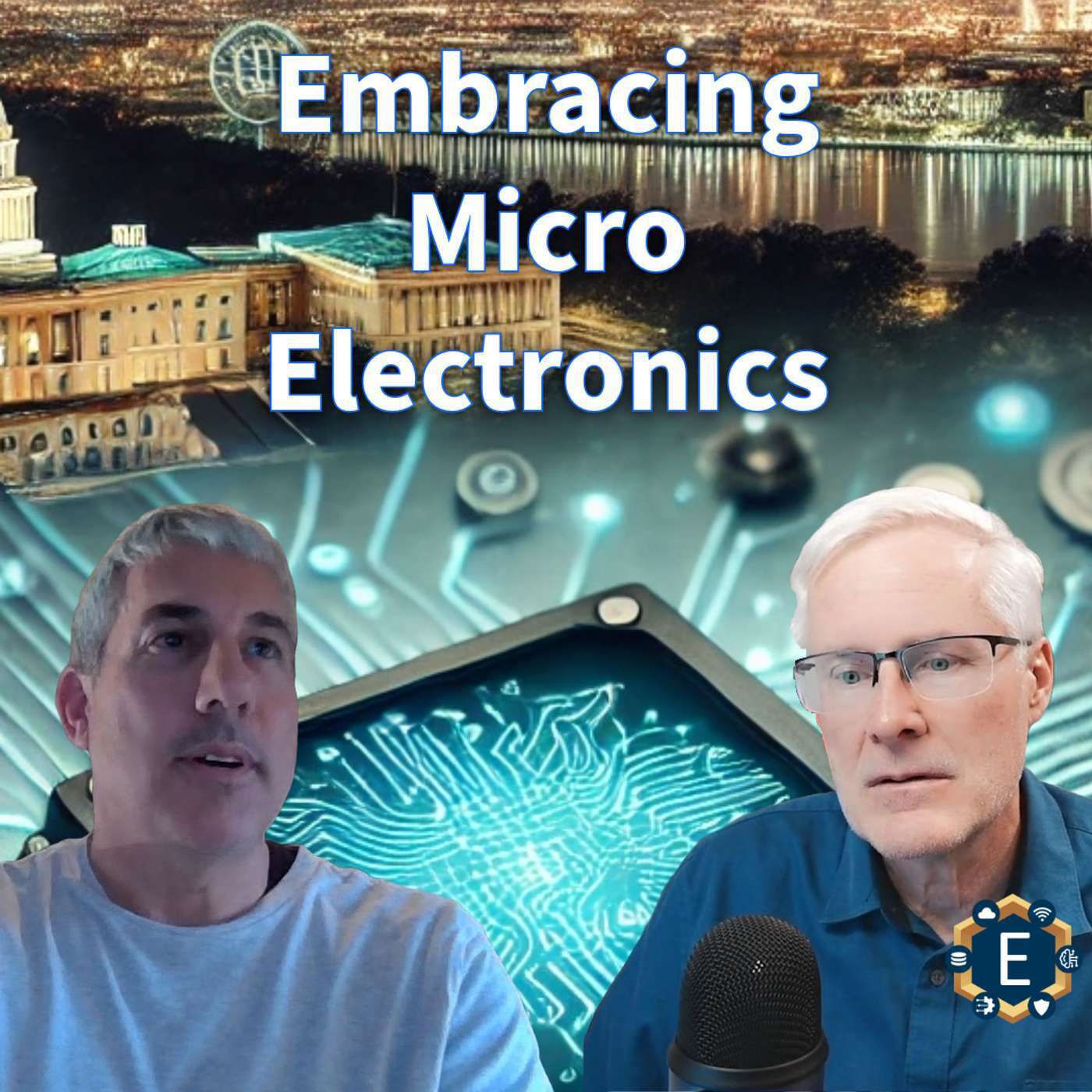
#238 Embracing Micro Electronics
from Embracing Digital Transformation
In this conversation, Darren Pulsipher and Dave Richard delve into the intricate world of microelectronics, exploring its significance beyond just CPUs. They discuss the various types of microelectronics, the economic factors influencing manufacturing, and the unique challenges government sectors face in adopting advanced technologies. The discussion also covers the concept of co-opetition in the industry and the importance of standards for interoperability, which reassures the industry's future. The conversation also touches upon the future of microelectronics and government initiatives like the CHIPS Act.Takeaways Microelectronics encompasses a wide range of devices beyond CPUs. The cost of manufacturing microelectronics is a significant factor. Government and military sectors face unique challenges in microelectronics. The CHIPS Act aims to enhance domestic manufacturing capabilities. Co-opetition is a common theme in the microelectronics industry. Standards are essential for ensuring interoperability between devices. The military often relies on more mature technology nodes. Consumer demand drives the need for state-of-the-art microelectronics. The microelectronics stack involves multiple layers of design and manufacturing. Collaboration between companies can lead to innovative solutions. Embracing Microelectronics in Today’s Tech LandscapeMicroelectronics plays a pivotal role in technology, shaping our digital future. From consumer electronics to advanced military systems, it underpins a wide array of applications and devices in modern tech development. For business leaders and technologists, a deep understanding of the dynamics of this industry, including its economic implications, technological innovations, and strategic partnerships, is not just beneficial, but strategically crucial. The Cost Structure of Microelectronics ManufacturingMicroelectronics is not just about where data processing occurs but about the cost and complexity behind manufacturing these sophisticated materials. The production of semiconductor devices involves significant financial investments, often exceeding billions of dollars for state-of-the-art fabrication facilities, also known as fabs. The economics of microelectronics hinge on achieving economies of scale, a principle where the cost per unit decreases as the volume of production increases. This means that producing devices in higher volumes ultimately reduces costs per unit.While the cost structure of microelectronics can be daunting for organizations considering new technologies, it also serves as a catalyst for innovation and creativity. The drive to develop cutting-edge technology often raises stakes further, creating a race among companies to capitalize on emerging markets, whether in consumer electronics or defense applications. This potential for innovation should inspire and motivate business leaders and technologists in their pursuit of microelectronics.When budgeting for microelectronics, it's not just about production costs, but also the R&D expenditures that accompany technological advancements. Businesses must balance investing in specialization for niche markets and opting for broadly applicable, general-purpose processors that serve a wider range of applications. Understanding these economics is not just beneficial, but essential for leaders to make informed decisions about product development and market positioning. Diverse Applications and Industry ChallengesMicroelectronics serves multiple sectors, each with unique needs and challenges. Consumer electronics, for example, demand high-performance devices that can deliver speed and efficiency, making it essential for manufacturers to stay on the cutting edge of innovation. Meanwhile, industries like healthcare and automotive often rely on older, more mature technologies, where cost sensitivity is a priority, yet functionality remains uncompromised.The stakes are even higher in government and military applications. Microelectronics in critical infrastructure must meet stringent security, reliability, and resilience standards. A microelectronic component embedded in a defense system requires additional considerations related to secure design and operational efficiency, particularly for applications in extreme environments. The intricate requirements around these devices often mean that the military relies on older technologies, leading to a disparity between commercial and defense sector capabilities.As companies evolve their microelectronics strategies, they must account for anticipated challenges such as production delays and unforeseen challenges like component shortages. This complex landscape creates opportunities for innovation but also necessitates collaborative efforts to align technological advancements with regulatory needs and market demand. The Pursuit of Collaborative InnovationIn today's intertwined technological environment, partnerships and collaborations have become essential in the microelectronics industry. Companies often find themselves navigating a web of competition and cooperation—an evolving dynamic where traditional competitors can also collaborate on specialized projects. These partnerships can help businesses leverage collective expertise to accelerate product development while addressing complex challenges in design and manufacturing.Standards-setting initiatives within the microelectronics sector are crucial for facilitating collaboration. Efforts like the Universal Chiplet Interconnect Express promote interoperability between different devices, laying a foundation for diverse combinations of microelectronic components. Encouraging industry-wide standards can help mitigate the risks associated with proprietary technologies and drive advancements that benefit broader applications.As firms look toward the future, fostering a culture of innovation and collaboration will be key. Government initiatives, such as research grants and tax incentives, can play a powerful role in supporting this agenda by offering incentives for public-private partnerships to advance microelectronics technology and domestic manufacturing capabilities. Conclusion: Navigating the Future of MicroelectronicsThe breadth of microelectronics impacts our daily lives beyond the devices we often take for granted. As business leaders and technologists, understanding the significant economic, operational, and collaborative factors driving microelectronics is crucial in navigating today’s tech landscape. By embracing the complexity and the innovations that microelectronics offer, organizations can position themselves strategically for the future. The drive for efficiency and performance will remain constant as the world increasingly depends on microprocessors, chip technology, and enhanced electronic systems. Engaging with these trends can help guide smarter decisions for businesses looking to thrive in a rapidly evolving technological environment. ---Suppose you're captivated by the complexities of microelectronics and want to delve deeper into this fascinating world. In that case, I encourage you to explore additional insights and expertise from industry experts through our various channels. Share this knowledge with your peers and join the conversat...See Privacy Policy at https://art19.com/privacy and California Privacy Notice at https://art19.com/privacy#do-not-sell-my-info.
NOW PLAYING
#238 Embracing Micro Electronics
No transcript for this episode yet
Similar Episodes
Apr 21, 2026 ·13m
Apr 19, 2026 ·16m
Apr 17, 2026 ·13m
Apr 13, 2026 ·11m
Apr 11, 2026 ·16m