
EPISODE · Jun 28, 2025 · 38 MIN
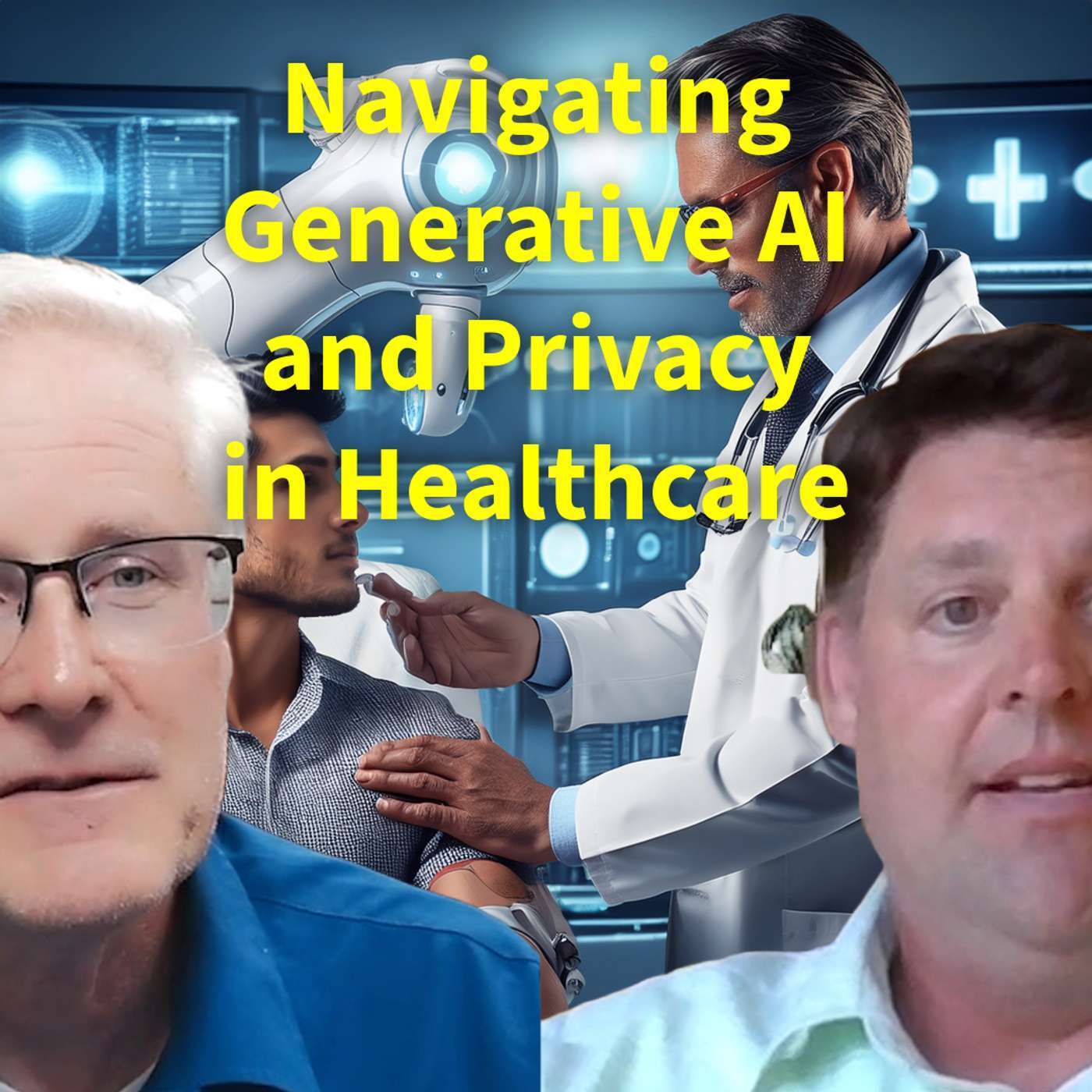
#274 Navigating Generative AI and Privacy in Healthcare
from Embracing Digital Transformation
In this episode of Embracing Digital Transformation, host Dr. Darren Pulsipher welcomes back Jeremy Harris, a privacy lawyer, to discuss the intersection of generative AI and privacy, particularly in the healthcare sector. They delve deep into the challenges faced by healthcare providers navigating complex regulations in California and the implications of generative AI, which indiscriminately scrapes data, meaning it collects data without discrimination or specific targeting. The duo examines real-world examples, such as how AI tools can assist with medical documentation and patient care while raising critical questions about data privacy and consent. The discussion underscores the need for updated regulatory frameworks to keep pace with the rapid evolution of technologies. ## Takeaways Generative AI holds immense promise in healthcare, offering significant benefits such as enhanced efficiency in patient documentation and data analysis. This potential is a beacon of hope for the future of healthcare. The intersection of generative AI and patient privacy raises complex legal and ethical concerns that demand our immediate attention. As healthcare professionals, legal experts, and individuals interested in digital transformation and privacy issues, we all have a crucial role to play in this discussion. It's clear that our current privacy regulations, such as HIPAA and CCPA, are struggling to keep pace with the rapid advancements in AI technology. This underscores the urgent need for updated regulatory frameworks to ensure the protection of patient privacy. - Doctors utilizing generative AI must navigate a landscape where improper use can result in legal implications and privacy violations. - The importance of informed patient consent cannot be overstated, especially when utilizing AI tools that collect sensitive health information. ## Chapters - [00:00] Welcome to Embracing Digital Transformation - [02:30] The Basics of Generative AI and Its Impact on Privacy - [05:15] Real-World Applications of Gen AI in Healthcare - [10:00] The Complexity of Privacy Regulations in California - [15:20] Ethical Concerns Surrounding Data Collection and Consent - [20:05] Risks and Responsibilities for Healthcare Providers - [25:40] Future Regulatory Frameworks for AI in Healthcare - [30:00] Conclusion and How to Connect with Jeremy Harris ``` # Navigating the Intersection of Generative AI and Privacy: Implications for HealthcareAs organizations continue to embrace the capabilities of generative AI, the healthcare industry is particularly affected by the complex interplay between innovative technology and stringent privacy regulations. With tools such as chatbots and AI-driven documentation processes becoming increasingly commonplace, the stakes are high for healthcare providers. This blog post examines the key themes arising from the application of generative AI in healthcare, with a focus on privacy concerns, the necessity of regulatory frameworks, and the potential benefits of these technologies. Understanding Privacy Challenges in HealthcareGenerative AI has the potential to streamline operations within healthcare settings significantly. However, the reliance on massive datasets, often including sensitive personal information, raises serious privacy concerns. For instance, the ability of generative AI systems to analyze unstructured data—such as doctors' notes and individual patient histories—can lead to unintended disclosures of protected health information (PHI).The rapidly evolving nature of AI technologies outpaces existing regulatory frameworks, such as the Health Insurance Portability and Accountability Act (HIPAA), which was designed to address concerns from a pre-digital era. As states like California and Utah are attempting to introduce new AI regulations, the overall lack of uniformity can create complications for healthcare providers trying to comply with varying laws. Providers must now navigate a landscape where the optimal use of generative AI coexists with the urgent need to protect patient privacy, a task made even more challenging by the complexity of unstructured data.An increasing reliance on third-party vendors to implement generative AI raises further issues. In many cases, these third-party vendors may not be HIPAA-compliant, which can potentially expose healthcare organizations to data breaches and legal liabilities. This entails that organizations must rigorously vet their partners and ensure appropriate contracts are in place, protecting both patient data and institutional liability. The Need for Regulatory FrameworksAs organizations grapple with these privacy challenges, the need for comprehensive regulatory frameworks becomes increasingly urgent. Relying on outdated laws like HIPAA is no longer sufficient in an environment dominated by rapidly advancing technologies. The transformative potential of generative AI demands that newly considered regulations explicitly address ethical concerns, patient rights, and the responsibilities of data controllers. This emphasis on the need for action should convey to the audience the urgency and importance of the issue.Currently, there is a regulatory gap that affects the development and deployment of AI applications. Organizations require guidelines to strike a balance between innovation and risk management, while upholding ethical standards, to ensure the safe and effective use of AI in their operations. This involves providing healthcare professionals with better education about both the benefits and limitations of AI, empowering them to make informed decisions when integrating AI tools into their practices. The potential cost savings from AI integration can free up resources for other critical areas of healthcare, ultimately benefiting patients and the healthcare system as a whole.Proposals include creating transparent frameworks that define responsible AI deployment, ensuring patient consent is not just a checkbox but an informed and engaged process. Furthermore, establishing accountability mechanisms for AI systems is essential to safeguard patient information adequately. These might include standardized testing procedures, periodic audits, and real-time monitoring of AI's interaction with healthcare data. Harnessing the Value of Generative AIWhile there are valid concerns around the use of generative AI in healthcare, the technology also presents significant opportunities for improvements in patient outcomes and operational efficiencies. For instance, AI can enhance workflows by automating mundane tasks, such as data entry or document review, allowing healthcare professionals to spend more time engaging face-to-face with patients. Moreover, the potential of generative AI in predictive healthcare is inspiring. By analyzing historical patient data, AI models can identify patterns that lead to earlier diagnoses, facilitating preventative measures that could save lives. As hospitals and clinics become increasingly data-driven, the insights gained from generative AI can lead to improved treatment protocols and more tailored patient care. This reiteration of the potential of AI should inspire the audience with the possibilities of AI in healthcare. Healthcare professionals must understand the potential of AI, its limitations, and the ethical considerations involved in its use.The potential of generative AI in predictive healthcare is particularly notable. By analyzing historical patient data, AI models can identify patterns that lead to earlier diagnoses, facilitating preventative measures ...See Privacy Policy at https://art19.com/privacy and California Privacy Notice at https://art19.com/privacy#do-not-sell-my-info.
NOW PLAYING
#274 Navigating Generative AI and Privacy in Healthcare
No transcript for this episode yet
Similar Episodes
Apr 21, 2026 ·13m
Apr 19, 2026 ·16m
Apr 17, 2026 ·13m
Apr 13, 2026 ·11m
Apr 11, 2026 ·16m