
EPISODE · May 4, 2026 · 57 MIN
ANAHN 12: Deep Face - The Engine Beneath Expression
from Clinical Deep Dives · host Dr Manaan Kar Ray
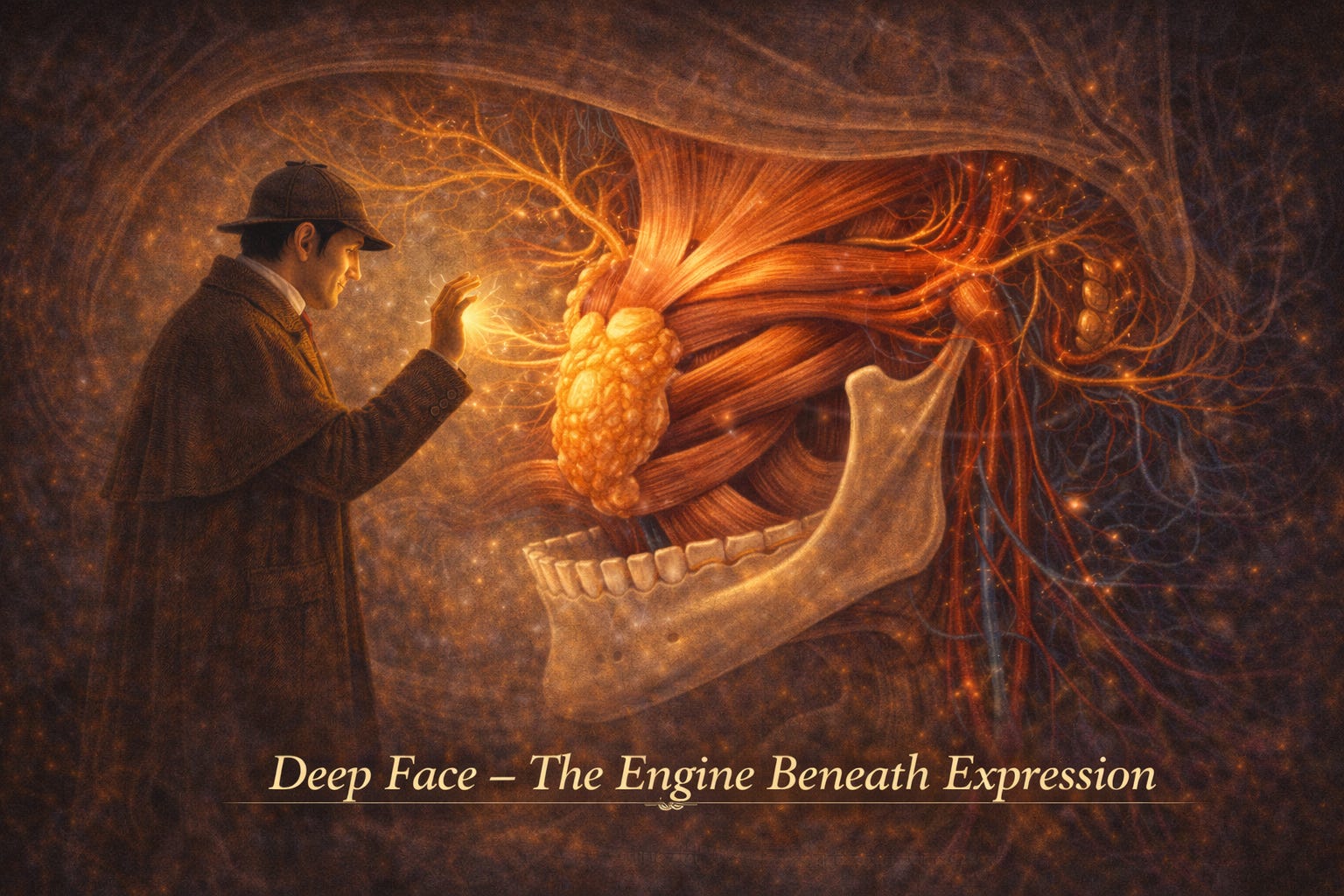
If the parotid bed was a crossroads,then the deep face is something far more powerful:It is an engine room.Hidden beneath the mandible and zygomatic arch,this is where:* Force is generated* Motion is refined* Rhythm becomes automaticNot visible.But essential.Because here, the face stops expressing…and starts working.PART I - DEFINING THE DEEP FACEThe deep face lies:* Deep to the mandible* Beneath the zygomatic arch* Extending into the temporal and infratemporal fossaeIt houses:* 3 of the 4 muscles of mastication (masseter sits superficial)* Major neurovascular structures* The functional core of the stomatognathic systemThis is not surface anatomy.This is operational anatomy.PART II - THE SPACES: WHERE EVERYTHING HAPPENS1. Temporal Fossa - The Power FanLocated above the zygomatic arch (the “temple”):* Bounded by temporal lines* Floor formed by frontal, parietal, temporal, and sphenoid bonesThe diagram on page 190 (Fig 12-1) shows this as a broad, shallow basin.Inside it sits the temporalis muscle - fan-shaped, spreading wide.A reservoir of force, gathered before being delivered.2. Infratemporal Fossa - The Deep ChamberLocated:* Inferior to zygomatic arch* Deep to mandibleAn irregular, open space with no true inferior boundary.The diagram on page 190–191 (Fig 12-2 & Table 12-1) shows:Contents:* Muscles of mastication (except masseter)* Maxillary artery* Pterygoid venous plexus* Mandibular nerve (V3)Communications:* Cranial cavity (foramen ovale, spinosum)* Orbit (inferior orbital fissure)* Pterygopalatine fossa* Neck spacesThis is not a compartment.It is a gateway system.PART III - THE MUSCLES: ARCHITECTS OF FORCEThere are four muscles of mastication:1. Masseter - The Power Clamp* Origin: Zygomatic arch* Insertion: Lateral mandible* Function: Strong elevation (closing jaw)2. Temporalis - The Precision Elevator* Fan-shaped* Inserts onto coronoid process* Functions:* Elevation* Retraction (posterior fibres)3. Medial Pterygoid - The Mirror Muscle* Mirrors masseter on inner side* Forms pterygomasseteric slingFunction:* Elevation of mandibleLike two hands holding the jaw from both sides.4. Lateral Pterygoid - The InitiatorTwo heads:* Superior: stabilises TMJ* Inferior: opens jaw + protrusionThis is the only muscle that truly starts opening.Functional Summary* Elevators: Masseter, temporalis, medial pterygoid* Depressor: Lateral pterygoid* Side-to-side: Coordinated pterygoidsPART IV - FASCIA: THE CONTAINMENT SYSTEMThe muscles are wrapped within a masticator compartment:* Formed by deep fascia* Encloses:* Muscles* Mandibular ramus* Neurovascular structuresThe diagram on page 194 (Fig 12-3) shows this compartment clearly.Not just structure - containment, continuity, and potential spread.PART V - THE VASCULAR ENGINEMaxillary Artery - The LifelineA terminal branch of external carotid:* Passes deep to mandible* Travels through deep face* Divided into 3 parts:* Mandibular* Pterygoid* PterygopalatineThe diagram on page 203 (Fig 12-9) shows its branching complexity.Supplies:* Muscles of mastication* Teeth* TMJ* Nasal and oral structuresIt feeds the engine.Venous System - The Hidden RiskPterygoid venous plexus:* Large interconnected network* Communicates with:* Face* Orbit* Cavernous sinusThe diagram on page 204 (Fig 12-10) shows this dangerous connectivity.This is where infection travels… silently.PART VI - INNERVATION: THE CONTROL SYSTEMTrigeminal Nerve (CN V)Three divisions:* V1 (ophthalmic)* V2 (maxillary)* V3 (mandibular)Mandibular Division (V3) - The Key Player* Only division with motor + sensory* Exits via foramen ovale* Divides into:* Anterior (motor dominant)* Posterior (sensory dominant)Motor Supply* Muscles of mastication* Mylohyoid* Anterior belly of digastricSensory Supply* Teeth* TMJ* Lower face* Anterior 2/3 of tongue (general sensation)PART VII - MASTICATION: THE ORCHESTRATED MOVEMENTMastication is:* Initially conscious* Then becomes automatic rhythmSequence:* Food enters* Positioned by tongue and cheek* Crushed by molars* Jaw moves:* Up/down* Side-to-side* Forward/backControlled by:* CNS circuits* Proprioceptors in periodontal ligamentA learned rhythm that becomes instinct.PART VIII - CLINICAL THREADS1. Masticator Space Infection* Spreads rapidly via fascial planes* Patients very unwell* Requires urgent care2. Anaesthetic Complications* Needle may puncture pterygoid plexus* → Haematoma* → Possible spread to cavernous sinus3. Mandibular Nerve Injury* Jaw deviates* Loss of sensation:* Chin* Teeth* Tongue (anterior 2/3)4. Temporomandibular Disorder (TMD)* Pain, clicking, limited movement* Multifactorial causes:* Stress* Trauma* MalocclusionKey Takeaways* The deep face is the functional core of mastication* Temporal and infratemporal fossae define its spaces* Muscles of mastication generate complex jaw movements* Maxillary artery supplies the region; pterygoid plexus poses risk* Mandibular nerve (V3) provides motor and sensory control* Mastication is a coordinated, semi-automatic process This is a public episode. If you'd like to discuss this with other subscribers or get access to bonus episodes, visit drmanaankarray.substack.com/subscribe
NOW PLAYING
ANAHN 12: Deep Face - The Engine Beneath Expression
No transcript for this episode yet
Similar Episodes
No similar episodes found.